Embrace God's truth with our new book, The Lies that Bind

Ways to Approach Caregiving Decisions

Lauri Scharf, LSW, MSHS, is a Care Consultant & Master Trainer at Benjamin Rose Institute on Aging.

Each day is filled with decisions—from the very basic to the most serious. You weigh information and options on everything from what to have for breakfast to how to organize your finances. It can be tough enough to make decisions for yourself, but when you have to make them for another person, it can be an even greater challenge. There are ways, however, to approach decision-making that can ease the process.

Caregivers face the dual challenge of having to make a number of decisions for both themselves and their loved ones. Although it’s always good to bring both voices into the picture, it’s sometimes impossible. If you find yourself in the position of needing to make decisions for a loved one in your care, it helps to consider his or her values, preferences and beliefs. This can make it easier to arrive at a good decision. Collaborating with one another, if possible, and with other family members and health care professionals, can also help you to arrive at good results.

Factors to consider when making a decision

Approaching a decision rationally is a helpful start. You might first identify the issue and the choice that has to be made, and consider who is involved. For example, the decision may concern your loved one’s:

· Environment

· Abilities

· Overall health

· Existing condition

Arriving at a decision can be more difficult when other people are involved in the process, as they may have preferences that differ from your own, or they may not even believe that a decision is necessary.

Any decision-making carries some possibility of uncertainty and doubt based on the circumstances. If you have enough accurate information, it can limit the number of factors to consider, which can help you to more confidently arrive at a decision. Your level of risk is lower. On the flipside, the level of risk increases when you feel you don’t have enough accurate information.

Not having enough information can make healthcare decisions harder. Because circumstances are continually changing, you may have to make some of these decisions with very little or no information. For instance, if your loved one falls, he or she may need surgery that requires anesthesia, physical therapy and rehabilitation away from home. In such a situation, you may have to weigh the uncertainty of whether your loved one is able to complete therapy and recover adequate mobility. A sudden change to your own health or an unexpected accident could also impact your decision, as well as the amount of time you have to arrive at the decision.

Changing the way you approach decision-making can be tricky. You may tend to do things in one way because it’s the way you’ve always done them. You may sometimes allow emotions to cloud your judgement. This is natural, but changing your approach to making decisions on your loved one’s care can sometimes yield better results.

Suggestions to improve your decision-making skills

According to Plato, “A good decision is based on knowledge and not on numbers. A fast approaching deadline may contribute to the stress of making a decision, and may lead to an unfavorable outcome, so planning ahead can be essential. Give yourself time to gather information. Work with family and professionals to determine what outcomes you want and to come up with a workable timetable. Discuss what impact delaying the decision could have. Once you have identified the problem, identify what success and failure will look like to you, and use that to guide your decision.

Yes, the black and white, or favorable and unfavorable outcomes may be clear, but look for all the shades of gray that represent opportunities for change. Talking with others can give you much more information, and allow you to explore new and different options. Incorporate the advice of potential healthcare team partners, including therapists and home health agencies. Seek input from family members you may need to rely on for more help in the future. Above all, keep the personal values, preferences and beliefs of your loved one in mind.

As challenging as decision-making can be, it’s a necessary process that allows you to give the best possible care to your loved one. Although well-meaning relatives and friends may try to guide the process, it’s important to maintain your autonomy. Be aware that choosing not to decide is also a decision that can take the control out of your hands. For options and solutions to decision-making that are right for you, consider visiting community resources such as WeCare…Because You Do.

Was This Widow Ready to Love Again?

“Mom, just give it a try.”

My grown son Danny was on the phone from Colorado. “Fifty-five-year-olds don’t do online dating,” I said. “We meet people the old-fashioned way.”

“Hah!” replied Danny. “And how’s that working out for you so far?”

“I don’t want to date,” I said. “I have Walter.” Walter was my rescued dog.

Danny laughed again, then turned serious. “It’s been 12 years since Dad died. You’re all alone there in New Mexico. It would be good for you to meet people. Alexa’s mom met someone on the internet, and now they’re engaged.”

Alexa was Danny’s wife. Her father had died of cancer a few years earlier—the same disease that took my Rick when he was just 44. Some days, I felt like I was finally coming out of my grief. Other days, it felt as if I’d just lost him.

Danny pressed on. “There’s a good dating site for people over 50. The one Alexa’s mom used. Why don’t you give it a try? There’s nothing to lose.”

I changed the subject, but I couldn’t help thinking about Danny’s suggestion after we got off the phone. Life had been hard for a long time after Rick died. We’d been high school sweethearts, and he was the love of my life. He was a park ranger—strong, outdoorsy, fun. My kind of guy. Danny and his brother, Ben, were teens when Rick died. Ben especially had struggled, and only recently had he found his footing.

Uplifting Quotes to Cope with Grief

I’d kept things together while the boys were at home. As soon as they moved out, I drifted—physically, emotionally and spiritually. I was too angry to pray. I’m a schoolteacher, and I did an exchange year at a school in Australia, hoping a faraway place would put an end to my grief. It didn’t.

At last, I decided to leave Estes Park, the Colorado mountain town I’d called home ever since Rick was posted at Rocky Mountain National Park. Everybody there knew me as Rick’s wife. Everything reminded me of my loss.

I found a job at a charter school in Taos, New Mexico. I loved the landscape and thought I might meet other people like me. I rented a condo, made friends and joined a book group. I saw Danny and Alexa and their beautiful twin girls every few months.

Eventually my anger at God cooled. I was praying again, though not quite the same as before. I was warier now. Less naïve. Everything I’d counted on in life had been taken from me once. I wasn’t going to let that happen again.

Not long after my conversation with Danny, my landlord announced she’d decided to sell the condo I’d been renting for the past three years. She asked if I wanted to buy it. Just as I was investigating whether I could afford the asking price, my principal told me my position at the charter school had been cut.

Suddenly I was out of a job and had 45 days to vacate the condo.

Searching frantically online for a job and a place to live, I kept seeing the same ad pop up on my computer. For the dating website Danny had mentioned.

“Is this some kind of joke?” I asked God. “Or a sign?”

Maybe if I signed up, the ads would go away. I filled out a profile, took a cursory look at some of the men—not my type—and forgot about it.

But I began getting notices that men had looked at my profile and sent me a “flirt”—a message. The site also suggested profiles I might want to look at. Curiosity got the better of me until I checked out the profiles and remembered why I didn’t like online dating.

One day, a notice popped up telling me someone had checked my profile. I clicked on the link, and the profile for a man named Steve appeared. He was better-looking than the other guys I’d seen. He was also exactly my age.

And he was a widower.

Steve was selling his house near Denver and moving to a mountain home he owned an hour from Taos. I bet I know why you’re moving, I thought, remembering my own journey here.

The vintage VW bus that brought
Steve and Lynne togetherBut one of his photos really caught my eye. It was of a vintage 1977 Volkswagen Bus. The kind with a pop-up camper top. Among Steve’s hobbies were hiking, bicycling, camping and rock climbing. I caught myself feeling disappointed he hadn’t sent me a flirt.

“That looks fun!” I commented beneath the photo. A couple of days later, I got an email from Steve. He liked that I’d commented on his VW bus photo. He asked me more about myself. I wrote back, feeling embarrassingly excited. Steve replied right away. Soon we were corresponding. His emails became a welcome respite from job- and apartment-hunting.

I hadn’t realized how much I needed to talk to someone who understood what it was like to lose a spouse. Steve and I didn’t dwell on our past marriages. But we recognized each other’s feelings. Maybe Danny had been right. Maybe I needed to meet more people. Maybe this was a start.

Steve and I were both huge Denver Broncos fans. He too loved the outdoors. He’d been a paramedic but retired to take care of his wife when she was ailing from liver disease—possibly a legacy of the Agent Orange she’d been exposed to as a nurse in the Vietnam War. He’d bought the VW bus recently as a way of reclaiming his outdoors life.

Soon after Steve moved from Colorado, we decided to meet in person. We picked a Mexican restaurant in Taos for lunch. I laughed at myself as I agonized over what to wear. At last I settled on a white ankle-length skirt, a casual top and sandals. Very New Mexico. I brought Walter and left him in the car.

I arrived first and sat at an outside table. I wanted to keep an eye on Walter. A yellow VW bus pulled into the parking lot. Steve got out and I caught my breath. It wasn’t just that he was even more handsome than in his photos. A shock of recognition passed through me, as if I’d known Steve for a long time and could trust him implicitly.

Steve confessed he’d been as nervous as a teenager to meet me. “Me too!” I said. Conversation flowed easily. We lingered long after we’d finished eating. At last Steve said with a grin, “Want to take a ride in the bus?”

“Sure!” I said. “Can Walter come?”

The three of us took a long afternoon drive. The bus chugged along steadily. I felt like we’d barely started talking when Steve dropped me off.

After that, things moved fast. Maybe too fast. Steve and I talked every day. We went to movies, dinner. Mostly we spent time in Taos, where I’d found a small rental condo. Just a few weeks after our first lunch, my condo flooded from ruptured pipes. I had to move out.

“Why don’t you stay at my house?” Steve said. “I’m going to visit my family in Ohio for two weeks. You’ll have the place to yourself.”

I reassured myself there was nothing wrong with staying in Steve’s house while he was gone. But I could see where this was headed. Even Danny cautioned me to take things slowly. And this had all been his idea in the first place!

I put my things in storage, packed a bag and drove to Steve’s house, feeling suddenly afraid. In just a few weeks, I’d gone from not wanting to date to… what? The first steps toward marriage?

I didn’t want to get married! I’d done that already. Rick and I had loved our life together. Then it fell apart, and I’d felt pain I’d never known possible. Why would I risk that again? Steve’s house was a mountain cabin surrounded by woods and a rushing stream. His taste in furniture matched mine. I told myself not to feel too comfortable. I barely knew this man. I was not committing to anything. We’d met online. I could break this off whenever I wanted to.

My first morning there, I was drawn by the sound of the stream. The water splashed down a hill, then rounded a bend beside a small meadow surrounded by old-growth aspen trees.

I sat beside the stream, closing my eyes to say morning prayers. Part of me wanted not to like this place so much. Not to be so taken with Steve.

Where is this going, Lord? I asked. Why am I so confused?

In an instant, all the years since Rick died passed though my mind. I felt the crushing weight of grief. The seeming impossibility of keeping things going for the boys. The loneliness. The spiritual drifting.

And I heard a voice. I was with you then. I am with you now.

As if washed away by the stream, my fears seemed to vanish. Yes, Steve and I were moving fast, but that was okay. It was even okay that I was already letting myself think about marriage. It was natural.

In my grief, even when I was spiritually distant, God had remained at my side. He had guided me through those hard years, and he was guiding me now. I had no idea what the future held for Steve and me. But I did know God would be in that future. And that was enough.

I sat for a long time listening to the wind in the aspen leaves. Then I got up and walked back toward the house.

Next summer, Steve and I will get married. We continue sharing the life we’ve made together. I decided to semiretire instead of teaching full-time. We spend half the year in New Mexico and half in Florida, where Steve has family. We kayak, camp, hike and spend lots of time just talking.

It’s an idyllic life. Still, having loved and lost before, Steve and I know our love is a risk. We also know it’s a risk worth taking and that second chances are a rare blessing.

And the yellow VW bus? We drove it back and forth across the country several times until age caught up with it. I was sad to see it go. But by that point, it had done its job. It had brought Steve and me together. We’ll let God lead us on the rest of the journey.

For more inspiring stories, subscribe to Guideposts magazine.

Was She Up to the Challenge of Caring for Her Difficult Mother?

“Mom, we need to take you to the emergency room.”

I’d rushed to my mother’s apartment at the assisted living facility with my husband, Kevin, after one of the nursing assistants had found Mom on the floor beside her bed, dazed.

My 92-year-old mother pressed her lips together in a thin line—an expression of defiance I knew all too well. “I don’t need to go to the hospital,” she said. “I just lost my balance.”

I tamped down my frustration. I wanted so badly to be a good daughter. Patient. Kind. Full of grace. But oh my goodness! Could anything be easy with her? Mom behaved like a stubborn middle child even as an adult. Sandwiched between a favored older sister and an adorable baby brother, she’d learned to push back and act out to get attention. But couldn’t she see the huge bruises that were forming on her arms like watercolor splotches? How could I convince her she needed help?

“She keeps tapping on the side of the bed or the bathroom counter,” said the nursing assistant. “As if she’s typing words she can’t think of.”

Mom had worked as an accounting clerk for many years. Her mind must have wandered back to those days. Did she have a urinary tract infection? Sometimes infections caused delirium in the elderly, especially those with Alzheimer’s. Mom had been diagnosed six years earlier, in 2014, not long after she’d moved from the pine forests of northern California to the facility near us in the prairies of Illinois. She had lived on her own until she’d lost everything to a house fire. She was a widow, and my brother had died. I needed to step up and take care of her.

In the beginning, Kevin and I were relieved that she lived so close by. I’ll be the perfect daughter, I thought. I felt guilty that she couldn’t live with us. Our cats might trip her. Kevin and I worked long hours and traveled often. But I promised I would be her advocate and her supporter. I would take care of her the way an aging parent deserves to be taken care of.

Day by day, the reality of having Mom so near sank in. She would call us all the time with some small chore or errand that needed to be done.

“Jeanette, do you have any pink thread?”

“No, Mom. Do you need Kevin to go out and get some?”

“Oh, there’s no rush.”

When Kevin arrived at the facility with pink thread, Mom looked up at him. “Oh,” she said, holding up a needle, “I found some.”

Everything was a problem for Mom. The food at the assisted living facility—“The vegetables are overcooked.” The songs they sang at the socials in the dining room—“They’re too old.” The doctors who tried to help her—“They don’t listen.” I was soon overwhelmed. Mom seemed to need more of my time and patience every day. More than I could give. Friends wrote on Facebook, “It’s an honor and a privilege to care for my aging parent.” Was I doing something wrong?

No matter what I did for her, it never felt like enough. I wanted to be the most patient. The most kind. The best possible caregiver. I wanted to be more than Mom had been for me growing up. When my brother and I were little, she had been warm and doting, a mother right out of storybooks. Then she divorced my father—an alcoholic who cheated on her—when I was six, later marrying another alcoholic.

Unlike my father, who was charming and affable, my stepfather was abusive. He would berate my brother and me, stomping through the house, yelling and cursing. Mom let him. It felt as if she suddenly didn’t care enough to protect us. Had I done something to deserve this? I was too young to understand the complexities of marriage to an addict. All I knew was that I felt alone and abandoned.

That was decades ago, I reminded myself. I’d long since forgiven Mom for the wrongs of my childhood. I’d made her a part of the family I built with Kevin. Why didn’t I feel honored to care for her as the Bible taught? Why couldn’t I be a better daughter?

I looked at my mother, sitting up in her bed at the assisted living facility, her mouth still set in a stubborn line, and took a deep breath. “Mom,” I said, “I’m worried about you because you are confused and you’ve been typing with your hands all day.”

She blinked slowly. “Have I?”

I nodded. “I think you might have a UTI. If we don’t take you to the doctor, it could develop into a kidney infection. Would you put on your coat for us?”

By the grace of God, she relented. Kevin and I drove her to the hospital, and the three of us sat for more than an hour in the waiting room.

“Doris Kidgell?” a nurse finally called. For the next three hours, nurses, technicians and a doctor peppered Mom with questions and marshaled her through a slew of tests. Urine samples. X-rays. Blood work.

“You have to speak directly into her ear,” I had to say again and again. Mom was hearing impaired. Was anybody on staff capable of reading her chart? It was right there in black and white! “She’s lost her hearing aids,” I explained.

None of the staff members seemed to listen. I felt my blood pressure spike every time a nurse or a technician spoke too softly. I understood it took more time to explain things to Mom, but didn’t she deserve the same courtesy as other patients?

“Mom, the doctor wants to keep you overnight,” I said after the first few rounds of tests.

“No,” she whispered.

Her brown eyes seemed enormous behind her glasses; her face, so often fixed in opposition, seemed softer, vulnerable. She looked how I must have looked as a little girl. Scared. Alone. Afraid of being abandoned. I wanted to do everything in my power to protect her. To shield her from pain. It dawned on me that I’d never felt this way about Mom before. It was as if our roles were reversed, as if I were the mother and she were the child.

“They’ll take good care of you,” I said. “Kevin will be here first thing in the morning, and I’ll come to see you on my lunch break.”

As soon as I woke up the next morning, I knew a lunch break visit wouldn’t be enough. Mom needed me. All of me. I took the day off and drove to the hospital. The same feelings from the night before—the ones I’d experienced when my kids were tiny and helpless—welled up inside me. None of my usual guilt or shame. None of the questions that normally cycled through my mind: Am I doing as much as I can? Am I enough? It was pure protective energy.

A young technician came to take Mom for an MRI. “Where are you taking me?” Mom asked.

The technician stopped. “You don’t remember?”

I shot the tech a stern look. I wanted to scream, She’s 92 years old. She has Alzheimer’s. I’m worried she may have had a stroke. Of course she doesn’t remember! Instead, I said calmly, “No, she doesn’t remember.” Then I held Mom’s hand as the technician wheeled her gurney down the hall.

“This is as far as we can allow you to go,” the tech said at the end of the hallway. “You can sit here and relax. We’ll have your mom out in a jiffy.”

No way could I relax. I watched the tech wheel Mom away and felt my heart go after her. This wasn’t about guilt. This wasn’t about obligation. This was about love.

An hour later, the doctor came into Mom’s room and explained she needed surgery on one of her carotid arteries. It was 90 percent blocked. “You’ll need to discuss it with each other and her regular doctor,” he said. He released her to go home, and we scheduled an appointment with a surgeon for the following week.

That evening, Kevin and I hugged Mom goodbye in her apartment at the assisted living facility. It wasn’t until I flopped into my bed that night, exhausted, that I realized the enormity of my devotion to Mom over the past 30 hours. Had I really stood up to those doctors and nurses and technicians? Taken off work? I never do those things, I thought. Maybe I wasn’t such a terrible caregiver after all. Or such a terrible daughter.

A thought flashed through my mind, something my friend Dee had told me when she was taking care of her father-in-law at the end of his life. “There’s no place for guilt in caregiving. All the things you do for your loved one—that’s what really matters.”

If I could forgive Mom for not being a perfect parent when I was a kid, I could forgive myself for not being the perfect daughter and caregiver now. I’d been doing my best to support her, not just for the past 30 hours but for the past six years. Lord, however many more years you give me with Mom, I’ll be beside her. I let go of the idea that the only good caregiver is a perfect one. What I do for my mother is enough. So am I.

For more inspiring stories, subscribe to Guideposts magazine.

Walking Miracle

The answer must be in the Bible, Joel Haler’s father told him. Of course, the minister’s son was used to that response—he’d heard it often in his 20 years, though what he read didn’t always make sense to him.

Still, Joel rolled his wheelchair up to the kitchen table and flipped the pages of his Bible to the Book of Job. Chapter 23: “Then Job answered: ‘Today also my complaint is bitter, his hand is heavy in spite of my groaning….’”

Joel read the chapter through twice, considering every word. A bitter complaint? He knew all about that. Yet it wasn’t the answer he was seeking.

His father urged him to keep looking, searching for the meaning of the message Joel believed he’d been sent. The mysterious code that seemed to offer Joel the promise of walking again: J23.

It was January 2014, three months since a freak accident in a college gym class left Joel paralyzed below the waist. For three months he’d hoped for a miracle. Every week at his father’s church, members of the congregation told Joel that they were praying for him.

Still, nothing had changed. He’d been to four different hospitals, seen specialists, had all kinds of tests: MRIs. Spinal taps. The doctors offered no hope that he would walk again.

Ever since he was a little boy, his father had told him that God had a plan. But was it God’s plan for him to spend his life in a wheelchair? Or was life just random?

Then came the dream. Joel was inside the Fieldhouse in New Castle, Indiana, the biggest high school basketball arena in the country, where he had once played for the New Castle Trojans.

That night the place was rocking, the fans—9,000 strong—stomping and clapping like this was the state championship game. Joel, surrounded by teammates, ran through the entrance tunnel to the court. A giant paper banner covered the opening.

Suddenly his perspective changed. He was inside the gym, staring directly at the banner. It was stark white, printed with a letter and number. J23. Joel saw it for only a second before the Trojans burst through it.

Joel’s eyes flew open. He was lying in bed, in the dark. He tried again to move his legs. Nothing. J23? What was that supposed to mean?

The answer wasn’t in the Book of Job. Joel turned to Jeremiah, but that was no help either. Neither was chapter 23 in Joshua. Those were the only J books with 23 chapters.

“This is pointless!” Joel closed the Bible with a thud and pushed away from the table.

In the days that followed, Joel looked elsewhere. The crossword puzzle. Google. License plates. Nothing. Maybe J23 had no meaning. Maybe it was just something random, like life.

That Sunday at the end of the church service, one of the children, a four-year-old boy, came up to Joel, who was sitting in his wheelchair at the back of the congregation.

“You’re going to walk on a Thursday,” the boy announced, his voice filled with youthful confidence.

The boy’s mother looked on uncertainly. Three months earlier, she explained, her son had told her that God had given him a message to share with Joel. She’d dismissed it, but he had insisted.

First J23, now this. Joel and his family puzzled over the boy’s prediction. Which Thursday? Were Joel’s dream and the boy’s message connected?

At home, Joel asked his dad to get the calendar. They opened it to June. The twenty-third was a Monday. July 23 was a Wednesday.

“What about January?” his dad asked.

Joel flipped back to the first page. January 23 was a Thursday—four days away. Impossible. After three months in a wheelchair, his legs were so atrophied he would need months of physical therapy.

He had only just begun sessions strapped into a robotic harness that moved his legs. He was nowhere near strong enough to stand, much less walk.

Wednesday night arrived. Joel couldn’t sleep. There was nothing he could do but wait.

Midnight came. January 23 began. Joel’s legs were still dead weight. An hour passed. Then two more. Joel stared down at his paralyzed limbs. It was hopeless. He dropped his head into his hands.

He barely felt it at first. Like a feather stroking his ankle. Ever so slowly the feeling spread up his legs, growing into an intense pain. He couldn’t take it. He wiggled his toes. Then pinched his arm to make sure…no, he was definitely awake.

He swung his legs off the bed. He could bend his knees! Cautiously, he lowered his feet to the floor and stood. He took a step. Then another. He didn’t stumble.

Outside his parents’ room he called out, “Mom! Dad! Look!”

A rocket ship couldn’t have propelled the Halers out of bed any faster. “You’re walking! You’re walking!” they said over and over. Joel didn’t need to worry about falling. His parents had never hugged him tighter.

There was no medical explanation. Perhaps swelling from his injury had subsided, and any damage to his spinal cord had been minor. But that wouldn’t explain him walking after three months in a wheelchair.

Nothing could account for it. Except J23.

Today, Joel visits churches around the country, sharing an experience he himself cannot completely explain. Not a verse in the Bible, but a glimpse of a plan. Not randomness, but goodness.

Download your FREE ebook, Mysterious Ways: 9 Inspiring Stories that Show Evidence of God’s Love and God’s Grace.

Vision of Hope

I lay on my side in bed, a week after the attack, waiting for the comfort of sleep, still trying to make sense of everything that had happened. Tomorrow, I was supposed to return to work at Euro Brokers’ new office space.

I was one of the company’s executives. People expected me to be there, but was I really ready to go back? After what I’d been through?

It was still so surreal. I’d survived. Scrambled down 84 floors from my office in the South Tower of the World Trade Center. Some in the media were calling me a hero, because I’d stopped to pull a man from the rubble on the 81st floor. But surely anyone would have done the same.

The truth was, Stanley Praimnath had saved my life as much as I’d saved his. If not for him…I shuddered at what might have been. Just minutes after we got out, the building collapsed. I thought of the colleagues I’d lost, more than 60 in all. I’d never see them again.

I closed my eyes and I was back there in the South Tower with Stanley, holding onto each other, the stairwell lit only by my flashlight, pushing past huge pieces of drywall, water cascading down the steps.

The air was thick with dust. Hacking, coughing, we got to the seventy-fourth floor, and suddenly it was like we’d entered another world. The lights were on. I could breathe again. We hurried on.

On the 68th floor we met a man coming up. José Marrero. He’d worked in Euro Brokers’ security department for years, a friend to everyone he met. He was a handsome man, in his mid-thirties, with a 100-watt smile that told everyone that things were right with the world.

But that day he was drenched in sweat, breathing hard, holding a walkie-talkie to his ear.

“José,” I said, “where are you going?”

“I can hear Dave Vera’s voice up above,” he said. “I’m going to help him.”

“Dave’s a big boy,” I said. “He’ll get out on his own. Come on down with us.”

“No,” José said. “Dave needs help. I’ll be all right.”

It was the last I saw of him alive. I opened my eyes, staring into the empty darkness of my bedroom. My wife stirred and put her arm around me. Had José made it all the way up to Dave Vera? Where was he when the tower came crashing down?

He’d never again know his wife’s touch. He’d had his whole life ahead of him. Like so many of the others. Now, there was nothing.

My thoughts faded: tired…

I was awake again. I’ve gotta get some sleep. I was lying on my back looking at the foot of the bed. I never sleep like this. Why don’t I turn over?

And then, suddenly, there was the image of José, standing inches from my feet. He was wearing the most unusual shirt, blousy and brilliant white. I stared at him. José, you’re alive. How did you do it?

He just smiled that glorious ear-to-ear grin. He was okay, joyful even, like he was in on some kind of wonderful secret, and he seemed to be telling me, “You’ll figure it out.”

Then he was gone. As quickly as he had appeared. Still, there was something that lingered. A powerful, reassur­ing presence. José is with God, I thought. But more than that, I sensed God was with me.

There was the alarm: 5:30 a.m. I reached over and turned it off. I wanted to get to work and see my colleagues. I wanted to help in any way I could. Whatever awaited us, we’d get through it together. And with God.

Five years ago I retired from Euro Brokers. But never a day goes by that I don’t think of José. In fact, I wear a silver bracelet engraved with his name. It reminds me of his sacrifice and abiding optimism, a message that I feel called to share with others.

I give speeches around the country. I tell people how Stanley and I made our way out of the tower and how José came to me that morning one week later. I watch as their eyes grow wide with amazement. Life is precious, I tell them. It can be gone in an instant.

A couple of years ago I was speaking at a church in Connecticut as part of its annual September 11 remembrance. At the end of the service there was a video playing, a photo montage of all the victims.

The focus grew tighter and tighter until at last just one picture remained. It was José, smiling out at the congregation.

I felt his warmth all over again and it hit me, what José knew all along. Hope never dies. It is with us always.

Download your FREE ebook, True Inspirational Stories: 9 Real Life Stories of Hope & Faith

Vision of Healing in Galilee

*Reynolds Price passed away on January 20, 2011. We remember him here with this inspiring story.

So far it had been the best year of my life. In love and friendship I was lavishly endowed. I’d recently published my eleventh book. My work had been received more generously than not by the nation’s book journalists and buyers, and for 27 years I’d also taught English literature and narrative writing at Duke University. I’d lived for nearly two decades, alone by choice, in an ample house by a pond and woods that teemed with wildlife; and in February 1984 I’d turned 51, apparently hale.

The previous fall I’d gone with a friend to Israel. It had been my second visit in three years to a place that had fed my curiosity since childhood and was promising now to enter my work. I’d once spent months translating the Gospel of Mark, and I wanted to see for myself the places about which he wrote.

But late in the spring of 1984, tests indicated there was something foreign within my upper spine. Surgery was performed on June 4 and I was under anesthesia for 10 hours. The next morning Dr. Allan Friedman told me he had found a malignant tumor. It was pencil-thick, ten inches long and too intricately braided in the core of my spinal cord to permit him to do more than sample the tissue. I asked how much of it he had removed.

He said, “Maybe ten percent.”

I’ve never known a single hour of doubt that I was made and watched over by the source of all life. But in these early stages of my illness I was at times extremely depressed. From the moment I awoke from the operation, I felt the pain that would become my constant companion.

I now had to face five weeks of intense radiation. A long rectangle was outlined in bold purple dye around my ugly scar, and I was told there was a risk that I might lose the use of my legs. A doctor told my brother my prognosis was “six months to paraplegia, six months to quadriplegia, six months to death.”

And then, on July 3, I had the strangest experience of my life.

I woke at daylight alone in my house, propped on pillows against the head of my old brass bed. No lights were on but I was completely conscious—I’m an easy riser, clearheaded from the moment my eyes click open. I was thinking naturally of the massive violence done to my body, and of all the unknowns that might lie ahead.

Without warning, I was suddenly no longer in my brass bed or even contained in my familiar house. It was barely dawn, and I was lying in modern street clothes by a lake I knew at once. It was the lake of Kinneret, the Sea of Galilee, in the north of Israel—the scene of Jesus’ first teaching and healing. It was the same lake I’d visited the previous October, a 13-mile-long body of fish-stocked water lined with beautiful hills, trees and small family farms.

Still sleeping around me on the misty ground were a number of men in the tunics and cloaks of first-century Palestine. I soon understood with no sense of surprise that the men were Jesus’ 12 disciples and that he was nearby, asleep among them. So I lay on awhile in the early chill, looking west across the lake to Tiberias, a small low town, and north to the fishing villages of Capernaum and Bethsaida. I saw them as they must have been in the first century—stone huts with thatch-and-mud roofs, low towers, the rising smoke of breakfast fires. The early light was a fine mix of tan and rose. It would be a fair day.

Then one of the sleeping men woke and stood.

I saw it was Jesus, bound toward me. He looked much like the lean Jesus of Flemish paintings—tall with dark hair, unblemished skin and a self-possession both natural and imposing.

Again I felt no shock or fear. All this was a normal human event; it was utterly clear and was happening as surely as any experience of my previous life. I lay and watched him walk nearer.

Jesus bent and silently beckoned me to follow.

I knew to shuck off my trousers and jacket, then my shirt and shorts. I followed him.

He was wearing a twisted white cloth round his loins; otherwise he was bare and the color of ivory.

We waded out into cool lake water till we stood waist-deep.

I was in my body but was also watching myself from slightly above and behind. I could see the purple dye on my back, the long rectangle that boxed my thriving tumor.

Jesus silently took up handfuls of water and poured them over my head and back till water ran down my puckered scar. Then he spoke once—”Your sins are forgiven”—and turned to shore again.

I came on behind him, thinking in my standard greedy fashion, It’s not my sins I’m worried about. So to Jesus’ receding back I had the gall to say, “Am I also cured?”

He turned to face me, no sign of a smile, and finally said two words—”That too.” He climbed from the water, not looking round, really done with me.

I followed him out and then, with no palpable seam in the texture of time or place, I was home again in my wide bed.

Was it a dream I gave myself in the midst of a catnap, thinking I was awake? Was it a vision of the sort accorded to mystics through human history? From the moment my mind was back in my own room, no more than seconds after I’d left it, I’ve believed that the event was a gift, a shifting to an alternate time and space in which to live through an act crucial to my survival.

For me the clearest support for my conclusion survives on paper in my handwriting. My calendar notes are sparse—hard happenings only, not thoughts or speculations. And on my calendar for ’84, at the top of the space for Tuesday, July 3, I had drawn a small star and written:

6 a.m.—By Kinneret, the bath, “Your sins are forgiven”—”Am I cured?”—”That too.”

It is the record of an event that had a concrete visual and tactile reality unlike any sleeping or waking dream I’ve known or heard of, and it betrayed none of the surreal logic or the jerked-about plot of an actual dream. The plain fact is that I’ve never since had a remotely similar experience; nor again, had I ever before known anything similar in five decades of a life rich in fantasy.

Over the next five weeks of daily radiation I lay facedown in my body cast while the technician aimed the beam precisely at the target range of my spine; and with my eyes shut I imagined intensely a curative hand laid over my wound, that same hand that had bathed me in Lake Kinneret.

My friend Leontyne Price called. “You’ll be all right,” she said. That was the first arrival, from outside my immediate circle, of a message that came seven more times in the months ahead—the explicit and confident-sounding news that I wouldn’t die, not of this ordeal. Each person wrote or called with no prior collusion—most of them still don’t know each other. One of the strongest assurances came from a woman I hadn’t seen for years, who herself had been stricken with cancer. She phoned and, with no preface, calmly said, “I’ve called to tell you you’re not going to die of this.” Then she quoted the famous talisman lines from Psalm 91: He shall give his angels charge over thee, to keep thee in all thy ways.

Weakened by the treatments, I went to stay with my cousin Marcia and her husband, Paul. I told Marcia about my morning experience in Kinneret. To please her I sketched a rough likeness of Jesus cupping the water to my head. As I did so, I realized I was suddenly concentrating for more than 10 seconds on something better than the pain that roared down my spine.

The fact of regaining just that much on paper triggered the dozens of drawings I’d make in the next two years. All meditations on the face of Jesus, these drawings became my main new means of prayer. If they asked for anything, I suppose it was what I still ask God for daily—for life as long as I have work to do, and work as long as I have life.

In the spring and fall of 1986 I had more surgeries, to remove tumor tissue that had spread up my back and into my neck. There were times each day, for hours at a stretch, when my whole body felt white-hot pain, scalding and all-pervasive. For three years I took the drugs prescribed to me; and then at Duke Hospital I was taught techniques of biofeedback and self-hypnosis that helped incredibly to ease the searing pain, as well as the self-focus and self-pity that pain eventually clutches to itself.

There have been many moments over these past years when I all but quit and begged to die. Even then, though, I’d try to recall the passage of daunting eloquence in the thirtieth chapter of Deuteronomy: I have set before you life and death, blessing and cursing: therefore choose life, that both thou and thy seed may live: that thou mayest love the Lord thy God….

Choose life. In my case, life has meant steady work, work sent by God but borne on my own back and on the wide shoulders of friends who want me to go on living and have helped me with a minimum of tears and no signs of pity.

Ten years have passed. Though I make no forecast beyond today, annual scans have gone on showing my spine clear of cancer—clear of visible growing cells at least (few cancer veterans will boast of a cure).

I’m in a wheelchair—I may always be—but I write six days a week, long days that often run till bedtime; and the books are different from what came before. Even my handwriting looks very little like the script of the ravaged man I was in June of ’84. Cranky as it is, it’s taller, more legible, with more air and stride. It comes down the arm of a grateful man.

Verse of the Day

“It’s time for the verse of the day!” the radio DJ announced. “Isaiah 41:10: Fear thou not; for I am with thee: be not dismayed; for I am thy God: I will strengthen thee…” The local Christian music station was my constant companion on my delivery drives, but until the DJ’s voice piped up, I’d barely been listening. Too many thoughts filled my mind. All the work I needed to do before my wife and I went away for the weekend.

If I could just get rid of my fears. I’d recently taken over the family business, a machine repair shop, and things hadn’t been going well. First, an employee brought a frivolous lawsuit against us, which crippled our finances. Then my shop manager and right-hand man had a heart attack. While he was recovering, I had to handle everything on my own. The stress and worry were eating me alive. I prayed, but was anyone listening?

My wife was convinced a weekend getaway to a scenic mountain town in North Carolina would help me relax. “It’ll be good for you, Jeff,” she said. I couldn’t imagine how. Not when the machine shop was on the edge of disaster.

After a few songs, the DJ spoke again. “For you listeners who missed it, the verse of the day is Isaiah 41:10: Fear thou not…” He read out the verse a second time. That was odd. I’d never heard them repeat the daily verse before.

Over the next few days, I struggled to figure out how to keep the business afloat. Soon the weekend arrived, and my wife wouldn’t let me back out of our plans. So we went. The mountain town was peaceful, but I’d lost the ability to relax. My wife and I ducked into a gift shop, and while she looked at postcards, I half-heartedly browsed the aisles, wondering how I could cut our trip short.

I stopped in front of a display of small cards. Each one was printed with a different name on the front and a different Bible verse on the back. Curious, I thumbed through and found mine. Jeffrey. I pulled it from the box and flipped it over.

Fear thou not; for I am with thee: be not dismayed; for I am thy God: I will strengthen thee… Isaiah 41:10.

My fears lifted then. I knew I we would be okay, no matter what. I was listening now.

Verse by Verse

Three hundred seventy-five. What?! How could my cholesterol have jumped more than 150 points in just three years?

“I’m going to start you on a low-dose medication,” the doctor said, “but it can only do so much. You’ll need to change your diet and your exercise habits. Schedule a visit with our nutritionist right away.”

Heart disease ran in my family, but I always thought I’d have more time before it became an issue. I was 51—wasn’t that too young for cholesterol medication and fiber-packed diets? Sure, I’d put on a few extra pounds over the years, but didn’t everyone?

I made an appointment with Beth, the nutritionist my doctor recommended. She asked me to keep a food journal for a week before we met.

Beth read through my entries when I went in to see her. “There’s way too much salt and sugar in your diet,” she said. Like the sweets I’d snacked on between meals and the soy sauce in my stir-fry dinner.

“You’ve got six weeks till our next appointment,” Beth said. “With a few modifications, you can lower your cholesterol significantly.”

Easy for her to say. Every year after my physical, I vowed to take control of my cholesterol. Eat right, exercise, say goodbye to those three cookies a day. But I’d slack off after a month. I’d been trying to change my ways ever since my forties. How would this time be any different?

I went home and flipped open my Bible, hoping to find reassurance that God still loved me, high cholesterol and all. Instead I found Philippians 4:13: “I can do all this through him who gives me strength.”

I’d never read that verse in the context of my health before. With my history of failing to follow through, I needed all the help I could get.

I chose a few more verses and scribbled them on yellow sticky notes. I put them on the kitchen counter, my bathroom mirror, my car dashboard—little reminders to lean on God, not just for my spiritual health but for my physical health.

If you find honey, eat just enough—too much of it, and you will vomit. —Proverbs 25:16
On Day One of my diet, I set out to make oatmeal the way Beth had recommended, with no sugar or salt. “Hospital food,” I grumbled, mixing the oats with water.

I had a major sweet tooth. As a little girl, I’d sneak lumps of brown sugar from the bag in the cupboard. I was used to sprinkling my morning oatmeal with brown sugar, which according to Beth was a big no-no.

Instead, I topped my breakfast with two teaspoons of ground flaxseed, a quarter teaspoon of cinnamon and half a diced apple. Bland and flavorless, here we come, I thought, taking my first nibble.

Actually, not bad. Just a hint of sweetness. Before I knew it, I’d scraped the bowl clean!

The rest of the week, I experimented with Beth’s tips, substituting spices for salt and fruit for sugar. If I was tempted to have a dessert, I glanced at Proverbs 25:16, stuck to my refrigerator door. Everything in moderation. Just a little bit of honey—or in my case, cinnamon—to add flavor.

Because of the Lord’s great love we are not consumed, for his compassions never fail. They are new every morning; great is your faithfulness. —Lamentations 3:22–23
It happened on Day 10 of the diet. The laundry was folded, the fridge was stocked and the house was spotless. I sat back with a book. But all I could think about were the chocolate-chip cookies, my husband, Rod’s, favorite, in the cookie jar.

I cut up an apple, ate a few slices. That didn’t satisfy my sweet tooth. What was the harm in just one cookie? I’d been good all week—didn’t I deserve a little reward? I pulled out a cookie, savoring the chocolaty goodness. Cookies should always be eaten in twos, I told myself. I grabbed another. And another.

Before I knew it, I had eaten eight cookies.

My food journal glared at me from the kitchen counter. Not even two weeks into my diet and I’d already failed. How would I make it through another month?

God’s compassions are new every morning, I reminded myself. It was a slipup, not the end of the world. I could start fresh tomorrow. In fact, why wait till morning? That night, I ate a sensible dinner. When I craved dessert afterward, I finished the apple I’d sliced up in the afternoon. The next day, I turned to a new page in my food journal and began again.

Carry each other’s burdens, and in this way you will fulfill the law of Christ. —Galatians 6:2
Every Monday, I had a longstanding breakfast date with my friend Zanne. Usually we caught up over French toast and bacon. I was a little embarrassed to pull out my plastic baggie of flaxseed and cinnamon to dump on top of my boring oatmeal.

“That looks so good,” Zanne said. “You know, I’m really proud of you!”

Zanne asked the waitress to bring us some sides of fruit. Zanne didn’t need to watch her cholesterol. But on those Monday mornings, we were in it together.

The next week at breakfast with Zanne, when I told her I’d lost two pounds, we celebrated with blueberries. Reporting back to a friend made the struggles easier to bear and the victories so much sweeter.

When you walk, your steps will not be hampered; when you run, you will not stumble. —Proverbs 4:12
Maybe there was something to healthy eating. By Week Three, my energy level was soaring. Time to kick things up a notch. I was no athlete. But walking? Even I could manage that. I challenged myself to reach 10,000 steps by the end of the first day.

At 10 o’clock at night, though, I’d only reached 9,000 steps.

“Aren’t you coming to bed?” my husband asked. I sat on the edge of the mattress, checking my pedometer. I was so close!

“Not yet,” I said, putting my sneakers on again. “I think I’ll take a quick turn around the block. I want to hit ten thousand steps.”

Rod stared at me for a moment, then got out of bed. “Can’t let you go alone, now can I?”

It took us 15 minutes to walk around the block. We recapped our day as we went. By the time we reached our driveway again, I had more than 10,000 steps and a new nightly ritual with Rod.

Do you not know that your bodies are temples of the Holy Spirit, who is in you, whom you have received from God?… Therefore honor God with your bodies. —I Corinthians 6:19–20
Week Five was Rod’s fifty-first birthday. We made reservations at one of the best restaurants in town. I pulled out the black Calvin Klein dress that I’d banished to the back of my closet. It hadn’t fit in at least a decade. Now it zipped up easily.

At dinner, we ordered the salad and pork chops. Nothing too crazy. Then the waiter arrived with the dessert menus. Molten chocolate cake. Crème brûlée. Apple crumble. I was full, but I wanted to order two of everything!

Instead, I pulled out the sticky note I’d tucked in my purse. I reread the words from I Corinthians.

I handed the menu back to the waiter. I’d had an amazing meal, without having to stuff myself senseless. Sure, it was Rod’s birthday. But the best gift I could give him was my clean bill of health.

And that’s exactly what I did one week later at my nutritionist’s.

My cholesterol was 179, almost 200 points down in six weeks. “I told you you could do it,” Beth said.

It wasn’t just me. The medication helped. And so did the Great Healer, verse by verse. That’s what made the difference.

Download your free eBook, Let These Bible Verses Help You: 12 Psalms and Bible Passages to Deepen Your Joy, Happiness, Hope and Faith..

Using Our Spiritual Gifts to Help Others

We’re all given spiritual gifts by God. Shawnelle Eliasen watches her son, Samuel, growing into his:

“Let me help you with that,” my 13-year-old Samuel said.

The little boy seated next to Samuel looked up. Sam’s hand curled over the child’s smaller one. Together they pushed the glue stick over the back of a John the Baptist cut-out.

We were working in the preschool room at vacation Bible school. Sam’s lanky teen body bent to fit on a toddler-sized chair. He seemed to be all elbows and knees. A boy growing big. As I watched him help the little one paste his paper figure onto a Popsicle stick, I understood that he wasn’t just growing physically strong. He was growing spiritually, too.

As each one has received a gift, use it to serve one another, as good stewards of God’s varied grace. (1 Peter 4:10)

Like every believer in Christ, Samuel has spiritual gifts. One of his is the gift of teaching. I recognized it long ago as he worked beside his little brothers. Even so, when he had the opportunity to provide care in the toddler room at church last fall, he was reluctant. But he said yes. And when he and I had the opportunity to help in the same room for VBS, he was a bit uncertain. But we agreed.

Isn’t this how we grow? By stretching? By pressing a little hard? By leaning into our talents and abilities and gifts and stepping forward into who we were made to be?

When Sam volunteers at church, when he spends time speaking Jesus into young hearts, he’s stretching and growing his gift. He’s using his gift to benefit others, so he’s helping to grow the body of Christ.

After all, gifts are given that they may be used. Shared. Poured on others for the glory of the Lord.

The Word tells us that spiritual gifts are given from God’s generous, varied grace. We have different gifts, but they’re from one Spirit. Serving others, using those gifts, makes us responsible. We’re wisely spending our grace-gift.

And the return is dear.

“Thanks for helping me, Mr. Sam,” the little one said that morning at VBS.

“Any time,” Samuel said.

Stretching and growing and using one’s spiritual gifts brings spiritual satisfaction.

And from Sam’s smile, it was easy to see that it also brings joy.

Lord, let me use the gifts you’ve given me to serve others today–for Your glory. Amen.

Using Faith to Conquer Fear

The voice on the other end of the line was full of alarm. “Marion, come quick. Something’s wrong with Gene.”

Gene and I had met after both of us lost our mates of 25 years. We’d been married for 24 years now and were at a point in our lives where we indulged ourselves a little with massages and pedicures.

I hadn’t given it much thought when he’d taken off in his white truck earlier for his regular pedicure at Stonebridge Salon, but with one quick phone call, my old enemy—fear—was upon me just like that.

I drove to the salon, 10 minutes from our house, on autopilot, my mind hurtling back to one dark winter afternoon when I was seven years old. I’d been watching out the window for my mother to come home from work. She was late. A terrible thought struck me.

Your mother is probably dead, like your father. You’re all alone now.

I’d been only two when my father died. Looking out the window for my mother I could feel my heart pound. I bit the inside of my cheek. I didn’t dare turn on the light. That would mean it was really night, way past time for Mother to be home.

Please, please, God, I begged, let Mother appear before I count to ten. I counted as slowly as I could, lingering on nine-and-a-half for the umpteenth time.

At last I saw her. Sweet relief flooded through me as I flipped on the light. I never told my mother how terrified I’d been. And I never anticipated how that fear of losing someone I loved would hound me in the years to come.

What-ifs used to plague me: What if something happens to my husband? What if one of the children has an accident?

I pulled into the shopping center where Stonebridge Salon was. An ambulance and some other emergency vehicles were right outside, with lights flashing.

I hurried into the salon. Two of the hairdressers were bent over Gene. One called his name loudly. The other cleaned up vomit. An EMT took his blood pressure.

Gene slumped in the pedicure chair, his face ashen, eyes half-closed. Someone said that the bottom half of his blood pressure was so low it hadn’t registered. I knelt by the chair and took his hand. It felt limp and clammy.

“Hi,” I said in what I hoped was a normal voice.

No response.

The EMTs got Gene on a stretcher and wheeled him out to the waiting ambulance. I followed, feeling helpless.

Here we go again, came the insidious whisper of fear.

Suddenly it was 1982, a sunny afternoon in September, and I was watching my first husband, Jerry, unconscious, unresponsive, be loaded into the back of an ambulance. I climbed into the front seat as instructed by an EMT. I managed to hold off fear by praying and reciting Scripture silently.

I was doing pretty well until someone handed me Jerry’s flat brown billfold. Holding a loved one’s billfold has got to be one of the loneliest, most isolating experiences in the world.

Jerry was 47 and until then, had never been sick a day in his life. Eventually tests showed that he’d suffered a massive seizure triggered by a malignant brain tumor. Surgery to remove it was unsuccessful.

As the doctors told us Jerry didn’t have long, the fear of being in our house alone took hold of me. I grew up without a daddy,and I can’t grow old without a husband.

Just before Jerry died 10 grueling months later, God got through to me somehow and cast out the fear, silenced the What-ifs. For good, I’d thought.

A young, kind voice drew me back to the present. “Ma’am? You can get in the front seat.” One of the EMTs gestured to the open passenger door of the ambulance cab. Gene lay very still in the back, not speaking.

A small crowd had gathered in front of the salon. Someone ran over. “Marion, here’s Gene’s billfold and glasses.”

“Thank you,” I said, remaining dry-eyed. But on the inside, I crumbled. It was like being with Jerry in the ambulance, only this time I could hardly even find the words to pray.

Fifteen minutes later we were in an examination room at the hospital. I sat close to Gene’s bed as a nurse started an IV. God, please let Gene be okay, I pleaded silently. Help me not be afraid. It didn’t feel like much of a prayer.

A woman from the business office slipped in. “May I have your husband’s insurance cards, please?”

I opened Gene’s billfold, the creases in the leather sweetly familiar. All the cards blurred before me. I didn’t have my glasses but even if I had, I wouldn’t have been able to see straight, I was so scared. I took out all the cards and fumbled them.

The woman leaned over. “Here they are, dear.” She plucked the insurance cards out of their pile, told me she’d be back soon and left with them.

I tried to put the other cards back in their slots—Gene likes everything in its place—but my hands couldn’t seem to work properly. What was that scrap of paper?

I unfolded it. I squinted and recognized Gene’s handwriting, large block letters, the ink somewhat faded: YOUR THOUGHTS CREATE YOUR EMOTIONS.

Gene loved that simple truth, and we’d often discussed it over the years. Still, I had no idea that he carried the quotation with him.

I held his hand and whispered those five words over and over. Their meaning surged into my being, as surely as the IV pumped healing fluids into Gene. I gazed at his hand in mine, at the wedding band on his finger.

Gene spoke softly. I looked up, leaned closer. “What did you say?” He lifted his head slightly. “What about the mess I made?”

Our friends don’t call him Mr. Clean for nothing. I was so relieved to hear him sounding like himself that I joked, “They said you can’t come back. Ever.”

He laughed. So did I. Our laughter seemed to bubble up in that small room, pushing fear right out.

Gene came home the next day. All his tests were normal. The doctors thought he’d probably taken some morning medication incorrectly and then putting his feet into hot water for the pedicure had created the perfect storm.

Late one afternoon the following week, Gene took his beloved white truck to be washed and detailed (he’s Mr. Clean, remember). “I’ll be back in a couple hours,” he said. I was engrossed in a book I’d been reading all day and only looked up long enough to wave.

It wasn’t until the shadows lengthened on the page and I reached over to turn on the lamp beside my reading chair that I realized how late it had gotten. My hand froze in mid-air. How long had Gene been gone? More than a couple hours.

Darkness fell and fear reared its ugly head again. What if something happened to him? Look out the window. If you don’t see his truck coming, it’ll be just like when you were seven…

Nope, I told fear, I don’t have to do that. Get away from me.

Putting my book down, I got up from my chair. I flipped on several lights and walked to the bay window in the dining room. Sometimes the sun seems to set just beyond the edge of our front yard, turning the view into a magnificent picture postcard.

Tonight was one of those rare evenings. I gazed out the window and let the beauty and glorious mystery of sunsets wash over me.

Think only good thoughts. Refuse fear. No matter what, child. I am always here.

I sat back down with my book in the well-lighted living room. A little later I heard the low rumble of Gene’s truck in the driveway and the sweet sound of the garage door opening. My husband was home. I went to greet him.

Download your FREE ebook, Rediscover the Power of Positive Thinking, with Norman Vincent Peale

Unretiring: 5 Meaningful Job Options for Older Workers

You’re retired, and you’ve got hours of free time. So…how are you going to fill them up? Maybe you have a list of projects you’ve tried to get to over the past few decades, and maybe something additional beckons. It’s called work, but it’s wrapped in a tantalizing new guise. It may be a version of what you’ve always done, or something completely different, but one thing is certain. You want it to have meaning.

“While a lot of people continue to work in their older years because they need the money, almost as many people continue to work because the work is meaningful to them and they find fulfillment in it,” Susan Weinstock, vice president of financial resilience for AARP, told Guideposts.org.

Finding fulfillment is deeply personal and unique to the individual. “It can be all kinds of things—helping children, helping other older people, working in the community,” Weinstock said. “It can be a part-time job that brings in a little cash and, at the same time, offers an opportunity to get out and meet people, which—particularly for women—is very, very important.”

There is a wide world of possibilities, but Weinstock offered a few ideas to point retirees in the direction of meaningful work:

1. Become an entrepreneur
It’s an urban myth that all the world’s successful entrepreneurs are 20something young men, Weinstock said. Research has shown that “the highest success rates in entrepreneurship come from founders in middle age and beyond.” Older entrepreneurs have a great shot at success because they tend to have assets for funding, networks of contacts, and the “soft skills” required to interact effectively and harmoniously with others. “Generally, we don’t recommend liquidating your 401k to start a business,” Weinstock cautioned. “Better to find your funding elsewhere and leave that money, because you’re not going to have time to make it up.” The Small Business Administration is an excellent resource.

2. Teach
Classrooms are always looking for substitutes. Experience is a valuable asset and retirees have loads of it. If you were an engineer in a previous life, for example, and you have a knack for math, you may want to try teaching it.

3. Lifeguard
If you’re a good, strong swimmer, you may want to train for lifeguard certification at your community pool. “You’re already there swimming laps, so why not add a couple of hours and get paid for it?” Weinstock said.

4. Care for children or older adults
Childcare is a chance to put valuable know-how to use again. “It’s also great for kids to have experience with older people,” Weinstock said. “Maybe their grandparents live out of town and they can’t spend a lot of time with them.” Working as an in-home caregiver for older people is another way to provide a much-needed service. These jobs provide training to caring individuals, as well as flexible schedules, work that’s close to home, and the opportunity to develop important relationships.

5. Volunteer
Offer your specialized skills to the community. Even retirees who are disabled can do desk work in all sorts of fields. One option is the AARP Foundation Tax-Aide program. Volunteers help low-and moderate-income Americans file their taxes—free of charge.

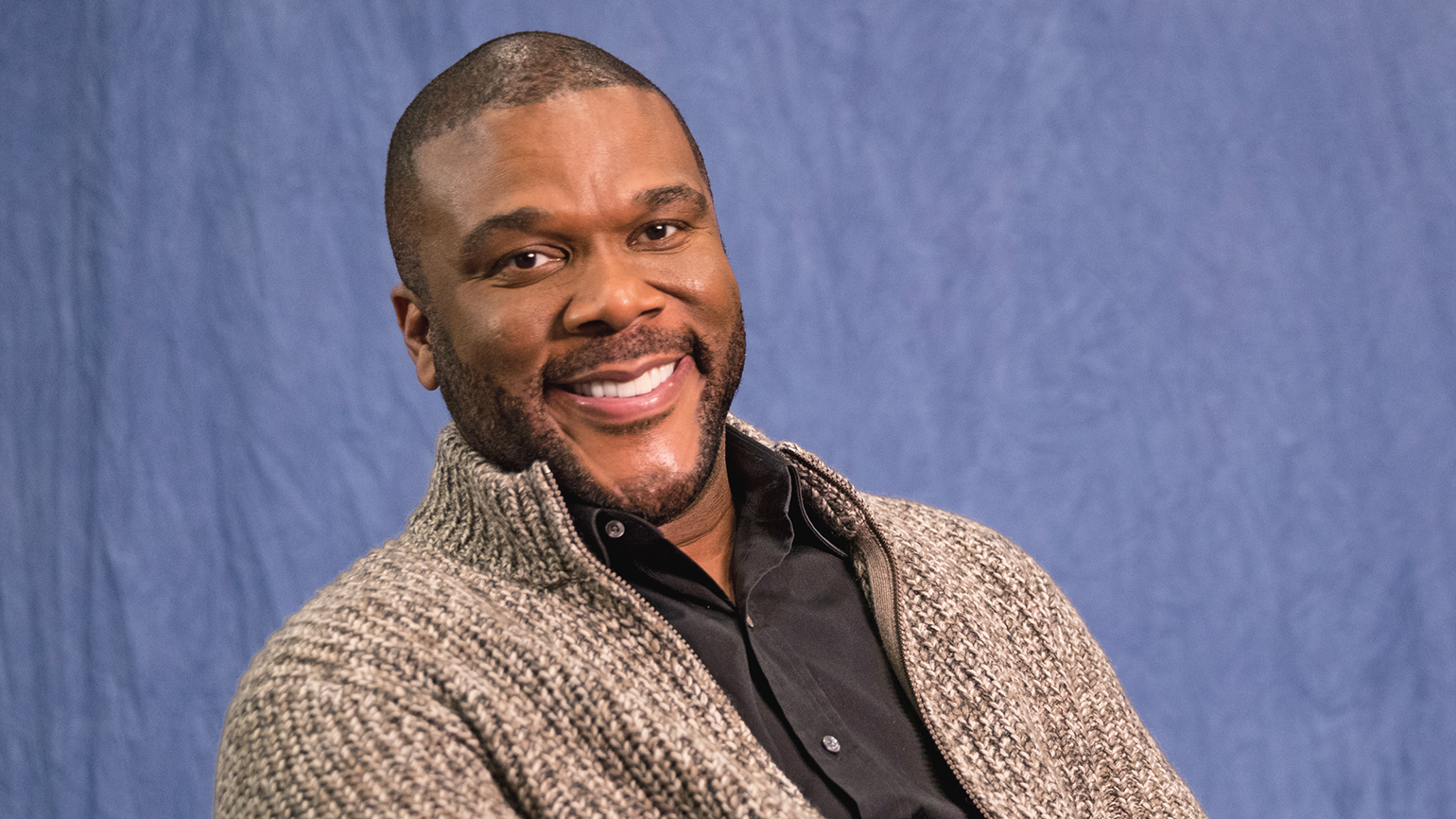
Tyler Perry Shares His Favorite Spiritual Principles

I’d written a book, a collection of inspirational insights and lessons. Now I just needed the right title for it. Then a friend wanted to talk. He was feeling pretty down about his life, and I urged him to see all the good things God had in store for him: love, compassion, peace of mind. If only he’d step up and reach up. “Higher is waiting,” I said. That was it, both my advice and the title of the book.

Tyler Perry on the cover of the January 2018 issue of GuidepostsWe all have dreams deep inside of us. They just need to be pursued. Higher is waiting. It’s up to us to stay in the climb and claim it. Here are some of the spiritual principles I’ve come to trust.

God loves us all. I started out close to the bottom. We didn’t have much of anything, but I got plenty of love from Mamma and my Aunt Mae. I lived for our weekend jaunts out to Aunt Mae’s from our place in New Orleans. Mamma would pick me up from school in her ’69 powder-blue Cadillac Coupe de Ville. She would turn up the volume on the eight-track player in the car’s dashboard and belt out the blues in her unforgettable voice (more on that later).

As soon as our car pulled up, the screen door would snap open and Aunt Mae would appear with arms stretched wide like angel wings. “Lord,” she cried, “my children are here.”

In the mornings, I could hear her singing gospel hymns. I crept out of bed once and tiptoed into the kitchen to listen. “What are you doing, Aunt Mae?” I asked.

“Talking to Jesus, baby,” she said. “Did you say your prayers last night?”

“Yes, ma’am.”

“Then you were talking to Jesus too.”

In New Orleans, on my walk to school, there was a blind man named Mr. Butler, who sold his wife’s praline candy to make a living. I got in the habit of walking him across the busy intersection of Washington Avenue and LaSalle Street. One time, I approached him without saying a word. I just stood there. “I know you’re there, son,” he said, startling me. How did he know?

“I was listening for you,” he said. He might have been blind, but he still saw me. Aunt Mae and Mr. Butler made me feel as if I counted for something. I was noticed. I was somebody who was seen and loved by God.

Prayers get answered. No matter how bad things got, come Sunday morning, Mamma would take me to church. Her uncle DJ was our preacher, and although I wasn’t always in the mood to hear him, one sermon in particular touched my soul. “Children,” he bellowed from the pulpit, “God will answer your prayer. Just ask him. No matter what you’re going through, God will see you through it.”

That night, alone in my bedroom, I decided to put his claim to the test. While the moon cast shadows on the wall and the cicadas sang, I got on my knees, leaned my elbows on the bed, clasped my hands together and closed my eyes. “Let the people who are living inside our TV step out and talk to me and love me so I can love them back,” I prayed.

As a kid, I had a pretty creative imagination. I thought that the TV characters on my favorite shows, like Gilligan’s Island and The Brady Bunch, were real people, about four inches tall, living inside our TV. I didn’t have the nerve to go behind the TV set to tear it apart (my father would’ve killed me). I wanted those people to come into my life.

An impossible prayer to answer? It would seem so. But God understood my little boy’s yearning to love. A few days later, we learned that our neighbor across the street was moving and wouldn’t be able to take her parakeets, Fifi and Pierre—about four inches tall—with her. She asked if I would care for them. Would I ever! Fifi and Pierre were even better than little people stepping out from the TV. God’s answers are even more than we expect.

Forgive even when you can’t forget. On Fridays, my father, Emmitt, would come home from work, his week’s pay folded into the back pocket of his overalls. He’d take a long bath, put on his creased jeans and freshly laundered plaid shirt and yell at us to find his shoes, a hint of the storm to come. When he came home hours later, stinking of alcohol and cigarettes, there would be hell to pay. He’d stomp through the house, and if anyone got in his way, he would explode, his fists flying.

He beat my mother, he beat me, he beat all of us. Afterward he might beg for our forgiveness, but I prayed that somehow when I grew up I could take care of Mamma so she would be free of him. I promised her that one day she wouldn’t have to worry about a thing. As soon as I was old enough, I left home to try to launch my career. But the anger was still there. One day, when I was staying in a run-down, pay-by-the-week hotel in Atlanta, I finally had the strength to call up Emmitt and yell at him. “How could you have treated me so bad?” I screamed into the receiver.

There was a pause. “You don’t know what happened to me,” he said, then hung up. I put the receiver back in its cradle. Something in me began to lift, the darkness to dissolve. It was the beginning of forgiveness.

When you forgive someone, you do not need to let them off the hook. Emmitt did terrible things to us—and I remember all of it. But as I learned about the abuse he had suffered, I found it easier to forgive. It wasn’t something I could do on my own. It was God’s grace.

God’s timing is not yours. My dream was to write and perform. For five backbreaking years, I worked at producing my play I Know I’ve Been Changed. The first time I did it, I spent every cent I had. I rented a theater in Atlanta, hired actors, built scenery, got props. I figured opening night would be packed. You know how many people showed up? Thirty.

Did it stop me? No. This was my calling. I saved up the money to put on the play again, this time in New Orleans. I hired actors, put up flyers, sent out press releases. The same thing happened. The theater was half full. I tried again and again and again, working at dead-end jobs just to raise the money. Finally some guys coaxed me into doing it at the historic House of Blues in Atlanta. That night was one of the coldest on record, and the heat in the theater wasn’t even working. I sat in the dressing room—angry, empty and hopeless.

I got up and started pacing, speaking out loud to God, “You give me these dreams and then you don’t see me through. What’s going on?” God spoke right back: “I’ll tell you when it’s over. You don’t tell me. You will persevere! Now look out the window.” I went to the window and gazed outside. There were people lined up around the block. The performance was a huge success. After that, I could barely turn people away who wanted to book me in their theaters, big venues. What a lesson in persistence. Wait for God to say he’s done. Don’t you tell him.

Love stays with you. I was able to keep my promise to Mamma and take care of her for the last 12 years of her life. At the end, I wasn’t ready to let her go, even though she was in a lot of pain. I’m glad she has no more pain, but I miss her every single day.

I can still hear her singing in the church choir. I could pick out her voice in any crowd, and let me tell you she had a terrible voice, completely flat and off pitch, but it didn’t prevent her from shouting full-throttle about how good God is. I can still feel her hugging me tight, making me feel safe, protected and loved. When I was little, she’d hold my head on her belly and I would get a whiff of her Woolworth’s perfume. “I love you, Junior,” she would whisper, and that was enough for me.

When I moved out, Mamma and I spoke nearly every day. I would ask if she needed anything. She would say, “I need you to be happy.” I guess that’s one reason I never gave up on my dreams.

She loved Christmas, but she had her quirks. Every year, she took her Christmas tree out of its box and set it up but she never put ornaments or lights on it. It would just stand there like Charlie Brown’s Christmas tree. And when it came to giving, she would buy me the same thing every year: plaid flannel pj’s from Walmart. Admittedly I’m hard to buy presents for, but these pj’s never fit. They were way too small for me. And yet I’ve saved every pair. Because they came from her.

She died in early December, so starting at the holidays and going through February, her birthday month, all the way to Mother’s Day, I especially miss her. I didn’t know that grieving could last so long. Mamma’s been gone almost 10 years, but I still feel the ache. Ride the wave, I tell myself. Don’t let it drown you.

Not long ago, I was in the kitchen, thinking of an unfinished conversation we’d had, something we would both cry over. I put my dish in the sink and turned on the water. It came out too fast and splashed onto the counter and onto some family photographs there.

I looked over, and there was a drop of water on Mamma’s face, as if she were crying with me. She’s still in my heart. Love like that—love that nourishes your soul—always will be.

For more inspiring stories, subscribe to Guideposts magazine.