

Embrace God's truth with our new book, The Lies that Bind

This Veteran Ran the Boston Marathon to Honor His Fallen Comrades

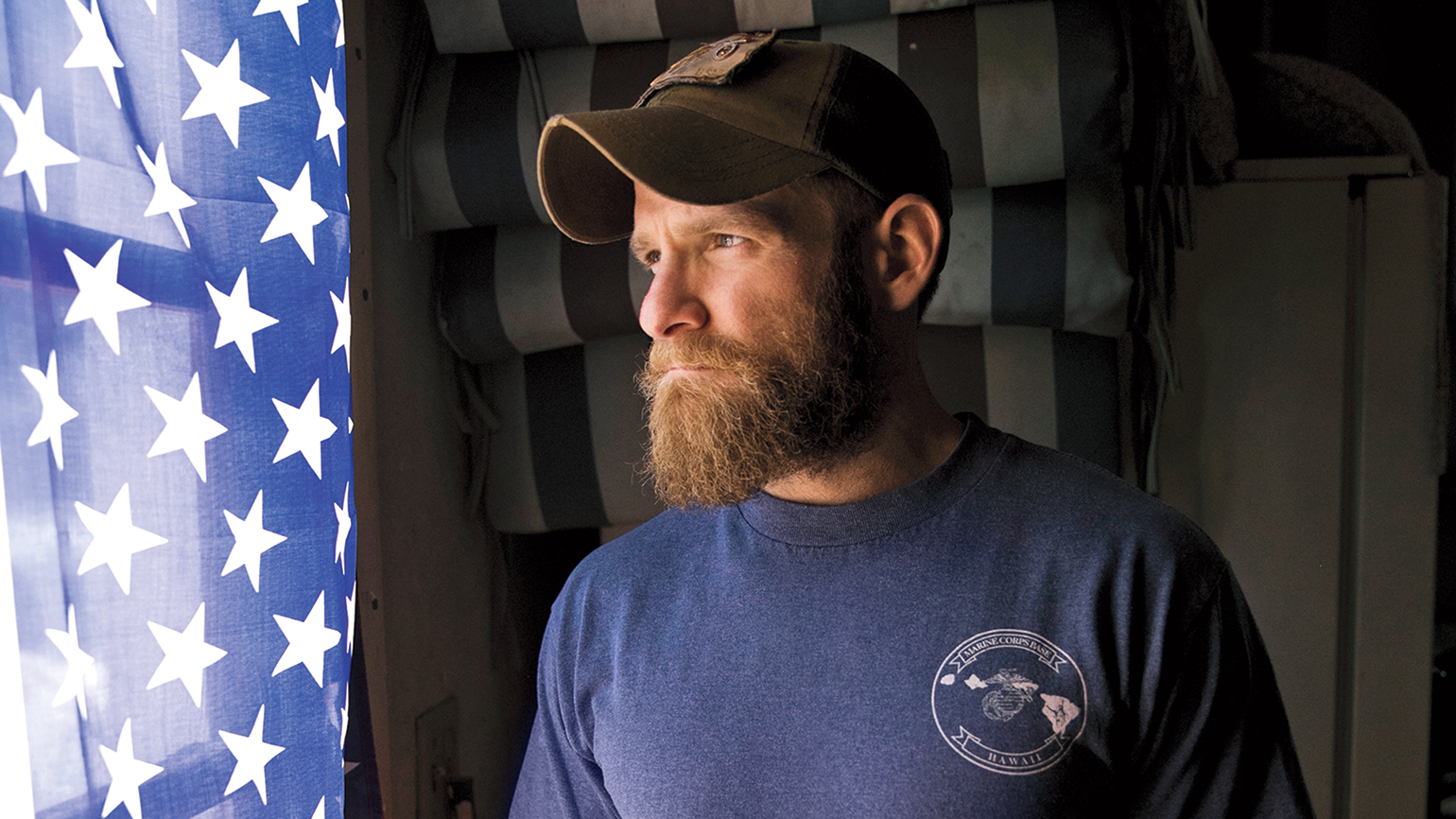
You probably saw pictures of me all over social media this past April. I’m the dude who literally crawled across the finish line of the Boston Marathon. I was totally gassed. But nothing on earth was going to keep me from finishing, because it wasn’t just me. My left running shoe had the names of three comrades in Afghanistan whose lives had been destroyed by an IED.

“Adapt and overcome” was pounded into us in the Marines. I had to push through. I got down on my hands and knees and crawled to the finish line. For Ballard. For Hamer. For Juarez.

Michah Herndon
As seen on the cover of the September
2019 issue of Guideposts

Running had never been a thing with me. I had to do it in basic, and I took it up again only at a low point, after returning to civilian life. Fighting overseas, I had been in charge of multimillion-dollar equipment and entrusted with the lives of fellow Marines. But back home in Ohio, I couldn’t get anyone to hire me. Finally I applied for work as an electrician and learned the trade. But my self-esteem was shot. Nothing was the same. My marriage fell apart, and my wife and I divorced. I was tortured by survivor’s guilt. Those guys who had died over there—couldn’t I have saved them somehow?

Did You Know Guideposts Helps Veterans and Active Duty Military? Learn More

I had enlisted in 2007, after one semester at Hiram College and one at Kent State. School wasn’t really doing it for me, and the idea of signing up for the military was appealing to me, sacrificing oneself for something bigger. I’d played football and basketball in high school and was in good shape. I figured boot camp at Parris Island would be a breeze. But I soon discovered that the real discipline for a Marine was mental. Learning how to tough things out. To be tougher than the enemy.

That mind-set came in handy when I was deployed. I was a machine gunner with the First Battalion, Third Marines—the Lava Dogs. I did two deployments, first in Iraq, then in Afghanistan. We did about 400 missions altogether. My mom wasn’t crazy about me signing up for the military and had given me a silver charm to keep in my flak jacket, a little angel with wings. I hung it on a piece of cord when I sat up there in the gun turret. January 9, 2010. Afghanistan, deep in Taliban territory. I was worried about fellow Marines Mark Juarez and Matthew Ballard and the British journalist who was embedded with us, Rupert Hamer.

Get a Free Booklet Created Especially for Service Members and Veterans

I was the lead machine gunner and the first squad leader, in charge of six other gunners. Our staff sergeant knew I had a lot of experience and had asked me where we should put everybody in the convoy. I placed myself in the first vehicle, which was usually the most dangerous position, the one most likely to hit an IED. Ballard and I had become good friends. He was expecting a son back in the States—I didn’t want him to be at as much risk. I didn’t know Juarez and Hamer as well, but I knew they had families back home. I put the three of them in the last vehicle, where I figured they’d be safer.

IED stands for “Improvised Explosive Device,” also called Improvised Expletive Device. You’re constantly on the lookout for them. I mean all the time. And it’s still not good enough. Our convoy was hauling supplies, journalists and fellow Marines between bases. It was early in the day when we hit that deadly 400-pound IED. It didn’t explode under the first truck—the one I was in. Instead it exploded under the last vehicle. Hamer and Juarez were killed instantly. Ballard was thrown from the turret and landed on the ground, both legs shattered. There was screaming and blood and debris everywhere.

Instantly we reverted to our training. We created a 360-degree safe zone around the convoy so Ballard could be medevaced out and the bodies of Hamer and Juarez could be airlifted out. We who remained stayed focused. Once the casualties were taken care of, we had to move on. We had to complete our mission. All the while I asked myself, Why hadn’t I seen that bomb? Could we have avoided it?

Later on during that deployment in Afghanistan, I hit two more IEDs and survived both. The first one didn’t go off. It had been wired wrong. We were lucky, really lucky. Yet deep down a part of me wondered if I didn’t deserve to be blown up too.

The second one was a powerful 50-pound bomb. The blast knocked me out, my ears ringing, but I wasn’t bleeding anywhere. I still had my arms and legs. We had music playing in the truck that day, and somehow the iPod survived the blast. The song I heard while the doctor was checking my vitals was Sarah McLachlan’s “Angel.”

The Marines wanted to medevac me out, but I knew if that happened I wouldn’t be able to return to my buddies in the platoon. I would have been sent back to my duty station. Instead I stayed at the base and didn’t go on any missions for a week, trying to clear my head. We got mortared on the base that same week. More explosions, more screams, more destruction.

I was honorably discharged after four years. I had served my time and served my country. It was when I was back home in Ohio that the survivor’s guilt hit me big-time. Here I was, safe, close to family and friends. But I didn’t feel safe, wracked by memories, horrible nightmares waking me up at night. I loved my wife, Sarah. I didn’t know why we couldn’t keep our marriage together. I was a mess inside, as if a bomb had gone off inside my soul.

Micah's fallen comrades (l to r): Matthew Ballard, Rupert Hamer, Mark Juarez
Micah’s fallen comrades (l to r): Matthew Ballard, Rupert Hamer, Mark Juarez

It was then, living by myself, that I took up running. I’d heard that you could get this runner’s high when you increased the mileage, and I needed something to take me out of myself, something to release me from my feelings. I’d put those men in the last vehicle. I’d chosen the spot where two of them would die instantly. For months I’d held out hope for Ballard. He made it to Walter Reed and endured multiple surgeries to repair his shattered legs. He came home to be with his wife and son. But things went bad for him. The pain was so intense; the painkillers were too many to count. He died of a heart attack.

I ran outdoors under groves of trees along Ohio’s Freedom Trail. I thought of Ballard, Hamer, Juarez. Three names. I knew those guys were in heaven—they’d done their best. I wanted to do my best for them here on earth. I started this habit of praying their names as I ran. Every day running a little further, a little faster, staying close to them. Inhale—“Ballard”—exhale. Inhale—“Hamer”—exhale. Inhale—“Juarez”—exhale. Someone suggested I run a half-marathon. I did it in Canton. Then a marathon. I did that in Canton too, fueled more by guilt than anything else. My work was going well. I ended up being hired as a substation electrician for FirstEnergy Ohio Edison. If only this sense of responsibility for my comrades’ deaths would leave me. It was the thing I could not outrun.

Sarah and I started talking again, slowly rebuilding the trust between us. In 2017, we remarried. She could see the change in me since I’d taken up running, the healing that was going on. That I was trying. The guilt was never completely gone, but I had a way to fight it. And I felt as if I was doing something to honor my fallen comrades.

It was Sarah’s idea, putting their names on my shoes. By the time I was running the Boston Marathon, we had the good news that we were expecting our first child.

Micah crawling toward the Boston Marathon finish line after his legs locked up at Mile 22
Micah crawling toward the Boston Marathon finish
line after his legs locked up at Mile 22

Meet Marine Veteran Kirstie Ennis, Wounded Warrior and Mountain Climber

I wouldn’t have scripted it the way it turned out, crawling to the finish line. What an inglorious end for a Marine. Some people saw that shot of me on my hands and knees and thought maybe I’d just knelt down to thank God. Well, I wouldn’t have crawled to do that. But I did say a prayer for 26 miles with every inhale and exhale. Ballard. Hamer. Juarez. Those guys felt very near. I’ll run in their memory forever.

When that bomb went off, I too was injured, a moral injury that tore into my soul, throwing off all sorts of spiritual shrapnel. I feel as if I am trying to put my soul together with every mile I run, outpacing the guilt that exploded that day on the battlefield. Every mile I run draws me closer to God.

VIDEO: Listen as Micah shares how long-distance running has helped him in dealing with PTSD and survivor’s guilt.

For more inspiring stories, subscribe to Guideposts magazine.
This Truck Driver Got Fit and Then Got Busy Helping Other Truckers

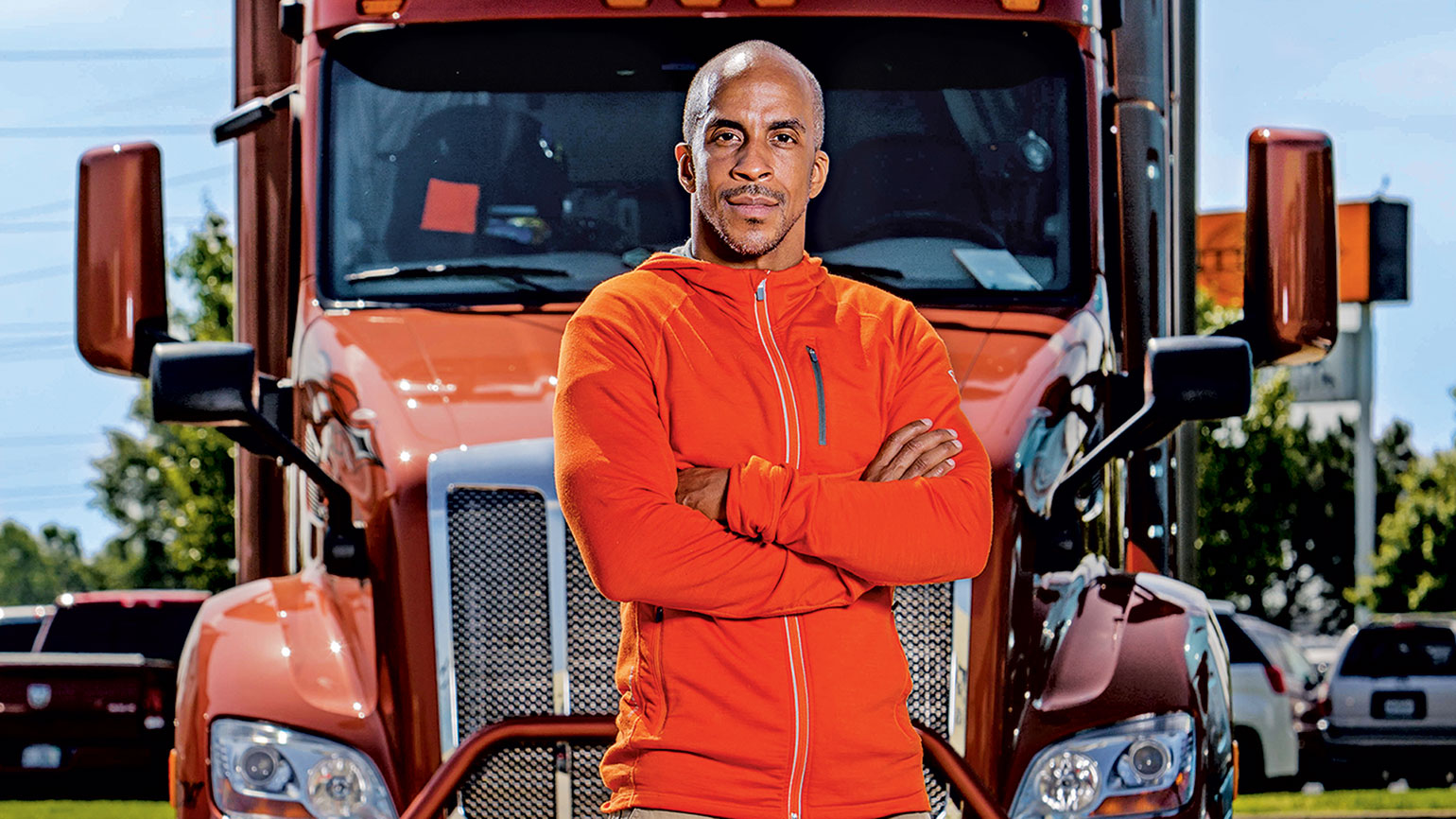
Did you know that truck driving is one of the un­healthiest professions in America? Obesity, high blood pressure, high cho­lesterol, smoking, limited physical ac­tivity, fewer than six hours of sleep per day… In a national survey, 61 percent of long-haul truck drivers have two or more of these health issues. I know what that’s like because for nearly four years, I was a truck driver myself, for Prime Inc., one of the largest trucking companies in the country.

Now I do something different: I’m the driver health and fitness coach for Prime. I also founded my own company, Fitness Trucking, designing health and fitness programs specifically for the truck driver lifestyle. An unusual occu­pation, especially for a Yale grad with a philosophy degree. So how did I end up here? I’m kind of surprised myself.

Then again, I’ve never done what was expected.

Not even when I was a kid growing up in Oswego, Illinois. Back then, my name was Tony Blake. My family was the first African-American family in the neighborhood. I always stood out. My dad took what could’ve been a neg­ative situation and encouraged me to turn it into a positive. Being different was my motivation to be the best at everything, from academics to athlet­ics. When Dad saw my competitive fire, he introduced me to a distant cousin, Hayes Jones, who’d won the 110-meter hurdles at the 1964 Olympics.

Hayes let me hold his gold medal, and I thought, I want to win one too. I was good at football and basketball, but I’d never have the size to go far in those sports. I turned my focus to swim­ming. So what if there had never been an African-American swimmer in the Olympics? I’d be the first! At age 10, I won my first state championship. I kept winning. By the end of high school, I’d grown to 5’8″, 140 pounds. Though usu­ally the smallest guy in the pool, I made up for it with intensity and technique.

I was accepted at every college I applied to, including five Ivy League schools, Stanford and the University of Virginia. I was also offered full scholar­ships at a few other universities. I opt­ed for Yale. No one could understand why I’d chosen a college that doesn’t even give out athletic scholarships. Not only that, the swim team had the worst record in the Ivy League, 5-7.

Like I said, I never do what’s expect­ed. But I had my reasons. At Yale, I’d be a big fish in a little pond. I could lift the team from the bottom of the barrel to the top of the Ivy League. Each year I swam for Yale, our team got better. My junior year, we had a 9-1 record. I en­tered the U.S. Open Swimming Cham­pionships, my best chance of qualifying for the 1992 U.S. Olympic team trials. I needed to have the meet of my life. But in my best event, the 100-meter freestyle, I missed qualifying by eight tenths of a second.

My Olympic dream died in eight tenths of a second. A part of me died too. Senior year, I just had no desire to swim any­more. The coach talked me into staying on to help our team win the Ivy League championship. At our meet against Harvard and Princeton, I swam the lead leg of the 4×100 relay and got us a big lead. We ended up winning the relay and, with it, a share of the Ivy championship. It was the culmination of my swimming career.

Three days later, I left Yale, a few months short of graduation. No one un­derstood, not even my dad. “All you’ve got to do is take your exams, Tony, and you’ll have your degree,” he said.

I wasn’t going back. I’d read about Jesus, Buddha, other spiritual luminar­ies. Now I needed to explore the world, to find out who I was meant to be.

For the next 15 years, I was a nomad, traveling Europe, the Caribbean, Af­rica, working odd jobs. I came back to the U.S. briefly in the late 1990s—I finished up my degree at Yale, then worked at a few nonprofits. But I took off again, going to Africa to learn more about my ancestral heritage.

I went to Togo, Ethiopia, Ghana, Benin and South Africa, where I had the privilege of meeting with tribal elders. They told me that when a son of the soil returns, he is given a new name. For my first name, they chose Siphiwe, meaning “gift of the Creator.” For my surname, Baleka, or “he who has escaped.”

By 2008, I was in my mid-thirties and tired of scraping by. I couldn’t imagine myself in a nine-to-five office job. A friend who was a truck driver suggest­ed I try his line of work. I liked the no­madic lifestyle. I’d get to explore Amer­ica. I’d make good money. I didn’t have many living expenses, and I worked out a plan where I’d drive for three years, build some savings, then move on.

I signed up with Prime Inc., which is based in Springfield, Missouri. I got my commercial driver’s license, then went on the road, training with an experi­enced driver. After two months, I had a break and went to go visit my dad.

He gave me the once-over.

“What?” I asked.

Dad smiled. “I told you what would happen once you stopped swimming—do you remember?”

I remembered. He’d joked that I would get fat. I hadn’t been getting much exercise behind the wheel of the rig, but my body couldn’t have gone soft that quickly, could it?

I checked out my reflection in his bathroom mirror. My face was fuller. I lifted my shirt. For the first time in my life, I couldn’t see my abs. I got on a scale. I couldn’t believe it: 155 pounds!

I’d weighed 140 pounds all my adult life, and in just two months of driving, I’d gained 15 pounds. That doesn’t sound like a lot, but I’ve always been body con­scious. When you’re a swimmer, you spend most of your time in skimpy swim briefs, so you’ve got to look good.

At this rate, I’d be 50 pounds over­weight by the end of the year. I wouldn’t look good, and I definitely wouldn’t be feeling good. In trucking, it’s all about the delivery schedule. Every second counts. Eat. Sleep. Drive. That’s all you have time for. How was I going to fit in working out?

That night, as providence would have it, I was flipping through the channels on TV and came across an infomercial for the Range of Motion exercise machine. It was like a spin bike, rower and stair stepper all in one. The inventor claimed that four minutes on the machine would give the benefits of an hour-long work­out. That’s ridiculous, I thought.

There was only one way to find out. I’d have to try it. Not the machine it­self—it was massive and cost $15,000. But I came up with a workout repli­cating its movements, using my body weight as resistance.

Anytime I had a few minutes, I worked out. Burpees, mountain climb­ers, jump-tucks. Beside my truck at rest stops, I’d do each exercise at high intensity for 20 to 60 seconds, rest for 10 seconds, then repeat. “Get it in where you can fit it in,” I told myself.

Drivers wait in line at the receiv­ing office for 20 to 30 minutes. I used that time to do squats and shadow-box. Some of the guys laughed at me. I became a running joke over the CB. It didn’t bother me. I don’t do what’s ex­pected, remember? Besides, I was used to standing out.

But some drivers would come up to me and say, “Man, I really need to be doing this. Can you show me?” I dem­onstrated and gave them exercise and nutrition tips while exercising in front of my truck. The more I coached them, the more I realized my new routine wasn’t just for me. It was meant to help other people find their way to health. There was a real need and a real busi­ness opportunity here.

I drew up a proposal to become the in-house health and fitness coach and presented it to Robert Low, founder and president of Prime Inc. He was all for it. I studied corporate wellness programs and developed a 13-week pro­gram for our fleet. Interested drivers had to fill out an application and come in for a day of orientation.

Emily was one of the first to enroll. “I went to an amusement park with my granddaughter, and they kicked me off the ride because I was too big to buckle the lap belt,” she said. “I’m ready to make a change.” The average weight loss in that first group was more than 19 pounds. In the second group, I had a guy who lost 60 pounds in 13 weeks.

Their success inspired others to sign up. Drivers use an app to log every­thing they eat and drink. Once a week, we analyze their food logs and identify what’s doing the most damage to their metabolism and show them how to fix it. Improving nutrition and fitness isn’t complicated. What’s harder than changing your behavior is changing your thinking.

I’ll have people confess they’re em­barrassed to exercise in front of others. “I’m 270 pounds. What if folks see me doing burpees and make fun of me?”

“What if they see you and think, Hey, if he can do it, maybe I can too?” I say to them. “Why not set a healthy exam­ple and be a light, like Scripture asks of all of us?”

That’s what I’ve found myself doing. For once, I’m doing what’s expected of me—in a totally unexpected way. And I’ve never felt more fulfilled.

For more inspiring stories, subscribe to Guideposts magazine.
This Senior Synchronized Swim Team Finds Healing in the Water

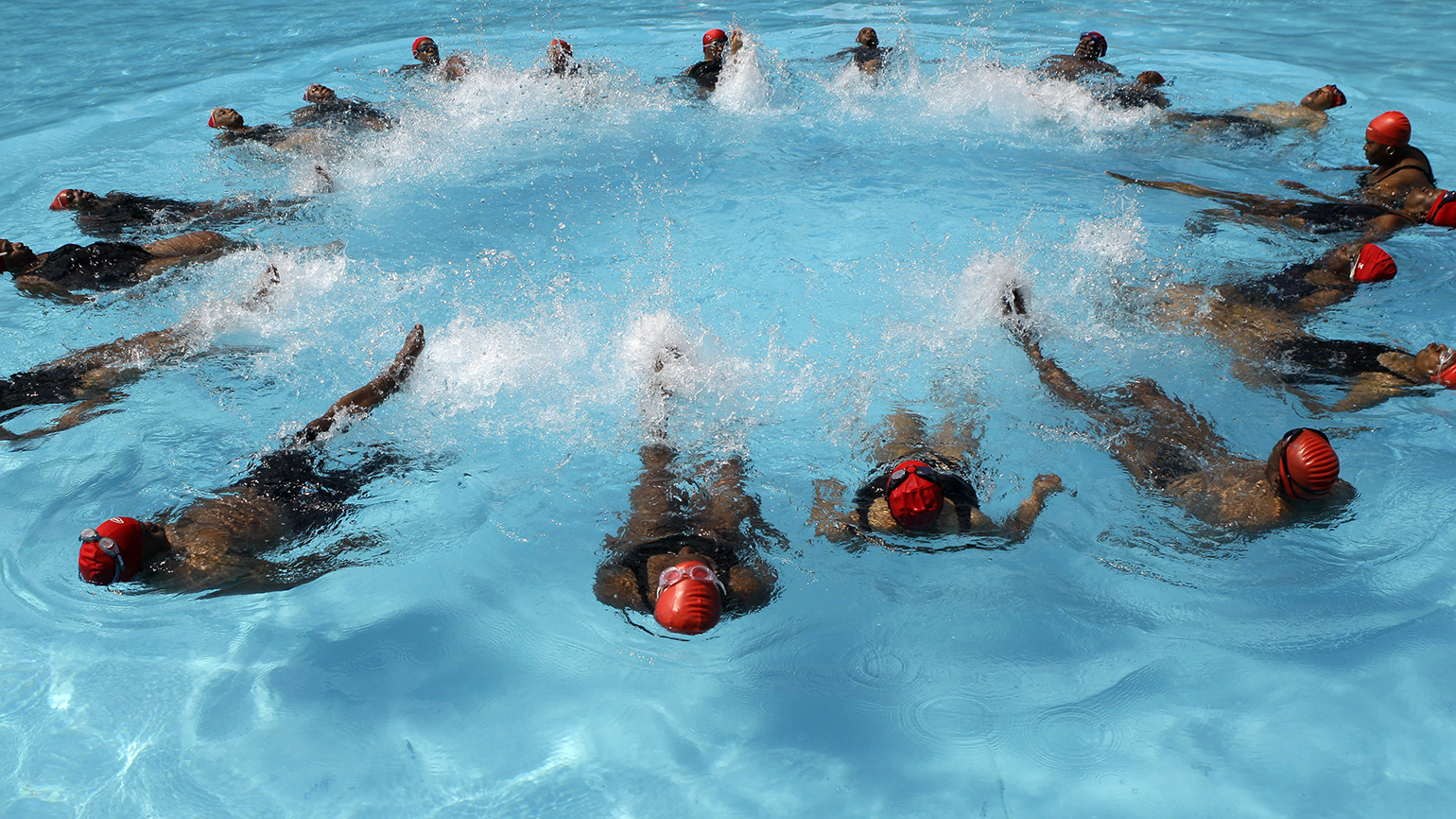
Visit the swimming pool located in the Hansborough Recreation Center in Harlem on a weekday afternoon and you’ll be treated to an unusual sight—even by New York City standards.

The pool, normally filled with kids learning to stay afloat in the shallow end or adults getting in some laps after work, transforms into an aquatic haven for some of the city’s senior residents. Home to “The Harlem Honeys and Bears,” the senior synchronized swimming team.

Made up of members that range in age from 60 to 95 years-old, the team is a mainstay in the community, holding regular practices since 1979. There are, on average, over two dozen members of the team at any one time, and most if not all, are African American.

Although the team has gained media fame in the past few years, appearing on the TODAY Show (where they taught host Hoda Kotb some water aerobics) and with profiles in publications like The Atlantic and National Geographic, going viral was never what drew these swimmers to the water.

“A lot of us came here sick and this was given to us as therapy,” Monica Hale, the team’s captain, tells NBC News. “It’s been the best thing that’s ever happened.”

The team meets three days a week to practice routines for the city and state competitions they take part in each year. Their coach of 23 years, Oliver Footé, crafts choreography that each member can participate in, no matter their level of ability.

In fact, because many on the team suffer from a variety of ailments, the center has made a point of catering to its senior-most team, installing lifts for those who can’t use the stairs to enter the pool.

For 96-year-old Lettice Graham, the oldest swimmer on the team, the ability to dip into the water and stretch her muscles has, in many ways, saved her life. Graham didn’t begin swimming until age 64, but you wouldn’t know it watching her perform intricate dances and human pyramids in the deep end.

“Without swimming, I’d be in the doctor’s office,” Graham says. “It’s the best therapy.”

The team says that Foote’s robust aerobic workout strengthens their cardiovascular muscles, relieves tension and stress, and allows them to exercise without straining their limbs and joints.

But the team isn’t just focused on improving themselves, they’re also intent on giving back to the community.

Each week, members of the team serve as coaches and mentors during swim practice for younger students, helping kids in the community — a majority of which are black youth — work on their strokes, learn to tread water, and overcome their fear of the pool.

According to a recent University of Memphis study, 70% of African Americans have little to no swimming ability and black children are five times more likely to die from drowning than white children. The Harlem Honeys and Bears are hoping to reverse that trend.

They hope to break harmful stereotypes associated with their ethnicity, and to entice their peers to get into the pool because, no matter your age, the water is just fine.

This Heart Attack Survivor Wants You to Know the Signs

At 53 years old, Bertha B. Verde never thought she’d be the victim of a heart attack.

Verde was in great shape – she had just finished an intensive fitness boot camp – and was committed to clean eating. In fact, it was while enjoying a snack of fresh veggies at home in her kitchen that Verde noticed something was off. She began to have trouble swallowing, she started sweating and clenching her teeth, she had a sudden jaw pain and her arm began to go numb.

“At the time, you don’t think, ‘Oh, what’s the list of symptoms of a heart attack?’” Verde tells Guideposts.org. While Verde was ready to ignore the pain, her husband wasn’t. The couple rushed to the E.R. where Verde was admitted and had to undergo an EKG and blood tests.

She would find out later that she had a suffered something known as the “widowmaker,” a spontaneous coronary artery dissection, where a tear forms in the blood vessel and blocks blood flow.

Verde may not have known it at the time, but her symptoms were classic signs of trouble when it comes to women’s heart disease.

“Men and women’s symptoms are very different when it comes to heart disease,” Dr. Poulina Uddin, a cardiologist at Scripp’s Women’s Heart Center in La Jolla, California says. “They can have the classic chest pain but more often they’ll complain about jaw or back pain, nausea, excessive fatigue, sometimes lightheadedness. Those could be symptoms of anything which is why they’re often missed.”

According to Dr. Uddin, women are also more likely to shrug off their discomfort, like Verde did.

“Women are used to having pain from various things, their period, childbirth, so they may disregard it and blow it off as something else.”

For Verde, accepting that her body had gone through such a trauma was difficult. It’s been 18 months since her heart attack and she finds herself still struggling through the recovery process.

“The immediate was denial. I knew it happened but I couldn’t believe it happened,” Verde said of the few months following her heart attack. She couldn’t exercise for long periods – just a 30 minute walk left her winded – and found herself filling up her downtime by scrolling on the internet, searching survivor support forums for answers as to why she was feeling so low and hope for when she might return to normal.

“Depression is really common after having a heart attack and people don’t talk about that,” Dr. Uddin admits. “People are usually in shock for a good six months after something like this happens and they don’t even process it until a year later but we want to give them the tools to say ‘Hey, you’re not alone and here are other things you can do to inform others and educate others.’”

It wasn’t until Verde started attending a women’s support group at Scripp’s Women’s Heart Center that she began to feel understood and started to take charge of her recovery.

“As a person who has suffered a heart attack, I just wanted to talk to other people [like me],” Verde says. She began attending a group at Scripps that was a 45 minute drive from her house but soon felt lead to start a support program in her own neighborhood.

She attended a four day training program at the Mayo Clinic in Rochester Minnesota where she was instructed by cardiologists and medical professionals about the different types of heart disease, how to recognize symptoms, how to support survivors and how to run a support group.

A few weeks ago, Verde held her group’s first kick off meeting.

A handful of ladies signed up on line. Over a dozen ladies came in.

“They were so happy that there was somewhere to come and listen and talk to others in the neighborhood,” Verde says of the meeting. “I had no idea that I could help in this way. You could hear women talking to each other, connecting with each other and feel relief and feel understood. You can talk to other people, but unless they’ve been through it, it’s kind of hard for other people to truly understand what’s happened to you.”

She hopes to offer more to the women in her community, educating them on the signs of heart disease and encouraging them to be proactive about their health.

“I want everyone to know the symptoms, to know the risks, to get checked,” Verde says. “I want women to know how to empower themselves and to know what questions to ask.”

This Former Addict Is a Popular New York City SoulCycle Instructor

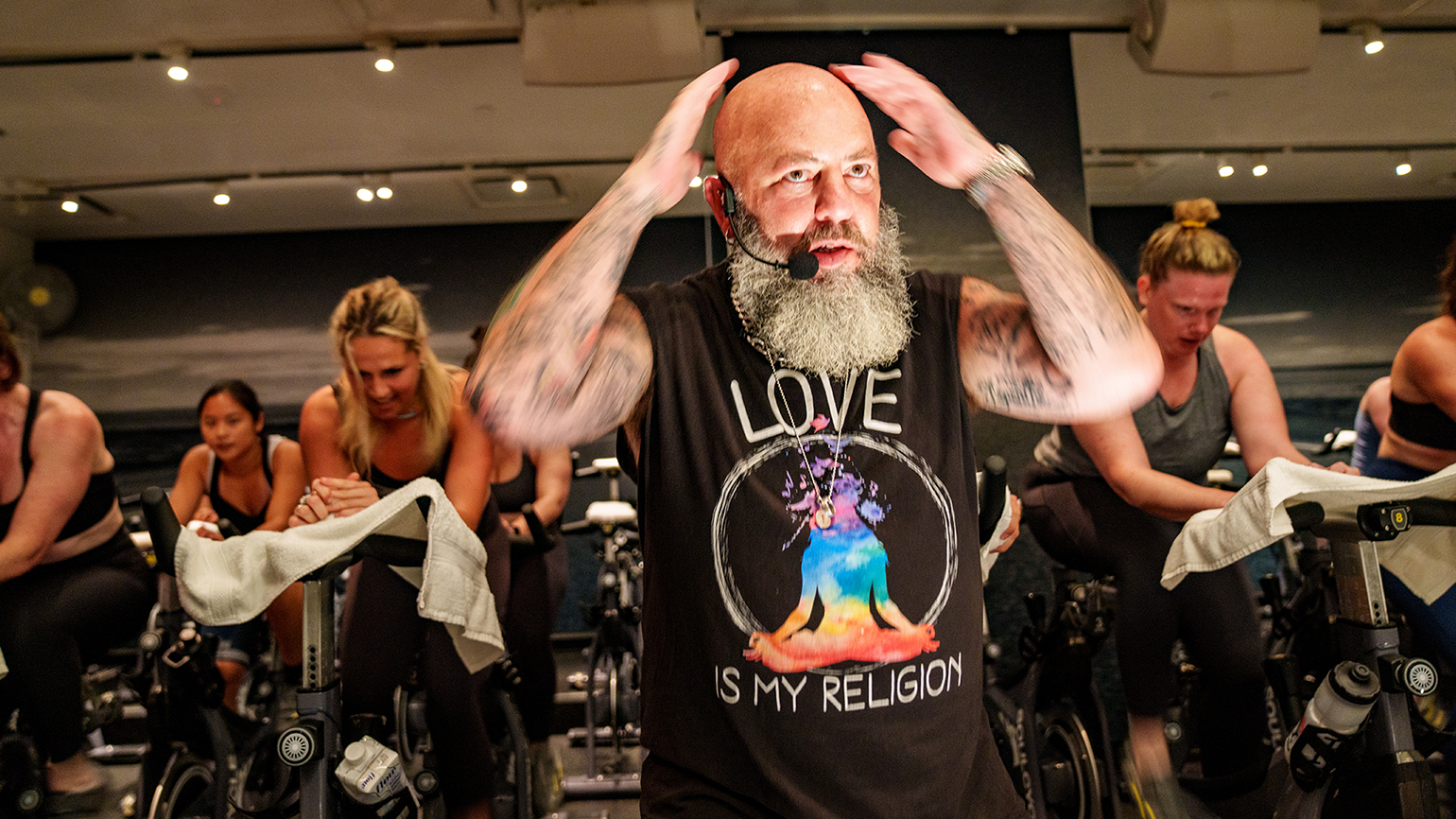
Meet me and I bet you don’t think, That guy’s a New York fitness instructor.

I’m not some toned and tanned yoga teacher wearing trendy athletic gear.

I’m a 58-year-old recovering alco­holic and drug addict with a regular-guy physique, shaved head, long gray beard and a body covered in tattoos.

Actually, I don’t think of myself as a fitness instructor, though I do teach SoulCycle classes in New York City, where I live. I’m not sure what to call what I do for a living.

How about…soul inspirer. That’s my goal for every class I lead. It’s also what I try to do for my life-coaching clients. And my podcast listeners.

I have been blessed by God with an amazing second chance in life. I went from being an addict, drug dealer and convicted felon to living and thriving as a sober person for 14 years so far.

I used to hate what I’d done to my­self. Now I wake up excited for each new day. Surrendering to a higher power taught me that anyone, how­ever low they’ve sunk, can change di­rection and climb back up.

I want to pass on that hope. I want to share the joy that comes from liv­ing without fear. It’s my mission. One class, one client, one day at a time.

You’ll see what I mean if you come to one of my classes. Rows of sta­tionary bicycles face a single bike on a platform up front. People arrive, in every shape, size and fitness level. They climb on the bikes, and the lights dim. Rock music starts up.

I go slow at first, but soon we’re pounding the pedals, and the music gets louder. I’m loud too.

“Everything you need is already in­side you!” I shout. “That’s why I call this a work-in, not a workout!”

I share my story. I encourage people to face their own fears and believe in themselves. I don’t proselytize, but I am candid about being a changed man, saved by grace and grateful for everything I have.

There’s something about being in a small, loud room, surrounded by ex­hausted, exhilarated, sweaty people facing their limits, that makes you vulnerable.

It sounds weird, but it feels like church. That’s how it was for me my first time. Before I became an instruc­tor, I was a rider like anyone else. I stumbled into my first SoulCycle class 10 years ago. I weighed 300 pounds and smoked four packs of cigarettes a day. I was only a few years sober. I had no idea that one class would change the course of my life.

Back up to the beginning. I can’t blame anyone but myself for my problems. I grew up in a loving middle-class family. We moved a lot as my dad climbed the corporate lad­der in publishing, and I always felt out of place at school.

Lots of kids grow up feeling awk­ward. I dealt with it by drinking, start­ing with sips I’d sneak from my par­ents’ liquor cabinet before escalating to full-blown alcohol dependency by high school.

Soon I picked up cocaine, got ad­dicted and started dealing to support my habit. TV makes the drug life look glamorous. Believe me, it’s not, no matter how many hip New York par­ties you go to or how many A-list ce­lebrities buy your drugs.

One morning, after a night of club­bing and dealing, I sat in my car on a Manhattan side street, snorting coke and watching the sun rise. The neigh­borhood gradually woke up, and families began coming outside to walk to school or work. Parents with kids. Husbands and wives. Good people. They all looked so happy. So normal.

I sat there, alone with my coke and self-loathing. I’m not worthy of a good life, I thought. That pretty much sums up the self-consuming reality of ad­diction, the spiritual desolation.

I could tell you my addiction story, my qualification as we say in 12-step, and believe me, it’s crazy. But it arrives where they all do. At rock bottom. Mine came in 2006. I’d moved to Los Angeles to pursue stand-up comedy. One day, cops searched my Holly­wood apartment and discovered bags of marijuana and cash. I was arrested, convicted and ordered into a six-month residential treatment program in L.A., plus two years’ probation.

I’d already been to rehab multiple times and even sobered up for a long stretch after finishing a treatment pro­gram in Mississippi during my mid-twenties. Walking into the facility in L.A., I suddenly remembered what it had felt like to be sober. I’d been hap­py. Stable. Proud of myself. The siren song of drugs took that all away.

Why had I relapsed? I didn’t really know. What I did know is I wanted my sobriety back, and I would do any­thing to get it.

I remembered a guy I’d met in the Mississippi treatment program.

“Do you pray?” he’d asked in a thick Southern accent.

“No,” I said.

“Why? You afraid?”

“I’m not afraid of anything.” After all, I’d been shot at during drug deals and tried to kill myself several times.

“Then get down on your knees and pray with me.” The guy knelt by his bed and put his hands together.

I wasn’t about to back down from a challenge. I knelt beside him. The next thing I knew, a peace I had never experienced enveloped me. A sense that something bigger than I could comprehend held me in its hands and would never let me go. I surrendered wholeheartedly. Though my sobri­ety didn’t last, I had been touched by something mi­raculous that had taken root deep in my soul.

So I was ready, really ready, to surrender again in the L.A. treatment program. I prayed every morning and evening. I worked the 12 steps. I was determined to walk a different path and asked God for guidance.

I became a case manager—but that didn’t mean all my habits were healthy. I ballooned to 300 pounds. My doctor told me I was a junk food addict and a walking heart attack.

One day, out shopping for under­wear (I’m not kidding), I passed a brand-new SoulCycle studio in a mall. On a strange impulse, I walked in.

“Want to try a class?” said the own­er. Me? Something made me say yes. I heaved myself onto the bike closest to the door—in case I keeled over and someone had to haul me out.

I started pedaling. Right away, I was out of breath. Everything hurt. I want­ed to stop so badly.

Then a thought came to me: I have survived getting shot at, attempting to kill myself and doing an insane amount of drugs. Am I going to let junk food defeat me? No!

I pedaled my heart out and, by the end of the class, felt like a different person. It wasn’t quite like praying, but it was close. I had left some bro­ken part of me behind on the bike and walked out of the studio feeling amazed that I’d survived.

I signed up for two more classes the next day. And the next. Then the day after that. I lost weight fast and gained a reputation for inspiring other riders with my enthusiasm and willingness to bare my soul as the class revved up.

Not long after my first class, an in­structor called. He’d hurt his ankle. “Want to help me teach?” he asked.

Again, something made me say yes. I was still pretty heavy. I still smoked, though less. I mounted the podium and got on a bike beside the instruc­tor’s. He led the class, but I helped keep the cadence going. I thought I would be terrified. Instead, the bright lights and eager faces inspired me to pedal even harder. They made me want to be my best self.

A month later, a master teacher asked if I’d like to become an instruc­tor myself. I agreed and ended up moving back to New York to train.

My teaching style was…unique. I held nothing back. I shared my story of addiction and recovery. My struggle with weight. My feelings of worthless­ness and my newfound faith in myself. It was an exercise class. But it was also a place where people, including me, could trade their self-deceptions and negative self-talk for an hour’s worth of pure grit. A sanctuary. I loved it.

I’ve been doing it ever since. My classes are popular, but it’s not be­cause I’m some fitness star. I have a hope and an honesty that comes from surrender to a loving higher power. I’ve been to the bottom and, by the grace of God, climbed back up.

See what I mean? I’m a soul inspirer. A guy saved by grace who is helping other people find their own next right step. One class, one client, one day at a time.

For more inspiring stories, subscribe to Guideposts magazine.
This Father Found Hope and Help for His Daughter Battling Addiction

I came home from work that day and could barely recognize my own daughter. She was right in front of me, slouching down the stairs. There was no missing those piercing blue eyes, those strong hands for shooting baskets. But something was different, something was wrong. My 17-year-old had changed so quickly these last few months.

We’ve always called her Breezy—like her headlong embrace of life. When she was little, people stopped us in shopping malls to tell me how beautiful she was—her eager grin, her wavy blonde hair, her clear, delicate skin. But the girl who shouldered me aside and stalked outside that day wore a scowl. Her hair was dyed black, her face blotchy and broken out. “Breezy,” I said.

“What?”

“Where are you going?”

“Out.” A car had pulled up. Breezy’s new friends were in it. They were older. Their arms were covered with tattoos. Their noses were pierced. Their hair was dyed black. They stared sullenly from behind the windows.

“Not with them, you’re not,” I said.

“I’m late,” she snapped, and ran out the door. She was already climbing into the back seat when she turned and yelled, “You can’t tell me who my friends are! I hate you!” Then the car sped away.

I stood, silence settling over me. Shelley, my wife, stared at the floor then walked to the kitchen. Not long before, Breezy had been a happy girl. The house had been filled with the laughter of her basketball teammates. But, then, over the course of the summer before her senior year, everything changed. I’d always been so sure about the way we raised Breezy. Where had I gone wrong?

Breezy, our middle child, was a tomboy, a daddy’s girl, the one who never left my side. Shelley, sometimes, found her hard to handle. But I knew her like I knew myself—she was fearless, tough, a bit willful at times. I remember driving up our block one day. A 10-speed bike was rolling toward me, piloted by a tiny form. It was Breezy, four years old, straddling the cross-bar and leaning low to reach the pedals. To stop she kicked her foot against a wall.

She bypassed dolls and went straight to sports—soccer first, then basketball in third grade. When I washed the car, she scrubbed the hubcaps with her own little sponge. When I went to the store, she was out the door before me, blonde ponytail jammed through the back of her baseball cap. I can still feel the slap of sun as we eased the convertible from the cool, dark garage. “Take the top down, Daddy!” she’d yell.

To my regret, we didn’t go driving very often. I was a business consultant. I worked evenings and weekends. I left for weeks on assignment. I knew my family missed me. But we caught up on vacations. And I made sure the kids got the no-excuses discipline I had growing up. I’d been a military policeman in the service, then worked as a cop during college. I was strict. I was loving. And it worked.

I remember once, when Breezy was a junior in high school, she asked if we could go out to dinner, just the two of us. In the booth, she started crying. “I was trying not to tell you, but I can’t be dishonest with you. Dad, I’m so sorry, but I went to a party where there was beer and I tasted one. It was terrible!”

At first, I flushed with pride at her honesty. But then a small fear spoke. Parties. Beer. Where else was she going? Was she still Daddy’s little girl? I resolved to keep an even closer eye on her.

By high school, Breezy was a basketball star. My work had kept us moving every few years. But we finally settled in a Portland suburb so Breezy could join one of the state’s best teams. I wanted to make sure she had every opportunity. Shelley and I—when I was in town—would cheer so loud at her games that Breezy said we embarrassed her.

Though Shelley and I cheered for Breezy together on the court, we differed when it came to discipline. Shelley was more willing to give Breezy space; I was a stickler for the rules, maybe because of my police background and maybe because I wasn’t always around to watch her. Strict rules did the job when I couldn’t.

Then, right before her seventeenth birthday, Breezy was caught missing practice. Her coach threw her off the summer team and told her that if she wanted to rejoin in the fall, she needed to shape up. It was then that I began to notice changes.

First, our house fell silent. The hungry athletes who came home with Breezy to raid the fridge and watch the big-screen TV disappeared. She took to her room. Loud, hostile music sent out the message: Stay away. Strange kids began to drop by and loiter on the lawn. She dyed her hair. Then came that day when I got home from work and she told me she hated me before getting into the car with people my instinct told me were no good.

Things didn’t improve that fall. One night I was working late. The phone rang. It was our pastor. “Jim, I don’t know how to tell you this.”

“What?”

“Breezy is addicted to methamphetamine. Shelley’s taken her to the hospital. They’re there right now.” I twisted the phone cord. How come I hadn’t known? Why hadn’t I seen that this was what was behind the changes in my daughter? Suddenly, I knew all the answers to the questions that had been plaguing me. I knew why she wouldn’t speak to us. Why her looks changed so drastically. Why she snuck out to careen through the city with those sinister “friends”. Everything clicked. Drugs.

“Jim, are you there? Are you okay?”

I put the phone down and got into the car. The speedometer edged to 75. Freeway lights flicked past. At the hospital, a doctor led me through the ER to a bed encircled by a curtain. He tugged the curtain aside, and there was Breezy crouched on a bed, long arms curled around bony knees. She looked up warily. I could tell she was regretting the confession to Shelley that had landed her here. Why hadn’t she come to me like she had about the beer?

“Breezy,” I said. But her eyes were vacant, cold.

“Your daughter has been using for about six months,” the doctor said to me. “I asked what time she last took drugs. She said eight o’clock tonight.”

I looked at my watch. It was 9:30 P.M. She’d been home that night, and even out driving with our youngest daughter.

I stumbled from the bed and hid my eyes. But I warned her. I watched her. Drugs were against the rules. I gave her everything. What did I do wrong?

Within a few days my wife found a treatment center recommended by a friend, and drove Breezy there. It was a nine-month program. No phone calls, but she could write to us. At home, I checked the mail obsessively. But no letters arrived. I’d taken some time off, so all day I sat at home, trapped in my deepest interior. At first, I tried blaming Shelley. Too permissive. But then I wondered. Was it me? Had I been too strict? I replayed Breezy’s childhood, the times I laid down the rules, especially about drugs. I remembered telling her what I had seen as a policeman—furtive, conniving addicts stripped of everything but their desire to get high. Should I have done more?

The days wore on. My thoughts twisted and re-twisted, always looping back to a single image: Breezy staring at me, through me in that emergency room. As a cop I had seen countless addicts cycle through recovery programs. An addict is an addict, I’d concluded. Now the thought crushed me. How can I guide her? How can I make her Daddy’s little girl again?

Then, one morning, exhausted and broken, I started my morning devotions at the kitchen table. Outside a drizzling rain soaked the trees. The house was quiet. I was alone, staring at the Bible that lay closed on the table before me. I buried my face in my hands. Lord, how do I get through this? How do I know you have your hand in this? I opened the Bible and leafed through it. Suddenly, a new image came to mind. Always before, I had obsessed over what I did, what I should have done, what I could do now. What about God? He’s the healer, not me. Breezy is in his hands, not mine. This was a hard thought. I resisted it. But I’m the father, I insisted. I’m the one who takes care of things and shapes my kids. But the image of God the healer wouldn’t go away.

I realized I needed to commit Breezy to his hands and concentrate on the one thing I could do: love my daughter. I grabbed a pen and paper. “Dear Breezy,” I wrote. “I’ve been praying for you. I hope you’re doing all right. I love and miss you. Dad.” No lectures. No threats. I took the letter to the post office.

Returning home a short while later, I leafed through the mail. My heart leaped. Her handwriting on a letter! I tore open the envelope and read, “Dear Dad. Many things are happening here at rehab. I’m feeling better. I never want to go back to the dark life I was living.” I held the letter in my hand for a long time, my tears falling on it. Was it only coincidence that it had arrived on just this day? Or was it the answer to a prayer I’d found so hard to say? To give my daughter completely to a higher power.

Breezy is out of rehab. Yet, she still struggles. We all do. I believe her when she says she’ll never return to drugs. But Breezy’s part, like any addict’s, is not easy. She finished high school and is working, and thinking about going to college. She’s let go of her druggie pals, but has found it hard to make new friends. I pray for her constantly.

One Sunday not long ago we were getting ready for church. I was about to shout up the stairs for Breezy to hurry up when all at once she appeared at the top. My mind froze and so did Breezy. I looked at her for a long moment, as if she were poised in some limbo between the young, innocent Breezy who’d once been my little sidekick, and the Breezy who had been ravaged by methamphetamine, a shadow daughter whom I didn’t know. Then she smiled, her eyes bright and clear. “Let’s go,” she said. “I don’t want to be late.”

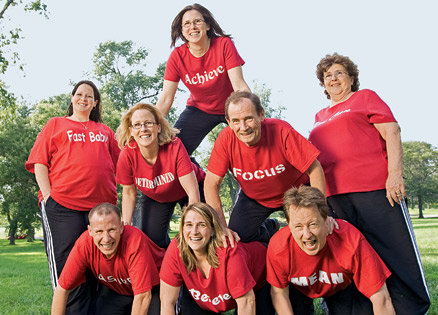
This Family Was Inspired to Lose Weight—and F.A.S.T.

A November evening and my family, as usual, was eating. All of us, my five siblings and I, plus spouses and kids, were at Mom and Dad’s for Mom’s birthday. We were plowing through a typical Dean spread—chips, dip, cupcakes, cake and ice cream.

Mom and Dad were on the sofa, where they sat so often the cushions had permanent indents. None of us was what you’d call skinny. But watching everyone, myself included, polish off slabs of cake, I suddenly realized “not skinny” was the understatement of the year.

The real word for us was “fat.” Not fatter than most people we knew—65 percent of Nebraskans are overweight—but fat nonetheless. Out of shape. Nowhere near the vigorous people God created us to be.

We’d tried to lose weight. But something was missing. Something I was still feeling my way toward that evening when, on impulse, I blurted, “Hey, listen up! We need to have a family meeting.”

Conversation stopped and everyone turned to look at me, their eyes puzzled.

“Um,” I said, “I’m sorry to interrupt, guys, but, well, I think we need to talk—about our weight.” The room got quiet. “Look, I’ve been thinking about this a lot lately. We’re the closest family anyone could ask for. We talk about everything—except this one issue.

“Look at us. I’m at least 30 pounds overweight. Jeremy’s more than twice that. And the girls are always yo-yo dieting. Dad’s diabetic, and he and Mom can hardly get on the floor to play with their grandkids. But we never talk about it.

“I can’t believe I’m bringing it up now. If it wasn’t for a TV show I’ve been watching, I’d probably still keep quiet.”

“TV show?” someone asked tentatively.

“Yeah, The Biggest Loser. You guys have seen it. You probably remember me making fun of it, all those personal trainers and tailored diets. But I realized something. The show does have the key to losing weight. It’s just not what they say it is.” Everyone leaned forward.

“It’s accountability,” I went on. “The reason people on that show lose weight is because they know that if they sneak downstairs to gorge on brownies at midnight, the whole world will know. They don’t want to let the audience down.

“Here’s what I think. What if we became each other’s audience? Dieted together? Held each other accountable? We talk every day. Why can’t we use our closeness to lose weight? I’m sick of being fat. I want to be healthy. Don’t you think we could do it if we all did it together?”

There was a moment of stunned silence. I knew what everyone was thinking. Dieting for the Deans would mean unlearning eating habits formed way back when Mom, feeding a big family on a small income, had fallen back on a fattening diet of fried chicken, pizza, ice cream and snacks.

We liked eating that way. Heck, most people we knew liked eating that way. Giving it up would be painful.

I sketched out a plan I’d been concocting, all about daily exercise and monitoring each other’s calories and nutrition. Before I finished, excited voices began drowning out my words. “Of course!” cried my sister Julie. “Why didn’t we think of it before?” “I love it,” said Jeremy.

Suddenly, Dad’s voice cut in. “That sounds nice, Tony. But the holidays are coming up. Don’t you think we should wait till after? I don’t want to miss my cherry pie.” Dad loved his cherry pie.

Instantly, the room deflated. “Dad’s got a point.” “Yeah, maybe we should wait.” It was late. Soon everyone was heading for the door.

Thanksgiving came. Weirdly, while we polished off turkey, rolls, stuffing and pie, everyone talked about my diet plan. What was going on? An answer seemed to come from someplace outside myself. They want to do it. They just don’t know how.

The next day I sat at my computer. I’d found a website maintained by the Harvard School of Public Health called “The Nutrition Source,” an easy-to-read guide to eating right. Using its recommendations, I put the finishing touches on a chart that set out the amount of calories, fat, carbs protein and fiber each of us should consume daily.

I wrote out a few ground rules. Everyone had to exercise at least 30 minutes a day, burning at least one more calorie than they had the day before. No foods were off limits. As long as we met our nutritional targets, we could eat what we wanted—even cherry pie.

Everyone had to check in with a partner daily and report what they ate. Most important, partners had to call each other whenever temptation struck.

When the plan was finished, I sent an e-mail out to everyone: “Guys, no more procrastinating. If we’re going to do this diet, we have to do it now. Everyone meet at my house tomorrow morning for a weigh-in. I’m serious.”

The next morning I lugged a scale into the kitchen. Everyone filed in, Mom, Dad, Tracy, Tina, Jamie, Jeremy and Julie. Their faces were nervous but hopeful. Dad stepped on first. “Two hundred seventy-one,” he said, as if he couldn’t believe he’d let himself go so far.

Mom was next. She stepped up and gasped. “Two-hundred-sixty-five,” she whispered. “I had no idea.” For a moment the room was silent. Mom stepped down, tears in her eyes. Suddenly Jeremy put an arm around her shoulder, “It’s okay, Mom,” he said. “You’re going to lose it.”

“Yeah!” echoed Jamie. “We’re here for you!” Soon, everyone was cheering.

That night at 10, when we knew no one would be there, we trooped to a local gym, which had agreed to give us a two-week free trial membership. We were a sorry-looking bunch, most of us wearing big shirts to hide our un-gym-like bodies.

“Let’s start with the treadmill,” I said. Mom and Dad had trouble getting balanced, so I set their machines to the slowest setting. Even so, pretty soon we had to help them off. Dad was wheezing. The rest of us weren’t doing any better.

The next night, though, we were back. Even Dad was amazed at how much easier it was. And we kept on improving.

Tracy, who had about 30 pounds to lose, bought a second-hand treadmill to use at home, since her schedule sometimes kept her from making it to the gym. She ran up and down her basement stairs for a little more exercise.

Jeremy started playing basketball every night. I took up swimming. E-mails flew. “Guys, I found a great bagel—whole wheat, 19 grams of fiber, only 150 calories.” “You’ll never believe this. There’s a chocolate cream-filled cupcake, only 100 calories a pack, five grams of fiber.”

The night before our next weigh-in I lay awake. What if no one lost an ounce? What if this fails? Didn’t losing weight come down to willpower anyway? If it did, we were sunk. God, I don’t want to let everyone down. Please make this work.

Just like at Thanksgiving, I seemed to sense an answer: It has to be more than just about you. I didn’t quite understand.

Until suddenly I realized what the missing ingredient had been in our other dieting efforts. Accountability, to each other and to God. If we could be true to each other this time, we’d be true to God and the plan would work.

He wanted us to be healthy, made us to be. God was with us. I felt myself relax.

Saturday morning, everyone showed up in my kitchen. Everyone cheered. Jamie got on. She was 13 pounds lighter! Everyone else lost weight too, an average of seven pounds apiece. We all looked at each other. Without another word, we fell into a giant bear hug.

Two and a half years later, our bear hugs take up a lot less room. Our family lost a combined total of 500 pounds on the diet we call F.A.S.T.—Families Always Succeed Together. We’ve kept it off. Dad’s diabetes is gone. Mom lost 72 pounds. Tina runs half-marathons.

We’ve been on TV, written a book, and this year we’re organizing people all over the country to try our diet.

It’s been a heady ride. None of it, though, beats what happened just the other weekend. The family got together at Mom and Dad’s. We sat around talking—and eating—while the kids played on the floor.

Well, not just the kids. Mom and Dad were down there too. I don’t think they sat on that old sofa once.

Learn more about Tony Dean’s weight-loss program in Lose Weight the F.A.S.T. Way and The 10-Day Quick-Start Program.

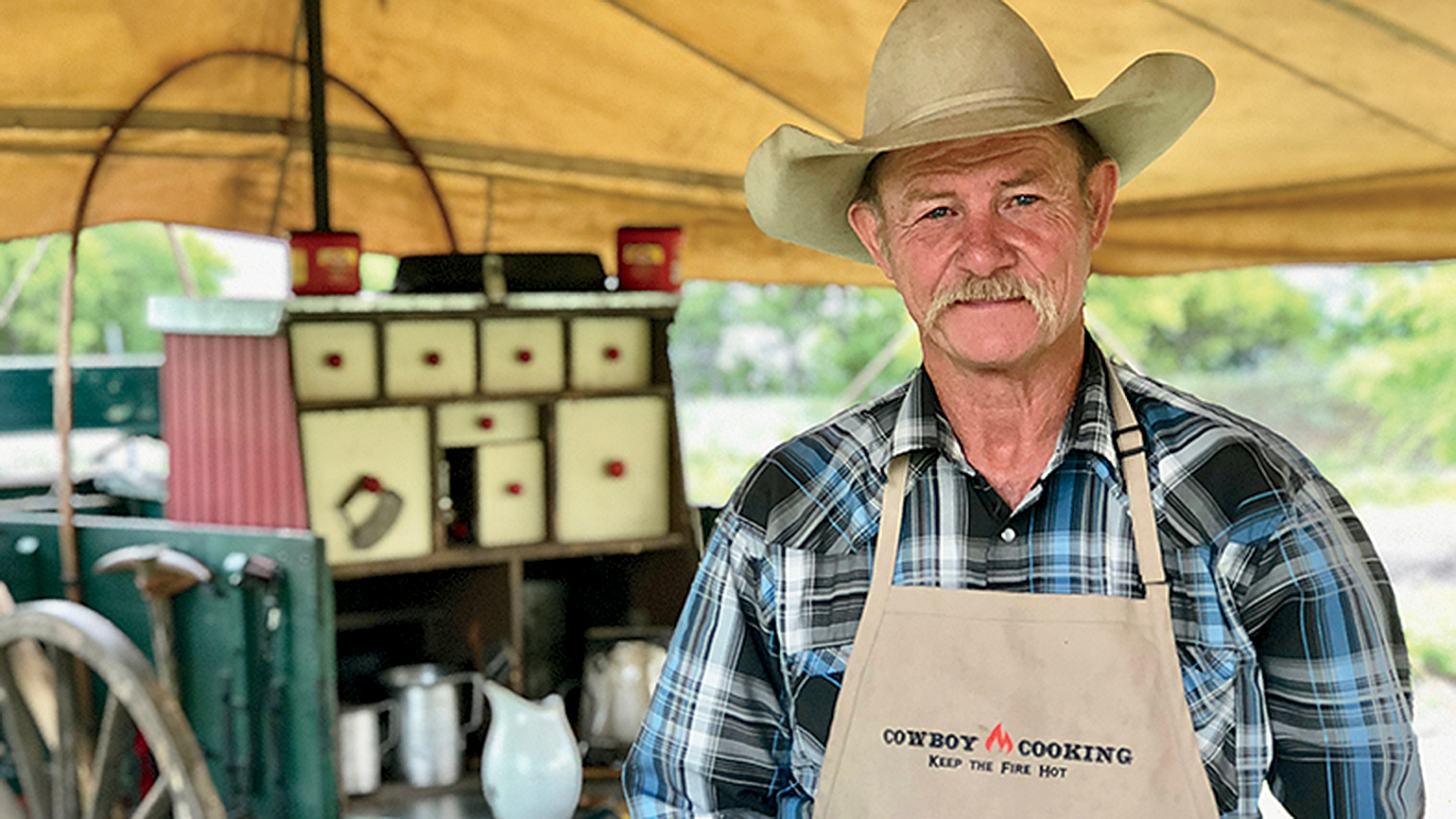
This Chuck Wagon Chef Followed His Heart—and His Stomach

Texas’s Palo Duro Canyon gets mighty cold in December. Especially at 3:45 in the morning. My hands, my whole body, felt frozen as I rolled out of my 1876 Studebaker chuck wagon. I could barely hold a match to the lantern, the wind blowing from the north. “God, let this catch,” I muttered.

The cowboys were still asleep, though they’d be stirring before long. It’s my job as cook to be up first, firing up Bertha—my 385-pound, wood-burning camp stove—and get enough eggs and bacon going to feed a small battalion. An army moves on its stomach, they say. A cattle drive is no different. Without a hearty breakfast…brother, we’ve got problems. It’s all riding on me.

I gave up a good-paying, secure job to become a chuck wagon cook. At the time, it felt like what I was meant to do. But on mornings like this, a warm bed sure did seem inviting. I went to the barrel to get water for coffee, but it was frozen solid. I’d have to chop it to get some in the percolator. Lord, what am I doing here? I wondered. Just then, the lantern blew out.

My whole life, I’d been around cowboys. I was the youngest of four children, and my daddy ran about 250 cows on a small ranch in southwest Oklahoma, some of the most beautiful and desolate land on God’s earth.

When I was eight, I went on my first cattle drive, moving a herd 10 miles. Just like here in the canyon, it was still dark when we saddled our horses and led them out of the pen. We paused, and Daddy said, “Let us not forget we all have Someone beside us, Someone to help us as we ride along. So let’s cowboy up and get it done.” It was a long, hard day, and there were times I wanted to quit, not that I ever let on. The next morning, my entire body was sore. Still, I stood a little taller that day, even if it made my muscles ache more.

There came another day when I awoke and the temperature was barely five degrees, the wind blowing something fierce. Daddy and the other cowboys went about their chores regardless, but my mama held me back. “Why don’t you and I make a chocolate cake today?” she said.

I took another look outside, the men bracing themselves against the cold, and quickly agreed. Mama told me the ingredients I needed to find and began spooning flour and sugar into a bowl. “How do you know how much to use?” I asked. I’d never seen her look at a recipe to cook anything.

“Each ingredient has a purpose,” she said. “It’s like a team that works together. It’s about finding the right balance. You’ll make mistakes at first, but that’s how you learn.”

Soon the house was filled with the sweet aroma of rich, velvety chocolate. The heat from the oven was warm and welcoming.

“You know what comes next?” Mama asked me.

“Eating!” I said.

Mama laughed. “First comes cleaning up,” she said, filling the sink with hot soapy water. Hmm, even fun jobs required hard work. “The joy of cooking isn’t about the eating. It’s about seeing the smiles on people’s faces.”

I didn’t quite see how a smile could beat a piece of chocolate cake until I was a few years older. I was 15, and Daddy, my brother and I were pitching in at a friend’s ranch, an annual custom called neighboring up. Around midday, I heard an old feller, sweat running down his face, say, “We better get paid well today.” Wow, we’re getting cash money, I thought.

Then I looked up to see car after car coming down the driveway, wives and moms bringing platters of fried chicken, breaded pork chops, salads of all kinds, cakes and pies. The cowboys were grinning from ear to ear. To this day, I remember how good that food tasted after a morning of hard work.

That afternoon, the cowboys worked twice as hard, laughing and cutting up. Me included. I thought about what Mama had said about why she liked to cook. To be able to give folks that much pleasure, well, that seemed pretty special. I knew there were men who specialized in cooking for cattle drives. I set my mind to figuring out how I could do that.

That’s how I found myself on cattle drives in places like Palo Duro. Now the lantern was lit again, and it was almost toasty with Bertha throwing out her mesquite-fueled loving. The cowboys gathered round the table, warming their hands on cups of coffee. “Let’s bow our heads,” I said. “Dear Father, we thank you for all you’ve given us. Bless this food and help us get through this day without any bad accidents. Amen.”

The fellers ate quickly. When they were done, they tipped their hats. “Mighty good,” one cowboy said. They mounted up, the sun barely peeking over the horizon. “Let’s hit a trot,” I heard someone say. “We’re burning daylight.” I felt a tinge of sadness watching them ride off. As important as I know breakfast is, it still seemed like I was on the outside looking in. How much could a plate of eggs and bacon really matter?

My first chance to cook for cowboys came after high school. An uncle in New Mexico who worked as a hunting guide invited me to cook for his clients. I jumped at the chance. I didn’t have Bertha then. I cooked over pits I dug in the ground. The wind blew dirt and burning embers over me. And I quickly learned how much I didn’t know about cooking. Such as how elevation affects how dough rises. Where we were camped was more than 3,000 feet above sea level.

One morning, I made biscuits for breakfast, the way Mama had showed me. But they hardly rose at all and tasted like shoe leather. “Is this flatbread?” an old-timer asked.

“It’s the only bread we’ve got,” I said. I felt like a failure. Still, hadn’t Mama said mistakes were part of learning? I tinkered with the ingredients, and the next time they came out better, still not perfect but more recognizable as biscuits. Cooking was hard work, but I loved the camaraderie with the other men, seeing their smiles as they dug into breakfast.

But Daddy was getting older and needed my help at the ranch. I moved back home. There was no time for cooking, especially after Daddy was diagnosed with cancer. Running the ranch fell to me. I worked 20-hour days trying to keep things together.

After Daddy passed, the pressure on me only grew. I took a job operating a road grader for the county highway department to make ends meet. The pay was good and came with a retirement pension. I wasn’t happy, though. I missed cowboy culture, the joy I got from cooking. But how could I give up the security of a government job to chase after a dream? Besides, cattle drives weren’t exactly common anymore. Maybe I’d just been born at the wrong time.

I told Mama everything I was struggling with. “You need to do what makes you happy,” she said. “We’ll trust God with the rest. He’ll see us through with the ranch.”

It was nearly dusk in Palo Duro. It had been a long day for all of us. We’d moved the herd 10 miles, no mean feat in freezing temperatures. In the distance, I could see the cowboys coming back into camp. Bertha was throwing off a ton of heat, the hickory logs inside her crackling. Soon she’d be cooking platters of chicken fried steak to perfection. I already had potatoes and blueberry pie going in my Dutch ovens.

My menu offerings had grown more sophisticated since my days in New Mexico, cooking over open pits. My world had changed dramatically. Word had spread, and I was traveling all over Texas and Oklahoma, cooking for cowboys. The governor had named me the official chuck wagon of Oklahoma. Still, every meal I cooked felt like a new test. Especially in these conditions. The cowboys rode in. One of them—a crusty sort—dismounted and shuffled over to me, sniffing the air. The other men would be following his lead.

With no warning, he wrapped his arm around my neck. “You sure do make a feller feel at home,” he said.

Home. I couldn’t have imagined a bigger compliment. We were nowhere near the comforts of civilization, and yet through my cooking, I’d done my part to create a feeling of family, of belonging. A reminder, that even on a cold December day in Palo Duro, we had Someone helping us as we rode along. God would see to it, just as Mama said.

“The pleasure’s all mine,” I said.

Try Kent’s prize-winning recipe for Cowboy Chili at home!

For more inspiring stories, subscribe to Guideposts magazine.
This Christmas, Give Yourself the Gift of Peace

A key theme of the Christmas season is peace—a message that comes with the celebration of the birth of Jesus, whom the prophet Isaiah called the “Prince of Peace.” In the Gospel story, an angel appeared and said, “Glory to God in the highest heaven, and on earth peace to those on whom His favor rests.”

You may question what it means to have peace both within and around us. Pastor and licensed mental health counselor, Rev. Cheryl Colt, states, “Peace means different things to different people. For some, it’s the absence of war, for others peace is about living within harmony, and for others peace means family relationships are healed.” In these anxious times, when bad news feels more prevalent than good, peace is what we all need.

Peace is a gift that we can receive and give to others. Creating inner peace means that we don’t allow the outside world to define the state of our inner being. We take time to breathe, regain our composure and think clearly. We take a moment to pause and pace ourselves in a healthy way, not letting the pressure of others and the holiday dictate our lives.

When you feel the pull of commercialism, remember this is not the meaning of Christmas. It’s not about going into debt, but giving what we can. And the simple gifts of friendship, love and grace are worth much more than anything we could buy.

If you are overwhelmed by problems and lack peace, pray for strength and wisdom in finding a solution. Work on one problem at a time instead of trying to deal with all of them at once. And let others come into your life to help and support. Life is much easier when we have peacemakers around us.

Last but not least, set boundaries. You can’t be all things to all people or be in multiple places at once. It’s ok to say no; this too is a gift of peace. When we take small and simple steps we can find calm, and experience the gift of peace.

This CEO Had the Perfect Response to an Employee’s Mental Health Day

This one email is creating awareness about the importance of mental health support in the workplace.

Madalyn Parker, a Michigan-based web developer at the chat software company Olark, sent an email to her fellow coworkers and CEO a few weeks ago openly discussing her mental health and why she needed to take a couple of days off to recharge and reset herself. While some of us are hesitant to even take deserved vacation days, Parker was honest about why she decided to take time away from her job in order to focus on herself.

Her boss’ reply is the perfect example of how important it is to respect and encourage employees to look after their own mental health.

After Parker’s tweet went viral, Olark CEO Ben Congleton received praise for how he handled the situation. While his answer to Parker’s email may surprise some, letting employees take mental health days isn’t just considerate, it’s good business. Studies show that taking care of mental health issues increases productivity and performance at work.

In response to all of the fanfare, Congleton posted a message on Medium, detailing exactly why he believes it’s a boss’ job to urge their employees to look after themselves.

“I wasn’t expecting the exposure, but I am so glad I was able to have such a positive impact on so many people,” Congleton wrote. “It is incredibly hard to be honest about mental health in the typical workplace. In situations like this, it is so easy to tell your teammates you are ‘not feeling well.’ Even in the safest environment it is still uncommon to be direct with your coworkers about mental health issues. I wanted to call this out and express gratitude for Madalyn’s bravery in helping us normalize mental health as a normal health issue.”

Congleton went on to plead with other CEOs and executives to begin nurturing an open dialogue amongst their employees about the importance of mental health.

“It’s 2017,” Congleton continues. “We are in a knowledge economy. Our jobs require us to execute at peak mental performance. When an athlete is injured they sit on the bench and recover. Let’s get rid of the idea that somehow the brain is different.”

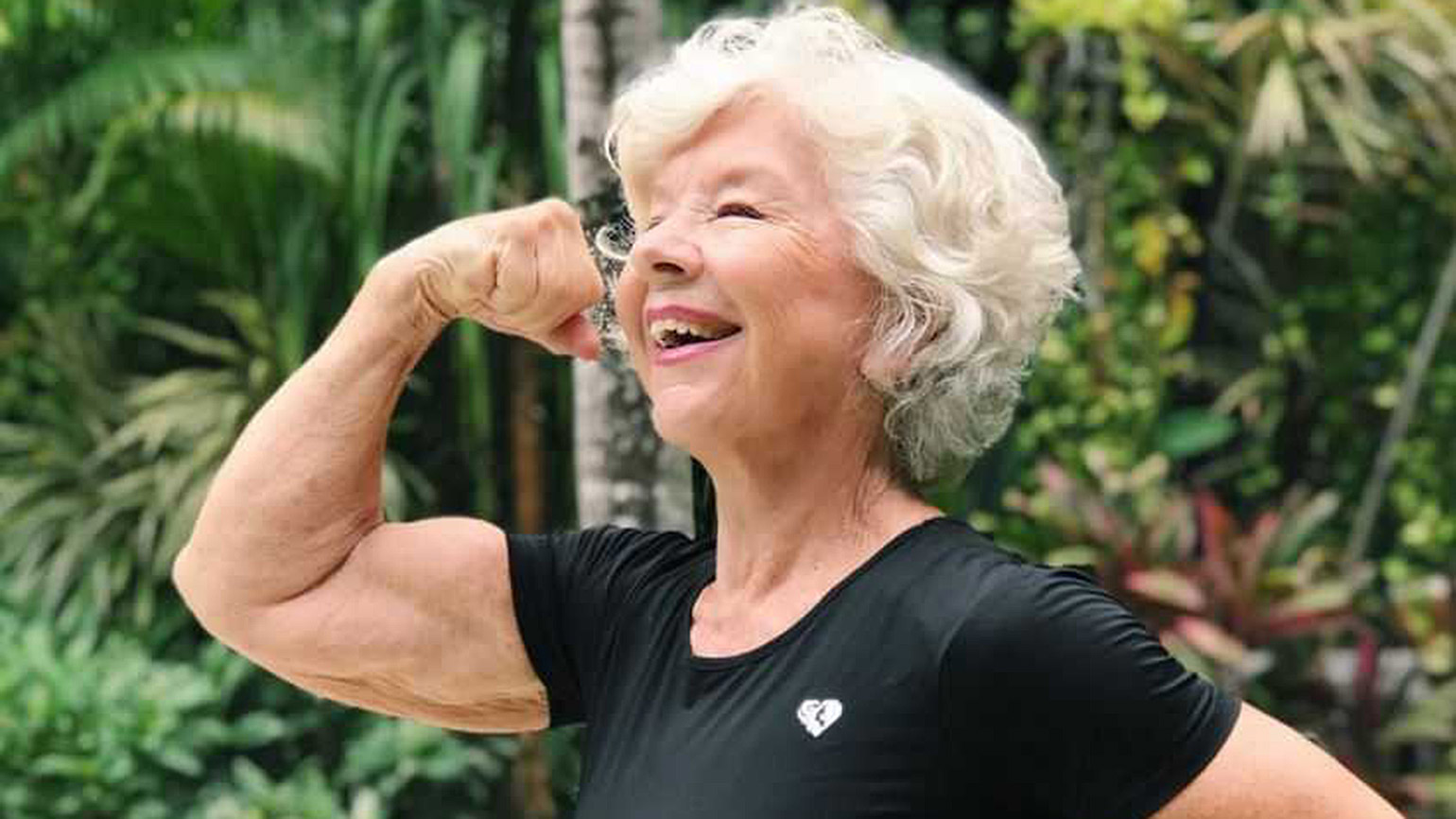
This 75-Year-Old Fitness Influencer Has the Secret to Aging Well

Fitness influencer Joan MacDonald knows the secret to aging well and she’s happy to share it with her millions of followers on social media.

“[I] can’t keep all the good stuff to myself!” she jokes with Guideposts.org.

For MacDonald, whose fitness journey began with a wake-up call at the doctor’s office, getting older used to signal more health problems, uncomfortable weight gain, and an overwhelmingly negative outlook on life. It wasn’t until her daughter, a body transformation coach, staged a kind of intervention for MacDonald that she finally began taking her health seriously.

“I knew I didn’t feel well,” she recalls. “I needed to change things.”

Part of the change included improving her fitness levels, another element involved eating better, but perhaps the most important realization for MacDonald was when she decided to take a holistic approach to healthier living. And that is her secret. It’s not just exercising more, it’s not just consuming fewer calories—it’s both.

“I knew what healthy food was but didn’t know how to break it up in my day, in a way that worked well for me,” MacDonald says. She worked with her daughter and a trained professional, who upped her meal count and helped her calculate how much proteins, fats and carbs her body needed to not only lose weight, but build muscle too.

“I trusted an expert,” MacDonald explains. “Everyone is different and their baseline diet will differ as well. I always suggest working with an experienced professional when getting started.”

Still, she couldn’t deny the results she was seeing and feeling. “I felt good mentally,” she says. “I started eating more whole foods. I was eating five meals a day. I was making a change and seeing results physically in the weight loss. Over time with diet and exercise, I gained more energy and mobility.”

MacDonald said that as she continued to treat her meal plan as a way to fuel her workouts, her relationship with foood changed as well. She realized that more protein meant the chance to build more muscle, and a stronger body meant fewer problems with ailments like arthritis and brittle bones. The more healthy carbs she ate—like whole grains or quinoa—translated to more energy, the desire to get moving, which helped her avoid being sedentary for long periods.

“I’ve always said, ‘If you don’t use it, you lose it,’” MacDonald says. “It’s true and I apply that to movement day to day. I have arthritis and I notice a difference when I stretch and train. I still have some stiffness and pain but nowhere near what it would be like if I did not do those things.”

For MacDonald, her popularity on social media isn’t just an accountability tool anymore. She wants to help others realize their full potential, especially older women like herself. It’s why she regularly shares nuggets of wisdom, from workout tips to healthier eating tricks to the products she swears by, such as food scales and blenders, topical rubs for soreness to mindfulness apps. But her best piece of advice for aging well and embracing life as you grow older is fairly simple:

“Build a life that you love! Ignore the naysayers. Dream big, and create action steps, daily habits that continually get you there. Fill your life with love and surround yourself with those who support you.”

This 74-Year-Old Blind Woman Teaches Dance Classes

When Marion Sheppard began to go blind in her 40s, she cried, she raged, she felt sorry for herself. Wasn’t it enough that she’d been partly deaf since childhood? That struggle, and the bullying that came with it, had made her strong and stubborn and nearly indomitable—or so she thought.

“This isn’t right,” she said to God over and over again. “This isn’t fair.” The doctors said she would never regain her sight; it would only get worse since her diagnosis, retinitis pigmentosa, is a progressive degenerative disease.

Since childhood, Sheppard had always been an avid dancer. But now she was so scared she rarely left her Bronx apartment. She was afraid that, unable to see a stranger’s approach, she would be mugged out on the streets. But mostly, she worried about the way she would appear to the world. She wondered constantly, “What if people look at me differently, treat me differently?”

But then after several months of being paralyzed with grief and fear, Sheppard heard God’s voice. “I want you to show the world what I can do for you,” He said. “You don’t understand yet, but you’ve got to keep moving.”

As hard as it was, Sheppard forced herself to go out. She attended a social event for people with visual impairments, and was shocked to find that not only did no one dance, they barely moved. They all just sat, still and physically withdrawn. “Oh no!” she told herself. “That is not the way I want to live!” She pushed herself not to be self-conscious. She bought a cane and named it Tyreek, the name she’d always planned on giving a son if she’d had one. A single mother of one daughter, Kokeda, Sheppard continued to work at her library job at The New York Times until her vision further declined in her 50s. And she kept moving, she kept dancing, just as God had instructed her.

Sheppard was 61 when she attended a summer camp for the blind in 2008, where she taught her first line dancing class.

After that, she asked at a Manhattan community center run by Visions, an organization for the visually impaired, if she could teach her class there, but was told no, that it would be too dangerous for the students. Still, she persisted, and soon convinced the administrators to let her teach line dancing and aerobics on a volunteer basis. Her classes proved to be so popular that in 2012, Visions hired her to be on staff. Sheppard was ecstatic.

Right up until the coronavirus pandemic shut things down, she was teaching over a dozen adoring students moves like the Electric Slide and the Cupid Shuffle to the music of Motown. Most of them were seniors whose eyesight had deteriorated as adults and so could remember the sighted world. But Sheppard instructed her beloved students on far more than dance steps. With confidence-building affirmations and constant encouragement, she also instilled in them dignity, independence and resilience. In her classes, the students got to be themselves without feeling inhibited by disability. Each student in her line dancing class would take a turn in the center of the group, busting moves as the others cheered them on.

As Sheppard says, “We may be blind, but we’re doing our thing.”

Sheppard hopes that her classes at Visions will resume shortly, but in the meantime, she’s keeping busy. She conducts a light exercise class for the blind once a week via conference call, and another in which the participants tell stories in response to R&B songs spun by two DJs. In addition to a certification to teach basic exercise from the New York Department of Parks and Recreation, Sheppard also recently became certified to teach water aerobics. As a way to combine movement with her faith, she formed a group called The Blind Sisterhood, which performs praise dancing to African liturgical hymns throughout the New York City area.

Sheppard’s advice for maintaining both physical and spiritual health, despite the obstacles that life throws at you? That’s simple: “Keep it moving until God calls you home.