I adjusted the blinds to let the sunshine into Becky’s room at Memorial Sloan-Kettering Cancer Center. It was one of those luminous late summer days in Manhattan when the sidewalks are thick with people—office workers, shoppers, vendors, tourists from all over the world. The energy was almost palpable, not at all like the quiet little town I lived in upstate where everyone knew everyone else. “Come and look,” I said to Becky and my sister, Kathy, Becky’s mom. “It’s an amazing view.”
My 19-year-old niece had been battling Hodgkin’s disease, a form of cancer, since January. She’d entered Sloan-Kettering that morning so she could have a stem cell transplant, a desperate effort to wipe out the cancer that radiation and chemotherapy hadn’t been able to destroy. It had been a long, tough year, and I just wanted this procedure to cure Becky and for things to go back to normal.
Becky got into bed and I was still admiring the view when the door opened and in waltzed a young woman. Not just any young woman. This one had spiky black hair, a line of earrings snaking down each ear, eyebrow rings and a stud in her nose. The silver glinted in the sunlight, and for a moment I just stared. “May I help you?” I asked.
“Hi, I’m Tami. I’m going to be Becky’s primary care nurse.” Becky sat up and shook Tami’s hand. I tore my eyes from Tami’s face long enough to glance at her uniform. Something told me a belly button ring lurked underneath it. I’d seen a few kids decked out like this when I was substitute teaching, but they were a tiny minority in our town. And with two teenage sons, I’d seen my share of music videos. But this girl was a hospital nurse! How could someone who seemed to have no problem inflicting damage on her own body be trusted to take care of someone else’s?
I watched silently as Tami hooked up Becky to a couple of monitors. “I’ll be back to check on you later,” she said.
Becky turned to me the moment Tami left the room. “Aunt Ine, how could you act like that? She’ll think you don’t like her!”
“What? I didn’t say anything.”
“You didn’t have to. The look on your face said it all.” I’d never been very good at hiding my feelings. But I had to watch out for Becky. My only niece was in a fight for her life. She needed someone caring, dependable and responsible nursing her.
I unpacked Becky’s things and said nothing, resolving to keep an eye on Tami. No point in upsetting Becky further. She’d been through so much already. Having to drop out of college freshman year. Nine months of outpatient treatment at Sloan-Kettering. And the worst symptom of her illness—an intense itching that made it almost impossible for her to sleep. Her only relief was having someone rub her feet, where the itching was most severe. Becky’s father had to stay upstate and work, so I often made the eight-hour trip to Manhattan to help my sister with the round-the-clock foot rubs while Becky was being treated.
My prayers had become round-the-clock too. Ever since her diagnosis Becky had been optimistic, a real fighter. “My grandfather lived for years after he got sick,” she told her doctor. “I’m going to be just like him.” But every time it seemed Becky was getting better, we got more bad news. My pleas turned into frantic questions—Why aren’t you helping Becky, God? Why aren’t you watching over her?
We couldn’t even rub Becky’s feet anymore without wearing gowns, masks and gloves because she was at a high risk for infection until she got her new stem cells. Her friends couldn’t visit her. But Becky’s face lit up whenever Tami came in. They chattered on about TV shows, music, boys—especially their exes. It was like they’d known each other for years!
How could my wholesome niece—who loved the outdoors and never bothered with jewelry—be so comfortable with a big city girl who had more metal on her than a bicycle chain? Granted, some days Tami looked almost normal—the piercings were visible but the silver was missing. One afternoon she strutted in wearing a leather dog collar studded with metal spikes. “That girl has a problem,” I told Becky after Tami left. “Nobody with a healthy self-image would dress like that.”
Becky rolled her eyes. “It doesn’t mean anything, Aunt Ine. It’s just her style!”
Style? I didn’t see anything stylish about it. But I had to admit I also couldn’t see any reason to doubt Tami’s nursing skills. In fact, Becky seemed so at ease with Tami that Kathy and I started going for walks while she was on duty. The day of Becky’s stem cell transplant, we went all the way to South Street Seaport to buy her a watch for her “transplant birthday.” Becky recovered quickly, and on Halloween she was released. “I’ll miss you, Becky,” Tami said as she hugged her goodbye, her eyes moistening. “Now go home and celebrate.”
The celebration didn’t last. Right after Thanksgiving the cancer came back. Becky started outpatient radiation treatments again. Then she caught a cold she couldn’t shake. The day after Christmas she was rushed back to Sloan-Kettering. She had pneumonia.
A couple of days later I sat alone in the waiting room reading the same magazine paragraph over and over while I waited for Becky to be brought out. Someone sat down in the chair next to me. Tami. There was something almost comforting about her familiar strangeness. She looked me straight in the eye. “You know Becky’s in very bad shape,” she said. “There’s someone I think she needs to speak to.”
“Who?”
“Her old boyfriend. Can you track him down?” Before I could answer, Tami slipped a piece of paper into my hand. “My home phone number,” she explained. “In case you ever need me.” With that she hurried off on her rounds. For a moment I felt as dumbfounded as I’d been the first time I’d seen Tami. I tucked her number into my purse and went to find Kathy so we could contact Becky’s ex.
Tami was right. Becky was in good spirits after she talked to her old boyfriend. But her lungs were filling up with fluid and she developed shingles.
By December 30 the worst seemed over. Becky had even improved enough to eat a Big Mac. On New Year’s Eve morning, I told Kathy to catch up on her sleep. I planned to sit with Becky a few hours before taking the train home to spend the holiday with my husband and sons. I couldn’t wait for the year to end. I wanted to forget all about 1997.
But it wasn’t over yet. Becky’s doctor had ordered an X-ray that morning. The results came back just as my sister arrived at the hospital. The moment I saw the doctor, I started shaking.
“The cancer has exploded inside Becky’s chest,” she said.
“What do you mean?”
The doctor shook her head. “It means the cancer will grow into Becky’s throat. When it does, she won’t be able to breathe.” Her voice sunk to a whisper. “You’d better call the rest of the family—now.”
Within an hour the others were on their way. But they wouldn’t get to the city until at least midnight. Somehow we’d have to get through the night on our own. We couldn’t tell Becky, not when she was finally feeling better. Not on New Year’s Eve.
Kathy sat with Becky. But I couldn’t. One look at my face and Becky would see my feelings as clear as always. So I paced. Around and around the halls I went, trying to rid my mind of the image of Becky gasping for air. My niece was dying. And I couldn’t stop it. Couldn’t even manage to sit with her and rub her feet.
Every prayer I’d said for Becky had failed, yet I could do nothing else but pray. Oh, God, just take care of my niece. Give her comfort. Help me understand all this!
Down the hall a nurse turned the corner. I wished it were Tami. But she was off for the holiday. I dug into my purse and pulled out her number. In case you ever need me. I hesitated. It was New Year’s Eve after all, and Tami was young and single. Finally I went to the pay phone and called her. “If you could maybe come keep Becky company for just an hour…give us time to gather our senses…”
“Think you can hold on till eight o’clock?”
“Oh, yes! I know you probably already have plans.”
“I do now. See you soon,” she said.
I pulled myself together and joined my sister in Becky’s room.
Right at 8:00 p.m. Tami burst in, eyes shining. Hoisting a bottle of sparkling grape juice into the air, she shouted, “Let’s party!”
Tami unloaded a stack of videos, four pints of Ben and Jerry’s ice cream and four plastic champagne glasses on the windowsill. In minutes we were all scrunched together on the bed watching movies, eating ice cream and toasting with grape juice. We were laughing so much we hardly noticed when midnight passed. Who knew someone who’d once seemed so strange to me could make things feel so normal? I watched Tami slip her hand—a ring on nearly every finger—into Becky’s.
Judge not according to the appearance, I recalled from the Bible. Tami was the answer to prayer I’d been waiting for. She hadn’t looked like the answer I’d wanted. Yet God had provided in his own perfect way. He had provided for me by providing for Becky.
Tami would be there again four weeks later when Becky slipped away peacefully, surrounded by all of us who loved her. But when I think of Tami—and that’s often—I think of the joy she brought to those final minutes of a terrible year. And the only thing I remember about how she looked that night is the love in her eyes.
For more inspiring stories, subscribe to Guidepostsmagazine.
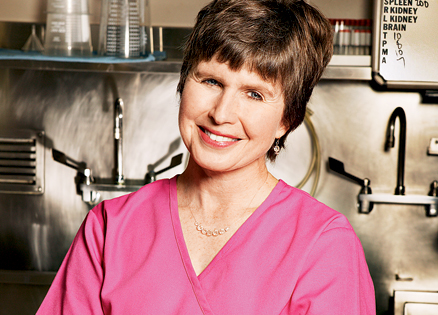
I’m a forensic pathologist. My job is understanding the cause of death, but it’s also to speak for the dead. Since 1993, as coroner for Anoka County, Minnesota, I’ve been doing everything in my power to answer one question: How did this person die? Then I explain it to family members, physicians, law enforcement and the courts. Often, death is a riddle.
I’m also a doctor, and like all doctors, a healer. How could a person who spends her time examining the deceased call herself a healer? Well, I’ll tell you.
I come from a medical family. My dad is an internist and, growing up, I tagged along with him on house calls, watching him solve the mysteries of his patients’ illnesses. He practiced medicine like the country doctor you see in old movies: worn leather medical bag, stethoscope draped around his neck and a big, reassuring smile that said, “Talk to me. I’ll listen.” Same with Mom, a nurse. Watching the difference the two of them made in people’s lives, it was only natural that I’d go into medicine myself. In no other job did a love for knowledge and a love for people meet so perfectly.
It was Dad who suggested forensic pathology. He recognized my excitement over finding answers—my insatiable curiosity about how the human body works. “You’d be a doctor’s doctor,” he told me. “It’s the basis of all medicine. Nothing teaches you more about life than death.”
I liked the idea of discovering the cause of death. There is no more intimate possession than the body itself. Performing an autopsy, I don’t see an anonymous corpse in front of me, but the evidence left behind of that person’s soul: an open book telling me about how he or she lived. If well and decently, that’s evident in a thousand different ways. If badly, that’s evident too. A life story is visible right there in the organs. You can tell the choices people made in life.
I am passionate about my work. My autopsy reports are the last word on my patients. Each case is a new challenge, a new mystery, and I can’t rest easy until I’ve made sense of it. I’m not at peace with a case until I’ve discovered exactly how the person I’m examining has passed on.
Eventually an idea formed in my mind. What about the families? If knowledge really heals, why not share the knowledge I gained in my autopsies? Why not personally tell them the cause of death? Nothing in life hurts as much as losing a loved one. Maybe talking to me could help ease the family’s grief, perhaps even help in the healing process. I called the next of kin whenever possible and shared my knowledge of how their loved one had died. In almost every case it helped them.
It helped me too, fulfilling my desire to be a healer, like Mom and Dad. I opened myself up to the survivors’ pain, grief and anger, as well as their hope and gratitude. And something more…more than I could ever have imagined.
Take Julie Carson, the wife of a man named Randy on whom I performed an autopsy. She’d come home one day to find Randy dead on the floor next to his easy chair, the TV remote still in his hand.
In the left ventricle of Randy’s heart I discovered a large tumor that penetrated the main chamber. I suspected the tumor had played a part in Randy’s death, and called in a specialist to help interpret the evidence. The tests took weeks, which delayed the death certificate. Julie was left waiting, alone with her grief. In 17 years she and her husband hadn’t spent a single night apart. How could God have taken him away from her? And so suddenly, without even a chance to say one last “I love you.”
I called Julie the minute the report was ready. She wanted to know everything. “The growth in your husband’s heart was benign,” I explained. “But a piece of it broke off and entered one of his coronary arteries. The tumor fragment plugged the vessel, just as a blood clot would have. In essence, Randy died of a heart attack.”
Julie was silent for a moment. “Did he suffer?” she asked. I told her that in my opinion, Randy had slipped away painlessly.
“With his favorite toy in hand,” she said, her voice softening. “I usually got into bed while Randy was still watching TV, channel-surfing mostly. But I never shut my eyes till I heard him coming up the stairs. Can I tell you something, Dr. Amatuzio?”
I thought of my dad, who always had time to listen. “Of course,” I said.
“After Randy died, I couldn’t sleep. Then something happened. One night I finally drifted off. Footsteps in the hall woke me. I just knew it was Randy. Sure enough, he walked right into our bedroom, sat down next to me and took my hand. We talked about the kids, our finances, the house. ‘Our love is forever, he said. ‘Just think of me and I’ll be there.’ I know our love still connects us, Doctor.”
You might think this story is a rarity. But the fact is, over the years I’ve heard scores of stories like it. They’ve opened me to a whole world: the one that lies beyond the borders of death. Having grown up in the church, I understood the concept of an afterlife. Yet how amazing it was to confront it as a doctor!
Mary Bare was the mother of a young man named Greg, who’d died in an auto accident. I called Mary after conducting his autopsy and asked if she had any questions. Her first one was the same as Julie’s: “Did he suffer?” In this case as well, I was able to tell Mary that in all likelihood, Greg hadn’t suffered.
Mary seemed almost to expect that answer. “Dr. Amatuzio,” she said, “can I tell you something?” When Greg was a boy he had a favorite babysitter named Sheila. She was Mary’s favorite too because she had a special knack for comforting him. Shortly after Greg’s death, Mary called Sheila.
“Sheila told me,” Mary said, “that on the night Greg died, she had been awakened by a loud voice saying ‘Hey, Sheila!’”
Sheila sat up and saw Greg—all grown up—standing next to her bed. He was very distraught that his death had caused such pain and sadness. Sheila didn’t stop to question whether she was dreaming. She did what came naturally and comforted him, just as she had done so many times when he was a boy.
A few nights later Sheila was awakened again—this time by a gentle light filling her bedroom. Again, Greg stood at the foot of her bed. But this time there was no more confusion, no more sadness about him. “Tell Mom I’m okay now,” Greg said. It seemed that Greg’s life was going on, in a new world where he was at peace. Sheila was relieved to get Mary’s call. It was confirmation that she should relay this message of comfort sent from God to a grieving mother.
Yet sometimes people do come back from the dead. I was having lunch one day with several law enforcement officials, including a local sheriff—a shrewd and highly respected man. People had heard about my interest in the subject, and somehow the conversation took that turn. The sheriff spoke up. “Dying’s not the big deal people make it out to be. I drowned once.” I looked at him. He didn’t say “almost drowned,” he said “drowned.”
The sheriff had grown up on a lake. “My brothers and I spent just about every day of the summer swimming there and carrying on. We used to dive off the lifeguard tower and race to touch the bottom.”
But that got too easy. The sheriff and his brothers added a new twist to the game. The tower’s legs were ladders, the rungs of which started out wide and got narrower toward the top. He and his brothers would weave back and forth between the rungs as they made their way up. One day, just a few feet from the surface, the sheriff got stuck. “I looked up and saw that my brother had made it to the surface,” he said. “I panicked. Then I blacked out.” The sheriff came to in a rescue boat after mouth-to-mouth resuscitation.
“Do you remember anything from when you were unconscious?” I ventured.
The sheriff looked down. Something in his face changed. “Why, yes,” he said. “I do. I don’t usually talk about it, but it’s as clear as if it were yesterday. I remember thinking, I’m going to die. I took in a large gulp of water, and all of a sudden, I was up above my body, looking down on it. There were beautiful colors everywhere. I felt sorry for my body, but I wasn’t worried about it. There was all sorts of activity. My brothers and the lifeguard were there. But I felt perfectly calm, and found myself speeding along above the surface of the water, toward someplace so near yet so perfect I never could have imagined it. Then, all of a sudden, I was jolted back into my body.”
The sheriff said that what he remembered most was that when he came back from the stunningly vivid world he’d entered for a moment, everything in the regular world looked dull—as if he’d gone from a color movie to one in black and white.
“You know, Doc,” the sheriff said, looking at me with a twinkle in his eye, “I know that you’re the coroner and see this stuff every day. You know that it bothers a lot of folks. But I’m not afraid of death. Not after what happened to me.”
Can I explain all of these stories I’ve heard, in the way that I can explain exactly why a body I examine died in the way it did? Probably not. We are not meant to see the soul. Yet I have come to believe that these experiences reveal the truth of what I believe: Dying is part of a larger picture, a moment of transformation on a path of eternal life. Discovering the cause of death opens the door to a grander reality. We don’t end when our bodies give out. In a life full of solving mysteries, that’s the greatest one I’ve discovered—the mystery of the soul.
One of my least favorite things is finding myself in situations where, no matter how hard I try or how resourceful I am, there are problems that can’t be fixed. It makes me want to scream with frustration. Slowly, slowly, I’m learning my lesson:
I can’t always make it better, but I can always make it worse.
Yes, it’s true. And when I am stuck and shift my focus away to not-making-things-worse… well, it helps. Maybe that’s because I’m no longer feeding my own anxiety and stress into the situation. Or maybe it’s because my efforts get focused on what I can control, so I’m not circling in a frenzy around what I can’t.
There’s a corollary to this that I learned from a wise friend:
I’m only responsible for my input, not for the outcome.
I am responsible for what I teach my children, the example I set for others, the coping skills I model when faced with adversity or disappointment, the resources I pull in when help is needed.
My input includes the tone that accompanies my corrections, the attitude I display when frustrated or angry, the faith I practice (or fail to) in front of the observant eyes of others.
The outcome involves what people choose to do with all that. God gave every person in the world just as much free will as He gave me, and though I don’t always like it, their choices are their own.
If I’ve done what I could, behaved as I ought, and said what was needed, I have to let go of what happens after that. I’ve done what God asked of me.
In the end, that’s the most important thing of all.
One of the most quoted of the many quotable things Albert Einstein said was: “Imagination is more important than knowledge.”
The second, less frequently cited part of the statement is actually my favorite: “For while knowledge defines all we currently know and understand, imagination points to all we might yet discover and create.”
Imagination is forward leaning. It brings to light what is possible. It weds insight and action to vision.
Imagination isn’t just the province of artists and great minds. Every one of us is blessed with this amazing capacity, this gift of the mind. Through the power of our imaginations we can change our thoughts—and, as the philosopher and psychologist William James said, by changing our thinking we change our lives.
We use our imaginations constantly. Every time we think about something that hasn’t happened yet, we’re using our imaginations. In the morning, when we survey the prospects of our day, our minds roaming through our to-do lists, we’re performing an imaginative, creative act. We’re seeing ourselves as actors in the future through the medium of our imaginations. Thanks to imagination, we don’t have to be who we were or do exactly what we did yesterday. We can change ourselves, and thus the future. So I’m with Einstein on this one. Imagination trumps knowledge.
Imagination differs from fantasy in that it identifies a potential outcome from a plausible reality. It brings to light what is possible. But similar to fantasy, it does turn us into time travelers. Daily life unfolds on a linear timeline: We’re born, we live, we die. In between, we laugh, we love, we grieve, we forgive. We grow. Imagination lets us peer along the timeline to see who we might be down the road. Once we honestly decide to change and summon the willingness to commit to that change, it is absolutely necessary that we envision ourselves changed.
Close your eyes and clear your head of all thoughts. Concentrate your imagination on a single image: You, changed. What you look like. What you sound like. How you act. And of paramount importance, how you feel—strong, confident, grateful, happy. Through every step of your change journey, never let these images escape your thoughts. The more you imagine your change, the more you will become it.
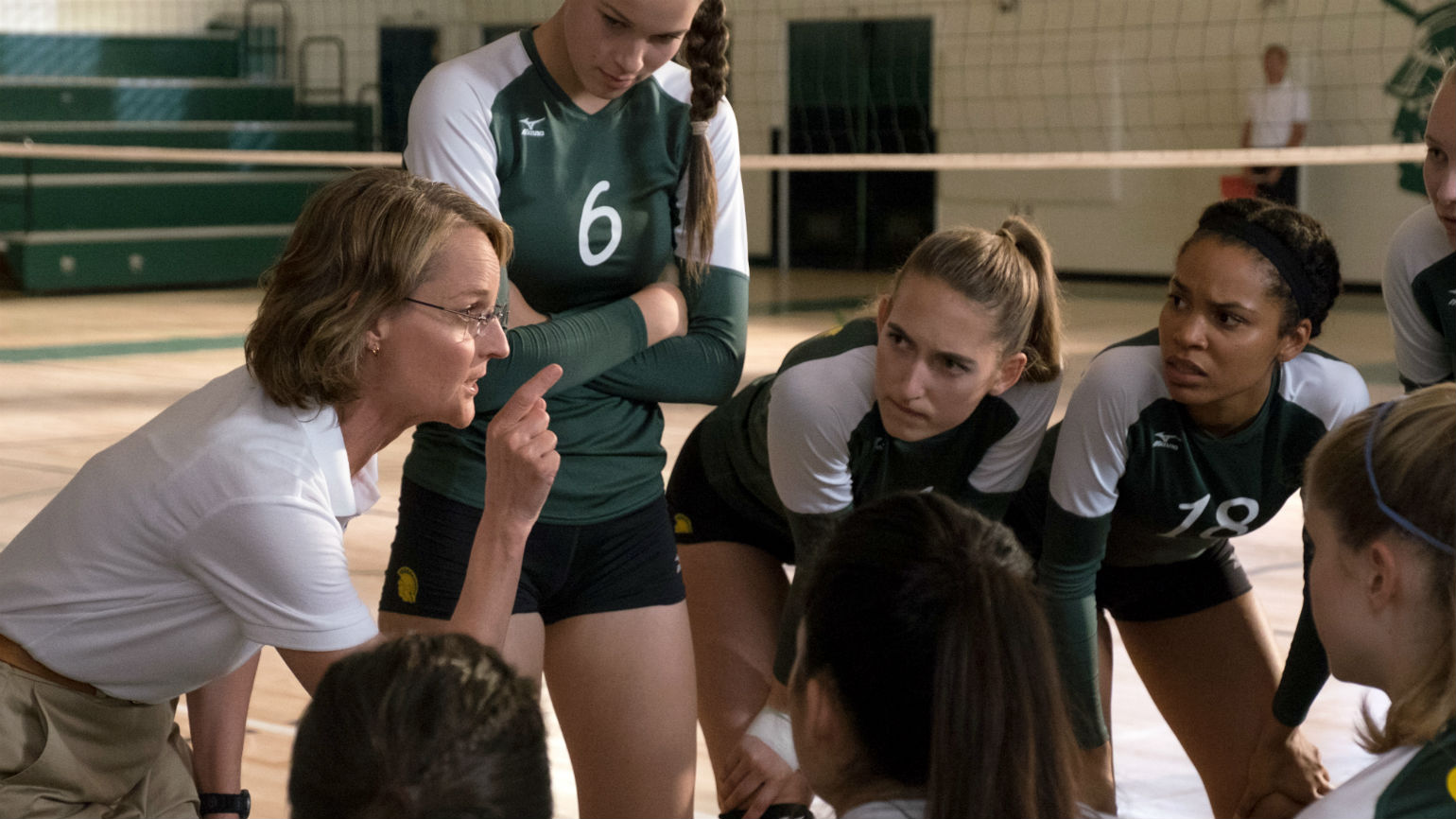
The Miracle Season is the kind of feel-good sports movie you haven’t seen before. It focuses on a high school girls’ volleyball team – the Iowa City West High Trojans.
Sports movies often feature a team of men and women trying to overcome insurmountable odds. But The Miracle Season isn’t just about the road to victory – it’s about healing.
The movie follows the true story of Caroline Found (nicknamed Line by her teammates), a young woman full of personality, drive, and compassion who passed away after a moped accident. Her death, and the consequences of it fuel the film. Found was so loved by her teammates, her school, and her community that losing her left an unfillable void.
That’s why Caroline’s father, Ernie Found, decided to give his blessing to the movie.
“We were trying to think of what good can come from this in some way, shape, or form,” Found tells Guideposts.org of his daughter’s passing and her team’s efforts to rally and win a state championship in her name. “Not that only good can come of it. It stinks, and it hurt immensely, but here’s more to it. If this film can help others, it’ll be worth the effort.”
Found, who lost his daughter and then his wife to cancer just two weeks later, features heavily in the film. He’s played by Oscar-winning actor William Hurt on-screen. The movie not only follows the girls as they struggle to fill Line’s spot on the team and make it to another state championship but Found as well.
After the passing of his daughter and wife, Found could’ve easily retreated into himself, shut out the world, and grieved in private. Instead, as the film shows, he made a point of attending every volleyball game the season after Line died.
“I felt like I had to go,” Found says. “I was hurting, they were hurting, friends were hurting, classmates were hurting. I just felt like, it’s going to be good for everybody, just to hang in there together. Let everybody know that we’re all in this together and every little bit can help.”
That sense of community and togetherness is what ultimately tugs at the heartstrings when watching the film. With Line serving as the team’s guardian angel – angel imagery is featured heavily in the movie – Found providing comfort and a rock-steady presence. With the team’s coach, played by Helen Hunt, driving them to success, we watch as this group of girls galvanizes an entire town to honor their teammate with an inspirational motto: “Live Like Line.”
“’Live like Line’ means to live to put a smile on somebody else’s face, to try to bring joy to others, because it’s in giving of joy that you’re going to be also receiving joy,” Found says of the message of the film and his daughter’s legacy. “To live like Line, means it’s a privilege, an honor to be living, and it’s okay to go the extra mile. It’s okay to work hard, it’s okay to make mistakes.”
He hopes that’s what audiences will ultimately take away from his family’s story.
“When you get right down to it, living like Line is, “Let’s all do this together.”’
Easter is here—with its promise of spring, its big family meals, its inevitable chocolate bunnies and jellybeans. But what does Easter really mean? What does the message of Easter bring to us humans knee-deep in messes of our own making?
The Easter Message
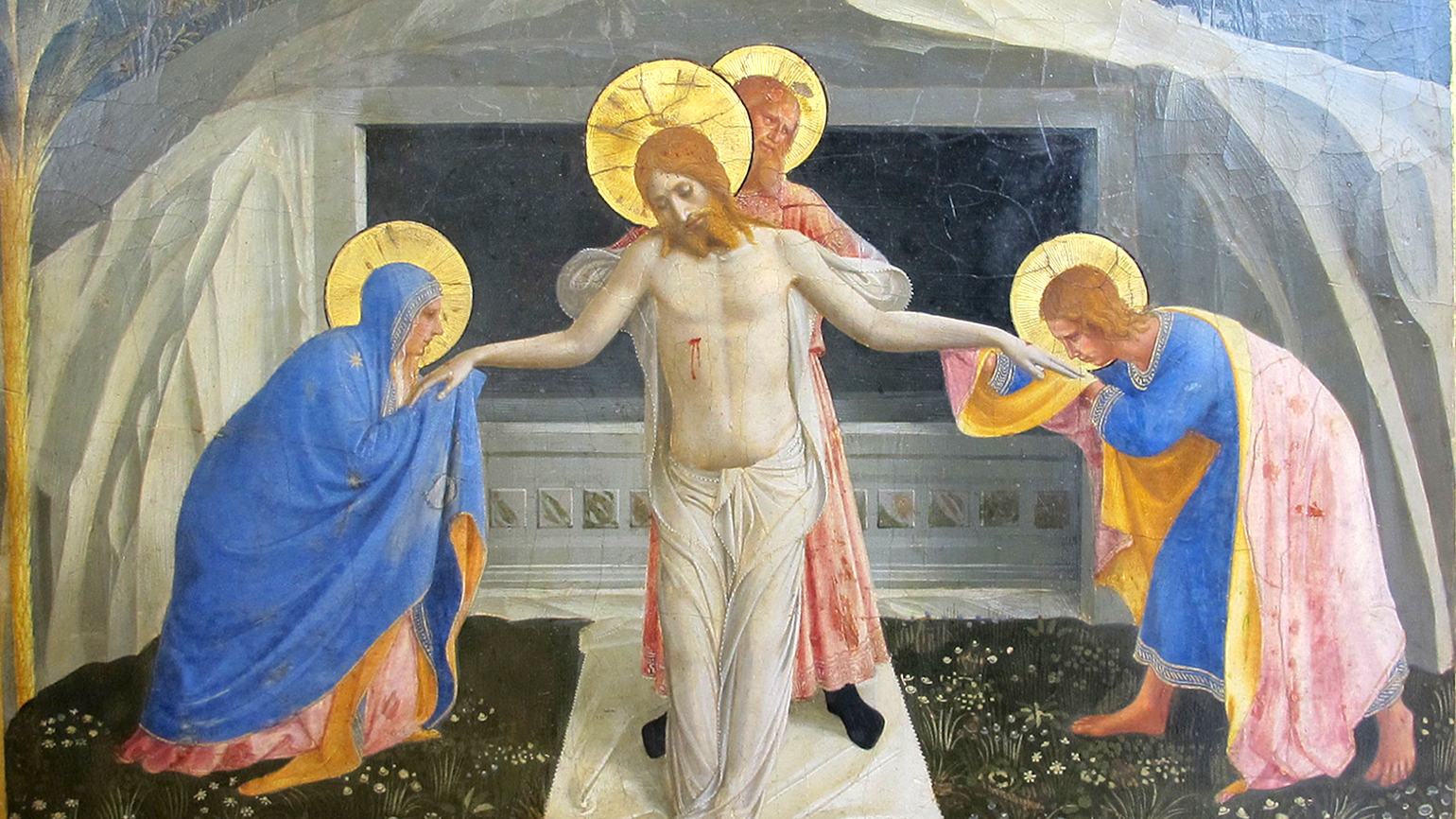
First and foremost, it means that we serve a risen Savior. The grave could not hold Christ; he defeated death. He paid the price for our sin with his own blood. And the consequences for us are huge.
“For if, while we were God’s enemies, we were reconciled to him through the death of his Son, how much more, having been reconciled, shall we be saved through his life!” (Romans 5:10). Because Christ lives, we will live, too–both in this life and in the life to come. Jesus said, “I am the resurrection and the life. The one who believes in me will live, even though they die; and whoever lives by believing in me will never die” (John 11:25-26).
The message of Easter was first spoken to two women at Jesus’ tomb, in these simple words: “Do not be afraid…for He is risen” (Matthew 28:5-6). Jesus is with us and gives us his ability to overcome any defeat. The true Christian realizes that he, with Christ, rises above every setback, every obstacle and enters into the true meaning of living.
The message of Easter tells us: You need not be afraid of anything—not life with all its insecurities, its conflicts, its uncertainties; not afraid of even death itself. You need have no fear—no fear!
When your spirit is filled with the unshakable strength of God in the name of Jesus Christ, you get faith so deeply planted within you that when crises hit you—as they sometimes do suddenly—you automatically can look life in the face and not be afraid. You can say with the Apostle Paul, “For I am convinced that neither death nor life, neither angels nor demons, neither the present nor the future, nor any powers, neither height nor depth, nor anything else in all creation, will be able to separate us from the love of God that is in Christ Jesus our Lord” (Romans 8:38-39).
As you learn the message of Easter, remember: Easter is here. Be transformed. Be resurrected. Be not afraid!
Bible Verses About the Easter Message
Reflect further on the message of Easter with these powerful verses from the Bible. Read them on your own during your Easter prayers or aloud with the whole family as you do your Easter celebrations.
Who then is the one who condemns? No one. Christ Jesus who died—more than that, who was raised to life—is at the right hand of God and is also interceding for us. Who shall separate us from the love of Christ? (Romans 8:34-35)
Praise be to the God and Father of our Lord Jesus Christ! In his great mercy he has given us new birth into a living hope through the resurrection of Jesus Christ from the dead. (1 Peter 1:3)
He has saved us and called us to a holy life—not because of anything we have done but because of his own purpose and grace. This grace was given us in Christ Jesus before the beginning of time. (2 Timothy 1:9)
I want to know Christ—yes, to know the power of his resurrection and participation in his sufferings, becoming like him in his death, and so, somehow, attaining to the resurrection from the dead. (Philippians 3:10-11)
But Christ has indeed been raised from the dead, the firstfruits of those who have fallen asleep. For since death came through a man, the resurrection of the dead comes also through a man. (1 Corinthians 15:20-21)
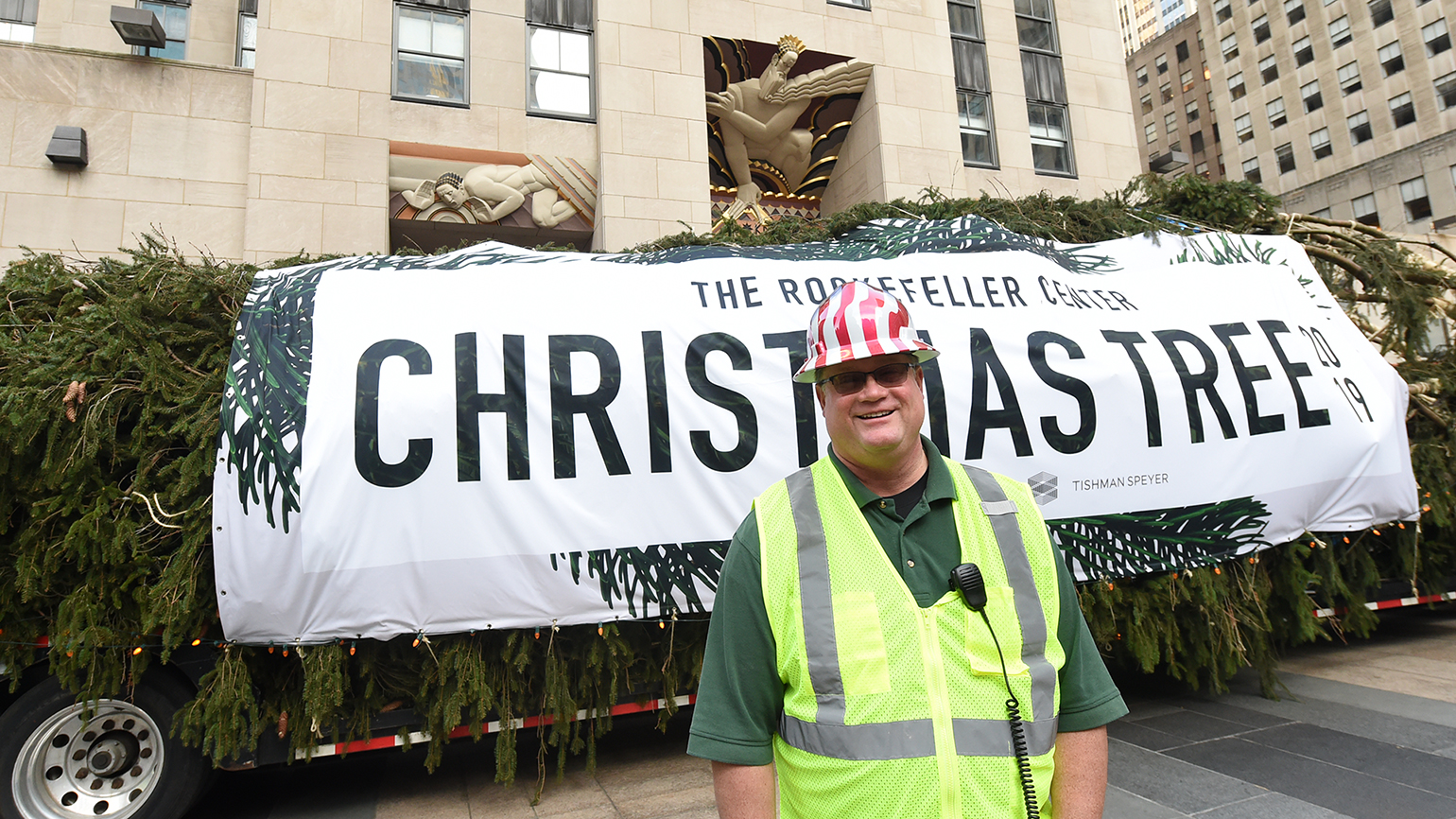
He was made for this. Erik Pauze, the tree scout for Rockefeller Center, loved trees as a kid and was a horticulture major in college. Fresh out of school he landed a job with the gardening team at the famous New York City plaza, climbing the ranks to head gardener. For more than a decade, Erik has driven through Pennsylvania, New York and Connecticut, scouting evergreens, making a list and checking it twice, like Santa on wheels.
What does he look for? Seventy-footers at least, with perfect symmetry, “green, lush and full,” he says. “Sometimes people don’t believe me when I say why I’ve come. That’s when I show them my business card.” The crew fertilizes the hopefuls and considers how they fare during bad weather. The branches must be strong enough to bear the weight of 50,000 lights and a 900-pound crystal star on top. Erik still gets goosebumps during the countdown to lighting. “It’s a great feeling,” he says. “And everybody’s happy.”
Erik isn’t just a tree guy; he’s a people person too. He keeps in touch with families who have donated their trees over the years and calls them when he’s in their area looking for another one.
With all his experience you’d think he’d be the one to pick out his tree at home. “The family votes on it,” he laughs. “They just want me to bring my pickup to get it to the house.”
The light didn’t register at first. I must have written it off as an all-too-familiar symptom of my alcohol-induced hysteria. Slowly, however, it dawned on me that the room was pervaded by an incredible brilliance pouring through the open window.
I moved toward the source of the light but was literally driven back by the searing intensity of it. I could not keep my eyes open.
I sat down heavily, shielding my eyes with my forearm, trying to discern the source of this violent illumination. This was no gentle light. This was dominant, almost brutal. It demanded my attention.
Ever so slowly I felt myself give in to the light, in an act of involuntary surrender. All power was being drained from me. I was dying. This was the light of death.
Gradually there was a diminution of its intensity, and along with it a baffling calm welled within me, as if the very light was flowing in by particle and wave, filling the void it had hollowed out. I felt incredibly, indescribably at peace.
And with that I fell into a deep, restful sleep.
Construction activity and a cold breeze woke me. I rose and went to the window, leaning out, my gaze met by a handful of workmen just a few yards away. Attached to their scaffold were several huge work lights, which were on and extremely bright.
I slammed the window shut. And started laughing. Was it those work lights that had created the illumination I’d experienced, the hallucinatory perception of some divine cosmic light? Had that—a work light—been the true source of my epiphany?
But did it matter? Because that serenity that had overcome me just before I fell asleep lingered. I could still sense it within me, not fully expressed but there, hovering and humming. It was the manifested internalization of that epiphanic experience, real or otherwise, that mattered—and who cared if a work light was the culprit? It was my feeling of serenity, however tenuous, that was the real blessing and would be the seed of whatever change and growth might come next.
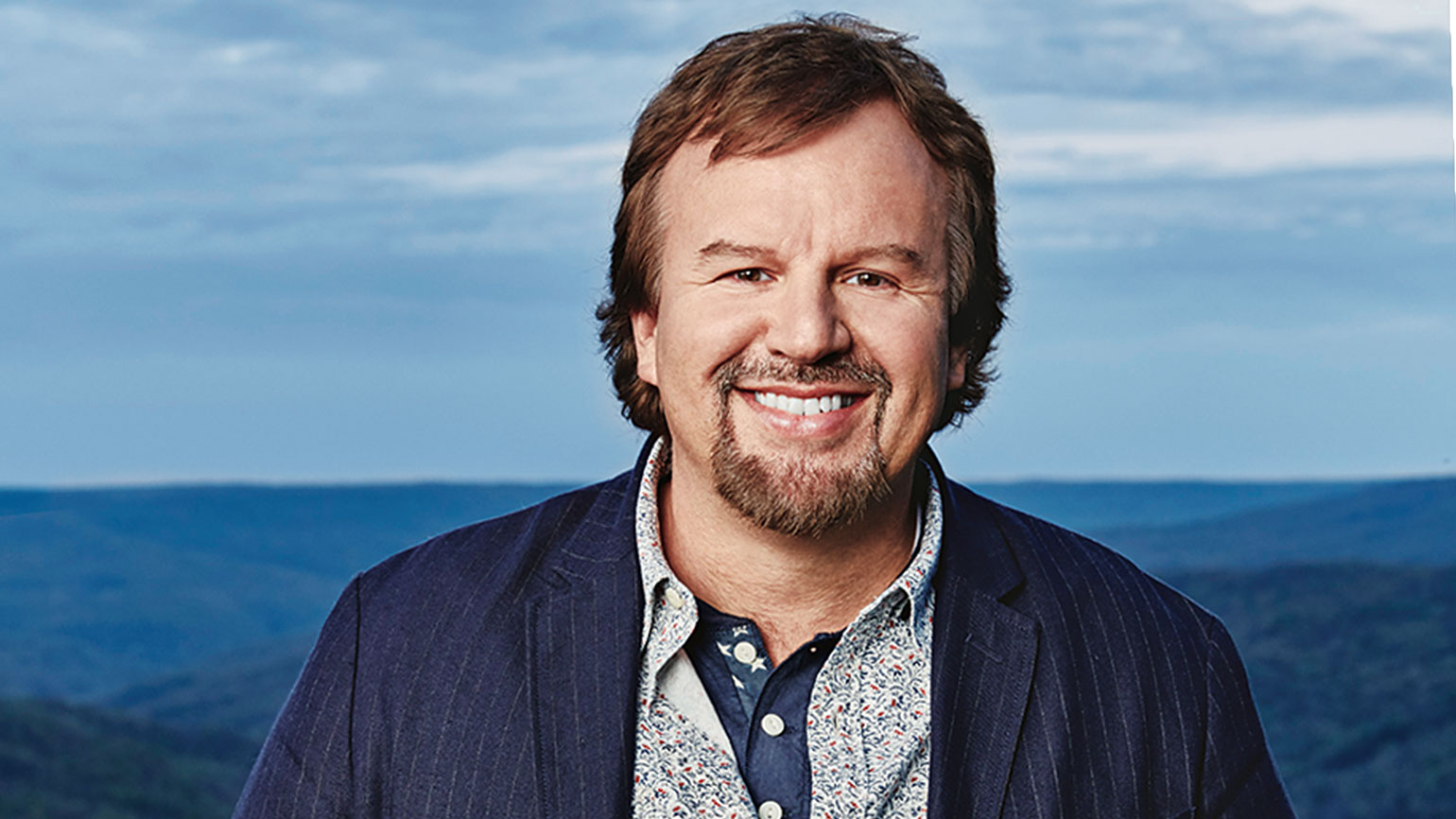
Mic in hand, I looked out at the thousands of people standing on their feet, singing at the top of their lungs. I’m the lead singer for Casting Crowns, and the feeling of that many people singing my songs never gets old. That Saturday night, February 28, 2015, we were playing the Carson Center in Paducah, Kentucky, our last show before heading home to Georgia and church the next day.
Almost all of the songs I’ve written over the years have a story behind them, a real-life person or experience, often from leading the youth group at my home church. That night, the opening chords of our song “Voice of Truth” rang out and the crowd responded. I sang, “Oh, what I would do to have the kind of faith it takes to climb out of this boat I’m in.”
Community Newsletter
Get More Inspiration Delivered to Your Inbox
The audience sang along. It’s why they were there, to be uplifted by our music, and even more, by the message in it. But I wasn’t feeling it. It was like my own lyrics were taunting me: Dude, you don’t have that kind of faith, not to weather this storm.
Somehow I got through the song. As the crowd cheered, I stood quietly for a moment, thinking about how my life had been turned upside down just a few weeks earlier.
We’d been near the end of our tour, 80 concerts spread over six months, and I hadn’t been myself. It was like my get-up-and-go got up and went. My back hurt. I was having stomach pains, acid reflux. I felt worn out. I needed a break.
Not that I was going to get it. I work full-time as a youth pastor at Eagles Landing First Baptist Church, just south of Atlanta, part of the reason we only tour Thursday through Saturday. I lead worship for a group of more than 300 middle- and high-school kids. Answer their questions about their faith, about God. Comfort them when they’re feeling down, when someone in their family’s sick or struggling.
That’s my true calling. It’s the job I was doing before Casting Crowns was even a thing. In the beginning, writing and performing songs was just a way for me to connect with the kids.
I’d called my doctor, who’s a good friend, and told him my symptoms.
“Dude, you’ve gotta lay off the pizza,” he’d said. “Let’s do some tests. I want to make sure that you don’t have a stomach ulcer.” Wednesday, february 11, first thing in the morning, I went in for a CT scan. Right after that, I went to a funeral for a church member. Near the end of the service, I felt my phone buzz. I sneaked it out of my pocket. There was a text from my doctor: Bro, I need you to call me.
I went out to the parking lot and called him back. “We found something on the scan,” he said. “There’s a mass on your kidney. It looks solid. I think it’s cancer.”
What I heard was, “You’re going to die.”
“Listen, if you were to lay every type of cancer there is out on a table, this would be the type of cancer you’d want,” my doctor said.
I wondered why I couldn’t just get a whole different table. I hung up and walked to my car in a daze, wondering how I was going to break the news to my wife, Melanie. Our four kids. Our church. The youth group. The band. The idea of telling them all made my head spin.
I thought, Maybe no one besides Melanie needs to know. I didn’t want to scare our kids. I definitely didn’t want everyone feeling sorry for me or making a fuss. I didn’t want people sharing inspirational pick-me-ups they saw on Twitter. Telling me everything happens for a reason. All the stuff I’d seen happen to other people who were hurting.
My job, my calling, was to be a comfort for them. To give them strength. I wasn’t going to be the guy who needed help and prayers. No way. This was between God and me. A private battle.
I called Melanie, told her about the tumor, that the doctor had said not to stress about it. I avoided using the word…
“Is it cancer?” Melanie asked.
“Yeah, that’s what they’re saying.”
Our youth group Bible study met that night. I tried to joke around, be present for the kids—including my own—act like everything was normal. But all I could think about was that there was something malignant inside of me, trying to kill me. At the end of Bible study, I went to my office and sat down at the keyboard. Started noodling around.
Slowly words came: “No one would blame you, though, if you cried in private, if you tried to hide it away, so no one knows, no one will see, if you stop believing.” Was that what I was most afraid of? Not dying but, rather, not believing and having people see my faith falter?
The next day, Melanie and I went to see a urologist. He agreed it was likely cancer and ordered a second CT scan for confirmation. We drove home in silence. “How do you want to tell the kids?” Melanie finally asked.
“I don’t want to upset them,” I said.
“They’ll be okay,” she said. “We’re going to get through this together.”
I talked to each of our kids individually, from youngest to oldest. I tried to be strong, but they saw right through me. What if by being open, I’d made everything worse?
Friday the urologist told me my kidney would have to be removed. I’d be laid up for at least four weeks. “You won’t feel one hundred percent for a while longer,” he said.
There was no way I could keep this a secret.
I had to let everyone at church know, but I was too chicken to do it. So I told one of the pastors and he announced it at the end of Sunday service. I’d hightailed it out of there before anyone could catch me. I couldn’t take having all eyes on me, the looks of pity. By the time I got home there were, like, 90 texts on my phone.
I told the kids in youth group that Wednesday night. That was hard. “How could God let this happen to you?” some asked. I tried to explain that faith doesn’t spare us from hardship, but I could tell they were shaken, questioning everything I’d taught them. I told my bandmates the next day. It never got easier. Each time, it felt like the words were being pried out of me.
Now, with less than two weeks till my surgery, I stood onstage at the Carson Center in Paducah, staring out at the crowd. They were moved by our music. Why wasn’t I? Why did God feel so far away?
The next song on our set list was “Just Be Held,” one of the few that didn’t have a specific story or person behind it. I’d written it two years earlier and had never been entirely sure why. The band started up. There was no time to think. I had to sing.
“There’s freedom in surrender… when you’re on your knees and answers seem so far away, you’re not alone, stop holding on and just be held….”
It was as though I was hearing those words for the very first time. Suddenly I knew who this song had been written for, and why. God in his infinite wisdom had given it to me two years earlier, knowing how desperate I would be after my diagnosis. I didn’t need to hold it together. I needed to be held, to accept his love from as many people as wanted to share it with me, to receive their prayers, all the prayers I could get.
I didn’t quite have the nerve to tell the crowd then and there. But back home the next day, I e-mailed the morning-show hosts at The Joy FM in Atlanta. “I wanted you to know I have kidney cancer,” I wrote. “Please ask your listeners to pray for me.”
Almost instantly they e-mailed back. Could they come interview me live? I could almost feel the ground shifting under my feet. I’d have to put my cancer, my fears, my hurt, myself, out there. I would have to be vulnerable. Then I remembered the ultimate vulnerability of Jesus when he was nailed to the cross for all mankind to behold. It gave me the strength I needed.
The interview didn’t take long. That afternoon, on Facebook, I had messages, prayers and love from more than 90,000 people! Someone started a Twitter hashtag, #prayformark. By the next morning, it was trending number three around the world. I wasn’t totally sure what trending even meant. All I knew was I could feel the love coming from all directions. I felt lifted. God was cradling me in his arms, holding me tight.
That love helped me through the surgery and the 11 days I spent in the hospital, recovering from complications. It got me through the next four weeks while I was laid up in bed. Melanie and our kids and I hung out, watching movies, talking and praying. Cards arrived from all over the world. Prayer quilts. Photos of youth groups. It was humbling. Overwhelming.
I carry that love with me even now, two years later. These days I tell my story at every concert, asking cancer survivors to stand and be recognized. I don’t mind being the hurting guy, the vulnerable one, anymore. Because I know we’re all in the same boat, arms outstretched in the storm, just needing to be held.
Did you enjoy this story? Subscribe to Guidepostsmagazine.
Rows of lavender bushes stretched all the way to the horizon, a sea of purple.
“Are you going to be okay?” my husband, David, had asked that morning before he left for work.
Community Newsletter
Get More Inspiration Delivered to Your Inbox
“Don’t worry,” I replied, trying to ignore the pain spreading up my back.
Now the sun was broiling. High noon. Buds from nearly 300 plants had to be harvested by dark! I’d waited too long—till the last day before the buds would bloom, wanting to get the maximum crop.
Even after three hours, I’d barely made a dent. My back was on fire. These plants! I’d never get to them all. And soon there’d be 700 more ready to cut! This was not the relief I’d prayed for.
For 15 years I’d suffered from fibromyalgia, my neck and lower back constantly inflamed. It was a mysterious, chronic pain in my muscles, aggravated by the slightest pressure. It hurt just to lie down. I couldn’t remember my last full night’s sleep. Tossing, turning and worrying, I was drained before I even got out of bed.
How could I’ve made such a colossal mistake, thinking I could be a lavender farmer? I’d had a good career managing the printing of catalogs. But my job, more and more, required sitting at a computer. The pain was excruciating.
I was desperate to find work that didn’t require sitting for eight hours. I fantasized about being my own boss, setting my own schedule, and started taking business classes.
“What do you love doing?” the instructor asked one night. “Follow your passion.”
Gardening. That had been my answer. My flower beds were my sanctuary, where I prayed and felt closest to God. But how could that be a business?
A few weeks later I was in my garden. The lavender had just bloomed. I took a deep breath, filling my lungs with its fragrance. My muscles relaxed, peace sweeping over me. If only I could make this last.
Then it hit me. I could grow lavender! I’d read about people selling soaps and creams made from the oil. I did research and wrote my first business plan, showed David how it came out.
We owned enough land to plant 1,000 bushes on an acre then another 1,000 the next year. In three years the first oil-bearing buds would mature. I’d sell products online and at festivals.
“Go for it,” David said. Thinking about the field, tending the plants after work, got me through the years until I could quit my job. Now my first harvest was happening.
I bent over a bush, grabbing stems with my left hand. With my right I pushed a serrated knife into them. The bushes were covered with purple buds, filled almost to bursting with oil. All those years I’d dreamed of this moment. Hours of planting, watering, pruning.
If I didn’t get these bushes cut, tomorrow when they blossomed, the oil—with the income—would waft away. It was on me. There was no money to hire help. David couldn’t take time off from his job.
The stems were tough and I pushed harder. The blade slipped, nicking my thumb. A ribbon of blood trickled down my hand. This was impossible! I had to be doing something wrong.
Cautiously, I took hold of the stems again and sawed through them. At this pace I’d be lucky to get to a quarter of the plants. I have to speed up! But each time I bent over, needles of pain shot across my back.
I pulled a rubber band around the cut stems and put them on a cart next to me, atop the growing pile I’d bound since morning. Once I was done harvesting, I had to hang each bundle in the barn to dry. But I couldn’t think about that now.
The knots in my muscles twisted tighter. I straightened my back. Would I be able to walk tomorrow? God, I don’t know how much more I can do. I need your help. I closed my eyes and took a long, deep breath. Ah, the sweet perfume of lavender…
I took another deep breath and blocked out all but the bush in front of me. With a few quick jerks I slid the knife through the stems and moved to the next plant.
The sun was racing toward the horizon when I reached the end of the row. I’d harvested 100 bushes, less than a third of what needed to be done.
I moved to the next row and in the fading light reached for more stems. I found a slow rhythm, but time was running out. It was getting too dark to see. Finally I had to stop halfway down the row. It was pitch black.
I strained to push the cart piled high with buds to the barn, breathing in the powerful aroma. I’d never worked harder, never put more sweat—and blood—into anything, but I felt like a failure.
One after the other, I tied lavender bundles to wooden frames, which I then hooked to the rafters. Would this day ever end?
It was almost midnight when I collapsed into bed next to David. He was already asleep. He’d worked late too. I was glad not to have to tell him about my day. My body felt pummeled. It was going to be another long sleepless night. I tried not to move. All I wanted was to…
The next thing I knew light was streaming into the bedroom. It couldn’t be morning. I didn’t remember closing my eyes. But I was wide awake. I hadn’t woken once during the night. It was hard to remember ever feeling this…alive!
I swung my feet to the floor. Ugh! A deep, dull ache surged in my back. The harvest! It had nearly killed me. I pushed up from the bed. Strange. Lowered myself down and pushed up again.
I had aches in muscles I didn’t even know I had, but it felt invigorating. It was healthy pain. The inflammation, that constant life-draining pain, was gone!
Could it have been the lavender that helped me, its healing aroma? I went to the kitchen. There was David. Usually I was up way before him. “Hey, sleeping beauty,” he said. “I was hoping you’d wake up before I left for work. Let’s see the crop.”
I hesitated. What would he think when he saw how little lavender I’d harvested? “Are you sure you have time?”
“Are you kidding?” he said. “I wouldn’t miss it for the world.” We walked to the barn, the air thick with humidity. Slowly, I pulled the barn door open. With a rush, the moist air was saturated with the most incredible fragrance. It enveloped me, wrapping me in a warm, soothing blanket of lavender.
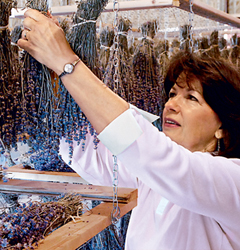
I gazed around the barn. Racks full of purple buds covered the rafters. The barn looked like a cathedral of purple. Had I really cut all this? David’s eyes were wide. “I had no idea,” he cried. “I’m so proud of you. You’re a lavender farmer!”
I’d been so focused on my pain, on what I couldn’t do. Now, for the first time, I saw what I had accomplished, not just in that one grueling day, but over three years of daily nurturing.
I’d harvested something far more valuable than lavender. God had long ago drafted a plan for my life. I knew there’d be challenges, but I wasn’t worried. I had a partner who was never going to let me fail or suffer without reward.
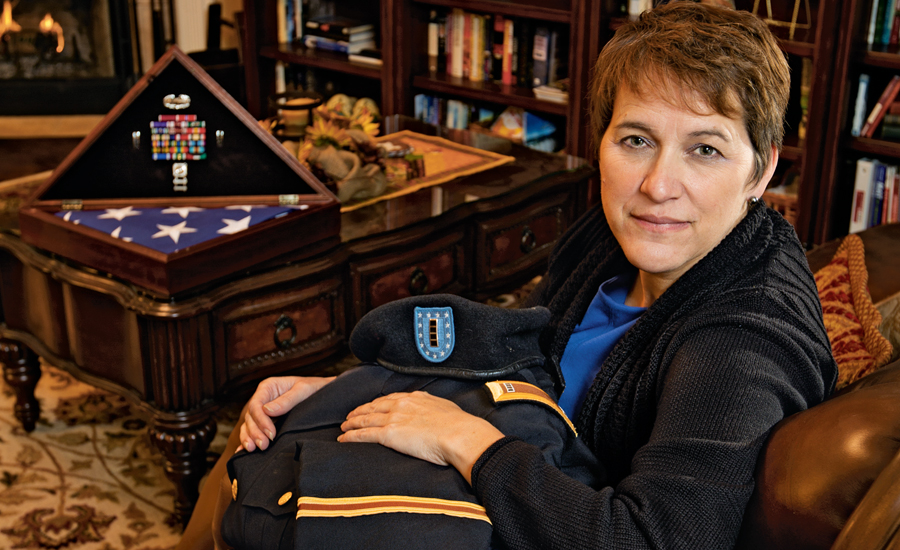
I jumped when the phone rang at my desk at Fort Lee. That February, 2007, my son, Pat, was in Iraq, a second lieutenant in the Army. My first instinct was to fear the worst. I couldn’t help it. It’s a fear that haunts most military families.
“I’m calling from the Pentagon,” a woman said. My hand gripped the receiver. I knew this wasn’t how the military would notify me if Pat was dead or wounded. Still, I was scared. Nine months earlier a bomb had killed my husband, John, in Iraq. I was supposed to be moving on with my life but it didn’t feel like I was. Not since the morning two Army officers knocked on my door.
I’d sold that house in West Virginia a month after John was killed, and moved here to Fort Lee, Virginia. I started an internship on the base, training to be a logistics specialist—the same kind of work that John had done in the Army. That was the plan we’d worked out together. He was going to retire when he got home and cheer me on in my new career. I’d just graduated from college. It seemed perfect, as if God was giving us the green light. If only.
There were so many days now that I just sat at this desk and sobbed. I could sense my coworkers turning away, not knowing what to say. I didn’t belong here. I didn’t care about logistics anymore, how to get parts to repair a Humvee or a Stryker. That had been John’s passion. It used to be mine too. We’d been a team for 23 years. I felt lost without him, coming home every night to an empty apartment.
All I could think about was that awful day. Those two soldiers standing at attention at my door at six-fifteen on a Monday morning. I sat across from them in the living room. “The secretary of the Army has asked me to express his deep regret…” one of the soldiers, the notification officer, began. I couldn’t focus on what he was saying. My mind was racing. How had John died? Had he suffered? Who was with him? Were there any survivors? When would I be able to see him? What should I do first? John’s paycheck was our only income. How would I pay that month’s mortgage?
But they couldn’t tell me any of that. “I’m sorry, ma’am. I’m not able to give you that information,” the officer repeated over and over again, as he was trained to do. They waited while I woke Nikki, my 20-year-old daughter. “Someone will be in touch with you within twenty-four hours,” the officer told us. Then they left. They seemed nervous, as if they’d been told not to stay any longer than needed.
That afternoon I got an e-mail telling me that John and another soldier had been killed by a roadside bomb that exploded near their Humvee. That was all the information I was given until my casualty-assistance officer, or CAO, showed up, a day late.
He couldn’t answer my questions either. His job was to help me plan John’s funeral. I chose to have it at Arlington National Cemetery, but I didn’t care about picking out John’s coffin or the order of the service. All I wanted to know was when I would be able to see John, to say goodbye.
“I’m sorry,” the CAO said. “That won’t be possible. His wounds—We just don’t think it’s something you’d want to see.”
Who was the Army to decide what was best for me? But there was nothing I could do. The day before the service, at a funeral home near the cemetery, the CAO ushered me to a softly lit room, to a chair beside a flag-draped coffin.
“Stay as long as you’d like,” he said.
I reached out and touched the coffin, hoping somehow I could feel my husband again. All I felt was its cool surface, indifferent to my touch. Indifferent, like the Army itself.
There had never been a time when the Army wasn’t part of our lives. That’s how I’d met John. We were both soldiers, stationed in Germany, working as mechanics. He stood out, a big bear of a man with red hair and a booming voice. So smart. Always patient, always kind. We hit it off right away. A year and a half later we were married.
I left the Army when I got pregnant with Pat, but there was never a question that John would stay on. He loved the military. He excelled at planning. Logistics. No matter the obstacle, everyone knew they could count on John.
He rose through the ranks to become a chief warrant officer. I was proud of him. I made it my mission to help him succeed. Encouraging him. Listening to his ideas, his frustrations. Helping him pack when he was deployed.
The way I saw it, I too was a logistics expert—for our family. Paying the bills, managing expenses, seeing to home repairs, helping the kids with their homework and getting them to school and church activities. That was my responsibility.
“You’re going to be great,” John told me the day I got my degree. He was in Iraq, but he watched me receive my diploma via an internet feed. That was the last time I heard his voice. The next day, he was killed.
I was numb at the service. Days later the CAO came to the house with stacks of forms to sign. He seemed frustrated by my questions. Things that were important to me—like whether I needed a new military ID—weren’t even on his radar. “You don’t need to worry about that right now,” he’d say.
Finally, determined to get some answers, I went to John’s base, Fort Bragg, in North Carolina. I spent three days there. I got information, but I had to ask all the questions. No one ever asked me what I was worried about or suggested that I go to counseling. There was no one to reassure me that I’d be able to get through this. No one, it seemed, had been given that assignment.
A month later I had come here, to Fort Lee, to this desk. There was no reason for me to stay in West Virginia. Nikki was leaving for college. We’d only moved to the state because John had been assigned to work as a liaison with a National Guard unit there.
I’d been so busy finishing my degree I had barely even met the neighbors. Maybe a change of scenery was what I needed. But my grief hadn’t left me. For the first time since John’s death, I went to church. God felt unreachable, remote, like the Army. I didn’t know what God wanted of me. To stop grieving? To move forward? How?
I tried going to counseling at Fort Lee. But it took weeks to get an appointment and I never seemed to be able to see the same therapist. Every time I went I had to tell my story all over again.
Now, on the phone, the woman from the Pentagon said, “We work with a group that presents medals to the children of soldiers who have been killed. Is there a day your family could come?”
I really wasn’t interested in a medal. But for Nikki and Pat—and John—I’d go. “I’d be honored,” I said. A few weeks later, Nikki and I went to the Pentagon. We got there early and I paced outside the conference room where Gen. George Casey, Jr., the Army chief of staff, would be making the presentation.
Pat would be given his medal in Iraq at the same time. I turned and… there was General Casey, his four stars staring out at me. “Oh, hi,” I said. “I mean sir. I mean—” I felt like a private again. I began nervously edging away from him.
“Donna,” he said, as though he’d known me forever. “How are you doing?” His voice held genuine concern, as if at that moment my welfare was the only thing that mattered to him. Was he for real?
I took a deep breath. I was never going to get another chance to talk to someone like this. And if he did care, and I told him the truth, then maybe things would change. “Sir, I’m okay,” I said. “But there are things about this process that have disappointed me.”
I told him everything, how no one seemed able to answer basic questions, how no one had ever talked to me about getting counseling, the difficulties I’d had getting an appointment. How I wasn’t sure what I even wanted out of life anymore. He listened intently, nodding, his eyes never leaving mine.
“You’re not the first family member to tell me this,” he said when I finished. “I’m forming an advisory panel to make recommendations we can act on.”
“Well, good luck with that,” I said, hoping I didn’t sound too disappointed. When in doubt, form a committee. I turned to step away.
“I want you to be on the panel,” General Casey said.
I stopped. I wasn’t about to say no to a general, even as a civilian. In the months that followed, our committee talked with hundreds of people whose loved ones were killed in service to our nation. Hearing their stories I couldn’t help but feel angry all over again. Their frustrations and sorrow were burdens I knew all too well.
But more than that I felt a sense of purpose, a calling, even. This was an enormous challenge, one it felt as if my whole life had prepared me for. In part, it was about getting the right resources where they should be. This knowledge—the experience—that God had given me. He knew where I was needed all along.
Among the many changes our committee achieved was the creation of a new department within the Army called Survivor Outreach Services. SOS coordinators nationwide now work with surviving family members for as long as they’re needed, referring them to doctors and therapists, financial planners and life coaches who can help them begin to find a way forward.
I’m one of the program’s administrators. Our challenges are enormous. But in the end it comes down to logistics, doesn’t it? The logistics of the heart and of the soul.
What is the key to a happy life? I once spent several hours with one of the most infectiously happy gentlemen I have met in many a day. At the end of our time together I said, “One thing I would like to ask you before I leave. How did you get to be so happy?”
“Brother,” he replied, “if you could have seen me three or four years ago! I was the saddest, most negative, defeated individual you ever saw.” So what did he do? This discouraged man picked up the Bible and thought, “I wonder if there is anything in there for me?” He didn’t know anything about the Bible, had never read it. “But,” he says, “what else could I do? “
He had read somewhere that if you are up against it and you shut your eyes and open a Bible at random you will find a verse which is a message from God. Now that isn’t the best way to read the Bible. It isn’t very intelligent, it certainly isn’t very orderly, but if you can’t do it any other way then that way is a lot better than none.
The man took the Bible and opened it and with his eyes shut put his finger down on a page. When he looked, what he read was verse 19 of the 16th chapter of Matthew: “And I will give unto thee the keys of the kingdom of heaven.”
“That startled me,” he said, “but it fascinated me. God would give me a key—keys, more than one. I said to myself, ‘What is the kingdom of heaven?’ I didn’t know, but I got to thinking about it and I figured that this must be the name for all of the most marvelous things in the world which God wants for His children—and which I didn’t have. There it was, locked away from me—and He was putting into my hands the keys of this kingdom, and if I would open it up I would find these things. That is what I made of it so I put the key in the lock and I opened the kingdom of heaven and all these blessings of love and faith and hope and greatness and cleanness poured out of the kingdom into me and I became a happy person.”
Looking for the key to a happy life? Here are some practical tips to help you live a happy life:
1. Happiness comes from knowing you can handle things. Become confident, and happiness will follow.
2. To be happy, find a human need and help fill it.
3. Be happy about your struggles. They can bring you untold satisfaction as you conquer them.
4. Take Jesus, the greatest giver of happiness the world has ever known, into your heart. His presence in your life will bring you joy and happiness.
PRAYER: Our Heavenly Father, help us to think the kind of thoughts that give us joy and that transmit joy. Help us to get in our hearts the love of Christ, that we may love people, so that they find joy.