Embrace God's truth with our new book, The Lies that Bind

The Joys of Christmas

We were out of ginger candies, ginger ale and ginger tea, and Evie had a stomach ache.

I did find some ground ginger left over from our Thanksgiving pumpkin pie recipe, but what good would that do? I sat down next to my tweener curled up on the sofa and saw the answer sitting right there on the coffee table.

I lit the tree and put on our Charlie Brown Christmas CD. “Let’s bake some Christmas cookies, sweetie. It will take your mind off your tummy.”

Lucky me that we’re featuring a soft, chewy gingersnap cookie recipe in “The Joy of Baking” section of Guideposts’ The Joys of Christmas 2014.

Start each day with encouragement for your soul. Order Mornings with Jesus 2019

The simple ingredients were already in my kitchen cabinets, except for one-third cup of molasses, which my neighbor had in her fridge. That tummy ache didn’t stand a chance.

In no time, the house smelled warm and happy. Evie was smiling before the cookies had even cooled. Two for her, two for me, a tin for the neighbor across the way.

Thank you, Lavonne Caffey Zaiontz of Huntsville, Tennessee. Your No-Snap Gingersnaps saved the day and spread some Christmas joy.

No-Snap Gingersnap Cookies

2 cups flour

1 teaspoon ginger

1 teaspoon cinnamon

2½ teaspoons baking soda

¼ teaspoon salt

1 scant cup of sugar, plus extra for rolling

¾ cup vegetable shortening

1 egg, beaten

⅓ cup molasses

Mix together flour, ginger, cinnamon, baking soda and salt. In separate bowl, cream together sugar, shortening, egg and molasses. Slowly add dry mixture to cream mixture.

Roll quarter-sized balls of dough, then roll each ball in granulated sugar. Place balls about 3 inches apart on a cookie sheet. Do not flatten balls. Bake at 350°F for about 10 minutes. Leave them 1 to 2 minutes before removing. Makes about 60 cookies.

The Joyous Birthday Season of Grandpa Peale

I have always found it so fitting that Grandpa Peale was born on May 31, a time of year when our natural surroundings are bursting with new blooms, lushness, new hope. It is also the time of graduations and celebrations of academic accomplishment, new beginnings, new experiences.

To me, Grandpa Peale’s ministry and mission were (and still are) infused with these same attributes. Through his writing and sermons, he showed us ways to see the goodness and beauty in ourselves, in others and in our surroundings.

Read More: Positive Thoughts from Norman Vincent Peale

He gave us guidance in finding hope during life’s stretches of hardship and bleakness (much like our Northeast winters). He offered ways to begin anew each day with God’s love surrounding us. He also encouraged us to allow an attitude of optimism to blanket us throughout our days, our junctures, our trials.

As I go on my jogs this time of year, I often think of Grandpa’s love of the freshness of late spring, of the sun’s warmth and of the scents of lilacs, peonies and honeysuckle. He deeply appreciated having a home in the country where he could be enveloped by these joyful sensations.

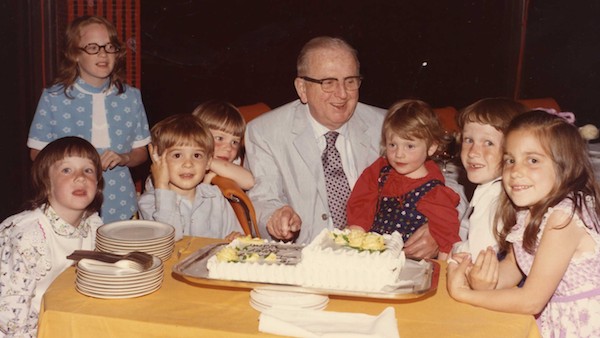
The Peale grandchildren were grateful to spend many of Grandpa Peale’s birthdays with him. He delighted in us and in our joy in a celebration. Not a May 31st goes by for me without a pause filled with gratitude for my Grandpa and for the love he shared with his family and with people the world round.

The Journey to Heaven

We seem to run a lot of stories about people dying. They leave us with glimpses of heaven, their final visions of loved ones or pets who await them, descriptions of escorting angels. I always feel uplifted after reading one of these stories, and the best ones make me think that my death will be an adventure, something to look forward to. Who wants to fear the inevitable?

Read More: 12 Things Not to Say to Someone Who Is Grieving

Community Newsletter

Get More Inspiration Delivered to Your Inbox


Ninety-year-old Pat Miller of Hinsdale, Illinois, certainly doesn’t. I opened her letter today:

“After my father died,” Pat wrote, “my mother stayed with my younger sister for several busy, happy years. When her health changed she spent some loving, comfortable years with me, her nurse daughter. After she died, we waited till lovely weather and invited all her old friends to a luncheon. One dear old friend of the family, an elderly gentleman, seemed upset, as he’d just learned Mama had died on his birthday.

“‘But Uncle Mylan,’ I said, ‘going to heaven is one of the most wonderful things that can happen to you, and Mama chose your birthday to go!’

“Uncle Mylan was quiet. He was thinking.

“Later I heard his voice above the talkative group, as cheerful as could be. ‘And June chose my birthday to join her husband, Bill! I feel honored!”

Pat Miller knew her mom’s journey was one to be celebrated, and Uncle Mylan? Well, he went so far as to see it as a love story. How beautiful is that?

The Journal of a Sister Lost to Cancer Bolstered Her Faith

I pulled into my sister’s driveway and sat in the car, gathering my courage. I hadn’t been inside since the day of Danelle’s funeral, two weeks earlier. Her husband, Dave, had invited me to come help him go through her things, especially clothes and personal items.

Was I ready for this? Danelle and I had been close. She was four years younger than me. As a child, she followed me around and wrote notes telling me how much she loved me and looked up to me.

Catherine Madera on the cover of the June-July 2022 issue of Guideposts
As seen in the June-July 2022
issue of
Guideposts

Grown up, we lived an hour and a half away from each other and bonded over marriage, kids, work, faith and the horses that we both loved to ride.

Danelle had beaten ovarian cancer five years earlier. We’d called it a miracle. We assumed God would be there for her again when she was diagnosed with mouth cancer in 2019.

There was no second miracle. The cancer was painful, disfiguring and unstoppable. We prayed, rallied our friends and our church, even flew Danelle to Europe for an alternative treatment. She died anyway, suffering right up to the end.

From the car, I could see the Japanese maple in the front yard. Danelle had loved that tree, and I loved it too—especially in the fall, when the leaves turned crimson. It was fall now, but the changing colors didn’t cheer me. Instead, they felt like a prelude to loss.

I glanced at my phone before getting out of the car. Danelle’s last text to me was still there: “Where are you?”

I had been with my sister when she died, and she had stopped using her phone by then. The text was from an earlier period when she must have been looking for me. Her words expressed what I felt now—toward God.

Where were you?

Dave met me at the door. “Thanks for coming,” he said, wrapping me in a six-foot-four-inch bear hug.

I could tell Dave needed support, but I didn’t have much to give. To be honest, I wished I could have postponed today’s visit. Seeing Danelle’s things, reliving the memories… I could barely get out of bed most days.

“I’m happy to help,” I said, forcing a smile. “I’ll clear Danelle’s closets plus her dresser and her jewelry.”

“That would be great,” Dave said, obviously relieved. “I didn’t know what to do with all of those things. I have some of her books for you too. And her journals.”

Catherine and her sister Danelle
Catherine (left) with her sister, Danelle

Like me, Danelle was a journaler. Ordinarily, I would have felt privileged to read her reflections about life. My sister was a restless thinker and a deeply faithful believer. She hated churchy platitudes and shallow prayers. Whatever she wrote was sure to be unsparing and revealing.

I couldn’t tell Dave, but those journals were the last things I felt ready to take right now. They were repositories of Danelle herself. I knew they would be full of painful details about her illness. Maybe even a confession of feeling abandoned by God, though she had never said such a thing out loud. Just seeing those journals would remind me of her spiritual suffering.

“I’ll leave you to it,” said Dave, seeming eager to get back to whatever he had been doing. I gathered my resolve and headed for the bedroom.

Danelle was the fashionista of the two of us. She lived in a suburb of Seattle, while I lived in the woods and, with my husband, Mark, ran a trucking business.

“You should wear more color, Cath,” my sister had often chided me, advice I’d never managed to take. I sorted her clothing into piles—keep, give to family or friends, donate—smiling a little at all of Danelle’s fancy outfits and accessories.

I paused over the classy suits that she had bought in preparation for opening her own accounting business. Danelle had gone back to school once her kids were older and, even during chemotherapy, had managed to pass her CPA exams.

I threw the suits in a box.

A pair of colorful cowboy hats reminded me of the last trip that she and I had taken together, a horseback riding tour of Yellowstone National Park. Danelle had bought a blue hat for me, pink for her. For one blissful week, we rode every day and camped at night under a canopy of stars.

Remembering that trip brought me up short. That was when I’d first learned about the return of Danelle’s cancer. We were talking outside our tent one evening when Danelle mentioned a sore inside her mouth that wouldn’t heal.

A few weeks later, doctors removed a part of her tongue.

The cancer spread fast. There were more operations to remove lymph nodes and a salivary gland. Chemotherapy. Powerful pain medications that drew a haze over her mind.

Then Covid hit. All of a sudden, my sister, my best friend, my confidante in faith and life, was on the other side of an impassable divide.

I had never prayed so hard. Family members, friends, coworkers, our church—everyone showered Danelle with love and support. I kept waiting for God to show up with a miracle healing. I was still waiting when Danelle took her last breath.

I filled the back of my SUV with boxes and clothes. On top, I gently laid Danelle’s long black wool coat, which she wore to concerts when she sang with a local choral society. She’d affixed a pin on the lapel engraved with the word Faith.

I gritted my teeth. I knew faith was “evidence of things unseen.” But all those fervent prayers had amounted to nothing on the day that Danelle had died in a hospice facility. I’d told her I loved her and felt her squeeze my hand. She’d stopped breathing a few minutes later.

“Don’t forget these,” Dave said, setting a box of books and a few journals on the back seat.

“Thanks,” I said. “I’ll hang on to them.”

Back home, I put the clothes and boxes of Danelle’s books in a spare room. I eyed the journals, afraid to read them. But it felt wrong to leave them here. I put them on my bedroom dresser, beside my own journal.

For weeks, I went through the motions, feeling numb. My dad was a pastor, and I have always had a strong faith. Danelle’s death didn’t make me doubt God was real; it did make me wonder whether I had misunderstood God.

I felt like Jesus’ disciples after he tells them he’s going to be crucified. By that point, most of his followers have abandoned him, realizing he wouldn’t be the conquering Messiah they’d expected.

“Are you leaving too?” Jesus asks the disciples.

“Where would we go?” they reply.

That was my question.

Early one morning, I reached for my journal on my dresser. I often write reflections during the predawn quiet. For some reason, my hand picked up one of Danelle’s journals instead, the one in which she had chronicled the last years of her life.

On the cover was an image of a tree and a line from Scripture: “I will walk by faith, even when I cannot see.”

I held the journal, turning those words over in my mind. I knew I should put the journal down and carry on with my quiet time. But I couldn’t.

I sat in my favorite chair and slowly pulled back the cover of the journal. “Okay, God,” I said. “I’ve tried to walk by faith, but now I need to see.”

I flipped to a page in the middle and braced for a pull-no-punches description of painful treatment or feelings of despair. Danelle never minced words.

“You are my everything, Lord,” Danelle wrote. “This year has made me know that you always show up for me.”

I looked at the date: September 2017. Exactly two years before her diagnosis, four years before she died. Well, she wasn’t sick then, so that didn’t count.

I flipped forward to the following year, landing on January 1: “I am so grateful I got to see this day dawn. A new beginning, like you promised. I look forward to what you hold in your hand for me because I trust you.”

I flipped further ahead to the day of her diagnosis. “It was a great and terrible day,” she wrote. Great? What was great about it? The rest of the entry was an honest accounting of her fears plus her determination to trust God through everything.

I turned to the next page. And the next. Eventually, the pain meds took hold, the entries petering out. Nowhere could I find a single line of anger or disappointment in God. Everything was gratitude and love.

I realized I was near the end of the book. The parts about her cancer were actually comparatively short.

I flipped back and read page after page of Danelle’s delight in life. There were her kids maturing and becoming independent adults. Her repeated attempts to pass the CPA exam and her final triumph. Fun vacations. Observations about life and people.

On nearly every page, there were declarations of her deep faith in God. Gratitude for his daily provision. Searching questions about a bit of Scripture or a theological issue raised by something Danelle had read.

Regret? Anger? Bitterness? None to be found.

This was a journal about life, not death. It was the record of a vibrant woman whose love for God was unconditional and kept her from getting stuck in negativity. Faith powered everything she did. She was at peace because she trusted her redeemer right up to the end.

Danelle was my younger sister, but here she was showing me the right way to live.

I’ll never stop missing Danelle. But I am no longer confused about who God is. After Danelle died, I couldn’t stop thinking about all the ways God didn’t show up. I was so focused on where God wasn’t that I lost sight of where he was.

Danelle knew. She wrote about it every day in her journal. She lived it during every one of her 45 never-a-dull-moment years of life.

Her spirit was still strong on that last day, when she squeezed my hand to say a final “I love you.” By that point, Danelle was ready to say goodbye.

On her grave, she asked for an inscription from Paul’s first letter to the Corinthians: “Now we, with unveiled faces, are being transformed.”

She never lost sight of God’s transformative power. Reading her words, at last I saw it too.

For more inspiring stories, subscribe to Guideposts magazine.

Related Video

The Jesus Year

Last week, I celebrated my 33rd birthday. Usually I don’t get too excited about getting older. But this year’s a little different. In fact, I’ve been looking forward to it much like I looked forward to turning 10 as a kid (“I get to turn a whole decade old?!”). Thirty-three, after all, is a “Jesus Year.”

Jesus did his most important work in the three years before he died at 33, which is why some believe the age is important, sacred even. Is it actually life-changing, though? Or just a nice way to spin getting older?

Read More: A Miraculous Birthday Breakthrough

I did a little digging online to find out what other people were saying. I came across article after article citing research from a 2012 study conducted by the UK social site, Friends Reunited. According to Time magazine, “70% of respondents over the age of 40 claimed they were not truly happy until they reached 33.”

Psychologist Donna Dawson explained it like this: “By this age innocence has been lost, but our sense of reality is mixed with a strong sense of hope, a ‘can do’ spirit, and a healthy belief in our own talents and abilities.”

I thought about how Jesus changed the world in his 30s. And all that he accomplished in those three years of ministry, and that last year specifically. It makes me believe that big things can happen in the span of any year, regardless of how old you are.

Is there something really special about 33? I can’t be sure, but I can’t wait to find out.

What about you? What’s been the best year of your life so far?

Their Son’s Recovery from Drug Addiction Made Them Closer

We considered ourselves a normal, middle-class American family, a good family. My wife, Michelle, and I lived in a nice neighborhood with our two sons, Gordon, 15, and his brother, Gavin, 13. The local schools the boys attended were excellent. We were active in our church. We ate our meals together. We did things as a family.

That’s why it was so hard for us to see what was happening to Gordon, even when the warning signs were plainly there. Psychologists call it denial. For a long time we denied that our son was using drugs, and his worsening behavior was ripping apart our household.

It started with Gordon cutting classes. His grades plunged. We were called in for conferences at school. At home he grew uncommunicative, spending hours in his room, the door defiantly locked. He skipped meals. When he did emerge he was often belligerent. He fought with Gavin, to whom he’d always been such a wonderful big brother. Yet it was as if Gordon were becoming a different person, someone we didn’t know or even like. Still, we blindly refused to suspect drugs. Not our son. Not our home.

Michelle and I are both dyslexics. Gordon too is afflicted with this frustrating learning disorder. We became convinced that dyslexia, along with the usual teenage upheavals, was the root of Gordon’s trouble. It had to be that. So we decided to send him away to a private school specializing in dyslexic kids. But Gordon was strangely infuriated by our plan. “I won’t go!” he howled. “You can’t make me!” He stalked off to his room.

I felt bad forcing on him something he didn’t want, but Michelle and I were determined to spare him what we went through as students. “You’re going,” I said angrily through the door and above the roaring music. “And that’s that.”

I practically had to carry Gordon bodily from the house when it came time. He cursed. He kicked out a window. He cried. Eventually we wore him down and convinced him he had to go. Once inside the car he abruptly quieted down and slept quite heavily the whole drive there.

Gordon only did more poorly at private school, despite faculty assurances that he was bright and capable of the work. He was suspended several times. Michelle and I were devastated. What is going wrong? I’d lie awake at night wondering. When Gordon visited home he’d hole up in his room, blasting music and burning incense, while we sat silently in the living room below, burying ourselves in the newspaper, blocking out what was happening above our heads. Hardly ever did he speak a civil word to Gavin. Gavin just couldn’t understand what was happening to his brother.

This was not the good son we’d raised and loved. Where had we gone wrong? Parents make mistakes, but what had we done to cause such alarming behavior in our boy? The more we tried to help, the harder he pushed us away.

One night while I was on a business trip in Europe, I got a panicky call from Michelle. She was tremendously upset about the results of a physical Gordon had taken to attend camp that coming summer. The exam included a drug scan. “He tested positive for marijuana,” she divulged tearfully. “What are we going to do?” I was stunned. Even though the fractured pieces of Gordon’s puzzling behavior began to tumble into place before I hung up the phone, I was still nonplussed. How many times had we warned him against drugs? How many times had Gordon promised us he’d never try them?

There was nothing to tell Michelle but to pray and hang tight till I came home. The rest of that trip is a blur. When I got back I lost no time confronting my son. I was frantic to get this thing out in the open and deal with it.

“You turned up positive for marijuana on your physical, Gordon,” I said, my voice squeezing out the words.

His eyes widened slightly—he’d been caught. Then he smiled. “Okay, Dad.” He took a deep breath. “I…I tried it once. It was still in my system, I guess.”

Silence. I fumbled for what to say next. “I’ll never do it again,” he offered. Our eyes locked. Suddenly I knew he was lying. He knew I knew he was lying. But Gordon stuck to his guns. I could not believe that my own son was lying so effortlessly to my face about using marijuana. Finally he just climbed the stairs to his room and closed the door.

Michelle and I talked with our doctor, then made the decision. We would have Gordon treated in a drug rehabilitation center. We’d been blind for a long time; now we wanted to do everything to stop the problem before it got any worse.

But it was already too late. At the rehab Gordon admitted to taking not only marijuana but uppers, downers, PCP, cocaine, LSD and a slew of other substances we’d never even heard of. Our son was a drug addict.

Suddenly so much made sense: the moodiness and hostility, the grades, the wild rage at going off to a new school away from his drug source, the occasional missing money we couldn’t explain—all of it. It all made terrible, shocking sense.

A counselor forced us to confront the grim statistical reality of our situation, a reality we could no longer deny. “There are thirty-six kids in this unit,” she said carefully. “In five years twelve will be off drugs, twelve will still be using and twelve will be dead.”

Later we sat in our parked car and cried. Please, God, I prayed desperately, please don’t let my child die. Gordon would need six to eight weeks of intensive inpatient therapy, they said, at a cost of nearly $900 a day. Our insurance covered only 30 days.

“How will we ever manage?” I asked Michelle on the way home. She just stared out the car window. Neither of us had an answer.

We consulted a banker friend from church about a second mortgage. It proved unnecessary. Two days before our insurance ran dry Gordon was kicked out of rehab for fighting with the staff. Back home again he retreated to his room, isolating himself more than ever. The company—and the hours—he kept worried us sick. We never knew what he was going to do next.

We read books and joined self-help groups. We prayed. We cried. We got angry. We prayed harder. But Gordon didn’t change. There seemed to be nothing more we could do for him. At Al-Anon and Families Anonymous we heard about “toughlove,” how we had to stop blaming ourselves for Gordon’s problems. We had to think about Gavin and what Gordon was doing to his brother’s home life. We had to stop letting Gordon’s addiction wrench apart our whole family.

Finally Michelle and I had no choice but to go hard on him. We’d reached the end of our fraying rope. We’d tried everything. Looking Gordon straight in the eye, I said, “In one month you’ll be retested for drugs. If you flunk you’ll have the option of going into treatment, or leaving home for good—or until you kick drugs.”

I paused, wondering if my words had hit their mark. Gordon glowered, speechless. “From now on,” I continued, “you’ll be home by curfew or you’ll sleep elsewhere. Same goes for mealtimes. This isn’t a truck stop.”

“We love you,” added Michelle, “but we don’t like who you’re turning into, and we won’t tolerate it in our home.”

A month later, after he’d slept elsewhere many nights and missed many meals, Gordon retested positive. We stuck with the ultimatum. He packed an old knapsack and left, slamming the door. With all my might I resisted running after him. The weeks that followed were painful for our family. Things fell apart. The demands of a new job put pressure on me at a time when I didn’t think I could take any more. To combat the anxiety she felt over Gordon’s leaving, Michelle took up aerobics, only to injure both ankles at class and end up on crutches. She became more depressed than ever. We had no idea where Gordon was but we knew he was suffering.

Then, while riding his bike, Gavin had a dreadful accident. Michelle called me from the hospital; Gavin had been taken there in a coma. I rushed to his side, frantic. The doctors could promise nothing. The only thing to do was wait and see if he came out of it, wait and pray.

“Gordon should know about this,” I said to Michelle grimly. “He may have turned his back on us, but he still has a brother.”

The next day we cruised the streets. We found him hanging out with some druggie friends. He was reluctant to talk so I minced no words. “Your brother’s had a bad accident. He’s in a coma. We don’t know what’ll happen.”

I searched his eyes for a flicker of worry. But “You all right, Mom?” was all he managed to mumble. Michelle nodded. Then he turned and left to be with his friends. We drove home in silence. It’s in Your hands now, Lord.

Early one sunny morning a few days later we heard a faint knock at our door. It was Gordon—deathly thin, weak, bedraggled. His vacant, red-rimmed eyes met ours. “I’m ready,” he barely whispered, “to go where you want. Take me today.”

Parents make mistakes, but what had we done to cause such alarming behavior in our boy? We put Gordon in a drug treatment program where he got help in fighting his addiction one day at a time—and where we too learned how to recover as a family. We didn’t expect miracles. The simple realities of addiction had long before taught us not to expect either good or bad, but to accept God’s will in our lives.

Miraculously Gavin pulled out of his coma with no permanent damage. We still don’t know exactly what brought Gordon to our doorstep that bright morning not long after the accident, but we know that somehow a power greater than his addiction drew him home.

The four of us will never be quite the same. Drug addiction unravels the home, not just the addict. But in a way I think that recovery has made us a closer family, a family that was forced to draw on love to keep from coming apart.

This story first appeared in the November 1991 issue of Guideposts magazine.

Their Love Deepened Despite His Early-Onset Alzheimer’s

I have played in many memorable concerts over the years as a professional violinist.

None meant more to me than the one I was about to play at Tabernacle Presbyterian Church in Indianapolis.

The sanctuary hummed with voices that afternoon as concertgoers arrived and took their seats in the pews. To my amazement, the church was nearly full. Ushers had to run to the office to print more programs.

I’m always a little keyed up before performances. That day, I could barely contain my emotions.

I had organized this concert. I’d asked the musicians, sent out invitations and selected the music, a mix of well-known composers (Bach, Brahms) and lesser-known contemporary pieces.

Most important, I had brought the guest of honor, sitting in the front row and looking no less dear to me than the day we married three decades earlier.

Mark and I were no longer married. It had been six years since we divorced, after everything in our once happy household was turned upside down by changes in Mark’s personality that we both struggled to understand.

Yet here was Mark at a concert organized by me, dedicated to him. His name was on the cover of the program, above a picture of one of the violins he had crafted as a luthier, a master string instrument maker. Every string instrument on stage that afternoon had been made by Mark. The musicians all knew and admired him.

How did all of this happen? It’s a love story—our love story. But there’s more. Through heartbreak and healing, Mark and I have learned about the deepest love of all: God’s.

Mark Womack and I were brought together by music.

I was 28 years old, a professional musician playing with an orchestra in Knoxville, Tennessee. It was 1985, and the orchestra’s season had just ended for the summer. I heard the Memphis Symphony had full-time violin openings.

I signed up to audition. A friend in Memphis offered to host me. The evening I arrived, Mark came by my friend’s house to drop off her viola, which he’d repaired. She invited him to stay for dinner.

Over pizza, I told Mark about a strange buzzing I’d heard in my violin. “Let’s take it to my workshop after dinner,” he said. “I’ll take a look.”

Mark quickly diagnosed the problem and made a few adjustments. I couldn’t help noticing how handsome he was, gentle and polite. He treated my violin with the same care he would have given to a world-class instrument.

At the audition the next day, I was surprised—and thrilled—when Mark showed up and invited me to lunch.

He came by my friend’s house the following evening and cooked dinner—he even washed the dishes! We went for a walk, and I didn’t try to conceal the fact that I was head over heels in love.

I won the audition and moved to Memphis. Mark and I married two years later. It seemed like a perfect match: a violinist and a violin maker. Though I’m Jewish and Mark is Christian, we agreed to respect each other’s beliefs and raise our children Jewish. (Children are considered Jewish if their mother is Jewish.)

Soon after marrying, we moved to Indiana, where Mark had been offered a job at a reputable violin shop. I found work teaching at the University of Indianapolis and joined the Indianapolis Chamber Orchestra. I formed a klezmer band to play the folk music of Eastern European Jews.

Mark thrived, earning a reputation as a skilled and meticulous craftsman. While I was pregnant with our daughter, Julie, he made a violin for me. He started his own business, working from a studio in our garage. After one of his violas was played at a prestigious convention, the business took off. Musicians from all over sought out his instruments. Mark won awards, including four silver medals from the Violin Society of America.

Mark was in his workshop by sunrise. Often he worked late into the night. Julie hung out in the workshop after school. Our house was filled with music—me practicing, the klezmer band rehearsing, Julie singing scales. She had her eye on a vocal career.

There was one shadow in our happy family. Mark suffered from clinical depression, but antidepressants kept symptoms at bay. Then, about 20 years after we married, the medication suddenly stopped working. Almost overnight, Mark’s personality changed.

He began going to bed early and sleeping in. Some days, he never made it to his workshop. He stopped playing racquetball and reading books, two favorite pastimes. He grew quiet, moved more slowly. Often he seemed confused. Defeated.

Julie and I fretted and tried to help, but Mark waved us away. He began to lash out. The slightest mistake would set him off. He’d yell at himself or whoever happened to be in range.

Work deadlines came and went. Once, a customer came to pick up an instrument and Mark was forced to admit he’d lost it. Months later, I found the violin wedged between two pieces of furniture.

Our family depended on Mark’s income to pay our bills. Yet every time I tried to bring up the subject, Mark would fly into a rage. I panicked about our finances. I prayed every day for God to heal Mark and look out for us.

I finally persuaded Mark to see our family doctor. The doctor immediately told him to seek psychiatric help, but Mark refused. His behavior toward me became so alarming that I feared for my safety.

I had no choice. Though I loved Mark no less than I did the day I married him, I could not remain in our house with him. We separated, and I filed for divorce.

Julie was at college. I moved into an apartment. I grieved the end of our marriage. “What do I do now, God?” I asked. I implored God for answers. How could two people so in love end up like this? Hadn’t he brought us together?

Mark moved in with his parents in southern Indiana. Partly for Julie’s sake, I kept in touch.

“What I did was wrong,” he said during one of our occasional calls. “I don’t know what’s happening to me. I’m sorry. For everything.”

“I forgive you,” I said. And I meant it. I still didn’t understand what had happened. But I found it impossible to hold on to negative feelings. There was only compassion. Mark seemed broken. I urged him to seek help.

“Maybe later,” he’d say.

He moved from job to job. Each time, he was let go after missing deadlines, getting lost or not following through with tasks.

Once, in Indianapolis to see Julie, Mark got confused while driving and had an accident. The repairs took a long time because he couldn’t remember insurance information. I let him stay with me.

He went out for coffee one day and didn’t come back. A police officer called me. “Do you know a Mark Womack?”

“Yes,” I said apprehensively.

“He tried to enter a stranger’s apartment,” the officer told me. “He got confused and thought it was your apartment. He gave us your number. We’ll bring him home.”

Another time, I asked Mark to help me cut a piece of wood for a bookcase. I watched as he tried and failed three times to cut a simple six-inch length of wood.

He was 51 years old. What was happening to him?

The answer finally came at Mark’s fourth and final job. He confessed to the shop owner that he had forgotten how to make a violin. In tears, he was taken to the hospital. Doctors diagnosed early-onset Alzheimer’s disease. Further evaluation led to a diagnosis of frontotemporal dementia, or FTD.

At last, everything made sense. FTD is characterized by dramatic changes in personality, typically starting in the patient’s forties. It is often mistaken for severe depression at first. Displays of anger and aggression are common. Mark’s rages weren’t really about me at all. He was frightened and ashamed of changes in his brain he didn’t understand.

I was stricken with guilt. If only we had known! I never would have divorced him.

Mark’s father had passed away by this point, and his mother was unable to take care of him. Julie and I were all Mark had left.

We didn’t know how to care for someone with dementia, but we vowed to try. I barely supported myself as a musician, and Julie was in New York studying to be a cantor—an ordained spiritual leader who chants liturgical prayers and performs other important clergy duties at a synagogue. Friends, colleagues and other family members cautioned us against taking on such a huge responsibility.

I did the only thing I knew to do. I prayed. Julie did too.

Immediately help turned up. People from my synagogue guided me to an elder law attorney. Julie and I filed for guardianship of Mark, which enabled us to access benefits to pay for his care. We found an assisted living facility and got him moved in.

A friend from synagogue even helped me think more clearly about my immense feelings of guilt. “What if this was God’s plan?” she said. “If you had stayed married to Mark, he would not have qualified for the benefits that pay for his care. And you’ve had time to heal from dark days. Now you have the strength to help him.”

I had been wondering whether my prayers for Mark and our family were heard. Now I could see how 9+ were there, even in the midst of darkness.

Mark’s facility specializes in mental health and brain disorders. He receives excellent care, even as his abilities decline and he has become less responsive and started using a wheelchair.

Julie now serves as a cantor at a synagogue outside Chicago and visits Mark twice a month. I visit several times a week. The days of our long conversations are over. Yet that time with him has become a highlight of my week.

To my amazement, I have found myself falling in love with Mark all over again. Maybe I’d never stopped loving him, hoping against hope that the frightening changes he underwent would disappear, that the real Mark would return.

We listen to music, eat chocolate, share hugs and kisses. Mark always smiles when I arrive. So do I. Sometimes he dances in his wheelchair.

The idea for the concert came to me one day while rehearsing with a string quartet at Tabernacle Presbyterian. I suddenly realized that Mark had made all four instruments in the quartet. An idea came to me.

“Wouldn’t it be wonderful to do a concert featuring all Womack instruments?” I said.

“Let’s do it,” said the music director at the church. “We’ll host it.”

So here we were, gathered in this beautiful sanctuary to honor a talented musical craftsman. A wonderful husband and father. A blessing to everyone who knew him.

Thirteen musicians from around the United States had come to play their Womack violins, violas and cellos. The concert was free, but audience members donated $2,000, which would go to the Alzheimer’s Association.

Sitting onstage, gazing at the expectant faces in the pews, I had to stop myself from crying. Mark didn’t understand exactly what was happening. But I knew he was feeling the love in this church.

The music was beautiful. Mark smiled and swayed in his seat. During pieces I didn’t play, I sat beside him and held his hand.

Our daughter concluded the concert with a song called “T’fi lat HaDerech,” which means “traveler’s prayer” in Hebrew. The song is the composer’s interpretation of a Hebrew prayer for a safe journey. She was accompanied by an ensemble of instruments made by her father.

I am comforted by these words from the prayer: “May we be sheltered by the wings of peace. May we be kept in safety and in love. May grace and compassion find their way to every soul.”

I know that grace and compassion have found their way to Mark’s soul. And to mine.

Through Mark, God has shown me a deeper form of love. A love that sees everyone as worthy to be loved. It’s how God loves us. And how I plan to love Mark now and always.

Read more: 5 Ways Music Can Help People Living with Dementia

For more inspiring stories, subscribe to Guideposts magazine.

The Important Stage of Caregiving That No One Talks About

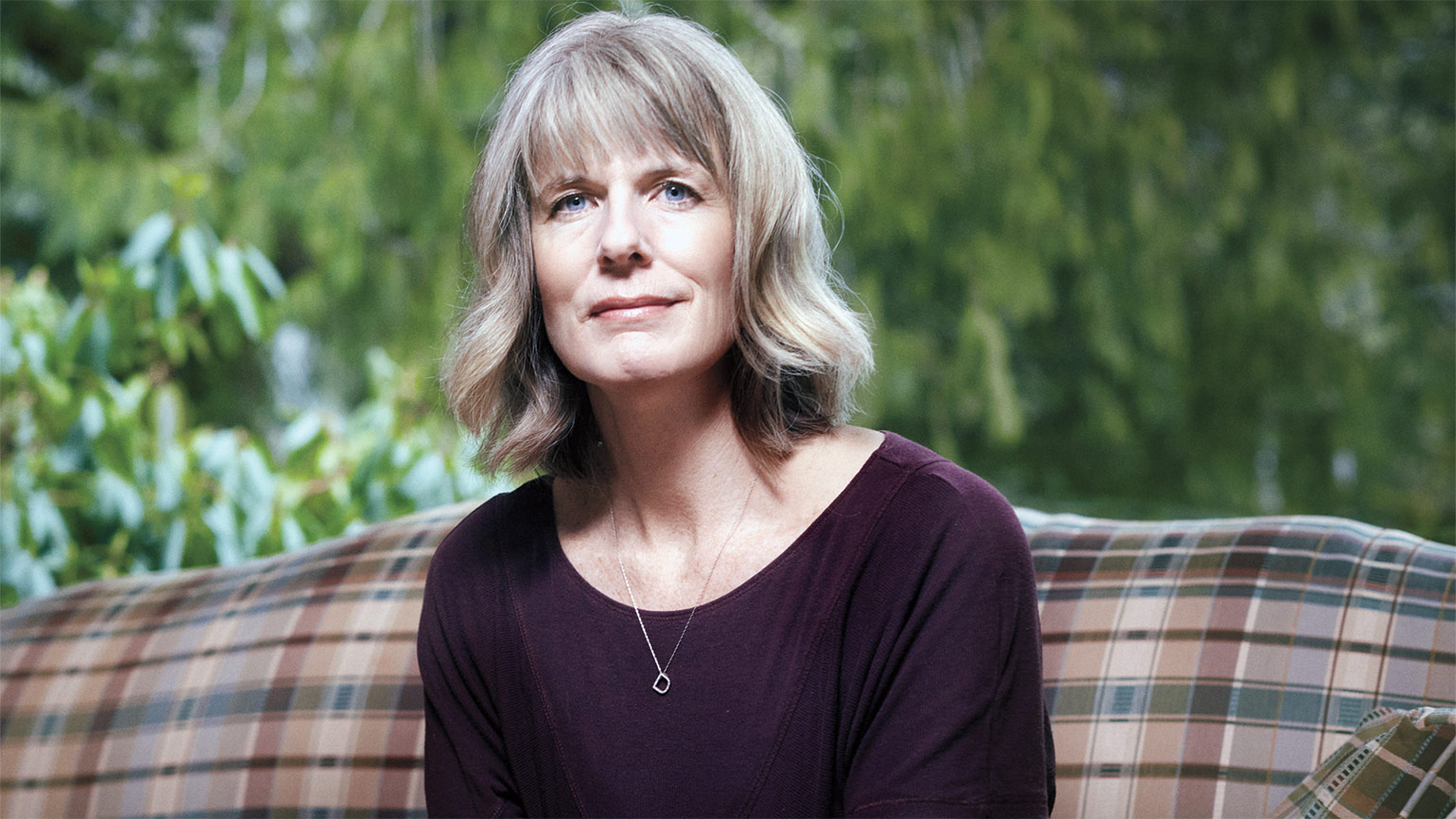
As a former research scientist and hospice consultant, Melanie P. Merriman felt equipped to care for her aging parents. After all, she knew what to expect better than anyone, having served as a quality measurement contractor to the Centers for Medicare and Medicaid Services and helping put into place regulations for palliative care.

But that wealth of experience and knowledge could never have readied her for the realities of life once her mother’s health started to decline.

“I was prepared for my mother to die,” Merriman tells Guideposts.org. “I had the whole hospice thing down and my mother and my father had been great about preparing wills. We were prepared for the end, but it was this in between period we weren’t ready for.”

That “in-between” period is what Merriman focuses on in her new book, Holding the Net: Caring for My Mother on the Tightrope of Aging. The book chronicles Merriman and her sister Barbara’s journey tending to their mother’s needs in the final years of her life, a journey that Merriman says began when her father passed away unexpectedly at 80 years old.

“It was an immediate understanding that, ‘Oh, the family is different now and mom is going to need us in ways that she has not needed us before,’” Merriman recalls of that time.

Thankfully, Merriman’s mother didn’t suffer from any illnesses or conditions that often plague senior citizens. After the death of her husband, Merriman’s mother continued her daily life in much the same way she always had – attending book club meetings, playing bridge, and editing her retirement community’s newsletter.

There was no sudden shift in her health, no tangible indicator that she was having trouble, just small things that began to add up. She became unbalanced, falling often, finding it hard to walk for long periods, losing mental stamina, and finding it difficult to concentrate.

“It’s a period of time in life that we don’t really think about very much,” Merriman says. “That period between when an older person is still able to function completely on their own and the period when you would say they’re at the end of their life, with a few months or a year left. But in between, there’s this period of both mental and physical decline.”

That period of uncertainty is what inspired the title of her book.

“Every day became this precarious situation where we just didn’t know how well she was going to be able to manage on her own,” Merriman explains. “That’s why I call it the tight rope of aging, because it’s like walking the tight rope, where you just don’t know how the next step is going to go. You’re always on this edge, where a mistake could be disaster.”

Making it worse was the distance. Merriman lived in Miami, Florida, her mother lived across the state in Tampa, and her sister lived in North Carolina. If that disaster were to happen, the family would be too far away to help. Merriman convinced her mother to move closer to her sister, a decision that was hard for a woman as independent as she was.

“My mother had been adamant, forever, that she never wanted to live with either one of us. Her mantra was, ‘I don’t want to be a burden,’” Merriman says. “In her mind, she didn’t want to disrupt our lives. So we were always really careful to try and make decisions with her and not for her.”

They tackled the sensitive subject of moving by inviting a professional geriatric care manager to do an assessment of the home, hoping an outside, unbiased opinion might sway their mom’s decision. They did the same when it came time to give up driving, asking their mom’s doctor to talk to her about the dangers and difficulties behind the wheel for an older person.

Get practical spiritual advice for everyday challenges in Spiritual Remedies

“I couldn’t just say, ‘Mom, you don’t have any choice, you have to do this,’” Merriman explains. “I really had to ask questions and listen to what was getting in the way of her making a smart choice.”

It’s a trap she sees many other caregivers fall into: parenting their parents in their declining years.

“When your parent acts like that, it feels a little bit like they’re acting like a willful child,” Merriman says of her mother’s resistance to moving. “And so you think that you should act like a parent, but the fact of the matter is, you’re never a parent to your parent. The roles just don’t allow that. If anything maybe you get a little more equal, but the hardest thing was really letting her make decisions that sometimes felt to us like bad choices.”

Merriman found that bringing in professional voices helped, but she also found that just listening to her mother’s concerns made things easier.

“If there’s any way in which I did act sort of like a parent, it was more in trying to comfort and support her through the difficulties,” she explains, saying she would often drive across state to bring her mom comfort foods and spend time with her before the move. “It’s important to not just to know intellectually that there’s all this emotion behind what’s going on, but to ask about it and commiserate. Let them feel bad. There were times I just had to sit there and let my mother cry. I was just so aware of all that she was losing, which is why any time we could, we tried to preserve her independence and the things that really mattered to her.”

Merriman hopes her book can help others going through the same situation she was in by offering them resources and her own personal knowledge of the healthcare system.

“I would like for people to learn from both my successes and my failures,” she says.

She also wants to shine a light on the toll caregiving can take on people, something she didn’t truly understand, despite all of her hospice experience, until she took on the role herself.

“What you don’t see is just the underlying stress that’s there all the time. Every time the phone rang, I thought it was going to be my sister telling me that something awful had happened,” Merriman says. “I would call my mother every single day and I didn’t know what was going to be on the other end of that call. I had a knot in my stomach every time I made that call. I wasn’t giving her a shower. I wasn’t having to dress her or even do those errands that my sister was doing. But every single day there was just that stress of knowing that a person I love was not fully safe and not fully happy and not fully comfortable. You just know that all the time.”

She found ways to manage the stress mostly by carving out time for herself.

“I usually meditate in the morning and just have some prayer before I go to sleep at night,” Merriman says. “I just made sure that I stuck to those things. Keeping up that practice of the connection both to myself and to something larger than myself that sustains me was important.”

She hopes readers can find comfort in her story and learn to appreciate the positives of caregiving.

“What I’m hoping is, in the same way you immediately recognize that this is a stressful time and it’s difficult, you recognize there are those moments that are really rewarding and really wonderful,” Merriman says. “What I would hope is that through reading the book, people will have more of those kinds of moments.”

The Importance of Warmth—And Staying Connected

There are so many words that describe emotions as well as other things. “Blue” for sadness is a classic example—as is “cold” or “chilly” to describe someone who is socially disconnected.

A new study sheds light on just how apt this description is. According to researchers at the State University of New York and Florida State University, people who feel physically cold are more likely to report feeling emotionally “cold” and seek out connection with others.

“In colder ambient environments,” the authors wrote, “people report greater loneliness, and they pursue both physical warmth and social affiliation (i.e. social warmth).” In other words, the study found that people don’t like to be cold, and they will seek out ways to warm themselves, physically and emotionally.

Warmth, like cold, describes the emotions associated with connection, comfort and mutual appreciation. It makes sense, then, that study participants who wore a battery-powered warm pack on a cold day already felt those feelings in subtle, visceral ways, which the research associated with a lower impulse to seek out social connection and visit friends.

This finding highlighted two things for me. First, it was a new perspective on seasonal sadness, with the findings about the social impact of cold temperatures.

Second, it brought the social challenges of the coronavirus era into stark focus. The warmth we generally seek from friends and loved ones is found indoors, by a cozy fire, sipping warm drinks and sharing laughs and quality time together. As the winter presses on and public health guidelines continue to advise against indoor gatherings, it can feel increasingly difficult to meet our relational needs. “Socially distanced” is an emotional reality as well as a sensible public health practice.

Which makes me turn to what researchers also know about loneliness, which is that it deserves our attention and should be supported with connecting practices. Here are some suggestions:

1) Reach out to your house of worship or other community organizations for Covid-safe programs or volunteer opportunities.

2) Invest your energy in gathering an adequate supply of warm clothing—including tools like rechargeable hand-warmers—so you can safely meet friends for masked walks or visits outdoors.

3) Acknowledge your loneliness and reach out for support from a friend, clergy person or counselor if it feels overwhelming.

4) Bask in the warmth of your own good company, remembering there’s joy to be found in solitude. As the theologian Paul Tillich put it, “Loneliness expresses the pain of being alone, and solitude expresses the glory of being alone.”

How do you stay socially warm during the cold months?

The Importance of Nutrition After a Hospital Stay

Julie Hayes is the Content Manager at Benjamin Rose Institute on Aging.

Your loved one is being discharged from the hospital. You’re relieved, and you’re armed with prescriptions and a lot of details to remember: give these two meds in the morning, another three at night, this one with a meal . . . A meal? With so much to keep track of, it’s possible that the idea of preparing or arranging for balanced meals each day is not at the top of your to-do list. Yet a proper diet is crucial medicine for your loved one’s ongoing health. Nutritious food is vital to the healing process and can be a major factor in keeping him or her from having to go back to the hospital

Lack of nutritious food is the number one cause of poor health in the United States, and for older adults, the health problems caused by an inadequate diet can be even more severe. A poor diet can lead to functional disabilities, increased rates of infection, physical weakness, vulnerability to illness and increased hospital admissions and readmissions (Seligman, H. K., Laraia, B. A., & Kushel, M. B. (2010). Food insecurity is associated with chronic disease among low-income NHANES participants.The Journal of nutrition, 140(2), 304–310.). By seeing to it that your loved one eats well following a hospital stay, you can contribute greatly to his or her successful recovery.

Why does nutrition matter even more after a hospital stay?

One of the most serious obstacles to proper nutrition after a hospital discharge is food insecurity. The US Department of Agriculture (USDA) defines food insecurity as “a household-level and social condition of limited or uncertain access to adequate food.” Among the factors that can lead to food insecurity, are:

· Finances

· Living distance from stores that stock nutritious foods

· A means to travel and shop at these stores

· Ability to prepare meals

· Ability to eat meals without assistance.

A hospitalization, especially a lengthy one, can make it much more difficult for your loved one to leave the house or prepare his or her own meals.

An inadequate diet coupled with food insecurity can result in your loved one being readmitted to the hospital. According to the United Health Foundation, about 14.9 percent of older adults over the age of 65 were readmitted to the hospital within 30 days of their initial hospital discharge in 2019. Readmissions can be due to many things, but two of the leading causes—poor follow-up care and the development of illnesses or infections post-discharge—are connected to nutrition and can oftentimes be prevented by focusing more on diet, in tandem with medication.

How do I make sure my loved one eats right after leaving the hospital?

Rose Centers for Aging Well, a subsidiary of Benjamin Rose Institute on Aging, is currently leading the Nutrition Solution project, which provides home-delivered, medically tailored meals, a weekly check-in call from a volunteer, enhanced nutrition education to low income, food insecure older adults with chronic conditions such as diabetes or heart disease in Ohio’s Cuyahoga County. The project aims to decrease hospital readmissions, reduce food insecurity and mitigate social isolation. Central to the project is the concept of “food as medicine,” which views nutrition as an essential part of a holistic treatment plan to keep a loved one well following a hospital discharge.

The menus for the medically tailored meals of the Nutrition Solution project are designed by Registered Dietitians to meet specific nutritional needs. When considering your loved one’s meals, you should also take a similar approach of choosing foods tailored to his or her needs and medical conditions. To learn more about the kinds of meals that would be appropriate for your loved one, you should talk to his or her doctor, nurse practitioner or their other health care providers about their dietary needs. Some hospitals may have a Registered Dietitian or a Nutritionist on staff who can help with these issues and work with you to create menus tailored to these needs.

What else can I do to help my loved one maintain a proper diet?

Two key contributors to food insecurity are social isolation and a lack of support. Your presence and attention to your loved one’s needs can have a great impact on his or her health. Make it a point to monitor progress, as well as the quality and quantity of meals he or she is eating after leaving the hospital. This is especially important within the first thirty days. If your loved one needs help getting groceries or preparing meals, be ready to assist, or enlist the aid of other family members, friends or service providers in your community. Even if your loved one is able to make meals independently, you should ensure that he or she continues to eat in a healthy, well-balanced way. Many older adults may not have much appetite as a result of their medication or condition. Nonetheless, skipping meals can have an adverse impact on their health and should be avoided.

If finances are preventing your loved one from getting the food he or she needs, don’t hesitate to look into public assistance for support. According to the National Council on Aging, the Supplemental Nutrition Assistance Program (SNAP) is underutilized by older adults, and just 42 percent of eligible older adults were enrolled in the program in 2015. However, SNAP can be essential to providing healthy food to low-income older adults, and has contributed to the overall food security, nutritional wellness and positive health outcomes of older adults. To learn more about the application process for your state’s SNAP program, visit the Food and Nutrition Service’s locator. There are also online resources available to find dieticians and Meals on Wheels providers near you.

The Importance of Forming New Friendships in Retirement

Retirement can be a time of excitement and freedom, allowing you to explore activities you’ve never tried but may have dreamed of. It can also be unsettling. When your daily work life ends, your face-to-face interactions undergo a major shift. Co-workers you’d grown used to seeing each day are no longer part of the landscape. Some may have become close friends, others fond acquaintances. Either way, chances are they were a meaningful part of your life—maybe even more so than you realized. Your newfound free time, however, can be an opportunity to reinforce existing friendships while you consider ideas to form new relationships.

Friendship appears to be even more essential as you reach retirement age. “The older people get, the more challenging it can be to make friends, and that’s especially true after retirement, as work is one of the most common ways to meet people” the Stanford Center on Longevity reports.

Research published in the journal Personal Relationships shows that the power of friendship gets stronger with age and may even be more important than family relationships. William Chopik, assistant professor of psychology at Michigan State University, found that friendships become increasingly important to one’s happiness and health across the lifespan. For older adults, friendships are an even stronger predictor of health and happiness than are relationships with family members.

Friends can be particularly valuable in helping older adults deal with feelings of isolation that can accompany retirement, illness and the death of loved ones, according to HelpGuide, a nonprofit mental health and wellness website.

As long as you’re around people, the potential exists to make new friends. You may want to consider these ideas to scope out others who are like-minded:

Volunteer

Explore your passions. Paint props or tear tickets at a community theater; save historical places that have fallen into disrepair; give your time to an animal rescue organization or the National Park Service.

Take a class or join a group

Any exercise class, like Zumba or yoga, will get you moving with others. Exercise your artistic side in a group setting with cake decorating, pottery or creative writing. Sierra Club Seniors offers outings, from docent-led museum and gallery tours to challenging hikes.

Work part-time

You may choose to work either for personal enrichment or out of financial necessity. Although working remotely from home is increasingly popular, it can be isolating. Depending on your interests and background, you may want to move into: teaching, office work, real estate or retail sales or management consulting. If you nurture a desire to help others, child care or home care for aging adults are excellent options. Both offer flexible hours and allow you to play a significant role in another person’s life. At one end of the age spectrum, you would care for children’s basic needs while offering important guidance. As a home care aide, you would be trained to help aging adults with daily activities like light housekeeping, shopping and preparing meals, while providing much-needed companionship.

One of the first principles of Dale Carnegie’s book, How to Win Friends & Influence People, is to “become genuinely interested in other people.” This may be a given for you. Retirement can be one of the best times in your life to explore your interests and form new bonds with people who might just become good friends.

The Hope and Healing Behind “The Shack”

One phone call.

No doubt you’ve heard those overnight success stories–the actor getting the breakthrough part, the struggling musician whose song everyone is suddenly talking about.

The book I’ve written, The Shack, has proved to be hugely successful in ways that I couldn’t possibly have imagined.

But the phone call that got it all started was something that threw my ordered world–what I desperately wanted people to believe was ordered–into pain and chaos long before I ever put pen to paper.

I was an insurance agent, supporting my wife, Kim, and our six kids, the picture-perfect husband and provider. Framed family photos on the desk, the kids stretching from ages one to 14.

I took them on camping trips up the Columbia Gorge and told them bedtime stories. I wanted to give them the safe, secure childhood I’d never had and never talked about.

But the terror of my past was rarely far beneath the surface, no matter how hard I tried to hide it. I was always running from half-buried memories, haunted by doubts, doubts that said if anyone really knew who I was deep inside, no one could possibly love that damaged and frightened person.

January 4, 1994, one phone call changed everything. I was just finishing lunch with a friend and Kim was on the line. “Hi, darling,” I said, waiting to hear some detail about the kids’ soccer games or a meeting with a teacher or a question about dinner–was I going to be home late again?

“I’m here in your office,” she said, her voice like cold steel, “and I’m waiting for you.”

“What’s wrong?”

“I know.” Then she hung up. The air was sucked out of the room. I wanted to keep maintaining the fiction of our perfect marriage because it was all I really had in life.

I wanted to hide, because hiding and lying were what I knew how to do best. I could appear to be the model Christian dad. I was the son of missionary parents, a Bible school graduate, a former seminary student.

Kim and I had actually met at a church when I had a staff position in charge of the college youth group. She walked into a Friday evening meeting with two of her sisters. One look at her raven hair and dark searching eyes and I changed what I had planned.

“Why don’t we split up into groups of two and pray for each other?” I said. Of course, I paired myself with Kim.

She knows, I thought now. I wanted to run away, but that would solve nothing. You can’t run from your own sorry self.

The next thought was ending my life, the ultimate form of self-centered running away.

Perhaps it was a nudge of grace, but I finally decided I had to face Kim, even if the anger in her voice terrified me.

All the secrets had to come out, all those things that had happened to me so long ago yet still seemed so much a part of the present, my behaviors and addictions I could never talk about. It was all or nothing.

The trip to the office was one of the longest of my life. I pulled into the parking lot and slunk out of the car. I pushed open the door.

The place was a shambles. Files thrown on the floor, drawers open, paperclips and pens dumped on the carpet, the trash can knocked over, memos ripped off my bulletin board.

In the middle of it all sat Kim at my computer. She knew I was having an affair with one of her best friends. All the e-mails between us were there for anyone to find. Was I secretly hoping to get caught? The guilty, they say, seek punishment.

“How could you? How could you betray me like this?” Kim shouted.

I couldn’t meet her scorching gaze. I couldn’t bear seeing the pain in those dark eyes. Pathetically, I promised that I would end it right away, that I’d never let it happen again.

“Why should I believe you?”

Why indeed? I didn’t even trust myself. I was in no position to promise anything. But I did make one pledge: “I don’t want to be like this, Kim. I love you. I’ll do anything to keep you.

“I’ll find the best counselor I can and work with him. I want to change, and there’s so much I need to tell you. Secrets have been killing me my whole life and if we are going to do this, I can’t have any more secrets.”

After hours of intense interrogation, laced with fury and grief, Kim was done. “I will never believe another thing that comes out of your mouth the rest of your life,” she declared. I reached out to hug her, just touch her and hold on, but she stood up and pushed her way past, slamming the door in tears.

And there I was, left to myself and the mess in my office, the mess in my life. The mess that was inside me. All my life I’d heard people say God loved us–that God loved me–but I’d never really believed it. How could I? I didn’t love myself. What could God love about me, especially now?

Over the next three days I tried to talk to Kim. Why not tell her the truth? But she didn’t want to hear it. I was terrified I’d lost her already.

In desperation I started seeing a therapist, two to three times a week. For the first time I asked another human being to enter into my life and help me heal. It was the first I’d told anyone what had happened to me as a boy growing up in New Guinea.

My parents were missionaries to a primitive people and in those days missionary children were only allowed to be with their parents until they reached school age. At six I was sent to a boarding school.

Sexual abuse that had already been occurring at the hands of the tribe since I was four now continued at the missionary school. I was terrorized, brutalized, dehumanized.

The deep examination of what I had undergone nauseated me. Shame had become the very air I breathed, just another word for self-hatred. But if I were to change, if I were to heal, I would have to face the worst.

It didn’t excuse my ugly behavior–nothing did–but it helped me to understand the duplicity, the fear, the loneliness–all the defense mechanisms that protected me as an abused child but were destroying me as an adult. I needed to get honest, with myself, with Kim, with God, with everyone.

At night, at home, after the children had gone to bed, I would tell Kim what I had told the therapist: the horrible stuff I had been running away from for over 30 years. She would listen, but barely respond.

My despair grew. I couldn’t heal her any more than I could heal myself. And night after night, I felt I was slowly losing myself–that if I kept up the truth-telling, there would be nothing of me left, the layers peeled back with nothing at the center.

Where were the people who should have protected me as a child? Where was God? Didn’t anyone care at all? For the first time I allowed my anger to surface, and it began to consume me.

One day I went to an old barn and found a pile of fallen wormy apples. I flung them against the barn, watching them smash and explode, until I had no rage left. There I sat, in a cascade of tears amid the pulp and the pungent, fermented odor of rotting apples. I couldn’t dredge up anything more.

I couldn’t lie anymore. I was like the pulverized pulp on the ground, rotten to the core. I bent down and picked up a seed. If only I could hold on to some seed of hope, some sign that I would get better. “Are you there anymore?” I asked God. Am I? I wondered.

Later I confessed to a family friend I had lost all hope. What I didn’t tell her was that I was planning to fly to Mexico and rent a room, buy enough prescription drugs to kill myself where my children would not discover my body. I was done, exhausted, finished. She said quietly, “Paul, there is a seed.”

“A seed?” What did that mean? In my despair I could sense the answer: A seed can grow. If there was even one seed then something could grow.

What God could do for a seed he could do for me. In one little seed all my hope came back. I never struggled with suicide again.

Healing is a process, and that was the beginning. It took 11 years for me–and for Kim and me–11 years of hard emotional work building a whole new relationship based on trust, a trust I had learned that started with trusting God with all my pain, all my anger, all my secrets.

I came to understand how God had never abandoned me. I spoke to him more frankly. I didn’t try to hide anymore. The conversations with Kim stretched into some long talks about how God had reached me when I had completely bottomed out.

Then one day she said, “Why don’t you write down what you’ve learned as a gift for the kids?”

I wrote on a pad of paper as I was commuting to and from work, telling the story of a man who met God when he thought he’d lost everything.

Those pages turned into a novel, The Shack, that I photocopied at Office Depot and passed along to family and friends, and then it all got out of hand. Before I knew what had happened, I was a best-selling author. But that’s not why I wrote the book.

The book is true, just not real, like a parable. I may not be exactly like the fictional main character, but what that man learns about the healing power of love and forgiveness, the liberation of the soul through transparency and grace, is a journey I know well.

Watch our videos with Paul Young to find out more details about his book–and his journey.