

Embrace God's truth with our new book, The Lies that Bind

The Confidence to Trust in God

When troubles gang up on you, there are two possible attitudes to take. One is to become discouraged, even hopeless, and to give up. This attitude is, of course, disastrous.

For if you admit even to yourself that you do not have the ability to cope with things, your personal resources will not come into action. But what if you were confident that you could change things?

Confidence is a word we all use but many of us barely think about. I will say that the surest way to live confidently is to have what I call “a big God.” Many of us at different times in our lives have a very little God. And make no mistake: It is we who have limited him.

Get Inspired with These Positive Thoughts from Norman Vincent Peale!

We believe in God, but as to applying his power, his might, his love and his greatness to our lives, we aren’t always confident the idea will work. We practically disconnect from God in our day-to-day lives. We try to take on our troubles alone.

But if you think of a big God, if you pray to a big God, if you act like there is a big God, you will grow big spiritually and in every other way and big results will accrue. You will be a partner of a big God.

Saint Paul, in his letter to the Philippians, writes, “My God shall supply all your need according to his riches in glory by Christ Jesus.” Now, what is meant by “all my need”? Surely, Lord, you mean by this that you will satisfy my spiritual needs.

But the statement doesn’t specify that. It has no parenthesis or limitation. It says “My God shall supply all your need.”

He will supply your mental needs. He will supply your emotional needs. He will supply your physical needs. He will supply your material needs.

You will receive, yes, confidence. It will allow you to do big things. So don’t sit around and wail and moan that you are weak, inadequate and inferior, for that is not true at all.

The fact is that through faith in a big God you possess the know-how, strength and persistence necessary to meet any situation. In a word, you have the power to change your life. Put all of your problems into heaven’s hands and believe, positively, that God and you together can solve them.

Here are some techniques for how you can become more confident and handle adversity:

Focus on the How.
You are stronger than all your troubles put together. But when many things are going wrong, the tendency is to feel confused and overwhelmed. Have faith in your ability to think.

Remember, the mind will not function well when it is nervous or panicky. Only when it is calm and quiet will it produce those insights that are necessary to improve your circumstances.

God understands your situation. He has all the answers to get you out of trouble.

Get your mind into a state of quietness. Then say something like this: Lord, you know my troubles. I believe that, with your help, I can think my way through them. Guide my thinking and give me right answers. Help me do things your way.

Let me tell you about a man named Fred Haas. After 30 years of hard work Fred lost his business because of a crooked partner. Within a year he had gotten another business started and was doing well.

But the statement he made that really stayed with me was this: “I decided I would not be an ‘if thinker,’ but a ‘how thinker.’ ” That’s quite a thought-provoking distinction.

The “if thinker” broods over a difficulty or a setback, saying bitterly to himself, “If only I had done thus and so…. If only this or that circumstance had been different…. If others had not treated me so unfairly….” So it goes from excuse to excuse, round and round, getting nowhere.

The world is full of defeated “if thinkers.” To these people an excuse is always closer than a solution.

The “how thinker,” on the other hand, wastes no energy on postmortems when trouble or even disaster hits, but immediately starts looking for the best solution, for he is confident there is a way. He asks himself, “How can I use this setback creatively? How can I make something good out of it?”

The “how thinker” gets problems solved effectively because he knows that difficulties bring out his strengths. He wastes no time with futile “ifs” but goes right to work on the creative “how.”

The next time trouble strikes you, avoid the word if. Instead, focus on the dynamic word how. Then ask God’s help in putting know-how into the how. You will be amazed at how quickly your problems will start to become opportunities.

“Prayerize” Your Adversity.
That curious word was suggested to me by a man who decided to put spiritual techniques into practice in a difficult work situation. In his prayers, he said he received guidance to follow three principles: “Prayerize, visualize, actualize.”

By this, he meant that through prayer he grew more confident that his situation could be improved. He then practiced visualizing his goal, sharpening a concept until he knew exactly where he wanted to go.

He held the image of successful achievement firmly in mind, visualizing a positive outcome. He worked and prayed hard toward such realization, and what he sought became an actual accomplishment.

I once visited a young man in the hospital. He had been a great all-around athlete. Then some friends invited him to go mountain climbing in Colorado. He had never climbed and shouldn’t have tried without instruction.

“I fell a hundred and fifty feet and broke my back,” he said. “When I came to at the hospital I had no feeling in my legs. After a few days the doctors let me have it straight. They told me that most likely I would never walk again. That was the blackest moment in my life.

“But then something you wrote came to my rescue. It got me up and around on these canes. I found that faith power really works wonders.

“You wrote,” he continued, “about three things to do when you’re up against it: Prayerize, visualize, actualize. So I began to prayerize.

“Lying there in bed, I looked down at those motionless legs of mine and prayed, Lord, these are good legs. I’ve only had them nineteen years, and they’re good for maybe ninety-nine. Please give me back the use of them. I believe you surely will.

“Then I started picturing my legs with life coming back into them. I visualized myself moving them again, standing on them, taking steps. Each day I felt more confident that God would help me if I kept holding that picture.

“Finally the day came when I was able to get out of bed onto my feet. So, you see, I’m on my way. The next time you see me you won’t see the canes.”

Well, I stood there with my eyes blinded by tears.

Think in Terms of Opportunity.
Adopt the philosophy of successful businessman and author W. Clement Stone: “To every disadvantage there is a corresponding advantage.” No longer think disadvantage. Think advantage. Persist in this process and your mind will begin to produce the advantage inherent in the disadvantage.

Adopt a positive mental attitude, believing that with God’s grace you will, out of your own intelligence, create a better state of affairs for yourself and others.

I received a telephone call from an out-of-work executive. I listened to his story of a lost job and his futile efforts to find a new position, thinking that if he talked out the problem, he might develop his own solution, as so often happens.

He was not negative or complaining or bitter, but seemed disturbed that he had been unable to make a business connection, particularly since his savings were practically exhausted. A sense of controlled anxiety came through in his conversation.

Finally I said, “Look, you don’t know the answer to your problem and neither do I. I suggest we bring in a consultant, one whose know-how is top-notch, and put the matter directly to him. Then let’s leave it to him to point the way.”

He at once grasped the meaning of this suggestion and said, “Okay, you talk to him for us both.”

So over the telephone I asked God for guidance. On the supposition that somewhere was a job for this man, I asked that the man and the job be brought together.

“Let me know what happens,” I told him. I was rather surprised at his reply: “I’ve got a strange, but strong, feeling that something is going to happen, and soon. Thanks.”

Three weeks later, I received another phone call from this man. He had secured a position with a restaurant, a totally different occupation from any he had contemplated. This job did not pay nearly as much as his former one, but did provide enough to fill his basic needs.

When I asked how the job opportunity had come about, he replied, “Funny thing. I was eating in this inexpensive restaurant and idly got to thinking that it seemed a well-managed place. It was neat and clean and obviously operated by someone with imagination.

“Suddenly, I had a strong feeling that I would like to work for these people.” He hesitated for a moment. “It was almost as if I was meant to be there. So I asked if I could speak with the owner.

“He was a friendly guy, and I became aware that he was sizing me up. Finally, the owner said, ‘Well, maybe you have happened along at the right time. You see, my right-hand man died ten days ago. I’m lost without him. Know anything about this business?’

“I leveled with him. ‘Not a thing except general business principles,’ I said. ‘But I suppose the way to run a restaurant is to give people good food in a pleasant atmosphere at reasonable prices, and make a reasonable profit on your investment.’

“The owner grinned at that. ‘Not bad, not bad at all.’ Then he continued, ‘I have been expecting the right man to come along.’” (Much later, when they had become friends, the owner confessed that he had prayed for the right man.)

“‘Well, give me some references. Are you willing to work the long hours this business requires?’”

My friend told me that he replied, “I’ll stick with you all the way,” and then added, “I feel that this job was meant to be.” Later my friend became a partner. Then, on the owner’s retirement, my friend bought him out and ultimately added a second restaurant.

His explanation of the entire experience was succinct. “Someone,” he said, “was on my side.”

Someone is always on your side too. A big God who is ready to help you overcome your biggest challenges. Have confidence!

Download your FREE ebook, Rediscover the Power of Positive Thinking, with Norman Vincent Peale
The Comfort of Being Held

“Don’t be afraid, for I am with you. Do not be dismayed, for I am your God. I will strengthen you. I will help you. I will uphold you with my victorious right hand.” (Isaiah 41:10, NLT)

The day shines of autumn glory, and I have an idea.

“Let’s gather the boys,” I say, “and take them to the alpine slide.”

My husband Lonny is on board. He’s a boy at heart, and it sounds like fun.

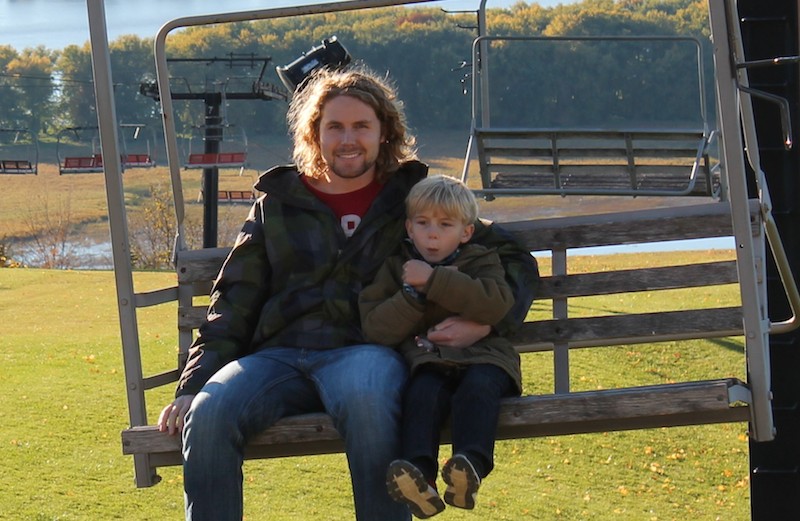
A big brother comforts a little brotherThe alpine slide is a run, a track, at a ski resort about an hour from home. The track winds and curves down the gentle side of a ski hill. Guests rent a coaster and glide down the slope.

If the timing is right, the view is breathtaking. The Mississippi river runs alongside the hill, and valley should be rich with color this time of the year.

The boys are in the van in a heartbeat. Logan’s still home for the weekend, and we feel complete.

“Once we’re at the bottom of the hill, how do we get back up?” Isaiah asks as we travel along.

“The ski lift,” Logan says.

“Is it high?” Isaiah asks. “Because if it is, I don’t want to ride on that.”

While flat farmland gives way to gentle hills, we talk about lift. This is all new to Isaiah. The last time we enjoyed the slide, he stayed with grandparents. He was too small.

Soon we’re at the resort the boys bolt from the van. The timing is perfect–autumn color has washed over the river valley. The sun is out and the afternoon is clear.

But Isaiah’s face clouds with worry.

He stands, hands on hips and squints into the sun. “I don’t like the lift,” he says as the chairs run against the deep blue sky.

But he looks to the slide, and he’s drawn. We purchase tickets for everyone, grab our coasters and wait in line. It’s not long before we’re moving down the hillside, two by two, the beauty of the day rolled out before us. I ride on the track across from Logan and Isaiah, though they go fast and quickly move ahead.

And at the bottom, we wait for the lift.

Lonny and a couple of boys go first. Then Samuel and I take a seat. As we glide along, I look behind, and I can see that Isaiah and Logan are now in a chair, too.

Isaiah’s face is twisted in fear.

But as I watch, Logan’s arm moves around his little brother. He holds him tight.

Logan has Isaiah covered.

He’d never let him go.

I think about this as Samuel and I are quiet, making our way back up the hill. There are often times in my life when fear comes fast. There are times when I feel out of my comfort zone. When I feel unsafe and suspended in circumstance, and I long for sure ground.

I need someone to hold me.

And the Lord is faithful. He holds me in His victorious right hand.

The hands that created the universe and carved the seas curve to cradle me.

The Lord doesn’t always remove the circumstance, but He holds me. He protects me. Speaks through His Word to encourage me. There is no situation, no path that I have to traverse alone.

I’m so thankful for this grace.

I look behind me one more time and I see, through the lens of my camera, that Isaiah is close to smiling. His little legs are swinging a bit. He’s safe.

The fear is gone.

Logan’s arms are still around him, and Isaiah is bound in love.

And I’m lost in the beauty of it.

What a precious thing.

The comfort of being held!

The Christian Dating Game: How to Wait

The word “wait” is one of the few words in the English language that can cause so much anxiety, fear, trepidation, and frustration. Because we want what we want when we want it, the word wait can easily begin to feel like the word “never”—especially when you are single and attempting to live a lifestyle compatible with your faith.

Yet, the word wait, in some context, appears over 100 times in the Bible, the book every Christian single should strive to live by.

So what do you do while you wait on your soul mate? First, understand what waiting means in the context of Christian dating: “delaying action until a particular time”. That means “Guard your heart, for it is the well-spring of life.” Dating is not synonymous with depression, stagnation or desperation. Don’t go out falling in love with anyone who is paying you attention; delay action until the particular time comes when you know God is speaking to you about a certain person. “Do not awaken love” until He pleases.

Second, singles must remember that though they don’t have a “better half,” they have still been created to be completely whole people. Other people do not complete you—God does! You are a full person, full of purpose that the Church and the world needs!

According to scripture, singleness is the perfect time to identify your purpose and thrive in it. Many people question, “What is my purpose?” Your purpose is always connected to your passion, and process. What have you been through that can help someone else? For example, David’s wilderness process included him wrestling with lions and bears. But, it was that process that prepared him for a great purpose, defeating Goliath.

Like David slaying Goliath, many great accomplishments in ministry have been achieved by singles. In 1 Corinthians 7, the Apostle Paul says, “When you’re unmarried, you’re free to concentrate on simply pleasing the Master. Marriage involves you in all the nuts and bolts of domestic life and in wanting to please your spouse, leading to so many more demands on your attention. The time and energy that married people spend on caring for and nurturing each other, the unmarried can spend in becoming whole and holy instruments of God.” Paul admonishes singles to get busy in the matters concerning the Church and their own spiritual growth.

Each single has to define what this should look like to them. Does this mean volunteering in children’s church? Starting an international outreach ministry? Joining the usher board or choir?

While life for the Christian single should be ministry filled, it doesn’t have to stop there. In addition to ministry work, why not write the book you’ve always dreamed of, travel to foreign lands, start a business, join a civic organization? Get busy becoming who you are supposed to be!

Time is often a luxury many people wish for, yet as a single person, you have more of. Use that time to pursue your dreams, and develop yourself, and learn who you are and who you want to be. Often times, we keep choosing “the wrong one,” because we don’t know who the right one is because we don’t know who we are. Once you know yourself, among other things, you are able to properly identify what you need in a mate. While God can deliver your soul mate anywhere, your spouse-to-be may have an easier time identifying you if you are out living the life of your dreams.

Lastly, stop looking at every person as your potential spouse. They could be a potential business partner, great friend, career adviser, confidante, accountability partner, work out partner, business associate or more. But, you won’t be able to see that if your only filter is, “Is this my soul mate?” Maybe. Maybe not. Just value people for who they are, not who they could be to you.

Enjoying your life in your singleness is not the same as sinning; know your boundaries and thrive within them. This way, waiting won’t seem like some kind of punishment, but instead you’ll recognize it as an incredible gift to grow yourself and your faith in the Lord.

The Christian Dating Game: Attraction vs. Compatibility

When it comes to finding a romantic partner, we all have our dating preferences and attributes that we find attractive. I was instantly attracted to my husband because he was just my type: tall, dark, godly and handsome.

While attraction is important, it’s certainly not enough to sustain a relationship and what or whom you’re attracted to may even be causing you harm. One of the greatest lessons I teach as a life coach is you don’t have to spend time with everything you’re attracted to. Before you commit to someone you’re attracted to, examine yourself first. Ask yourself: Why am I attracted to this particular quality? Have my past dates exhibited the same patterns of behavior or qualities? Do these particular attributes I find myself attracted to propel me toward my ultimate end goal or do they take me away from my goals?

Whether you believe it or not, on a subconscious level, there is always a reason for your attraction to a certain person or thing. Doing the research on yourself will reveal that answer and possibly grant you the freedom, clarity and power you need to make healthy relationship decisions outside of what your eyes and the butterflies in your stomach recommend. If you were to be honest, both have been wrong before. Both have desired something that in the end was not compatible to your peace, health, or mental well-being. Attraction sparks your interest, but compatibility will keep it for the long haul.

Compatibility happens when two or more things are able to exist or perform together in combination without problems or conflict. That’s what you want for the future: a partner who will work in combination with you with as few conflicts as possible.

If marriage is what you desire, it’s time to start making different decisions when it comes to dating. With vows that include, “for better or worse, in sickness and in health, for richer or poorer,” the stakes are too high to confuse attraction with compatibility.

So before you get lost in someone’s eyes, smile or status, ask yourself honestly: What is this person all about? Are we equally yoked? Do we have many similarities? Is this person willing to commit to me long-term? Do we share the same values? Do our future goals align? Do we solve conflicts well together? Does this person respect me and my choices? Do I feel appreciated and uplifted in this relationship?

The answers to these questions may very well help you move away from what’s temporary and hold fast to something that will last a lifetime.

The Caregiver’s Prayer

Chalk this one up as a caregiver’s answered prayer.

I just spent some time with parents and it was revealing in many ways. My dad, as I’ve mentioned, suffers from a heavy burden of ailments that leave him in tremendous pain—arthritis, spinal stenosis, neuropathy and all the indignities of a body that’s giving up on him. We talk on the phone regularly but it’s hard from long distance to know how he’s doing. Mom’s the primary caregiver and I worry as much about her as I do about him.

“I’m fine,” she’ll say with the sunny temperament that is God’s greatest gift to her and one that illuminates everyone in her orbit. “The hardest thing for me is just to be patient.”

She’s always moved through life at a vigorous clip and still plays a mean tennis game at age…well, I won’t say what age. In between tennis and bridge and meetings with her book group, she takes good care of Dad. “I have to pray to be patient,” she says.

“That’ll be quite an achievement,” I tell her jokingly.

I was glad to be on hand for 10 days. I thought I’d be able to help. I hardly had a chance. Mom makes sure Dad gets up, takes his shower, helps him get dressed. She gets him breakfast, guides him through some physical therapy, gets him the newspaper, reads to him, and waits patiently as he slowly, ever so slowly gets in the car. I never heard that voice I knew from my childhood, “Come on, honey, hurry up.” I never heard a complaint, never even a long sigh.

“Mom,” I said, “you do very well.”

“I do?” she said with surprise.

“Yes, I think your prayer has been answered.” I’m not even sure she knew which one. In the meanwhile I pray for the both of them, that Dad gets some relief from the pain and that the primary caregiver knows she’s got four kids who are ready at any moment to lend a hand.

The Capacity for Greatness

During this time of year focused on resolutions and new beginnings, we find ourselves evaluating who we are, where we put our energy and focus, what really matters. Such self-evaluation can be valuable, but also daunting.

I think every one of us has the capacity for greatness–an inner capacity to dig deeper, to find meaning and value in life and in others, to hold on tighter to those elements of belief and understanding that help us to move though this life as fulfilled and fulfilling contributors.

Community Newsletter

Get More Inspiration Delivered to Your Inbox


How do we do this? How do we recognize the greatness within ourselves and put it into practice? A good jumping off point is having faith that God sees our value and our capacities as part of a bigger picture. From there, surrounding ourselves with supportive, encouraging people can help bring clarity about our own greatness.

Next would be observing the greatness in others and using their inner strength, wisdom and insight to help us see our own gifts more clearly.

The others you observe might be your friends or family. Or those with wider exposure, like Olympic sprinter Derek Redmond, whose hamstring snapped mid-race in the 400 meters semifinal at the 1992 Barcelona games. He fell to the track in agonizing pain.

Perhaps the greater agony was knowing his dream of an Olympic medal was gone. Still, he got up and hobbled down the track. His father climbed out of the stands to help him.

With his arm over his father’s shoulder, Redmond finished the race, not in the way he had planned, but finish it he did. Here's the video.

Redmond has become a motivational speaker, helping others to see the value and potential in themselves.

Speaking of the Olympics, during the 2012 Summer Games, Nike featured a commercial entitled, “Find your greatness.” The scene is a remote country road. In the distance we see a runner making his way toward us, his sneakers (Nike, presumably) slapping against the road.

As the runner comes closer and we realize he’s a young boy, rather overweight, pushing himself to jog, we hear this voiceover:

“Greatness. It is just something we made up. Somehow we have come to believe that greatness is a gift, reserved for a chosen few, the prodigies, the superstars, and the rest of us can only stand by watching. You can forget that.

Greatness is not some rare DNA strand. It’s not some precious thing. Greatness is no more unique to us than breathing. We are all capable of it. All of us.”

I looked up the commercial online and learned that boy is a 12-year-old from Ohio named Nathan who is working hard to get healthy. Clearly, greatness is not beyond his reach.

I know that each of you has allowed your greatness to be seen and shared. No matter what you believe about life after this one, it is this life with which we have to work.

We need to remember that we are all capable of greatness. Call upon ourselves to use what is deep within us to make our lives the most meaningful they can be and, at the same time, to enrich the greater world through the lives we touch.

Look to those who help to center us, support us, push us and guide us through their actions, words or both. Allow what we observe and recognize in others to strengthen our own sense of greatness.

Utilizing our own gifts, knowing what we believe and striving for greatness within ourselves and seeing the greatness and value in others is what God hopes for us.

We are all members of God’s family, each one of us responsible to put into practice our gifts of greatness to make this world just that much better of a place in which to live.

So this time of year or better yet, the whole year through, take hold of your greatness within. You and those in the world around you will be greater still.

Your continued support of Guideposts Outreach ministry programs gives millions around the world the opportunity to see their greatness within. Thank you.

The Canine Angel That Saved a Soldier

The eight of us slipped quietly as we could through the rolling German countryside. We were the Intelligence and Reconnaissance Unit, the eyes and ears of the Army Infantry, one of the storied divisions that battled Hitler’s army across northern Europe.

The fighting had grown ever more fierce in October 1944, as we crossed the Luxembourg border into Germany. On this night, our job was to scout the German lines and report back on how many troops they had, how many tanks, and the number and size of their big guns.

But something went wrong. The Germans spotted us as we approached a small village, and let loose a wall of fire with their deadly, 88 mm guns. All of us ran for cover. I headed for an old barn.

I found a dark corner, sat down and waited out the thunderous artillery assault, unable to stop shivering.

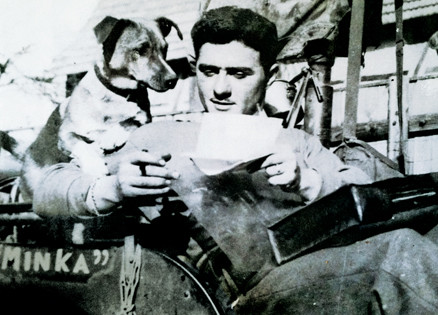
After a while, I realized I wasn’t alone. A small mutt, weighing maybe 30 pounds, stared at me with fear in his eyes, quivering just like me. Lord, please get me through this, I prayed. The dog looked like he was praying right along with me.

I cuddled up with him and we rode out the shelling together.

Donate to Help Guideposts Give Free Publications to Veterans

When the firing ended, I walked to my jeep and the dog followed me. I was amazed we were both still alive. I picked him up and put him in my jeep. He rode with me back to headquarters, where I introduced him to my buddies. My good luck charm, I thought.

I called him Minka, after a 1930s song that I loved. Minka stuck to me like my shadow. I guess we were meant to be together. Soon, nothing could separate us.

One day, our team was scouting the outskirts of a village when Minka started to murmur. He’s warning us, I thought. We took cover. Sure enough, German troops were camping nearby. “You stay quiet now,” I told him.

I spoke to him in German, because I figured he’d been trained in that language. He never made another peep. After that, the boys were sold on him. Minka accompanied us in my jeep on all our missions.

Only once did we become separated. Orders came down from command. We had five minutes to pull out. Minka had gone off, wandering. I couldn’t find him. When we broke camp, I was distraught. Soon we had advanced 30 miles.

I felt like I’d lost not just my little brother, but my protector. It was my lowest moment during the war.

I prayed for a miracle to bring us back together, and I guess the Lord heard me, because two days later someone from the division found him and drove him to our outfit. Oh, what a reunion we had!

After that, I tried never to let Minka out of my sight. Minka seemed to feel the same about me. We grew so close that throughout the snowy winter, as we fought the Battle of the Bulge, we even slept together. Minka would crawl into my sleeping bag and curl up at my feet.

In some ways, the worst part of the war for me was when I received orders to return home. You see, we were forbidden to take animals aboard our transport ship. I know it sounds silly now, but I actually considered staying in Europe rather than leave Minka behind.

I came up with a plan. But I needed Minka’s help. If I could pack him into my barracks bag and train him to keep still and silent, I could carry him onto the ship and none of the ship’s officers would know.

I practiced with him for days, to no avail. I just couldn’t get through to him. Not in German, not in English. The day we were to ship out from La Havre, France, I was in a panic. At the dock, out of view of the officers, I tried one more time.

“Okay,” I said to Minka in German, “this is it. You stay quiet or else you can’t come.”

He looked at me in that way that dogs do, to make it seem they understand. And then he crawled to the bottom of my barracks bag and never made a move, never uttered a sound.

Aboard the ship, the guys and I surreptitiously fed him from our rations. I cleaned up the steel deck after him. When we landed in New York, back he went into the barracks bag. I didn’t have to warn him.

Once we were on land again, all bets were off. Minka sprang out of the bag and ran back and forth, celebrating like it was New Year’s.

Minka and I lived another 11 years together, back at home in North Carolina with my wife and our three children. They were among the happiest years of my life. People who hear my story say it’s so touching that I saved Minka. “No,” I tell them. “Minka saved me.”

Bring faith and inspiration to our troops – donate Guideposts subscriptions now, click here.

The Boy I Could Never Forget

Enjoy this touching true story excerpted from Love Mercy and Grace: True Stories of God’s Amazing Care.

After 20 years as a full-time wife and mother, I decided now that my kids were grown, I needed a part-time job to keep me busy. The question was: What exactly could I do?

Secretarial work was out—I couldn’t take shorthand, and I typed at a snail’s pace. I cooked for a husband and children, but that wasn’t enough to prepare me for a job in any of the restaurants near my home in Kansas City, Missouri. What was I qualified for?

The answer came one day as I drove past a lot full of school buses. I pulled over to the side of the road. That’s it! I thought. I loved kids, plus I’d put plenty of miles on our family Chevy.

First I had to pass a written test for my chauffeur’s license. Then I began driving practice. The bus was enormous. I could turn, shift, brake, accelerate, but I could not get the huge thing into reverse. When my husband asked how my training was going, I told him, “Fine, as long as no kid lives on a dead-end street.”

Please, Lord, I prayed, help me drive the bus.

By the time school started that year I’d gotten the hang of it. I was happy in my new work. I became a combination chauffeur, nurse and friend. And if the kids needed it, I’d put on my “Tough Big Sister” act. It was a lot like my previous job—being a mom.

When I think about my years of bus driving, I remember the snowstorms that seemed to start on Thanksgiving and last through March. I remember Christmases when I was presented with hundreds of “I love you, Polly” cards. I remember hearing “Itsy-Bitsy Spider” sung over and over until I heard it in my sleep. Mostly, though, I remember Charlie.

Charlie began riding my bus in September of my fourth year driving. Eight years old, with blond hair and crystalline gray eyes, he got on with a group of children. They all had stories to tell me about their summers. Charlie, though, ignored me. He didn’t even answer when I asked his name.

From that day on, Charlie was a trial. If a fight broke out I didn’t have to turn my head to know who had started it. If someone was throwing spitballs I could guess the culprit’s name. If a girl was crying, chances were Charlie had pulled her hair. No matter how I spoke to him, gently or firmly, he wouldn’t say a word. He’d just stare at me with those big gray eyes of his.

I asked around some, and found out Charlie’s father was dead and he didn’t live with his mother. He deserves my patience, I thought. So I practiced every bit of patience I could muster. To my cheery “Good morning,” he was silent. When I wished him a happy Halloween, he sneered. Many, many times I asked God how I could reach Charlie. “I’m at my wit’s end,” I’d say. Still I was sure that this child needed to feel some warmth from me. So, when he’d pass by, I’d ruffle his hair or pat him on the arm.

Toward the end of that year, the kids on my bus gave me a small trophy inscribed “To the Best Bus Driver Ever.” I propped it up on the dashboard. On top I hung a small tin heart that a little girl had given me. In red paint she had written, “I love Polly and Polly loves me.”

On the next-to-last day of school I was delayed a few minutes talking to the principal. When I got on the bus I realized that the tin heart was gone. “Does anyone know what happened to the little heart that was up here?” I asked. For once with 39 children, there was silence.

One boy piped up, “Charlie was the first one on the bus. I bet he took it.”

Other children joined the chorus, “Yeah! Charlie did it! Search him!”

I asked Charlie, “Have you seen the heart?”

“I don’t know what you’re talking about,” he protested. Standing up, he took a few pennies and a small ball out of his pockets. “See, I don’t have it.”

“I bet he does!” insisted the girl who had given me the heart. “Check his pockets.”

Charlie glowered when I asked him to come forward. His gaze burned into mine. I stuck my hand into one pocket. Nothing. I reached into the other pocket. Then I felt it—the familiar outline of the small tin heart. Charlie stared at me for a long time. There were no tears in those big gray eyes, no plea for mercy. He seemed to be waiting for what he’d come to expect from the world. I was about to pull the tin heart out of Charlie’s pocket when I stopped myself. Let him keep it, a voice seemed to whisper.

“It must have fallen off before I got here,” I said to the kids. “I’ll probably find it back at the bus depot.” Without a word, Charlie returned to his seat. When he got off at his stop, he didn’t so much as glance at me.

That summer Charlie moved away. The next school year, and every one thereafter, my bus was filled with new kids, some difficult, some delightful, all of them engaging. I remember the six-year-old girl who’d wet her pants with maddening regularity every Friday afternoon. I remember my horror when one of my riders was struck by a car whose driver had ignored the flashing bus lights. I knelt by the dazed child, holding him still so as to prevent further damage to his broken leg. And every spring there was a tornado warning, when I’d promise the kids I’d get them home safely.

Later, my husband and I bought our own small fleet of school buses, and I had more children under my care. Maybe because of my failure with Charlie, I worked extra hard to reach out to each one.

Eventually I retired. And there my story as a school bus driver ends, except for one more incident. A dozen years after retirement I was in a department store in Kansas City, when someone said tentatively, “Polly?”

I turned to see a balding man who was approaching middle age. “Yes?”

His face didn’t look familiar until I noticed his big gray eyes. There was no doubt. It was Charlie.

He told me he was living in Montana and doing well. Then, to my surprise, he hugged me. After he let go, he pulled something from his pocket and held it up for me to see. An old key chain … bent out of shape, the lettering faded. You can probably guess what it was—the little tin heart that said, “I love Polly and Polly loves me.”

“You were the only one who kept trying,” he explained. We hugged again, and went our separate ways. That night I thought over his words. You were the only one who kept trying. Of course, someone else kept trying too—and not just with Charlie. Before I fell asleep I thanked the Lord for the reassurance that I’d done a good job and for all the qualifications he’d given me to do it with.

The Blessing of Music

I’ve been around music all my life, for as long as I can remember. In fact, I don’t think there’s ever been a time when I didn’t have a tune in my head or a piece of music in my hands.

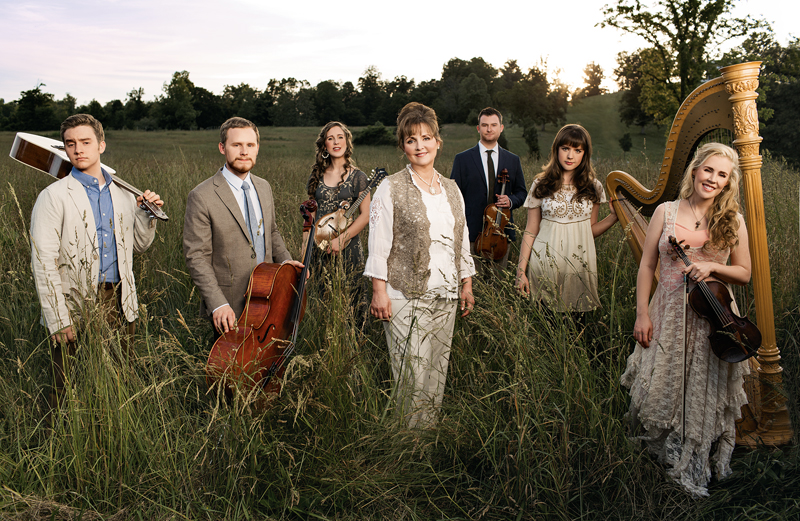
Music runs in our family. I was a voice major in college; my husband, Bill, is a composer; our six children have studied in the finest music schools and conservatories. All of us have performed together around the world with our own group, the Annie Moses Band, started when the kids were young.

After a show, someone is sure to come up and say, “You’re all so talented. I wish our lives could be blessed by music like that.”

“No reason they can’t,” I’m quick to say.

Music is a gift from heaven, meant for everyone, not just the winners of American Idol or The Voice. It’s for anyone who has ever tapped a toe to a tune on the radio or hummed a movie theme.

It’s for people like my grandmother Annie Moses, namesake of our band, who survived the soul-dulling drudgery of picking cotton with one song after another. Music lifted her out of misery. That’s what music does. It moves us, inspires us, gives us courage, comforts us, connects us to God and to others.

It shone like the sun on Annie Moses’ hardscrabble life, which is why we honor her in song. I can’t count the ways music makes our lives better, but I’ll try.

Music helps us listen.
My daddy was a missionary in the rugged Kiamichi Mountains in Oklahoma. Our little church never had more than 60 or 70 people in the pews, but on the stage in front of the congregation everybody was welcome and everybody participated.

On Sunday nights, we sang the classics like “I’ll Fly Away,” “The Old Rugged Cross” and “In the Sweet By-and-By,” the harmonies filling the air. Anyone who wanted came up to perform: gospel quartets, banjo pickers, washboard virtuosos, singers who aspired to be the next Johnny Cash or Patsy Cline.

Were they perfect? Goodness, no. But we leaned forward, listened, clapped and hollered. If we didn’t get a melody or all the words, we got the performers’ intentions, which must be the way God hears us.

Listening to music is good for our hearts and our brains. Scientists have shown that babies are born favoring the songs and voices they heard in their mother’s womb! As they grow up, children gain nuances of accent, timbre, inflection and tone from exposure to music. It improves memory.

A good musical education isn’t about training prodigies for world-class performance; it’s to expand young minds for whatever profession they pursue. It opens them up to a universal language. Maybe we should add a fourth “R” to the three we already have: Readin’, ’Ritin’, ’Rithmetic and Rhythm.

Music puts us on a team.
Mama didn’t have much more than a year of piano and voice lessons from a teacher in junior high school, but she was determined that her three daughters get every opportunity that she lacked—no mean feat in our rural area.

First she insisted that Daddy buy a piano. For twelve dollars a month he financed a spinet that sat in the living room like a short, stout nanny, a doily on her head, surviving spills, wax buildup, termite swarms, mice and cats.

I was five when Mama gathered my two older sisters and me at the spinet and taught us to sing in three-part harmony. We sounded like some fusion of the Andrews Sisters and Alvin and the Chipmunks. No matter. We hit the road.

Daddy took us up in his Cessna, evangelizing by air, landing in cow pastures, beside cornfields and on empty back roads. In tiny cracker-box churches, Daddy preached and we sang, Mama at the keyboard of some old pump organ.

We learned to own a stage, to speak and perform in front of others, uplifted by their applause, delighted when folks sang with us. Our music made us an integral part of Daddy’s team. But you don’t have to be a performer to know that feeling.

Just sing with someone else, even if it’s only “Happy Birthday.” Every voice makes a difference, every part counts. The whole is always greater than the sum. Jesus said wherever two or more are gathered in his name he is there. Seems like that gets amplified when we make music in his name.

Music expands our horizons.
Mama insisted on looking for the best music teacher she could find for her children, which meant driving us in Daddy’s pickup 20 miles every Saturday morning on rutted dirt roads to Mena, Arkansas.

There we were taught by Mrs. Johnson, a large woman with royal-blue eye shadow and her hair in a French twist, who had a profound love of music. She would clinch her baton and click time infallibly on the edge of the piano. God help you if you couldn’t keep the tempo.

Mrs. Johnson gave me a whole new repertoire for the piano: tunes from Broadway musicals, movie themes, Hanon exercises, classics by the great composers, all performed at our semi-annual recitals.

I’d hear an older student, one more experienced than I, play a challenging étude or a two-part invention and think, Maybe I can do that someday. We’d go to local and state competitions, sweating through adjudications under the auspices of the National Guild of Piano Teachers.

For a country girl who lived in the hills where we could barely get TV reception, it was eye-opening. I’ll never forget going to a competition in Little Rock my sophomore year of high school. First I played—did all right— then wandered into another hall and sat down to hear a master class with a distinguished voice teacher.

A college-age girl with long, bushy hair and a loose-fitting dress stepped out onstage and began to sing in a foreign language. I couldn’t believe my ears. An enormous velvety voice took hold of a difficult melody and reached for the stratosphere. I was on the edge of my seat.

Then I listened to the teacher. With just a few comments she made what I thought was a perfect performance even better.

Oh, Robin, that kind of singing is for rich city people, I told myself, not you. But what if I could study with a voice teacher like that and become a singer too? “Inez Silberg, Guest Vocal Instructor,” the program said.

As fate would have it—or rather, as God would—that very teacher, Mrs. Silberg, became my instructor several years later at Oklahoma City University and she worked her wonders on me. But first a dream had had to be planted.

With music there is always something new to hear, something new to learn. Your world keeps getting bigger.

Music gives voice to our prayers.
When the Israelites were brought safely out of Egypt, they thanked God in their prayers, but how did they do it? With music, with song. “I will sing to the Lord, for he has triumphed gloriously,” goes the Song of Moses, “the horse and his rider he has thrown into the sea” (Exodus 15:1).

Or take the 150 prayers at the center of our Bible, the Psalms. We should never forget that they were written to be sung, sometimes with the musical instructions right in the text: “with timbrel and dance…with strings and pipe.”

Words were set to music for very practical reasons in a preliterate age. It was easier to remember them when you sang. But music also helps us give voice to our prayers. Through music we can express our deepest longings; we have access to what we might not be able to say otherwise to God.

Today I like to remind our oldest, Annie, who sings and plays the violin in the band, what a lot of noise she made as a newborn. She cried constantly.

Once I left her in the church nursery and when I returned to reclaim her, the nursery director gestured to Annie’s bawling face and told me, point-blank, “Don’t bring her back.”

The only thing that calmed her was George Gershwin’s “Summertime” sung high and loud. I didn’t care where I had to do it—singing top volume while putting her in the car seat or pushing the shopping cart through the supermarket— as long as it had its soothing effect.

It wasn’t long before I realized one of the verses was really a prayer, a prayer a mother sings to her child: “One of these mornings / You’re gonna rise up singing / Then you’ll spread your wings / And you’ll take to the sky….”

And that’s exactly what happened to Annie and to all of my children. They have spread their wings and taken to the sky, with their music, their lives and their careers.

My prayers have been answered beyond my wildest imaginings. Music has blessed them and they have spread the blessing, in the Annie Moses Band, in every piece we play and every song we sing. May our music bless you.

Read Robin's story, "Soothed by a Mysterious Stranger."

Read an excerpt from Robin's book, The Song of Annie Moses.

Listen as Robin shares how she was inspired by her grandmother, Annie Moses.

Download your FREE ebook, The Power of Hope: 7 Inspirational Stories of People Rediscovering Faith, Hope and Love

The Biggest Little Christmas Tree

We pulled up at the Christmas tree lot near our home. Four-year-old Lisa hopped out of the car. “Let’s get the best one!”

My wife, Shirley, and I looked at each other. Christmas had always been a time of giving around our house, but this particular Christmas, we didn’t have much to give. Money was tight. Big trees were expensive.

How could we tell Lisa that we couldn’t afford to buy a big, beautiful tree? I was tired of our money problems ruining everything for our little girl.

The lot was filled to bursting with evergreens. There seemed to be as many trees here as there were angels in heaven. The rich scent of pine needles perfumed the air. Lisa hustled us onto the path.

“Look at them all!” Lisa said, spinning with her arms out wide. I looked, all right. I checked the price tag on one of the bigger ones, a seven-footer that would reach almost to our ceiling, and shook my head. We had to find something smaller. Lord, please don’t let Lisa be too disappointed.

And then I spotted it. So did Shirley. The tiniest, loveliest tree, perhaps five feet high, its branches arched upward, its color a deep forest green—as lovely as a child ballerina. I wonder why no one has snatched it up yet, I thought. Just as quickly, I answered my own question. Who wanted a small tree?

And then for a long moment, I traveled back in time. I was four—Lisa’s age—when for the first time, my parents took me Christmas-tree shopping. We arrived at the tree lot, and immediately my parents and older brother disappeared down the rows and rows of green, fragrant trees, exploring.

Me, I was mesmerized, just like Lisa. I stood near the entrance, staring. It was like entering a toy store featuring all my favorite toys, wondering how I would ever choose just one from among them.

My tennis shoes wiggled in the sawdust spread on the floor. Across the way, a crackling fire burned in a drum barrel filled with logs turned orange by the flames.

“Hey, Raymond, aren’t you going to help us look for a tree?” called my mother. She sidled up to me, reached down and took my hand. “Come on,” she urged.

We walked the rows of trees. Craning my neck toward their peaks, I felt as though I was making my way through a big green canyon. Then I spotted a tree standing in a corner, apparently shoved aside. To me, it was absolutely perfect, the most beautiful on the lot.

“I want this one,” I said, with all the authority a four-year-old can muster.

My parents eyed one another. My big brother scrunched up his nose. The tree was five feet tall, at most. Dad shrugged. “Well, I won’t have to saw the end off to fit it in the house,” he said.

Dad lifted it free, paid the proprietor and tied it to the roof of our car. At home, Mom made hot chocolate for my brothers and me, and we all decorated the tree, squeezing in every ornament we could possibly fit. It was the prettiest tree I had ever seen. And from where I stood, it sure looked big to me.

Now, all these years later, I admired another height-challenged tree. Bigger doesn’t mean better, I thought. And money can’t make or break Christmas.

Shirley and I would show Lisa that this was indeed the season of giving. Even if our bank account was low, the love in our hearts would never run out. We always had at least that to give.

Suddenly, I heard a familiar, excited voice. “I want that one!” Lisa said, pointing to the same little tree Shirley and I had our eyes on. “It’s perfect.” My thought exactly.

“We’ ll take that one,” I said, pointing to Lisa’s very affordable selection. I carried our find to the car. It couldn’t have been more perfect if it had been 10 feet tall.

Download your FREE ebook, Rediscover the Power of Positive Thinking, with Norman Vincent Peale

The Bible Study Cure

I stood in front of a panel for my interview for a Miss Mississippi preliminary pageant, trying not to let my nervousness show. The judges were taking a long time to look over my paperwork. What kinds of questions would they ask?

Most people think that pageants are about beauty, and they are—but not just outer beauty. Each contestant also picks a platform: a cause to bring awareness to and volunteer for, to help her community.

Community Newsletter

Get More Inspiration Delivered to Your Inbox


My platform was about the importance of giving blood. I truly believed that blood donors were everyday heroes. I donated every 56 days, as often as you’re allowed, and was eager for an opportunity to encourage others to give blood.

I went over my platform points in my head, thinking about my father. He’d talked a lot about beauty—inner beauty—when I was little. If I had a bad attitude, Daddy would say, “Asya, God doesn’t like ugly. Pretty is as pretty does.” He told me that the best way to turn an ugly attitude into a beautiful one was by doing good.

I learned a lot about charity, compassion and community from my father. He’d been in the Army, and he was committed to serving others. When I was 10, he took in a friend’s troubled son, as well as a family struggling financially. It was as if our farm in Booneville became a haven for the down and out. Growing up as one of eight children, I was used to living with a crowd. Even with so many folks around, Daddy still made me feel special. Every day as I left for school, he called to me from our wraparound porch, “Have a good day, Asya! Love you!” And he was always there waiting for me when I got home.

I liked making Daddy happy, but we were both a little headstrong. I signed up for my first pageant when I was seven, and he tried to talk me out of it. He worried that pageants would teach me to seek gratification from others rather than God. But I was outgoing and loved any chance to shine. I put my foot down, and Daddy gave in. He couldn’t help but pamper me.

Still, he made sure that all of us kids knew what was important. He took us to Burning Bush Church of God in Christ whenever the doors were open. Daddy was big on quoting Scripture. One of his favorite verses was Galatians 6:10: Therefore, whenever we have the opportunity, we should do good to everyone— especially to those in the family of faith. Little did I know that trying to do good would be Daddy’s downfall.

“Asya,” said one of the judges, looking up from my paperwork, “it says here that your father is incarcerated. Can you tell us more about that?”

I flashed back to the day I came home from school and Daddy wasn’t waiting on the porch. Instead, our house was surrounded by strange cars—government vehicles. I was not quite 11 years old, and I was so scared. Where was Daddy? Later I learned that the boy who lived with us had robbed a woman. No one was hurt, but there were drugs involved. Daddy had tried to help him undo the crime and paid a heavy price.

Life since Daddy’s arrest hadn’t been easy. We missed him so much. After he went to prison, Mama did everything in her power to keep things normal. My older brothers and sisters had grown up and moved out. But my younger sisters, who were only five and two, kept asking why Daddy was gone and when he would come back. Frankly, we didn’t have many details to give them.

I was used to having slumber parties almost every weekend. Then my friends’ parents began making excuses for why their daughters couldn’t spend time with me. I was so naive, I didn’t understand what was happening.

Until one day, Mama said, “Asya, these girls’ parents aren’t going to let them come over.”

“Why not?” I asked.

“Because of your dad.”

“He’s not a bad person!” I said. “Why don’t people see that?”

The difficulties weren’t just emotional. After Daddy was convicted, the government seized his property. They took our tractor and farm equipment, his truck and the old cars that he used to work on. Everything in his name—gone. Without Daddy contributing, Mama lost our farmhouse. We sold everything we could and moved into a smaller place.

I struggled with my self-worth and closed myself off, praying for answers about why this happened. Maybe God is teaching me to be independent and grateful, I thought. My parents had given me everything I wanted when I was little. After Daddy’s incarceration, we couldn’t afford those extras anymore.

The one extra I allowed myself was pageants. I picked them up again in high school. Sometimes it meant wearing a used dress, doing my own hair or borrowing the entrance fee from my grandmother. I loved competing as much as I had when I was seven. It helped me forget everything I’d lost— my friends, my home, my daddy. Onstage none of that mattered. I was Asya Branch—a strong, confident young woman. And it was my chance to shine.

In private, I was still Daddy’s girl. I sent him letters and pictures. He loved hearing about my pageant experiences, and I wanted to make him proud.

I was out of practice with pageants, but to my surprise I started winning. In twelfth grade, I competed in local pageants, collecting titles that would later open the door to compete for Miss Mississippi. I wore dresses bought on major markdown because stores were getting rid of the last season’s inventory, and I had to work multiple jobs to pay for everything. It was worth it. I was finding my confidence again.

But there was always one item in the paperwork that gave me pause. How has the world you come from shaped your dreams and aspirations?

That was where I’d written that my father was incarcerated and, in a way, our whole family was serving a sentence. Now the judge was asking the question I’d dreaded: “Can you tell us about your dad?”

I felt my whole body tense up. “Yes, he’s in prison, but he’s a good man,” I said. “He leads a prayer group and Bible study. My father is connecting people to God and the Word. That’s something that a lot of people in prison need.” I told the panel that more than 50,000 children in Mississippi struggle with the incarceration of a parent. “I’m not the only one.” The judge, rather than recoil, gave me a gentle smile.

Right after the pageant winners were announced—I was one of them—that judge took me aside. “Don’t you see?” she said. “Helping children of incarcerated parents—that’s your platform.”

I was shocked. Did a pageant organization, a program that looks for the best of the best, really want me to speak publicly about something that most people tried to hide?

Then I thought about the section on platforms in the pageant rules. A contestant’s platform is supposed to be something she feels passionate about. Aside from God, nothing meant more to me than my family, my father.

I remembered that verse from Galatians Daddy liked to quote. Whenever we have the opportunity, we should do good to everyone. Maybe if I spoke about my experience openly, it would help other children of incarcerated parents feel less alone.

I decided to move forward with my new platform, Empowering Children of Incarcerated Parents. In June 2018, I became Miss Mississippi. What I’d worried would be a liability turned out to be a strength. Next I would compete in Miss America and share my story with the country.

I was hesitant to tell Daddy. He had often told me, “Asya, I’m so sorry for what I’ve put you through.” I didn’t want to make him feel worse by talking about our family’s struggles in such a public way.

A few weeks before Miss America, I went to see Daddy. The warden helped arrange a private visit. Daddy didn’t even know. I didn’t want every media outlet in the state taking photos of Miss Mississippi visiting her incarcerated father, using Daddy as a spectacle.

After Daddy got over the surprise of seeing me, he asked, “Are you ready?”

“I think so,” I said.

“You go knock ’em dead!”

“Are you sure you’re okay with my platform?” I asked. It’s not every day that a Miss America contestant has a father in prison, and I’d heard that some reporters had already tried to interview Daddy.

“Asya, I’m happy that you’re using your influence to better the lives of others,” he said. “Don’t worry about the media. I can hold my own.”

On the night of the Miss America pageant, the warden let Daddy watch. The other inmates were excited to cheer me on. They were more upset than I was when I didn’t win. Daddy was so proud, I might as well have won.

As Miss Mississippi, I’ve kept my promise to empower children of incarcerated parents. I work with a prison ministry program called Day1. Their initiative, Love Letters, allows mothers in jail to send weekly letters to their children. We supply the stationery and stamps, and have funded more than 300 letters between mothers and their children. I also write to each inmate’s child to encourage them. I tell them that I personally know how hard their circumstances are but that they can do anything they put their minds to.

Daddy is scheduled to be released in 2022. He has been incarcerated for half my life, and I mourn the time we’ve lost. But I remind myself that God is the Great Redeemer. Only he could have transformed the hardest thing I’ve ever been through into an opportunity to do good and let my inner beauty shine.

For more inspiring stories, subscribe to Guideposts magazine.

The Best Solution to Stress

April is Stress Awareness Month, and it’s a good time to think about what stress can do to our bodies. Some days life reminds me of a merry-go-round that keeps speeding up faster and faster. I want to get off, but things are moving in such a whirl that I can’t.

I had a powerful reminder yesterday. I was still tired when I woke up, but with writing deadlines, I jumped out of bed and dashed into my day. I knew my productivity would be cut short because I had two doctor’s appointments that would eat up most of the afternoon.

Read More: Remember that Stress Isn’t Forever

I zipped into the grocery store after I left the doctor’s office, and then rushed home and started dinner. I was weary, but I hadn’t met my word quota for the day—not a good thing when you’re on a tight book deadline—so I sat down at my computer to write for a few more hours.

Then I realized something important–I was genuinely exhausted. I’d pushed myself like I was Wonder Woman, as if I could do everything in superhero fashion without any consequences. That explained why I’d struggled so much with my writing the last few days. My batteries were drained, and the only thing that would help would be to recharge them.

So I shut my computer down and sacked out on the couch until bedtime. And then I enjoyed a wonderful long night of sleep. And you know what? When I sat down to write this morning, it was easy. It felt like the creativity floodgates had opened. All because I was less stressed and rested.

Read More: 4 Short Prayers for Anxiety

Do you feel stuck on a merry-go-round? Have you been zipping around like Wonder Woman on steroids? Are you stressed to the breaking point?

Then I encourage you to do something: Take stock of your life, make time for some rest, and then take control of the stress . . . before it takes control of you. You’ll be so glad you did!