Embrace God's truth with our new book, The Lies that Bind

The Prodigal Father

I was reading something the other day that said when you pray, keep in mind how glad God is to hear from you. “It’s the way you feel when you’re a parent and you get a call or a text or an email from your kids,” the writer said. I know what that’s like, I thought.

A couple of years back when our older son, William, came home from college for summer vacation he waltzed in the house at eight o’clock. He kissed his parents, hugged his little brother, put his bags in his bedroom and sat down to the delicious dinner his mother had cooked for him. Must have been garlic chicken, his favorite. I said grace— “Thank you, God, for William’s safe arrival home”—ready to kick up my heels in celebration. Hosannas and Hallelujahs would not have been out of place.

At dinner we talked about school, his friends, the grade he hoped to get in his tough econ course, the wild game of baseball he’d played with buddies. He acknowledged some anxiety about his summer job. That he got up from the table, checked a few messages on his cellphone, put on his jacket and headed for the door. “Bye,” he said. “I’m going to see some buddies.”

“Bye,” we said. The door closed and I looked at my watch. It was nine o’clock. He’d been home for exactly one hour.

When I recounted this story to a friend at the office, she asked me, “Weren’t you a little disappointed that he didn’t linger longer?”

My face wreathed in smiled, I shook my head. “No, no, no, you don’t understand. He was home for one hour! We got to see him and talk to him for one solid hour!”

If I feel that way about my son, I have to think my heavenly parent is about as happy with a visit from me, even if I just want to complain. As has often been pointed out, the parable of the Prodigal Son could easily be called the parable of the Prodigal Father. Because the word prodigal means profuse and lavish, abundant and excessive, and that’s just what the Father’s love is like.

Check in any time and find out.

The Prayers of Others Saw Her Through Opioid Withdrawal

Past three o’clock in the morn­ing, two weeks before Easter. I sat in the darkness of my car, parked in my driveway, feeling as if I were go­ing insane. I’d been awake all night. I couldn’t stop twitching, moving, grabbing at myself. My mind raced. Bad voices clawed the edges of my brain. I tried everything I could to stop them. Racing up and down my attic stairs. Doing frantic jumping jacks. Bicycling my legs in the air. But it was hopeless. On the streets, they had a name for what ailed me: dope sick.

At 64, I was in withdrawal from opioids. For 28 years, I’d been pre­scribed OxyContin for pain relief. I have a genetic condition that causes invasive, noncancerous tumors to grow on nerve cells all over my body. I’d undergone 34 surgeries over the years to remove the worst of them. But the ones that remained caused constant pain.

At first, the OxyContin was a god­send. It allowed me to keep my job as a nurse and to live a normal life. But my town in Appalachia had been gripped hard by the opioid crisis. My insurer stopped paying for Oxy­Contin. My doctor said new insur­ance rules required me to enroll at a pain management clinic for a new prescription. A specialist there took me off OxyContin entirely and put me on a new, weaker medicine for nerve pain to be taken every 12 hours.

“It’ll help you more than the Oxy­Contin did,” the specialist assured me. “You might have some with­drawal symptoms as you go from one drug to the other. They shouldn’t be too bad.”

The last three days had been hell on earth! I’d been taking OxyContin for a long time. While I’d never deviated from my doctor’s instructions and she’d tapered me off slightly before I quit cold turkey, I’d built up a strong dependency. Deprived of OxyContin, my body panicked. It ached like a giant toothache. Pain signals coursed up and down my arms and legs. I called the clinic. I was told to tough it out. How? I shook with chills. My skin felt as if insects were crawling all over it. I couldn’t keep anything down. Worst of all, my mind buzzed with bad voices. They taunted me endlessly.

It’s going to be like this forever, Roberta….

You’re going crazy.

There’s no point trying. Just give up already.

No one else knew what I was go­ing through except my sister Rebekkah. She’d come to stay with me after I left the pain clinic. I’d sent a brief e-mail to friends in my writing group, asking for prayers because I was going through a “rough time.” But I kept it vague. I was ashamed of my dependence on OxyContin. What would people think?

No one loves you.

Even God’s left you.

You’re all alone.

Not sure what else to do, I’d ban­ished myself to my car in the early hours of the morning. It was usually the place I did my best praying. Now that I was here, though, I couldn’t think. I could barely get Jesus’ name out. I had too much trouble breathing. I was going to die in this car. God, where are you when I really need you? Have you totally left me this time?

The dashboard clock told me it was four o’clock. A piece of advice someone had told me ages ago came to me: “It’s the friends you can call at 4 a.m. who really matter.” I thought of my dear friend Sue. Her husband used oxygen for a lung condition—maybe it would help? We usually talked every day, but I hadn’t heard her voice since this whole withdrawal thing. She’d probably been calling, worried sick. I hadn’t checked my voice mails, e-mails or mailbox for days. I dialed her number on my cell and told her my situation.

“Come right over,” Sue said. “I’ll get the oxygen set up.”

Rebekkah drove me to Sue’s house in the cold, black night. Sue tucked me into a makeshift bed on her sofa and got the oxygen. I breathed it into my greedy lungs. She parked her chair by the sofa and massaged my agitated legs. Within minutes, I was no longer starved for air. I began to relax. Three hours later, I woke up to the smell of coffee and raisin toast. I’d slept for the first time in days.

Sue fixed up the guest room so I could stay with her as long as I needed. The pain and panic persist­ed. I didn’t know how much longer I could survive. I thrashed wildly at night, hitting my head against the brass headboard. Sometimes I awoke to the sound of Sue playing Easter hymns on her piano, convinced I was hallucinating.

Then, four days before Easter, something changed. I awoke in the middle of the night with the most bizarre feeling. As if I were being held, wrapped in a giant hug. Safe and secure, buoyed by some force. As if being lifted up somehow. Tentatively, I listened for the voices. They were still there. But they were differ­ent this time.

You’re going to make it, Roberta!

Don’t be afraid.

You aren’t going to just survive. You’re going to thrive.

This new medicine is going to work wonders!

I felt strong. Confident. Coura­geous. It defied all logic! I grabbed my journal and wrote down every­thing I was hearing. These voices…they weren’t mine.

The pain didn’t immediately sub­side. But I knew, without a doubt, I was going to be okay. On Easter morning, I awoke to Sue practicing the piano again, singing the hymn “He Arose.” I zipped up my jacket, poured myself a cup of coffee and found my way out to the front porch. It was daylight. I climbed into Sue’s big wicker porch swing and listened to the birds singing. Across the street, I could see a wife planting flowers as her husband washed windows. Yellow and white daffodils had pushed their way through the wintry soil. Pink dogwoods were in glorious bloom. It had been ages since I’d seen or contemplated such things. I thought again of the voices. The good ones, now running through my head regularly.

There’s nothing to fear, Roberta. You’re going to make it!

I knew this time I would.

After 10 days at Sue’s, I was well enough to return home. As I rejoined the living, I finally listened to my voice mails, read my e-mail and col­lected the big stack of colorful en­velopes and packages from my mailbox. I hadn’t told a single soul, out­side my inner circle, what I was going through. And yet dozens—many dozens—of people had prayed for me anyway.

“I sensed you’re in crisis, Rober­ta,” one friend wrote. “I’m praying for swift healing.”

“I felt moved to pray for new pain relief for you,” another e-mailed.

Wanda in Montana placed a lovely lace handkerchief inside healing passages in her Bible, prayed the verses and then tucked the handker­chief inside a gorgeous card she sent me. Peggy and Mike in upstate New York mailed me a comfort blan­ket they’d prayed over. Karen in Georgia had been pausing by a bush of red roses every morning to talk to God specifically about me. The prayers got more and more specific.

“I suddenly felt you need God’s peace, Roberta. Lord, I am praying that you be with my friend and com­fort her.…

“Dearest Roberta, I knew you were in trouble, so I gathered my entire church and we were anointed with oil and prayed for you.”

Readers of my stories that have appeared in Guideposts and Myste­rious Ways wrote in too.

“I found your address online and had to write to say that I am praying for you,” wrote a woman named Pauline from Michigan. “I sense you are in difficulty and am asking God for your healing from pain.”

The prayers went on. And on. I went back and checked the dates on the messages, then compared them to the dates in my journal. They were all dated a few days before Easter. The very time I’d felt inexplicably held.

“It’s the friends you can call at 4 a.m….” the advice went.

I had called. The greatest friend of all—and his network of followers—had answered.

Roberta shares 5 things she wishes people knew about opioid dependency.

The Prayer Practice That Helped Him Reconnect with God

My struggle with chronic pain began out of the blue. One gray December day, I woke up and couldn’t feel my hands. I wrung my arms, shook them violently. Held them under hot, then cold, water.

No sensation.

I’m a full-time writer whose typing hands pay the rent. Panicked and bewildered, I called my doctor. “Probably carpal tunnel syndrome,” she said.

The symptoms worsened. Prickly tingling crept up my arm and into my shoulders. The numbness became burning, aching, stabbing pain. Even my fingernails seemed to throb.

Nerve twitches began in my legs, arms, back and face. I couldn’t sleep and arose each day exhausted. I broke out in shingles. I suffered panic attacks. Random stressors—a crowd, a long line, everyday occurrences in New York—sent me fleeing.

Increasingly desperate, I sought out help from an army of health practitioners: orthopedists, neurologists, chiropractors, nutritionists and even a Hasidic Jewish healer.

My medication list grew as fast as my symptoms: anti-inflammatories, muscle relaxants, nerve pills, painkillers, antiepileptic drugs, sleeping pills, healthy doses of Lexapro and Xanax to stave off a nervous breakdown.

I broke down anyway. Pain assailed me every moment. I awoke to pain, worked with pain, dined with pain and fought for sleep in spite of pain. My routine fell apart. My social life disintegrated. I felt tormented and alone.

Even God seemed to abandon me. First I pleaded for help. Then I raged. Finally, still in pain, I gave up and figured God didn’t care. I mostly stopped praying, stopped going to church.

For a person who grew up the son of a prominent church leader and attended his first church service just three days after birth, I felt as if I had slammed into a sudden, cruel, inexplicable dead end. Sometimes I wished I were dead. That was three years ago. Today my pain is mostly gone. My relationship with God is restored. I write, publish books and travel to public speaking engagements as I did before. I am, you could say, healed.

Or is that the right word? Certainly it’s tempting to tell my story as a kind of miraculous healing. After all, that’s the kind of story a person of faith might gravitate to.

I see my experience differently. If there was a miracle, it was a miracle born out of struggle, despair, hard-won knowledge and a willingness to question everything I once thought true. Pain, I have learned, is a teacher. A hard teacher but sometimes a necessary one.

What did I learn from pain? The answer is difficult to put into words. That’s why I’m telling my story. In a way, the story is the lesson.

I actually began thinking about pain as a teacher when I was at my absolute lowest point. By that time, I’d been in pain for more than a year. I was with a friend, waiting in a pharmacy for yet another prescription.

“Do you think God is doing this to you?” my friend asked.

“I don’t know,” I said. “I hope not. All I know is that it feels as if pain is some kind of teacher. I just don’t know what the lesson is yet.” That was the hardest part, not knowing why this was happening or how I was going to get out of it.

I left that pharmacy more despondent than I had ever been. A short time later, I was visiting a friend who rented a room in his apartment to vacationers. A Portuguese woman renting the room happened to overhear me talking about my misery—pretty much all I ever talked about. “The same thing happened to me,” she said.

Surely not, I thought. The doctors had told me they’d never seen my array of symptoms and had no explanation.

“I was told I had fibromyalgia,” the woman said. “I was put on disability. I thought I’d never work again.”

“You’re not in pain anymore?” I asked.

“No,” she said. “And it’s thanks to a doctor right here in New York. His name is John Sarno. He writes about the connection between the mind and the body. You should try one of his books.”

Mind? Body? What was she talking about? I looked up this Dr. Sarno. He’d begun treating patients for back pain in the 1970s. He noticed that there was often no correlation between patients’ symptoms and the physical condition of their backs. Some had pain but no underlying physical problem. Others had slipped discs and other abnormalities but little pain.

One thing many of his patients did have in common: huge amounts of stress and unresolved emotional conflict. Sarno concluded that, at least in some cases, chronic pain can be caused by more than physical symptoms. Resolving problems in the mind sometimes resolves problems in the body.

I was raised in a very traditional, conservative wing of the church. Growing up, I was taught that when bad things happen to people, it’s often because they did something wrong and God is punishing them.

I was also taught that only crazy nonbelievers seek psychological therapy or any other nontraditional form of healing. “Faith and prayer are all you need,” I was told.

Dr. Sarno sounded like someone I would have been warned away from.

Well, I was desperate. I read one of his books. It felt like my autobiography. I made an appointment with one of his protegés. He diagnosed me with chronic pain stemming from unresolved psychological conflict. He recommended I see a therapist and reduce stress in my life.

Still skeptical, still desperate, I saw the therapist. To my surprise, I found myself weeping in her office and talking about all sorts of things that seemed to have nothing to do with the numbness in my hands or my inability to sleep or the pain that tortured me every day.

Over the course of many months, I told the therapist about the strictness of my upbringing. About the idea I’d absorbed that God is mercurial and wrathful, loving only those people who are perfect and follow the rules.

I told about the older boy in my neighborhood who sexually abused me.

I told about my struggle with intimacy.

The more I told, the more I began to see not only how much psychological pain had built up inside me over the years but also how frightened I was that maybe the pain was punishment from God or a sign that I was doing something wrong. Or, worst of all, a sign that God didn’t care and had turned his back on me.

The therapist recommended meditation to help reorient my nervous system. “Your brain is using physical pain as a way of coping with deeper emotional pain,” she said. Meditation was another thing I’d been warned away from while growing up. With the help of more reading, I realized Christians have been practicing a form of meditation for centuries.

It’s called contemplative prayer, sitting quietly in God’s presence rather than coming to him with a laundry list of requests.

I tried it. It felt strange at first. A bit boring and frustrating. Thoughts and fears clamored noisily as I sat. The more I did it, the more the clamor fell away and I felt myself surrounded by something I had never experienced before. A loving presence larger than my fretful mind. Larger than my pain. Larger than everything.

Last fall, I decided it was time to try putting all this treatment to the test. I flushed the remaining pain medication I was taking down the toilet. A friend who owned a house in the country offered to let me stay there for a month. There was no cell phone reception. No TV. Nothing to distract me.

I spent my days reading, walking, writing and sitting in prayer. I thought about everything the therapist had told me. I dove into painful experiences in my life, reimagining them as if I had not been helpless. I sat quietly with the God I was just beginning to know.

Who was this God? He was a God of love, not wrath. A God who did not demand perfection. A God who did not give up on me and never turned his back on anyone.

A God who always kept this central, defining promise to humanity: I am here.

When I returned to the city, my pain was almost entirely gone. I was psychologically and emotionally wrung out.

I had never felt more alive.

I don’t tell this story because I think all chronic pain is like mine. According to the Centers for Disease Control, up to four in 10 Americans suffer from some sort of chronic pain, and every one of those people has a story that’s unique.

The American medical system excels at treating conditions that can be tested, scanned and cured with drugs or surgery. Sometimes such treatment is necessary. Sometimes it’s worth exploring further. The mind, the body and the soul are closely intertwined. God is not a specialist. God sees, loves and is present with the whole person.

I hope I never have to take pain’s challenging class again. It was the most frightening, debilitating experience of my life.

And yet, as I regain my health, I am grateful for what I learned.

I learned how to pray again. I learned that, like everyone else, I experienced hard things growing up but that those things do not have to rule my life today. I learned to accept myself as I am and that I don’t have to be perfect to be loved.

God is perfect, not me. And God, I learned in the most important lesson of all, is always there. Always loving. Always beside me.

Doubtless I will know pain again as I get older. I am ready for it now. Walking with God, I know I will not be alone. And so I will not be afraid.

For more inspiring stories, subscribe to Guideposts magazine.

The Practice of Faith

Recently, my wife Holly and I attended a solo recital by the pianist Michael Brown, which I found unexpectedly satisfying and delightful.

After the recital, however, I had a question which I didn’t have the opportunity to ask him. What I wondered was: How much does he practice? As it turns out, I found the answer elsewhere.

In his book entitled Outliers: The Story of Success, Malcolm Gladwell describes the ten-thousand-hour theory, originally proposed by neurologist Daniel Levitan. According to this theory, top musicians, athletes and chess players become masters in their field if they accumulate 10,000 hours of practice by age 20.

I had also attended a lecture by Dr. Patricia Bloom in which she spoke about how our modern lifestyle triggers the body’s stress response—the ancient “fight or flight” mechanism designed to help us survive times of physical danger. Today, most of us find ourselves continually under stress, and the mechanism designed to save us is now killing us—literally. One of the best ways to turn off the body’s stress response and turn on the body’s relaxation response is through mindfulness, the deep form of awareness developed through disciplines such as meditation and prayer.

Over the past decade, researchers have been studying people who practice mindfulness, and they’ve discovered that mindfulness develops the brain’s capacity for experiencing happiness and fulfillment. In other words, the ancient sages who counseled us to practice the disciplines of attentiveness and gratitude knew what they were talking about.

So what does this all add up to? If you want to excel at playing the piano, you need to practice the piano. If you want to feel happy and fulfilled, practice mindfulness. If you want to enjoy a sense of meaning and purpose, you need to practice your faith.

But where does faith come from? Like music or mindfulness, faith comes from practice—a daily spiritual discipline.

Fortunately, we have a model to guide us in developing that discipline: a practice of focused meditation known in Latin as lectio divina, or divine reading. Some term the practice “devotional reading,” which Henry Ware, Jr., described as reading not for knowledge but for your life.

Ralph Waldo Emerson called it “provocative reading,” because it is a way to read spiritual texts in order to provoke us into new ways of thinking and living. In other words, when doing spiritual reading, you should come away thinking about your life in a slightly different way. You can do this practice anywhere you happen to be, at any time of day, for however long you choose.

The practice has four elements: reading, reflection, intention and contemplation. To begin, sit comfortably and take a few deep breaths to remind your body that it’s time to focus. Then begin with the reading: Read the text carefully several times, preferably aloud.

The second step is reflection: Ask yourself which word or phrase catches your attention. Why that word or that phrase? You may wish to jot the word or phrase in a journal. Reflect for a short time on the word or phrase and think about what it evokes in you. Make a note or two.

The third step is intention: Ask yourself what purpose your reading and reflection suggests for this day. Set a specific intention that you can reasonably fulfill. Maybe you identify one small change that you can make today. Jot it down.

The final step is contemplation, in which you expand your awareness from intention to gratitude. Remind yourself that the world is full of untapped wisdom and your life is full of unrealized potential. Note a couple of things for which you’re especially grateful.

If we practice lectio divina or provocative reading faithfully, this personal spiritual practice will help spark our moral imagination and set our moral compass as individuals.

Download your FREE ebook, The Power of Hope: 7 Inspirational Stories of People Rediscovering Faith, Hope and Love

The Power of Turning Negative Stories into Positive Ones

Everyone tells themselves a story for why they can’t achieve their dreams or get what they want in life. These stories have a way of creeping into our thoughts when we are reaching for a new goal like a job change, a move or a promotion. But if you want to change your life, you must turn your negative stories into positive ones.

We often hear celebrities describe negative high school experiences that continue to fuel their present day success. How we choose to look back on unfavorable experiences can determine our present actions. For example, if you want to be a writer, but an English professor once told you that you didn’t have what it takes, you may hold back from achieving that goal. Or if a boss once criticized you for your work, it may discourage you from applying for a more challenging job.

The good news is that this kind of negative feedback can only stop you if you let it. If you decide to find a lesson or motivation in these experiences and grow from them, nothing can stop you.

If you want to change your life, you must change the negative stories you tell yourself. Reclaim your power over these narratives and move forward with confidence and faith.

The Power of the Written Word: Pen Pals for Older Adults

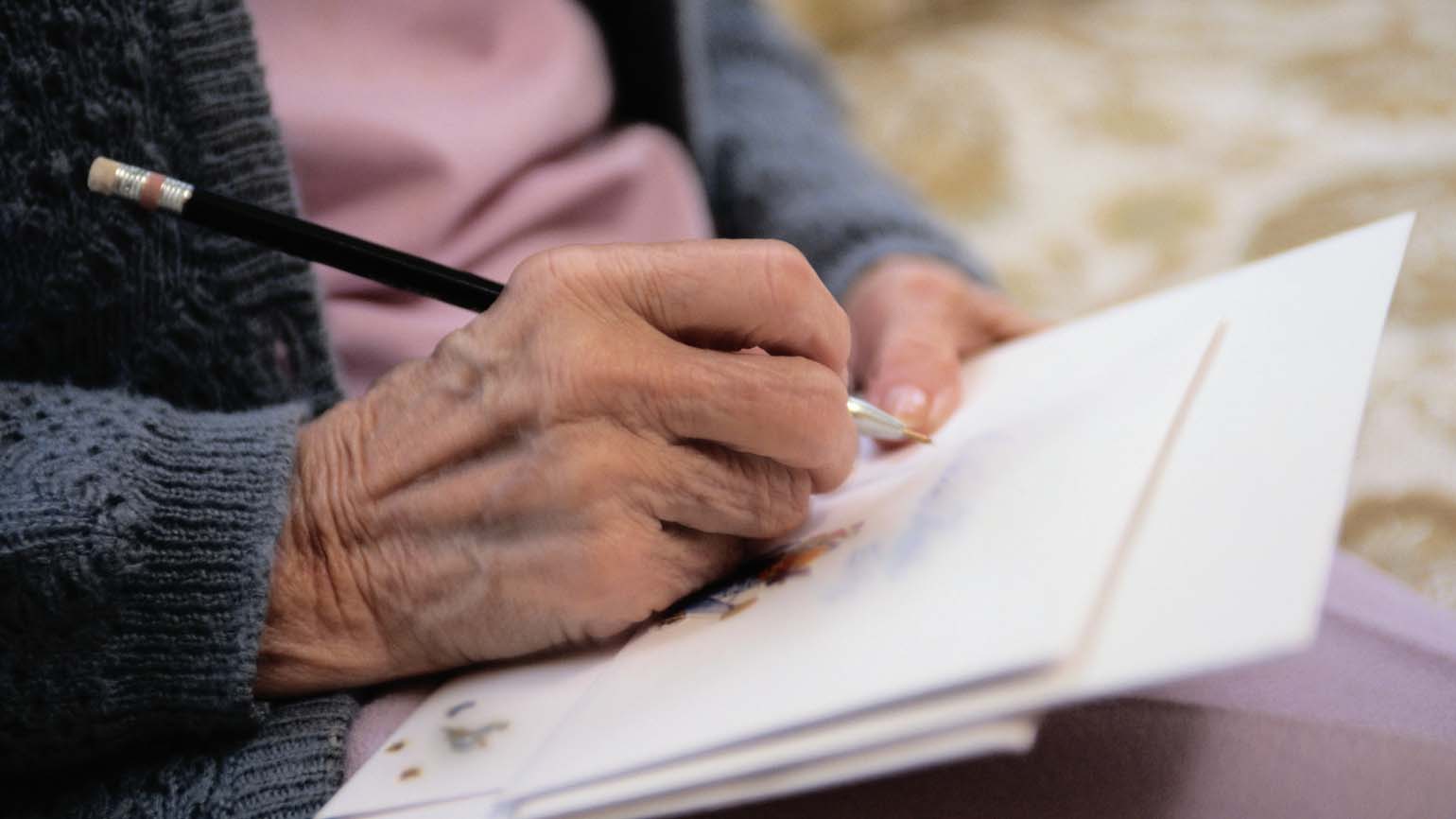
Positive and heartfelt words, even from those we don’t know, can open up a world of connection and help to quell loneliness. For older adults who are unable to get out and about, reading letters can be a means of battling the blues and establishing new relationships. The fact that connection is crucial has become all the more apparent as the issue of social isolation has been pushed to the forefront. It’s no secret that loneliness takes a toll and that older adults face particular challenges, which have been exacerbated by lockdowns.

The potential health effects of social isolation are serious. They range from higher rates of depression and anxiety to increased risk of dementia and premature death. So, it’s important for you as a caregiver to find creative ways to help your loved one stay connected with others. One way to broaden social connection is via letter writing. To that end, a number of organizations, from assisted living facilities to home care agencies, have initiated pen pal programs for older adults, some in partnership with school-age kids. A few examples:

  • Village Concepts, an assisted living provider in Washington state, launched a pen pal program at the start of Covid-19 restrictions to help its residents stay connected with the community. It issued a social media call to action to all of its local communities, especially encouraging kids who were at home due to school closures. The response, according to the company’s website, was “epic.”
  • The Meadows of Wadena, a retirement and assisted living facility in Minnesota, formed a letter writing program after its activities director spotted a post in another state asking for pen pals and wanted to try out the concept. “Our residents are very interested and can’t wait to get their letters,” Tami Mench, director of resident services/housing manager, told the Grand Forks Herald.
  • North Carolina’s Victorian Senior Care received such a huge outpouring of letters for its pen pal program that it issued an update on its website notifying letter writers of a slowdown in response times: “We have been overwhelmed with the amount of love and kindness we have received from all over the world and thankful for every bit of it. From sweet encouraging notes, letters about your families and pets, thoughtful gifts, snacks, activities and so much more. Our residents have received thousands of letters and are trying to get responses out as they can.”
  • In addition to combating social isolation among older adults through its in-home care services, Home Instead offers a pen pal program. The website enables letter writers to type their messages into an online form or to uploaded handwritten notes. Suggested topics include favorite hobbies, movies, book and interests. You can also ask the older adult to share a story, fact or opinion with you. Letters are screened for safety and security by a review team.

If you’d like to get your loved one involved in a pen pal program, or wish to write to an older adult yourself, consider contacting your community’s assisted living facilities, in-home care agencies or senior centers. If a facility has an activities director, you may want to start with that person to get a sense of what sort of interest there is. You may find one older adult who wants to receive letters, or several. If you get involved and enjoy the process, you may even want to recruit friends and family members to establish additional connections.

Facilities will likely screen letters, but it’s important to always keep safety and security in mind. Make sure, for instance, that your loved one doesn’t include in snail mail letters or on websites his or her full name or other personal or identifying information. This sort of information includes: mailing address, date of birth, social security number, internet passwords, financial information or travel plans Also make sure that your loved one never sends money or compromising photos to anyone.

The simplest of actions, if sincere, can have great value. When someone puts thoughts and feelings into writing and reaches out to an older person, it can make a real difference. It could be the first step toward forging a meaningful relationship or at least making someone smile.

The Power of Humility

Humility, the quality or state of being humble, is a common theme during Lent. Through His humble acts, Jesus taught us that humility is a powerful force in a world where pride and self-centeredness abide. Humility makes a world of difference in our lives, but pride and self-reliance tend to get in the way. As we are only human, we want to do things our way. Depending on others—even on God—can be a threat to our self-confidence and fragile ego. At times, this can cause us to wait until the last minute to ask for the Lord’s help.

Humility is a life-long spiritual quest. It is the surrender of our will to God’s will. As The Lord’s Prayer states, “…thy kingdom come, thy will be done on earth as it is in heaven.” This prayer teaches us to align our will with heaven’s will and our heart with the ways of God. Humility is not a sign of weakness; on the contrary, it shows that our strength comes from the Lord and reflects the ways of Jesus.

In Christian teachings, true greatness does not come from worldly strength or power, but from humility. As we continue in our Lenten journey, let us learn from Jesus who “…gave up his divine privilege; he took the humble position of a slave and was born as a human being. When he appeared in human form, he humbled himself in obedience to God and died a criminal’s death on a cross.” Let us discover the power of His way, attitude and spirit for daily living. What does humility mean to you? Please share with us.

Lord, teach us the power and ways of humility.

The Power of a Positive Encounter With a Stranger

You probably know that doing good makes you feel good, whether it’s volunteer work or something for a friend. Being the beneficiary of someone else’s good deed also gives you a positive attitude boost, especially a random act of kindness from a stranger. That’s been my experience anyway.

My family and friends have done more for me than I can recount, and I am definitely grateful. But someone I don’t even know doing something nice for me? It’s uncomplicated and most of all, unexpected. And that’s what makes it some kind of wonderful and so restorative to the spirit, like a moment of grace. Or as Colleen Hughes might say, an encounter with an everyday angel.

Community Newsletter

Get More Inspiration Delivered to Your Inbox


Take what happened to me Wednesday night. I left the office at 7:45, almost an hour later than I’d planned, and I was irritated that I would only have time for an abbreviated workout. Then I walked out of our building onto 34th Street and got pelted in the face with little chunks of ice. Freezing rain? Hail? What the Weather Channel people call a wintry mix? Aaagh! And as usual, I had no umbrella.

I made my way over to Park Avenue and waited there miserably for the light, hailstones pinging off my unprotected head. Suddenly a voice came from my left. “Hey, do you need an umbrella?”

I turned. A guy in his mid-20s, rocking the hipster look—vintage-y jacket, skinny jeans, funky glasses. But he clearly had an old-school chivalrous attitude because he was already holding his umbrella over me. “That’s sweet of you,” I said, “but I’m okay. I’m just going to the gym across the street.”

“Then I’ll walk you there,” he said. He escorted me to the door of my gym, shielding me from the hail all the way. He left with his umbrella and my thanks. I watched him disappear into the night, my mood light and upbeat again. Why let little annoyances get to me when there’s a wonderful world out there with people like my umbrella guy in it?

Has a stranger’s act of kindness given you a lift? I’d love to hear about it. Please comment below.

The Power God Gives Us to Comfort Others

When you are hurting and brokenhearted, so many memories can stir up the pain—places, images, even clothing and household items. As a pastor, I see this with some couples going through divorce. The person still at home wants everything out that belonged to the ex. Or the widow might immediately give away items that belonged to her deceased spouse to ease the hurt.

Some wonder if God is even present in the middle of all the grief. But Psalms 34:18 states, “The Lord is close to the brokenhearted; he rescues those whose spirits are crushed.”

One Sunday morning a woman walked into our church a few minutes after worship began. She sat on a bench in the narthex and didn’t enter the sanctuary. John, the facility manager, noticed her alone and crying. He went to check and asked, “Is everything okay?” The woman said, “Today is the one year anniversary of my daughter’s memorial service.” She was overwhelmed with grief and unable to worship with others.

John sat next to her and listened as the grieving mother shared her pain. She talked about her daughter and where they lived before moving to Florida. When the woman mentioned her hometown in West Virginia, John recognized it; he had grown up nearby. John prayed with and for the woman. He asked God to comfort and give her the strength to get through the difficult day.

A few weeks later, the woman sent a thank you note to the church office. She didn’t know who had taken the time to listen and be with her in that time of need, but she wrote, “The act of faith really helped me through that day and still consoles me.”

John’s act of faith had consoled a grieving mother. Unbeknownst to her, God was near her and touched John to be the comforting presence.

When we stop and become attentive to the hurts of others, our hearts are filled with compassion. We become agents of comfort. Scripture teaches us to rejoice with those who rejoice and weep with those who weep. It’s always much easier to rejoice than to weep. But when we spend time with those in pain, we do the work of God and discover the power of His presence. And we find healing for ourselves as well.

The Powerful First Step to Offering Forgiveness

Sin can take place openly or in secret. But when not confessed, it becomes a growing burden. Our conscience tugs at us. The wrongdoing bears down on our souls and minds. We can’t sleep. We find little joy. We can even become sick from the relentless pressure.

Holocaust survivor and author Simon Wiesenthal in his book, The Sunflower: On the Possibilities and Limits of Forgiveness, tells his story of being in a Nazi concentration camp. At one point, he was taken off work detail and ushered to the bedside of a dying member of the SS.

The officer had committed horrific crimes including the murder of a family with a small child. Now on his deathbed, the Nazi officer was tormented by his crimes and wanted to confess and, if possible, receive forgiveness from a Jew. Wiesenthal left the room in silence. He did not offer forgiveness. Years later, he wondered if he had done the right thing.

We don’t need to have committed crimes against humanity to feel the need to confess and be forgiven. Most of us are more like Wiesenthal, wondering if we should have withheld forgiveness. We all have something in our lives that troubles our conscience.

The path to offering forgiveness begins with confession—disclosing the hurt we have held onto and seeking reconciliation. Confession can be an ordeal for many. Not even King David, a man after the heart of God, was exempt from this struggle. But once you are ready to confess, pray and ask for God’s forgiveness. Talk to your pastor or priest or a trusted friend—maybe even the person you have held a grudge against.

Forgiveness doesn’t mean you have to allow people to treat you poorly. It simply means releasing any bitterness or anger about the hurt someone else has caused you.

The psalmist wrote, “When I kept silent, my bones wasted away through my groaning all day long.” The agony of unconfessed sin wore down his mind, body and spirit. Forgiveness was the only thing that could bring healing and restore his joy. Without confession there is no forgiveness.

Why is it so hard to forgive? Pride often gets in the way. We want to remain in control and not show any sign of vulnerability and weakness.

Saying “sorry” wasn’t always practiced when I was growing up. Neither was saying “I forgive you.” You took your licks and moved on. Even today, expressing our deepest human failings and forgiving the failures of others is not the cultural norm.

But until we confess our own failings and open our hearts to forgiveness, we are robbing ourselves of the fullness of God’s grace.

The Positive Power of Working with Your Hands

The old saying goes, “idle hands are the devil’s playground,” meaning that being bored, disengaged and disconnected from physical work leaves too much time and space for your body and mind to fill with negative substitutes.

Neuroscience actually supports this theory. Or at least, research shows that the converse is true—active hands stimulate your brain to produce chemicals that balance emotions and lower anxiety.

Kelly Lambert, a neuroscientist at the University of Richmond, Virginia, has coined a term, “behaviorceuticals” to underscore how just as a drug can alter the chemistry of our brains, positive behaviors can impact our emotional health.

Lambert told CBS News that in the 19th century anxious women were often given the prescription to knit because doctors “sensed it calmed them down some.” This is not to say that anxiety can be cured by knitting. But it does highlight how the repetitive hand movements involved in the craft, combined with the satisfaction of casting off a finished product to wear or give, carries mental health benefits at a deep, biochemical level.

Other research has focused on knitting’s emotional benefits, like one study that showed knitting lowers the heart rate by 11 beats per minute, another that linked knitting with a diminished chance of developing mild cognitive impairment and memory loss, and still others that point to positive benefits in managing chronic pain and depression.

Of course, knitting is not the only way to take your emotional wellbeing into your own hands. Woodworking, gardening, pottery, painting, beading—anything that involves putting your two hands to work will benefit your mental health.

What do you do with your hands to keep them busy and keep yourself calm and happy?

The Positive Power of Telling Your Story

When she died just before her 95th birthday, my grandmother, a published author, left me notes and research for a novel she’d been working on for several years. Paging through the ideas, details and plot twists she imagined, I realized something that inspired me tremendously—at any age, each person has a story to tell.

I brought this mindset to a creative writing course I recently taught at my town’s Senior Center. Our group was small, just four students, but over the course of six weeks, we explored character development, plot outlining, descriptive imagery and editing techniques. The students were a teacher’s dream—positive, respectful, engaged and receptive to feedback. They also did their homework without fail.

Read More: A Guideposts Author’s Writing Life

One student was working on a travel memoir. Another was compiling a family history. A third was mining high school memories for humor. The fourth was diving deep into her imagination. Each was, in one way or another, exploring the line between truth and fiction, memory and creative invention.

This is important work for older adults—research tells us creative pursuits positively impact aging adults in areas ranging from cognitive function to happiness. Organizations like The National Center for Creative Aging coordinate creative programs for seniors nationally, but most towns offer creative writing, dance, music or art programs through senior centers, libraries and community centers.

In the last session of my writing course, I shared a quote from Virginia Woolf: “Every secret of a writer’s soul, every experience of his life, every quality of his mind, is written large in his works.” In other words, every story written with attention and integrity is a “true” story in that it reflects the experiences and perspectives of the writer.

This applies to my grandmother’s historical fiction draft as much as it does to my student’s memoir. And it begs the question—which of your many stories are you ready to tell?