Embrace God's truth with our new book, The Lies that Bind

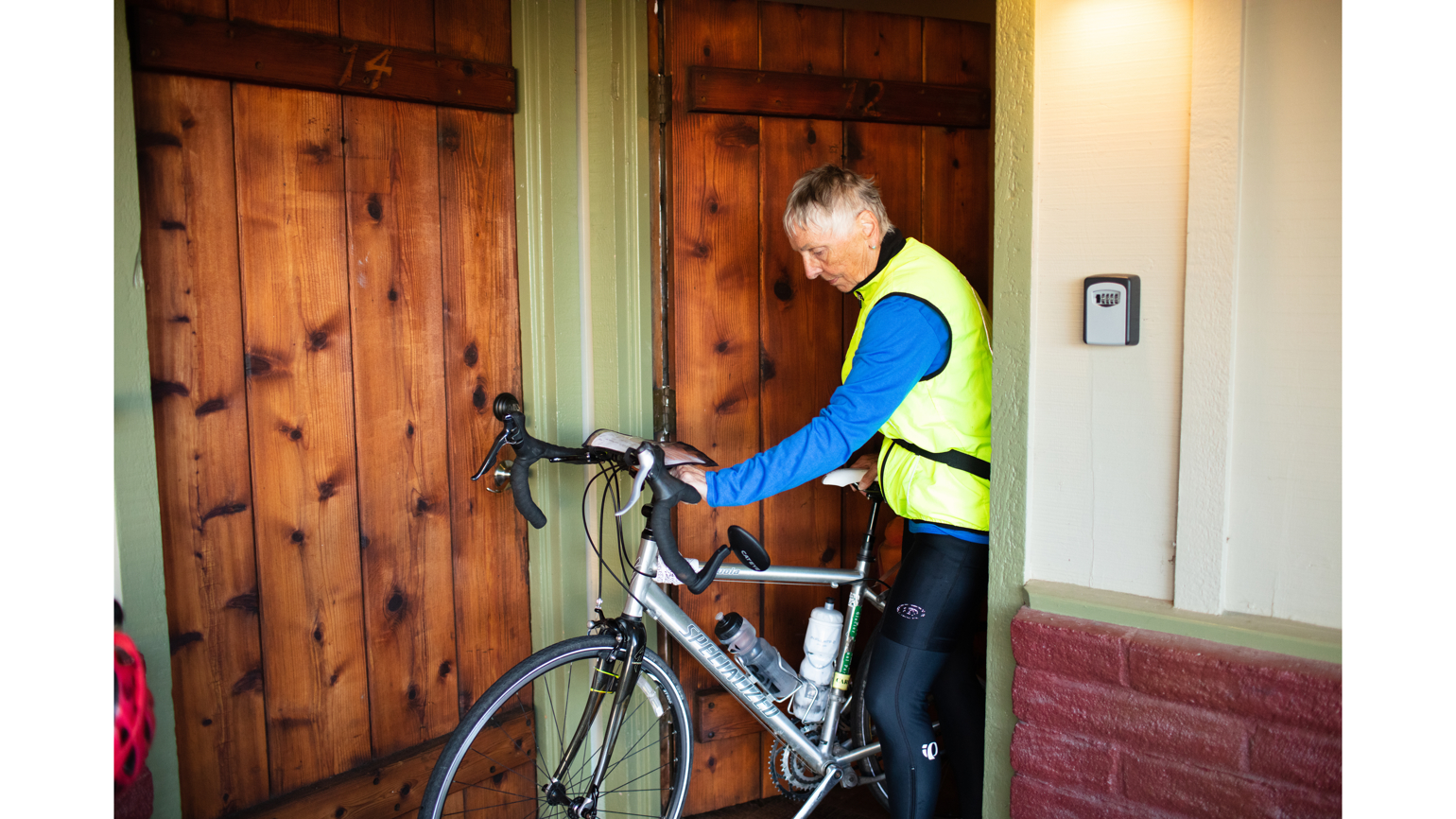
The 77-Year-Old Breast Cancer Survivor Who Biked Across the Country

Carol Zemola Garsee and a group of friends set out to bike from Florida to California in February 2019. She was the oldest woman embarking on the long journey, riding 50 to 80 miles a day for 65 days. Carol shared with Guideposts the highlights of her final riding day in San Diego.

That First Step of Faith

I thought about something today that had never entered my mind before. The word “ear” is part of the word “fear.” Let me explain why I think that’s important…

Have you ever had God place a dream on your heart? Something He wants you to do that’s out of your comfort zone or something so crazy that it seems impossible?

I have, and you know what Satan does to me immediately? He starts whispering in my ear, planting fear and doubts, telling me there’s no way those things will ever happen. Can any of you relate?

You see, if he can plant enough fear in us, it defeats us from accomplishing the tasks God has for us to do. Satan works to get our eyes on the impossibilities of what God’s called us to do instead of on the possibilities of what God can do for and through us.

God has a unique plan for each of our lives, a plan that nobody else can accomplish. My friend McNair Wilson was a Disney Imagineer, and I love what he says, “God put you here to do youand if you don’t do you, who will? If you don’t do you, you won’t get done, and the worldCreationwill be incomplete.”

I don’t want to get to the end of my life and hear God say, “I gave you so many gifts and talents. I had so much I wanted you to do. I would have opened doors for you! I would have equipped you with everything you needed—but you let fear win out and you never took that first step on the journey.”

You know what I think is one of the most important things we can do to reach those dreams God has for us? Take that first step of faith.

Noah took that first step when he started building an ark to survive the floodand they’d never even seen rain. Can you imagine how crazy that must have seemed to everyone? But God had a plan for Noah’s life.

David was just a young lad when he faced Goliath. But he would never have slayed that giant if he hadn’t taken that first step of faith and walked out to face him.

Abraham took that first step of faith when God told him to travel to find his inheritanceand he didn’t even know where he was going. But God said, “Get moving!” and that’s exactly what Abraham did.

When God told Abraham to sacrifice his beloved son, Isaac, Abraham took that step of faith and prepared for the sacrificenot knowing how it would end.

God gave orders to Joshua to march around the city of Jericho for seven days. Imagine how ridiculous that must have looked while they marched for seven days before the walls fell. But it wouldn’t have happened if Joshua hadn’t been obedient and taken those first steps.

It was a step of faith for the Children of Israel to walk into the Red Seabut God provided dry ground for them to walk on.

Shadrack, Meshack, and Abednego had to take a step of faith to walk into that fiery furnacebut by doing so, they got to literally walk with God.

I can only imagine how overwhelmed a young orphan girl felt when God told her to stand before the king and beg for the lives of her people, but the Jewish people were saved because Esther took those steps of faith.

Sweet friends, what has God asked you to do? Does it seem ridiculous? Will everyone think you’re crazy?

The God who calls you to the task will equip you with everything you need to accomplish the task.

Don’t let Satan fill your ear with fear. I challenge you to take that first step of faith today and then watch what God can do!

Behold, I will do a new thing, Now it shall spring forth; Shall you not know it? I will even make a road in the wilderness and rivers in the desert. (Isaiah 43:19)

Thankful for a ‘Dysfunctional’ Thanksgiving

In the weeks leading up to Thanksgiving, I looked toward the holiday with apprehension. The last time I’d spent it with my family was in 2011. Up until this year, I’d lived too far away to make it home. In fact, I hadn’t been to any family gathering for years. I keep up with my extended family through my parents, who inform me of the latest news.

Unfortunately, that news often isn’t very good. My aunts and uncles aren’t getting any younger, so it often has to do with their declining health. This year, I heard that my favorite uncle, my dad’s brother, was getting divorced. He wouldn’t be at our celebration. Furthermore, there was a nearly unresolved dispute over where to have dinner–it’s getting more and more difficult, apparently, to bring everyone to the same place.

Community Newsletter

Get More Inspiration Delivered to Your Inbox


These are the kinds of problems all families face–I certainly don’t think I’m alone. Nonetheless, last week I had built up a narrative in my head in which I was visiting my dysfunctional family, who would not let me return to New York emotionally unscathed.

But the key word here is narrative–a part of these expectations for my Thanksgiving celebration was a fiction. This is why I found my colleague Diana’s recent “Gratitude Challenge” to be so important–it challenges us to choose a happy narrative for our lives in which we see the good and don’t emphasize the bad.

This was also the theme of a recent New York Times editorial, where author Arthur C. Brooks discussed the neuroscience and psychology that has shown how choosing to be grateful, even when it doesn’t seem natural to do so, actually improves our satisfaction with our lives. “This is not just self-improvement hokum,” Brooks writes. “Researchers in one 2003 study randomly assigned one group of study participants to keep a short weekly list of the things they were grateful for, while other groups listed hassles or neutral events. Ten weeks later, the first group enjoyed significantly greater life satisfaction than the others.”

I had all of this in mind as we drove to my aunt’s house Thursday afternoon, though it was still difficult for me to let go of my cynicism. But later that day I got my own gratitude challenge–or, rather, my ingratitude was challenged.

My favorite uncle surprised all of us by walking in with my cousin and my aunt. The three of them were getting along fine despite the divorce. Pretty soon I was yucking it up with all of them just like ages ago.

Later that day my cousin and I sat in the backyard, enjoying the beautiful fall weather. “How is everything?” I said.

My cousin had been through a lot, but he’s the sort who can just go with the flow. “You know, it was difficult at first, but I think it’s good. They can finally pursue what they meant to pursue for a while now.” My uncle was moving to Philadelphia, where he would be closer to his son and have easier access to the music and culture that city has to offer. My aunt had used the money she’d got from selling their house to buy a bed and breakfast, a long-time dream. “I’m happy for them, actually,” my cousin said.

I was happy for them too. There were a lot of negative ways to look at what had happened to my aunt and uncle, but instead of dwelling on a story of doom and gloom, my cousin had chosen one of renewal and affirmation. It’s not unlike what I talked about in my last Mysterious Ways post–sometimes life’s setbacks are not actually setbacks at all, but just unexpected guideposts showing us the way.

Tell us about your Thanksgiving celebration—what surprises made you grateful to be there?

Ann Curry: Telling Stories of Hope

“How do you keep doing what you do?” people ask me all the time.

It’s a good question.

Over the past two years alone, my work for NBC News has taken me to Iraq, Afghanistan, Iran, Pakistan, India, Congo and the edge of Darfur. Why is it I feel driven to cover these stories of human suffering, including Hurricane Katrina and the Southeast Asian tsunami, when it means leaving my husband and two children behind at home

I don’t have to. Anchoring the news on Today and Dateline NBC keeps me busy enough.

To be honest, leaving my family for days—even weeks—at a time is painful. It also hurts to see the degree to which people suffer in parts of the world.

There are days when I wonder if I’m a bit traumatized by it all. But still, when these stories happen, I feel a call, an urgency, to report them because I know I can give voice to those who need to be heard. Not only do they deserve that, but you deserve it too.

Your knowing about what’s happening in the rest of the world gives you a chance to care, and it is that empathy that offers the greatest hope. You see, I believe journalism is an act of faith in the future. That might sound strange in this day and age when so much on TV seems scandalous or frivolous. But then, I am my parents’ child, living lessons that have guided me from the beginning.

My father, Bob Curry, was a career Navy man who enlisted right out of high school. My mother was the daughter of a Japanese rice farmer. Her name was Hiroe.

They met when Dad was stationed in Japan as part of the Allied occupation forces after World War II. The war left my mom’s family without seed to grow their crop, so at 18 she found a job in the city as a streetcar conductor. My dad happened to get on her streetcar one day, and knew he had to see her again. He took that streetcar every day until he worked up the nerve to ask her on a date. They went out for noodles and fell headlong in love.

Back then the Navy frowned on marriages between American servicemen and Japanese women, and shipped my father out before a ceremony could take place. It took two years, but he managed to get sent back to Japan. He told me of taking her into his arms again, only to realize she was extremely thin. It turned out she had tuberculosis and wasn’t expected to live.

He used her healthy sister’s lung X rays to get clearance from Navy doctors, and married her anyway. Now that she was a U.S. military wife, she was able to get the care she needed. She survived to become the mother of five, of which I’m the oldest.

Dad stayed in the Navy for nearly 30 years, and so our family moved often. We lived in Guam, Japan, Hawaii, Virginia, California, until he finally retired in Ashland, Oregon, where I finished high school.

An enlisted man’s salary didn’t go far when there were five kids to raise. My parents couldn’t give us much in the way of material possessions, but they made sure we knew the importance of family and honor, character and love.

Mom was the embodiment of perseverance in the face of adversity. She’d endured bombing raids and starvation during the war, TB during the occupation and racism when she came to the U.S. At that time it was hard for people to accept her.

“Gambaru,” she used to tell me, which is Japanese for “Never ever give up, even and especially when there’s no chance of winning.” She’d been raised Buddhist, but when she needed spiritual sustenance in America, she couldn’t find a temple. She finally found the Catholic church.

She didn’t know a word of Latin and her English wasn’t good either, but that didn’t stop her. She felt close to God in church, and that’s what mattered. Besides, she had me to tell her when to stand, kneel or sit during the service.

Life as a mixed-race child in a poor family wasn’t easy. “Ann, this is good for you,” Dad would say when I complained. “Trials and tribulations make you stronger.”

He got tired of hearing all five of his kids whine. One day he announced, “The next person who says, ‘That’s not fair’ is going to drop and do ten push-ups. I don’t care where we are.” Doing 10 on the sidewalk in front of a bunch of people? We did it, and learned quickly whining didn’t accomplish anything.

That might not have meant so much if it weren’t for one time we got on a bus. It was crowded and the five of us jumped into empty seats before Dad could get one. “That’s not fair,” he said. We looked at him. Without another word, he dropped down in the aisle and did 10 push-ups! To see our father be true to his word was a great lesson in character.

When I got older, Dad and I would have dinner-table debates about the Vietnam War. I was a teenager deeply affected by Walter Cronkite’s reports on the war and I questioned our country’s role. Sometimes our discussions got so heated, my siblings would pick up their plates and leave the table.

“I don’t always agree with you,” Dad would say at the end, “but I’d still vote for you for president.” I knew he was proud of me for caring about something bigger, something beyond my day-to-day high school life. It tied in to what he was always telling me, “Do something of service, Ann. So that at the end of your days, you’ll know your time here mattered.”

I decided the best way to do that was to be a journalist. He respected my choice, and a girl could not have asked for a greater cheerleader than I had in my dad.

My father and I were the first in our family to go to college, and we went at the same time. He was on the GI bill. I got a few small scholarships and did all kinds of work to pay my way through the University of Oregon—bookstore clerk, sandwich maker, hotel maid.

I got a job as an intern at KTVL, the local TV station, but when I applied to be a reporter, the producer told me there’d never been a woman reporter in the newsroom because women didn’t have news judgment. Do you think the daughter of Hiroe and Bob Curry would let that dissuade her? Of course not. I convinced him to give me a chance.

I became the station’s first woman reporter. When I left for a bigger city, that producer called me and said I should never let anything he told me stop me from my dreams.

Eventually I got to Los Angeles, where I covered big breaking stories, but the one I remember most was about a boy who was born with his thumb fused to his hand. He was miserable because kids made fun of him, but his parents were poor immigrants who couldn’t afford surgery.

A nurse caught the story on TV, talked to a surgeon and they arranged for the boy to have the operation free. His family invited me to the recovery room. The boy proudly held up his hand and said, “Thank you.” At that moment, I understood why my father pushed me to use my talents to serve others. I felt an incredible sense of fulfillment knowing one small thing I did helped make a difference in someone else’s life.

I joined NBC News in the 1990s, and found myself drawn to telling stories of people who might otherwise not be heard. Interestingly enough, what some might consider a big professional disappointment—not being named cohost of Today when Katie Couric left—has only clarified my mission. I would’ve loved that job, but not getting it made me think, What is it I need to be doing?

The answer was clear: humanitarian reporting—finding those who are suffering far from the eyes of the world and getting their stories out, making people care about them. That’s what brings me back to places like Congo. Most people don’t realize it is the site of the deadliest conflict since World War II. The fighting and war crimes against civilians challenge every definition of decency. Thousands die every month from malnutrition and disease.

Yet even in this place of suffering, it is possible to find hope. I’ll never forget Sifa, an 18-year-old Congolese woman I met in February 2008. I talked to her in the hospital. What she told me made me weep. Her parents were killed in front of her. She ran, but the killers caught her, chained her to a tree and raped her. She became pregnant; when the baby came, everything inside her broke. “Do you want revenge?” I asked.

She said, “No, all I want is to rise from this bed, thank the people who helped me and work for God.”

Almost without thinking, my fingers went to my necklace. It had a little gold charm, the Sanskrit symbol for peace. Peace was my prayer for her and her country. I took the necklace off and clasped it around her neck. For her dignity I walked out of the room without looking back. But my producer was watching. He said she raised her head in a little bow.

How do I keep doing what I do? I believe in people like Sifa, who can teach us all about resilience. And I believe in you. I know you special souls will care about people like her, who have no one to protect them.

I have faith that once you hear about someone’s suffering—even someone whose language you can’t speak, whose customs you don’t share—you will care enough to help.

Read more about Ann’s humanitarian reporting.

For more inspiring stories, subscribe to Guideposts magazine.

Techniques To Cut Down on Messy Eating for People with Alzheimer’s

This article is based on information provided by Home Instead Senior Care.

Dementia can make it hard for your loved one to manipulate utensils, cups, glasses and dishes. He or she may have developed messy eating habits as a result of various factors related to the condition. Among the possible causes are loss of control and attentiveness and diminished attention to hygiene and self-care.

The following tips may help you to have more manageable mealtimes with your loved one:

· Minimize expectations and try not to focus too much on the person who is eating messily.

· Put down a vinyl tablecloth, which can be cleaned off after each use, or paper placemats which can be tossed away.

· Put a napkin in his or her lap before eating.

· Cut up foods prior to serving them.

· Avoid “risky” foods, such as sauces and condiments (mustard, ketchup, mayo). Put seasonings on the dishes before presenting the meal.

· Hand your loved one a “spork,” a combination spoon-fork often sold in camping stores.

· Offer finger foods that don’t require utensils. You could try chicken nuggets, little meatballs, pizza rolls, mozzarella sticks, sandwiches cut into quarters.

· At the beginning of the meal, offer the finger-foods all around, so that your loved one doesn’t feel singled out.

· If you’re having soup, put it in a mug, rather than a bowl, and let it cool a bit first.

· Put food on unbreakable dishes or heavy ironstone that’s less apt to slide around.

· Use plastic cups instead of glass or ceramic ones.

· Present only one or two foods at a time.

· Serve liquids in a cup with a spout (available in some hospital-supply stores), or pour only a small amount at a time into a small cup.

· If your loved one has a blunder (a spilled cup of soup), don’t shame or blame. You could casually say, “Oh, Mom, that soup is so messy, let me just dab it off you.”

· Keep clothing clean by washing out stains at night, since people with Alzheimer’s are prone to wearing the same items repeatedly.

Learn more about our Terms of Service

Tapping into Our God-Given Potential

Human beings have more power, more strength and more capacity than they will ever use in their lifetimes. We have inner resources, enormous possibilities and natural gifts to achieve greatness within our lives.

Best selling author Brian Tracy writes, “The potential of the average person is like a huge ocean un-sailed, a new continent unexplored, a world of possibilities waiting to be released and channeled toward some great good.”

One of the most important factors in reaching our potential in life is our self-esteem–the value judgment of you. Nathaniel Branden, a psychiatrist and expert on the subject of self-esteem says, “No factor is more important in people’s psychological development and motivation than the value judgments they make about themselves.”

Do you believe in your potential?

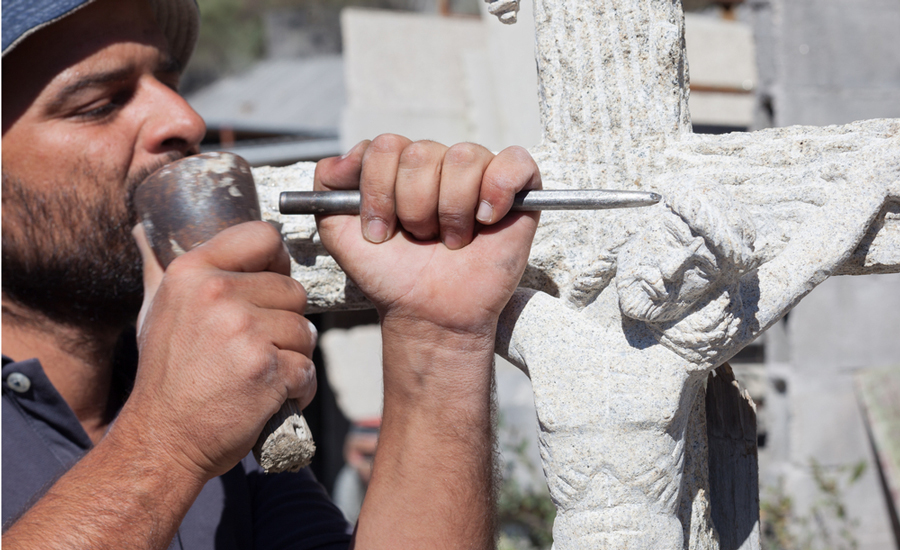
Christensen and Rebecca J. Laird in their book, Spiritual Direction: Wisdom for the Long Walk of Faith, tell a story about a sculptor and a young boy:

“There was once a sculptor who worked hard with hammer and chisel on a large block of marble. A little child who was watching him saw nothing more than large and small pieces of stone falling away left and right. He had no idea what was happening. But when the boy returned to the studio a few weeks later, he saw, to his surprise, a large, powerful lion sitting in the place where the marble had stood.

With great excitement, the boy ran to the sculptor and said, ‘Sir, tell me, how did you know there was a lion in the marble?’ ‘I knew there was a lion in the marble because before I saw the lion in the marble, I saw him in my own heart. The secret is that it was the lion in my heart that recognized the lion in the marble.’”

Until we change the way see ourselves, our potential remains buried underneath layers of self-doubt.

When we have a humble but healthy confidence in the gifts that God has placed within us, the person God created comes alive. When God gets hold of us, we begin to see our potential in a different way…we understand our gifts are to be used to honor God.

What gifts and talents has God given you? What holds you back from maximizing your potential? Share your story with us.

Lord, help us to discover the depth of our potential that is waiting to be released for a greater good. Give us greater confidence in our God-given talents and gifts, that we may honor You with them.

Talking with Love and Understanding About Suicide

NOTE: We are saddened to announce that Edward Grinnan’s wife, singer and actress Julee Cruise, passed away on June 9.

The morning after my wife, Julee, died, I awoke past 11 am. I’d slept through two alarms and several phone calls. I felt panicky. I hadn’t slept that late since my freshman year of college, and there was so much to be done. How could I? Then I let myself smile a little bit. Julee always admonished me that I didn’t get enough sleep. I think she was making a point.

Photo by M. Sharkey
Edward and Julee with Gracie

I noticed on my phone there were already several news alerts about her death from Rolling Stone, the New York Post and The Guardian. All attributed her death to a long battle with lupus. She’d recently announced on her website that lupus would bring an end to her performing career. There was also a message from the obituary editor at The New York Times asking me to contact him. I fed poor hungry Gracie then called, taking a deep breath and telling myself not to cry. Keep it together. Julee hated it when I cried.

We talked about a few basic details—hometown, date of birth, etc.—then he said, “She died of lupus, I understand.”

I paused. “Yes, she had lupus since college.”

“You don’t have to list a cause of death, if you’d rather not.”

“Lupus had made her life very hard, especially lately.”

“I can understand that. It’s up to you, of course.”

“Julee took her own life.”

Pause.

“The cause of death was suicide then. I’m so sorry.”

“She’d struggled with depression, like so many people. Lupus made it worse. But I want to be honest. She took her own life. It happens in so many families. It comes with so much shame.”

We left it at that. Immediately I second-guessed myself. Is this what Julee would have wanted? Painfully, I decided it was. She always urged me to write honestly about my own life and struggles no matter where it took me. She would want me to bring that same openness about her life. Her brother committed suicide almost 11 years ago to the day, and I remember her saying how sad it was that people didn’t talk about it, didn’t celebrate his life the way they might have if he’d died of a heart attack or old age. There is so much shame attached to dying by suicide. It’s the only form of death that is a decision. Yet so many families have had to deal with it, often in silence, in anger, without help to understand it, without closure and acceptance and proper mourning. There were more than 45,000 suicides in 2021, the twelfth leading cause of death in the U.S.

It was Julee’s decision how she wanted to die, that she did not want to go on living with the pain she was carrying. I know she was at peace with God. She would not have done it otherwise. How she died will become a matter of public record, and I felt ashamed not being honest about that. It seemed disrespectful to all those families who have struggled with the suicide of a loved one to cover up how my wife’s life ended. Those deaths often leave so many questions, questions we are not always allowed to ask and are sometimes afraid to ask.

It breaks my heart more than I can say that she is gone. We were married for 38 years. I still find myself talking to her. I probably always will. But I will never tell her what she did was wrong. I will never question her decision. She talked so much lately about wanting to be with her family in heaven, including the dogs she loved so deeply, whom she believed were waiting for her. She told me to take good care of Gracie, and she could love us just as much from heaven as from earth. I believe that. And yes, Jules, I’ll try to get more sleep. See you in my dreams.

Here are some resources for suicide loss survivors:

American Foundation for Suicide Prevention

Alliance of Hope for Suicide Loss Survivors

National Suicide Prevention Lifeline

Talking About His Depression Helped His Family and Others

Note: This story contains descriptions of attempted suicide.

That Sunday my wife, Trish, had gone to Mass without me as usual. As much as I wanted our marriage, our family, to be close again, I still couldn’t bring myself to go back to church regularly. Not after everything that had happened.

On her way home, Trish had picked up The Philadelphia Inquirer. I sat at the kitchen table with her and glanced at the front page. January 20, 2008. The presidential primaries were in full swing; the country was in a recession.

My concerns were closer to home. A year earlier, I’d moved back in, after being separated from Trish for five years. I was grateful to be home again, but there still seemed to be a barrier between me and my wife and our children. After all we’d been through—all I’d put them through—I wanted to put the past behind us. How else would we be able to move on with our lives?

BROWSE OUR SELECTION OF BOOKS ON CHRISTIAN LIVING

A headline caught my eye: “After leap breaks body, a miracle renews spirit.” The story was about Jordan Burnham, an 18-year-old in the next town over. He’d had everything going for him—athletic, popular, elected to the homecoming court. But he had struggled with depression and, that past September, jumped from the ninth floor of an apartment building. And survived.

It was as if I were reading my own story, only I was nowhere near as brave as this young man.

The trouble for me had started in the waning months of 1998. I was a senior financial analyst at Bristol-Myers Squibb, the pharmaceutical giant. My boss called me into her office and told me, “You’re probably going to be let go. The whole department may shut down.” I knew how bleak the financials were. That was my job—projecting sales trends, doing cost analyses. Information to be shared only with company VPs. I was a good employee. I kept those secrets.

But the weight of what I knew hung over me. I was the provider. Trish was a stay-at-home mom. Our four kids, ages nine to 16, were in Catholic school. If I lost my job, we wouldn’t be able to pay their tuition, the mortgage, car payments, our other bills. What kind of man couldn’t take care of his family? I worked even harder, nights, weekends. There had been times I felt down, not good enough, in the past. I’d always managed to push through them. But I couldn’t push through this. The stress ate at me. I couldn’t sleep. I had no appetite and lost 60 pounds. My blood pressure was off the charts. I had debilitating headaches.

My family doctor prescribed anti-anxiety medication. I didn’t like the side effects and stopped taking it. I saw a neurologist and a cardiologist. They couldn’t figure out what was wrong. I went to church with Trish and the kids every Sunday, prayed for healing every night. No answers from God either.

By early 1999, the pressure was overwhelming. One April morning, I was driving to work, my head throbbing, dreading another long day at my desk. This needs to end, I thought. I’d stopped praying by then. Obviously, my life meant nothing to God. I’d been a fool to think it ever had.

Bible Verses for Depression

I pulled over, the engine still running. I got out and put my mouth to the tailpipe, trying to inhale carbon monoxide. Minutes passed. Nothing happened. Loser. Can’t do anything right.

I went home and told Trish. She took me straight to the hospital. They kept me overnight and discharged me the next morning with a referral to outpatient therapy. I didn’t understand why. My problems were physical, not mental.

That night I couldn’t stay still. I paced the house, my heart racing. Trish found me passed out.

I was admitted to the hospital again, to the cardiology unit on the third floor. Trying to cheer me up, Trish brought me photos of our family in happier times. The pictures only reminded me those days were long gone. Trish can’t help me. The doctors can’t help me. Nobody can help me.

Trish stepped out to call her mom. My eyes went to the open window. There was only one release from my suffering. This time I’d do it right.

I went to the window, opened it all the way. I stood on the sill for a moment, leaned toward the opening. Then I flung myself out. Headfirst.

The ground flew up to meet me. A thunderous crash. Screaming pain. Everything went black.

I woke up in the psychiatric ward, my wrists in restraints. Trish sat at my bedside. “Your legs were shattered,” she said. “It’s a miracle you’re alive.”

I looked down at my legs—held in place by metal frames and screws— then back at Trish. Her eyes were shadowed. How was this a miracle? I’d wanted to escape pain, not inflict it on my wife. Shame filled me.

“I didn’t mean to hurt you,” I said. “Please don’t tell anyone I tried to…” I couldn’t even say the word suicide.

Trish nodded. “I wouldn’t want people talking about our family, judging us,” she said.

A psychiatrist met with me that afternoon. “You are clinically depressed,” he said. “It’s different from being sad. There’s a chemical imbalance in your brain. The medication I’ve prescribed will help, but there are things you’ll need to work through. How you perceive yourself. How you deal with stress.”

After five weeks, I went home. I wasn’t able to walk, so Trish had set up a bed for me in our living room. The antidepressant made a difference. I was sleeping and eating. But I was far from healed. I got frustrated by my slow progress in physical therapy and psychotherapy, and I grew irritable with my family.

Trish had to take care of everything—the kids, the house, the bills. And me. I wish I could say I saw the toll it was taking on her, but I was too caught up in my own issues. One of which was keeping my suicide attempt under wraps.

Only our two oldest kids and a few close relatives and friends knew the truth, and they were sworn to secrecy. If anyone asked, we told them I’d been in a car accident. Or that I’d fallen down the stairs. I didn’t want people labeling me as mentally ill, so I didn’t say more, not even to my wife and children.

Trish urged that we go to counseling as a family. Absolutely not, I told her. I had no interest in reliving my depression, my pain. I just wanted to pretend I’d never attempted suicide.

Trish joined a support group. She went to church every day and saw a therapist. One night she told me, “My therapist thinks we should live apart. I’ve thought and prayed about it, and I agree. I need time and space to heal and be a healthy parent to our kids.”

I hated to leave, but part of me knew it was for the best. I moved into my late father’s apartment. I’d gone on disability, and I knew I couldn’t go back to corporate life. When I was able to walk and drive again, I got a job at Jos. A. Bank, selling men’s clothing.

What Trish had said about being a healthy parent struck a chord. I continued with therapy and came to realize I’d had depressive tendencies all my life; fear of losing my job had amplified them. I’d always been prone to seizing on the worst possible outcome. So I began reading books about managing negative thoughts and emotions. I practiced mindfulness meditation. I didn’t pray or return to church. I was still angry at God for letting me suffer. I saw the kids on weekends; we had fun together. I thought I was doing well.

One day in 2006, Trish wanted to talk about our youngest, our son, who’d just turned 16. “He misses you so much,” she said. “He needs a dad at home.”

I moved back in two days later. In my mind, I thought Trish was telling me she was ready for us to be husband and wife again. Not quite. One day not long after I’d returned home, we walked to a riverbank where she liked to sit and pray. It was a peaceful, beautiful setting. I put my arm around Trish, but she pulled away.

“John, we’ve never talked about what happened. And we need to.”

I sighed. “I can’t.”

I really couldn’t. As if some force were keeping me from opening up.

Until I saw that newspaper article about Jordan Burnham. He was so honest about his depression and about wanting to kill himself. Jordan’s parents and sister were equally honest about their pain and lack of understanding.

I understood exactly what Jordan had gone through. My story could have helped him. If only I’d been willing to share it. If only I hadn’t let fear and shame close me off from the people I love, from the God who loves me so much he saved my life, even when I didn’t believe it was worth living.

“I don’t want one more family to go through this!” I said.

Trish looked over at me. “Go through what?” she asked.

I showed her the article. “Can we have dinner together tonight, the six of us?” I said. “There’s something I need to talk about.”

Trish squeezed my hand. “Not just you,” she said. “It’s what we all need.”

That night, for the first time, I talked to Trish and our kids about my depression, how ending my life had seemed like my only option, what I’d learned through therapy. They talked about how my suicide attempt had affected them. There would be many more conversations, but it was a start. Already the barrier between us was crumbling.

“I’d like us to write a book,” I said. “With all of our perspectives. And I want to speak out. I want people to know the truth about depression and suicide. That there’s nothing to be ashamed of.”

The next week, Trish arranged for our family to speak at a synagogue. It was difficult for all of us; much of what we said, we’d never expressed before. Yet it was also freeing and invigorating.

Afterward, people crowded around to tell us their stories. Since then I’ve given speeches at churches, synagogues, schools, civic groups. I even met Jordan Burnham at a talk and told him what a difference he’d made in my life. He showed me that when we open up and share our pain, we open ourselves to God’s healing love.

For more inspiring stories, subscribe to Guideposts magazine.

Take Time to Look Heavenward

That evening it rained buckets. So much that my basement started leaking.

“When it rains it pours,” I muttered, running around with rags and a mop. “What more can go wrong?” A sick friend, an upsetting e-mail and now this.

We could afford to repair the water damage, but who needs an unplanned expense, especially in this economy? And where would I find the time?

All night I tossed and turned, going over my list of woes. In the morning I had one more to add to it: lack of sleep.

I run my own interior design business and had a meeting with a client across town. I headed out early. I didn’t want to get stuck in traffic. I was stressed enough already.

I was just about to pass our midtown park when something made me pull in. I had a little time before my meeting. Maybe a walk would settle me down.

I took the path to the rose garden and sank onto a bench. Why wasn’t I feeling any better? Just then I heard a still small voice urge, Look up.

I lifted my head and saw the hills in the distance perfectly framed by a big stone arch. Fluffy clouds scudded across a brilliant blue sky. It was a glorious day, and I hadn’t even noticed.

I looked around some more. The roses were even lovelier than usual, glistening with raindrops from the night before, and the grass was a lush carpet of green rolling out to the trees.

What else had I missed because I’d been so focused on the negative? I thought of the good things in my life, a list that went on far longer than my woes.

Time to leave for my meeting, but before I did, I said a prayer of thanks to the One from whom all blessings flow.

Was there some way I could keep the wonder of this sunlit morning with me? If I could just paint it…

Which is exactly what I did, on the ceiling in my workroom. I felt a bit like a modern-day Michelangelo doing the Sistine Chapel.

Of course, it was way easier than that (you can do it yourself!). Now on the grayest mornings, all I have to do to find blue skies is look up.

Check out Kelee’s step-by-step instructions for bringing a little blue sky into your own home.

Did you enjoy this story? Subscribe to Guideposts magazine.

Take Control of Your Health

Pastor and personal trainer Kahlil Carmichael states, “Health is our wealth.” The Scripture reads, “Do you not know that your bodies are temples of the Holy Spirit, who is in you, whom you have received from God? You are not your own.”

This text challenges us to reflect upon our role in caring for our bodies. And there isn’t a better time of the year than now to take control of our health.

One’s health is extremely important, especially as we age. I confess there are some days when I’m better about caring for my health than others.

Today, I couldn’t stay away from the fried fish in the cafeteria. It wasn’t good for me, but boy was it tasty. And after savoring every bite, I was then on the search for something sweet, like a squirrel looking for food. Afterward, I didn’t feel good about my choices.

READ MORE LIVING LONGER, LIVING BETTER STORIES

When I went back to my office, I referred to an e-booklet titled Living Longer, Living Better: Body, Mind and Spirit written by Carmichael. It’s a resource provided by Guideposts that reminds us of the importance of taking care of our bodies, renewing our minds and staying connected to the Spirit living inside of us.

Kahlil writes, “Our bodies are actually the dwelling place of our spirit. Just as we take great care of our beautiful homes, and houses of worship, we must aspire to take care of our bodies, this blessing we have been entrusted with.”

And if we have neglected our bodies, he reminds us “each daily healthy choice puts a deposit in our wellness bank.” I highly recommend this booklet, and if you are interested, you can download it here.

Making healthy choices daily is important and often easier said than done. But our health can’t be taken for granted.

Yes, even when we do our best to care for ourselves, health issues may arise for reasons beyond our control. No one lives forever, but we can find ways to live healthier. In doing so, we enhance our quality of life and honor the gift entrusted to us by God. How do you care for your health?

Lord, give us the wisdom and discipline to make healthy choices daily; help us be good stewards of our body, mind and spirit.

SXSW Doc ‘Take Your Pills’ Explores a Different Drug Crisis

Take Your Pills, a new documentary on the ongoing drug epidemic, premiered at the South by Southwest Film Festival last week and is currently streaming on Netflix. Directed by Alison Klayman and produced by Maria Shriver and her daughter Christina Schwarzenegger, this documentary sheds light on one of the most commonly used and abused drugs in the United States: Adderall.

Adderall is an amphetamine that’s been around for decades. It was once used as a nasal decongestant, a weight loss pill, an energy enhancer, and, most recently, as a way to help children and adults living with Attention Deficit Disorder or ADD.

When a person uses a stimulant like Adderall, the effects can be almost euphoric. They’re able to retain information, feel energized and inspired, and concentrate on one thing for hours at a time – all reasons why college students, in particular, are drawn to use and abuse the drug.

Schwarzenegger was one of those students. She was diagnosed with ADD as a child and briefly took Adderall in high school before stopping because of the side effects she experienced. When she headed off to Georgetown University, she struggled to keep up with the rigorous academic course load and began using the drug again. After graduating from college in 2013, she found herself reeling from her transition off of Adderall. Her personal experience led her to help produce this documentary. She went to her mom with the idea, hoping to get her help with the project. After a bit of researching, Shriver was so surprised by how prevalent use of the drug was in not only on college campuses but in the workplace that she and Schwarzenegger approached Netflix with the idea for a film that would hopefully draw this problem out of the shadows.

“I had an identity crisis,” Schwarzenegger says of quitting Adderall. “You go from being your best self while taking it, you become addicted to it and then going off it, you have to confront a different reality and try to figure out who you are as a person. These are common experiences that I’ve heard from my friends who have taken the same drug.”

But students aren’t the only ones abusing the drug. The documentary interviews professional athletes, music executives, artists, and a coder from Google who all admit to using amphetamines to get ahead in their respective fields. What drives people to this addiction may be a reflection of American culture.

“This story isn’t new,” Shriver says. “It’s an epidemic in our country but it’s also quite particular to our country and to this time.”

“Everybody’s taking it to get ahead and to stay ahead,” Shriver says. “The startup culture, Wall Street, the military, colleges, you name it. People are being asked to work, really, 24/7. They’re being asked to perform 24/7 and they are taking this highly addictive drug in order to keep up. So something that was originally started to help kids with learning disabilities has now ballooned into almost the drug of choice for Americans.”

“This is a drug that promotes something that we all want, right? To succeed, to get an edge,” Klayman says. “I think that’s something that we all strive for, but at what cost?”

The physical effects of using Adderall long term can be debilitating. Mood swings, suicidal thoughts, heart disease, liver problems, they can all pop up with little warning in someone who abuses the drug.

These consequences can be exacerbated by the reality that Adderall abuse can lead to abuse of even more drugs.

“One thing that I learned from making the film is that this is a cycle of abuse,” Klayman explains. “When you take uppers, you need downers, right? I think whether it’s happening within the same person or in society at large, if you’re taking something that’s bringing you down, you also might be taking something to keep up function. I think it would just be naïve, it would be wrong to say these are exactly the same issue but also, it would be wrong to say that they’re totally separate issues.”

Take Your Pills also tackles the stigma and the inequality that’s still prevalent in the addiction space. Why, for instance, do people look down on meth users but seem to shrug off the abuse of amphetamines when the main difference between the two drugs is how they’re processed by the body? Both are stimulants, both act on the central nervous system, and both produce euphoric highs, but meth acts quicker and can become more addicting as a result.

Still, as the film proves, when we think of meth users and people who abuse a drug like Adderall, we picture very different groups of people. Just like how the crack epidemic was met with criminalization, whereas today’s opioid epidemic is being treated as a health care concern, the race and class of the addicts are just two factors that explain the difference in treatment addicts receive.

“We live in an incredibly unfair and unequal society,” Klayman says. “Drugs are just another part of that.”

Shriver, Schwarzenegger, and Klayman hope that their documentary can become a resource for those suffering with addiction and draw attention to a problem that still largely lives in the shadow of America’s arguably more well-known opioid epidemic.

“We live in a judgmental society,” Shriver says. “And we judge people by their weight, by their skin color, by their gender, and by the drugs they take. So this is an informative documentary. It’s inspiring, I think. It’s sparking a needed conversation.”

Balancing Act

I raced through the kitchen, practically tripping over my briefcase. “Karen! You forgot to take your lunch!” I shouted after my eight-year-old daughter who was already halfway to the school bus.

Kelly, 11, came tearing behind both of us, books spilling out of her unzipped backpack, and snatched Karen’s lunch out of my hand. “Don’t forget about my basketball game tonight, Mom,” she called over her shoulder as she adjusted her pack on the run. Oh, my gosh, I had forgotten!

My husband, Mike, was in a new job and wouldn’t be home till late, so I’d have to leave work early, rush to Karen’s talent show dress rehearsal—then somehow fit in Kelly’s game, dinner and my own homework.

My goal had always been to get a doctorate, and since my company paid most of the tuition, Mike and I had agreed I should go for it.

But at the moment all I felt like going for were two aspirin and another six hours of sleep. “Bye, girls, have a good day,” I called to them.

How long had it been since I’d had a good day? I was rushing around from early morning until late at night. I felt I was snapping under the stress.

I’d been raised to be achievement oriented. My dad worked in the retail business, my mom for the school system. My parents always exhorted the five of us kids to take risks. Try new things. Be the best you can be, and trust God to give you guidance.

I had worked hard, and was proud of my accomplishments.

I was a director in a Fortune 500 company, handling external affairs for a prominent regional telecommunications firm. I’d married Mike a few years after college, and from the beginning we’d agreed to be a two-career family.

Now we had two wonderful, high-energy daughters and lived in a nice neighborhood. Our lifestyle was anything but lavish. Like many families, it was dependent on two incomes.

That’s why I was uneasy as I arrived at my office that day. The company was in the middle of another downsizing, and over the past few months nearly a third of the director positions in my department had been transferred or eliminated, with more cuts to come.

In fact, I had been reading the classified ads for weeks to see what else was out there.

I spent the rest of the workday at maximum efficiency, barely talking to anybody unless it was necessary for a project I was trying to get done. At 5 p.m. I hurried off to Karen’s talent show, then whisked her to Kelly’s basketball game.

When we arrived home, Mike made us all macaroni and cheese, then the girls and I hit the books.

After I finally fell into bed, I told my husband the latest goings-on in the office. “Mike, more people are being transferred or let go,” I said. “I want to hang on, but I hate to think of being moved to another department. I love the work I’m doing.”

“Kerry, we really need your job.” Mike said quietly. An engineer, Mike had been laid off just before Christmas. He’d found a job in January, but it was now April and his position was still precarious due to the economy.

“You are our safety net for income and benefits. If your job is eliminated, you have to find another one.”

I sighed and quickly changed the topic: “I’m still concerned about Karen.” For a month now, our younger daughter had started following me around the house asking me to stay home. I’d discussed my concerns with a friend who felt that Karen needed Mike and me to spend more time with her.

“I’m worried too,” Mike admitted. “But I’m in a brand-new job. It requires travel. Is there any way for you to work something out with your schedule?”

How could I find more time in my schedule? I scrunched my head down in my pillow, trying to quiet the thoughts racing in my mind.

The next morning I was back at work, staring at the piles of paper on my desk. The inbox was full—again. My e-mail was filled with messages, many marked urgent, and I had five meetings scheduled.

As I was wondering where to begin, I was called to my boss’s office. Now it’s my turn to get the bad news…

“Kerry,” he announced, “You’re not being laid off, even though we have to eliminate your position. I’ve canvassed our other departments, and found out there’s an opening for you to be the regional vice president of our service clubs.” He stopped to let the words sink in.

“Of course,” he continued, “you will be helping them with their service projects all over the 13-state area. It’s a lot of night and weekend work. But it is a two-level promotion.” He beamed. “So…you can start in a few weeks.”

My mind reeled. “This offer is kind of a shock,” I replied. “I need to discuss it with my husband and get back to you.”

My boss looked startled. “You know I don’t have anything else in the wings for you, don’t you?” he said. “You shouldn’t pass up an opportunity like this…” his voice trailed off. “I’ll need an answer fast—first thing in the morning.”

I went back to my office, shut the door, and cried. Who would have thought the offer of a double promotion could reduce a person to tears?

That night, Mike and I lay in bed discussing all the options. We agreed the promotion for me was out. Both of us couldn’t travel and raise our children the way we wanted.

However, if the promotion was out, what was in? When I delivered the no to my boss the next day, what else could I suggest? If I didn’t nail something down, I’d probably be laid off. I’d lose my salary, our family’s benefits, my tuition.

I’d have to find a completely new job—but that would mean long hours climbing a steep learning curve just when I needed to be home more for Karen.

Our questions circled like a hamster on a wheel, spinning around and around, but never going anywhere. We just didn’t have answers.

Mike finally fell asleep around 3 a.m. I stayed awake, praying. God, I know you have a plan for me. But how do I make time for my daughters and keep the family afloat? God, what can I do? I have so many commitments. I feel like I’m being torn apart!

I tossed. I turned. I prayed. And then in my mind the words came to me. Stop rushing madly. There are different ways to do things, new ways. I remembered the Bible story in which Jesus talked about how you can’t put new wine into old wineskins.

Was that what I was trying to do? To fit all the parts of my life into the same frenzied pattern instead of being open to new possibilities?

The next morning, I stepped onto the elevator going up to my office and nodded at the woman who entered after me. Ordinarily I was so preoccupied that I wouldn’t have gotten into a conversation. But that day I was reminded: Be open to new possibilities.

I looked at her and smiled. “How are things going in your department?” I asked.

“Lots of changes,” she said. She was in the small-business department and told me about several people who had left. “And Donna Skubis-Pearce is looking for someone to share her job,” she said. We chatted until I reached my floor.

I walked toward my office. I thought, Share a job? Do people do that? Usually I would have tossed away that tidbit of information like a piece of scrap paper into the waste basket. But for some reason the idea remained and glowed like an ember.

Job sharing? I’d heard it mentioned before in the company. But what did it entail?

I dropped my briefcase beside my desk and before even taking off my jacket I dialed a friend in Human Resources. “Actually, a lot of companies are allowing job sharing now,” she told me.

She explained that meant my partner would work half a week, and I’d work the other half—for half the salary, of course, and with pro-rated benefits and tuition.

“A lot depends on the partners’ compatibility and how flexible they are in working out the details,” my friend explained. I remembered one time when Donna and I had teamed up on a project, it had worked out well. “It’s an option worth considering.”

I called Mike and although he didn’t relish the loss of half my income, he did agree job sharing had a lot of positives. After all, when I was off from work and the girls were in school, I could take classes and go to the library. When Karen was home, I could spend most of my free time with her.

After Mike and I hung up, I dialed Donna. It turned out she and I were at the same job level. After a few minutes of conversation about our career and personal goals, I sensed we’d be compatible. “I think we’d make a good team,” Donna agreed. “Let me see what my boss says.”

I held the line—and my breath—until she returned. “She says it’s okay to give it a try,” Donna declared, elated. “Let’s have lunch to map out how we would handle our responsibilities and then go talk to Human Resources.”

I went back to my boss, thanked him for the promotion, and explained why I’d decided I couldn’t take it. Donna and I started job sharing.

Later that month, once we learned how to share our work with each other and established a productive and comfortable routine, I was able to gear down and spend more time with the kids. Karen felt more secure. And I came up with an idea for my doctoral dissertation—job sharing!

The job share guide I put together in that process has since helped many others find a way to balance their work and home lives.

Five years have passed, Donna’s moved on to her own consulting business and I’m now job sharing with Susan Rhode. Job sharing turned out to be a realistic and satisfying way of rearranging my life.

The solution I’d searched for finally came about when I stopped rushing around and picked up my messages from God: There are always new ways to do old things. Be open to them.

Download your FREE ebook, A Prayer for Every Need, by Dr. Norman Vincent Peale.