

Embrace God's truth with our new book, The Lies that Bind

Surprised by a God-Given Miracle of Memory

“Hi, Mom, how are you doing?” I said, dropping my bags.

My mother glanced at the aide that was straightening her pillows and said, hesitantly, “My youngest.”

“Yes, I know,” the aide said. “He came all the way from New York.” She nodded at me and moved on to the next room at the memory care unit back in Michigan where Mom had lived for the last couple of years as her Alzheimer’s inevitably worsened, her once-sharp mind and memory dimming.

I had a feeling she was searching for my name but remembered even now that I was her youngest, a surprise late-in-life baby. Years before memory issues set in, she had the technique of calling out all the names of my siblings (and sometimes the dog) before getting to mine: “Joe, Mary Lou, Bobby, Pete (the dog), ED!”

Mom pointed to a chair by a window that looked out on the birdfeeder we brought from her yard—along with the companion St. Francis Statue—when we moved her to Claussen Manor. I rose to help her out of bed. She loved to watch the birds, especially on such a pristine spring day as this. I moved her to the floral-patterned wingback back chair and sat in the matching love seat across from it. She had a lovely little suite here at Claussen, after a couple of less than satisfactory stops at other facilities I don’t care to describe.

Suddenly mom turned and asked, “Do you still play trombone?”

What a question! I almost laughed. I picked up the trombone in grade school. I went to a big meeting one evening with my parents held by Mr. Okin, the band director. “You look like a trombonist to me,” he said. I have no idea how he reached that conclusion apart from the fact that he probably needed some poor kid to play trombone and who looked capable of lugging one around.

My doctor later opined that it would be good for my asthma, though I don’t think Mr. Okin realized he was enlisting an asthmatic trombone player. I liked the slide. You could make some really weird sounds using it. So, my parents rented me a trombone—rented because no one thought I was destined to be the next Glenn Miller. I hung with it till high school when I took up the bass guitar and joined a basement blues band.

But Mom’s strange question caused a memory to fall open. I was nine. It was Mom’s first birthday without my brother Bobby, who’d died tragically that year. (Bobby, who had Downe’s syndrome, loved all birthdays.) Both Mary Lou and Joe were off at college, and my father was away on business. It was just the two of us celebrating with one candle that wouldn’t stay lit on a homely little cake from Awrey’s bakery. Mom only ate half her piece. She cleared the table then sat down to a cup of tea. Her hair had turned white in the last year. I still wasn’t used to it. I went upstairs to practice.

But not for long. A few minutes later I came marching down the stairs, my trombone blaring out Happy Birthday, slurred notes and all. It’s a good thing the windows were closed, or the neighbors might have called the police.

Mom nearly knocked her tea over getting up and wrapping me in her arms with a strength I never knew she had, that any woman had. We stayed that way for a long time, me thinking what it must be like to feel what she was feeling. And it scared me a bit. It still does, the sadness she must have tried to bury with my brother. Even today, if I close my eyes, I can still feel that fierce embrace, the amazing strength of that long-ago hug.

Now, in Claussen Manor, I took her hand. “Yes, Mom,” I said, because I couldn’t say no. “I still play the trombone.”

“Good,” she said. “You were a good player.”

Her eyes drifted back to the bird feeder and the squabbling birds until she drifted off to sleep. For a long while I sat watching her, wondering what her mind could still process. Our memories are a maze we often wander. In Alzheimer’s that maze grows smaller and more confusing and ultimately leads nowhere. Yet sometimes there is a little, God-given miracle of memory, an image with meaning and emotion that breaks lose. A trombone, a birthday, a hug. It happened for both mom and me that day.

She would have turned 109 on September 20. I don’t like to refer to it as a birthday in heaven, as so many do. I think of heaven as eternity which, by definition, negates time and birthdays. If anything, she has her coppery natural hair color back and is still the quick-witted game show champion she was in the 1960s, the girl who went to college at a time when few girls did, when she was only 16.

Have there been dementia sufferers in your life who have surprised you with a moving memory or question? Tell me about it by emailing me here, please.
Success with a Rubber Band

The day I started working out with my personal trainer, Teresa, she asked me, “What do you want to accomplish in our sessions together?”

That was easy. I told her that overall, I wanted to get in shape and get stronger. More specifically, I wanted to lose 10 pounds by swimsuit season.

“Good, you have both long-term and short-term goals,” Teresa said. “That will help keep you motivated.”

Then she warned, “I’m going to push you pretty hard, Sue. And you’re going to have to push yourself.”

She had. And so had I. Yet here I was at the gym, months later, the same old Sue with the same old flab. I wasn’t feeling very motivated.

“Let’s start with something different today,” Teresa said.

I thought she was going to show me a new exercise. Instead, she took something small and green out of her pocket. A rubber band.

Not one of those big, wide elastic bands I’d seen people at the gym using for resistance training. But an ordinary rubber band, like the ones the mailman puts around my magazines to keep them together in the mailbox.

Teresa took my right arm and tugged the band onto my wrist, a determined look on her face. “This will solve your problem,” she assured me.

Excuse me? I didn’t mean to be rude, but I had to ask. “How is this rubber band going to help me get in shape? I really need to lose those 10 pounds.”

“Your weight is not your biggest problem,” Teresa said. “What’s really holding you back is you’re always putting yourself down. I can’t understand why. You have so much going for you!”

Me? Who was she kidding? I knew better. I had grown up constantly comparing myself to others, and I fell short every time. The other kids at my high school were brighter, more interesting and definitely better looking. My girlfriends were thin and pretty. I was the pudgy, funny kid who always needed to peel off at least 10 pounds. They got As, I got Bs. They got the leads in the school play; I was cast in a supporting role.

I explained all that to Teresa while I warmed up on the treadmill. “I know I don’t have a lot of confidence,” I admitted. “But put myself down? Nah! I’m just being honest with myself.”

Teresa didn’t see it that way. She said she was sick and tired of hearing all the barbs I directed at myself. “Your negative thinking is a bad habit, and it’s time to break it,” she declared.

The plan was simple. Every time I thought or said something that put myself down, I was supposed to snap the rubber band—hard!—and snap myself out of that mindset.

Read More: Positive Thoughts from Norman Vincent Peale

“Pay attention to how many times you have a negative thought about yourself,” Teresa said as we moved on to the leg press machine. “I think you’ll be surprised at how often you do it.”

Could she be right? I knew Teresa really wanted to help me, so even though I thought her plan was kind of silly, I agreed to try Operation Rubber Band. I left the gym and drove home with the green elastic around my wrist, feeling like Dr. Phil’s next messed up guest.

A stack of mail was waiting. I shuffled through it. There was an official looking letter from my bank. This can’t be good, I thought. I tore open the envelope, my stomach knotting up.

It was an overdraft notice. One of my checks had bounced because I’d been late transferring money to the account. My cheeks burned when I saw it was the birthday check I had sent to my niece. You really messed up now! How could you be so stupid?

That was when I remembered what Teresa said I needed to do. I reached for that rubber band dangling from my wrist, pulled it back and let it fly. Fwwwaaappp!

“Owwww!” I yelped.

It stung. Hmm, kind of like the negative words I’d dealt myself.

My wrist was still smarting when my husband walked in. He gave me a kiss on the cheek. “Wow, what a day at work,” Bruce said, then added as he headed upstairs to change, “I’m starving. What’s for dinner, hon?”

Dinner? Uh oh. I’d forgotten to pull something out of the freezer before I went to the gym. First a bounced check and now this, I thought. Can’t you do anything right?

Then I stopped, stunned at how I was berating myself. And this was only day one of Operation Rubber Band.

I tugged the elastic back and let it snap against my wrist again. Yeoowww!

That hurt. But didn’t my negative self-talk hurt even more? I wondered just how much damage it had done over the years. Were all my demeaning messages at the root of my insecurity? Was my attitude toward myself the reason I walked around with this vague feeling of unhappiness, this sense that something was wrong with me?

And why did I persist in doing this to myself, anyway? Maybe I cut myself down just to beat everyone else to the punch. After all, if I pointed out my mistakes and shortcomings, no one else could.

An uncomfortable awareness settled over me. Teresa was right. I was really hard on myself. Whapping myself with a rubber band didn’t seem like the complete solution, though.

For sure, the snapping made me stop in my tracks when I put myself down. But didn’t I need to do something to build myself up, to point my attitude in a more affirmative direction? I decided to replace each negative thought with a positive one before I wound up with a permanent welt on my wrist.

Okay, start now. Replace a negative—telling myself I couldn’t do anything right because I forgot to thaw out some meat for dinner—with a positive. Well, I am creative. Time to use my imagination.

I rooted around in the cabinets and refrigerator and came up with onions, mushrooms, garlic, tomato sauce and some leftover pepperoni. I could make a sauce, toss it with pasta. Soon a delicious aroma filled the kitchen.

I congratulated myself. Good job, Sue. How many other people do you know who could whip up a gourmet pasta dish out of seemingly thin air? That felt so much better than putting myself down.

While the sauce simmered, I forgave myself for my accounting blunder and wrote out a new check for my niece. She’ll be happy you remembered her birthday. You are a thoughtful person.

But over the next couple of days I discovered that old habits die hard. Like a worn-out recording on repeat, negative thoughts kept playing in my head. I criticized myself over every little thing, it seemed. Teresa had said I would be surprised by how often I did it. I was more than surprised. I was shocked. I reached for that green rubber band around my wrist so many times I lost count.

You’re fat. Snap.

You didn’t handle that situation right. Snap.

How could you forget such an important appointment? What will they think of you? Snap, snap.

But now each time, as I massaged my increasingly tender wrist, I made sure to replace the negative statement with a positive one.

You’re not fat; you’re a little overweight. But you’re working on it. Now you’re eating right, and exercising every day. Give yourself some credit.

You handled the situation just fine. Maybe you didn’t react as quickly as you could have, but everything turned out okay in the end.

So you forgot an appointment. Everyone makes mistakes. Just call them up, apologize, and make a new appointment.

Yes! I felt like I was making progress. At the same time I couldn’t help thinking how sad it was that I had spent a lifetime treating myself in a way I wouldn’t even treat my worst enemy. That was going to change. Permanently.

From now on I was going to be kind to myself, be as considerate and forgiving as I was toward others. I would carry myself a bit taller and straighter, and walk with confidence in my step.

I knew I was going to have to make a conscious effort to do all these things because I wasn’t used to it, but that was okay. I deserved it.

Monday afternoon, seven days after Operation Rubber Band began, I got ready to go to the gym for my appointment with my trainer. I looked in the mirror to put on my lipstick, and for the first time in ages, I was happy with the woman I saw looking back at me—she was holding her head high, and there was a sparkle in her eyes. She looked confident and strong. I smiled at my reflection. Way to go, Sue!

I grabbed my gym bag and opened the closet to get a jacket. Hmm, green, I think, to match my rubber band.

I couldn’t wait to see Teresa and tell her the good news—I’d lost three pounds this week, but more importantly, I’d gained a whole new outlook.

Download your FREE positive thinking ebook!

Success on a Skateboard!?

I was too sick to go to her office that day in June 1997, so my neurologist made a house call. I knew the prognosis was grim and asked for no sugarcoating. She was kind and straightforward: My body, worn down by multiple sclerosis, would grow even weaker, become more susceptible to infections and ultimately succumb to one. “I think it’s time to get your house in order,” she said gently, then paused and touched my hand as I let her words sink in.

I was disappointed that after more than 10 years of battling MS, I would die without accomplishing many things I wanted to do. Yet I wanted to be free of pain and free of a body that had become so debilitated by MS that I could do nothing anymore but lie on a hospital bed in my apartment while life carried on without me.

Community Newsletter

Get More Inspiration Delivered to Your Inbox


Some people with MS experience long remissions. Some have brief remissions followed by relapses, each worse than the previous. My body relinquished control of my left extremities early. I remained mobile and somewhat independent for years with my wheelchair and Alex, my golden retriever service dog. Over time, my condition deteriorated. A machine helped me breathe. Muscle spasms forced my hands into fists, my nails digging into my palms so hard they drew blood. I had intermittent episodes that made swallowing impossible, so meals morphed into protein shakes through feeding tubes.

Assistants provided daily care. They put my right arm in a sling connected to an over-bed trapeze so I could feed myself, comb my hair or brush my teeth. The slightest effort exhausted me, especially when my good days dwindled to almost none. At times death seemed preferable, in view of the nerve pain, mounting loss of function and sense of futility. But it helped when God showed me through family and friends that I was both loved and valued, even if I had to spend my days in a body that refused to respond. Still I was surprised by my neurologist’s parting words, which seemed to be further proof of potential within me: “Phyllis, you and I both know that God is in control, and he may have other plans.”

Was there really a door open to hope? I could almost hear a rusty hinge squeaking as I swung back and forth between hope and despair. While one part of my mind repeated “with God all things are possible” another recalled that every day since my diagnosis, life had grown more difficult. Spontaneous remissions occur in MS, but they are rare—and almost unheard of in people at my level of decline.

For months, I remained immobile on the bed, unable to read or listen to books on tape. I lay thinking, watching life outside my window. I watched people cross the apartment complex parking lot. They walked to and from their cars, each person distinct in gait and carriage. The way they walked revealed whether they were happy or sad, buoyed or burdened by their experiences.

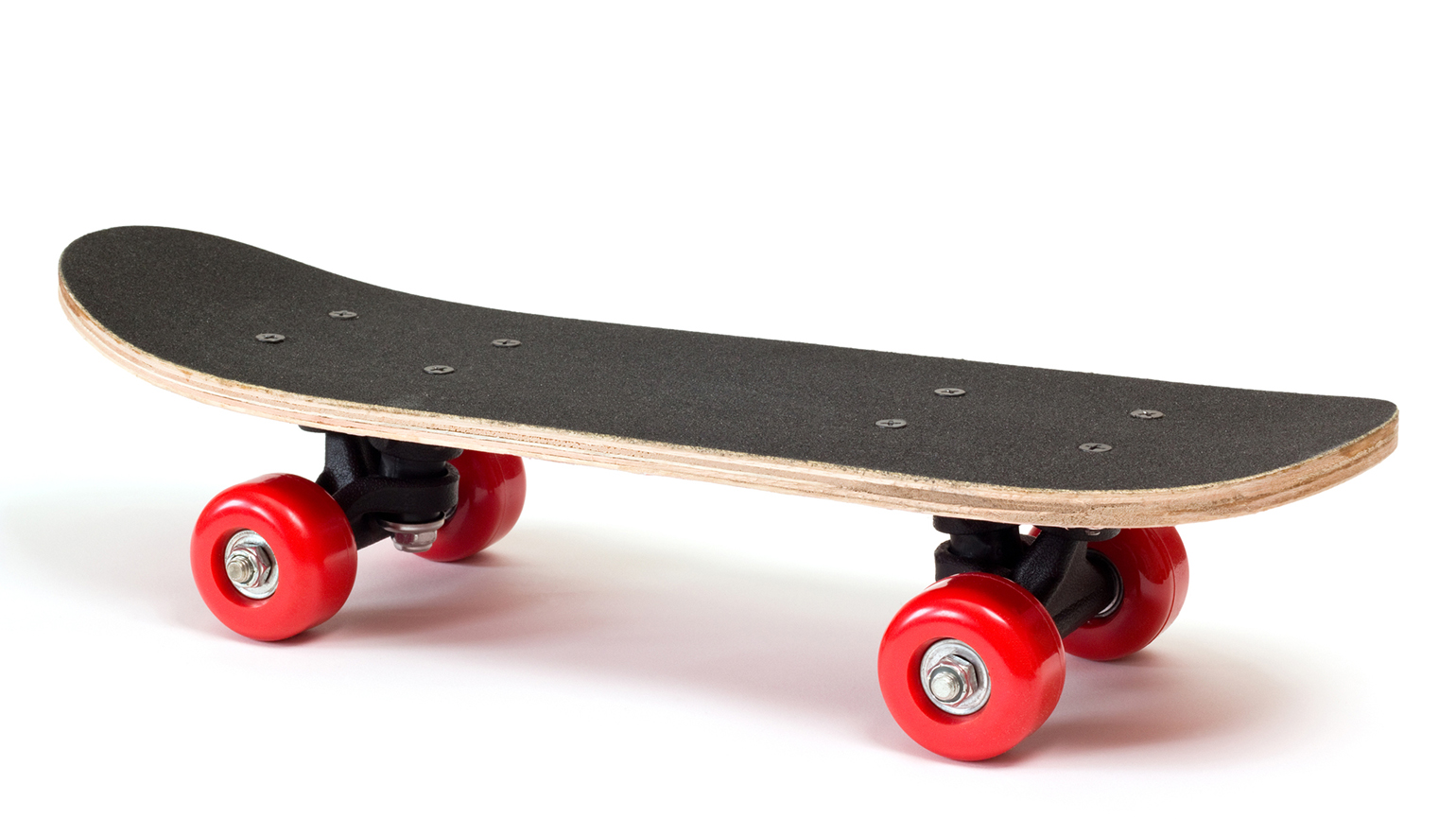
After school, kids gathered in the parking lot with skateboards and a homemade wooden ramp. I watched them speed up the ramp, jump, twirl, change direction and slide down again. Well into evening they bent and curled, squeezing the most out of every minute until parents called them home. One evening, a thought crossed my mind. What will I do if I actually regain mobility? Something wild and crazy…like skateboard across the country!

Another idea percolated: I can’t sit up under my own power much less skateboard, but I can squeeze life out of every moment I live.

It was an epiphany. It didn’t change the loneliness or the dull sameness of my existence, but it changed me day by day as I watched the morning sun filter through my window, intensify into afternoon and fade into night. Alex settled onto the bed with a contented sigh. I grew more content myself as despairing thoughts yielded to positive ones. One afternoon, the feelings of uselessness and questions of Why am I still alive? gave way, once and for all, to a passionate conviction that my life—every life—has value and also purpose. I felt a wave of peace and the curious sensation of being cradled in God’s arms, protected and comforted by his unwavering presence. I have you, his embrace said. Let go.

I did let go, completely. It occurred to me that while other people rushed around trying to cope with the tasks and stresses of daily life, I was blessed to lie quietly in communion with God, in the peace that truly passes human understanding. My own form of monastic retreat.

One spring day, there was a hint of loosening in my fingers. Day after day my clenched hands relaxed in tiny increments. I said nothing, want-ing to spare friends and family the roller-coaster ride of remissions and exacerbations that are boon and bane to MS. But the changes continued over a week, then two. I combed my hair with four stops to rest instead of six. I could no longer keep the secret and told my assistants. I called my family and invited them for Easter (they’d bring the food). “I want you to see something,” I said, my voice weak yet laced with joy.

Easter Sunday I too saw something I hadn’t seen in a long time: my family’s eyes reflecting hope. “You look good,” people said again and again. A few months later, assistants drove me 180 miles to my nephew’s graduation in a wheelchair-lift-equipped van. I was still weak, but I was off the bed, out of the apartment, and a long way from the hospital!

My assistants had kept my “muscle memory” alive with regular exercise. Now physical therapists started me on a strengthening program. Occupational therapists opened my fists completely and used splints to straighten my fingers.

On November 20, 1998—17 months after the neurologist’s prognosis—I stood in the physical therapy gym, holding tightly to parallel bars. I worked to lift my right foot off the floor. One step forward. By the time I took a second step forward, then, surprisingly, a third, I was drenched with perspiration. The steps were few, and unsteady. But they were mine! My first steps in more than 12 years!

I knew what had happened (the medical term is spontaneous remission) but not why or how long it might last. MS is unpredictable. Regardless what the future held, I was determined to embrace my life every moment of every day, as I’d done since the afternoon I relinquished everything to God and began to be at peace—really at peace—with his will.

The minute I could, I left my apartment on my own with my service dog. I volunteered in campus ministry at a local college. That led me to a master’s program in theology and diaconal ministry at Valparaiso University in Indiana, where I lived in a dorm with students half my age. My classmates accepted me and loved my service dog. I set goals to maintain my physical progress. During my second year at Valpo I walked in my dorm room and down the hall to the laundry.

One summer I visited my sister in Oklahoma. I saw my niece noodling along the sidewalk on her skateboard. I remembered the promise I made while I was immobilized in bed and living vicariously through the skateboarders outside my window. “Hey, Kristy,” I asked, “how about teaching me?” She gave me a doubtful look, but she agreed. “Promise to wear pads and a helmet?”

“Of course!” Helmet and pads in place, I put one foot on the board and scooted tentatively with the other. Kristy instructed until the skateboard click-clacked a few feet down the sidewalk with me still on it.

“Aunt Phyl, you’re skateboarding!” Who would’ve dreamed?

I vowed to do something wild and crazy, but I’m not skateboarding across America. I’m walking, to help people recognize potential exists despite disability, chronic illness, age or other factors. I’m talking to groups at schools, nursing homes, churches and more, to encourage to people live their lives to the fullest. Occasionally people say, “God has a special purpose for you!” But I’ve learned God had a special purpose for me even when I was so ill, just as he does for every person in every situation. It’s not easy to celebrate life if we’re struggling, but there can be such rewards when we open ourselves to the plans God has for us. My hope is that everyone can celebrate life every moment of every day!

Success at the Summit of Mt. Everest

Mt. Everest’s summit, the highest on earth, looms 3,000 feet above me, its outline barely discernible in the darkness.

I’ve climbed for most of April and all of May to get here, Camp Four—26,000 feet above sea level.

In a few hours, our team will begin the final all-night push to the top, a grueling effort in nearly oxygen-less air with temperatures at double digits  below zero.

Will I make it all the way up and down again? A 52-year-old woman? Or will I collapse and turn back, or worse? I’ve always heard Everest is as much a mental test as physical. Now I know what they mean. Especially for someone like me.

I go over my mental checklist—extra oxygen canisters, hydrating fluid, energy bars, gloves and, of course, the banner I brought.

This is a moment I never dreamed possible 10 years ago, at the beginning of my quest to scale the Seven Summits—the highest peaks on each continent. So much has changed since then!

When I climbed Argentina’s 22,841-foot Mt. Aconcagua, only my parents and husband knew the challenge I faced. I kept it secret even from fellow climbers. I thought people would see me as a lesser person if they knew. Yet it was on that climb with Dad—the second of my Seven—I had to face something more frightening than my secret. I had to face myself.

My dad, Neal, is my closest friend and an avid outdoorsman. We set our sights on Aconcagua a few years after our first Seven Summits climb, Mt. Kilimanjaro, in 1993. That one had been to celebrate Dad’s sixty-first birthday.

Aconcagua was for Y2K. What better place to greet the dawn of a new millennium than the highest mountain in the world outside Asia? On top of Kilimanjaro, I’d never felt closer to Dad. His incredible faith, forged in running the family funeral home in Wisconsin, never failed to fortify mine. I couldn’t wait to make another climb with him.

Then came that terrible morning in January 1999, less than a year before we were to attempt Aconcagua. I awoke to a nightmare: One half of my body was numb, as if someone had drawn a line down the center of me. Soon the numbness spread. What’s happening?

Many tests later the doctor said the fateful words: multiple sclerosis. The doctor told me the disease could go into remission, but my mind froze on a line I’d heard as a child: MS—crippler of young adults. This can’t be happening to me.

My identity was centered around the idyllic Rocky Mountain High lifestyle I lived in Steamboat Springs, Colorado. I was a first-grade teacher, married, living in a beautiful house. I skied, hiked, worked out. I’d never be able to do any of those things in a wheelchair.

My friends were outdoorsy types. None of them had a serious illness like MS. How could I tell them? What would they think of me? A week later, alone, I tried to ski. I would defy MS, deny I had it. I wouldn’t give it my respect! I nearly killed myself.

When I was with friends I lived in fear that the slightest hand tremor would betray my secret. I began steroid treatments and slowly the symptoms decreased. But my fear that MS would one day leave me crippled wouldn’t loosen its grip.

By summer the stress of keeping my secret was overwhelming. I had to talk to someone. I flew home to Wisconsin to tell Mom and Dad. “Lori, no matter what, we’ll always be here for you,” Dad said. “You’re going to be all right.” Mom hugged me as hard as she could. I didn’t think she’d ever let go.

Back home in Colorado I couldn’t bring myself to talk about my MS. The months passed in a haze of apprehension. But the treatments were helping.

As fall faded into winter I was hiking miles without getting winded. I’d never stopped dreaming of climbing Aconcagua and as the date grew closer, it seemed more and more possible. Knowing Dad would be with me provided extra reassurance. He was 68. I knew this would likely be his last climb. I needed him by me, needed to feel his faith.

I told Dad I still wanted to try the mountain, but I didn’t want to tell anyone about my MS. Dad agreed to keep my secret. In December, we traveled to Argentina and began the three-day hike to the foot of the South American giant.

At base camp, 14,000 feet up in the Andes, our tent pitched on a sea of rocks, fear gripped me. What if the altitude triggered my MS symptoms? Was this just more denial, like my skiing disaster? Except that one false step here could kill me.

Five days later, at 18,000 feet, the danger hit home. I lay awake listening to a vibrant 35-year-old woman in the tent next to mine, battling high altitude pulmonary edema. I heard her deep hacking cough through the night, then moaning, then silence. She died.

The next morning we broke camp and had hiked for about an hour when Dad stopped. “This is my summit,” he said. “I can’t breathe. My head is pounding. I have to get back to base camp.”

“I’m going with you,” I said.

Dad shook his head. “This is your climb. It’s something you have to do for yourself. You can’t turn back now.” If I didn’t at least try to reach the summit, I’d always be plagued by doubt. About my illness. About myself. Dad kissed me. He started down the mountain. I watched until he faded from view.

I struggled higher with the team, but my mind was far away. Would Dad be okay? I thought about the times we’d spent together, how he’d always been there for me. Now I was on my own. Just me and my MS.

I thought about how Dad had devoted his life at the funeral home to helping people deal with loss and pain. Suddenly I understood why he wanted me to continue alone. I needed to prove to myself I was stronger than my fears. He wanted me to test my limits.

After another freezing night in our tents, we climbed to Camp Four at 19,700 feet. A day of rest and then we began the push to the summit. It was New Year’s Eve, on the cusp of a new millennium.

I slogged through snow, stumbled over rocks and dirt. Bitterly cold wind buffeted us. Every step, no matter how small, was agony. The summit felt as far away as the moon.

The guides urged us on: “Take thirty steps!” Then we were allowed a brief pause before taking 30 more. Anything less and the temptation would be too great to sit down and not get up.

A final steep, 600-foot pathway of loose, slippery rock. Visibility was awful. I felt isolated. I pushed on, rocks cascading down the trail. Then I looked up and saw a hand in front of my face.

“Grab on,” a voice said. I reached out and a guide hoisted me up. I’d made it, almost 23,000 feet above sea level. I’m sure the view would’ve been spectacular had the summit not been enveloped in clouds. But another view lay before me in the swirling mist, a view of my life.

One day I might not be able to walk. For now I’d continue my Seven Summits quest. And I’d tell the world about my MS.

Now, as I finish my dinner on Mt. Everest, I think about my tearful reunion with Dad back at base camp on Aconcagua. He’d been so proud of me.

My life changed dramatically after that. And it was anything but idyllic. My marriage dissolved. I left my job. For a time I moved home with my parents.

Then in 2002 Mom died. She taught me that every day is a gift. I wanted to spend the time I had pursuing the Seven Summits and bringing attention to MS.

In the next six years I climbed Europe’s Mt. Elbrus, Denali (Mt. McKinley) in Alaska, Australia’s Mt. Kosciuszko and Antarctica’s Mt. Vinson.

Sharing my story allowed me to meet thousands of others with MS. For many of them, just getting out of bed was a major achievement. Their struggles made Everest seem almost insignificant. “You carry all of us in your backpack,” one person wrote me.

We start climbing. Only a thin ray from my headlamp breaks the darkness. Aconcagua’s 30 steps between breaks seem a lark. Here, on Everest, our bodies scream after five. About 4:30 a.m.—after we’d climbed more than six hours in the dark—the sky begins to lighten and a breathtaking sunrise breaks across the mountain peaks.

I feel as if I’m absorbing its energy. But soon snow and clouds grow thick around us. Dear God, don’t let us turn around now. Not this close.

Three more hours of climbing, and we reach the Hillary Step, a 40-foot rock wall that can only be negotiated one person at a time using fixed ropes. I climb across boulders the size of cars, the drop thousands of feet down on either side. Don’t let fear in, I chant to myself.

The summit is ahead, but the snow is blinding. “How much farther?” I finally ask my Sherpa guide. “You see those people over there,” he says, pointing to a group a few feet ahead of us. “That’s the top.”

I’m there. There’s not a single step on earth that would take me any higher. I pull the banner from my pack in honor of the first World MS Day and unfurl it.

I think about all the people it represents. This is for you. Thanks for lending me your courage. Then I grab a satellite phone. There is one more person I need to thank. In Wisconsin a phone rings. “Dad,” I pant, “I made it. I’m on the summit.”

“Congratulations,” he says. “I’ve been praying for you. I knew you could do it. Now we’ve got to get you down.” The storm’s growing. No time to linger. But I’m not worried. Fear can be conquered, one step at a time.

Even now, in the blinding wind, the view is beautiful.

Staying Positive, the Colorful Way

I am so not a runner—I’d rather hike five miles up a mountain than run one mile on a flat road—which is why I usually don’t pay much attention to announcements for the many 5K and 10K races in this area. I’m happy to donate if a friend or coworker is running for charity but that’s the extent of my interest.

Then I heard about The Color Run, a 5K that’s just right for anyone who is a positive thinker, or wants to be more of one. Why do I say that? Because this run will brighten your outlook. Literally.

You don’t even have to be a runner. Anyone is welcome: adults, kids, babies in strollers. As the race FAQs put it, “You can run, walk, crawl or cartwheel it if you wish!” The only requirements are that you wear a white shirt at the starting line and be ready to look totally tie-dyed at the finish.

How does that work? Volunteers along the 5K course shower you with color dust (cornstarch-based, so it’s safe). There’s a different “color zone” for each kilometer—1K is yellow, 2K is blue, 3K is green, 4K is pink and the finish is multi-colored madness.

That’s how you end up “beautiful like a rainbow,” as Cyndi Lauper might sing (sorry, couldn’t resist a musical reference to my ’80s childhood). Watch this video of the Color Run and see for yourself.

Doesn’t this sound like the most fun run ever? Just the thought of crossing the finish line in a huge explosion of color makes me break out into a smile. Color me happy!

The Color Run is happening in cities all over the country (check locations here). And just in case you need some more positive motivation, a portion of the proceeds of each race goes to a local charity. If a city near you isn’t on the list, there’s a similar 5K, Color Me Rad, which sounds like the Color Run’s cheekier cousin.

Ready to color yourself happy? On your mark, get set, go!

Stamped with Love

It’s hard to find new ways to raise money for all the good things we want to do. But my wife and I heard of a really creative idea while visiting her aunt in Fort Myers, Florida.

She belonged to the Alliance Stamp Ministry, a group that recycles canceled stamps. The proceeds go toward publishing Spanish-language Sunday school materials and distributing them to churches in Latin America. We liked helping so much that we joined the ministry when we moved to Fort Myers ourselves.

Church groups and individuals across the country help us by collecting used envelopes and trimming them so the stamps have a third of an inch of paper left around them. Our team of 15 sorts the stamps by design and sells them to dealers.

Even in the age of e-mail, people use stamps. All the better for us–we’re on track to raise $35,000 this year! That’s a lot of Sunday school materials–enough for students of nearly 40 denominations in almost 20 countries. Do you have the envelopes your Christmas cards came in? Send the stamps to us!

If you’d like to contribute canceled stamps or get more information, write to Alliance Stamp Ministry, 15000 Shell Point Boulevard, Fort Myers, FL 33908.

Download your FREE ebook, Rediscover the Power of Positive Thinking, with Norman Vincent Peale.

Staff-to-Staff Mentoring Yields Powerful Results

Content provided by Good Samaritan Society.

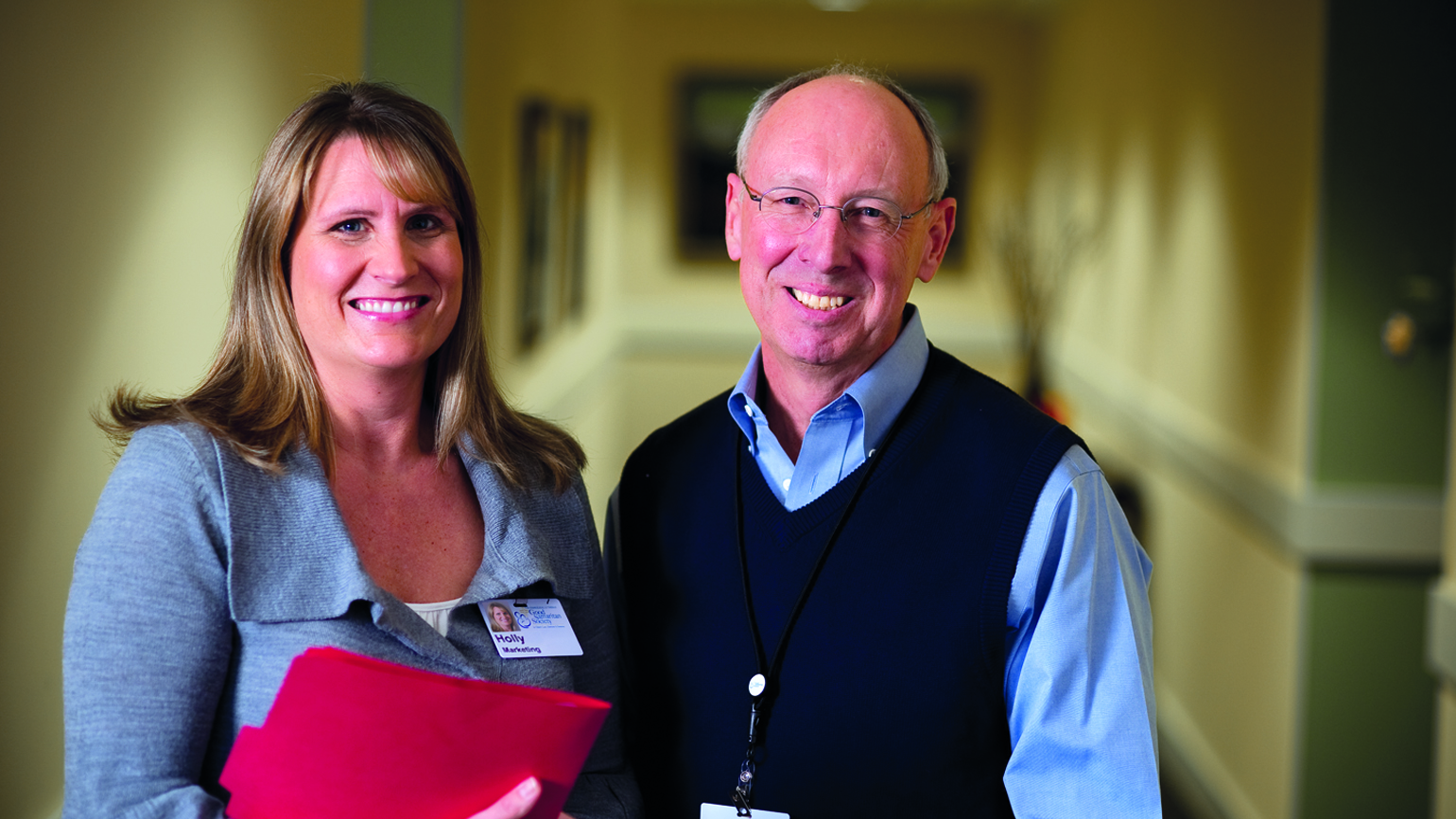
Staff-to-staff mentoring can lead to improved employee retention, morale building, ongoing career development and organizational learning. A good mentor can be likened to someone providing a road map for you to achieve your goals, and then letting you drive the car.

In some organizations, a formal mentorship program is in place. However, an informal culture of mentorship can be just as powerful. We’ve compiled three stories about co-workers mentoring each other in locations around the United States.

‘There Should Be Something More’

Three years ago, Heather Clementz, who started her healthcare career as a certified nursing assistant at Good Samaritan Society – Geneseo Village, Illinois, decided she needed a change. “I was married with two kids and working the second shift,” says Heather. “The hours weren’t the most convenient and I was paying a babysitter almost more than I was making.”

She knew there were things she was passionate about at work. “I knew there should be something more,” says Heather. “I wanted to do more, to help more, not just for me but for our residents, also.” So she approached Jodi Barnhart, health information manager at Geneseo Village, to ask for guidance in moving her career forward.

“I always admired Jodi. She’s one of those people that has an infectious positive attitude and is very passionate about her work and the residents.” —Heather Clementz, Good Samaritan Society employee

Since making the connection, Heather has become Jodi’s understudy in health information management. Jodi helped her to look into schools for medical insurance coding and provided hands-on training. “She keeps her fingers in everything,” says Jodi. “Heather comes in every Friday for three hours. She does the coding, the back-ups and anything else we need.”


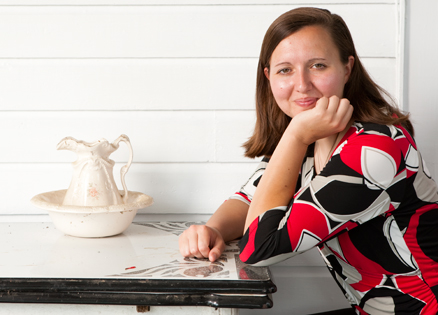
Heather now has a clear goal in mind. “I really wouldn’t mind taking over for Jodi when she retires,” says Heather.

“She has expressed interest in my job when I retire someday,” says Jodi. “And that’s fine with me!”

‘Her Talents Are Now Fully Utilized’

Melisa Mendoza got her start working in the campus laundry at Good Samaritan Society – Manzano Del Sol Village, Albuquerque, New Mexico.

Recently, an opening for a senior living administrative assistant became available. Melisa felt that getting this job would be a move forward in her career, so she applied.

Although external candidates had more formal experience in the realm of administrative support, Vera Schaffer, resident services director at Manzano Del Sol Village, was attracted to Melisa’s excellent customer service skills, strong work ethic and common sense.

“We interviewed lots of people for the senior living job, but she really was the right person for the position.” —Vera Schaffer, resident services director at Manzano Del Sol Village

Since joining the department, Vera and her team have taken Melisa under their wing to mentor her in all of the aspects of her new role.

“I feel that I have grown exponentially because of this opportunity,” says Melisa.

A Formal Mentoring Program for Nursing Directors

In some cases, a more formal mentorship is beneficial. Katie Davis, executive director at Good Samaritan Society – Albert Lea and Good Samaritan Society – Comforcare in Minnesota, utilizes a mentoring program in onboarding new directors of nursing.

“The first thing we do is take a look at the previous experience of the mentee,” says Katie. “Then we look at their goals as well as goals within our center.”

The next step is to put a strategic plan in place. The plan includes working with all of the departments so the new director of nursing can become familiarized with all facets of the center. A spiritual component is also included.

“We make sure we include the faith-based mission of the Society in our mentorship program,” says Katie. “That is central to what we do in this organization.” This strategy is designed to provide invaluable developmental support to a new hire. Through the use of the mentorship program, Katie has seen improved outcomes throughout the organization.

“We’ve seen this as a great booster for team building and morale Not to mention the learning aspect of it. Our directors of nursing get to see all of the departments in action, which provides them with a great perspective right away.” —Katie Davis, executive director, Good Samaritan Society in Albert Lea and Austin, Minnesota

In addition to the formalized director of nursing program, Albert Lea also offers student internships. This covers roles such as nursing, social services, medical records, administration, nutrition services and community relations.

Spring Forward: 7 Tips to Help You Adjust to Daylight Savings Time

Daylight savings time kicks off in just a few days, which means we’ll be losing an hour of precious sleep as we roll our clocks forward. This often leaves many people feeling tired and groggy for a few days—and even weeks—following the time shift. For some, this time change can even trigger underlying health issues. Thankfully, there are steps you can take to adjust more smoothly.

Minimize the effects of daylight savings with these seven easy suggestions:

Go to bed earlier
Slowly adjust your sleep schedule to ease your body into the time change. Start your nighttime routine 15 to 30 minutes earlier than usual. This will give your body time to make up for the lost hour and allow it to gradually shift into your new sleep schedule.

Get active
We all know being physically active is essential to maintaining a healthy lifestyle, but exercising can be especially helpful during daylight savings. Regular exercise can promote the quality of sleep you get throughout the night by reducing sleep onset, or the time it takes to fall asleep. Try to maintain a three-hour window between your workout and bedtime to give your body ample time to cool down before going to bed.

Start a new habit
When losing an hour of sleep, it’s easy to make up for it the following morning. This can only make it more difficult for us to adjust in the long run. Instead of sleeping in an hour longer, use the disruption to your advantage by introducing a new habit into your schedule. Adding a 30-minute meditation, reading a book or squeezing a short journaling session into your routine can make your mornings—and days—more productive.

Be mindful of what and when you eat
Daylight savings can interfere with your regular meal schedule, making you hungry at unusual times. Eating healthy snacks and limiting the amount of food you eat before bed can help regulate the sudden schedule shift. Drink plenty of liquids, but be sure to avoid drinking alcohol and caffeinated beverages in the late afternoon and evening.

Get some sun
Now that the sun will rise an hour earlier, you can get some sunshine early in the morning to soak up some vitamin D and switch off the sleep hormone, melatonin. You can also let sunlight into your room every morning to help “reset” your circadian rhythm, a natural process that regulates the sleep–wake cycle. Spend time outdoors in the evening by tending to your garden or going for a socially distanced walk in your neighborhood.

Unwind
Slow your body down, preferably before bed, to allow for a good night’s sleep. Lay back and relax by taking a warm bath or listening to soothing sounds or music. Keep your room or house cool to reduce your body’s core temperature, which will make it easier for you to fall asleep.

Avoid late-night screen time
Although watching TV may seem like a good way to unwind, it can stimulate your brain, making it difficult to fall asleep. Electronics can also hinder melatonin, a hormone that triggers sleepiness. Replace your phone, tablet, or computer before bedtime with a book or devotional.

Split-Second Inspiration

I’m good under pressure.

Part of that comes from my dad, a pastor, who taught me the best defense against fear is faith. He’s talked in his sermons about it. I didn’t expect to never be afraid, but I believed if I put my trust in God, he’d help me work through my fear and do what needed to be done.

Then there were the six years I served in the military. I learned to handle myself in all kinds of situations. The key was being prepared, so I could remain in control even if everything around me was going haywire.

Those lessons came in handy after I fulfilled my term of enlistment and pursued my dream of becoming a pilot. I enrolled at Embry-Riddle Aeronautical University, one of the top flight-training schools in the country. My hope was to reenlist once I finished my degree, then earn my wings as a military pilot.

My flight instructor was surprised at how easily I took to flying. He took me up in a Cessna 172 and was amazed to find I had fun practicing stalls. Stalling an airplane has to do with air speed. It’s when you lose lift over the wings. Suddenly, the plane’s dropping out of the sky.

Most people flip out—a primal fear of falling. Not me. You do stalls in training so you know how to avoid them—and recover from them if they inadvertently happen—in real life. To me, practicing was a chance to become a better pilot and to experience the incredible feeling of pulling my plane out of a stall and soaring into the sky again.

Nothing, though, could have prepared me for what happened on February 12, 2008. Class had ended for the day. I hopped into my red 2006 Ford Mustang, got on the highway and headed toward my apartment. A car pulled in behind me. I hummed along to a gospel tune on the radio. Turning onto my street, I glanced in the rearview mirror and noticed the car behind me turn too. Is he following me? Nah, I was just hyper vigilant from my military training. They trained us to always be alert.

Still, I said a quick prayer. My apartment complex was just ahead. I slowed and signaled, then turned into the parking lot. I checked the rearview again. The car went into the lot across the street. Nothing to worry about. I pulled into a parking space and killed the engine.

I was about to open the door when I saw a man approaching, wearing shades and a black hoodie. Right away I knew he was trouble. It was way too warm for a sweatshirt. Quickly I assessed my options. A car on my left. A wall in front of me. I had two choices: Restart the engine, back up and floor it, or get out of the car and flee on foot. I ruled out the car—I didn’t want to risk being trapped inside. I decided to see what he wanted, then make up my mind: flight or fight. Grabbing my keys and cell, I got out.

That’s when the man pointed a gun at me. “Give me your purse!”

I said, “I don’t have a purse.”

He kept coming. “Give me your purse!” He stuck the gun in my stomach. I could see he was nervous. I didn’t want to upset him. He reached over and snatched my keys and phone and popped the trunk. He forced me to the back of my car. “Get in.” I faced the trunk. I knew from a military briefing that if I got inside, I’d probably wind up dead. I hesitated. “Get in,” he snarled. “Now!”

I did—but only because I remembered the trunk release. I’d read every word of the Mustang owner’s manual as soon as I got home from buying the car, the same way I studied every gauge and knob and display on the instrument panel of my plane. I knew exactly where the trunk release was.

“Don’t move, don’t make a noise,” he warned. He slammed the trunk shut. Everything went dark. My heart hammered. I was trapped.

Fighting the instinctive panic, I found the trunk release and put my hand on it. Gently, I began to pull. But something stopped me: You have just one chance.

My eyes were adjusting to the darkness. Not that there was much to see. No room to move around either. The carpet was scratchy against my skin.

Pay attention, I told myself. I heard the kidnapper start the car. He put it in reverse. What was he planning to do with me? I shuddered. Had I survived six years on active duty, deployed for four months in Operation Enduring Freedom, with nothing worse than a twisted knee in a volleyball game, only to have my life threatened in some senseless crime? Get a hold of yourself.

I fell back on my faith. You know the fix I’m in, Lord, I prayed. I’m putting all my trust in you. Right there in the trunk, my fear receded. My mind cleared. I knew whatever direction he turned, he’d have to slow down. If he went straight, he’d have to stop at the stop sign. I waited for my chance.

He drove the Mustang forward, then stopped. I heard another car honk. Then he accelerated again. The speed limit was 15 mph. I couldn’t tell what direction we were going. As soon as he slowed down, I pulled the trunk latch. Please let this be the right time, Lord. I pushed the trunk open and jumped out. If I landed wrong, I knew I could hurt myself, maybe fracture a bone.

I landed on my feet. But the force of gravity pulled me backward onto the ground. Immediately I got up. There was a car stopped behind me. I stared into the driver’s eyes. Something told me he was in league with my kidnapper. The driver froze. It seemed like he stared at me forever. Then he turned his wheel. I didn’t hesitate. I took off down the side of the road.

I raced through people’s yards, trying to put distance and objects between the kidnapper and me. I ran back to my apartment complex and beat on doors. One finally opened. An older lady. “I was just carjacked and kidnapped. Can I come in and call 911?” She let me in. I quickly closed the door and locked it. I was on with the 911 operator when there was a knock at the door. “Don’t open it!” Too late. The door swung open. A hulking figure stood there…a Daytona Beach police officer. He had been in the vicinity and responded immediately.

Officers arrested the kidnappers the next day. They were teenagers, trying to impress a gang by stealing a sports car. “You have no idea how lucky you are,” one of the officers told me. “Carjackings that escalate into kidnappings rarely turn out well.”

I knew it wasn’t luck that had saved me. It was preparation, both of mind and of soul.

Spiritually Ready for Whatever Comes

Hilton Head Island has been our family vacation spot for 30 years now, and on my must-do list each time we visit is to ride bikes out to Lake Mary and Lake Joe. The lakes are a preserved area, and I love the wildlife, the untouched beauty of the landscape.

I usually take my camera, capturing shots of alligators sunning on the banks of the lake and turtles floating in the water—scenes that are so peaceful and lovely. But on this particular day, I’d forgotten my camera and cell phone. As we rounded a curve, I saw something I’d never seen before: An alligator was sleeping on a big limb that was on the surface of the water.

Most of us would think that was cool enough. But a large turtle had climbed on top of the alligator and was taking a nap. And to make it even more amazing, a bird had landed on top of the turtle and was just sitting there.

Read More: A Family’s Search for Hidden Treasure

Yes, folks, an alligator on a log, a turtle on top of the alligator and a bird on top of the turtle. The photo of a lifetime—and I didn’t have a camera. I wasn’t ready for the shot.

The same thing often happens spiritually. Moments come into our lives, and we aren’t ready. So I want to share a couple of things I’ve learned about being spiritually prepared.

First, read God’s Word. Let it seep into your soul and even memorize a few lines for emergencies. Spend time in prayer. Build a relationship with God before you need His help, before you get one of those phone calls that can change your life forever.

Secondly, put down roots in a church. Build friendships with people who share your love for God. They will be your support network when hard times come—whether it’s in praying for you or standing by you.

To this day, whenever I remember that bird-on-a-turtle-on-an-alligator-on-a-log day, I still smack my head and say, “If only I’d had my camera!” But I don’t ever want to look back on my life with regret and say, “If only I’d been closer to God.”

Spiritual Healing

Have you ever found yourself praying in a hospital room, for yourself or a loved one? I have, and according to new research, we’re doing the right thing. Studies have shown that patients with faith cope better with illness and often heal faster or are more accepting of the outcome than those without.

Maybe that’s why nearly 70% of hospitals today in­vest in spiritual health-care specialists known as chaplains.

That high percentage surprised me. Surgeons, radiolo­gists, oncologists: These are people trained in the scientific method, taught that every ailment has a physical cause that yet even they seem to agree that faith can make a difference in a patient's recovery.

How can faith–something unseen, something immeasurable–have a measurable effect? To answer this question, I sat down to interview the men and women involved with HealthCare Chaplaincy, or HCC, a New York City-based research and ministry organization.

“Health care is holistic,” began the Rev. Eric J. Hall, a minister of 23 years and the president of HCC. “That means that we have to take care of the body, mind and spirit.”

This is Chaplaincy 101: It’s not just about a patient’s relationship with God. It’s about how the patient’s faith interacts with his or her body and mind. A patient’s illness or trauma may affect her faith in God. A chaplain’s job is to help a patient’s faith contribute positively to her prognosis.

“If we can re­duce our patients’ spiritual distress,” said the Rev.George Handzo, director of health services at HCC, “we can help them to better use their spiritual or religious resources, and that’s going to affect everything else.”

It can even pave the way for miracles.

The Rev. Sue Wintz, director of education at HCC and a chaplain for 35 years, offered one example. A young gang member in Phoenix, 19 years old, had suffered a gunshot wound to his spinal cord, confining him to a wheelchair for life. His lack of faith had led him into a downward spiral that threatened his recovery.

“His mother and girlfriend couldn’t seem to reach him,” Sue said. “He said he would rather die than face life as a quadriplegic.”

Sue tried to help the young man articulate his despair. They prayed, and she encouraged him to confront difficult spiritual questions: What did this injury mean for his future? What did God have in store for him?

The young man’s talks with Sue produced an infusion of hope. Soon he was strong enough mentally, physically and, most important, spiritually to take control of his own recovery. He adapted to life in a wheelchair, got out of the hospital, went back to school and stayed away from gang life.

“That, to me, was a miracle,” Sue said. “He didn’t get a physical healing, but he got a spiritual ones."

Chaplains use a nonjudgmental, nondenominational approach to spiritual health care. The Rev. Florine Thompson, director of pastoral care at St. Luke’s-Roosevelt Hospital Center in New York, told me about a woman in her thirties who was diagnosed with end-stage renal disease.

“She was told she had three to six months to live,” Florine said. The woman was a mother of two children, aged 9 and 11. She was devastated.

“She couldn’t understand why God had allowed this to happen to her,” Florine said. “She was a good mom, she took care of herself and she didn’t drink or smoke. The ill­ness didn’t make sense to her. She couldn’t accept it.

"A kidney trans­plant was her only chance, yet she couldn’t bring herself to put her name on the list. She had been raised with religious beliefs against organ trans­plants, and that still weighed on her.”

The patient’s mother called on Florine for help. Her approach? Draw on the woman’s inner resources to give her a new perspective.

“I asked what was most dear to her in this world, and she said her two children. So I said, ‘If you could talk to your kids right now, and they could make a decision for you, what would they want?’ She began to cry. They would want her to live.

"She sensed that God had something very special for her to do and that she hadn’t accomplished it yet. She wanted to be around to raise her two children.”

The woman agreed to meet with the organ-donation team and put her name on the list. Several weeks later, Florine ran into the patient’s mother in the hospital. She said her daughter had received a new kidney and was expected to make a full recovery.

Stories like these are why people in the medical profession don’t dis­miss the immeasurable aspects of faith, and perhaps why they are of­ten unsurprised to see miraculous healings. A patient open to belief is a patient open to hope, open to the improbable.

When faith works hand in hand with a doctor’s care, it is far more likely a patient will follow instructions, strive for recovery mile­stones and accept the setbacks that might make others give up.

Florine says all patients have “a sacred story”–something so funda­mental to their soul that they won’t share it with just anyone. Chaplains encounter these sacred stories ev­ery day.

Part of their job is to help patients and their loved ones figure out how their sacred story can make sense of an illness, no matter what the outcome, and how the soul tran­scends the body, how healing comes in many forms.

This year, HCC launched a new website, chaplainsonhand.org, which connects patients and their families with board-certified chap­lains. Users can e-mail, chat live, or even Skype (video chat) with a chap­lain. Chaplains On Hand is completely free and is the first service of its kind.

“I think the program is a gift,” Flo­rine says. “When our spirit is weary, or our souls are worn, whom do we go to?”

Download your FREE ebook, Mysterious Ways: 9 Inspiring Stories that Show Evidence of God's Love and God's Grace

Spiritual Growth Through … Moving?

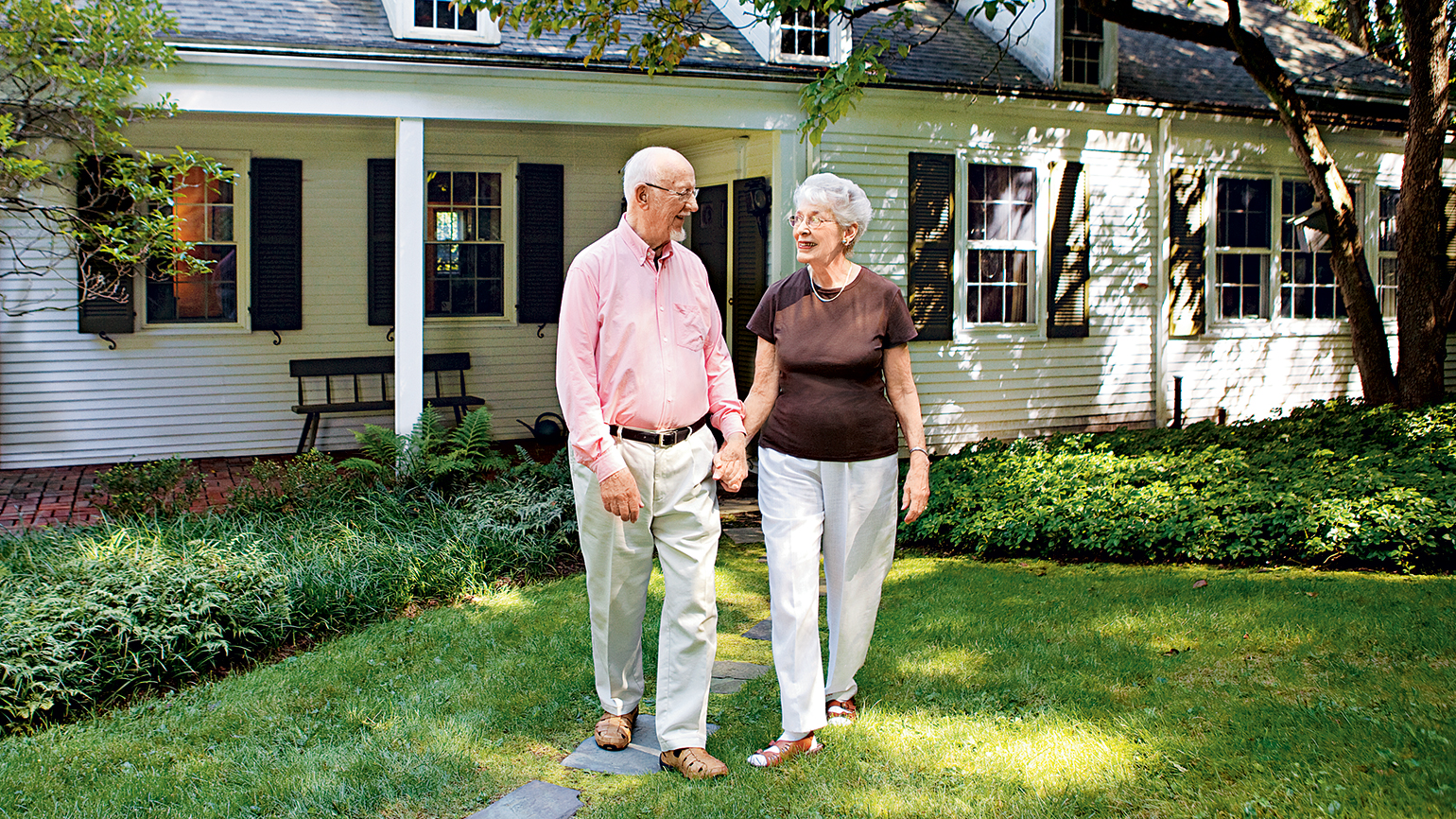
I stood looking out the kitchen window wondering how John and I could ever leave this house.

We’d lived here for 50 years. There under the maple tree was the garden patch where we grew tomatoes that never ripened. There was the stump of the cedar we cut down to make room for our daughter’s wedding reception.

The real-estate agent was coming in a few minutes to help us “neutralize the place,” as she put it. “No personal things showing,” she’d instructed.

But everything in the house was personal! The mantelpiece where our three children hung their Christmas stockings. The shelves John built into a downstairs closet to furnish a bedroom for my mother.

With every room I entered came some stab of impending loss. The night before, as I lay in bed, it had been the sound of rain on the roof. In an apartment we won’t have a roof, just another apartment above us.

Moving meant everything would change. And the most painful change of all, living many miles from long-time friends and familiar surroundings.

There was no doubt in my mind, with both of us in our eighties, that we were making the right decision to move from New York to Massachusetts, where we’d be near family. Why was it so much easier to make up your mind than to make up your emotions?

The doorbell rang. The real-estate agent was very young, very blonde and wore very high heels. She’d brought a pink brochure titled “Preparing Your House for Sale” and a stack of cardboard sheets that could be folded into boxes. With a small camera she made a rapid and, it seemed to me, faintly disapproving inventory of each room.

For the next several days, brochure in hand, John and I stripped surfaces of ornaments and family photos, cleared the clutter of appliances from the kitchen counter, emptied closets, filled the boxes and hauled everything down to the basement.

Change, it was clear, didn’t wait for the actual move itself. Already it was like living in a strange place. We couldn’t find anything, not even the extra blankets we needed when the temperature dropped. They had to be in a box somewhere…

We repainted the front porch (page three of the brochure: “Make your entryway inviting”). I went to the garden shop and bought a basket of petunias to hang outside the front door, but John had ripped out the old nail when painting. Nails and hammer were in his tool room in the basement, now crammed floor to ceiling with those cardboard boxes. After rummaging among them for an hour, John drove to the hardware store.

“We can’t sell you one nail,” the clerk told him. “They come in one-pound boxes.” The store owner overheard. Because John has bought things there for years (another stab—leaving old relationships!), the owner discovered an item that “just popped out of the box,” and John came triumphantly home with a single nail. (He used his shoe for a hammer.)

Among the things we couldn’t find, the hardest to cope with were missing papers. “If you could clear off your desks a little…” the agent had advised after a shuddering glance at rooms cluttered with magazines, notebooks, files, folders, correspondence. “You could also straighten the bookcases,” she added.

I followed her reproachful gaze to shelves where books were wedged behind books, balanced on top of books or cluttered on the floor.

We filled more boxes with books, papers and office supplies. It took hours to get them all down to the basement, and more hours afterward trying to locate a particular address or just a paper clip.

My office, it was true, looked nice. For the first time in years I could see the wood on my desktop. Instead of files on the window shelf, there was a pot of yellow chrysanthemums. It was like a study in House Beautiful—and I couldn’t get a thing done in it.

I’d known, of course, that moving meant change—change of location, change of lifestyle. What I hadn’t known was that the old location would immediately change too.

It wasn’t just the “neutralized” house. The neighborhood itself looked different. The familiar streets, the grocery store, the Little League baseball field, they were no longer everyday surroundings, taken for granted. They called for attention, as though I was seeing them for the first time.

I’d understood too that moving meant downsizing. In the apartment we’d have only a fourth of our present space, so I knew, in an abstract way,
that three-quarters of our things would have to go. What I didn’t quite grasp was how many separate decisions it would take. “Don’t tackle it all at once,” friends counseled. “Do one room at a time.”

I started in what used to be our older son’s bedroom where we stored family records, photographs, never-used exercise equipment, oversized books, person­al correspondence, out-of-season clothes.

I spent a whole afternoon going through old letters, pictures (shoeboxes full of them), trip diaries, children’s books. It was a feast of memories. People, places, long-forgotten birthday parties. By suppertime I’d discarded seven photographs too faded to make out, a letter with a signature I couldn’t read and a corroded flashlight I found in a desk drawer.

In room after room I encountered this inability to weed out and dispose of things. I realized why. Holding onto things was a way of holding onto the status quo. A way of saying no to change.

Then came the day I was sorting through the bench chest in our daughter’s old bedroom. I pulled out a box of Christmas ornaments, the skirt for the bottom of the tree, the crèche our younger son made from clothespins…

And suddenly I knew—we’re moving all the time, whether we stay in the same place or not. I remembered when this chest held a little girl’s dolls. Then a teenager’s record collection. Then wedding gifts for a bride-to-be.

From the bench I caught sight of myself in the dresser mirror. I saw not the young mother I was in 1959, but a white-haired woman wondering if her granddaughter could use this chest in her room at nursing school.

Change, I saw, is just another word for living. So instead of fighting it, what if I were to embrace it or even find a way to thank God for each change?

At first my thanksgiving was mechanical and petulant. “Thank you, God,” I said through clenched teeth, “that we’ll no longer have breakfast on this beautiful screened porch.” But as so often happens when I start out with lip service, the thanks little by little became genuine. “Thank you, God, for all the breakfasts we’ve had on this beautiful screened porch.”

And what about this new awareness of my everyday surroundings? What if I brought it with me to our new setting and learned to see everything with this heightened perception?

Downsizing, doing with fewer things, maybe it could be a spiritual plus as well as a physical necessity. To divest myself of excess belongings, things that need to be stored, washed, polished, dusted—possessions that can easily possess me. Wouldn’t this mean a new freedom, a new spaciousness in my life to be filled with new blessings?

But then there was the hardest of all changes, leaving our friends. We began to set time aside for people that a busy schedule had too often crowded out. I found myself valuing friendship itself as never before, seeking the opportunities to say, “I love you. You’re important in my life.”

John and I discovered we mattered to more people than we’d ever imagined. I’d always felt sorry at funerals that the person couldn’t have heard the outpouring of caring and esteem while he was alive. Moving to another state was—unexpected plus!—bringing out that same kind of appreciation and affection.

I stood at the kitchen window again, looking out at a yard filled with memories. A very different yard from earlier years. Trees taller, picnic table long gone, grass grown over the scuffed dirt where the boys played ball.

If there’s a prayer God never answers, I thought, it must be for things to stay the same. The yard had changed as I had changed, and the move was offering insights to take with me into his marvelous ever-changing world.