Embrace God's truth with our new book, The Lies that Bind

The Pooch That Answered a Prayer

I was only a few minutes into my evening walk when the words fell from my lips: “Lord, please bring me a dog.” What? Where had that prayer come from? Okay, so I’d been half-thinking about getting a dog. I would’ve loved one to walk with me. But I hadn’t prayed for one yet.

I hadn’t committed myself yet, and when you pray for something you’re totally committed. You don’t ask God for something you’re not quite sure you can handle.

The Daily Bible Large Print relaunch with digital free gift in article ad

Three years earlier I was diagnosed with cerebellar ataxia, a neurological disorder that affects my coordination and balance.

“If you don’t walk–you won’t!” my neurologist warned. “Walking will train your brain to remember how to move your body.” That’s when I started walking every night. I desperately wanted to hold on to my freedom.

A few months later our neighbors’ Labrador had puppies. They offered to give one to my 12-year-old daughter, Marilyn, and me. We couldn’t resist! Lugh instantly became part of our little family and came walking with me too.

Then, five months later, a tornado ripped through our town, destroying our home. The only apartment available was dogfree so our neighbors took Lugh in. We visited him often. They were an active family–much more active than I could ever be–and he loved it there.

We’d planned to take him back once we were settled in a house again. But Lugh grew bigger and my symptoms grew worse. I was exhausted and falling more often. When we finally found a home, we made a tough decision: Lugh would stay with them. There was no way I could manage a big strong dog, or maybe any dog.

But I really missed having a dog around. Marilyn did too. A little dog wasn’t the answer. What if they darted between my feet and tripped me? Forget it! Marilyn and I would have to be content with our two cats. I pushed all thoughts of getting a dog out of my mind. Until that prayer flew out of my mouth!

Back home that night I had a strange urge to check out a local shelter online–something I’d never done before. I’m not a big online person, yet I found myself browsing the site for hours. Athletic Labs, spunky Chihuahuas, stately imperious Poodles. All adoptable. But all either too large or too small.

See? This isn’t meant to be. That prayer was just an accident, I thought, reaching to turn off the computer. Just then, the screen flipped to the next page of pets. That’s when I saw her: Lil’ Dog. The most adorable tri-color corgi with melt-your-heart brown eyes. She was perfect!

I filled out a lengthy application, adding a note about my health, our two cats, our history with Lugh, and our vet’s phone number.

Three days later a volunteer from the shelter brought Lil’ Dog over for a home visit. Right away, she scurried behind the woman’s legs.

“I usually foster and rescue big dogs,” she explained, “but a few weeks ago I got a call to check out a flea market that sold puppies from a ‘puppy mill’–an irresponsible dog breeder. Lil’ Dog was living in a chicken wire cage on the ground in the mud and water. She’s only three but she’s already had a lot of pups.”

The woman said that the puppy mill owner had decided that Lil’ Dog was worn out. He had no use for her anymore. My heart broke. How could someone treat an innocent creature this way? She needed food. Attention. Love.

She needed me.

“She’ll require a lot of social training since she’s spent her whole life in a cage,” her foster mom added. “Oh, and there’s another family interested in her too.” Then she looked at my cane and walker parked in the corner. “Do you really think she’d be a good match for you?”

As if on cue, a bit like that accidental prayer, Lil’ Dog trotted out from behind the woman’s legs. She came up beside me and stuck her head under my hand. I melted.

Suddenly, one of our cats ran in and introduced herself with a hiss! Lil’ Dog whimpered and retreated. Then she seemed to think about it and decided that she had to stand up for herself if she was going to stick around here.

She stepped forward and gave a little growl in return. That seemed to settle things. She looked up at me with her wide eyes as if to get my approval. “I think we’ll all get along just fine,” I said, laughing.

The woman turned serious. “Well, I think you might,” she said. “But it isn’t up to me. The Animal Protection and Education Board makes all final decisions…and, well, they think it’s a red flag that you recently gave up a dog.” Then she snapped a leash onto Lil’ Dog’s collar and headed out the door.

Could she be more negative? I tried to hold back the tears. Lord, I prayed, I’m trusting you to bring Lil’ Dog into my life if that’s what you want. If not, please let her find a good home.

Two days later the shelter called. “Hello,” I said, waiting anxiously for their answer.

“Your application to adopt the corgi has been accepted,” they said. I almost dropped the phone!

That weekend Marilyn and I went to pick up Lil’Dog. But when I clipped on her leash and harness, she lunged right between my legs and I fell on top of her! I floundered on the floor, trying to disentangle dog, harness, leash and cane. Marilyn helped me up.

Lil’ Dog trembled, pulling away from me at the end of the leash, terrified, as if she wanted to run back to her cage. Oh, no! This was a bad idea. How could I have been so foolish to think that God had directed me to adopt a dog?

But something, some inner urge, wouldn’t allow me to give up. “Come here, girl,” I coaxed, holding out my hand. Slowly, she stopped fighting to pull away and came toward me. “That’s right. We can learn to walk together, can’t we? We can help each other. We can’t stay in our cages forever.”

I rubbed her soft multi-colored fur. A name came to me: Lily.

Back home, Marilyn and I played with Lily all afternoon. I’d almost forgotten how much fun a dog was, even a timid one like Lily. I thought it would be good to take her with me on my walk that night, get her socialized. But I grew nervous.

What if I fell on top of her again? What if I scared her? She’d spent so much of her life afraid.

I strapped on her harness and leash–this time she stayed put. Success! Step by step, we made our way out of the house and onto the street. Lily was a natural! It was like somehow she knew about my issues. She didn’t tug or pull, just trotted along steadily.

Sometimes she’d stop short if she saw something unfamiliar. After spending her life in a cage, that meant trash cans, bikes and parked cars (even fire hydrants!). Still, she never jerked the leash or threw me off balance. She just knew.

Over the next few months I learned to trust that Lily wouldn’t let me fall. And Lily learned to trust that I wouldn’t let anything hurt her. Whenever we’d approach something that scared her, I’d look down into her sweet brown eyes and walk us closer to it.

“Don’t worry, Lily,” I’d say. “I’m here.” Little by little, she’d step closer too. Before long she was walking bravely down the block, charming everyone in the neighborhood. We made perfect partners.

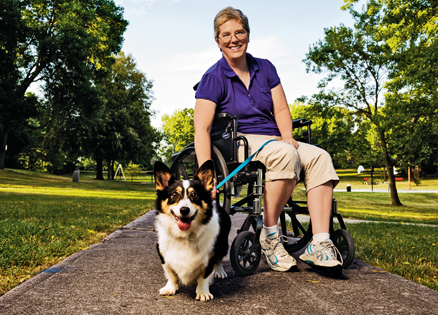
Five years later, my condition has grown worse. I need to use my wheelchair more than I’d like. But Lily doesn’t mind a bit. She’s still walking alongside me every night. And I know someone else walks with us too. The One to whom no prayer is accidental, the One in whom we are always free.


Download your FREE ebook, The Power of Hope: 7 Inspirational Stories of People Rediscovering Faith, Hope and Love


The Perfect Scripture for Your Enneagram Number

In recent years, the Enneagram has gotten a lot of buzz. The Road Back to You, a 2016 book by Ian Morgan Chron and Suzanne Stabile, brought the concept of the Enneagram to a Christian audience. Since then, a slew of podcasts, Instagram accounts and books have emerged exploring how the Enneagram can help people grow in their faith. 

But what is it exactly?

The Daily Bible Large Print relaunch with digital free gift in article ad

Simply put, the Enneagram is an ancient system of categorizing people according to nine personality types. It is represented by a circle with inner triangles connecting the different types. The origins of the system are unclear, although many claim it was created by 4th century Christian mystics. 

The nine personality types represented by the Enneagram are: 

1. The Moral Perfectionist

2. Supportive Advisor

3. Successful Achiever

4. Romantic Individualist

5. Investigative Thinker

6. Loyal Guardian

7. Entertaining Optimist

8. Protective Challenger

9. Peaceful Mediator

“Each personality (1-9) is characterized by a dominant strength or virtue and a dominant weakness or vice,” wrote Guideposts.org blogger Bob Hostetler in a blog about how knowing your Enneagram number can affect your prayer life

Recently, many Christians have begun putting the Enneagram to use in their own lives to better understand their relationship with themselves, others and God. Some are using it for marriage counseling, career coaching or for personal growth and understanding. 

Beth McCord of Your Enneagram Coach has been speaking about the Enneagram for 17 years. Her new collection of nine books features one for each type and is designed like a daily journal, to help people understand how their personality impacts their relationship with God. She specifically focuses on how the Enneagram can help people grow their faith. Here, she offers a Bible verse that will comfort each personality type along with a brief explanation:

TYPE 1

Psalm 86:5

You, Lord, are forgiving and good, abounding in love to all who call to you. 

Because of Christ in you, you are good. He makes you righteous. 

TYPE 2

Zephaniah 3:17

The Lord your God is with you, he is mighty to save. He will take great delight in you, he will quiet you with his love, he will rejoice over you with singing.

Because of Christ in you, you are wanted and loved. 

TYPE 3

Matthew 11:28-30

Come to me, all who labor and are heavy laden, and I will give you rest. Take my yoke upon you, and learn from me, for I am gentle and lowly in heart, and you will find rest for your souls. For my yoke is easy, and my burden is light.

Because of Christ in you, you are valued for simply being yourself. You can rest in His accomplishments.

TYPE 4

Psalm 139:13-14

For you created my inmost being; you knit me together in my mother’s womb. I praise you because I am fearfully and wonderfully made; your works are wonderful, I know that full well.

Because of Christ in you, you are special. You are seen, loved and valuable. 

TYPE 5

Isaiah 40:31

But those who hope in the Lord will renew their strength. They will soar on wings like eagles; they will run and not grow weary, they will walk and not be faint.

Because of Christ in you, you will always be replenished. Your needs are not a problem. 

TYPE 6

Joshua 1:9 

Have I not commanded you? Be strong and courageous. Do not be afraid; do not be discouraged, for the Lord your God will be with you wherever you go.

Because of Christ in you, you are safe and secure. He is always with you and for you. 

TYPE 7

John 4:14

But whoever drinks of the water that I will give him will never be thirsty again. The water that I will give him will become in him a spring of water welling up to eternal life.

Because of Christ in you, you can be completely satisfied. He has planned a magnificent future for you. 

TYPE 8

Isaiah 41:10

So do not fear, for I am with you; do not be dismayed, for I am your God. I will strengthen you and help you; I will uphold you with my righteous right hand.

Because of Christ in you, you are protected. You will not be betrayed. 

TYPE 9 

Ephesians 2:10

For we are God’s handiwork, created in Christ Jesus to do good works, which God prepared in advance for us to do.

Because of Christ in you, your presence matters. God sees you and created you for a specific purpose. 

The Peak of Happiness

Positive psychology is a big buzzword these days. Look at how many books at Borders and Barnes & Noble have “happiness” in the title.

Studies on topics such as resilience, well-being and gratitude have made their way from academic journals to mainstream magazines. More than 200 colleges and universities in the U.S. offer courses in the field.

Whistle Stop Cafe In Article Ad May 2023

This up-swell of interest represents a dramatic shift in psychology. For decades, the emphasis in both theory and practice had been on dysfunction, mental illness and repairing emotional damage.

Then in 1998, University of Pennsylvania psychology professor Martin Seligman used his position as president of the American Psychological Association to promote the scientific study of happiness.

Though Seligman is credited with coining the term “positive psychology,” the idea of focusing not on what’s wrong with us but what’s right with us originated with another noted American psychologist more than 40 years earlier—Abraham Maslow.

He was known for his groundbreaking studies on personality and motivation, and his concepts like self-actualization, peak experience, and synergy have become part of our everyday language.

With this year being the 100th anniversary of his birth, it’s a fitting time for a look at the life and legacy of the pioneer of positive psychology.

Maslow was born in Brooklyn, New York, to struggling Russian-Jewish immigrant parents. They had come to the United States for religious freedom and economic opportunity, and throughout his life, Maslow cherished these qualities in our nation.

Thomas Jefferson and Abraham Lincoln became his heroes when he studied American history in high school; decades later they remained prime examples when he began developing his theory of self-actualizing people.

After floundering a bit at two New York colleges, Maslow transferred to the University of Wisconsin in 1928. There, he found his academic footing. Abe, as everyone called him, decided to major in psychology for what he saw as its practicality and social usefulness.

He wanted a career that would “help change the world.” He never stopped believing that social science could accomplish this goal.

Maslow’s six years at Wisconsin were important professionally and personally. Avidly studying many approaches, he was most drawn to the work of Alfred Adler, famous for his theory of individual psychology.

Optimistic and socially oriented, it emphasized the importance of parenting and schooling in helping children develop into emotionally healthy adults.

Maslow married his cousin Bertha Goodman, also a student at the university. Both were barely 20 years old. As he later reminisced, early marriage gave him a tremendous boost of self-confidence and stability. The two would be together his entire life and raise two daughters.

After receiving his Ph.D., Maslow returned with his wife to New York City. He joined the faculty of Brooklyn College in 1937 and immediately proved to be a charismatic teacher. He had a warm and inspiring manner. Students dubbed him the school’s Frank Sinatra and even cried if they were crowded out of his hugely popular classes.

In the 1940s Maslow developed his influential hierarchy of inborn needs. His goal was to understand and explain all human motivation—”Why do people do what they do?”—by integrating all existing approaches including Freudian, Adlerian, behaviorist, and cognitive-gestalt into one cohesive meta-theory.

Maslow thought each approach had its valid points but failed to encompass the big picture of personality. He theorized that human beings are motivated by their needs, which he diagrammed as a pyramid with five levels, starting with the most basic physiological needs at the bottom and rising through progressively higher, more psychological needs.

During the war years Maslow began pioneering another field: the study of emotionally healthy, high-achieving men and women—those he would later call self-actualizing.

Starting by analyzing the traits of people he admired in history and in his own life, he became increasingly excited by his investigations. He wrote in his diary, “I think of the self-actualizing man not as an ordinary man with something added, but rather as the ordinary man with nothing taken away. The average man is a human being with dampened and inhibited powers.”

Maslow interviewed many high achievers and discovered to his surprise that they often reported having peak experiences in their everyday lives: that is, moments of great joy and fulfillment. The psychologically healthier they seemed, the more often they experienced such transcendent moments.

Most of his interviewees weren’t religious. Nevertheless, they frequently used language that was almost mystical in describing their peaks of happiness—usually related to feelings of accomplishment in work or family life.

In 1954 Maslow published his landmark book, Motivation and Personality. It was a synthesis of nearly 15 years of theorizing about human nature, and it catapulted him to international acclaim. His tone was bold and confident: “The science of psychology has been far more successful on the negative than on the positive side…It has revealed to us much about man’s shortcomings, his illnesses, his sins, but little about his potentialities, his virtues, his achievable aspirations, or his psychological health.”

Especially in such growing, practical fields as education and business management, Maslow’s optimistic view of human attainment and creativity aroused tremendous interest. He moved to fledgling Brandeis University outside Boston and become head of its psychology program.

During the 1960s, Maslow’s career blossomed. Entrepreneurs sought his advice on motivating their employees. On the West Coast, where new ideas on what he called “enlightened management” were rapidly taking root in the high-tech field, his approach to job satisfaction had particular impact.

In these years, Maslow popularized the term “synergy” to describe work teams in which the whole is greater than the sum of its parts. When employees were encouraged to work together to maximize their personal strengths through interesting, challenging tasks, Maslow correctly predicted, their productivity and innovation would soar.

Stricken by a heart attack in 1967, Maslow relocated with Bertha to the San Francisco Bay area for its milder climate, and continued to write, teach, and consult.

Despite ill health, his commitment  to awakening human potential never wavered. “I have a very strong sense of being in the middle of a historical wave,” he wrote. “One hundred fifty years from now, what will historians say about this age? What was really important? My belief is that…the ‘growing tip’ of mankind is now growing and will flourish….”

Maslow was right. Long after his death from a heart attack in 1970, his ideas live on in the field of positive psychology.

Read more about Maslow in Positive Thinking 101

Download your FREE positive thinking ebook!


The Original Positive Thinker

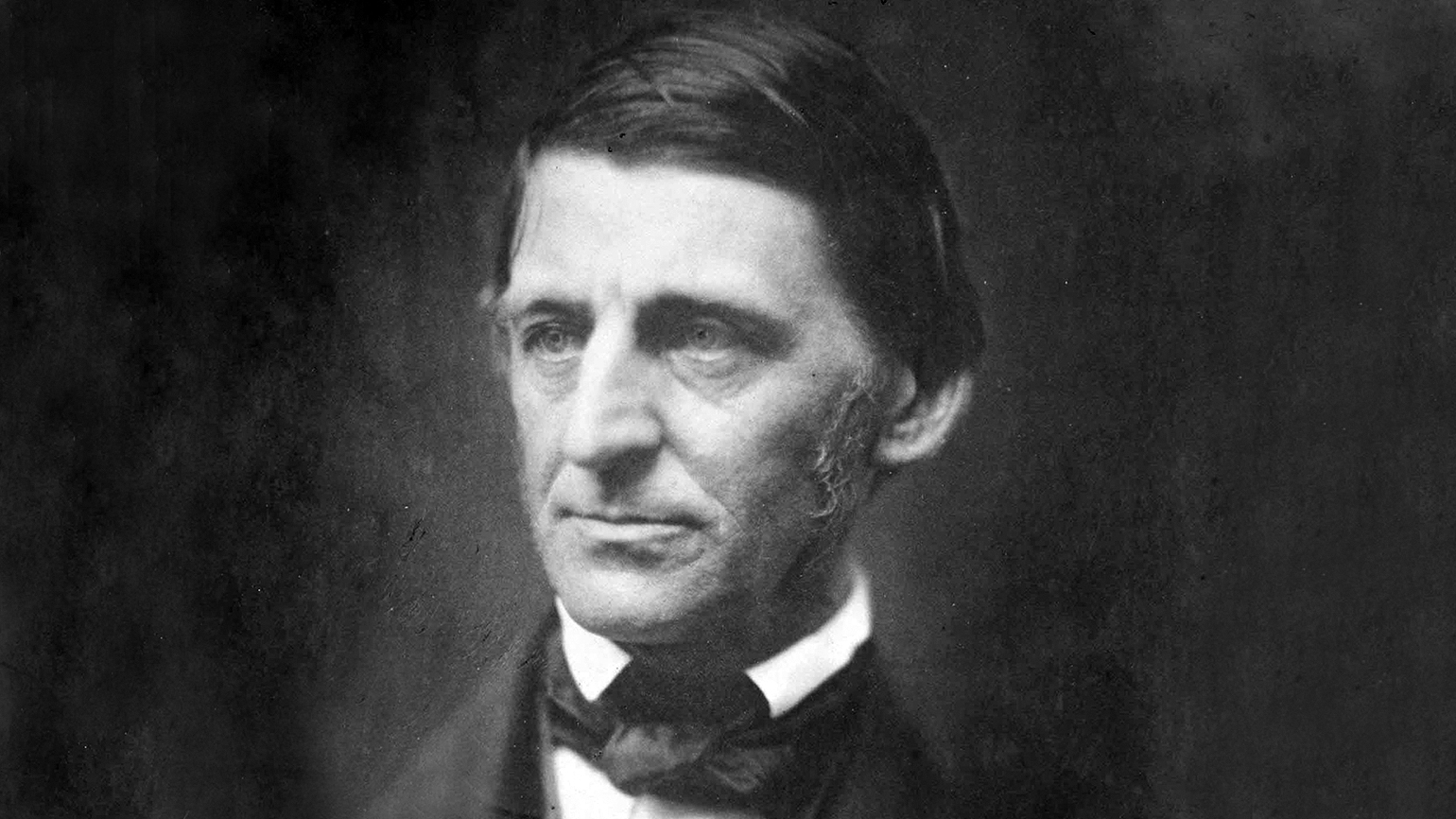
Heading to the great outdoors this summer to recharge your batteries? You can thank a transcendentalist for the idea. Turning to nature for spiritual sustenance might seem like an obvious thing to do, but a mere century and a half ago it would have struck most Americans as pretty farfetched (the woods used to be considered a place of danger and darkness).

How about the statement “I’m spiritual, but not necessarily religious”? You’ve probably heard that from a fair number of people. Again, it was the transcendentalists—Ralph Waldo Emerson, Henry David Thoreau, Bronson Alcott, Margaret Fuller and a handful of others—who initially popularized this idea. Even the concept of positive thinking itself had its first champions in this small, short-lived, yet incredibly influential group of New England thinkers.

Journey With Jesus in article ad

What exactly were the transcendentalists trying to get at? Start with the word “transcend,” which means to move above and beyond ordinary categories and the limitations that come with them. At heart, that’s what the transcendentalists were going for. Living in a land that was redefining what a nation could be, they saw themselves as seeking a new, and greater, definition of what a human being could be.

None of them worked harder at this task than their most famous and influential member, Ralph Waldo Emerson. America’s original positive thinker, Emerson was a tireless promoter of the basic transcendentalist idea that human beings are larger—infinitely larger—than they think they are. “A man,” he wrote, “is the facade of a temple wherein all wisdom and all good abide.” What we need to do is overcome the self-imposed habits of thought that prevent us from fully realizing this potential. Or as Emerson put it, “The only sin is limitation.”

Shedding old ways of thinking sounds fine on paper. But anyone who’s tried to change, truly change, knows that in practice, it’s a whole other matter. How do we go about doing it? Through his essays, Emerson has given us three keys for unlocking the wisdom and goodness within.

Believe in Yourself
There is in each person, Emerson wrote, a “vast-flowing vigor,” an energy that we can rely upon in any circumstance. Every one of us can tap into this bottomless spiritual reservoir. But we have a tendency to deny it. Have you ever felt overwhelmed by stress and thought, Things never go my way? Beaten yourself up over your mistakes? Deflected a compliment by saying, “Oh, it was nothing”? These are all examples of self-defeating thoughts, also known as stinking thinking.

And that, so often, is what gets in our way. An unwillingness to have faith in our true potential is the single greatest setback to achieving it. “To believe your own thought,” Emerson wrote, “to believe that what is true for you in your private heart is true for all men—that is genius.” Next time you catch yourself slipping into a distorted thinking pattern, stop and do a reality check. Things just aren’t going my way right now. Then act like a genius and give yourself some credit. I might have made some mistakes along the way but what I accomplished is something to be proud of. 

Peak Moments
All of us have experienced times when we’re deeply in tune with life and with ourselves, when everything comes naturally. Psychologist Abraham Maslow, father of the human potential movement, called these “peak moments.” More recently, psychology professor Mihaly Csikszentmihalyi has used the term “flow” to describe this state of total engagement. Athletes call it being “in the zone.”

The problem, Emerson realized, isn’t so much how to reach these peaks. It’s how to trust what we learn during them. “Our faith comes in moments,” he wrote. “Our vice is habitual.” The unavoidable humdrum aspects of daily routines dull our memory of how things are when we’re at our best. “So much of our time is preparation, so much is routine, and so much retrospect, that the pith of each man’s genius contracts itself to a very few hours.”

That’s why we need to burn the lessons of those few hours into our minds. We have to hold on to the perspective and clarity we achieve at our peaks and let them sustain us when we’re less inspired. “There is a depth in those brief moments,” Emerson wrote, “which constrains us to ascribe more reality to them than to all other experiences.” The sheer vividness of those highs should make it easier to recall them. That doesn’t mean living in the past. Rather, think of your moments of energy and inspiration as fuel packets. Tap into them whenever you need a boost to move forward.

Positive Is Practical—and Powerful
For Emerson, a positive attitude wasn’t a passive thing, a mere lens for viewing a sometimes difficult world in a kinder light. He believed it held a genuine practical power. Emerson scholar and biographer Robert D. Richardson, Jr., explains this aspect of Emerson’s thought in a wonderfully concrete way.

Consider Emerson’s famous adage: “Hitch your wagon to a star.” Advice that “sounds impractical if beautiful,” Richardson notes. “But it turns out to have an unexpected grounding in the real world. Emerson was thinking…about the tide-mills that used to exist along the East Coast. The incoming tide would turn the wheel one way, the outgoing tide would turn it the other; both ways ground grain and sawed wood, and it was all done by hitching the mill to the tides which are hitched to the moon. So Emerson means his spiritual advice literally.”

Don’t be intimidated by Emerson’s high-sounding language. Take his use of the word “soul.” “The soul is not an organ,” he writes, “but animates all the organs;…is not a faculty, but a light; is not the intellect or the will, but is the master of the intellect and the will.” It is “the background of our being—an immensity that cannot be possessed.” He isn’t talking about some daunting metaphysical abstraction. He’s talking about your true self—the person you are when you’re at your best, your boldest, your most alive and real.

Emerson believed that “the learned and the studious…have no monopoly of wisdom.” Much as he admired scholars, he knew they were often less likely to find their way to an experience of the authentic self than an ordinary person was. “Great is the soul, and plain,” he wrote in that populist spirit that one of his early readers, Walt Whitman, so loved and celebrated. “It is no flatterer, it is no follower…It always believes in itself.” In this and so many other ways, Emerson is the quintessential American philosopher: deep yet democratic, sophisticated yet simple as a glass of cold water on a summer day.

His views didn’t always play well with his contemporaries. He came from a long line of clergymen and started out as one himself. That made the churchmen of his day particularly critical when his thinking diverged from theirs. They found in Emerson’s rhapsodies on the mystic soul the evidence of a troublingly unorthodox sensibility.

Emerson did read deeply in religious writings outside the Judeo-Christian tradition. He studied the Bhagavad-Gita and other Far Eastern spiritual classics decades before it became fashionable. What Emerson’s studies brought him to was a greater understanding that God is in each of us and in the natural world around us—an idea that we almost take for granted today. It explains Emerson’s unflagging faith in the self’s native sufficiency and rightness, his belief that if we find our true spiritual center and act from it consistently, there is nothing we won’t be able to accomplish.

Still, that’s not to say that Emerson saw life as an easy stroll down the street. He was no stranger to hardship. By his early 30s, when he began writing the essays that would make him famous, he had already lost two brothers and buried his wife. He eventually remarried, only to lose his firstborn son at the tender age of five. These tragedies didn’t rob Emerson of his faith in life’s essential goodness, however. They only strengthened it. For him, thinking positively was a way to overcome life’s hurdles, never a means of escape from them.

If you read Emerson’s essays—”Experience” and “The Over-Soul” are excellent ones to start with— you will be amazed to see how many of the insights that fill today’s books and programs on self-improvement originated at his writing desk. From 12-Step programs to this magazine, there isn’t a single contemporary tool for learning how to think positively that wasn’t originally crafted, at least in part, by our greatest American philosopher.

“To finish the moment,” Emerson wrote, “to find the journey’s end in every step of the road, to live the greatest number of good hours, is wisdom.” Emerson and his fellow transcendentalists would be thrilled to know we are seeking—and experiencing—that wisdom for ourselves.

Download your FREE positive thinking ebook!

For more inspiring stories, subscribe to Guideposts magazine.

The Office Cold

I almost skipped my blog today. I woke up with a cold and all of you, especially this time of year, know what that’s like.

It’s the dreaded office cold, that annual bug that burns its way through a staff. Those who contract it first are the lucky ones—they get the misery over with. The rest of us cower behind our desks, avoid contact with the infirm and wash our hands so frequently that the skin begins to slough off.

NIVFLB Inarticle ad

That’s me, gobbling vitamins and thinking seriously about wearing a surgical mask as the coughers and sneezers close in. I’m like one of those noblemen in Boccaccio’s Decameron, hunkered down waiting for the Plague to strike.

When the cold finally hits it is almost a relief. I want to stagger back to bed and disappear under the covers for a few days. No need to write a blog. They’ll understand. 

That’s when my mother’s voice pipes up. “There’s nothing wrong with me,” she’d always insist, despite overwhelming evidence to the contrary. Mom could be standing there with an arrow through her head and she’d still insist she was in perfect health. It went beyond denial. It was almost delusional. While others groaned and moped, she kept going. Her favorite action to take when she felt something coming on was to scrub and wax the kitchen floor. I’m not kidding. 

Was my mother crazy? Maybe not. She was a child of the Great Depression, a time much like today when people faced tremendous fear and uncertainty. Deprivation was everywhere and with so much going to pieces around her, I think she felt it was irresponsible to get sick let alone give in to it. It’s not a health regimen I’d recommend yet for Mom it worked. She could endure the physical wretchedness of a cold or flu but to think of herself as a sick person was more than she could bear. She’d rather pretend she wasn’t.  

I’m not quite up to that but in the end I decided I should write this blog. I thought of all the times my mother was obviously under the weather—obvious to everyone but her—and she still managed to get me to hockey practice and rehearsals of my garage band. I’m not going to be a kamikaze about my cold. I know how to take care of myself, more or less.

I’m grateful, though, for the example my mother set. I’ve written before about her incredible faith, a kind of daily faith she wore like a second skin. She drew on that faith when she didn’t feel well, especially toward the end when there was no denial powerful enough to change things.

And maybe that’s the lesson I can learn from catching the annual office cold. A certain amount of stubbornness in the face of sickness is a virtue. It helps us dig down into our faith and keep going when the sniffles hit. Now if you’ll excuse me, I’m going back to bed. 

Edward Grinnan is Editor-in-Chief and Vice President of GUIDEPOSTS Publications.

The Nurse We Needed

I adjusted the blinds to let the sunshine into Becky’s room at Memorial Sloan-Kettering Cancer Center. It was one of those luminous late summer days in Manhattan when the sidewalks are thick with people—office workers, shoppers, vendors, tourists from all over the world. The energy was almost palpable, not at all like the quiet little town I lived in upstate where everyone knew everyone else. “Come and look,” I said to Becky and my sister, Kathy, Becky’s mom. “It’s an amazing view.”

My 19-year-old niece had been battling Hodgkin’s disease, a form of cancer, since January. She’d entered Sloan-Kettering that morning so she could have a stem cell transplant, a desperate effort to wipe out the cancer that radiation and chemotherapy hadn’t been able to destroy. It had been a long, tough year, and I just wanted this procedure to cure Becky and for things to go back to normal.

The Daily Bible Large Print relaunch with digital free gift in article ad

Becky got into bed and I was still admiring the view when the door opened and in waltzed a young woman. Not just any young woman. This one had spiky black hair, a line of earrings snaking down each ear, eyebrow rings and a stud in her nose. The silver glinted in the sunlight, and for a moment I just stared. “May I help you?” I asked.

“Hi, I’m Tami. I’m going to be Becky’s primary care nurse.” Becky sat up and shook Tami’s hand. I tore my eyes from Tami’s face long enough to glance at her uniform. Something told me a belly button ring lurked underneath it. I’d seen a few kids decked out like this when I was substitute teaching, but they were a tiny minority in our town. And with two teenage sons, I’d seen my share of music videos. But this girl was a hospital nurse! How could someone who seemed to have no problem inflicting damage on her own body be trusted to take care of someone else’s?

I watched silently as Tami hooked up Becky to a couple of monitors. “I’ll be back to check on you later,” she said.

Becky turned to me the moment Tami left the room. “Aunt Ine, how could you act like that? She’ll think you don’t like her!”

“What? I didn’t say anything.”

“You didn’t have to. The look on your face said it all.” I’d never been very good at hiding my feelings. But I had to watch out for Becky. My only niece was in a fight for her life. She needed someone caring, dependable and responsible nursing her.

I unpacked Becky’s things and said nothing, resolving to keep an eye on Tami. No point in upsetting Becky further. She’d been through so much already. Having to drop out of college freshman year. Nine months of outpatient treatment at Sloan-Kettering. And the worst symptom of her illness—an intense itching that made it almost impossible for her to sleep. Her only relief was having someone rub her feet, where the itching was most severe. Becky’s father had to stay upstate and work, so I often made the eight-hour trip to Manhattan to help my sister with the round-the-clock foot rubs while Becky was being treated.

My prayers had become round-the-clock too. Ever since her diagnosis Becky had been optimistic, a real fighter. “My grandfather lived for years after he got sick,” she told her doctor. “I’m going to be just like him.” But every time it seemed Becky was getting better, we got more bad news. My pleas turned into frantic questions—Why aren’t you helping Becky, God? Why aren’t you watching over her?

We couldn’t even rub Becky’s feet anymore without wearing gowns, masks and gloves because she was at a high risk for infection until she got her new stem cells. Her friends couldn’t visit her. But Becky’s face lit up whenever Tami came in. They chattered on about TV shows, music, boys—especially their exes. It was like they’d known each other for years!

How could my wholesome niece—who loved the outdoors and never bothered with jewelry—be so comfortable with a big city girl who had more metal on her than a bicycle chain? Granted, some days Tami looked almost normal—the piercings were visible but the silver was missing. One afternoon she strutted in wearing a leather dog collar studded with metal spikes. “That girl has a problem,” I told Becky after Tami left. “Nobody with a healthy self-image would dress like that.”

Becky rolled her eyes. “It doesn’t mean anything, Aunt Ine. It’s just her style!”

Style? I didn’t see anything stylish about it. But I had to admit I also couldn’t see any reason to doubt Tami’s nursing skills. In fact, Becky seemed so at ease with Tami that Kathy and I started going for walks while she was on duty. The day of Becky’s stem cell transplant, we went all the way to South Street Seaport to buy her a watch for her “transplant birthday.” Becky recovered quickly, and on Halloween she was released. “I’ll miss you, Becky,” Tami said as she hugged her goodbye, her eyes moistening. “Now go home and celebrate.”

The celebration didn’t last. Right after Thanksgiving the cancer came back. Becky started outpatient radiation treatments again. Then she caught a cold she couldn’t shake. The day after Christmas she was rushed back to Sloan-Kettering. She had pneumonia.

A couple of days later I sat alone in the waiting room reading the same magazine paragraph over and over while I waited for Becky to be brought out. Someone sat down in the chair next to me. Tami. There was something almost comforting about her familiar strangeness. She looked me straight in the eye. “You know Becky’s in very bad shape,” she said. “There’s someone I think she needs to speak to.”

“Who?”

“Her old boyfriend. Can you track him down?” Before I could answer, Tami slipped a piece of paper into my hand. “My home phone number,” she explained. “In case you ever need me.” With that she hurried off on her rounds. For a moment I felt as dumbfounded as I’d been the first time I’d seen Tami. I tucked her number into my purse and went to find Kathy so we could contact Becky’s ex.

Tami was right. Becky was in good spirits after she talked to her old boyfriend. But her lungs were filling up with fluid and she developed shingles.

By December 30 the worst seemed over. Becky had even improved enough to eat a Big Mac. On New Year’s Eve morning, I told Kathy to catch up on her sleep. I planned to sit with Becky a few hours before taking the train home to spend the holiday with my husband and sons. I couldn’t wait for the year to end. I wanted to forget all about 1997.

But it wasn’t over yet. Becky’s doctor had ordered an X-ray that morning. The results came back just as my sister arrived at the hospital. The moment I saw the doctor, I started shaking.

“The cancer has exploded inside Becky’s chest,” she said.

“What do you mean?”

The doctor shook her head. “It means the cancer will grow into Becky’s throat. When it does, she won’t be able to breathe.” Her voice sunk to a whisper. “You’d better call the rest of the family—now.”

Within an hour the others were on their way. But they wouldn’t get to the city until at least midnight. Somehow we’d have to get through the night on our own. We couldn’t tell Becky, not when she was finally feeling better. Not on New Year’s Eve.

Kathy sat with Becky. But I couldn’t. One look at my face and Becky would see my feelings as clear as always. So I paced. Around and around the halls I went, trying to rid my mind of the image of Becky gasping for air. My niece was dying. And I couldn’t stop it. Couldn’t even manage to sit with her and rub her feet.

Every prayer I’d said for Becky had failed, yet I could do nothing else but pray. Oh, God, just take care of my niece. Give her comfort. Help me understand all this!

Down the hall a nurse turned the corner. I wished it were Tami. But she was off for the holiday. I dug into my purse and pulled out her number. In case you ever need me. I hesitated. It was New Year’s Eve after all, and Tami was young and single. Finally I went to the pay phone and called her. “If you could maybe come keep Becky company for just an hour…give us time to gather our senses…”

“Think you can hold on till eight o’clock?”

“Oh, yes! I know you probably already have plans.”

“I do now. See you soon,” she said.

I pulled myself together and joined my sister in Becky’s room.

Right at 8:00 p.m. Tami burst in, eyes shining. Hoisting a bottle of sparkling grape juice into the air, she shouted, “Let’s party!”

Tami unloaded a stack of videos, four pints of Ben and Jerry’s ice cream and four plastic champagne glasses on the windowsill. In minutes we were all scrunched together on the bed watching movies, eating ice cream and toasting with grape juice. We were laughing so much we hardly noticed when midnight passed. Who knew someone who’d once seemed so strange to me could make things feel so normal? I watched Tami slip her hand—a ring on nearly every finger—into Becky’s.

Judge not according to the appearance, I recalled from the Bible. Tami was the answer to prayer I’d been waiting for. She hadn’t looked like the answer I’d wanted. Yet God had provided in his own perfect way. He had provided for me by providing for Becky.

Tami would be there again four weeks later when Becky slipped away peacefully, surrounded by all of us who loved her. But when I think of Tami—and that’s often—I think of the joy she brought to those final minutes of a terrible year. And the only thing I remember about how she looked that night is the love in her eyes.

For more inspiring stories, subscribe to Guideposts magazine.

The Mystery of the Soul

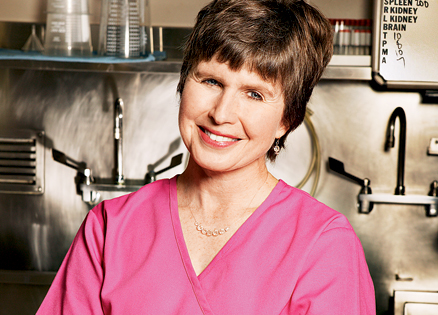
I’m a forensic pathologist. My job is understanding the cause of death, but it’s also to speak for the dead. Since 1993, as coroner for Anoka County, Minnesota, I’ve been doing everything in my power to answer one question: How did this person die? Then I explain it to family members, physicians, law enforcement and the courts. Often, death is a riddle.

I’m also a doctor, and like all doctors, a healer. How could a person who spends her time examining the deceased call herself a healer? Well, I’ll tell you.

I come from a medical family. My dad is an internist and, growing up, I tagged along with him on house calls, watching him solve the mysteries of his patients’ illnesses. He practiced medicine like the country doctor you see in old movies: worn leather medical bag, stethoscope draped around his neck and a big, reassuring smile that said, “Talk to me. I’ll listen.” Same with Mom, a nurse. Watching the difference the two of them made in people’s lives, it was only natural that I’d go into medicine myself. In no other job did a love for knowledge and a love for people meet so perfectly.

It was Dad who suggested forensic pathology. He recognized my excitement over finding answers—my insatiable curiosity about how the human body works. “You’d be a doctor’s doctor,” he told me. “It’s the basis of all medicine. Nothing teaches you more about life than death.”

I liked the idea of discovering the cause of death. There is no more intimate possession than the body itself. Performing an autopsy, I don’t see an anonymous corpse in front of me, but the evidence left behind of that person’s soul: an open book telling me about how he or she lived. If well and decently, that’s evident in a thousand different ways. If badly, that’s evident too. A life story is visible right there in the organs. You can tell the choices people made in life.

I am passionate about my work. My autopsy reports are the last word on my patients. Each case is a new challenge, a new mystery, and I can’t rest easy until I’ve made sense of it. I’m not at peace with a case until I’ve discovered exactly how the person I’m examining has passed on.

Eventually an idea formed in my mind. What about the families? If knowledge really heals, why not share the knowledge I gained in my autopsies? Why not personally tell them the cause of death? Nothing in life hurts as much as losing a loved one. Maybe talking to me could help ease the family’s grief, perhaps even help in the healing process. I called the next of kin whenever possible and shared my knowledge of how their loved one had died. In almost every case it helped them.

It helped me too, fulfilling my desire to be a healer, like Mom and Dad. I opened myself up to the survivors’ pain, grief and anger, as well as their hope and gratitude. And something more…more than I could ever have imagined.

Take Julie Carson, the wife of a man named Randy on whom I performed an autopsy. She’d come home one day to find Randy dead on the floor next to his easy chair, the TV remote still in his hand.

In the left ventricle of Randy’s heart I discovered a large tumor that penetrated the main chamber. I suspected the tumor had played a part in Randy’s death, and called in a specialist to help interpret the evidence. The tests took weeks, which delayed the death certificate. Julie was left waiting, alone with her grief. In 17 years she and her husband hadn’t spent a single night apart. How could God have taken him away from her? And so suddenly, without even a chance to say one last “I love you.”

I called Julie the minute the report was ready. She wanted to know everything. “The growth in your husband’s heart was benign,” I explained. “But a piece of it broke off and entered one of his coronary arteries. The tumor fragment plugged the vessel, just as a blood clot would have. In essence, Randy died of a heart attack.”

Julie was silent for a moment. “Did he suffer?” she asked. I told her that in my opinion, Randy had slipped away painlessly.

“With his favorite toy in hand,” she said, her voice softening. “I usually got into bed while Randy was still watching TV, channel-surfing mostly. But I never shut my eyes till I heard him coming up the stairs. Can I tell you something, Dr. Amatuzio?”

I thought of my dad, who always had time to listen. “Of course,” I said.

“After Randy died, I couldn’t sleep. Then something happened. One night I finally drifted off. Footsteps in the hall woke me. I just knew it was Randy. Sure enough, he walked right into our bedroom, sat down next to me and took my hand. We talked about the kids, our finances, the house. ‘Our love is forever, he said. ‘Just think of me and I’ll be there.’ I know our love still connects us, Doctor.”

You might think this story is a rarity. But the fact is, over the years I’ve heard scores of stories like it. They’ve opened me to a whole world: the one that lies beyond the borders of death. Having grown up in the church, I understood the concept of an afterlife. Yet how amazing it was to confront it as a doctor!

Mary Bare was the mother of a young man named Greg, who’d died in an auto accident. I called Mary after conducting his autopsy and asked if she had any questions. Her first one was the same as Julie’s: “Did he suffer?” In this case as well, I was able to tell Mary that in all likelihood, Greg hadn’t suffered.

Mary seemed almost to expect that answer. “Dr. Amatuzio,” she said, “can I tell you something?” When Greg was a boy he had a favorite babysitter named Sheila. She was Mary’s favorite too because she had a special knack for comforting him. Shortly after Greg’s death, Mary called Sheila.

“Sheila told me,” Mary said, “that on the night Greg died, she had been awakened by a loud voice saying ‘Hey, Sheila!’”

Sheila sat up and saw Greg—all grown up—standing next to her bed. He was very distraught that his death had caused such pain and sadness. Sheila didn’t stop to question whether she was dreaming. She did what came naturally and comforted him, just as she had done so many times when he was a boy.

A few nights later Sheila was awakened again—this time by a gentle light filling her bedroom. Again, Greg stood at the foot of her bed. But this time there was no more confusion, no more sadness about him. “Tell Mom I’m okay now,” Greg said. It seemed that Greg’s life was going on, in a new world where he was at peace. Sheila was relieved to get Mary’s call. It was confirmation that she should relay this message of comfort sent from God to a grieving mother.

Yet sometimes people do come back from the dead. I was having lunch one day with several law enforcement officials, including a local sheriff—a shrewd and highly respected man. People had heard about my interest in the subject, and somehow the conversation took that turn. The sheriff spoke up. “Dying’s not the big deal people make it out to be. I drowned once.” I looked at him. He didn’t say “almost drowned,” he said “drowned.”

The sheriff had grown up on a lake. “My brothers and I spent just about every day of the summer swimming there and carrying on. We used to dive off the lifeguard tower and race to touch the bottom.”

But that got too easy. The sheriff and his brothers added a new twist to the game. The tower’s legs were ladders, the rungs of which started out wide and got narrower toward the top. He and his brothers would weave back and forth between the rungs as they made their way up. One day, just a few feet from the surface, the sheriff got stuck. “I looked up and saw that my brother had made it to the surface,” he said. “I panicked. Then I blacked out.” The sheriff came to in a rescue boat after mouth-to-mouth resuscitation.

“Do you remember anything from when you were unconscious?” I ventured.

The sheriff looked down. Something in his face changed. “Why, yes,” he said. “I do. I don’t usually talk about it, but it’s as clear as if it were yesterday. I remember thinking, I’m going to die. I took in a large gulp of water, and all of a sudden, I was up above my body, looking down on it. There were beautiful colors everywhere. I felt sorry for my body, but I wasn’t worried about it. There was all sorts of activity. My brothers and the lifeguard were there. But I felt perfectly calm, and found myself speeding along above the surface of the water, toward someplace so near yet so perfect I never could have imagined it. Then, all of a sudden, I was jolted back into my body.”

The sheriff said that what he remembered most was that when he came back from the stunningly vivid world he’d entered for a moment, everything in the regular world looked dull—as if he’d gone from a color movie to one in black and white.

“You know, Doc,” the sheriff said, looking at me with a twinkle in his eye, “I know that you’re the coroner and see this stuff every day. You know that it bothers a lot of folks. But I’m not afraid of death. Not after what happened to me.”

Can I explain all of these stories I’ve heard, in the way that I can explain exactly why a body I examine died in the way it did? Probably not. We are not meant to see the soul. Yet I have come to believe that these experiences reveal the truth of what I believe: Dying is part of a larger picture, a moment of transformation on a path of eternal life. Discovering the cause of death opens the door to a grander reality. We don’t end when our bodies give out. In a life full of solving mysteries, that’s the greatest one I’ve discovered—the mystery of the soul.

The Most Important Thing of All: Letting Go

One of my least favorite things is finding myself in situations where, no matter how hard I try or how resourceful I am, there are problems that can’t be fixed. It makes me want to scream with frustration. Slowly, slowly, I’m learning my lesson:

I can’t always make it better, but I can always make it worse.

Yes, it’s true. And when I am stuck and shift my focus away to not-making-things-worse… well, it helps. Maybe that’s because I’m no longer feeding my own anxiety and stress into the situation. Or maybe it’s because my efforts get focused on what I can control, so I’m not circling in a frenzy around what I can’t.

Pause & Pray In Article Ad

There’s a corollary to this that I learned from a wise friend:

        I’m only responsible for my input, not for the outcome.

I am responsible for what I teach my children, the example I set for others, the coping skills I model when faced with adversity or disappointment, the resources I pull in when help is needed.

My input includes the tone that accompanies my corrections, the attitude I display when frustrated or angry, the faith I practice (or fail to) in front of the observant eyes of others.  

The outcome involves what people choose to do with all that. God gave every person in the world just as much free will as He gave me, and though I don’t always like it, their choices are their own.

If I’ve done what I could, behaved as I ought, and said what was needed, I have to let go of what happens after that. I’ve done what God asked of me. 

In the end, that’s the most important thing of all.

The More You Imagine Change, the More You Can Achieve It

One of the most quoted of the many quotable things Albert Einstein said was: “Imagination is more important than knowledge.”

The second, less frequently cited part of the statement is actually my favorite: “For while knowledge defines all we currently know and understand, imagination points to all we might yet discover and create.”

God's Constant Presence In Article Ad

Imagination is forward leaning. It brings to light what is possible. It weds insight and action to vision.

Imagination isn’t just the province of artists and great minds. Every one of us is blessed with this amazing capacity, this gift of the mind. Through the power of our imaginations we can change our thoughts—and, as the philosopher and psychologist William James said, by changing our thinking we change our lives.

We use our imaginations constantly. Every time we think about something that hasn’t happened yet, we’re using our imaginations. In the morning, when we survey the prospects of our day, our minds roaming through our to-do lists, we’re performing an imaginative, creative act. We’re seeing ourselves as actors in the future through the medium of our imaginations. Thanks to imagination, we don’t have to be who we were or do exactly what we did yesterday. We can change ourselves, and thus the future. So I’m with Einstein on this one. Imagination trumps knowledge.

Imagination differs from fantasy in that it identifies a potential outcome from a plausible reality. It brings to light what is possible. But similar to fantasy, it does turn us into time travelers. Daily life unfolds on a linear timeline: We’re born, we live, we die. In between, we laugh, we love, we grieve, we forgive. We grow. Imagination lets us peer along the timeline to see who we might be down the road. Once we honestly decide to change and summon the willingness to commit to that change, it is absolutely necessary that we envision ourselves changed.

Close your eyes and clear your head of all thoughts. Concentrate your imagination on a single image: You, changed. What you look like. What you sound like. How you act. And of paramount importance, how you feel—strong, confident, grateful, happy. Through every step of your change journey, never let these images escape your thoughts. The more you imagine your change, the more you will become it.

Get more inspiring stories of personal transformation in, The Promise of Hope.

‘The Miracle Season’ Is A Sports Movie With An Inspiring Message

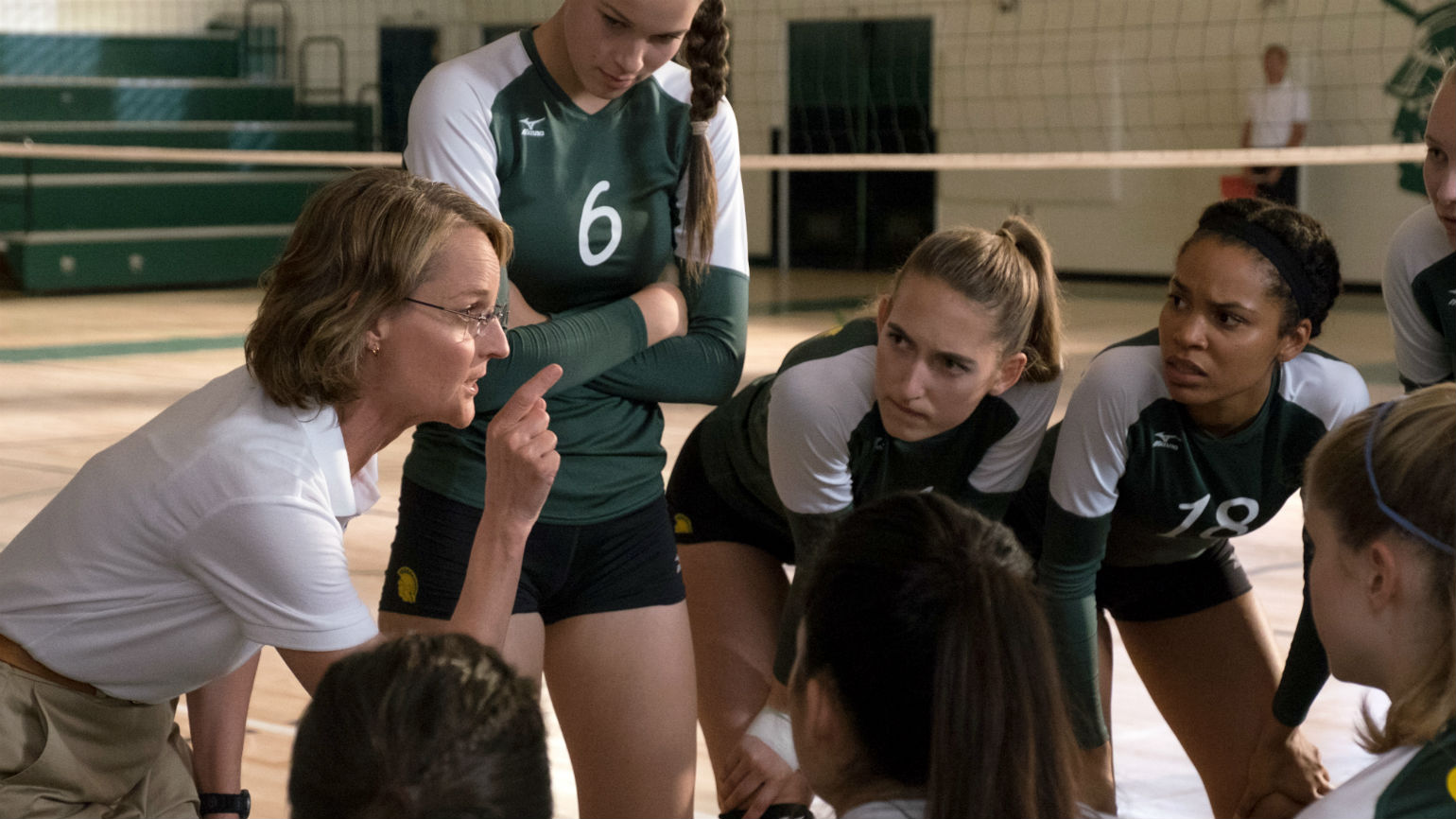
The Miracle Season is the kind of feel-good sports movie you haven’t seen before. It focuses on a high school girls’ volleyball team – the Iowa City West High Trojans.

Sports movies often feature a team of men and women trying to overcome insurmountable odds. But The Miracle Season isn’t just about the road to victory – it’s about healing.

The movie follows the true story of Caroline Found (nicknamed Line by her teammates), a young woman full of personality, drive, and compassion who passed away after a moped accident. Her death, and the consequences of it fuel the film. Found was so loved by her teammates, her school, and her community that losing her left an unfillable void.

That’s why Caroline’s father, Ernie Found, decided to give his blessing to the movie.

“We were trying to think of what good can come from this in some way, shape, or form,” Found tells Guideposts.org of his daughter’s passing and her team’s efforts to rally and win a state championship in her name. “Not that only good can come of it. It stinks, and it hurt immensely, but here’s more to it. If this film can help others, it’ll be worth the effort.”

Found, who lost his daughter and then his wife to cancer just two weeks later, features heavily in the film. He’s played by Oscar-winning actor William Hurt on-screen. The movie not only follows the girls as they struggle to fill Line’s spot on the team and make it to another state championship but Found as well.

After the passing of his daughter and wife, Found could’ve easily retreated into himself, shut out the world, and grieved in private. Instead, as the film shows, he made a point of attending every volleyball game the season after Line died.

“I felt like I had to go,” Found says. “I was hurting, they were hurting, friends were hurting, classmates were hurting. I just felt like, it’s going to be good for everybody, just to hang in there together. Let everybody know that we’re all in this together and every little bit can help.”

That sense of community and togetherness is what ultimately tugs at the heartstrings when watching the film. With Line serving as the team’s guardian angel – angel imagery is featured heavily in the movie – Found providing comfort and a rock-steady presence. With the team’s coach, played by Helen Hunt, driving them to success, we watch as this group of girls galvanizes an entire town to honor their teammate with an inspirational motto: “Live Like Line.”

“’Live like Line’ means to live to put a smile on somebody else’s face, to try to bring joy to others, because it’s in giving of joy that you’re going to be also receiving joy,” Found says of the message of the film and his daughter’s legacy. “To live like Line, means it’s a privilege, an honor to be living, and it’s okay to go the extra mile. It’s okay to work hard, it’s okay to make mistakes.”

He hopes that’s what audiences will ultimately take away from his family’s story.

“When you get right down to it, living like Line is, “Let’s all do this together.”’   

The Message of Easter

Easter is here—with its promise of spring, its big family meals, its inevitable chocolate bunnies and jellybeans. But what does Easter really mean? What does the message of Easter bring to us humans knee-deep in messes of our own making?

The Easter Message

Two hands holding a wooden cross for the message of Easter

First and foremost, it means that we serve a risen Savior. The grave could not hold Christ; he defeated death. He paid the price for our sin with his own blood. And the consequences for us are huge.

Pray a Day Vol 2 In Article Ad

READ MORE: Read the Easter Story in the Bible

“For if, while we were God’s enemies, we were reconciled to him through the death of his Son, how much more, having been reconciled, shall we be saved through his life!” (Romans 5:10). Because Christ lives, we will live, too–both in this life and in the life to come. Jesus said, “I am the resurrection and the life. The one who believes in me will live, even though they die; and whoever lives by believing in me will never die” (John 11:25-26).

The message of Easter was first spoken to two women at Jesus’ tomb, in these simple words: “Do not be afraid…for He is risen” (Matthew 28:5-6). Jesus is with us and gives us his ability to overcome any defeat. The true Christian realizes that he, with Christ, rises above every setback, every obstacle and enters into the true meaning of living.

The message of Easter tells us: You need not be afraid of anything—not life with all its insecurities, its conflicts, its uncertainties; not afraid of even death itself. You need have no fear—no fear!

When your spirit is filled with the unshakable strength of God in the name of Jesus Christ, you get faith so deeply planted within you that when crises hit you—as they sometimes do suddenly—you automatically can look life in the face and not be afraid. You can say with the Apostle Paul, “For I am convinced that neither death nor life, neither angels nor demons, neither the present nor the future, nor any powers, neither height nor depth, nor anything else in all creation, will be able to separate us from the love of God that is in Christ Jesus our Lord” (Romans 8:38-39).

As you learn the message of Easter, remember: Easter is here. Be transformed. Be resurrected. Be not afraid!

Bible Verses About the Easter Message

Woman outside praying about the message of Easter with her Bible

Reflect further on the message of Easter with these powerful verses from the Bible. Read them on your own during your Easter prayers or aloud with the whole family as you do your Easter celebrations.

  • Who then is the one who condemns? No one. Christ Jesus who died—more than that, who was raised to life—is at the right hand of God and is also interceding for us. Who shall separate us from the love of Christ? (Romans 8:34-35)
  • Praise be to the God and Father of our Lord Jesus Christ! In his great mercy he has given us new birth into a living hope through the resurrection of Jesus Christ from the dead. (1 Peter 1:3)
  • He has saved us and called us to a holy life—not because of anything we have done but because of his own purpose and grace. This grace was given us in Christ Jesus before the beginning of time. (2 Timothy 1:9)
  • I want to know Christ—yes, to know the power of his resurrection and participation in his sufferings, becoming like him in his death, and so, somehow, attaining to the resurrection from the dead. (Philippians 3:10-11)
  • But Christ has indeed been raised from the dead, the firstfruits of those who have fallen asleep. For since death came through a man, the resurrection of the dead comes also through a man. (1 Corinthians 15:20-21)

READ MORE: 20 Easter Bible Verses to Celebrate and Reflect in 2023

The Man Who Picks Out the Rockefeller Center Tree

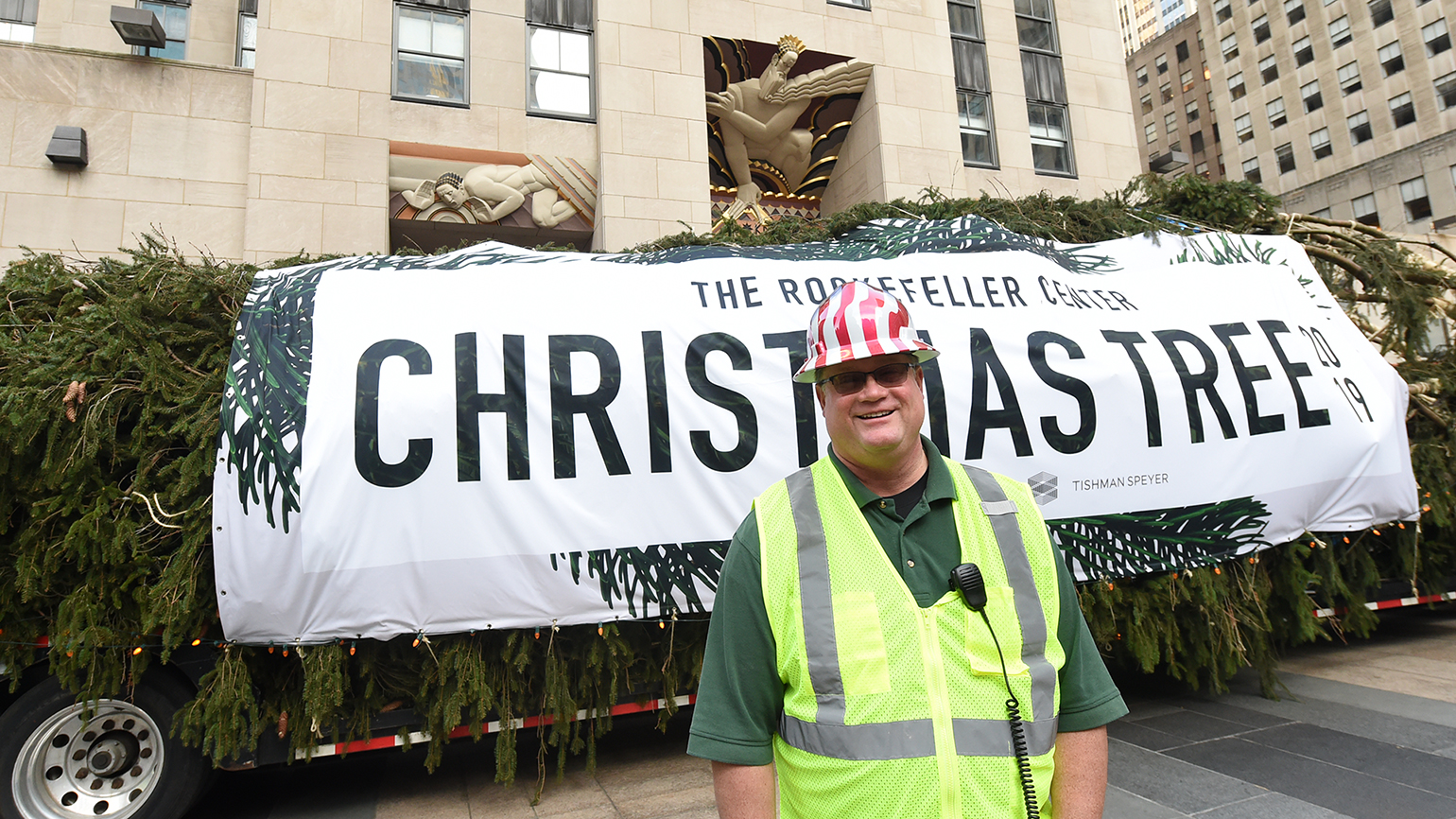
He was made for this. Erik Pauze, the tree scout for Rockefeller Center, loved trees as a kid and was a horticulture major in college. Fresh out of school he landed a job with the gardening team at the famous New York City plaza, climbing the ranks to head gar­dener. For more than a decade, Erik has driven through Pennsylvania, New York and Connecticut, scout­ing evergreens, making a list and checking it twice, like Santa on wheels.

What does he look for? Seventy-footers at least, with perfect symmetry, “green, lush and full,” he says. “Sometimes people don’t believe me when I say why I’ve come. That’s when I show them my business card.” The crew fertilizes the hopefuls and considers how they fare during bad weather. The branches must be strong enough to bear the weight of 50,000 lights and a 900-pound crystal star on top. Erik still gets goosebumps dur­ing the countdown to lighting. “It’s a great feeling,” he says. “And everybody’s happy.”

Walking with Jesus L&E evergreen_in article ad

Erik isn’t just a tree guy; he’s a people person too. He keeps in touch with families who have donated their trees over the years and calls them when he’s in their area looking for another one.

With all his experience you’d think he’d be the one to pick out his tree at home. “The family votes on it,” he laughs. “They just want me to bring my pickup to get it to the house.”

Read more: Joy to the World: The Inspiring Journey of the 2019 Rockefeller Tree