Embrace God's truth with our new book, The Lies that Bind

The Importance of Forming New Friendships in Retirement

Retirement can be a time of excitement and freedom, allowing you to explore activities you’ve never tried but may have dreamed of. It can also be unsettling. When your daily work life ends, your face-to-face interactions undergo a major shift. Co-workers you’d grown used to seeing each day are no longer part of the landscape. Some may have become close friends, others fond acquaintances. Either way, chances are they were a meaningful part of your life—maybe even more so than you realized. Your newfound free time, however, can be an opportunity to reinforce existing friendships while you consider ideas to form new relationships.

Friendship appears to be even more essential as you reach retirement age. “The older people get, the more challenging it can be to make friends, and that’s especially true after retirement, as work is one of the most common ways to meet people” the Stanford Center on Longevity reports.

Research published in the journal Personal Relationships shows that the power of friendship gets stronger with age and may even be more important than family relationships. William Chopik, assistant professor of psychology at Michigan State University, found that friendships become increasingly important to one’s happiness and health across the lifespan. For older adults, friendships are an even stronger predictor of health and happiness than are relationships with family members.

Friends can be particularly valuable in helping older adults deal with feelings of isolation that can accompany retirement, illness and the death of loved ones, according to HelpGuide, a nonprofit mental health and wellness website.

As long as you’re around people, the potential exists to make new friends. You may want to consider these ideas to scope out others who are like-minded:

Volunteer

Explore your passions. Paint props or tear tickets at a community theater; save historical places that have fallen into disrepair; give your time to an animal rescue organization or the National Park Service.

Take a class or join a group

Any exercise class, like Zumba or yoga, will get you moving with others. Exercise your artistic side in a group setting with cake decorating, pottery or creative writing. Sierra Club Seniors offers outings, from docent-led museum and gallery tours to challenging hikes.

Work part-time

You may choose to work either for personal enrichment or out of financial necessity. Although working remotely from home is increasingly popular, it can be isolating. Depending on your interests and background, you may want to move into: teaching, office work, real estate or retail sales or management consulting. If you nurture a desire to help others, child care or home care for aging adults are excellent options. Both offer flexible hours and allow you to play a significant role in another person’s life. At one end of the age spectrum, you would care for children’s basic needs while offering important guidance. As a home care aide, you would be trained to help aging adults with daily activities like light housekeeping, shopping and preparing meals, while providing much-needed companionship.

One of the first principles of Dale Carnegie’s book, How to Win Friends & Influence People, is to “become genuinely interested in other people.” This may be a given for you. Retirement can be one of the best times in your life to explore your interests and form new bonds with people who might just become good friends.

The Hope and Healing Behind “The Shack”

One phone call.

No doubt you’ve heard those overnight success stories–the actor getting the breakthrough part, the struggling musician whose song everyone is suddenly talking about.

The book I’ve written, The Shack, has proved to be hugely successful in ways that I couldn’t possibly have imagined.

But the phone call that got it all started was something that threw my ordered world–what I desperately wanted people to believe was ordered–into pain and chaos long before I ever put pen to paper.

I was an insurance agent, supporting my wife, Kim, and our six kids, the picture-perfect husband and provider. Framed family photos on the desk, the kids stretching from ages one to 14.

I took them on camping trips up the Columbia Gorge and told them bedtime stories. I wanted to give them the safe, secure childhood I’d never had and never talked about.

But the terror of my past was rarely far beneath the surface, no matter how hard I tried to hide it. I was always running from half-buried memories, haunted by doubts, doubts that said if anyone really knew who I was deep inside, no one could possibly love that damaged and frightened person.

January 4, 1994, one phone call changed everything. I was just finishing lunch with a friend and Kim was on the line. “Hi, darling,” I said, waiting to hear some detail about the kids’ soccer games or a meeting with a teacher or a question about dinner–was I going to be home late again?

“I’m here in your office,” she said, her voice like cold steel, “and I’m waiting for you.”

“What’s wrong?”

“I know.” Then she hung up. The air was sucked out of the room. I wanted to keep maintaining the fiction of our perfect marriage because it was all I really had in life.

I wanted to hide, because hiding and lying were what I knew how to do best. I could appear to be the model Christian dad. I was the son of missionary parents, a Bible school graduate, a former seminary student.

Kim and I had actually met at a church when I had a staff position in charge of the college youth group. She walked into a Friday evening meeting with two of her sisters. One look at her raven hair and dark searching eyes and I changed what I had planned.

“Why don’t we split up into groups of two and pray for each other?” I said. Of course, I paired myself with Kim.

She knows, I thought now. I wanted to run away, but that would solve nothing. You can’t run from your own sorry self.

The next thought was ending my life, the ultimate form of self-centered running away.

Perhaps it was a nudge of grace, but I finally decided I had to face Kim, even if the anger in her voice terrified me.

All the secrets had to come out, all those things that had happened to me so long ago yet still seemed so much a part of the present, my behaviors and addictions I could never talk about. It was all or nothing.

The trip to the office was one of the longest of my life. I pulled into the parking lot and slunk out of the car. I pushed open the door.

The place was a shambles. Files thrown on the floor, drawers open, paperclips and pens dumped on the carpet, the trash can knocked over, memos ripped off my bulletin board.

In the middle of it all sat Kim at my computer. She knew I was having an affair with one of her best friends. All the e-mails between us were there for anyone to find. Was I secretly hoping to get caught? The guilty, they say, seek punishment.

“How could you? How could you betray me like this?” Kim shouted.

I couldn’t meet her scorching gaze. I couldn’t bear seeing the pain in those dark eyes. Pathetically, I promised that I would end it right away, that I’d never let it happen again.

“Why should I believe you?”

Why indeed? I didn’t even trust myself. I was in no position to promise anything. But I did make one pledge: “I don’t want to be like this, Kim. I love you. I’ll do anything to keep you.

“I’ll find the best counselor I can and work with him. I want to change, and there’s so much I need to tell you. Secrets have been killing me my whole life and if we are going to do this, I can’t have any more secrets.”

After hours of intense interrogation, laced with fury and grief, Kim was done. “I will never believe another thing that comes out of your mouth the rest of your life,” she declared. I reached out to hug her, just touch her and hold on, but she stood up and pushed her way past, slamming the door in tears.

And there I was, left to myself and the mess in my office, the mess in my life. The mess that was inside me. All my life I’d heard people say God loved us–that God loved me–but I’d never really believed it. How could I? I didn’t love myself. What could God love about me, especially now?

Over the next three days I tried to talk to Kim. Why not tell her the truth? But she didn’t want to hear it. I was terrified I’d lost her already.

In desperation I started seeing a therapist, two to three times a week. For the first time I asked another human being to enter into my life and help me heal. It was the first I’d told anyone what had happened to me as a boy growing up in New Guinea.

My parents were missionaries to a primitive people and in those days missionary children were only allowed to be with their parents until they reached school age. At six I was sent to a boarding school.

Sexual abuse that had already been occurring at the hands of the tribe since I was four now continued at the missionary school. I was terrorized, brutalized, dehumanized.

The deep examination of what I had undergone nauseated me. Shame had become the very air I breathed, just another word for self-hatred. But if I were to change, if I were to heal, I would have to face the worst.

It didn’t excuse my ugly behavior–nothing did–but it helped me to understand the duplicity, the fear, the loneliness–all the defense mechanisms that protected me as an abused child but were destroying me as an adult. I needed to get honest, with myself, with Kim, with God, with everyone.

At night, at home, after the children had gone to bed, I would tell Kim what I had told the therapist: the horrible stuff I had been running away from for over 30 years. She would listen, but barely respond.

My despair grew. I couldn’t heal her any more than I could heal myself. And night after night, I felt I was slowly losing myself–that if I kept up the truth-telling, there would be nothing of me left, the layers peeled back with nothing at the center.

Where were the people who should have protected me as a child? Where was God? Didn’t anyone care at all? For the first time I allowed my anger to surface, and it began to consume me.

One day I went to an old barn and found a pile of fallen wormy apples. I flung them against the barn, watching them smash and explode, until I had no rage left. There I sat, in a cascade of tears amid the pulp and the pungent, fermented odor of rotting apples. I couldn’t dredge up anything more.

I couldn’t lie anymore. I was like the pulverized pulp on the ground, rotten to the core. I bent down and picked up a seed. If only I could hold on to some seed of hope, some sign that I would get better. “Are you there anymore?” I asked God. Am I? I wondered.

Later I confessed to a family friend I had lost all hope. What I didn’t tell her was that I was planning to fly to Mexico and rent a room, buy enough prescription drugs to kill myself where my children would not discover my body. I was done, exhausted, finished. She said quietly, “Paul, there is a seed.”

“A seed?” What did that mean? In my despair I could sense the answer: A seed can grow. If there was even one seed then something could grow.

What God could do for a seed he could do for me. In one little seed all my hope came back. I never struggled with suicide again.

Healing is a process, and that was the beginning. It took 11 years for me–and for Kim and me–11 years of hard emotional work building a whole new relationship based on trust, a trust I had learned that started with trusting God with all my pain, all my anger, all my secrets.

I came to understand how God had never abandoned me. I spoke to him more frankly. I didn’t try to hide anymore. The conversations with Kim stretched into some long talks about how God had reached me when I had completely bottomed out.

Then one day she said, “Why don’t you write down what you’ve learned as a gift for the kids?”

I wrote on a pad of paper as I was commuting to and from work, telling the story of a man who met God when he thought he’d lost everything.

Those pages turned into a novel, The Shack, that I photocopied at Office Depot and passed along to family and friends, and then it all got out of hand. Before I knew what had happened, I was a best-selling author. But that’s not why I wrote the book.

The book is true, just not real, like a parable. I may not be exactly like the fictional main character, but what that man learns about the healing power of love and forgiveness, the liberation of the soul through transparency and grace, is a journey I know well.

Watch our videos with Paul Young to find out more details about his book–and his journey.

The Heart-Shaped Leaf: A Sign of Hope and God’s Love

Desiree, my six-year-old daughter, kicked the autumn leaves along the sidewalk into a neat pile as we walked to the school bus that morning. I should have accompanied her in my wheelchair, but opted for my crutches instead. I have multiple sclerosis, and my neuropathy was acting up.

Still, like Desiree, I loved the satisfying crunch of leaves underfoot. Autumn is magical here in New Hampshire. I can’t think of any sight more breathtaking than the mountains cloaked in the blazing yellows, fiery reds and burnished golds of the birch, oak and maple leaves.

My daughter skipped along in the crisp air. I tried to keep pace, but couldn’t. I didn’t want her to see how much pain I was in. She bent down, scooped up an armful of leaves and sent them flying into the air. They cascaded down around us, and Desiree giggled.

“Brown, yellow, orange, green! Red is my favorite. Is it yours too, Mommy?” Her smile faded as she looked into my eyes. “Mommy, are you okay?” She reached out to hug me.

I embraced my baby as best I could. “Your hugs always make me feel better,” I said. It was true: For the first time that morning, I had a brief respite from the pain.

But as soon as we got to the school-bus stop, the spasms resumed. I need to go home and take some pain medication, I told myself. I wouldn’t be able to wait much longer. The pain was intense, like thousands of sharp, thin needles piercing my legs. Desiree played in the leaves. I paced, groaned and prayed for relief. Where is that bus?

I forced myself forward, wondering how I would make it back to the house when my whole body was in spasm. Then I felt myself lurch to one side. I nearly toppled. Damp leaves had attached themselves to the rubber tips of my crutches, making them slick and dangerous.

I picked up one crutch and shook the leaves free. Then I stabilized myself against the clean one so I could shake the leaves off the other crutch. They all fell off except one. The leaf stubbornly held on.

“I’ll get it,” Desiree said. She knelt down and pulled the offending leaf off the crutch. “Mommy, look!” she gasped.

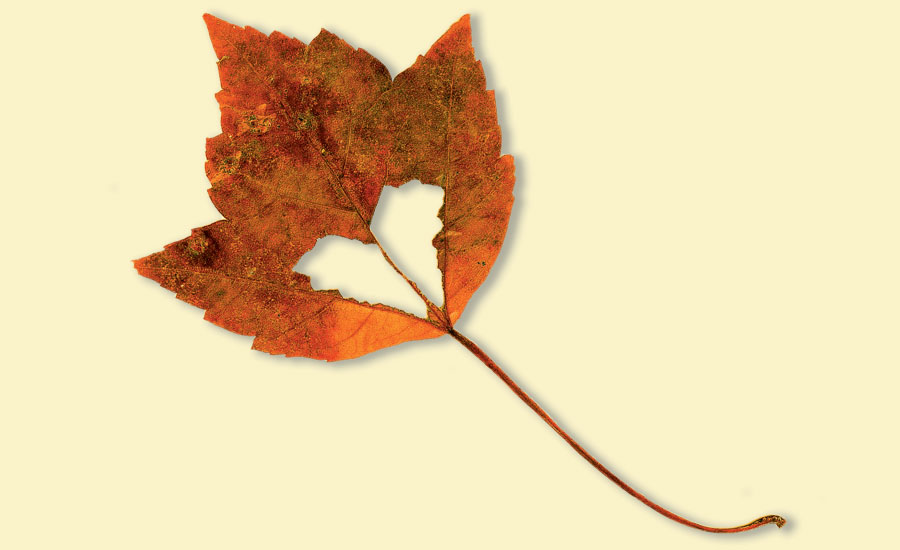
In her hand was a bright crimson maple leaf. Around its center vein was a perfectly shaped, unmistakable heart. The school bus’s brakes screeched. Flashing me a big smile, Desiree handed me the leaf. I bent down and gave her a kiss, then she waved goodbye and got on the bus.

I gingerly held on to the crimson leaf with the perfectly shaped heart as though it were fine porcelain. I hardly remember walking home. I often wonder if I floated back. All I can recall is feeling totally enveloped in God’s love, and in awe of the beauty all around me.

That afternoon I met Desiree at the bus stop. I had the leaf with me. “I have an idea,” I told her. “I never want to forget this wonderful day. Let’s go have the leaf laminated at the copy shop so we can keep it forever.”

Desiree is in high school now, and my MS is in remission. And the maple leaf? It still hangs on the glass door of our breakfast nook, its perfect heart a reminder of that perfect autumn day, and of God’s restorative promise—bright, beautiful, holy.

Did you enjoy this story? Subscribe to Guideposts magazine.

The Healing Power of Music

But you are holy, you who inhabit the praises of Israel (Psalm 22:3, WEB)

My father was a classically trained musician. He spent years in the Dallas Symphony and as a music professor at our local university. Growing up, I knew the power of music to uplift and inspire. But it wasn’t until I began to walk more closely with God that I experienced it firsthand.

I had been a fan of praise and worship music for several years. I kept my car radio on our local Christian station and even attended a concert or two. But until our son joined the military, I hadn’t actually used it as part of my personal time with God.

After he enlisted, I got a lot more serious about my conversations with God. I spent more time reading the Bible and asking God to watch over him. Then one day—while he was deployed to the Middle East—chaos struck. He had managed to get word to us that he was going to be in a dangerous situation for a few days and might not be able to contact us…and that we shouldn’t worry if we didn’t hear from him.

Yeah, right.

I was glad he let us know because I could pray specifically for him and let our friends and family know how to pray. But I wasn’t glad because my “what-if” worries went into overdrive. I envisioned every possible catastrophe.

Finally, at wit’s end from lack of sleep, I turned on the local Christian station and cranked up the volume. Beyond that, I joined in on the songs I knew. I was familiar with the verse that told me God inhabits the praise of His people, and I needed a big dose of God in the midst of this trial.

Sure enough, God is true to His word. All that day and into the next—whenever I was awake—I kept on the music. The change in my mood and my focus was dramatic. I went from a quivering mass of concern to a woman at peace and certain that God was more than able to keep my son safe.

It was during Walk By Faith by Jeremy Camp that the phone call from our son came, assuring us the danger had passed, and he was fine.

I’ve never forgotten the lessons of that time. Even to this day, when I realize I’m struggling to find God in the midst of a difficult situation, I turn on the music.

The Healing Power of Art

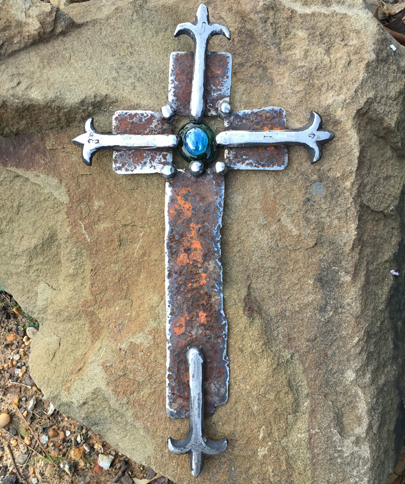
In the April-May 2016 edition of Mysterious Ways, Jim Hinch profiles sculptor Catherine Partain Shamblin, who some years ago, after a contentious divorce, found herself feeling alone and without direction. A mysterious voice told her to make a cross with whatever materials she could find, and now, her beautifully crafted crosses serve as healing agents for Catherine and the people who purchase them.

The Healing Effects of Holiday Music

“Music can lift us out of depression or move us to tears – it is a remedy, a tonic, orange juice for the ear,” according to the famed physician and author Oliver Sacks. “But for many of my neurological patients, music is even more – it can provide access, even when no medication can, to movement, to speech, to life. For them, music is not a luxury, but a necessity.”

Music’s unique ability to touch the heart and soul of someone who lives with a challenging condition—from Parkinson’s or Alzheimer’s to the after-effects of stroke—has a special resonance at holiday time. Traditional tunes, whether sacred orchestral arrangements or jazzy nods to the season, can trigger warm and soothing feelings and happy memories that reach back to earlier times. So, if you’re wracking your brain to come up with the perfect gift for the loved one you care for, consider setting aside some dedicated times to simply sit together and flood your senses with music.

Music has many powerful benefits. Research has shown that it can:

  • Boost brain connectivity University of Utah researchers scanned brain regions of dementia patients while they listened to music versus silence, and found that music activates the brain, causing whole regions to communicate. Music with personal significance to the patients had the greatest impact. “This is objective evidence from brain imaging that shows personally meaningful music is an alternative route for communicating with patients who have Alzheimer’s disease,” said Norman Foster, M.D., director of U of U’s Health’s Center for Alzheimer’s Care and Imaging Research. “Language and visual memory pathways are damaged early as the disease progresses but personalized music programs can activate the brain, especially for patients who are losing contact with their environment.”
  • Stimulate emotional memories Neuroscientist Kiminobu Sugaya teamed up with his wife, violinist Ayako Yonetani, to teach a popular course, “Music and the Brain,” at the University of Central Florida. It explored how music impacts brain function and human behavior, including by reducing stress, pain and symptoms of depression and improving cognitive and motor skills, spatial-temporal learning and the brain’s ability to produce neurons. “If you play someone’s favorite music, different parts of the brain light up. That means memories associated with music are emotional memories, which never fade out—even in Alzheimer’s patients,” Sugaya said. “Usually in the late stages, Alzheimer’s patients are unresponsive. But once you put in the headphones that play [their favorite] music, their eyes light up. They start moving and sometimes singing. The effect lasts maybe 10 minutes or so even after you turn off the music.”
  • Release soothing chemicals Relaxing with music can trigger the release of brain chemicals that regulate mood, reduce aggression and depression and improve sleep, a study at Miami Veterans Administration Medical Center found. Researchers tested the blood of 20 male patients with Alzheimer’s after they participated in a music therapy program for 30 to 40 minutes five times a week for four weeks. The patients’ melatonin, norepinephrine and epinephrine levels had increased significantly at the end of the four weeks.
  • Improve physical and psychological well-being Acclaimed soprano Renée Fleming has helped launch Sound Health, an NIH-Kennedy Center initiative to study the impact of music on health and healing. In addition to hosting performances, scientific workshop and community activities, Sound Health has supported research into the science of music. An aim is to help researchers conduct rigorous music-based interventions for brain disorders of aging. Four years ago, as part of the initiative, Fleming spent two hours in an MRI scanner that tracked her brain activity as she sang. “Even listening to music, or thinking about music, can have physical and psychological effects,” according to an article in the NIH Record. “Interestingly, when Fleming was in the MRI machine, the scans showed her brain was most active not while singing or talking, but while imagining she was singing.”

If your loved one enjoys singing or playing an instrument, and is still able to do so, providing encouragement can be a wonderful gift in itself. If you want to play or listen to music together, try to set aside regular times when you won’t feel rushed and harried. If you need a helping hand, you may want to consider hiring an in-home care aide to sing with your loved one or act as deejay with a special playlist of favorite recorded songs.

Another very special gift would be to schedule sessions with a music therapist who can sing or play especially meaningful tunes from your loved one’s life. Learn more information on how to find a music therapist.

‘The Happiness Curve’ Proves Life Gets Better After 50

When author Jonathan Rauch was in his mid-40s, his outlook on life took a strange turn. Instead of waking up energized, ambitious, and optimistic about the future, Rauch was struggling to find a sense of purpose, a motivating reason to get out of bed every day. What was more puzzling is that Rauch had absolutely no reason to feel this way. He was a celebrated journalist, having just won the highest award given to magazine writers. He was in a loving relationship, he had money in the bank, and he wasn’t facing any monumental tests of faith. No cancer threatened his body, there was no loss to grieve. He was as successful as he could hope to be, more so even. Yet, something was missing.

“I wondered if I’d ever be satisfied,” Rauch tells Guideposts.org. “I wondered if there was something wrong with me.”

The journalist in him hungered for answers. He read books, studies, and journals on the effects of aging, looking into the reasons for mid-life malaise and that dreaded of all clichés, the mid-life crisis. It was in his research he stumbled across something surprising, a new way scientists and professionals in the fields of economics, medicine, psychology and so forth were beginning to view aging. It was called “the happiness curve,” a U-shaped model for charting the trajectory of a person’s relative happiness during their lifetime. It changed the game for Rauch.

“We all imagine we’re supposed to be at the peak of our achievement and glory and happiness at midlife and if we’re not it’s a midlife crisis and there’s something the matter with us,” Rauch explains. “So, surprise number one is: that’s totally backwards. The middle of life is a time of transition and vulnerability and, for many people, difficulty.”

Instead of reaching our peak in midlife, the happiness curve shows the exact opposite. Most people begin their lives relatively happy. When you’re in your 20s and 30s, you’re in a time of ambition, a period where you’re fighting to achieve your goals, to start a family, to begin a successful career. It’s a time of opportunity. Once a person reaches their late 40s and early 50s, instead of happiness peaking as we’ve all assumed, the happiness curve shows that the average person will go through a low-point in their life. It’s a dip in the curve, one that can last years but marks a crucial transition period in a person’s life.

For Rauch and those like him – professionally successful people who aren’t facing overwhelming struggle or tragedy during their 40s and 50s – this dip is usually caused by, well, nothing.

“That’s really true, if you’re someone like me and you’re looking around for the problem in your life to blame it on,” Rauch explains. “There is no problem in your life to blame it on. There’s no science behind that and why that would happen to people.”

Still, the data shows it does happen and often. Rauch worked with revered economists like David Blanchflower and Andrew Oswald who study the patterns of human behaviors as part of their work. He also talked to psychologists, neuroscientists, and everyday people experiencing this phenomenon of “the happiness curve.” While his research proved that a midlife dip occurs rather frequently, what alarmed him most was the ideas of why and how a person should handle feeling depressed during that period of transition.

“The problem with the midlife crisis joke is that it’s not completely wrong, but it’s terribly misleading because most people don’t have a crisis at all. They have a gradual, slow sense of dissatisfaction,” Rauch says. “If it gets mishandled it can become a crisis but for most people, they just soldier through it, often in isolation.”

It’s how Rauch dealt with his own midlife slump. Ashamed that he wasn’t happier with his success, feeling ungrateful for all the blessings in his life, Rauch shut down. He didn’t feel comfortable talking about why he was feeling so low because he know he had no rational reason to feel that way.

“People are ashamed or embarrassed, or they hold it in,” Rauch explains. “They think there’s something wrong with them, they think they’re ingrates. That adds to their unhappiness and it becomes a downward spiral. I keep reminding people, just because this happens to first world people doesn’t make it any less of a problem for the people who are stuck in it.”

As Rauch explains, the happiness curve is just the effect of the ticking clock on a person’s life, and that’s not based off privilege.

Because the author experienced midlife malaise himself, and because he met so many people like him who were suffering through the same doldrums of life, Rauch decided to write a book, The Happiness Curve, to explain what happens to people as they age and how others can avoid the emotional and mental pitfalls of time.

The first thing Rauch wants people in their 40s and 50s, who feel pessimistic about the future and unsatisfied with their past, to know is that they’re not alone.

“Understand there’s nothing wrong with you,” Rauch says. “A second thing is don’t let yourself get ashamed or isolated if you can help it. Lots of people go through this, it’s totally natural. It’s normal, it’s not fun but it’s healthy. So, find people you can reach out to, whether its counselors or coaches or friends.”

Another thing to keep in mind as you reach that crucial period of midlife: Impulsiveness is not your friend.

“It’s really hard to know in midlife, if what you’re feeling is a result of time, the effect of aging, or if it’s the effect of other things,” Rauch explains. “I thought there must be something wrong with my career even though technically there was nothing wrong with my career, and I was tempted to just walk in one day and quit, which would’ve been a bad idea. Because of that uncertainty, not what’s going on, we don’t have clear visibility. So sure, change your life, but do it in a rational, calculated, instrumental way that builds on your strengths and your social capital. Don’t do it in a disruptive or impulsive way.”

Most importantly, Rauch wants to shatter the negative stereotype associated with aging. The idea that a person’s life is on the decline once they reach their 40s, that retirement means getting put out to pasture, that happiness can’t be found in a person’s later years, is the worst lie we’ve let ourselves believe according to the writer.

“What’s going on is a value transition,” Rauch says. “It takes a number of years to get through it. But when you do, you’re in a better place because your values have shifted away from ambitions and the social competition treadmill and towards social connection, cooperation, love, friendship — much better sources of happiness.”

It’s why the happiness curve is U-shaped. Once a person gets through the low point of their midlife, happiness increases to surprisingly high levels, a direct result of that value transition when people learn to place things like relationships, family, friendships, and community ahead of more self-centered desires.

“Adult development continues right to the last decades of life and in a very positive way,” Rauch says. “So, busting that negative stereotype of old age will help people in midlife understand how much they have to look forward to.”

The Great Spirit Moved Him to Help House the Nation’s Elders

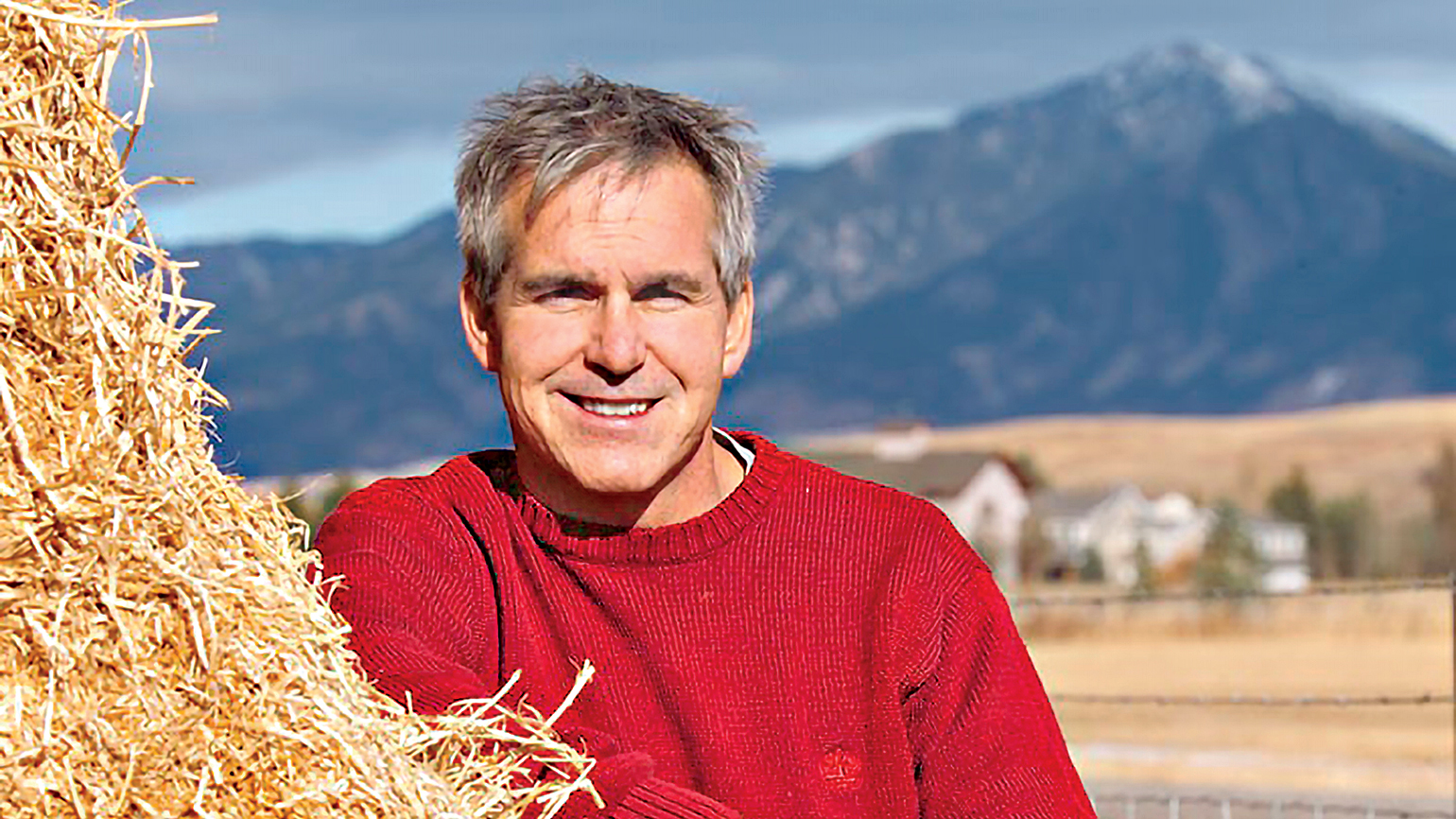
Ten years ago, if you told me I’d give up the business I spent my life putting together to go build houses on Indian reservations instead, I’d have said you were nuts. The Seattle-based loungewear company I started with a partner was cranking out a profit. At 33, I’d just married my longtime sweetheart Anita. I wanted to slow down, have a family, savor life and the rewards of success.

Then I saw that headline.

I was in New Mexico on business and picked up a local paper called Indian Country. There it was on the front page, like an epitaph: “Elders Freeze to Death.” How could such a thing happen here in America, the richest country in the world? I tore out the article and stuck it in my pocket.

That night in my hotel room, meetings done, I read the story again. It seemed so tragic. Somebody—the government, the tribal council—would no doubt do something to make sure it did not happen again. Still, I tucked the clipping into my briefcase instead of throwing it away. Why, I had no idea.

Two weeks later, another business trip. Another headline staring at me from the local paper. “Taos Woman Starts Adopt-A-Grandparent Program for Aging Native Americans.” According to the article, on reservations across the country, thousands of elderly Native Americans struggled not just to make ends meet but simply to stay alive. At the end of the piece there was a number for people interested in volunteering to call. I didn’t stop to think. I just picked up the phone and dialed.

Soon I was matched with a “grandparent”—Katherine Red Feather, of South Dakota’s Pine Ridge Reservation. I dropped her a note introducing myself. “I am seventy-eight years old,” Katherine wrote back, “and blessed with 13 children and seven grandchildren. I am so happy to learn I now have another grandchild! Do you have a wife and children of your own? I hope so, as they are one of the most wonderful gifts the Great Spirit can give a person in this life.”

I told her about Anita, and how she was indeed a godsend. Then I asked Katherine if there was anything I could send her. “Yes,” she wrote. “If it’s not too much trouble, I would very much appreciate a bottle of shampoo and some aspirin. Thank you for your generosity, Grandson.”

Grandson… Katherine was really taking this program seriously. But shampoo? Aspirin? Why wouldn’t she have such basic items? I decided to visit the reservation after my next business trip and look in on Katherine.

Pine Ridge Reservation encompasses the two poorest counties in the United States. So the letter from the Adopt-A-Grandparent program had informed me. But I was not prepared for the reality of that poverty. Rutted dirt roads, dilapidated shacks, rusted-out automobiles with entire families living in them… The dwellings I passed wouldn’t keep a person warm on a chill fall night like this. In the Dakota winter, temperatures sometimes plunged to 60 degrees below zero. How could people freeze to death on a reservation? The answer was right before my eyes.

Katherine’s “house” was a small, busted-up trailer pushed against the body of an old school bus. The trailer door opened and a delicate-looking woman wearing slacks and a simple patterned sweater emerged.

“Grandson! Come in out of the cold.”

The trailer was dark and barely big enough to turn around in, but the three people sitting by the wood stove stood when Katherine led me inside. “This is Robert,” she announced. “My new grandson. Robert, these are my children. They are your family now too.”

Katherine must have seen my confusion. “The Great Spirit has chosen you to be a part of my life,” she told me. “We are one family in his eyes.” We sat down to a simple meal of white bread and beans heated on a propane stove.

There was no running water, so Katherine needed to carry it from a well out back. It was next to an outhouse with a black flag flying overhead. “To scare away the rattlesnakes,” she explained. “They think it’s a hawk.” Katherine took such pains to make me feel at home that it was only at the end of my visit two days later that I could bring myself to ask her, “Isn’t it hard for you to have to fetch wood and water every day?”

Katherine took my hands in hers. “I know how my life must look to you, Grandson, but all of us here live this way. I’m no different than anyone else.”

I couldn’t stop thinking about Katherine once I got home to Seattle. The days grew shorter and colder. I looked out the window of my cozy apartment and imagined my new grandmother in that tiny trailer, huddled over her smoky little stove.

“She needs to be in a place that will keep her warm,” I told Anita one night. “A place where the wind doesn’t blow through the chinks in the walls. Katherine needs a real house.”

A real house. The moment those words left my lips, I knew what I had to do.

At the end of that summer I took two weeks off and went back to Pine Ridge. Anita and a handful of friends came with me. We were going to build Katherine a house. None of us had built so much as a doghouse before, but I figured that with a simple floor plan and plenty of enthusiasm, we could get the job done.

Word got around the reservation. Dozens of Katherine’s neighbors and family members pitched in. Toward the end we worked round the clock, my car headlights trained on the site. Finally the last nail was driven. Katherine’s tribal chairman said a prayer of thanks, and there was a big celebration. It was the first time Katherine had all her relatives together since the Red Feather clan had been divided and made to live on two different reservations years back. She welcomed them all into her house, her eyes brimming with tears of joy.

Anita squeezed my hand, and I knew what we’d done here was bigger than anything I could ever hope to achieve with my business. At last I understood what Katherine meant about all of us being one family.

Back in Seattle, I tried to concentrate on my work. Katherine would be safe and warm this winter. But what about all the neighbors who’d pitched in to build Katherine’s house, only to go home to ramshackle trailers? America has about two million tribal members, and some 300,000 of them are without proper homes. What about all those people?

Building frame houses like we’d done for Katherine was impossible. Too expensive and labor-intensive. I had to come up with a design that was warm, inexpensive and easy to build. A little research and I came across straw bale houses. Built from blocks of straw covered with stucco, they’re ideal for reservations. The straw is plentiful on the Great Plains, and provides extremely effective insulation.

Getting these straw bale houses built on a large scale, though, would take organization. A huge investment of time and energy. Time and energy I wouldn’t have if I kept my day job. I sold my half of the business and started a new venture, the Red Feather Development Group, to help Native Americans get decent housing. Eventually Anita and I moved to Bozeman, Montana, in the vicinity of half a dozen reservations.

To think, none of this would have happened if I hadn’t seen those headlines 10 years ago. Even then I’d known someone would look after elders like my grandmother Katherine. I just never expected that person to be me. But that is how the Great Spirit works.

* * *

The House You Built

Meeting Rob Young at the 2003 Volvo for Life Awards for heroes, I knew his story would be perfect for Guideposts. But even I was surprised at the response from our readers.

“There were sacks of mail from people who’d read my story in Guideposts,” Rob told us. “The Red Feather website was swamped.”

Readers donated more than $100,000 to help build warm homes for Native Americans. They volunteered their services—plumbing, roofing, carpentry. Rob was most moved by folks who donated one dollar and said they had to give something and wished they could give more. In September 2006, readers traveled to the Hopi Reservation in Arizona, to work side by side with Rob on a house for a little boy recovering from leukemia.

“When I saw that story, I just knew I had to get involved,” they said. More volunteers came to Red Feather through Guideposts than any other source. A great example of how Guideposts is and always will be more than a magazine.

—Celeste McCauley

Read Guideposts Readers Get Motivated! to learn more!

For more inspiring stories, subscribe to Guideposts magazine.

The Greatest Gifts: Compassion, Kindness and Love

It has been hard to find answers after the mass shooting at Sandy Hook Elementary. Hard to find hope after the deaths of innocent children and the school staff who gave their lives to protect those in their charge. Prayer has helped. Poetry. Music.

Yet I found the most comfort in an unlikely place: a photograph from an ancient burial site, and the moving story behind it. Australian archaeologists Lorna Tilley and Marc Oxenham excavated the 4,000-year-old Man Bac site, in what is now northern Vietnam, and uncovered one grave that stood out from the rest.

Unlike the other skeletons at Man Bac, which lay straight, the young man buried in this grave was curled in the fetal position, his head pillowed on a rock. Closer examination and analysis of his bones showed that he was born with a disabling fusion of the spine. His condition deteriorated so that he became paralyzed from the waist down in childhood and had minimal use of his arms. Still, the archaeologists determined, he lived for another 10 years with “severe, most probably total, incapacitation.”

He would have been completely dependent on others for survival. The people in his community came through. Their own existence could not have been easy—they lived by hunting and fishing and did not have metal tools—but they took care of this disabled young man, made sure he was fed and protected. And they laid him to rest with the same care.

I was struck by Tilley’s interpretation of this young man’s survival. She believes it shows not only a culture of tolerance but also an individual who, despite being radically different from the people around him, had “a sense of his own worth and a strong will to live.”

This is not the first archaeological find—and it won’t be the last—to demonstrate that prehistoric people, civilizations far less developed than our own, took care of and made accommodations for the chronically ill and disabled so that they could live among them.

Maybe now more than ever, we need these reminders that the greatest gifts we are given—and can give—are compassion, kindness and love.

The Good Things in Life’s Storms

I think I’m beginning to grow duck feathers it’s been so wet here! In the mountains of North Carolina, day after day is filled with a gloomy forecast of rain. So I was thrilled this morning when it wasn’t raining, and I could sit out on my deck and work on my writing deadlines. Other than being dive-bombed by a bird, making an up-close acquaintance of a squirrel who didn’t realize I was sitting there and having a bee come a little too near for comfort, I sure did enjoy those few hours working in God’s creation.

But then, in just the span of a few minutes, a massive storm rolled in. The sky turned from bright sunshine to charcoal gray. The wind picked up in huge gusts that blew green and brown debris from the trees into the air. The dead leaves and bits of greenery hung suspended and then danced around in the wind.

Sudden storms are a lot like life. We’re going along fine, and then, all of a sudden, BAM! But storms don’t last forever. And we can even discover some lovely things about them. The winds get rid of debris that would have piled up in the trees. The rain waters the flowers, and leaves everything freshly-washed.

It’s the same with our souls. Instead of focusing on the hardships of life’s storms, what if we looked for the good things? Storms can strengthen us. They cleanse our souls. They can get rid of debris, the things that don’t need to be in our lives.

Storms are great reminders that even when we’re being pounded, we always have the assurance that God will be with us for every difficult moment. The God who made the storm can certainly calm it, and He will stay with us until those storms are over.

Are you going through a difficult time today? Just tuck your hand into God’s hand and let Him worry about the storm. He’s got it all under control.

The Good Thing About Change

I like putting down roots as evidenced in many areas of my life. I’m married to the same man I exchanged vows with almost 44 years ago. We’ve lived in the same house for 38 years. I’ve gone to the same church for 49 years. And I still have dear friends from my school days.

I obviously don’t like change, but life happens and changes come. I was thinking this morning about some of the changes I’ve seen. I remember when gas stations had attendants who would pump your gas, check your oil and wash your windshield. I remember when many of the buildings in my town had freight elevators with workers who would push the buttons for the floors and pull the gates shut for the doors. Businesses had real live people who would answer the phones. Life was often at a slower, simpler pace. As a kid, I loved going to drive-in movies and playing in the yard all day in the summer. And we never had to worry about locking our doors.

But I’ve also learned that when God brings about change, that’s a good thing. Those changes have allowed me to write books, stories, articles and blog posts—something I’d never thought about doing before but loved. I didn’t like my children growing up so fast, but that brought me six perfect grandbabies—one of the best changes ever.

And now I have another change. This will be the last post for my “Life with a Southern Grandmother” blog. It’s been my privilege and honor to write for Guideposts and for all of you. Your kind comments have touched my heart on so many occasions, and I thank you so much for taking the time to read my posts.

Yes, life changes, but I’m grateful that no matter what happens in our lives, we can always count on one important truth: Jesus’ love for us never changes. And because of that, we can face each new day and each new change with the confidence that He will always be with us.

Love and hugs to all of you. I will miss you!

The God of Before

I have a master’s degree in worry, and without a doubt, I graduated at the top of the class. Yes, I’m good at it! Can you relate?

It doesn’t help that I have a writer’s mind and can visualize each possibly threatening scenario in vivid detail. I’ve imagined axe murderers creeping into my house when something falls over in the basement while I’m home alone.

When a friend posted a photo on Facebook of a snake she’d found inside her house, other people replied on her page sharing about the snakes they’d found in their pots and pans, coiled under their beds, between the couch cushions, and in the toilet. I twitched out of sympathy for her.

For days after that, I made it a point to look in my pots and pans, between my couch cushions, under my bed, and definitely in the toilet. Am I a good friend or what? (And just for the record, any snake that shows up inside my house will immediately become an endangered species. Please spread the word to all of your snake buddies.)

Shucks, there have even been times after receiving medical news that I’ve thought things all the way through to the funeral, with my family sitting in the pews and the spicy aroma of carnations and lilies filling the air.

I imagine that some of you are probably chuckling by now because you’re my worry twin, and others are shaking your heads in disdain because we’re not supposed to worry. I know thatand I’m working on trusting Him more and worrying lessbut I want to be real with you, and I suspect that I’m not the only one who worries about things.

So for all of you who have also mastered the art of worry, I want to share something that God showed me this week: He’s the God of “before.”

In Jeremiah 1:5, He says, “Before I formed you in the womb I knew you.” Did you get that? Before we were even born, the God who made the universe knew us. He had a plan for our lives.

Story after story in the Bible shares how He’s always there before we need Him. God put Noah and his family in the ark before the flood beganand He’d already given them a heads-up and the opportunity to prepare for the event.

Baby Moses didn’t drown before God sent Pharaoh’s daughter to rescue him.

God closed the mouths of the lions before Daniel was attacked in the pit. Instead of Daniel being torn apart by powerful teeth and jaws, I suspect he had purring lions for pillows.

God prepared the heart of the king before Esther went to plead for the Jewish people.

The Widow of Zarephath and her son didn’t starve to death before God sent Elijah and a miracle for their provision.

Before Joseph rose to power, God put him in prisonbecause He knew that the days in the prison were what would lead to the days in the palace.

Goliath didn’t kill David before that young lad found the five smooth stones that God had placed in the brook for himand they were exactly what he needed to conquer the giant in his life.

God had an escape plan in place before Paul and Silas ended up in that dank prison cell.

The pages of the Bible are filled with numerous stories of how God was there with each person and provided exactly what was needed for each circumstance.

And you know what was most impressive as I thought about this? I can’t find one instance (not one!) where the Bible tells how God was late. Not one verse where it says, “And God showed up after _________.”

Fellow worrywart friends, the God who took care of those men and women back in Bible days is the same God who will take care of us today. We can count on Him to have a plan in place and to be there before we need Him.

So before we drive ourselves crazy worrying about the circumstances and situations in our lives, let’s place our worries into the hands of the One who can handle them without any problem.

And it shall come to pass, that before they call, I will answer; and while they are yet speaking, I will hear. (Isaiah 65:24)