Embrace God's truth with our new book, The Lies that Bind

Preserving Memories for Your Loved One with Dementia

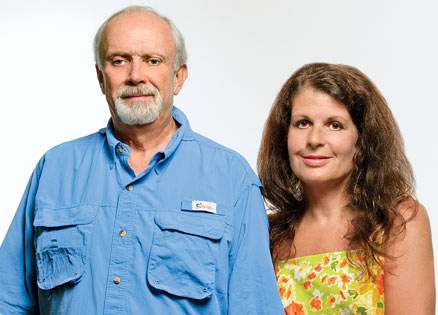
Remaining socially and mentally engaged has alleviated her husband Bob’s symptoms of Alzheimer’s disease, Luanne Bole-Becker says. She’s onto something. Research has shown that talking to people with dementia about their lives creates positive emotions, reduces stress and improves their quality of life.

A wonderful way to connect with your loved ones is by capturing and preserving their memories. Here are tips from the experts at Home Instead Senior Care on how to make it a fulfilling experience for everyone involved:

Ask open-ended questions. Dementias typically erode short-term memory first, so it’s often rewarding to recall events from further in the past. Try questions like “What did you do for fun when you were little?” or “What was your favorite job?” Work up to deeper questions like “What are you most grateful for?” or “How would you like to be remembered?”

For more ideas, search conversation starters at caregiverstress.com or go to storycorps.org.

Listen patiently. Your family member might struggle for words. Keep listening for as long as they want to share. Let their reactions guide you. If they’re eager to talk, ask for more details. If there’s something they can’t remember or don’t want to get into, move on.

Use photos, music, objects and scents. Of all the senses, smell has the most direct connection to the parts of the brain where memories are stored. Aromas can unlock rich memories even when verbal and visual cues fail. Flowers, a campfire, sawdust, cookies baking, pine…any scents that are significant to your loved one can work.

Create a memory box. The sense of touch stimulates memories. What items hold special meaning for your family member? Some ideas: a military medal, trip souvenirs, gardening gloves, seashells, jewelry. Collect the items in one place so they’re easy to pull out when needed.

Be ready to capture reminiscences at family gatherings. Keep a video camera, a voice-recording app on your phone, a laptop, or a journal and pen handy.

Integrate memory gathering into daily activities. At mealtime, talk about favorite recipes and the stories that go with them. Ask about pictures and keepsakes while you’re cleaning. Something on TV might trigger a recollection.

For free training for family caregivers, including local workshops, online classes and videos, visit HelpforAlzheimersFamilies.com.

Preparing for Promotion

If there’s one thing I’ve learned in life, it’s this—promotion takes preparation.

That truth was never more evident than when I took a magazine feature writing position at a worldwide ministry, only to be informed I’d actually be doing something entirely different…and I wasn’t thrilled about it.

My editor explained that they had a greater need for another ghostwriter, so I would be fulfilling that role. During my years at Indiana University journalism school, I’d been told to “find my voice.” So, I’d been working hard every day since college graduation to do just that. Now, my new boss was telling me: “Lose your voice, and find somebody else’s.”

That just didn’t make sense to me.

“Let me get this straight,” I answered. “I’m going to be taking somebody else’s thoughts and words from a sermon or a presentation, and then I’m going to write an article weaving all of those thoughts together in that person’s voice? With no byline?”

“Exactly,” my editor answered. “That’s why it’s called ‘ghostwriting.’ You are invisible.”

Little did I know, not only was God working out some of that stubborn pride from my heart, but also He was preparing me for a role that would be a great blessing in my life—spiritually, professionally and financially.

I was able to learn to ghostwrite while getting paid to do so and being mentored by one of the best ghostwriters in the business who happened to work two offices over from me. It wasn’t an especially easy season in my life, but it was one of preparation, though I didn’t know it then.

A few years later, I was offered the assignment of a lifetime, ghostwriting a book for a celebrity I greatly respected. That book ended up being a New York Times bestseller, which opened up numerous ghostwriting doors for me. Over the years, I’ve been able to ghostwrite for many wonderful people, and it’s been a privilege to help them tell their stories.

But I wouldn’t have had those awesome opportunities without that season of preparation at the worldwide ministry.

You know, there are examples of preparation preceding promotion throughout God’s Word. Take Esther, for example. She was just living her life as a lovely young Jewish girl in Persia when she ran smack dab into her destiny—becoming the queen and ultimately saving the Jews from annihilation.

However, to step into that destiny she had to go through a year’s worth of beauty treatments (Esther chapter 2). God was preparing her both spiritually and physically. Had she not gone through those 12 months of preparation, she wouldn’t have been in position for that promotion.

So, let me ask you, are you experiencing a season of preparation? If so, don’t be discouraged or grow weary in the waiting. Just know that you are being prepared for promotion, and rejoice in it!

Pray Your Way to a Clutter-Free Home

Today’s guest blogger is Courtney Ellis, author of Uncluttered: Free Your Space, Free Your Schedule, Free Your Soul.

A few years ago I found myself drowning in stuff. My shelves were overflowing. My closets didn’t close. Don’t even get me started on the guest room, which is where unused exercise equipment, outdated electronics and all manner of holiday decorations piled up in small mountains of plastic tubs.

Possessions aren’t neutral. Each item we own takes time to care for, store, dust and maintain. Each one takes up space in our lives. An overabundance of clutter can be not only an eyesore, but a barrier to hospitality and stumbling block in our walk with the Lord, stealing time away from what matters most.

Uncluttering is big business these days. From Marie Kondo to storage solutions to the minimalist movement, it’s clear that many people are tired of their possessions owning them. But the root of our problem is deeper than just having too much junk. At its heart, it’s a spiritual issue.

We hoard things out of fear (what if I need this later?), a lack of trust (what if God doesn’t provide?) or even a desire to control (now I’m prepared for everything!). Yet God calls us to a better way, unencumbered by the clutter that can weigh down not only our shelves but our souls.

The good news is that there’s another way! Scripture teaches the ancient Christian virtue of simplicity (see Matthew 6:19-20)—letting God order our lives for our good and His glory. Jesus reminds us that He clothes the lilies (Luke 12:27) and cares for the sparrows(Matt. 10:29)—we can trust Him to care of us instead of hoarding and clinging to what we own. Regular worship reminds us of the rhythms of the kingdom—that in giving up, we gain, and in laying down our life (and our possessions!) we find new hope (1 John 3:16).

As I’ve begun my own uncluttering journey, my prayer has changed from “God, show me what I should give away!” to “God, teach me what I need to keep.” I’ve learned that I don’t want hundreds of Christmas ornaments; I really only need those that will fit on the tree. I’ve discovered that I can let go of those jeans from college. (Let’s be honest, they’re never going to fit me again anyway!)

Through sharing what I have, God has brought me into deeper relationship with my neighbors as we swap a ladder for a lawnmower on a sunny afternoon, rather than each owning one of our own.

Over the past couple of years I’ve gone through not only my home but my calendar and my digital devices too, paring down to the essentials and learning that with every possession I let go of, my soul grows a little lighter.

Remembering that our lives are in God’s hands frees us to live simply, one shelf, one sock, one soup ladle at a time.

Praying Their Way Through Turbulent Times

Mail thunked into the mailbox and I ran to get it. Ads, bills and…my stomach knotted. There it was. An envelope from the mortgage company.

I went in to where my husband, Doug, was in the living room. We opened the letter together and started reading: Dear Mr. and Mrs. Crane, we regret to inform you that your request for another mortgage modification has been denied…. It went on with more financial mumbo jumbo, but that first sentence told us enough.

Doug let the letter fall to the floor. “That’s it,” he said. “We’re done.”

I gazed around the living room. Pictures of our three sons. The framed wedding photo above the mantel. Our furniture. Our whole life.

Two weeks earlier we’d received the foreclosure notice from the bank. We hadn’t panicked then because we were still waiting to hear about the loan modification. If we could bring those loan payments down we might figure out some way to hang on to our house.

Now the last door was closed. We had two weeks to move out. We were two weeks away from living on the streets.

I looked at Doug. He’s a stoic man, not one to complain or let his feelings show. But I could tell that he was as shaken as I was. How had we come to this?

Mentally I traced back through the last few years. Doug losing his job. My cancer diagnosis. This house we loved so much, where our three boys had grown into men and where we had raised our dog from a puppy.

Was it the house where we’d gone wrong? It was a big house, bigger than our family of five strictly needed. But that’s because when we bought it we’d thought that my parents would be moving in with us.

At the last minute they had backed out. Rochester, New York, where I grew up, is a lot chillier than Atlanta, but the rest of our family was there and so Mom and Dad decided to stay.

At the time Doug and I didn’t mind. Doug has been a hard worker all his life and he had a good-paying job doing woodwork and trim for a construction company owned by a friend. We could afford the mortgage payments plus raising three teenage boys.

We spread out in the big house. It was so nice to live in a quiet, relatively new development.

Read more: Prayers for Financial Help

Even my cancer seemed manageable. In 2003, a year before we bought the house, I’d been diagnosed with a slow-progressing form of leukemia. Doctors said I had a good chance of outliving the disease but I needed to take better care of myself.

I switched to a healthy diet and took up exercise—regular walks with Lexi, our boxer, through the neighborhood. I’d been a receptionist at a hair salon, but my health issues meant I couldn’t work anymore.

Then the recession hit. One day Doug came home from work looking worried.

“I won’t be getting a paycheck this week,” he told me. His friend who owned the construction company had told Doug that a few contractors had failed to pay him. “He said that things should be back on track by next week,” Doug said.

But things didn’t get back on track. Soon Atlanta’s booming construction business ground to a halt. After eight weeks without a paycheck Doug finally drove over to his friend’s house to find out what was going on. The house was abandoned. His friend was gone.

That evening Doug and I sat in the living room in shock. It was 2009, five years since we had bought our house. All three of our boys had finished high school and our two older boys had moved out. Aaron, our oldest, worked as a chef in Portland, Oregon. Shawn remained in Atlanta studying to become a pharmacist. And Adam worked at his brother’s pharmacy.

Even without the expense of three hungry teenagers, Doug and I knew we could not last long without an income. We didn’t have much savings. We pulled together some bills and tried to make a rough estimate of how much we spent each month. Ouch.

Living in a big house in the Atlanta suburbs was expensive. Our monthly air-conditioning bill alone was several hundred dollars. Same for heating in winter. Then there was gas. We had to drive everywhere. It took 15 minutes just to get to Walmart.

“I need a job,” said Doug. “Fast.”

The next day Doug started sending out applications and résumés like crazy. Finally he found a part-time job as an attendant at a fuel depot. A few months later he landed a full-time position on the sales floor at Home Depot.

The job came with health insurance, which we needed for my leukemia, and we thanked God for that. But it paid less than a third of what Doug had made in construction.

“We can’t keep up with these bills,” I told Doug a few months after he started at Home Depot. I wanted to be more encouraging but the numbers were unforgiving.

We cut out every extra. No more cable TV. No more landline telephone. I stopped getting haircuts and using conditioner.
We got two loan modifications from our mortgage company. At the end of each month we still made less than we spent.

The following summer the air conditioner broke. We couldn’t afford to fix it. At last came the day I’d been dreading. There was no longer enough money in our bank account to write the mortgage check. The foreclosure notice came a few months after that, on the first of February 2011.

Now we’d been denied a third loan modification and once again Doug and I were in the living room staring at each other in shock. The letter from the mortgage company lay at his feet. As usual Doug didn’t let his feelings show. He didn’t have to. We both knew we were desperate.

“Better start looking at rental listings,” Doug muttered, tromping off to get his laptop.

I went to our old desktop computer and tried to summon energy to look at rental listings myself. There was a new e-mail from my cancer support group. Those always included an inspiring quote or prayer so I clicked on it. The minute I saw the prayer I printed it out and ran to Doug.

“You have to hear this,” I said. I read: “Lord, your almighty power parted the Red Sea. When I face my Red Seas of life please give me the courage and faith to step out and follow you. I know that you are right here with me like you were with Moses at the Red Sea.”

Doug gazed at me in silence. Then suddenly the long months of holding in his feelings gave way. Tears ran down his cheeks.

“We can’t give up, Roxann,” he said, choking out the words. “I know that everything looks terrible and there’s no reason for hope. But we have to stay faithful. That’s all we have left.”

He reached for the paper with the prayer and I handed it to him. He read it again. “Let’s say it together,” he said. We did.

We needed that prayer big-time. None of the rental listings we looked at worked for us. They were too big, too small, too expensive, too far from Doug’s work, didn’t allow pets. All of them required a credit check, which we knew we would never pass, not with a foreclosure on our record.

Moving day was getting closer and we still had no place to move.

One afternoon on my daily walk I glanced down a side street. I don’t know what made me look, but a sign caught my eye in front of a small ranch house: For Rent. I hurried home.

“We’ll never be able to afford it,” Doug said. “Not in this neighborhood. Besides, you know that they’ll want a credit check.”

“Remember the prayer,” I said, trying to sound more hopeful than I felt.

We called the number on the sign. A few hours later the leasing agent met us on the front lawn of the ranch house. “You must be from New York,” the agent said after hearing my Rochester accent. “Me too.”

He showed us around the house. It was half the size of our current house but big enough for our things.

“What’s the rent?” we asked. It was less than our mortgage.

“You seem like nice people,” the agent said. “If you want it, it’s yours. Don’t worry about the credit check.”

I felt a shiver run down my spine. I know that you are right here with me, Lord. How else could this have happened except through the grace of God?

Other things began to fall into place. Doug and I had tried not to burden our boys with our financial troubles, but when we finally told them that we were moving, right away they asked what we needed.

Shawn paid our first and last month’s rent, and since pets weren’t allowed in the rental, he took Lexi in. Adam said that he would be happy to live in the new house with us and contribute to the rent.

With the boys’ help—and our friends’ too—we got packed up and moved into our new place in a single weekend. Doug applied to a special fund at Home Depot for employees in financial need and received a small stipend that we put toward utilities. A girlfriend took me to a salon for my birthday and I finally got a decent haircut.

We are not out of the financial woods yet. Even with reduced housing costs and help from the boys, our budget is still tight as a drum.

Still, we don’t despair. Not long ago Doug and I sat in the living room going over bills. “A few more months like this and we might have to move again,” Doug said, halfway serious.

I blanched, but then I thought of our prayer. I squeezed Doug’s hand. “God will be with us,” I said. I didn’t need to say anything more. God had parted one Red Sea for us and I knew he could do it again.

Doug knew it too. “Let’s say our prayer together,” he said. We did.

Download your FREE ebook, The Power of Hope: 7 Inspirational Stories of People Rediscovering Faith, Hope and Love.

Praying for Her Son’s Sobriety

Two guys walked up to us in the strip mall parking lot just as my husband and I were about to get in our car. They were carrying a cooler. Something about them gave me a strange vibe, so I opened the passenger door and climbed in.

“Would you like to buy some banana bread?” I heard one of the men ask David.

What do they really want? I wondered.

“No, thanks,” David said. “My wife makes the best banana bread.”

“I understand,” the man said. “Please take this, though.” He handed David some sort of paper.

“Sure,” David said casually, no tension in his voice as he opened the driver’s-side door. He’s a retired Houston cop, and if alarm bells weren’t ringing for him, I figured there was nothing to worry about.

Besides, it wasn’t as if I didn’t have enough on my mind. The oldest of my three kids, my son Wesley, had been addicted to drugs since his early teens. But I’d never seen him as hopeless as he was now, at 20.

Lately every time my phone rang, I expected it to be the morgue asking me to come identify his body.

Really, I’d worried a lot about Wes right from the start. Changes that other toddlers got used to with just a little fussing totally threw him. Everyday things like wearing long sleeves, taking timeouts and putting on sunscreen triggered huge tantrums that took him forever to come down from.

It tore at my heart to see the frustration and misery in his big blue eyes. Even worse, sometimes there was nothing I could do to ease his pain. It was as if he didn’t want me to help him.

The only place I could turn was my faith. Every night when I tucked Wes into bed, I would lay one hand on him and ask God aloud to protect him, our family and anyone we knew who was having a tough time.

Then I’d say a silent prayer, not wanting to put pressure on my little boy, who already struggled with so much. God, please make life easier for Wesley, I prayed. Bring him peace.

I hoped he’d grow out of his oversensitivity once he was in school, but if anything, his moods grew more extreme. At one point, I tried making all his food from scratch, hoping that if I eliminated additives and preservatives it might help him.

We took him to a chiropractor, an acupuncturist, a psychologist and a psychiatrist, who diagnosed Wes with ADHD and put him on medication. Thank you, Lord, I thought. This is what I’ve been praying for. The meds didn’t bring him much relief, though.

When Wes was a teenager, I took a job as a flight attendant, which had me away from home only on weekends so it wouldn’t disrupt the kids’ routines. Still, he had frightening outbursts—he’d bang his head against the wall, beat things with his fists.

I worried about his younger sister and brother too. They weren’t getting as much attention from me and Wes’s behavior had to be traumatizing for them.

Wes’s dad and I had our own issues—dealing with a troubled child puts a tremendous strain on a marriage and ours wasn’t the strongest—but we did everything we could for Wes. We gave him love. We gave him rules. He broke them all.

Wes was over at a friend’s one day when I called to check in. He sounded off, his words slurred. “You okay, Wes?” I asked.

“Yeah, Mom…” he mumbled. “I’m… fine.”

He’s lying, I thought. The minute Wes got home, I confronted him. He admitted to smoking pot. “But I don’t have a problem,” he said. I dropped to my knees and sobbed. I knew life was a constant struggle for Wes, but drugs at 14?

“Why couldn’t I have seen this coming and stopped it?” I cried out to God. “Why didn’t you? You say in your Word that you love Wes and me, so why are you allowing this to happen?”

Wes was right. He didn’t have a problem. He had a full-blown addiction. He was caught at school hiding a joint. I found more pot and a pipe in the attic above his room. From there it was tranquilizers, narcotic painkillers, hallucinogens.

When Wes was 16, his dad and I divorced and Wes went to live with him. Even though we weren’t in the same house, his addiction consumed me.

I managed to keep things together at home, barely, and take care of my other two kids. On the road, though, I’d lock myself into my hotel room and scream, not caring who heard me. I was that desperate to release my own pain.

God, why haven’t you brought my son the peace I asked for? Can’t you see he’s suffering? Don’t you care?

If it hadn’t been for another flight attendant I met at work, a wonderful man named David, my spirit would have been completely broken. David was kind, supportive and strong. His background as a narcotics officer gave him insight and understanding about my son’s struggles. And mine.

“We’re going to get through this. So will Wes,” he told me. “We’ve got God on our side.” Having David in my life made me want to believe that again, hope again.

David and I got married when Wes was 17. As much joy as our marriage brought me, it was tempered by the heartache of watching my son plummet further and further into the hell of addiction.

I can’t remember how many times I confronted him, pleaded with him to get clean. Or how many times he landed in hospitals or rehab, only to start using again as soon as he got out.

Now Wes was 20 and I felt like I was in mourning, with the terrible grief of a mother who knows her child is lost to her, beyond prayer, beyond hope.

I wanted to rest my head against the dash and cry. Instead I put on my seat belt and watched the two guys walk away with their cooler. And their banana bread. What was that all about, anyway?

David got in the driver’s seat. “I think you need to see this,” he said, handing me the paper he’d been given.

It was a flyer. “Victory Family Center: The Road to Recovery Starts Here” the front proclaimed. A shiver ran down my spine.

David had started to drive away. “Wait!” I said. “Turn around.”

Back in the parking lot we spoke to one of the men with the banana bread.

“Victory Family Center has a six-month live-in recovery program,” he told us. “Residents participate in daily chapel services, group sessions, Bible studies and various work activities designed to motivate and build character. All our services are free.”

To help support the center, residents sold banana bread, which also gave them an opportunity to tell others about the ways God had worked in their lives.

I felt that shiver again, and I knew he had to be at work right here and right now. I called Wes on my cell phone. “There’s this place I think you should check out,” I said. “It’s a rehab center that really focuses on God. Please just see how it is. Not for me. For yourself.”

Silence. Was he going to hang up or tell me to stay out of his life? I braced myself.

“Yeah, okay,” Wes said. “I’ll go, I guess.”

David was the one who took Wes to Victory Family Center that very night. I couldn’t bring myself to go. If he refused to check himself in, I wouldn’t be able to take it. As soon as David got home, I ran to him. “Please tell me he stayed,” I said. “Please tell me something good.”

“The first thing the counselors did was open their arms and hug Wes,” he said. “They told him they loved him and were there for him no matter what.”

On my first visit to the Victory Family campus, I saw that love in action. The place was very structured—no TVs, no couches to lounge on. Every resident was given a job, something to take responsibility for. “I love it here,” Wes told me. “I feel like I have a purpose.”

Still, after he finished up the six months, he relapsed. But now I understood that relapse was part of the disease. He got clean again and recommitted to Victory Family for a two-year program.

He traveled all over the Houston area with a cooler full of banana bread, helping addicts get on the road to recovery. Helping others get straight helped him stay straight. David and I talked to him all the time, and we visited regularly with his sister and brother too.

One afternoon David and I took Wes out for lunch. “Mom, if I hadn’t gone through everything that I did,” Wes said, “I never would have changed or given my life to Christ.” His big blue eyes were filled with light, with life—and something else I couldn’t quite put my finger on.

“I’m so proud of you, Wes,” I said to him. “I…”

Before I could finish, he spoke again.

“And, Mom, when I wake up in the morning I am at peace. And when I go to bed at night, I have peace.”

My deepest prayer for my son was answered, a miracle as sweet as banana bread.

Pray, Hope and Don’t Worry

Another long night in my 15-year-old son Lenny’s room. Another night with worries that kept me awake. I sat up and looked over at Lenny’s bed. At least he was sleeping soundly.

The room was quiet. No equipment beeping here. This wasn’t the emergency ward. It was a rehabilitation hospital where Lenny had been sent to recover from a severe spinal cord injury.

I’d dropped everything–my sixth-grade teaching job, life at home with my husband and our two daughters–to devote full time to Lenny’s care. Lenny had broken his neck while snowboarding with friends. He was paralyzed from the chest down. As always when I couldn’t sleep I was praying.

I’d been praying a long time, ever since that February day when my cell phone rang at the restaurant where I was having a wedding anniversary lunch with my husband, Len. “I’m with ski patrol,” a stranger’s voice said. “Your son’s been in an accident.”

At the emergency room I saw Lenny on a stretcher, his neck engulfed in a huge brace. “Don’t cry, Mom. I’m okay,” he told me. “I just can’t feel anything.”

I’d prayed all through Lenny’s surgery. Doctors took bone from his hip and fused it to the broken vertebra in his neck. I’d prayed for him in ICU and for strength to comprehend the magnitude of what our family was entering into. Medical jargon and forms to fill out and treatments to authorize came flying at us.

“Every spinal cord injury is different,” doctors kept saying, which I realized was their way of tamping down my expectations. Lenny was transferred to the rehab hospital and I prayed for good therapists and signs of progress.

But we’d been in this hospital for months, Lenny enduring grueling physical therapy for hours every day, and he didn’t seem much closer to walking.

He could jiggle his feet–sometimes. He could stand while holding onto bars in the therapy room–sort of. He could make his legs do what his brain told them to do–but not consistently, especially with his right leg.

Early in his treatment I’d overheard someone say Lenny had about a five-percent chance of walking again and making a complete recovery. I held on to that five percent.

I prayed for that five percent. I took extended leave from my job and camped out at this hospital to help Lenny reach that five percent. We were still somewhere in the other 95 percent.

I gazed at Lenny breathing softly in his bed. He was a happy, upbeat kid, fun to be around. He had probably comforted me through this whole ordeal more than I’d comforted him. But even he was getting frustrated and discouraged at his lack of progress.

Most of all, Lenny loved sports and using his body to its full potential. That’s what broke my heart. Baseball, lacrosse, football, basketball–he’d played them all. He had friends from all of his teams.

He looked up to his coaches, really responded to their mentoring. I despaired to think of him losing that side of his life completely.

I thought I had hit on the perfect motivator one day when I overheard one of Lenny’s therapists say, “Hey, Lenny, your last name’s Martelli. Any relation to Coach Phil Martelli?”

He was talking about the basketball coach at Saint Joseph’s University in Philadelphia, celebrated for transforming a tiny Catholic university basketball program into a national powerhouse.

Lenny brightened. “Coach Phil? No, we’re not related. But still it would be really cool to meet him.”

Quick as I could I was on the phone to the Saint Joseph’s athletic office asking if maybe Coach Phil could send Lenny a note. Imagine my surprise when an hour later my cell phone rang and the coach himself told me he wouldn’t be sending an encouraging note–he’d be coming to visit Lenny.

“How does Wednesday afternoon at four work for you?” he asked.

“Um, Wednesday afternoon would be great,” I stammered. I figured it was better not to tell Lenny in case the coach ended up not being able to make it.

But sure enough, at four o’clock sharp on Wednesday, Coach Phil strode into the hospital room and shook my astonished son’s hand. We compared family notes. No, we weren’t even distantly related.

“We share a great last name, anyway,” said Coach Phil. Then he turned serious. “Tell me, Lenny, how’s the rehab coming?”

Lenny’s grin faded. “Still can’t walk,” he mumbled.

Coach Phil wasn’t fazed.

“You’re rebuilding, Lenny. That takes time,” he said. “I’ll make you a deal. When you’re walking again–and notice I say when not if–I’m going to have you join me at the Saint Joseph’s basketball arena and we’re going to walk to the center of the court together and wave to the fans. That will be this upcoming season. What do you say?”

Lenny looked at Coach Phil. I knew that expression on my son’s face. It was that determined, “I’m not going to give up” look he wore when one of his coaches asked him to push himself to the next level. “Okay, Coach,” he said, “that’s a deal.”

Lenny worked even harder in physical therapy, and Coach Phil called regularly to check in on him. I searched all over for more exercises to do with Lenny in his room. I made sure he kept up with his schoolwork and got plenty of visits from his friends.

But the five percent I’d been clinging to, the miraculous results I’d been praying for? We were still waiting for that.

What was left for us to try? I wondered. Or did I need to let go of that five percent and face the fact that Lenny was a part of that 95 percent who would never fully recover?

Maybe it was time for me to pray for something else–for fortitude to walk whatever path the Good Lord set for us and thank him for my son’s life.

I looked down at my hand. I was clutching a prayer card that someone had given to us. On it was a picture of Padre Pio, an Italian friar born in the nineteenth century who went on to become a saint. Padre Pio’s simple advice to believers was: Pray, Hope and Don’t Worry.

But how could I not worry? I’d tried everything and my son was not recovering. A bit of light filtered into Lenny’s room from his window and I held the card up to read the prayer printed on one side.

At the end of the prayer I was supposed to state what I was asking for. “I confidently beseech you, Lord, to grant me the grace of healing for my son.” I said those words over and over. The prayer was so short. It seemed tiny compared to the monumental miracle we needed.

I said the prayer until it seemed that I was saying it in my sleep.

I sat up with a jolt. Had I dozed off? Well, I was awake now, because I realized that Lenny and I weren’t alone in the room. A figure stood by the door.

I squinted to try to see more clearly. It wasn’t a doctor or a nurse. It was a man wearing a long robe made of rough fabric and tied around the waist by a rope. Okay, I thought, this is weird. There’s a friar in the room with me. I should have been freaking out. But I wasn’t.

The figure radiated peace and calm. He walked slowly to Lenny’s bedside and stood looking down at my son. He then laid his hand on Lenny’s right leg, the one that always gave him the most trouble in therapy. The hand rested there for a moment, then the figure backed out of the room.

I let out a long breath. What on earth had just happened? I looked at the prayer card again. Pray, Hope and Don’t Worry. Relief began to trickle through me, then surged, as mysterious as the figure of the old friar who had just visited.

For the first time in ages I did not feel worried. I leaned back, closed my eyes and dropped back to sleep.

The next day in the therapy room, two therapists put their arms around Lenny’s waist and shoulders. He stood, able to put weight on his legs. “Let’s try something new,” they said.

“Okay,” said Lenny. “What do you want me to do?”

“Walk.”

Lenny took a step with his left foot, then another with his right. All of a sudden, before any of us quite realized what was happening, he was walking. Supported by the two therapists, he made it to the end of the hallway and then turned around.

“Whoa,” he said, looking startled. “How did I get here?” A huge grin and he answered his own question. “I walked!” He headed back up the hall toward me. “Mom!” he cried. “I’m walking!”

Lenny’s progress was rapid after that amazing–dare I say, miraculous?–night. He walked farther and farther, step by step, each day, first with someone supporting him, then using the bars along the hallway and finally using nothing but a pair of canes.

Soon he was back home getting ready to return to school.

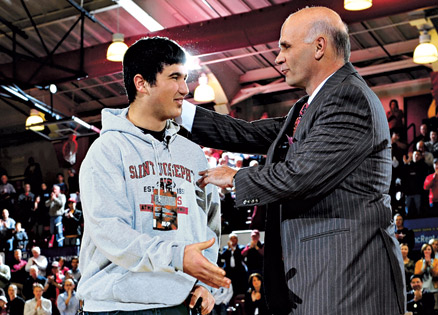
A few months later, leaning on his canes, he indeed walked out onto the Saint Joseph’s University basketball court to wild applause, just like Coach Phil promised he would. Not if, when.

Today Lenny is back at school and doing everything he used to do, except sports.

I still can’t say for certain what really happened that night in Lenny’s hospital room. Obviously, God performed a miraculous work of healing. But I think there’s a little more to it than that. Maybe the real miracle is in those simple words of Padre Pio’s: Pray, Hope and Don’t Worry.

I’d wanted healing for Lenny and I’d worried I wasn’t doing enough to make it happen. I’d forgotten God has his own timing and his own way of working.

The doctors, the physical therapy, the visits from Lenny’s friends, the wonderful visit from Coach Phil–those were all part of the miracle of Lenny’s healing. There’s a saying, “Give time, time.” Perhaps time is one of the greatest healing miracles of all.

Maybe Padre Pio did visit us that night not so much to heal Lenny as a reminder from God that healing was already underway. Pray, Hope and Don’t Worry. These days I do all three.

Download your FREE ebook, True Inspirational Stories: 9 Real Life Stories of Hope & Faith.

16 Norman Vincent Peale Quotes About Positivity

Norman Vincent Peale (1898 – 1993) was a clergyman, speaker, and author best known for his best-selling book The Power of Positive Thinking. He was also pastor of Marble Collegiate Church in New York City, one of the oldest continuous Protestant congregations in North America, and hosted The Art of Living, a radio program on the air for a record-setting 54 years. In 1945, Peale, along with his wife, Ruth Stafford Peale, and others founded Guideposts magazine. And in 1984, President Ronald Reagan awarded Dr. Peale the Presidential Medal of Freedom, the highest civilian honor in the United States.

Even after his death on Christmas Eve in 1993, Peale’s writings on positivity endure. Whether we are facing grief, financial troubles, or job loss, his wise words can lead us to a place of hope. Here are 16 powerful Norman Vincent Peale quotes:

Positive Thoughts for Every Challenge

Now faith is being sure of what we hope for and certain of what we do not see. (Hebrews 11:1, NIV)

I love the expression, “Never underestimate the power of perspective.”

In fact, I just ordered a wall plaque with that exact saying for my office so I’ll constantly be reminded of that truth.

Having positive thoughts is so important. Truly, it can change the whole atmosphere. I was recently reminded of that truth during my bible study time as I read the story of the prophet Elisha found in Second Kings, Chapter 6.

Do you remember the story of Elisha and his servant when they were being attacked by King Aram’s army? King Aram was very angry with Elisha because Elisha was always spoiling his plans to destroy Israel. Every time King Aram and his troops would plan an attack against the Israelites, Elisha would warn the King of Israel. Finally, King Aram could stand it no more, so he sent his army to kill Elisha.

That night, King Aram’s army surrounded the city where Elisha and his servant were sleeping. When they awoke the next morning, the situation appeared grim. Elisha’s servant panicked, saying, “Oh, my lord, what shall we do?” Elisha didn’t panic. Instead, he prayed, “O Lord, open his eyes so he may see.”

At that moment, the Lord opened the servant’s eyes, and he saw the hills full of horses and chariots of fire, totally surrounding and protecting them. Suddenly, King Aram’s army didn’t seem quite so threatening.

You might say the servant got a new perspective. He went from total panic to “bring it on!” Once he saw that God had their backs, he was no longer fearful.

That’s what we all need—healthy, positive thoughts. Why not ask God to help you see every situation through His eyes. Ask Him to help you see your world differently, so that you can face every challenge with a positive attitude. If you’ll walk in faith, not fear, you’ll enjoy every day so much more and face every obstacle with a “bring it on” attitude.

Pray this with me:

Father, thank You for loving me and for always having my back. Help me, Lord, to walk in faith, not fear, and to have a positive attitude no matter what is going on around me. I trust You, Lord. In the Mighty Name of Jesus, Amen.

Positive Thinking Tip: Take a Nap!

Sorry, I should have finished this blog last Friday. Or at least over the weekend. But between the gray, dreary fall weather and the cold I was fighting, I kept succumbing to one of my very favorite temptations: the afternoon nap. Something we deem absolutely necessary for children’s wellbeing yet consider laziness or, at best, an indulgence, for ourselves. Why is that, when we adults are the ones more likely to be sleep-deprived?

Well, I’m here to say, bring back the nap! And not just on weekends, either. Napping is good for your health, your positive attitude and your performance. Cornell psychology prof and sleep researcher James B. Maas has found that a 15- to 20-minute power nap (he coined the term) helps people be more productive, alert and cheerful the rest of the day. (My naps were longer and I didn’t accomplish more than usual afterward—thanks to my cold—but I certainly felt better, physically and mood-wise.)

Two recent studies show more positives to napping. Matthew Walker of UC Berkeley tested a group of adults on fact-based memories. He had them learn 100 pairs of faces and names, then match them up. Afterward, half the group was allowed to take an afternoon nap of up to 90 minutes. The other half stayed awake. When they were tested again in the evening, those who didn’t nap saw their performance drop by 10 percent. The nappers, meanwhile, actually improved 10 percent.

Allegheny College researchers Ryan Brindle and Sarah Conklin had their study participants either stay awake or take up to an hour-long nap during the day, then measured their blood pressure during and after a mental stress test. Blood pressure rose in both groups during the test (they had to do complex subtracting exercises in their heads, which would definitely cause me stress) but afterward, the people who napped for at least 45 minutes had significantly lower blood pressure readings than the non-nappers, indicating better cardiovascular recovery from stress.

You probably can’t sleep for 45 minutes during the workday, but try a power nap. I bet you’ll wake up feeling refreshed. Happy napping!

Now, if you’ll excuse me, I’m going to lie down and close my eyes for 15 minutes…

Positive Thinking Tip: Take a Minute Vacation

It’s an exciting time here at the Guideposts editorial office. Not only are we putting out our mainstays, Guideposts and Angels on Earth, but we’re also putting together two other publications: this year’s special keepsake holiday edition, The Joys of Christmas 2012, plus (drum roll, please) the first-ever issue of Mysterious Ways magazine.

It’s also a very busy time, since the same staff is working on all four publications. Hard to take a day, let alone a whole week, off with so much going on. But I know taking the occasional break is key to staying positive. So what have I been doing?

When I feel my positive attitude drooping, I take a minute vacation. I’m not certain of the origin of the phrase, but I think it comes from a prayer by Wilferd Arlan Peterson, who wrote inspirational essays for the Sunday newspaper supplement This Week: “Slow me down, Lord… Teach me the art of taking minute vacations, of slowing down to look at a flower, to chat with an old friend or make a new one, to pat a stray dog…”

Anything that takes your mind to an unhurried place (or time or both) will work. Need some inspiration for your minute vacation?

Look at photos from your favorite actual vacation. Or be like me and take a vicarious vacay—check out Kevin Russ’s photostream of his road trip out west (the guy took all of those stunning shots with his iPhone!).

Watch a video meditation, like our video on the beauty of flowers.

Eat some juicy, just-ripe fruit (berries are great right now). Or a piece of really good chocolate.

Read a poem or prayer that transports you. Read it out loud even, so you can hear the rise and fall and rhythm—the music—of the words. One I came across recently is “Our Valley” by poet laureate Philip Levine. I saw just the one line “wait on the wind, catch a scent of salt, call it our life” on a poster and felt compelled to look up the rest.

Speaking of music, sit back and listen to a song with a mellow vacation vibe.

Enough from me. Enjoy your minute vacation!

Positive Thinking Tip: Swim in Your Own Lane

My colleague Rick Hamlin uses his morning commute as a time for prayer, and he often reads from Psalms on the subway. Now that I’m commuting by subway (our new office is a little too far to walk), I’ve taken to reading on the train too. Nothing quite as edifying as Scripture—I’m usually working my way through The New York Times Magazine that I didn’t get to over the weekend.

That’s what I was reading this morning when I came across a piece of surprisingly uplifting advice. I was surprised, anyway, because it came up in an article about why there are still so few women in science. The writer, Eileen Pollack, recalled being the only female student in her introductory physics class freshman year at Yale. That was intimidating enough, but worse was seeing the boys in the class breeze through the material while she struggled to grasp the basics.

She got a 32 on the midterm. Disheartened, she went to her professor, Michael Zeller, for permission to drop the class. Clearly her dismal grade meant she wasn’t any good at physics, she said.

“Just swim in your own lane,” Professor Zeller told her.

What was that supposed to mean?

He explained that he’d been on the swim team as an undergrad. He was a strong swimmer yet he kept coming in second in races. Until his coach pointed out what was holding him back: “You keep looking around to see how the other guys are doing. Keep your eyes on your own lane, swim your fastest and you’ll win.”

It was good advice for Eileen Pollack, who not only stuck it out in the intro course but ended up majoring in physics and graduating with highest honors.

It’s also good advice for keeping a positive attitude. Don’t fall into the trap of constantly comparing yourself to other people. You’ll just end up feeling less than.

Swim in your own lane. Try your best. You just might discover that it’s even better than you expected.

Positive Thinking Tips: Snap Out of It!

Last week I blogged about a neat trick with a pencil that gives your attitude an instant lift. That reminds me of another simple yet surprisingly effective positive thinking technique. All you need for this one is a rubber band—and a willingness to change your attitude.

Slip the rubber band on your wrist like a bracelet. Every time you have a negative thought, snap the band—hard enough that it stings—and literally snap yourself out of that downer mindset.

Then—and this is important—replace the negative thought with a positive thought, one that’s affirmative and empowering. If you constantly put yourself down, try building yourself up. Instead of berating yourself, How could I be so stupid? remind yourself, Everyone makes mistakes. I’m smart and determined. Here’s how I’ll learn from this one…

If you tend to think the worst in a stressful situation, look for a bright spot. Say your flight’s delayed. Nothing ever goes right for me, you moan. Snap! Hey, I can call my old friend and catch up. Or, Wow, I actually have time to read my favorite magazine cover to cover. (I hope it’s Guideposts!)

Keep at it and you’ll see your negative thought patterns transformed into positive thinking.

Need some real-life inspiration? Read Guideposts Writers Workshop alum and frequent contributor Susan Karas’s terrific story about how a little green rubber band helped her shed not only a few pounds but also what was really weighing her down—her negative attitude.