Embrace God's truth with our new book, The Lies that Bind

Making Peace with Anger

When I was young, I used to believe that if one person gets angry at another, the relationship would fall apart. Growing up in my family of four, I chose the role of peace-maker to hold the family together by not expressing anger or “rocking the boat.”

It wasn’t until I was in training to be a chaplain that my worldview about anger changed. During my first unit of Clinical Pastoral Education, a colleague and I had a disagreement and got angry with each other in one of our first group activities. Yet, we chose to remain in relationship. We had lunch together to discuss our different meanings about what we said. As a result of this, we became the closest dyad in our peer group by the end of the unit! I learned that anger does not mean severed connection.

Before I had that paradigm shift regarding my perception of anger, I would have never thought of bringing my anger to God. I have heard it said by some of the faithful, “God makes no mistakes, so I can’t be angry at God.” Or, patients and families I serve at the hospital where I am chaplain may state, “You know I can’t get angry at God because of this [illness, death, unforeseen health challenge].”

I call these Christian bubble wrap. These statements permit followers of Christ (in particular) the ability to suppress natural emotions like anger in hopes that God’s feelings won’t get hurt. But just like our relationships with people, our relationship with the Divine can not only withstand anger, but can be made stronger.

As we participate in Lent, we have opportunity to live in the wilderness experience of Jesus and remember that even He got angry. God incarnate, Jesus, having “been tempted in every way” (Hebrews 4:15), can definitely identify with our anger.

Scripture states that even his closest companions–the disciples–did not fully understand Him or believe what He taught. Jesus, being fully human at the time, I infer, got angry. “Can you not watch with me for one hour?” He asked His disciples when they fell asleep instead of praying with Him in Matthew 26:40. And that was after Matthew 21 when Jesus “turns over the tables of the money changers,” and took a whip and cords to chase everyone out of the temple. Jesus likely was angry then too.

How about in the garden of Gethsemane when Judas fulfills the Scripture and betrays Jesus? Could it be Christ got angry because this ultimately set the wheels in motion for His death?

Yes, all of that had to happen to fulfill Scripture, but Jesus was as much human as He was God and surely had the right to be angry by the betrayal of His friend.

God gave us our emotions to help us understand ourselves and each other better. Since it is human and normal for us to be angry, I suggest, instead of burying our painful emotions and pretending they don’t exist, we befriend our emotions, as the theologian Henri Nouwen puts it–especially anger. Let’s not dismiss anger or ignore it in the name of Christian decency. Let us take it to God in prayer.

Low-Sugar Smoothie

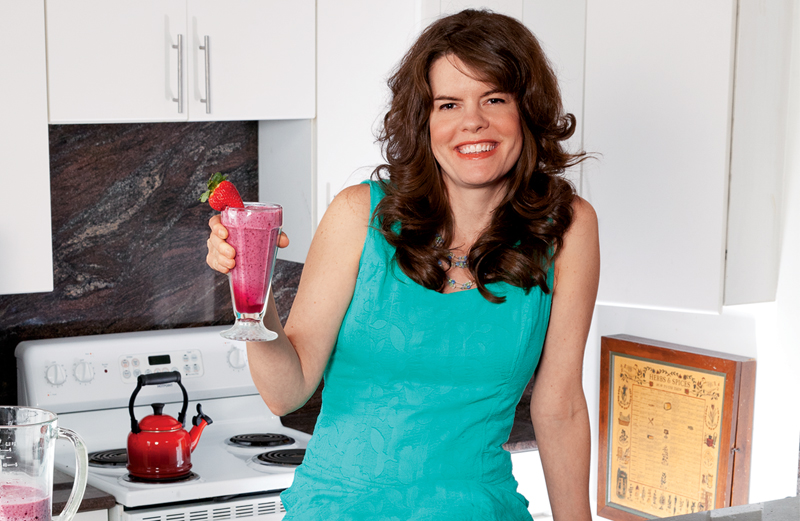
Store-bought smoothies contain a lot of sugar, so I experimented until I came up with a terrific-tasting, homemade low-sugar recipe. Frozen fruit makes it icy cold, and plain yogurt, all-natural stevia sweetener and low-sugar berries make it extra healthy. And if you don’t mind added sugar, try using bananas or peaches, and ginger gives any smoothie an extra kick!

Ladies, start your blenders!

Ingredients

2 c. plain low-fat yogurt 1 c. frozen blueberries
1 Tbsp. fiber or protein powder ½ c. water
1 c. frozen strawberries 1 packet stevia sweetener

Preparation

1. Put yogurt, powder, strawberries, blueberries, water and stevia into a blender and pulse on low setting. Blend until smooth.

2. Pour into a glass and enjoy.

Serves two.

Nutritional Information: Calories: 250; Fat: 4.5g; Cholesterol: 15mg; Sodium: 200mg; Total Carbohydrates: 38g; Dietary Fiber: 5g; Sugars: 29g; Protein: 17g.

Download your FREE ebook, The Power of Hope: 7 Inspirational Stories of People Rediscovering Faith, Hope and Love.

Love, Renewed: A Marriage Strengthened by Strife

Retirement. I wasn’t just looking forward to it. I yearned for it like a desert nomad glimpsing an oasis shimmering in the distance. After 40 years of marriage, of raising five daughters in the Detroit suburbs, of hard work—especially with my husband Joe’s demanding job in management at General Motors—this was finally going to be our time. To really be with each other. To reconnect. To fall in love all over again.

Then one terrible moment derailed everything and dispelled my vision of retirement for the mirage it was.

Father’s Day, 2012. Joe was newly retired, and we were riding our bikes around the little town of Reed City, Michigan, where we’d just bought a second home to be closer to our daughter Susan and our “up north” grandchildren. Pedaling leisurely, admiring the quaint old houses, we felt like the carefree teenagers we’d been when we started courting.

FOR MORE INSPIRING STORIES, SUBSCRIBE TO GUIDEPOSTS!

I came down a steep hill and rounded a corner just as a woman was backing out of her driveway. She hit the brakes. I waved and went by. Joe was a little bit behind me. I was almost to the next corner when I heard a sickening crunch. A scream. I turned. Joe lay sprawled on the street.

I raced to him. Blood trickled from his ear; his eyes were rolled back in his head. “Babe, please don’t die,” I pleaded, stroking his cheek. “Stay with me. This is our time, remember?”

His injuries—three skull fractures and a brain bleed—were too severe for the local hospital to treat him. An ambulance rushed him to a trauma center in Grand Rapids, an hour away. Susan and I followed in her car.

The ER chief met us. Joe lay unconscious on a gurney, hooked up to an IV drip of pain meds. “He coded when he got here,” the doctor said. “But he’s stable now. There’s a lot of swelling. We’re admitting him to the neuro ICU. We’ll re-scan him in the morning.”

An orderly handed me a clear plastic bag with Joe’s clothing. I choked back a sob. They’d had to cut everything off him, even his favorite University of Michigan sneakers.

I stayed by his bedside all night. The CT scan in the morning showed no change. “That’s the best we can hope for right now,” the doctor told me.

A few hours later they moved Joe to the regular neuro floor. Another good sign, I thought. The nurse closed the blinds and turned off all the lights in his room. “Your husband’s brain is trying to reboot,” she said. “He needs as little sensory stimulation as possible.”

I silenced my cell phone and sat in the dark, listening for his every breath. Joe was a whiz with numbers and computers—a math major at Michigan, a data guy for the actuaries in GM’s finance division. Over the years, he’d moved up the ranks to senior manager. His mind was always working.

What if it never works right again? What if…? I stopped myself. No, I couldn’t go there.

READ MORE: 4 TIPS TO HELP CAREGIVERS OF TBI SURVIVORS

Forty-eight hours after the accident, Joe regained consciousness. A team of therapists evaluated him. One got him to stand and take a few steps. He moved stiffly, like a robot. The therapist tried to get him to focus on her. His gaze wandered.

She gently took his face in her hands and said, “Hi, Joe. Who’s this lovely lady next to you?”

He glanced around, his eyes finally falling on me. “Joe?” he said tentatively.

“This is your wife, Marilyn.”

“Okay,” Joe said.

Not a flicker of recognition. I leaned against the wall and took a deep breath, trying to keep it together.

That night, while Joe slept, I laid my head on his chest, hoping the steady beat of his heart would reassure me. It didn’t. I played an old voice mail from him I’d forgotten to delete. “Babe, pick up. Pick up. Okay. You’re not there. I’m stopping at Bangkok Express. Chicken gang gai, right? Love you!” Kissing sounds.

Will he ever be the same again? Lord, bring Joe back. I’ll do whatever you ask, whatever he needs.

Joe was transferred to a new, state-of-the-art traumatic brain injury unit close to our home in the Detroit suburbs. The chief neurologist asked me what Joe was like before the accident.

“He was the smartest man I knew,” I said. I told him how Joe had excelled at his job, writing computer programs. “That’s not all. He played guitar and wrote songs. He made me laugh.”

The doctor handed me a tissue. I hadn’t realized I was crying.

“Your husband may do all those things again one day, but it’s going to be a long, slow haul,” he said. “How slow?”

“Usually whatever skills a TBI patient is going to regain, he regains within eighteen months to three years. Initially, Joe will need your help with almost everything. You’ll play a big part in his recovery.” I could deal with all that. Anything to get back the man I loved.

Find Hope, Inspiration, and More in our Free eBooks

I was at the TBI unit every day from 7:00 a.m. to 8:00 p.m. Joe couldn’t remember how to use a phone, so I called for his meals and set up his bed tray. I read him simple passages and tested his recall. I asked his therapists—he had speech, physical and occupational therapy—lots of questions, trying to soak up as much knowledge as I could.

A month after the accident, Joe was released, with a walker, into my care. I threw myself into being his caregiver. I made a chart to keep track of his 20 prescriptions. I drove him to therapists, doctors, the pharmacy. Joe didn’t like it. He was used to being in the driver’s seat and he’d drum his hand on the passenger door to show his annoyance.

Otherwise we didn’t get out much. Loud noises—cars honking, a dog barking—made Joe anxious. He couldn’t sit through a movie. The few times I invited friends over, he got upset at not being able to follow the conversation.

While he napped during the day, I cooked, cleaned, dealt with our finances (which Joe had handled before) and made phone calls. The only people I talked to regularly were doctors’ assistants and health-insurance reps. I texted everyone else, even our daughters, or posted Facebook updates. Week by week, month by month,

Joe regained his skills. Speech. Simple math. Walking unaided. His therapists cheered him on. I was surprised to find I had mixed feelings. Not surprised, no. Shocked. I was grateful Joe was getting better. Definitely.

But the stronger he got, the harder it was to care for him. He wanted to take charge of his pills but I didn’t trust him not to miss a dose. He chafed at my reminding him to exercise but he wouldn’t do it on his own. He never used to be difficult. Now he’d snap at me over anything I did to help him.

Not that I let on that things were getting to me. His neurologist had told me personality changes were common with brain injuries. I couldn’t confront Joe. Before, he would’ve taken what I said in stride; now his eyes filled with tears if he thought I was mad at him.

I kept my Facebook posts and text messages simple and upbeat. I couldn’t exactly write, “Joe is so stubborn! Everything has to be his way. I’m sick of it.” Who wanted to hear how frustrated I was? How I collapsed in bed at night wishing this had all been a bad dream?

Eighteen months post-trauma, Joe was back to handling our finances, cutting the grass, riding his bike (with a helmet). Then he was cleared to drive again. His therapists and doctors marveled at his recovery. I worried that they weren’t being cautious enough.

I was afraid of his driving alone. Especially in Detroit traffic. We sold our house in the suburbs and moved permanently to Reed City. The small-town environment was healing for him. I could almost see the tension leaving him.

The tension between us? That worsened. Joe wanted to assert his independence. I questioned him closely to make sure he took his medication correctly. I fussed if he didn’t tell me where he was going and for how long. I had to know his whereabouts. What if he got confused, as he still did occasionally? What if, God forbid, there was another emergency?

Maybe it was because being his caregiver was so intense, but it didn’t feel much like we were husband and wife anymore. When I told Joe I loved him, he’d reply, “Okay.” He rarely took my hand or hugged me. I kept listening to that old voice mail, trying to recapture the Joe who had been so sweet and loving.

Replaying the voice mail one night, I came across several others I hadn’t deleted. Messages in which Joe apologized for forgetting to pick something up or having to miss some event. Something or someone at work was always more important than me, than our family.

Listening to those messages, I wanted to lay into him. I wanted to tell him how badly he’d hurt me, how alone I’d felt sometimes raising our daughters while he worked late or was away on business.

But I didn’t. Joe’s memory had taken a hit because of the TBI, and things I brought up he often didn’t remember. What good would dredging up the past do? It was the accident that ruined our retirement. So I buried my anger and resentment, just as I’d been doing all those years.

This time, though, my feelings wouldn’t stay buried. The next day I found myself blurting out some not-so-fond memories, like the weekend our long-awaited family camping trip became just the girls and me because—surprise, surprise—something came up at Joe’s work.

Try These Self-Help Books to Reach Your God-Given Purpose

I went nuts the afternoon Joe left to help a buddy move stuff and forgot to tell me where he was going. “Where have you been?” I screamed when he got home. “I was so worried!”

By the time we went downstate for his final follow-up with his neurologist, two years after the accident, Joe and I were barely talking. The whole four-hour drive there the car was quiet.

The neurologist’s waiting room was empty except for a young pregnant woman with a toddler. I didn’t feel like chatting, but she started telling me that her husband was seeing the neurologist because he’d been in a motorcycle accident. “It makes me sad that he won’t be able to be there for me with our new baby the way he was with our first,” she said.

She kept talking. I only half-listened, thinking back to my own pregnancies and deliveries. Joe was with me for every birth, feeding me ice chips, rubbing my back, breathing with me. I thought about how when I was 46 and the girls were grown, I’d wanted to fulfill my dream of going to college.

Even though my tuition put a strain on our budget, Joe supported me 100 percent. That’s why at my graduation I wrote in glitter glue on my mortarboard, “Thank you, Joe!” Anything the girls or I needed or wanted, he made it happen without a word of complaint. Which was also why he’d gotten so far in his career. He was the same with his bosses.

I guiltily remembered those Friday nights he came home exhausted from work yet was still willing to go out to dinner or a movie or the symphony with me.

Those moments that were truly just ours were rare, and I longed for more. So I’d pinned all my hopes on retirement. Our time. No wonder I was angry and resentful about the accident and its aftermath. I felt like my hopes had been shattered when in fact, it was my unrealistic expectations.

I looked at Joe, sitting quietly in the neurologist’s waiting room, and I knew what he needed, what God was asking. Love your husband. For the man he was. And the man he is.

The drive home was the opposite of the drive down. I thanked Joe for all the ways he’d been there for me, for our family. I reminisced about the happy times we’d had, even though I wasn’t sure he’d remember. “I was scared we wouldn’t have more time together,” I admitted. “That’s why I’ve been so upset.”

Joe reached over and squeezed my hand. “I love you, Marilyn.”

A few days later we went to an antiques mall. We each went off on our own for a while. When I caught up with Joe, he was flipping through some old records.

“Look what I found!” he said. “The first present I ever got you.”

He handed me a 45. I had forgotten. The Carpenters’ “We’ve Only Just Begun.” Our wedding entrance song.

Somehow the lyrics meant more now, 42 years after our wedding day. There was still so much of life ahead for us to live. Together.

Did you enjoy this story? Subscribe to Guideposts magazine.

Love and Kindness for the New Year

Sometimes children are the best teachers. Last week my five-year-old granddaughter, Ava, came over to bake Christmas cookies. After we’d finished, Ava said, “Grandmama, will you come up to the toy room and play with me?” She took me by the hand, and we walked up the stairs to the room my husband and I have stocked with toys and games.

“Come see how I’ve arranged the stuffed animals,” she said. She’d placed them on the rocking chair and on the floor around it. Then she said the words that stuck in my heart, “They’ve been trained to be kind, to love and to give hugs.”

Oh, baby girl, there’s such wisdom in those words. I couldn’t help but wonder how different our world would be if more of us were trained to be kind, to love and to give hugs.

Read More: From Dr. Norman Vincent Peale–Rule Your Spirit

I was reminded of that lesson about kindness recently while I was in Memphis to be part of the taping of a Christmas show. Gospel musician and Grammy winner Jason Crabb was one of the performers. When I was introduced to him, I got a warm greeting, a hug and a kiss on the cheek. And I wasn’t the only one. As I watched him throughout the day at sound checks, dinner, and before, during, and after the show, his kindness—his realness—shone through. 

It didn’t matter if he was meeting the millionaire businessman who was there for the evening, the film crew or the tiny senior citizen lady who wanted to talk to him, each was greeted with a hug, a kind word and the love that Jesus talked about.

After we finished the taping, I stopped at Jason’s merchandise table as the crowd was winding down so I could give him a hug and tell him what a joy it had been to meet him. He said, “Do you have all my stuff?” Turning to his team members he said, “Get her all my stuff.” They started piling things in bags.

When I got back to the hotel that night, I discovered all of Jason’s CDs, his five children’s books, and his Jase the Crab stuffed animal. It was a lovely gift, but the true gift was the example Jason had shown that night—of what we can become when we allow God to train us to be kind, to love and to give hugs.

And I think that’s a great example for all of us to take into the New Year.

Louie Giglio Gets Real about Battling Depression and Anxiety

If a church member wants to talk to Passion City Church pastor Louie Giglio about anxiety or depression, Giglio isn’t just a sympathetic listener. He speaks from experience.

The author and founder of the Passion Movement, which brings together young adults looking to grow and strengthen their faith, went through a debilitating struggle that began several years ago.

“I literally woke up in a panic thinking I was going to die at 2 o’clock in the morning,” Giglio tells Guideposts.org. That moment sent him on a months-long downward spiral into depression, fear, and darkness.

“Spiritually I was out of whack,” Giglio recalls. “Mentally, for sure, I probably had something close to a nervous breakdown. I didn’t leave the house most days for a long, long time. I had to seek medical help. I sought spiritual help. I cried out to God. It was a very, very dark season of life.”

Giglio’s been open about his mental health journey, most recently in his book, The Comeback, but in his new book, Goliath Must Fall, the pastor sought to use his own struggles to help others and bust some misconceptions about anxiety and depression in the church.

“I keep wanting to unpack that because so many people are struggling with it,” he explains. “I’m a pastor and there are people in our church here and in others that I run into almost every day who are frozen with anxiety. I’m talking about middle school kids and nine year olds and business professionals and CEOs and moms. It’s not just one slice of life.”

For Giglio, learning to manage his anxiety is still an ongoing lesson in faith, trust, and acceptance.

“You have to start over again and I needed to start all over again, my brain needed to start all over again, my nervous system had to reboot again and all that took time,” Giglio says. “Almost six months time, but when you go through something like that it marks you. I don’t struggle every day with anxiety, but I am marked by what I went through and it’s still relevant to me every single day.

His new book doesn’t offer a quick fix.

“I’m not telling people , ‘Just do this simple little spiritual formula and poof, you’re going to forget about all your troubles.’ If you’ve been through the fire of divorce or the fire of addiction or the fire of anger or the fire of great loss or abuse, you’re going to be marked by that, but what I’m trying to encourage people in is that doesn’t have to define you and it doesn’t have to define your outlook on life.”

Goliath Must Fall takes lessons from one of the most well-known stories in the Bible and applies them to every-day life, but first, he re-teaches the story of David and Goliath.

“The problem is that most of us know that in and of our own strength, we can’t defeat these giants that are in our lives,” Giglio says. “Ask anyone who’s struggled with rejection or struggled with anger or struggled with fear, anxiety, or depression. A lot of people have been around the block dozens of times trying to makes changes, but yet the giant is still there. The beauty in the book is that we’re not David in the story of David and Goliath. From our perspective, Jesus is the giant slayer in the story. Jesus is David in the story of David and Goliath and He takes down the giants on our behalf and so we just learn to walk in what He’s already done for us.”

To really face your giants, Giglio says you have to dig deep into what’s causing you pain, fear, or anxiety.

“Anxiety isn’t a thing. It’s the symptom of a thing and so we have to go a little deeper and ask a question, ‘What is making me anxious?’” he explains. “I gave too much credit just to anxiety. What was happening was something or someone was making me anxious and so I try to help and encourage people to go one step further, to go beneath the surface to ask, ‘What is it that I’m afraid of? Who is it that I’m afraid of? What was said that I wish I could now mange the way it was said?’ I was trying to manage every outcome and I was trying to watch over my shoulder all the time.”

The book outlines steps for preparing for the big battles in your own life, even the invisible ones. Giglio says plenty of people aren’t struggling with depression and anxiety like he was, but they might be unknowingly fighting a trickier problem.

“One of the giants we talked about in the book is the giant of comfort and I think for a normal person floating through life, they’re like, ‘Comfort’s a good thing. I’m trying to make my life as comfortable as I can,’ but for believers who think that there’s something greater than this present life, comfort isn’t always the best thing,” Giglio explains. “We’re looking to make our lives count. We’re looking to make a difference in the world. We’re looking to serve and help people and no one who’s ever done that in the world has had a comfortable life.”

Lou Gehrig’s Disease Taught Author John R. Paine to Trust God

John R. Paine had it all. He was a respected businessman, devout Christian and dedicated father.

Then he received a diagnosis that changed everything. He had ALS, also known as Lou Gehrig’s disease, and was told he wouldn’t live long.

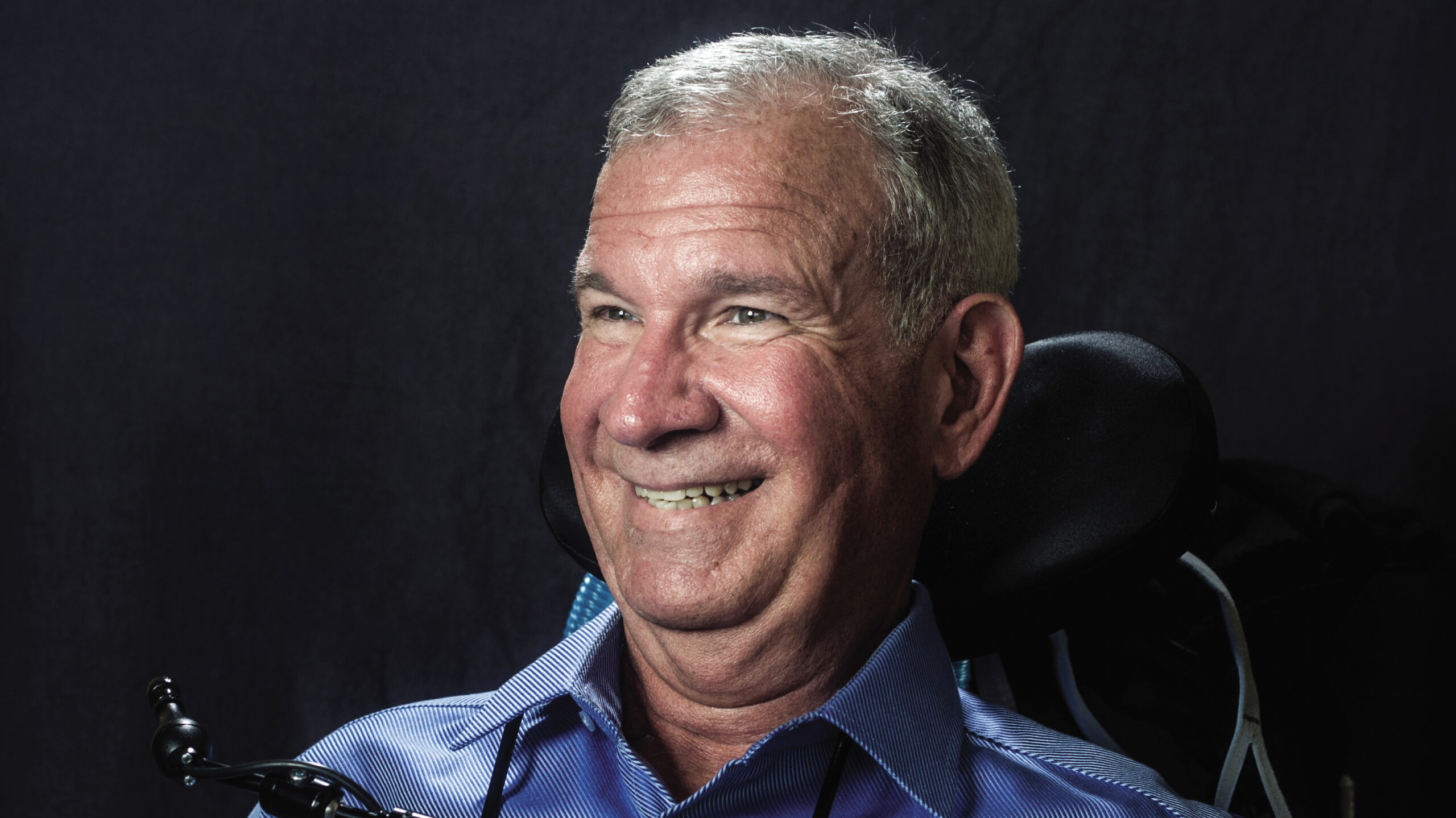
Seventeen years later, Paine has long outlived the doctor’s prognosis. He uses a wheelchair to move and a ventilator to breathe, but has found deep joy in his relationship with God. Paine shares his story of pain and spiritual formation in his new book The Luckiest Man.

In this excerpt from his book The Luckiest Man, Paine opens up about how ALS opened his eyes to the beauty of depending on God.

Saying Good-Bye

I’d said goodbye to so many things: climbing stairs, swimming, scratching any given itch. I’d hired a full-time driver who doubled as a part-time caretaker. I’d maintained the rhythm of my evenings, perhaps my favorite part of any day, though I knew it was only a matter of time before that changed too.

Margaret has always been an early-to-bed kind of girl, and in those days, she’d settle into bed sometime around nine o’clock each evening. I’d make my way to my favorite deep-cushioned chair by the bed, often reading until close to eleven. Satisfied, I’d settle into bed and fall asleep, spent. It was a good arrangement, one that worked for me. I was growing weaker, though, and with each passing night, I found myself struggling to maintain the rhythm. My arms now dead, Margaret would open my book, set it in my lap, and place my hands on either side. With my right thumb and forefinger, I’d turn the pages with great care, sliding the edge under the fingers of my resting left hand. It was a tedious process and grew more tedious by the day. When I was finished, I’d stand, shuffle to the bed where Margaret had pulled the covers back, and with a series of arm slings and knee raises, I’d pull the covers over my chest before falling to sleep. It was unconventional, but isn’t so much about adapting to death?

It was a night like any other, though I should have seen it coming. The routine had been the same—the chair, the book, the pulled-back covers. Having had my fill of reading, I stood, allowed the book to fall from my lap to the floor. I dragged to the bed, then stretched myself under the covers. I tried to sling my arms up using my knees, tried to throw the covers over my chest; I couldn’t. It was no use; I couldn’t cover myself.

I turned to look at Margaret, already asleep, and there was no way I would wake that kind of resting peace. Pity set in—self-pity is a difficult battle for the ALS patient—as I realized there was no feasible way to solve this problem. In that pity, I was overcome by emotion. Tomorrow night, would I have to turn in with Margaret? Would I have to let her tuck me in and turn off the lights? Would I stare up at the dark ceiling, unable to move until I was able to fall asleep hours later? Did I have to say goodbye to my favorite part of the day?

I rolled to my side and climbed out of bed, arms dangling. I shuffled back to the chair I’d just left and sat in fresh awareness of my newest loss. Why tonight? Why ever, really?

I felt the sadness and resentment and depression creeping in, knew that this kind of self-pity made life so much darker, so I turned to prayer. I waited for an answer, a sense, anything. I heard nothing. I waited, started praying again, and that’s when a movie started playing in my mind’s eye. It was the video of my life. I was a young boy in Tyler, running from home, pushing past the boundaries my parents had set. I was a college student in love, but I was spending more time away from Margaret, more time pursuing academic achievement. I was married, working for Mr. Hill, and asserting my independence more and more. I was a successful builder, an entrepreneur, a self-made man. I was sitting in the doctor’s office, the recipient of a terminal diagnosis, and even in my success, I felt so alone. Where were my parents? Where was Mr. Hill? Where was Margaret, really? They were a part of my life, sure, but were they in it? Were we connected in intimacy, connected in such a way that would help me carry the load? Hadn’t all my assertions of independence been nothing more than acts of isolation?

That’s when I felt the words, flooding.

I created you for dependence on me and others. Your pursuit of independence pushed all of us to arm’s length. Say goodbye to independence. Really.

Conviction is a difficult thing. First, He’d convicted me of my understanding of His love, then of ways I sought validation. Now He was showing me that dependence was not weakness, so long as I was dependent on the right things. And just as it had in those other moments, this new moment of conviction brought a sorrow with it. This false independence, all this striving to prove my self-sufficiency—what was it worth? How had I missed this truth, that God created us for proper dependence? I knew it at once—the false John Paine had made this kind of dependence impossible. How could I confess my failures, my weaknesses, my inadequacies, if I needed others to believe that I had the answer to every problem? To admit I needed others would require an act of transparency, of confession. Wouldn’t it?

It was a moment triggered by the silliest thing—my inability to cover up—but it exposed a deeper, longer trend. Now I felt myself invited into something new: the admission of my need for others was necessary if I was to kill the false man. Only through this death of the false man could I plumb the depths of intimacy.

I will care for you as you learn to give in, I heard in that moment. I have you covered.

I’d learned to trust these inklings, these deeper leadings of God, and so, I stood from my chair and made my way back to my bed. I scooted my feet under the covers again and waited for something to happen. Margaret stirred, raised up on her elbow, and pulled the covers up over me. She lay back down, still sound asleep.

“Margaret?” I whispered.

No answer.

“Margaret?”

Still no answer.

“Thank you, Lord,” I prayed into the dark.

Taken from The Luckiest Man: How a Seventeen-Year Battle with ALS Led Me to Intimacy with God by John Paine Copyright © 2018 by John Paine. Used by permission of Thomas Nelson. www.thomasnelson.com.

Losing Weight with Friends

I sat on the couch at my parents’ house next to my younger sister, Jamie, my eyes fixed on a photo of me with my brother-in-law, David, taken earlier that day. Triple chin. Rolls on my stomach. I knew I was overweight, but did I really look like that? “Is this what you see when you look at me?” I asked Jamie incredulously.

“Um…yes, T, it is,” she said, measuring her words.

Jamie and I are both nurses. I knew obesity led to serious health issues like high blood pressure and diabetes—I’d seen it in patients. But I was in denial about how overweight I was. I hadn’t stepped on a scale in six years. Diets? They never lasted. Exercise? As if I had energy after working the late shift at the hospital. I didn’t have energy for much of anything now. I’d stopped going out with friends or to church. I didn’t want people staring at me, judging me. But now that I was staring at my photo, I couldn’t blame them. I didn’t want to live like this anymore. “Help me, Jamie,” I said, fighting back tears.

“Well, T…I never told you this, but after you helped me beat cancer, I prayed that when you were ready God would let me help you lose weight.”

If anyone could help me it was Jamie. She was strong, disciplined, motivated. Everything I wasn’t. At just 26 she was diagnosed with breast cancer. David and I took turns driving her to doctor’s appointments, running errands, watching their two kids. Not that Jamie dialed back any. She kept working full-time, volunteering at church. She even took up running and often jogged after chemo treatments. I’d tell her not to do so much. “I’m going to keep living my life,” she’d say. When Jamie went into remission it felt like the three of us—she, David and I—had beat cancer together, as a team. To celebrate, she ran the Susan G. Komen Race for the Cure.

Two years ago, the cancer came back. After six weeks of grueling radiation, Jamie went into remission again.

“Jamie, you beat a life-threatening disease,” I said now. “This isn’t the same.”

Hello, T! Obesity is life-threatening!

We’re going to tackle it one step at a time. Each Sunday I’ll give you a new goal for the week. Sound good?”

I had all kinds of doubts but I knew better than to argue with Jamie. “I’m in,” I said, almost as if I were surrendering.

Sunday evening Jamie called me at work. “Here we go! Goal one: Weigh yourself every Monday,” she said. “It’ll keep you accountable. No more denial.”

The next day one of my coworkers put me on the scale. She pushed the metal bar to the 350-pound limit. It didn’t balance. My mouth fell open. She took me to the bariatric scale, wide enough to roll a wheelchair onto. The digital readout showed 399. Almost 400 pounds! I called Jamie in tears. “I’ll never lose this weight!” I cried.

“That number will go down,” Jamie said firmly. “Give yourself a chance.”

Then David got on the line. “We believe in you, T. Take down your walls and let God back in. He wants to help you.”

I’d expected my sister to stand by me, but David’s support gave me a boost. And truth was, I missed having God in my life. I started with a prayer before bed each night: Lord, give me strength to get healthy so I can live my best life for you.

The second week, Jamie gave me a new goal: “Don’t eat after dinner and avoid drinks with calories.”

“But I usually drink a soda and…”

“No, T,” Jamie said, cutting me off.

Later in the hospital cafeteria, I looked longingly at a can of Coke. But I bought a diet cola instead. Before I clocked out, Jamie called again. I told her what I’d done. “Awesome!” she said. “Now go home and go right to bed.”

Bed? I usually stopped at a fast-food joint, then stayed up late watching TV. Grudgingly, I set my alarm for early the next morning. I woke up feeling energized. Same thing the next few days. Maybe this wasn’t going to be as hard as I thought. Then, on the fifth day, I gave into a craving for a high-calorie soda. “I feel like a loser,” I told Jamie.

“T, we all have setbacks. I’m here for you.” She had me memorize Proverbs 3:5: “Trust in the Lord with all your heart and lean not on your own understanding.” David got on the phone. “T, I know you’re discouraged, but you can do this. Remember Philippians 2:14: ‘Do everything without grumbling or arguing.’”

My third goal? Shop smart and cook healthy. Sunday afternoon Jamie took me to the grocery store (David was away on business). She showed me how to read labels and loaded my cart with fresh fruits and low-calorie, low-fat replacements for my favorite foods. That night I got an even bigger surprise. My phone rang. David calling from the road! “Here’s a quick tip,” he said. “Trade chips for carrots—they’re crunchy and packed with flavor. Keep going, T. You’ve got this.” For the first time I started to believe it.

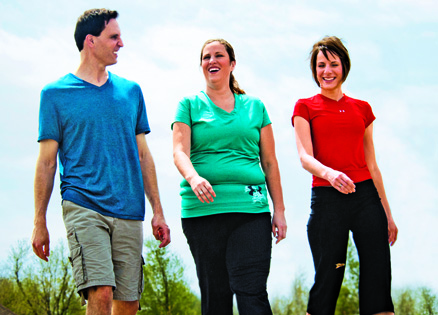
Jamie and David’s program got results. Four weeks in I’d lost 30 pounds. I stuck with their advice for the next few months. “You’re doing great! Now it’s time to start walking,” Jamie said. “Come over tomorrow morning.”

Walking? Well, at least it wasn’t running! Oh, how wrong I was. I got winded just a few paces in. Then we came to a hill. “No way,” I moaned.

“Think about James 1: ‘Consider it pure joy when you face trials because you know that the testing of your faith produces perseverance,’” Jamie said.

Was that where Jamie got her strength? From her faith? If she can beat cancer, the least I can do is walk up this hill. I put one foot in front of the other. Before I knew it we were on the other side.

“See! You did it!” Jamie shouted.

Soon Jamie and I were walking a few days a week. One day David set dumbbells in front of me. “You’re a rockstar, T! Let’s add these in now.” He showed me a weight-training routine. I couldn’t believe how easily I picked it up.

I lost 100 pounds in six months. Even better, I felt lighter in spirit because I found a new church. Yes, people looked at me but only to welcome me—and then to listen to my weight-loss story.

I’ve lost 200 pounds so far. I’m strong, determined and living for God. I couldn’t have done it without Jamie and David. Which reminds me of my new favorite verse, Matthew 18:20: “When two or three come together in my name, there I am with them.” Now that’s teamwork.

Download your FREE ebook, True Inspirational Stories: 9 Real Life Stories of Hope & Faith

Losing My Religion, Part 2

Why do bad things happen to helpless people? That, more than anything else, is the question that ended the faith of William Lobdell, author of a book I’ve been reading and thinking about a lot recently. The book, Losing My Religion: How I Lost My Faith Reporting on Religion in America-and Found Unexpected Peace, details Lobdell’s inexorable transformation from born-again Christian to what he calls “reluctant atheist.”

It was the never-ending scandals Bill covered as a religion reporter for the Los Angeles Times—priest sexual abuse, corrupt televangelists, manipulative faith healers—that shattered his belief. How could a good, powerful God allow such things to happen, he wondered? He never found an acceptable answer.

I’m not surprised. The problem of God’s seeming inaction in the face of evil should bedevil all believers. And no, I don’t think the “of course there’s evil, we’re all sinners” argument is a solution. The evils that troubled Bill—priests molesting children, natural disasters wiping out populations, mysterious crippling diseases—were not mere sin. They were senseless, horrific harm done to helpless victims. They begged the question: Why doesn’t God do anything?

The reasoning animating Bill’s questions usually runs like this: An all-good, all-powerful God would have to intervene to prevent such suffering. Failure to intervene means God either can’t or won’t stop evil. Which in turn means God is either not all-powerful or not all-good. Or perhaps doesn’t exist at all.

Argument about this issue usually devolves to limit cases. Why didn’t God prevent the Holocaust? Why did God allow the abuses that so horrified Bill Lobdell? Why do believers celebrate every time God seemingly heals an illness or rescues someone from natural disaster—but God is never blamed when the cure doesn’t work or the disaster kills thousands?

I can understand why such questions eroded Bill’s faith. As posed, I don’t think they’re any more answerable than he did. Unlike Bill, however, the reason I can’t answer them is not because I fear they expose a fatal chink in the armor of faith. I can’t answer them because I think they’re the wrong questions. Nonsensical questions. Questions that begin from false premises and end up sounding fatally weird, like “How many does yellow have?” Or, “Where is five?”

Let me explain. Asking why an all-good, all-powerful God allows evil to afflict helpless people presumes we know the definitions of three exceedingly large, exceedingly difficult words: good; power; and evil.

Take the first of those words. What do we mean when we say God is good? That God is nice? That God helps people? That God wants everyone to be happy? If you think about it—and I have thought about it a lot lately—you may realize that you don’t know as much about goodness as you thought you did. Or rather, as I discovered, your definition of goodness may turn out to have less to do with the state of the universe or humanity than it does with what happens to be good for you. That is, for many people, goodness equals what I like or what I approve of.

Same with evil and power. For me, evil is everything I happen to hate—death, suffering, cheating, everything that harms. Power means power over things, the ability to make things happen, to bend people and things to another’s will. Using those definitions, I’m afraid I would have to agree with Bill Lobdell. A good God who does not use power to squelch evil is not worth believing in.

But what if I’m wrong? What if those words mean something more, something different than I initially understand? In my faith tradition, Christianity, all the available evidence tells me those words do in fact mean more—far more than I can hope to grasp without careful thought and study.

Take a single example. The life of Jesus as told in the Gospels is one of poverty, preaching to a hostile public, healings that sometimes take and sometimes don’t, all culminating in public humiliation and death. There it is, a life beset by what I would call evil, failure and powerlessness. And yet we are to believe that Jesus is the very incarnation of God, the clearest, most blatant statement of who God is.

If God agreed with my definitions of goodness, evil and powerlessness, the world would be a wonderful place—for me. If God agreed with Bill Lobdell’s definitions, Bill would never have had to witness the abuses that so scarred him.

But of course everything else would be different too. The rest of us would be slaves to Bill’s particular understandings and prejudices. God would not be a God who says things like, “The last shall be first.” God would be a God of power who intervenes forcefully, eliminates free choice and runs the earth like a puppet show. God would make everyone happy. God would make everyone nice. God would ensure the world never grew bigger or more complex than the human brain and its insistent moral compass.

Of course it would be terrific—for awhile, anyway—if the God Bill Lobdell demanded and didn’t find really existed. We could dispense with questions and live our (Bill’s?) nice, happy lives. Thankfully, as Bill discovered, that God doesn’t exist. What I believe does exist is a far fiercer, larger, more complicated, more magnificent God. A God whose nature is disclosed by this universe we live in—heartbreakingly beautiful, relentless, mysterious, sometimes pitiless, sometimes embracing, always bursting with a life that is shadowed but not defeated by death.

No, that God doesn’t always answer my questions. But given the treacherousness of those questions, their shifting definitions and me-centered thinking, I’m not sure those are the questions I want answered.

Jim Hinch is a senior editor at GUIDEPOSTS. Contact him at jhinch@guideposts.org.

Losing His Daughter in the Oklahoma City Bombing Transformed Him

I was expecting my daughter’s call that morning, April 19, 1995. As I sat by the phone, my coffee cup rattled on the tabletop. The next instant, I heard a thunderous sound and the floor shook beneath my feet. I ran to the kitchen window. Blue sky, spring sunshine. A peaceful Oklahoma day. It was hard to imagine anything terrible happening on a bright Wednesday like that.

Celebrating Guideposts' 75th Anniversary

I hadn’t put on my Texaco uniform that morning; I was meeting my 23-year-old daughter, Julie, for lunch. Proud of her? Everyone who came in for an oil change heard what a great kid I had. She’d caught me bragging on her just two days before. “Dad! People don’t want to hear all that!”

Odd, that visit…Julie often stopped by my service station for a few minutes on her way home from her job at the Murrah Building in downtown Oklahoma City. (Her mother and I were divorced.) Monday, though, it was as if… she didn’t want to leave. She stayed two hours, then threw her arms around me. Julie always gave me a hug when she left, but Monday she held me a long time.

“Good-bye, Daddy,” she’d said.

That was odd too. Nowadays Julie called me Daddy only when she had something really important to say to me. Well, maybe she’d tell me about it that afternoon. Every Wednesday, I would meet Julie for lunch at the Athenian restaurant across from the Murrah Building.

Cover of May 1999 issue of Guideposts
As seen in the May 1999
issue of Guideposts

At nine o’clock, I’d sat down with that cup of coffee to wait for her call. Julie usually got to work at the Social Security office where she was a translator at 8 a.m. sharp. It was her first job after college. As a federal employee, Julie got only 30 minutes for lunch—and she wouldn’t take 31! She always called to find out what I wanted for lunch, then phoned our order in to the Athenian so we could eat as soon as we arrived.

Chicken sandwich this time, I’d decided. The parking lot would be full by lunchtime; I’d see Julie’s red Pontiac in her favorite spot beneath a huge old American elm tree. I’d park my truck at one of the meters on the street and watch for her to come out of the big glass doors—such a little person, just five feet tall (“Five feet one-half inch, Dad!”), 103 pounds.

But a big heart. I believed in loving your neighbor and all the rest I heard in church on Sundays. But Julie! She lived her faith all day, every day. Spent her free time helping the needy, taught Sunday school, volunteered for Habitat for Humanity—I kidded her she was trying to save the whole world single-handed.

The rumbling subsided. Bewildered, I stood staring out the kitchen window. Then the phone rang. I grabbed it.
“Julie?”

It was my brother Frank, calling from his car on his way out to the family farm where we’d grown up. “Is your TV on, Bud? Radio says there’s been an explosion downtown.”

Downtown? Eight miles away? What kind of explosion could rock my table way out here! On the local news channel, I saw an aerial view of downtown from the traffic helicopter. Through clouds of smoke and dust the camera zoomed in on a nine-story building with its entire front half missing. An announcer’s voice: “…the Alfred P. Murrah Federal Building…”

Floors thrusting straight out into space. Tangled wreckage in rooms with no outer wall. And in place of those big glass doors, a mountain of rubble three stories high.

I didn’t move. I scarcely breathed. My world stopped at that moment. They were appealing for people not to come into the downtown area, but nothing could have pulled me away from the telephone anyway. Julie would be calling. Her office was at the back of the building, the part still standing. Julie would find her way to a phone and dial my number.

All that day, all that night, all the next day and the next night, I sat by the phone, while relatives and friends fanned out to every hospital. Twice the phone rang with the news that Julie’s name was on a survivor’s list. Twice it rang again with a correction: The lists were not of survivors, but simply of people who worked in the building.

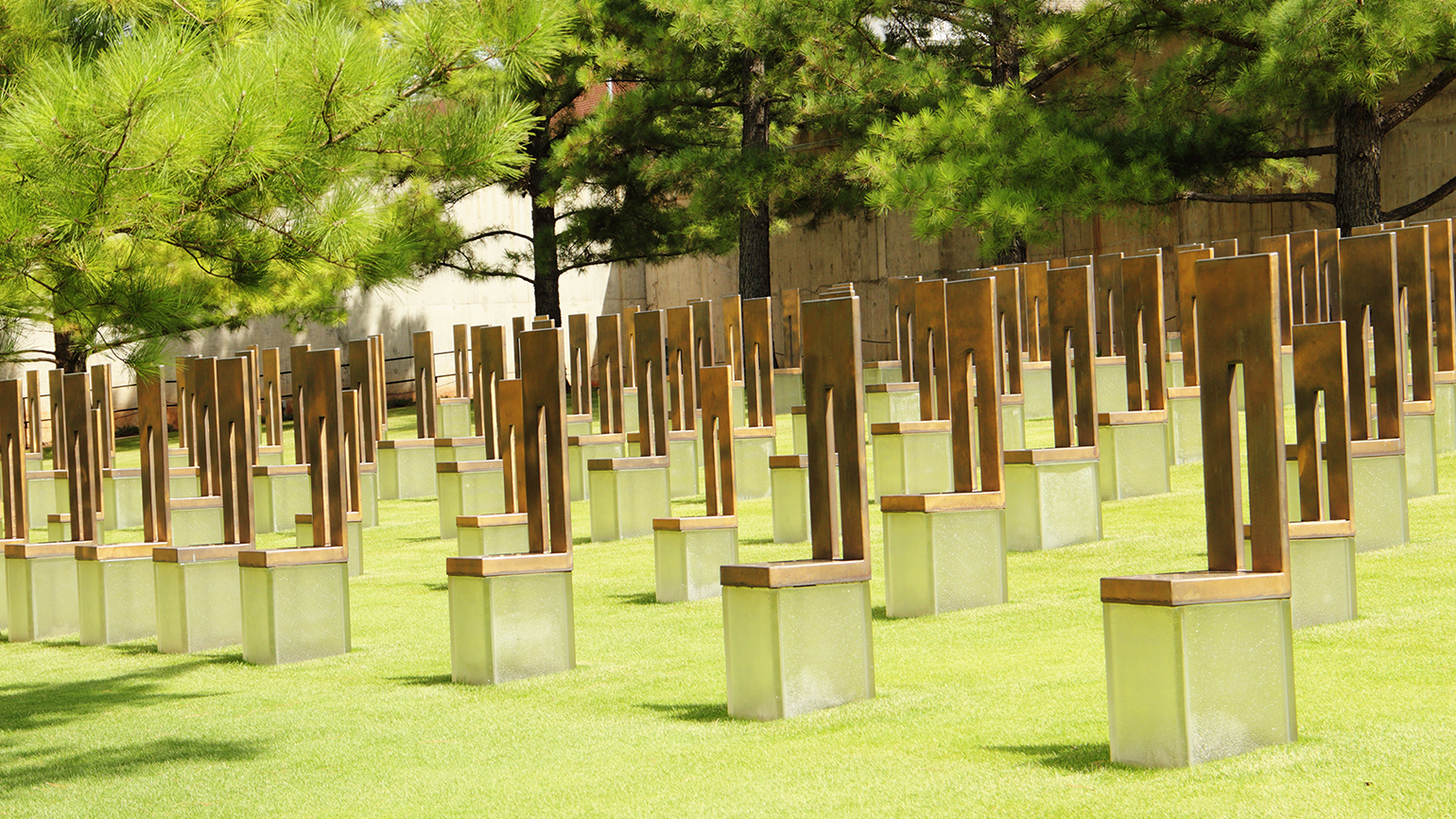
Friday morning, two days after the explosion, I gave up my sleepless vigil and drove downtown. Because I had a family member still missing, police let me through the barricade. Cranes, search dogs and an army of rescue workers toiled among hills of rubble, one of them a mound of debris that had been the Athenian restaurant. Mangled automobiles, Julie’s red Pontiac among them, surrounded a scorched and broken elm tree, its new spring leaves stripped away like so many bright lives.

Julie, where are you? Rescuers confirmed that everyone else working in that rear office had made it out alive. The woman at the desk next to Julie’s had come away with only a cut on her arm. But, at exactly nine o’clock, Julie had left her desk and walked to the reception room up front, to escort her first two clients back to her office.

They found the three bodies Saturday morning in the corridor, a few feet from safety.

From the moment I learned it was a bomb—a premeditated act of murder—that had killed Julie and 167 others, from babies in their cribs to old folks applying for their pensions, I survived on hate. When Timothy McVeigh and Terry Nichols were arrested, I seethed at the idea of a trial. Why should those monsters live another day?

Other memories blur together… Julie’s college friends coming from all over the country to her funeral. Victims’ families meeting. Laying flowers on my daughter’s grave. No time frame for any of it. For me, time was stuck at 9:02 a.m., April 19, 1995.

One small event did stand out among the meaningless days. One night—two months after the bombing? four?—I was watching a TV update on the investigation, fuming at the delays, when the screen showed a stocky, gray-haired man stooped over a flower bed. “Cameramen in Buffalo today,” a reporter said, “caught a rare shot of Timothy McVeigh’s father in his…”

I sprang at the set. I didn’t want to see this man, didn’t want to know anything about him. But before I could switch it off, the man looked up, straight at the camera. It was only a glimpse of his face, but in that instant I saw a depth of pain like—

Like mine.

Oh, dear God, I thought, this man has lost a child too.

That was all, a momentary flash of recognition. And yet that face, that pain, kept coming back to me as the months dragged on, my own pain unchanged, unending.

January 1996 arrived, a new year on the calendar but not for me. I stood at the cyclone fence around the cleared site of the Murrah Building, as I had so often in the previous nine months. The fence held small remembrances: a teddy bear, a photograph, a flower.

My eyes traveled past the mementos to the shattered elm tree where Julie had always parked. The tree was bare on that January day, but in my mind I saw it as it had looked the summer after the bombing. Incredibly, impossibly, those stripped and broken branches had thrust out new leaves.

The thought that came to me at that moment seemed to have nothing to do with new life. It was the sudden and certain knowledge that Timothy McVeigh’s execution would not end my pain. The pain was there to stay. The only question was what I would let it do to me.

Julie, you wouldn’t know me now! Angry and bitter, hate cutting me off from Julie’s way of love, from Julie herself. There in front of me, inside that cyclone fence, was what blind hate had brought about. The bombing on the anniversary of the Branch Davidian deaths in Waco, Texas, was supposed to avenge what McVeigh’s obsessed mind believed was a government wrong.… I knew something about obsession now, knew what brooding on a wrong can do to your heart.

I looked again at the tenacious old elm that had survived the worst that hate could do. And I knew that in a world where wrongs are committed every day, I could do one small thing, make one individual decision, to stop the cycle.

Many people didn’t understand when I quit publicly agitating for McVeigh’s execution. A reporter interviewing victims’ families on the first anniversary of the bombing heard about my change of heart and mentioned it in a story that went out on the wire services. I began to get invitations to speak to various groups. One invitation, in the fall of 1998, three years after the bombing, came from a nun in Buffalo, New York. Buffalo…what had I heard about that place? Then I remembered. Tim McVeigh’s father.

Reach out. To the father of Julie’s killer? Maybe Julie could have, but not me. Not to this guy. That was asking too much.

Except Julie couldn’t reach out now.

The nun sounded startled when I asked if there was some way I could meet Mr. McVeigh. But she called back to say she’d contacted his church: He would meet me at his home Saturday morning, September 5.

That is how I found myself ringing the doorbell of a small yellow frame house in upstate New York. It seemed a long wait before the door opened and the man whose face had haunted me for three years looked out.

“Mr. McVeigh?” I asked. “I’m Bud Welch.”

“Let me get my shoes on,” he said.

He disappeared, and I realized I was shaking. What was I doing here? What could we talk about? The man emerged with his shoes on, and we stood there awkwardly.

“I hear you have a garden,” I said finally. “I grew up on a farm.”

We walked to the back of the house, where neat rows of tomatoes and corn showed a caring hand. For half an hour, we talked weeds and mulch—we were Bud and Bill now—and then he took me inside and we sat at the kitchen table, drinking ginger ale. Family photos covered a wall. He pointed out pictures of his older daughter, her husband, his baby granddaughter. He saw me staring at a photo of a good-looking boy in suit jacket and tie.

“Tim’s high school graduation,” he said simply.

“Gosh,” I exclaimed, “what a handsome kid!”

The words were out before I could stop them. Any more than Bill could stop the tears that filled his eyes.

His younger daughter, Jennifer, 24 years old, came in, hair damp from the shower. Julie never got to be 24, but I knew right away the two would have hit it off. Jennifer had just started teaching at an elementary school, her first job too. Some of the parents, she said, had threatened to take their kids out when they saw her last name.

Bill talked about his job on the night shift at a General Motors plant. Just my age, he’d been there 36 years. We were two blue-collar joes, trying to do right by our kids. I stayed nearly two hours, and when I got up to leave, Jennifer hugged me like Julie always had. We held each other tight, both of us crying. I don’t know about Jennifer, but I was thinking that I’d gone to church all my life and had never felt as close to God as I did at that moment.

“We’re in this together,” I told Jennifer and her dad, “for the rest of our lives. We can’t change the past, but we have a choice about the future.”

Bill and I keep in touch by telephone, two guys doing our best. What that best will be, neither of us knows, but that broken elm tree gives me a hint. They were going to bulldoze it when they cleared away the debris, but I spearheaded a drive to save the tree, and now it will be part of a memorial to the bomb victims. It may still die, damaged as it is. But we’ve harvested enough seeds and shoots from it that new life can one day take its place. Like the seed of caring Julie left behind, one person reaching out to another. It’s a seed that can be planted wherever a cycle of hate leaves an open wound in God’s world.

For more inspiring stories, subscribe to Guideposts magazine.

Look Up at the Stars

One of my very favorite stories in the bible is found in Genesis, chapter 15–the story of Abram. Remember that one? God shows Abram a vision about his future. Let’s look at that passage together:

Some time later, the Lord spoke to Abram in a vision and said to him, “Do not be afraid, Abram, for I will protect you, and your reward will be great.”

But Abram replied, “O Sovereign Lord, what good are all your blessings when I don’t even have a son? Since you’ve given me no children, Eliezer of Damascus, a servant in my household, will inherit all my wealth. You have given me no descendants of my own, so one of my servants will be my heir.”

Then the Lord said to him, “No, your servant will not be your heir, for you will have a son of your own who will be your heir.” Then the Lord took Abram outside and said to him, “Look up into the sky and count the stars if you can. That’s how many descendants you will have!”

And Abram believed the Lord, and the Lord counted him as righteous because of his faith.” (Genesis 15:1-6, NLT)

You know why I love this story so much? Because God really knows how to get his message across.

Rather than just say, “Your heir isn’t going to be Eliezer. You will have many descendants,” God shows Abram just how many thousands of heirs he will have by taking him outside of the tent and directing his focus to the numerous stars in the night sky.

Wow.

Now that’s an image that would stick with you, isn’t it? But notice this–God had to get Abram outside of the tent to show him the amazing future he had for Abram. You know why? Because Abram had “tent vision,” and the reason I know this is because I’ve had tent vision a few times in my life, too.

Sometimes our vision is so limited that we can’t see all of the amazing things that God has planned for us. If that sounds familiar, you may have a case of “tent vision” yourself.

Here’s the good news. All you have to do is follow God’s leading and be brave enough to walk outside the comfort of your tent, and you can get a clear view of all that God has in store for you. Don’t be limited by what you can see, let God show you what he sees instead.

In fact, I challenge you to go outside tonight and do a little stargazing of your own. Take it all in and pray this:

Father, I am so in awe of all that you’ve created and the beauty of the night sky. And, Lord, when I look up at the night sky, I am reminded of Abram’s story and how you performed an absolute miracle in his life.

I know you are no respecter of persons, but only a respecter of faith, so God I believe that you can and will perform a miracle in my life. I want to walk in all that you have for me, and I declare tonight that I no longer have tent vision but I am seeing my future through your eyes.

In the Mighty Name of your Son, Jesus, Amen.

Living With Osteoporosis

The cast-iron hamburger skillet gave me away.

I was cooking ground beef for dinner. I went to drain the meat—and I couldn’t lift the skillet. I got it a few inches off the stovetop then it clunked back down. I took a deep breath. What was wrong with me?

“Ashley!” I called to my teenage daughter. “Can you give me a hand in the kitchen?”

Ashley came in and laughed when I told her what I needed. “You’re not that old, Mom,” she joked as she drained the meat. She went back to her homework. I went back to making dinner. Maybe it wouldn’t happen again. Maybe I was just tired. Maybe…

I leaned against the counter. I looked at my arms. I pictured the bones inside them. Who was I fooling? Two years earlier I’d been diagnosed with osteopenia, or low-bone density. I’d done nothing about it. No medication, no exercise, no change in my diet, even though the doctor told me I was a high risk for osteoporosis.

Was I finally paying the price for my denial? I hoped not! I didn’t have time to get sick. I was raising three kids and running a 200-student church preschool. Besides, I was only in my forties. People in their forties don’t get bone disease—right? I’d actually tried medication for a month after the osteopenia diagnosis. But I didn’t really feel like taking the pills. I never refilled the prescription.

I finished mashing some potatoes and took down plates from the cupboard. As long as I was being honest with myself, I might as well admit I’d been ignoring my body a whole lot longer than two years.

It had been twice that long since I first broke my foot helping take care of my ailing grandmother in Oklahoma. I got up in the middle of the night to check on her and tripped over a step. I hobbled around until I got back home. To my annoyance the doctor put me in a cast and told me not to walk. As if!

My husband, Geoff, and the kids offered to cook and clean, but I knew the house wouldn’t run right without me in charge. “That foot took far too long to heal,” the doctor chided me when the cast came off. “I’m recommending that you get a bone-density scan.”

I skipped the scan. The church preschool was just starting up and I still worked my old job, assessing developmentally delayed children for the local school district. That job stressed me out because often I had to convince deeply reluctant parents their children had a problem. My heart ached for those parents. But why did they resist admitting the obvious, especially when treatment was available?

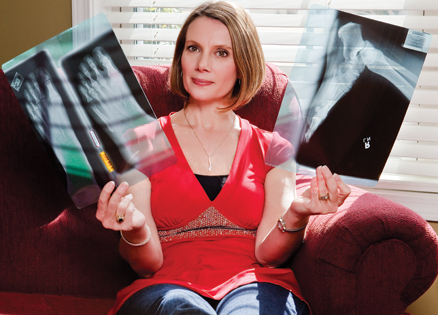
I forgot about my bones until a year later, when I was making my older son Ian’s bed one morning and whacked my foot into an iron bedpost. Broken again! A different doctor also recommended a bone-density scan. When the foot took twice as long to heal as it should have, I finally broke down and got the scan.

I’d never heard of osteopenia. Well, at least it’s not osteoporosis, I thought. The doctor recommended medication, calcium supplements and exercise to strengthen my bones and muscles.

“The longer you wait to make these changes,” he warned, “the more likely your condition will worsen.” I nodded, but inside all I could think was, Not possible. As in, not possible for a young, active woman like me to be hobbled by such an old person’s disease.

I heaped hamburger onto the plates and gave everyone a dollop of mashed potatoes. Had I waited too long? I kept a cheerful face for the rest of the evening, and soon Geoff and I were in bed, lights out. Only then did the fear I’d been suppressing burst forth. Lord! I cried out. What should I do?

I couldn’t help thinking of my great-grandmother and great-aunt, both painfully stooped with osteoporosis in their waning years.

For some reason my mind drifted back to my old school district job. I remembered one mother in particular. I’d just finished assessing her preschool-age daughter in a diagnostic play space, a miniature kitchen. While the little girl made play pies, I calmly told the mother what challenges her daughter would face.

“But that’s not possible,” the mother insisted. “You just don’t know her. She’s fine at home with me.”

Not possible. Those were my words. I remembered the rest of my conversation with the mother, how reassuring I’d been about treatment. How on earth could I have been so good at doling out advice all these years—and so deaf to my own problems?

God had been answering my prayer, telling me what I should do, all along. Every time I ignored my doctors, my family, my own body, I was ignoring the voice of the Healer himself. Denying my problem was denying God the chance to help me.

I made a lot of changes after that night, and no one was more surprised than I to discover just how painless they were. I resumed taking my medication. I took up Jazzercise and loved it. I steamed vegetables for dinner and no one in my meat and potatoes household complained. I even allowed myself a bubble bath each weeknight to reduce stress.

Most of all, I learned to set aside my pride, denial and fear, and listen to that healing voice of God. Praying and writing in my journal each morning, I hear his message loud and clear. My body is a gift. I need to take care of it. And so I do.

Living with Cancer: Sisters with Spirit

I work for a company that makes hospital gowns. I know what you’re thinking: those awful, paper-thin robes that never fit right and leave your you-know-what freezing while you wait nervously to undergo a test or treatment.

Well, those are exactly what we don’t make. We make soft, comfortable, kimono-style robes that help women and men feel good and look great during difficult times. The garments offer easy access for treatment but look less medical than those gowns everyone hates.

The company is called “Spirited Sisters” because it was started by three gals: my sister Claire, my sister Patty and me. We knew plenty about tests and treatments. From our own experience with cancer we learned to trust the Spirit as it led us, guided us and finally comforted us through a terrible loss. It started with me.

I was used to going to checkups at the dermatologist. It was never a big deal. Years earlier my internist expressed some concern about my basal cells. She recommended that I go to the skin specialist every six months.

Then one day in the spring of 2002 I noticed something a little unusual on my arm. I put it out of my mind until my next appointment. I’d had friends with melanoma—the deadliest type of skin cancer. Whatever I had didn’t look like melanoma to me. I didn’t think it was anything to worry about.

My dermatologist did a biopsy. Five days later I got home to no fewer than five voicemail messages from her. “You have to have this removed immediately,” she said. The urgency in her voice made my heart race. I frantically tried to call her back. I finally reached her. It was a melanoma. It looked nothing like the melanomas I’d seen before, but it comes in many forms. “I’ve already made an appointment for you with a surgeon,” she told me.

I was 52 at the time, with a great career running an interior-design company, my husband, Richard, whom I adored, and two children who needed me. My first thought was, I am going to die. My son, Matthew, was engaged. My next thought was, I’ll never make it to Chicago for his wedding…I’ll have to ask our priest to come to the house and perform the ceremony here.

My daughter, Meaghan, was in college. I won’t get to see her graduate… Richard was also frightened, but calm. “We’ll get through this,” he said, holding me.

By then it was too late at night to call anyone else. I knew that first thing in the morning I’d call Patty. Not only is she my sister, she’s a psychologist. She’d held the hands of friends as they lived with, and sometimes died from, cancer.

My surgery went well. It was followed by radiation, which was followed by interferon therapy. It was exhausting. You know what really bothered me? Those awful, papery robes they made me wear. They became a symbol of the misery of cancer.

But by Christmas, surrounded by the people I love—including my 41-year-old “baby sister” Claire, visiting from California with her six-year-old little girl, Lilly—I was feeling somewhat hopeful. But something else was worrying me: Claire. She’d always been beautiful, outgoing, charming. She was a high-powered executive and a great single mom. But she didn’t seem like herself. We were in the kitchen together one night and I asked if something was wrong.

“I haven’t been feeling great for a while,” she admitted. “I’ve been having stomach cramps.” I thought it was probably stress. When she and Lilly headed home to San Francisco in early January, she was in pain.

Not long after, my phone rang at work. Claire. She was crying. “What is it?” I asked. I could hardly hear her through the tears. “I have colon cancer,” she said. And by the time it had been diagnosed, it was stage four and had metastasized.

I’d always associated colon cancer with people much older than Claire. This can’t be happening, I thought. I’m the big sister. I’m supposed to take care of everyone. I thought of Claire, my baby sister no matter what age she was, way out there in San Francisco, working so hard and being such a great mom. We all grew up in Massachusetts, but I was the only sister who stayed local.

Now Claire seemed so far away. And with Patty down in Georgia, I felt isolated. Though Claire had an amazing network of friends, it seemed to me we sisters needed to be together.

Patty and I went out as often as we could to help—take Lilly to school, go shopping, offer our shoulders to cry on. Patty and I even took Claire to her chemotherapy treatments. Invariably, we’d roll our eyes at those terrible hospital gowns. “These things are so humiliating,” Claire said. “As if cancer isn’t bad enough!”

“You’d think they could come up with something better,” I said. “These have got to go!” The idea hit all three of us at once.

We quickly came up with a business plan. Patty’s the true fashionista in the family and I have a background in design. Why couldn’t we build a better garment? We started brainstorming. We called our business “Spirited Sisters” because, let’s face it, we were a spirited, feisty group of gals and we always felt such a personal connection to the Holy Spirit.

Soon, we came up with a line of clothing that would let women who faced hours of treatments preserve their modesty and dignity, and empower them. Why stop at robes? The collection—The Original Healing Threads—includes jackets and pants too. All the soft, comfy pieces have hook and loop closures so they’re easy to open and close, and give doctors access where they need it.

“If we ever make any money from this,” Claire said, “we have to give back. I’ve been lucky—with family and friends helping me out, and my company paying my salary even when I’ve been out sick for a whole year. A lot of single moms with cancer don’t have that kind of support.” Patty and I agreed. We are setting up the Claire Foundation, to help single mothers with life-threatening illnesses—and their kids too.

Claire fought hard. She was the bravest person I ever saw. Near the end of 2005, her doctors told her she had anywhere from three days to three weeks to live. She tried everything—alternative therapies, yoga, acupuncture. She always had a beautifully open mind and figured these things couldn’t hurt. We all took great comfort in prayer. Claire so badly wanted to live, for her daughter, Lilly, for us. But her body gave out.

Losing our sister was painful—but Patty and I had no doubt that Claire was finally at peace, with God. For that we gave thanks.

We can’t always know the answers to life’s deepest questions: who gets cancer and who doesn’t; who lives and who dies, we can only know that there is a God who loves us, and in that love is a healing that can find us in so many ways.

Learn more about Healing Threads!