

Embrace God's truth with our new book, The Lies that Bind

No More Secrets

Grand Central Station.

More than half a million people come through here every day, people of all ages and backgrounds, all walks of life. You can’t necessarily tell from the outside–the clothes they wear, the things they carry, even the way they act–what’s going on with someone inside–the struggles they face, the loneliness they feel, the hope and understanding they seek.

That’s why I’m here. I’ve learned that one in four adults has a mental illness–such as depression, bipolar disorder, PTSD or schizophrenia–and the stigma can be as daunting as the disease itself.

I’m filming a public-service announcement to get people talking openly about mental illness. Lights are set up, extension cords snake across the floor, thousands of voices echo beneath the vaulted ceiling. All at once I hear a lone voice through the din.

“Ms. Close?” A woman I don’t know comes up to me. “Thank you,” she says, “for what you’ve done for the mentally ill.” Then a little more hesitantly, “We have mental illness in my family.”

I look at her, imagining the turmoil she and her family have been through. There is a lot I could say, but one thing in particular I want to know, as much for her as for me. “What kind of mental illness?” I ask.

Words are powerful. They can shroud a problem in secrecy or bring it into the bold light of day. I admire this woman’s courage for speaking out. Now I hope she can tell me, what specific diagnosis? If you can give something a name, you can stop being afraid of it and start dealing with it. I should know. There is mental illness in my own family.

I grew up in an idyllic corner of Connecticut, one of four kids. We lived right next to my grandmother’s house amidst acres of rolling fields. We would take the train to New York City and walk through Grand Central Station, dressed in our Sunday best, to go to the circus or get our eyes checked. If you look at photos of us from back then, we seem like the perfect family, healthy and happy. And in many ways, we were blessed. But there were also things that weren’t right, things that were rarely, if ever, spoken of.

Relatives who overindulged in alcohol. An uncle who took his own life. My maternal grandmother’s stays at a place called Silver Hill. She was kind and fey and went to the church up the road on Sundays, except for those weeks she was “resting” at Silver Hill. I thought it was a spa of some sort (it looked like a spa). It wasn’t until years later that I discovered it was a psychiatric hospital. No one ever called it that and the reason she went there was one of those well-kept family secrets.

My father was a doctor, a man dedicated to helping others–he spent years running a hospital in Africa. Yet we never dreamed of asking him what was wrong. We wouldn’t have known what to say. We didn’t have the vocabulary. Some things were too scary to talk about.

My younger sister, Jessie, was bright and imaginative. She told magical stories, even as a little girl, and could completely lose herself in a book. She also had a habit of rubbing the loose skin between her thumb and forefinger until it became raw and crusty. Odd behavior. Disturbing.

But the adults around us never commented on it. Even when more obvious and ominous signs of trouble came in her teens–Jess got into alcohol and drugs–no one mentioned the possibility that she might be trying to blunt some unbearable psychological pain. Instead, we chalked her behavior up to her being “wild” and “original.”

Jess dropped out of school, overdosed a couple times, wrecked relationships, veering from dark spells to hyper-energetic highs. Yet she was a devoted mom to her three kids, and she never lost that incredible creative spark. She kept writing, even published a novel.

I was launching my acting career, rushing to auditions or rehearsals. If you asked me about mental illness back then, I would have pointed to the street people in the theater district. The man singing out-of-tune arias in front of Carnegie Hall. The bald fellow who drew hair on his head with a black marker and drummed on the sidewalk with a ragged pair of drumsticks. Celia, who hung out by the stage door, calling to me, “Miss Close, Miss Close, are you an actress?”

I played some deeply troubled characters. Blanche DuBois in A Streetcar Named Desire, Norma Desmond in the musical version of Sunset Boulevard. And, of course, Alex Forrest in the movie Fatal Attraction.

When I was cast as Alex, one of the first things I did was have a psychiatrist look at the script. “Why would a woman behave like this?” I asked him. I didn’t want her to be a caricature. I wanted to understand her, empathize with her. The psychiatrist suggested Alex might have suffered some childhood trauma; others diagnosed borderline personality. Those insights helped me make the character real.

It might seem strange that I didn’t connect these psychological profiles to behavior patterns in my own family. But it wasn’t until nine years ago that the reality of mental illness hit home. Jess had been worried about her 19-year-old son. “All I knew was Calen wasn’t Calen anymore” was the way she put it.

He finally opened up to her about the delusions he was having. He was diagnosed with schizoaffective disorder, a combination of schizophrenia and bipolar disorder. He checked into McLean Hospital in Massachusetts for psychiatric treatment. At least Jess was doing well, I thought. She’d gotten sober with the help of a 12-step program. She seemed strong enough to face what was happening to her son.

Then Jess shook my world. One day she sat my mother and me down and said, “I need help.” I assumed she was talking about Calen. “I need help for myself,” she went on. “I should check into McLean too.” She said that in talking to Calen and his doctors about his illness, she’d been hit with the shock of recognition. She had some similar symptoms.

I took my sister to McLean. On the long drive there, we talked with an openness that brought an incredible sense of relief after a lifetime of keeping secrets. “I’m glad I’ve been sober for a while,” Jess said. “I couldn’t have done this without those years of AA.” Working the 12 steps, trusting in a Higher Power, had given her the courage to change.

I found myself rethinking generations of family history. My mom’s half-brother who’d committed suicide, why hadn’t anyone talked about depression? The relatives who lived for their cocktails, why didn’t we acknowledge they were alcoholics? My grandmother and her mysterious trips to Silver Hill. My sister with those red flags we had missed. Why couldn’t we speak up? Why were we in such denial? Though my family had a tradition of helping others, we had overlooked the help we needed for ourselves.

Jess’s doctor at McLean found medication that transformed her life. He put a name to what she suffers from: bipolar disorder. That explained her unusual emotional shifts from manic periods of euphoria and creativity to those deadening depressions she’s described as “sheer blackness.”

My sister and my nephew have become extraordinary advocates for people with mental illness. As Jess says, “I am not my disease.” She is simply someone who is being treated for a disease, an illness with a biological basis like cancer or diabetes.

Jess and Calen are my heroes. They have inspired me to take on a new role. First I got involved with the New York City-based organization Fountain House. They have a center where people with mental illness can go for help with education, jobs and housing and, most important, for community.

I wanted to dig deep, as though I were researching a part. I asked to volunteer with Fountain House’s members. Many sign up for vocational training and I was to arrange flowers with one group.

At first, I’ll admit, I was a little wary. What was I going to say? But pretty soon, I realized I could talk about what I’d talk about with anyone–the weather, the flowers we were working with, the Mets.

Words that seemed scary–schizophrenic, depressive, bipolar–lost their power the more I heard them. That got me wondering if we could help remove the stigma from mental illness by talking openly about it.

A group of us worked with several major mental health organizations and launched a national campaign, BringChange2Mind.org.

I asked Jess and Calen if they’d appear in a public-service announcement. They didn’t hesitate. Neither did my daughter Annie nor Jess’s daughter Mattie. (My mother said she wished she could be there too to make it three generations.)

We brainstormed ideas about where to film, and kept coming back to Grand Central Station. More than half a million people rushed through every day, thousands of them living with a mental illness.

How many were suffering in silence, feeling isolated not just by their disease but also by the burden of keeping it a secret?

That’s why I asked the woman who stopped to talk to me about the specific diagnosis in her family. Acknowledge a problem, give it a name and you can deal with it. You can treat it. You can understand it. Recovery is possible.

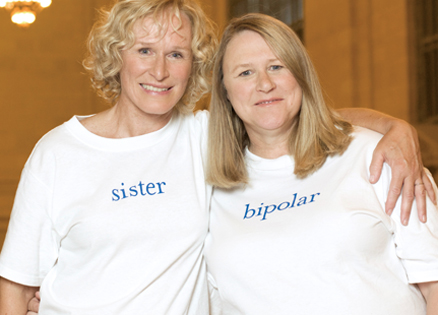
And that’s also why for the filming everyone in the PSA is wearing T-shirts that say who we are. No more hiding. No more distancing ourselves. No more secrets.

Calen’s shirt says “schizophrenic,” Jess’s says “bipolar,” Annie’s says “cousin,” Mattie’s says “sister” and so does mine. No one’s going to give me an Academy Award for it, but it’s my most important role.

Watch Glenn and Jessie’s PSA below.
Noa Shaw on Overcoming the Fear of Exercise

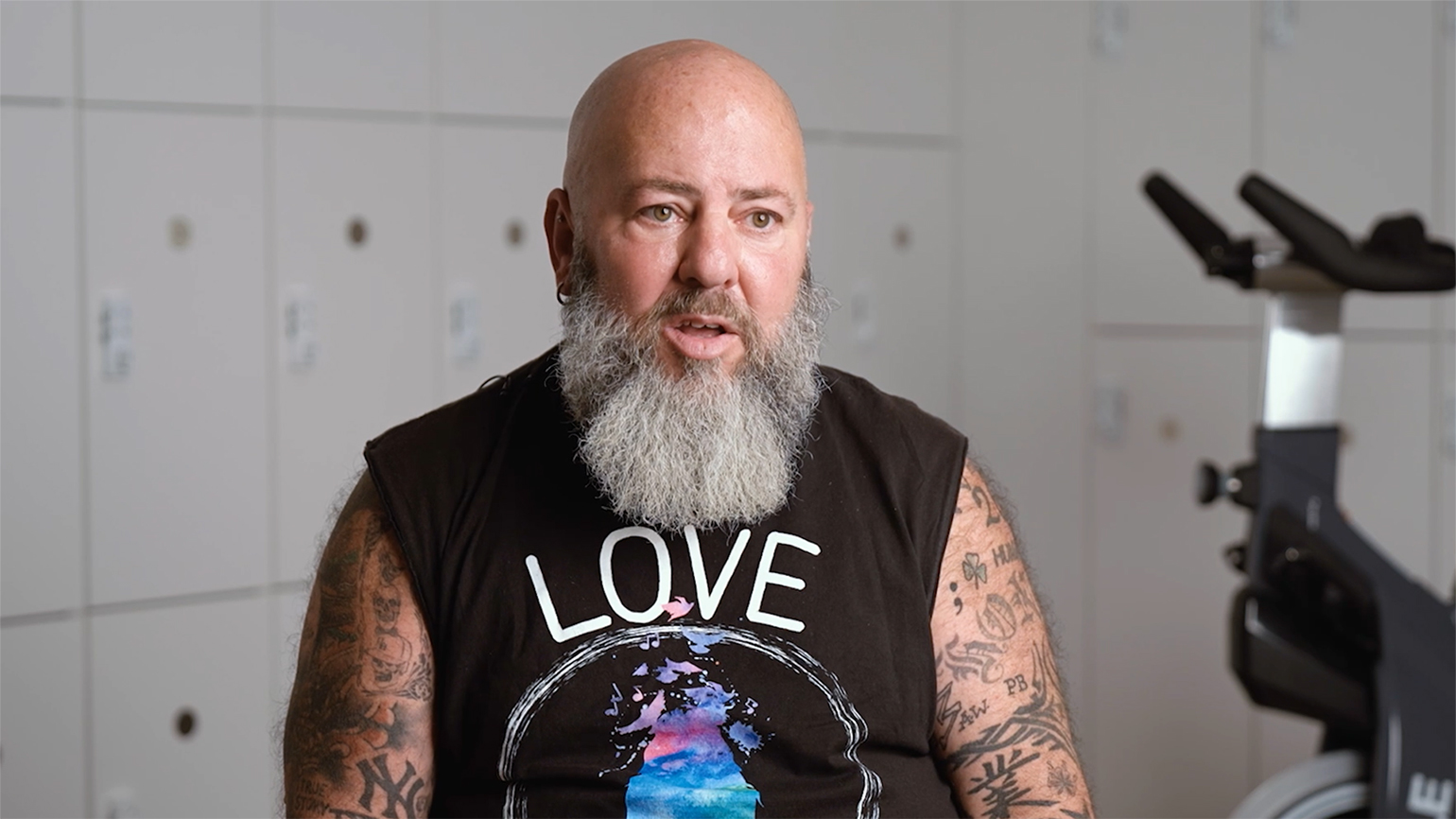
Good afternoon, Guideposts magazine. This is Noah Shaw. I am a senior instructor at Soul Cycle, also the author of the recently published book, Stop Thinking Thoughts That Scare You.

I often get a lot of people, as my clients and people will call me; as a life coach. I’ve worked with a lot of people who were scared of exercising, scared of going to a gym, whether it be overweight, or they’re older and hadn’t been in a gym in, like, decades, and I would say the easiest access, and one of the best things you can do, is just walk. Just walk. If you can make…if you can do five minutes the first day, and maybe double that to 10 minutes the second day, it’s like, you just keep adding a couple minutes until you’re walking like 30 to 45 minutes or an hour day, like, whatever it is, whatever you can do to get your blood flowing, get your circulation flowing, get your heart beating, that’s good.

And if that’s where you’re going to stay, if you’re just going to become a walker, it’s amazing. If you start to walk and you’re like, I want more, then you sign up at a gym and you can walk on a treadmill and be around other people. You’ll find the energy of other people becomes a little infectious.

The biggest reason that anybody hesitates or pauses or is unable to get going and creates within themselves that feeling of being stuck, that’s universal. Everywhere I go, everybody I talk to that “being stuck” idea is fear. So what is our job is to break that pause, to break that fear-based anxiety. And if you read my book, there are many techniques.

You know, one is just being present and being present and being grateful. Once I start counting what I have and sort of appreciating how beautiful my life actually is, not the fear-based set of circumstances that I can create. See, if I go on Instagram and I start comparing myself to other people, I have a terrible life. But if I stop once a day in the morning, which I do every day, and I write a gratitude list, it breaks that cycle. You can’t be angry, sad, or fearful with a grateful heart.

Any barrier I’ve ever faced in my life I’ve changed with one simple act: asking for help, in one way or the other. I was a drug addict, an alcoholic. I asked for help from the Alcoholics Anonymous. I was very obese and about to die; I asked for help from fitness instructors. There are people, no matter what you’re going through, there are people who’ve gone through that. And if you reach out and ask for help, they’ll help me find the person that can answer my questions. And that’s how it starts. We break that cycle.

How does exercise help you in a physical, spiritual, mental way? Well, I believe that that as lives and we build our lives in all three aspects. And I often talk about this in my class, that it was like a three-legged stool, that I know a bunch of people who are super fit, like six-pack abs and emotional and spiritually they’re empty. So that chair doesn’t work; I have to work on all three.

But when you allow your heart to open and you start working on yourself, physically, and the endorphins start to kick in, that will emotionally charge you, if you allow your mind to empty and you allow yourself to just focus on what’s in front of you, like that task that you, whether it be lifting weights or running, if you just focus on that, that’s where spirituality comes through. We have to sort of like empty our minds for the spiritual aspect of our lives to grow, because those thoughts, they just clog us up. So if I’m running and you’re just like one foot in front of the other, and you can find that whether it’s on a cycle or it’s lifting weights, if you just allow yourself to be present, you’ll start to heal.

New Year’s Resolutions for Caregivers

As the year closes, offer a toast to yourself. You are a caregiver and you’ve come through 2021. Think of all you have done for your loved one. Do you recognize the enormous contributions you’ve made? Do you look back with any sense of regret? At this time of resolution setting, you may wonder how best to move beyond this year and into the next. To help guide you, two mental health professionals have offered suggestions on how best to serve both your loved one and yourself as you take on 2022:

Sharon Givens, psychotherapist in Columbia, SC, and founder of Visions Counseling and Career Center:

Reach out for support Develop a clear plan of how to take care of yourself—physically and mentally. Caregivers get so immersed in taking care of the person that they don’t take care of themselves. Caregivers should have a strong circle of support. That can include professional support, connecting with support groups or actually getting therapy. Also make sure that you’re keeping up with your own doctors’ appointments and working out because if your body and mind are not capable, then you’re not able to take care of that person. Any support that you can get to alleviate particularly day-to-day duties is always helpful. People are not always in the financial situation to get professional help but if that’s available to you, then absolutely do it. There are lots of services available that may have not been years ago, that have really good screening programs where you can find good people, in addition to family and friends.

Take respite Get away for a couple of days to separate yourself from the environment and all the emotions that are within that environment, at least every six weeks or so. Take at least a couple of days to have some degree of separation from the situation and to process and explore your own feelings in terms of what’s happening. That can vary when you’re a caregiver—is it short-term or long-term? Is this somebody who has cancer, is it someone who has dementia? The details can play a major role. It can be either taking a vacation or a staycation. Stay somewhere for a few days and just do nothing. Or if you want to take a mini-vacation and get out of town, a weekend getaway is always good. You tend to be more refreshed when you return.

Practice stress management Participate in mindfulness activities or meditating. One stress management technique that I think is really helpful is journaling. You can use that opportunity to express your feelings, but also to capture the journey of what’s happening during this process.

Get help to process your feelings Be conscious that your behaviors and actions are not ones that will lead to regrets, particularly if the person’s in a terminal situation. Everyone can benefit from therapy but I always suggest that caregivers get therapy. Individual therapy can help with your own unique needs. Grief and loss tend to be a major component in many cases for caregivers because typically we’re taking care of a person who once took care of us. So, there’s a sense of loss there because the roles have changed and the person is no longer the person they were years ago, in some capacity—whether it’s physical or mental. Support groups are also very helpful because you recognize that you’re all going through the same thing, and I think that can be very validating as a caregiver.

Give yourself some grace We all make mistakes. There’s no perfect situation. But look at all the things that you’re doing well. Let’s take a look at what’s working in this situation. It’s no different from whether it’s a job or anything else that you’re embarking upon—you’re going to make a mistake and you move on in terms of, is it something you can fix? Many of the things caregivers kind of ruminate about are things that they can’t change. That’s the biggest thing. If it’s something you can change, change it. If it’s something that you can’t, then you have to move forward from that.

Sharon Martin, psychotherapist in San Jose, and author of The CBT Workbook for Perfectionism:

Avoid self-criticism Caregivers give so much to others, but they’re often very hard on themselves. They hold themselves to unrealistic standards—to be perfect caregivers—and then end up criticizing themselves when they can’t do it all or do it the way they want. But self-criticism is rarely warranted and it adds more stress to an already stressful situation.

Forgive yourself If we can be more self-compassionate and accept our imperfections, we’ll be able to stay physically and emotionally healthier. We can start to do this by forgiving ourselves when we’re less than perfect. For example, you might say to yourself, “I forgive myself for losing my temper with Mom. Taking care of her is really hard and sometimes I’m going to make mistakes. That doesn’t mean I’m a bad daughter.” When we do this, we acknowledge our struggles, that everyone makes mistakes, and that we still have value even though we’re not perfect.

Look at what you’re doing right Another way to combat self-criticism and caregiver burnout is to intentionally notice what you’re doing right. Mistakes tend to stand out in our memories, making them seem bigger and more frequent than they really are. But caregivers do dozens of caring things every day that no one acknowledges. They focus on what they’ve done wrong and discount their hard work and effort. This isn’t fair or motivating!

Take stock of your hard work At the end of the day, I encourage caregivers to jot down a few things that they put effort into. This isn’t a list of things they did perfectly or that went perfectly. It’s a list of things they put effort into. It’s not fair to judge yourself by outcomes (e.g., if Mom ate all her dinner) because you can’t control that. But you’ll probably feel better if you recognize and appreciate the hard work and effort you put into your loved one’s care – and remember that even good caregivers are imperfect.

Never Too Late to Learn

Retirement didn't sit well with me. I was used to working hard every day. Truth be told, I was lonesome sometimes. I still had my friend Freeman, though, and we passed lots of time in rocking chairs on my porch, chewing the fat. One day I asked him a question that had been on my mind for some time. "Freeman, why do you suppose I'm still around?"

"Don't know, George," he answered.

"Here I am, 98 years old," I said. "Worked from the time I was four till I was 90. Raised seven children, all of them college graduates. Buried my wife, friends and family. I ought to be just about worn out. But my eyes are good and I've got all my teeth. I get around pretty good, even though folks are always trying to get me to use a cane. And the only doctor I ever saw–which was just a couple years ago–said I had the body of a 60-year-old. Makes me wonder why I'm still here."

Freeman didn't answer. I looked over and saw that my yammering had put him to sleep. I smiled and shook my head, then set to rocking and thinking.

It seemed I'd done everything I'd ever wanted to do in my life, but if I had one regret, it was never learning how to read. I was born in 1898 in Marshall, Texas, the oldest of five kids. Papa couldn't spare me to go to school, so I worked the fields with him till I was 12 years old. But we still weren't doing well enough to feed the family, so Papa got me hired on at a neighbor's farm.

"George," he told me the day I left home, "your great-granddaddy and your granddaddy were both slaves, but they held their heads high. They had the Dawson pride. They passed it down to me, and I've passed it on to you. You're a man now, son. You're as good as anyone else, and don't you forget it."

I wanted to tell him how scared I was, how sad I felt. But something inside wouldn't let me. Instead, I forced myself to hold my head high and say, "Yes, sir, Papa. I'll make you proud."

I climbed into the wagon, Papa clucked to our old mule, and we took off. I waved to Mama and the little ones till they looked like specks standing there in the road. My throat hurt from trying not to cry. But I knew God would take good care of me, like he always had.

I worked at the neighbors' farm till I was 16. Then I had to go back home. My aunt and uncle had died of the fever, and my folks had taken in their nine children. With 16 Dawsons to feed, I took a second job hauling logs at the sawmill.

One day the boss man came up to me and waved a piece of paper. "George, I need you to sign this form," he said. I just stared, ashamed to admit that I couldn't write my own name. Finally he put a pencil in my fingers and guided my hand to make an X. "You're too good a worker to lose." I didn't know what I'd signed, but over time I figured it out. The U.S. had just joined World War I. That paper must have given some reason why I wasn't eligible for military service. I would've been honored to fight for my country. But the Dawson pride kept me from asking what that paper said, and so I spent the war in Marshall.

When I turned 21, Papa asked, "Son, are you ready to be on your own?"

"I reckon so."

"It's time," he told me. "You've worked hard to help the family, and now you deserve to keep the money you earn. Go out and see the world and then come back home and tell us all about it."

I bought a train ticket to Memphis, where I helped build the levees that tamed the mighty Mississippi. I unloaded coconuts on the docks in St. Louis and New Orleans. When I ran short on cash, I rode the rails and lived in hobo camps. For a while I farmed down in Mexico, till a hankering to see snow took me to Canada. Wherever there was work, I took it, stayed as long as I wanted, then hopped a freight to another town.

And everywhere I went, I learned some hard lessons about what happens to a man who can't read. People cheat you out of wages. They sell you a ticket to one city, take your money and hand you a ticket to somewhere else. Up North they'd get mad when you pretended to study the menu and then ordered jambalaya or hominy grits. A man who can't read has to depend on others for information. He has to learn to keep his eyes and ears open, be extra alert. Some of the places I went and the people I met were dangerous, but my common sense took me a long way. And I knew I had the Lord to take care of me.

Come 1928, I'd been wandering for nine years. Mr. Coolidge was our president. We were on the verge of the Great Depression. And me, I was plumb tired. I wanted to find a good woman and settle down. I rode the rails back to Marshall and found my family gone. I wondered why they hadn't let me know. Then again, how would they have found me? Even if they'd known where I was, I wouldn't have been able to read their letter.

I took a job breaking horses and met a woman named Elzenia, who was as sweet as she was pretty. She could read and write, and it made no difference to her when she found out that I couldn't. I wished it didn't make a difference to me. Still, we fell in love, married and moved to Dallas, where I got work fixing roads for the city.

When Amelia, the oldest of our seven children, started school, I took my wife aside. "Elzenia," I said, "I don't want the kids to know I can't read or write."

"You're their daddy," she said. "They love you. It wouldn't matter to them."

"Promise me they'll never find out," I said. "A man's got his pride."

"And you've got more than your share," she answered.

I'd get home from work at night, bone-tired from filling potholes all day. But the smell of Elzenia's stew and the sight of my little ones sitting around our big oak dinner table brought me right back to life. After dinner I'd "help" the kids with their homework, bluffing my way through their lessons by having them read to me. At first, they never knew I couldn't read, though later I think they guessed. But they kept my secret, too. The Dawson pride ran deep.

In 1938, when Mr. Roosevelt was president, I got a job at Oak Farms Dairy, tending the boilers. When the country entered World War II, I was too old to go so I just kept on at the dairy. One day my boss called me in. "George," he said, "no one knows those machines like you do. I'd like to promote you–get some men working under you with you as their supervisor." But my thrill and surprise were cut short when he said, "Fill out this application and we'll get you a new title and a raise."

I looked at that paper in his hand and felt just like I had that day the boss man came to me all those years ago at the sawmill. And once again, I couldn't admit the truth. Instead, I said, "Thank you, sir, but I like what I'm doing."

He looked at me like I was crazy. "Are you sure? This is a great opportunity."

"I'm sure. I want to stay right where I am." I thanked him again and walked out of his office, the old Dawson pride helping me keep my head high.

I did stay right where I was, until not long after President Kennedy got shot. That's when I turned 65 and Oak Farms made me retire. But I didn't stop working. I never could. For the next 25 years, I gardened and did yard work for people nearby. I gave that up when I was nearly 90, when I retired for real. I spent my days fishing and tending my garden. I'd lived a good life, and I was happy, but it still seemed to me like something was missing.

I looked over at my friend Freeman again. He was still asleep. "Lord," I whispered, "you have a reason why I'm still around. Maybe you could let me know?"

I peered down the street. A young fellow was going door to door. He reached my house, walked up to the porch and handed me a piece of paper.

"What's this?" I asked.

"It's information about adult education classes at Lincoln Instructional Center. People can study for their GED, learn math, learn to read and write…."

I didn't hear the rest of what he said. Instead, I felt a warmth deep down inside me. I looked at the young man, then looked at the paper in my hand. I thought of my friends and neighbors and what they might think if they found out I couldn't read. After all these years, my secret would be out. Does that even matter? I wondered. All your life you've wanted to read. Maybe this is why you're still around.

"Hang on a minute while I get my hat!" I said, hopping out of my chair. It was high time for action.

We got into the young man's car and he drove a few blocks to an old building. I knew it well–it was where all my children had gone to school.

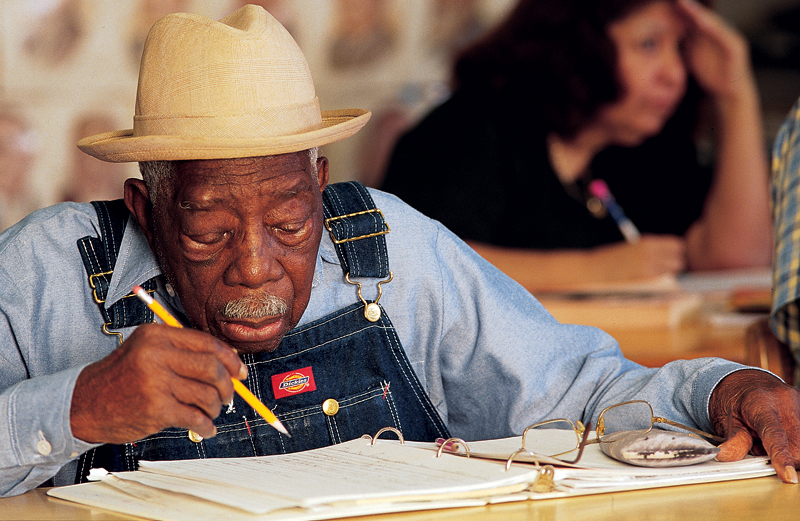
I met Carl Henry, the man who would be my instructor. He'd retired from teaching, but like me he didn't cotton to sitting around not working. I peeped into the classroom to get a look at who I would be going to school with the next day. They all looked like babies to me. "Mr. Henry, how old is the oldest student you have?"

"There's a lady in her fifties," he told me. "Most of the rest are in their twenties and thirties."

What would they think of an old man like me puzzling over letters, trying to read and then trying to write? You know what, George? I told myself. The Dawson pride saw you through a lot of tough times. But it's also held you back. Sometimes, it's been a mighty foolish thing.

I mustered up my courage the next day and I went back to the Lincoln Instructional Center. I'd been inside the building so many times before with my children. That old building looked the same, and it smelled the same. But this time it was different. Because this time it was going to be my school.

First came learning the alphabet, then words. In three months, I was reading. My first book was called City Life. Not very exciting. Wouldn't even make a good TV show. But I loved it.

I didn't stop there. I'm still going to school, working on getting my GED, even though I'm 103. After all, now I know why I'm here. I'm here to learn. I'm here to help show folks it's never too late, and to tell them that you shouldn't let your pride hold you back.

My favorite book is the Bible. There's a verse I love: "In the beginning was the Word, and the Word was with God and the Word was God." Now the Word is with me. If there's anything worth being proud of, it's that.

Download your FREE ebook, Rediscover the Power of Positive Thinking, with Norman Vincent Peale

Natalie Cole: Who I Am

Singer Natalie Cole died on Thursday, December 31. We honor her memory by sharing this 2009 story with you.

The winter light was fading as I sat in the office of my counselor Monty at a drug and alcohol rehab in rural Minnesota. It was one of those cruel January days when the sky looks frozen. I was answering questions about my dad, who’d passed away when I was 15. Even now, in 1984, 19 years later, there was a part of me that was frozen too, locked in time.

Being the daughter of Nat King Cole, I was used to this. People asked me all the time what he was like. They told me how much they loved his voice. Hardly a day went by someone didn’t mention him to me. That can wear away at you.

Yet I could still hear him laughing as my sister, Cookie, and I acted out Broadway musicals decked out in his jackets and shoes. Could still see his smile as he waved goodbye before another tour. Could still feel his warm hug when he dropped me off for my freshman year at boarding school in Massachusetts.

SUBSCRIBE TO GUIDEPOSTS MAGAZINE

“That was the last time I ever saw him healthy,” I said to Monty.

Monty leaned forward in his chair. “Natalie, do you think you’ve ever really grieved your father?”

“What?” I said defensively. “He’s been gone almost twenty years now.”

“Grief isn’t bound by time, Natalie. If you want to heal, to get sober, you have to face it. You have to change. Today.” I practically ran back to my room as if fleeing Monty’s words. I closed the door and sat on my bed in the glow of my lamp. Through the window I could see snow falling, muffling the world outside.

An unforgettable silence was what greeted me when I returned home for Christmas in 1964, after my first semester away at school. I rushed to my parents’ bedroom, only to find my 45-year-old father in a rocking chair, his hair white, his skin ashen. He couldn’t get up to hug me. Dad had lung cancer. No one had told me he was sick—Mom thought she was being protective.

It was a Christmas without parties with Dad’s showbiz friends, without him singing about chestnuts roasting, without any music. Foggy with painkillers, he spoke little. Terrified to confront this faint echo of the man my father was, I said even less.

Back at school, my birthday came and went on February 6. I got word Dad had a successful operation. Then the day after Valentine’s Day, I got called back to my dorm from class. My housemother was waiting for me, tears in her eyes. She didn’t have to say it—I knew. Dad had died.

I barely cried, even at the funeral. But I took one of the roses that blanketed Dad’s coffin and tucked it into my Bible. I didn’t want to go back to school so far away, but Mom was determined to put on a brave face. In a few days, I was back in Massachusetts. I would have to learn to forget about my loss.

I went on to the University of Massachusetts, thinking maybe I could be a doctor and help find a cure for the cancer that had stolen my dad from me. The summer before my junior year I began singing, just to make extra money at first. People noticed. They started asking me to do my father’s songs. I was dismayed. I didn’t want to be recognized just as “The Daughter Of.”

The few times I did sing one of my father’s songs, the crowd would get very emotional and so would I. It hurt too much to sing words that I could still hear him singing so beautifully in my mind. Don’t people know how painful this is?

Then came senior year. Maybe it was the prospect of going out into the world, of having to find myself, that made me fall in with a wild crowd. I started using drugs. At first, just occasionally and nothing too strong. But I progressed, quickly, to heroin. Heroin felt like some kind of an answer to pain.

My career progressed too, but right before the release of my first record, I got busted for heroin possession. I was given several months’ probation and was able to kick my habit. This Will Be became a major hit and I won the 1975 Grammy for Best New Artist.

Yet that pain in my soul grew worse. I turned to cocaine. Sometimes I’d quit using for a while. God, bring me down and I’ll never do this again, I’d pray. But soon enough, I’d want to get high again.

One night in 1981 I’d just finished a show with Bill Cosby at the Las Vegas Hilton and was in my room on the twenty-fourth floor when smoke started to fill the halls. The front desk said someone would get me. Before I knew it, the smoke had become impossibly thick. I wet myself down in the shower fully clothed, then came out and sank down onto soaking wet bedsheets on the floor.

I clutched my cocaine pipe. If this is my time, I’m not going straight, I thought. The headline of the story in the next day’s papers came to me: “Daughter of Nat King Cole Dies in Hotel Fire High on Cocaine.” I closed my eyes. If you want to save me, God, don’t let me take a hit off this pipe.

The heavy air closed around me. Just as I put the pipe to my lips, firefighters burst into the room like soot-covered angels and got me out of there.

It hurts me now to say it, but even God’s grace that day didn’t convince me to change. Mom and Cookie finally got me to a rehab center in southern California. After 30 days I walked out of the facility, sped all the way home and got high.

One night in November 1983 my manager, business manager and attorney showed up at my door. I’d worked with them for a while, but they’d never been to my house. We sat in my living room. My eyes darted from one to another. What was up? “We’re worried about you, Natalie,” said Dan, my manager. “We want you to go into rehab.”

I felt exposed, as if the white powder I was addicted to was all over my face. I crossed my arms. How dare they come into my house and tell me my business! Sure, things had been rough lately. I’d had to let some people go because I was broke. Word had gotten around I was unreliable. And I didn’t have many gigs.

“Why do you care?” I snapped. “Worried you won’t be able to make any more money off of me?”

Dan sighed. “Your career could crash and we’d still be okay,” he said. “But we’re afraid if you keep using, you’ll die. We don’t want to be here for that.”

Something cold snaked up my spine: fear. I thought of the fire in Las Vegas, the first day I saw my dad sick, that call from my dorm mother. All those feelings came back in such a rush I could hardly breathe. I didn’t say anything, but I think everyone knew it was my last chance.

Which is how I ended up in this Minnesota rehab, being challenged by Monty to face my feelings about Dad’s death. Sitting in my room, I gazed at my reflection in the circle of lamplight on the window. What would Dad think of what I’d become? “The Daughter Of” had let everyone down.

Maybe I’ve tested God’s patience too much. For years, he’d been giving me wake-up calls and I’d been hitting the snooze. I reached for my Bible, where I’d kept the rose from Dad’s coffin, and opened it. Through it all I’d never let that Bible go. I’d looked at that rose every day until it finally fell apart. Yet its scent still clung to the pages.

I felt like God was still clinging to me, despite all I’d done to push him away. I’d tried to fix my life, to change. Now, finally, in the cold of winter, I realized I couldn’t change myself. Only God could change me, and only if I asked with my whole heart.

For the first time, God became not just someone to turn to in a crisis. He was there when I shed tears for my father night after night, the tears I’d never shed as a teenager. He was there as I struggled to let go of my pain and defiance. He was there when I surrendered myself.

Only then did peace flood in where pain once was, one miraculous day at a time. No, we never forget pain, but we do let go of it. In surrender, we transform ourselves.

I graduated from rehab on May 16, 1984. The icicles had given way to flowering buds, the tight gray sky to a stream of fluffy clouds. At long last, I was ready to sing my father’s songs. Through the magic of a new technology, I was able to record a duet with my dad on his signature song, “Unforgettable.” It resurrected my career, yes, but more than that, it restored me. And a faint scent of a rose came to full blossom again.

Did you enjoy this story? Subscribe to Guideposts magazine.

Napoleon Hill: Success Through Positive Thinking

“A person with positive mental attitude aims for high goals and constantly strives to achieve them.”

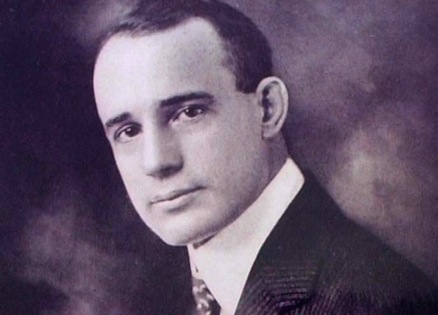
An early proponent of positive thinking, Napoleon Hill was a bestselling author, an advisor to presidents, a motivational speaker and, to this day, an inspiration to millions.

Hill came from modest means in Pound, Virginia, in 1883. After losing his mother at a young age, he started acting out—until his new stepmother purchased him a typewriter.

Soon, as a young reporter, he received a plum assignment: to interview the self-made billionaire industrialist and philanthropist Andrew Carnegie. He inspired Hill’s life work by challenging him to write up a formula for personal success based on interviews with some of the great innovators of the time; not only himself but also Thomas Edison, Henry Ford, Alexander Graham Bell, and President Franklin Delano Roosevelt, whom he advised from 1933 to 1936.

Hill developed the Philosophy of Achievement, which he published in 1928 as The Law of Success, a wildly popular multi-volume set. Unfortunately, just a year later, the Great Depression hit the nation and Hill’s own personal success took a significant hit.

One of the most inspiring stories in Hill’s life was his own son’s. Blair was born without external ears; doctors feared that he would be deaf and mute for his entire life. Hill, of course, refused to accept this negative diagnosis. “The outlook was far from encouraging,” he wrote, “but desire backed by faith knows no such word as impossible.”

Through a positive mental attitude and a burning desire that his child hear, Hill set about helping Blair, who himself never doubted that he would hear and speak. Eventually, having acquired limited hearing with the help of a phonograph, his family’s persistence and compassionate teachers, Blair found an electronic device that allowed him to hear—and decided to make it his life’s work to help other deaf people. “For the first time in his life,” Napoleon Hill wrote, “he heard practically as well as any person with normal hearing. ‘God moves in mysterious ways. His wonders to perform.’”

In 1937, Hill published his most famous work, Think and Grow Rich, which remains one of the leading books on personal motivation and self-help to this day. Hill’s focus was not simply wealth, however; he provided tips and ideas for achieving any goal through self-confidence, enthusiasm, cooperation and tolerance.

Helping others was a key element of his philosophy; in Think and Grow Rich, Hill wrote, “I will eliminate hatred, envy, jealousy, selfishness and cynicism, by developing love for all humanity, because I know that a negative attitude toward others can never bring me success.”

Hill continued publishing books for the next three decades until his death at age 87 in 1970. He also shared his philosophies as a teacher, lecturer and motivational speaker. Watch him in action here:

The 1960 book Success Through a Positive Mental Attitude—co-written with W. Clement Stone, who ran the The Napoleon Hill Foundation for 40 years—suggests reading the Bible to help “keep your mind on the things you want and off the things you don’t want.”

It was influential with many positive thinkers—including Norman Vincent Peale, who said that it was “one of the few creative motivational books of our time. It should be on the required list of anyone who desires success.”

If all this talk of success has you wondering how Hill addressed adversity, he acknowledged that we all experience it. He did, too, on more than one occasion. But instead of letting it set him back, he turned it into “inspirational dissatisfaction”—he advised that you “rearrange your attitudes and convert a failure of one day into success on another.”

And, above all else, Hill wrote, “Man’s greatest power lies in the power of prayer.”

My Truest Hope

One of my most treasured possessions is a small, framed photograph. It is a simple black-and-white picture of an elderly woman. Her eyes are closed, her hands clasped, her head bowed. The woman is my mother, not long before she died at age 92.

I keep the picture in my home office, on a windowsill beside my computer, where I see it every day. You could say the story of that photo is the story of my life. It is especially the story of a dark and frightening time in my life, when I nearly threw everything away.

My mother saved me then. Or I should say, her faith saved me. All her life Mother never stopped praying. At last I discovered why.

I loved my mother deeply, but for most of my life I did not follow her example. I did not pray like she did and I did not live to love others.

From the moment I arrived in America as a teenager I worked. Hard. I became an electrical engineer at IBM, then a college professor. I married an American woman, Phyllis, and raised a son and daughter. I owned a house in San Jose and a cabin in the mountains. I played golf.

By the time I reached my fifties I was proud of my accomplishments. My family had been penniless refugees during the Korean War. Now I was a successful American.

Everything changed one morning when I woke up and noticed something strange at breakfast. My coffee had no taste. Did Phyllis switch brands? I wondered.

A few days later in class I raised my arm to write on the chalkboard and felt faint. My arm dropped to my side. My students stared at me. “Must be getting old!” I tried to joke when I recovered myself.

Soon everything I ate and drank had no taste. I lost interest in teaching. I didn’t want to get out of bed in the morning. A fog settled over me. My life, which I’d worked so hard to achieve, suddenly felt like a struggle. It had no taste. It seemed utterly pointless.

My doctor gave me tests but found nothing. As I was leaving his office he handed me a pamphlet. Depression was the title. The moment I got outside I crumpled up the pamphlet and threw it away. How insulting!

In Korea, where I grew up, depression was considered a sign of weakness, even insanity. Besides, what did I have to be depressed about?

True, I’d lived through hardship, but so had almost everyone in Korea in those years. My older brother Hi-Seung died after being conscripted into the Japanese army during World War II. My father, a Christian pastor, was taken away by invading North Korean soldiers and never returned. My family nearly starved during the Korean War. I waved goodbye to my mother from the deck of a freighter carrying me to America when I was just 16.

But I’d put my family’s wartime trauma behind me years ago. My father worshipped a no-nonsense God and he expected us to do our duty, to endure without complaining. I’m not depressed, I told myself. I will get better on my own.

I didn’t tell Phyllis about my symptoms. She worked as a nurse and was very involved at our church. Our kids were in high school and college. They had busy lives. Why burden them with such nonsense?

I managed to get up and go to work each day. Yet the fog over me thickened. My routine felt draining. My success meant nothing.

One weekend I drove alone to our cabin in the mountains. To my own surprise I found myself sitting on the floor with a knife in my hand. Who will miss me when I’m gone? No one.

At the last minute I remembered my father and became frightened. He had been very clear about what happened to people who disobeyed God. I looked around the cabin. What are you doing, Hi-Dong? Get out of here!

I returned home and admitted to Phyllis what I’d almost done. “Hi-Dong, why didn’t you tell me?” she cried. “How long have you been feeling this way?”

“A few months,” I mumbled. I felt so ashamed, consumed by guilt and remorse and self-recrimination.

“I’m going to make some calls,” said Phyllis. “We’re going to find you a psychiatrist. We are going to get you help.”

Phyllis had to force me to go to my first appointment with Dr. Cavanaugh. I answered his initial questions like one of the robots my IBM colleagues had worked on years ago. Then he said, “Tell me about your parents.”

I stiffened. “My father was a pastor. He died when I was young,” I said. “I don’t have many memories of him. I will tell you about my mother.”

“Okay,” said Dr. Cavanaugh.

So I talked about how every morning I awoke to find my mother praying. She made me breakfast and we said prayers before I went to school.

My father didn’t earn much as a pastor so Mother took in boarders. She sewed all our clothes, including school uniforms for me and my three brothers and two sisters. When parishioners from the countryside churches where my father preached came to visit, she welcomed them, and the chickens and other animals they brought. She fed them and gave them advice.

She talked to God out loud through the day; he was a constant source of love and support. Only once did I see her pain. Passing Hi-Seung’s room one day not long after he died from his war wounds I noticed someone inside. Mother.

She sat on my brother’s bed clutching to her chest the small box with his ashes. Her face was anguished. Yet even then she was not weeping. Even then she was praying.

“Mother moved to America and lived with my sister in Cupertino. She died two years ago. She is gone now. So that part of my life is over.”

“I see,” said Dr. Cavanaugh.

He told me my depression stemmed from keeping my feelings inside about my wartime trauma in Korea, triggered most likely by my mother’s recent death. In subsequent sessions he encouraged me to “feel those feelings” and talk them out.

I did as instructed, but I didn’t see the point. Feelings are of no use in engineering. Besides, hadn’t Father taught that God desires obedience? Not giving in to emotions! Not weakness!

One day Dr. Cavanaugh said, “I’ve noticed something, Hi-Dong. You’ve told me a great deal about your life. But whenever I ask about your father you say very little. Tell me about him, whatever comes to mind.” For a long moment I sat there, silent. Dr. Cavanaugh waited.

Reluctantly I began to talk about my father, how dedicated he’d been to his work, how loving yet strict he was at home. “I loved him but feared him.” Why did I feel so uneasy talking about my father? At last I came to the day the North Korean soldiers took him away.

“I had gone with Father to tend our community garden,” I said. “When we got home we saw two soldiers talking with Mother at the gate. ‘We are holding a meeting to talk about what will happen to the churches now that Seoul is part of North Korea,’ the soldiers said to Father. ‘Please come with us.’

“Father did not look frightened. He only said, ‘I have not had breakfast. Let me go inside, eat and change my clothes.’ The soldiers said, ‘That will not be necessary.’

Father and Mother looked at each other. Father looked at me. Then, with the soldiers on either side, he walked back out the gate and down the road. We never saw him again. I was thirteen.”

I stopped. I realized my cheeks were wet. I buried my face in my hands. I felt Dr. Cavanaugh at my side handing me a tissue. “I didn’t do anything to save him,” I sobbed. “I didn’t do anything…”

At last the tears subsided. An image came to my mind. I could see it as clearly as if it were right in front of me. A black-and-white photograph of Mother praying. My nephew had taken the picture shortly before Mother died.

I thought of all the times I’d seen her praying. The time I’d found her clutching my brother’s ashes. Who was this God Mother prayed to? This God who was always there, not to judge but to forgive and to love? To give hope in our hardest struggles. Was that God there for me too?

In my heart I knew he was. And not only for me. Even for my father. How else could he have found the strength to go so bravely to his death? It was because he knew God would receive him with loving arms.

I did not have to feel guilty for failing to save Father. I could reach out in prayer, not in weakness but in strength.

“I think I’m ready to deal with this now,” I said to Dr. Cavanaugh. “Thank you.”

That was my final session with Dr. Cavanaugh. From that day my depression lifted, not all at once but like fog being blown off to sea. I try to live every day with peace, joy and grace.

I keep my photo of Mother praying where I can see it so that I remember the faith that sustained her through untold hardships. And if dark thoughts come, I turn, as my mother did, to that faith in a light that brings us through our darkest hours.

Download your FREE ebook, The Power of Hope: 7 Inspirational Stories of People Rediscovering Faith, Hope and Love

Mysterious Ways: Word on the Street

Work shoes off. Sneakers on. Time to start my daily walk. I drove to my starting point and stretched my legs. My strolls were special to me—my time to talk to God about my troubles. And I had a lot of them. Health problems, family issues, money issues—you name it.

It had been an unusually hard year, and it wasn’t even summer yet! I feared what the future might bring. God, I just need some peace, I thought.

Lord, it seems like everything is culminating all at once, I said as I hung a right onto Hoffman St.. I am at my wit’s end. I turned down Clinton Street and thought of my brother, who was fighting for his life against a long-term illness.

At Portage, thoughts of my disintegrating 18-year marriage tugged at my heart. With each step, the pressures seemed to build: raising two teenage girls largely on my own, mourning my father’s death, the stress of a new job, my recent surgery. There was no peace to be found. Not today.

Did God even hear me? I turned onto Circle Drive, a sleepy road with no sidewalks and very light traffic. My muscles tightened against the slight grade as I walked up the center of the road. At the top of the incline, I stopped to catch my breath. What’s that?

Among the loose asphalt and broken leaves, I caught a glimpse of blue and white. I looked closer. A blue and white beaded bracelet. Shiny and new. So pristine, it must have been dropped recently.

I picked it up. Black letters were printed on the white beads. They spelled out a word: PEACE.

Where had it come from? I looked around, but didn’t see another soul on the street. I read the word again. And again. Peace.

I returned to my car and hung the bracelet on my rearview mirror. No, all my problems weren’t solved, not yet. But I knew peace was in my future.

Download your FREE ebook, Mysterious Ways: 9 Inspiring Stories that Show Evidence of God's Love and God's Grace.

Mysterious Ways: The Tree of Wisdom

A digital apple tree stared back at me from my computer screen. One of those cheesy, interactive web graphics that people sometimes email around. Click on it and something’s supposed to happen. “The Scripture Tree,” this one was called.

A church friend had forwarded it to me, with the best intentions. The internet was quickly becoming my lifeline, as each day it became harder to limp around on my bad right foot to visit friends, even go to church.

I’d barely made it to the doctor’s office that morning. “There’s one more surgery we can try,” he told me. “It may be the last chance to save your foot, Barbara.”

I’d heard that before. I’d broken my foot two years earlier, though I couldn’t tell you how–I have diabetic neuropathy, which means I have limited sensation in my feet. I’d been walking on it for days before I even noticed the swelling.

My doctor diagnosed me with Charcot Disease, progressive degeneration of the weight-bearing joint between my foot and ankle, requiring immediate surgery.

That first procedure wasn’t the end. I spent months recovering in a wheelchair, only to break my foot again as soon as I put pressure on it. Another surgery, another break. The third time around, the doctor suggested amputation–a prosthesis would take getting used to, but I’d be able to walk normally.

Cut off my foot? My blood ran cold. However, it seemed like the only option. Until this morning, and my doctor’s last-ditch proposal. I’d scheduled the operation.

Now, back at home, I recalled all the other surgeries, the endless cycle of recovery and agony. Was I just delaying the inevitable? Would I spend the next few months stuck at home, staring at digital trees instead of real ones, before finding out this surgery had failed too? I couldn’t go through that again.

Trying to distract myself, I focused on the digital tree and clicked one of the apples. A line of scripture appeared. So that’s what “Scripture Tree” means. I clicked another apple at random…

“For the Lord shall be thy confidence, and shall keep thy foot from being taken–Proverbs, 3:26.”

I wasn’t sure if the computer froze or I did… but I couldn’t click anymore. That verse was all I could see.

That week, I went into the operating room confident that everything would work out. Nine years later, I’m still walking in good health, both feet planted firmly on the ground and in my faith.

Mysterious Ways: Special Delivery

I flipped through a Christmas catalog. I needed a gift for a neighbor who had been exceptionally kind and helpful after the Chief passed away. That’s what everyone called Clifford, my firefighter husband. This would be my first Christmas without him. I wasn’t looking forward to it.

The catalog had everything—clothing, personalized accessories, books, music and movies. I finally settled on a sweatshirt, something my neighbor could use this winter.

I was about to place the order when my eyes landed on a mustached man in a gray bowler hat, staring back at me from the cover of a six-volume boxed set of DVDs. Hercule Poirot.

My breath caught. How the Chief had loved Poirot! He loved turning on PBS to catch the latest maddening mystery only the diminutive detective could solve. We watched together, even though I mostly watched the Chief watch the show. The suspense kept him on the edge of his seat.

I sighed and ordered the sweatshirt for my neighbor. A few days before Christmas the box arrived. I checked the pink packing slip—one sweatshirt, in the size I ordered. I opened the box to double-check the item itself before wrapping it.

I poked through the packing peanuts. What? No sweatshirt? I thought. They sent the wrong order! I looked more carefully. Maybe they didn’t…

The Hercule Poirot series was laid out, the complete set. How could this be?

Customer service was as surprised as I was. “Keep the DVDs,” the woman said, promising to rush the sweatshirt. “We apologize for the mistake.”

Mistake? Not as far as I was concerned. I’d be spending a little bit of Christmas with the Chief after all.

Download your FREE ebook, Mysterious Ways: 9 Inspiring Stories that Show Evidence of God's Love and God's Grace.

Mysterious Ways: Losing Her Job Was a Godsend

“A troubled marriage.” That’s what our working relationship had become, my company’s CEO told me, the morning he fired me.

It didn’t make any sense. Sure, we’d had some strategic differences over the way our technology consulting firm operated, but I’d spent nearly every waking minute of the past ten years helping to build the company from its infancy.

I’d worked 50-hour weeks, putting vacation time and family time on hold to manage one of its branch offices to profitability. My husband and I didn’t have children–I often called the office my extended family.

“You’re no longer a good fit here,” the CEO said, driving his message home.

God, why is this happening to me now? I thought when I left the office for the last time. The CEO offered me a generous severance package–six months’ pay, as long as I didn’t take another job in the same industry for that period of time. Okay–money wouldn’t be an issue. But my work had been the most important thing in my life. Now that had been taken away–and I didn’t understand why.

I was still trying to make sense of that when my mom, my sister and I met with my father’s doctor the next morning. “Your father’s lung cancer has spread to his brain,” his doctor said. Suddenly, my job didn’t seem so important.

“Dad, what can I do?” I said, when I saw him later that morning. “I’ll do anything.”

The next months were a flurry of doctor appointments, treatment sessions and errand runs. Every waking minute, I tried to make Dad as comfortable as I could. I may have been out of work, but it didn’t feel like it. I had a new job. I even wore my nicer clothes, because Dad preferred “a lady in a dress.”

Our days together were painful, yet precious. We laughed, we cried, we told old stories. His sense of humor never failed. Like one night, when Dad couldn’t breathe, and he was put on an oxygen machine. Fearing the worst, I recited the 23rd Psalm. The next morning, though, he awoke. “I’m still here,” he said, winking. “I heard you give me the last rites… not time for those yet, honey.”

I wept at his bedside his final night alive, keeping vigil with the rest of my family. He died almost four months to the day following his diagnosis. Four months after I thought nothing could be more painful than losing my job.

Now I know better. Shortly after my severance ended I got a new job, a far less time-consuming one, as a business development manager. I’ve got my priorities straight. Family comes first. I’m thankful I got the chance to learn that, before it was too late.