Embrace God's truth with our new book, The Lies that Bind

Pastor’s Shrimp and Corn Bisque

When we lived in Georgia I attended a church where the pastor was an inspiration in more ways than one. Not only could he raise the roof with a sermon, he could cook up a storm. Every month he shared one of his recipes in the church newsletter. My favorite was his Shrimp and Corn Bisque.

Ingredients

½ stick butter 2 c. cream, or 2 cans evaporated milk
¼ c. flour 1 Tbsp. dried parsley
1 medium onion, chopped 1 tsp. salt
2 c. chicken broth ½ tsp. black pepper
1 10-oz. package frozen corn kernels cayenne pepper to taste
4 medium, red-skinned potatoes, peeled, cooked and cubed 1 lb. raw, peeled shrimp (about 30-35 shrimp)

Preparation

1. Melt butter in a soup pot and make a roux by gradually adding the flour and stirring over medium-low heat until flour and butter are blended evenly.

2. Add onion and cook until tender and translucent, but not brown. Gradually add broth.

3. Gradually add broth. Stir in corn, potatoes, milk and seasoning. Cook 15 minutes on medium, stirring the whole time.

4. Add shrimp. Cook on lowmedium until shrimp turn pink and float (about 5 to 8 minutes).

Serves 4.

Nutritional Information: Calories: 650; Fat: 37g; Cholesterol: 250mg; Sodium: 1850mg; Total Carbohydrates: 55g; Dietary Fiber: 5g; Sugars: 5g; Protein: 25g.

Parkinson’s Disease: Fighting It Head On

Content provided by Good Samaritan Society.

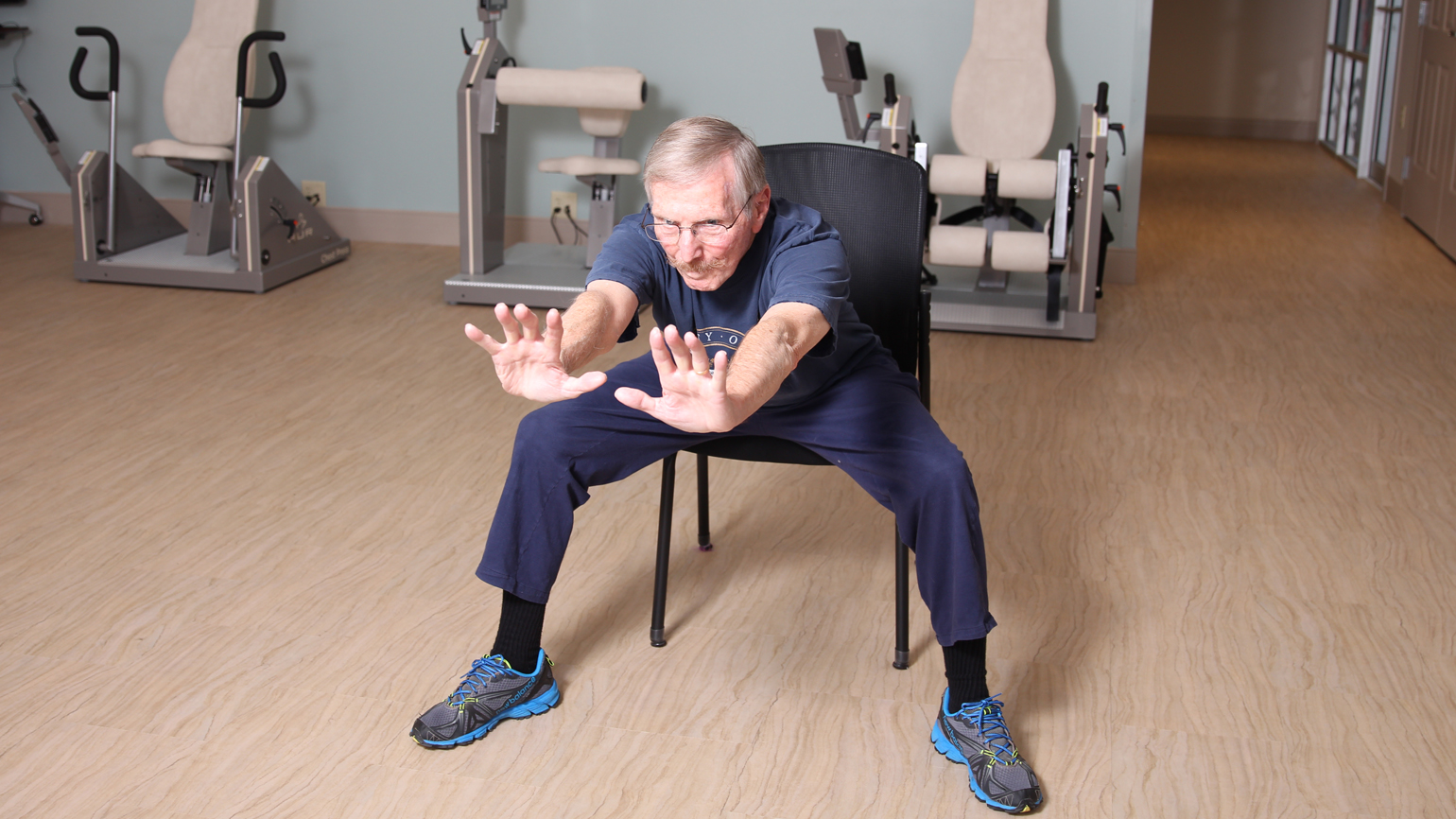
Ed Toscano, a resident of Good Samaritan Society – Mountain Home in Arkansas, was diagnosed with Parkinson’s disease (PD) in early November 2017. Less than six weeks later, he had already started to see improved outcomes thanks to the Parkinson’s therapy offerings at Mountain Home.

“I have gained some strength and a little more confidence in the ability to use my voice,” says Ed.

This success can be attributed to the strength of the therapy services offered by Ward Therapy at Mountain Home. Engaging with the LSVT Big and LSVT Loud programs, Ed was able to quickly make big improvements in his ability to talk and move. LSVT stands for Lee Silverman Voice Training. Big is the exercise and stretching program. Loud is the voice maintenance and development piece.

The therapy has been so effective that Ed’s wife jokingly quipped that she didn’t know who was in her house. “My wife was wondering who the guy in the house was as I was walking around bellowing and startling her,” says Ed. “I frightened the cat, too!”

Pair Your Prayers for Healing

The Bible encourages us to pray for everything: “In every situation, by prayer and petition, with thanksgiving, present your requests to God” (Philippians 4:6, NIV). “And pray in the Spirit on all occasions with all kinds of prayers and requests” (Ephesians 6:18, NIV). One of the most obvious and common occasions for prayer, of course, is when we are suffering from a sickness or simply the painful effects of aging.

Sometimes, however, praying repeatedly for our physical aches and ailments can turn us inward and foster unhealthy fixations on ourselves and our pains. But there is a way to pray for our own pains without dwelling on them. Call it “pairing” your prayers.

That is, whenever you pray for healing or relief from some ailment or pain, pray also for others—ideally, a specific person—who suffers similarly.

Pairing your prayers may sound something like this:

“God, please grant me relief from this migraine headache, quickly and completely, even as I ask you to remember Elissa who also suffers from frequent migraines. Free her completely from both causes and symptoms.”

Another time, your prayer might be similar to this one:

“Lord, I need your help right now. Deliver me from this infection or virus or whatever it is that is making me so sick. And while you’re doing that, please visit Rita, who I know deals almost daily with the pain of fibromyalgia. Send her relief and healing.”

Pairing your prayers can not only take your focus off yourself; it can actually turn your sickness into an occasion for ministry! It can discourage the enemy of your soul who may have sent (or is trying to use) your ailment. And it can actually transform a prayer for healing into a prayer of thanksgiving, as you are reminded that some people carry heavier and more relentless burdens than you may be suffering at any given moment. Most importantly, of course, because God loves to answer prayer, your pain may be the path to someone else’s healing.

Try it. Pair your prayers, and watch God use you…and your pain.

Overcoming Loneliness and Finding Love

I never thought I would be a single mother. I’d witnessed the many hardships my mother endured to raise me and my twin sister on her own. Seeing how demanding single motherhood could be, when it was my time to choose a spouse, I asked myself: is the person I’m going to marry capable of being a good father? Would he be there for our children?

I thought I married the man of my dreams, a man that would be an incredible father. The truth is, I endured three years of physical and emotional abuse. One weekend, he physically abused me while I was pregnant with our first child, and I had to leave. Hurt, embarrassed, confused and incredibly uncertain about my future, my entire life changed in just a few days. I had to start my life over again—pregnant and alone.

My pregnancy should have been full of happiness and joy, but it was tough and even unpleasant given my circumstances. Appointments with my OB, which should’ve focused on enjoying my child’s sonogram, were spent discussing how to manage neck and back pain from years of abuse, and planning maternity leave wisely, since I was now going to be the primary breadwinner.

Given the legal implications of my separation, instead of decorating a baby room, I also had to take on learning things like how to file subpoenas to keep a restraining order in place after it had been appealed. My life was complex and I felt lonely—in addition to losing my husband of 3 years, I felt alone, because no one was going through what I was going through. They couldn’t possibly understand my pain.

When my mom, sister and friends all tried to take me maternity shopping, I would end up crying and leaving the mall. It just wasn’t how I imagined this period of my life would be. The loneliness turned to anxiety which led me to also question God— Don’t you hear me crying? Why are things happening this way? Why can’t I escape these feelings? Will I feel alone forever?

Then, something remarkable happened.

My anxiety began to turn into hope and gratitude. Over time, my family, colleagues, doctors and friends helped me get excited over my baby’s arrival and my relationships rocketed to another level. I’d come to work and find that my boss had left magnets with inspirational quotes on them on my desk. I’d open my mail and get surprises from my best friend—thoughtful books and baby items—and I started to see joy. And when I walked through the maternity ward in my final trimester, watching other pregnant happy women holding hands with their significant others, my mom was by my side, holding mine, and I felt incredibly loved.

In all the hurt, sadness and disappointment, God still had a plan for me that was good. After the devastating loss of my marriage, I became closer than ever with my friends and family. I’ve grown so much in my career and I’ve been empowered to take on new challenges and become even more of the woman God created me to be.

My life didn’t turn out the way I desired or dreamed, but the truth is, I’m not alone and I’ve never truly been alone. Through every heartache, God surrounded me and filled me up with love. That same love I now pour out onto my beautiful daughter, the greatest gift I’ve ever been entrusted with, and the greatest reminder that God not only hears your prayers, but is also always there.

The feeling of being alone can arise from time to time, but now I know that loneliness is just a phantom of my expectations—desired outcomes set to timelines I created myself. But God doesn’t work on my timeline. Now, when I’m feeling lonely, I ask God to show Himself to me, in every blessing, in every kindness, in every bit of warmth and love around me. I lean on my faith that God’s plan for me is active and working. Even when I can’t see it or feel it, I rest on the faith that God is always by my side.

Overcoming Her Sugar Addiction Was the Sweetest Victory of All

My husband, Kevin, handed me a bowl of my favorite ice cream, raspberry with dark chocolate chunks. “Just set it on the TV tray, honey,” I told him. “I can’t eat while I have this traction collar on.”

I hated putting on that contraption every night, but my chiropractor said it would help ease my chronic neck pain. How aggravating that I was still having sharp pain and numbness from a car accident injury more than 40 years ago! Would I always need the heat packs and neck-stretching exercises for relief?

I longed for a more permanent solution, especially since I had committed to taking better care of myself. I exercised four or five times a week, got plenty of sleep and had a healthy diet. Well, mostly. Except for sugar. Besides a serious dessert ritual, I kept chocolate and other candy in my desk drawer at work. I joked that my biggest regret in life was a freezer that held only 17 cartons of ice cream.

But in light of sugar being proven harmful to health in many ways, I had started wondering if my intake of sweets was exacerbating my pain. The next time I visited my chiropractor, I asked if my habit could be affecting my joints. “Oh, yeah,” he said. “Refined sugar is one of the worst things you can eat to aggravate joint pain.”

Even so, with the holidays coming up, I wasn’t ready to say no to Christmas cookies, pies and other treats. I decided to wait until after the new year to start my low-sugar lifestyle.

In late January, the family gathered at our favorite Mexican restaurant to celebrate Mom’s ninety-fourth birthday. We feasted on enchiladas, chimichangas and a double-chocolate cake. As I wiped fudge frosting from my lips, I told myself, This is it. My last major helping of sugar. Tomorrow I’d cut back to just seven grams a day— the amount that worked for my friend Diana, who had a serious digestive issue that forced her to avoid sugar and simple carbohydrates.

But after the next day’s breakfast of unsweetened oatmeal and lunch without dessert, my body was screaming for a cookie. Who am I kidding—three cookies! I grabbed some mixed nuts and pretended those satisfied my sweet tooth. If only! Over the following weeks, I underwent the tortures of sugar withdrawal: fatigue, carbohydrate cravings, even depression.

Then came the day I had a stressful conversation with a coworker. I retreated to my desk and ransacked the drawer in a near panic, searching for a peppermint patty or peanut butter cup. That night, I promised myself a Girl Scout cookie as a reward for finishing a tough writing assignment but found Kevin had eaten the last one.

I was beyond frustrated—I was angry. “Lord, why is this so hard?” I asked, near tears.

The word addiction ricocheted in my brain. There finally was the truth: I was addicted to sugar, not just superficially dependent on it. Admitting this to God and to myself made me see how powerless I really was. I needed far more than just a fix for my aching neck and shoulder; I needed healing for whatever it was that caused me to turn to sweets. And that meant some painful soul-searching to unearth the why of my sugar addiction.

I forced myself to dig deep, scenes from my childhood flashing through my mind. Whenever my brother told me I was stupid and I ran to Mom crying, she gave me a cookie. “Here, honey, this will make you feel better,” she’d say. Dessert wasn’t just a sweet end to a meal; it was also a reward for eating my veggies and drinking my milk, things that made Mom happy.

And having a stash of candy in my dresser drawer made me feel rich in blessings. I could pretend I was a princess whose daddy never got drunk, who never had to listen to angry shouting behind closed doors, who never had to hear her mom say, “We’re getting a divorce.” A princess who never had to attend her father’s funeral after he died of cirrhosis of the liver, just seven months into Mom’s new marriage to another alcoholic.

Looking back at the psychological role that sweets played in my past explained why I used them as a crutch. I didn’t reach for candy and cookies to satisfy any physical hunger. I did it to reward, cheerlead and comfort myself. It was emotional eating. This new understanding helped. But I also needed healthy ways to cope with my addiction, both physically and spiritually.

I thought of my friend Diana again. I knew she could share some strategies for managing my cravings. I zipped off an email to her with the subject line “Help!”

Diana sent me links to articles with great tips. Like eating sour or bitter foods and drinks, to block the brain’s response to sugar. Exercising more to increase the feel-good hormones. Meditating on encouraging Bible verses and repeating positive affirmations.

Diana also committed to pray for me as I wrestled with my addiction. And wrestle I did. Whenever I felt powerless or overwhelmed by my urges, I learned to shift my focus. I’d walk around the neighborhood and revel in the wonders of nature, work a jigsaw puzzle with Kevin or get lost in a novel.

As each month passed, I became stronger in my resolve. When I was able to go two full months between chiropractor visits, the doctor told me, “Cutting out sugar is one reason you’re doing so well.”

For more than a year and a half now, I’ve been eating no more than seven grams of sugar a day. I no longer panic when the only snack at hand is trail mix or popcorn. I can push my chair back from the dinner table and not pine for a dish of ice cream. I don’t even feel deprived when Kevin orders from a list of 27 pie flavors at a café and I have only two sugar-free choices.

Yes, I’m still tempted occasionally, and I have to lean on my new habits to get me through a church potluck or a birthday party. But I’m no longer responding to stresses and hardships like that little girl, trying to soothe her broken heart with sweets. I know where to turn when I can’t do life on my own. I’m learning to ask God for comfort and affirmation, and that is the sweetest feeling of all.

For more inspiring stories, subscribe to Guideposts magazine.

Overcoming Fear with Praise

We sit and let the afternoon sun rest on our shoulders. It’s quiet except for the cicadas. My two older boys are at school, and my middle son is with a friend. It’s just the two smaller boys and me. Grandpa brought a big box of fresh peaches, and we each have one. They’re ripe and ready and juice runs down the boys’ forearms and dribbles from their chins.

Soon one son hits the middle of his peach, and he places the seed on his outstretched hand. He peers at the craggy and brown surface.

“It’s neat,” he says, “how God makes the fruit for our food. But that’s also what protects the seed.”

My other son takes the seed into his own hand. His palm is stretched open now, and they poke and prod until what was once hidden grows warm from the sun. My boys chatter about fruit and trees and creation and God.

And for a moment, I’m lost in this child-like wonder. I long for this ability see something, consider it and as easy-as-breath, give glory to the Lord.

For you make me glad by your deeds, O LORD; I sing for joy at the works of your hands. (Psalm 92:4, NIV)

In this life we run hard and fast. There are commitments. Responsibilities. Things to do and places to go. Rather than enjoying the moment the Lord has given me, I wonder and worry about how I’m going to accomplish the next 10 things on my list.

Yet the Lord is faithful to beckon me out of my distraction.

And today I’m called by the give-God-the-glory, simple-wonder of a child.

“It’s a cool thing, the way God works,” a son says. He and his brother decide to put the peach seed in a Ziploc baggie with hopes of seeing something grow. They rush off for paper towels and water and a plastic bag. Their conversation is lost to me as they pound down the patio steps and rush into our home.

But their appreciation for God’s handiwork stays with me.

If I let it, seeing and savoring God’s Presence will change me from the inside, and I can trade busy, anxious thoughts for praise.

It is fully possible.

I just need to live slowly enough to see.

Help me to see Your wonder today, Lord. Let me live in Your Presence and give You glory for great things. Amen.

Overcoming Caregiver Guilt

Thirty years of serving as a caregiver has taught me that, while individual circumstances may differ, every caregiver struggles with three major feelings: fear, obligation and guilt, or what I like to call, The Caregiver FOG. Just like a regular fog, The Caregiver FOG can also obfuscate our view and cause us to veer off the path of safety. Whether it’s indulging ourselves with the pain of things that haven’t even happened (fear), castigating ourselves for things we’ve “got to do” or should have done (obligation), or punishing ourselves for perceived or real failures (guilt), we caregivers can easily become lost in our own fog of conflicting feelings.

Guilt may be the caregiver’s worst enemy of all and can wrap a caregiver into all types of emotional pretzels. The kind of guilt that most caregivers struggle with comes from circumstances such as being able to walk while a loved one can’t, taking a shower easily when a loved one can’t, living without chronic pain while caring for someone wracked with it, or for parents who brought a child with special needs into the world. When caring for an aging and declining loved one, a lot of guilt about not being with them constantly and attending their every request torments a caregiver. Hoping for or taking a break from caregiving when the loved one doesn’t get a break from their illness or condition can also spark guilty feelings.

We caregivers begin nobly, but often crash and burn quickly. It’s just too much for one person. If we do enlist the help of others (either professionals or volunteers), we find that we can’t enjoy and rest in the help because we feel guilty that we’re not supervising and doing the work ourselves. Oftentimes, the help given won’t be in a way that we would do it or that our loved one demands, and we feel guilty that we’re shortchanging them. The list of things that pierce our hearts is simply too long and convoluted, and we caregivers must step back in order to keep perspective.

Recently, I reminded a caller to my radio show for caregivers about the importance of keeping perspective. The caller, whose mother was suffering with Alzheimer’s, unburdened her heart to me, and we could all hear the anguish in her voice.

“I find myself not wanting to visit my mother with Alzheimer’s because it’s harder and harder to watch. There’s a lot of guilt about my not wanting to be there every day, and I’m not sure how to handle it,” she confessed, but her deepest hurt was yet to be revealed. “On top of that,” she said, “when others ask me about her, I feel even more guilt as I try to explain why it’s been two days since I’ve seen her.”

“Is she safe at the facility where she lives,” I asked the caller.

“Yes.”

“Is she fed, warm, and well cared for?”

“Yes.”

“Does she recognize the passage of time?”

“No.”

“Can you be with her twenty-four hours per day, seven days a week?”

“Of course not.”

“Well then, how many breaks are you allowed—and who makes that determination?”

Silence.

After a moment, she continued, “When people ask me how Mom’s doing, and if I haven’t seen her in a day or so, I feel so guilty and don’t know what to say—and it all comes gushing out. Worse still, I beat myself up when their questions remind me that I didn’t see Mom today.”

Because of fear, obligation and guilt, we often put unreasonable demands upon ourselves to do what is beyond us. This woman, an only child, had already taken care of her aging father who passed away a few years earlier. She made appropriate provisions to care for mother, but somehow didn’t feel that she was doing enough.

I simply affirmed to the caller that she has done the best that she can with an impossible situation. “You have and are honoring your mother and father —just as we are instructed to in the Bible. If you feel you need to visit your mother only every other day, it’s fine. You’ve made arrangements to keep her safe and cared for. If it’s torture on your heart to see her every day in that state, how long can you sustain that torture? What good are you to her or anyone else if you lose hope, slide into despair and wear yourself down to a frazzle—just to satisfy some sort of self-imposed guilt?”

As I said these things, you could almost hear the stress melting away from her through the phone line.

For sincere but peripherally related inquirers, I offered the caller a stock response:

“My mother is loved, cared for and safe; thank you so much for asking.”

That’s enough to satisfy friends who kindly ask, but are not close to the situation. With that response, this heartbroken woman can also now affirm to herself that she has indeed provided for her mother to the best of her abilities. That is all we can do, while trusting God to handle the things beyond our control.

The FOG caregivers feel can be heavy in the valley of the shadow of death. It is indeed a lonely road, but we must remember that we are not alone.

“Do not fear, for I am with you; do not be dismayed, for I am your God. I will strengthen you, I will help you, yes, I will uphold you with My righteous right hand.” Isaiah 41:10

Our Steps to Healing

1. Seek the Lord. Go to the Lord ASAP and ask Him to make your path clear. Pour out your heart to Him, ask Him to heal you, and ask Him the way you should go.

2. Read all the healings recorded in the Bible. Which stories stand out to you? Meditate on those stories and ask God to reveal their importance to your situation.

Community Newsletter

Get More Inspiration Delivered to Your Inbox


3. Find a book that contains a list of God’s promises in the Bible. (See Bible Promises for Life by BroadStreet Publishing, which contains over 2,000 promises.) Say the Scriptures that meet your current need out loud over yourself or your loved one. These promises are typically organized by category for ease.

4. Ask your friends and family to pray. Keep them updated as your situation changes. Remember this is not a burden for others. They want to help. It is actually a privilege. Gather them together for group prayer whenever possible.

5. Be transparent and spend time in repentance. Ask the Holy Spirit to bring any sin to your memory so you can repent. After you have gone through repentance, it is very important to receive God’s forgiveness and let your icky stuff go. It is not our Lord’s nature to want you to feel guilt or shame; those are tools of the enemy.

6. Put on your spiritual armor every day. Pray Ephesians 6:10–18 and ask Jesus to cover your mind, body, spirit, will, emotion, and soul in His shed blood.

7. Be aware of your thoughts and what you profess with your words. If they do not follow a Christ-like pattern, they aren’t worth saying or thinking.

8. Walk in gratitude for the healing you have already received and then walk it out to the best of your ability. Remember healing can be instantaneous but it also can take a while. Remind yourself that God’s will is to heal our diseases and bind our wounds (Jeremiah 30:17).

9. Laugh as much as possible and continue to make plans for tomorrow and the future.

10. Then stand until you have victory.

Book cover for Praying for Healing while Planning a FuneralRosey Brausen is the author of Praying for Healing while Planning a Funeral from BroadStreet Publishing.

Optimistic Thinking Ends Drought

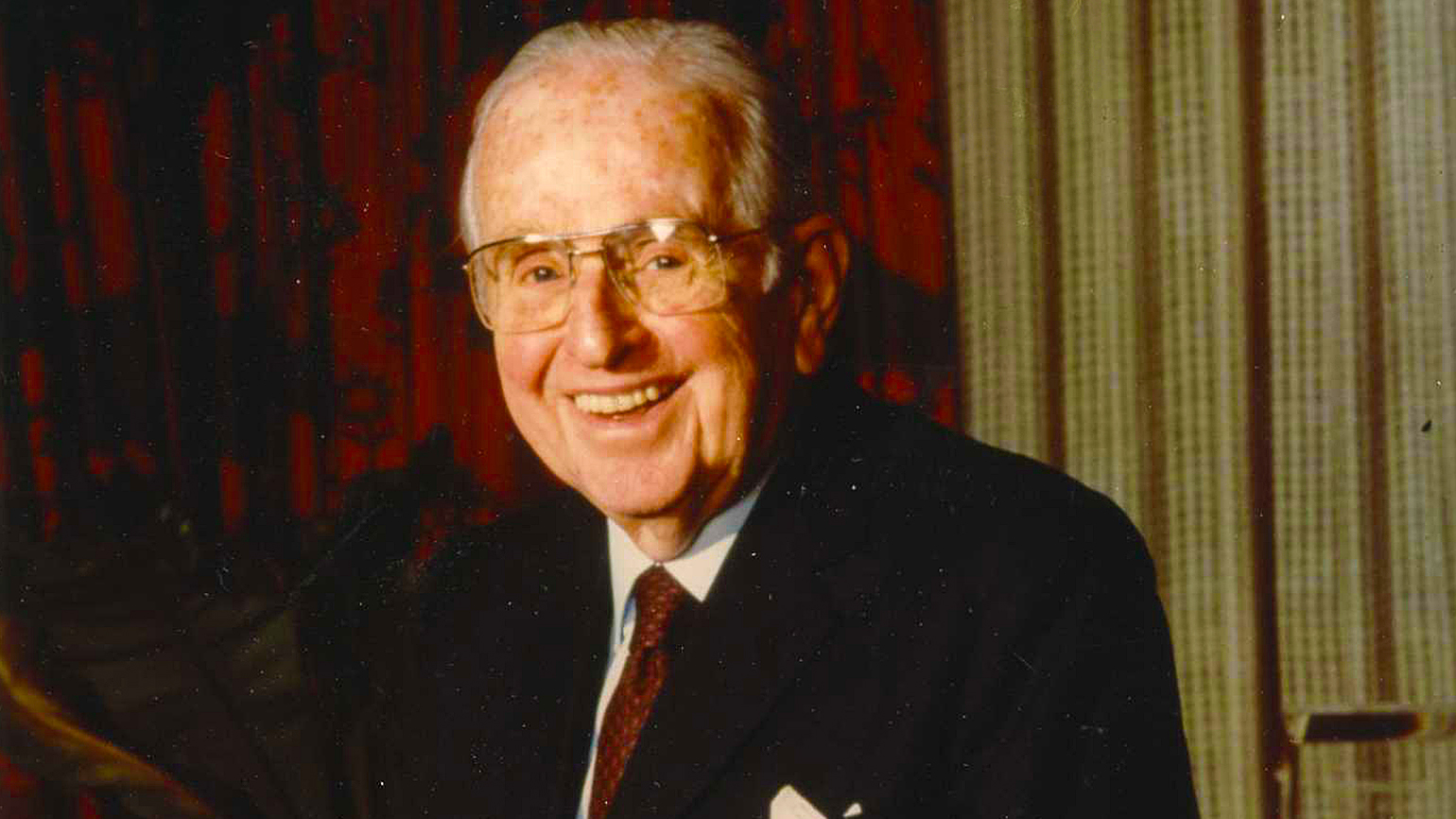
When I receive a call for counseling, the people who seek my help usually have some clear-cut reason for their unhappiness: marital difficulties, broken relationships, emotional problems, financial worries. All very specific, very real.

But there are also some whose complaints are harder to pin down. These people are beset by nameless fears and anxieties. They feel isolated and inadequate. The life-force in them has grown dim. They know they are living far below their potential, but they don’t know why. There is something parched and arid about them, like plants deprived of water. And indeed this is their trouble: They are living in a spiritual drought.

These people remind me of a story from sailing-ship days about a vessel becalmed off the coast of South America. Week after week went by; the wind did not blow; the ship could not move. The sailors were dying of thirst when another schooner drifted close enough to read their frantic signals for help. Back came the answer: “Let down your buckets!” When they did, they found water fit to drink beneath their keel. Far from the coast though they were, the freshwater current from the mighty Amazon River surrounded them. All they had to do was reach for it.

I like that story, because I have spent my life trying to persuade people that the love of God surrounds them at all times, and the way to “let down their buckets” into this limitless reservoir is to apply the insights and principles set forth so clearly in the Bible.

There is nothing obscure or complicated about this message. It tells us that God designed us to live joyous, productive, successful lives. To achieve such lives, he knew we would need his help, and he promised that this flow of power would be available to all who would follow the instructions He set down very plainly. You can choose to accept that blueprint for living. You can choose to ignore it. The choice you make has everything to do with the transmission of that power.

Anyone who observes people closely knows that certain attitudes and certain actions are destructive. Fear, hatred, anger, self-doubt, cruelty, dishonesty, selfishness, promiscuity. These negative forces can reduce the flow of power to a trickle, or in some cases shut it off altogether.

So when spiritually enervated people come to me, I try to offer some suggestions designed to unblock the flow of power in their lives. Here are four of those suggestions .

1. Have a heart-to-heart talk with your conscience.
A remarkable thing, the human conscience. Some people claim they have none, but this is not true. God built a sense of right and wrong into us whether we admit it or not. A wise Frenchwoman, Madame de Stall, once wrote, “The voice of conscience is so delicate that it is easy to stifle it, but it is also so clear that it is impossible to mistake it.”

It has been my observation that one of the most common causes of depression, spiritual anemia and alienation from God is a repressed sense of guilt festering in the unconscious mind. Being human, we all make mistakes. And often, being human, we try to sweep them under the rug. But this is just asking for trouble, because the penalty is a feeling of unworthiness, a loss of self-esteem, a decline of confidence. Countless unhappy people go through life dragging these chains when what they need to do is face up to the transgression, acknowledge it, make amends, ask God’s forgiveness, then forgive themselves.

Your conscience will tell you when you need to do that, if you will just listen to it. Give it a chance!

2. Harness the healing forces in gratitude.
“Be thankful for it!” I sometimes say to a dejected visitor. “For what?” he will reply glumly. “For something you’re taking for granted,” I tell him. I might reach out and touch his hand. “What’s that?” I ask. “It’s my hand,” he will say, surprised. “So it is,” I agree, “but look at it. What an amazing instrument it is! How endless the shapes it can assume, how remarkable the uses it has! Suppose you didn’t have the use of your hands. Or your eyes. Or your ears. Suppose you could never see a sunset again. Or hear a symphony orchestra play.

“To an amazing extent,” I tell him, “appreciation for what you have can lift the depression that comes from dwelling on what you have not. Your mind can hold only one idea at a time. So you can cancel out the gloom of a minus by making yourself focus on a satisfying plus.”

3. Reverse your affirmations.
This third suggestion is one I sometimes give to visitors who come shrouded in gloom and despondency. Their evaluation of themselves is always low, right down on the floor. “I’m no good,” they say. “I’m worn out. I just can’t cope.” To these unhappy souls I sometimes offer these three words: “Reverse your affirmations.”

When they ask me what I mean, I reply that the thoughts in our minds dominate and determine the realities in our lives. Wise men and women have always known this. The Bible puts it succinctly: “As he thinketh in his heart, so is he.” My dictionary says that the word “affirm” means “to state positively or with confidence, declare as a fact, assert to be true.” Almost by definition, then, there is great power in a ringing affirmation.

Years ago a French psychotherapist named Emile Coue urged people to say to themselves, “Every day in every way I am getting better and better.” Some critics accused Coue of encouraging egotism. Others said his message was based on an impossibility: raising oneself by one’s psychological bootstraps. But Coue had hold of something just the same: the power of affirmation to change lives.

My disconsolate visitors need a new image of themselves if they are to escape from the prison of self-doubt that is part of their spiritual drought. As a first step, I urge them to focus on the concept that God made them, and being the Master Craftsman, he made them well. Therefore the good, or at least the potential good, in them far outweighs the bad. “Affirm this,” I say to them, “every single day. Accept it. Believe it. Let this conviction saturate every fiber of your being, and ultimately, astonishing things will happen. I guarantee it!”

4. Listen to what God said.
This suggestion is really the simplest and most effective of all. When someone comes to see me, I point out that they have come to me seeking help, and I am glad to do what I can. “But you know,” I say, “2,000 years ago a person walked this earth who was the sum of all wisdom. He spent three years talking to ordinary people with problems just like yours. He said that heaven and earth would pass away, but his words would not—and they haven’t. They’re available everywhere, as close as the nearest church, the nearest bookstore, the nearest library. How to live happy, useful lives? Be good. Be honorable. Be loving. Be kind. If you think you have troubles, why not listen to what he said? His words will fall like cooling rain on the parched and withered areas of your soul.”

The Gospel of St. John puts it plainly. Speaking of Jesus he wrote, “But as many as received Him, to them He gave . . .” Gave what? Gave power. If you are trying to escape from a spiritual drought, why not reach for that power?

It’s right there, waiting.

Download your FREE positive thinking ebook!

Optimism 101: Imagine a Positive Future

This quote, attributed to the Chinese philosopher Lao Tzu, usually rings true to me: “If you are depressed, you are living in the past. If you are anxious, living in the future. If you are at peace, you are living in the moment.”

But then I read about research conducted by the University of Sydney Business School that suggests that “living in the future,” if done in a positive way, can actually alleviate anxiety and help foster an overall optimistic outlook on life.

The study involved participants who had either been involved in traumatic events like a natural disaster, or faced a challenging health diagnosis like cancer. The researchers administered a number of psychological and physiological tests, the results of which they measured against participants’ level of optimism about the future.

The more optimistic participants were, the more positive their behaviors and attitudes. For example, optimistic flood survivors said they would seek out a vaccine that would protect them from future illness, and patients with tough health conditions squeezed a hand-grip tool with more vigor if they were optimistic.

Professor Donnel Briley, the study’s lead author, says optimistic people are more likely to have positive mental and physical health outcomes, even in the midst of a difficult time in life.

Briley and his colleagues found that the optimistic participants in the study had something in common—an ability to conduct “mental simulation” of a positive future, which made a big difference in their physical and emotional health. For example, visualizing yourself exercising—and enjoying it—actually makes it more likely you will exercise in the future.

This finding has me thinking a bit differently about Lao Tzu’s famous quote. I will still seek peace in the present moment, but I will also endeavor to spend more time ahead and seeing positive things there.

Do you consider yourself an optimist? How do you think about the future?

Life-Changing Tips from The Power of Positive Thinking

On the Wings of an Answered Prayer

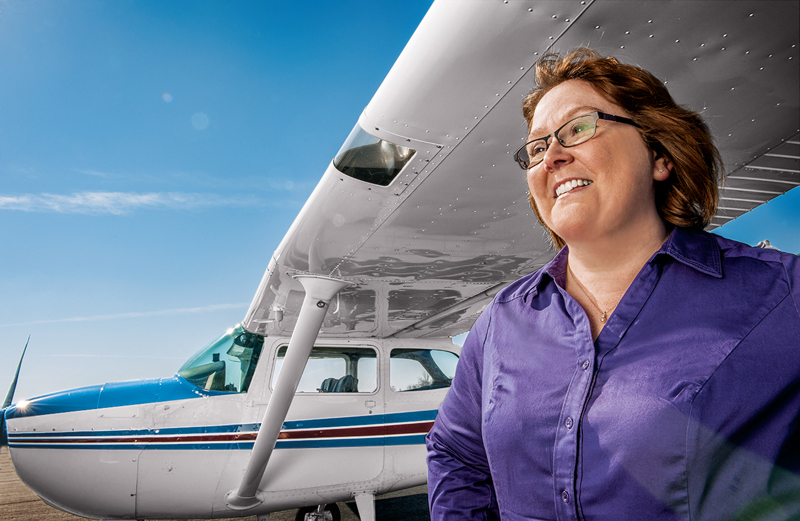
I parked my Dodge Shadow by the tiny western Ohio county airport near my parents’ house, where, in my mid-twenties, I still lived, my life going nowhere. I peered through the windshield at a small plane rolling down the runway.

Its wheels lifted off the ground and the plane rose higher and higher. Like a bird, soaring effortlessly above the earth, nothing, not even gravity, holding it down.

Freedom. How I longed to know that feeling. Watching the planes come and go was as close as I ever got. I came here every chance I could and dreamed of one day piloting a plane myself. What would it be like to fly? To not be afraid? To feel as though I could do anything?

But who was I kidding? No one I knew was a pilot. Certainly no women. Flying was something rich people did. I came from a feet-on-the-ground kind of family. We didn’t go in for wild flights of fancy.

Still, I couldn’t get the idea out of my head. Flying had captured my imagination ever since one unforgettable day when I was five. I was playing in the yard and heard the drone of an engine overhead. I looked up. A little red plane was writing something in the sky. A large, graceful P.

I watched, mesmerized, as more letters formed, smoky white against the clear blue. P…A…T…T…Y. My name, written in the sky! This had to be a sign from God! Even after my mom told me the plane had written Pepsi, not Patty, I still felt it had been a message from above, a message meant for me.

I loved reading about Amelia Earhart, the first woman to fly solo across the Atlantic. I think every book report I ever did was on a book about her. In fifth grade, when we were assigned to come to school dressed as a famous historical figure, you can guess who I went as.

In high school, on career day, I finally got a chance to meet a pilot. I mustered up the courage to walk up to the table where he sat and tell him of my dream of learning to fly. He looked at me, a chubby girl with glasses.

“I’m sorry,” he said. “But you have to have perfect vision to be a pilot. Plus, it’s nearly impossible for a woman to do this job.”

I lowered my head so no one would see the tears in my eyes and walked away, my dream crushed before it even had a chance to get off the ground.

I felt as if I lost something that day that I could never get back. My life since then had been a series of disappointments. I’d had to drop out of college for lack of money. The only jobs I could find paid poorly. I couldn’t even afford to live on my own. I wasn’t dating anyone. Was this all I had to look forward to?

I felt trapped, like a grounded plane hemmed in by thick, dark, depressing clouds.

Watching the planes take off and land at the airport, as I was doing now, was my only escape.

I closed my eyes, imagining what it would be like to fly. I pictured the horizon spread out far below me, a perfect, unencumbered view, the sky fading from blue to purple, then dark pink, the sun barely a sliver, sinking behind cornfields for the night.

It was an image I’d kept reliving from a trip to the Columbus airport when I was six. We’d watched the jets take off and land for hours and the sky looked just like that. It seemed to almost be calling me, the way the sea beckons a sailor.

Dear God, you know how unhappy I am. Help me feel your spirit inside me. Lift me up. Let me spread my wings and fly. I’d prayed like that whenever I came here but nothing changed.

I opened my eyes and turned the car for home. Maybe it was time to get my head out of the clouds and accept the fact that I was never going to be a pilot. If only the longing wouldn’t keep growing inside me.

That fall I went to a local festival. Way at the back, past the craft booths and the food stands, I saw a long line of people snaking across a field. A school was selling rides on a plane as a fund-raiser. A lovely little four-seater. Twenty minutes for $20.

I pulled two $10 bills from my purse. It didn’t matter that we’d just be flying in a circle over rural Ohio. To me it felt as if I were buying a ticket to paradise.

At last it was my turn. I was shown to the front passenger seat. I settled in and glanced at the pilot. Eyeglasses! He was wearing eyeglasses. He smiled. “Ready?” he asked.

“Ready,” I replied. We taxied across the grass field and the plane lifted off. I held my breath. The next moment, I was flying.

“Is this the first time you’ve been in a small plane?” the pilot asked.

“Yes, but I’ve always wanted to learn to fly,” I said. “I didn’t think I could because I wear glasses.”

“No, that’s not a problem,” he said. “It’s a lot of fun. It takes work. And time and money. But there’s nothing like it.”

He showed me how he kept the plane level with the yoke, while with his feet he controlled the rudder. He made it seem simple. Like something even I could do.

Too soon we landed. What the pilot said stuck with me even after I got back to my parents’ house. I’d never actually looked into what it took to learn to fly a plane. What was stopping me? I could only think of one thing. Myself. I didn’t believe in myself.

I checked books about flying out from the library. I learned that a pilot’s license required 40 hours of flight training: 20 hours with an instructor and 20 hours solo. I memorized what all the different gauges and controls were for. I read about other women who’d become aviators.

Still, there was one thing that held me back, one barrier I couldn’t get past. Flying lessons were expensive. I didn’t have that kind of money.

Then one day I was driving through the countryside a few miles south of where I lived when I came upon a small airport. How come I’d never seen it before? There was a beautiful grass landing strip. I saw a sign: “Introductory Flying Lesson $50.” Fifty dollars? I could afford that.

I wrote down the phone number. It took me a few days to build up the courage to call. A man answered. I said I was interested in the introductory offer. I figured it would be a few weeks before he’d have an opening. “How about tomorrow afternoon?” he said.

I told my parents what I was doing. They thought I was crazy. Flying was dangerous, they said. But nothing was going to stop me now.

When I got to the airport, a serious looking middle-aged man with white hair and a mustache came out to greet me. He looked like a cowboy. “You must be here for the intro flight,” he said. “Yes,” I said, swallowing the lump in my throat.

“Come on, then,” he said. He turned and headed toward the hangar. I followed him as we walked around the plane, a tiny Cessna 150, doing the preflight inspection.

“You take the pilot seat,” he said when he was done. My heart raced. The pilot seat! We climbed in. There was barely room for both of us. He showed me the switch to lift the flaps and the control for the throttle.

“Put your hands lightly on the yoke and pay attention,” he said. “If I say let go, let go. I’ll talk you through what I am doing.”

We taxied to the runway. He opened the throttle. “When we hit fifty-five knots, I’ll pull back on the yoke and that will lift the nose,” he said. The plane rattled and shook. The noise of the engine was deafening. We rolled down the runway, my hands shaking. My eyes were glued to the air-speed indicator.

The instructor pulled back on the yoke and the little Cessna lifted gently off the ground, rising toward the heavens, sending my heart soaring with it. It was all I could do not to shout for joy. I was flying a plane! It felt like a miracle.

“Now we’ll level off,” he said. “Pick a spot on the horizon and keep the nose level with that.”

I looked to where he was pointing. The sky was gorgeous, like a watercolor painting, fading from blue to purple, then dark pink. Just as I’d pictured in my dreams. A scene only God could have painted.

It took two years for me to get my pilot’s license. I could only afford to take a lesson every couple of weeks or so. Yet I learned something far beyond how to fly a plane. I learned to believe in myself. And that God loved me. That he would always be there for me. That changed my life.

I got a great job working behind the counter at a county airport. Met my husband. That message I saw written in the sky long ago had been meant for me after all.

Download your FREE ebook, A Prayer for Every Need, by Dr. Norman Vincent Peale

Online Easter Services to Watch from Home

Months ago, no one could have imagined that so many things we take for granted—attending school, meeting up with friends and family, even going to church—would move almost exclusively online.

Many churches have already started streaming their regular services online, so people self-isolating and practicing social distance in their homes can still worship every Sunday.

This Easter Sunday, arguably the most important holiday of the liturgical year, churches are prepared to continue serving their communities.

To help you celebrate, here are several churches that are streaming their Easter services online:

The Washington National Cathedral in Washington, D.C. is offering live webcast of their Easter service—The Sunday of the Resurrection—at 11:15 a.m. EDT on their website.

On Easter Sunday, Pope Francis will conduct mass from the Vatican in Rome at 11 a.m. local time—that’s 5 a.m. EST—followed by the traditional Urbi et Orbi blessing “to the city and to the world.” The Vatican Media will be broadcasting the ceremony from St. Peter’s Basilica.

Highlands Community Church, a non-denominational church in Renton, Washington, will be live streaming Easter services both Saturday and Sunday on their website. On Saturday, April 11, you can watch at 4:30 p.m. or 6:00 p.m. PDT. Sunday services will be at 8:30 a.m., 10 a.m. and 11 a.m. PDT.

The Texas-based Lakepointe Church is also doing Easter online this year. They’re holding several services on Sunday—one at 8 a.m., 9:30 a.m., 11 a.m. and 5 p.m. CDT. You can tune in on their YouTube Channel or via Facebook Live.

Trinity Church Wall Street—the first Anglican church, erected in New York City in 1696—has also made the switch to online services. Their Easter celebration will be held at 11:15 a.m. EST on broadcast from their website.

Along with the rest of their Holy Week services, Grace Cathedral in San Francisco, California will be live streaming their Easter service at 11 a.m. PDT, backed by a quartet from the Cathedral Choir. Additional details can be found on their website.

Antioch Christian Church in Oelwein, Iowa will be live streaming several Easter services. You can tune in at 8:30 a.m., 9:45 a.m. or 11:15 a.m. on the church’s website or on their Facebook page.

As part of their weekly Sunday Worship live stream, the Metropolitan Baptist Church in Largo, Maryland will be broadcasting Easter services at 7:30 a.m. and 10 a.m. EST from their website.

Mariners Church in Irvine, California is offering several services throughout the day. On Easter Sunday, you can watch a live stream at 8:30 a.m., 10 a.m., 11:30 a.m., 1 p.m., 3 p.m., 5 p.m. and 7 p.m. on the church’s website.

Saint Mark’s Episcopal Cathedral in Seattle, Washington will be streaming its Easter service at the same time as its regular church service livestreams—at 11 a.m. PDT on their YouTube Channel. They’ll also be holding an Easter Vigil on Saturday, April 11 at 9:30 p.m. PDT.

Be sure to check with your local church to see if they are offering to stream their own Easter service. Remember to reach out to others. During these trying times, our faith communities can offer much needed love and support.