I almost wrote “Dear Elizabeth” because reading your articles over the years I feel like I know you… I have a question and you don’t have to answer if you don’t want to.
I’m sorry if this is too personal. But after you told about your depression in Guideposts and how you got over it, you didn’t say if it ever came back. My question is, did you ever have depression again or did it just disappear?
Sincerely,
Peggy W.
A: Of course we should call each other by our first names–there are no last names in heaven!
No, my own struggle with depression has not “disappeared,” though it’s never come back in such an incapacitating form.
That dull gray mist still settles over me from time to time, obscuring light and meaning, making it hard to smile, impossible to get the smile down inside. But the grayness no longer terrifies me, and I think there are three reasons for this.
First, I name it. When the early symptoms appear–a feeling that nothing has value, a despair about the whole muddled business of living–I recognize them and give them a label: “This is depression.”
The pattern’s so familiar by now it’s like encountering someone I know. “Oh-oh, here comes that old uninvited house guest.” Can I slam the door before he gets in? I can try.
I call a friend. Read a psalm. Pray. Do something for someone else. And techniques like these work fine in fending off ordinary blues. When it’s depression, though, I’ve learned simply to live through it, reminding it that…
Second, it won’t last. The mist can’t shroud the sun forever. That was the terror of my earlier illness, the conviction that the misery would go on forever. I’d never be well, never be able to walk about cheerily like the people I watched from my attic window, beings from another planet with plans and purpose.
But that was a lie. I did rejoin the planet after a while, and the wait gets shorter each time, because my unwelcome guest can no longer fool me into thinking he’s come to stay.
And Third, I talk about it. Not with everyone, of course. Someone who drags around broadcasting his gloom scares help away. Even friends after a while pull away, confirming his conviction that he’s unloved. Maybe I’m not the actress I think I am, but I flatter myself that I keep my depression out of sight.
But to two or three tried and trusted friends–and how privileged I am that one of them is my husband!–I do talk. What I talk about are the feelings. I don’t try to account for them, or do amateur “analyzing.” I just describe them.
These good listeners don’t refute my self-negating statements. (“Why, look at all the good things in your life!”) Or make light of them. (“You’ll feel better after a good night’s sleep.”) Or offer cures. (“Have you tried St. John’s wort?”) They just let me talk.
And putting words to the feelings, hearing my own voice describe them aloud to someone else, gets them to some degree outside my own head where they’re careening around creating a ruckus, to a place where I can look at them critically.
I read an article recently about the clinical depression that afflicted Abraham Lincoln throughout his life. Yet from suicidal impulses so strong he didn’t dare carry a knife in his pocket, came identification with the sufferings of others, and commitment to a cause greater than himself.
To think that even depression can serve a purpose–lead to understanding, perhaps, or tolerance, or compassion–only confirms my trust that nothing at all, in God’s ecology, is wasted.
Do you realize the Bible has special counsel for those of us who are older? God promises, “The righteous shall flourish…They shall still bear fruit in old age” (Psalm 92:12, 14).
In Proverbs, God tells us a well-lived life will be rewarded: “Let your heart keep my commands; for length of days and long life and peace they will add to you,” (Proverbs 3:1-2) and “The silver-haired head is a crown of glory, if it is found in the way of righteousness" (Proverbs 16:31).
If you want to make the most of every year of your life, here’s how:
1. Keep in good shape–physically and mentally.
Refuse to believe that aging means constant decline! Determine to continue learning, to be active, to commit yourself to activities that make a positive difference in the world.
“Do you not know that your body is the temple of the Holy Spirit who is in you? Therefore glorify God in your body and in your spirit, which are God’s” (1 Corinthians 6:19-20).
2. Look forward, not back.
Memories are great places to visit, but don’t dwell there. Instead, heed the Apostle Paul’s advice: “Forgetting those things which are behind and reaching forward to those things which are ahead, I press toward the goal for the prize of the upward call of God in Christ Jesus” (Philippians 3:13-14).
3. Trust God in all things.
The God of your youth will not abandon you as you age. “Even to your old age, I am He, and even to gray hairs I will carry you!” (Isaiah 46:4). God wants you to continue to grow in grace is all situations. “He who has begun a good work in you will complete it…” (Philippians 1:6).
So don’t be overly concerned about aches and pains; don’t be distracted by limitations. Aging is one of God’s great gifts. Thank him for each new day–and then get on with the work he (still!) has for you to do.
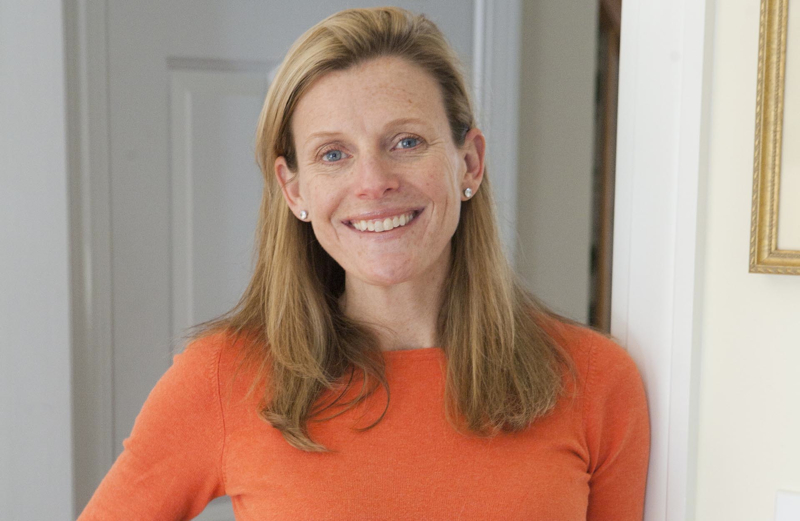
Katie Allen Berlandi is the granddaughter of the late Dr. Norman Vincent Peale, champion of positive thinking. Katie is a clinical social worker with a private practice focusing on children and families. Katie is actively involved in Guideposts and the Guideposts Foundation, focusing on OurPrayer and military outreach. Bobby Schuller interviews Katie.
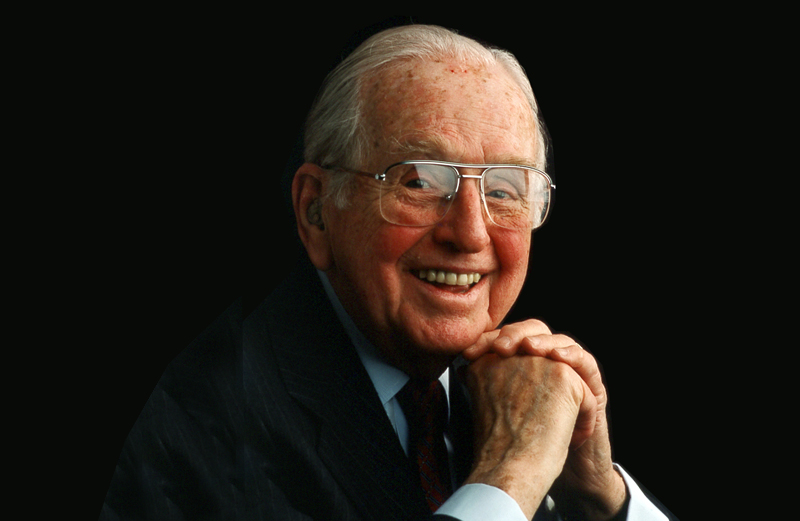
Bobby Schuller: This morning, I am happy to be interviewing our guest, Katie Berlandi. Katie is the granddaughter of the late Dr. Norman Vincent Peale, who was not only a pastor, but an author and a champion of positive thinking. His most famous book is The Power of Positive Thinking, which has sold more than 20 million copies.
Katie and I recently met at a Guideposts event where I was speaking, and I had the chance to meet herself and her mother. It was a great event where I was also able to meet so many of the people who are a part of carrying on Dr. Peale’s legacy. Katie and I have formed a friendship, so I invited her to come out to California and be my guest on the Hour of Power.
We’re so glad you’re here, Katie.
Katie Allen Berlandi: Thank you so much.
BS: I just want to begin by saying what a huge impact your grandfather had on my grandfather’s life.
I feel like the big tipping point and breakthrough for this church was when your grandfather came and spoke in the drive-in church years ago. My grandfather, Dr. Robert H. Schuller was a guy that not a lot of people had heard of outside of this state, but everybody knew who Dr. Norman Vincent Peale was. Your grandfather came and preached, and it was the thing that sort of caused our church to explode.
KAB: Yes, and I remember my grandpa saying how clear it was within moments that your grandfather was going to do tremendous things, and he certainly did and still does. So my grandpa and grandma were both very happy to be as supportive as possible to that endeavor.
BS: Your grandfather was a pastor and what he did for my grandpa personally can’t even be measured. He was a tremendous mentor. My grandfather grew up in a very strict Dutch Calvinist environment, with ‘God hates you and he just can’t wait to put you into hell, but if you’re perfect maybe you’ll escape.’ Then here comes Norman Vincent Peale who talked about God’s love and how we serve a positive God. The timing for my grandfather changed his life radically.
KAB: Well I know my grandfather was humbled about any of that influence. They were great friends, too, and that’s an important element, as well.
BS: Katie, here is a question I know you’ve been asked a lot because I’ve been asked it a lot myself: what’s it like growing up being Norman Vincent Peale’s granddaughter?
KAB: Well it was pretty terrific, I might say. Grandma and grandpa’s ministry, their world travel, their relationships with world leaders and all of that was not at the forefront when we were together as a family. My siblings and I grew up in a town where my grandparents had a country home so whenever they weren’t traveling, they were near to us so that allowed us a lot of very natural, authentic time together.
You know as we all think back on our time growing up with grandparents, over time, the aperture of that lens opens up as we learn more about them. For me, it has been a remarkable experience to learn about the impact and the influence that both grandma and grandpa have had on lives, and I say that with a lot of humility because I know that they felt that, too. Any way they could be helpful, one person at a time, was a gift from God to them.
BS: What do you think is the biggest impact that your grandparents have had?
KAB: That’s a powerful question. You know my grandfather was a remarkable speaker. He spoke without notes, he was quick witted and was filled with humility and emotion. So I’m asking him to channel through me right now as these questions are asked with no notes.
But I would say that their greatest influence would be letting people know that they are loved, they are loved by God and they must love themselves, and through that a full, full life can be had.
BS: What’s amazing is that before your grandfather started saying that, not very many people were saying that in the church in the forties, fifties and even sixties. He’s really the one that brought, in many ways, the church back to what is such a fundamental thing in the bible which is God’s love for people; for sinners. And not in a way that God barely loves you, but that God loves you as you are. I think there are so many pastors today that if you traced their doctrinal heritage, it goes back to your grandfather.
KAB: Without a doubt. And I think grandpa would never consider himself an academic, though I think he was more so than he ever deemed himself to be. He talked of inspirational thinking or positive thinking being a spiritual act. In the way that your book, Bobby, you speak about gratitude being a spiritual act. That, too, is a gift from God.
BS: How did you get involved with Guideposts? Of course that is your grandfather’s legacy that carries on today. It’s still an active ministry that you are involved with.
KAB: Absolutely. I’m a clinical social worker by training, so without a doubt, I was influenced that direction by the work of grandma and grandpa, and the care for people. I’ve always wanted to somehow be able to circle back and have some involvement or perhaps some impact on grandma and grandpa’s ministry.
So I’ve been working with Guideposts, Guideposts magazine, and also Guideposts Foundation, which is a wonderful foundation that’s supported by Guideposts friends, supporters and donors, and we have three outreach divisions. One is in pediatrics, and one is with the military where we provide military personnel with inspirational material all over the world, and for their families, as well. And then we have OurPrayer, which is a twenty-four/seven prayer opportunity. So I help with that, and I write a blog on their website, so I’m really honored and it has opened my eyes even more to the impact of their legacy.
BS: Obviously, Dr. Peale’s message is very important to you. What do you hope to see happen with his legacy?
KAB: I feel, as so many people perhaps do, that his message, and grandma’s message, too, because they were a team, there was no doubt about that, is a timeless one. It’s one of inspiration and positive thinking.
So there’s no time like now to be innovative in the way grandma and grandpa were with starting Guideposts, and what they did with Marble Collegiate Church and with The Institutes of Religion and Health, and all of these things. They were innovative, visionary people, and I think now is the time to use all of grandpa’s works, his writings, his speeches and his sermons, and use our world of technology to get his message out there to more and more people to enhance lives.
Our world has gotten smaller with technology, which means we can get the word out even more. There is already an app on both the Droid and the I-phone, the NVP app where you can listen to grandpa’s sermons. So I encourage everyone to please access those messages.
BS: That’s awesome! I’ll have to check that out. Katie, we feel connected to you and value you and we’re so glad that you have come today. Thank you for sharing your grandfather’s legacy.
KAB: Thank you. And I have a gift for Bobby this morning. When my grandfather spoke at the Crystal Cathedral in 1990, it was the last time he spoke there, and Dr. Schuller sent him a beautiful picture of the two of them with their hands clasped and arms raised.
The inscription from Dr. Schuller on the back said, “To Norman: together we make a great team, love Robert Schuller, Garden Grove, California, Sunday, November 25, 1991.”
So I give this to you and would love to be part of your team in any way, Bobby.
BS: Thank you, Katie! That’s really a sweet gift. I love it!
KAB: You’re welcome.
BS: Thank you again, Katie. We love you and appreciate you so much.
When I heard that Simon & Schuster was releasing new unabridged audio editions of my grandfather Norman Vincent Peale’s classic books The Power of Positive Thinkingand You Can If You Think You Can, I was beyond thrilled. And not just because I am proud of my grandpa and want more people to know about his work. It’s also because the pandemic has been so hard on our spiritual well-being.
For more than two years, Covid has forced us into isolation, heightening the divisions between us. That’s not how God and nature made us. Humans are wired to be social; our need to connect with others is as fundamental as our need for food and water.
It’s no wonder that rates of depression and anxiety have skyrocketed. As a clinical social worker and school counselor, I know we need my grandfather’s messages of positivity and connection more than ever. Which is why I’m sharing what he taught me about how to be a more positive person and make meaningful connections with others.
Be kind to others.
Small everyday acts of kindness have a bigger impact than you think. I’ve gotten so caught up in my to-do list that my week has sometimes felt like a slog. Then an unexpected spark of kindness would remind me not only to enjoy the moment but also that life is filled with such moments.
A compliment from a colleague. A call from my lawyer husband on a Wednesday afternoon, just to ask how I’m doing. (You know how busy things can get at work!) An email from an old friend saying he’d thought about me while watching the Winter Olympics, remembering that I’d played ice hockey in high school and college.
Each of those kind gestures gave me a boost of the neurochemical dopamine, known as the happy hormone, and encouraged me to pay the goodness forward. As one of the quotes from my grandfather that I keep on my bulletin board says, “Joy increases as you give it.”
Be kind to yourself.
The other day, I met with a student at the Episcopal school where I work. He sets the bar high for himself. He told me he’d made a mistake at lacrosse practice and couldn’t let it go. To help him get out of the negative thought loop, we talked about God’s grace.
“With every step you take, even the missteps, you are loved and valued by God,” I said. That’s something Grandma and Grandpa taught me. I wonder if Grandpa saw that he and I both tended to beat ourselves up for our mistakes and he wanted me to be kinder to myself. Give yourself the grace to slip up, to learn. No one gets everything right every time. Show yourself the kindness you show to others, in both word and action.
Be vulnerable.
How can we connect with others without opening up ourselves? My grandparents taught me that to be able to receive the love of God and of others requires vulnerability. You might think the author of The Power of Positive Thinkingnever had a negative moment in his life. Far from it. Grandpa shared freely about his own struggles with anxiety. There’s a whole section of the book on how to break the worry habit because he was prone to it himself.
As Van Varner, a Guideposts editor who worked with him for more than 30 years, put it: “Dr. Peale didn’t hide the fact that he had down days. He was, after all, an Ohio-born, plainspoken man.” I believe Grandpa’s emotional honesty helped him reach people from all walks of life. If you find it difficult to open up to others because you’re reluctant to expose yourself to hurt, try opening up to God first. Be vulnerable in prayer. You’ll forge a deeper connection with God and eventually with other people.
Be a part of something bigger than yourself.
You don’t need to start your own non-profit (though if you feel called to, go for it!). Join a group that’s doing something you care about. A community garden or children’s theater. The soup kitchen at your church. Volunteer dog walkers for people with mobility issues. Maybe simplest of all, join a prayer chain. Participating pulls you away from your own problems and gives you the opportunity to connect with someone else and what they’re struggling with.
I volunteer at a foundation that develops public spaces in Pawling, New York, the town where I grew up and where my grandparents lived on Quaker Hill. I’ve found it’s true what Grandpa said: “The more you lose yourself in something bigger than yourself, the more energy you will have.”
That goes for spending time in nature too. Grandma and Grandpa loved taking in all the seasons—the lush lilacs of spring, the glimmer of the summer sun on Quaker Lake, the changing leaves (especially on Grandpa’s favorite Japanese maple), the blankets of snow on their property. In each of these, and even in the harshness of a storm, they saw the workings of God.
Be a good listener.
Grandpa was a storyteller—and a masterful one, at that. But I think he might have been an even better listener. He loved meeting people around the world and hearing their stories. At a crowded event, his blue eyes would lock onto the eyes of the person he was speaking with, and he would listen intently, making that person feel they were the only one in the room.
I felt the same way as his granddaughter. With eight grandchildren (I’m the seventh), family get-togethers at Grandma and Grandpa’s house could grow boisterous. Yet I never got lost in the shuffle. Grandpa would take my hand, his eyes twinkling from behind his glasses, and say, “Katie, tell me what’s on your mind….” Then he’d proceed to give me his undivided attention for as long as I needed.
I didn’t feel as if I had to tell him only good things either. It didn’t matter if I was talking about a term paper that was stressing me, a spat I’d had with a friend or what I wanted to give my mom for her birthday, Grandpa was 100 percent interested.
He showed me how to give someone a sense of connection, how to make them feel heard and valued, something I try to put into practice every day at my job when students come to talk to me. In the end, that might be the most meaningful, positive, life-affirming message we can give someone else: “You matter.”
I will pray with my spirit, but I will also pray with my mind; I will sing with my spirit, but I will also sing with my mind…. 1 Corinthians 14:15
We are either destroyed or made whole by the kind of thoughts we think. You can cancel out a fearful thought or an apprehensive thought with a faith thought.
Don’t be afraid–just believe. If you have been victimized by the fear of some sinister thing that might happen down the road, just believe and healing will start. If you believe strongly enough, you can drive any apprehensive fear out of your mind.
So the number one antidote for fear is to fill your mind full of God. This may seem to you to be a strange expression. How can you get your mind full of God? Well, you read about God, you think about God, you talk to God, you try to serve God, you try to live God’s way.
After a while your mind gets full of God. And when your mind is full of God, it cannot have anything negative in it. It can’t have prejudice; it can’t have hate; it can’t have resentment; it can’t have impurities of any kind. It is holy, wholesome and good.
–long ago, I made a speech to a company called the Ralston Purina company in St. Louis– 5,000 of their salesmen for a national sales convention of this great company. And this company was established by a man whom I knew at one time. His name was William H. Danforth. He was the founder, president, chairman of the board, and a great industrialist. He lived to be very old.
When he was a young boy, he was very sickly. Later on, he wrote a book called “I Dare You.” It’s a very small book. I read it once every year. I have read it ever since he gave it to me 40 years ago, which means I’ve read it 40 times.
This sickly boy, in school, told a teacher one time that life was too tough, that he understood that he wouldn’t live very long. And the teacher said, remain after school! You’ve all been told to remain after school. And he was scared.
And the teacher sat in a chair. And he said, now, Bill, stand up there in front of me. Draw yourself up to your full height. I know you think you are weak and skinny and sickly and you’re going to die.
But I want you to say after me, I am a child of God. God has given me a good body which I haven’t developed. God has given me a good mind. God has put fresh air and pure water and wholesome food into the world for me.
And I hereby dare you to become the healthiest boy in this school, the toughest, physically. I dare you to live longer than any one of them! Now, it’s a strange thing to say to a little boy. But years later, when he was about 84–
[LAUGHTER]
–I had lunch with him in the old Jefferson Hotel in St. Louis. There were a half dozen men. And I made the mistake of saying to him, Mr. Danforth, how are you all this vigorous and vital at 84? He said to me, son–
[LAUGHTER]
–remember, this was a long while ago– would you like to be the same when you’re 84? I said, yes, sir, I sure would. Well, he says, I dare you. And he took me out in the lobby. He took the other men out there. He said, the first thing you’ve got to learn is to have the proper form of exercise for your body.
Now, he said, you fellas take off your coats. We were in the middle of the lobby. And he said, we’ll go through some exercises. I said, you don’t mean right here, do you? Right here, he said, and no time like the present. And he had us lying on the floor with our feet in the air, doing all kinds of push-ups.
And finally, when we were all struggling back into our coats, puffing– he wasn’t puffing a puff– he said, return unto the Almighty and He will build you up, meaning to cooperate with life. Don’t fight it. Learn the rules.
Here’s the rule book. You practice all the rules, and you’re in forever. If you don’t practice these rules, you’re going to have hard going all the way. Life is adjusted according to proper scientific formula and procedure. And you live with it. And you come out OK– not without difficulty.
Start the New Year right with these uplifting quotes from Dr. Norman Vincent Peale, the founder of Positive Thinking (and the founder of Guideposts too!). His timeless message of how changing your thinking can change your life still inspires us today. We hope these spirit-lifting tips will help you live your best life.
In life, everyone needs the help of others to achieve professional and personal goals. When we hear about celebrities’ success, we tend to admire them but often forget that those achievements wouldn’t be possible without the help of others. The truth is that no one makes it alone; there are always others broadening our capabilities and skills.
It takes hard work, perseverance, opportunities and much more to reach success in all parts of life. Politicians and others who hold influential roles have a team of individuals who support them–mentors, coaches, family members and more.
Alex Haley, the author of Roots, had a picture in his office of a turtle sitting on top of a fence. He kept it there as a reminder that “If you see a turtle on a fence post, you know he had some help.” Haley remarked, “Anytime I start thinking, ‘Wow, isn’t this marvelous what I’ve done!” I look at that picture and remember how this turtle-me got up that post.”
While some people forget those who helped them succeed, many remember and recognize their helpers. My two partners in life are the Lord and my wife, and I am so grateful. I have also had an army of people who lifted me up in the best and worst of times. Striving to reach our goals is never easy; that is why we need God and others by our side.
We need to remember our own “fence post” and how we got to the top of it. It may encourage us to help others. The Hebrew Scripture says, Remember the Lord your God. He is the one who gives you power to be successful…
Who has helped you up your fence post–and who are you helping?
Lord, thank you for those who have helped me; let me be available to assist others reach their best.
More than half a million people come through here every day, people of all ages and backgrounds, all walks of life. You can’t necessarily tell from the outside–the clothes they wear, the things they carry, even the way they act–what’s going on with someone inside–the struggles they face, the loneliness they feel, the hope and understanding they seek.
That’s why I’m here. I’ve learned that one in four adults has a mental illness–such as depression, bipolar disorder, PTSD or schizophrenia–and the stigma can be as daunting as the disease itself.
I’m filming a public-service announcement to get people talking openly about mental illness. Lights are set up, extension cords snake across the floor, thousands of voices echo beneath the vaulted ceiling. All at once I hear a lone voice through the din.
“Ms. Close?” A woman I don’t know comes up to me. “Thank you,” she says, “for what you’ve done for the mentally ill.” Then a little more hesitantly, “We have mental illness in my family.”
I look at her, imagining the turmoil she and her family have been through. There is a lot I could say, but one thing in particular I want to know, as much for her as for me. “What kind of mental illness?” I ask.
Words are powerful. They can shroud a problem in secrecy or bring it into the bold light of day. I admire this woman’s courage for speaking out. Now I hope she can tell me, what specific diagnosis? If you can give something a name, you can stop being afraid of it and start dealing with it. I should know. There is mental illness in my own family.
I grew up in an idyllic corner of Connecticut, one of four kids. We lived right next to my grandmother’s house amidst acres of rolling fields. We would take the train to New York City and walk through Grand Central Station, dressed in our Sunday best, to go to the circus or get our eyes checked. If you look at photos of us from back then, we seem like the perfect family, healthy and happy. And in many ways, we were blessed. But there were also things that weren’t right, things that were rarely, if ever, spoken of.
Relatives who overindulged in alcohol. An uncle who took his own life. My maternal grandmother’s stays at a place called Silver Hill. She was kind and fey and went to the church up the road on Sundays, except for those weeks she was “resting” at Silver Hill. I thought it was a spa of some sort (it looked like a spa). It wasn’t until years later that I discovered it was a psychiatric hospital. No one ever called it that and the reason she went there was one of those well-kept family secrets.
My father was a doctor, a man dedicated to helping others–he spent years running a hospital in Africa. Yet we never dreamed of asking him what was wrong. We wouldn’t have known what to say. We didn’t have the vocabulary. Some things were too scary to talk about.
My younger sister, Jessie, was bright and imaginative. She told magical stories, even as a little girl, and could completely lose herself in a book. She also had a habit of rubbing the loose skin between her thumb and forefinger until it became raw and crusty. Odd behavior. Disturbing.
But the adults around us never commented on it. Even when more obvious and ominous signs of trouble came in her teens–Jess got into alcohol and drugs–no one mentioned the possibility that she might be trying to blunt some unbearable psychological pain. Instead, we chalked her behavior up to her being “wild” and “original.”
Jess dropped out of school, overdosed a couple times, wrecked relationships, veering from dark spells to hyper-energetic highs. Yet she was a devoted mom to her three kids, and she never lost that incredible creative spark. She kept writing, even published a novel.
I was launching my acting career, rushing to auditions or rehearsals. If you asked me about mental illness back then, I would have pointed to the street people in the theater district. The man singing out-of-tune arias in front of Carnegie Hall. The bald fellow who drew hair on his head with a black marker and drummed on the sidewalk with a ragged pair of drumsticks. Celia, who hung out by the stage door, calling to me, “Miss Close, Miss Close, are you an actress?”
I played some deeply troubled characters. Blanche DuBois in A Streetcar Named Desire, Norma Desmond in the musical version of Sunset Boulevard. And, of course, Alex Forrest in the movie Fatal Attraction.
When I was cast as Alex, one of the first things I did was have a psychiatrist look at the script. “Why would a woman behave like this?” I asked him. I didn’t want her to be a caricature. I wanted to understand her, empathize with her. The psychiatrist suggested Alex might have suffered some childhood trauma; others diagnosed borderline personality. Those insights helped me make the character real.
It might seem strange that I didn’t connect these psychological profiles to behavior patterns in my own family. But it wasn’t until nine years ago that the reality of mental illness hit home. Jess had been worried about her 19-year-old son. “All I knew was Calen wasn’t Calen anymore” was the way she put it.
He finally opened up to her about the delusions he was having. He was diagnosed with schizoaffective disorder, a combination of schizophrenia and bipolar disorder. He checked into McLean Hospital in Massachusetts for psychiatric treatment. At least Jess was doing well, I thought. She’d gotten sober with the help of a 12-step program. She seemed strong enough to face what was happening to her son.
Then Jess shook my world. One day she sat my mother and me down and said, “I need help.” I assumed she was talking about Calen. “I need help for myself,” she went on. “I should check into McLean too.” She said that in talking to Calen and his doctors about his illness, she’d been hit with the shock of recognition. She had some similar symptoms.
I took my sister to McLean. On the long drive there, we talked with an openness that brought an incredible sense of relief after a lifetime of keeping secrets. “I’m glad I’ve been sober for a while,” Jess said. “I couldn’t have done this without those years of AA.” Working the 12 steps, trusting in a Higher Power, had given her the courage to change.
I found myself rethinking generations of family history. My mom’s half-brother who’d committed suicide, why hadn’t anyone talked about depression? The relatives who lived for their cocktails, why didn’t we acknowledge they were alcoholics? My grandmother and her mysterious trips to Silver Hill. My sister with those red flags we had missed. Why couldn’t we speak up? Why were we in such denial? Though my family had a tradition of helping others, we had overlooked the help we needed for ourselves.
Jess’s doctor at McLean found medication that transformed her life. He put a name to what she suffers from: bipolar disorder. That explained her unusual emotional shifts from manic periods of euphoria and creativity to those deadening depressions she’s described as “sheer blackness.”
My sister and my nephew have become extraordinary advocates for people with mental illness. As Jess says, “I am not my disease.” She is simply someone who is being treated for a disease, an illness with a biological basis like cancer or diabetes.
Jess and Calen are my heroes. They have inspired me to take on a new role. First I got involved with the New York City-based organization Fountain House. They have a center where people with mental illness can go for help with education, jobs and housing and, most important, for community.
I wanted to dig deep, as though I were researching a part. I asked to volunteer with Fountain House’s members. Many sign up for vocational training and I was to arrange flowers with one group.
At first, I’ll admit, I was a little wary. What was I going to say? But pretty soon, I realized I could talk about what I’d talk about with anyone–the weather, the flowers we were working with, the Mets.
Words that seemed scary–schizophrenic, depressive, bipolar–lost their power the more I heard them. That got me wondering if we could help remove the stigma from mental illness by talking openly about it.
A group of us worked with several major mental health organizations and launched a national campaign, BringChange2Mind.org.
I asked Jess and Calen if they’d appear in a public-service announcement. They didn’t hesitate. Neither did my daughter Annie nor Jess’s daughter Mattie. (My mother said she wished she could be there too to make it three generations.)
We brainstormed ideas about where to film, and kept coming back to Grand Central Station. More than half a million people rushed through every day, thousands of them living with a mental illness.
How many were suffering in silence, feeling isolated not just by their disease but also by the burden of keeping it a secret?
That’s why I asked the woman who stopped to talk to me about the specific diagnosis in her family. Acknowledge a problem, give it a name and you can deal with it. You can treat it. You can understand it. Recovery is possible.
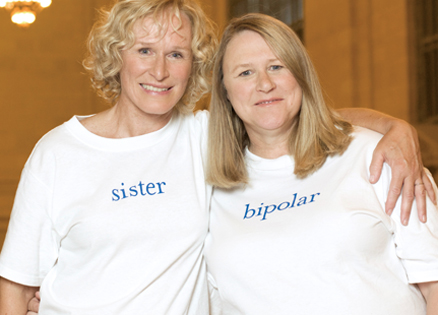
And that’s also why for the filming everyone in the PSA is wearing T-shirts that say who we are. No more hiding. No more distancing ourselves. No more secrets.
Calen’s shirt says “schizophrenic,” Jess’s says “bipolar,” Annie’s says “cousin,” Mattie’s says “sister” and so does mine. No one’s going to give me an Academy Award for it, but it’s my most important role.
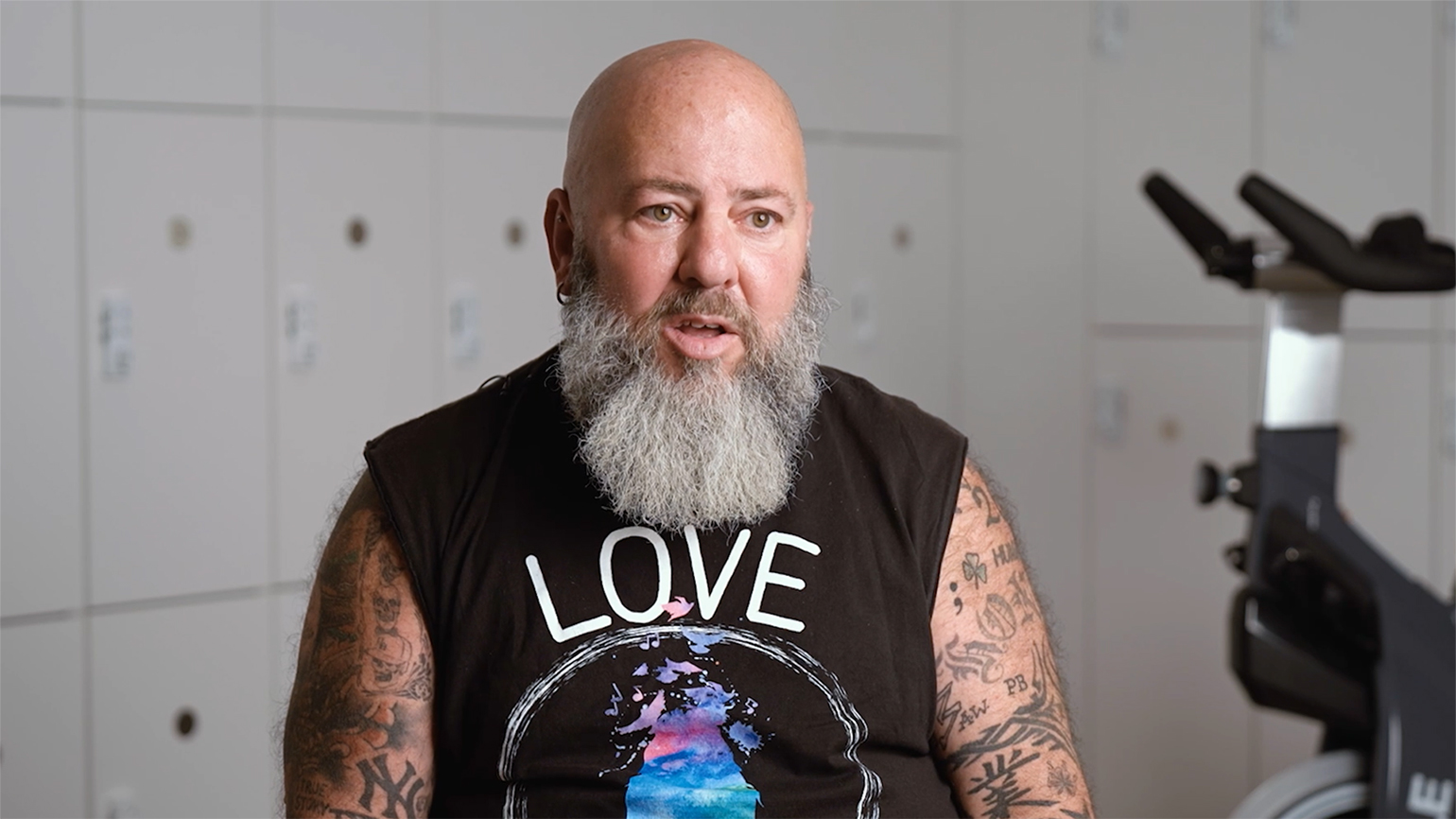
Good afternoon, Guideposts magazine. This is Noah Shaw. I am a senior instructor at Soul Cycle, also the author of the recently published book, Stop Thinking Thoughts That Scare You.
I often get a lot of people, as my clients and people will call me; as a life coach. I’ve worked with a lot of people who were scared of exercising, scared of going to a gym, whether it be overweight, or they’re older and hadn’t been in a gym in, like, decades, and I would say the easiest access, and one of the best things you can do, is just walk. Just walk. If you can make…if you can do five minutes the first day, and maybe double that to 10 minutes the second day, it’s like, you just keep adding a couple minutes until you’re walking like 30 to 45 minutes or an hour day, like, whatever it is, whatever you can do to get your blood flowing, get your circulation flowing, get your heart beating, that’s good.
And if that’s where you’re going to stay, if you’re just going to become a walker, it’s amazing. If you start to walk and you’re like, I want more, then you sign up at a gym and you can walk on a treadmill and be around other people. You’ll find the energy of other people becomes a little infectious.
The biggest reason that anybody hesitates or pauses or is unable to get going and creates within themselves that feeling of being stuck, that’s universal. Everywhere I go, everybody I talk to that “being stuck” idea is fear. So what is our job is to break that pause, to break that fear-based anxiety. And if you read my book, there are many techniques.
You know, one is just being present and being present and being grateful. Once I start counting what I have and sort of appreciating how beautiful my life actually is, not the fear-based set of circumstances that I can create. See, if I go on Instagram and I start comparing myself to other people, I have a terrible life. But if I stop once a day in the morning, which I do every day, and I write a gratitude list, it breaks that cycle. You can’t be angry, sad, or fearful with a grateful heart.
Any barrier I’ve ever faced in my life I’ve changed with one simple act: asking for help, in one way or the other. I was a drug addict, an alcoholic. I asked for help from the Alcoholics Anonymous. I was very obese and about to die; I asked for help from fitness instructors. There are people, no matter what you’re going through, there are people who’ve gone through that. And if you reach out and ask for help, they’ll help me find the person that can answer my questions. And that’s how it starts. We break that cycle.
How does exercise help you in a physical, spiritual, mental way? Well, I believe that that as lives and we build our lives in all three aspects. And I often talk about this in my class, that it was like a three-legged stool, that I know a bunch of people who are super fit, like six-pack abs and emotional and spiritually they’re empty. So that chair doesn’t work; I have to work on all three.
But when you allow your heart to open and you start working on yourself, physically, and the endorphins start to kick in, that will emotionally charge you, if you allow your mind to empty and you allow yourself to just focus on what’s in front of you, like that task that you, whether it be lifting weights or running, if you just focus on that, that’s where spirituality comes through. We have to sort of like empty our minds for the spiritual aspect of our lives to grow, because those thoughts, they just clog us up. So if I’m running and you’re just like one foot in front of the other, and you can find that whether it’s on a cycle or it’s lifting weights, if you just allow yourself to be present, you’ll start to heal.
As the year closes, offer a toast to yourself. You are a caregiver and you’ve come through 2021. Think of all you have done for your loved one. Do you recognize the enormous contributions you’ve made? Do you look back with any sense of regret? At this time of resolution setting, you may wonder how best to move beyond this year and into the next. To help guide you, two mental health professionals have offered suggestions on how best to serve both your loved one and yourself as you take on 2022:
Reach out for support Develop a clear plan of how to take care of yourself—physically and mentally. Caregivers get so immersed in taking care of the person that they don’t take care of themselves. Caregivers should have a strong circle of support. That can include professional support, connecting with support groups or actually getting therapy. Also make sure that you’re keeping up with your own doctors’ appointments and working out because if your body and mind are not capable, then you’re not able to take care of that person. Any support that you can get to alleviate particularly day-to-day duties is always helpful. People are not always in the financial situation to get professional help but if that’s available to you, then absolutely do it. There are lots of services available that may have not been years ago, that have really good screening programs where you can find good people, in addition to family and friends.
Take respite Get away for a couple of days to separate yourself from the environment and all the emotions that are within that environment, at least every six weeks or so. Take at least a couple of days to have some degree of separation from the situation and to process and explore your own feelings in terms of what’s happening. That can vary when you’re a caregiver—is it short-term or long-term? Is this somebody who has cancer, is it someone who has dementia? The details can play a major role. It can be either taking a vacation or a staycation. Stay somewhere for a few days and just do nothing. Or if you want to take a mini-vacation and get out of town, a weekend getaway is always good. You tend to be more refreshed when you return.
Practice stress management Participate in mindfulness activities or meditating. One stress management technique that I think is really helpful is journaling. You can use that opportunity to express your feelings, but also to capture the journey of what’s happening during this process.
Get help to process your feelings Be conscious that your behaviors and actions are not ones that will lead to regrets, particularly if the person’s in a terminal situation. Everyone can benefit from therapy but I always suggest that caregivers get therapy. Individual therapy can help with your own unique needs. Grief and loss tend to be a major component in many cases for caregivers because typically we’re taking care of a person who once took care of us. So, there’s a sense of loss there because the roles have changed and the person is no longer the person they were years ago, in some capacity—whether it’s physical or mental. Support groups are also very helpful because you recognize that you’re all going through the same thing, and I think that can be very validating as a caregiver.
Give yourself some grace We all make mistakes. There’s no perfect situation. But look at all the things that you’re doing well. Let’s take a look at what’s working in this situation. It’s no different from whether it’s a job or anything else that you’re embarking upon—you’re going to make a mistake and you move on in terms of, is it something you can fix? Many of the things caregivers kind of ruminate about are things that they can’t change. That’s the biggest thing. If it’s something you can change, change it. If it’s something that you can’t, then you have to move forward from that.
Avoid self-criticism Caregivers give so much to others, but they’re often very hard on themselves. They hold themselves to unrealistic standards—to be perfect caregivers—and then end up criticizing themselves when they can’t do it all or do it the way they want. But self-criticism is rarely warranted and it adds more stress to an already stressful situation.
Forgive yourself If we can be more self-compassionate and accept our imperfections, we’ll be able to stay physically and emotionally healthier. We can start to do this by forgiving ourselves when we’re less than perfect. For example, you might say to yourself, “I forgive myself for losing my temper with Mom. Taking care of her is really hard and sometimes I’m going to make mistakes. That doesn’t mean I’m a bad daughter.” When we do this, we acknowledge our struggles, that everyone makes mistakes, and that we still have value even though we’re not perfect.
Look at what you’re doing right Another way to combat self-criticism and caregiver burnout is to intentionally notice what you’re doing right. Mistakes tend to stand out in our memories, making them seem bigger and more frequent than they really are. But caregivers do dozens of caring things every day that no one acknowledges. They focus on what they’ve done wrong and discount their hard work and effort. This isn’t fair or motivating!
Take stockof your hard work At the end of the day, I encourage caregivers to jot down a few things that they put effort into. This isn’t a list of things they did perfectly or that went perfectly. It’s a list of things they put effort into. It’s not fair to judge yourself by outcomes (e.g., if Mom ate all her dinner) because you can’t control that. But you’ll probably feel better if you recognize and appreciate the hard work and effort you put into your loved one’s care – and remember that even good caregivers are imperfect.