Embrace God's truth with our new book, The Lies that Bind

Natalie Cole: Who I Am

Singer Natalie Cole died on Thursday, December 31. We honor her memory by sharing this 2009 story with you.

The winter light was fading as I sat in the office of my counselor Monty at a drug and alcohol rehab in rural Minnesota. It was one of those cruel January days when the sky looks frozen. I was answering questions about my dad, who’d passed away when I was 15. Even now, in 1984, 19 years later, there was a part of me that was frozen too, locked in time.

Pray A Word a Day - 2023 In article

Being the daughter of Nat King Cole, I was used to this. People asked me all the time what he was like. They told me how much they loved his voice. Hardly a day went by someone didn’t mention him to me. That can wear away at you.

Yet I could still hear him laughing as my sister, Cookie, and I acted out Broadway musicals decked out in his jackets and shoes. Could still see his smile as he waved goodbye before another tour. Could still feel his warm hug when he dropped me off for my freshman year at boarding school in Massachusetts.

SUBSCRIBE TO GUIDEPOSTS MAGAZINE

“That was the last time I ever saw him healthy,” I said to Monty.

Monty leaned forward in his chair. “Natalie, do you think you’ve ever really grieved your father?”

“What?” I said defensively. “He’s been gone almost twenty years now.”

“Grief isn’t bound by time, Natalie. If you want to heal, to get sober, you have to face it. You have to change. Today.” I practically ran back to my room as if fleeing Monty’s words. I closed the door and sat on my bed in the glow of my lamp. Through the window I could see snow falling, muffling the world outside.

An unforgettable silence was what greeted me when I returned home for Christmas in 1964, after my first semester away at school. I rushed to my parents’ bedroom, only to find my 45-year-old father in a rocking chair, his hair white, his skin ashen. He couldn’t get up to hug me. Dad had lung cancer. No one had told me he was sick—Mom thought she was being protective.

It was a Christmas without parties with Dad’s showbiz friends, without him singing about chestnuts roasting, without any music. Foggy with painkillers, he spoke little. Terrified to confront this faint echo of the man my father was, I said even less.

Back at school, my birthday came and went on February 6. I got word Dad had a successful operation. Then the day after Valentine’s Day, I got called back to my dorm from class. My housemother was waiting for me, tears in her eyes. She didn’t have to say it—I knew. Dad had died.

I barely cried, even at the funeral. But I took one of the roses that blanketed Dad’s coffin and tucked it into my Bible. I didn’t want to go back to school so far away, but Mom was determined to put on a brave face. In a few days, I was back in Massachusetts. I would have to learn to forget about my loss.

I went on to the University of Massachusetts, thinking maybe I could be a doctor and help find a cure for the cancer that had stolen my dad from me. The summer before my junior year I began singing, just to make extra money at first. People noticed. They started asking me to do my father’s songs. I was dismayed. I didn’t want to be recognized just as “The Daughter Of.”

The few times I did sing one of my father’s songs, the crowd would get very emotional and so would I. It hurt too much to sing words that I could still hear him singing so beautifully in my mind. Don’t people know how painful this is?

Then came senior year. Maybe it was the prospect of going out into the world, of having to find myself, that made me fall in with a wild crowd. I started using drugs. At first, just occasionally and nothing too strong. But I progressed, quickly, to heroin. Heroin felt like some kind of an answer to pain.

My career progressed too, but right before the release of my first record, I got busted for heroin possession. I was given several months’ probation and was able to kick my habit. This Will Be became a major hit and I won the 1975 Grammy for Best New Artist.

Yet that pain in my soul grew worse. I turned to cocaine. Sometimes I’d quit using for a while. God, bring me down and I’ll never do this again, I’d pray. But soon enough, I’d want to get high again.

One night in 1981 I’d just finished a show with Bill Cosby at the Las Vegas Hilton and was in my room on the twenty-fourth floor when smoke started to fill the halls. The front desk said someone would get me. Before I knew it, the smoke had become impossibly thick. I wet myself down in the shower fully clothed, then came out and sank down onto soaking wet bedsheets on the floor.

I clutched my cocaine pipe. If this is my time, I’m not going straight, I thought. The headline of the story in the next day’s papers came to me: “Daughter of Nat King Cole Dies in Hotel Fire High on Cocaine.” I closed my eyes. If you want to save me, God, don’t let me take a hit off this pipe.

The heavy air closed around me. Just as I put the pipe to my lips, firefighters burst into the room like soot-covered angels and got me out of there.

It hurts me now to say it, but even God’s grace that day didn’t convince me to change. Mom and Cookie finally got me to a rehab center in southern California. After 30 days I walked out of the facility, sped all the way home and got high.

One night in November 1983 my manager, business manager and attorney showed up at my door. I’d worked with them for a while, but they’d never been to my house. We sat in my living room. My eyes darted from one to another. What was up? “We’re worried about you, Natalie,” said Dan, my manager. “We want you to go into rehab.”

I felt exposed, as if the white powder I was addicted to was all over my face. I crossed my arms. How dare they come into my house and tell me my business! Sure, things had been rough lately. I’d had to let some people go because I was broke. Word had gotten around I was unreliable. And I didn’t have many gigs.

“Why do you care?” I snapped. “Worried you won’t be able to make any more money off of me?”

Dan sighed. “Your career could crash and we’d still be okay,” he said. “But we’re afraid if you keep using, you’ll die. We don’t want to be here for that.”

Something cold snaked up my spine: fear. I thought of the fire in Las Vegas, the first day I saw my dad sick, that call from my dorm mother. All those feelings came back in such a rush I could hardly breathe. I didn’t say anything, but I think everyone knew it was my last chance.

Which is how I ended up in this Minnesota rehab, being challenged by Monty to face my feelings about Dad’s death. Sitting in my room, I gazed at my reflection in the circle of lamplight on the window. What would Dad think of what I’d become? “The Daughter Of” had let everyone down.

Maybe I’ve tested God’s patience too much. For years, he’d been giving me wake-up calls and I’d been hitting the snooze. I reached for my Bible, where I’d kept the rose from Dad’s coffin, and opened it. Through it all I’d never let that Bible go. I’d looked at that rose every day until it finally fell apart. Yet its scent still clung to the pages.

I felt like God was still clinging to me, despite all I’d done to push him away. I’d tried to fix my life, to change. Now, finally, in the cold of winter, I realized I couldn’t change myself. Only God could change me, and only if I asked with my whole heart.

For the first time, God became not just someone to turn to in a crisis. He was there when I shed tears for my father night after night, the tears I’d never shed as a teenager. He was there as I struggled to let go of my pain and defiance. He was there when I surrendered myself.

Only then did peace flood in where pain once was, one miraculous day at a time. No, we never forget pain, but we do let go of it. In surrender, we transform ourselves.

I graduated from rehab on May 16, 1984. The icicles had given way to flowering buds, the tight gray sky to a stream of fluffy clouds. At long last, I was ready to sing my father’s songs. Through the magic of a new technology, I was able to record a duet with my dad on his signature song, “Unforgettable.” It resurrected my career, yes, but more than that, it restored me. And a faint scent of a rose came to full blossom again.

Did you enjoy this story? Subscribe to Guideposts magazine.
Napoleon Hill: Success Through Positive Thinking

“A person with positive mental attitude aims for high goals and constantly strives to achieve them.”

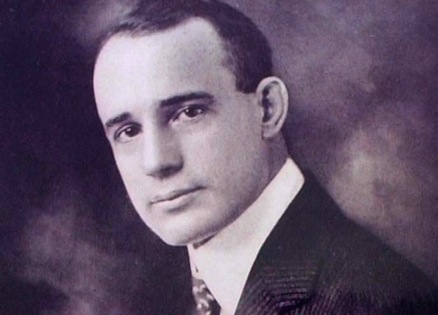
An early proponent of positive thinking, Napoleon Hill was a bestselling author, an advisor to presidents, a motivational speaker and, to this day, an inspiration to millions.

Witnessing Heaven In Article Ad 827x123

Hill came from modest means in Pound, Virginia, in 1883. After losing his mother at a young age, he started acting out—until his new stepmother purchased him a typewriter.

Soon, as a young reporter, he received a plum assignment: to interview the self-made billionaire industrialist and philanthropist Andrew Carnegie. He inspired Hill’s life work by challenging him to write up a formula for personal success based on interviews with some of the great innovators of the time; not only himself but also Thomas Edison, Henry Ford, Alexander Graham Bell, and President Franklin Delano Roosevelt, whom he advised from 1933 to 1936.

Hill developed the Philosophy of Achievement, which he published in 1928 as The Law of Success, a wildly popular multi-volume set. Unfortunately, just a year later, the Great Depression hit the nation and Hill’s own personal success took a significant hit.

One of the most inspiring stories in Hill’s life was his own son’s. Blair was born without external ears; doctors feared that he would be deaf and mute for his entire life. Hill, of course, refused to accept this negative diagnosis. “The outlook was far from encouraging,” he wrote, “but desire backed by faith knows no such word as impossible.”

Through a positive mental attitude and a burning desire that his child hear, Hill set about helping Blair, who himself never doubted that he would hear and speak. Eventually, having acquired limited hearing with the help of a phonograph, his family’s persistence and compassionate teachers, Blair found an electronic device that allowed him to hear—and decided to make it his life’s work to help other deaf people. “For the first time in his life,” Napoleon Hill wrote, “he heard practically as well as any person with normal hearing. ‘God moves in mysterious ways. His wonders to perform.’”

In 1937, Hill published his most famous work, Think and Grow Rich, which remains one of the leading books on personal motivation and self-help to this day. Hill’s focus was not simply wealth, however; he provided tips and ideas for achieving any goal through self-confidence, enthusiasm, cooperation and tolerance.

Helping others was a key element of his philosophy; in Think and Grow Rich, Hill wrote, “I will eliminate hatred, envy, jealousy, selfishness and cynicism, by developing love for all humanity, because I know that a negative attitude toward others can never bring me success.”

Hill continued publishing books for the next three decades until his death at age 87 in 1970. He also shared his philosophies as a teacher, lecturer and motivational speaker. Watch him in action here:

The 1960 book Success Through a Positive Mental Attitude—co-written with W. Clement Stone, who ran the The Napoleon Hill Foundation for 40 years—suggests reading the Bible to help “keep your mind on the things you want and off the things you don’t want.”

It was influential with many positive thinkers—including Norman Vincent Peale, who said that it was “one of the few creative motivational books of our time. It should be on the required list of anyone who desires success.”

If all this talk of success has you wondering how Hill addressed adversity, he acknowledged that we all experience it. He did, too, on more than one occasion. But instead of letting it set him back, he turned it into “inspirational dissatisfaction”—he advised that you “rearrange your attitudes and convert a failure of one day into success on another.”

And, above all else, Hill wrote, “Man’s greatest power lies in the power of prayer.”

My Truest Hope

One of my most treasured possessions is a small, framed photograph. It is a simple black-and-white picture of an elderly woman. Her eyes are closed, her hands clasped, her head bowed. The woman is my mother, not long before she died at age 92.

I keep the picture in my home office, on a windowsill beside my computer, where I see it every day. You could say the story of that photo is the story of my life. It is especially the story of a dark and frightening time in my life, when I nearly threw everything away.

Go For It In Article Ad

My mother saved me then. Or I should say, her faith saved me. All her life Mother never stopped praying. At last I discovered why.

I loved my mother deeply, but for most of my life I did not follow her example. I did not pray like she did and I did not live to love others.

From the moment I arrived in America as a teenager I worked. Hard. I became an electrical engineer at IBM, then a college professor. I married an American woman, Phyllis, and raised a son and daughter. I owned a house in San Jose and a cabin in the mountains. I played golf.

By the time I reached my fifties I was proud of my accomplishments. My family had been penniless refugees during the Korean War. Now I was a successful American.

Everything changed one morning when I woke up and noticed something strange at breakfast. My coffee had no taste. Did Phyllis switch brands? I wondered.

A few days later in class I raised my arm to write on the chalkboard and felt faint. My arm dropped to my side. My students stared at me. “Must be getting old!” I tried to joke when I recovered myself.

Soon everything I ate and drank had no taste. I lost interest in teaching. I didn’t want to get out of bed in the morning. A fog settled over me. My life, which I’d worked so hard to achieve, suddenly felt like a struggle. It had no taste. It seemed utterly pointless.

My doctor gave me tests but found nothing. As I was leaving his office he handed me a pamphlet. Depression was the title. The moment I got outside I crumpled up the pamphlet and threw it away. How insulting!

In Korea, where I grew up, depression was considered a sign of weakness, even insanity. Besides, what did I have to be depressed about?

True, I’d lived through hardship, but so had almost everyone in Korea in those years. My older brother Hi-Seung died after being conscripted into the Japanese army during World War II. My father, a Christian pastor, was taken away by invading North Korean soldiers and never returned. My family nearly starved during the Korean War. I waved goodbye to my mother from the deck of a freighter carrying me to America when I was just 16.

But I’d put my family’s wartime trauma behind me years ago. My father worshipped a no-nonsense God and he expected us to do our duty, to endure without complaining. I’m not depressed, I told myself. I will get better on my own.

I didn’t tell Phyllis about my symptoms. She worked as a nurse and was very involved at our church. Our kids were in high school and college. They had busy lives. Why burden them with such nonsense?

I managed to get up and go to work each day. Yet the fog over me thickened. My routine felt draining. My success meant nothing.

One weekend I drove alone to our cabin in the mountains. To my own surprise I found myself sitting on the floor with a knife in my hand. Who will miss me when I’m gone? No one.

At the last minute I remembered my father and became frightened. He had been very clear about what happened to people who disobeyed God. I looked around the cabin. What are you doing, Hi-Dong? Get out of here!

I returned home and admitted to Phyllis what I’d almost done. “Hi-Dong, why didn’t you tell me?” she cried. “How long have you been feeling this way?”

“A few months,” I mumbled. I felt so ashamed, consumed by guilt and remorse and self-recrimination.

“I’m going to make some calls,” said Phyllis. “We’re going to find you a psychiatrist. We are going to get you help.”

Phyllis had to force me to go to my first appointment with Dr. Cavanaugh. I answered his initial questions like one of the robots my IBM colleagues had worked on years ago. Then he said, “Tell me about your parents.”

I stiffened. “My father was a pastor. He died when I was young,” I said. “I don’t have many memories of him. I will tell you about my mother.”

“Okay,” said Dr. Cavanaugh.

So I talked about how every morning I awoke to find my mother praying. She made me breakfast and we said prayers before I went to school.

My father didn’t earn much as a pastor so Mother took in boarders. She sewed all our clothes, including school uniforms for me and my three brothers and two sisters. When parishioners from the countryside churches where my father preached came to visit, she welcomed them, and the chickens and other animals they brought. She fed them and gave them advice.

She talked to God out loud through the day; he was a constant source of love and support. Only once did I see her pain. Passing Hi-Seung’s room one day not long after he died from his war wounds I noticed someone inside. Mother.

She sat on my brother’s bed clutching to her chest the small box with his ashes. Her face was anguished. Yet even then she was not weeping. Even then she was praying.

“Mother moved to America and lived with my sister in Cupertino. She died two years ago. She is gone now. So that part of my life is over.”

“I see,” said Dr. Cavanaugh.

He told me my depression stemmed from keeping my feelings inside about my wartime trauma in Korea, triggered most likely by my mother’s recent death. In subsequent sessions he encouraged me to “feel those feelings” and talk them out.

I did as instructed, but I didn’t see the point. Feelings are of no use in engineering. Besides, hadn’t Father taught that God desires obedience? Not giving in to emotions! Not weakness!

One day Dr. Cavanaugh said, “I’ve noticed something, Hi-Dong. You’ve told me a great deal about your life. But whenever I ask about your father you say very little. Tell me about him, whatever comes to mind.” For a long moment I sat there, silent. Dr. Cavanaugh waited.

Reluctantly I began to talk about my father, how dedicated he’d been to his work, how loving yet strict he was at home. “I loved him but feared him.” Why did I feel so uneasy talking about my father? At last I came to the day the North Korean soldiers took him away.

“I had gone with Father to tend our community garden,” I said. “When we got home we saw two soldiers talking with Mother at the gate. ‘We are holding a meeting to talk about what will happen to the churches now that Seoul is part of North Korea,’ the soldiers said to Father. ‘Please come with us.’

“Father did not look frightened. He only said, ‘I have not had breakfast. Let me go inside, eat and change my clothes.’ The soldiers said, ‘That will not be necessary.’

Father and Mother looked at each other. Father looked at me. Then, with the soldiers on either side, he walked back out the gate and down the road. We never saw him again. I was thirteen.”

I stopped. I realized my cheeks were wet. I buried my face in my hands. I felt Dr. Cavanaugh at my side handing me a tissue. “I didn’t do anything to save him,” I sobbed. “I didn’t do anything…”

At last the tears subsided. An image came to my mind. I could see it as clearly as if it were right in front of me. A black-and-white photograph of Mother praying. My nephew had taken the picture shortly before Mother died.

I thought of all the times I’d seen her praying. The time I’d found her clutching my brother’s ashes. Who was this God Mother prayed to? This God who was always there, not to judge but to forgive and to love? To give hope in our hardest struggles. Was that God there for me too?

In my heart I knew he was. And not only for me. Even for my father. How else could he have found the strength to go so bravely to his death? It was because he knew God would receive him with loving arms.

I did not have to feel guilty for failing to save Father. I could reach out in prayer, not in weakness but in strength.

“I think I’m ready to deal with this now,” I said to Dr. Cavanaugh. “Thank you.”

That was my final session with Dr. Cavanaugh. From that day my depression lifted, not all at once but like fog being blown off to sea. I try to live every day with peace, joy and grace.

I keep my photo of Mother praying where I can see it so that I remember the faith that sustained her through untold hardships. And if dark thoughts come, I turn, as my mother did, to that faith in a light that brings us through our darkest hours.

Download your FREE ebook, The Power of Hope: 7 Inspirational Stories of People Rediscovering Faith, Hope and Love

Mysterious Ways: Word on the Street

Work shoes off. Sneakers on. Time to start my daily walk. I drove to my starting point and stretched my legs. My strolls were special to me—my time to talk to God about my troubles. And I had a lot of them. Health problems, family issues, money issues—you name it.

It had been an unusually hard year, and it wasn’t even summer yet! I feared what the future might bring. God, I just need some peace, I thought.

Walking with Jesus L&E evergreen_in article ad

Lord, it seems like everything is culminating all at once, I said as I hung a right onto Hoffman St.. I am at my wit’s end. I turned down Clinton Street and thought of my brother, who was fighting for his life against a long-term illness.

At Portage, thoughts of my disintegrating 18-year marriage tugged at my heart. With each step, the pressures seemed to build: raising two teenage girls largely on my own, mourning my father’s death, the stress of a new job, my recent surgery. There was no peace to be found. Not today.

Did God even hear me? I turned onto Circle Drive, a sleepy road with no sidewalks and very light traffic. My muscles tightened against the slight grade as I walked up the center of the road. At the top of the incline, I stopped to catch my breath. What’s that?

Among the loose asphalt and broken leaves, I caught a glimpse of blue and white. I looked closer. A blue and white beaded bracelet. Shiny and new. So pristine, it must have been dropped recently.

I picked it up. Black letters were printed on the white beads. They spelled out a word: PEACE.

Where had it come from? I looked around, but didn’t see another soul on the street. I read the word again. And again. Peace.

I returned to my car and hung the bracelet on my rearview mirror. No, all my problems weren’t solved, not yet. But I knew peace was in my future.

Download your FREE ebook, Mysterious Ways: 9 Inspiring Stories that Show Evidence of God's Love and God's Grace.

Mysterious Ways: The Tree of Wisdom

A digital apple tree stared back at me from my computer screen. One of those cheesy, interactive web graphics that people sometimes email around. Click on it and something’s supposed to happen. “The Scripture Tree,” this one was called.

A church friend had forwarded it to me, with the best intentions. The internet was quickly becoming my lifeline, as each day it became harder to limp around on my bad right foot to visit friends, even go to church.

Mys of Blackberry Valley In Article Ad

I’d barely made it to the doctor’s office that morning. “There’s one more surgery we can try,” he told me. “It may be the last chance to save your foot, Barbara.”

I’d heard that before. I’d broken my foot two years earlier, though I couldn’t tell you how–I have diabetic neuropathy, which means I have limited sensation in my feet. I’d been walking on it for days before I even noticed the swelling.

My doctor diagnosed me with Charcot Disease, progressive degeneration of the weight-bearing joint between my foot and ankle, requiring immediate surgery.

That first procedure wasn’t the end. I spent months recovering in a wheelchair, only to break my foot again as soon as I put pressure on it. Another surgery, another break. The third time around, the doctor suggested amputation–a prosthesis would take getting used to, but I’d be able to walk normally.

Cut off my foot? My blood ran cold. However, it seemed like the only option. Until this morning, and my doctor’s last-ditch proposal. I’d scheduled the operation.

Now, back at home, I recalled all the other surgeries, the endless cycle of recovery and agony. Was I just delaying the inevitable? Would I spend the next few months stuck at home, staring at digital trees instead of real ones, before finding out this surgery had failed too? I couldn’t go through that again.

Trying to distract myself, I focused on the digital tree and clicked one of the apples. A line of scripture appeared. So that’s what “Scripture Tree” means. I clicked another apple at random…

“For the Lord shall be thy confidence, and shall keep thy foot from being taken–Proverbs, 3:26.”

I wasn’t sure if the computer froze or I did… but I couldn’t click anymore. That verse was all I could see.

That week, I went into the operating room confident that everything would work out. Nine years later, I’m still walking in good health, both feet planted firmly on the ground and in my faith.

Mysterious Ways: Special Delivery

I flipped through a Christmas catalog. I needed a gift for a neighbor who had been exceptionally kind and helpful after the Chief passed away. That’s what everyone called Clifford, my firefighter husband. This would be my first Christmas without him. I wasn’t looking forward to it.

The catalog had everything—clothing, personalized accessories, books, music and movies. I finally settled on a sweatshirt, something my neighbor could use this winter.

Faithful Paws and Purrs In Article Ad

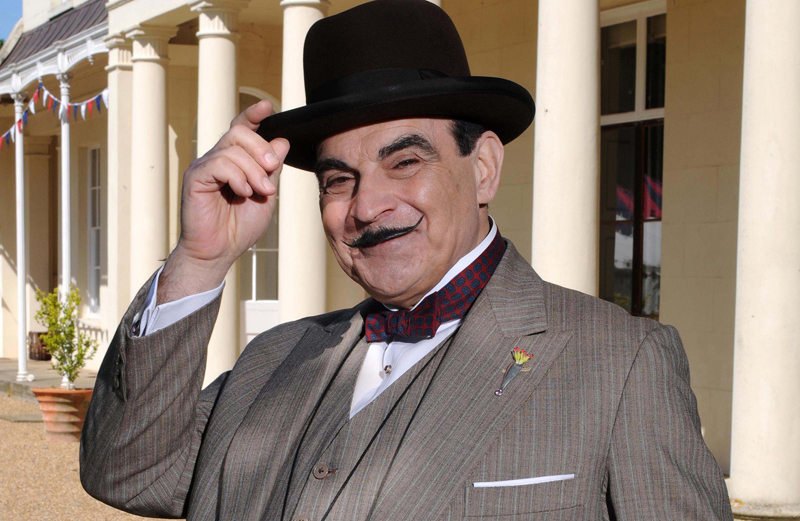
I was about to place the order when my eyes landed on a mustached man in a gray bowler hat, staring back at me from the cover of a six-volume boxed set of DVDs. Hercule Poirot.

My breath caught. How the Chief had loved Poirot! He loved turning on PBS to catch the latest maddening mystery only the diminutive detective could solve. We watched together, even though I mostly watched the Chief watch the show. The suspense kept him on the edge of his seat.

I sighed and ordered the sweatshirt for my neighbor. A few days before Christmas the box arrived. I checked the pink packing slip—one sweatshirt, in the size I ordered. I opened the box to double-check the item itself before wrapping it.

I poked through the packing peanuts. What? No sweatshirt? I thought. They sent the wrong order! I looked more carefully. Maybe they didn’t…

The Hercule Poirot series was laid out, the complete set. How could this be?

Customer service was as surprised as I was. “Keep the DVDs,” the woman said, promising to rush the sweatshirt. “We apologize for the mistake.”

Mistake? Not as far as I was concerned. I’d be spending a little bit of Christmas with the Chief after all.

Download your FREE ebook, Mysterious Ways: 9 Inspiring Stories that Show Evidence of God's Love and God's Grace.

Mysterious Ways: Losing Her Job Was a Godsend

“A troubled marriage.” That’s what our working relationship had become, my company’s CEO told me, the morning he fired me.

It didn’t make any sense. Sure, we’d had some strategic differences over the way our technology consulting firm operated, but I’d spent nearly every waking minute of the past ten years helping to build the company from its infancy.

Whistle Stop Cafe In Article Ad May 2023

I’d worked 50-hour weeks, putting vacation time and family time on hold to manage one of its branch offices to profitability. My husband and I didn’t have children–I often called the office my extended family.

“You’re no longer a good fit here,” the CEO said, driving his message home.

God, why is this happening to me now? I thought when I left the office for the last time. The CEO offered me a generous severance package–six months’ pay, as long as I didn’t take another job in the same industry for that period of time. Okay–money wouldn’t be an issue. But my work had been the most important thing in my life. Now that had been taken away–and I didn’t understand why.

I was still trying to make sense of that when my mom, my sister and I met with my father’s doctor the next morning. “Your father’s lung cancer has spread to his brain,” his doctor said. Suddenly, my job didn’t seem so important.

“Dad, what can I do?” I said, when I saw him later that morning. “I’ll do anything.”

The next months were a flurry of doctor appointments, treatment sessions and errand runs. Every waking minute, I tried to make Dad as comfortable as I could. I may have been out of work, but it didn’t feel like it. I had a new job. I even wore my nicer clothes, because Dad preferred “a lady in a dress.”

Our days together were painful, yet precious. We laughed, we cried, we told old stories. His sense of humor never failed. Like one night, when Dad couldn’t breathe, and he was put on an oxygen machine. Fearing the worst, I recited the 23rd Psalm. The next morning, though, he awoke. “I’m still here,” he said, winking. “I heard you give me the last rites… not time for those yet, honey.”

I wept at his bedside his final night alive, keeping vigil with the rest of my family. He died almost four months to the day following his diagnosis. Four months after I thought nothing could be more painful than losing my job.

Now I know better. Shortly after my severance ended I got a new job, a far less time-consuming one, as a business development manager. I’ve got my priorities straight. Family comes first. I’m thankful I got the chance to learn that, before it was too late.

Mysterious Ways in New York City

One winter morning in 1958, Dave Wilkerson, a skinny country preacher, was sitting in his living room, reading Life magazine. He turned a page and saw a picture of seven boys. That picture was to change his life.

Dave was the pastor of the small Assemblies of God Church in Philipsburg, Pennsylvania. He was at home in the slow-paced rural community; life for him, his wife and three small children was comfortably routine and it probably would have remained that way except for one thing. Dave Wilkerson had turned over his life to God. He had simply handed over his feet and his hands and his heart and asked the Holy Spirit to use them.

GP In Article Desktop

For Dave the Holy Spirit was no vague theological term; He was the Spirit of Christ, a living personality to be listened to and obeyed. On that particular morning, looking at the picture in the magazine, Dave Wilkerson began to weep.

It showed seven teenaged defendants on trial in New York City for the death of Michael Farmer, the young polio victim, who was brutally beaten by members of a teenage gang. But it wasn’t the story of the murder itself which especially gripped Dave. It was the faces of the defendants. In their eyes he saw an anger and loneliness he had never known existed. All that day he was drawn to the picture. And during the next week he felt the conviction growing that he himself—David Wilkerson—should take a toothbrush, get into his car, drive to New York where he had never been in his life, and try to help these boys.

At last Dave told his wife. “I don’t understand why,” he said, “but I must go.” It was the boldest step of obedience to the Holy Spirit that he had yet taken. Almost before he knew how it happened, Dave and Miles Hoover, the youth director of his small church, were driving across the George Washington Bridge. It was the afternoon of February 28, 1958.

In New York he parked in front of a drugstore and telephoned the office of the District Attorney named in the article.

“If you want to see the defendants,” he was told, “the judge himself will have to give you permission.” So Dave tried to telephone the judge. He was unsuccessful. But he was not discouraged.

The next day David and Miles went to the trial. All morning they sat quietly, watching the seven young defendants. Toward the end of the court session, Dave popped to his feet, ran down the aisle and stood before the bench. He knew that if he were going to see the judge at all he would have to do it then and there.

“Your honor? Would you do me the courtesy of talking with me for a few s…”

“Get him out of here,” the judge interrupted brusquely.

Two guards swept down on Dave, picked him up by his elbows and rushed him toward the rear of the courtroom. Reporters and photographers jumped to their feet. Flashbulbs popped.

Later it was learned that the judge had been threatened by gang members and had thought the skinny preacher was one of them.

That evening the newspapers carried stories about the Reverend David Wilkerson being ejected bodily from the courtroom. As Dave and his youth director drove home, they were both depressed and confused. What kind of guidance had this been? David remembered Biblical accounts of men who were guided by the Holy Spirit. He’d started his own grand experiment assuming that Christ’s Spirit would guide people today, just as it did in New Testament times. Why, then, was he in trouble?

At home, he and Miles faced a disgruntled congregation, annoyed that their minister had made a public spectacle of himself. And as the days passed, Dave’s confusion increased. Not only was it difficult to explain why he had gotten into such a mess; it was still more difficult to explain why, as soon as possible, he was going back to New York.

But that’s where he was, the next week. When he telephoned the District Attorney’s office a second time he was told that if he wanted to see the boys he needed written permission from each of the parents.

“Fine,” said Dave. “Could you give me their names?”

The line went dead. Dave stepped out of the phone booth. He smoothed out the now crumpled page from Life and scanned the caption. The leader of the boys was named Luis Alvarez. He began to call all the Alvarezes in the telephone book.

In each case the answer was indignant. No, of course they didn’t have a son Luis who was a defendant in the Farmer trial!

Dave was running out of dimes and there were still more than 150 Alvarezes to go. He gave up and stepped outside, praying, “All right, Lord. I just don’t know what to do next. If this is Your business I’m on, then Your Spirit will have to show me the way.”

Dave got into his car and began to drive aimlessly through the strange streets. Eventually he found himself in the heart of Spanish Harlem. Tired of driving, he parked in the first empty space he found. He got out and asked a boy if he knew where a Luis Alvarez lived.

“Luis Alvarez?” said the boy. “You parked in front of his house.” He pointed to a brownstone building. “Fourth floor.”

“Thank you, Lord,” said Dave.

“What you say?”

Dave put his hands on the boy’s shoulder. “Thank you. Thank you very much.”

Dave climbed to the fourth floor, found the Alvarez’ apartment and knocked on the door.

“Come in.”

He pushed the door open and saw a tired-looking man sitting on an overstuffed chair. Señor Alvarez barely looked up. “Ah, here you are, Preacher. I been expecting you. I see your picture in the paper. I say my prayers that you will come.” At last Dave seemed to be getting his go-ahead sign.

Early the next morning he was back at the city jail with seven written permissions to visit the seven boys on trial.

Again he failed.

The jail chaplain, feeling that the boys were in his own spiritual care, refused to allow him entrance. David was crushed. “What are you trying to say to me, Lord?” Dave asked. “Show me where my vision is too small.” He had no way of knowing that this door had to be closed in order for another—much larger—to be opened.

Suddenly a jolting idea occurred to him. Perhaps his vision was too small. Perhaps the Holy Spirit didn’t intend him to work just for the seven defendants in the Michael Farmer trial but for all the lonely, angry kids on the New York streets.

Two weeks later Dave Wilkerson was back in New York. On this trip he brought with him no preconceived ideas of whom he was to help or how. He simply walked the streets, and everywhere he walked he made the same discovery: the picture of him in a New York tabloid that had seemed to Dave like a mockery of his guidance—was his entree to the street gangs of New York. Wherever he went he was recognized, “Hi ya, Preach!” from a cluster of kids on a street corner. “You’re one of us, Davey!” from a tenement stoop.

Soon the churches were asking questions about this man who was “in” where they’d never even had a toe hold. Fifty parishes got together and asked him to conduct a two-week youth revival in St. Nicholas Arena. Five thousand teenagers flocked to hear him. A few months later Dave had a weekly television show where teen-age dope addicts, adolescent alcoholics, and 14-year-old prostitutes told the stories of their conversions. Two years ago Dave moved his family to New York so that he could minister full time to these young people. Today he directs Teen Challenge Center in Brooklyn, a home where boys and girls in trouble can come for a new start—and where the fresh paint, the curtains in the windows, and the new flower beds are largely the work of the kids themselves.

As for the seven defendants in the Michael Farmer trial, three were acquitted; four sent to prison. When Dave visits them at the penitentiary it is no longer as an unknown country preacher begging admission. It is as the man whose results among teen-age hoodlums have people in New York shaking their heads in wonder.

As they say, it’s amazing what can happen when the average man—any average man — lets the Holy Spirit be his guide.

Read David Wilkerson’s inspiring story!

Mysterious Ways: Calendar Message

Tears filled my eyes as I flipped over a page on my desk calendar to reveal today’s date: September 13. The first anniversary of my husband John’s death. I missed him fiercely, and the calendar’s daily inspirational messages often lifted my spirits when I was feeling particularly upset. I checked the day’s message. The page read: “Death is a new adventure in existence. No need to dread it or ignore it. Because of Christ, you can face it.”

Just the sort of thing I needed to remember. Life without John was hard on me. I’m a born worrier—John called me his ‘little worry wonk.’ I stressed over everything—public speaking obligations, the deadlines I faced in my job as a journalist, the safety of my friends and family. “Relax,” John always said. “If something is out of your control, worrying just wastes your time. You’re letting negative thoughts overwhelm you.”

Pray a Day Vol 2 In Article Ad

I knew he was right, and I’d calm down—until I found something new to fret about. After John passed away, the grief only compounded my stress. I missed his soothing words of wisdom.

I stared at the page of the calendar. What a coincidence that this message came today, of all days, I thought.  I should save it.

I tore September 13 from the calendar and held the page in my hand. That’s when I noticed the date printed on the other side. April 19.

John’s birthday.

I turned the page over and read the message. “Destructive anxiety subtracts God from the future, faces uncertainties with no faith, tallies up the challenges of the day without entering God into the equation. Worry is the darkroom in where negatives become glossy prints.”

Exactly the words John would want his little worry wonk to hear.

My Spiritual Challenge: To Be Still

I love to be busy and this summer I’m not. I’m not writing a book, leading a conference or shooting a video—all things I’ve enjoyed doing this past year. On top of all that, I’m practically an empty nester. After having a household of seven children just a few years ago, I’m down to one child at home, my 17-year-old son Hunter.

All this free time makes me a little anxious. Not having deadlines and the pressure to produce leaves me nervous. It sounds crazy, but without a daily list of things-to-do, I’m out of sorts.

Sweet Carolina Mysteries In Article Ad

The more I think about it, I realize I depend on accomplishment to feel good about myself. When I don’t have tangible results to show for my day, I’m more likely to feel down and tense. I looked up anxiety in an online Bible concordance, and found the apostle Paul’s beautiful words about it in the book of Philippians.

“Do not be anxious about anything, but in everything, by prayer and petition, with thanksgiving, present your requests to God.” (Philippians 4:6)

Prayer. Most of my prayers are breathed heavenward while I’m jogging. But since my stress seems to increase when I’m not busy and active, I feel drawn to try stillness. Every morning I’m taking some time to be still. I pull a chair on my back porch into the sunshine, sit, close my eyes, breath deeply and enjoy the warmth. I hear bird chirps, and feel life in me and all around me. After several deep breaths, I describe how I’m feeling to God and listen.

Meditation and prayer are time-honored spiritual practices for finding direction and peace. The Psalms say, “Be still and know that I am God.” It’s my hope that slowing down each morning will help me to relax and love myself as a child of God even when I don’t have a million things to accomplish.

—–

Get more advice from Theresa!

Find all you need to know on whole-person
wellness in
Shaped by Faith.

Theresa is a former model and nationally certified fitness professional who teaches people to use their faith to inspire fitness and their fitness to strengthen their faith. She is the author of Shaped by Faith: 10 Secrets to Strengthening your Body & Soul, and two exercise DVDS: Pilates for the Soul

She and her husband, Robin, have seven children and live in Calhoun, Kentucky.

You can email her with any questions or concerns.

My Sister’s Mistaken Identity

I sat across the desk from the head of the university’s physical-therapy program.

“You received an education degree six years ago but never worked as a teacher,” she said, peering at my résumé. “You waitressed at Olive Garden, then quit last spring. Help me understand why you want to learn to be a physical therapist.”

A Journey of Faith In Article Ad - Avail Now

I could tell she thought I was just another young person with no direction. A year ago she might have been right.

I was happily living at my parents’ home in Michigan, taking life as it came (or not). But that was before the accident. I took a deep breath. “Let me tell you,” I said, “how I got here.”

Five months earlier, in April 2006, my little sister, Laura, was in a horrible crash. A senior at Taylor University in Indiana, she was riding in a van with eight other students and staff, returning from working at a college banquet.

A semi crossed the interstate median and crushed the van. Five passengers died. Rescue workers found Laura’s body 50 feet away, her purse nearby. Her injuries were so severe and disfiguring that the proximity of her purse was the only way paramedics could put two and two together and identify her.

My parents and I rushed to the hospital in Indiana, three hours away, where Laura lay in a coma. We lived by her side, praying for a miracle. My two younger brothers, Mark and Kenny, joined us as often as they could take time off from work.

That first night in the ICU she looked like a mummy, her head wrapped in bandages, her sparkling blue eyes hidden behind bruised and swollen eyelids. About all that was recognizable were the tufts of blonde hair sticking up through the bandages.

My sister—the outdoorsy athletic girl, the one I’d taught to play guitar—seemed far away, beyond my reach, but not beyond God’s.

In a couple of weeks they took off some of the bandages. A few days later she opened one eye and slowly emerged from the coma. It was incredible—a front-row seat to God’s healing power!

The transformation was so amazing that some days it seemed like she was a different person.

Her recovery filled me with awe. God must have something pretty important planned for her—big enough to preempt death. I wondered if I was part of this plan too.

Before the accident, just thinking about hospitals made me squeamish. Now, I was focused on helping Laura. I quit my waitressing job to be with her, assisting with her physical therapy and just talking to her, even though she couldn’t say anything back yet.

Three weeks after the accident we moved Laura to a rehabilitation center in Grand Rapids, Michigan, only 40 minutes from our home. She was doing well enough that we felt comfortable sleeping at home. Each morning I leaped out of bed to get to the center for Laura’s physical-therapy session. My parents usually came along.

One day the director called me into her office. “You’re doing great things with your sister. You have a lot of natural skills,” she said. “You should think about becoming a physical therapist.”

I laughed. “I appreciate the compliment,” I said. “And the career advice. But you wouldn’t think that if you knew how bad I am at science. I’m just here to help Laura.”

One morning in late May, about five weeks after the accident, I mentioned to the therapist that Laura hadn’t been outside. “Well, then, it’s time we took her,” she said. I pushed Laura’s wheelchair alongside a fountain, then took her hand and dipped it in the water. “Cold,” Laura said.

“That was a great idea,” the therapist said. “You’re helping her brain make connections again.”

All the things I’d been doing in the last few weeks, strengthening Laura’s hands and arms, doing small exercises for manual dexterity—it was exciting to be part of her healing. I felt a real sense of purpose.

Except, it was the oddest thing. The more Laura became herself, as her ability to speak returned, as bandages were removed, somehow the less she seemed like the Laura I knew.

“Good work,” the therapist said as we left the fountain. “Laura, can you thank your sister?”

“Thank you, Carly,” she managed to say with some effort.

“Carly? Why did she call me that?” I asked the therapist.

“It’s normal for her to be confused,” she said. “Give her time.”

Still, I was alarmed. Frightened. I tried not to think about it, but I couldn’t get over the haunting feeling: What if this wasn’t Laura?

In the next session, we sat two feet apart, tossing a beach ball back and forth. I stared intently at her face, still distorted by the accident, trying to match every detail against my memories of Laura’s. After the session, I knelt so we were eye to eye. “I want to ask you a question. Can you tell me your name?”

Slowly, with great effort, her mouth formed the word: “Whitney.”

“You’re doing so well,” I said, squeezing her hand. My mind was racing. “What are your parents’ names?

She haltingly said, “Newell and Colleen.”

Our parents were Don and Susie. She wasn’t my sister.

I wheeled the young woman—suddenly a stranger—back to her room then rushed to find Mom and Dad. They were sitting on a bench down a hallway. “She’s not Laura. Her name is Whitney,” I gasped.

Mom and Dad said they too had begun to question whether it really was Laura. But they had been waiting to see if I shared their doubts. It all seemed so unreal and impossible. She looked so much like Laura, same blonde hair, same athletic build. How could it not be her?

I slumped on the bench and my parents went to tell the rehab center’s director our fears. All that time I’d spent with her. All that I was doing for her. God, how could I have not known she wasn’t my own sister?

Finally, my parents returned. “Her name is Whitney Cerak. She’s a freshman at Taylor,” Dad said, holding my hand. “The director called the coroner’s office in Indiana. Their guess is that a paramedic put Laura’s purse next to Whitney on the rescue helicopter and at the hospital they assumed the ID was correct. I’m going to call the boys and ask them to meet us at home.”

It hit me as I sat in the backseat of the car on the drive home: My baby sister is dead. I’ll never see Laura again. I felt too stunned to process the information, my mind and heart on overload.

My dad pulled the car into the driveway and there were my brothers, Mark and Kenny. For the longest time we all held each other, grief spilling over.

That night, lying in bed, I struggled to make sense of it all. God, you have to know how much this hurts. Why would you put us through this?

I had been wrong about so many things! God hadn’t saved Laura’s life. He hadn’t needed me to take care of her. I hadn’t been singled out for anything. It seemed such a cruel and senseless thing for our family to go through.

The next morning all I wanted to do was stay in bed. Normally I would have been in physical therapy with Laura by this time. Except it wasn’t Laura—it was Whitney. Whitney’s family was with her now, rejoicing in their own miracle.

The days that followed were like a whirlwind—me singing at the memorial service, more than 2,000 people attending, a private burial, a constant barrage of calls from the media.

The bizarre story had gone national, then global. I lived in a kind of depressed daze. The grief was less raw, but the confusion was deeper. I felt like I was emerging from my own coma, searching for my own identity.

There was only one lesson from all of this that was painfully evident: Life is short. I needed to find something to do, something to help me get out of bed in the morning. But what? I’d quit my job.

My mind kept circling back to what I’d lost: Laura and those physical-therapy sessions. There had to be something else.

What was I missing? Then I remembered the conversation with the rehab center’s director. What had she said? “You have a real gift for this, a lot of natural skill.”

Working with Whitney had been an amazing experience, perhaps the most fulfilling of my life. Had God been trying to tell me something? Could I actually have been where he wanted me to be all along, helping Whitney?

I needed to talk this through with someone. I grabbed my cell phone and called my best friend. “I’m thinking about going back to school to study physical therapy,” I told her. “Am I crazy? You know I did awful in math and science.”

“Tell me why you want to do this,” my friend said.

“All I know is that I want to help other people’s Lauras,” I answered.

Now months later that was the same answer I gave to the head of the university’s physical-therapy program.

She nodded. “I think there’s more to it than that. Physical therapists see what’s possible, beyond what the patient can sometimes envision. They help patients realize what they’re capable of. Maybe that’s why you’re here today. You were able to help Whitney.”

Last spring I graduated from the two-year program. Last May Whitney graduated too, from Taylor, on schedule.

I sat in the audience as she crossed the stage to receive her diploma, a lump in my throat as I thought about all those nights I sat by her side. We’ve become good friends. After the ceremony I gave her a huge hug. “I’m so proud of you,” I said. “You’ve come so far.”

And I had too, a journey that took me from grief and tragedy to an incredible healing of my own.

My Inner Spartan

Editor’s Note: Welcome to Day 12 of Guideposts’ 14-Day Fitness Challenge! We’re sharing stories that will inspire you to eat better and get in shape so you can feel your best. Today’s challenge is to fit your passion into your workout. If you’re just joining us, check out our previous challenges here.

The theme song from the movie Rocky blasted from the sound system. “Gonna Fly Now”? Yeah, right. I’d never been more earthbound in my life.

A Journey of Faith In Article Ad - Avail Now

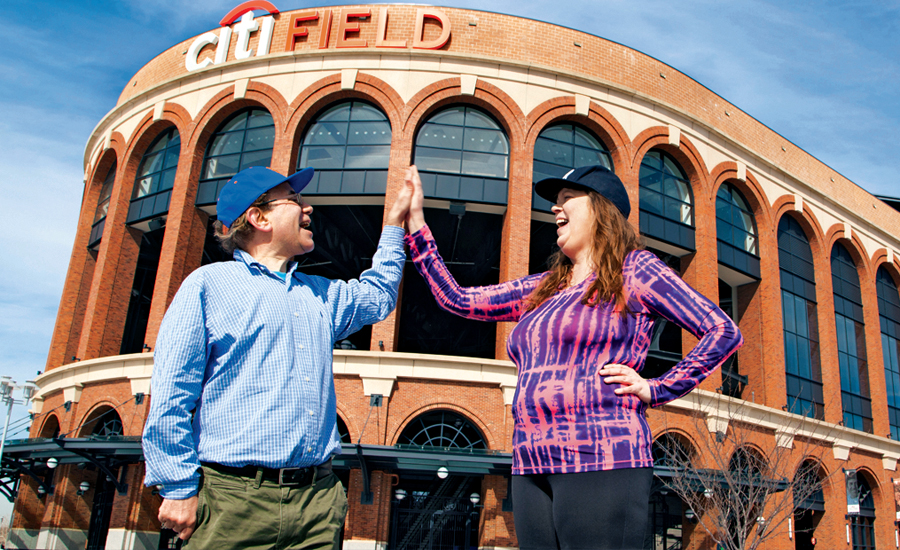
I was sprawled facedown in the center-field dirt at Citi Field, the home of the New York Mets, where professional baseball players slugged home runs and made SportsCenter Top 10 catches. Where amateur athletes were strutting their stuff for the day in the Spartan Sprint, a popular obstacle race. I’d signed up for the race, but that must have been in a fit of insanity. Or stupidity.

I didn’t belong here. I was 47 and overweight, despite how hard I’d been working to get in shape. I wasn’t an athlete. I never had been, not since a childhood bout of encephalitis left me with impaired coordination. I was the tallest and gawkiest girl in my grade, the last to be picked in gym class, and teased by other kids.

Maybe God didn’t make me athletic, but he did make me good at one thing involving sports—being a fan. Growing up 10 miles from New York City, I became a die-hard Yankees fan.

My love for the pinstripes didn’t fade with adulthood. I launched and wrote Subway Squawkers, a Yankees-Mets blog, with my friend Jon Lewin, a fan of the Queens team. It probably wasn’t a coincidence that he wasn’t an athlete either. I guess those who can, compete; those who can’t, blog.

As our blog grew in popularity, my physical condition declined. My doctor diagnosed chronic bronchitis and told me that my lifestyle had to change. So I quit smoking. But you don’t kick a 20-year habit without picking up something else. For me, it was food. Potato chips, Big Macs, Twizzlers.

READ MORE: FAITH MADE HIM FIT FOR LIFE

With that diet and spending most days sitting at a computer—besides blogging, I was a proofreader and copy editor at an ad agency—no wonder I put on weight.

Still, I was shocked to see the number on my scale reach 252. That was way too heavy, even for my six-foot frame. I was sick of being fat, of being so out of shape that climbing the subway stairs winded me. Maybe God didn’t make me athletic, but he didn’t make me an unhealthy mess, either. That was my own doing.

If I wanted to get healthy and fit, that would take my own doing too. I worked up my nerve and joined a gym. I also joined Staten Island Slim Down, a weight-loss support group. The other members were like me—middle-aged, overweight, unathletic—so I didn’t feel so self-conscious. Actually, seeing the others doing their best to live healthily inspired me. I even started jogging with the Staten Island Athletic Club.

One day the blog got an e-mail from someone at the Spartan Race company. He asked if we would promote the upcoming Spartan Sprint (one of their shorter races) at Citi Field, figuring our Mets fan readers would be into competing at the ballpark where their favorite team played. He offered us one free entry into the race.

I clicked the link in the e-mail to find out more. The Spartan Sprint would be just over three miles, with more than 15 obstacles set up around the ballpark. The course was “designed to help you discover your inner Spartan.” I showed Jon the web page.

“Wouldn’t it be cool to run around parts of the ballpark where fans normally never get to go, like the dugout and the outfield?” I said. I didn’t say what else I was thinking. Wouldn’t it be even cooler to accomplish something athletic?

“Not my cup of tea,” Jon said. “But why don’t you do it? I’ll go and root for you.”

Was this my chance to be a competitor, not just a fan? I threw aside my misgivings and registered for the race. I had 10 weeks to get ready. I got up early to work out. Did more cardio. Weights. Push-ups. Crunches.

But when Jon and I arrived at Citi Field for the Spartan Sprint, I feared I’d made a big mistake. Participants ran the course in waves. Some were running up the stadium steps carrying sandbags. Others were throwing spears farther than I could throw a pencil.

All of them were hard-bodied twenty-somethings. They actually looked like Spartans from the movie 300. Like grown-up versions of the kids who used to tease me in gym class.

I took a step back, right into Jon. “Sorry,” I muttered. “I was crazy to think I could do this.”

“Lisa, you’ve been training hard,” he said. “No one’s saying you need to win this race, but you owe it to yourself to try.” Jon was right. If I didn’t try, I’d never know what I was capable of. Except quitting.

READ MORE: THE ZUMBA CURE

The race started with me crawling on my hands and knees up a ramp without dislodging the bungee cords that were stretched over it. I moved on to jumping with a weighted rope. Hopping up stairs with a giant rubber band around my calves. Then came the spear throw—which I failed miserably at, as did most of the participants in my wave.

I did better with the Hercules Hoist—pulling a massive weight on a pulley. Some of the obstacles were fun, like running in the Mets’ dugout. Others, not so much. Like doing 20 hand-release push-ups in the visitors’ locker room. That gave me some nasty carpet burns.

Jon cheered me on. He got to see me toss a medicine ball—a breeze, thanks to those early-morning workouts. He also saw me fall off the monkey bars.

Finally I got to center field and the last three obstacles. A rope climb, a climb over multiple walls, and a cargonet climb. Why did they all have to be climbs? I’d never been able to get halfway up the rope in gym class, even with the teacher’s help. No way could I do these climbs on my own. It’s okay, I tried to console myself. You finished most of the race.

I dropped my head in defeat. One of the race trainers noticed. He reminded me that if I couldn’t do an obstacle, I had another option—do 30 burpees. A burpee? Sounds innocuous, right? Wrong.

A burpee is like a push-up on steroids. You squat, kick your legs out behind you, do a push-up, bring your legs back to the squat position, then jump straight up in the air. The Spartan taskmaster—I mean, trainer—insisted on proper form. It was torture to do a single burpee, and I had to do 30…for each obstacle remaining. That meant a total of 90 burpees!

But it was the only chance I had of finishing the race. Of not being a quitter. I squatted, kicked my legs out. By the fifth burpee, my arms were shaking. On the sixth, they gave way.

That’s how I ended up doing a face-plant in the center-field dirt, “Gonna Fly Now” blaring in the background, taunting me. Then I felt a familiar presence. God was with me, telling me above the music, C’mon, Lisa, you’ve got this!

I picked myself up out of the dirt and went back to burpees. I couldn’t do two in a row without a break. But eventually I completed all 90. With proper form. “Good job,” the trainer said, clapping.

I crossed the finish line with a zip in my step. A race staffer put my Spartan Sprint finisher’s medal around my neck. I burst into tears. I cried so hard Jon thought I’d hurt myself. But they were tears of joy and accomplishment.

Maybe God didn’t make me athletic, but he made me capable. Of getting fit. Of finishing the race. Of loving sports as more than a fan. Those who can, compete. And those who can write, blog about it. Just call me Spartan.

Download your FREE ebook, True Inspirational Stories: 9 Real Life Stories of Hope & Faith.