


Mitch Horowitz’s Surprising Inspiration
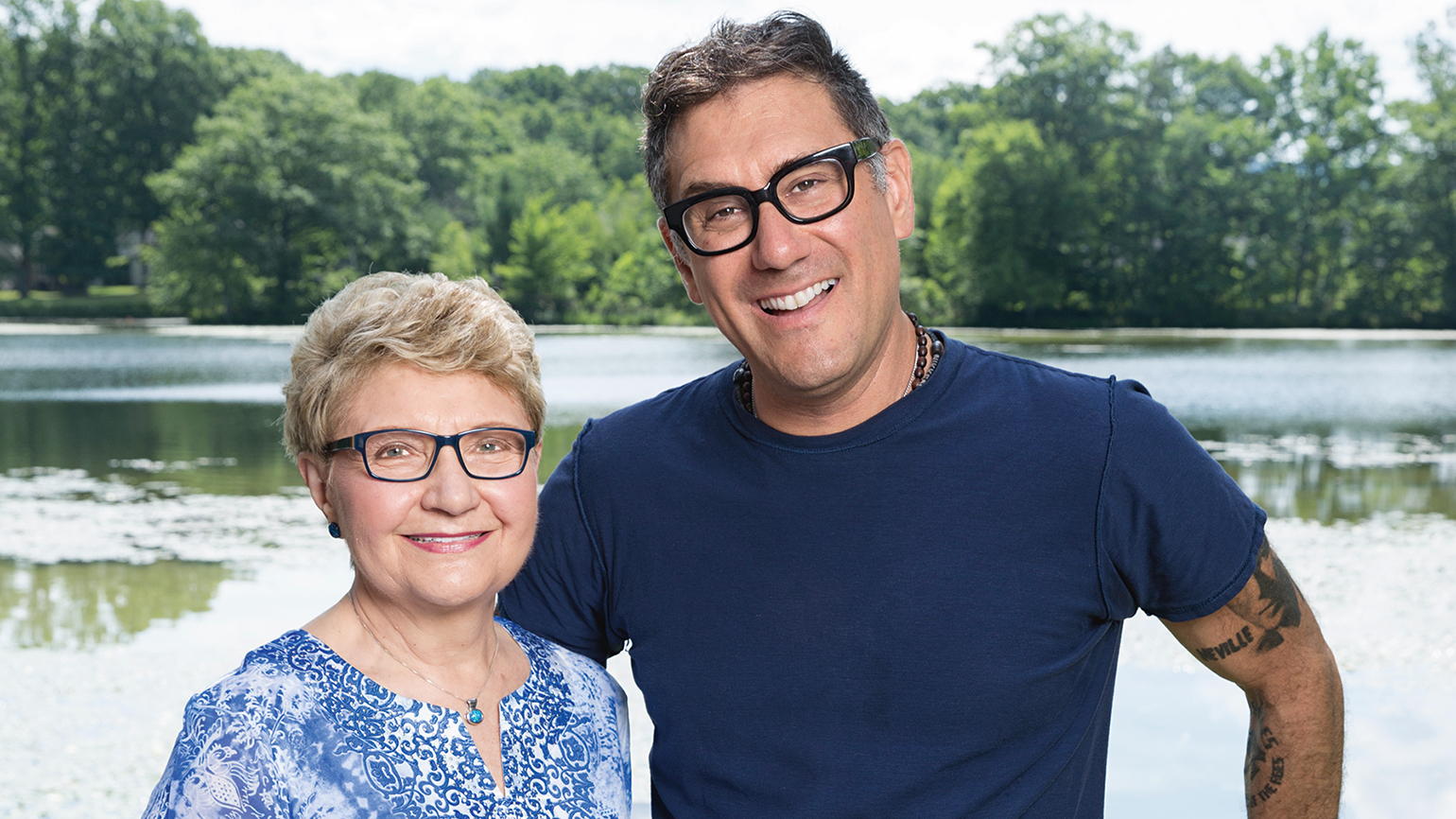
My girlfriend, Allison, and I pulled up in front of a nondescript two-story house in Waltham, Massachusetts—a working-class suburb of Boston. The house had two units and was where Allison had grown up. Her mom, Terri, lived in the top unit. Her grandmother lived downstairs. Allison and I had met in New York, where I worked in publishing and she was in TV news. We’d been dating about six months. It was time to meet Allison’s family. Given that this was a tight-knit Italian Catholic clan (and I’m Jewish) that had a protective attitude toward Allison, the stakes were high.
I tried to remain positive. In fact, I’d spent a lot of my life trying to remain positive. Ever since I was a teenager, coping with my parents’ divorce and the plunge into near-poverty that followed, I’d relied on what I called practical spirituality to keep myself mentally and emotionally centered. Things like the precepts in a book called Ethics of the Fathers, a distillation of wisdom from the Talmud I’d stumbled across as a teen and clung to for dear life.
I knew the work of Norman Vincent Peale and other writers and spiritual leaders who taught the manifold benefits of having a prayerful, faithful, positive attitude toward life. My temperament was naturally pessimistic and self-doubting; I had to work against that all the time.
Like now. What would Allison’s mom and grandmother think of me? I envisioned sharp-eyed, appraising stares, questions about how I’d raise kids, Bostonian suspicion of a native New Yorker.
“Don’t worry,” said Allison. “I’m sure my family will love you.”
I loved Allison. We were talking about marriage. All I could hope was that I’d find some way to connect with her family. Allison and I walked up a flight of stairs to the second-floor unit. She opened the door, and we went inside.
A woman of medium height with smartly done brown hair and smiling eyes walked right up and gave me a hug.
“It is so nice to meet you, Mitch,” she said. “Allison has told me all about you. This is my mother, Josie.” She introduced me to Allison’s grandmother, who embraced me just as warmly.
I looked around. The house was cozy and a little cluttered, with knickknacks and angel figurines on just about every available surface. I noticed something else too. Something odd.
Everywhere—on walls, lampshades, figurines, the coffee table—there were what appeared to be small cards affixed with tape. The cards looked like business cards turned around to their blank side, with a sentence or two written on them. Short sayings:
“Being too serious about all I have to do can make me unrealistic,” said one.
“If anyone speaks badly of you, live so that none will believe it,” read a second card.
And another: “When you cannot pray as you want, pray as you can.”
Other cards had Bible passages, prayers or 12-step slogans on them.
Who had written and taped these up? It must have been Terri. Obviously she felt a need to surround herself with positive messages. Was she into practical spirituality too? It was the first hint that she and I shared a vision.
Thus began my relationship with one of the most important people in my life: Terri Orr, my mother-in-law. Allison and I did indeed get married. We settled in New York, where I rose through the ranks of publishing to become editor of my own imprint at Penguin Random House. I’ve also written my own books, including a history of positive thinking in America called One Simple Idea: How Positive Thinking Reshaped Modern Life. Allison and I have two children and feel blessed by the life we’ve been given.
Terri has been a secret source of inspiration for all of that. She’s been a mentor and a teacher, not only showing me how to live a faith-filled life, but also pointing me toward parts of America’s spiritual history—especially the development of 12-step programs—that I never would have thought to look into. Meeting Allison was the best thing that ever happened to me. So was meeting her mom.
The night of that first visit, I slept in a spare bedroom, which doubled as Terri’s office. Like the rest of the house, it was festooned with faith-filled business cards. Allison and I stayed up late talking before she padded off to her childhood bedroom. I was distracted half the time by reading Terri’s cards.
“Has your mom always done this?” I asked, gesturing at them.
“I guess so,” said Allison. “They’ve been there as long as I can remember. I don’t even notice them anymore.”
I spent the rest of that visit reading as many of the cards as I could. I longed to know what had given Terri the idea and how the cards helped her.
Over the years, I learned answers to my questions. It turned out Terri hadn’t always been a positive thinker. Just the opposite, she told me.
Born the daughter of an Italian-immigrant barber, Terri went on to become the first woman in her family to earn a college degree. She attended Brandeis University on a merit scholarship and embarked on a career in academia that propelled her to the job she held when I met her—associate dean of admissions at Harvard Medical School. Along the way, she married and had two daughters.
All of that threatened to fall apart in the late 1970s, when Terri and her husband divorced. Two years later, her father died. Terri was devastated by the loss. A single mom, she remained in the house where I met her, so she could stay close to her mom.
That same year, Terri was diagnosed with a sleep disorder often associated with obesity. Food had become a source of comfort following the divorce and her dad’s death. She’d gained a lot of weight. For the next decade, she tried every diet imaginable. The pounds always came back. She was depressed. Lonely. She felt out of control.
The year 1991 was her darkest. She weighed nearly 200 pounds and moved so unsteadily that she’d broken a foot. A doctor told her, “You’ve got to take the weight off or you’ll never heal.”
That night, she sat at her dining room table, confronting an array of diet plan brochures. Each one made her feel more and more depressed.
Suddenly she heard herself saying, “God, please, just tell me what to do and I’ll go do it.”
An answer came: “Join a 12-step program.” Terri had tried a 12-step program once before but hadn’t stuck with it. This time she remained committed. Gradually the weight came off. And stayed off.
More importantly, Terri’s whole approach to life changed. Around the time of her divorce, a friend who served with her on a church committee said jokingly, “Terri, if there were a cabinet position called the Secretary of Worry, you would be a shoo-in!”
While taking a spiritual inventory of herself—one of the 12 steps—Terri realized that worry and negative thinking dominated her life. Clearly that was not God’s intention. If she was going to turn herself over to a higher power, she’d have to give up the worrying too. But how?
Reading 12-step and other inspirational books wasn’t enough. Terri’s negative outlook was too ingrained. She needed positive messages in front of her eyes every second. And so she took some old business cards that she had from a previous job and began jotting down inspirational messages and taping them to the fridge. When the fridge got too crowded, she moved other cards to kitchen cabinets and to the dresser in her bedroom. Soon the whole house was speaking positive messages to her.
“I decided to call them my ‘God cards’ because I believe God speaks to me through inspirational literature,” she said to me once. “These cards keep me going.”
They sure did! By the time we met, Terri not only was a Harvard dean, a devoted mom and daughter and a churchgoer, she was also incredibly optimistic. A doctor at Harvard once said to her, “Terri, you are the most positive person I’ve ever met.” I looked forward to trips to Terri’s house, not only for her company (and watching her dote on our boys) but also for the latest batch of wisdom I’d glean from her and the God cards.
When I told her I was researching a book about American spirituality, she asked if I was going to include a chapter about 12-step programs. I told her it hadn’t occurred to me. “That’s okay,” she said with a smile. “I’ll tell you all about it, and then you will.” And that’s exactly what happened.
Many of her God cards have ended up going home with us, where they now adorn our own fridge or are tucked away in drawers or between the pages of favorite books. For Terri’s seventieth birthday, we gave her a leather-bound album of the cards’ “greatest hits.”
Among my favorites:
“I can choose to be right or to be happy.”
“My helping hand is needed. I will do something today to encourage another person.”
“Abstinence is not difficult; withdrawal is!”
“I am able to feel my feelings and not think something is wrong if I am not happy every minute.”
“Waiting has more power than an ill-timed decision.”
And from the very first page: “Faith in God + Mental Reeducation = Modern Miracle.”
That’s Terri—a miracle of faith and positive thinking.
Of course, she’d never boast about herself. “I’m a quick forgetter,” she says. “I slip into negativity very quickly.” Just like me! “The cards remind me that God is always with me.”
I’m sure that message is on a card somewhere in Terri’s house. Actually, it’s on all the cards. It’s the message behind each one. A solid foundation for an inspiring life.
For more inspiring stories, subscribe to Guideposts magazine.
Misty Copeland: Made to Dance

“Thank you for your application to our ballet academy. Unfortunately, you have not been accepted. You lack the right feet, turnout and torso length. You have the wrong body for ballet. And at your age, you are too old to be considered.”
I sat in my dance teacher Cindy’s living room, staring at the letter from one of the top ballet companies in the country, too shocked to move. The company not only didn’t want me, it thought I was totally wrong for ballet? Finally I handed Cindy the letter and asked, “Why would they say that about me?”
I’d gotten a late start in ballet. Some dancers begin their training as young as age three. I took my first lesson when I was 13. Not at an elite dance school either, but at a Boys & Girls Club, something unheard of in professional ballet.
READ MORE: MISTY COPELAND HONORED WITH A BARBIE DOLL IN HER IMAGE
I’d made real progress, though. By the time I auditioned for that prestigious company, I was 15. I’d been called a ballet prodigy, a word whose depth of meaning I didn’t initially understand.
Early on, Cindy had read me the famed choreographer George Balanchine’s description of the ideal ballerina. “A small head, sloping shoulders, long legs, big feet and a narrow rib cage,” she said. “Misty, you’re perfect. God made you for ballet.” And I believed her.
Maybe it was a reaction to the uncertainty of my childhood, but I longed for a place where I felt safe and valued, where I belonged. At last I found it in ballet. Or so I thought. I grew up in San Pedro, California, one of six children. Things were not easy for our family. We moved around a lot—in large part prompted by my mom’s relationships with the men in her life.
At one point, Mommy and the six of us lived crammed into one motel room, eating Cup O’ Noodles for dinner. I was a shy child, and the stress of moving and changing schools gave me terrible headaches.
In middle school I discovered the joy of movement and performance. Following in the footsteps of my big sister Erica, who’d been a star on the drill team, I auditioned with a routine I choreographed myself. I made the team, shocking my family by being named captain.
The drill-team coach suggested I take a ballet class at the Boys & Girls Club, where her friend Cindy was the instructor. The class was held on the basketball court. At first, I didn’t have the nerve to join in. I didn’t have a leotard or ballet shoes like everyone else. So I watched from the bleachers.
READ MORE: DIVINELY INSPIRED TO CONTINUE DANCING
Cindy finally coaxed me onto the floor in my baggy gym clothes and socks. “This isn’t about how you’re dressed,” she said. “It’s about how you move.” Compared to the other girls, it seemed like I was doing everything wrong. I was mortified. Still, I kept going, and Cindy kept encouraging me. She had me take classes at her ballet school (she waived the fees).
“The way you can pick up movements after seeing them just once or twice,” she said, “do you know what a gift that is?” She was taken by the way I could do steps that took most students years to learn. I fell in love with ballet. Dancing, I was no longer the shy new girl. I felt strong and sure of myself.
Just three months after I started ballet, I stood en pointe for the first time, one arm rounded and raised above my head, the other resting on the barre for balance. “You’re going to be a star!” Cindy said, snapping a photo so I would always have a memento of that moment.
A star like American Ballet Theatre’s Paloma Herrera? Cindy had shown me a video of her dancing, and I was spellbound. Could I become a principal dancer with ABT and wow audiences like Paloma?
That dream took hold of me. I was determined to learn as much ballet as I could as fast as I could. My mom let me leave our crowded motel room and live with Cindy and her family so I could train intensively. At 15, I won an arts scholarship from Los Angeles’s Music Center. I was on my way.
Along with a newfound confidence, ballet gave me the stability I longed for. In class and onstage, all my stresses fell away and I felt at home. I auditioned for a spot in the summer programs of the top ballet companies in the country. I was so sure ballet was my destiny that the rejection letter came as a complete shock. “I’m wrong for ballet?” I asked Cindy, hardly able to get the words out.
Cindy took my hands. “It has nothing to do with your talent, Misty,” she said. “There are very few African-American dancers at major ballet companies, and they don’t know what to make of you. But I know God made you to dance. And deep down, you know that too.”
I took her words to heart. That summer I studied at the San Francisco Ballet, and the next at ABT. When I graduated from high school, I moved to New York City and joined ABT’s studio company as an apprentice. At age 18, I was promoted to the corps de ballet. Step by step, I was getting closer to my dream.
Then I developed a vertebral fracture and couldn’t dance for a year. Without the routine of classes, rehearsals and performances, I felt lost. Things got worse when I finally hit puberty and my body changed. Suddenly I had a large chest and a thicker body. Even after I was able to dance again, I could no longer eat anything I wanted without worrying about the consequences.
Ballerinas are judged on the way they look. Especially in the corps, which in classical ballet is supposed to have a uniform look. Being different can be considered distracting to the audience and to the overall artistic vision, something casting directors keep in mind when selecting ballerinas for roles that can make a dancer’s career.
One day a staffer at ABT called me into his office. “You need to lengthen,” he said. Lengthen is ballet lingo for losing weight. “Just a little, so you don’t lose your classical line.” Even though I was five foot two and barely over 100 pounds, I didn’t have a classical line anymore, I had curves.
It was like an echo of that rejection letter. You have the wrong body for ballet. Now I felt as if my dream company was rejecting me too. I left the staffer’s office in tears.
Ballet wasn’t my safe space anymore. I felt like an outsider in the one place I’d been most at home. To me, the message was, You’re not white, so you’re never going to be right for ballet. Since the company was founded, in 1940, ABT had never had an African-American female principal dancer. I wasn’t going to change history. What was the point of even trying?
So I rebelled. In class, where we practiced in front of mirrors to perfect our technique, I wore big T-shirts so no one, including me, could see my body. I’d go home feeling bad about myself, overeat, then get even more upset because I’d lost control and looked worse than before.
Soon I stopped going to class, which would practically ensure that I never became a principal dancer. My career was slipping away. I was far from my family, from Cindy. Being the only African-American woman in the company made my isolation worse. I might have stayed stuck in the unhealthy cycle of emotional eating and self-doubt if a few special people hadn’t come into my life.
One was my first boyfriend, now my fiancé, Olu. He helped me develop a new relationship with food. Growing up, I just ate whatever my family could afford. I started choosing foods that would strengthen my body and give me the energy I needed to get my dream back on track. “A ballerina is an artist and an athlete, and you need to have your body in top form,” Olu would say.
Another big influence was Susan Fales-Hill, an author and TV producer whom ABT’s artistic director asked to mentor me. “There are so many African-American women rooting for you,” Susan told me one day. “Think about the ones before you, who broke down barriers for you. You may be alone at ABT, but you are not alone in the world.”
Susan helped me regain my focus and made me see the bigger world around me. Ballet wasn’t just for my own joy. It was a way to inspire people, to show other little brown girls growing up in poverty that they could reach for their dreams.
One morning I was practicing in front of full-length mirrors and for the first time in a long time, I wasn’t worried that I was fat. I was amazed by how my arms, my legs, my feet moved so beautifully and confidently. My skin color and body type aren’t going to change, I thought. I just have to love myself and be the best dancer I can be.
Once I grew comfortable with who I was and what I looked like, opportunities I never could have imagined opened up in my career at ABT and beyond. Shortly before I turned 25, ABT promoted me to soloist. The next few years I performed a variety of roles, both classical and contemporary. I even danced in a music video with Prince and performed with him on tour.
In 2012 I danced my first lead role in an ABT production, in a new staging of Firebird, one of three dancers chosen to perform the role. Alexei Ratmansky, the choreographer, encouraged us to adjust movements based on what was most natural for our bodies. It was an extraordinary experience, one I’ll always cherish.
I saw more people of color in the audience at the Metropolitan Opera House for my debut as Firebird than I’d ever seen before. That night was about much more than me. It was about welcoming a new audience to this beautiful art form.
When the opportunity came in 2014 to be one of the faces of Under Armour’s “I Will What I Want” campaign and shoot a commercial, I was excited. Finally, people will get to see ballet dancers as the athletes we are, I thought.
The commercial had more than nine million views. I hope that, as a result, little girls everywhere, no matter what they look like, were introduced to ballet and can either see a future for themselves or become fans.
I made history in June 2015, as the first female African-American principal dancer at American Ballet Theatre. So much has happened in the last four years. I’ve been up and I’ve been down. But I’ve learned a lot. My hope is that the progress I’m making in my career will open a path of possibilities for generations of brown ballerinas to come.
Today my body is pretty far from that of Balanchine’s ideal. I have a large chest, curves, and muscular arms and legs. Yet I still believe Cindy was right. God made me to dance and to show people that there is no one standard for what a ballerina should look like.
For more inspiring stories, subscribe to Guideposts magazine.
Miracles in the E.R.
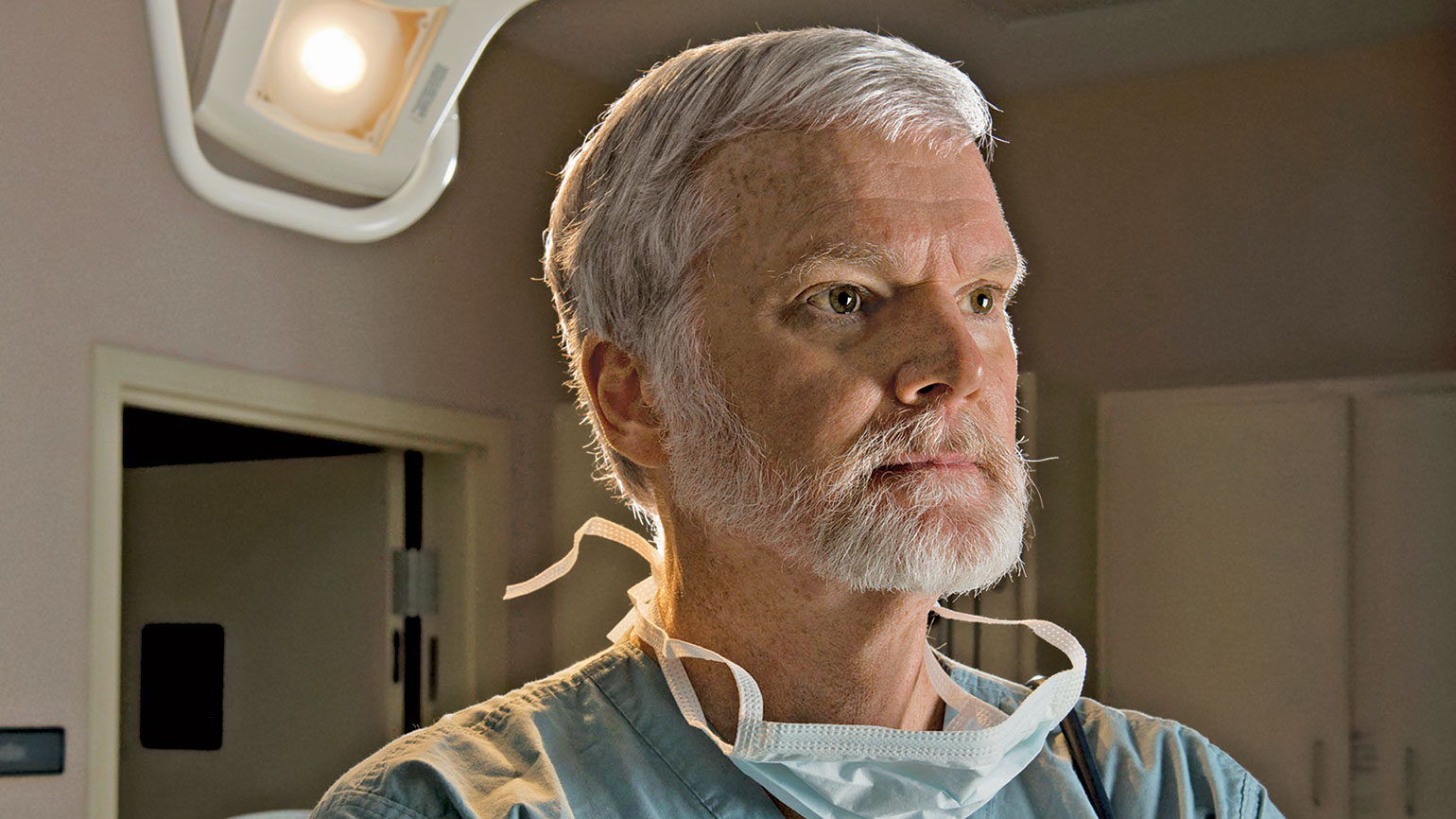
“Doc, I’m tellin’ ya, it was a miracle!” Fresh out of my residency, when one of my ER patients would tell me this, I’d shrug. Not that I didn’t believe in miracles. But in the ER, with all its chaos? Not likely. We were all about intervention, not intercession.
Today, after 30 years as an emergency room doctor, I know differently. I’ve seen healings that medical science can’t fully explain. Healings that can only be the work of a power beyond medical intervention. So many stories I’ve written several books. Here are three of my favorites from Miracles in the ER.
Two techs rolled 14-year-old Ben Stevens into the ER’s trauma room with the results of the X-rays I’d ordered. A sprinter on his high school track team, he’d come in with a broken femur. He’d collapsed during a meet, running the 440. The way he’d explained it, the bone had snapped in two near the end of the race. He was healthy, strong. It didn’t make any sense.
One of the techs clipped an X-ray onto the view box. I felt the blood drain from my face. “What’s the matter, Dr. Lesslie?” Ben’s mother asked. I couldn’t respond. I just stared at the X-ray. The break was irregular, layered haphazardly, like onion rings.
READ MORE: CHRISTIAN PRAYERS BRING MIRACLE HEALING
“Where the femur is broken it looks like bone cancer,” I finally managed to get out. “And I’m afraid it’s already fairly advanced.”
I went with the family to an orthopedic surgeon who confirmed the diagnosis. Ben’s leg would have to be amputated. Then there’d be chemo and radiation. Even with intensive treatment, his chances weren’t that great. Ben’s mother looked at the surgeon and then at me, all the while gently patting her boy’s shoulder. “He’s in the Lord’s hands,” she said, with a serene confidence that took me aback.
After the surgery I learned that the cancer had spread to Ben’s lungs, three aggressive tumors. He had only months to live.
Three months later his parents brought him back to the ER. He had a fever, chills, aches and a persistent cough. He looked terrible.
“We tried the chemo,” his mother told me. “He got so sick they stopped it after the second treatment. They haven’t decided what to do next.”
I turned my attention to Ben. I was concerned that he had pneumonia and that the tumors in his lungs had spread. “We’ll need to get a chest X-ray,” I said. “I want to be sure he doesn’t have any infection in there. And since it’s January, I’m going to get a flu test. We’re seeing a lot of it now, and that might be a possibility.”
Ben’s father looked despairingly at me, then turned away. No one said another word. I called for a nurse and told her what we needed.
About 20 minutes later, the nurse and an X-ray technician brought Ben back to the ER. I had them put him in Exam Room 4 with his parents while I looked at his X-rays in another room. This time I wanted to be able to compose myself first.
“Doc, the boy in four is positive for the flu. Type A,” the nurse said, reading off a lab slip. That would explain the fever, aches and cough. After all, even though he had metastatic bone cancer, he could still get the same things everyone else did. In fact, it was more likely. I flipped on the bright light on the view box.
I had to force myself to look. His lungs. They were completely clear. No pneumonia. And no cancer! His tumors were gone! He just had the run-of-the-mill flu.
I ran over to Room 4 and told Ben and his parents the news. Ben nodded calmly. His father gaped at me. His mother gasped. Her hands flew to her mouth and tears flowed down her cheeks.
Just as she’d said, Ben had truly been in God’s hands.
One Friday in October. The “A” team on duty: Lori Davidson and Charlotte Turner, two of our top nurses, and Amy Connors, our hyper-efficient unit secretary. Staffers who worked unflinchingly through the worst trauma. It had been a hectic night, but for the moment the ER was quiet.
“ER, this is EMS One.” The paramedic’s voice shattered the stillness.
“Go ahead.” Lori had a pen in her hand, ready to take notes.
“Five minutes out with a one-car ten-fifty. Is…Dr. Lesslie nearby?” A 10-50 was an auto accident.
“He’s standing right here, EMS One,” Lori said. “Go ahead.”
“Can you give him the radio and switch off the speakerphone?”
“It must be something bad,” Charlotte said. Lori handed me the receiver. I stepped away from the desk. “This is Dr. Lesslie.”
“This ten-fifty,” said the paramedic, “it’s…the driver is a seventeen-year-old kid, Bobby Green, and he’s fine. Drunk, but fine. The passenger—he wasn’t belted and was ejected from the car. He broke his neck. Doc, it’s Charlotte’s boy, Russell. And he’s dead.”
Reflexively, I glanced at Charlotte. She was talking with Lori. Our eyes met and she froze. “No!”
Charlotte was devastated. For the next year she couldn’t seem to recover from her anger at the young drunk driver. We had to assign her to the minor trauma department, treating patients with sprained ankles, small cuts, respiratory infections and the like. It saddened me to see her struggling, unable to do the work that was her true calling. I was a doctor, but I had no idea how to help her heal.
One day I was in minor trauma, stitching the finger of a teenage boy, making small talk as the final suture was being knotted. He had been sharpening a lawnmower and the blade had slipped.
“So what are your plans after you graduate?” I asked.
But he didn’t respond. He was staring at someone behind me.
I turned to see Charlotte. My eyes went to the chart beside my patient. Bobby Green.
How had I not remembered that name? I kept tying knots in that last suture, desperately trying to think of what to do, what to say.
“Mrs. Turner…” Bobby’s voice broke. “I want you to know that—” Charlotte stepped around me. She looked Bobby in the eye. They stayed like that for a long moment, motionless, until finally she reached out and put a hand on his shoulder.
“It’s okay,” she said softly. “It’s okay, Bobby.”
He put his hand on hers. His body shook with sobs. It was done. With those few, simple words she had forgiven him, released him. And she had released herself. A most incredible healing.
READ MORE: THE ANSWER TO A DAILY PRAYER
Every couple of weeks, for going on two months now, Mildred Jackson had brought her eight-year-old boy, Benny, into the ER with blisters from head to toe. After a few days the rash would go away, only to mysteriously reappear. I was as baffled as the rest of the doctors. We checked his labs but found nothing unusual.
Thankfully, it had been a few weeks since we’d seen Benny. Maybe whatever was ailing him had finally gone away. That night the ER was crowded. I picked up the chart of my next patient. “Danny Totherow. 42 yr old. Male. Bar fight—head lacerations,” the cover sheet read. He was lying on his back on a stretcher, a blue surgical towel draped over his head.
“How did this happen?” I asked.
Danny’s words were garbled. He was still under the influence of whatever he had imbibed. All I could make out was that someone had hit him with a beer bottle.
Just then the curtain behind me flew open. “Dr. Lesslie, it’s me, Mildred Jackson. And Benny.”
There was Benny sitting on a stretcher, covered with blisters. “I see the rash is back,” I said. “Let me take care of this gentleman and I’ll be with you as soon as I can.”
But Mildred didn’t wait. She went over the entire history of her son’s mystery malady, every ER visit they’d made, everything the doctors had told her before.
Danny rose up on one elbow, peered at Benny, then collapsed back onto the bed. “Hot tub?” he mumbled.
“What was that?” I moved the towel aside.
“Got a hot tub?” “No, we don’t have a hot tub,” Mildred said. “Why?”
Danny muttered something incoherent. But I knew what he was getting at. “No hot tub in the neighborhood?” I asked. “No friends with one?”
“No, we don’t have one and no one—wait, the Pottses have one in their backyard. Charlie’s one of Benny’s friends. But he’s not allowed in it.”
“Uh-huh,” came the slurred response from Danny.
“Benny, you haven’t been in Charlie’s hot tub, have you?” Mildred looked at her son. He shook his head slowly. “Benny?” She dragged his name out.
Benny’s head-shaking morphed into a slow, sheepish nod. “I’m sorry, Momma. Charlie said it would be okay as long as I didn’t have the rash.”
“Has Charlie ever gotten this rash, Benny?” I asked.
“No, he never did. He never got in the tub. Said it was too nasty.”
“Uh-huh,” Danny mumbled again.
That was the answer. Hot tub dermatitis, a common bacterial infection that causes a bumpy, blistery red rash. The Pottses’ tub was a regular petri dish—and every time Benny’s rash cleared, he would dip himself in it again. I explained all of this to Mildred.
“Praise the Lord,” she said.
“Uh-huh,” agreed Danny.
I couldn’t have said it better.

Mike Rowe Uses the Tools God Gave Him
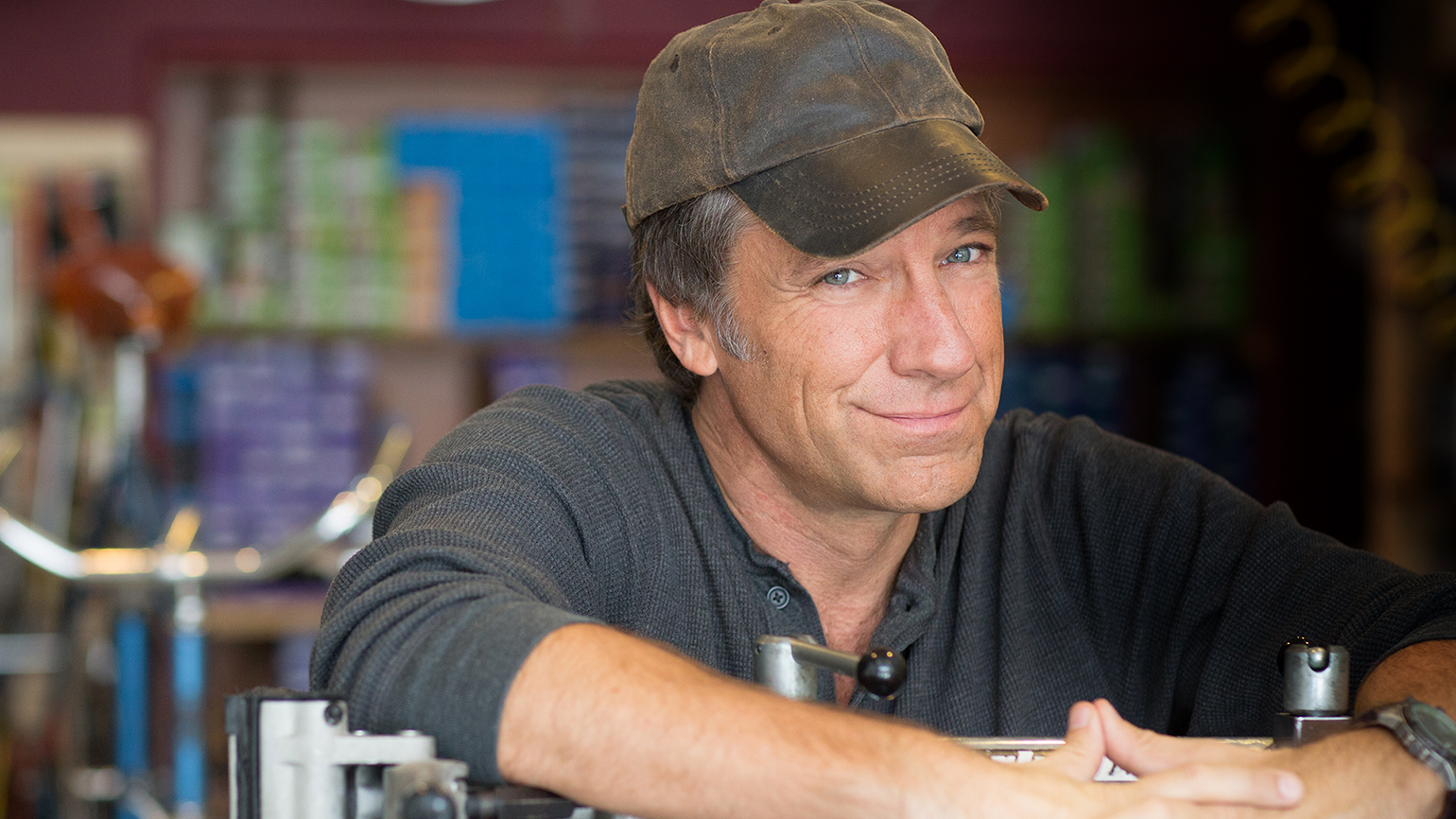
Never in my wildest dreams did I think I’d make a living hosting and narrating TV shows. My plan was to follow in the footsteps of my grandfather, a man who worked with his hands, not his voice. A man who avoided the spotlight.
I grew up outside Baltimore, Maryland. We were just a few miles from the city, but it felt like a whole different world. Our family’s land bordered 60 acres of woods, so there was nobody else around. We lived next to my grandparents in an old farmhouse on eight acres with a barn, horses, a bridge and a babbling brook. Everything I needed for an idyllic boyhood.
My grandfather Carl Knobel—I called him Pop—left school after eighth grade to go to work. He was a master electrician by trade but he could do pretty much anything. Build a house without a blueprint. Dig a well. Install a furnace. I once saw him take apart a broken watch and put all the tiny pieces back together so that it ran perfectly again. I never once saw him read the instructions to anything. He just knew how stuff worked.
Pop had a huge hand in building an addition to our church, the wing where my Sunday school classes were held, my Boy Scout troop met and the congregation had potlucks and Bible studies. Not that he ever talked about it. Pop was a humble guy, a man of few words.
Dad was the one who showed me the plaque at church with my grandfather’s name on it. “That’s to honor him for all the work he did,” Dad said proudly. “Who else do you know with a plaque?” Dad was a public-school teacher but on weekends, he and Pop tackled one project after another.
I tagged along, trying to help out. Mostly, I just slowed things down. We used a woodstove, and on cold winter mornings we’d go out on the Massey Ferguson tractor in search of firewood. Mom would hand us a lunch box with a large thermos of coffee. “Try not to kill yourselves,” she said. “Dinner’s at six.”
We drove the tractor through the lower pasture into the woods. First we had to find the right tree. “Hardwood puts up a fight but it burns the best,” Dad said. Then the bigger challenge: taking the tree down properly so nobody got hurt and it landed exactly where you wanted.
How to make the notch in the trunk, where to put the pulleys and winches—regardless of the challenge, Pop had it all figured out. I remember one Saturday when I was 12 and the toilet in our house backed up in a rather spectacular fashion. The problem went well beyond a plunger. “Don’t worry,” Dad said. “Pop’s on his way over.”
We helped Pop dig a trench that led to the septic tank. Soon the lawn was covered with mounds of dirt and pieces of old pipe. Pop laid down new pipes and fittings and sealed them together. By the end of the day, the trench was filled in, the lawn was neat again and the toilet was back to normal. I had blisters and a sunburn. I didn’t smell good. Still, it was one of my favorite days ever.
To me, Pop was a magician, and his talents a great mystery. As his would-be apprentice, I mimicked his every move. I took the shop class offered in school, and applied myself. But the bookshelf I made turned out lopsided, the metal box I welded didn’t close tightly. My grandfather’s “mechanical gene” seemed to have skipped me, and my shortcomings made me grow insecure and resentful.
One Saturday I was helping Dad and Pop build a patio on our house. I can’t remember what I messed up that day—probably didn’t get the cement mixed right or the bricks laid in straight, but it felt like the final confirmation that I could never be like Pop.
I just didn’t have it, that gift he had for fixing things. I was not the would-be apprentice. I was the apprentice who would never be the master of any trade. I put down my tools, flopped on the ground and let out a long sigh. Pop stopped what he was doing and sat down beside me, waiting for me to stop feeling sorry for myself.
“I can’t do anything right,” I said ruefully.
“Sure you can, Mike.”
“Not like you, Pop. You could build a whole city if you wanted. I can’t even mix the cement.”
Pop thought for a moment before he spoke. “God gave me a toolbox, Mike. He gave you one too. But he didn’t give us the same one. You understand?”
I shrugged. He was just trying to make me feel better. I didn’t have a toolbox, and if I did, I doubted it contained anything worthwhile. Good thing other people knew better. Like my mom, who urged me to sign up for the high school choir. And Mr. Fred King, the new music teacher and choir director, who saw some potential in me and pushed me to develop my voice.
Soon, I was singing solos, then trying out for the school musical. I got the lead. Something clicked. Standing onstage, singing, performing, it just felt right. Over the years, I discovered I had other tools. For my Eagle Scout service project, I read aloud to students at the state school for the blind. I formed a barbershop quartet with some friends from choir, and with Mr. King’s help, we won several competitions.
I majored in communications in college, and studied acting and music. I won the debate competition. I auditioned for the Baltimore Opera—I figured it was a good way to meet girls—and sang professionally for several years. In the early 1990s I landed my first television gig: selling stuff on QVC, the home shopping channel. From there I got other work on air, hosting shows for local stations, then for TBS, FX, the History Channel, PBS. I approached my work like a tradesman, freelancing wherever the jobs took me.
On visits home to Baltimore, I’d play Pop videos of myself from this or that show, and he got a kick out of it. My quiet, ingenious grandfather— a man who would rather listen than speak—and me, his grandson who got paid to smile and talk. Amazing.
I was living in San Francisco, hosting a show on the local CBS station, when the toilet in my apartment backed up once again. (It’s a recurring theme in my life.) Pop wasn’t next door to help, so I found a plumber in the Yellow Pages.
“Think you can fix it while I’m at work?” I asked. “No problem,” he said. “Just leave a key under the mat and a check on the counter.” When I got home that night, the mess was gone and the toilet was working just fine. It was as if the plumber hadn’t even been there. But something bothered me.
I thought of Pop and the day he’d fixed our plumbing all those years ago. I thought of all the hard work he did on our house, our church, and hundreds of homes and businesses in our community. I remembered how badly I had wanted to be a part of all that, and how I had yearned for the ability to do what he could do.
I didn’t even know the name of the plumber who fixed my toilet. How could I be so disconnected from the kind of tradesman I had once dreamed of becoming? I considered a world without men like Pop. What would civilization look like without them? If a TV host calls in sick, life goes on. But if our tradesmen don’t report for work, things fall apart. Literally.
Okay, Mike, I thought. You found your toolbox. What are you doing with it? More game shows? Talk shows? What about a show for men like Pop? What about a show that honors hard work and the people who do it?
The next day, I pitched a new show to my station manager called Somebody’s Gotta Do It—short profiles of people who do the tough jobs. Rather than act like a typical host, though, I would assume the role of an apprentice, and let the worker call the shots.
It was a radical idea, but the manager gave me the go-ahead. I found a dairy farmer who specialized in artificially inseminating cows. My crew and I spent a day filming this man at work, showing what a hard, dirty—and necessary— job it was. That profile of the dairy farmer turned out to be the most popular segment the station had aired in years. We got tons of calls and e-mails, and invitations to film in all sorts of other interesting places.
Best of all, I got a thumbs-up from Pop. He was in his nineties and not getting around too well, but he was excited to see each new segment. “Good for you, Mike,” he said. “I think you’re on to something!” I did more of those profiles, which eventually led to the show I’m best known for, Discovery Channel’s Dirty Jobs.
In the next eight years, I would travel to every state and work every conceivable dirty job: salt miner, fish gutter, septic-tank technician, ostrich farmer, underwater lumberjack, worm-poop rancher—you name it. I can’t tell you that I did those jobs well. In fact, I was a disaster, as most apprentices are their first day on the job. But I didn’t care anymore. Because my incompetence was now illuminating the expertise of the skilled workers I profiled.
All I had to do was humble myself, share my own shortcomings with millions of viewers, and shine the spotlight on the very people I had always admired the most. Pop died just before Dirty Jobs premiered, but really, he had seen the first episode 40 years earlier. He knew it was there all along, buried in a toolbox I never knew I had. The one he told me about back when I was his apprentice. The best job I’ve ever had.
For more inspiring stories, subscribe to Guideposts magazine.
Meet the Bible B.A.B.E.S.
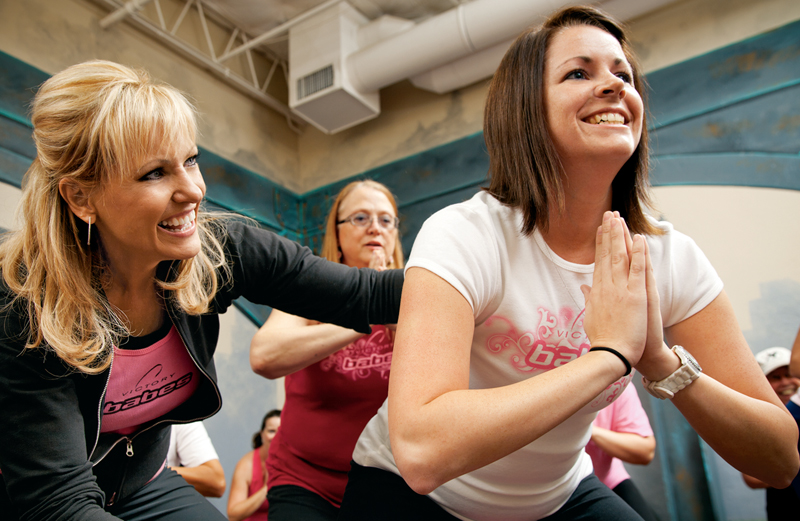
Twenty women sat at round tables inside the fellowship hall of my church that Monday evening, looking at me expectantly. Smiling, but I could see doubt flickering in their eyes. I knew what they were thinking: She’s going to teach us how to lose weight?
I couldn’t blame them. I was wondering the same thing. Where I’m from, we love God, music and food. All that food got to be a problem. I’d been a big girl–five feet eight and 130 pounds by sixth grade–and that number on the scale crept up as I got older.
I put on 25 pounds in high school, gained the freshman 15 (well, more like 20) in college. I married Dale and we had two children. Now the kids were in high school and I was still carrying the baby weight, despite trying every diet known to woman.
Even though I was wearing the most slimming outfit in my closet–black slacks and a long top–I knew it couldn’t hide those extra pounds. I felt totally exposed standing in front of these women who’d signed up for our new weight-loss group.
Who was I to think I could help them when I couldn’t help myself?
One of them–my friend Sam–caught my eye and nodded. “Look how everyone encourages one another in your Bible study,” she’d said to me a few weeks earlier, when we were commiserating over our perennial New Year’s resolution to lose weight.
“You’re accountable to each other and that helps you all stick with it. Maybe that would work for weight loss. It’s not like anything else has.”
I took a deep breath and outlined the 12-week program that Sam and I had come up with.
We’d eat sensibly: three 300-calorie meals a day, three 100-calorie snacks. Exercise three to five hours a week. Keep a daily food-and-exercise journal. Meet weekly to weigh in, share our challenges and successes, discuss a topic like setting goals or avoiding pitfalls. And we’d pray for each other.
“Now let’s go around the room,” I said. “Tell us a bit about yourself and how much you want to lose by the end of our twelve weeks.”
For some, it was a modest 10 to 15 pounds. Others, 50 pounds or more. My turn. “I’ve been overweight pretty much my entire life,” I said. “Especially after I had my kids. I’ve tried every diet imaginable. So we’re in this together. I need your help and prayers to lose forty-five pounds and keep it off.”
Time for our first weigh-in. Sam and I had hung beach towels at the back of the room to give the women privacy. We wrote down everyone’s weight. Then we gathered in a circle and I said a closing prayer.
“Lord, we know all things are possible through you,” I said. “Give us the strength to stick with our program. And the assurance that we’re not alone in our struggles.” Everyone seemed upbeat when they left. “I knew we could do this,” Sam said. “That went really well.”
If only I could say that about my first week on our program. By Wednesday afternoon I was starving. I ransacked the pantry for a bag of chips. Nothing. Then I remembered. I’d talked Dale and the kids into getting rid of all the junk food.
I called Sam. She was having major sugar cravings. “I just want to give in and grab a doughnut,” she said. Uh oh.
I did what I would have done if someone in my Bible-study group hit a roadblock in her spiritual journey. I turned to Scripture. “Remember Ecclesiastes 3:11,” I said.
“‘He has made everything beautiful in its time,’” Sam said. “Okay. I feel better. I guess I needed to hear that.”
We hung up. I was dying to dash out for a burger and fries. But what kind of group leader would I be if I did that? Instead, I found a crisp apple in the fridge, my afternoon snack, and went for a long walk.
At our meeting Monday I cautiously stepped on the scale. I’d lost five pounds! I let out a shout. Every one of us had lost weight. I talked about goals, the importance of having realistic expectations, but I don’t know how much people paid attention, we were so giddy with success.
I managed to get through the next week without cheating food-wise, and even started to like the regular exercise. I couldn’t wait for our meeting. I hopped on the scale and…huh? One pound. I’d lost one lousy pound. All that work. And for what?
A lot of the others had barely lost any weight either. A couple had actually gained. “This is impossible,” one woman said. “I hate my body,” another moaned. “Sometimes I wonder how anyone, even God, can love someone who looks like me…” I saw heads nodding in agreement.
“We can’t give up,” I heard myself say. “Some weeks are going to be harder than others. There’s no quick fix. It took years to develop our unhealthy habits and it’s going to take time to change them.”
That was met with forced smiles. I didn’t know what else to say. We finished the meeting with a quick prayer.
Sam and I had started this program because we wanted everyone to come away from our weekly sessions uplifted, like after Bible study. Not down in the dumps, like they were now. What was missing?
I thought about it all week long. I could totally relate to those women hating their bodies, hating themselves. I used to feel the same way until…. A memory kept coming back to me.
The next Monday, even before our weigh-in, I shared a story. “Last Easter, I was onstage with our worship team, dancing and singing. It was the hardest thing I’d ever done. Not because I didn’t know the notes or the steps but because all I could think of was how fat and ugly I thought I was.
“And then something amazing happened. It was as if a huge tangled knot–my insecurities, my self-disgust–was suddenly pulled out from within me. And in its place was pure love. God’s love for me as I am, as he made me…beautiful in his sight.”
I paused. The women looked stunned. “Now I know why I’m here, leading this group,” I said. “It’s to tell you this: You don’t need to lose weight to be loved. Lose weight because you’re loved. And become the best you that you can be.”
After that I focused less on the numbers on the scale and more on how God was at work in me, in the women around me. I could see the change. Not just in our bodies. In self-image. In attitude. In the way we celebrated each other’s victories and prayed each other through challenges.
As the Bible tells us, “Be transformed by the renewing of your mind” (Romans 12:2).
At the end of the 12 weeks I’d shed 25 pounds. We’d all lost weight. More important, we all felt more healthy, energetic and positive. I didn’t want to quit. Neither did the others. The very next Monday we started another 12-week session, with twice as many women.
That was nine years ago. Today thousands of women in multiple chapters have reaped the benefits of our weight-loss group, following the same basic principles as that first class.
We call ourselves BABES: Beautiful, Accountable, Babes, Exercising, Sensibility. People often ask me why my program works. The answer is simple: It’s about love. God’s love, the one thing you can never get too much of.
Download your FREE ebook, Paths to Happiness: 7 Real Life Stories of Personal Growth, Self-Improvement and Positive Change
Meet the 89-Year-Old Grandma and Grandson Duo Taking the Road Trip of a Lifetime
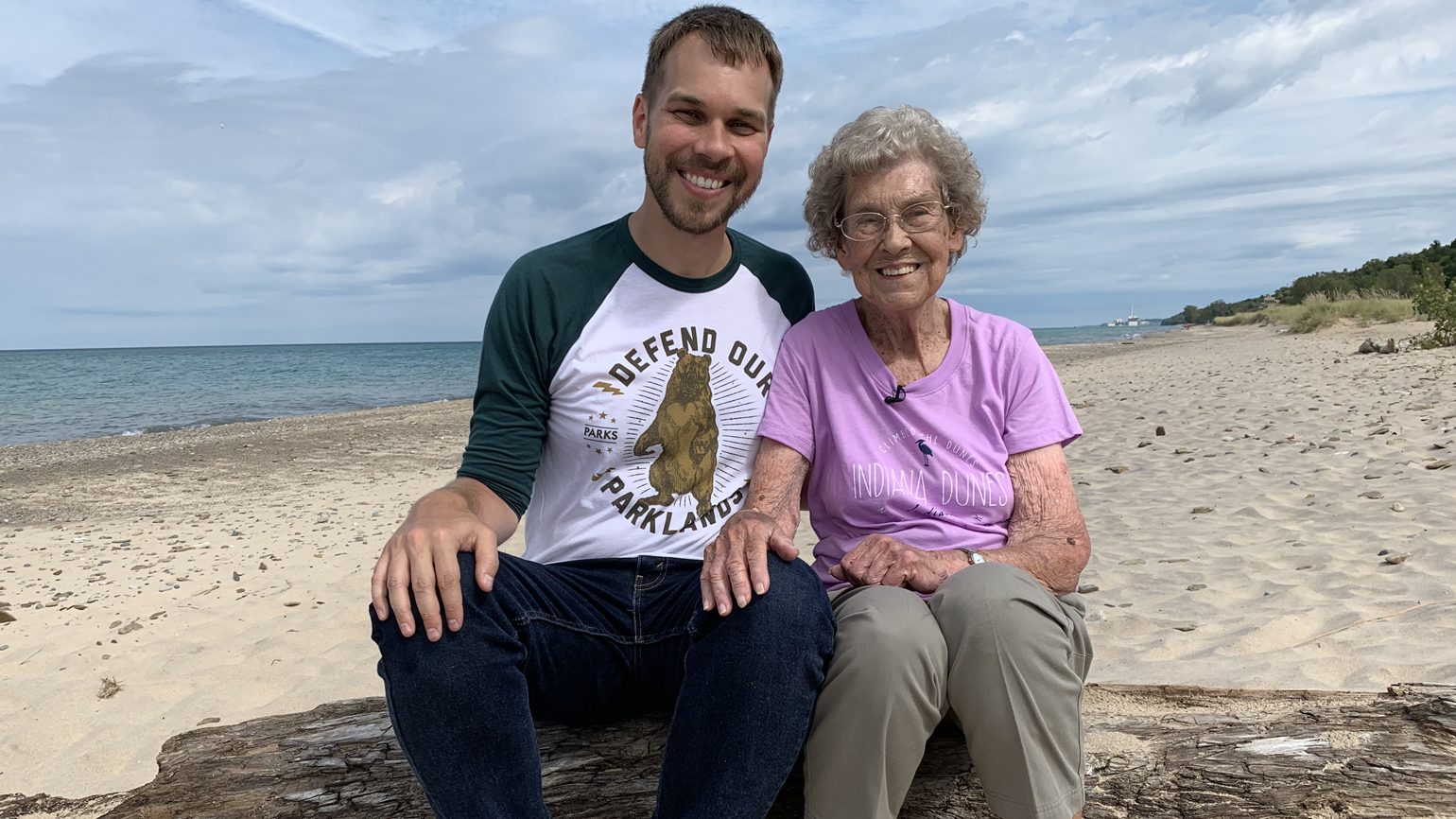
Brad Ryan, 38, has made it his mission to help his 89-year-old grandma, Joy Ryan, fulfill a lifelong wish to see more of the world.
After realizing that—besides a local state park near her home in Duncan Fall, Ohio—his grandmother had never traveled much or seen a mountain or desert, Ryan decided to take her to all 61 U.S. National Parks.
“So I called her up,” Ryan told Guideposts.org, “and said, ‘Hey, I really need to get away. I want to go to the Smokies and I think that it’s time that you see that mountain, are you game for that?’ And she said, ‘What time are you picking me up?’”
As for Grandma Joy, she said she was ready for that call. “You can just stay in your little old corner of the world for so long,” she explained, adding that she worked in a deli store up until her husband and dog passed away, she had very little—besides her church community—holding her home. “There wasn’t anything there. And so, I just thought it would be nice to have an adventure.”
 That fateful three-day road trip to the Great Smoky Mountains National Park in 2015 was, according to Ryan, a healing experience for the two of them. Ryan at the time was completing his fourth year as a veterinary student in The Ohio State University College of Veterinary Medicine, battling what he said was “severe depression and imposter syndrome.” Grandma Joy was recovering from a recent health scare that forced her to termporarily leave her home. His grandmother’s declining health, he said, is what prompted him to reconnect with her.
“I remember the intense guilt that I felt, like she could go at any time and I’ve already lost all this time,” Ryan said. “I’m never going to know how to make those raisin-dough cookies, or know what I was like as a kid, and I’m never going to know how she met my grandpa, and on and on.”
That first trip, Ryan said, allowed them to do so much of that. He wanted to continue taking Grandma Joy to National Parks, but didn’t have the money, so he created the “Grandma Joy’s Road Trip” GoFundMe page in 2017. The campaign, Ryan said, raised over $3,000 and helped pay for the big, month-long road trip that allowed them to visit 21 U.S. National Parks, including Yosemite, Yellowstone, Glacier, Joshua Tree, Grand Canyon, Sequioa and Canyonlands. Since then, Ryan said the dynamic duo have completed six road trips, including a six-weeks long journey last fall.
For Grandma Joy this has all been unexpected, but she’s thrilled to be enjoying this experience with her grandson.
“Well, the way I look at it, I would try anything once,” she said. “It’s a wonder I ever survived, but we did. I got to climb a mountain, I didn’t expect to do that!”

The duo is now almost to their goal of 61. They have visited 53 National Parks and driven 28,000 miles through 38 states in the last three and a half years. Their travels are captured on their joint Instagram account, which currently has over 35,000 followers.
“We’ve met many wonderful people,” Grandma Joy said. “We’ve met people from everywhere, all over the world, Australia, Germany. We did some Facebook Live and people asked us questions, and people called us from Belgium and Ireland, and my goodness, you never even thought that anyone would even know you were there.”
The two said the experience has been “kind of a shock,” but it’s been nice overall. “It’s something I’ll always remember,” said Grandma Joy.
“I just hope everyone gets some encouragement and realizes your life’s not over,” she said. “You can always do one more thing.”
The duo, who has partnered with Hyatt for support with their travels, hopes to celebrate Joy’s 90th birthday by visiting the remaining parks throughout 2020, and eventually fulfilling Grandma Joy’s biggest wish, visiting Hawaii and Alaska.
Meet Lemon the Duck
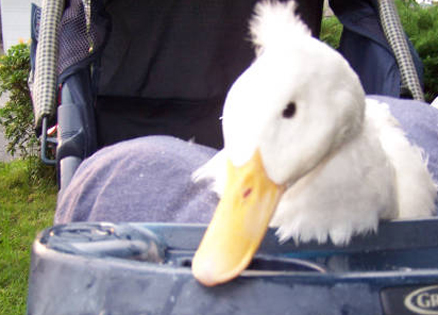
Lemon is certainly one lucky duck!
When the tiny creature was hatched five years ago, everyone doubted that the duckling would live more than a few days, but Lemon beat all the odds, becoming an inspiration and joy to everyone she meets.
Lemon was one of four ducklings hatched during a Portsmouth, Rhode Island classroom science project. Second-grade teacher Laura Backman and her students realized almost immediately that while Lemon looked and quacked like a duck, the tiny bird couldn’t move around like her siblings.
“She was a beautiful shade of lemon when she was born,” says Backman, “but she kept falling over.” Later they learned that the crested Pekin duck suffers from neurological issues that prevent her from balancing, standing or walking normally.
Backman’s students, however, took turns at recess watching Lemon play in the grass. By caring for her, the students shared in her triumphs and defeats, and learned about love and acceptance. Most important, the children discovered that disabilities and differences don’t make a person or animal less special or valued.
Last year, one of Ms. Backman’s students, Jianna Lewis, who is hearing impaired, developed a special bond with Lemon.
“She could relate to the duck,” says Susan Lewis, the young girl’s mother. Mrs. Lewis recalls that her daughter was once ostracized and mocked, but when the students began to care for Lemon, they became more compassionate and accepting, and began to reach out to Jianna.
Lemon visits classes, summer camps and program for children with special needs. Simply with her presence, she teaches students that although some people face significant challenges, they still can enjoy a happy life if they are loved and respected. The pair also volunteers in the Pets & Vets program that teaches compassionate animal care and promotes the human-animal bond in inner-city schools.
“While some may consider Lemon a classroom friend or mascot, Lemon is as much of teacher as is Laura,” wrote Dr. Ted White, past president of the Rhode Island Veterinary Association in a letter praising the popular duck. “As a teacher, Lemon has inspired students and symbolized equality among able-bodied students and students with disabilities.”
In honor of her amazing companion, Ms. Backman has written a charming children’s book Lemon the Duck beautifully illustrated by Laurence Cleyet-Merle of France.
To learn more about Lemon, visit her web site.
Download your FREE ebook, True Inspirational Stories: 9 Real Life Stories of Hope & Faith
Meet Joan MacDonald, the 75-Year-Old Influencer Proving Fitness Can Happen at Any Age
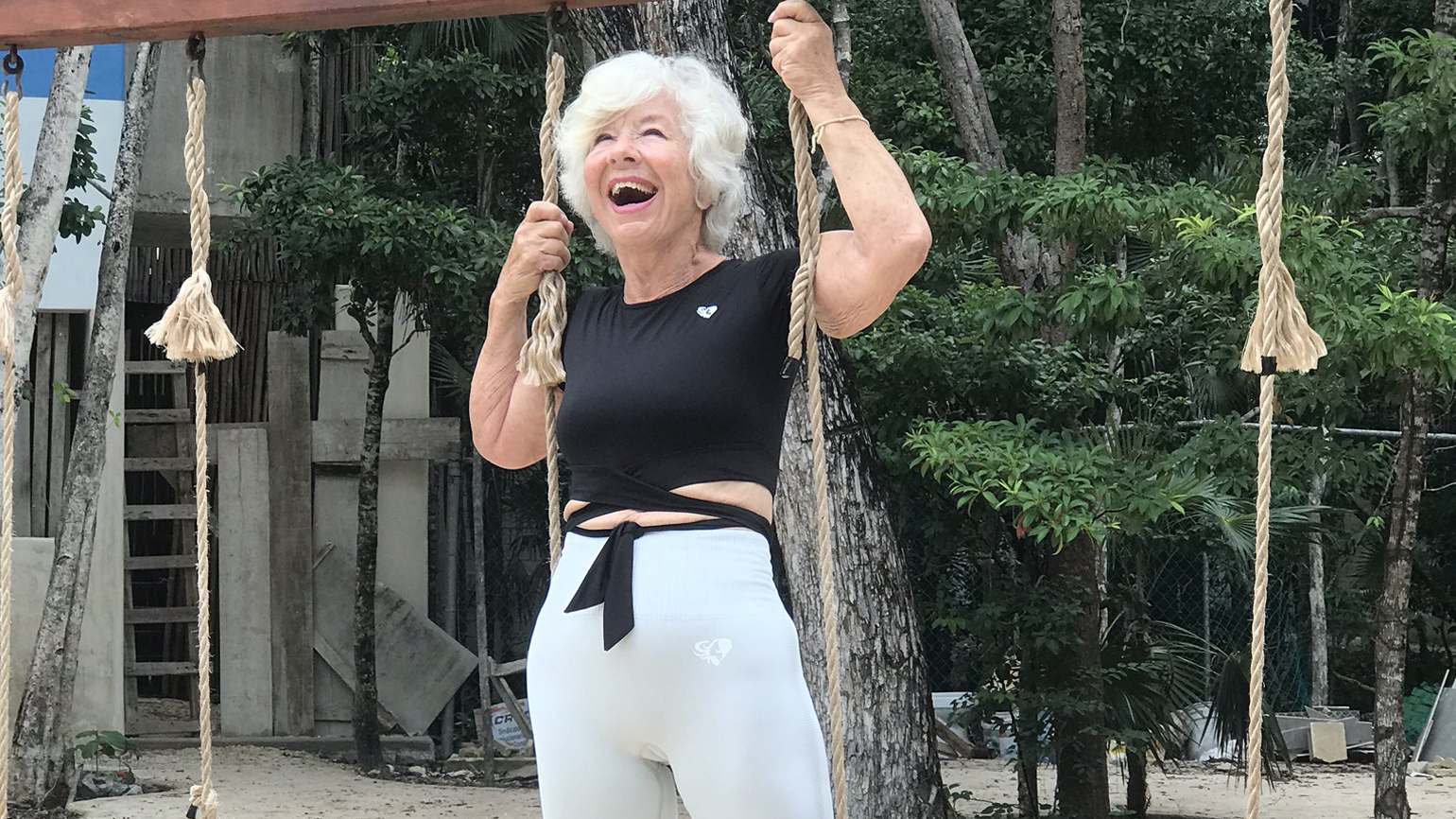
Getting fit can happen at any age, just ask Joan MacDonald.
The 75-year-old who hails from Ontario, Canada, started hitting the gym regularly just a few years ago at age 70. Back then, MacDonald was out of shape and at a low point in her life.
“I was very unhappy at the time,” she tells Guideposts.org about her routine before she started prioritizing her health. “I didn’t like where my life was going.” She was dealing with added pounds and a recent trip to the doctor only confirmed her fears that her health was declining.
“My medications weren’t working,” she recalls. “My blood pressure was way too high, and I also have kidney issues. They wanted to up my medication, but I was just like, ‘No, I don’t want more medication. There’s no way I want more. There’s got to be another way.’
After a particularly tough conversation with her daughter who’s also a personal trainer, MacDonald knew she needed to be the one to make a change. So, she got to work. More specifically, she got to working out.
In January of 2017, she flew down to Mexico where her daughter was hosting a kind of boot camp for women like her, hoping to shed some weight and feel their best. It’s there that the exercise maven learned how to document her journey on Instagram – an idea sparked by her daughter to keep her accountable once she flew back home.
“It was very grueling at the beginning because I had to learn the technical stuff as well as doing something phenomenal with my body,” MacDonald says of setting up her smartphone and creating a social media account. “I had to learn how to eat properly, how many meals to eat, and how to do my exercises, hoping that I got them done right.”
It was especially difficult because, while MacDonald was dealing with arthritis and swelling in her joints and all of the physical ailments that can accompany aging, she was also fighting against a generational mindset, one that didn’t look at exercise and eating healthy the same way we do now.
“I had thought about exercising but when I was growing up, we didn’t have gyms that women could join or if they joined, they were different from everybody else, that’s how they were thought of,” MacDonald explains. “I thought the gyms were for the guys.” She’d managed to stay active all these years and eat healthy by chasing after her children, taking care of her family, and prioritizing everyone else’s needs above her own. But when her kids grew up, those same habits meant MacDonald didn’t have many hobbies that got her up and moving.
Documenting her fitness journey on Instagram became that hobby.
A quick scroll through her photos shows Joan, now lean and strong, happily walking her followers through her daily gym routine, sharing workout outfit inspiration and her ideas for meal prep. She’s welcoming, understanding how impossible it can feel to start a fitness adventure at any age but especially as one gets older. Along with her nuggets of wisdom and hard-earned advice, she shares personal milestones and thoughtful sentiments about how to age gracefully. And she’s doing something right if her 1.3 million fans are anything to measure by.
MacDonald says most of those followers skew younger than those her own age. She suspects she knows why.
“I think it’s because a lot of them look at me and think, ‘I wish my mom was like that. I wish my grandma was like that,’ and that’s why they’re actually following,” she says. “They’re giving me a lot of good feedback, what they implemented into their lives and I’m blown away by a lot of them, what they’ve done. They just needed someone to show them the way. I didn’t know I was that someone.”
Since starting her journey, MacDonald has been able to ditch all of the medications she was relying on just a few years prior. She lost 50 pounds in her first year of exercising regularly. She knows how lucky she is to have family, friends, and online followers that support her, but she maintains that anyone can and should start putting their health first. She recommends finding a personal trainer if you’re new to working out, just for a month if you can afford it so that you can learn what exercises work for you and how to do them properly. Paying attention to portion sizes and making time to create clean, home-cooked meals instead of ordering takeout is another good rule of thumb.
But most of all, MacDonald thinks the secret to aging better is fairly simple: do the things you’ve always wanted to do, and do them now.
“Take life and live it,” MacDonald says. “Embrace it, because you only get to come this way once.”
Meeting Your Mom’s Needs on Mother’s Day When She Has Memory Loss

Who is your mom and what makes her happy? Any good Mother’s Day plan involves these questions.
But when your mom has Alzheimer’s, it can be no small challenge to come up with answers. Still, it’s crucial to consider these questions—and to open yourself to very real and present-day answers—in order to give your mom a Mother’s Day celebration that truly meets her needs, according to a physician who walked the walk with her own mom.
“Ask yourself, ‘Who is she?’ I don’t want to say, ‘Who was she?’ but, ‘Who is she?’ said Dr. Cheryl Woodson, a geriatrician, eldercare consultant, speaker and author who navigated her mother’s 10-year journey with Alzheimer’s.
“Inside there somewhere is that same person. Somebody who wasn’t a big party person, or only wanted a couple of her really close friends around, is not going to become one because you want to do that,” Dr. Woodson said. “So, you want to connect with what she might enjoy, not something you wish she could enjoy today. But, even if what you used to plan some was some huge, chaotic dinner, you can’t do that. You can’t bring her into your world. You have to go into her world.”
Dr. Woodson shared the following tips to help plan the best Mother’s Day possible for a mother who lives with memory loss:
Pare down
“If you’re trying to do something big that’s unfamiliar to her, ask yourself who you’re doing it for. Are you doing it for her or are you doing it to try to revise history and make things the way they were? Because they’re not. Do a small something in her own environment. Try to keep the spirit of the holiday without the details. The idea is to bring the love around that person without stressing their capabilities and then disappointing yourself. You can still do the big hats, if that was something that was important to her, or flowers or certain foods you made, but make it realistic for what her level of ability is.”
Keep it familiar
“People with dementia can get agitated when things are unfamiliar because what their brain is saying is, ‘I don’t understand what this is. I want to be where I understand what this is, and that’s home.’ Go very small and very simple. So, maybe you have a few people on Saturday and another few people on Sunday. If these relationships are on-going and she sees these people all the time, that won’t be a problem. Now, in the days of Zoom and videos, it may be better to film greetings, and then you show as much of it as that person can tolerate. You can put a pause on and play it again or play it later, so that she doesn’t get overwhelmed.”
Expect the unexpected
“You have to be flexible because what if she doesn’t want to get dressed that day? It’s okay. And you don’t want to try to force relationship if it’s agitating her. Have somebody to maybe go into another room with Mom and watch her favorite soap opera or her game show, or whatever. There needs to be somebody available who’s there not to be part of the celebration if she needs it, and that doesn’t have to be the caregiver. That may be a day, if you have the resources, to hire somebody.”
Make gifts about her
“Are the gifts important to you or are they important to her? I would do sensory things rather than ‘stuff’. When my mother didn’t know who she was, if you put on music, she could dance—you know, big band swing era. Did your mother enjoy music? Did your mother enjoy art? Is your mother’s favorite movie Casablanca?”
Put aside time for yourself
“This is the time, I think, to circle your wagons. Do not be afraid to tell your kids what you need from them. Maybe you can have your Mother’s Day on a different day, like the Sunday before or the Saturday after, so that you’re not competing with your mom, or you’re not focused so much on making her Mother’s Day perfect that you ruin yours.
“You also need to plan regular respite for yourself. Don’t wait until your tongue is hanging out. Plan something for yourself so you have something to look forward to. Whether you hire a respite worker or convince one of your family members to give you an afternoon off, it has to be regular—next Thursday I’m going to go get my nails done, or whatever. Area Agencies on Aging are a good resource for support. Churches and many other houses of worship have also stepped into this with caregiver and wellness ministries, where you may be able to have somebody who will sit with your loved one for an evening or afternoon so that you can go to a movie with one of your friends. Not somebody who’s going to do dressing changes or pass medications, but someone who will be there to share a meal. You will be a much better caregiver if you put yourself up on your to-do list a little higher.”
Let yourself grieve
“Any loss, any change in routine is a grieving. Acknowledge that for yourself—this hurts. Have support with that, whether it is a pastor or a counselor or a good friend or someplace safe where you can talk about how badly this bothers you. And then you go on and do it. It’s okay to say that this is hard and it’s not the way that you want it to be. It’s not okay to try to make it be what it was. That’s not good for you, that’s not good for her. On Mother’s Day, if she liked flowers, bring flowers. But don’t be upset if she doesn’t recognize what flowers are. It’s not a rejection of you. Her brain is broken. It’s like, ‘Woops! Okay, plan B. Next.’”
Meet a White House Pastry Chef!
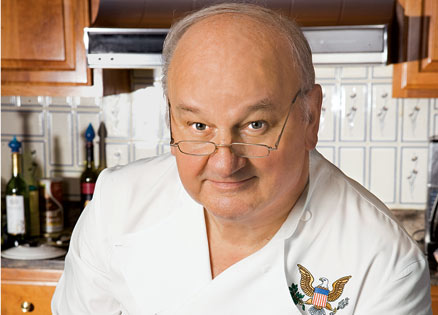
Once people find out I was the head pastry chef at the White House for 25 years, they can’t wait to hear more.
“What was it like, baking for the president?” “You had to fix the most extravagant desserts every night, didn’t you?”
Not exactly.
I admit, I was under the same impression when I first walked into the White House for a job interview one cold December morning in 1979. I was ushered into the famous Map Room. Mrs. Carter was seated in one of the red velvet armchairs. She invited me to sit next to her. We chatted for a while. Then she asked, “Roland, if you were to become the head pastry chef here, what sorts of desserts would you serve?”
I did not know her well enough then to know her tastes, so I told her what I myself liked to end a meal: “Simple desserts, based on fresh seasonal fruit.”
That same afternoon I was offered the job. Ah, I thought, perhaps feeding the First Family is not so different from the way my maman fed our family back in the village of Bonnay, in western France.
With nine children to raise, my parents did not have much money. But that didn’t stop Maman from cooking the very best for us. Everything had to be fresh, fresh, fresh! We kept chickens, rabbits, goats and sheep, and our vegetables and fruit came directly from our garden.
Though the chores were punishing, we never went hungry. And every time Maman baked cherry tarts, I was the first to run to the kitchen and breathe in the sublime aromas.
“Someday I’m going to be a patissier,” I’d tell Maman. I could not imagine a more wonderful calling than making pastries!
My parents understood. When I was 14, they sent me to apprentice with a pastry chef in the nearby town of Besançon. It was there I learned the art of decorative chocolate.
I went on to work at the Régence and the George V hotels in Paris, a pastry shop in Germany known for its marzipan, the Savoy in London, where I learned sugar sculpture, then the Princess, a resort in Bermuda.
Everywhere I worked, I saw that the right food could make people feel at home.
Yes, even in the White House. Of course, I created magnificent cakes and towering soufflés for formal dinners. But many nights, I found myself serving simple, down-to-earth desserts.
The Carters preferred Southern dishes like pecan pie with homemade ice cream or silky chocolate cream pie—President Carter’s favorite. I also kept a supply of sugar cookies on hand for 12-year-old Amy.
She loved to bake cookies in the family’s private apartment. I would send up the ingredients. She’d mix the dough, pop the cookies in the oven, then set off roller-skating. Inevitably she’d forget all about them. Smoke would be seen rising above the White House, while an acrid smell filled the corridors, sending Secret Service agents scurrying to my pastry kitchen. I’d direct them to the apartment.
The following morning Amy would sheepishly appear in my kitchen, explaining that she was supposed to take cookies to school. I’d hand her a bagful. “Thanks,” she’d say with a grin. I chuckled, knowing it would happen again.
Each family had their favorites. The Reagans loved having hamburger soup (their invention) on TV trays in the study. But no plastic for them, only the best china and silverware. Afterward, I’d bring President Reagan’s signature dessert—orange flourless chocolate cake.
Mrs. Clinton loved theme parties. One year, for her birthday, she asked me to bake a cake harking back to the 1950s. I created a jukebox with a sugar-sculpted couple dancing on top and chocolate LPs around the sides. “Roland, you’ve outdone yourself!” she exclaimed.
The Bush family was as big as my own. During George H. W. Bush’s term, his grandkids visited often and stopped in my kitchen for some of their grandfather’s favorite chocolate chip cookies.
It turned out to be true, what I thought that winter day I landed my job at the White House. Baking for the First Families was not so different from baking for my own family, for anyone I care for. I gave them desserts with a taste of home in every bite.
Try Roland’s Silky Chocolate Cream Pie (Tarte au Chocolat)!
Did you enjoy this story? Subscribe to Guideposts magazine.