Embrace God's truth with our new book, The Lies that Bind

Mysterious Ways: Calendar Message

Tears filled my eyes as I flipped over a page on my desk calendar to reveal today’s date: September 13. The first anniversary of my husband John’s death. I missed him fiercely, and the calendar’s daily inspirational messages often lifted my spirits when I was feeling particularly upset. I checked the day’s message. The page read: “Death is a new adventure in existence. No need to dread it or ignore it. Because of Christ, you can face it.”

Just the sort of thing I needed to remember. Life without John was hard on me. I’m a born worrier—John called me his ‘little worry wonk.’ I stressed over everything—public speaking obligations, the deadlines I faced in my job as a journalist, the safety of my friends and family. “Relax,” John always said. “If something is out of your control, worrying just wastes your time. You’re letting negative thoughts overwhelm you.”

I knew he was right, and I’d calm down—until I found something new to fret about. After John passed away, the grief only compounded my stress. I missed his soothing words of wisdom.

I stared at the page of the calendar. What a coincidence that this message came today, of all days, I thought. I should save it.

I tore September 13 from the calendar and held the page in my hand. That’s when I noticed the date printed on the other side. April 19.

John’s birthday.

I turned the page over and read the message. “Destructive anxiety subtracts God from the future, faces uncertainties with no faith, tallies up the challenges of the day without entering God into the equation. Worry is the darkroom in where negatives become glossy prints.”

Exactly the words John would want his little worry wonk to hear.

My Spiritual Challenge: To Be Still

I love to be busy and this summer I’m not. I’m not writing a book, leading a conference or shooting a video—all things I’ve enjoyed doing this past year. On top of all that, I’m practically an empty nester. After having a household of seven children just a few years ago, I’m down to one child at home, my 17-year-old son Hunter.

All this free time makes me a little anxious. Not having deadlines and the pressure to produce leaves me nervous. It sounds crazy, but without a daily list of things-to-do, I’m out of sorts.

The more I think about it, I realize I depend on accomplishment to feel good about myself. When I don’t have tangible results to show for my day, I’m more likely to feel down and tense. I looked up anxiety in an online Bible concordance, and found the apostle Paul’s beautiful words about it in the book of Philippians.

“Do not be anxious about anything, but in everything, by prayer and petition, with thanksgiving, present your requests to God.” (Philippians 4:6)

Prayer. Most of my prayers are breathed heavenward while I’m jogging. But since my stress seems to increase when I’m not busy and active, I feel drawn to try stillness. Every morning I’m taking some time to be still. I pull a chair on my back porch into the sunshine, sit, close my eyes, breath deeply and enjoy the warmth. I hear bird chirps, and feel life in me and all around me. After several deep breaths, I describe how I’m feeling to God and listen.

Meditation and prayer are time-honored spiritual practices for finding direction and peace. The Psalms say, “Be still and know that I am God.” It’s my hope that slowing down each morning will help me to relax and love myself as a child of God even when I don’t have a million things to accomplish.

—–

Get more advice from Theresa!

Find all you need to know on whole-person
wellness in
Shaped by Faith.

Theresa is a former model and nationally certified fitness professional who teaches people to use their faith to inspire fitness and their fitness to strengthen their faith. She is the author of Shaped by Faith: 10 Secrets to Strengthening your Body & Soul, and two exercise DVDS: Pilates for the Soul

She and her husband, Robin, have seven children and live in Calhoun, Kentucky.

You can email her with any questions or concerns.

My Sister’s Mistaken Identity

I sat across the desk from the head of the university’s physical-therapy program.

“You received an education degree six years ago but never worked as a teacher,” she said, peering at my résumé. “You waitressed at Olive Garden, then quit last spring. Help me understand why you want to learn to be a physical therapist.”

I could tell she thought I was just another young person with no direction. A year ago she might have been right.

I was happily living at my parents’ home in Michigan, taking life as it came (or not). But that was before the accident. I took a deep breath. “Let me tell you,” I said, “how I got here.”

Five months earlier, in April 2006, my little sister, Laura, was in a horrible crash. A senior at Taylor University in Indiana, she was riding in a van with eight other students and staff, returning from working at a college banquet.

A semi crossed the interstate median and crushed the van. Five passengers died. Rescue workers found Laura’s body 50 feet away, her purse nearby. Her injuries were so severe and disfiguring that the proximity of her purse was the only way paramedics could put two and two together and identify her.

My parents and I rushed to the hospital in Indiana, three hours away, where Laura lay in a coma. We lived by her side, praying for a miracle. My two younger brothers, Mark and Kenny, joined us as often as they could take time off from work.

That first night in the ICU she looked like a mummy, her head wrapped in bandages, her sparkling blue eyes hidden behind bruised and swollen eyelids. About all that was recognizable were the tufts of blonde hair sticking up through the bandages.

My sister—the outdoorsy athletic girl, the one I’d taught to play guitar—seemed far away, beyond my reach, but not beyond God’s.

In a couple of weeks they took off some of the bandages. A few days later she opened one eye and slowly emerged from the coma. It was incredible—a front-row seat to God’s healing power!

The transformation was so amazing that some days it seemed like she was a different person.

Her recovery filled me with awe. God must have something pretty important planned for her—big enough to preempt death. I wondered if I was part of this plan too.

Before the accident, just thinking about hospitals made me squeamish. Now, I was focused on helping Laura. I quit my waitressing job to be with her, assisting with her physical therapy and just talking to her, even though she couldn’t say anything back yet.

Three weeks after the accident we moved Laura to a rehabilitation center in Grand Rapids, Michigan, only 40 minutes from our home. She was doing well enough that we felt comfortable sleeping at home. Each morning I leaped out of bed to get to the center for Laura’s physical-therapy session. My parents usually came along.

One day the director called me into her office. “You’re doing great things with your sister. You have a lot of natural skills,” she said. “You should think about becoming a physical therapist.”

I laughed. “I appreciate the compliment,” I said. “And the career advice. But you wouldn’t think that if you knew how bad I am at science. I’m just here to help Laura.”

One morning in late May, about five weeks after the accident, I mentioned to the therapist that Laura hadn’t been outside. “Well, then, it’s time we took her,” she said. I pushed Laura’s wheelchair alongside a fountain, then took her hand and dipped it in the water. “Cold,” Laura said.

“That was a great idea,” the therapist said. “You’re helping her brain make connections again.”

All the things I’d been doing in the last few weeks, strengthening Laura’s hands and arms, doing small exercises for manual dexterity—it was exciting to be part of her healing. I felt a real sense of purpose.

Except, it was the oddest thing. The more Laura became herself, as her ability to speak returned, as bandages were removed, somehow the less she seemed like the Laura I knew.

“Good work,” the therapist said as we left the fountain. “Laura, can you thank your sister?”

“Thank you, Carly,” she managed to say with some effort.

“Carly? Why did she call me that?” I asked the therapist.

“It’s normal for her to be confused,” she said. “Give her time.”

Still, I was alarmed. Frightened. I tried not to think about it, but I couldn’t get over the haunting feeling: What if this wasn’t Laura?

In the next session, we sat two feet apart, tossing a beach ball back and forth. I stared intently at her face, still distorted by the accident, trying to match every detail against my memories of Laura’s. After the session, I knelt so we were eye to eye. “I want to ask you a question. Can you tell me your name?”

Slowly, with great effort, her mouth formed the word: “Whitney.”

“You’re doing so well,” I said, squeezing her hand. My mind was racing. “What are your parents’ names?

She haltingly said, “Newell and Colleen.”

Our parents were Don and Susie. She wasn’t my sister.

I wheeled the young woman—suddenly a stranger—back to her room then rushed to find Mom and Dad. They were sitting on a bench down a hallway. “She’s not Laura. Her name is Whitney,” I gasped.

Mom and Dad said they too had begun to question whether it really was Laura. But they had been waiting to see if I shared their doubts. It all seemed so unreal and impossible. She looked so much like Laura, same blonde hair, same athletic build. How could it not be her?

I slumped on the bench and my parents went to tell the rehab center’s director our fears. All that time I’d spent with her. All that I was doing for her. God, how could I have not known she wasn’t my own sister?

Finally, my parents returned. “Her name is Whitney Cerak. She’s a freshman at Taylor,” Dad said, holding my hand. “The director called the coroner’s office in Indiana. Their guess is that a paramedic put Laura’s purse next to Whitney on the rescue helicopter and at the hospital they assumed the ID was correct. I’m going to call the boys and ask them to meet us at home.”

It hit me as I sat in the backseat of the car on the drive home: My baby sister is dead. I’ll never see Laura again. I felt too stunned to process the information, my mind and heart on overload.

My dad pulled the car into the driveway and there were my brothers, Mark and Kenny. For the longest time we all held each other, grief spilling over.

That night, lying in bed, I struggled to make sense of it all. God, you have to know how much this hurts. Why would you put us through this?

I had been wrong about so many things! God hadn’t saved Laura’s life. He hadn’t needed me to take care of her. I hadn’t been singled out for anything. It seemed such a cruel and senseless thing for our family to go through.

The next morning all I wanted to do was stay in bed. Normally I would have been in physical therapy with Laura by this time. Except it wasn’t Laura—it was Whitney. Whitney’s family was with her now, rejoicing in their own miracle.

The days that followed were like a whirlwind—me singing at the memorial service, more than 2,000 people attending, a private burial, a constant barrage of calls from the media.

The bizarre story had gone national, then global. I lived in a kind of depressed daze. The grief was less raw, but the confusion was deeper. I felt like I was emerging from my own coma, searching for my own identity.

There was only one lesson from all of this that was painfully evident: Life is short. I needed to find something to do, something to help me get out of bed in the morning. But what? I’d quit my job.

My mind kept circling back to what I’d lost: Laura and those physical-therapy sessions. There had to be something else.

What was I missing? Then I remembered the conversation with the rehab center’s director. What had she said? “You have a real gift for this, a lot of natural skill.”

Working with Whitney had been an amazing experience, perhaps the most fulfilling of my life. Had God been trying to tell me something? Could I actually have been where he wanted me to be all along, helping Whitney?

I needed to talk this through with someone. I grabbed my cell phone and called my best friend. “I’m thinking about going back to school to study physical therapy,” I told her. “Am I crazy? You know I did awful in math and science.”

“Tell me why you want to do this,” my friend said.

“All I know is that I want to help other people’s Lauras,” I answered.

Now months later that was the same answer I gave to the head of the university’s physical-therapy program.

She nodded. “I think there’s more to it than that. Physical therapists see what’s possible, beyond what the patient can sometimes envision. They help patients realize what they’re capable of. Maybe that’s why you’re here today. You were able to help Whitney.”

Last spring I graduated from the two-year program. Last May Whitney graduated too, from Taylor, on schedule.

I sat in the audience as she crossed the stage to receive her diploma, a lump in my throat as I thought about all those nights I sat by her side. We’ve become good friends. After the ceremony I gave her a huge hug. “I’m so proud of you,” I said. “You’ve come so far.”

And I had too, a journey that took me from grief and tragedy to an incredible healing of my own.

My Inner Spartan

Editor’s Note: Welcome to Day 12 of Guideposts’ 14-Day Fitness Challenge! We’re sharing stories that will inspire you to eat better and get in shape so you can feel your best. Today’s challenge is to fit your passion into your workout. If you’re just joining us, check out our previous challenges here.

The theme song from the movie Rocky blasted from the sound system. “Gonna Fly Now”? Yeah, right. I’d never been more earthbound in my life.

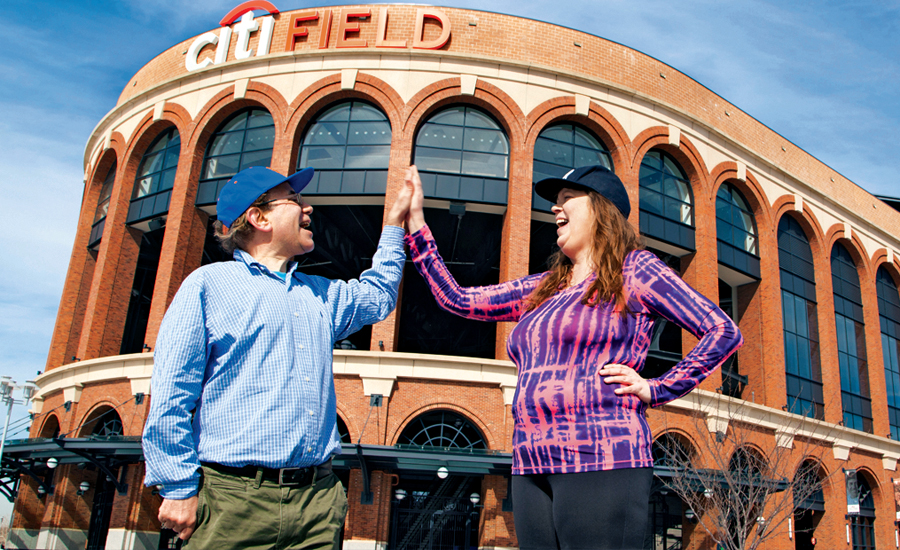
I was sprawled facedown in the center-field dirt at Citi Field, the home of the New York Mets, where professional baseball players slugged home runs and made SportsCenter Top 10 catches. Where amateur athletes were strutting their stuff for the day in the Spartan Sprint, a popular obstacle race. I’d signed up for the race, but that must have been in a fit of insanity. Or stupidity.

I didn’t belong here. I was 47 and overweight, despite how hard I’d been working to get in shape. I wasn’t an athlete. I never had been, not since a childhood bout of encephalitis left me with impaired coordination. I was the tallest and gawkiest girl in my grade, the last to be picked in gym class, and teased by other kids.

Maybe God didn’t make me athletic, but he did make me good at one thing involving sports—being a fan. Growing up 10 miles from New York City, I became a die-hard Yankees fan.

My love for the pinstripes didn’t fade with adulthood. I launched and wrote Subway Squawkers, a Yankees-Mets blog, with my friend Jon Lewin, a fan of the Queens team. It probably wasn’t a coincidence that he wasn’t an athlete either. I guess those who can, compete; those who can’t, blog.

As our blog grew in popularity, my physical condition declined. My doctor diagnosed chronic bronchitis and told me that my lifestyle had to change. So I quit smoking. But you don’t kick a 20-year habit without picking up something else. For me, it was food. Potato chips, Big Macs, Twizzlers.

READ MORE: FAITH MADE HIM FIT FOR LIFE

With that diet and spending most days sitting at a computer—besides blogging, I was a proofreader and copy editor at an ad agency—no wonder I put on weight.

Still, I was shocked to see the number on my scale reach 252. That was way too heavy, even for my six-foot frame. I was sick of being fat, of being so out of shape that climbing the subway stairs winded me. Maybe God didn’t make me athletic, but he didn’t make me an unhealthy mess, either. That was my own doing.

If I wanted to get healthy and fit, that would take my own doing too. I worked up my nerve and joined a gym. I also joined Staten Island Slim Down, a weight-loss support group. The other members were like me—middle-aged, overweight, unathletic—so I didn’t feel so self-conscious. Actually, seeing the others doing their best to live healthily inspired me. I even started jogging with the Staten Island Athletic Club.

One day the blog got an e-mail from someone at the Spartan Race company. He asked if we would promote the upcoming Spartan Sprint (one of their shorter races) at Citi Field, figuring our Mets fan readers would be into competing at the ballpark where their favorite team played. He offered us one free entry into the race.

I clicked the link in the e-mail to find out more. The Spartan Sprint would be just over three miles, with more than 15 obstacles set up around the ballpark. The course was “designed to help you discover your inner Spartan.” I showed Jon the web page.

“Wouldn’t it be cool to run around parts of the ballpark where fans normally never get to go, like the dugout and the outfield?” I said. I didn’t say what else I was thinking. Wouldn’t it be even cooler to accomplish something athletic?

“Not my cup of tea,” Jon said. “But why don’t you do it? I’ll go and root for you.”

Was this my chance to be a competitor, not just a fan? I threw aside my misgivings and registered for the race. I had 10 weeks to get ready. I got up early to work out. Did more cardio. Weights. Push-ups. Crunches.

But when Jon and I arrived at Citi Field for the Spartan Sprint, I feared I’d made a big mistake. Participants ran the course in waves. Some were running up the stadium steps carrying sandbags. Others were throwing spears farther than I could throw a pencil.

All of them were hard-bodied twenty-somethings. They actually looked like Spartans from the movie 300. Like grown-up versions of the kids who used to tease me in gym class.

I took a step back, right into Jon. “Sorry,” I muttered. “I was crazy to think I could do this.”

“Lisa, you’ve been training hard,” he said. “No one’s saying you need to win this race, but you owe it to yourself to try.” Jon was right. If I didn’t try, I’d never know what I was capable of. Except quitting.

READ MORE: THE ZUMBA CURE

The race started with me crawling on my hands and knees up a ramp without dislodging the bungee cords that were stretched over it. I moved on to jumping with a weighted rope. Hopping up stairs with a giant rubber band around my calves. Then came the spear throw—which I failed miserably at, as did most of the participants in my wave.

I did better with the Hercules Hoist—pulling a massive weight on a pulley. Some of the obstacles were fun, like running in the Mets’ dugout. Others, not so much. Like doing 20 hand-release push-ups in the visitors’ locker room. That gave me some nasty carpet burns.

Jon cheered me on. He got to see me toss a medicine ball—a breeze, thanks to those early-morning workouts. He also saw me fall off the monkey bars.

Finally I got to center field and the last three obstacles. A rope climb, a climb over multiple walls, and a cargonet climb. Why did they all have to be climbs? I’d never been able to get halfway up the rope in gym class, even with the teacher’s help. No way could I do these climbs on my own. It’s okay, I tried to console myself. You finished most of the race.

I dropped my head in defeat. One of the race trainers noticed. He reminded me that if I couldn’t do an obstacle, I had another option—do 30 burpees. A burpee? Sounds innocuous, right? Wrong.

A burpee is like a push-up on steroids. You squat, kick your legs out behind you, do a push-up, bring your legs back to the squat position, then jump straight up in the air. The Spartan taskmaster—I mean, trainer—insisted on proper form. It was torture to do a single burpee, and I had to do 30…for each obstacle remaining. That meant a total of 90 burpees!

But it was the only chance I had of finishing the race. Of not being a quitter. I squatted, kicked my legs out. By the fifth burpee, my arms were shaking. On the sixth, they gave way.

That’s how I ended up doing a face-plant in the center-field dirt, “Gonna Fly Now” blaring in the background, taunting me. Then I felt a familiar presence. God was with me, telling me above the music, C’mon, Lisa, you’ve got this!

I picked myself up out of the dirt and went back to burpees. I couldn’t do two in a row without a break. But eventually I completed all 90. With proper form. “Good job,” the trainer said, clapping.

I crossed the finish line with a zip in my step. A race staffer put my Spartan Sprint finisher’s medal around my neck. I burst into tears. I cried so hard Jon thought I’d hurt myself. But they were tears of joy and accomplishment.

Maybe God didn’t make me athletic, but he made me capable. Of getting fit. Of finishing the race. Of loving sports as more than a fan. Those who can, compete. And those who can write, blog about it. Just call me Spartan.

Download your FREE ebook, True Inspirational Stories: 9 Real Life Stories of Hope & Faith.

My Angel Is a Cancer Survivor

Today my angel is a cancer survivor.

I’m due for my yearly checkup with the oncologist. When he told me last fall that I’d “graduated,” and no longer had to see him every six months, I was thrilled. How far I’d come from having to see him every three! If he was convinced I was cured, I should be too. Right?

And usually I am a pretty positive thinker. Except when I have to make that now yearly appointment, and while I’m waiting for the doctor to come into the room for my exam.

The New York Times featured a piece by Julia Baird recently called “Getting the Diagnosis.” She wrote movingly about waiting two weeks for surgery, making her young children their school lunches and making out her will. Her suspected diagnosis was advanced ovarian cancer, probably spread to the liver.

Find out more about one of Guideposts.org’s sponsors: Cancer Treatment Centers of America

After a five-hour operation and eight days in intensive care, she learned in fact that her ovarian tumors were not malignant. She had another, rare, nonaggressive cancer, and though it can recur, it has a much higher survival rate. She is optimistic, for good reason. But it seems she was optimistic even when she had no business being so.

Her doctor recently asked her how that was. “I prayed,” Julia said. She wrote (as if just for me) that she prayed so hard she grew unnaturally calm, that stillness and faith can give you extraordinary strength. “I locked out negativity and drama, and drew my family near. I tried to live deliberately.”

So enough of my drama. I have an appointment to make.

My Adventure in Self-Publishing

We are all storytellers. Indeed, there are many who believe that the desire and ability to tell stories is a primary characteristic of being human. There’s a reason God made us this way.

When we choose to step out in faith, take a risk and share our stories–whether around the dinner table with our family, over a cup of coffee with a friend, through the pages of a book or in the digital glow of an e-book–beautiful and amazing things can happen.

Through the power of God’s grace, our hearts are opened. We realize we are not alone with our various human frailties, fears and failures. In a word, we connect.

In the most delightful way, God uses our stories to help us as well as others as we travel along life’s journey. And if getting a story published is something that God wants for His good purposes, then nothing can stop it from happening.

At the same time, God has a way of doing things in His own time, in His own way.

I’ll never forget the summer afternoon I met with my editor at Guideposts Books to discuss the first draft of my memoir, Lost & Found: One Daughter’s Story of Amazing Grace.

As with my previous books, I was working within a traditional publishing arrangement. I had a contract with a deadline and had been paid a modest advance. I had worked on the book non-stop for nearly a year, and this meeting marked the half-way point in the book’s progress. She opened the black plastic loose-leaf binder with my three-inch thick 225-page manuscript, looked at me kindly, and shook her head.

Uh-oh, I thought. I’d had enough meetings with editors over the years to know that look.

“Oh, Kitty,” she said, “you’re off to a great start. But you’ve got a lot more work to do. Delightful as many of these stories are (she pinched a good half-inch of the manuscript) they do not work for this book.”

My heart sank.

“Don’t worry,” she smiled brightly, and patted my shoulder. “They will be perfect for your next book.”

“My next book?”

“Yes,” she said. “Your next book.”

But I haven’t even finished this book! I thought with dismay. Any “next book” seemed impossibly far away.

Still, deep down inside I knew my editor was right. Lost & Found was an inspirational memoir specifically about forgiveness, reconciliation and healing–the healing of a wounded relationship between my mom and me, plus the healing of my eating disorder–and in order to tell the story fully and honestly, I would have to stay focused like a laser beam on those themes, and those themes only.

But my life consisted of so much more than the story told in Lost & Found! I thought. There were so many more tender moments shared with my parents, children and husband… so many more important life-lessons learned… so much more laughter and joy! For my family especially, I wanted to share, as the late, great radio legend Paul Harvey would say, “the rest of the story.”

After the publication of Lost & Found (with its necessary specific, limited narrative and themes) it was my heart's desire to get "the rest of the story" out, to create a more fully developed portrayal of my parents. I guess you could say I deeply wanted to honor my mom and dad, who were wonderful people, and who did a great job as parents.

So I got to work on a collection of true, first-person stories that follow the narrative arc of an everyday mom, daughter, sister, wife and friend and explore the joys and challenges of life’s changing seasons… from being a young mother… to being a member of the “Sandwich Generation”… to being an empty nester and losing my mother… to being a joyful mother of the bride.

I called the book Heart Songs: A Family Treasury of True Stories of Hope and Inspiration, and as I do with every book I finish, I said a little prayer: “God, this book belongs to you. If you want to get it published, show me the way.”

I then shared the manuscript with David Morris, the Editor-in-Chief at Guideposts Books, who surprised me with his response. “Kitty,” he said, “I think this would be terrific for our new self-publishing line, Inspiring Voices.”

Self-publishing? My initial reaction was one of vague suspicion, and, truth be told, I was a little hurt. Heart Songs was my seventh book. I thought only first-time authors self-published.

David explained to me that Guideposts Inspiring Voices is what is known as a “non-traditional indie publisher” and detailed the advantages, including not needing an agent. The author also gets to decide what text, title, cover, images, illustrations, fonts, and so on, are used in the book. The timeline from start to finish is much quicker than a traditional publisher, which can take two or more years to complete. With the development of new “print on demand” and e-book technologies, self-publishing is far more cost-effective than it used to be, and as a result it is becoming increasingly popular with both established and first-time authors.

Most importantly, David emphasized, there is no longer any stigma associated with self-publishing. Indeed, many believe that indie publishing is the wave of the future, as indie books can be creatively and successfully marketed through social networks and Internet book vendors. He encouraged me to visit the Inspiring Voices website to learn more, which I did, and I was impressed.

I talked it over with my husband Tom, and I remembered my prayer, asking God to show me the way… The answer was clear: Yes, I would publish Heart Songs with Guideposts Inspiring Voices. And thanks to Inspiring Voices, I have been given the opportunity to create a beautiful new book–just the way I want it, complete with photos and original illustrations–for my family, friends–and readers everywhere.

Heart Songs is available from Amazon.com as well as InspiringVoices.com.

Watch as Kitty Slattery discusses the Inspiring Voices Book Publishing Contest.

Motivational Story: Advice from Sam Bracken

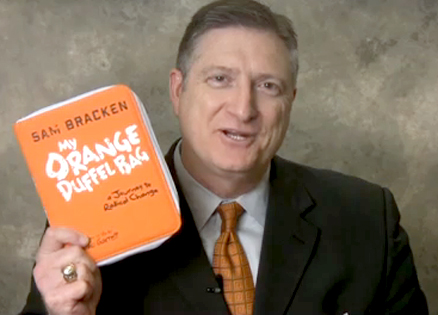
– Hi. I’m Sam Bracken, and I’m the author of “My Orange Duffel Bag, A Journey to Radical Change.”

[MUSIC PLAYING]

I tell people, growing up in my household was like a whacked-out version of “The Brady Bunch” on an episode of “Cops.” It was just really unusual. My family– really, my parents were heavy drinkers and used drugs openly. My siblings were in and out of trouble a lot. And in the environment that you’re supposed to be cared for and nurtured, it had a lot to be desired. I was exposed to unspeakable things as a child. But as a result of doing that– trying to cope with such struggles at home– I became good at a couple of things. I became good at running and football, because I was big for my age, and I loved, you now, taking out my frustrations on the football field. And I was rewarded for it, you know. They’re like, “hey, good job if you try to kill this person in front of you.”

When I was 15 years old I was homeless, and I was bouncing from school to practice to work. And everything I owned fit in this little orange duffel bag. Right. And as I’ve– as I’ve lived my life, I understand that the metaphor of a duffel bag is a fabulous metaphor. You know, we all have bad things that happen to us. And we can pack our bags with a bunch of junk and smelly things, and open it– and periodically open it– and wonder why there’s– our life’s a mess and why things stink. Or we can pack our bags with all of our hopes and dreams. It’s up to us. So I chose to– to pack my bag with hopes and dreams. And– and so that’s the reason we called it “My Orange Duffel Bag.”

The reason I was so open sharing my past with everyone was about 10 years ago, I was working as a volunteer at a prison– a full, a maximum security youth prison, where I lived. And I would– every Wednesday night and every Sunday, I would spend time with very– kids with a lot of trouble. I mean, they were in this prison for aggravated sexual assault, first degree murder, and they had a 99.5% recidivism rate. And so these kids were sort of, they’re at their last place before they spent the rest of their life in federal penitentiary.

And I worked with them for about a year. And I remember being really frustrated and saying, you know– coming home one night I said, I don’t know if I can do this volunteer work anymore, because I just don’t seem to be making an impact. In my– and I was telling this to my wife, my sweet wife, and– and she said, well, let me ask you a question, Sam. Have you have you shared with them what your past was like?

And I said, no, not really. You know, I’ve spent the first 35 years of my life packing that in a– in a back room and locking the door. She said, honey, you’re never going to get through to these kids unless you tell them what you’ve been through. So I took her advice, and I came back and I started opening up to these kids. And it was amazing the transformation that happened in my relationship with them and the common ground that we stood on, and how we were able to work through things together.

And two years later when I stopped– when I had to stop doing it– my life was never the same. And what I realized by doing that, is that everybody has a story. Everybody suffers. Everybody has pain. And oftentimes, if we take that pain that we’ve suffered, and we use it as empathy to help others, great good can come out of it.

And that was our approach to this book. You know, we wanted good to come out of it. We didn’t want to play victim. We wanted to use the suffering as a way to gain empathy and connect with people to help them change, learn, and grow regardless of their circumstances.

[MUSIC PLAYING]

Mother Teresa’s Legacy of Love

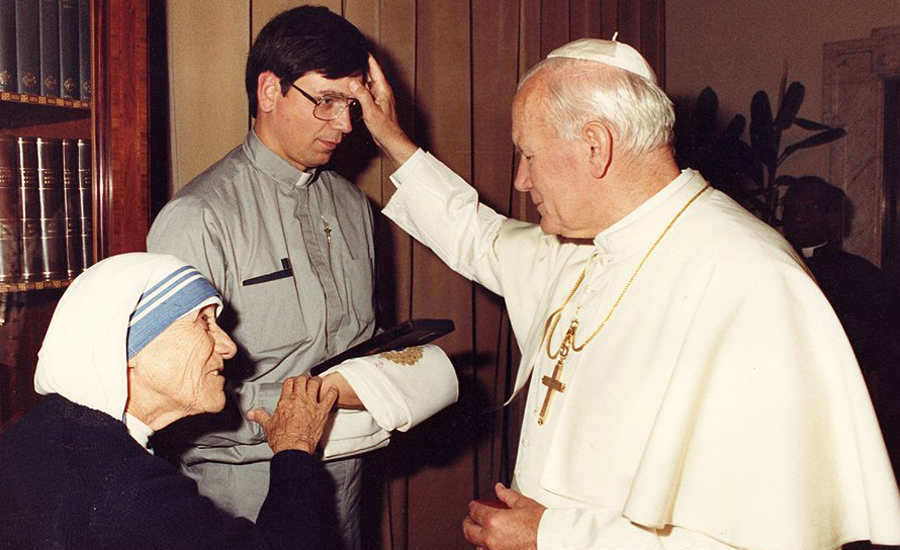
Nearly 20 years after Mother Teresa’s passing, the Catholic Church will canonize her as a saint. Known worldwide for her devotion to the poor and the dying, Mother Teresa’s legacy lives on in the hearts of all whom she blessed.

Father Brian Kolodiejchuk is one of the millions of people whose life was forever changed by Mother Teresa. Today, Father Brian is the director of the Mother Teresa Center and the editor of A Call to Mercy, a collection of testimonies of her impact. But in 1977, the man who led the charge of Mother Teresa’s canonization was just a 21-year-old seminary school dropout who was looking for direction in life.

READ MORE: A FAITH LESSON FROM MOTHER TERESA

That June, Father Brian traveled with his family from Canada to Rome to meet Mother Teresa and she encouraged him to enter the brotherhood. “I was so shocked I didn’t say anything,” Father Brian tells Guideposts.org of his reaction to Mother Teresa’s encouragement. Then a young man, Father Brian had a steady girlfriend and was thinking of marriage—something priests cannot do, with a few exceptions. But Mother Teresa’s words stirred in him.

“The next day in the morning, in the convent, I saw her and I went up to her and asked her what did she mean [that I should join the brotherhood] and she said she just wanted me to stay [in Rome] right then and there and not even go back to Canada, but I couldn’t stay,” he says.

He went back to Canada and had a “difficult” conversation with his girlfriend about the new call he felt over his life, thanks to Mother Teresa. Just a few short months later in September, he returned to Rome and has been living his vocation ever since. Father Brian shared with Guideposts why Mother Teresa still matters.

GUIDEPOSTS: What do you think is maybe the most important thing that people should know about Mother Teresa and who she was and what she stood for?

FATHER BRIAN KOLODIEJCHUK: I’ll keep with this theme of kindness, of love for your neighbor. From the book, A Call to Mercy most of those stories [of what Mother Teresa did] are anecdotes. They’re things that everyone could do. We could all do them. She would say, “Small things, great love. Ordinary things, extraordinary love.” And she would say, “You don’t have to go to Calcutta to find the poor… Calcutta is everywhere, even in your own family.” She went out of India into the West. She discovered that – she would say, “The greatest poverty in the world today is to be unloved, unwanted, uncared for.” And that you can be rich, you can be middle-class–it doesn’t matter exactly your material situation. So that if we pay attention, if we look if we…we’ll be able to discover right around us people who need that little gesture a smile even. A little gesture of kindness, a word of kindness, a small favor.

GUIDEPOSTS: So knowing what you know about Mother Teresa and her life, why do you think she was able to have the kind of connection with God that she was able to display? How did she get to be this person that we all recognize?

FB: She said from childhood Jesus was her first love. She was a woman passionately in love with Jesus. Really she made a resolution as a young woman to love Jesus as He has never been loved before and to really take that seriously is quite a daring kind of desire and resolution. You can see that when she really defines everything according to or relating to Jesus. Suffering is related to Jesus kissing you. So another good example, she would say, “Well you have this love for God inside but it needs some incense to make it burn. And that incense is the suffering.” So on one hand the whole work of the mission is a journey to relieve suffering. The whole book A Call to Mercy is about that, on one hand. On the other hand, while we are suffering we can give it value, a spiritual value with eyes of faith. She would say, ‘Give whatever He takes. Take whatever He gives,’ with a smile.

GUIDEPOSTS: Based on the title, would you consider your book a call to action for people?

FB: Yeah, that’s why you see at the end of each chapter there’s some examples of how the reader could practice [the lesson]: Look at Mother Teresa, what’s her example? And then see well how can I do that In my life, in my family, in my work, where I live? In the different groups or communities that I’m involved in, how can I practice this mercy, this compassion, these ordinary things with great love. So the challenge is to look for those opportunities because they are certainly around us if we pay attention.

A friend of mine, right at the beginning of his acquaintance with Mother Teresa, asked, “Mother, how do you love? What does that mean?” And she said very simply, “Well just serve the people out of love for Jesus and that’s loving.” It’s a very simple explanation: Do works, acts of service, do it out of love for Jesus. All of us Christians could do those things. We just need to pay attention.

More Than Love Alone

Everything was coming together for me. I’d landed my dream job, covering the White House for the Christian Broadcasting Network. I’d found a great apartment in suburban Virginia and took the train to work, an hour and a half commute each way. But I didn’t mind. To me that was a mark of success, proof that all those years of hard work had paid off.

Best of all was the present I got that October, 2008, when my boyfriend, Michael, flew in from Texas for my twenty-eighth birthday. That night on the National Mall he asked me to spend the rest of my life with him. “Yes!” I screamed and threw my arms around him. Nothing had ever felt so right.

I couldn’t wait to tell my family. They were happy, of course—they loved Michael. But there was a shadow of hesitation in their voices. “Are you certain about this?” my mother asked.

“Mom, don’t worry,” I told her. I had, in fact, given it a lot of thought. Prayed about whether Michael was the one. It wasn’t something we’d rushed into. We’d known each other for eight years.

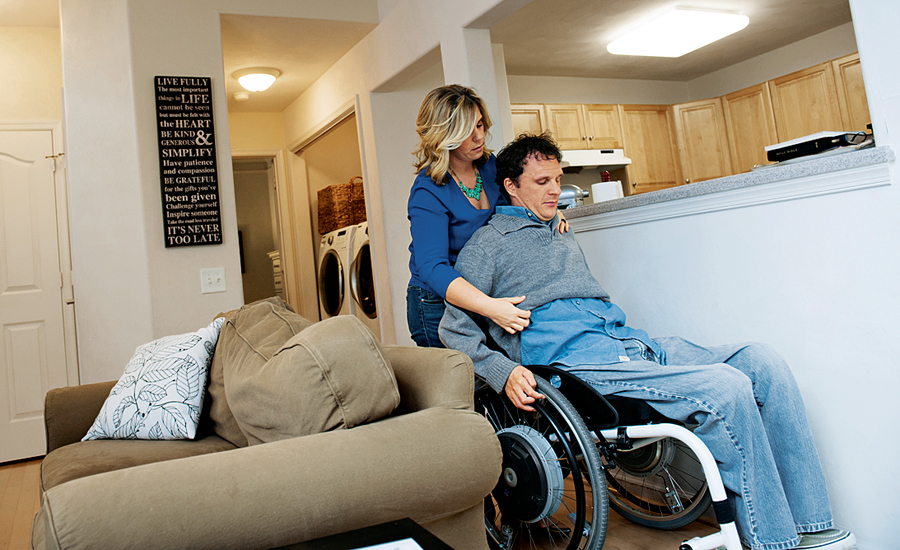
Not that I didn’t understand what my mother was concerned about. Michael is a quadriplegic, able to move his biceps, but otherwise paralyzed from the neck down, the result of a high school gymnastics accident. But when I looked at Michael I didn’t see the man they saw. I saw a vibrant, upbeat, can-do kind of guy.

He was 31, studying web design online. He’d lived on his own for years in Texas with the help of aides. There were things I’d need to do to care for him, of course, like helping him into his wheelchair in the mornings. But I could do that. I wanted to.

Caring for Michael was an act of love, the true measure of how much he meant to me. I persuaded him that we wouldn’t need aides once we were married. I didn’t want strangers in our bedroom. I didn’t want anyone coming between Michael and me, intruding into our personal space. He wouldn’t need aides when he had me.

I clung to that idea for the first year of our marriage. I woke up at 3:00 a.m. five days a week to get myself ready for work and see to Michael—bathing him, dressing him, lifting him into his wheelchair. Then at night doing it all again, only in reverse.

I kept telling myself it would get easier, but I was losing weight; my hair had started to fall out from the stress. That winter, when the alarm went off, it was all I could do to crawl out of bed. One day I almost didn’t. I felt awful—achy, my throat scratchy. But I couldn’t call in sick. I had to get to work. And who would care for Michael but me?

Read More: Tips for Caregivers to Care of Themselves

I felt my way to the bathroom and took a shower, then went to the kitchen and made coffee and lunches for Michael and me. Michael couldn’t grip anything but he could use silverware and pick things up with the help of a leather strap that attached to his arm.

Back to the bedroom. Three-forty-five a.m. Already running late. I had to be at work by seven. I turned on the light and gently stroked Michael’s face. “C’mon, honey, it’s time to wake up.”

I wrapped my arms around him and slowly raised him to a sitting position. Got a washcloth and washed his chest and back. Then laid him back down. Went to the bathroom and drained his urine bag. Came back and wriggled his underwear on. Stretched his arms up and down, from side to side, exercises critical for strength and flexibility. Finally, I put his pants on.

It was time to transfer him to his wheelchair. I put a gait belt, especially made for lifting, around his waist, then put my arms around the small of his back and grabbed hold of the belt. Michael rested his arms against my chest and slowly, using every muscle in my body, I lifted him into his wheelchair. Ooomph! All I could think about was how good it would feel just to fall back into bed.

“Honey, can you adjust my pants a little? They’re bunching up in back.”

Why did he feel the need to tell me this every time? Like I didn’t know. “Yes, of course,” I said, trying not to sound irritated. I took him to the bathroom, washed his hair. Finished dressing him. Wolfed down some instant oatmeal, the same breakfast I made for Michael. Dried my hair. Did my makeup. Kissed Michael goodbye and was out the door. Five-thirty.

Heading into D.C. I stared out the window, the world a passing blur. Exactly how I felt about my life. Before we were married, the thing I’d looked forward to most was telling Michael everything about my day. He’d always been there for me, even before we fell in love, the one constant in a demanding life.

I’d graduated from college in three years. Worked in four different cities in seven years. He’d seen me through some awful breakups. Difficult bosses. Empty, lonely apartments. His faith, the way he never seemed to get down, gave me reassurance when I needed it, sometimes desperately.

We’d met in 1999, when I was in college, on a mission trip to Florida. Back home our occasional calls had grown more frequent until we were talking every day. It was his mind—his intellect, his goofy sense of humor—I first fell for, though it wasn’t like I could ever forget that face, those deep blue eyes.

It was 2006 when we got together in person again. I’d broken up with the guy I was dating. I needed to know if Michael and I could ever be more than just friends. I’d flown to Texas for a week. He’d shown me how to connect to his hand the strap he used to eat with.

In a way that moment felt as beautiful, as intimate, as our first kiss. I loved how open, how unafraid he was about everything. On our last day together we held each other for what seemed like forever. I didn’t want to ever let him go.

And now, now that we were married, it seemed like we never cuddled. I didn’t feel physically married. I’d even begun to resent how, in bed, I had to be the one who lifted Michael’s arm to put it around me. Lately that was more than I could do. Too exhausted. Instead, when I was sure Michael was asleep, I’d bury my head in my pillow and cry.

We almost never went out, besides going to church. We didn’t have the money to buy a van with a wheelchair lift, and I didn’t have the strength to transfer Michael into my SUV. At least not very often. The more I cared for Michael the worse I felt, as though the effort was stripping away my feelings.

I thought caring for him would be an act of love. And I did love him. I was simply devastated that my love wasn’t enough. I’d thought it would be all I’d need. I even found myself snapping at him—like about his bunched pants—and instantly rebuked myself. Who was I to be cross? I had the use of my arms and legs.

“I don’t want to be a burden to you,” Michael had been telling me more and more. “We could hire an aide, take some of the pressure off of you.”

“Oh, honey, you’re not a burden,” I’d respond. “I love you. I want to take care of you.” But more and more, I felt like I was failing him. Failing at the thing that was most important to me.

My head was pounding as the train pulled into the station. My work as a reporter was the one thing I felt good about. A refuge—where people knew me as a professional and not an inept caregiver. But not this day. I could barely talk. I told my editor I was taking a sick day and went to the doctor.

“You have strep throat,” he said. He wrote me a prescription for an antibiotic. “But the best thing is to go home and rest.”

I called Michael, but he didn’t answer. Even when I called again from the drugstore. And on the train. I was dismayed. I felt almost betrayed. The one time I wanted Michael to take care of me, even if it was just to say he was sorry I was sick, he couldn’t be bothered to get the phone.

By the time I got to the apartment I was steaming. I opened the door to find Michael sprawled on the floor. That morning he’d reached to plug in the Christmas tree lights and tumbled out of his wheelchair.

I rushed to his side. I couldn’t move him. I couldn’t use the gait belt. It was for moving him from a bed or his wheelchair. Michael kept telling me what to do. I needed to focus, but I was growing frantic.

“Just shut up and let me think!” I said. For the longest time neither of us said a word. Michael looked like I’d slapped him and I couldn’t imagine feeling much worse if I had.

Finally Michael spoke. His voice was quiet. And deliberate. “I have an idea,” he said. “What if we piled up the couch cushions…”

We could make a kind of ramp we could use to get him onto the couch and from there into his chair. When at last, after many failed attempts, I was able to do it, I was spent. Completely and utterly drained.

I went to the bathroom and collapsed onto the cold floor, sobbing. “I can’t do this,” I cried. “I need help. Please, God, I can’t do this on my own.”

If anyone was ever convicted by her own words, it was me. I can’t do this on my own. Why did I feel like there was no one who could care for Michael but me? I’d wanted to prove my love. Instead I’d made caring for him into a self-defeating obsession—until there was no room for anything else.

No room for us just to be together, as husband and wife, to have a real relationship. No room even for…God. When was the last time I’d felt his presence? Asked for his help? I was trying to be a caregiver when what my husband needed was a wife.

That night I told Michael everything— how I felt as if I was a failure, that I was letting him down. There were tears in our eyes. We were in bed and I lifted his arms to embrace me. They felt strong. As if God was using them to bring us together.

I was ready to accept that I needed help, that asking for help was the most loving thing I could do for my husband and our marriage. We hired an aide to come three mornings a week and get Michael ready for the day. Those three days made all the difference. Not feeling constantly under pressure helped me be a better caregiver. I got so I could do Michael’s entire morning routine in about an hour, once I saw how efficient a professional was.

Four years later I’ve never been happier or more in love. We’ve moved to Virginia Beach, where I still work in TV, but without a long commute. For fun we love going to the beach, or out for coffee in our van—we finally got one, as a gift.

At night I snuggle next to him while we watch TV. My favorite thing to do is anything we’re doing together. Not that it’s always easy. But I know where to turn for help. To a Caregiver who is always there for me, 24/7.

Download your FREE ebook, A Prayer for Every Need, by Dr. Norman Vincent Peale.

Mitch Horowitz’s Surprising Inspiration

My girlfriend, Allison, and I pulled up in front of a nondescript two-story house in Waltham, Massachusetts—a working-class suburb of Boston. The house had two units and was where Allison had grown up. Her mom, Terri, lived in the top unit. Her grandmother lived downstairs. Allison and I had met in New York, where I worked in publishing and she was in TV news. We’d been dating about six months. It was time to meet Allison’s family. Given that this was a tight-knit Italian Catholic clan (and I’m Jewish) that had a protective attitude toward Allison, the stakes were high.

I tried to remain positive. In fact, I’d spent a lot of my life trying to remain positive. Ever since I was a teenager, coping with my parents’ divorce and the plunge into near-poverty that followed, I’d relied on what I called practical spirituality to keep myself mentally and emotionally centered. Things like the precepts in a book called Ethics of the Fathers, a distillation of wisdom from the Talmud I’d stumbled across as a teen and clung to for dear life.

I knew the work of Norman Vincent Peale and other writers and spiritual leaders who taught the manifold benefits of having a prayerful, faithful, positive attitude toward life. My temperament was naturally pessimistic and self-doubting; I had to work against that all the time.

Like now. What would Allison’s mom and grandmother think of me? I envisioned sharp-eyed, appraising stares, questions about how I’d raise kids, Bostonian suspicion of a native New Yorker.

“Don’t worry,” said Allison. “I’m sure my family will love you.”

I loved Allison. We were talking about marriage. All I could hope was that I’d find some way to connect with her family. Allison and I walked up a flight of stairs to the second-floor unit. She opened the door, and we went inside.

A woman of medium height with smartly done brown hair and smiling eyes walked right up and gave me a hug.

“It is so nice to meet you, Mitch,” she said. “Allison has told me all about you. This is my mother, Josie.” She introduced me to Allison’s grandmother, who embraced me just as warmly.

I looked around. The house was cozy and a little cluttered, with knickknacks and angel figurines on just about every available surface. I noticed something else too. Something odd.

Everywhere—on walls, lampshades, figurines, the coffee table—there were what appeared to be small cards affixed with tape. The cards looked like business cards turned around to their blank side, with a sentence or two written on them. Short sayings:

“Being too serious about all I have to do can make me unrealistic,” said one.

“If anyone speaks badly of you, live so that none will believe it,” read a second card.

And another: “When you cannot pray as you want, pray as you can.”

Other cards had Bible passages, prayers or 12-step slogans on them.

Who had written and taped these up? It must have been Terri. Obviously she felt a need to surround herself with positive messages. Was she into practical spirituality too? It was the first hint that she and I shared a vision.

Thus began my relationship with one of the most important people in my life: Terri Orr, my mother-in-law. Allison and I did indeed get married. We settled in New York, where I rose through the ranks of publishing to become editor of my own imprint at Penguin Random House. I’ve also written my own books, including a history of positive thinking in America called One Simple Idea: How Positive Thinking Reshaped Modern Life. Allison and I have two children and feel blessed by the life we’ve been given.

Terri has been a secret source of inspiration for all of that. She’s been a mentor and a teacher, not only showing me how to live a faith-filled life, but also pointing me toward parts of America’s spiritual history—especially the development of 12-step programs—that I never would have thought to look into. Meeting Allison was the best thing that ever happened to me. So was meeting her mom.

The night of that first visit, I slept in a spare bedroom, which doubled as Terri’s office. Like the rest of the house, it was festooned with faith-filled business cards. Allison and I stayed up late talking before she padded off to her childhood bedroom. I was distracted half the time by reading Terri’s cards.

“Has your mom always done this?” I asked, gesturing at them.

“I guess so,” said Allison. “They’ve been there as long as I can remember. I don’t even notice them anymore.”

I spent the rest of that visit reading as many of the cards as I could. I longed to know what had given Terri the idea and how the cards helped her.

Over the years, I learned answers to my questions. It turned out Terri hadn’t always been a positive thinker. Just the opposite, she told me.

Born the daughter of an Italian-immigrant barber, Terri went on to become the first woman in her family to earn a college degree. She attended Brandeis University on a merit scholarship and embarked on a career in academia that propelled her to the job she held when I met her—associate dean of admissions at Harvard Medical School. Along the way, she married and had two daughters.

All of that threatened to fall apart in the late 1970s, when Terri and her husband divorced. Two years later, her father died. Terri was devastated by the loss. A single mom, she remained in the house where I met her, so she could stay close to her mom.

That same year, Terri was diagnosed with a sleep disorder often associated with obesity. Food had become a source of comfort following the divorce and her dad’s death. She’d gained a lot of weight. For the next decade, she tried every diet imaginable. The pounds always came back. She was depressed. Lonely. She felt out of control.

The year 1991 was her darkest. She weighed nearly 200 pounds and moved so unsteadily that she’d broken a foot. A doctor told her, “You’ve got to take the weight off or you’ll never heal.”

That night, she sat at her dining room table, confronting an array of diet plan brochures. Each one made her feel more and more depressed.

Suddenly she heard herself saying, “God, please, just tell me what to do and I’ll go do it.”

An answer came: “Join a 12-step program.” Terri had tried a 12-step program once before but hadn’t stuck with it. This time she remained committed. Gradually the weight came off. And stayed off.

More importantly, Terri’s whole approach to life changed. Around the time of her divorce, a friend who served with her on a church committee said jokingly, “Terri, if there were a cabinet position called the Secretary of Worry, you would be a shoo-in!”

While taking a spiritual inventory of herself—one of the 12 steps—Terri realized that worry and negative thinking dominated her life. Clearly that was not God’s intention. If she was going to turn herself over to a higher power, she’d have to give up the worrying too. But how?

Reading 12-step and other inspirational books wasn’t enough. Terri’s negative outlook was too ingrained. She needed positive messages in front of her eyes every second. And so she took some old business cards that she had from a previous job and began jotting down inspirational messages and taping them to the fridge. When the fridge got too crowded, she moved other cards to kitchen cabinets and to the dresser in her bedroom. Soon the whole house was speaking positive messages to her.

“I decided to call them my ‘God cards’ because I believe God speaks to me through inspirational literature,” she said to me once. “These cards keep me going.”

They sure did! By the time we met, Terri not only was a Harvard dean, a devoted mom and daughter and a churchgoer, she was also incredibly optimistic. A doctor at Harvard once said to her, “Terri, you are the most positive person I’ve ever met.” I looked forward to trips to Terri’s house, not only for her company (and watching her dote on our boys) but also for the latest batch of wisdom I’d glean from her and the God cards.

When I told her I was researching a book about American spirituality, she asked if I was going to include a chapter about 12-step programs. I told her it hadn’t occurred to me. “That’s okay,” she said with a smile. “I’ll tell you all about it, and then you will.” And that’s exactly what happened.

Many of her God cards have ended up going home with us, where they now adorn our own fridge or are tucked away in drawers or between the pages of favorite books. For Terri’s seventieth birthday, we gave her a leather-bound album of the cards’ “greatest hits.”

Among my favorites:

“I can choose to be right or to be happy.”

“My helping hand is needed. I will do something today to encourage another person.”

“Abstinence is not difficult; withdrawal is!”

“I am able to feel my feelings and not think something is wrong if I am not happy every minute.”

“Waiting has more power than an ill-timed decision.”

And from the very first page: “Faith in God + Mental Reeducation = Modern Miracle.”

That’s Terri—a miracle of faith and positive thinking.

Of course, she’d never boast about herself. “I’m a quick forgetter,” she says. “I slip into negativity very quickly.” Just like me! “The cards remind me that God is always with me.”

I’m sure that message is on a card somewhere in Terri’s house. Actually, it’s on all the cards. It’s the message behind each one. A solid foundation for an inspiring life.

For more inspiring stories, subscribe to Guideposts magazine.

Misty Copeland: Made to Dance

“Thank you for your application to our ballet academy. Unfortunately, you have not been accepted. You lack the right feet, turnout and torso length. You have the wrong body for ballet. And at your age, you are too old to be considered.”

I sat in my dance teacher Cindy’s living room, staring at the letter from one of the top ballet companies in the country, too shocked to move. The company not only didn’t want me, it thought I was totally wrong for ballet? Finally I handed Cindy the letter and asked, “Why would they say that about me?”

I’d gotten a late start in ballet. Some dancers begin their training as young as age three. I took my first lesson when I was 13. Not at an elite dance school either, but at a Boys & Girls Club, something unheard of in professional ballet.

READ MORE: MISTY COPELAND HONORED WITH A BARBIE DOLL IN HER IMAGE

I’d made real progress, though. By the time I auditioned for that prestigious company, I was 15. I’d been called a ballet prodigy, a word whose depth of meaning I didn’t initially understand.

Early on, Cindy had read me the famed choreographer George Balanchine’s description of the ideal ballerina. “A small head, sloping shoulders, long legs, big feet and a narrow rib cage,” she said. “Misty, you’re perfect. God made you for ballet.” And I believed her.

Maybe it was a reaction to the uncertainty of my childhood, but I longed for a place where I felt safe and valued, where I belonged. At last I found it in ballet. Or so I thought. I grew up in San Pedro, California, one of six children. Things were not easy for our family. We moved around a lot—in large part prompted by my mom’s relationships with the men in her life.

At one point, Mommy and the six of us lived crammed into one motel room, eating Cup O’ Noodles for dinner. I was a shy child, and the stress of moving and changing schools gave me terrible headaches.

In middle school I discovered the joy of movement and performance. Following in the footsteps of my big sister Erica, who’d been a star on the drill team, I auditioned with a routine I choreographed myself. I made the team, shocking my family by being named captain.

The drill-team coach suggested I take a ballet class at the Boys & Girls Club, where her friend Cindy was the instructor. The class was held on the basketball court. At first, I didn’t have the nerve to join in. I didn’t have a leotard or ballet shoes like everyone else. So I watched from the bleachers.

READ MORE: DIVINELY INSPIRED TO CONTINUE DANCING

Cindy finally coaxed me onto the floor in my baggy gym clothes and socks. “This isn’t about how you’re dressed,” she said. “It’s about how you move.” Compared to the other girls, it seemed like I was doing everything wrong. I was mortified. Still, I kept going, and Cindy kept encouraging me. She had me take classes at her ballet school (she waived the fees).

“The way you can pick up movements after seeing them just once or twice,” she said, “do you know what a gift that is?” She was taken by the way I could do steps that took most students years to learn. I fell in love with ballet. Dancing, I was no longer the shy new girl. I felt strong and sure of myself.

Just three months after I started ballet, I stood en pointe for the first time, one arm rounded and raised above my head, the other resting on the barre for balance. “You’re going to be a star!” Cindy said, snapping a photo so I would always have a memento of that moment.

A star like American Ballet Theatre’s Paloma Herrera? Cindy had shown me a video of her dancing, and I was spellbound. Could I become a principal dancer with ABT and wow audiences like Paloma?

That dream took hold of me. I was determined to learn as much ballet as I could as fast as I could. My mom let me leave our crowded motel room and live with Cindy and her family so I could train intensively. At 15, I won an arts scholarship from Los Angeles’s Music Center. I was on my way.

Along with a newfound confidence, ballet gave me the stability I longed for. In class and onstage, all my stresses fell away and I felt at home. I auditioned for a spot in the summer programs of the top ballet companies in the country. I was so sure ballet was my destiny that the rejection letter came as a complete shock. “I’m wrong for ballet?” I asked Cindy, hardly able to get the words out.

Cindy took my hands. “It has nothing to do with your talent, Misty,” she said. “There are very few African-American dancers at major ballet companies, and they don’t know what to make of you. But I know God made you to dance. And deep down, you know that too.”

I took her words to heart. That summer I studied at the San Francisco Ballet, and the next at ABT. When I graduated from high school, I moved to New York City and joined ABT’s studio company as an apprentice. At age 18, I was promoted to the corps de ballet. Step by step, I was getting closer to my dream.

Then I developed a vertebral fracture and couldn’t dance for a year. Without the routine of classes, rehearsals and performances, I felt lost. Things got worse when I finally hit puberty and my body changed. Suddenly I had a large chest and a thicker body. Even after I was able to dance again, I could no longer eat anything I wanted without worrying about the consequences.

Ballerinas are judged on the way they look. Especially in the corps, which in classical ballet is supposed to have a uniform look. Being different can be considered distracting to the audience and to the overall artistic vision, something casting directors keep in mind when selecting ballerinas for roles that can make a dancer’s career.

One day a staffer at ABT called me into his office. “You need to lengthen,” he said. Lengthen is ballet lingo for losing weight. “Just a little, so you don’t lose your classical line.” Even though I was five foot two and barely over 100 pounds, I didn’t have a classical line anymore, I had curves.

It was like an echo of that rejection letter. You have the wrong body for ballet. Now I felt as if my dream company was rejecting me too. I left the staffer’s office in tears.

Ballet wasn’t my safe space anymore. I felt like an outsider in the one place I’d been most at home. To me, the message was, You’re not white, so you’re never going to be right for ballet. Since the company was founded, in 1940, ABT had never had an African-American female principal dancer. I wasn’t going to change history. What was the point of even trying?

So I rebelled. In class, where we practiced in front of mirrors to perfect our technique, I wore big T-shirts so no one, including me, could see my body. I’d go home feeling bad about myself, overeat, then get even more upset because I’d lost control and looked worse than before.

Soon I stopped going to class, which would practically ensure that I never became a principal dancer. My career was slipping away. I was far from my family, from Cindy. Being the only African-American woman in the company made my isolation worse. I might have stayed stuck in the unhealthy cycle of emotional eating and self-doubt if a few special people hadn’t come into my life.

One was my first boyfriend, now my fiancé, Olu. He helped me develop a new relationship with food. Growing up, I just ate whatever my family could afford. I started choosing foods that would strengthen my body and give me the energy I needed to get my dream back on track. “A ballerina is an artist and an athlete, and you need to have your body in top form,” Olu would say.

Another big influence was Susan Fales-Hill, an author and TV producer whom ABT’s artistic director asked to mentor me. “There are so many African-American women rooting for you,” Susan told me one day. “Think about the ones before you, who broke down barriers for you. You may be alone at ABT, but you are not alone in the world.”

Susan helped me regain my focus and made me see the bigger world around me. Ballet wasn’t just for my own joy. It was a way to inspire people, to show other little brown girls growing up in poverty that they could reach for their dreams.

One morning I was practicing in front of full-length mirrors and for the first time in a long time, I wasn’t worried that I was fat. I was amazed by how my arms, my legs, my feet moved so beautifully and confidently. My skin color and body type aren’t going to change, I thought. I just have to love myself and be the best dancer I can be.

Once I grew comfortable with who I was and what I looked like, opportunities I never could have imagined opened up in my career at ABT and beyond. Shortly before I turned 25, ABT promoted me to soloist. The next few years I performed a variety of roles, both classical and contemporary. I even danced in a music video with Prince and performed with him on tour.

In 2012 I danced my first lead role in an ABT production, in a new staging of Firebird, one of three dancers chosen to perform the role. Alexei Ratmansky, the choreographer, encouraged us to adjust movements based on what was most natural for our bodies. It was an extraordinary experience, one I’ll always cherish.

I saw more people of color in the audience at the Metropolitan Opera House for my debut as Firebird than I’d ever seen before. That night was about much more than me. It was about welcoming a new audience to this beautiful art form.

When the opportunity came in 2014 to be one of the faces of Under Armour’s “I Will What I Want” campaign and shoot a commercial, I was excited. Finally, people will get to see ballet dancers as the athletes we are, I thought.

The commercial had more than nine million views. I hope that, as a result, little girls everywhere, no matter what they look like, were introduced to ballet and can either see a future for themselves or become fans.

I made history in June 2015, as the first female African-American principal dancer at American Ballet Theatre. So much has happened in the last four years. I’ve been up and I’ve been down. But I’ve learned a lot. My hope is that the progress I’m making in my career will open a path of possibilities for generations of brown ballerinas to come.

Today my body is pretty far from that of Balanchine’s ideal. I have a large chest, curves, and muscular arms and legs. Yet I still believe Cindy was right. God made me to dance and to show people that there is no one standard for what a ballerina should look like.

For more inspiring stories, subscribe to Guideposts magazine.