


Embrace God's truth with our new book, The Lies that Bind

How to Turn Your Goals into Habits

“First we make our habits, then our habits make us.”—Charles C. Noble 

It’s such a simple concept, yet it’s something we don’t always do. It’s not exceedingly difficult to do, and yet I think it’s something that would make a world of difference in anyone’s life.

Break your goals into habits, and focus on putting those habits into autopilot.

When I wrote my Ultimate Guide to Motivation, there were a number of questions about my belief that having one goal to focus on is much more powerful than having many goals. There were questions about my personal goals (such as running a marathon, eliminating debt, and so on) and how I was able to achieve them while working on different projects, and so forth. How can you have one goal that takes a long time, and still work on smaller projects at the same time?

These are excellent questions, and my answer takes a little explaining: I try to turn my goals into habits, and in doing so, I put my goals on autopilot. Turning a goal into a habit means really focusing on it, intensely, for at least a month, to the exclusion of all else. The more you can focus on it, the more it’ll be on autopilot.

But once you put it on autopilot, once a habit is firmly established, you don’t really have to focus on it much. You’ll still do it, but because it’s a habit, you only have to use minimal focus to maintain that habit. The goal becomes on autopilot, and you can focus on your next goal or project or habit.

My Marathon Example
Let’s look at my marathon goal as an example. I was just starting out in running, and I had the brilliant idea to run a marathon within a year. (Btw, that’s not the brightest idea—you should run for a couple years before attempting marathon training, or it’ll be much, much more difficult for you.) So that was my goal, and it was my main focus for awhile.

But in order to achieve that goal, I broke it down into two habits:

1. I had to make running a daily habit.
(While following a training plan I found online)

2. I had to report to people in order to have accountability.
I did this through family, friends and coworkers, through a blog, and through a column in my local newspaper every two weeks. With this accountability, there’s no way I would stop running.

The daily running habit took about a month to form. I focused on this exclusively for about a month, and didn’t have any other goals, projects or habits that were my main focuses. I did other work projects, but they kinda took a backburner to running.

The accountability habit took a couple months, mainly because I didn’t focus on it too much while I was building the running habit. But it stuck, and for that first year of running, I would report to people I knew and blog about my running every day (this was in Blogger blog that has since been deleted), and I would write a column every two weeks for my local paper.

Once those two habits were firmly entrenched, my marathon goal was pretty much on autopilot. I could focus on my debt reduction goal (as an example) without having to worry too much about the marathon. I still had to do the work, of course, but it didn’t require constant focus.

And eventually, I ran the marathon. I was able to achieve this because, all year long, I had the daily running habit and daily accountability habit. I put my marathon goal into autopilot, and that made it much easier—instead of struggling with it daily for an entire year, I focused on it for one month (well, actually two) and was able to accomplish it while focusing on new habits and goals.

“Motivation is what gets you started. Habit is what keeps you going.”—Jim Ryun

Other Applications
This works for many other types of goals, of course. For example:

1. Debt Reduction
I turned this goal into a few different habits, including creating a monthly spending plan, learning to stick to the spending plan, and making automatic debt and savings payments. Once these habits were on autopilot, debt elimination was a sure bet.

2. Weight Loss
The daily exercise habit was an important first step. Then I got into healthier eating habits, one at a time. Recently I added the habit of tracking my calories, and that’s helped a lot.

3. Writing a Book
This was simply setting a time to write, and making myself write during that time, no matter what. Once you have that habit, the book will come.

4. Getting Organized
This is three main habits—designating a spot for everything I own, putting things in their designated spots immediately, and doing a daily processing of your inbox(es).

As you can see, just about any goal can be turned into habits if you think it through. Let’s look more into how to do that.

How to Turn Goals Into Habits
It’s a pretty simple process, but let’s go over it step-by-step:

1. Your goal should be written out very clearly.
The better you can visualize your goal, the easier this will be.

2. Think about the steps needed to get to your goal.
There may be many.

3. Can the goal be accomplished with a series (2-4) of daily or weekly actions?
For example, to save money, you will need to make a savings deposit every payday, before you pay your bills. Through that regular action, the goal will eventually be accomplished. Figure this out, and that’s your habit or series of habits.

4. Figure out the amount of the habit that will need to be done for you to accomplish your goal by your timeline.
By “amount,” I mean that you have to figure out quantity times frequency to get your desired result. For example, I can run every single day but not be prepared to run a marathon if I don’t do enough miles or long runs. So if I’m going to run every day, I have to also know how far (and any other things such as different workouts on different days). If I’m going to have a savings deposit every week, I need to know how much is necessary for each deposit in order to reach my goal. Figure out this “amount” for your habit and make a schedule.

5. Focus on the first habit for at least one month, to the exclusion of all else.
Don’t worry about the other two habits (for example) while you’re trying to form the first habit. For more on forming habits, this article is good place to start.

6. If more than one habit is necessary, start on the second habit after a month or so.
Then you can begin the third, and so on, focusing on one habit at a time until each is firmly ingrained.

7. After all necessary habits are ingrained, your goal is on autopilot.
You will still need to focus on them somewhat, but to a lesser extent. If any of the habit gets derailed, you’ll have to focus on that habit again for one month.

Find more stories on personal growth.

How to Turn Any Vacation into a Pilgrimage

The Camino de Santiago in Spain. Our Lady of Fátima in Portugal. The Via Dolorosa in Israel. Journeying to world-renowned sacred places can leave you forever changed. As Christine Valters Paintner, a Benedictine oblate who lives in Galway, Ireland and leads pilgrimages around the world, points out, God expects us—and even wants us—to go on spiritual adventures. “God calls us regularly to journey, to expand our understanding of the divine presence,” Paintner, who is also the author of The Soul of a Pilgrim, told Guideposts.org via email.

But you don’t have to go to a famous holy site or travel to the ends of the earth to soak up the same benefits of a traditional pilgrimage. You can have a divine experience right in your own backyard! “A pilgrimage can be taken at home, and can be an entirely inner journey too,” Paintner says. “We can choose to bring the heart of a pilgrim to whatever is happening.”

How exactly? Here’s how to turn any vacation, near or far, into a pilgrimage.

1. Reflect, pray, and listen.

Before you go on your journey, get quiet within yourself and ask God to help you with any area you might need guidance on. “Is there a question in your life you’d like to discern?” Paintner says. “Hold onto that as a prayer for your time away. Each day, engage in some kind of simple prayer or ritual to remind yourself that God is in this place waiting to speak to you. Listen closely.”

2. Take time to wander.

You might be the kind of traveler who plans every moment of vacation—from the first bite of breakfast to bathroom break number seven! But, don’t underestimate the power of seeing where your intuition takes you. “Wandering is a wonderful practice, to let go of the GPS for awhile and see what you discover in the process,” Paintner says. “Some of my most profound experiences have come from stumbling across a place I wouldn’t have found had I stuck to my own plans for things.”

3. Embrace discomfort.

Whether it’s going somewhere where English isn’t the primary language or trying something a little scary (escargot, anyone?), a lot of good can come from getting out of your element. “God is often revealed in those places of feeling lost, “ Paintner says. “One of the great gifts pilgrimage offers is disorienting ourselves and opening ourselves to holy disruption, so we can start to loosen some of our ingrained patterns. Other cultures have so much to reveal to us about those places in our lives that have become constrained with a ‘this is the way things are’ sort of mentality.”

4. Carve out quiet time.

You might be on a family reunion with 50 cousins, or at a water park with screaming children everywhere, but you can still find peace. Make the most of the mornings before everyone’s up or take walks by yourself, Paintner recommends. “Similarly on a tour, find the spaces in the breaks, or even be willing to ‘miss out’ on an excursion to give yourself the gift of time to simply be and listen,” she says. “I have embraced long ago that I don’t need to see everything and there is tremendous freedom in that. Sometimes the less we see and do, the richer our experience becomes.”

5. Take a social media vacay.

It might be tempting to post updates from your travels on Facebook or Instagram. But give yourself a break, at least for a little bit. “Intentionally staying off email and social media is a tremendous gift you can give to yourself, even if just for a few hours each day,” Paintner says. “Technology has many gifts, but is often a tool for distraction. Put an auto-reply on your email and let folks know you won’t be responding until you return. Notice what it feels like to not be so connected all the time.”

6. Put on your photographer cap.

Like a lot of travelers, you might feel pressure to take photos of all the beautiful sights you encounter. Sometimes it can feel more like work than enjoyment! But seeing life through the lens of a camera can actually be very spiritual, and even contemplative, Paintner says.

“Leave your camera in your pocket for the first 10 minutes you are in a place and just be there in silence, letting yourself have time to arrive,” she says. “Then look for moments around you that ‘shimmer’ or call to you in some way. Look with soft eyes and use the camera as a tool for receiving the gift of the moment. The camera should help us to see more deeply, not be a substitute for having the experience itself.”

7. Always keep your eyes open.

There’s opportunity in any adventure for the wondrous to occur. As long as you listen for God’s still, small voice. “It is all about the intention we bring to the experience,” Paintner says. “Are we walking with our eyes open to how the divine might be speaking to us through our encounters with people and places?”

8. Seek the divine in chaos.

As wonderful as travel is, it comes with a lot of stress. Busy airports. Long taxi queues. Crowded tourist attractions. Paintner suggests taking a deep breath and asking God what he’s trying to reveal to you in those trying situations. “Feeling like we’re not in control is stressful—but let it be part of the adventure,” she says. “How might a flight delay reveal something to you about your own patterns of responding in life? Might you breathe more deeply and remember that God is in the waiting?”

How to Take Care of Yourself as a Sandwich Generation Caregiver

Branka Primetica, MSW, is the BRI Care Consultation™ Program Manager at Benjamin Rose Institute on Aging

Consider whether this has a familiar ring: You’ve got a work assignment due in the morning, and you need two or three more hours to finish it. All day long, you try to get to it, but your mom has a medical appointment she can’t miss and you need to drive her there and consult with the doctor. One of your children comes down with a cold and the other two need help with schoolwork. When you finally do sit down to your computer in the afternoon, you’re concerned about everyone. Then you get a follow-up call from your mom’s doctor and it breaks your train of thought. By then, dinner has to be made and cleaned up. Your assignment will have to wait until tonight—after you check on your mom and get the kids settled down—and before you sleep.

If this sounds anything like your life, you’re a member of the “sandwich generation.” The term was coined in the early 1980s to refer to the population of caregivers who simultaneously care for their children and their aging parents, in-laws or other family members. They shoulder numerous responsibilities, including jobs, childcare, household chores and care tasks for their older loved ones. If you are a member of this generation, you can easily find yourself feeling overwhelmed as your responsibilities pile on, and it may feel like there are never enough hours in the day to handle it all.

The Covid-19 pandemic has made your demands even more challenging, as you may have to instruct your children at home while you keep up with your job and household tasks. Adding to your stress, you may also have to do more distant caregiving because of social distancing recommendations if your older loved one lives in a separate household, and particularly if he or she has compromised immunity.

The face of the “sandwich generation”

According to 2013 Pew Research Center data, the “sandwich generation” is:

  • 71 percent ages 40-59
  • 19 percent younger than 40
  • 10 percent age 60 and older
  • 21 percent African American
  • 24 percent Caucasian
  • 31 percent Hispanic

According to AARP, women in “Generation X,” those born between 1965 and 1980, have unique challenges, in that more women of that generation are working in addition to trying to manage their own lives compared to their predecessors. Parents are also living longer and have more chronic health conditions that require close monitoring in terms of treatment and care.

Millennials are quickly approaching the “sandwich generation” as they raise children and begin to age alongside their parents. In contrast to the categories “Generation X” and “Millennials,” members of the “sandwich generation” are not defined by age group, but rather by shared circumstances.

Making time for yourself as a “sandwich generation” caregiver

If you are handling the care of an aging loved one while raising your children (and possibly holding down a job as well), it’s important that you find ways to give yourself a break. “Sandwich generation” caregivers frequently face more challenges than their non-caregiving peers – primarily related to caregiving, financial and emotional stressors. While the experience can be very rewarding, it can also be exhausting. So you need to protect your well-being.

Juggling multiple tasks, particularly those that are unplanned, can exact a toll on your emotional and physical health. A good first step is to shut your eyes and envision something you’d like to do for yourself during the day, even if it’s only for 15-20 minutes. It could be going for a walk or doing a few yoga stretches. Perhaps it’s hitting the drive-through to enjoy your favorite iced drink or dessert. It might be carving out some time to phone a friend or family member for a catch-up.

Setting aside time for yourself to unwind and energize helps to rejuvenate you for visits with your older loved one and to spend quality time with your children and other family members. You may find it easier as a result to slow down and engage in a pleasant conversation with them, which can allow you to build positive memories. Maybe you’ll even feel like revisiting something you and your parent used to love to do together.

But in order to get these stress-relieving breaks, you may need help. To do so, explore your informal and formal support networks. Remember that you don’t have to do it all by yourself. You may be surprised by how many people are waiting to pitch in. Allow yourself to delegate.

Draw up a list of what you do on a daily, weekly or monthly basis related to caring for your older loved one and children, as well as keeping the household in shape. Make a separate list of tasks someone else might be able to handle, even if it’s not on a regular basis. Fight the impulse to say, “It’s easier for me to do it.” Remember to pick your battles. “Don’t sweat the small stuff.” Realize it’s okay to compromise. Opening the door to support can lead to good things you’d never have anticipated.

If you find it difficult to ask for support, or have questions about caregiving, it’s important that you seek professional help. There are local as well as national programs that can provide coaching to families and guidance with caregiving issues and future care planning. Explore the coaching service offered at Benjamin Rose Institute on Aging, WeCare… Because You Do, for caregiving families. In addition, the Family Caregiver Alliance provides caregiver information and support, services and advocacy, while the Eldercare Locator can help you access services near you.

How to Stop Judging and Start Loving

Do you have a tendency to quickly judge someone before getting all the facts? You’re not alone. We’re human and with our conscious and sub-conscious biases, we often jump to conclusions without really knowing a person. And that can lead to false accusations.

Recently, I read a story about a grocery store clerk who wrote a letter to advice-columnist Ann Landers. The clerk wrote that she had seen people buy “luxury” food items—like birthday cakes and bags of shrimp—with their food stamps. The writer went on to say that she thought all people who are on welfare and who treated themselves to such non-necessities were “lazy and wasteful.”

A few weeks later, Landers’ column was devoted entirely to people who had responded to the grocery clerk’s letter. One woman wrote: “I didn’t buy a cake, but I did buy a big bag of shrimp with food stamps. So what? My husband had been working at a plant for 15 years when it was shut down. The shrimp casserole I made was for our anniversary dinner, and it lasted three days.”

Another woman wrote: “I’m the woman who bought the $17 cake and paid for it with food stamps. I thought the checkout woman in the store would burn a hole through me with her eyes. What she didn’t know is the cake was for my little girl’s birthday. It will be her last. She has bone cancer and will probably be gone in six to eight months.”

At times we are all guilty of passing judgment based only on what we see. For example, we live in a society that promotes being thin, and we may pass judgment on a person who is overweight. We do this without having any information about their health or medicines they may be taking that can cause weight gain. Also, it takes money and access to buy fresh produce and healthy cuts of meat and fish.

What if, instead of judging someone, we first seek to get to know them? We will be surprised to discover that most people are fighting their own battles and trying to live the best life they can. The next time you are tempted to make a quick judgment, pause and let love and compassion be your guide.

How to Stay on the Positive Side of Holiday Music

As the actual 12 Days of Christmas get closer and closer, many of us have heard so much holiday music, it’s starting to make us feel fa-la-la-la lousy!

By now, we’ve been hearing these familiar and favorite songs for weeks. According to a report by the Tampa Bay Times, many major retailers started playing holiday music in their stores before Thanksgiving. One store turned to the holiday channel on October 22!

A British psychologist, Linda Blair, studies holiday music and says it can have a detrimental effect on mental health. Here are three ways to stay on the positive side of what—in moderation—can be a joyful aspect of the holiday season.

1) Turn Down the Volume
“Christmas music is likely to irritate people if it’s played too loudly,” Blair told Sky News. If you like hearing your favorite carols while you’re making dinner, lower the volume so it’s pleasing background noise rather than a blaring soundtrack. Tuck a pair of ear buds into your bag while holiday shopping and be ready either to just wear them to dampen loud store music or plug into your mobile device to listen to your own music.

2) Listen Mindfully
“Music goes right to our emotions immediately, and it bypasses rationality,” says Blair. Retailers understand this, which is why they spend big bucks researching which songs slow customers down, which excite them, and—of course—which make them likely to spend more money. Try to make your holiday shopping list before stepping into a music-rich store, so you’re not battling the emotions of the songs while trying to make purchasing decisions. If you feel yourself getting distracted, stop and listen mindfully to the music, to the way it makes you feel and notice it as just one among many sensory aspects of where you are.

3) Sing Along
Another pitfall of holiday music is that it can feel like an unceasing reminder of all we have to do, cook, buy, travel and mail during the holiday season. If you’re listening to carols in the car and feel your stress level rising, lean into the music and sing along! Singing is known to trigger the release of endorphins, brain chemicals that make us feel happy and content. See if belting out a few verses can help you release some of your stress, and leave you fa-la-la-la laughing in the process.

How to Stay Faithful and Focused on God

Do you find it challenging to remain spiritually faithful and focused? I know I do.

There are many things in life that can distract us from our spiritual disciplines of prayer, worship and reading the Bible. I, for one, struggle with staying disciplined during the beautiful Northeastern summers. The warm weather draws me outside in pursuit of my love of sports, travelling and nature. Knowing these days are fleeting, I try to fit in as much as I can while struggling to balance my quiet time with the Lord.

Our expectations have a way of distracting us as well. Unanswered prayers, an unexpected change or spiritual frustration with ourselves or even God may cause us to forget who He is and question where He is leading us.

Years ago, I was offered a ministry position of great promise. It was pitched as the ideal job, but within a short period of time I realized it was not. Things weren’t going as planned, and I began to feel discouraged.

This is when my wife first said to me, “Stay faithful and focused.”

These words are wonderful reminders for me to stay calm and keep focused on the right things when I’m being led astray. They help bring me back to that place of meditation and peace, where I can hear God and trust more deeply in Him.

I wanted to give up and find a new job, but I learned to “stay faithful and focused” on the task at hand, but most importantly on the Lord. Thanks to His grace and the words of wisdom from my wife, I worked through my disappointments and disillusionments and endured the situation victoriously.

It’s difficult to remain faithful and focused when things are not going well. Running away from hard situations always seems easier than facing them. But there are many lessons to be learned about being patient, trusting the Lord and staying prayerful, if we discipline ourselves to be focused on Him.

How do you stay faithful and focus? Please share with us.

Lord, give me the strength to keep my eyes fixed on you at all times and to resist the distractions that would pull me away from your presence.

How to Start a Conversation About a Relative’s Final Wishes

Content provided by Home Instead Senior Care.

Collette’s father had a small stroke at age 70 from which he nearly fully recovered. But because he feared another one that could be more debilitating, her dad started the conversation. “He told me that under no circumstances should I allow CPR, intubation, resuscitation or any other ‘heroic measures,’” Collette said.

Community Newsletter

Get More Inspiration Delivered to Your Inbox


“Years later he had a heart attack and, while in a coma, the doctor informed me that his only chance of survival depended on his having open heart surgery. When I pressed the doctor to describe what Dad’s lifestyle and quality of life after this surgery would likely be, he told me that IF Dad survived the surgery, he would have many months of difficult recovery in a hospital and would most likely need to move into long-term care. It was easy for me to withhold consent for this surgery because I understood his wishes very well.”

Collette’s father died 12 hours later. “When he took his last breath, I experienced something profoundly beautiful although no words can adequately describe it. It was as if I stood with him inside a portal where boundaries and identities did not exist, only a sublime peace. And still, all these years later, I feel only joy associated with his passing. Together we stood at the threshold of a great mystery, and I have never feared my own death since, and have always been so very happy for him, for passing with such ease.”

Collette’s poignant story, which appears on the Conversation Project website, illustrates how sharing end-of-life wishes can bring clarity and comfort to families during difficult hospice and dying situations.

The Conversation Project Starter Kit walks individuals and their family members through a process of starting and completing important conversations. Sharing these wishes could help bring families together, notes the website, which is dedicated to helping people talk about their wishes for end-of-life care.

Following, from Dr. Julie Masters, chair of the Department of Gerontology at the University of Nebraska at Omaha, are tips for getting the conversation started (adapted from “Having the Talk of a Lifetime” (2014); Funeral and Memorial Information Council):

“At some point, adult children need to understand they should be the ones making the decisions,” Masters said. “One can’t stay in a child’s role. You have to be the adult in the room and make a decision that is in the best interest and safety of a loved one. That requires a willingness to let go of the old self in favor of the new self. For some people, that’s very difficult. It’s hard to let go. Adult children must mature into a new role – keeper of their parents.”

Remember, discussions should be about how to live to the very end of our lives not just how to die.

Learn more at www.ComposeYourLifeSong.com (www.ComposeYourLifeSong.ca in Canada).

How to Sleep Well During Uncertain Times

As communities across the globe continue to shelter in place in response to Covid-19, it can be easy to feel overwhelmed by anxiety. Without social activities, it’s easy to feel restless and uneasy at bedtime. Struggling with insomnia is hard, but in stressful times it’s more important than ever to get those beneficial eight hours of sleep. Here are our best tips to help you get the best sleep possible.

Turn Off Electronics

It can be tempting to use your phone or watch television to relax before bed. But according to Guideposts blogger Sonya Maizell, it’s best to power down those electronics well before bedtime.

“The light from your TV, or even something small like a tablet or smartphone, can interfere with your body’s circadian rhythms—the mechanism that helps your brain regulate periods and sleepiness and wakefulness throughout the day,” Sonya writes.

Get more tips from Sonya on how to get a good night’s sleep.

Commit to a Regular Bedtime

Sticking to a consistent sleep schedule is vital for your health. In fact, a recent study by Duke University found that adults who go to bed and wake up at the same time have a longer lifespan. Keeping a regular bedtime can be hard when you’re dealing with insomnia. Doing little things like tracking your sleep and keeping a nighttime routine can do wonders and actually help you fall asleep more easily.

Learn more ways to keep a healthy sleep schedule.

Try a Sleep App

Phones don’t have to always be our enemy around bedtime. There are tons of apps out their specifically designed to help you fall asleep. Try Headspace, an app that helps you practice mindfulness and meditation before bed. Or Sleep Cycle, which helps you track your food and caffeine intake, so you can form better habits and improve your sleep. There are also apps designed to tell you calm and comforting stories before bed, narrated by award winning actors.

Check out our full list of helpful sleeping apps.

Pray the Alphabet

Guideposts senior editor Rick Hamlin has a suggestion for anyone who just can’t fall asleep.

“Instead of tossing and turning,” Rick says, “I’ve found the best use of time during a sleepless passage is something I remember learning from Norman Vincent Peale from an article he wrote back in the early 80s. The message: Pray for others.” But even prayers sometimes aren’t enough to quiet a restless mind. So, Rick has another helpful tip: pray the alphabet.

“I go through the alphabet,” Rick says, “starting with A, taking my time. After all, I’ve got all night… I’m always amazed how many people come to mind, people I haven’t thought of in years, people I’ve never known personally.”

Read more about how Rick prays the alphabet.

Read “A Good Night’s Sleep”

Sometimes the best thing to do before bed is curl up with a good book. And it’s even better when that book will help you sleep! Guideposts has compiled all of our favorite Bible verses, tips, prayers and stories about sleep into one free eBook. “A Good Night’s Sleep” will help to quiet your mind, give you spiritual comfort, and feel closer to God as you drift off in bed.

Download “A Good Night’s Sleep” for free.

Try Lavender

This herb has long been used to sooth insomnia, anxiety and even depression. You can buy it as an essential oil and use it in the bath or as a scent in your diffuser. But make sure you’re buying the most effective kind. According to aromatherapist Mindy Green, you should check that your bottle of lavender includes its Latin name: lavandula angustifolia or lavandula officinalis. This is how you know it’s the real deal and not a cheaper, less effective substitute.

Learn more about the health benefits of lavender.

Be Open to God

Sleep isn’t just a time for our mind and body to rest. It can be an important time to receive messages from God.

“Throughout the Bible there are a number of instances where God uses dreams to guide and protect,” says Guideposts senior digital editor Sabra Ciancanelli. “But what if you are someone who hardly ever remembers your dreams and when you do, you only remember confusing bits and pieces?”

Sabra compiled a list of simple things you can do to help you fall asleep and make yourself more open to heavenly messages. “Relax and leave the situation in God’s hands,” she says. “Be confident that He hears and will answer you.”

Read Sabra’s 10 tips for connecting with God while you sleep.

Keep a Dream Journal

If you still have difficulty remembering your dreams, try keeping a dream journal. It’s an effective way not just to record what you do remember, but also train your brain to remember more of your dreams every time you wake up. Keep your dream journal right next to your bed. Make a habit of writing in it as soon as you wake up. Deciphering our dreams can help us deal with anxiety or insomnia, and make us more open to receiving comfort from God.

Here are more tips on how to keep a dream journal.

How to Set New Life Goals After Retirement

Excerpted and adapted with permission from, It’s Never Too Late to Begin Again (TarcherPerigee, an imprint of Penguin Random House) Copyright (c) 2016 by Julia Cameron.

When we come into our retirement, we become our own boss. Accustomed as we may be to reaching goals set by, or at least involving, others, we are often unaccustomed to setting goals pertaining only to ourselves. Free-form writing first thing in the morning can help with that, and as we undertake the practice of writing those Morning Pages, we may find ourselves naturally setting self-determined goals.

I have a vinyl grocery bag printed with inspirational quotes. One of them urges setting goals on paper four times a year. Setting goals sets your “inner computer,” the quote explains. I use Morning Pages to set my goals. My goals emerge on the page as desires. “I’d like to write a play, but about what?” my pages may ask. And then, a day or so later, the wishes becomes an agenda. “I’ll start tomorrow,” becomes “I’ll start today.” As the goal becomes concrete, I find myself taking small steps in its direction.

“I’d like to feel more spiritual” becomes the goal “I’d like to read more Ernest Holmes prayers.” This in turn becomes the goal “I’ll read three prayers a night.” Beginning as desires, my goals become plans. “I wish I were more fit” becomes “I think I’ll try jogging.” This goal is fine-tuned to “I’d better start gently–jog ten paces, walk ten paces, jog ten paces, walk ten paces.” There is no area in my life that doesn’t benefit from gentle goal setting.

I can set goals in any arena I choose. Creativity, spirituality, fitness, and more. As I set goals, I transform the vague and undoable into the doable. “I’d like a new headshot” becomes “Talk to Robert about executing one.” “Lose weight” becomes “Maybe I should talk to Dick about eating vegan. He’s lost fifty pounds that way.” Goals can start as musings, wishes, thoughts, and as they come into form, action plans emerge. We are getting to know ourselves–a word a time–and, a word at a time, we become empowered.

We can also set large goals in retirement, and it is not uncommon that at this point in your story, the larger goals are whispering to us. Sometimes we are well aware of them. Other times, they sneak up on us. We may feel jealous of others doing something we wish we could do, and it may take an outside eye to help us see what we are looking longingly at. “My jealousy was a clue to the goal I was avoiding,” one of my students, Andrew, told me once. Now, Andrew has channeled jealousy into a plan to achieve his goal.

Writing Morning Pages, keeps our goals in our sight. It is nearly impossible to write, day after day, and not have inklings of what we’d like to do next. And these inklings, ignored, will only grow stronger. Working through our life story often puts us in touch with our authentic dreams. Naming our goal, we may then work backward, a technique my piano teacher calls “chunking it down.” We see the ultimate dream on the horizon, but between us and that horizon are many small steps. Remembering that each step is, in fact, accomplishable, we are able to move forward. A step at a time, we make progress forward.

Moving ahead is always an option. Moving ahead, we are inspired to move ahead yet more. With the willingness to name our dream and then acknowledge–and take–the first step toward it, we move into the life we have previously only dreamed of.

If you could choose one small goal that you can accomplish today towards your dream, what would it be?

How to Save the World

That morning I zoomed through another set of red lights on my Rollerblades, heading downtown in Manhattan. I had a pretty hefty first-aid kit and a small bottle of perfume in my backpack.

People streamed toward me, disoriented, their hair and clothes covered in soot, holding cell phones, trying to get a signal. I pushed forward. Soon I was alone in a blizzard of ash. The ground rumbled, and I dove under a UPS truck for cover.

The second tower of the World Trade Center had just collapsed.

I grew up in Australia, my dad a preacher, my mum a nurse. I had been a nurse’s aide at Mum’s hospital in my teens. More recently in New York I’d been a freelance filmmaker. That day, September 11, 2001, I skated downtown, thinking that I could help somehow.

Without really knowing it, I had also skated into a new role: passionate volunteer.

In the sooty darkness I said a prayer asking God for strength. I darted out from under the UPS truck. I took a whiff of perfume to ward off the stench of smoke then made my way into a store and commandeered a pair of flip-flops from a dazed employee. “I need those,” I said.

Like other volunteers, I started going through the rubble, searching for survivors, but I quickly realized that I wasn’t as well-equipped as the firefighters and ironworkers. Eventually I partnered with an EMT named Mike.

The people who really needed our help were the rescue workers themselves. At the very least we could clean their eyes of dust and ash.

We set up shop in an abandoned bar called St. Charlie’s. We spray-painted a sign out front that read, “Ground Zero First Aid Station.” Our job was to do all we could for those on the front lines in the smoldering rubble.

I remember the firemen bringing us an ironworker who was crazed with exhaustion. He didn’t want to stop working but he could barely stand up. I held his hand and smoothed his hair until he finally fell into a gentle sleep. I wasn’t a doctor or nurse, but this was what I could give, that touch of love necessary in a crisis.

That’s what volunteering is about. Giving your love in a place that desperately needs it. I learned at Ground Zero that I had skills I never knew I had, skills that could make a difference. I could organize, give hugs, pass out water, bandage wounds, clean faces, hold hands, bring hope, pray.

I’m not rich, I’m not affiliated with a big organization, but volunteering has become my full-time job. More than that, it’s my calling. It has changed my life. The beauty of it is that anyone can do it.

Here are the five places in the world that need your help the most. Some you can visit, some are too dangerous for most volunteers. But there’s always something you can do.

Sri Lanka. I was still working in film at Christmastime in 2004 when the massive tsunami devastated parts of Asia. I was glued to the TV news. This wasn’t a place I could skate to, but I yearned to help.

At one point Anderson Cooper was reporting from a pile of rubble and something inside me clicked. I’m going there.

Just so you know how unlikely this was, my boyfriend and I were flat broke. “We’ll borrow frequent-flier miles from our friends,” I said. “We’ll see if anybody we know can donate medical supplies.”

My experience at Ground Zero had taught me that when you’re meant to do something, the whole universe can open up to lend a hand.

We got tickets, medical supplies, cash donations. Even the nurse giving us our vaccinations passed along some free antibiotics and diarrhea pills. We flew to Colombo, Sri Lanka, met up with some other volunteers, packed a van with water and food and headed to the devastated coast.

We stopped in a village. Starving people sat everywhere, listless. Ten days since the tsunami and there was no sign of any aid. Nothing. Children swarmed around us, begging for just a sip from my water bottle. God, I prayed, send every spare angel to this hurt place.

I planned to be in Sri Lanka for a couple of weeks. I stayed in that village for 14 months.

Volunteering is very practical: You do what you can with the tools you’ve been given. More volunteers poured into Sri Lanka. Together we organized a makeshift hospital and an open-air soup kitchen.

We cleaned the wells so there would be fresh water. We buried the dead. We played with the children. I’d brought colored pencils and paper and they drew. One day I took the kids back to the beach to help them deal with their fears of the ocean.

It sounds like so little. It is so much. Sri Lanka is still very poor. Some of the infrastructure has been rebuilt, but it will take years for the country to fully recover. The one legacy I’m proudest of in the village is a tsunami early-warning system.

In a small office, people search for news on the Internet. An alarm can be relayed through sirens and loudspeakers. The villagers now have a simple system to alert them to danger, the Community Tsunami Early-Warning Center.

Somalia. The drought in the horn of Africa has affected more than 13 million people. Addressing it has become complicated because of the political situation.

I know volunteers who’ve worked in the refugee camps in Somalia and across the border in Kenya and Ethiopia, but recently most organizations were forced out of the drought-ridden areas. Work in such places can be dangerous.

Still, some aid groups have managed to provide tents, food, seeds for crops, blankets, mattresses, utensils. The U.S. government supplies 53 percent of the global relief aid to this region. The problem is so immense that government partnership is essential.

There are several good organizations you can give to, including World Vision, Doctors Without Borders and Aid Still Required. And please send your prayers.

Zimbabwe. HIV/AIDS is a peril in much of Africa and it’s heartbreaking to see how it affects the children. The problems can be so overwhelming, but as a volunteer you learn to focus on the little things that you can do.

Pam Kidd, an American real-estate agent and minister’s wife, was visiting the capital city of Harare in Zimbabwe. There, she met a woman who gave out bread and tea to homeless children with AIDS. It was such a simple way to give them nourishment and love.

How can I help? Pam wondered. After all, she lived across the world in Tennessee.

She went back home and raised money at her church to build a compound for the tea lady. If we could only find a safe place for these children outside of the city, she thought. On another trip to Zimbabwe she met a cab driver named Paddington who had a similar vision.

Together they formed an organization called Children of Zimbabwe and raised enough money to buy a farm where the kids could live. They’ve since started a lunch program at the local school and seed distribution for the nearby farmers, even built a playground.

“It’s just a drop in the ocean,” says Pam.

But those drops add up. There is always a way for you to add to that sea of human compassion.

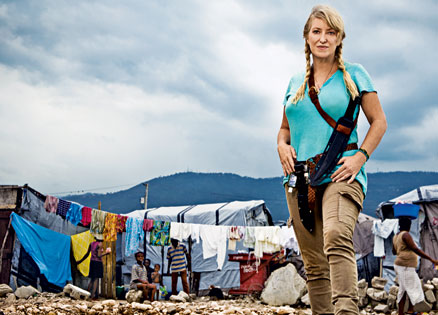
Haiti. Right after the quake hit Haiti in 2010 I flew down with a group and we set up an outdoor hospital on a former golf course. Soon we were treating 1,000 people a day.

There's still so much to be done in Haiti. I figure if we can make a difference there in the poorest place in the Western Hemisphere, we can make a difference anywhere. You can help by visiting weadvance.org.

I used to think that Twitter and Facebook were a big waste of time, but in Haiti I saw how social media helps. When we needed something, whether it’s more doctors, supplies, volunteers or prayers, I posted the request on Facebook. Our friends responded.

Once I even had to use Twitter to rescue me. I woke up in my tent one morning so sick I couldn’t get out of bed. I cried out, but no one could hear me. Finally I tweeted from my bed. A woman from the next tent came rushing in.

The Haitian people’s profound faith continues to inspire me. That first night, only days after the earthquake, I heard singing wafting through the bushes and trees. When I sought out the voices, I discovered they came from the hungry lining up for food. They sang hymns praising God.

Many times I joined them at an open-air church. I closed my eyes and lifted my hands skyward, like them, asking for God’s love to engulf us and heal us. It is still my prayer for the people of Haiti.

Your own town. There are needs in every community, and we all have something to give. You can read to a child, knit a shawl, serve a meal, plant a tree, rake a yard, send a card, make a phone call.

My first experience as a volunteer came when I was just a girl visiting the elderly in the hospital my mother ran in Australia. I loved those people. I danced for them, painted their nails and brushed their hair. I would lay my head in their laps and listen to their stories.

Just listening to a lonely person can make their day. Anyone anywhere can do that.

Sometimes the world seems like a dark place, but upon closer inspection, I see millions of shining lights. We can all be one of those shining lights. Far away and close to home. We are meant to give; we are meant to help.

What to Know If You Go
1. Prepay any upcoming bills and leave checks with friends who can pay while you're away.
2. Get the appropriate vaccinations.
3. A soft backpack is easier to travel wtih than a hard suitcase. Include a first-aid kit. The last thing you want is to become part of the disaster.
4. Be sure to pack water filtration tablets, sunscreen, insect repellent, flashlights and batteries, waterproof matches, rubber gloves, plastic garbage bags, rope, duct tape, a Swiss Army knife, a watch, a compass and energy bars.
5. Pack stickers, bubbles, colored pencils, anything to put a smile on a kid's face.
6. Take cash in smaller denominations, nothing larger than a twenty.
7. Buy a return ticket in advance. If things get too tough, you can always go home.
8. Don't forget your faith—in God and in yourself. Leave behind your fear.
—adapted from Alison's book The Third Wave
How to Give From Here
1. Donate. Here are some aid organizations that help people affected by disasters.
World Vision (888) 511-6548, worldvision.org
Save the Children (800) 728-3843, savethechildren.org
Doctors Without Borders (888) 392-0392, doctorswithoutborders.org
Food for the Poor (800) 427-9104, foodforthepoor.org
Heifer International (800) 422-0474, heifer.org
2. Follow them. Subscribe to the Facebook and Twitter feeds of organizations that interest you. They often post requests for specific needs, anything from toothbrushes to space heaters.
3. Send something. Before sending any material items, check mailing instructions. Don't ship anything that wasn't asked for because it could go to waste.
4. Give smart. Make sure that the charity is trustworthy, efficiently run and gets donations to people. Check the ratings and reviews of aid organizations on charitynavigator.org.
—Dina Davis, editorial intern

How to Respond When Addiction Comes to Church

No one is immune to addiction, not even church-going people. Recently, I attended a meeting where a well-known religious leader shared his story of becoming addicted to cocaine while serving his congregation.

He described his addiction as a compulsive behavior that took over his body and mind. There were times he thought of ending his life, but God’s mercy kept him alive. For a long time he hid his addiction from his congregation, but ultimately it was his faith that led him to get help and become drug free.

Just like this religious leader, there are many people who sit silently in church each week hoping that no one will learn of their addiction. These individuals could be church attendees, pastors, deacons, trustees, Sunday school teachers or youth leaders. They feel guilty and ashamed of their actions and struggles so they hide their addiction from others, fearing that they will be judged, condemned and excluded. Yet they hold onto their hope and their faith in God.

There are many reasons why people become addicted to drugs and alcohol. Some begin taking prescription opioids after undergoing surgery or suffering from a sports injury or other medical reasons. Sometimes addiction is linked to genetics. While the reasons vary, what these individuals have in common is that addiction controls their lives, and they are all in need of God’s love.

I will never forget a story I heard years ago about a young woman who battled addiction most of her life. She had finally become drug free and began attending church again with her mother. When others in the congregation learned of her past and that she was an HIV patient, they didn’t want her near their children. She was crushed by their actions and words. As a result, she stopped going to church. A few years later, the woman died at home close to her family, but distant from her church.

A pastor once told me “church is a hospital” where sick people come for healing. Everyone comes to the church with their own unique struggle. And as Jesus said, “It’s not the healthy who need a doctor, but the sick. I have not come to call the righteous, but sinners.” We must remember to lift up in prayer those who battle addiction and open our hearts to them as God does. These are people who fight a constant battle within and need the Lord’s help. God hasn’t given up on them. Neither should we.

How to Respond to a Dementia Patient Who Says, ‘I Want to Go Home’

This article is based on information provided by Home Instead Senior Care.

At times, an Alzheimer’s patient may ask to go home. This may happen even if they are in the home they have lived in for 30 years. The request may feel frustrating or confusing for you if you are a caregiver who is working hard to make them feel safe and cared for wherever they are. Sometimes caregivers even feel guilty, thinking their loved one isn’t happy. However, it is not necessary to explain their current and previous addresses. Instead, follow these tips to help calm and soothe your loved one.

· Remember that you can’t be sure of what the person means by ‘home’. It may be somewhere else than the place you have in mind. Don’t argue, “But you are home!”

· Regard “home” as a feeling you need to read. When people with mid- or late-stage dementia who live in a facility or are hospitalized tell you they want to go home, what they may actually mean is, “I’m uneasy,” or “I’m afraid.”

· Don’t overreact. When your loved one makes the statement, “I want to go home,” it can stir up powerful emotions in family members. It’s common to blame yourself for having placed the person in the facility, and to think that he or she is deeply unhappy there. But remember that by mid-stage Alzheimer’s, the person is not very capable of manipulating you, if for no other reason than within a short time they will have forgotten what was said.

· Go along to get along. By identifying the underlying emotional need and trying to address it, by understanding that they may feel afraid or uneasy, you may help reduce their distress. If the underlying need goes unaddressed, the person may grow more distressed—and then is often medicated to calm down.