

Embrace God's truth with our new book, The Lies that Bind

Joy to Your World: Have a Stress-Free Holiday

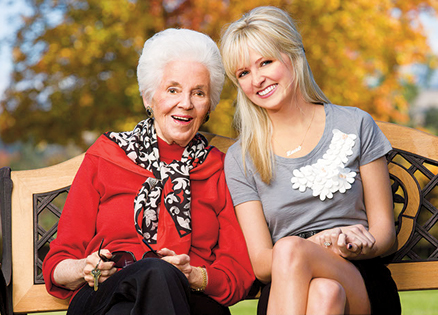
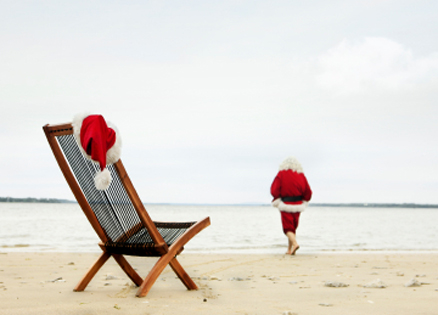
Mom of three Anita Berding thought past Christmases were hectic. A typical December weekend might involve the office holiday party; costume fittings for the kids’ pageants; buying presents for the Brownie troop gift swap, teachers and the neighbors’ party; a quick workout; making photo Christmas cards; ice skating with extended family and an awkward conversation with her brother-in-law. This year Anita remarried, adding two stepsons to her family and a host of new challenges to her holidays. “I’m exhausted just thinking about it!” she says.

Which is how many of us feel when we flip the calendar to November and see the Thanksgiving to New Year’s marathon is about to begin. Whether you’re worried about travel, weight gain, socializing, family tension, gift-buying or all of the above, we’ve got the stress-busters to make your holidays fun again!

Travel
So Aunt Sally and Uncle Steve have invited the whole clan to Des Moines. Don’t end up stranded in Denver. With an estimated 60 million travelers hitting the skies and roads this season, you’ll need a little planning to get anywhere without getting stressed.

Try to book as far in advance as you can. If it’s possible to arrive or depart on the big days (Thanksgiving or Christmas) you’ll not only pay less, you’ll have less of a mob to wade through.

Pack carefully. To check up on the latest security restrictions visit tsa.gov. Leave gift-wrapping for your destination. Weigh your luggage beforehand if it seems heavy (check your airline’s website for specific rules). Leave room in your carry-on for a good book, your cell phone and its charger. They’ll come in handy in case of a delay or a cancellation.

Before you leave, check the weather for the city of your connecting flight. If it’s storming, call the airline to reroute. Allow plenty of time to get to the airport and through security (expect longer lines than usual).

If you end up stuck in an airport, strike up a conversation with other stranded travelers. Maybe they know a good Des Moines diner if you get in too late for Sally and Steve’s supper.

Weight Gain
A sliver of pumpkin pie here, a spoonful of gravy there, two dipped chips won’t kill you, right? Actually, you are right! Don’t deprive yourself during the holidays or waste valuable time and energy chiding yourself over a bite of brownie. It’s all about moderation. Focus on maintaining weight, not losing it. You can dive back into your diet next year.

Become a “food snob” and eat only the treats you really want. If Aunt Laura’s pecan pie was never your favorite, skip it, and instead share one of Cousin Katie’s seven-layer bars with your mom.

If you’re the one manning the stove, simple substitutions will make dishes a bit lower in calories, but just as satisfying. For healthier versions of holiday favorites, substitute skim milk for whole, applesauce for oil, Splenda for sugar. Use nonfat evaporated milk to thicken a liquid.

Start a new holiday tradition where everyone goes for a walk or plays football after a meal. Won’t snowman sightings or your dad’s game-winning Hail Mary pass be more memorable than napping?

Parties
Parties are supposed to be fun, but for many of us, going to or throwing them is a source of stress. The solution? Keep everything simple.

If you’re the guest, pick up a couple of hostess gifts when you’re doing other November shopping to avoid a day-of-party rush. While you’re at it—does that dress need to go to the cleaners?

The soiree-savvy don’t eat or drink too much. You don’t need the guilt of the extra calories or racy behavior. It’s okay to go to a party for a limited time. Everyone understands how demanding the season is; the host will be happy you made the effort. If you’re anx-ious making small talk, stay seasonal: Will you be traveling somewhere? Have you bought gifts yet? Can you believe this weather?

If you’re the host, only give a party if you truly want to and you have the time. Don’t be afraid to enlist family and friends to help. After all, it’s only fun if you’re not frazzled. Don’t go crazy with decorations or choices of food and beverages. Go with a simple menu and consider making it potluck. Keep everything self-serve: a table for drinks, a table for food. Guests are happy when they can help themselves.

Gifts
It happens to the best of us. You spend months searching for the perfect present and then Christmas Eve you’re elbowing someone for the last singing fish or going over budget because you can’t show up at get-togethers empty-handed.

The key is to plan ahead, way ahead. If money worries you every year, start budgeting in June, or propose a new plan, like giving to just kids, or a charity, or drawing names so you each give to only one other person. If the mall makes you tense, try online shopping. Or if it’s gift-finding that’s nerve-wracking, make a list—again, early—of ideas and interests for each person. Check out gifts.com or the book Gifted: 1,000 Gift Ideas for Everyone in Your Life.

You know that saying “It’s the thought that counts”? Don’t get bogged down in competitiveness or perfection or let holiday spending get out of control. The cost of the gift won’t be important to the recipient. If money’s tight, get creative with homemade gifts or make coupons for babysitting or cleaning. Remember the reason you’re giving: to make some-one feel loved and appreciated.

The Blues
“We have these illusions that everyone has this happy, loving family in a blissful reunion, with all wishes fulfilled,” says psychologist Jon Allen, Ph.D. “The pressure to feel good and happy is escalated at the holidays. We should not expect weeks of unending happiness. There will be highs and lows as with the rest of the year.”

Allen adds, “With any blues what’s poison is alcohol.” Alcohol is associated with so many holiday functions, and while it may ease stress or anxiety temporarily, it’s actually a catalyst for depression.

To keep the blues at bay, Allen offers some common-sense tips. Be sure to exercise and get enough sleep. Make an effort to do things you enjoy. For most people, social activities provide the greatest pleasure and feeling of connection.

Instead of coming away from the holidays feeling like you didn’t accomplish all your “shoulds,” try reaching out to others. It will take the focus—and pressure—off of you. Look for meaningful moments. The more you’re open to them, the more you’ll find!

Relatives
Family dynamics can be challenging. We’re disappointed when reality doesn’t match our high expectations of a cozy holiday reunion. Or we find ourselves repeating past frictions: cringing at Grandma’s sometimes brutal honesty or snapping at a cousin who’s always comparing her life with yours.

“Moderating expectations is a good first step,” says Shelley MacDermid, Ph.D., director of the Center for Families at Purdue University. She also suggests examining your family’s patterns. Are there ways to restructure events to remove the stimulus that causes tension?

Develop and rehearse some strategies to deal with your stress, whether it’s finding questions to draw out a reserved uncle or a graceful way to deflect Dad’s teasing. “Enjoy!” says MacDermid. “Even if these people are annoying, they are your family and they won’t always be there. What do you want to remember?”

Overbooking
Peace on earth? For whom? Lucky you are so caring and popular but when the holidays fly by you’re left exhausted—physically and emotionally. News flash: You don’t need to bake 20 different kinds of cookies, make your own cards, buy gifts for everyone and attend every party.

Prioritize what is most important to you. Be honest with yourself and make conscious choices about which holiday rituals you will participate in. Do you truly enjoy baking? Home decorations? If yes, continue. If no, drop them or leave them to someone else. Try to do several errands in one trip to maximize efficiency. Here are a few items for the top of your Stay Stress-Free list: Exercise, eat and sleep well, make time for spiritual practice and relaxation, and plan ahead.

That’s Anita’s strategy. With five kids celebrating the holidays together in very new circumstances, she’s taken some big steps to bring peace to the season, including finding a work-share partner so she can take time off to spend with her blended family. “My family shouldn’t have to watch a totally stressed-out wild woman whip in and out of their lives,” she says. “I’m blowing off everything except making sure they have an enjoyable holiday!” Sounds like a plan.

Download the free ebook, Rediscover the Power of Positive Thinking.

Download your FREE positive thinking ebook!

Journey to Sobriety: One Man Rides for Hope

In late May, Spencer Nee found himself at a campsite in Colorado talking to a woman he’d just met. She wasn’t vacationing; she was trying to wean herself off heroin. She was on her third day, dope sick and struggling to remember why sobriety seemed like a good idea. Nee can relate.

Although Nee is celebrating seven years of sobriety, he tells Guideposts.org his debilitating addiction to alcohol left him “in a really frightening place in my life. I’d pretty much accepted my death.”

Unlike the woman he met at the campsite, who grew up in the foster care system and survived childhood sexual abuse before becoming addicted to drugs, Nee came from a loving home. He excelled in sports and academics, graduated from college and owned a business for a time. He drank socially. Only after college, when his business fell through and his peers were successfully transitioning into adulthood, did his dependence on alcohol grow.

“I was self-medicating a lot of holes in my life,” Nee says. “A lot of anxiety and depression. [Alcohol] just slowly started to rule my life.”

His relationship with his parents deteriorated, and some friends disappeared. He couldn’t hold a job – Nee estimates he had seven in 2007 alone – and the jobs he did manage to snag were places where he could indulge his drinking.

Soon, he wasn’t able to afford his rent and became part of the “invisible population” of homeless people, sleeping in a tent in the woods next to his alma mater or spending a night in a dingy motel.

“I felt like a complete outcast, like I was a hassle to people,” he says about his time on the streets.

But the scariest part of his spiral into addiction was the toll it took on his health. Nee remembers the early days, waking up to his body shaking uncontrollably, desperately craving a drink.

“I’d wake up so shaky that I was afraid I’d go into a seizure and die without alcohol,” Nee says. “I’d have to drink in the mornings and at work. It just took over my life.”

READ MORE: ANNIE LOBERT FINDS REDEMPTION ON THE VEGAS STRIP

After one night of drinking, Nee fell asleep behind a dumpster and woke up to a stranger dumping trash on him. That rock bottom moment made the then 27-year-old realize he needed to get sober.

Nee called his parents to ask for help. It was the first time they’d heard from him in six months. That call led him to Providence Network in Denver.

The faith-based organization works to help homeless, addicted and at-risk men, women and families become healthy, productive members of society. The group offers transitional homes with faith-based counseling, life and job skills training and a live-in staff to ease recovering addicts and homeless people back into a normal life. For Nee, Providence Network was able to do what other homeless shelters and smaller programs couldn’t.

“I’m one of the lucky ones,” Nee says. “But I think [my sobriety] does say something about Providence Network in general. They have a really unique approach. You become a member of the community, you go out and get a job, you have your meals together, there’s a live-in staff. There’s just a feeling of family that I was really missing.”

Nee spent two years in one of the organization’s homes before moving into a “Victory House,” or sober living apartment. There Nee returned to school and became a registered nurse. Eventually, he was able to leave the transitional facility and continue sober living on his own.

“There are a lot of good people buried under addictions that lead them to homelessness, but with a little help, they can go on to live productive, healthy lives,” Nee says. He’s living proof. “They are people. They deserve love and respect.”

While working in the E.R. of a hospital in Colorado, Nee got the idea to show love for those with addictions in a new way.

“We were starting to get this major influx of kids overdosing, most hooked on heroin,” Nee explains. He did some research and found the number of homeless youth was rising, not only in Colorado, but across the nation. He felt compelled to help.

READ MORE: MY MOMENT OF TRUTH IN REHAB

Nee partnered with Providence Network to raise money for a new transitional home the organization was planning, one focused on youth and young adults. His plan: to bike 4,000 miles cross-country, from the Golden Gate Bridge in San Francisco to the Brooklyn Bridge in New York City to raise the $10,000 needed for the new housing unit. Staying at campsites, rehab centers, and transitional homes along the way, Nee shared his story of addiction, homelessness, recovery and faith to hundreds of people struggling with the same demons that once held him hostage—including the woman recovering from heroin addiction, with whom he’d kept in contact.

Roughly four months after he left the Golden Gate Bridge, Nee reached the finish line at the Brooklyn Bridge. As he rode over the East River, in a bustling crowd of tourists, he received a text message from the woman he’d met at the campsite.

She was 60 days sober, thanks to Nee’s words of encouragement.

“I wanted to spread the message of hope,” Nee says of his bridge-to-bridge ride. “I wanted to reach out to these people and show them that you can have fun when you’re sober, there is a life rich in adventures if you can just hang on.”

A Dee-lightful Change

Sleek black trousers? Check. Teal silk blouse and patent-leather pumps? Double check.

I was dressed to the nines, but really didn’t know why. It was my first day at my first job out of college. I’d dreamed of a career in fashion, maybe as a style editor at a magazine—something thrilling and glamorous.

Community Newsletter

Get More Inspiration Delivered to Your Inbox


But from the minute I settled in at my desk and looked around, I saw how far I was from that dream: gray walls, gray carpet, gray furniture. This was no glam gig. I was a receptionist at Rockwood Retirement Community in Spokane, Washington. What am I doing here? I’m way overdressed!

A few months before, I’d graduated from Gonzaga University with a degree in public relations and English—full of optimism, ready to conquer the world. That summer my wonderful boyfriend, Jeremy, asked me to marry him—a romantic surprise proposal with the promise of a Caribbean honeymoon.

It felt like a fairy-tale beginning to my life in the real world. He had graduated with degrees in journalism and sports management, and now had a job he loved—selling tickets for his favorite minor-league hockey team. I was certain my big break in fashion was right around the corner.

July passed. August too. Still no job. No leads. Nothing. One morning, I buffed up my résumé for the umpteenth time and prayed, Please, God, I appreciate all the blessings you’ve given me, I really do. But can’t you lead me to my dream job too?

By fall I’d gone from aiming for a job in fashion to scrounging the web and classifieds for a job, any job. I was trading in pencil skirts for pajama pants, confidence for self-doubt. Why wasn’t God listening? Why wasn’t he giving me an opportunity to shine?

The job market stayed bleak. In late September, I came across a listing on an online job site: “Receptionist needed at Rockwood Retirement Community. Greet and assist visitors and residents, operate the telephone system and direct callers to appropriate personnel.”

Okay, it wasn’t a position at Vogue. But it was something and I needed a paycheck, so I applied. They offered me the job.

Now here I was on my first day, wondering what I had gotten myself into. A woman’s voice startled me. “Hello, who’s there?” she asked.

Right away my eyes lit on her elegant red-and-black silk scarf. Christian Dior, if I wasn’t mistaken. Now that’s a girl after my own heart, I thought.

“Hi, I’m Lacie, the new receptionist,” I said. “I absolutely adore your scarf. Can I help you with anything?”

“Thank you,” the woman said. “I was hoping you could read this card to me. I’m partially blind. By the way, my name’s Dee and I’m in apartment 712.”

“I would love to! It’s wonderful to meet you, Dee,” I said.

I read Dee’s card for her, and over the next few days we chatted more. Her life story was fascinating! She’d grown up in Minneapolis, then worked for 20 years as a flight attendant for American Airlines back when air travel was luxurious and glamorous.

She married a man named Mel, a general manager for Kaiser Aluminum. His work took them to Ghana and, six years later, to Spokane when he got a job managing the 1974 World’s Fair. Mel died in 2003.

“I still miss him every day,” she said. I told her all about Jeremy, how romantic he was, and about my hopes for a career in fashion. One day I mentioned that I’d taken 15 years of dance classes and still found it to be a great stress reliever. “The time step is one of my favorites,” I said.

“I know the time step!” Dee shouted. “My sister was a dancer on The Burns and Allen Show and she taught me a long time ago. Let me see if I remember how it goes…” Right there by my desk, Dee hopped and stomped through the step. Of course I had to join her.

We wound up bent over, clutching our stomachs, we were laughing so hard. After that, Dee would occasionally saunter over to my desk. “Is anyone around?” she’d ask conspiratorially. “I feel like doing the time step.”

Word of our shared talent got around and other residents at Rockwood would ask us to perform. It became our signature showpiece.

Six months after starting at Rockwood, I still didn’t have any leads for a job in fashion. But I wasn’t stressing about it. I looked forward to going to work in the morning, spending time with Dee and the other residents.

Sometimes, after work, I’d drop by her apartment. It was impeccably furnished with sea-blue couches, white carpet and a dazzling crystal chandelier. She would show me old photographs, her wedding dress, keepsakes from her time in West Africa.

Dee wanted to know every detail of my upcoming wedding. “What does your dress look like, dear?” she asked.

“It’s a couture-inspired off-white gown with flowers on one strap and—”

“Wait,” Dee said, cutting me off. “I’ll be right back.”

She rummaged through her closet and emerged with an ivory beaded purse. She handed it to me along with a picture of herself holding that exact purse at President Richard Nixon’s inaugural ball! “Would this match your dress?” she asked.

“Oh, Dee! It’s just lovely!” It was the perfect “something old” that I needed to complete my outfit.

Dee gracefully declined her invitation to my wedding (it was a bit too far for her to travel), but as soon as I returned from my honeymoon, she wanted to hear all about it. I described the ceremony, dancing at our reception, snorkeling with Jeremy in Curaçao and the colorful markets in Puerto Rico.

Dee listened intently, then gently squeezed my hand. “Lacie, always remember to give Jer a kiss at night and tell him how much you love him. Don’t take these times for granted. I wish I had given my dear Mel more kisses and said ‘I love you’ more before he passed.”

Okay, Lord, I said later. I think I get it…just because I’m not working at my dream job right now doesn’t mean I’m not where I need to be.

That August, nearly a year after I’d started at Rockwood, Jeremy got an offer for a great job in California—one that we couldn’t pass up. A few days before we moved, Dee sent me off with a party in her apartment.

I looked around at all the residents. You know something? My self-esteem was back. And I had the job to thank. I was going to miss all my new friends, especially Dee. She’d practically become my best friend.

Dee interrupted my thoughts. “Lacie, how ’bout we do the time step real quick before dinner?”

I slid off my cheetah-print stilettos and Dee removed her pale pink pumps. We held hands, ready to perform our duet. Yes, God had led me to a better first job than I’d ever dreamed of. A pretty glamorous one too.

Read more inspiring stories about personal growth! Download your FREE ebook, Paths to Happiness: 9 Real Life Stories of Personal Growth, Self-Improvement and Positive Change.

Joan Lunden’s Happiness Plan

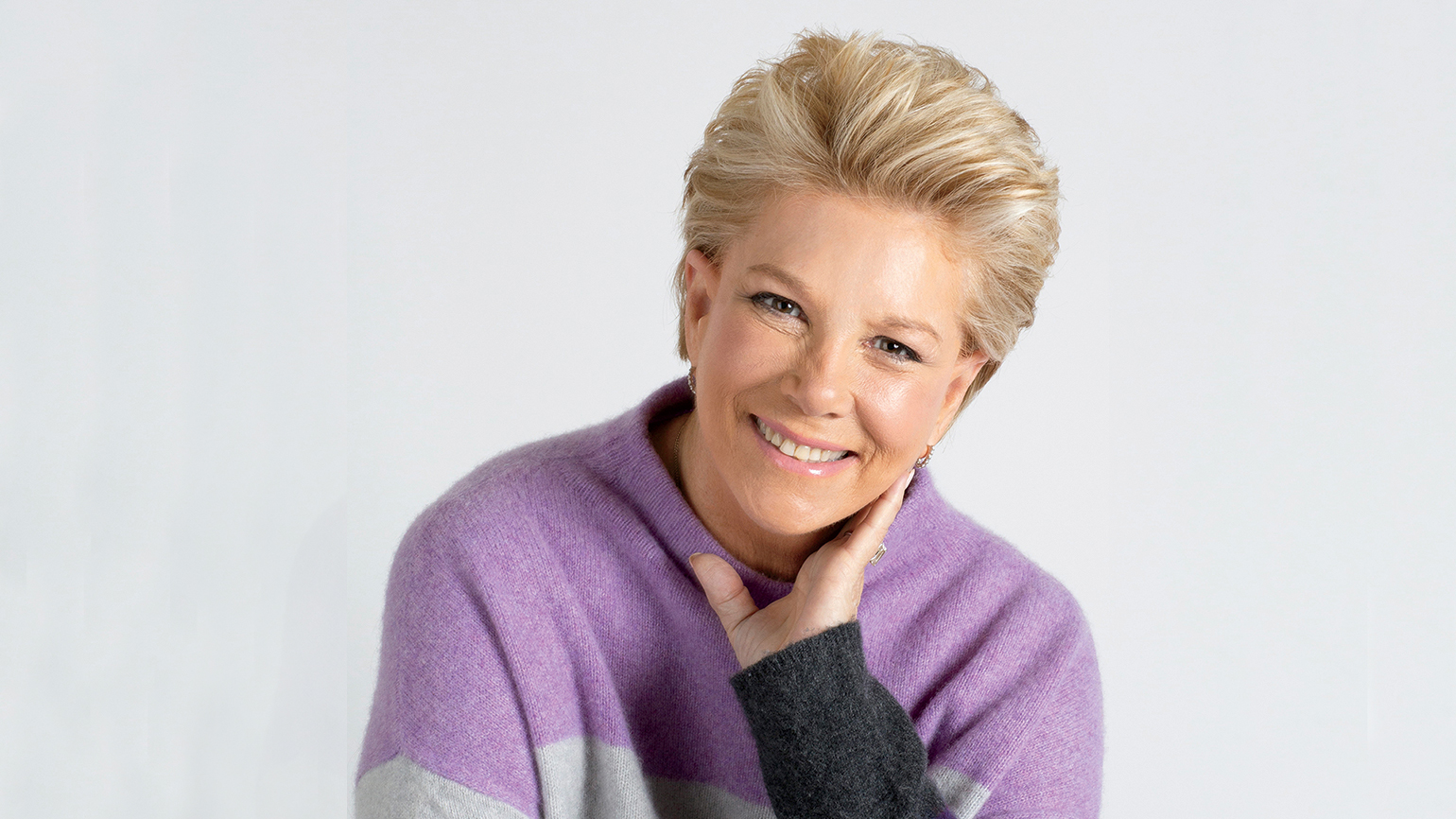
My views on aging changed forever on a trip to Morocco nearly 20 years ago with my three eldest daughters. Somewhere between riding camels in the Sahara and exploring the medina in Fez, we encountered a tribe of nomadic Bedouin sheepherders. We were invited to join them for mint tea and, as we entered one of their tents, were greeted warmly by an elderly tribeswoman. We talked through our translator, and I asked how old she was. The woman looked at me in confusion, then explained that Bedouins live by the changing of the seasons—no one knows their exact age. How old was she? It didn’t matter.

That experience made me realize how much we limit and define ourselves by the date on our birth certificate. How old would you be if you didn’t know your age? How old are you in your mind? Although I’m 69, I pick 45 for my age, and I’m sticking to it! In my new book, Why Did I Come Into This Room?: A Candid Conversation About Aging, I discuss the ways we can stay healthy, happy and engaged in life as we age.

For almost two decades, I was the cohost of Good Morning America. When that chapter closed, I had to focus on what to accomplish next. I was invited to go on a national speaking tour, and although public speaking always terrified me (unlike in a TV studio, I could actually see all the people in the auditoriums!), I jumped at the chance. Fear of the unknown makes us resist change, but little by little I conquered that fear. I now average more than 20 speeches a year, and I love each one. Many changes were still to come in my life. At 49, I married my husband, who was 39. Within a few years, we welcomed two sets of twins, born with the help of a surrogate. As a member of the Sandwich Generation, I was buying strollers for my young children, cars for my three teenagers and wheelchairs for my mom—all at the same time! And now I have four grandchildren to boot. But none of this would have been possible had I succumbed to the societal trap of acting my age.

Plan for happiness. One way to stay open to the possibilities for future joy: Have a bucket list or a happiness plan. Mine includes taking a photojournalism trip through the Serengeti, reading more books and enjoying health and nutrition classes. What passion projects would you like to pursue? Maybe you’ve always wanted to be of service to others. Figure it out, and put it in your plan. My mother, Gladyce, known as Glitzy Glady for both her effervescent personality and her love of anything trimmed in gold, always said, “Half the fun of anything is anticipating and planning for it.”

Aspire to inspire. When I got diagnosed with breast cancer in 2014, my first instinct was to hide. My inspiration to go public came from my father, a cancer surgeon. He died in a plane crash when I was just 13 years old, and this was my opportunity to carry on his legacy, to inspire and educate others through my own battle. I chronicled my journey on social media, even taking a camera in with me to chemo, and wrote a book, Had I Known, about what I learned. Now as I speak across the country, women tell me that I “took the scary out of it.” That makes it all worth it. Turning my cancer diagnosis into a way to serve others has changed my life and career for the better and given me more purpose than I ever could have expected.

Let it go. Stress can wear you down, not just physically and mentally but spiritually too. To deal with our stresses, we must first identify them. The things I worry about these days: Am I making the right decisions with my teenagers? Will my cancer come back? Have I planned wisely for my future? My biggest no-stress strategy is to know my priorities and stick to them. Balancing work and family is a challenge, so it’s important to learn that no is not a dirty word. You simply cannot be everything to everyone. Another thing that keeps my stress in check? Organization, organization, organization. I am notorious for my to-do lists and a giant calendar in our kitchen, marked with the entire family’s schedules. My family might laugh, but it keeps everyone’s stress at bay.

Pick your peak. I feel so much better after my workouts—can you say endorphins?—but getting up the motivation isn’t always easy. My main motivation comes from my incredible exercise buddies. We challenge each other and cheer each other on. At 45, I signed on for a mountaineering trip to climb the Teton Range. When our group stood on the mountain that magnificent June morning, our guide gestured at the peaks all around us. “Pick your peak,” he said, and that’s exactly what we did. We didn’t need to summit the highest peak to get to the top of one. From that day forward, I’ve used that lesson not just for exercise but whenever I’m making tough decisions. Pick your peak and go for it!

Have a caregiving plan. For nearly two decades, I was the long-distance caregiver—New York to California—for my mom, who’d begun slowing down and eventually developed dementia, and my brother, who had Type 2 diabetes. I arranged for them to move into a condo to keep each other company and had an aide help them out a few days a week. But it wasn’t until my brother’s death in 2007 that I realized my mom’s dementia, at age 88, was much worse than I’d thought. It’s easy to overlook things when you live far away from your loved one. They might put on a happy face and act fine when they’re really not.

I had done stories on aging and dementia, but when I found myself in the role of caregiver, I wasn’t prepared. My mother and I had never had that tough conversation about what life would look like as she aged, so I had to put one foot in front of the other and figure it out. A great rule to go by is the 40/70 rule: By the time you’re 40 and your parents are 70, you should talk about living arrangements, finances and other aging issues, so you are prepared when that day comes.

Practice gratitude. My cancer battle opened my eyes to just how much my family and friends loved and supported me. Now I find myself driving to work with an intense appreciation for the beauty of snow glittering on tree branches or sunlight dappling the leaves—life’s little miracles I might not have noticed before. To deepen that gratitude, I’ve embarked on a visual reconstruction of my life using family albums, keepsakes and memorabilia from my career. Revisiting memories and milestones gives us a chance to reflect on our lives, to be grateful for what has come before and help us plan for what’s next. Want to know my new mantra? Make today and tomorrow so awesome that you make yesterday jealous!

For more inspiring stories, subscribe to Guideposts magazine.

Jesus Is the Ultimate Inspiration

It’s a joy to be able to share with others what you feel God has shared with you. It’s also good for me, personally, to live with a mindset of looking for Jesus in every day moments, which is what most of my devotions are about.

I don’t consider myself deeply theological. But seeing glimpses of Jesus in my child’s eyes, or even dirty dishwater—that’s what I like to write about.

There is just no other subject like Jesus. It’s amazing to me every time I approach the person of Jesus that there’s an infinite amount of Him. The well never runs dry. You can never put Him in a box. Never feel like you’ve thoroughly researched Him. Never feel like you’ve tied that subject up and it’s time to move on. For me, He is the ultimate inspiration.

I was reminded that I don’t know much about Jesus. And after writing for Mornings with Jesus, I still don’t. I love the CS Lewis quote that says, “He’s good, but He’s not a tame lion.” I know He’s good. And while there’s this intimacy I know He wants us to have, and that I believe I do have on some level, like it says in John 17:3, there’s also this deep, unfathomable side to our faith, and I just can’t ever say I know much.

How much do we know about space, or the ocean, for example, after studying it since the beginning of the world? But I do believe through this experience I drew a little bit closer than I was before to His heart. And I hope to always be learning more of who He is.

Jeff Daniels, Hometown Boy

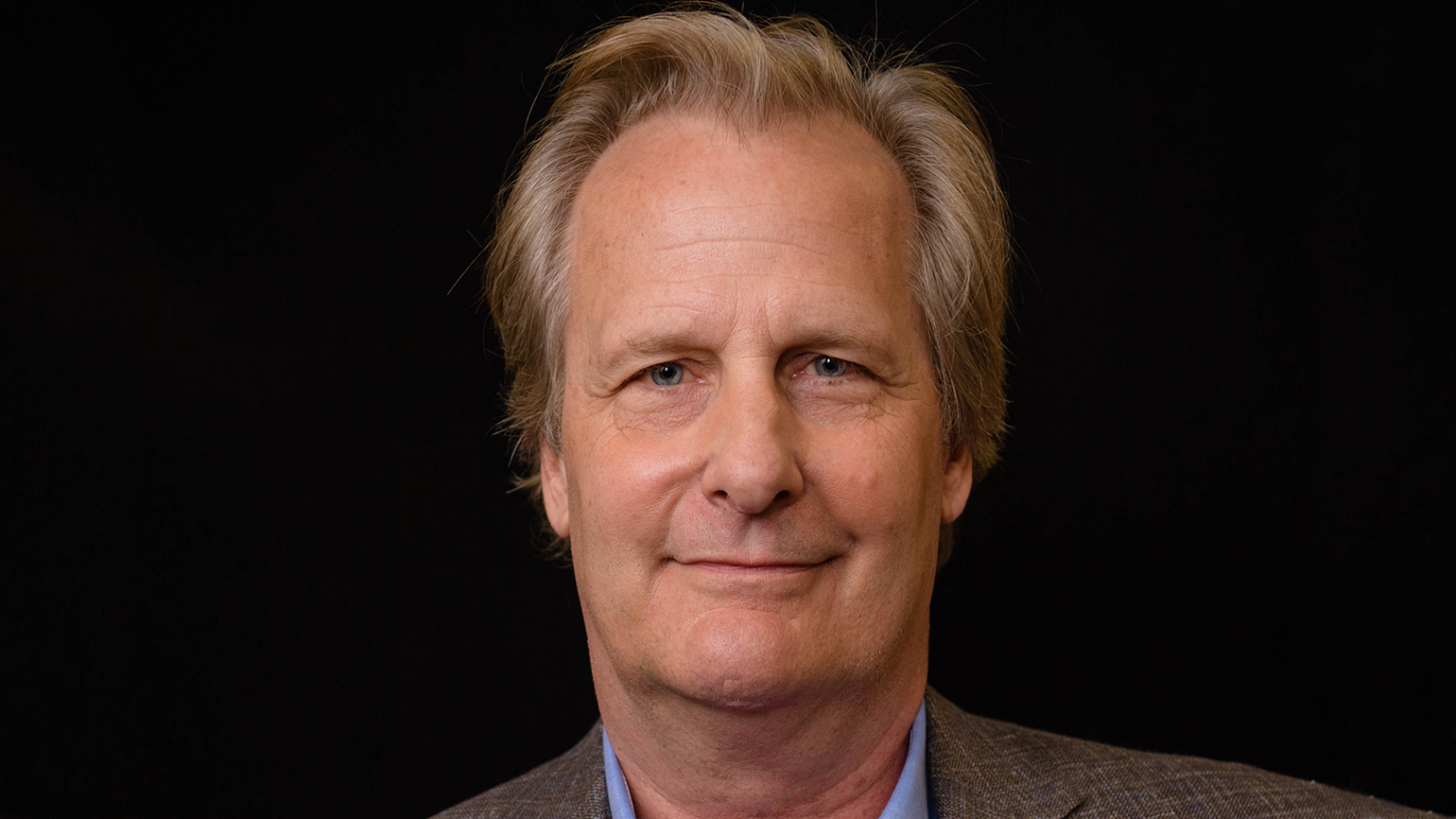
Let me tell you about the small town where I come from: Chelsea, Michigan, population nearly 4,700, just west of Ann Arbor. It has one hospital, three elementary schools, a high school, a train depot, golf courses, several churches and a tree-lined Main Street. And right out of central casting there’s the lumber company (where my folks still work), Zouzou’s coffee shop, a hockey rink and a first-rate theater (more about that later).

With its small-town atmosphere and solid Midwestern values, it’s the sort of place where an actor with both promise and ambition grows up and then leaves, never to return…unless he’s the grand marshal in the annual Fourth of July parade and his agent or studio needs to buff up his image.

Well, I left Chelsea when I was 21 to try my luck in the theater, which was pretty good. I appeared on the Broadway stage and in a couple of Hollywood films, and after bouncing around between the East and West Coasts, my wife, Kathleen, and I asked ourselves where we wanted to raise our children—our one son was almost two years old. The answer was easy: “Michigan.”

We knew Michigan. And if it was going to be Michigan, it would have to be Chelsea, where we’d met. Even if the winters were as cold as the summers were hot and sticky and everyone knew everyone else’s business, it was home. It was the one place I knew I could give my kids the good things I had growing up, things I believed in.

First, there were teachers like Miss DiAnn L’Roy. She taught chorus in sixth grade. One day she had us do improvisations. “Okay, Jeff,” she said, “I want you to get up there and act like you’re a politician giving a speech and his pants are falling down.” I’d never done anything like that—standing in front of a class, tugging at my belt and making a pompous speech, but evidently I was pretty funny because everybody cracked up. “You were great,” they said. Miss L’Roy saw something in me I’d never seen in myself.

She didn’t forget, because sophomore year in high school when I had no intention of ever trying out to be in a school play, she caught me as I was coming out of basketball practice and stopped me by the auditorium doors. “Jeff,” she said, “get in here.” She was holding auditions for South Pacific and needed sailors. The next thing I knew she had me onstage doing this silly dance. My hair was still matted and wet from practice and I was singing a funny song, but it was good enough for Miss L’Roy. I was in the show.

The next year she raised the stakes by casting me as Fagin in Oliver (I listened to Ron Moody on the record for hours to learn the accent and songs). From there it was Harold Hill in our ragtag community theater’s production of The Music Man and Tevye in The Fiddler on the Roof.

Miss L’Roy gave me stage time, but I had to learn on my feet. She asked me to try things I didn’t think I could do, like the villain Jud Fry in Oklahoma! “I want you to look into the psychology of this character, the material that’s not written in the script,” she told me. She wanted me to study the character and figure out his motives…but first I had to look up the word “psychology.”

Make no mistake. Just because Miss L’Roy was teaching in a small town, there was nothing small-time about her. Like a lot of teachers all over America she was opening my eyes to something new. She was giving me a chance to take bigger risks in a bigger world. She knew I’d learn something, even if I failed. When I had the opportunity to go to New York City I had to try because there was somebody back home who believed in me.

I didn’t take to the city. It was crowded and noisy and you didn’t know the people you passed in the streets. There were hundreds of actors from all over the country all going after the same jobs. I didn’t see how I’d ever make it. After about six months I was desperate to come home. I called my mom and complained. She listened. At the end of my harangue, she said quietly, “Find a way to stay.” My mom is a woman of few words and they’re always well chosen—there was no room for argument. She’d seen what Miss L’Roy saw and knew what good people also know in small towns: There are times you have to leave home to grow.

I wanted to go home, but I stayed and had some lucky breaks. I got cast in some great plays and movies like Ragtime, Terms of Endearment and The Purple Rose of Cairo. But I never forgot home. I married my high school sweetheart and, after 10 years, like I said, Kathleen and I moved back to Chelsea. “What if you get cast in a movie or a play?” she asked.

“Detroit has an airport,” I said. “I can fly from there to wherever I have to go.” At least when I returned I’d be returning to a home that was really home, not some modern house tucked in the Hollywood hills.

Small towns might have a reputation for being set in their ways, not a good place to experiment or feel stimulated or inspired. Well, I have to disagree. Coming back to Chelsea I felt free to try things I hadn’t done before—like writing. I wasn’t sure how to make a play, but I figured if we had the space we could find the actors and experiment. Kathleen and I bought an old wooden warehouse. That was the beginning of what we called The Purple Rose Theatre—what I envisioned was a company for the 21-year-old kid I used to be, where he could explore and grow before he went to New York or L.A. Or maybe he wouldn’t even want to go. Maybe he’d stay here and make great theater in Michigan.

Michiganders love their theater. And that’s what The Purple Rose has become… a place for actors, directors and playwrights from Michigan and the Midwest to get the training and breaks I did. We’ll see the hunger in some young actors who have talent and we’ll help them get as good as they can before they leave. We take pride in helping make talented people better. It’s a matter of good stewardship, passing on the gifts God has given us. Small towns take pride in what they produce.

There’re other things Kathleen and I have been a part of. There was an old school, a nice solid brick building that was going to be torn down and turned into condos. We bought it and saved it for a group called the Chelsea Center for the Development of the Arts. It was just a husband-and-wife operation in one room of a church, giving lessons in cello, voice and violin. Now, you go into the renovated building and there are people singing, rehearsing and playing instruments. Kids—the non-sports kids—have gone on to win university scholarships because of the training they’ve gotten.

Then there’s the ballpark. We used to have baseball and softball fields at the high school that were in bad shape. My buddy, who’s now the athletic director at Chelsea High, wanted something new. With a little money and a lot of imagination, he built a new stadium with box seats, a press box, dugouts and scoreboards. A lot of people got behind him. Pooling our resources and doing some fundraising we’ve built something great.

In Boy Scouts they say, “Leave a place better than you found it.” Well, I think it’s true of the towns and cities where we live. I can look at Chelsea and see the things my parents have done for it—like the adoption agency my dad started for hard-to-place kids in southeastern Michigan. I hope someday someone will be able to say it about me. In the meantime, I’m not leaving. Sure, I go to California to make a movie or fly to New York to appear in a Broadway show, but then I come back to Chelsea, where my roots are, where God planted me, you might say. It’s where your roots are deepest that you grow the most.

Read more about Jeff Daniels at jeffdaniels.com and his theater at purplerosetheatre.org.

For more inspiring stories, subscribe to Guideposts magazine.

Jane Goodall: I Carry Hope with Me

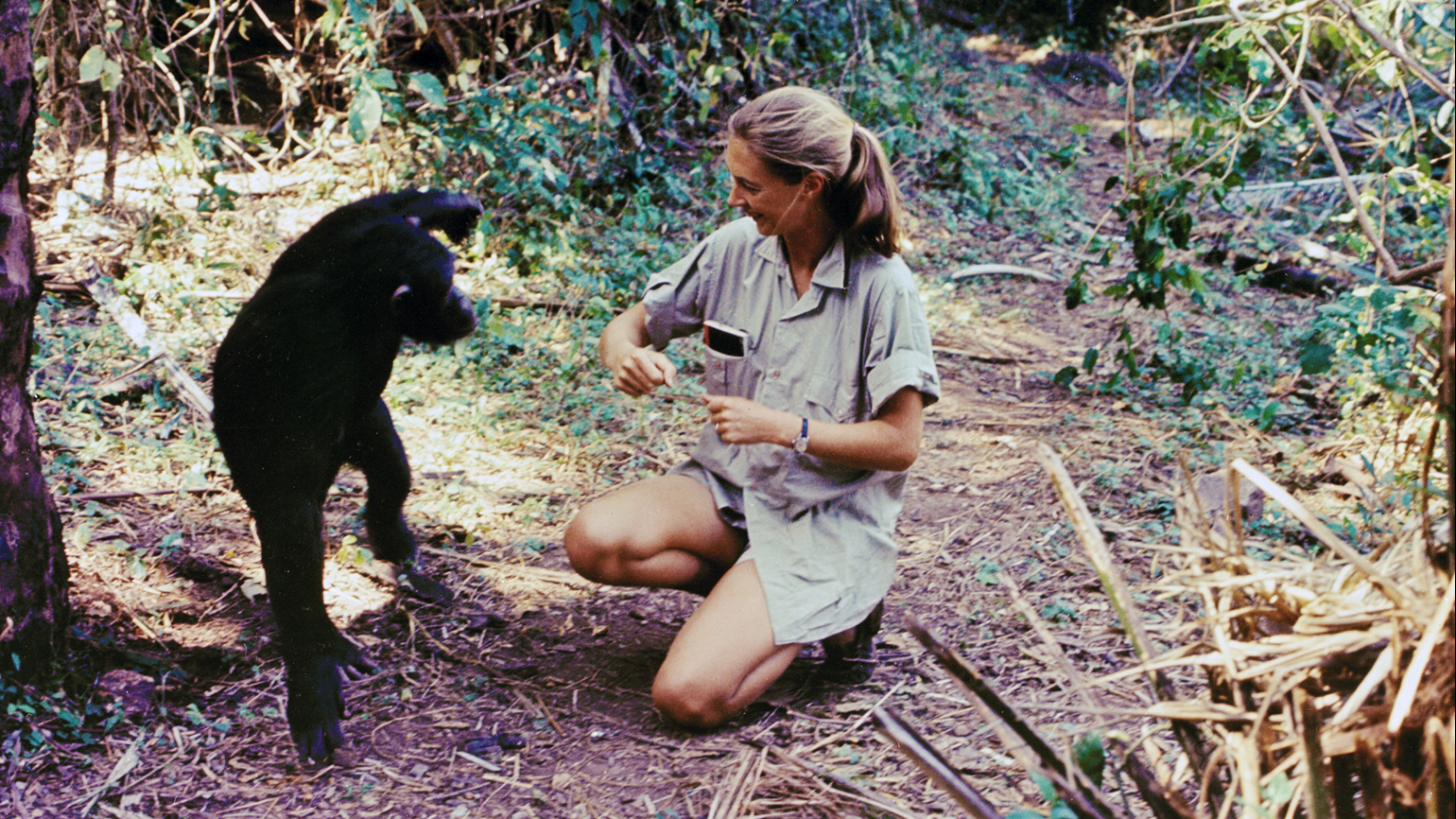
For more than 40 years, I have studied some of our closest relatives in the animal kingdom. Much of that time I lived among the chimpanzees of Gombe National Park in Tanzania, East Africa, observing them for hours, filling notebooks with accounts of their behavior.

More recently, alarmed by the harm we have inflicted on the natural world, I have turned my energies to the protection of wildlife and the environment.

I travel all over the globe in my efforts for conservation, and people often ask me: Having seen what we have done to this world and to the living things that share it, how can you keep doing the work you do?

It was a question I found myself thinking about when I returned to Gombe on July 14th, 2000, 40 years to the day after I arrived with my mother, Vanne, to begin my research.

I was there to celebrate the fortieth anniversary of the longest study of any group of animals anywhere. My mother had died just a few months before at age 94, so the memories that flooded into my mind were bittersweet—thoughts of days and people long gone.

From the earliest times, my mother nurtured my passion for animals. Instead of scolding when she found that I, at 18 months, had taken a handful of earthworms to bed, she quietly told me they would die without earth. I promptly gathered them up and toddled with them back into the garden.

Years later, when the authorities in Tanganyika (now Tanzania) refused to allow a young English girl to venture alone into the forests of Gombe to observe chimpanzees, it was Vanne who volunteered to accompany me.

Items Jane Goodall carried with her when traveledOn that anniversary day at Gombe last year, I climbed to the Peak, the outcropping of rock above Lake Tanganyika from where, armed with binoculars, I had made many of my early observations of chimpanzees.

From there I had first noticed an adult male, whom I named David Greybeard, pick leafy twigs and strip the leaves to fashion tools, which he then used to fish termites from their underground nests. I had learned—again from David Greybeard—that chimpanzees are hunters and that they share their kill.

I had been privileged to know some amazing chimp characters over the years … Olly, Mike, Mr. McGregor, each with his or her unique personality. I thought of the grand old matriarch, Flo, and her daughter Fifi, a tiny infant in 1960 and the one individual from those days still alive now.

Sitting up there, in that place of memories, I reflected on the plight of chimpanzees and other wild animals in Africa today. In 1960 there were forests fringing the 300-mile shoreline of Lake Tanganyika and extending for miles. Now cultivated fields surround the mere 30 square miles of Gombe National Park.

With the tree cover gone, every rainy season sees more of the precious topsoil washed away into the lake. Where there were once lush forests, many places today are desert-like. Not only have the animals gone—the humans are suffering. And this scenario is repeated again and again in the war-torn countries of Africa.

I understand why many of my fellow scientists believe we are spiraling toward global disaster. Still, I have reason for hope. And I collect and always keep with me on my travels symbols that express that hope.

My first reason for hope is the marvel of the human brain. Surely having conquered space and invented the Internet, we can find ways of living in greater harmony with nature.

Around Gombe we are currently working with people in 33 villages to improve their lives with tree nurseries, environmentally sustainable development, conservation education, primary health care, and AIDS awareness.

Science is inventing alternatives to fossil fuels; laws have been enacted to control dangerous emissions; timber companies are practicing responsible logging, and so on.

As a reminder of the ingenuity of the human brain, I carry with me a part of an eco-brick made from industrial waste. It is coated so that it will last 300 years or so, yet it is cheaper than an everyday building brick.

These eco-bricks can be used to build hospitals and schools in the developing world—and solve their waste-disposal problems at the same time.

My second reason for hope is nature’s amazing resilience. Polluted water can be cleaned; man-made deserts can bloom again. I carry a leaf from a tree that grows in Nagasaki, where the second atomic bomb was dropped at the end of World War II.

Scientists predicted that nothing would grow in the scorched, devastated area for at least 30 years—yet the plants came back quite quickly. One slender sapling did not die. Now it is a huge tree and every year puts out new leaves; it is one of these which I always keep with me.

Animals on the verge of extinction can be rescued. I have in my collection a feather from a California condor—a species reduced to only 14 individuals a few years ago. All were captured for breeding, and now there are 40 condors flying free in 4 different release sites.

I also have a feather from another species making a comeback against the odds, the peregrine falcon.

My third reason for hope is the indomitable human spirit—the people, all around us in all walks of life who tackle seemingly impossible tasks and never give up.

I carry a piece of limestone from the quarry on Robben Island where Nelson Mandela labored for 18 of his 27 years of imprisonment and yet emerged with so little bitterness that he could go on to lead his nation from the evil of apartheid into democracy.

And I have a wooden comb with a decoration of woven wool made and sold by a Tanzanian man who lost his fingers to leprosy but still found a way to make a living—weaving colored yarn with his stumps and his teeth.

I also have a surgical glove with a bent-in thumb, from the left hand of orthopedic surgeon Paul Klein. When he was only a six-year-old boy, an explosion all but destroyed his hands. Though his left thumb could not be saved, after hours of painful surgery, his fingers were reattached.

He decided he wanted to become a surgeon himself. “Impossible,” people said. Yet he persisted, and today Dr. Klein operates on children who have been injured in accidents.

My fourth and final reason for hope is the enthusiasm of young people once they know the problems facing the world and are empowered to act. To remind me of that, I carry a stuffed toy, a small spotted dog that five-year-old Amber Mary brought me, along with a plastic bag holding a few pennies, at the end of a talk I gave in Florida.

She had seen the National Geographic special where the little chimpanzee Flint dies of grief after losing his mother.

Little Amber Mary knew about grief; her brother, who had loved to watch the chimps at the zoo, had died of leukemia. Week after week, she had saved her allowance to buy the toy dog.

Would I give it, Amber asked, to one of the orphan chimps we were caring for, so that he might be less lonely? And, she added, with the leftover pennies, could I buy him some bananas?

I kept Amber Mary’s dog and her pennies to show others. When they see those pennies, people reach into their pockets for whatever they can give to help orphan chimps and other animals.

Sitting there on the Peak last July fourteenth, I remembered all my reasons for hope. As the sun sank lower in the hills on the other side of Lake Tanganyika, I climbed down to a waterfall that, for me, is a spiritual place.

Over the aeons, the falling water has carved a deep channel into the rocks. The roar of the water and the spray-laden wind created by the falls stimulate the chimpanzees to perform spectacular, rhythmic displays, swaying from foot to foot and hurling rocks into the streambed.

Could they perhaps be expressing their awe and wonder at the splendor of God’s creation?

The chimpanzees have taught us that we are not the only beings on this planet with personality, the ability to reason, and the capability for love, compassion and altruism as well as violence and cruelty.

But we humans are the only beings who have developed a sophisticated spoken language. With that gift, I believe, comes a responsibility: to act as stewards for God’s creation, this amazing planet.

Each one of us makes a difference every day of our lives, and we have a choice: What sort of difference do we want to make? There at the beautiful waterfall I felt utterly connected with that great power from which we draw our strength—God.

With the sun setting, I began to make my way from the waterfall to my house on the lakeshore. Later that evening I showed slides of the early days at Gombe with our Tanzanian staff. Afterwards, I took a walk along the pebbly beach. It was a full moon and once again, I felt keenly the privilege of being in such an unspoiled place.

I thought of my mother, Vanne, remembering her constant encouragement. She was always urging me to carry on, to share the message of hope with people around the world. “Without hope,” I could hear her saying, “what is the future for your three grandchildren, your two nephews? What is the future for all the world’s children?”

All I could do, sitting alone on the beach in the moonlight, was open my heart to the greater power of God. And I felt renewed, ready again to carry the message of hope, as I carry its symbols, for the beleaguered chimpanzees of Africa and for the children of the world.

I knew, as I sat there on the lakeshore, that hope for the future lies not in the hands of the politicians, the industrialists, or even the scientists, but in our hands. In yours and mine.

For more inspiring stories, subscribe to Guideposts magazine.

James Hampton’s Masterpiece of Folk Art

Myer Wertlieb walked around behind 1133 Seventh Street in Washington, D.C., lugging a pair of bolt cutters. He didn’t know much of what his tenant, James Hampton, was doing in the dilapidated garage—he wasn’t too concerned, as long as the 50 bucks rent was paid.

But payment had lapsed, so he cut the lock and slid back the heavy metal door. Sunlight poured into the dark interior. Flashes of silver and gold bounced so brightly off the walls that he was forced to squint. Biblical verses and prophecies were nailed to chipped brick and rotting beams.

The glittering structure in front of him appeared to be made of precious metals.

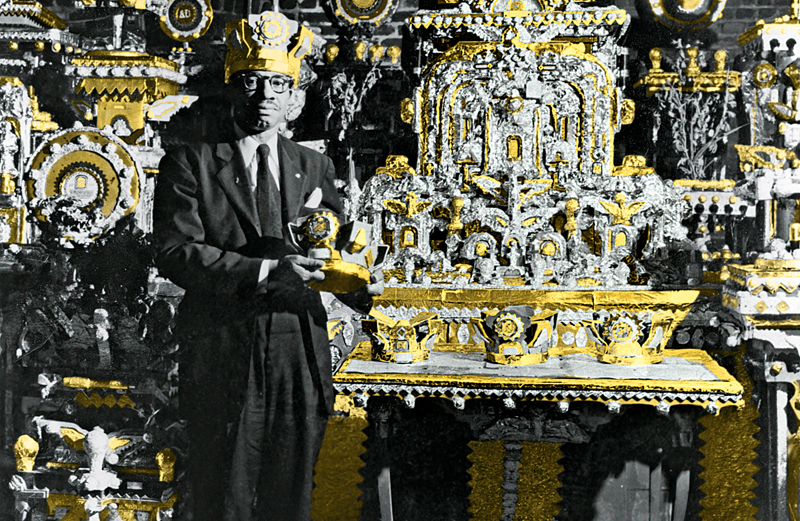
But when he drew closer, he saw that it was composed of recycled glass bottles, green blotters, old wooden furniture and lightbulbs, with crafted angels’ wings, seven-pointed stars and cherubs made from cardboard, nearly every surface overlaid with gold and silver foil.

It was all held together with tape, glue, tacks and pins. Orbs, crowns and altars flanked an intricately detailed throne with a crimson cushion. Above it all, the words Fear Not seemed to levitate. Myer recalled that James had once told him he’d rented the garage for his “life’s work.”

“I’m going to finish it before I die,” he’d said. Myer’s eyes fixed on a banner: Where There Is No Vision, the People Perish. He called out, but there was no sign of the strange work’s creator.

Sixty years later, I took the train to D.C. to see what James called The Throne of the Third Heaven of the Nations’ Millennium General Assembly, now preserved in the Smithsonian American Art Museum. I was disappointed to hear that only a small portion of The Throne was on display.

I was hoping to catch some of that same awe Myer Wertlieb had experienced, hoping for some insight into how a simple man, a lowly janitor, shrouded in mystery, constructed one of the most fascinating works of American art. Was he touched by God? Or was he just touched?

Little is known about James outside what is revealed in public records. He was born in the rural community of Elloree, South Carolina, on April 8, 1909.

His father was a black gospel singer and preacher whose call to the ministry was stronger than his dedication to his wife and four children. James’s mother was left to raise James and his siblings on her own. From a young age, James was devoted to reading the Bible and claimed he often spoke with God.

At 19, James headed to Washington, D.C., to live with his older brother Lee and his family. In 1931, James had his first vision. “This is true that the great Moses, the giver of the 10th Commandment, appeared in Washington D.C., April 11, 1931,” he wrote in a notebook.

In 1942, he was drafted into the 385th Army Aviation Squadron. His duties consisted of carpentry and air-strip maintenance. While serving in the jungles of Guam, James designed a tiny altar. After the war, he moved into a D.C. boardinghouse, bringing his creation with him.

A year later, he was hired by the General Services Administration as a night janitor. That’s when his second vision took place. “It is true that on October 2, 1946, the Great Virgin Mary and the Star of Bethlehem appeared over the nation’s capital,” James wrote.

Three years later, James had another vision. “This is true that Adam, the first man God created, appeared in person on Jan. 20, 1949, this was the day of President Truman’s inauguration,” he wrote.

By this time, God was doing more than speaking and bestowing visions—James believed the Lord was delivering specific instructions on how to construct the throne. He drew up blueprints and in 1950, contacted Myer Wertleib and signed a lease for the ill-lit, unheated garage.

Every midnight, he’d clock out of the GSA and shuffle down the dark streets of the city, collecting items from garbage piles and dumpsters.

For five to six hours, he’d work tirelessly in the garage—peeling foil from corner-store displays and cigarette boxes to wrap lightbulbs and cardboard in silver and gold. Items to the right of the throne were labeled with events from the New Testament. Events from the Old Testament marked the ones on the left.

James approached local churches about using his creation as a teaching tool. But nothing came of it. Two reporters who once came to see The Throne disdained James and his life’s work. Still, nothing stopped him.

James continued his labors—and recorded more revelations—until his death, from stomach cancer, in 1964. He was 55. And with him his fantastic creation might have died too, but for Myer Wertleib cutting open that garage door the following month, and realizing he’d stumbled upon something astonishing.

The Smithsonian examined James’s artwork and notebooks and determined The Throne to be a masterpiece of American folk art. Many of the labels attached to the altars refer to the Book of Revelation, chapters 20 and 21, which touch on the Second Coming, the Final Judgment and the New Earth.

In addition to The Throne, James left behind a written work called The Book of the 7 Dispensations by St. James and multiple binders recording his visions, written in an indecipherable code.

As I entered the west wing to view The Throne for myself, I approached a museum security guard, and asked if he knew of the exhibit.

He looked at me and said, “I wish I could bring you in to see it at midnight. When it’s quiet and still, there’s a peace I can’t describe. To nonbelievers, it may spook them. But to me, it’s the presence of the Lord.”

I sat on a bench in front of The Throne for a long time, in awe of its splendor. I thought about its creator’s faith. Where there is no vision, the people perish.

How close had James’s work come to perishing in that run-down garage? Soon I knew for certain that someone other than James Hampton intended for this to be seen.

Help decode some of James Hampton’s mysterious manuscripts!

Download your FREE ebook, Mysterious Ways: 9 Inspiring Stories that Show Evidence of God's Love and God's Grace.

James Gordon: A Relaxation Exercise

[UPBEAT MUSIC] – I like to begin with a– with basics. And what’s most basic in our lives is breathing. We take our first breath. And we say, oh, the baby’s here, it’s breathing. And then we expire. We die with our last breath. So the body is so and all of our life here on earth is absolutely intimately connected with breath. And since breath is always with us, I mean, you can’t not breathe.

Try holding your breath. You do it for a minute or two. But after that, you gotta breathe. Breath is the most easily available tool that we have for changing the way we think and feel, for improving our biology, for sharpening our mind, for elevating our spirit.

So I work with a very simple technique. It’s called– has a very esoteric name of soft belly. And it’s so beautifully simple. And what’s involved is sitting comfortably in a chair. Anyone who’s watching can do this as well. Sit comfortably in a chair. And allow your breathing to deepen.

And perhaps, breathe in through your nose and out through your mouth, which may be a little unfamiliar to some people, but it turns out it’s just about the most relaxing way to breathe. And allow your belly to be soft. And if you feel comfortable, close your eyes because that shuts out external distractions. Let your belly be soft.

If the belly is soft, more oxygen goes to the bottom of the lungs. You get better oxygen exchange. And oxygen is basic fuel for our brains. If the belly is soft, it activates the vagus nerve, which comes up from the abdomen through the chest, back to the brain. The vagus nerve is the primary nerve that counteracts the fight or flight and stress response.

In our bodies, we have what’s called the autonomic nervous system. And there are two branches to it. There’s the sympathetic nervous system, which is fight or flight. So when we’re in trouble or we’re anxious, our blood pressure goes up. We breathe fast and shallowly, heart rate goes up, muscles get tense, blood flows away from our hands to the big muscles so we can fight or run away.

And then balancing that, there’s the parasympathetic nervous system, which creates relaxation. And the vagus nerve is the central part of the parasympathetic nervous system. And by breathing deeply, by letting the belly be soft, you activate the vagus nerve.

So breathing deeply, also if you relax your belly, if the belly is soft, all the other muscles in the body begin to relax as well. So breathe deeply. Perhaps say to yourself soft as you breathe in and belly as you breathe out. If thoughts come, let them come. Let them go. Gently bring your mind back to soft belly. If you do that for three to five minutes three to five times a day, you can make a shift in your whole life.

[UPBEAT MUSIC]

It’s Never Too Late: A Middle-Aged Marathon Runner’s Story

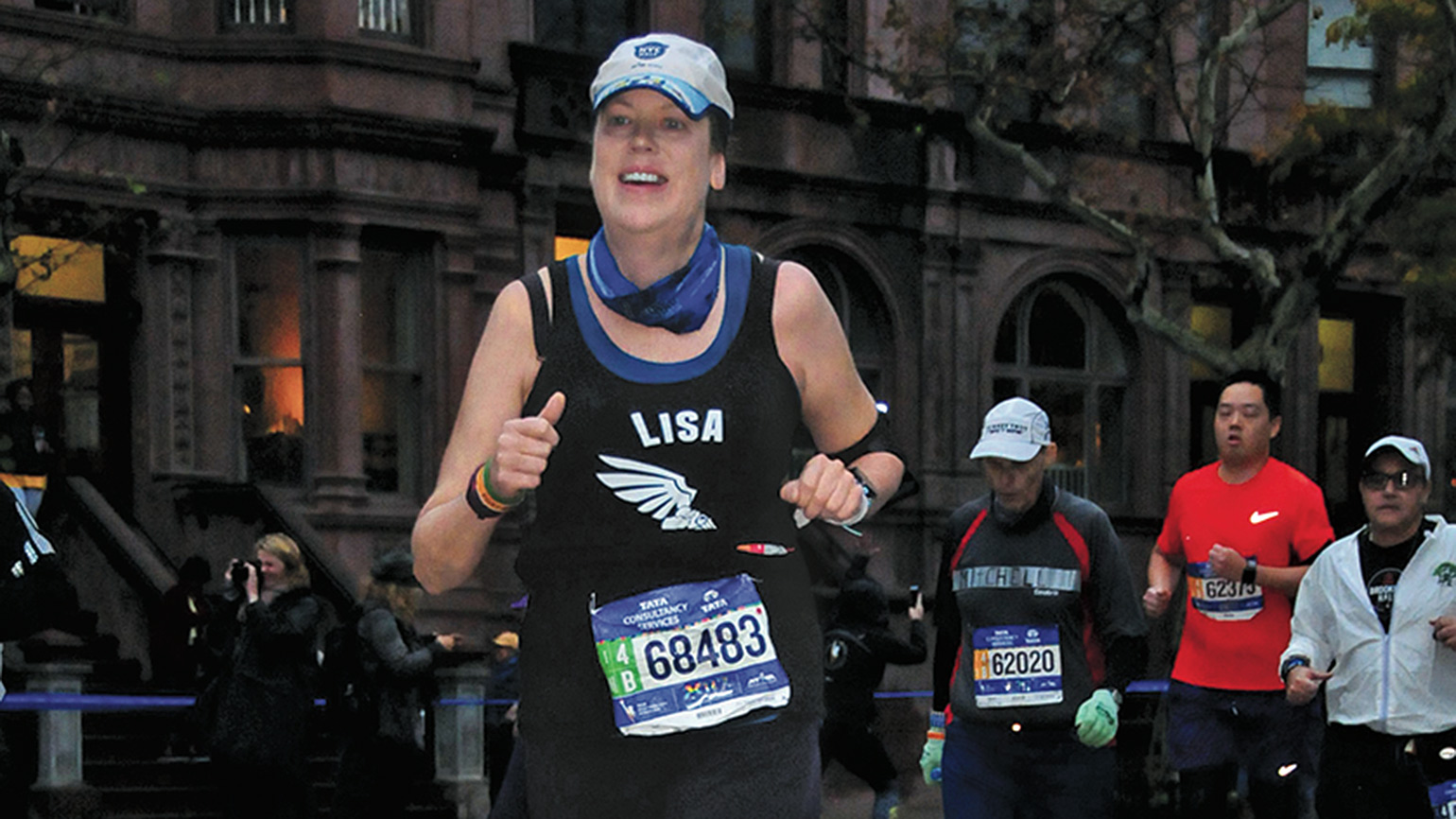
Hi, I’m Lisa Swan; I’m from Staten Island, New York. I was a lifelong couch potato; I couldn’t imagine myself ever running. But I wanted to live a healthier life.

I started with walking, then somehow I started to run. And I couldn’t imagine, when I took those first steps, where it was going to take me. It ended up taking me to the finish line at the New York City Marathon.

I started running around five years ago. I was the opposite of a natural athlete. I wanted to lose weight and it seemed like running was a good way to do it.

That’s why I got started, and it was very hard at first–I was basically waddling more than running when I started–but I kept at it.

When I started training running, I was just trying to build up stamina, and just the idea of even going three miles, even walking, was a challenge, and I basically started just walking as much as I could and then sprinkling in a little bit of running and then as time went on, I kept on going more and more with the running.

I met Mario through my running club, the Staten Island Athletic Club, and he’d been running for over 30 years so he had a lot of knowledge.

My coach, Mario, was very good about sending various Biblical quotes and devotionals to inspire me and encourage me and remind me what this was all about, and he would tell me things about how to have a purpose, you need to have a plan, and we worked on the plan together.

Running the New York City marathon for the first time was probably the greatest experience of my life. I was really prepared, more prepared than I thought I would be, thanks to Mario.

I learned a lot of great life lessons on preparation and really believing in yourself because if you don’t believe in yourself, no body else will.

In a lot of ways, the race was almost like a party for me because I saw various friends along the way. When I crossed the finish line, it was just the greatest experience of my life.

I remember just getting to the end and realizing, “Oh my gosh, I’m going to do this! I’m going to do this.!” I hear them say, “Welcome to the finish line,” and I thought, wow, I’m actually going to get through this! It was just really, really wonderful.

I felt like God had a plan for me, that this was something I could never have pictured. There’s a saying, God has bigger dreams for you than you have for yourself, and I really could never have imagined myself doing the New York City Marathon, and here I am and I finished it.

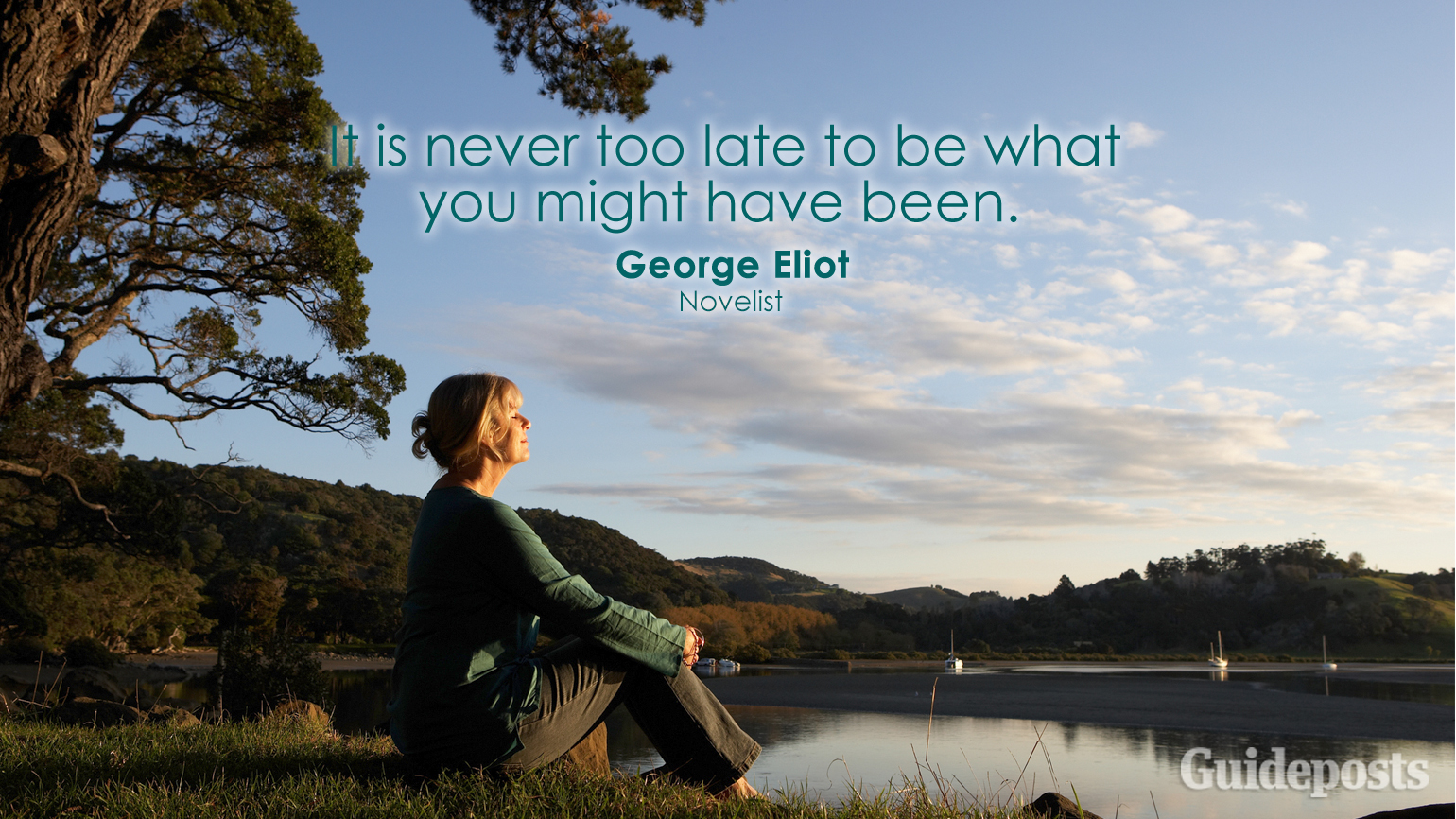
It’s Never Too Late: 9 Inspiring Quotes

It’s never too late to pursue your dreams. If you need some inspiration to follow your heart, no matter what your age, enjoy these inspiring quotes.

It’s All Right to Break Thanksgiving Traditions

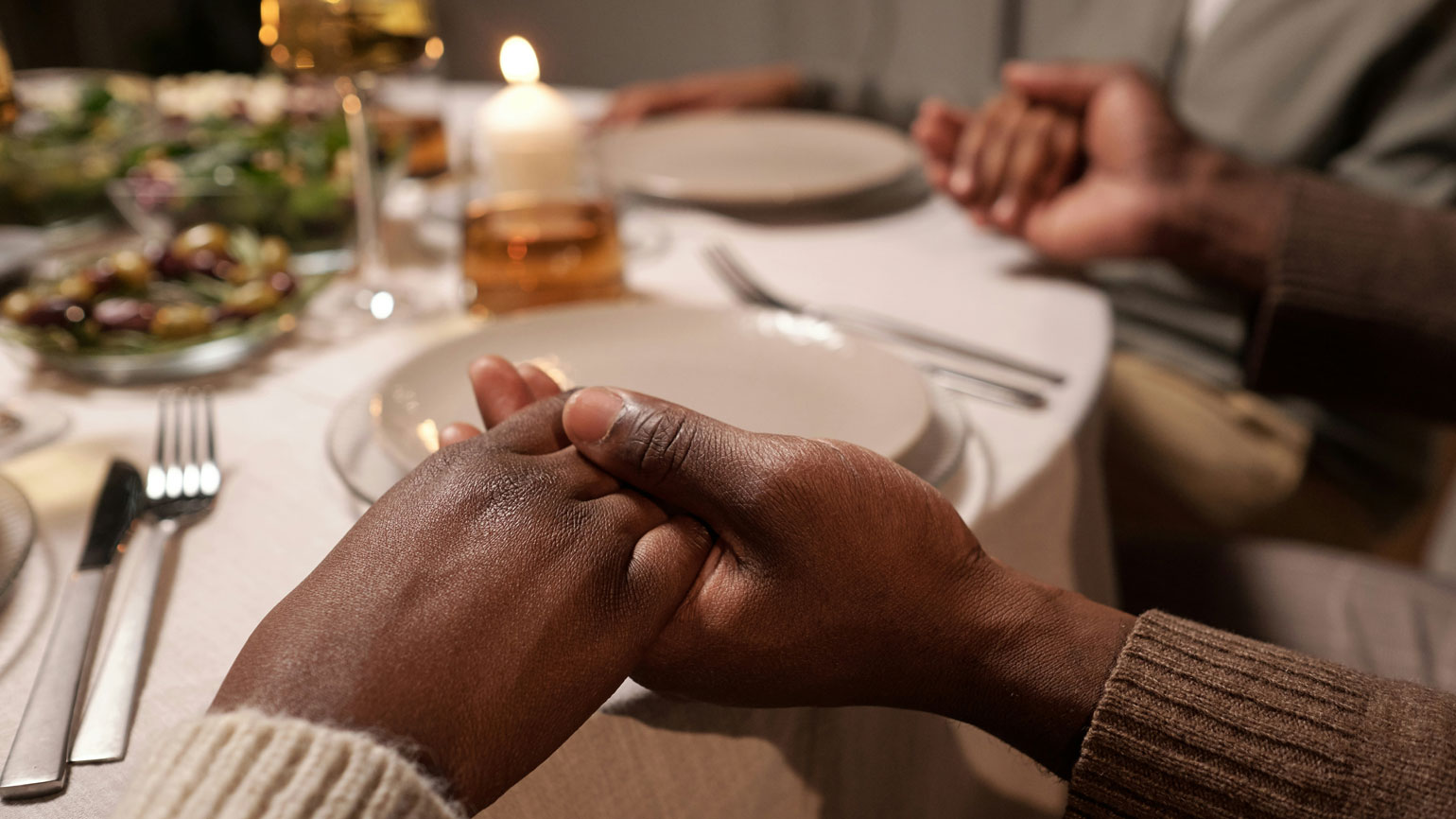
Traditions can be wonderful at the holidays and it’s okay to break them—especially when you’re overwhelmed. Thanksgiving, of course, is the traditional time to bring family members or friends together over an elaborate meal. It’s marked by days of shopping and cooking (and then hours of cleaning up). When you’re up for it, nothing can be more meaningful or fun. When you’re emotionally and physically drained from life challenges such as caregiving, it can be daunting, to say the least. If the latter describes your present circumstances, why not do something completely—or partially—different that meets your needs?

Give yourself permission to forge new paths while holding to what Thanksgiving means to you. You may want to change up everything, or only one or two traditions. It comes down to finding ways to lighten your load and hold a simple, yet significant, festivity for you and your loved one, as well as for any others you hold dear and want to spend time with on this day. Here are a few ideas to help you celebrate Thanksgiving with fresh eyes:

Tell others what you need. Be clear about your present circumstances and the fact that you need to pare things down this year. This will help your family members and friends to understand what’s going on and can alleviate a lot of your pressure. Clear communication is an important way to avoid hurt feelings and it allows people who care about you to offer their assistance, if they’re so inclined.

Celebrate on another day. If Thursday doesn’t work for you, hold your Thanksgiving on Friday, Saturday, Sunday or the following week.

Ask for a hand. Whether you’re planning to mark Thanksgiving with just your loved one or with a small group, it’s not a sign of weakness to ask for help. If you’re having other family members or friends over, consider a potluck to take off some of the pressure. If you and your loved one are celebrating alone, you might want to hire someone to clean your house beforehand. It can be a great way to lift your spirits. Maybe someone in the family could drop off groceries. If you need some emotional bolstering, you may want to take part in a caregiver support group in the run-up to the holiday. An in-home care aide could be another boon by taking over your loved one’s care as you shop, spruce up the house, cook—or take a nap.

De-stress the shopping experience. Combing through all the exciting food selections at the grocery store can be a mood-booster when you have time and energy. But when you’re harried, it can simply exacerbate your stress. When another family member or an in-home care aide gives you a breather from caregiving, you can shop easier. Holding a more streamlined Thanksgiving will also make for a shorter shopping list. You can buy prepared dishes or the ingredients to prepare a few of your own favorites.

Streamline the menu. Think of a few dishes that are most special to you and your loved one on Thanksgiving. Maybe you’ll want only side dishes this year or dips and finger foods. You could try a couple of new nutritious dishes like a pasta with hearty fall ingredients or a bean or squash soup, which may be simpler for your loved one to eat.  A smaller dinner menu leaves more room for dessert.

Rest up. When you give yourself permission to simplify plans, the night before the holiday is likely to be far more relaxing. Rather than cooking and washing pots and pans all evening, you might simply want to decompress. You may even consider participating in an in-person or online support group before Thanksgiving. This can be an excellent way to get coping tips and share thoughts about things that may be coming at you too fast, including heavy emotions that tend to go hand-in-hand with the holidays. Expressing your feelings and listening to others in such a forum can help you to feel less alone.

Start the day with quiet time. Give yourself some space. Clear your mind with positive affirmations, meditation, prayer, inspirational reading—whatever bolsters you. Don’t beat yourself up. Reflect on the good things you have done. Thank yourself for the care you give your loved one each day. Focus on what you can do today and what is good about it rather than how it may not measure up to previous years. Think about any people who are actually supporting you.

Use a couple of special decorations. Without expending much effort, you can lift the mood with objects that remind you that this is a special day and hearken back to happier times. It may simply be a beautiful tablecloth or plates. Flowers, gourds, photos of those you love on the table—it doesn’t take a lot to lift the environment.

Cook together. If your loved one is up to it, cooking one or two easy recipes can be a nice way to bring you together. Experiment with a recipe you’ve never tried before, even if it’s something completely different like a chocolate truffle pie or cranberry cake. Or maybe you’ll want to stick to one or two family recipes. You can listen to music, chat and, if you feel like it, play the parade in the background.

Let others do the cooking. If you and your loved one want to include additional people in your plans, take the stress off by asking everyone to bring a favorite dish. A small potluck can be a lovely way to enjoy Thanksgiving dinner. Or opt for a restaurant, sit back and enjoy whatever you want to eat.

Give thanks to one another. Name one or two things that you and your loved one appreciate about the other. Be open about your positive feelings. This may be an eye-opening and uplifting new tradition. Raise a toast to one other, whether with wine, sparkling cider, water or even milk.

Savor the moment. Put your feet up and watch Thanksgiving-themed movies. Tell family stories. Write your thoughts and feelings in a gratitude journal or let loose with a sketchpad. Art can be a great release.

Crunch through fall leaves. Take in the vivid colors of the season with a walk around the block. It will refresh you and either stimulate your appetite or allow you to walk off your meal. If your loved one is unable to get around on foot, consider a fall foliage drive.

Have pie in bed the next morning. Pamper yourself the day after with a delicious treat. Reflect on the special day you just had with your loved one. It’s a way to reward yourself before swinging into the caregiving day ahead.