Embrace God's truth with our new book, The Lies that Bind

Lessons Learned from Caring for a Mother with Alzheimer’s

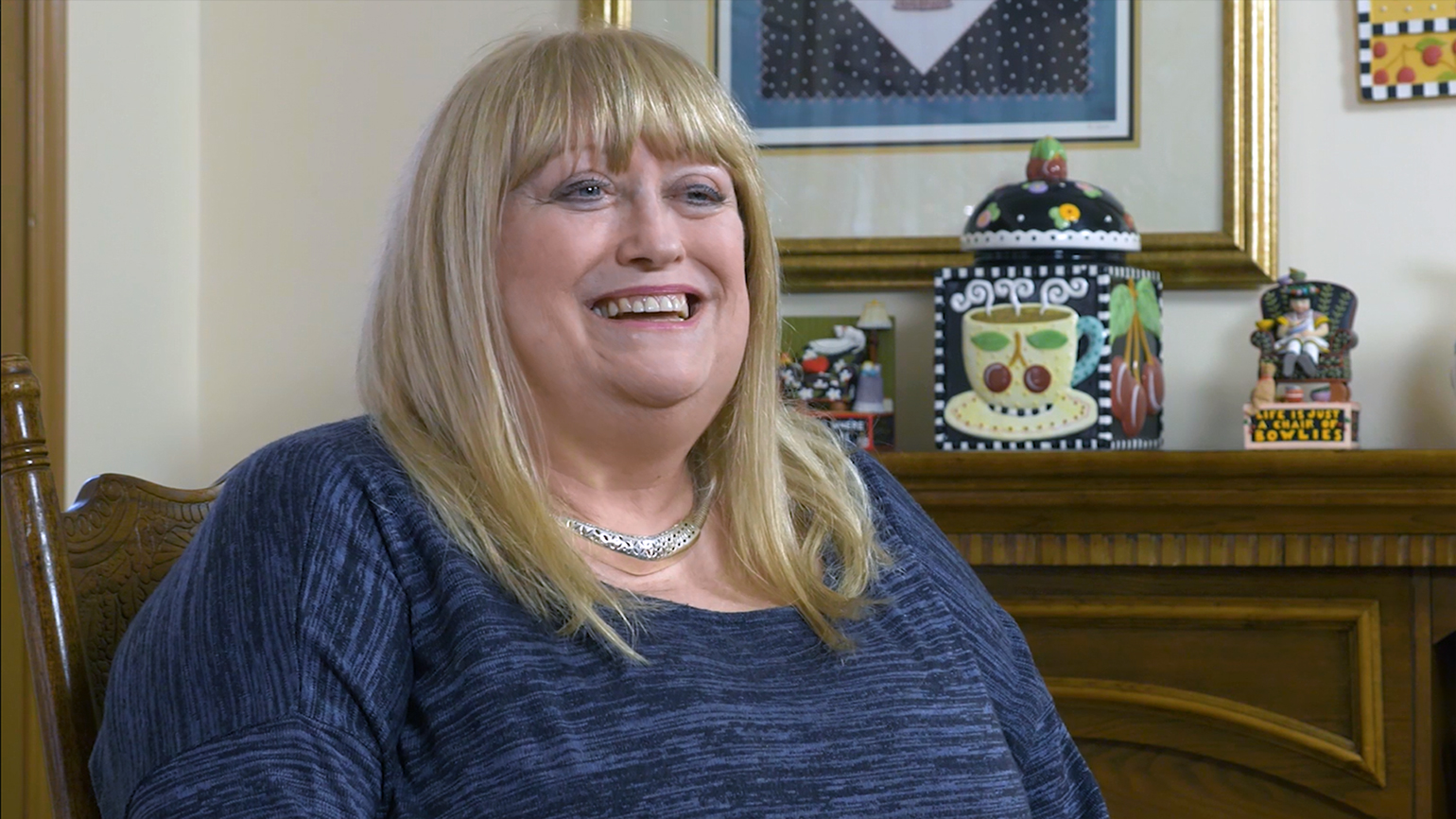
Hi. I’m Kristy Dewberry. I’m a wife, I’m a mother, a grandmother of six, and I’m a caregiver for my mother, Flo, who has Alzheimer’s.

My story in Guideposts is based on my experience with helping my mother through her Alzheimer’s, and how God helped me through the tough times and helped guide me into the best way that I could help her. After my mother was diagnosed with Alzheimer’s, I realized how much I needed a relationship with God to help me cope, to teach me how to help Mom, and to strengthen me through the hard times.

What helped me through the low points was my faith in God and the support system I had with my sisters and my husband, who are all Christians as well. The thing with Alzheimer’s is it’s not a logical disease. And I’m a very logical person, so when she first started exhibiting paranoia or suspicious behavior, I would try to logic her out of it and explain to her that what she thinks is happening could not possibly be happening.

She is seeing and hearing these things with their own eyes and ears, so nothing anyone else tells her is going to convince her that what she’s seeing isn’t real. So we began just trying to either change the subject, steer her in another direction, or just empathize with her and say, “I’m sorry that happened,” or “That must have been very scary for you.” And hopefully get her out of the loop. She would tend to loop around constantly back to her paranoia. And then we would just keep having to steer her in another direction.

One of the main things that helped us is we took my mother to my personal physician and my sisters’, trying to get help for the symptoms she was exhibiting. And they both said absolutely nothing can be done, which was very frustrating. A friend of mine, Robin, when I was telling her about the situation, she recommended a geriatric doctor that she had used for her father-in-law. And so we made an appointment and we took Mom there. And the difference was night and day.

He knew what was important for older people. He knew what to be worried about—quality of life versus quantity of life. He just ran all kinds of tests that a regular MD would not have done, and he was able to diagnose her with Alzheimer’s and get her some medication—the other doctor said there were no medications that would help. So I would highly recommend that you take your loved one to a geriatric doctor, and not a regular physician.

Other things I would recommend—as the disease progresses, we would Google things that would help, and we found all kinds of helpful devices. We got my mother a phone that you put pictures of your loved ones on the numbers, so they don’t have to dial or remember any number. If they want to call Kristy, you just touch Kristy’s picture, and then it calls them. I made her a blanket out of photographs of us when we were little. I just recommend surrounding her with things that are meaningful to her in photographs, to help prompt her memories.

And the suggestions I would give to other people whose parents are going through this, or who have a parent who’s getting Alzheimer’s—first of all, you’ve got to be patient with them. And you’ve got to remember, they’re still themselves, even though they don’t seem like themselves. They’re the person who raised you and loved you. And now it’s your turn to love them back and care for them.

It’s not always easy, but you’ve just got to try. You just can’t give up on them. And you really don’t know what they do remember or what they don’t, so don’t stop visiting them just because you think they don’t know who you are anymore, because you don’t know that. I just think it’s so important that they’re surrounded by people who love and care for them at all times.

Lessons from My Garden

In my earliest memories I’m in my grandmother’s yard in Steubenville, Ohio, reaching out to touch the soft petals of flowering phlox in lavender, rose and snowy white. She holds my hand as we walk along what we called “hollyhock alley” and sing a favorite hymn: “I come to the garden alone while the dew is still on the roses….”

Everything around me—the rustling leaves, the loamy scent of newly turned earth, the warmth of my grandmother’s attention—assures me that this is a kind of sacred place. Is it any wonder that all my life I’ve made gardens for myself wherever I have lived?

My first apartment was a second-floor Manhattan walkup that looked out onto an air shaft. No light, no soil. I bought an aluminum stand with fluorescent lights to grow marigolds and geraniums.

My next place, and current home, was an apartment with a terrace and river view. I could have a garden here. Only problem: the place was 17 blustery floors up.

I had a carpenter build sturdy planters and I picked up flats of impatiens and zinnias at street fairs, and ordered hardy rose bushes to withstand the city’s whipping winds.

I have to kneel on a narrow swath of brick to work my hands in the soil but when I do, I feel as I did when I was a child. No matter where your garden grows, it enriches your life. Here are some ways how:

Take root.
One night, years ago, while working at a woman’s magazine, I was ready to send off the glossy “Manhattan edition” I edited every month. The publisher rushed in to announce we’d be adding more pages so we needed more articles—fast. Near dawn I finally got home. I was exhausted and missing my family’s garden.

I tossed and turned in bed, fretting. Please help me to calm down, I prayed. Then the pearly glow of first light appeared.

I sat up groggily and noticed the cardboard box that had arrived in the mail the day before. Plants I’d ordered from a catalog! I took the box out to the terrace and tore it open. I tapped the begonia and hollyhock plants out of their containers, tucked them into dirt-filled window boxes and watered.

With the sun at my back and my hands in the soil, I felt connected to the things that really matter, and my worries evaporated like the morning dew.

As I worked, I felt my heartbeat slow down, my body relax, my whole being become quiet and soften. Home is where my garden is, I thought.

A flier in the box caught my eye. “DEVELOP A STRONG ROOT SYSTEM,” it said in bold letters. That’s what a garden does for you, I thought. Keeps you rooted in your values, rituals, traditions. I planted and tended those plants, giving them all the nourishment they needed. And in return, they nourished me spiritually.

Embrace the season.
Nothing compares to the excitement spring brings to a gardener. My garden comes back to life, exuberantly. First, the sunny tops of daffodils poke up, and orange and pink tulips and then those grape hyacinths—how can anything so compact give off such tremendous perfume? Suddenly, my terrace is alive with color and fragrance.

Yet, not long after they appear, those first flowers wither. And year after year, it makes me sad. But by summer, there is new life in the garden: snapdragons and marigolds and the phlox that always bring Grandmother to mind.

Yes, to everything there is a season. We must adapt, grow and change. Instead of lamenting loss and wanting to control nature, I rejoice in each flower that blooms.

There are those times when I feel forlorn, like my roses in winter. I look out on the terrace and remind myself: A garden is never lifeless. Even in winter, when it looks like nothing is happening, life is at work—bulbs storing up energy for next spring, perennials resting, soil breaking down into rich mulch.

And as our gardens go through their seasons of change, so, too, do we, just waiting sometimes to understand the larger purpose in our lives. It will come, as sure as crocuses in spring.

Share the beauty.
My father cut flowers to give to neighbors—especially ones who were sick or feeling down—and for my mother to make centerpieces for her women’s club and choir dinners.

“Why don’t you just leave them in the garden?” I asked, secretly thinking, for me to enjoy.

My dad looked surprised. “We need to pass the pleasure on,” he said.

Dad was right. There’s nothing like a gift from the garden. Guideposts readers have sent me seeds and cuttings from all over the country. I’ve been given bluebonnet seeds from Texas and wisteria tendrils from South Carolina. I have hollyhocks and a nonstop patch of mint from my hometown.

From my own Manhattan neighborhood are violets I dug up years ago from the courtyard of an about-to-be-demolished church. Among this growth and activity, bumblebees and butterflies drift by, and my upstairs neighbor Annie opens her apartment window. “Looks great, Mary Ann!” she calls from above. All of these sweet growing things connect me to a community.

I might live alone, but I never feel lonely in my garden. Digging, snipping, putting my face into a full-blown rose and breathing deeply, I think of how many others in Texas and Ohio and Oregon are doing the same. Gardening is a link to a wide world. The pleasure is multiplied when it’s shared.

Life will bloom again.
Thirteen years ago, my mother died of a heart attack. Next year at the same time my father died. My brother and sister and I dug roses and peonies from his garden to take to our own gardens.

The sadness in my heart seemed insurmountable as I unwrapped those plants, whose roots and stalks looked lifeless. Out on the terrace, I sat on the little wooden chair that my father always used when he was gardening, and put the knobby brown forms into pots.

By summertime, to my astonishment, they had put out breathtaking blossoms. One bush was covered with golden yellow roses, my mother’s favorite.

Stanley Kunitz, in his book The Wild Braid: A Poet Reflects on a Century in the Garden, writes: “The garden instructs us in the principle of life and death and renewal. In its rhythms, it offers the closest analogue to the concept of resurrection available to us.”

As much as I missed my parents, my sorrow was transformed by the scent of yellow roses.

It occurred to me that Jesus first appeared to Mary Magdalene after his crucifixion in a garden. What better place to be reminded that life blooms again and again?

Renewal is always at hand in a garden—be it a country meadow, a suburban yard, even a city windowsill—our own small patch of eternity.

Leaving Your Comfort Zone

Human beings are naturally social creatures. We crave deep connections with others who share our interests and beliefs. But according to a Cigna’s U.S. Loneliness Index, nearly half of American report sometimes or always feeling alone. A quarter of those polled reported rarely or never feeling as though there are people that understand them, while a fifth said they rarely or never feel close to people.

Although forming close relationships sometimes requires time, there are a few simple ways to make friends and begin to build your network of support.

1. Attend a class or event in your area of interest

Workshops, classes, and other events offered in your areas of interest are all appropriate places to meet people. For example, if you like pottery—either to collect or do yourself—consider attending a local pottery shop’s open-house or sign up for a one-day workshop on how to make pottery. If you dream about penning the next great American novel, attend a writing class at your community college or an afternoon seminar with a local author. If you love dance, consider getting involved with the local ballet company, volunteering your time to their programs, or take an adult dance class.

2. Get involved in your church

Your church or parish is another fertile meeting ground for friends. Having faith in common is a great starting point for a deep connection. Most churches offer Bible studies and other discussion groups. Some have committees devoted to serving the poor or ministries for soldiers and veterans. If you tend to alternate your times of church service, consider committing to the same service each week so that you become better acquainted with those regulars.

3. Contribute to a cause

Feel passionate about a certain cause? Think about participating in a walk to raise money for that mission or a rally. You will meet others who share your enthusiasm.

Choose a nonprofit or local foundation whose agenda you believe in. Join a civic association or attend a town hall meeting and contribute your skills. For example, if you feel strongly about the environment, sign up to pick up trash or plant trees with other folks around your neighborhood. Conversations happen more naturally while immersed in a task.

4. Join a support group

My best friends in college were those I met at a local support group. We became close very quickly because we were struggling with similar issues and relied on each other as sounding boards.

Twelve-step support groups are an invaluable place to make connections with others who struggle with addiction, codependency, and family issues related to addiction. However, there are many more kinds of support groups: Christian-based groups, programs for relationship difficulties, and support for depression and other mood disorders.

5. Go online

Talking with someone online is different than chatting over coffee, however, I have been amazed at the level of intimacy exchanged in the online groups in which I participate. Several of my online relationships have led to phone calls and in-person meetings where our bond deepened. Two people I met online became dear friends that I see and talk to regularly. When you search for online forums, you’ll find a dizzying array. Be choosey. You can also create your own. I created two groups for depression. Psych Central hosts online forums on just about any issue.

6. Start a meetup

In 2012, Eileen Bailey was newly divorced and had just sent her daughter to school. She realized she didn’t have many friends. She joined a Meetup group for women over 50 but there were never any activities, so she started one of her own. At the first breakfast, the table was full of women from all walks of life conversing with each other as if they had known each other for years. “We sat there for three hours, soaking in the easy companionship we felt,” Eileen told Guideposts.org. Seven years later, the group still meets for breakfast twice a month. “We go [to] the movies, out to dinner, see plays at local playhouses, and go on trips together. But more than that, we have become friends,” she said. “We have found friendships where once we didn’t think it was possible.” With Meetup, you can search existing groups categorized by your location or interest area. You can find a gaggle of friends with whom to train for a marathon or learn a language or experiment with cooking.

7. Get to know your co-workers

You may be sharing an office space with a half-dozen potential friends and you just haven’t made the effort to get to know them better. You already have one major thing in common, so you can build on that base. When I was new to an organization, I made it a goal to take a different colleague out to lunch each week. As months went by, I felt much more a part of the company and enjoyed several friendships because of those efforts.

8. Befriend friends of friends

As with many people I know, I met my husband through a mutual friend. This provided a level of comfort from the start because I knew he had essentially been vetted by her. Friends are the same way. If you meet someone through another person whom you trust and respect, chances are good that you’ll enjoy a nice connection. Part of the weeding out process has already been done for you.

9. Get creative and have fun

If you apply a little creativity, you will likely come up with many more ways to build your network. The hardest part in forging new connections is putting yourself out there. That’s never easy, as not everyone will reciprocate your gesture. However, if you continue to take the risk and try to connect, you’ll be rewarded with a circle of close, intimate friends.

Learn Success Secrets from Will Smith

What does a treadmill have to do with Will Smith’s success as a movie star and actor?

Everything!

When asked by an interviewer to explain his success, he responded:

“I’m not afraid to die on a treadmill. I will not be outworked. You may be more talented than me. You might be smarter than me. And you may be better looking than me. But if we get on a treadmill together you are going to get off first or I’m going to die. It’s really that simple. I’m not going to be outworked.”

But what about his talent you might ask. After all, he is charismatic, funny and a great actor. Isn’t that the reason for his success? Not according to Will Smith. In fact he considers himself to be slightly above average in the talent category. Rather, he attributes his success to his work ethic.

You may be surprised to hear this because popular opinion says that successful people who have risen to the top of their profession got there because “they were lucky” or “they were chosen” or “they were born with more talent than everyone else.” We overestimate their talent and we underestimate our own.

In my research for Training Camp I found that people such as Will Smith are not super human and they don’t have some mutant gene that makes them better. What makes them stand out is that they work harder. It’s really that simple.

When others are sleeping, they are working. When others are wasting time, they are improving. When others are scattering their energy they are practicing and zoom focusing.

Of course talent is necessary to excel at something but natural ability will only take someone so far. The key is to infuse one’s talent with hard work, passion and a drive for excellence.

So what does Will Smith have to do with you?

Everything!

If you want to take your career or “game” to the next level you must be willing to pay the price that greatness requires. You must be willing to work harder than everyone you know. There’s no easy shortcut. Hard work has been, is and always will be the key to anyone’s success. To be your best you must invest all that you are to become everything you wish to be. Will Smith knows it and now you know it.

Are you willing to pay the price? Let’s hop on the treadmill together!

Download your FREE positive thinking ebook!

Learning to Be Happy at Any Age

I’ve heard it said that happiness is a journey, not a destination. The idea that we can find our way back to happiness at every stop along the journey of life is comforting, reassuring—and, it turns out, supported by research that encourages us to cultivate a positive view of aging.

Psychologists who study aging are exploring the relationship between one’s attitude toward the aging process and the emotional and physical health outcomes that follow. It turns out that a positive view of aging is associated with better overall health, as well as generalized emotional wellness.

This idea can be helpful to young people as well as older adults. A popular class at Yale, nicknamed “the happiness class” but actually titled, “Psychology and the Good Life,” attracted 1,200 undergraduates when it was first offered this year. l Professor Laurie Santos, who created the class, told the Boston Globe that in creating it, “The goal was to rewire the way the students viewed the pursuit of happiness.”

With a positive foundation like the one Santos advocates, we can next set our sights on how we pursue happiness as we age. William Chopik, an assistant professor of psychology at Michigan State University, surveyed more than half a million Americans and found that as people got older, the age they reported they “felt’ actually grew younger.

According to the Washington Post, Chopik surmised this phenomenon could “arise from people feeling good about themselves and their bodies, and coming to the realization that, because of their negative beliefs about what it must feel like to be an older adult that ‘I must not be old.’”

Another study, conducted at the Boston University School of Public Health, connected a positive outlook toward aging with a measure of protection against disease, particularly dementia. Even among those who carry a gene associated with dementia, the risk of developing the disease went down in those who had generally positive views of growing older. “Exposing older individuals to negative age stereotypes exacerbates stress, whereas exposing them to positive age stereotypes can act as a buffer against experiencing stress,” Paola Sebastiani, the study’s author, told the Post.

Happiness through the years—and decades—is, in short, a goal worth pursuing. No matter where you are in your journey, you can take one step closer toward abiding happiness by raising your sights to the joys and benefits of getting older.

Lauren Sisler Opens Up About Her Parents’ Addiction

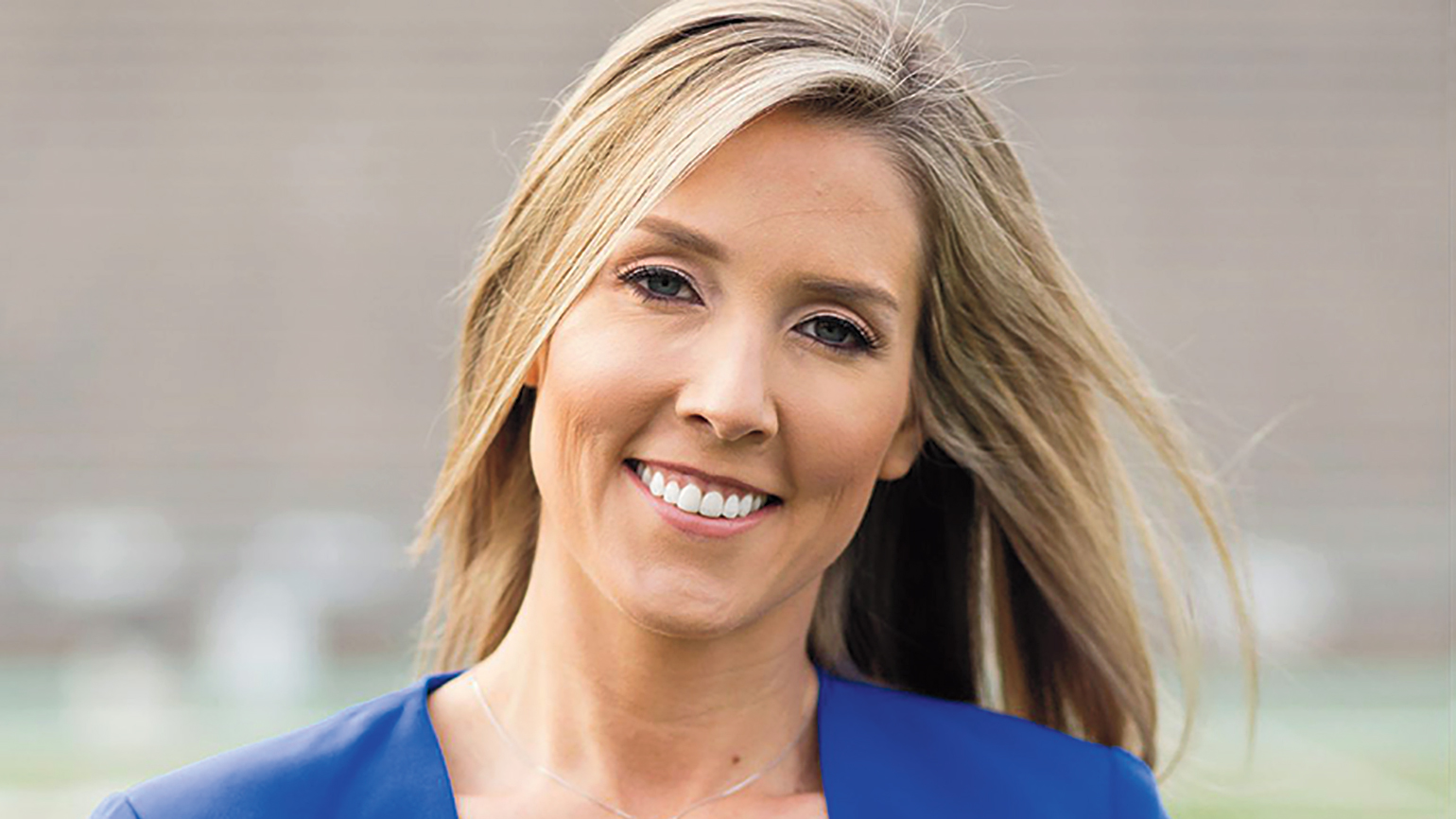
Sometimes people approach me and ask, “Don’t I know you?” If they’re sports fans, they probably do. In addition to covering sports for AL.com, I’m a sports broadcaster for ESPN and SEC Network. Here in football-crazy Alabama, I get recognized a lot.

The attention is flattering. But it’s also ironic. For a long time, even after I became a presence on TV, I worked very hard to keep myself hidden.

No one knew the real me. Not my coworkers. Not my teammates and mentors during my competitive gymnastics days. Not my closest friends and family members. Not even me.

What was the secret I worked so hard to hide?

My mom and dad were drug addicts. They were wonderful, supportive parents, people of abiding faith and love. But from the time I was a teenager, both were hooked on prescription pain medicine. I was in college when they died, hours apart, from drug overdoses. By that point, they were barely functioning. Their finances were so chaotic, everything they owned was auctioned off to pay bills after they died. My older brother managed to bid on a few keepsakes from our childhood.

That’s what really happened. Here’s the version I told everyone else, including myself: Mom and Dad were normal people who took medication for some chronic pain issues. Their lethargy, financial woes and explosions of anger when pills ran low were just everyday family problems.

“Mom had respiratory failure,” I said after they died. “Dad had heart failure. It was such tragic bad luck they died on the same day.”

It wasn’t bad luck. Mom died after ingesting an entire patch of fentanyl. Dad found Mom dead, ingested his own fentanyl patch, then collapsed and hit his head on the kitchen counter.

My aunt Linda, my mom’s sister, who had often bailed out my parents financially and learned the extent of their drug problem after they died, tried to tell me the truth. I refused to listen. I left the room or talked right over her.

As a child, I was either unaware or too naive to acknowledge the truth. As I got older, shame replaced ignorance. The shame grew so intense, I concocted a separate reality in which my parents’ drug use was normal. How could they be drug addicts if they lived in a nice house and Dad had a job?

The lie worked for years—until suddenly it didn’t. After Mom and Dad died, I reached a breaking point.

I found release in the last place I expected. There’s a reason Jesus says, “The truth shall set you free.” When at last I admitted the truth, I found a freedom I desperately needed.

Looking back, I can trace the start of my family’s problems to the year we moved from Roanoke to rural Giles County in Virginia, where Dad, a Navy veteran, inherited some land. Dad had grown up in the country, and he wanted my brother, Allen, and me to have the same upbringing.

It was a beautiful area, and the house Mom and Dad built was lovely. But Dad’s commute to his biomedical engineering job at the VA medical center more than doubled. Mom’s social life, much of it centered on our old church, shrank to mostly family, especially ferrying Allen and me to sports practices.

Soon after the move, Mom was diagnosed with degenerative disc disease and had multiple surgeries. Feeling isolated and daunted by her condition, she and Dad both fell into depression. Dad had had his own back surgery.

Many people prescribed postoperative pain medication take it when they need it, then stop. Not Mom and Dad. By the time I was in high school, our house was constantly getting shipments— paid for by Dad’s excellent insurance—of 90-day supplies of pills, opioid lollipops and fentanyl patches.

I don’t know who exactly was prescribing all of this medication, maybe the pain management specialist Mom and Dad saw after their surgeries.

For a while, my parents kept up a façade, attending sports competitions for Allen and me, saying good-night prayers with us, keeping tabs on our homework. Gradually, as the drugs’ grip tightened, things fell apart. By senior year, there were shouting matches over who took whose medication.

I’d heard about people getting hooked on prescription pain medicine. Of course such a thing would never happen in my family. Junkies living under highway bridges had a drug problem, not my middle-class parents in their beautiful house with Dad’s respectable job. Addiction was shameful. Scary. Nothing to do with my stable, normal world.

I went to Rutgers University on a gymnastics scholarship. My first Thanksgiving home, Dad collapsed on the living room floor, his face blue. Allen, home from the Navy, tried to revive him. Paramedics took Dad to the hospital.

“Your father had a bad reaction to some medicine,” Mom said at the hospital. She looked at me, as if waiting for me to challenge that explanation. After a moment’s hesitation, I asked, “And he’ll be okay?” Mom nodded.

It was an unconscious decision to go along with Mom’s story. Some part of me must have known it wasn’t the whole truth. But after years of lying to myself, how could I blow things up now?

“How’s your dad?” friends asked.

“Still in the hospital,” I said. “The doctors say he needs further evaluation.”

I also covered up for Mom, who abused not only pain pills but the antidepressants she was prescribed.

My parents’ death certificates both listed “accidental overdose” as the cause of death. “Accidental” meant it wasn’t their fault, right? I convinced myself I wasn’t really lying when I told people they’d died of respiratory failure and heart failure.

But I could forestall reality only so long. Aunt Linda grew alarmed when she realized I hadn’t acknowledged the truth about my parents’ addictions. Several times she tried to explain everything. Sometimes I fought back.

“Mom and Dad were not drug addicts,” I’d insist. “They took medication for pain and had an accident. What are you trying to do, shame our family?”

One day at Rutgers, I hurt my leg at gymnastics practice. Somehow in my mind, the pain from the injury became bound up with my pain over Mom’s and Dad’s death. I said nothing to my coaches about it, even after the pain got so intense I began limping around campus.

My coaches noticed and forced me to see a doctor. “Lauren, you’ve been practicing on a partially broken femur,” he said. “If you’d kept going, you could have broken the bone clean through. That’s a very difficult injury to heal from.”

Here at last was a reality I could not conjure away. Unable to compete, I became depressed. I was prescribed medication for both pain and depression. I was scared to try either one.

When I was back home, Aunt Linda saw my struggle. She sat me down and said, “You can’t do this anymore, Lauren. You have to acknowledge the truth about your parents.”

She told me everything from the beginning. When she finished, I felt an instinctive impulse to deny or run away. Then a new feeling came over me. A sensation of light and space. A glimpse of freedom I didn’t even know I needed.

“Lauren,” Aunt Linda said gently. “You can’t run away from the truth. You can’t control what people think about your parents. What you can control is how you choose to remember them. Do you really think your Mom and Dad are honored by lies? By your denial?”

Aunt Linda’s question haunted me. What had all my lies achieved so far? They sure hadn’t kept Mom and Dad alive. They’d nearly cost me my place on the gymnastics team. The assumption behind the lies was that Mom’s and Dad’s addictions were shameful.

What if that assumption was wrong?

I dug into the truth. I read the postmortem toxicology reports. I peppered Aunt Linda and anyone else who might know what happened with questions. I reevaluated everything.

The story that emerged made perfect, heartbreaking sense. Mom and Dad were wonderful, supportive parents, just as I’d always insisted—except they were ensnared by powerfully addictive medicines and lost control of their lives.

That was a terrible fate. But it was not shameful. It did not mean our family was tainted. It just meant the drugs were potent and Mom and Dad were vulnerable and didn’t find effective treatment in time.

I tried telling a friend the truth. To my great relief, she didn’t judge me. Gradually I opened up to more people. I grew so comfortable with my family’s story, I felt prepared to tell anyone.

I graduated from Rutgers and became a sports journalist. As my career took off, I filmed a segment about my parents for a feature on addiction. I was nervous about making the truth widely public. But I’d already told so many people, it was just one more incremental step.

Today I go out of my way to tell my family’s story. The circumstances of my parents’ deaths are on my bio page on the ESPN website. I tell the story at public speaking events and whenever it seems appropriate on the air.

Addiction is a disease of denial. It thrives in the shadows and in isolation. Sometimes I wonder what would have happened if Mom and Dad had admitted the truth early on and sought treatment. Sometimes I wonder what would have happened if I had admitted the truth earlier. I’ll never know.

What I do know is that the God I pray to is the God who listened when Mom and Dad said those good-night prayers with me. A God of love and not shame. A God of truth.

Read more: Overcoming Denial in Coping with Addiction

For more inspiring stories, subscribe to Guideposts magazine.

Laura McKowen on the ‘Magic’ of Sobriety

When author Laura McKowen first struggled with her addiction to alcohol, she felt she was anything but lucky. She thought people who could drink socially were the lucky ones. In her new book, We Are the Luckiest, the author says that she now feels lucky to be living sober.

McKowen, who has more than 50,000 Instagram followers, is known in recovery circles for sharing her experiences with drinking and her journey to sobriety with honesty and vulnerability. She has shared hundreds of stories, blog posts and podcasts. McKowen says the book is not just about sobriety.

“This is a book about my experience in getting sober from alcohol, but it is really a book for anyone who comes up against big pain or [a] struggle that they cannot seem to overcome,” McKowen told Guideposts.org.

McKowen said she liked alcohol in her mid-twenties, but drinking was normalized, especially in her public relations career. It wasn’t until 2013, after separating from her husband and realizing her drinking was causing problems for her young daughter, that McKowen went to her first Alcoholics Anonymous meeting.

“It was my first sort of formal step towards sobriety, and then I didn’t actually get sober until September 2014,” McKowen said. “It was a full year plus that I was struggling…really wrestling with giving up what I thought was a very big part of my life.”

McKowen said she viewed sobriety as a kind of “death sentence” that would ruin her social life, career and chance at finding love. It forced her, instead, to finally reckon with the damage her drinking had caused. She realized then how lucky she was to be sober.

“There was no dramatic turning point,” McKowen explained. “My turning point was more of just a pure exhaustion. It was just, I can’t feel this way ever again. I couldn’t imagine ever feeling that anxiety of the day after drinking again.”

One idea that helped her on her path to sobriety was taking it one day at a time. McKowen told herself that if she wanted to drink tomorrow she would deal with it then.

“I erased the notion of forever because [the idea that I would never drink again] filled me with so much despair,” she said.

Another thing that helped was, as she put it, “burning all the boats.”

“I was talking to someone recently who said, ‘If you want to stay on the Island, you got to burn all the boats,’” McKowen said. “And I burned all the boats. All these little sneaky ways that I was still hiding or working to keep drinking in my life, like not really being honest with people about where I stood with sobriety.”

McKowen also temporarily removed herself from situations she associated with drinking: concerts, happy hours, dates, changing her route home so she didn’t pass her neighborhood liquor store. She also relied on her faith.

“When I can remember God, when I can remember that I am held in favor in this, in grace [than] I can get perspective that is so necessary to be okay even in really difficult and turbulent times,” McKowen said.

Six years after she stepped foot in her first AA meeting, McKowen has left her job in the public relations industry and dedicated herself to her passions of writing and recovery education. The sobriety she once feared would ruin her life, she now views as magical.

“I thought that it would be a small life and a very sad life,” she said. “And it’s exactly the opposite. Everything that I really wanted all along, which is a direct experience of life and to be able to feel everything completely and to be able to access my joy and my potential, that was all in sobriety, it was never in drinking.”

Lance Armstrong: Cancer Couldn’t Stop Him

When I was 25, I was diagnosed with testicular cancer. I was given a less-than-40-percent chance of surviving, and frankly some of my doctors were just being kind.

My career stopped. The months of chemotherapy were grueling. I thought I’d never be able to get back on a racing bike. There were times I was so sick I couldn’t eat, couldn’t watch TV, couldn’t read my mail.

But when I was sickest from the chemo, I started to beat cancer. In the fall of 1997, I passed the one-year mark of recovery. Finally I made my mind up: I would try to race again.

It was a disaster. I managed to finish only fourteenth in the first professional race of my comeback. I was used to leading, not finishing fourteenth.

Two weeks later I entered the Paris-Nice, an eight-day haul notorious for its raw wintry weather. On the second day I dropped out. This is not how I want to spend my life, freezing and soaked on a bike.

Back in Texas I told my fiancée, Kik, my agent, Bill Stapleton, and my riding buddy, Chris Carmichael, that I was going to retire. When you have lived for so long terrified of dying, you feel like you deserve to spend the rest of your days on vacation. I pretty much became a bum. I golfed. I water-skied. I lay on the sofa and channel-surfed.

One day Kik told me, “You need to stop lying around doing nothing. I love you no matter what. But this isn’t you.”

She was right. I could picture myself bumming around for the rest of my life and I didn’t like it. As the days wore on, I began to waver on retirement. Bill persuaded me to commit to one last race, the U.S. Pro Championships, that May. Chris insisted that I needed an eight- to ten-day intensive training camp to get back in shape.

“Let’s get out of town,” he said. “You can’t focus here in Austin. There are too many distractions.”

We headed for Boone, North Carolina, high in the Appalachians. I had won the Tour Du Pont twice there, and I had spent many afternoons cycling on its tallest peak, Beech Mountain. It was arduous but beautiful country.

Spring had just begun moving up into the hills, creating a constant fog and drizzle that seemed to muffle the piney woods. We rode winding back roads, only some of which were paved and mapped. We cycled over gravel and beds of pine needles, and under hanging boughs. The cold seared my lungs, and with every breath I blew out white frost, but I didn’t mind. This time it felt good.

Toward the end of that week we decided to tackle Beech Mountain. There was a time when I owned that mountain. It was a strenuous 5,000-foot climb with a snowcapped summit, and it had been the crucial stage in my two Tour Du Pont victories. I remembered laboring up the mountainside with crowds lined along the route—how they had painted my name across the road: Go Armstrong.

We set out on a cold, rainy day planning to ride a 100-mile loop before we undertook the big finishing ascent of Beech Mountain. We rode through a steady rain, and by the time we got to the foot of the mountain, I was drenched.

I lifted myself up out of the seat and propelled the bike up the incline. I hammered down on the pedals, working hard, and felt a small bloom of sweat and satisfaction, a heat under my skin. Chris was behind me in the follow car. He rolled down the window, yelling, “Go, go, go!”

The ascent triggered something in me. As I rode upward I reflected on my life—my childhood, my early races, my illness and how it had changed me. My mother was 17 when she had me, and she separated from my father when I was two. No one thought we would amount to anything, but Mom believed differently, and she raised me with an unbending rule: “Make every obstacle an opportunity.”

In Plano, Texas, where I grew up, if you weren’t a football player you didn’t get noticed, and if you weren’t in the right social circles, you didn’t get noticed either.

Well, my mother was a secretary and I wanted to get some attention somehow, so I tried football. But when it came to anything that involved hand-eye coordination, I was no good. I was determined to find a sport I could succeed at. First it was running, then swimming, then cycling.

Other kids were hanging out at the country club while I biked for miles after school. I had a huge chip on my shoulder, and I found that it could become the stuff of competitive energy. “Turn every negative into a positive,” Mom would say.

When Mom got home from work, we sat down to dinner together and talked. Sometimes she talked about how frustrated she was at work, where she felt she was underestimated because she was a secretary.

“Why don’t you quit?” I asked.

“Son, you never quit,” she said.

I started to make a name for myself in bike races and my mother became my organizer and my motivator. “If you can’t give one hundred and ten percent, you won’t make it,” she told me. She always found a way to get me the latest bike I wanted, or the accessories that I needed. In fact, she still has all of my discarded gears and pedals, because they were so expensive she couldn’t bear to get rid of them.

Mom was with me when I won the World Championships in Oslo, Norway, in 1993. I was 21. I pumped my fists in the air, blew kisses and bowed to the crowd. After I dismounted, I found Mom, and we stood there in the rain, hugging. “We did it! We did it!” I said.

In the midst of the post-race celebration, a royal escort arrived to inform me that King Harald of Norway wanted to congratulate me. “Come on, Mom. Let’s go meet the king.” We began to move through the security checkpoints. Then a guard stopped us. “She’ll have to stay here,” the escort said. “The king will greet you alone.”

“I don’t check my mother at the door,” I replied. I had no intention of going anywhere without her. They relented and together we met the king. It seemed then that the tough times were over. No more big obstacles to overcome. Then came cancer.

I was diagnosed with testicular cancer at stage three, the most advanced, and in the space of a few days I learned it had spread to my lungs and brain. I chose to have surgery on the lesions in my brain. When I came out of the operation, my head was wrapped in gauze and bandages. My senses seemed wrapped up, too, a result of the anesthesia and the IV tubes twining all over me. I was exhausted, drained to the center of my being.

“Can I see my mom?” I asked.

She came in quietly and held my hand.

“I love you,” I said to my mother. “I love my life, and you gave it to me, and I owe you so much for that.”

“Keep fighting for it, son.”

Following the operation, while I was going through chemo, my driver’s license expired. I dragged myself down to the Department of Motor Vehicles and stood in front of the camera. I was completely bald, with no eyelashes or eyebrows, and my skin was the color of a pigeon’s underbelly. But I looked into the lens and smiled. I want this picture so that when I get better I will never forget how sick I was.

A year and a half later I could look at my driver’s license and say I had survived cancer. But now what? As I climbed Beech Mountain, I asked myself, Do I still have what it takes to race?

Then I saw an eerie sight: The road still had my name painted on it. My wheels spun over the washed-out yellow and white lettering. It said, faintly, Go, Armstrong! Lance Armstrong, the one who turns obstacles into opportunities. Son, you never quit.

All at once I saw my life as a whole and understood its pattern. It was simply this: I was meant for a long, hard climb.

I approached the summit. Behind me, Chris could surely see there’d been a change in me. I reached the top of the mountain and cruised to a halt. Chris stopped the car and got out. We didn’t talk about what had just happened. Chris just looked at me and said, “I’ll put your bike on top of the car.”

“No,” I said. “Give me my rain jacket. I’m riding back.”

I was a bike racer again.

I passed the rest of the trip in a state of near-reverence for those beautiful, soulful mountains. I rode with a pure love of the bike, a pure love of life itself. As I rode on, Boone began to feel like the Holy Land to me, a place I’d come to as if on a pilgrimage.

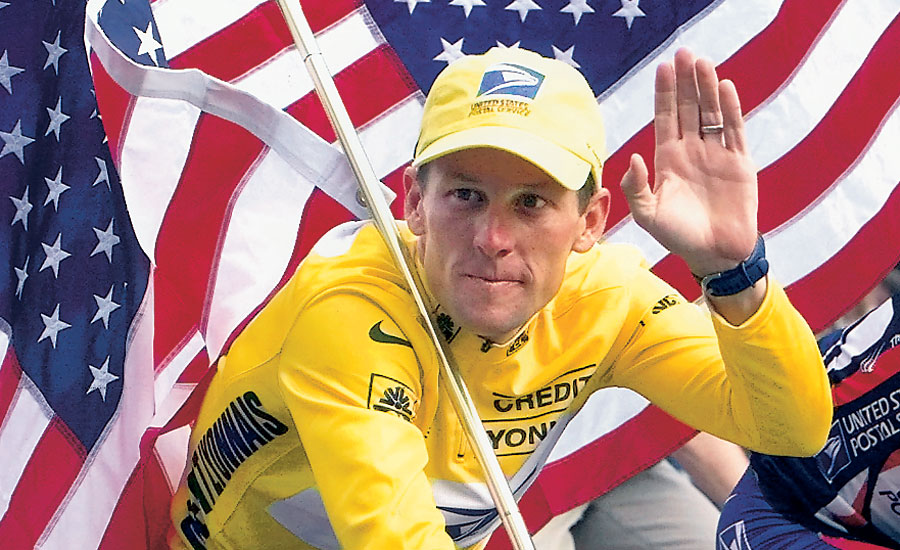
I didn’t just jump back into racing and win. There were a lot of ups and downs, but this time I didn’t let the lows get to me. I enjoyed every day on my bike. I even took the bike to my wedding when Kik and I were married. In 1999, I went on to win the Tour de France, but my victory over cancer has meant the most to me because of how it helped me grow as a human being.

Still, when I was presented the Tour trophy at the victory ceremony, I was ecstatic. I leaped down and ran into the stands to embrace my wife. Photographers surrounded me, and I looked for Mom. Finally the crowd opened and I saw her and grabbed her in a hug. The press swarmed around her too, and someone asked her if she thought my victory was against the odds.

“Lance’s whole life has been against the odds,” she said. I’d followed her advice every step of the way. Turn every obstacle into an opportunity. So it was an uphill climb. I knew now that no matter what, I’d keep going.

Did you enjoy this story? Subscribe to Guideposts magazine.

L’Abri: The Shelter of Serenity

In the December/January 2016 issue of Mysterious Ways magazine, Phoebe Love recounts her visit to a small Christian community planted among the mountains of Switzerland and the incredible gift that brought her there. Here’s more on the commune she visited, one that’s still thriving today.

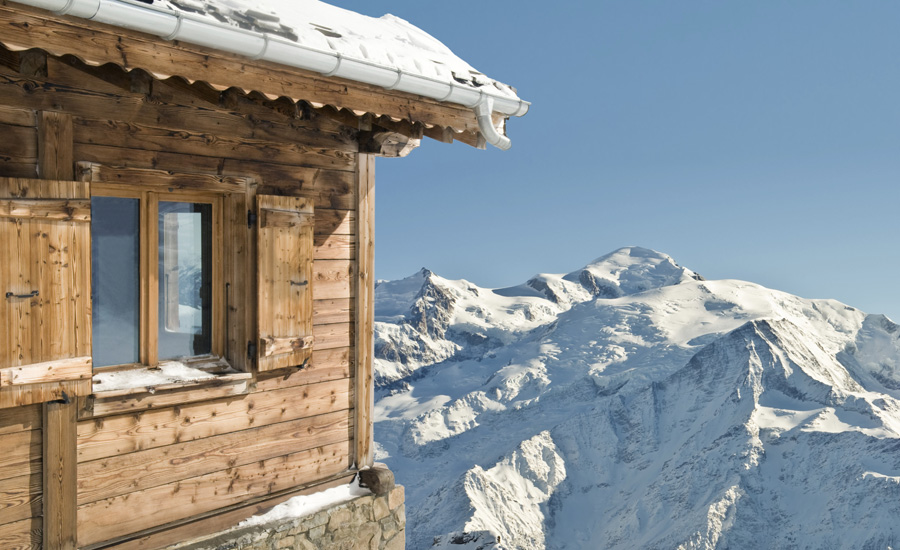
Nestled in the mountains near the south-east coast of Lake Geneva is a tiny community of travelling Christians focused on discovering their faith. They come from all corners of the world, carrying all types of religious baggage – searching for answers and a deeper relationship with God. The place they’ve arrived is one filled with both history and promise – a ministry that began 60 years ago.

In the summer of 1955, noted evangelist Francis Schaeffer and his wife Edith opened their home in the Swiss mountains to any curious to hear the word of God. What began as a way to minister to their teenage daughter’s friends soon grew into a community built around the goal of studying the teachings of Christianity and drawing closer to the Lord. They called their budding commune L’Abri – the French word for “shelter.”

Over the next six decades, the organization would grow – producing teachings, materials and students that would influence the Christian community as a whole. Schaeffer would go on to become a best-selling author, giving talks at colleges across America and speaking out on controversial issues later in his career. His daughter, the one partly responsible for L’Abri’s humble beginnings, would take over running the community her father began – one that now caters less to the philosophical skeptics that first entered its doors and more to the disenchanted evangelists and college kids struggling to create a more meaningful relationship with God.

Built on the hope that people would not only be able to escape from the pressures of modern culture but also have a place to question, defend and research their faith, L’Abri brands itself a “Christian Community.” Though open to everyone for any length of time, it offers terms – ranging from 2-3 months – where “students” are encouraged to delve deeper into topics that interest (or frustrate) them.

A typical day at the commune is divided between study time and work time. Work time can mean anything – cooking meals, digging in the gardens, cleaning or maintenance – with study time being the period devoted to listening to lectures, taking notes and meeting with advisors meant to steer students in their course of religious study.

What once began as a missionary couple’s dedication to sharing their faith with young people has grown into a sort of movement. L’Abri “Study Centres” have popped up all over the world – the United States, China, Canada, South Korea and Australia are all home to at least one. Though the type of people coming to L’Abri has changed from when the community first formed, the reason for the organization’s work remains unchanged – to encourage those wandering (or even lost) to find their way back to God.

Krista Tippett: Discovering Faith

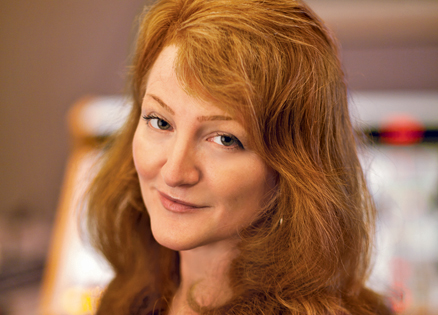
I believe in the power of words and in conversation on the most wondrous mysteries of life: hope, love, faith, the intersection of science and religion. For a dozen years I’ve hosted a radio show, called On Being, where I’ve had as my guests physicists, monks, psychologists, ministers, novelists, poets, musicians.

I talk to them about their spiritual lives and how this echoes in the work they do. I’m as fascinated by the questions they ask as the answers they give. If the tables were turned and someone were to ask about my journey, I’d tell them who has inspired me.

“Jesus loves me, this I know, for the Bible tells me so.”—Anna Bartlett Warner

I grew up in Oklahoma, the granddaughter of a Southern Baptist preacher whom I called Gaggy. He was funny. He told jokes and laughed easily. Even as he preached hellfire and brimstone, he had a sense of play. He was a man of God with a sense of humor—and to this day that is a combination I admire and seek out.

Though he had only a third-grade education, my grandfather possessed a prodigious intellect. His Bibles were passed down to me—mighty leather-bound King James versions with gossamer-thin pages and passage after passage marked with notes, annotations, cross-references, every margin full of observations that speak to a love for the life of both the mind and the soul.

Once in the summer while I was helping him clean out a shed on the grounds of a mission church, I stumbled across a large, dark coiled snake. I raced out, screaming. Gaggy chased the snake into the open with a hoe and it reared up—in my memory it was nearly as tall as him.

It became an epic battle in my mind’s eye: the preacher and the serpent, salvation and damnation facing off. After a few heartstopping swings, Gaggy severed the snake’s head. Salvation won.

My grandfather’s rock-solid faith has been my spiritual inheritance. I learned to trust in a sense behind the universe. I learned to look for grace and for truths that revealed themselves. Above all, I understood belovedness to be woven into the very fabric of life.

I still love to listen to the hymns he sang, like “Jesus loves me, this I know…” This love of God was the antidote to any terrors of this world, even snakes.

“I’m still discovering right up to this moment, that it is only by living completely in this world that one learns to have faith…. In so doing we throw ourselves completely into the arms of God.”—Dietrich Bonhoeffer

Bonhoeffer was a pastor and pacifist, born into a prominent German family. He helped found the Confessing Church, the center of Protestant resistance to the Nazi regime, and led an alternative seminary.

He spoke out against anti-Semitism and was imprisoned during the war. Then his involvement in the July 20, 1944, plot to kill Hitler was discovered and he was prosecuted for it and hung just weeks before the collapse of the Reich.

I first read Bonhoeffer when I was in Germany in the 1980s. I had gone there as a college student, then a Fulbright scholar, and finally as a freelance journalist. I ended up assisting the U.S. ambassador.

I sat around an impressive conference table with men (mostly) who discussed nuclear weapons and how the world might be saved from their devastation. At the same time I made friends with East Germans on the other side of the Berlin Wall.

Reading Bonhoeffer and seeing firsthand the residual effects of World War II reminded me how important it was for people of faith in any era to speak out against injustice, throwing themselves “into the arms of God,” as Bonhoeffer would put it.

The greater the injustice the louder we must speak and the more passionately we must live.

“Feed my lambs…Tend my sheep…Feed my sheep.” —John 21:15–17

I quit my job in Germany, put my furniture into storage and lived out of a suitcase for two years in Spain and England. I read the Bible in a new, more open way than I had as a child. I came to see that if you sit with the Bible stories, pick over them, retell them, they begin to grow.

In other words, if I wrestled with them, as my grandfather did, a blessing would come.

I married a Scotsman, Michael Tippett, and we moved to the States, where I enrolled in the Yale Divinity School. One summer Michael and I signed up to run a children’s day camp in South Philadelphia called Camp Get-Along, a sweetly named effort to provide a summer haven for inner-city kids.

We arrived to discover that the budget existed only on paper. The steering committee that had hired us was fraught with petty arguments. For a time we ate and planned camp activities in the tiny office at the church that hosted us, sleeping on the floor. We felt hapless and sometimes hopeless.

We came close to quitting. The only thing that stopped us were the visits of a little boy named Ted. Three times he banged on the door of that dilapidated church. Without smiling he asked, “Is there going to be a camp here? Can I come?” The expectant expression on his face kept us going.

In the end, the camp was made possible with the help of some single mothers and teens and other hardworking angels. It was chaotic and gritty and miraculous.

In the gospel of John, Jesus appears to a few apostles after the resurrection, including Peter. Peter is the most hapless disciple, always getting things wrong. He has nevertheless been anointed by Jesus to become the “rock” of the church.

On this occasion, at a meal, Jesus asks Peter, “Do you love me?” Peter answers each time, “Yes, Lord, you know that I love you.” Jesus responds, in turn, “Feed my lambs,” “Tend my sheep,” “Feed my sheep.”

I have a picture of Ted from that summer that I keep on my desk. He is swimming and only his head is visible above the water. He is smiling the beautiful smile he unwrapped for us the second week of camp.

His face is set off by what looks like Mediterranean blue, though it was only the public pool across the street from the church. Ted’s face remains the face of Christ for me: nine years old, black, delightful, heartbreaking, his smile a grace.

Ora et Labore, or “Pray and Work”—from the Rule of St. Benedict

Growing up Protestant in Oklahoma, I knew little about Catholicism or monasticism. But after seminary I was invited to a conference at a Benedictine monastery, Saint John’s Abbey in Collegeville, Minnesota. These monks were people after my own heart, contemplative and industrious at once.

Ora et Labore is their motto—pray and work. They live and teach, publish and pray on prairie land their German forebears settled in 1856 in the midst of a devastating plague of grasshoppers.

They believed in ecumenical dialogue and they did it through a straightforward approach. People told their stories.

Sitting around a table that seemed a huge contrast to those self-important strategic conference tables of Berlin, we engaged in the great theological questions by simply looking at our lives. No abstractions about God. Doctrine came alive through narrative. We were different, but we were no longer divided.

It made me wonder, could conversations like these, conversations that increased understanding and brought divisions down, happen in a larger context? What if there were a radio show devoted to these conversations, with just one guest for each hour so we could really talk in depth?

From the Benedictines I learned that everyone has observations to make about the nature of God, and that when people talk about how the divine intersects and interacts with their lives, they have fascinating things to say.

In 1998 I pitched this wild idea to Minnesota Public Radio. We started as a monthly national program and then went weekly.

“You were made and set here to give voice to this, your own astonishment.”—Annie Dillard

I read that line in an essay by Dillard years ago, and it has stayed with me ever since. The show seems to give voice to the astonishment that people experience as they learn what they are here for—when, you might say, God moves in their lives.

Their stories are a continual inspiration, surprise and challenge to me—and to our listeners. But perhaps I shouldn’t be surprised. After all, finding my own way into a life of listening was completely unexpected. And God has moved astonishingly in my life too.

Download your FREE ebook, The Power of Hope: 7 Inspirational Stories of People Rediscovering Faith, Hope and Love

Know Your Body, Know Your Fitness Limit

Sponsored content provided by Arnicare.

Working on your fitness is a good idea at any age. And as you grow older, exercise has even more benefits. Dedicating just 30 minutes a day can lower your risk of chronic diseases, prevent falls, and even improve your mood. But before jumping into a new routine, it’s important to know your limits and listen to your body. Here are tips to help you get started from Dr. Ken Redcross, a board-certified internal medicine physician, and 75-year-old fitness inspiration Joan MacDonald of Train with Joan.

Find your exercise match.

Pick a workout that will best help you reach your goals and is enjoyable. If you’re not sure what to choose, look online or consult a fitness coach for help. MacDonald, who lost over 60 pounds, attributes much of her success to her personal trainer and daughter, Michelle. “Good ones know what you are capable of,“ she says, and they can help you stay motivated.

Don’t to forget to warm up.

What is Arnica?

Arnica montana is a type of
mountain daisy with a long
history of healing.

Redcross says, “Warming up your muscles before an activity is key to injury prevention.” To start, he suggests walking or running in place for five to 10 minutes. Stretching exercises can also improve your flexibility but be careful not to push past your limits.

Be prepared for pain.

Having comfortable, supportive shoes and wraps or braces (if needed) will make exercise easier, but some soreness can be expected with new activity. “You want to avoid medications that mask pain,” says Redcross. Instead, he suggests using an Arnica-based medicine like Boiron’s Arnicare Gel to spot treat sore areas. This type of homeopathic pain reliever can safely be used alongside other medications or supplements you may already take.

Have a positive mindset.

A difficult part of any fitness plan is patience. Try to make lasting changes instead of striving for perfection and set realistic goals. This can-do attitude served MacDonald well throughout her fitness journey. “Nothing will come to you if you don’t go and get it. It’s not easy nor will it get any easier with age,” she says. “It’s about changing the mindset.”

Knowing Your Work Matters

Writing can be a solitary life. I often sit at home for days, weeks and sometimes months working on book projects, articles and other assignments. It’s bad when going to the dentist seems like a vacation. Seriously, some days I want to chase the FedEx driver down the driveway yelling, “Wait! I need to talk to a human being!”

And sometimes I don’t see the result of my work. I know people buy my books, and on occasions, I’ll get a message online or even a letter that’s been mailed to my publisher. Or I’ll run into someone who says, “I love what you write.”

I had a woman contact me through my website to tell me that a chapter in one of my books convinced her to give her marriage a second chance. A dad private messaged me on Facebook to tell me he’d heard me speak on the radio, and it had convinced him that he hadn’t been spending enough time with his children. And then he went on to tell me how that had changed his relationship with his family.

Those are the things that keep writers going, the moments that touch our hearts—but they’re often few and far between. But with my newest book, When God Calls the Heart, it’s been different. Because of the television show the book is based on and the 60,000+ Hearties in their fan club on Facebook, I’ve experienced something I’ve never encountered before.

I’ve gotten to see the faces of the people who are being affected by my work.

My co-author, Brian Bird, and I asked purchasers of our books to post pictures of them with the book when they received their copies or found it in stores. Dozens of pictures began popping up. Beautiful sweet faces. And comments about how God was using this devotional book in their lives.

I was moved to tears. There was something so special about getting to see those faces and to see how God was using my simple words beyond my wildest expectations. Visual proof that my work was touching lives.

Sweet friends, most of you probably aren’t writers. But God has given you a specific task to accomplish for Him. Some of you have dreamed big dreams for Him. You’ve worked hard—sometimes for years—and maybe it seems like nothing is happening. Or you feel like what you’re doing isn’t of value.

You’re wrong. You might not get to see the faces of those you’re reaching for Him, but there is no doubt in my mind that whenever we’re faithful to do what God has asked us to do, we are impacting the lives of others.

And, sometimes, God even gives us an oh-so-precious peek at the faces of those whose lives we’ve touched. So keep doing what you’re doing for Him. I can promise you it’s worth it.