

Embrace God's truth with our new book, The Lies that Bind

Krista Tippett: Discovering Faith

I believe in the power of words and in conversation on the most wondrous mysteries of life: hope, love, faith, the intersection of science and religion. For a dozen years I’ve hosted a radio show, called On Being, where I’ve had as my guests physicists, monks, psychologists, ministers, novelists, poets, musicians.

I talk to them about their spiritual lives and how this echoes in the work they do. I’m as fascinated by the questions they ask as the answers they give. If the tables were turned and someone were to ask about my journey, I’d tell them who has inspired me.

“Jesus loves me, this I know, for the Bible tells me so.”—Anna Bartlett Warner

I grew up in Oklahoma, the granddaughter of a Southern Baptist preacher whom I called Gaggy. He was funny. He told jokes and laughed easily. Even as he preached hellfire and brimstone, he had a sense of play. He was a man of God with a sense of humor—and to this day that is a combination I admire and seek out.

Though he had only a third-grade education, my grandfather possessed a prodigious intellect. His Bibles were passed down to me—mighty leather-bound King James versions with gossamer-thin pages and passage after passage marked with notes, annotations, cross-references, every margin full of observations that speak to a love for the life of both the mind and the soul.

Once in the summer while I was helping him clean out a shed on the grounds of a mission church, I stumbled across a large, dark coiled snake. I raced out, screaming. Gaggy chased the snake into the open with a hoe and it reared up—in my memory it was nearly as tall as him.

It became an epic battle in my mind’s eye: the preacher and the serpent, salvation and damnation facing off. After a few heartstopping swings, Gaggy severed the snake’s head. Salvation won.

My grandfather’s rock-solid faith has been my spiritual inheritance. I learned to trust in a sense behind the universe. I learned to look for grace and for truths that revealed themselves. Above all, I understood belovedness to be woven into the very fabric of life.

I still love to listen to the hymns he sang, like “Jesus loves me, this I know…” This love of God was the antidote to any terrors of this world, even snakes.

“I’m still discovering right up to this moment, that it is only by living completely in this world that one learns to have faith…. In so doing we throw ourselves completely into the arms of God.”—Dietrich Bonhoeffer

Bonhoeffer was a pastor and pacifist, born into a prominent German family. He helped found the Confessing Church, the center of Protestant resistance to the Nazi regime, and led an alternative seminary.

He spoke out against anti-Semitism and was imprisoned during the war. Then his involvement in the July 20, 1944, plot to kill Hitler was discovered and he was prosecuted for it and hung just weeks before the collapse of the Reich.

I first read Bonhoeffer when I was in Germany in the 1980s. I had gone there as a college student, then a Fulbright scholar, and finally as a freelance journalist. I ended up assisting the U.S. ambassador.

I sat around an impressive conference table with men (mostly) who discussed nuclear weapons and how the world might be saved from their devastation. At the same time I made friends with East Germans on the other side of the Berlin Wall.

Reading Bonhoeffer and seeing firsthand the residual effects of World War II reminded me how important it was for people of faith in any era to speak out against injustice, throwing themselves “into the arms of God,” as Bonhoeffer would put it.

The greater the injustice the louder we must speak and the more passionately we must live.

“Feed my lambs…Tend my sheep…Feed my sheep.” —John 21:15–17

I quit my job in Germany, put my furniture into storage and lived out of a suitcase for two years in Spain and England. I read the Bible in a new, more open way than I had as a child. I came to see that if you sit with the Bible stories, pick over them, retell them, they begin to grow.

In other words, if I wrestled with them, as my grandfather did, a blessing would come.

I married a Scotsman, Michael Tippett, and we moved to the States, where I enrolled in the Yale Divinity School. One summer Michael and I signed up to run a children’s day camp in South Philadelphia called Camp Get-Along, a sweetly named effort to provide a summer haven for inner-city kids.

We arrived to discover that the budget existed only on paper. The steering committee that had hired us was fraught with petty arguments. For a time we ate and planned camp activities in the tiny office at the church that hosted us, sleeping on the floor. We felt hapless and sometimes hopeless.

We came close to quitting. The only thing that stopped us were the visits of a little boy named Ted. Three times he banged on the door of that dilapidated church. Without smiling he asked, “Is there going to be a camp here? Can I come?” The expectant expression on his face kept us going.

In the end, the camp was made possible with the help of some single mothers and teens and other hardworking angels. It was chaotic and gritty and miraculous.

In the gospel of John, Jesus appears to a few apostles after the resurrection, including Peter. Peter is the most hapless disciple, always getting things wrong. He has nevertheless been anointed by Jesus to become the “rock” of the church.

On this occasion, at a meal, Jesus asks Peter, “Do you love me?” Peter answers each time, “Yes, Lord, you know that I love you.” Jesus responds, in turn, “Feed my lambs,” “Tend my sheep,” “Feed my sheep.”

I have a picture of Ted from that summer that I keep on my desk. He is swimming and only his head is visible above the water. He is smiling the beautiful smile he unwrapped for us the second week of camp.

His face is set off by what looks like Mediterranean blue, though it was only the public pool across the street from the church. Ted’s face remains the face of Christ for me: nine years old, black, delightful, heartbreaking, his smile a grace.

Ora et Labore, or “Pray and Work”—from the Rule of St. Benedict

Growing up Protestant in Oklahoma, I knew little about Catholicism or monasticism. But after seminary I was invited to a conference at a Benedictine monastery, Saint John’s Abbey in Collegeville, Minnesota. These monks were people after my own heart, contemplative and industrious at once.

Ora et Labore is their motto—pray and work. They live and teach, publish and pray on prairie land their German forebears settled in 1856 in the midst of a devastating plague of grasshoppers.

They believed in ecumenical dialogue and they did it through a straightforward approach. People told their stories.

Sitting around a table that seemed a huge contrast to those self-important strategic conference tables of Berlin, we engaged in the great theological questions by simply looking at our lives. No abstractions about God. Doctrine came alive through narrative. We were different, but we were no longer divided.

It made me wonder, could conversations like these, conversations that increased understanding and brought divisions down, happen in a larger context? What if there were a radio show devoted to these conversations, with just one guest for each hour so we could really talk in depth?

From the Benedictines I learned that everyone has observations to make about the nature of God, and that when people talk about how the divine intersects and interacts with their lives, they have fascinating things to say.

In 1998 I pitched this wild idea to Minnesota Public Radio. We started as a monthly national program and then went weekly.

“You were made and set here to give voice to this, your own astonishment.”—Annie Dillard

I read that line in an essay by Dillard years ago, and it has stayed with me ever since. The show seems to give voice to the astonishment that people experience as they learn what they are here for—when, you might say, God moves in their lives.

Their stories are a continual inspiration, surprise and challenge to me—and to our listeners. But perhaps I shouldn’t be surprised. After all, finding my own way into a life of listening was completely unexpected. And God has moved astonishingly in my life too.

Download your FREE ebook, The Power of Hope: 7 Inspirational Stories of People Rediscovering Faith, Hope and Love


Know Your Body, Know Your Fitness Limit

Sponsored content provided by Arnicare.

Working on your fitness is a good idea at any age. And as you grow older, exercise has even more benefits. Dedicating just 30 minutes a day can lower your risk of chronic diseases, prevent falls, and even improve your mood. But before jumping into a new routine, it’s important to know your limits and listen to your body. Here are tips to help you get started from Dr. Ken Redcross, a board-certified internal medicine physician, and 75-year-old fitness inspiration Joan MacDonald of Train with Joan.

Find your exercise match.

Pick a workout that will best help you reach your goals and is enjoyable. If you’re not sure what to choose, look online or consult a fitness coach for help. MacDonald, who lost over 60 pounds, attributes much of her success to her personal trainer and daughter, Michelle. “Good ones know what you are capable of,“ she says, and they can help you stay motivated.

Don’t to forget to warm up.

What is Arnica?

Arnica montana is a type of
mountain daisy with a long
history of healing.

Redcross says, “Warming up your muscles before an activity is key to injury prevention.” To start, he suggests walking or running in place for five to 10 minutes. Stretching exercises can also improve your flexibility but be careful not to push past your limits.

Be prepared for pain.

Having comfortable, supportive shoes and wraps or braces (if needed) will make exercise easier, but some soreness can be expected with new activity. “You want to avoid medications that mask pain,” says Redcross. Instead, he suggests using an Arnica-based medicine like Boiron’s Arnicare Gel to spot treat sore areas. This type of homeopathic pain reliever can safely be used alongside other medications or supplements you may already take.

Have a positive mindset.

A difficult part of any fitness plan is patience. Try to make lasting changes instead of striving for perfection and set realistic goals. This can-do attitude served MacDonald well throughout her fitness journey. “Nothing will come to you if you don’t go and get it. It’s not easy nor will it get any easier with age,” she says. “It’s about changing the mindset.”

Knowing Your Work Matters

Writing can be a solitary life. I often sit at home for days, weeks and sometimes months working on book projects, articles and other assignments. It’s bad when going to the dentist seems like a vacation. Seriously, some days I want to chase the FedEx driver down the driveway yelling, “Wait! I need to talk to a human being!”

And sometimes I don’t see the result of my work. I know people buy my books, and on occasions, I’ll get a message online or even a letter that’s been mailed to my publisher. Or I’ll run into someone who says, “I love what you write.”

I had a woman contact me through my website to tell me that a chapter in one of my books convinced her to give her marriage a second chance. A dad private messaged me on Facebook to tell me he’d heard me speak on the radio, and it had convinced him that he hadn’t been spending enough time with his children. And then he went on to tell me how that had changed his relationship with his family.

Those are the things that keep writers going, the moments that touch our hearts—but they’re often few and far between. But with my newest book, When God Calls the Heart, it’s been different. Because of the television show the book is based on and the 60,000+ Hearties in their fan club on Facebook, I’ve experienced something I’ve never encountered before.

I’ve gotten to see the faces of the people who are being affected by my work.

My co-author, Brian Bird, and I asked purchasers of our books to post pictures of them with the book when they received their copies or found it in stores. Dozens of pictures began popping up. Beautiful sweet faces. And comments about how God was using this devotional book in their lives.

I was moved to tears. There was something so special about getting to see those faces and to see how God was using my simple words beyond my wildest expectations. Visual proof that my work was touching lives.

Sweet friends, most of you probably aren’t writers. But God has given you a specific task to accomplish for Him. Some of you have dreamed big dreams for Him. You’ve worked hard—sometimes for years—and maybe it seems like nothing is happening. Or you feel like what you’re doing isn’t of value.

You’re wrong. You might not get to see the faces of those you’re reaching for Him, but there is no doubt in my mind that whenever we’re faithful to do what God has asked us to do, we are impacting the lives of others.

And, sometimes, God even gives us an oh-so-precious peek at the faces of those whose lives we’ve touched. So keep doing what you’re doing for Him. I can promise you it’s worth it.

Kleenex & the Holy Spirit

We were on our way to church yesterday and Carol held out a wad of Kleenex for me. I looked at her questioningly, as any good husband might. A universal expression that says, “And what is this for?” “To wipe your nose,” she said, not mincing words. And to think, I was leaping ahead to more exalted topics, like Pentecost, for instance, and just what it might mean to have the gift of the Holy Spirit.

Later in church I was staring at the stained-glass window of the descending dove, age-long symbol of the Holy Spirit, and my mind was wandering, as I’ll admit it does fairly often in a service. It was pretty clear in the Bible when that fluttering bird came down as Jesus was baptized, it was not just a symbol but a real live bird. So what sort of real-life signs do I have in my life?

Our preacher was doing a fine job of getting everybody to feel the spirit and soon we would launch into an old Gospel tune “Sweet, Holy Spirit” that one wag in the choir said reminded him of an old skating rink tune: “Reverse skate,” he whispered. But what about those signs and wonders that appeared of old? Where was the descending dove today?

My mind went back to the Kleenex, held so graciously aloft, and I decided that if I wondered where the Holy Spirit was in my life, I didn’t have to go much farther than that. Early notice of those little flaws and imperfections, that constant well-spring of guidance and support, can be found pretty close to home. When you wonder where love and the spirit is, it’s probably sitting right next to you in the pew. The Kleenex came in handy, I’ll admit, all day long.

Kid President’s Path to Awesome!

Kid President! Have you heard of him? He’s the cute little boy in a suit who gives inspirational talks from a cardboard Oval Office. His YouTube videos have inspired millions with his positive messages. But to me he’s Robby, my sweet son, who has been an inspiration to my family since before he could walk.

The week before Christmas 2003, I got a call from a children’s services case manager asking if we could take in a 17-month-old girl and, eventually, her two-month-old brother. My husband, David, and I had already been parents to 10 foster children and we were almost finished raising three of our own.

I used to run a day care in our home. Then I felt called to a new path, to help children who had no one else in their lives. David and I got certified as foster parents. We agreed not to turn down a child who needed a home. I knew what a difference a little love and attention could make.

ENJOYING THIS STORY? SUBSCRIBE TO GUIDEPOSTS MAGAZINE!

“There’s one thing,” the case manager said. “Both children have a condition called osteogenesis imperfecta, or OI. Which means their bones can break a little easier than normal.” I’d never heard of that condition, but I asked if the little girl could walk. The reply was, “Yes, Lexi walks using leg braces.”

I talked to my family over dinner, and we agreed to take care of her.

The next day, Lexi arrived with a different case manager. She sat in her car seat. Her legs were very curvy and bowed. There was no way she could walk on them, and there were no leg braces. But what got me the most was the look on her face. It was contorted with pain. Dear Lord, what have we gotten ourselves into? I thought.

I gingerly unbuckled Lexi and picked her up. She grimaced, but didn’t cry. It was as if she had grown used to being in pain. “We’re going to take good care of you, Lexi,” I said. She looked at me trustingly. I must have sounded more confident than I felt.

I looked up OI online and learned it’s a genetic disorder that affects the body’s ability to produce collagen, needed for strong bones. If Lexi bumped into anything it could shatter her bones. Even a bad cough could cause a rib fracture. I didn’t see how I’d ever be able to let her out of my sight.

David worked in the IT department at Freed-Hardeman University, a small Christian college, and was gone during the day, but he was committed to helping care for Lexi. We learned to roll her to the side to change her diaper, to scoop her up gently instead of picking her up under her arms.

The first few days I was hyper-vigilant. But soon I relaxed. Since Lexi couldn’t walk, and barely crawled, she stayed where I put her. I looked for things for her to do, and I read and sang to her.

Lexi’s brother, Robby, joined us on New Year’s Eve. At only six pounds, he was so precious and fragile. He was with us only four days before he broke a bone in his sleep. The next few months, he broke many more just moving his arms and legs.

His doctor eventually taught us how to splint him ourselves because he was breaking bones so often. Nothing stopped Robby, though. As he got older and more mobile, he’d drag himself, cast and all, along the floor and get into mischief.

One night after we had secured yet another splint on Robby’s leg, David and I talked about whether this was more than we could handle. We’d had older foster kids tell us they had grown up in a dozen different homes, and I didn’t want to do that to a child. We wanted to keep ours until they were moved to a permanent home, but would that be possible with Lexi and Robby?

For spring break, we took the kids to the beach, a family tradition. We had a wonderful first day there, but that night Lexi’s femur, or thighbone, snapped, just from her pulling herself up to a standing position, her first fracture while in our care. The wail she let out! We rushed her to the ER. She ended up needing surgery to have the bone set, and a full body cast.

Seeing her like that broke me. We’d said we would never turn down a child, but we couldn’t go on if we couldn’t give these kids the proper care. They needed a medical foster home or someone more qualified than we were.

“I’ll call our case manager when we get home,” I told David.

Making that call was the hardest thing I’d ever had to do. I explained why we weren’t the right home for Lexi and Robby. “Is there someone who can care for them?” I asked.

Silence. Finally the case manager said, “There’s no one else. Lexi was in several homes before yours. She and Robby have nowhere else to go right now.”

I could have insisted that the kids be removed. But the woman’s words resounded in my mind. There is no one else. Nowhere else. Wasn’t that why I’d felt called to be a foster mom in the first place, to help kids who had no one else? “We’ll keep them.” I said. “Just until you find another placement for them.”

That night I prayed like I’d never prayed before. Lord, you know what’s best for Robby and Lexi. Find them the family they need.

Morning came and with it a new sense of possibility. David and I dug deeper online and finally stumbled on a site that mentioned an expensive drug that could be given intravenously to strengthen the bones of people with OI.

A Shriners Hospital six hours away was willing to give the drug to Lexi at no cost, but according to their age limits, Robby was too young. After making the trip twice we found out that Vanderbilt Children’s Hospital, closer to home, would provide the drug for both kids and insurance would cover it.

The treatment did help strengthen their bones, and made them feel better, but their bones still broke because they were bowed. Many times they broke right in front of me. Although there was nothing I could do to prevent it, I still felt like I’d failed Lexi and Robby.

Not long after Robby turned two he fractured his femur, badly. He needed surgery to have a metal rod put in to straighten and strengthen the bone. The doctor put Robby in a splint from waist to toe. He was going to be pretty much immobilized.

That night I laid Robby in bed and kissed him goodnight. His mattress was on the floor against the wall and we’d put a bed rail on the other side so he couldn’t roll off. It broke my heart to see our little perpetual-motion machine lying so still. He gazed longingly at a musical toy beside him. I set it to play one song and moved it well out of his reach.

David left for work early the next morning. I was still half-asleep when I heard music coming from…well, I knew exactly where. I dashed to the kids’ room. There was Robby holding onto the bed rail, swinging his splinted leg to the beat. Dancing! Lexi was watching him, eyes wide.

“Robby, no!” I shouted. “Stop that. You’ll hurt yourself!”

He kept dancing, the hugest grin on his face. I stared in amazement. He had fragile bones but there was nothing fragile about his spirit. His joy for life couldn’t be contained, the kind of joy that could come only from the Lord.

Wasn’t God the ultimate caregiver? If he entrusted two kids as special as Lexi and Robby to us, surely I could trust him to show us what they needed.

I ran for my video camera to capture the moment for David. As soon as Robby saw the camera, he hammed it up even more. That night David watched the video, his grin almost as big as Robby’s. “Okay, we can do this,” he said. “I just wish I had his energy.”

The longer we cared for Lexi and Robby, the more David and I loved them. And the more we felt they were meant to be part of our family. When an official from the foster-care system asked us if we’d formally adopt them, our answer was an unequivocal yes.

Lexi learned to walk, at almost four years old. Despite her more than 80 broken bones and 15 orthopedic surgeries, she has become a talented dancer. And Robby? There is no stopping him, even with more than 70 broken bones and 13 surgeries. And, well, everybody knows what Robby is into nowadays.

It all started in 2012 when my son-in- law Brad was the director of promotions in the marketing office at Freed- Hardeman. He made commercials for the university’s annual benefit dinner. That year the speaker was former secretary of state Condoleezza Rice.

Brad thought it would be funny to dress Robby in a suit, sit him behind a desk and have him mispronounce her name. They had such a good time with it that Brad decided to make another video poking fun at how everyone had become political experts online.

With Brad writing the scripts and Robby adding his own humor and personality, Kid President was born. At first we only shared the videos with friends and family, but they quickly spread across social media. Robby gives pep talks about being your best, being kind and loving others. Kid President has become our family project, our way of making the world a little brighter.

Just like when he was a baby, Robby has so much energy, so much joy in life, that nothing slows him down. When I tell him how his dad and I almost gave up on him and Lexi, he says, “You mean you were going to give me away?” like it’s the craziest thing he’s ever heard.

And I suppose it is, because in Robby’s world, there’s no room for the kind of self-doubt I struggled with. As Kid President says, “What if there really were two paths? I want to be on the one that leads to awesome!”

Did you enjoy this story? Subscribe to Guideposts magazine.

Keeping Up with the Joneses: The Joys of a Faithful Family

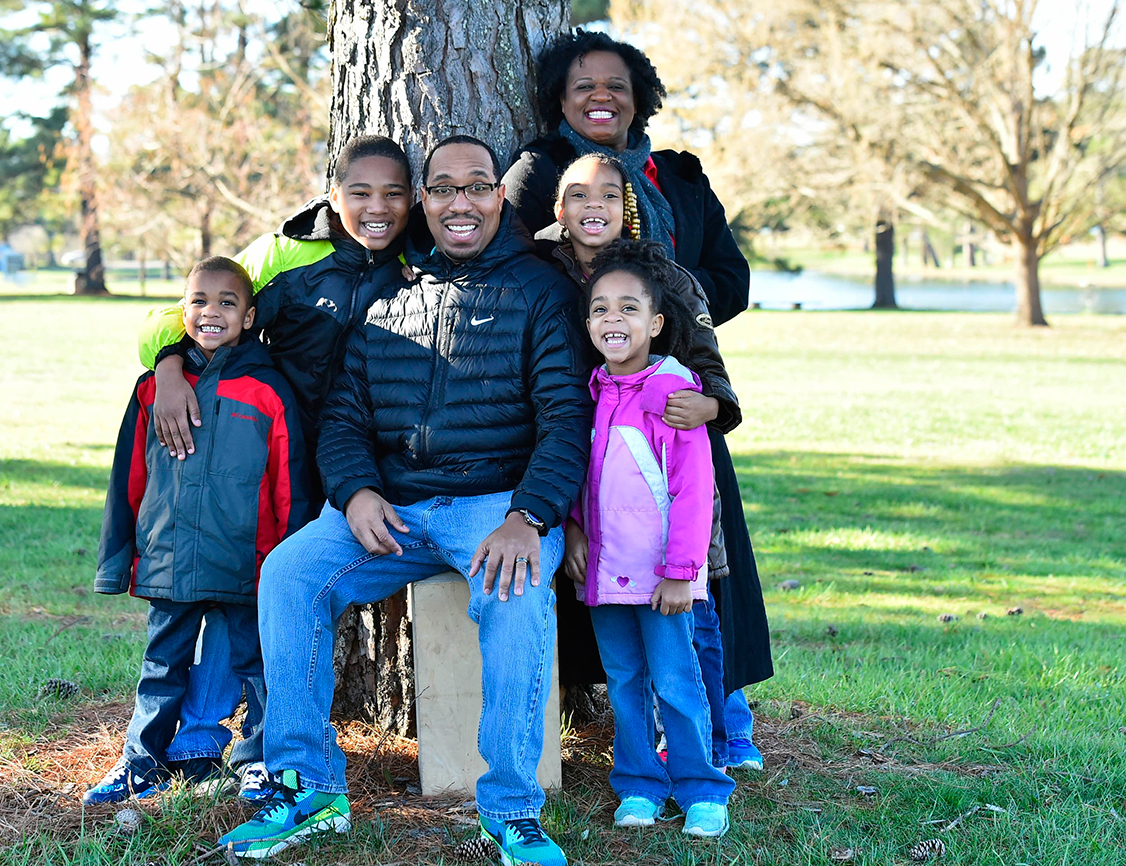
Go behind the scenes of our photo shoot with Danita LaShelle Jones, her husband, Paul, and their four children. In Danita’s story in the June 2017 issue of Guideposts, she shares how faith and prayer helped her deal with difficult medical news upon the birth of her two youngest kids, twins Hope and Caleb.

Keeping the Faith During Long-Term Struggles

Taken from When God Doesn’t Fix It: Lessons You Never Wanted to Learn, Truths You Can’t Live Without by Laura Story Copyright © 2015 by Laura Story Elvington. Used by permission of Thomas Nelson.

The call that changed my life happened around noon in February 2006. I was in St. Louis attending a conference with two of my coworkers. They sat in the front seat of the rental car with the radio on; I was in the backseat checking my phone messages. As we headed to Panera Bread for lunch, I noticed a voicemail from my husband, Martin, and I called him back. That’s when he gave me the news that dramatically changed the course of our lives and the lives of those closest to us.

“Hey, I’ve got some news. I have a brain tumor pressing against my pituitary gland, which is why my hormones have been messed up. That’s why I’ve been so sleepy.”

Martin had seemed perpetually exhausted He’d started falling asleep during church where I was the worship leader and even at social events. I had been embarrassed and frustrated with him and I’d let him know. When he’d fallen asleep while driving and hit a guardrail, he’d started seeing a doctor.

Martin had been getting tests run for a year with no answers, but with that one phone call, we both finally knew what was wrong.

Finding out Martin had a brain tumor flooded my heart with compassion and love for him. I felt stupid for being angry and embarrassed by his behavior when the whole time he had been suffering from a brain tumor.

“Martin, I am so sorry,” I said, letting the tears flow. His calm acceptance of the diagnosis encouraged me. He was determined to take that sucker out so we could get on with our lives.

We couldn’t have been more naïve.

READ MORE: STAYING HOPEFUL THROUGH CANCER

While the surgery to remove the tumor through Martin’s nose was a success, about a week after the surgery, Martin contracted meningitis through the hole in his nose. Martin coded at the hospital and I and his parents were told to gather his family and friends to say goodbye because he might not make it through the night.

Thankfully, Martin survived, but will be on medication and in and out of doctor’s offices for the rest of his life due to brain injury. After years of praying and trying, we were finally able to conceive and now have three children, one girl followed by two twin boys—our greatest blessings.

Still, I pray every day that God would completely heal my husband. If you could overhear my prayers, they’d sound something like this: Good morning, God. Is today the day you’re going to heal Martin? Because if you heal him, I promise to give you all the glory.

It’s a hard truth to hear that our circumstances might not change and God might not fix the broken things in our lives. But I know personally that even when our situation doesn’t change for the better, we can change for the better.

Whether I’m leading the worship team at Perimeter Church in Atlanta, or out touring with my music ministry, I’m frequently approached by people of all ages who tell me about their broken circumstances, their seemingly unanswered prayers, and their disappointments with life. They want to know how I got to be “okay,” or how I “made it through to the other side.”

What I always want to say, but rarely have the time to explain in detail, is that I’m not okay. We’re not through to the other side. We’re still knee-deep in it and likely always will be.

If I had more time to talk to them, I’d say that despite the fact that Martin and I are still hanging on every day, what they see in us is how God has been evident in our story, time and again. He has used it in powerful ways. And He has used it, not because we were special, or famous, or even great examples of people experiencing brokenness in a way that God approved of.

I believe He used our story for the same reason He uses others’ stories: because we were willing for Him to use it. And in our weakness, we were willing to give Him the glory.

I believe He wants to do the same for you through your broken story too. Our marriages can get better. Our relationships with our children can get better. Our attitudes can get better. Our grief can get better. Our intimacy with God can get better. Though we’re still broken, it can be a better broken.

Maybe you’ve prayed to have something fixed, healed, taken away, given to you, restored, or repaired but you didn’t see anything change. So you prayed more. You pleaded. And then begged. But nothing changed; things remained right where they were before you prayed.

Maybe you thought God didn’t hear you.

But perhaps God heard you and His answer was the same as His answer to Paul, “My grace is sufficient for you.”

If that is how God has answered your prayer, He’s not ignoring you. He’s not punishing you. He’s not demanding more from you. He just wants you to know He is sufficient for you and His power is made perfect in your weakness.

We can cling to Scripture, discover who God truly is, be willing to share our story even in the trials, and look for blessings in our brokenness.

That’s where our better story begins.

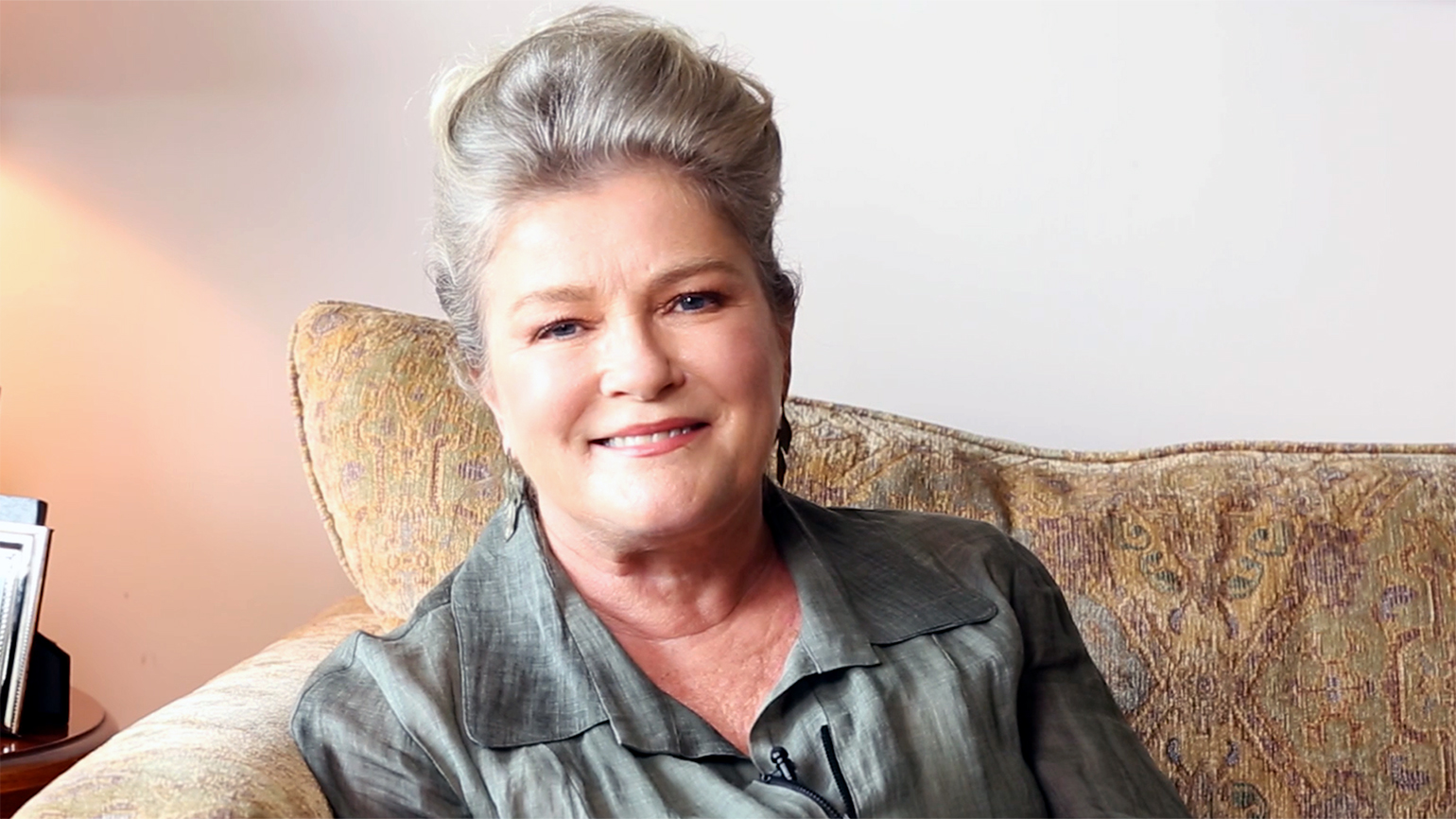
Kate Mulgrew Shares Lessons Learned from Alzheimer’s Caregiving

Hello, everybody. My name is Kate Mulgrew. You may know me as an actress. I’ve been on television since I was 19 in Ryan’s Hope and then Mrs. Columbo and then Star Trek: Voyager and finally, Galina Reznikov in Orange Is the New Black. It’s been a very happy career.

But I’m here today to talk about a book that I have written called How to Forget: A Daughter’s Memoir about the deaths of my parents and also how they lived.

But what shaped them? In my mother’s case it was Alzheimer’s disease. My mother died of Alzheimer’s disease, a disease with which I’m sure many of you are familiar, unfortunately. This is a pernicious, grotesque, and very, very, very difficult disease to deal with.

I became my mother’s health care guardian. I sort of demanded this—and I would advise anyone who finds themself in this predicament to demand guardianship—because that is the only way you will have complete control over the eventualities that will befall you as a result of this awful illness. It is very good if someone in the family—the oldest daughter or the oldest son is usually the choice—becomes the health care guardian, that way conversations within the family can flow more smoothly.

I think it is very important that wherever you are, you should know that there is an Alzheimer’s chapter, a local chapter available to you with all kinds of important information. They will give you caregiver advice. They will give you progress advice. They will give you all kinds of helpful information and that could really be an anchor for you as this thing evolves, and it does, and it does quickly, and at the same time, it is a protracted and very difficult thing. As much as you can get your ducks in a row, for lack of a better way of putting it, that’s the best way to try to deal with this very, very awful disease.
Something that I find to be a problem with Alzheimer’s disease—quite outside of the disease itself, which is sufficient unto the day, rest assured ladies and gentlemen—but what happens within that fabric of the family is a tension, and pretty soon people aren’t talking to each other because somebody’s got the guardianship, or somebody’s calling the shots, or somebody wants this and somebody else wants that.

Get over it and mend those fences. If you do not work together as a collective, you cannot help your loved one who is dying of this disease, so you must work together, strongly, as a collective. And that, of course, is a tribute to the love you actually have for the person who is suffering the most—the person who is afflicted.

After my mother died—she lived for nine years from diagnosis to death—I became involved with the Alzheimer’s organization as a spokesperson, and I threw myself into the fray wanting to do whatever I could at any time, but it’s slow going because we have to raise the funds.

So, I urge anyone who is listening to this or watching this, to overcome it, whatever difficulties you have with the disease itself—mainly, mortality; mainly, not attractive; mainly, we get old and we die—to get over it. Otherwise, by 2050, one in three of us will have this disease and we really don’t want that. So, I urge everybody to get out and call your local chapter. See if you can contribute and donate in whatever way is possible for you. Thank you very much.

Karen Kingsbury’s Inspiring Encounter on the High Line

I’ve been writing novels for more than 15 years, and I’ll admit it: My imagination can run pretty wild sometimes! I see the stories come to life in my mind way before I ever get them on paper–envisioning the characters and the twists and turns they’ll take on their personal and spiritual journeys.

Then last year something unexpected happened in my own life, something so incredible that even I couldn’t have imagined it.

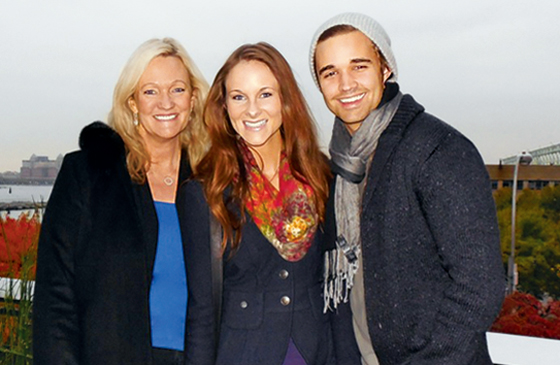
I’d gone to New York City to meet with my publisher. My daughter, Kelsey, and her husband, Kyle, came with me because they wanted to see the city.

It was a glorious autumn afternoon. Kelsey, Kyle and I were walking on the High Line–a park built on a historic elevated railroad line above the streets on Manhattan’s West Side.

That morning I’d had a dream-come-true meeting with my publisher. My novel The Bridge had become an overnight best seller and they’d signed me to a 10-book deal! I felt so blessed, especially to be able to celebrate with Kelsey and Kyle.

Yet, standing there on the High Line, looking up at the bright blue sky, all I could think was, I wish I could tell Dad about all this.

My father had passed away six years earlier. He was my rock. My very first and biggest fan.

“Have I told you lately that I love you, Dad?” I whispered. That was Dad’s favorite song–the Rod Stewart version of “Have I Told You Lately.” He’d called me the first time he’d ever heard it.

“This song is how I feel about you, Mom, our whole family,” he said. “Whenever you hear it I want you to know that I love you.” I was surprised. Dad wasn’t usually into pop music. But the more I listened to Rod’s distinctive raspy voice belting it out, the more I understood what Dad meant.

“Have I told you there’s no one else above you? You fill my heart with gladness, take away all my sadness, ease my troubles, that’s what you do.” When one of us heard the song, we’d call the other. Sometimes we’d hear it when we were together and Dad would give me a wink.

“I can’t say it any better than Rod,” he’d say. The song was that powerful for us. It connected us. So much so that my family had the title engraved on Dad’s headstone.

Not long after Dad died, I began to hear our song at odd but significant moments. Like when my husband, Don, and I were driving home from watching Kelsey and our oldest son, Tyler, in the opening-night performance of the school play–the kind of occasion Dad wouldn’t have missed for the world–and the second we turned on the car radio, there it was.

Or when we took our first family vacation to the Bahamas without Dad. I stepped out onto the balcony overlooking the sparkling sea. “Oh, Dad, you would’ve loved this!” I said. Then I heard a familiar melody.

I looked down onto the deck below and the Bahamian band had switched from playing island music to–yes, you guessed it–“Have I Told You Lately.”

Now here I was, at one of those moments when I knew Dad would have been so proud of me, and I couldn’t share it with him. I missed him more than ever. Lord, I prayed, please tell Dad that I love him.

“How ’bout we take some pictures?” I said to Kelsey and Kyle, hoping to distract myself from missing Dad. “We’ve got this amazing view of the Hudson from up here.”

I pulled out my camera and took some shots of Kelsey, then of her and Kyle together. I wanted to get one of the three of us. I was stretching my arm out, trying to hold the camera far enough away so we were all in the frame, when a man and a woman walked up.

“I can help take your picture,” the man said to us. He was older than me, dressed stylishly in a sweater and jeans. He had a slight accent. Australian? English? He was a tourist like me, probably. “Would that be okay?”

“Yes!” I said. “Thank you so much.”

“Just show me how to use the camera,” he said.

Kelsey walked over and showed him which button to press, then we got into place again.

He snapped the photo. “That’s lovely!” he said, brushing a wayward strand of blond hair from his eye. He handed me the camera. “God bless you,” he said, then he and the woman went on their way.

When they were almost out of sight, Kelsey turned to me. “Mom, did you hear what that man said when I was showing him how to use the camera?”

“No, honey, I didn’t.”

“He said, ‘I’m usually on the other side of this thing. But this is fun too.’”

“Why would he say that?” I wondered aloud.

Then it dawned on me: the spiky blond hair, the fashionable clothes, the lilt in his voice…. Could it be?

I followed the couple, walking as fast as I could.

“Sir, sir! Excuse me, sir!” I called. The man stopped and turned around. We were face-to-face.

“You just took our picture back there,” I said.

“Yes,” he said. By now Kelsey and Kyle had caught up to me.

“Can I ask you something?”

“Sure,” he said.

“Are you Rod Stewart?”

“Sometimes,” he said.

“No, really, I have to know,” I insisted. “Are you Rod Stewart?”

He must have seen something in my eyes because he said quietly, “Yes, I am.” My knees went weak. If only my dad could have seen this!

“Can I tell you a story?” I asked.

Rod nodded.

I told him that “Have I Told You Lately” was my father’s favorite song and that just an hour earlier I’d been wondering if Dad knew how much I missed him.

Rod gently put his hand on my arm. I rested my hand on top of his. “And now I’m meeting you,” I said. “It’s crazy. Your song’s title is even on my dad’s gravestone.”

Tears came to Rod’s eyes. “Can I give you a hug?” he asked. He pulled me in tightly. “Thank you for sharing that. You made my day.”

When we let go, Rod clasped his hands together and pointed them heavenward. Then he and his companion walked away.

Kelsey, Kyle and I looked at each other and sat down on a bench. We all felt stunned. Just at the moment when I was missing my dad so badly, the rock star who sang our song crosses my path? Really? You could never plan or even imagine something like that!

But Someone had. Someone who orchestrates unforgettable encounters and writes amazing moments into the stories of our lives. I looked up into the bright blue sky. There really is no one else above him.

Watch as Karen discusses her book 15 Minutes and tells the story of her High Line encounter!

Download your FREE ebook, Messages from the Hereafter: 5 Inspiring Stories Offering Proof of the Afterlife

Just This Much Exercise Could Help You Live Longer (and You Won’t Even Break a Sweat)

We all know that exercise is a guaranteed way to help you live a longer, healthier life, but did you know that you could accomplish that goal without even breaking a sweat?

According to a study from the Journal of the American Geriatrics Society, published last year, 30 minutes a day of light exercise is all it takes to reap health benefits. The study, which surveyed 6,000 women aged 65-years and older, intended to answer one simple question: How much exercise is enough to improve a person’s life expectancy?

Researchers had women wear activity-tracking accelerometers for seven days as they went about their normal routines, following up with them over the course of three years. The results? Researchers discovered that women who enjoyed 30 minutes of light exercise daily were 12% less likely to die early, compared to those who got less. Women who got 60 minutes of moderate exercise daily were 39% less likely to die early.

The good news here lies in the kind of exercise the women were getting. For most, gym memberships and marathon training just aren’t plausible. Illness, injury, a lack of funds and time, all of these can affect the kind of workout plausible for people looking to stay healthy. The women in this study weren’t hitting the treadmill or taking a spin class, they were doing everyday activities, like taking out the trash, walking up the stairs, doing laundry, or going on a grocery run. These kinds of exercises more than 55% of older adults’ daily activity according to the study’s author, Andrea LaCroix, professor of family medicine and public health at the University of California San Diego, but most people just don’t view them as physical enough when discussing physical activity.

“The paradigm needs to shift when we think about being active,” LaCroix says. “We’ve always been told that this type of activity isn’t enough to do you good. But what we have here is solid evidence that light physical activity reduces a woman’s risk of dying over the next three to four years—and we see the benefits are substantial and independent of moderate-to-vigorous physical activity.”

The study only proves there’s an association between light exercise and a longer life, but it’s present regardless of age or ethnicity. That’s because, as adults get older, they need more energy to do the same kinds of tasks – meaning something that was once low-intensity for a younger adult, like walking the dog, now burns more calories in an older individual.

“We know that people of different ages need different amounts and intensities of exercise to get the same result,” LaCroix says. “It’s not one size fits all.”

While the national guidelines still recommend adults over age 65 get at least 150 minutes of moderate-to-vigorous exercise per week, this new study is welcome news for anyone looking for easier ways to live longer.

Just the Right Child

This time of year was hard for me, but at least I wasn’t doing last-minute shopping at the mall. It wasn’t the stress of searching for just the right gift. December marked the anniversary of the death of my young daughter, Bridget.

As the anniversary approached, my sadness deepened. The last thing I could imagine facing was a bustling crowd of shoppers at a mall, but I had friends and family to consider. I’d finished my gift list in August.

I will make it through another Christmas, I told myself as I sat down on the couch to watch the news with my son Dan. With God’s help I know I will make it.

“Shoppers all over the country have their eyes set on a new toy,” the anchor said. “Tickle Me Elmo.”

A photo of a red plush toy with a happy grin appeared in the upper-right corner of the screen. A caption read, “This Season’s Hottest Trend.”

As the report continued, Dan and I watched footage of shoppers in long lines at stores and jammed into auction halls all across the country. Everyone wanted to get their hands on a Tickle Me Elmo.

I thought about the unopened box sitting in my closet. The one I hadn’t looked at since August. “I have one of those toys. I bought it this summer, not sure who I’d give it to.”

Dan looked at me sadly. He knew I was imagining just how much Bridget would have loved the toy.

“You could make some money on that toy,” Dan said.

I shook my head. “I can’t sell it. It’s Christmas. It should be a gift. For a child who would love it as much as Bridget would have.” But I hardly had the energy to think of who that might be. Now I wasn’t even sure why I had bought that Elmo at all.

I went through the motions, making holiday preparations, but the season would never again hold the kind of magic it once did for me. On the morning of December 21, the anniversary of Bridget’s passing, I got up wondering how I would survive the day.

While having a cup of coffee, my son Matt came in and sat with me. Just his quiet presence was a comfort.

“I heard you have a Tickle Me Elmo toy,” he said.

“Your brother suggested I sell it, and I will not do it. It’s Christmas.” It was Christmas—even if sadness kept me from feeling the Christmas spirit.

“Let me explain,” Matt said. He’d taken his TV to the electronics shop to be fixed, and heard the owner asking every customer if they knew where to find a Tickle Me Elmo for her granddaughter. It was all the child wanted.

The owner had entered raffles, combed newspapers, asked customers’ help for days. She couldn’t find a Tickle Me Elmo anywhere.

Lord, is this why I bought that Tickle Me Elmo? Did an angel nudge me to buy it for a little girl I didn’t even know?

I couldn’t have another Christmas with Bridget on this earth. To see her smile when she opened her presents. But maybe I could give that joy to another little girl. Perhaps, by some small miracle, I’d bought the toy just for her. “Matt,” I said, “how’d you like to go for a ride?”

I got the toy from the closet. Matt grabbed his keys. We drove to the electronics shop with me feeling a hint of Christmas spirit. This time of year would always be hard, but it was less hard knowing I was chosen to be a little girl’s Christmas angel. And that felt like no small miracle to me.

Download your free eBook, Let These Bible Verses Help You: 12 Psalms and Bible Passages to Deepen Your Joy, Happiness, Hope and Faith.

Living with Cancer: On the Air

The offer burst out in a bustling hospital corridor. It was the best—the only—thing I could do.

Minutes before, I had stood at the bedside of one my colleagues, Lance Williams, a reporter at WFLA, the Tampa, Florida, television station where I’m a local news anchor. Lance, a talented, Emmy Award-winning newsman and father of two young children, had leukemia.

I almost didn’t recognize him. The young, tireless reporter I knew, adept at putting together compelling human-interest stories, was gone. In his place was a silent, pale, emaciated form. I couldn’t help thinking I would never see him alive again.

Now I was outside the room, sitting in a hallway beside his wife, Amy. Nurses and orderlies strode past, calm, purposeful. I wasn’t sure what to say. Amy had told me that caring for Lance, keeping on top of his treatment, was a full-time job. I longed to reply, “I’ll drop everything and help.”

But, like everyone else at the station, I knew I couldn’t. News never stops, and most of us had families of our own. My three kids, all involved in sports, were a full-time job in themselves. What Lance needed was something any of his coworkers, no matter how overscheduled, could do.

“Listen,” I told Amy. “We’re going to pray for Lance at the station. As many people as we can gather before the evening broadcast. Whatever you’re facing, know that at four o’clock we’re praying for you.”

Amy looked at me gratefully. “That would be wonderful,” she said. “You guys mean so much to Lance.”

She put her arms around me, and I marveled at how strong she seemed, as if she already knew God was surrounding and protecting her family.I hoped our prayers at the station could become part of that protective strength.

That afternoon I mentioned to several of my coworkers that I had seen Lance. “We really need to pray for him,” I said. “Let’s try to gather at four in the conference room.”

It was a little audacious—four o’clock is one hour before our first evening broadcast, and by that point the newsroom is running full speed, everyone racing to make deadlines, readying final scripts, getting lights and cameras ready.

But it was a window of time, and I figured Lance was important enough that people would make it work.

Just before four, I slipped into the conference room and looked out its big glass windows at the Hillsborough River snaking below. Autumn light was turning the city orange, and I thought of all the people out there in Tampa who knew Lance from his broadcasts.

A reporter named Keith Cate, who was also my five o’clock coanchor, walked in. Keith, so solid in his faith, had responded enthusiastically when I’d suggested meeting. A couple of others followed, and I saw it would be just a few of us. It was a start.

We stood around the conference table and held hands.

“Father,” I began softly, “you tell us that when two or more are gathered in your name, you are there with them. We’re gathered here in this conference room to pray for our friend, Lance, for his healing and for support of his family. Please be with them. Lift them up. Give them strength to carry on.”

I stopped, and almost immediately Keith followed with a prayer for Lance’s doctors. The others offered more prayers for Amy, the family. Almost as soon as we had begun, we were saying, “Amen.” Our words were few. But at least we were doing something.

The next day, a couple more people from the newsroom slipped into the conference room. The day after that, a few more. The prayers were always short—we were news people, after all. But they were closely tied to Lance’s day-to-day progress.

Amy called the station periodically with updates, and we immediately incorporated each one into our prayers. Mostly, we prayed for Lance’s leukemia cell count to go down.

He had a genetic abnormality that increased his resistance to chemotherapy. And yet the leukemia had to be completely eradicated from his body before he could proceed to a bone marrow transplant.

Sometimes Amy’s news was good. Sometimes it wasn’t. Once, she called to say Lance had fallen into depression, worried he lacked faith to lift himself up.

We prayed through all of it, and I quickly found myself looking forward to those four o’clock gatherings. Just a few minutes with God made us feel more connected to Lance’s struggle, more confident that he would survive.

I only wished there could be more of us. An entire chorus swarming heaven with prayers for our friend.

One day, a few weeks after our gatherings began, our news director, Forrest Carr, announced that the station had decided to tell viewers about Lance’s leukemia. Viewers would be wondering why he had disappeared from the broadcast.

The announcement would be made by my coanchor, Bob Hite, a good friend with whom I’d worked for more than 20 years. I was glad, almost excited, to hear we’d be telling the community about Lance. The more people rooting for him, the better.

At 6 p.m., with teleprompters rolling, lights glaring and music cueing, the news began. Bob and I tossed stories back and forth, and then Bob was introducing Lance, talking briefly of his illness, Amy, and their two children, three-year-old, Palmer, and six-month-old, Olivia.

“So please join us in wishing Lance and his family well,” Bob concluded. “We’re all hoping for a quick recovery.”

There was a beat. And then, without any premeditation, I added, “Yes, and if any of you out there believe in the power of prayer, now might be a good time to say a prayer for Lance.” I let out a breath, the cameras shifted and the broadcast rolled on.

Instantly I felt a calmness about what had just happened—a prayer request to the entire 10-county region served by our station. What would viewers think? I didn’t have time to wonder. We were on to other stories.

But it didn’t matter. The rest of the broadcast, the rest of that day, I felt a great peace settle over me. Peace like I hadn’t felt since I saw Lance in the hospital.

The next day, I got to work and opened my email. Dozens of messages, all with Lance’s name in the subject line. Oh, boy, I thought, what were people going to say?

I opened the first. “We’re praying for Lance,” it read. “Please tell his family we’re on his side.” The next: “Is there anything we can do for Lance’s wife and kids?” Another: “Thank you, Gayle, for inviting us to pray for your colleague. Our whole church is behind him.”

I read every message. Not one was bothered by my request for prayer. All said they were praying for Lance. The whole community. Hundreds of thousands. My vision of prayers swarming heaven—it had come true.

That afternoon more than 20 people showed up in the conference room. Newsroom people, managers, employees from all over the building. There was barely room. As always, we held hands in silence.

Outside, the newsroom hummed. Then, one by one, those seen-it-all journalists, those busy media people added their prayers for Lance—as if it was exactly what his colleagues should be doing at four o’clock in the afternoon.

I wish I could say Lance’s progress after that was swift and happy. It wasn’t. Chemotherapy cleared much of the leukemia from his body—but it came right back, just before he was scheduled for his transplant.

Lance went on a brand-new drug—so new, our health reporter did a story as he started taking it—to bring his cell count down in preparation for the procedure. But then doctors announced none of Lance’s family was a bone-marrow match.

It was months before they found a suitable donor. Lance even had to travel out to California for further treatment. Through it all we continued to pray.

And Lance survived. That wasn’t supposed to happen. His odds were very long. But then, Lance had all the right people in his corner. Amy. The rest of his family and friends. His doctors. His church. And his newsroom family.

We couldn’t be there for Lance the way Amy could, by his hospital bed night and day. But we could be there in a way just as powerful. A way open to anyone whose friend, colleague or loved one suddenly stares death in the face.

It’s the way God is there for all of us. Always. Whenever two or three gather in his name.

Download your FREE ebook, A Prayer for Every Need, by Dr. Norman Vincent Peale.