Embrace God's truth with our new book, The Lies that Bind

3 Ways to Plant Spring Prayers

Spring is a special time of year. A time of new beginnings. A time for opening windows, turning soil, planting seeds.

It is also an ideal time for praying. In fact, prayer can be especially invigorating during this season by attaching it to three activities in particular.

Pause & Pray In Article Ad

1.  Seed Prayers
Jesus once told a parable about a sower who scattered seeds on different types of soil. In His story, the seeds represented words (see Mark 4:14). So one way to pray this spring is to make the seeds you plant—whether in a planter, a garden or field—into prayers. You might attach a name to each seed, praying for a different person as you poke the seed into soil. Or you might pray a different prayer with each different kind of seed you plant—say, a prayer of praise as you plant flowers, intercession for others as you plant vegetables, etc.

2.  Feed Prayers
Spring is also a great time to feed birds and other wild animals. So you may wish to fill your bird feeder as you pray, “God, just as you feed the birds of the air who do not sow or reap or store away in barns, please provide my family’s needs” (see Matthew 6:26). Or you might scatter bread or crackers for wildlife while praying for the hungry. Or donate to a food pantry or soup kitchen along with a prayer for those in need. Or better yet, volunteer as a cook or server at a feeding program near you.

Read More: All God’s Gifts

3.  Good Deed Prayers
One of the best prayers you can offer is to reach out and do something kind for another human being. Take a plate of cookies to a new neighbor with a prayer for their home on a note card. Visit a friend in the hospital or nursing home and pray (silently or audibly) for comfort and healing. Write and send a prayer to a service member on overseas duty. Pick up trash on a roadside or in a parking lot while praying Psalm 51:10 (“Create in me a clean heart, O God”). Call someone who is lonely. Leave an extra-generous tip for your restaurant server as a prayer for his or her well-being.

You may want to alternate “seed prayers,” “feed prayers” and “good deed prayers” over the course of the next few days or weeks. Or you may try to include one each in your routine every day. Whatever you choose, it takes just a little extra effort—and brings much extra blessing—to spring into prayer.

10 Questions to Consider During Lent

When you think of spring, you probably think of the re-awakening of flowers and trees, new beginnings, April showers, spring break, spring cleaning and Easter.

But Lent is also a very important part of springtime.

A Journey of Faith In Article Ad - Avail Now

For Christians, Lent is sort of a spring cleaning for the soul. It’s a season when God wants us to examine ourselves and meditate on Him, His Word and His plan for our lives.

So, I challenge you to take time during these weeks leading up to Easter and ponder these 10 questions during your moments with the Master.

You might even print ouy this page and place it in your Bible or on your refrigerator or on your car’s sun visor.

Place it where you’ll see it every single day, and spend time honestly and earnestly contemplating these important points.

1)  Am I openly, honestly and enthusiastically sharing the message of Jesus Christ with unsaved family members and those I encounter in everyday life?

2)  Do I have a gracious and patient attitude with the people in my life?

3)  Do I look for the best in others, or do I have a judgmental attitude?

4)  Am I spending enough time studying His Word and praying?

5)  Do I have a thankful heart, or am I constantly complaining about situations and people in my life?

6)  What are the lurking sin problems that still tempt me?

7)  Do I speak up for the less fortunate, or do I remain silent and inactive?

8)  Do I stand up for my Christian beliefs, or do I compromise my faith in order to be politically correct?

9)  What is God dealing with me about right now–exercising to improve my health? Spending more time studying His Word? Going back to school to further my education? Answering the call to go to the mission field?

10) When people look at me, do they see a reflection of Jesus?

Pray this with me:

Father, help me to focus more on You during this season, and help me to hear from You more clearly than ever before. I want more of You in my life, Lord, and less of me. Thank You for loving me and being patient with me as I grow up spiritually. In the Mighty Name of Jesus, Amen.

When the Unexpected Strikes

In life, we have no way of knowing what the future holds; only God knows. So when the unexpected happens, we are thrown for a loop. Recently, a friend of mine was told that her mother’s cancer had come back and spread to other parts of her body. This news was shocking to her friends and family. Less than two weeks later, her mother went home to be with the Lord.

The unexpected events in life can leave us emotionally drained, or even worse, depressed. No matter how strong we feel spiritually and emotionally, the unexpected can, and will, knock us down.

Community Newsletter

Get More Inspiration Delivered to Your Inbox


Bible Verses for Depression


When I find myself dealing with the unexpected, I turn to Lamentations 3:20-23, “I will never forget this awful time, as I grieve over my loss. Yet I still dare to hope when I remember this: The faithful love of the Lord never ends! His mercies never cease. Great is his faithfulness; his mercies begin afresh each morning.” When the unexpected happens, God’s faithfulness will sustain us.

Often we experience God’s mercies in what may appear as small ways, but are much needed in these times. For example, a specific Scripture brings you hope or a friend says something that touches your heart. It’s in daily acts such as these that God’s mercy comes to us. What has gotten you through an unexpected event? Please share with us.

Lord, let me see and experience your mercies every day. 

The “Runaway Bunny” Psalm

Recently I’d been struggling with the idea that God loves us, all of us, including me. I’ve heard it a million times, even said it myself, but it’s such a huge concept it boggles the mind. Sometimes I can’t get my head around it.

The other day I was rummaging through the boys’ old children’s books. There on the shelf was that classic The Runaway Bunny by Margaret Wise Brown.

Remember the story? The bunny tells his mother he wants to run away and imagines all the different ways he can do it. But for every strategy, whether by sea, land or air, she has an answer. “I will become a fisherman and I will fish for you,” she says. “I will be a mountain climber and I will climb to where you are…I will be a tree that you come home to.” No matter where he goes, his mother will be there.

I could recall reading the book to the boys before bedtime, repeating those words as I turned each page, two kids in pajamas by my side. The message was clear. My sons weren’t going to outrun my love, no matter how far their adventures took them. Wasn’t that just like God’s love?

Lingering over the pictures now, I turned the well-thumbed pages, thinking of the psalms. As many others have pointed out, the language of The Runaway Bunny is a lot like Psalm 139: “Whither shall I go from thy spirit? Whither shall I flee from thy presence? … If I take the wings of the morning and dwell in the uttermost parts of the sea, even there thy hand shall lead me, and thy right hand shall hold me.”


The Psalmist and a children’s book writer had it right. I could exclaim along with the Psalmist and say, “Such knowledge is too wonderful for me. It is too high. I cannot attain unto it” (I do believe that putting doubts into a prayer is good spiritual practice). Then I could put myself in bunny mode, and recall the childlike faith of my listeners in their PJs.

No matter how hard you try, you can’t escape God’s love.

Or “have a carrot,” as the mother rabbit says at the end.

The Psalms Teach Us to Pause and Pray

If you’ve ever read much in the Psalms, the prayerbook and hymnal of ancient Israel, you’ve come across a word that gives many Bible scholars pause. Literally.

The word is “selah.” It occurs frequently in the Psalms. For example, it occurs three times in Psalm 3, after verse 2, verse 4 and at the end of the Psalm. It appears twice in Psalm 4, after verses 2 and 4. In fact, “selah” is used 71 times in the Psalms.

The Lies That Bind In Article Ad

But no one knows for sure what the word means. Many think it was a musical instruction, since 31 of the 39 psalms that are addressed “To the choirmaster” use the term. Thus, it may have been used to indicate a musical interlude or pause in the music. 

Whatever “selah” meant to ancient Israelites, it can be a part of your prayer life. You can turn pauses into prayer. For example, as you end a phone call in the middle of your workday, pause for a moment; inhale deeply as if inviting God’s presence to infill you, and then exhale slowly while imagining Him going ahead of you into the rest of your day.

Or while driving, when you come to a stop sign, instead of rolling through the intersection as you usually do, leave your foot on the brake for a moment while you inhale deeply and exhale slowly.

You can enjoy a “selah moment” before speaking to a friend, coworker or group. You might even interrupt a business meeting or a shopping excursion with such a pause.

Even without words (though of course there’s nothing wrong with adding a spoken prayer at such times), a “selah moment” or two—or more—in the course of your day can increase an awareness of God’s presence and a sense of His closeness.

Such pauses can have an added effect such as relieving stress, increasing your composure or—in the case of the stop sign—avoiding a traffic citation.

Powerful Six-Word Bible Prayers

These 10 prayers from the Bible convey so much in just six words. What’s your favorite six-word prayer?

God is our refuge and strength.
(Psalm 46:1)

Walking with Jesus L&E evergreen_in article ad

Comfort the discouraged. Help the weak.
(I Thessalonians 5:14)

Freely ye have received, freely give.
(Matthew 10:8)

My soul doth magnify the Lord.
(Luke 1:46)

I do not leave you comfortless.
(John 14:18)

Fight the good fight of faith.
(I Timothy 6:12)

But joy comes in the morning.
(Psalm 30:5)

Then said I, Lord, how long?
(Isaiah 6:11)

Make a joyful noise unto God.
(Psalm 66:1)

Consider the lilies of the field.
(Matthew 6:28)

Saying Grace

I had just walked in the door after a long commute from downtown Toronto. The bus had been late, and I was tired. It wasn’t easy working three jobs and raising four active teenagers.

Mine were good kids—three girls and a boy—but they were still a lot to handle. Especially for a single parent. I had hoped to come home and find them all quietly doing their homework. That was the deal. But they were running around with the five next-door neighbor children instead. I sighed.

Witnessing Heaven In Article Ad 827x123

My oldest daughter rushed up to me. “Mom, can they stay for dinner?”

I didn’t have much planned, just some leftover spaghetti with half a loaf of bread. And only six meatballs. I was already buying on credit from the neighborhood grocer. So a quick shop to fill out the meal wasn’t an option. I put down my things. Tonight of all nights, I thought. I had barely enough to feed my four, but all nine of them?

I looked over at the neighbor children. I knew their family situation. They’d lost their mother only a few weeks earlier and needed all the warmth and support I could give. They needed a mother—if only for a night.

Other people and prayers had seen me through bad times. A medical scare. Separation from myhusband. Finding a home to raise my children in. Angels hadn’t failed me yet, so I trusted them to get me through this too. I went to the kitchen and opened the cupboard. Please, let there be enough. I had a bit of extra pasta.

“Well,” I said to the kids. “This will have to do.” They settled into homework mode while I tried
to work a miracle at the stove.

I was still worried when we took our seats to say grace. I didn’t want to send anyone home hungry. At “amen,” the table erupted in a symphony of happy chatter and clinking forks. What a group! They had me laughing so hard, I forgot to keep track of who was eating what.

By the end of the meal I felt so much better than when I had first walked through the door, burdened by my troubles. The children had licked their plates clean. We were all full and happy, and grateful for one another’s company. I moved to clear the table with my oldest daughter. My mouth dropped open. Two meatballs sat uneaten on the platter. How was that possible?

My daughter put her hand on my shoulder. “What’s wrong, Mom?”

“Did everybody eat?”

“It was delicious!” the youngest neighbor boy said. “The best meatballs we ever had. If you have any leftovers, can we take them home?”

I was astonished. How had I managed to feed everyone? Had the kids cut the meatballs in half? Maybe some of them had only eaten pasta. Or had had a big lunch. There was no logic to it. There hadn’t been enough food at the beginning of the meal, and by the end of it everyone was full. We must have had unseen company, I thought as I said goodbye to the kids. Angels had shared our dinner.

That night left me with an overflowing heart and great hope for the future. I sent the leftovers home with the neighbor children for lunch the next day. Things were hard now, but they would get better. For us. For the neighbor children. Because when you dine with angels, there is always enough to go around.

Did you enjoy this story? Subscribe to Angels on Earth magazine.

Recapture the Art and Blessing of the Doxology

If you grew up attending church, you may remember something called the “doxology.”

In my tradition, it was customary, when the tithes and offerings were collected in a worship service, to stand as the ushers marched to the front of the chapel with the congregation’s collections. At that point, everyone knew what to do: The Doxology. It was a musical rendition of Psalm 100:

Walking with Jesus L&E evergreen_in article ad

Praise God from whom all blessings flow,
Praise Him all creatures here below;
Praise Him above all ye heavenly hosts.
Praise Father, Son, and Holy Ghost.

It might also have been sung to conclude a service now and then. But “The Doxology” was part of our common language, at least in my faith community.

Not so much anymore. I can’t remember the last doxology I sang. But I plan to change that. 

“Doxology” is simply a word imported from ancient Greek, from doxa (“glory”) and logia (“word” or “saying”). In modern use, it means a spoken or sung declaration of praise to God. And it’s a great way to pray, whether you’re in church or at the beach.

The Bible is filled with doxologies, and they can all be adopted into or adapted to your prayer life. For example, Psalm 41 concludes, “Praise be to the Lord, the God of Israel, from everlasting to everlasting” (Psalm 41:13, NIV). And Psalm 72 includes the doxology:

Praise be to the Lord God, the God of Israel,
    who alone does marvelous deeds.
Praise be to his glorious name forever;
    may the whole earth be filled with his glory.
Amen and Amen (Psalm 72:18-19, NIV).

The New Testament writings contain numerous doxologies:

Now to the King eternal, immortal, invisible, the only God, be honor and glory forever and ever. Amen (1 Timothy 1:17, NIV).

Oh, the depth of the riches of the wisdom and knowledge of God!
   How unsearchable his judgments,
   and his paths beyond tracing out!
“Who has known the mind of the Lord?
  Or who has been his counselor?”
“Who has ever given to God,
  that God should repay them?”
For from him and through him and for him are all things.
  To him be the glory forever! Amen” (Romans 11:33-36, NIV).

To the only wise God be glory forever through Jesus Christ! Amen (Romans 16:27, NIV).

To the only God our Savior be glory, majesty, power and authority, through Jesus Christ our Lord, before all ages, now and forevermore! Amen (Jude 25, NIV).

So try it. Give honor, glory and praise to God by speaking, writing and singing doxologies to Him, both from scripture and from the spontaneous utterings of your heart, mind and voice. 

Pray the 7 ‘I Am’ Statements of Jesus

To some people, “Iams” is just a brand name for pet food. For others, it is a powerful and inspiring way to pray.

One of the unique features of the fourth Gospel, written by John (the beloved disciple) a few decades after the Gospels of Matthew, Mark and Luke, is its singular structure, which is more thematic than chronological. And part of that structure is the inclusion of seven striking statements Jesus made, which have come to be called “The Seven I Ams.”

Community Newsletter

Get More Inspiration Delivered to Your Inbox


The first occurs in John 6:35, soon after Jesus miraculously fed a crowd of 5,000 with a few loaves and fishes. He said: 

“I am the bread of life. Whoever comes to me will never go hungry, and whoever believes in me will never be thirsty.” (John 6:35, NIV)

It was the first of seven metaphors Jesus used to portray his divine nature and redemptive mission. And those “I Am” statements can be a great way to pray, particularly when your faith and hope need a boost.

For example, you may make a list of the seven “I Ams” and pray something like this:

1)  Lord Jesus, you said, “I am the bread of life.” Your nature is to provide and sustain life as You did for crowds on Galilean hillsides. I pray for You to meet my need today.

2)  You said, “I am the light of the world.” It is Your very nature to dispel darkness. Please light the path ahead of me and shine Your light on me.

3)  You said, “I am the door of the sheep.” You protect and shelter those who depend on You. Let nothing come my way that You have not approved.

4)  You said, “I am the good shepherd.” Your nature is to care and lead and guide. Please do that for me today.

5)  You said, “I am the resurrection and the life.” You banish sadness and impart vitality and abundance. Please resurrect my hopes and enliven me today. 

6) You said, “I am the way, the truth and the life.” Your very nature is to drive away confusion, distraction, error, doubt and death. Please banish those things from my heart, mind and spirit today.

7)  You said, “I am the true vine.” You impart Your divine beauty, grace and vitality to all those who abide in You. Help me to abide in You today and infuse me with Your nature.

Those prayers are offered as a mere example, of course. Yours will be more specific to your situation and need. And you may find, as I do, that the “I Ams” are so rich and meaningful that you can pray them every day for a week and never pray the same way twice.

Give it a try. It is a great way to connect your praying to the beauty, power and wealth of Jesus Himself. 

Pray for Peace on the 100th Anniversary of Armistice Day

Is it possible to have a prayer about buttons? One to mark the 100th anniversary (November 11, 2018) of a dreadful war’s end?

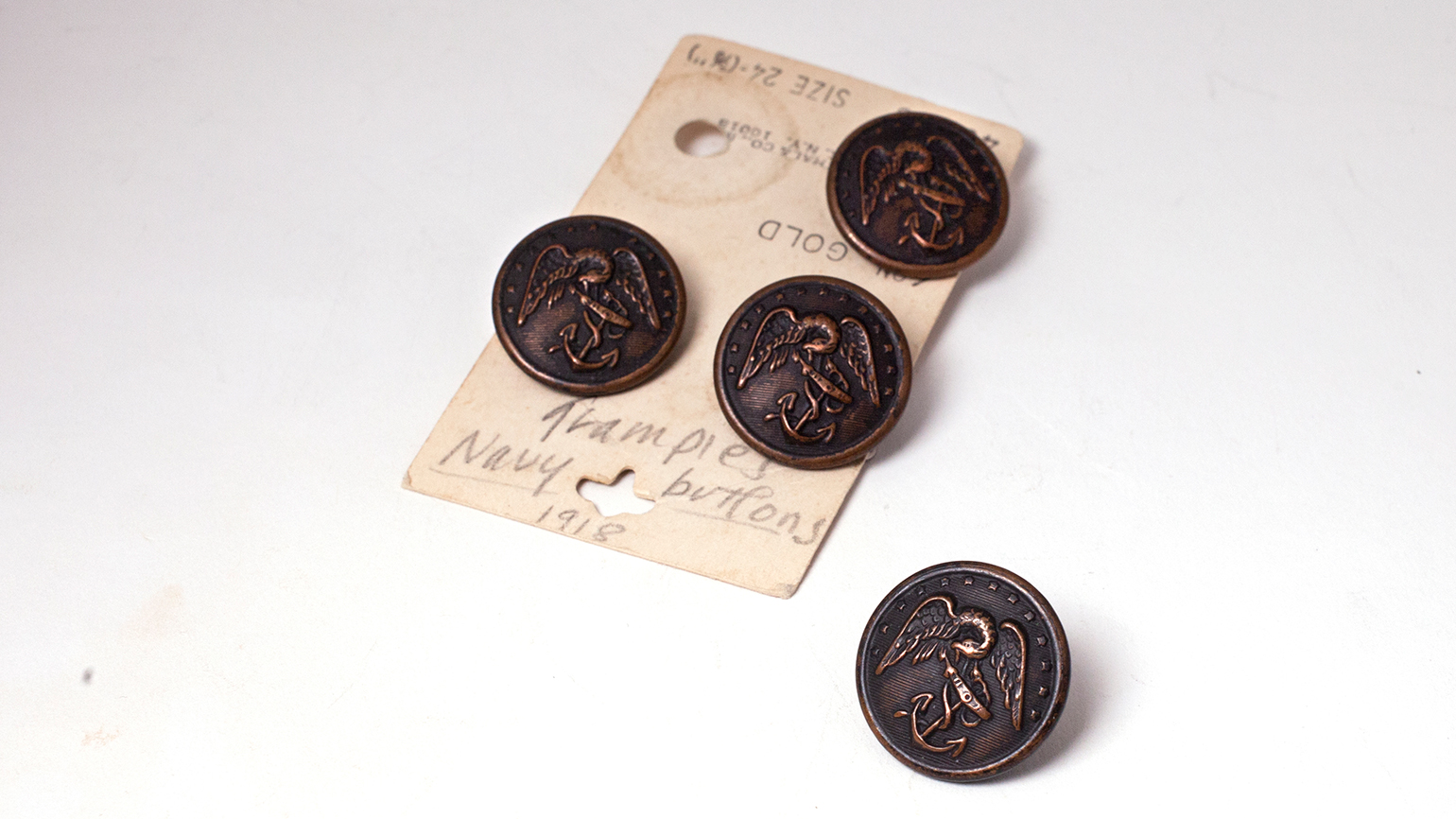
I was going through an old chest and found a treasure from 100 years ago. A little card on which four brass buttons were attached. In my grandmother’s handwriting it said: “Grampie’s Navy buttons, 1918.”

extraordinary women of the bible

My grandfather was one of some four million Americans who were called up to fight in World War I.

He was not on the front lines in a muddy trench in France where the conflict was at its bloody worst, but served on a battleship in the Atlantic after doing a brief stint at the Naval Academy in Annapolis.

In the Atlantic the enemy was underwater–the infamous German U-boats—or in battleships at sea. He was more fortunate than most, surviving unscathed. He would return home and unclip the brass buttons from his Navy jacket, to be saved for eternity. 

Stateside, he was a proud member of the American Legion and the Veterans of Foreign Wars. But sadly he was to see what little good his war service had done for peace when his own son, my dad, was called up to serve on a submarine in the Pacific.

How precious to have those buttons as a remembrance of him. In England, November 11 is called Remembrance Day, a time when younger generations honor the service of their elders, especially those lost.

For it was on the eleventh day of the eleventh month at the eleventh hour, 100 years ago, that peace was declared between the warring powers. A peace that didn’t last. Alas.

In America, that day has become Veterans Day when we honor all of our veterans, but the message feels the same. We remember them for their service, then and now.

Maybe I should sew those buttons on to some blazer that I wear. But I like them on their little card with my grandmother’s handwriting. “Grampie’s Navy buttons, 1918.” It seems a strong reminder to pray for peace. Always. Everywhere.

Pray a Little Poetry

Are you sometimes stymied in prayer because you’re trying to get it “right”? Do your prayers all sound the same these days? Are you getting bored with your prayer life?

If so, consider praying a little poetry for a while. Specifically, do a few haiku.

Community Newsletter

Get More Inspiration Delivered to Your Inbox


Haiku is a simple and popular form of poetry that comes from Japan. Most people know it as 17 “sounds” or syllables arranged in three lines of (respectively) five, seven, and five syllables each.

Strictly speaking, there is more to a haiku than that (such as a reference to nature in general and seasons in particular), but the brevity and simplicity of the form is what helps me in prayer. Praying in haiku helps me to simplify my thoughts and focus on my feelings. It places me in the present moment. It helps me “sing a new song,” so to speak, in prayer.  

Here are a few of the haiku prayers I have recorded in my prayer journal:


fossils of seashells

high in the Himalayas;

You have done great things

* * *

the crow picks at death

like the unforgiving heart;

help me to forgive 

* * *

trees lay down their leaves

with each one I bless Your name

one sweet sacrifice


I don’t always pray in haiku, but when I do, it stirs something in me and often revives my prayer life. It is such a simple way to pray, but one that incites humility, wonder, praise and gratitude in a unique way.

You don’t have to be a poet to pray this way. You do have to be able to count to five, and seven, however. But even then, the point isn’t the poem but the prayer. So try it, and see if an ancient Japanese form of poetry can inflame something new in your prayers.

On Wings and a Prayer

On cold mornings when I sit on the sofa to pray I’m grateful for the blanket that’s sitting there. I wrap it around me and huddle in its warmth as I sink into prayer. It’s as though I’m in my own cocoon, like a butterfly in its chrysalis awaiting transformation. O, that I would have wings.

Let me be the first to admit how my mind wanders a million different ways when I pray, settling here, flying there, coming back again and again to the divine, letting go, putting my worries and fears in God’s capable hands.

Rejoice in All Things in article ad

Sometimes a phrase from a psalm or two floats through my early morning brain. I was just thinking how often wings appear:

“O that I had wings like a dove! I would fly away and be at rest,” said the Psalmist (55:6). Prayer is something like that, giving me a means to go where I need to go.

But then wings also offer a refuge in the Psalms, a safe haven, God’s shelter. “Keep me as the apple of thy eye; hide me in the shadow of thy wings.” (Psalm 17:8) What better place than that?

Angels, of course, have wings. In the book of Isaiah there’s a wonderful image of the seraphim, “Each had six wings: with two he covered his face, and with two he covered his feet, and with two he flew” (6:2). Makes you think of all the things a wing can do.

Finally there are the powerful eagle’s wings later in the same book. “But they who wait for the Lord shall renew their strength, they shall mount up with wings like eagles, they shall run and not be weary, they shall walk and not faint” (Isaiah 40:31).

Mount up with wings like eagles. That’s pretty good.

READ MORE: FROM CATERPILLAR TO BUTTERFLY

When I talk about prayer to others, I sometimes struggle to describe what I do. Maybe if I just said, “It’s like putting wings on your life and wings on all your desires and letting them fly.”

The other morning, as I was finishing up my prayer time, opening up the blanket, coming out of my cocoon, I stretched my arms out, the ends of the blanket in my hands. It occurred to me that indeed the blanket was just like pair of wings. I was spreading them out and was now letting go.

Who says we earthlings can’t fly?