Embrace God's truth with our new book, The Lies that Bind

Is It Possible to Be Too Empathetic?

Empathy—the ability to see things from another’s perspective and actually imagine and feel what others might be going through. What could be wrong with that?

While empathy is an unquestionable part of walking a positive path through life, enabling us to be kind to others and foster lasting relationships, professor of humanities Fritz Breithaupt says empathy also has “a dark side.”

“Empathy is a riddle,” Breithaupt recently told NPR. While it can help us cultivate positive and kind habits, it can also motivate dysfunctional relationship patterns and self-serving behaviors.

On the positive side, Breithaupt describes the benefits of healthy empathy. He says, “Beings with empathy understand that there are all these different minds around [that] have different experiences and different feelings. They can participate in them. Someone with empathy lives more than one life. Of course, sometimes that means that you have to carry the suffering of others, but in many cases their joy becomes your joy. So it’s a richer, much more complex life.”

But he also refers to a more toxic form of empathy called “vampiristic empathy,” in which in the process of feeling on behalf of others, an empathetic person actually steers the relationship in a self-serving direction, in which an empathetic person feels more proud of their own heroics than compassionate for the experiences of others.

“Humans are very quick to take sides,” Breithaupt said. “And when you take one side, you take the perspective of that side. You can see the painful parts of that perspective and empathize with them, and that empathy can fuel seeing the other side as darker and darker or more dubious.”

This shouldn’t lead us to abandon the pursuit of healthy empathy. Instead, understanding the full complexity of the emotion can help us to check in with ourselves to make sure our efforts are truly compassionate and directed at the people in our lives who we are deserving of our empathy.

As Breithaupt puts it, “We can learn to use empathy in a somewhat controlled way. We can learn when to block it, when to not allow empathy to be manipulated and when to fully turn it on.”

I See God When I Go Running

Most mornings, I start the day in motion. I wake up early, force myself out of bed, pull on running shoes and hit the road. I live in the middle of Manhattan in New York City, so my running options are limited. Sometimes I run a six-mile loop road in Central Park. Other times I try to be more creative, weaving through the park’s many crisscrossing paths. If it’s light enough, I run on the park’s dirt bridle trail, where every now and then I’ll see someone riding a horse.

I have prayed countless times in countless places over the years, but my morning runs are where I encounter God most reliably. There’s always a moment when it happens. Maybe it’s when the sun crests the horizon and suddenly Manhattan’s east side blazes orange and the apartment buildings encircling the park light up like lanterns. Maybe it’s when a gentle rain falls and the skyscrapers of midtown are wrapped in clouds. I’ve run through snow, sleet, hail and pounding thunderstorms. Once, the temperature dropped below zero and I was stopped by a local news crew who came to Central Park to interview people crazy enough to go jogging on the coldest day of the year.

There is something about being outside in the early morning in all kinds of weather that feels uniquely exposed to the mysterious forces of God. I feel God’s presence in the beauty. In the quiet. In the friendly nods of other runners on the road. Even in the air itself. I hate summer humidity but I know it’s part of creation, so I (try to) give thanks for it anyway on muggy mornings. Before the sun comes up, runners and dog walkers pretty much have the park to themselves. There are no tourists. No kids from nearby schools using the fields for recess. No musicians or bike cabs or horse-drawn carriages. The city feels subdued, as if, for this brief time, God has turned his attention to this hustling metropolis and said, “Be still.”

Many days when I first wake up, the last thing I want to do is haul myself out of bed and exercise. It’s always worth it. Even the repetitiveness of my running routes becomes a source of prayer. Tiny variations loom large. I spot the first crocuses and bluebells that announce the coming of spring. See the first cherry trees blossom. Hear the first cries of migrating geese. Get excited over the first sign of fall (my favorite season). Run through the year’s first snowfall.

I don’t listen to music when I run. I like to hear the world wake up. I imagine God gently stirring everything back to life. There is nothing to do but look around and take it all in. My mind wanders but it always comes back to this central fact: God is present and at work in the everyday moments around me. Soon, I’ll be back home, swept into the work day, my mind stressed and distracted. Here, for a precious hour, I am fully alive and fully aware. In motion under the watchful care of God.

Is Caring for a Family Member Good Experience for Professional Caregiving?

If you’ve been the primary family caregiver for a loved one with dementia, you know that it takes a special type of person to do the job well. If your loved one has passed away, it’s possible that you’ve had a desire to apply your caring nature and experience to exploring work as an in-home caregiver. Since this is foreign territory to you, it can help to know a bit about what it takes to be successful at this potentially very rewarding job, and to understand the differences between caring for a loved one at home and caring for someone professionally.

“When we care for our parent or another family member, we have different ways of being because of the whole family history, so it’s one of the things that people have to become aware of—this is not your parent,” Donna Schempp, LCSW, of the Family Caregiver Alliance told Guideposts.org. “As a professional caregiver, you have to establish a relationship, whereas with your parent, you have a relationship already there. Sometimes we think we can just walk right in and do what we did before.”

The most important thing at the outset is to get training in dementia care, Schempp said. This goes for anyone who is considering working as an in-home caregiver, regardless of the level of care the person would be providing. In-home caregivers are responsible for a wide spectrum of services, from being a companion and handling household tasks to providing skilled health care. Agencies generally require and/or offer training. But Schempp said it’s equally important for private caregivers, and even for family caregivers, to get training. “The biggest mistake that people make is they think that they can make it up as they go along and they’ll be successful and it’s not true,” she said.

Schempp suggested checking with your local chapter of the Alzheimer’s Association for information on training and workshops, as well as with a community college in your area. Through classes, you will learn crucial things like transfer skills—how to use your body properly so that you don’t hurt yourself—as well as what issues require medical care or other outside attention, and how to communicate effectively. If you can’t take a class, she said, you can also learn a lot by reading articles on the dementia care.

Dementia care is counterintuitive, Schempp said. “What we tend to do when someone doesn’t want to do something is make our case and explain why it’s important to get dressed right now, or to take a shower, and that doesn’t work with people with dementia. You have to learn how to communicate, how not to just harass or bully somebody.” Good interpersonal skills, an air of levity, the ability to “jolly someone” and a generally positive attitude are important for any dementia caregiver, she said.

Many classes also teach caregivers, prospective or otherwise, how to entertain through reminiscence via photo albums and stories, and about the soothing balm of music, Schempp said. “Sometimes if you can sing to somebody what you want them to do, they’ll be more responsive than if you just tell them. And if you’re singing, you’re going to help your mood too.”

Certain personal qualities are, needless to say, a major component of successful caregiving. Through your experience as a family caregiver, you are no doubt familiar with the all-important role that patience plays in successful interactions. “Patience is probably the hardest—the one quality that’s going to get frayed,” Schempp said. Proper rest, relief and support are crucial to maintaining patience as a caregiver, she said. It also helps to be “self-contained,” she said. “You have to be able to maintain your equanimity or your ability to feel okay without getting it necessarily from the person you’re caring for.”

In addition, the caregiver needs to be a good advocate for the person with dementia. “If you take someone to the doctor, they’re not accurate reporters,” Schempp said. “The doctor’s going to say things like, ‘How are you?’ and they’re going to say, ‘I’m fine’. They’re not going to generally tell you what’s going on, and so the person who’s a caregiver has to tell other professionals kind of what is happening at home and what is different than it used to be.” This means developing a relationship with the person you’re caring for, and paying close attention to behavior and moods. “If you’ve been doing this for your family, things just flow in a certain way and you take all kinds of stuff for granted. But you go to work for somebody else and the same assumptions aren’t there,” Schempp said. “If you have to run errands, for example, can you leave the person for a half an hour or do you have to take them with you everywhere you go? There are just so many little pieces that have to be figured out that no one thinks about until they come up.”

Challenging as it may be, working as a caregiver offers the opportunity to form a close bond with an individual who can benefit greatly from your help, potentially over a period of several years. At the moment, with social distancing measures in place, this can be even more valuable and rewarding. For the right person, Schempp said, “it’s a great job!”

The Alzheimer’s Association has released tips for Dementia Caregivers to deal with Covid-19, both at home and in long-term and community-based settings.

For more information on caregiving, go to the Family Caregiver Alliance website.

Is A.A. for Alcoholics Only?

The opera stage is crowded with outsized characters, and in my long career as a leading soprano I’ve played most of them. Wagner’s Brünnhilde, Strauss’s Salome, Puccini’s Tosca. I’ve sung these and countless other roles around the world, sharing the stage with the likes of Luciano Pavarotti and Plácido Domingo. But there was one role I never came close to mastering—though I played her every day. That role was myself.

Onstage, gathering audiences into the soaring sweep of my voice, I was beloved as one of the opera world’s most passionate, most versatile singers. Offstage, my life was a wreck. I was an alcoholic. A binge eater. Cycling through relationships with abusive men. From childhood I’d felt called by God to sing.

But you would never know that, watching me in my hotel room after a performance, drinking until I passed out, waking up covered in bruises, scrolling through the text messages on my phone to try and figure out what I’d done. I lived by my voice. But it took years, decades, my whole life, really, before I finally accepted that only one Voice could save me from myself.

I’m serious when I say I felt called by God to sing. It happened when I was 14 years old. I was lying in bed early one morning, watching sunlight filter through a gap in my curtains. Suddenly a voice—at once loud and soft, warm and fierce, real and otherworldly—spoke to me with utter clarity. You are here to sing.

That was all. Yet I knew those words came from God, and were meant for me, because I’d been singing, and loving to sing, for almost as long as I could talk. As a toddler I begged my grandmother to put on her vinyl record album of My Fair Lady. I learned all the songs by heart and belted them out in Grandma’s living room, outfitted in her apron and one of her pillbox hats.

I sang at church, at school, in Christmas pageants, wherever I could. I knew there was something special about my voice. I could tell by people’s faces when I sang. Their eyes widened. They smiled, leaned forward. Oh, how I lived for those moments of connection! At one with an audience, I felt at one with myself.

But such moments were fewer than I wanted because my parents, strict Southern Baptists, made it clear that singing for any other reason than to please God was prideful and wrong.

“Who do you think you are?” my dad asked once when he caught me playing the piano and singing show tunes in the living room. He loomed up beside me, his face a mix of awe and fear, as if my voice were a powerful, uncontrollable force. I shut my mouth and slunk away.

There was a reason my parents were so strict, why Dad sometimes spanked me for no reason or washed my mouth out with soap, making sure the washcloth got all the way back to my molars. Theirs was a shotgun wedding.

Mom was just a teenager when I was born. And by the time I was three, I could tell Mom and Dad fought a lot, more than most couples—sometimes over other women at our church. My parents were young and didn’t know how to raise kids. Mom was a curvaceous woman, and Dad, I guess wanting to spare his daughter a lifetime of weight struggles, monitored everything I ate. That backfired. I became obsessed with food, using it to calm my fears that Dad would up and leave us, or that he’d suddenly get mad and spank me.

By the time I heard God so distinctly affirm my teenage singing aspirations, my own feelings about singing—about my life, really—were a tangle. I got praised for singing at church, but punished for it at home. My body produced the voice I lived for. But I was ashamed of my body, which already was bigger than other girls’, and only growing bigger as I binged on food to soothe my anxieties. I feared God didn’t approve of how I used his gift. I stopped listening for more affirmation. I figured I didn’t deserve it.

You’d be amazed how far an artist can go without an ounce of self-esteem. I won major singing competitions in college. Soon I was working as an understudy at famous opera houses, then drawing rave reviews for my own starring roles. I toured the world, singing at Covent Garden in London, La Scala in Milan, the Metropolitan Opera in New York. “One of the most important American singers to come along in years,” The New York Times called me.

If only they knew what my real life was like! I married a man I met in high school. He didn’t love me and cheated on me. After we divorced I took up with a marijuana grower—yes, seriously—who turned me on to hard drinking. He had a terrible temper and once kicked me in the head during an argument.

My weight soared to nearly 300 pounds, so heavy even the critics who loved my voice took notice, and I was passed over for roles because I couldn’t fit costumes and directors said I couldn’t portray romantic heroines. (Which deeply bothers me, this idea that only skinny women deserve love lives—but that’s a different story.)

I tried fad diets and weight-loss drugs, even had a balloon inflated in my stomach. At last I found relief from food cravings through gastric bypass surgery. But even as the pounds started falling off and I could actually buy outfits in regular sizes, my addictions blossomed.

All those feelings of fear and shame I’d carried since childhood—they didn’t go away just because I was thinner or famous. Actually, being famous made them worse. I felt like a fraud. Like a beautiful voice hiding an ugly mess. Even my family was a mess. Mom and Dad had divorced and gotten remarried to other people. They hardly spoke to each other.

Finally, the mess got too ugly even for my voice to hide. I had taken up with yet another damaging man—a member of the Metropolitan Opera chorus who already had a girlfriend when we started dating. No surprise, he refused to commit, and every time he retreated I went on a bender. I was frightened of myself—but not too frightened to drink more.

During a singing trip to China in 2013, I sat in my hotel room drinking all day and passing out by evening, surrounded by empty bottles. I woke up one night in a Chinese hospital room with an IV drip in my arm. “Put her on suicide watch,” a doctor said.

A few weeks later I checked into a rehab center in Miami. I didn’t have high hopes. I’d gone to Alcoholics Anonymous before and never stuck with it. Why would this time be different? The rehab felt like a prison. I didn’t get along with my roommate, Betty, who—like most addicts, I’ve come to learn, including me—was very self-centered.

She always grabbed the same spot on the couch for group therapy sessions, no matter who else wanted to sit there. One day we inmates (what I called the patients) were asked to do a trust exercise: lead one another around the center blindfolded. I got partnered with Betty. She put a blindfold on me and began guiding me through the halls. “I’m right here, Debbie. Follow me. Follow my voice.”

The exercise ended in a courtyard. I took the blindfold off and turned to Betty. Somehow, following her like that had softened my feelings toward her. But she’d already raced off to claim her favorite spot on the couch. For a moment I stood there feeling abandoned. Story of my life, I thought.

But almost as soon as those words entered my mind they vanished. My attention was yanked back to what Betty had said as she led me through the halls: “Follow me. I’m right here, Debbie. Follow my voice.”

My voice. Long ago, I had heard a voice in my childhood bedroom. The voice had told me to sing. And I had spent my life singing. But had I truly followed that voice?

If I had, I wouldn’t have ended up on suicide watch. I wouldn’t be in rehab wondering if it was possible for me to stay sober. I wouldn’t have binged on food and alcohol and men all my life in a frantic effort to numb my gnawing fears. I wouldn’t have felt those fears in the first place because I would have known that, no matter what happened in my childhood, no matter what size I wore, I was loved by God. God loved my voice and wanted me to use it for his glory.

But I had been using my voice to drown out the one Voice that could save me. I looked around the courtyard. Everyone was going in for group therapy and I was there alone, in the stillness and soft tropical air. I breathed in—that breath, so necessary for singing. Only now, I felt God there, deep inside my body, where my voice originated.

You are here to sing.Yes, and it was God who gave me singing, and blessed it, and said it was good. I went inside to group therapy. For the first time I had reason to hope that this time my efforts to stay sober would turn out differently.

And so far they have, although, as we say in AA, it’s one day at a time. My days are happier and more peaceful than they’ve ever been. I still sing leading opera roles, but I’m branching out too, into other kinds of music. And I’ve begun mentoring up-and-coming singers.

“You have to take care of yourself,” I tell my protégés. “Don’t let the work consume you. Your voice is a gift. Use it wisely.”

I wish someone had told me that when I was young. Actually, Someone did. What it took me years to learn was how to listen. I’m right here. Follow me.Those words are the sweetest aria I will ever hear.

This story appeared in the February 2015 issue of Guideposts magazine.

Inviting God to Your Pity Party

I recently had a day full of emails and phone calls with news I didn’t want–someone let me down and things I thought would happen…didn’t. My spirits were low. I thought about throwing a pity party, but it was too much trouble to plan one.

But then I realized that the best answers to making it through times like those are found in God’s Word:

1. God tells us to quit carrying our problems and to give them to Him.
In 1 Peter 5:7, He says, “Casting all your care upon Him, for He cares for you.”

2. God says not to be stressed over situations and to bring requests to Him in prayer.
In Philippians 4:6-7, He says, “Be anxious for nothing; but in everything by prayer and supplication, with thanksgiving, let your requests be made known to God; and the peace of God, which surpasses all understanding, will guard your hearts and minds through Christ Jesus.” Following His plan will bring peace instead of anxiety.

3. God says to wait on Him.
In Lamentations 3:5, He tells us, “The LORD is good unto them that wait for him, to the soul that seeketh him.” Waiting is hard, especially when it’s something that’s close to our hearts, but as my pastor, Rev. Ralph Sexton, always says, “Even when we can’t track Him, we can trust Him.”

4. God says He will comfort us in our distress, and He understands that sometimes, we’re too discouraged to even pray.
In Romans 8:26-28, He reminds us, “Likewise the Spirit helps us in our weakness. For we do not know what to pray for as we ought, but the Spirit himself intercedes for us with groanings too deep for words. And he who searches hearts knows what is the mind of the Spirit, because the Spirit intercedes for the saints according to the will of God. And we know that for those who love God all things work together for good, for those who are called according to his purpose.”

How precious to know that God will come to my pity party, that He will hold me close, He will pray for me, and He will work all things out for my good. And I can promise that He’ll do exactly the same for you.

Investing Wisely for a Meaningful Life

Am I investing my time wisely in things that truly matter? What actually matters and how can I be certain? These are questions we tend to ask ourselves. As humans, we try to answer these questions to the best of our knowledge, and we are forced to do so while making daily investments in our life.

No matter what type of lifestyle you live, most would agree that the time we invest in our families, relationships and faith are the investments that truly matter. Although we may feel this way, the pressure to succeed, conform and give into our prevailing culture is always present. This results in empty souls, loneliness, fragmented relationships and a profound yearning for a meaningful life.

The prophet Isaiah brought God’s word of hope to a community that wound up in exile and captivity. Before Jerusalem’s downfall, the people were relatively prosperous, overly self-confident and materialistic. It is in this context that we hear God’s words, “Come, everyone who is thirsty–here is water! Come, you that have no money–buy grain and eat! Come! Buy wine and milk–it will cost you nothing! Why spend money on what does not satisfy? Why spend your wages and still be hungry? Listen to me and do what I say, and you will enjoy the best food of all.”

This is an invitation from God to all people. The qualifications are a thirst for a meaningful life and a hunger for what can satisfy our inner spirit. No need to spend, because God will provide the wine and milk that will gratify our lives. No matter how much we possess or gain, we will never be satisfied. Our heart and spirit find meaning through non-tangible things–love, peace, grace, forgiveness, acceptance and connections to others.

When we invest in things that don’t give us meaning, we become tired and weary, but it is never too late to change direction. Investments made on developing our inner being and allowing God to change our ways will benefit our family, marriage and children in return.

Come and let God give us the gift of purpose and meaning!

Lord, give me wisdom to invest wisely on the things that matter–a meaningful and purposeful life.

Inspiring Us to Just Do It!

I’m convinced this upcoming year will be a great one for you if you’ll make one simple New Year’s resolution and stick to it in every one of the 365 days this year has to offer. That resolution consists of just two short words.

Each has only two letters. But they’re packed with power. They can generate enormous energy. They can sweep away discouragement and failure. They can make it possible for a person to accomplish just about any worthwhile goal. And what are those two dynamic words? Do it!

Have you got a promising idea? Do it! Do you have a cherished dream? Do it! Do you have a hidden ambition? Do it! Have you some great impulse, some burning desire? Do it!

I’m not just urging action for action’s sake, although action is almost always better than inaction. No, the reason goes much deeper than that.

The reason is that God has a plan for this world of ours, and he’s arranged things so that he requires our help in carrying it out. We are the instruments he has chosen to keep civilization moving toward the goal of a loving and peaceful world. He needs us, just as we need him.

The great psychiatrist Karl Menninger once said he thought the central purpose of each individual’s life should be “to dilute the misery in the world.” Every day each of us is offered opportunities to do just this, sometimes in large ways, sometimes in small.

But often we let inertia or fear or selfishness stop us. We fail to do it.

What we don’t realize, very often, is that if we’ll just take the first step in the right direction, God will support us in the rest of the journey. There’s an old proverb that acknowledges this basic truth: “Begin the thing and ye shall have the power. But those who do not begin have not the power.”

Suppose someone invites you to join a Bible study. Something in you would like to accept, but you find yourself groping for excuses. The time is inconvenient. The teacher might expect too much effort. And so on.

Well, if this invitation comes this year, sweep those objections aside. Tell yourself that Bible study will make you a stronger, wiser person, better fitted to carry out your share of God’s plan. Do it!

Take a few moments every morning and look closely at your life. Is there a frayed relationship that would be helped by a friendly gesture or a word of apology from you? Do it! Is there some deserving charity that could use a contribution, however small? Do it!

Is there some little action—a note to a bereaved person, a visit to a hospital patient—that would help to “dilute the misery in the world”? Don’t just contemplate it. Do it!

Have you ever noticed how many of the majestic healing utterances of Jesus begin with a verb of action? “Go and wash…” “Stretch forth thy hand…” “Take up thy bed…” Jesus knew taking action liberates further energies and is a great builder of confidence.

I believe if there are areas in your life where you put off needed action, these unfulfilled tasks can become a fatigue factor. They are like tiny leaks in your reservoirs of energy.

What holds you back when you flinch from some worthwhile endeavor? Often it’s fear. Insecurity. Lack of faith in your God-given abilities. I can speak with some conviction in this regard because, for years, as a youngster in Ohio and later as a college student, I let an inferiority complex paralyze me.

If I was called upon in class, I’d flounder around even though I knew the answer. It wasn’t until I realized that the fault was mine, not God’s (he doesn’t create inadequate people), and asked him to help me, that I began to get over it.

I’m convinced that when you decide to do something because you think it may advance God’s plan for the world, your chances of failure shrink almost to zero.

Here at Guideposts we have a descriptive sign at our headquarters that reads “People Helping People.” That is the purpose of Guideposts, and all the success we have had stems from it.

I had an idea for a book that I thought might help people, but a well-known expert in the field told me my approach was all wrong. I listened to him for a while, but finally I sat down with a pad and pencil and began to outline a series of chapters.

With the help of my wife, Ruth, I tried to push the fears and hesitations out of my mind and complete the book. Together we did it. Today they tell me that book, The Power of Positive Thinking, has sold over 20 million copies since it first appeared in 1952.

The success of the book, I’m sure, derived from the fact that the principles it contains are based squarely on the teachings of the Bible. There was more than 3,000 years’ worth of wisdom in my book, and I assure you, that wisdom didn’t originate with me. I was just a vessel for it.

So as the new year comes over the horizon, review those actions you keep putting off, those dreams that remain unfulfilled. Ask yourself, “Is this idea a good one? Is it in accord with God’s plan? Will it dilute the misery in the world?”

If you get affirmative answers to those questions, do it! You’ll find this year will be great if you do.

Download your FREE ebook, Rediscover the Power of Positive Thinking, with Norman Vincent Peale

15 Inspiring Quotes for Presidents’ Day

Join us as we remember the wisdom, courage and leadership of United States presidents—like Theodore Roosevelt, Woodrow Wilson, Dwight D. Eisenhower, and John F. Kennedy—with these Presidents’ Day quotes.

The History of Presidents’ Day

Presidents’ Day was established in 1885 in recognition of President George Washington’s birthday in February. It was later referred to as Presidents’ Day, to also honor President Abraham Lincoln’s birthday as well (also in February). In the United States, Presidents’ Day always takes place on the third Monday in February. Since its inception, this day has grown to honor all American presidents.

Presidents’ Day Quotes

Celebrate Presidents’ Day with these motivational and inspirational quotes from America’s leaders.

President Quotes About Life

Portrait of Theodore Roosevelt with presidents day quote

1. Do what you can, with what you have, where you are. —Theodore Roosevelt

2. If wrinkles must be written on our brow, let them not be written on our heart. The spirit should never grow old. —James Garfield

3. Great lives never go out; they go on. —Benjamin Harrison 

4. Live simply, love generously, care deeply, speak kindly, leave the rest to God. —Ronald Reagan

5. In the end, it’s not the years in your life that count. It’s the life in your years. —Abraham Lincoln

Portrait of Abraham Lincoln with a presidents day quote

President Quotes About America

6. We came from many roots, and we have many branches. —Gerald Ford

7. The test of our progress is not whether we add more to the abundance of those who have much; it is whether we provide enough for those who have too little. —Franklin D. Roosevelt

Portrait of Woodrow Wilson with quote for presidents day

8. America lives in the heart of every man everywhere who wishes to find a region where he will be free to work out his destiny as he chooses. —Woodrow Wilson

9. Freedom is the open window through which pours the sunlight of the human spirit and human dignity. —Herbert Hoover

10. We become not a melting pot but a beautiful mosaic. Different people, different beliefs, different yearnings, different hopes, different dreams. —Jimmy Carter

President Quotes About Hard Work

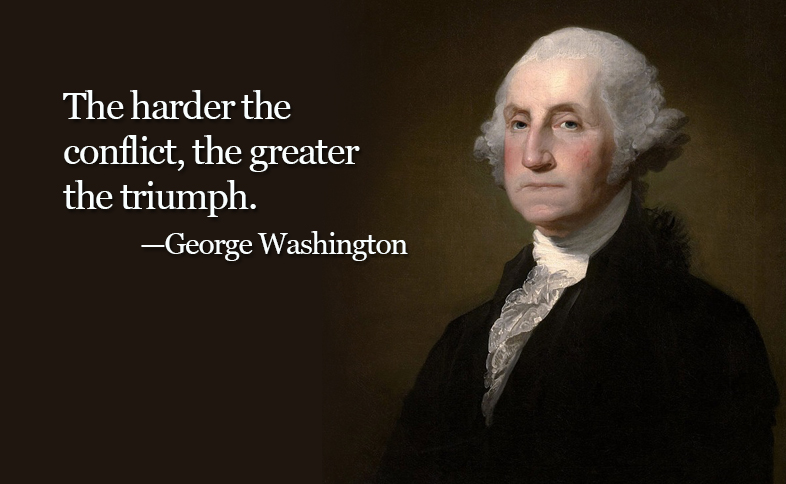
11. The harder the conflict, the greater the triumph. —George Washington

Photo of Dwight D. Eisenhower with a presidents day quote

12. Accomplishment will prove to be a journey, not a destination. —Dwight D. Eisenhower

13. Try and fail, but don’t fail to try. —John Quincy Adams

14. Peace is a journey of a thousand miles and it must be taken one step at a time. —Lyndon B. Johnson

15. One person can make a difference, and everyone should try. —John F. Kennedy

Portrait painting of John F. Kennedy with a presidents day quote

READ MORE ABOUT PRESIDENTS’ DAY:

Inspiring Her Man to Reclaim His Life

I lay in bed next to my husband listening to his labored breathing. Gilbert’s body had to work so hard even when he wasn’t moving. It was terrifying, not knowing if he would wake up in the morning.

Why wouldn’t he just listen to me? I’d tried every way I could think of to help, to save him from himself, but my pleas had only pulled us further apart. I admit, I badgered him about eating too much, too fast, all those fatty foods.

But what was I supposed to do? Gilbert weighed 700 pounds. That wasn’t just overweight. That was obese…morbidly obese. It was all he could do to get out every morning to his part-time job as a school-bus driver.

At night, right after dinner, he would collapse in bed. I’d tuck the kids in and spend the evening alone on Facebook.

We couldn’t go on like this. He was killing himself. And honestly, it felt like I was dying too. I was listless, depressed and short-tempered–at school, where I’m a teacher, and at home. I was just about to turn 40. I was too young to be a widow!

I didn’t marry a 700-pound man. Twenty years earlier, Gilbert had been a lifeguard at our town pool, tall, muscular, confident. I was a camp counselor.

One day one of my campers slipped and broke her leg. Gilbert took charge. He grabbed a broom, snapped it like it was a toothpick and splinted the little girl’s leg with it. My hero.

We started dating a week later. His dream was to become a Marine. I could picture him in uniform, strong, determined, charging into action, like that day he’d come to my camper’s rescue. He asked me to marry him right before he left for boot camp. I didn’t even have to think about it.

I was so proud to go to his boot camp graduation. Just a few months later, he blew out his knee during a training exercise at Camp Lejeune. He had surgery and came home to recuperate. I wanted Gilbert to know I’d always be there for him. That summer, about a year after we’d met, we got married.

Then came the phone call. He’d been declared unfit for duty because of his knee. He was being discharged from the Marines. Gilbert’s dream was crushed. So was he.

I ached for him. Still, I had faith that the confidence and determination I fell in love with would kick in and he would find a new purpose.

But Gilbert just got more and more down. He lay around staring at the TV, polishing off supersize bags of chips, ice cream by the quart. He put on a lot of weight. Getting a job as a truck driver didn’t help. He sat behind the wheel all day, gorging on fast food.

It was emotional eating, an attempt to fill the emptiness he felt at losing his dream. I understand that now. Back then, it frustrated me no end.

To get him to change his eating habits, get back in shape, I tried positive motivation: “Remember how great you felt when you worked out every day?” Guilt: “Don’t you want to set a good example for the kids?” Scare tactics: “Morbid obesity is the second leading cause of preventable death.”

I went on diets–it wouldn’t hurt to lose some weight myself, I figured–hoping he would join me.

Nothing worked. We fell into a toxic cycle–I’d try to “fix” him, he’d resist, we’d fight, I’d give up, then we’d start all over again. Things got worse when Gilbert lost his trucking job and no one would hire him. The only work he could get was driving the school bus 25 hours a week.

Here I was with two kids and a husband I was scared wouldn’t live to see them grow up. I lay there next to him and listened to him draw another ragged breath. God, I prayed, you know how much I love Gilbert. Help me help him. Just show me what to do.

I’d asked my Facebook friends for ideas to make my fortieth a memorable year. “Run a half marathon,” someone suggested. That was crazy. I was totally out of shape. I couldn’t run to my parents’ house, just 100 yards down the road.

Yet now the idea echoed in my mind, like a drumbeat. I wasn’t going to change Gilbert. I’d tried. And tried. The only life I could change was my own.

I started the very next afternoon when I got home from school. I pulled on a pair of shorts, a T-shirt and my old tennis shoes.

Gilbert was sitting on the couch watching TV. He didn’t even look up as I headed out the door in my running gear.

Halfway to my parents’ I bent over, gasping. My feet, my legs ached. I limped back home and snuck past Gilbert, glad for once that he ignored me. I can’t do this, I thought. I’m not a runner.

The next afternoon there was Gilbert plopped on the couch again, chowing down on a barbecue sandwich and fries. I couldn’t take it. I had to get out of there. This time I ran a little farther before I had to stop to catch my breath. At this rate, it’d be years before I could run one mile, let alone 13.1.

But I stuck with it. I found a book that combined a training plan for a half marathon with a Bible study. I even adopted a verse for motivation, Hebrews 12:1: “Let us run with endurance the race that is set before us.”

Over and over I repeated that verse, going a little farther every time. It took me a month before I could run an entire mile. The second mile came easier, though. The third, easier still. But how was any of this helping Gilbert? He barely seemed to notice that I was gone longer and longer on my runs.

In December 2011, six months after I began training, I ran my first half marathon. Everyone, my parents, the kids, even Gilbert, came to cheer me on. I started off well enough, but around mile 9 my legs started feeling like Jell-O. By mile 11, I could hardly put one foot in front of the other.

Runners blew past me. A young woman with a bouncy ponytail went by, not even breathing hard.

I felt so discouraged I almost stopped right there.

Then my eyes caught the words on the back of her T-shirt: You’re not finished with this race. Hebrews 12:1.

If that wasn’t a message meant for me, I don’t know what was.

I took a deep breath. Run. I willed myself to keep going, step after step. Run with endurance.

I surged across the finish line. My kids jumped up and down, cheering. Mom flung her arms around me. My moment of triumph. Except for…

“Where’s Daddy?” I asked my daughter.

She pointed to a parking lot at the top of a hill. I could just make out our car, parked in the front row. “It was too far for him to walk,” she explained. I waved. I saw Gilbert lift his arm with great effort and wave back.

I set a new goal: run a full marathon. My training went great. My marriage, not so much. Gilbert was killing himself and it was too painful to watch. For spring break I took the kids and spent a week at my parents’ house. I needed to get away and think.

I confided in my mom. “I love Gilbert. I don’t want a divorce. But I can’t live with him like this.”

“Love is patient,” Mom reminded me. “Marriage is a long haul, kind of like a marathon.”

That made me think of the race I’d run. How I was about to quit until that young woman with the Bible verse on her shirt passed me, the very same verse I’d claimed for myself.

I’d thought God sent me a message to help me with that race. But it went way beyond that. It was a message about my marriage. You’re not finished. Run with endurance.

The kids and I went home. Okay, God. I’ll be here for Gilbert whenever he’s ready.

Not long after, I got a text from Gilbert while I was at school: “Pls call.” I did. “I need you to get all the food out of the house,” he said. “I’m going on a three-day fast. I don’t want to get into it right now, I just need you to help me.”

The kids and I threw out all the junk food. The rest, we loaded in the car and took over to my parents’. That night, instead of collapsing in bed, Gilbert sat up with me and we talked.

“That week you and the kids were away, I did a lot of soul-searching,” he said. “I’m not the husband or the dad God wants me to be. That I want to be. I have to lose weight.”

I grabbed his hand, almost giddy with relief. “I’ll help you any way I can.”

“You already have,” he said. “You didn’t give up on me or our marriage. I see how you’ve changed. I want to change now, and with God’s help and your support I will.”

The next day he walked from our house to our mailbox at the end of the driveway, about a tenth of a mile. It was torture for him. But he stuck with it. Just as he stuck with smaller portions and healthier foods. “It took me years to gain this weight,” he told me. “It’ll take me a long time to lose it. But I will.” I loved his confidence and determination.

That December, I ran my first marathon. There at the finish line was Gilbert, helping out as a race volunteer, giving out medals to all the runners. He draped my medal around my neck and I wrapped my arms tightly around him.

Today, a year later, Gilbert has lost more than 300 pounds. He walks four miles every day and volunteers as an equipment manager for the high school football team. And he’s training to be a volunteer firefighter. My hero.

Download your FREE ebook, Paths to Happiness: 7 Real Life Stories of Personal Growth, Self-Improvement and Positive Change


Inspiring Filmmaker Crystal Emery Is Redefining What’s Possible

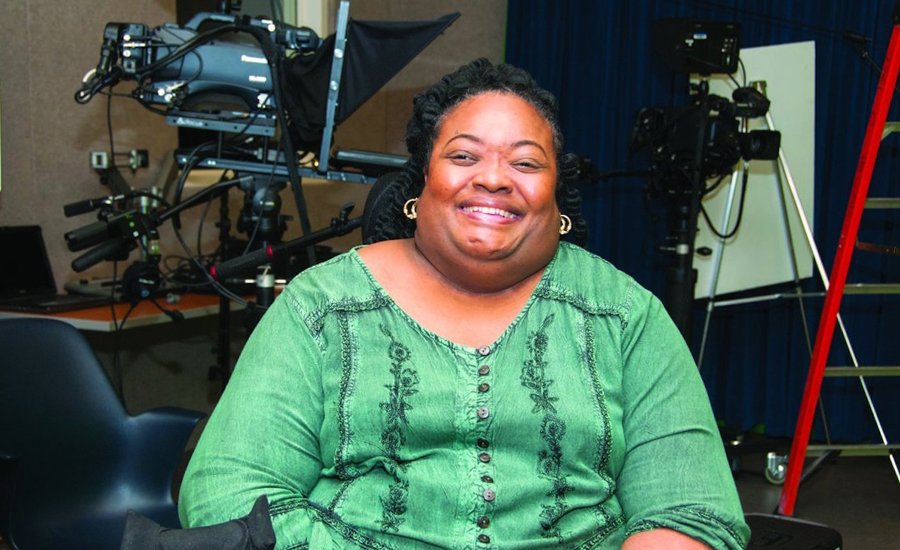
Crystal Emery is an award-winning filmmaker, an author, an actress and a playwright. She also lives with an incurable illness that has left her paralyzed and in a wheelchair for the last 14 years.

These challenges have not kept her from pursuing her purpose, and her latest documentary, Black Women in Medicine is evidence of that. At the time Guideposts.org caught up with Emery, Black Women in Medicine was being released in New York and L.A. to critical acclaim. The inspiring documentary traces the history of Black women in the medical field and all of the obstacles they overcome in pursuit of offering health solutions to the masses.

“I wake up every day and I love what I do,” Emery tells Guideposts.org of why she, like her documentary subjects, keeps going, despite challenges. “And I also love life. When you think of love as being unlimited bliss, then nothing is impossible.”

Her limitless positivity is how she devised a plan to pursue filmmaking, even as she could no longer use her hands.

“It takes a lot of people to move this show,” she shares. “For example, we filmed [Black Women in Medicine] in Washington, D.C. I had to rent a hospital bed, and a Hoyer lift, and had to bring three people because it takes three people to get you out of the wheelchair safely and onto the Hoyer lift to the hospital bed. It takes a lot of effort. I’m not functioning on my own. I can’t use a fork; I can’t wash my face, or wipe my tears, or blow my nose. I have a serious support team.”

Even as a young child with an undiagnosed and debilitating genetic disorder, Emery still chose joy. She had a passion for acting, and wrote and directed her first play in the fifth grade. But in the sixth grade she began experiencing physical complications. She started falling down often, even knocking her hip out of place and being in a body cast for three months. But her left leg never healed properly.

Like this article? Sign up for “Your Weekly Inspiration”, a weekly newsletter of Inspirational stories of hope and faith – Click Here.

“People were saying, ‘Oh you’re lazy,’” Emery shared about the difficulty she had being active after the accident. Still, she maintained her passion for drama, theater and film, even as she began falling down again at the end of her high school years.

“Eventually, [when I was in college,] I went to a neurologist who said, ‘I think you have Charcot-Marie-Tooth (CMT) [disease],’” she said, a an incurable degenerative nerve disease and form of muscular dystrophy that causes muscle weakness and paralysis.

“It wasn’t until the disease started getting worse and I couldn’t act anymore that I thought about directing,” she says of her evolution into filmmaking. “One thing lead to another, and I was working with [famed director and Yale Drama dean] Lloyd Richards and [Pulitzer Prize-winning playwright] August Wilson on Fences, and I met [actor/director] Bill Duke. That’s when I said, ‘You know what, film is what I really want to be doing.’”

At the time, there wasn’t much known about the disease and Emery didn’t know to fear it.

“I didn’t know I was disabled, until I got the wheelchair. I put on a leg brace and kept running around the world,” she said. “Did I know I was going to be a quadriplegic? Never in my wildest nightmare.”

The genetic disorder that would paralyze her body and confine her to a wheelchair progressed slowly.

“It became harder and harder to walk in the late 90s. By 2002, I was using a wheelchair, but I could still use my hands. And then I got really sick and my hands became paralyzed.”

That wouldn’t stop her from a near-30-year career in the arts, producing more than 20 plays, directing several video series and two full-length documentaries, and writing three books.

“When I wrote my first book about my grandmother, real friends volunteered one day a week to come type for me. And through that process, I learned that I could create and write again, [despite CMT].”

Her village of helpers continue to support her as she pursues more of her dreams.

The day Guideposts.org spoke to Emery, a tragedy had just struck a close member of her family. Still, Emery has managed to maintain the same inspiring level of optimism that her films possess, even as her topics highlight the ugliness of racism in America.

“That’s how I am,” Emery said of her positive attitude. “I want my experiences to expand who I am, not contract. That’s how I’ve always been.”

Inspiring 78-Year-Old Grandmother Sets Lifting World Record

Seventy-eight-year-old Nora Langdon has become an inspiration to people of all ages. The grandmother of one spends multiple days a week at the Royal Oak Gym, near her home in Michigan, training for lifting competitions by doing bench presses, squats and deadlifts for three hours at a time. She turns to prayer as a form of encouragement during her workouts.

“When I squat this is what I say: ‘Holy Spirit fall on me,’ and I just do it and I come right on up,” she told the Fox affiliate in Detroit, Michigan.

At the age of 65, Langdon was determined to live a healthier lifestyle. In 2007, she weighed over 210 pounds and often struggled to catch her breath while going up the stairs. She knew it was time for a change.

Nora Langdon in the weight room

“On the first day I started [going to the gym], I went home that night and told myself that I’m never going back again because it was too much for me,” Langdon told Good Morning America. “Then I heard a voice saying, ‘go back.’ So, I went back and here I am today.”

After joining the gym and watching her trainer prepare for a powerlifting meet, she attended his competition and decided to try it herself. She began with the basics—using a broom as a barbell before eventually moving to weights. It wasn’t long before she discovered lifting was her passion.

Langdon has since set 19 world records and quickly became one of Michigan’s best in her age range. She can deadlift 400 pounds, squat 380 and bench press up to 185.

Although Langdon has won 20 of her powerlifting meets and has state, national and world records under her belt, she shows no signs of stopping anytime soon. Her next goal? To powerlift a total of over a thousand pounds, according to her trainer, Art Little.

“She’s really been an asset to the gym, and to me, and to the whole powerlifting field,” Little said. “To see somebody at that age doing what she’s doing it’s a blessing.”

She wants others to know that with motivation and strong faith, anyone her age can get into shape. “You were born to continue until the Lord takes you away,” she said. “Your body was made to exercise and you have to keep it moving in order to stay healthy.”