Embrace God's truth with our new book, The Lies that Bind

How to Set New Life Goals After Retirement

Excerpted and adapted with permission from, It’s Never Too Late to Begin Again (TarcherPerigee, an imprint of Penguin Random House) Copyright (c) 2016 by Julia Cameron.

When we come into our retirement, we become our own boss. Accustomed as we may be to reaching goals set by, or at least involving, others, we are often unaccustomed to setting goals pertaining only to ourselves. Free-form writing first thing in the morning can help with that, and as we undertake the practice of writing those Morning Pages, we may find ourselves naturally setting self-determined goals.

I have a vinyl grocery bag printed with inspirational quotes. One of them urges setting goals on paper four times a year. Setting goals sets your “inner computer,” the quote explains. I use Morning Pages to set my goals. My goals emerge on the page as desires. “I’d like to write a play, but about what?” my pages may ask. And then, a day or so later, the wishes becomes an agenda. “I’ll start tomorrow,” becomes “I’ll start today.” As the goal becomes concrete, I find myself taking small steps in its direction.

“I’d like to feel more spiritual” becomes the goal “I’d like to read more Ernest Holmes prayers.” This in turn becomes the goal “I’ll read three prayers a night.” Beginning as desires, my goals become plans. “I wish I were more fit” becomes “I think I’ll try jogging.” This goal is fine-tuned to “I’d better start gently–jog ten paces, walk ten paces, jog ten paces, walk ten paces.” There is no area in my life that doesn’t benefit from gentle goal setting.

I can set goals in any arena I choose. Creativity, spirituality, fitness, and more. As I set goals, I transform the vague and undoable into the doable. “I’d like a new headshot” becomes “Talk to Robert about executing one.” “Lose weight” becomes “Maybe I should talk to Dick about eating vegan. He’s lost fifty pounds that way.” Goals can start as musings, wishes, thoughts, and as they come into form, action plans emerge. We are getting to know ourselves–a word a time–and, a word at a time, we become empowered.

We can also set large goals in retirement, and it is not uncommon that at this point in your story, the larger goals are whispering to us. Sometimes we are well aware of them. Other times, they sneak up on us. We may feel jealous of others doing something we wish we could do, and it may take an outside eye to help us see what we are looking longingly at. “My jealousy was a clue to the goal I was avoiding,” one of my students, Andrew, told me once. Now, Andrew has channeled jealousy into a plan to achieve his goal.

Writing Morning Pages, keeps our goals in our sight. It is nearly impossible to write, day after day, and not have inklings of what we’d like to do next. And these inklings, ignored, will only grow stronger. Working through our life story often puts us in touch with our authentic dreams. Naming our goal, we may then work backward, a technique my piano teacher calls “chunking it down.” We see the ultimate dream on the horizon, but between us and that horizon are many small steps. Remembering that each step is, in fact, accomplishable, we are able to move forward. A step at a time, we make progress forward.

Moving ahead is always an option. Moving ahead, we are inspired to move ahead yet more. With the willingness to name our dream and then acknowledge–and take–the first step toward it, we move into the life we have previously only dreamed of.

If you could choose one small goal that you can accomplish today towards your dream, what would it be?

How to Save the World

That morning I zoomed through another set of red lights on my Rollerblades, heading downtown in Manhattan. I had a pretty hefty first-aid kit and a small bottle of perfume in my backpack.

People streamed toward me, disoriented, their hair and clothes covered in soot, holding cell phones, trying to get a signal. I pushed forward. Soon I was alone in a blizzard of ash. The ground rumbled, and I dove under a UPS truck for cover.

The second tower of the World Trade Center had just collapsed.

I grew up in Australia, my dad a preacher, my mum a nurse. I had been a nurse’s aide at Mum’s hospital in my teens. More recently in New York I’d been a freelance filmmaker. That day, September 11, 2001, I skated downtown, thinking that I could help somehow.

Without really knowing it, I had also skated into a new role: passionate volunteer.

In the sooty darkness I said a prayer asking God for strength. I darted out from under the UPS truck. I took a whiff of perfume to ward off the stench of smoke then made my way into a store and commandeered a pair of flip-flops from a dazed employee. “I need those,” I said.

Like other volunteers, I started going through the rubble, searching for survivors, but I quickly realized that I wasn’t as well-equipped as the firefighters and ironworkers. Eventually I partnered with an EMT named Mike.

The people who really needed our help were the rescue workers themselves. At the very least we could clean their eyes of dust and ash.

We set up shop in an abandoned bar called St. Charlie’s. We spray-painted a sign out front that read, “Ground Zero First Aid Station.” Our job was to do all we could for those on the front lines in the smoldering rubble.

I remember the firemen bringing us an ironworker who was crazed with exhaustion. He didn’t want to stop working but he could barely stand up. I held his hand and smoothed his hair until he finally fell into a gentle sleep. I wasn’t a doctor or nurse, but this was what I could give, that touch of love necessary in a crisis.

That’s what volunteering is about. Giving your love in a place that desperately needs it. I learned at Ground Zero that I had skills I never knew I had, skills that could make a difference. I could organize, give hugs, pass out water, bandage wounds, clean faces, hold hands, bring hope, pray.

I’m not rich, I’m not affiliated with a big organization, but volunteering has become my full-time job. More than that, it’s my calling. It has changed my life. The beauty of it is that anyone can do it.

Here are the five places in the world that need your help the most. Some you can visit, some are too dangerous for most volunteers. But there’s always something you can do.

Sri Lanka. I was still working in film at Christmastime in 2004 when the massive tsunami devastated parts of Asia. I was glued to the TV news. This wasn’t a place I could skate to, but I yearned to help.

At one point Anderson Cooper was reporting from a pile of rubble and something inside me clicked. I’m going there.

Just so you know how unlikely this was, my boyfriend and I were flat broke. “We’ll borrow frequent-flier miles from our friends,” I said. “We’ll see if anybody we know can donate medical supplies.”

My experience at Ground Zero had taught me that when you’re meant to do something, the whole universe can open up to lend a hand.

We got tickets, medical supplies, cash donations. Even the nurse giving us our vaccinations passed along some free antibiotics and diarrhea pills. We flew to Colombo, Sri Lanka, met up with some other volunteers, packed a van with water and food and headed to the devastated coast.

We stopped in a village. Starving people sat everywhere, listless. Ten days since the tsunami and there was no sign of any aid. Nothing. Children swarmed around us, begging for just a sip from my water bottle. God, I prayed, send every spare angel to this hurt place.

I planned to be in Sri Lanka for a couple of weeks. I stayed in that village for 14 months.

Volunteering is very practical: You do what you can with the tools you’ve been given. More volunteers poured into Sri Lanka. Together we organized a makeshift hospital and an open-air soup kitchen.

We cleaned the wells so there would be fresh water. We buried the dead. We played with the children. I’d brought colored pencils and paper and they drew. One day I took the kids back to the beach to help them deal with their fears of the ocean.

It sounds like so little. It is so much. Sri Lanka is still very poor. Some of the infrastructure has been rebuilt, but it will take years for the country to fully recover. The one legacy I’m proudest of in the village is a tsunami early-warning system.

In a small office, people search for news on the Internet. An alarm can be relayed through sirens and loudspeakers. The villagers now have a simple system to alert them to danger, the Community Tsunami Early-Warning Center.

Somalia. The drought in the horn of Africa has affected more than 13 million people. Addressing it has become complicated because of the political situation.

I know volunteers who’ve worked in the refugee camps in Somalia and across the border in Kenya and Ethiopia, but recently most organizations were forced out of the drought-ridden areas. Work in such places can be dangerous.

Still, some aid groups have managed to provide tents, food, seeds for crops, blankets, mattresses, utensils. The U.S. government supplies 53 percent of the global relief aid to this region. The problem is so immense that government partnership is essential.

There are several good organizations you can give to, including World Vision, Doctors Without Borders and Aid Still Required. And please send your prayers.

Zimbabwe. HIV/AIDS is a peril in much of Africa and it’s heartbreaking to see how it affects the children. The problems can be so overwhelming, but as a volunteer you learn to focus on the little things that you can do.

Pam Kidd, an American real-estate agent and minister’s wife, was visiting the capital city of Harare in Zimbabwe. There, she met a woman who gave out bread and tea to homeless children with AIDS. It was such a simple way to give them nourishment and love.

How can I help? Pam wondered. After all, she lived across the world in Tennessee.

She went back home and raised money at her church to build a compound for the tea lady. If we could only find a safe place for these children outside of the city, she thought. On another trip to Zimbabwe she met a cab driver named Paddington who had a similar vision.

Together they formed an organization called Children of Zimbabwe and raised enough money to buy a farm where the kids could live. They’ve since started a lunch program at the local school and seed distribution for the nearby farmers, even built a playground.

“It’s just a drop in the ocean,” says Pam.

But those drops add up. There is always a way for you to add to that sea of human compassion.

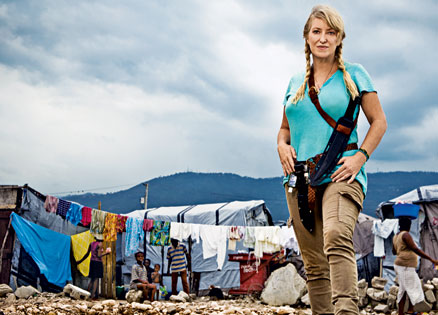
Haiti. Right after the quake hit Haiti in 2010 I flew down with a group and we set up an outdoor hospital on a former golf course. Soon we were treating 1,000 people a day.

There's still so much to be done in Haiti. I figure if we can make a difference there in the poorest place in the Western Hemisphere, we can make a difference anywhere. You can help by visiting weadvance.org.

I used to think that Twitter and Facebook were a big waste of time, but in Haiti I saw how social media helps. When we needed something, whether it’s more doctors, supplies, volunteers or prayers, I posted the request on Facebook. Our friends responded.

Once I even had to use Twitter to rescue me. I woke up in my tent one morning so sick I couldn’t get out of bed. I cried out, but no one could hear me. Finally I tweeted from my bed. A woman from the next tent came rushing in.

The Haitian people’s profound faith continues to inspire me. That first night, only days after the earthquake, I heard singing wafting through the bushes and trees. When I sought out the voices, I discovered they came from the hungry lining up for food. They sang hymns praising God.

Many times I joined them at an open-air church. I closed my eyes and lifted my hands skyward, like them, asking for God’s love to engulf us and heal us. It is still my prayer for the people of Haiti.

Your own town. There are needs in every community, and we all have something to give. You can read to a child, knit a shawl, serve a meal, plant a tree, rake a yard, send a card, make a phone call.

My first experience as a volunteer came when I was just a girl visiting the elderly in the hospital my mother ran in Australia. I loved those people. I danced for them, painted their nails and brushed their hair. I would lay my head in their laps and listen to their stories.

Just listening to a lonely person can make their day. Anyone anywhere can do that.

Sometimes the world seems like a dark place, but upon closer inspection, I see millions of shining lights. We can all be one of those shining lights. Far away and close to home. We are meant to give; we are meant to help.

What to Know If You Go
1. Prepay any upcoming bills and leave checks with friends who can pay while you're away.
2. Get the appropriate vaccinations.
3. A soft backpack is easier to travel wtih than a hard suitcase. Include a first-aid kit. The last thing you want is to become part of the disaster.
4. Be sure to pack water filtration tablets, sunscreen, insect repellent, flashlights and batteries, waterproof matches, rubber gloves, plastic garbage bags, rope, duct tape, a Swiss Army knife, a watch, a compass and energy bars.
5. Pack stickers, bubbles, colored pencils, anything to put a smile on a kid's face.
6. Take cash in smaller denominations, nothing larger than a twenty.
7. Buy a return ticket in advance. If things get too tough, you can always go home.
8. Don't forget your faith—in God and in yourself. Leave behind your fear.
—adapted from Alison's book The Third Wave
How to Give From Here
1. Donate. Here are some aid organizations that help people affected by disasters.
World Vision (888) 511-6548, worldvision.org
Save the Children (800) 728-3843, savethechildren.org
Doctors Without Borders (888) 392-0392, doctorswithoutborders.org
Food for the Poor (800) 427-9104, foodforthepoor.org
Heifer International (800) 422-0474, heifer.org
2. Follow them. Subscribe to the Facebook and Twitter feeds of organizations that interest you. They often post requests for specific needs, anything from toothbrushes to space heaters.
3. Send something. Before sending any material items, check mailing instructions. Don't ship anything that wasn't asked for because it could go to waste.
4. Give smart. Make sure that the charity is trustworthy, efficiently run and gets donations to people. Check the ratings and reviews of aid organizations on charitynavigator.org.
—Dina Davis, editorial intern

How to Respond When Addiction Comes to Church

No one is immune to addiction, not even church-going people. Recently, I attended a meeting where a well-known religious leader shared his story of becoming addicted to cocaine while serving his congregation.

He described his addiction as a compulsive behavior that took over his body and mind. There were times he thought of ending his life, but God’s mercy kept him alive. For a long time he hid his addiction from his congregation, but ultimately it was his faith that led him to get help and become drug free.

Just like this religious leader, there are many people who sit silently in church each week hoping that no one will learn of their addiction. These individuals could be church attendees, pastors, deacons, trustees, Sunday school teachers or youth leaders. They feel guilty and ashamed of their actions and struggles so they hide their addiction from others, fearing that they will be judged, condemned and excluded. Yet they hold onto their hope and their faith in God.

There are many reasons why people become addicted to drugs and alcohol. Some begin taking prescription opioids after undergoing surgery or suffering from a sports injury or other medical reasons. Sometimes addiction is linked to genetics. While the reasons vary, what these individuals have in common is that addiction controls their lives, and they are all in need of God’s love.

I will never forget a story I heard years ago about a young woman who battled addiction most of her life. She had finally become drug free and began attending church again with her mother. When others in the congregation learned of her past and that she was an HIV patient, they didn’t want her near their children. She was crushed by their actions and words. As a result, she stopped going to church. A few years later, the woman died at home close to her family, but distant from her church.

A pastor once told me “church is a hospital” where sick people come for healing. Everyone comes to the church with their own unique struggle. And as Jesus said, “It’s not the healthy who need a doctor, but the sick. I have not come to call the righteous, but sinners.” We must remember to lift up in prayer those who battle addiction and open our hearts to them as God does. These are people who fight a constant battle within and need the Lord’s help. God hasn’t given up on them. Neither should we.

How to Respond to a Dementia Patient Who Says, ‘I Want to Go Home’

This article is based on information provided by Home Instead Senior Care.

At times, an Alzheimer’s patient may ask to go home. This may happen even if they are in the home they have lived in for 30 years. The request may feel frustrating or confusing for you if you are a caregiver who is working hard to make them feel safe and cared for wherever they are. Sometimes caregivers even feel guilty, thinking their loved one isn’t happy. However, it is not necessary to explain their current and previous addresses. Instead, follow these tips to help calm and soothe your loved one.

· Remember that you can’t be sure of what the person means by ‘home’. It may be somewhere else than the place you have in mind. Don’t argue, “But you are home!”

· Regard “home” as a feeling you need to read. When people with mid- or late-stage dementia who live in a facility or are hospitalized tell you they want to go home, what they may actually mean is, “I’m uneasy,” or “I’m afraid.”

· Don’t overreact. When your loved one makes the statement, “I want to go home,” it can stir up powerful emotions in family members. It’s common to blame yourself for having placed the person in the facility, and to think that he or she is deeply unhappy there. But remember that by mid-stage Alzheimer’s, the person is not very capable of manipulating you, if for no other reason than within a short time they will have forgotten what was said.

· Go along to get along. By identifying the underlying emotional need and trying to address it, by understanding that they may feel afraid or uneasy, you may help reduce their distress. If the underlying need goes unaddressed, the person may grow more distressed—and then is often medicated to calm down.

How to Reflect on Life and Move On

Recently while on vacation, my wife and I were enjoying the warm weather on a beautiful Florida beach. As usual, we positioned our chairs a few feet from the ocean and began our traditional beach activities; reading, relaxing and taking in the sights, sounds and people around us.

As we began to drift more and more into relaxation mode, we observed a young couple playing, laughing, and embracing each other’s great admiration. As my wife Elba watched them, she stated “When you are in the beginning of your relationship and in love, you laugh at everything” as this young couple did. I responded with, “It’s a wonderful time of life for them, and they should enjoy it.” This caused us to look back on our first days, weeks and months of dating. The joy of the memories filled our hearts.

They say never look back on life, but we all do. We think about past relationships, opportunities, decisions, accomplishments, setbacks, events, mistakes and more. The key to looking back is not to dwell on or live in the past. Recalling life lessons doesn’t have to be negative; there is much to gain when we see the past through the lens of grace, forgiveness and growth.

There is value in looking back. We can:

  • Reflect where we have come from and where we are today.
  • Realize how the grace of God has helped our lives.
  • Recognize that in spite our imperfections, mistakes and human flaws, God loves us unconditionally.
  • Recall the love and care of special people in our lives.
  • Remember lessons from our adversities and how they made us better.
  • Reorder our priorities.
  • Reenergize to continue the unfinished work before us.

I have learned that looking back, if done wisely, can offer great insight and help us make better decisions about our health, career, relationships, finances and future. It is not about holding onto our past at the expense of our future but learning from it.

Frederick Douglass, former slave, author and influential leader of his time, said, “We have to do with the past only as we can make it useful to the present and to the future.” What is the most valuable insight from your past that has impacted your life today?

Lord, help us to examine our past through the lens of grace, forgiveness and growth so that we can make the most of today and the future.

How to Recover From Rejection

Excerpted from Fierce Faith: A Woman’s Guide to Fighting Fear, Wrestling Worry, and Overcoming Anxiety, by Alli Worthington, with the permission of Zondervan. Copyright © 2017 by Alli Worthington.

Jesus knows the pain of being abandoned, the gut punch of having your closest friends betray you. As Isaiah 53:3 says, “He was despised and rejected by mankind, a man of suffering, and familiar with pain.” But people’s rejection didn’t lessen who Jesus was. He didn’t take it personally or question his calling.

Now I’m sure you’re thinking, Well of course Jesus didn’t let rejection stop him from fulfilling his purpose. He’s God. Yes, as God, Jesus turned water into wine, raised the dead to life, and turned one tuna fish sandwich into enough to feed the masses. We don’t expect ourselves to do those things. But Jesus was also human. And there are lots of things that Jesus did, that Jesus modeled, that we should strive to emulate.

I believe that Jesus not getting sidetracked by the pain of rejection is an important lesson for us all. Like Jesus, we may feel the pain of rejection, but we can also know that we are loved and called by name to a destiny set out before us.

Here are five ways to cushion the blow and comfort ourselves when our hearts feel rejected.

1) Don’t assume that the rejection is personal

Sometimes we are left out, but even then, the oversight might not be personal. I often say, “Not everyone can be invited to everything. And that should be okay. We aren’t in high school!”

2) Ban negative self-talk

When we feel rejected, we shouldn’t take it out on ourselves. It’s too easy to kick ourselves when we are already down. If we aren’t careful we can take rejection from others to heart and start a pattern of self-rejection through negative self-talk. When we feel hurt, we have a tendency to make matters worse because we talk to ourselves in a negative way. The voice in our head is often negative and critical, saying things like, “I shouldn’t feel this way,” or “I’m so stupid,” or some other negative comment. If Jesus doesn’t talk to us that way, why do we think it’s okay to be mean to ourselves? When you catch yourself being self-critical and self-rejecting, you have to pray that Jesus will help you see yourself the way He sees you and that you will treat yourself the way He wants you treated.

3) Remember how Jesus sees you

Reassurance from other people will never be enough until we know we are loved and valued by God. God made this promise to His people, the Israelites, and repeated it again to believers in Jesus: “Never will I leave you. Never will I forsake you” (Deuteronomy 31:6,8; Hebrews 13:5). What a comfort! Jesus, by His very nature, will never and can never reject us. People may hurt our feelings, leave us out, or even break our hearts, but Jesus loves us, accepts us, and will never leave us. Once we dig in and understand how Jesus sees us and stays with us, we can live lives secure in His love. We can grow from self-rejection to self-compassion.

4) Connect with people who care about you

When we feel rejected, we don’t feel like we belong. Rejection’s pain is especially painful because it touches on our deepest fear triggers of, “Am I good enough? Am I worth loving?”

We have to get that deep sense of belonging back, first by connecting to Jesus, then by connecting with others. Our close friends or family members often provide the reality check we need, reminding us that we are loved, that we are accepted, and that we belong. Having good friends that you can visit or talk to at a moment’s notice restores our need for connection.

5) Ask yourself, “What would I tell my best friend?”

When we feel pain, we tend to take a negative outlook on things, brooding over worst-case scenarios in our head. But if we get a little distance from our pain, we will be able to see it more clearly. If your best friend came to you and told you about the situation, what would your encouragement to her be? Because when it’s a friend’s pain and not our own, we’re less likely to overgeneralize or blow things out of proportion.

As we learn to fight our fears, especially the fear of rejection, we become better equipped to deal with that fear and learn not to let it keep us from living our lives with joy and purpose.

How to Reap the Benefits of Positive List-Making

Is there anything as eternal, as never-ending as a “to-do list?” The satisfaction of crossing something off the list is profound, but if you’re like me, each time you do, you also find yourself with three things to add. This isn’t a bad thing—to the contrary, it is helpful both for organization and for feeling like each day has structure and purpose.

But to-dos can cast list-making in an entirely practical light, making it easy to forget that listing out thoughts, feelings and experiences can leave us with a tangible, inspiring record of our best efforts to live our most positive lives.

There are myriad positive lists you can make. Here are just a few to get you started.

Gratitude List
From huge topics like improving health, loving relationships or meaningful work to smaller graces like finding a parking space, visiting the grocery store to find no checkout line or finally locating your reading glasses, a gratitude list can give you instant perspective on the vast number of positive things in your life. Gratitude lists may even have health benefits. One research study showed that 15 minutes spent writing down things you’re grateful for can help reduce pre-sleep worry and improve sleep quality overall.

Strengths List
Strength is much more than a physical attribute. You have emotional strengths and intellectual strengths, in addition to the weights you can lift or the exercise class you can persevere through. Are you creative? Patient? Kind? Witty? Sensitive? Listing the positive qualities you have to offer is an excellent exercise in and of itself—coming back to that list when your confidence is wavering is even more uplifting.

Goals List
Your life today may or may not be as you imagined it would be. But no matter your age or stage of life, it is always a positive thing to contemplate your goals for the future. Imagining a positive future has been found by researchers to reduce anxiety and improve longevity and overall health. Maybe you dream of completing a project, reuniting with a long-lost friend or family member, traveling to a meaningful destination or recording your life story for future generations. No matter your goal, having your eyes on a positive horizon will inspire a positive outlook at each step along the way.

Support List
Everyone feels lonely sometimes, and when life is challenging, it can be all too easy to feel you are facing the tough times alone. Creating a support list of all the people in your life who lift you up in one way or another—from the trusted counselor or clergyperson to the postal worker who takes the time to greet you by name—provides you with an inspiring catalog of the resources you can lean on when you’re struggling. You might even jot down different types of support, like “Joan can always make me laugh,” “Dr. Flapman can clarify confusing medical information I read online” or “James knows when I just need some quiet company.” Support comes in many forms, and the more closely you look for it, the more you will find in your daily life.

Do you practice positive list-making? What types of lists inspire you most?

3 Simple Ways to Spiritually Prepare for the New Year

How do you prepare for the New Year? Depending on our family traditions, culture and perspective, the answer to this question will vary from person to person. Here are three ways I spiritually get ready for the next year.

READ MORE: 6 Ways to Build Up Your Prayer Life by Habit Stacking

Woman praying by the window to prepare for the new year

Pray for the New Year

As a child, my family spent New Year’s Eve at church. Five minutes to midnight, our pastor would ask the congregation to make a circle and hold hands for prayer. This was a circle of love, unity and strength. The prayer was then followed by celebration as we offered one another God’s blessings for the New Year. Here is a short New Years prayer you can use:

Lord, thank you for your faithfulness and for helping us through this past year. Guide and empower us to fulfill our purpose in the New Year.

READ MORE: 8 More Prayers for the New Year

Woman standing on a dock by the ocean reflecting on the new year

Reflect on the Previous Year

Though I do not attend my home church on this holiday anymore, this childhood tradition has influenced my present-day preparation for the New Year. During the year’s final week, I spend time reflecting on what I have accomplished thus far. I offer thanks for all that God has provided me with and ask for His guidance in my journey to come.

Man in an orange sweater with his hand over his heart asking for forgiveness in the new year

Ask for Forgiveness in the New Year

Not only do I show my gratitude, but I also repent. It is important that we turn to God for forgiveness for our wrongs. By releasing any regrets or unproductive thoughts, we are able to replenish our mind. And after I feel refreshed, I develop goals for the New Year. This process helps me to focus spiritually for the journey ahead.

While the years may go by quickly, the never fading presence of God lets us know that His goodness will always be with us. The Scripture teaches us, “For the Lord is good and his love endures forever; his faithfulness continues through all generations.” How do you prepare for the New Year?

READ MORE: 10 Bible Verses for the New Year

How to Pray Your Way Through a Life Change

There are changes in life that we seek and others that find us. Either way, we need help from above and from others to get through them. Currently, it’s prayer that is getting my wife and me through a time of great transition. After 17 years at Guideposts, which included serving as vice-president of ministries for Guideposts Outreach division, I will be leaving to become the interim minister at Saint Andrews Presbyterian Church in Dunedin, Florida.

One afternoon, I received a telephone call from the chair of the interim nominating committee inquiring about my interest and openness to being a candidate for the position. I sensed in my spirit that I should be open to the possibility and trust God in leading the process. After several interviews via Skype and a final one in person, I was asked to be their interim pastor.

No matter the change, we need wisdom, strength and help to navigate the challenges, stress and uncertainties that come with the process. Although we are excited about moving, it still means that we must make decisions, pack our belongings, open and close business accounts and say goodbye to friends and loved ones. The list of things to do, people to see and places to go is long and demanding.

Many times the wear and tear of change can make us feel weak, uncertain or sad. It’s normal to experience these emotions. However, prayer empowers us. God brings people into our lives to help guide us through uncharted terrain. We find inner strength to face our fears, and resources come our way in the form of gifts, meals and support that make the path a little easier to travel.

It has been a blessing to work and serve at Guideposts. I leave lots of good friends and loved ones behind. I trust that God will be with them and me as we continue in the journey of life and faith. Although I will be no longer be at Guideposts, I will continue to blog. Prayer gets us through the transitions of life because God is with us in all places and at all times.

How to Pray for Your Job Search

Finding work can be very stressful. Tracking down leads, emailing or uploading resumes, preparing for and going to interviews and just networking in general can be overwhelming. It’s easy to get frustrated and discouraged when the going is slow.

I remember a particularly difficult job search years ago when my daughter was three years old and we were expecting our second child. I was out of work, and we were living with my parents. This was before the Internet and emails. I was mailing out cover letters and resumes but not getting any responses. The weeks turned into months.

One afternoon I was walking home, thinking about my unemployment and lack of any sign of things turning around. I was feeling sorry for myself and having a hard time staying positive. Prayer helped me snap out of it and regain my composure.

Feeling sorry for myself wasn’t going to get me a new job. I needed to remain hopeful, trust in God and believe that I would land something. On the city street that day, I asked God to help. It was a short prayer but came from a deep place. I didn’t get a job the next day or the day after that. But I kept praying, mailing out my resume and praying some more.

I prayed for God’s favor when someone would read my resume. I prayed that something about me, my work experience and skills would get the attention of the person reading my resume. I asked God to help me not lose faith in His presence and promises and to believe that something would come my way.

After several months, I had one possibility, but it fell through. I was disappointed but kept going. Then I got a call from a non-profit that was looking for a community liaison for a new housing development. It was a long shot, but they called me. I prayed for my interview to go well. It did, but there were still others competing for the position. I kept praying. Several days later I was contacted and got the job. It turned out to be an awesome job with an amazing boss.

Although this chapter in my life was challenging, it taught me the importance of integrating prayer with the task of working hard for an outcome. Since then, prayer has carried me through every job search.

Today, whenever I hear about someone looking for work, I recommend networking, posting a resume on job websites, talking to friends—but always praying!

How to Practice Gratitude When You’re in a Bad Place

There is no shortage of evidence that demonstrates how gratitude is not only good for your physical health, but also makes you more emotionally resilient. Several studies conducted by gratitude researchers like Martin Seligman, Ph.D. at the University of Pennsylvania and Robert Emmons, Ph.D. at the University of California in Davis show that people who keep gratitude journals and do other simple exercises of appreciation are more optimistic and healthier.

But what about those times in your life when you’re debilitated by illness, enmeshed in grief, or just having a hard time being positive about anything? How do you practice gratitude when you’re in a really bad place?

Self-Compassionate and Gratitude

In his book What Happy People Know, Dan Baker, writes “It is a fact of neurology that the brain cannot be in a state of appreciation and a state of fear at the same time. The two states may alternate, but are mutually exclusive.”

I disagree.

I have found that you absolutely can be in a state of depression or anxiety and still practice gratitude. In fact, that is precisely when gratitude is most helpful. But it can’t be the forced kind of gratitude, where you flog yourself for not feeling the joy you think you ought to feel given your many blessings. It has to be a form of appreciation that is gentle and self-compassionate; one that accepts your present state of mind, while acknowledging what is good in your life.

Don’t Force Gratitude

Most of us have difficulty practicing self-compassion when hit with dark emotions. It can be challenging to approach gratitude organically: to welcome feelings of grief, anger, shame, and regret as houseguests, careful not to let them take up permanent residence.

We need to honor them without engaging too much with them.

A research study at the University of Wisconsin-Madison illuminates why forcing positive thoughts in a depressed state can be like running with a sprained ankle: you could prolong your injury and do more harm than good. High-definition brain scans revealed the more effort a depressed person puts into reframing thoughts, forcing positivity, the more activation there was in the amygdala, regarded by neuroscientists as the brain’s “fear center.”

Instead of lambasting ourselves for not “seeing the glass half full” and a lapse of positivity, we are better off adopting an attitude of curiosity. “I wonder what this emotion has to teach me…” We might also distinguish between an exercise of appreciation and our physiological inability to experience joy. In the midst of a depressive episode, I would often say to myself, “I acknowledge this blessing in my life. While I am presently incapable of experiencing the joy that it brings me, I am still grateful for it, and I am confident that the joy will return one day.”

Mindfulness and Gratitude

In his book Mindfulness for Beginners, scientist and meditation teacher Jon Kabat Zinn, Ph.D. writes, “So much of the time, we can find ourselves in pain in one way or another, suffering in the face of what Zorba the Greek called ‘the full catastrophe’ of life. … But even in such moments, some other dimension of the experience may be available to us.”

During those seasons of my life when I am consumed by sadness or mired in panic, I keep a journal where I list moments during my day where I experience a reprieve from my pain: five or ten minutes here or there where I am able to access peace, joy, and hope. I write down things like being held by my husband as I wake up, my daughter telling me she loves me as I drive her to school, laughing with a friend over coffee. These celebrated moments become the bedrock of a foundation of gratitude that expands father into my day as I recover.

There Is Good Even in the Bad

According to French priest Jacques Philippe, the worst thing that could ever happen to us is for everything to go right. No spiritual growth would happen; we would never learn to lean on God. When we go through trials, it helps us to locate our source of identity in God.

Furthermore, good can be drawn from everything: despair, death, sin, failure, humiliation, separation. God makes use of it all. In his book Interior Freedom, Fr. Philippe writes, “Everything that has happened and happens to you is part of a long and providential project of your Father God. Many things will cause you darkness and suffering, but if you have recourse to your faith, it will be your shield.”

Those two concepts—that there is good even in pain and that everything happens for a reason—are immensely consoling to me and allow me to approach my suffering with gratitude.

In summary: How do you practice gratitude when you’re in a really bad place?

Gently. With a dose of self-compassion, mindfulness, and faith.

How to Make the Most Out of Your Job

I work with the Gallup Organization, the group known for its polls and studies on people’s opinions regarding everything from the economy to spirituality.

My research focuses on attitudes toward work. I’ve studied businesses all over the country, and I’ve talked to employees, employers and customers.

I was surprised to discover an estimated 22 million Americans are what I call “actively disengaged” with their work. Meaning they are not only unhappy, they act out on their feelings and undermine their coworkers.

Negative people love nothing more than to take others down with them. Dissatisfied employees cost between $250 billion and $300 billion in lost productivity each year.

That got me wondering: Why don’t companies—and individuals, for that matter—take my grandfather’s approach? My granddad, Don Clifton, taught psychology at the University of Nebraska. Back then, in the 1950s, research centered on what was wrong with people.

A born optimist, Don turned the idea around and decided to concentrate on what’s right with people. Over the next five decades he and his colleagues conducted millions of interviews, looking at the effects of positive interactions in and out of the workplace.

Their conclusion? Positive interactions don’t just make your job easier. They are vital to a healthy and fulfilling work life. Want to make the most of all those hours you spend at work? Here are some tips I learned from my grandfather:

1. Filling is fulfilling. Don had a theory of the Dipper and the Bucket. Each of us, he’d say, has an invisible bucket inside. It is filled or emptied by what people say or do to us. Full? You’ll feel great! Empty? Awful!

You also have an invisible dipper. You can use it to dip from others’ buckets by saying or doing negative things. Or you can fill people’s buckets by saying or doing things that increase positive emotions.

At its most basic, this means giving praise and recognition. A little goes a long way. I learned that early in my Nebraska boyhood. When I was 10, Don suggested I start some kind of business. Good idea. I opened a little snack stand.

Don took note of the smallest accomplishment. “Your first sale? That’s fantastic, Tom!” By the time I was 12, my business employed more than 20 of my classmates. We sold candy, apparel and small merchandise, and got written up in the newspaper. A pretty big deal for a 12-year-old.

But, you know, that article paled in comparison to the stream of encouragement from my grandfather. That’s what really kept me working on making my business a success.

Doesn’t sound so hard to give positive reinforcement, right? Yet 65 percent of people—an astonishing number—claim they received no recognition for good work last year. No wonder they’re disengaged!

Feeling unappreciated is the number-one reason people quit jobs. Even if they do stay on, disengaged employees can have wide-ranging negative effects on a business.

Recently, Gallup studied 4,583 call-center representatives from a major telecommunications company. There were three reps who scared off every single customer they spoke with. Those customers never returned. The company would have been better off paying those employees to stay home.

The study also identified seven reps who retained every single customer they spoke with. Maybe you’ve been lucky enough to talk with a rep like that—one who really listened to what you were saying and took care of the issue promptly.

Chances are you told others about the first-class service and you’re a customer to this day.

All because one employee made the effort to engage you in a positive interaction. That turned out to be good for the customer, the employer and the employee, who not only won points with the boss but also went home with a higher level of job satisfaction. See what a little bucket-filling can do?

2. Best friends. Our studies show that people who have a best friend at work have better safety records, receive higher customer satisfaction scores and improve productivity across the board. Okay, it might be awkward to be buddies with the boss, but how about someone on the same level as you?

Start by listening to your coworkers with unconditionally positive regard. Find out what matters to them and support them. Become known around the workplace for noticing when someone does a good job. The more positive your interactions, the more people will want to be around you.

When I was 16, I worked with my grandfather on a project studying the homeless in Nebraska. Some ended up with jobs, homes and restored lives. Yet others lived on the streets until the bitter end.

What made the difference? Our research showed that having just one strong relationship, just one person who believed in them, was enough to get someone off the streets for good.

Best friends are key to your well-being. If you don’t already have one at work, make one.

3. Got gifts? Every single one of us has our own God-given talents. It says so in the Bible. Things you do instinctively and that give you satisfaction. For instance, you might perform well in a competitive environment, thrive under pressure, pick up on others’ emotions or enjoy puzzles.

If you’re lucky, your job fits your strengths perfectly. But you probably got hired and then were expected to change to fit the job description.

If you struggled, maybe you got sent to some kind of class to “fix the problem.” Or in your end-of-the-year performance reviews, the boss said, “You did okay, but here are five areas where I want to see improvement.”

That’s a weakness-based approach. Why not go at your job from a position of strength—your strengths?

Make a list of five things you do well. Then write down five things you’re expected to do in your job. Compare the lists. See how your talents line up with the company’s expectations. Focus on those areas where there’s a match and ask for assignments that play to your strengths.

Say your talent is being perceptive to others’ needs; why not mentor the new hire in the next cubicle? Or, if organization comes easily to you, volunteer to put together your department’s next presentation. Concentrating on your strengths will help you thrive in the workplace.

4. Learn to take it. A compliment, that is. Once you start to fill buckets, it’s inevitable others will want to fill yours in return. Perhaps on Monday you noticed the receptionist’s new bracelet. Then, on Tuesday, she tells you she likes your tie.

“Oh, this old thing?” you say. “I’m only wearing it because tonight I’m seeing the person who gave it to me.” Right there you’re draining the very bucket you filled just the day before.

When someone goes out of their way to compliment you, that person is in a vulnerable position. Downplaying the compliment is like a slap in the face. Try responding with a simple and gracious “Thanks!” It will put a smile on both your faces.

5. Reverse the Golden Rule. My grandfather was all for doing unto others as you would have them do unto you, but he discovered it works even better to do unto others as they would have you do unto them.

Give what Don called a “drop.” As in a drop in the bucket, or the kind of praise each individual considers most meaningful. One size doesn’t fit all. Some prefer to be praised in front of a group; others, one-on-one. A complimentary e-mail is nice; for some, a good old-fashioned card is better.

Take Susan, a manager at a large insurance company. She wanted to inspire her troops and honor her top reps, especially the number-one guy, Matt. She planned an awards banquet and ordered fancy plaques for the reps. But Matt had already won countless plaques in his career.

Susan noticed that he loved to talk about his two young daughters. So she quietly asked Matt’s wife to take the girls to the best photography studio in town. At the banquet, Susan presented Matt with a beautiful portrait of his daughters. He had to wipe away the tears.

The lesson? Be specific in your praise and honor people in a way that is meaningful to them. “Good job, Tom,” my grandfather would say in my snack-stand days, then follow up with something that told me he was really paying attention, like, “It was smart to list all the condiments you offer for free.”

A mere drop in the bucket, maybe. But isn’t drop by drop how buckets get filled?