Embrace God's truth with our new book, The Lies that Bind

How She Found Warmth and Self-Care on Christmas

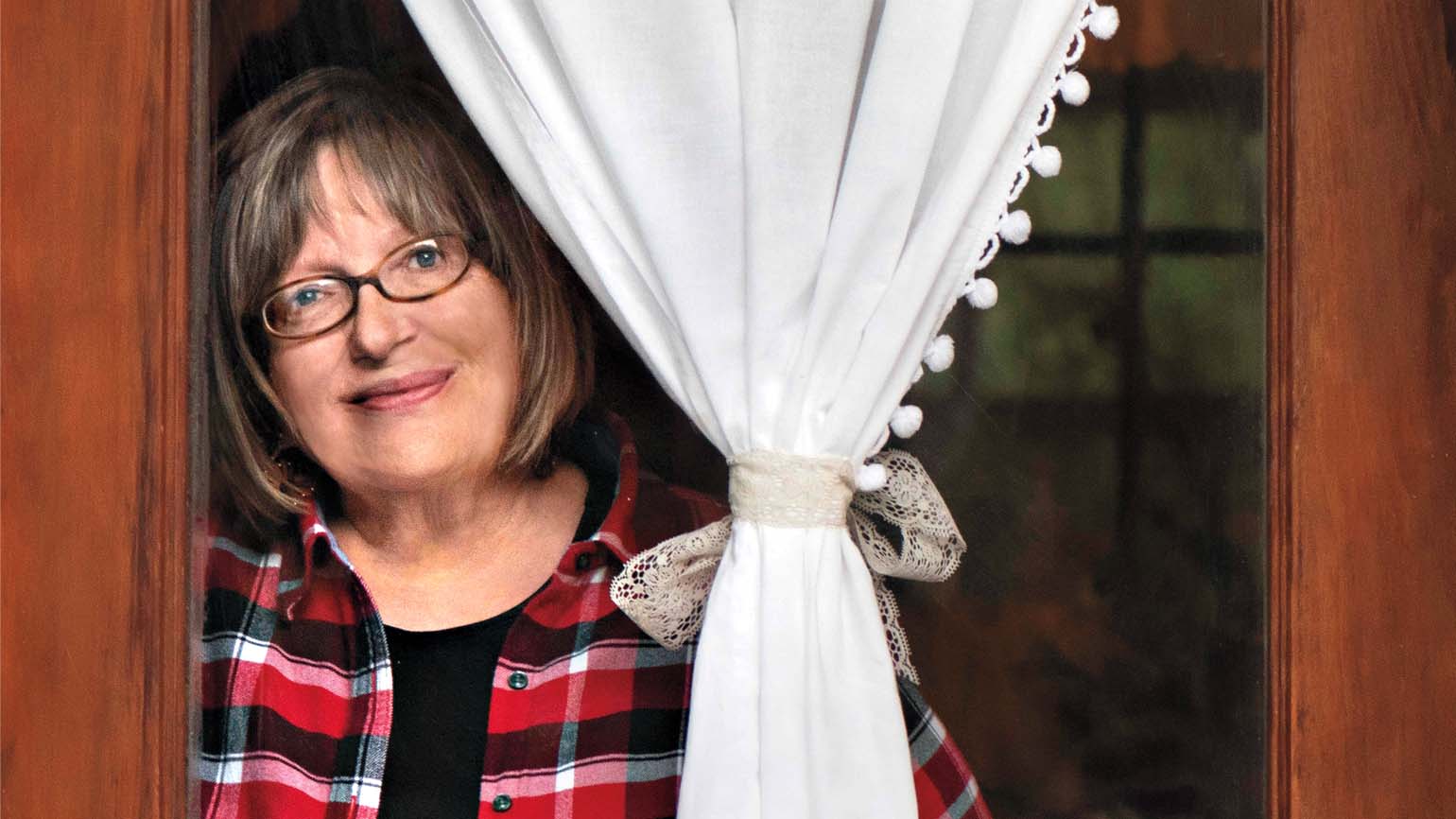
I pulled my sweater tighter around my shoulders as I passed the words painted on my fireplace mantel: “If your heart is cold, my hearth will never warm you.” What it might take to truly warm my heart in time to celebrate the birth of our Lord, I didn’t know. Christmas was coming fast, and I wasn’t ready. Not deep down inside.

I turned to fluff the couch cushions but felt too restless to sit for a spell. At the same time, I didn’t have the energy to make a fire. I never hesitated to start one when Mom was here, I thought. But I no longer had her to care for, so what was the use?

In the last months of her life with cancer, my mother spent all her weekends with me in my quaint log cabin that spoke to my nostalgic side. Mom’s body often pained her, so I did everything I could to make her comfortable. One afternoon she was on the sofa wrapped in a time-softened Sunbonnet Sue quilt, her feet poking out at one end for a foot rub. I’d scooted the sofa in front of the crackling fire and thought she’d drifted off to sleep while I massaged her heels. When I glanced up, Mom was gazing at the words on the mantel. “If you ever lose your way, Roberta,” she said, “this right here is how you find it.”

In some sense, I had lost my way since Mom died. I’d struggled with my own health problems and medical bills. I neglected the cozy home I loved, stopped switching out seasonal treasures from garage sales and secondhand stores. But my health had improved, friends helped get me back on my feet, and the cabin was tidy again. I looked into the brick hearth. So why do I still feel a coldness inside?

I tucked a pillow into Mom’s old spot on the couch, remembering the two of us sitting together one chilly afternoon, Christmas on the horizon. Mom was propped up on pillows with a hot cup of tea. I’d found a Victorian feather tree with white lights and ornaments, put it in an old crock and placed it in view. Our only real Christmas decoration that year. “So what do you think?” I asked her.

“The tree is beautiful,” she said. “But you know, Roberta, it always feels like Christmas here.”

I looked at the spot where the feather tree once sat in its crock. I’d agreed with Mom back then. Covering her with a quilt, whipping the cream potatoes she could still enjoy, propping her feet up—making Mom happy had made me happy too. Brewing her tea. Putting lotion on her hands. Brushing her hair. Taking care of her the way she’d once taken care of me. Caring for Mom had warmed my heart. But who did I have to care for now? I buttoned up my sweater. Well, I do have myself…

What would that look like, to give myself some tender loving care? What could I do now, just for me? The cabin presented lots of ideas.

The next morning, I collected pine boughs to fill my indoor window boxes, then lined up my nostalgic holiday collectibles by the chimney. I swapped out my everyday aprons for Christmas-themed ones. I hung a pair of old-time ice skates and a plaid woolen scarf by the front door. With renewed energy, I made up my bed with cheerful red-and-white linens and added a throw over the blanket just because.

On Christmas Eve, I laid three fat logs in the fireplace. I tucked newspapers all around them to start a really good blaze. I tossed in some pine cones to fill the room with a wintery scent. While the fire got going, I headed to the kitchen to warm a pan of milk for a decadent hot chocolate. When it was ready, mini marshmallows floating on top, I hooked a candy cane on the mug and settled down in front of the hearth. My feet were toasty in thick woolly socks; my favorite quilt was spread over my lap. I stirred my hot cocoa with the candy cane and took a careful sip so as not to burn my tongue. But the real warmth was in my heart. I had found my way, just where Mom had promised I would. I had someone to care for. I was cozy. I was loved. I was ready for Christmas deep down inside.

How She Coped with Her Husband’s Depression

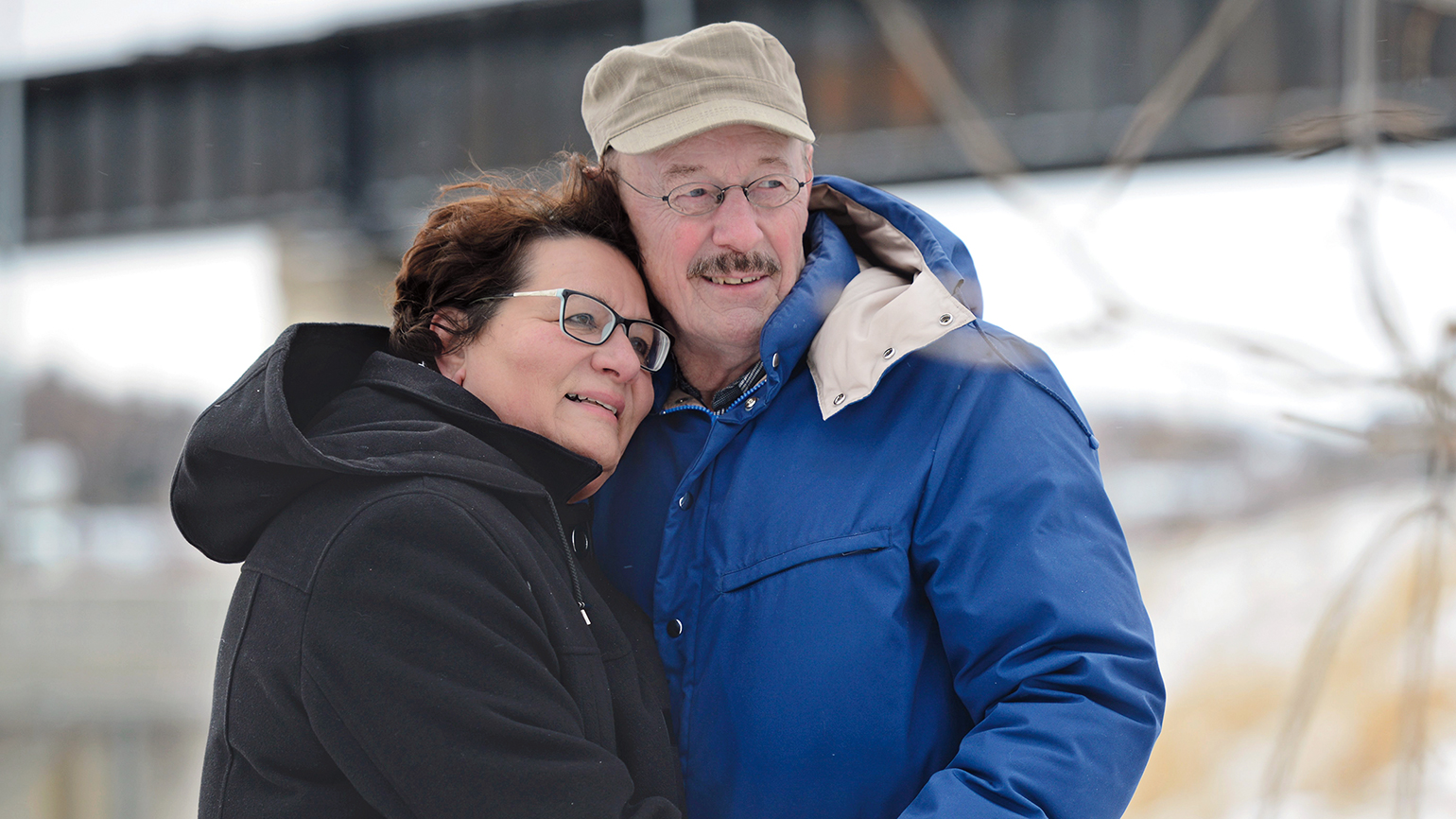
One dark, freezing January morning four years ago, I drove to the hospital here in the city of Moose Jaw, Saskatchewan, to say goodbye to my husband, Herb. He was being taken to the only long-term psychiatric facility in the province, some four hours away, in North Battleford. I watched as he was strapped onto a gurney for the ambulance. “I’ll miss you,” I told him. “More than you know.” I was hoping for some sign that he heard me, but he was too sedated to even speak. I gave him a kiss that I knew would have to last a long time. Then the ambulance pulled out of the parking lot, and I followed it for miles through the darkness, until I lost sight of it at a four-way stop. It felt as if I were following a hearse, my husband gone to me forever.

In the fall of 2000, I hadn’t seen any of this coming. Herb had had surgery on his shoulder, which left him unable to do chores on our small farm in rural Saskatchewan for months. The bills kept coming, so we sold our cattle and rented out the farm to neighbors. By the time Herb recovered, we’d decided not to buy into the cattle business again, and he was hired to help with the seeding on our land. I thought it was a good solution, but Herb fell into a cycle of anxiety alternating with depression.

“I feel like less of a man working my own land for wages,” he said. Gone was the vibrant man I’d fallen in love with and married 24 years earlier, the man who liked going to parties and playing cards, who could crack me up with his dry wit. Instead of taking care of things on the farm, Herb sprawled on the couch, staring at the ceiling. He’d always been such a neat and stylish dresser that I’d called him Mr. Perfect, but here he was moping around, slovenly and unshaven.

Before my marriage, I had worked as a psychiatric nurse, and I was sure God was giving me a chance to use my training. I thought Herb had situational depression, that I could heal him. I held his hand and encouraged him to share his feelings. “Let’s see if we can turn those thoughts into something positive,” I told him. “There’s not one positive thing in my life,” he said, looking down at the floor. When he was anxious, I tried to calm him by saying, “Just focus on the present moment.” “But the present is unbearable,” he said, following me from room to room, wringing his hands and crying.

Nothing I did made a difference. Several times Herb was admitted to the community hospital for his own safety. His pacing and pleas for someone to end his pain disturbed other patients, so he was kept sedated. I realized he needed more help than I could give, more than our rural hospital could provide. The closest hospital with a psychiatric unit where Herb could get regular care was in Moose Jaw, about five hours away. It was too expensive to travel back and forth. Our only option was to move to the city. By the grace of God, in the fall of 2004, we found a house we could afford just minutes from the hospital. I got a job as an assistant nurse in an extended care facility for seniors.

In the years that followed, Herb was rushed to the psychiatric unit many times. I lost track of how often the police responded to 911 calls because Herb told the operator, “I can’t live like this anymore.” I was terrified to leave him alone. I even changed my work schedule so that I could be with him during the day. I’d work the overnight shift, come home and sleep for a few hours until he got up at noon, then start the cycle all over again. Every time I had to get groceries or go to an appointment with my own doctor, I’d say, “I need to leave the house for a bit. Will you be all right?”

I would pray that he would be okay, but I’d often come home to find Herb had called 911. His psychiatrist put him on more pills, different pills. Herb underwent electroconvulsive shock therapy, transcranial magnetic stimulation. He would be released from the psychiatric unit feeling better, but the respite never lasted. Within six weeks, he would suffer a relapse of depression.

By the time Herb was sent to the long-term psychiatric facility in North Battleford, in 2015, I’d been fighting his demons for more than 15 years, and I knew I’d reached my limit. I was like the proverbial frog in the pot of hot water: I didn’t realize I was boiling until the heat had been turned all the way up. I called once a week to check on Herb, but I mostly spoke to the nurses. I didn’t talk to Herb much; it left him agitated and me in tears. I couldn’t even bring myself to visit him for the first several months because I was afraid they’d make me take him home when he wasn’t really well yet. Then I felt guilty for thinking that.

My sister urged me to join a grief group at the hospital in Moose Jaw. “You need to work through your feelings,” she said.

“Grief counseling when nobody has died is ridiculous,” I said. My sister kept pushing. Six weeks after Herb went to North Battleford, I decided to attend one meeting to get her off my back. Just one.

In the meeting room, a dozen chairs were arranged in a circle. I wanted the chair closest to the door so I could slip out, but a woman snagged it. The facilitator introduced herself as Ellen.

We went around the circle, sharing why we were there. One man had lost his daughter in a drowning. Another was grieving the death of his wife. Then it was my turn. Would everyone wonder why I was here when my loved one was still alive? “My husband is in long-term psychiatric care,” I said. To my surprise, people nodded sympathetically. It turned out that four of the 12 were dealing with problems other than death. Judy, the woman who’d taken that chair by the door, said she was grieving the loss of her childhood after having to care for her younger siblings. She looked to be in her sixties, like me.

Ellen pointed to a basket of rocks on the table in the center of our circle. “Everyone, take two rocks,” she said. “Now I want you to write in permanent marker a feeling you want to keep on one rock, and on the other, in washable ink, a feeling you want to get rid of.”

I wrote “hope” on one because hope was all I had left, not that there was much of it at this point. I wrote “resentment” on the other rock. Ellen asked us to explain the feelings we’d written on our rocks. “I resent Herb for…leaving me,” I managed to say. “That he’s not around for our children and grandchildren. That I have to take care of everything.” It was hard to get the words out, but it was a relief too.

Ellen wrote on a whiteboard the five stages of grief: denial, anger, bargaining, depression and acceptance. “You might hit the stages at different times and in a different order,” she told us, “and some stages may resonate with you more than others.”

When the first session was over, our group went out for coffee. We chatted about what we’d learned that night, and I knew then I would be coming back. I felt supported by these strangers already. Judy leaned in close and asked what the last straw had been for me. “When I found Herb banging his head against the wall in the hallway, repeating, ‘I can’t take this anymore’ with every bang,” I said. That was when I’d realized we had to leave the farm and move to the city, where he could get better care.

The next week, our group tackled the stage of anger. Boy, did I have a lot to say then! I was angry at Herb for leaving me to clean up the mess his illness had made of our lives. I was angry that neither he nor most of our friends and family seemed to understand what I’d been going through all these years, caring for him and worrying that he’d take his life. I was angry at myself. Maybe things would have been different if I’d recognized right away that Herb was suffering something far deeper than situational depression. I was angry with the people who said I should let go of Herb and move on with my life.

Finally, I was angry that my faith was being tested so severely. I told the group about Nebuchadnezzar in the Book of Daniel: Nebuchadnezzar had lived with madness for seven years before God rescued him. I said to God, “You gave Nebuchadnezzar back his sanity, and I want the same for Herb!” I asked why Herb—and I—had to suffer so much longer. But maybe even God was tired of me begging for help.

The stage of depression too hit home for me. The constant roller coaster of caring for Herb had taken its toll. I was a bag of nerves and even experienced brief bouts of depression myself. I couldn’t imagine what it was like for Herb, sinking into that dark pit of despair with no end in sight. “Laugh, and the world laughs with you; weep, and you weep alone,” the poem may go, but not so in the group. I was so burned-out that I thought I couldn’t even cry anymore, but I found myself in tears over their stories. I felt their pain, and I knew that they could feel mine. Thank goodness we could express our feelings in the group and not be judged. For the first time in a long time, I actually felt my feelings instead of pushing them down.

For homework, Ellen asked us to write down the warm memories we had with our loved one. At first, all I could think of were the encounters with the police and being afraid to leave Herb alone, for fear he’d kill himself. I had to really pretzel my thinking into the positive to remember the good things: the births of our three children, farm parties and playing cards with friends, trips to the lake on summer afternoons. The more I wrote about happy times, the more I was able to see how blessed I’d been to have had so many good years with Herb. He’d been such a devoted husband and father.

The last stage, acceptance, I struggled with. What if Herb never got better? What if he never came home? I might have to live without the man I loved for the rest of my life. I might end up alone, no one sharing my golden years, no one to sit with in our rocking chairs and enjoy visits from our grandchildren. How could I accept that? I talked about how I’d felt I was experiencing a death of some kind when I was following the ambulance that took Herb away from me. The group helped me see that it was the end of my life as I knew it and, by acknowledging that, I was already in the process of accepting it.

Shortly after I’d begun the grief group, our son, Ray, invited me to go to his church with his family. I met the Young at Heart, a group of seniors who invited me to potluck suppers and to game and movie nights. The Young at Heart surrounded me with God’s love, and I felt encouraged to hope again for the future, no matter how uncertain.

At the end of the eight weeks of the grief group, we walked to the bridge behind the hospital and flung our rocks with the feelings we wanted to let go of into the water. I watched as my “resentment” sank to the bottom and made ripples radiating to the bank. I felt more at peace than I had in years.

Herb had been in North Battleford for a year when he called me and was able to carry on a conversation. He’d been put on a new combination of medications, and it was as if a switch had flipped. He asked about our family, something he hadn’t shown interest in for years. At last, after 20 months away, he came home. More than two and a half years later, he hasn’t had a single relapse. We’ve both changed under the weight of all those years he was ill, but for the most part, the kind and spirited man I married has been returned to me, the loving husband and doting father and grandfather. Now he’s the one who keeps the list of family and friends’ birthdays and anniversaries, making sure we don’t miss out on anything. He even carries on with our children on Facebook.

We hold hands and pray aloud together every morning. We pray for those we know who need God’s intervention, and then we say, “Thank you for our physical and mental health.” We know that we are not promised these precious things forever, but Herb and I are filled with gratitude for the present.

For more inspiring stories, subscribe to Guideposts magazine.

How Richard Lui Makes Long-Distance Caregiving Work

Your dad, Stephen, was a pastor, social worker and vibrant part of his community. When did you notice that something wasn’t right with him?

Dad was a prayer guy. At our big family Christmas gathering, he always said this elaborate prayer that would take him a week to prepare. At the end he’d say, “Turn to your relatives to the left and the right and hug them and tell them why you love them.” Seven years ago when he gave his prayer, he forgot his siblings’ names. For decades, he had done this prayer. It was a big deal for the entire Lui clan that he couldn’t do it. My aunt took me aside and said, “I think your dad should see a doctor.” He’d always been very open to understanding sickness. And I think something about him was like “I’m sick. Let me go and try to fix this.” He went in and got diagnosed, and he never was down about it.

You, along with your three siblings and your mom, are part of your dad’s caregiving team. They all live in California, and you fly in from New York. Besides visiting every few weeks, what are some of the ways you keep in contact?

We created a Google doc and list all of his doctors’ appointments, test results, medicines, activities, visitors, etc. It’s really helpful to have everything in one place so we don’t have to constantly call to ask for updates.

Read More: Top 5 Questions Caregivers Ask About Alzheimer’s

Anything else?

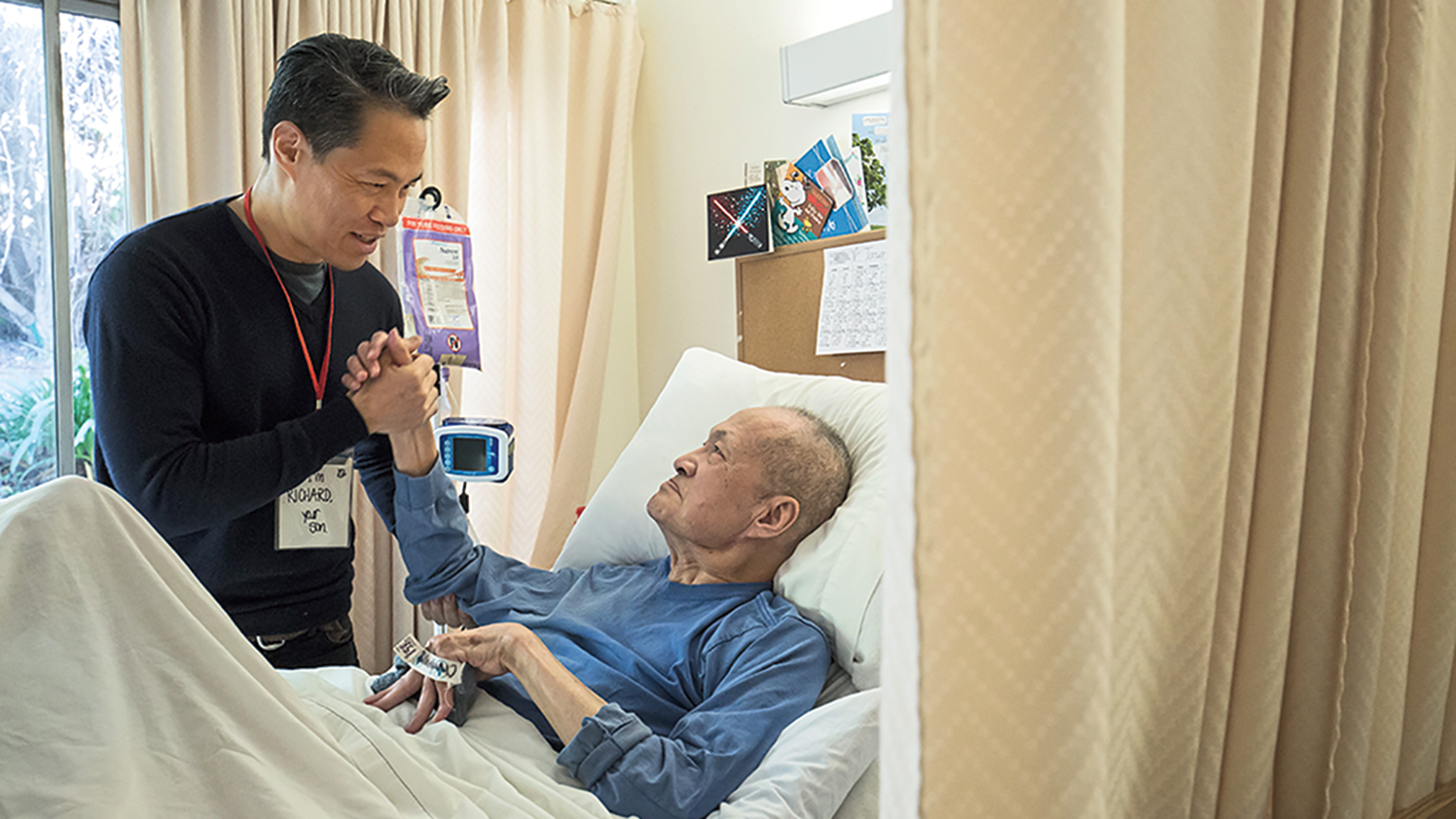
If you’re not sure where your loved one is in the disease, stay overnight. Don’t go for a meal or special occasion. Stay overnight because the bumps in the night are often more than bumps in the night. You won’t know the cause if you’re not there. I’d always stay overnight in the room I grew up in. And the days I wasn’t there, my mom told me my dad would go by my room, open the door and say, “Good night, Richard. Good night.”

What advice do you have for long-distance caregivers who get distressed if they can’t visit their loved ones?

Just own that it’s hard. Accept that you’re not perfect. Talk to someone about it. I think the biggest stress is, Am I making the right decision? If I stick with my job or don’t? If I call in sick? If I don’t see my family or my friends or my significant other? What is the right thing? And I think the struggle is thinking, I will never make the right decision. I’m in a no-win situation. But actually you are in an always-win decision if you are keeping your loved one in mind and what they would want you to do. Check out the Alzheimer’s Association website, alz.org, as well for great info and resources for caregivers.

Read More: Banner Alzheimer’s Institute Speeds Up the Search for a Cure

You’ve found that caregiving doesn’t have to be serious all the time. How has humor helped you and your family?

Finding some humor in all of this is very human and very necessary and doesn’t take away the difficulty, the sadness. When he was diagnosed, Dad was active and able to take care of himself. Now, seven years later, he’s living in a care facility. He’s bedridden and can’t feed himself. We are dealing with tough stuff. When he was still living at home and I started having to change him and clean him, he loved to run around the house naked. Sometimes he’d go, “Oh, I have to poop.” Boy, cleaning up his poop and helping with diapers—that freaked me out.

I knew this was a benchmark when Dad couldn’t take care of himself. I started to joke about it. And I hope it helped my siblings. We would use the poop emoji in our group texts when we took turns watching him. “Oh, he pooped today.” Then we would use one, two, three or four poop emojis. “He did a three. He did a two. He did a one.” It was really tough for my one brother who’s super clean and doesn’t like to talk about that stuff. But even he started to joke along with us.

You had to start shaving your father as well. That must have been difficult.

Dad had a morning ritual. Get up, eat his oats and milk and raisins. And shave. There came a point where he didn’t know how to do it anymore. I took out his electric razor. When I turned it on, he smiled. He liked the feel of it on his skin. And he squealed—whoo and yeah—like a kid. Dad had taught me how to shave, and I thought it was very symbolic of that shift of roles we go through, helping parents with Alzheimer’s. It was not only that I was shaving him but that it meant so much to him. I held his hand throughout the entire process. It was a moment of connection.

Read More: Just Be There: The Challenges of Caring for a Difficult Parent

How has your faith helped you as caregiver?

It’s definitely been a source of strength and comfort for me. We’re pastor’s kids. My eldest sibling texted in our group thread that he had just read John, chapter one, to Dad. We’re each reading a chapter when we visit. We pick up where the last sibling or Mom left off. For Dad, sound is definitely key. He loves the Lord and the Bible, and he can also hear and recognize our voices. He can’t talk anymore, but he does interact. When he’s keyed in, his eyes will look at you. He’ll smile.

Can you talk more about the importance of voice, sounds and music for your dad?

We can speak into an amplifier or have it play sounds. The connected headphones act as hearing aids. My dad was always hard of hearing. With Alzheimer’s, his senses need all the help they can get.

Read More: Join Guideposts in the Fight Against Alzheimer’s

You’ve said that watching the progression of Alzheimer’s was like watching your dad die a bit in front of you. And then being born again. Can you explain?

Dad was a real stressed-out guy when he was middle-aged. He took home all the problems of people he was trying to help as a social worker and a pastor. I think he was born again in that, despite this disease being part of his new life, he hasn’t gone back to worrying. He’s so positive. He’s the most wonderful patient. All the nurses love him because he would kiss everybody on the hand and smile and laugh with them. Life is a stack of pancakes, and Alzheimer’s takes the top pancakes little by little until you’re left with none. Even if this disease has stripped away all his memories like pancakes, well, look at him. Dad is a good, faithful man.

For more inspiring stories, subscribe to Guideposts magazine.

How Recovery from Addiction Inspired a Life Calling

Several weeks ago, I attended an event in Harlem hosted by an organization that helps people battling addiction. After a 30-year career in advertising, its founder, Felicia, surrendered and admitted that she had been an addict for decades.

She is extremely grateful for her husband and children who stood by her during those difficult times. And it wasn’t until she got sober that she discovered her calling to help others battling the disease of addiction.

Felicia works and cares for those who live in the same neighborhood that she was born and raised in. Her heart is full of compassion, love and care for the hurting. They are men and women who never dreamed of becoming addicted to drugs and/or alcohol, but due to the twists and turns of life, found themselves fighting to break free.

In addition, Felicia helps at-risk youth who have great potential but are lacking in resources and support. She opens her office to all who need help; no one is rejected.

Often, our calling reveals itself through life experiences—good and bad. If you are uncertain of your true purpose, look at what you have been through, what you have overcome. Most importantly, look within yourself.

I have met many individuals like Felicia who found their calling when overcoming their deepest struggles. In their giving of themselves, they continue to be renewed and restored to the person God always intended them to be.

How Reading Can Make You Happier

“Reading fiction makes me lose all sense of self,” wrote Ceridwen Dovey in a beautiful 2015 essay in The New Yorker, “but at the same time makes me feel most uniquely myself.”

Dovey’s reflections on reading came from an experience she had with “bibliotherapy,” the practice of reading with a therapeutic goal in mind. She quotes a 1916 article from the same magazine that explained the practice this way: “Bibliotherapy is…a new science. A book may be a stimulant or a sedative or an irritant or a soporific. The point is that it must do something to you, and you ought to know what it is. A book may be of the nature of a soothing syrup or it may be of the nature of a mustard plaster.”

No wonder the ancient Greeks described the library at Thebes as a “healing place for the soul.”

In an age of socially interactive screen time, reading a book, be it fiction, memoir, nonfiction or graphic novel, can become a uniquely gratifying activity. Reading takes us out of our lives and into another world, real or imagined. It takes us inside other minds, shows us new views and perspectives. And it can bring us great joy.

A 2016 survey conducted by researchers at the University of Liverpool’s Centre for Research into Reading, Literature and Society (CRILS) explored how those who read for pleasure fare in stress management, confidence, decision-making and other emotional factors.

More than a third of those surveyed called reading “the ultimate stress remedy,” and more than a quarter said reading had inspired them to make a positive change in their lives. Thirty-five percent said reading books is most likely to bring them comfort when they are feeling down.

“The positive effects that reading can have on society are widely documented and what has been made abundantly clear by this research is that books can help us to enjoy the little things in life, and be happier in ourselves; a useful and timely reminder for all of us to draw on the many benefits that only reading can deliver,” said Josie Billington, the Centre’s deputy director.

The range of benefits reading can bring, from profound therapeutic exploration to regular stress management, make it an essential practice those on a positive path through life.

And more good news—as “summer reading” season draws toward its conclusion, the months of cozy, cool evenings beckon. What better way to enjoy them than curled up with a good book?

How Poetry Healed This Lonely Widower

My wife, Barbara, and I had been married more than 50 years when she was diagnosed with inoperable pancreatic cancer in October 2010. I was devastated.

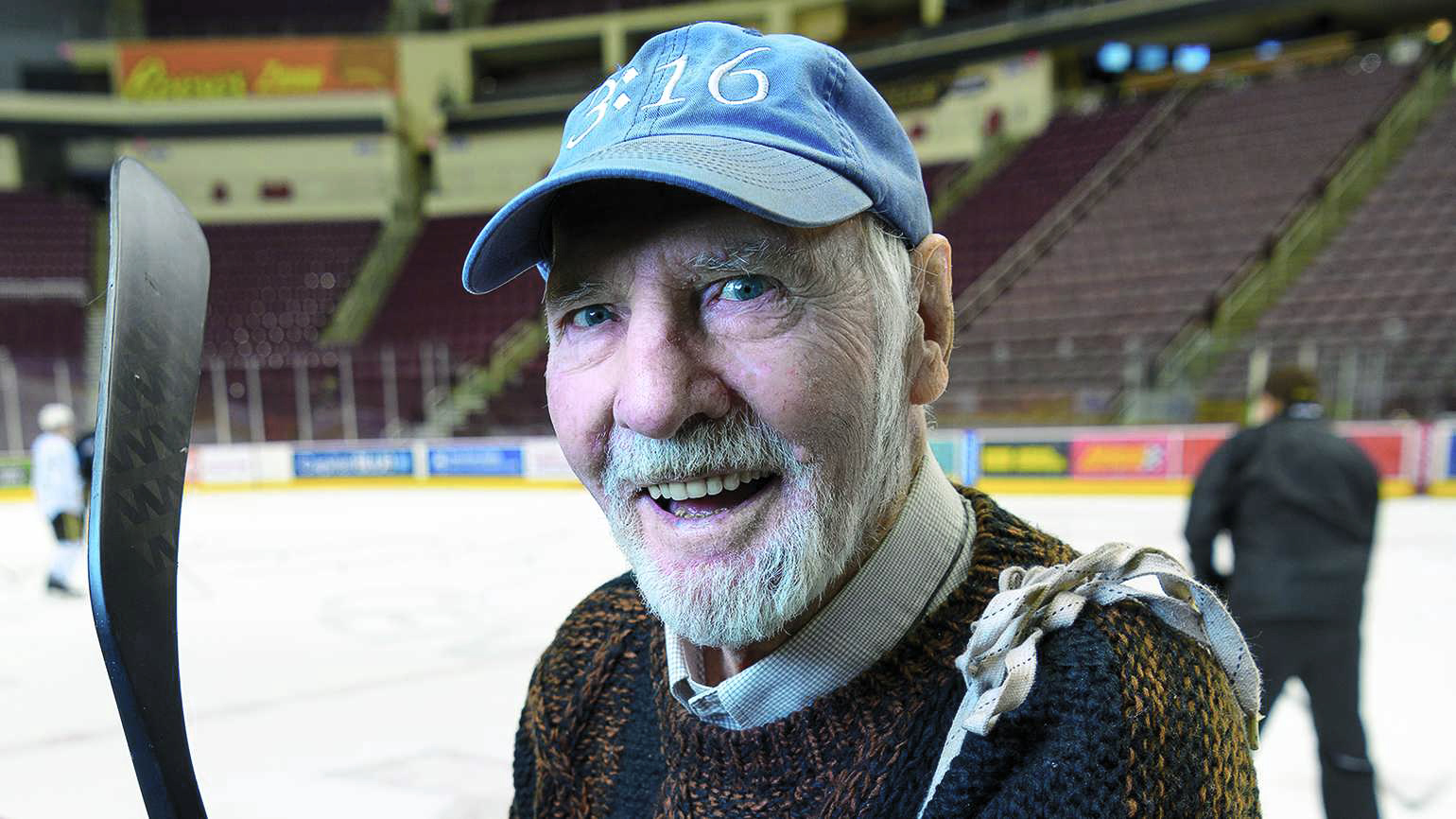
Even though I had been a professional athlete—a forward in the American Hockey League—in my younger days, Barbara had always been the healthy one (at age 72, she still jogged daily), the steady one, the one who never missed a day of work. I was seven years older and I used to joke that I would be long gone before her. But here the doctor was telling us that she had only three to six months left.

I couldn’t bear to think about life without Barbara. We came home from the cancer center and went back to our daily routine—reading the Bible and talking over coffee in the morning, taking an hour-long walk together later in the day—but it would never be the same again. I had difficulty talking with her because I just wanted to cry.

I prayed many prayers for her to be healed. But her health declined rapidly. Soon our walks dwindled to 20 minutes. Then Barbara stopped walking altogether. Our oldest daughter, Ann, took unpaid leave from her job as a nurse to care for Barbara.

One day Barbara asked us to stop praying for a healing and start praying for a quick passing on. Sadness overtook me, yet I couldn’t help noticing a complete peace in her eyes.

It was then that I remembered the dream Barbara had told me about a year before her diagnosis. She had dreamed that she was in a high place looking down on a clear river. She saw a calendar moving swiftly in the river. “What do you think it means?” she’d asked me.

“Did you see a date on the calendar?”

“No, it was moving too fast,” she said.

The dream had fascinated her, and she would talk about it from time to time, trying to puzzle out its meaning.

Now I understood what her dream meant. The calendar represented her life passing through time, moving swiftly toward her earthly end. Heaven, with its crystal-clear river as described in the Book of Revelation, was just ahead. And she was looking forward to being there.

In her final moments, I kissed her and said, “I love you.” Tears flowing, I read Psalm 23. As I came to the last line, “I will dwell in the house of the Lord forever,” Barbara glanced up and whispered, “Amen.” A smile crept across her face, and she entered heaven’s door.

I knew Barbara had gone to be with the Lord, but I felt so empty and lost. We had been true partners in life, even though we were very different. I was an outgoing optimist; Barbara was more of a cautious realist. That was probably why she didn’t like me at first.

We’d met at a Pennsylvania restaurant. I was there with my teammates from the AHL’s Hershey Bears. Barbara, a secretary, was having lunch with colleagues from the Hershey Chocolate Corporation. She was the most beautiful woman I’d ever seen. I knew I couldn’t let her leave without talking to her. So I walked up and introduced myself. I told her I played for the Hershey Bears. Barbara knew nothing about hockey and wasn’t impressed by my job or my bravado. But I persisted and, in the course of two years of dating, won her over.

Barbara and I married in 1959. She was thrust into hockey, a sport she didn’t grow up with as I had. I came from a small town in Canada known for producing pro hockey players. I started skating at five. I loved hockey so much that everything else, including school, took a back seat. I dropped out and signed with a junior league team. In 1952, at 21, I made my professional debut with the Pittsburgh Hornets.

There were practices in the morning, team meetings in the afternoon, games at night. There were road trips and media coverage. There were one-year employment contracts that could expire with one serious injury. There were all these Canadian characters like me with big egos who liked drinking beer. That was life in the AHL, a life outside Barbara’s comfort zone.

Yet she adapted. She left her job, following me as I signed with different teams. Hockey often took me on the road, and Barbara took care of our four children and our off-season home in Canada. I played 20 years in the AHL, retiring as the league’s all-time leader in goals, assists, points and games played.

We settled near Buffalo, New York. I managed a sports arena, which kept me connected to the game I loved. Barbara worked in customer service for Ivaco, a manufacturer of steel products. We had date nights every week. Our kids were thriving, though Ann missed Canada. One day Barbara and I found a note on the kitchen table, saying, “I’m running away.” We’d had no idea Ann, only 17, was so unhappy.

Finally Ann called. She and her boyfriend had hitchhiked to California. She called us every few weeks to tell us about her new life. She was staying at her boyfriend’s relative’s home, where she’d met a woman who introduced her to the Bible and to talking to God about salvation. Ann got a job and seemed to be doing fine. What could I say? I’d left home to play hockey when I was her age.

Ann started sending us Christian tracts. Barbara and I didn’t know what to make of them. Though we considered ourselves Christians, we didn’t even own a Bible back then. About a year after Ann ran away, a way opened for her to see me in Hollywood, California.

Ann and her friends met me in my hotel room. She looked happier, more peaceful and more confident than ever before. Ann and her friends read from the Bible and talked to me about Jesus. Then they asked me to say a prayer of faith. I fell to my knees and invited Jesus Christ into my life. There were no bells or whistles or angelic music, but I knew something monumental had happened. For the first time, I felt God’s presence, something stronger than even hockey or my marriage.

At age 51, I started reading the Bible. And God changed everything as only he can. I became more of a giver and less of a taker. I stopped judging people and began to love them instead. Barbara was put off by my new faith but surprised by these changes in me. What really shocked her was when I quit drinking. I liked my beer and could never stop at just one. Then one day I walked into my favorite bar and ordered a beer. I’d only drunk a quarter of the bottle when I felt a deep conviction that I should pay the bill and walk out. I haven’t had a drink since.

Barbara connected the changes in me with the Bible and secretly began reading it. I had no idea until the day she embraced me, sobbing, and confessed she needed Jesus in her life. After that, we became partners in faith as well, growing closer than ever.

In 1999, with our children grown, we moved to Georgia for Barbara’s job. She confidently assumed the role of breadwinner while I took on all the domestic work. I felt awkward in my new role (and my cooking was less than stellar) but like a winger covering for a rushing defenseman, I wanted Barbara to know I had her back.

Then something really strange happened. I found myself drawn to—of all things—poetry. I was sitting next to our grandfather clock, reading the Bible, when these words bubbled up to the rhythm of the ticking clock:

Tick, tock, the clock is ticking, ticking away,

The Lord is coming; He’s on His way

He’s coming soon, and He will have His say

On Judgment Day, on Judgment Day.

Words kept cascading into my mind. I ended up writing seven stanzas. Barbara typed up the poem for me. We both thought it was a onetime thing.

But poems kept coming to me. Barbara edited them and typed them up. We put the poems together into two collections of Christian poetry. But what was I supposed to do with them? One night I asked, “Lord, how can I use these poems to spread your message?”

The next morning, I was led to a nearby nursing home. I asked to speak with the activities director. “I’d like to begin a ministry for your senior citizens,” I told her, showing her my poems. She said, “We actually have a group already assembled and waiting for an activity. Can you meet with them now?”

She brought me to the room. I looked at the dozen senior citizens, deeply moved. They were in their last years, and God had chosen me to help guide them. I ended the session with a prayer of salvation. Many of them joined in.

That was only the beginning. I expanded my ministry to other nursing homes in the area, and when Barbara and I moved back to Hershey after her retirement in 2004, I brought my ministry to nursing homes there. All through Barbara’s illness, she urged me to continue my work, and I never missed a day.

Perhaps that was why, after her death, something told me to stick to my daily routine. Ann, who had extended her leave to stay with me, helped by having coffee with me in the morning and going for walks with me in the afternoon.

“Mom would want you to carry on,” Ann said on one of our walks. Many senior citizens are lonely and need comfort, and after Barbara died, I was right there with them. If I can still do this, I thought, I can survive without her.

As the months went by, I grew busy again with my poems and ministry, as well as the occasional hockey get-together. (Being back in Hershey reconnected me with Bears alumni.)

The Lord’s hand has steered my life, from a hockey-crazed kid from Canada to a humble Christian poet. He gave me Barbara, without whom my life would have been empty. And he has healed my grief, filling my soul until he calls me to the place where my beloved Barbara lives, a place with a crystal-clear river and no more tears.

5 Ways to Overcome Loneliness

For more inspiring stories, subscribe to Guideposts magazine.

How Planting Bulbs Is ‘the Work of Hope’

Is there any greater act of garden faith than tucking bulbs into the ground just before the freezing cold hardens the earth for winter? Digging, arranging and patting down an array of bulbs has become my launching pad for a positive path through the cold, dark season.

Working through bags of tulips, daffodils, crocuses and one annual experiment—this year, I’m trying dense, colorful ranunculus—I’m aware that the possibilities for failure are numerous. Squirrels could turn their sharp, hungry claws on the juicy bulbs. A mild winter could send the bulbs sprouting before their time. Or the human error factor could come into play, and I could either be too shallow or too deep in my planting.

Like with every garden task, our charge is to persist despite the ever-present possibility that things won’t turn out like we expect them to.

I love the way the poet May Sarton put it: “I long for the bulbs to arrive, for early autumn chores are melancholy, but the planting of the bulbs is the work of hope and always thrilling.”

The work of hope. What an inspiring phrase to capture the effort required, not only to choose, prepare and plant the bulbs, but to set our sights on the bright, warm days that we won’t see for many months.

Now that Daylight Savings Time has ended and the late afternoon sun has moved on to warm another part of the planet, it is the optimal time to practice the “work of hope” each and every day. It is that well-placed effort, after all, that will carry us toward the spring that is waiting to thrill us with its colorful surprises—especially those that are of our own making.

How Passover Is a Model of Authentic Positivity

When Jews greet each other this week, we might say, ah zissen pesach, a Yiddish phrase meaning, “have a sweet Passover!” The holiday, which commemorates the liberation and exodus of the ancient Israelites from slavery in Egypt, is indeed a celebration. But it also makes space to acknowledge the painful fact that we only found freedom after enduring the cruel reality of slavery.

In that, Passover stands out as a model of authentic positivity—the practice of feeling joy as one among a panoply of emotions, which include sorrow, frustration, and other “negative” feelings. The authentically positive view is that if we don’t acknowledge the latter, the former is incomplete.

Jewish life is rich with examples of holding joy next to sorrow. When a couple breaks a glass at a Jewish wedding, for example, one interpretation is that the shattering of the glass tempers the joyful moment of a new marriage with a moment for reflection on how life is complex and not always happy. We don’t dwell on this upsetting thought, but we do acknowledge it on our way back into the celebration.

One of the things I love most about Passover is how physical it is. The story of the Exodus is told by reading, of course, but also by using a series of symbolic objects that are placed on the table and discussed throughout the festive meal called a seder. These objects reflect this juxtaposition of suffering and freedom. Tender green parsley, symbolizing renewal, is dipped into salt water, which represents the tears shed by the slaves. Charoset, a chutney-like fruit paste meant to be reminiscent of the mortar slaves used in their forced labor, tastes distinctly sweet. During the seder, the sweet charoset is mixed with a bitter herb like horseradish, which symbolizes the bitter life of slavery.

And yet, we don’t wish each other a “bittersweet Passover,” we say, “ah zissen pesach.” Like under the wedding canopy, we acknowledge the reality of pain and suffering. At the Passover table, we wrestle deeply with this, reflecting on the Exodus story’s relevance to today’s world. But ultimately, we define the holiday the same way we define a wedding—through the lens of joy, of celebration, of sweetness.

May we walk through each day with this authentically positive view, having the courage to confront our challenges and struggles, and letting that honesty bring our moments of joy to full fruition.

How One Volunteer and a Community Garden Changed Children’s Lives

Most of us take fresh vegetables for granted. I did. Whenever I wanted to, I’d drive to the grocery store and load my cart with broccoli, asparagus, zucchini and lettuce. For me, a vegetarian, that produce section was my favorite.

When I moved to Champaign, Illinois, to open a dress shop, I figured that’s how most everyone bought their groceries, even in the poorer parts of town. If someone had told me my neighborhood was a food desert, an area where fresh, healthy foods are not available, I would have thought they just needed directions to the supermarket.

My shop was downtown, on a footpath that ran between a middle school and my church. My focus was on improving my business, so I could donate more to my church’s ministries. I thought that was the best way for me to live out my faith.

BROWSE OUR BOOKS ON CHRISTIAN LIVING

I’d grown up in Chicago, raised by my parents to be self-sufficient. They had eight other kids and ran their own businesses from our home. Everyone pitched in. Mom taught me to sew. By the time I was nine, I was sewing Barbie clothes and selling them on the school playground.

In my thirties, I divorced, and returned with my daughter to the Chicago area. In my forties, I left a job in restaurant management and expanded my part-time home-based sewing business to full-time. Then I felt I was ready for a commercial space.

My sister in Champaign found the perfect spot. I opened my shop, Motherland Fashion Design, specializing in clothing made from African fabrics. It had a big display window. People took notice and it did well. I felt blessed.

One afternoon, a girl came into the shop and asked for a drink. She’d spied my water cooler through the window on her way home from the middle school. I was happy to oblige. The next day she stopped by again, with a friend.

Soon half a dozen kids were coming by nearly every day. I loved their energy, how curious they were about a loom I had, about sewing. I made space in the back of the shop so they could work on their homework. The girls asked if they could dress the mannequins in the display window. Why not? It wasn’t my favorite task.

I helped them with their schoolwork. I taught them how to warp the loom, using the math formulas they were learning in school. I told them stories about our African heritage. We even put on fashion shows. I called the group the Culture Club.

They needed more than water after school. I gave them healthy snacks. PB and J sandwiches, oranges and apples. One day I put out a bowl of fresh sugar snap peas.

READ MORE: HOW VOLUNTEERING ADDS LIFE TO YOUR YEARS

“What are those?” a girl asked. The kids stared at the bowl as if it was full of scorpions.

“Haven’t you ever eaten fresh peas before?” I said. I showed them how to open the shell. “Here, try them.”

The girl wrinkled her nose. “Peas come out of a can.”

“Okay,” I said. “But where do they come from before that?”

The kids exchanged glances. “The grocery store?”

I persuaded them to eat just one pea each. Seconds later, the bowl was empty.

I wanted the kids to know where vegetables really came from. Their parents let me take them to the grocery store. That’s when I discovered that some of them had never been there before. Their families didn’t own cars. Buses didn’t go there from our neighborhood. For groceries they walked to a gas-station convenience store. Slim pickings there.

I asked for the produce manager. “Can you show us where you make the peas?”

He looked puzzled. “Ma’am, we just sell them,” he said. “They’re grown on a farm, then another company packages them.”

The kids and I checked out the produce section. But I knew I couldn’t leave the lesson there. These kids needed to understand how fresh vegetables are grown. There was just one problem. I was city born and raised. Planting a garden? I didn’t know the first thing about it.

Still, I’d seen containers for growing sprouts. I bought some, along with packets of alfalfa, bean and radish seeds. We followed the instructions and in days we had our first harvest. We ate the sprouts atop toasted baguettes with garlic butter. The kids loved it.

“It’s like free food!” they exclaimed.

I bought more veggies for afterschool snacks. I drove families to the grocery store. When I was a child, anytime I complained about something unfair, my mother would say, “What are you doing?” It felt good, doing something to make a difference. Even something small.

In 2003, I learned that a graduate student at the University of Illinois was starting a community garden in my neighborhood as a research project—eight 16-foot-by-16-foot beds on Champaign Unit 4 School District property.

I still didn’t know anything about gardening. I wasn’t sure I wanted to give up much more of my sewing time. But I had to try for the kids. I called and got one of the garden beds. Then I went to garage sales and bought shovels, hoes and stakes. For the younger children I got beach buckets and toy shovels.

The garden was near my church, and my pastor agreed to let us store our tools there. At a pawnshop I found a golf bag with wheels, perfect for hauling our equipment.

That first year we grew 16 tomato and jalapeño-pepper plants from seed. When the grad student graduated, a master gardener became steward of the garden. She showed us how to plant, mulch, water and care for our bed. Daily, we trooped down to tend our garden. When green shoots emerged, we were thrilled. However, they didn’t look like the photos on the seed packets.

I found a book at the library called Edible Plants of the Midwest. That’s how we learned that the dandelion greens and lamb’s-quarters we’d thought were weeds were edible. We sautéed them in olive oil and garlic. Yum! The kids couldn’t wait for more “weeds” to grow.

One morning, from across the garden bed, I heard a scream: “It’s a pepper! We grew a real pepper!”

The kids and I formed a conga line and did a victory dance around the garden. With a tomato from the grocery (our plants hadn’t produced any yet), we made salsa. One bite and it was clear this was no ordinary pepper. There was something magical about eating food we’d grown ourselves. The taste. The sense of accomplishment. The sheer joy on the kids’ faces. This was a seed only God could have planted.

READ MORE: 5 CHEAP WAYS TO LEARN A NEW LANGUAGE

By summer’s end we had so many tomatoes we sold them to people in the neighborhood. I helped the kids create a business plan, figuring out what our expenses would be for the next year. The remaining profit they split.

The next year we plotted out every inch of our garden bed, adding mint, zucchini, cucumber, cilantro and collards. Parents asked how their kids could get involved. I loved seeing what the garden did for the children. And I enjoyed it as much as they did. But I couldn’t help but notice that several of the plots had been abandoned.

That winter I got a call from our master gardener. “We’re closing the garden,” she said. “There just isn’t enough interest.”

How was I going to tell the kids we were through? My mother’s words came back to me: What are you doing? I called my pastor. Could we grow vegetables on the church lawn? He was sympathetic, but no. There was only one other option. I dialed the number for the school district’s facility manager.

“What would have to happen for someone to take over the garden?” I asked him.

“There are expenses to cover,” he said, “but mainly someone needs to be in charge. A person I can yell at if anything goes wrong.”

In my mind the list of things that could go wrong seemed endless. “Lord, help me,” I said. “I’ll do it.”

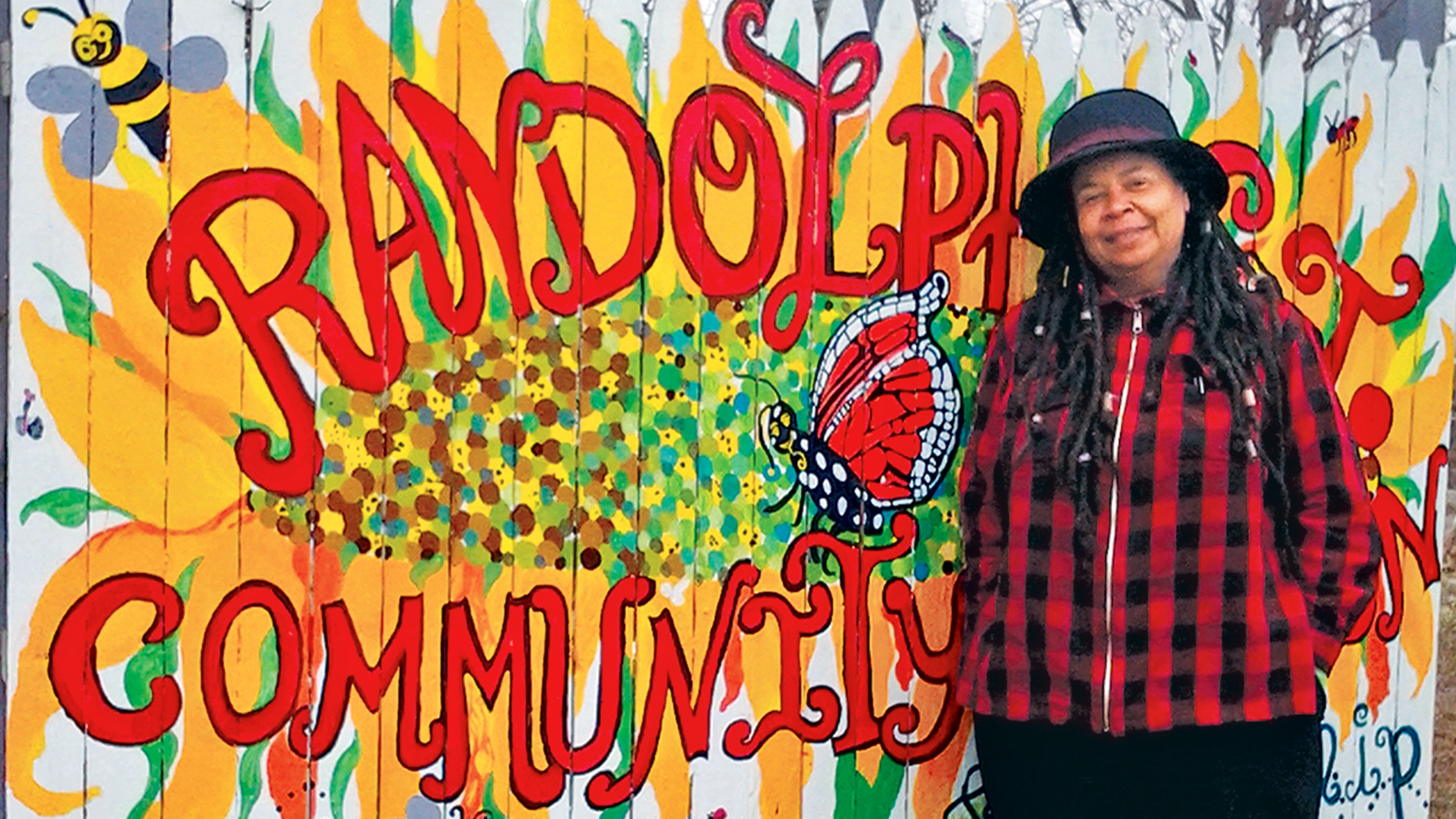
That summer of 2006, it was mostly the kids and me. We changed the name to the Randolph Street Community Garden. There weren’t a lot of rules. A few people from the neighborhood saw the garden growing and asked how they could get a plot. Under the old management, there was a firm deadline to sign up. Now anytime was gardening time.

READ MORE: FRIENDS START A NATIONWIDE MARCH TO BETTER HEALTH

I quickly exhausted my knowledge. That is when Charlie Doty, the liaison for the Washington Square Senior Citizen Building, rode into the garden on a power chair. He put me in touch with people in that building. One of them was a 93-year-old, Ms. Effie. Daily, she patiently taught me to garden. Word got around. At least half a dozen seniors wanted beds too!

By our second year, we had 60 garden beds. The number of children had more than tripled. I gave kids over 12 years old their own plot. But the expenses, for wood, mulch and tools, were more than Charlie and I could cover. I learned that some families were buying seeds and plants with their food-assistance cards and fasting one meal to do so. Community members stepped in with small donations.

I’d closed my shop, doing specialty sewing and alterations in the evenings from studio space. I took a job working nights for FedEx. The money I earned there became the budget for the garden. The Church of the Brethren’s garden ministry gave its support. Other faith organizations stepped up too.

One day I drove by on my way to an appointment. In the garden, vibrant green plants stretched across our three quarters of an acre. Food wasn’t all that was being grown. There was a buzz of activity, people tending plots, others lining up to buy fresh produce. A farm had sprung up in the middle of a food desert. Friendship was being grown too.

I was working a lot of hours. Yet I was never tired and I’d never felt more alive. I sprang out of bed in the morning, eager to take on the day. I wasn’t just the steward of the community garden. I grew a special “gleaners bed,” where people who needed food could come pick the vegetables. Every chance I got, I worked the rich earth myself. It was healing. Reviving. This was what it felt like to live out my faith.

Nine years later, the garden is a vital part of the community. Last year, we had more than 300 children and 150 adults gardening. More than 1,800 people bought or received fresh produce. People of many faiths and backgrounds (eight different languages) garden together.

When people come to the church food pantry, we give them shelf and freezer items and then take them to the garden for fresh produce. Their eyes light up when they see the tomatoes, collards and okra. They are excited to find they can also grow their own.

I’m 64 now, and while an on-the-job injury has helped me learn to delegate the heavy work, I’m not slowing down. In fact, the garden recently put up a GoFundMe page to raise money for an expansion. Growing vegetables keeps me young. But it’s helping others that feeds my soul.

Did you enjoy this story? Subscribe to Guideposts magazine.

For more inspiring stories, subscribe to our free Your Weekly Inspiration email newsletter!

How Norman Vincent Peale Inspired the New Book from Bobby Schuller

Bobby Schuller grew up in the shadow of positive thinking—literally!

His grandfather, Dr. Robert Schuller, was a pastor whose uplifting sermons landed in the same vein as his close friend Dr. Norman Vincent Peale. Dr. Peale even supported Dr. Schuller as he launched his Hour of Power television show.

“Doctor Peale was very, very geared towards encouraging people [and] being positive,” Schuller told Guideposts.org.

Schuller, who grew up attending his grandfather’s church and remember meeting Dr. Peale at a young age, now hosts the Hour of Power show.

It is Dr. Peale’s ideas that continue to influence Schuller’s ministry, including his recently released book Change Your Thoughts, Change Your World. The title is directly adapted from a famous Peale quote.

“I opened the book by talking about Norman Vincent Peale and the importance of positivity and the importance of your thinking,” Schuller said.

Dr. Peale was one of the first preachers who encouraged people to seriously examine their thoughts—an idea Schuller says is rooted in the Bible.

“Paul is really big on [being] Christian meaning being a disciple,” Schuller said. “Probably most famously when he said, ‘Be no longer conformed to the pattern of this world, but be transformed by the renewing of your mind.’”

Schuller believes “our thinking is perfectly designed to give us the results we’re getting” and that if people can change their thinking, they will change their results. His book, he said, is geared towards trying to give readers some new thoughts to improve their lives in practical ways.

Of course, Schuller believes positive thinking cannot cocoon someone from experiencing pain.

“All of us are going to go through suffering in life,” Schuller said. “But it is amazing how two people can have the exact same thing happen to them, but come out of the other end of that very differently.”

Schuller believes that by cultivating healthy thinking patterns during good times, people can prepare themselves to weather hard times faithfully. He says this process is helped in large part by learning to tune in to appreciate divine timing.

“For people that are struggling, for example, with anxiety and depression or addiction, one of the most haunting thoughts that people can have when they’re there is it will always be like this,” Schuller said. “But God is so patient with us. He’s with us even when we fall off the wagon and have another drink or whatever it is we’re struggling with. God will get us there in time.”

So how can someone begin to change their thought patterns? Schuller recommends starting each morning by jotting down your goals for the day.

“I think to most people that sounds exhausting,” he said. “But it [only] takes two minutes to do. And it actually makes you feel excited about your day because you sort of begin the day waking up for a reason.”

The important thing, Schuller notes, is to recognize that thinking does not change overnight. Like any other skill, it takes practice.

“In the same way that an athlete has to train their body for a competition that’s coming up, we first have to begin by practicing disciplines that change our thinking,” Schuller said. “That makes all the difference.”

How Music Soothes Those With Memory Loss

This article is based on information provided by Home Instead Senior Care.

An operatic aria or the solo of a pedal steel guitar in a country-western tune. An old standard, a folk song or a holiday carol. When you hear this music you may start tapping your fingers or humming along. Something mysterious takes over when we listen to music. It is a balm that touches our emotions and engages us physically. For a person with Alzheimer’s disease or another form of dementia, the therapeutic power of music can have particularly positive effects.

A study published in the Journal of Music Therapy1 demonstrated that playing familiar background music helped to increase positive social behaviors in people with Alzheimer’s and decrease negative behaviors related to agitation.

Music has also been proven to significantly reduce anxiety and depression in people with Alzheimer’s disease, according to a study published in the Journal of Dementia and Geriatric Cognitive Disorders 2. One family caregiver explained her experience with music saying that she would wake her husband up every morning to the Louis Armstrong song, “Wonderful World,” and “He always started the day in a great mood.”

People with Alzheimer’s or other dementias who are no longer able to communicate via the usual means continue to remember music and respond to it.

There are several ways to use the therapeutic benefits of music to boost the spirits of your family member with dementia, as well as to help trigger their memories.

A great method is to put together a “life soundtrack” that includes memorable songs from the person’s childhood, teenage, young adult and older years. Research the top hits from each decade of your loved one’s life, find out what songs were played at his or her wedding, and pick out some well-loved hymns or carols. If your family member with dementia used to play a musical instrument, include music featuring that instrument as well.

Try to get the person with dementia to participate in any music making, rather than to simply listen. According to Preserve Your Memory magazine3, singing daily has a positive effect on one’s mental state. Many senior centers and other community organizations provide opportunities to sing with a group, play an instrument (even if just a woodblock or tambourine), or simply clap along. And make sure you participate too. Sing along when you play the soundtrack you created. You may be surprised by how many lyrics your loved one still remembers by heart.

Sources:

1. Journal of Music Therapy, Winter 2007: “The Effect of Background Stimulative Music on Behavior in Alzheimer’s Patients”

2. Journal of Dementia and Geriatric Cognitive Disorders, July 2009: “Effect of Music Therapy on Anxiety and Depression in Patients with Alzheimer’s Type Dementia”

3. Preserve Your Memory, Winter 2011: “Celebrating Senior Sounds.”

How Love Endures After They’re Gone

It’s been a year—a year I could never have imagined happening, let alone getting through. A year since I lost the love of my life, the man I expected to be with forever, the man whose face I still long to see when I wake up in the morning. My husband, Rick, was the commander of the space shuttle Columbia.

On February 1, 2003, he was supposed to come home to our two children and me but instead went to his eternal home in heaven when the shuttle broke apart in midair over east Texas.

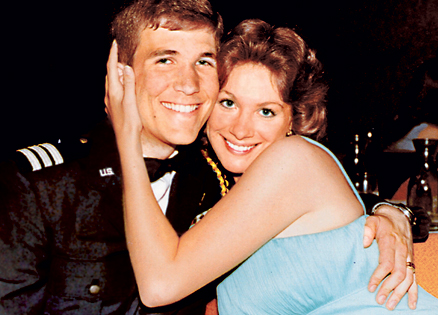
For some couples, it’s love at first sight. For Rick and me, it was love at first date. I had admired Rick from afar since high school in Amarillo, Texas. He was a year older, popular and good-looking. I’d see him singing in choir and starring in school plays, and I couldn’t take my eyes off him.

The funny thing is, when we met in college at Texas Tech, Rick was the one staring at me. I was walking to my seat at a basketball game my freshman year and noticed a cute guy with sky-blue eyes watching me. Of course I recognized him. I waved and said hi. Rick was so startled that he didn’t say a word…until the next day, when he called and asked me out. (He’d remembered my name and gotten my phone number from the Tech operator.)

Our first date was that Friday, January 28, 1977. Rick stood in my dorm lobby, so tall and handsome. He smiled and I knew it: This guy was special. The evening proved it. There was none of the usual first-date awkwardness—not even when he knocked over his water at dinner and I had to scoot out of the way to avoid getting soaked. We just burst out laughing. I don’t remember a thing about the movie we went to except for how right it felt to have his arm around me. Neither of us wanted the night to end. We parked by a lake and looked out at the big Texas sky and talked.

That’s when Rick told me about his dream: He wanted to be an astronaut. He’d written to NASA for a list of the requirements: a master’s degree in science, math, or Rick’s choice, engineering. A daunting number of hours as a fighter pilot—better yet, a test pilot—which was why he was going into the Air Force after graduation. Wow. I was beyond impressed. A man with this kind of passion and commitment was the one I wanted to spend the rest of my life with.

We dated all through college. I loved everything about Rick: his kindness and warmth, his intelligence and integrity and his closeness to his family. I even loved his quirks, like his offbeat sense of humor. His favorite movie was Young Frankenstein. The first time I saw it, I could say the lines right along with the actors because I’d heard Rick quote them to me so often. I admired his frugality—Rick would sew up the holes in his socks rather than buy new ones, keep cars until they fell apart (we still have the 1975 Camaro he drove on our first date) and fill up every square millimeter of a note card. I didn’t just love Rick, I totally idealized him.

We were married on February 27, 1982, at my church in Amarillo, the same church where my parents and maternal grandparents had their weddings.

I loved being married to Rick. That’s not to say we didn’t have our rough patches. Rick applied three times to NASA’s astronaut program and was rejected. He worked intensely toward his goal, putting in brutal hours in test pilot school at Edwards Air Force Base, then poring over engineering textbooks nights and weekends so he could earn his master’s. It meant that we had to spend a lot of time apart. But his dream was my dream, and our time apart ultimately strengthened us for challenges to come.

Right after Rick graduated from test pilot school, I miscarried. Six months later, I miscarried again. Each time Rick held me while I wept. “We can’t lose our hope, Evey,” he said. “God has a plan for us.” Our hopes turned into joy in October 1990, when our daughter, Laura, was born. Neither of us could get enough of our sweet girl. Of course, as most couples find, first-time parenthood is equal parts wonder and exhaustion. Often my only respite was reading my Bible while Laura napped. I’d come away energized by God’s Word.

I talked to Rick about my growing faith, but he didn’t seem to understand. One summer evening in 1991, I found out what was holding him back. Rick told me about some things he had kept bottled up inside for years—mistakes he’d made, doubts and struggles he’d never mentioned for fear of letting people down. We talked all night. Why hadn’t Rick shared all of himself with me until now, I wondered. For the first time, I realized he wasn’t the flawless being I’d built him up to be.

It was a spiritual wake-up call, as if God were saying: No one is perfect. Sometimes you will face pressures you can’t handle on your own. That’s why you need me.

Ever since we met, I’d put Rick on a pedestal, denied him his human imperfections—a burden he should never have had to bear. Lord, as much as I love Rick, now more than ever, I know you are the only one who can bear that kind of burden, I prayed. Help me learn to put you first in my life.

Rick was chosen for the U.S. Air Force/British Royal Air Force test pilot exchange program in 1992. That June we moved to the English countryside. Our time abroad gave us an opportunity to focus on building a stronger relationship with God and with each other. Rick searched his heart and discovered something unexpected. “Being an astronaut is not as important as I thought it was,” he said one day. “What means the most to me is to try and live my life the way God wants me to . . . to be a good husband and a good father.”

Faith transformed us as a couple. With God at the center of our lives, everything else fell into place. Our marriage grew to a whole deeper level now that no barriers, emotional or spiritual, stood between us. Rick applied a fourth time for the space program and got the call from NASA the same week I found out I was pregnant with our second child.

In Houston, no matter how worn out Rick was after a long day of NASA training, he was 100 percent focused on family at home. Laura would climb on his lap, and he’d read to her. He would pick Matthew up and zoom him through the house like an airplane. There was no sweeter music to me than the sound of our kids laughing with their father.

Maybe that’s why I was so anxious at Rick’s first shuttle mission, as pilot of the Discovery in 1999. The memory of the Challenger explosion was also in the back of my mind. I watched Discovery lift off from Kennedy Space Center in a plume of smoke and flame. The shuttle climbed in the blue Florida skies. Tears rolled down my cheeks—tears of pride and joy for Rick and our family, and of an overwhelming peace that could come only from God. Rick’s in your hands now, Lord, I prayed. You love him even more than I do.

The Discovery mission was a success, so I was much more at ease about Rick’s next trip, as commander of the shuttle Columbia, even though the launch date got pushed back several times to January 16, 2003. We took it in stride. Rick surprised me with a twentieth wedding anniversary trip to San Francisco. Rick and I stayed at an English country-style bed-and-breakfast and went for long walks in the hills. What a wonderful reminder of those years in England that had so deepened our commitment—to the Lord and to each other.

Just before he moved into crew quarters for pre-launch quarantine last January, Rick filmed video devotionals for Matthew and Laura. He wanted to surprise each of them with a message from Dad every day that he was in space. My message I discovered on my mirror, in Rick’s familiar handwriting with a bar of soap: “I love you, Evey!”

I watched the shuttle lift off last January 16, completely at peace thinking that in a little more than two weeks Rick would be pulling me into his arms and whispering those words in my ear. Then on February 1 as the Columbia entered the earth’s atmosphere it broke apart over Texas. It was like watching my whole life break into pieces and fall from the sky.

“Who’s going to help me with math?” Laura asked. “Who’s going to walk me down the aisle?” I held her close and cried. I couldn’t answer. I couldn’t think that far ahead, couldn’t imagine life without Rick.

Never before had I been so stunned and grief-stricken. Yet there was a voice deep inside me that assured me I would be okay, the same voice that had brought me comfort during the other tough times in my life. I knew I would have the strength to go on, and where that strength would come from. At the center of our marriage had been a love that superseded even our own. It was that love that would save me now.

February 27 would have been our twenty-second wedding anniversary. In a way, this last year has seemed as long as all the years of marriage that preceded it. Grief has that way of seeming to bring time to a halt. Yet love never stands still. Love is always in motion. I have drawn on an even greater love than that which I shared with my husband. The unconditional love that comes from God, who has been there in the times I have wept and yelled, as well as the times I have rested in him and thanked him for the years he gave me with Rick, the wonderful marriage we shared and the beautiful children who keep us connected still. That love is never-ending.