


Embrace God's truth with our new book, The Lies that Bind

How Gratitude Helped Him Stay Sober

I was diagnosed with terminal kidney cancer two years ago. I felt all the emotions you’d expect. Shock. Dread. Grief. Self-pity. One emotion surprised me. Even more surprising, it turned out to be the emotion that outlasted all the others, growing stronger as the reality of the diagnosis took hold.

That emotion is gratitude.

I’m not grateful that the cancer might take my life before I even reach my sixty-fifth birthday. The gratitude I’m talking about is my astonished thanks for the happy, stable and emotionally abundant life I will leave behind. A life I certainly did not deserve and never could have expected during the decade I squandered as an active alcoholic.

Back then, I burned through two marriages and came close to wrecking a promising law career. I manipulated people, abandoned friendships, treated women like emotional props and scorned help. It was another form of terminal illness.

Today I am married to a woman, Alice, who is more sensible, generous and spiritually mature than I could ever hope to be. We celebrated our twenty-seventh wedding anniversary this year. We have three children. I recently retired as partner of a New York City law firm.

None of this was foreordained. Especially not my marriage to Alice, which I consider foundational—after my relationship with God—to so much of my unexpected good fortune.

I am grateful for Alice. And I am grateful for what I learned in Alcoholics Anonymous that enabled me to have my relationship with Alice. AA taught me how to find and rely on God, live with integrity and think of others before myself. It taught me how to love unselfishly.

Those gifts helped keep me sober. They also made me a better husband and father. Now that I am dying, I can approach the end of my life in peace because of who I have become in sobriety.

I share my story in hopes that others struggling with addiction can find the connection and purpose that saved my life and filled me with such gratitude.

I started drinking heavily in high school. I can’t pinpoint why. There was nothing traumatic in my childhood. I’d grown up in a small town in north central Pennsylvania. Alcohol provided a respite from an undercurrent of insecurity I’d felt from the time I was little. I sought that respite often enough to get arrested for drinking at school in tenth grade. By the time I graduated high school, I couldn’t have fun—couldn’t get by, really—without alcohol.

I managed to graduate college and did well enough on an entrance exam to start law school. I paced my drinking, staying more or less sober during the semester, then cutting loose the minute school ended.

I got a job as an attorney representing a motorcycle company facing multiple safety lawsuits. The best part of the job? Some of the clients were heavy drinkers, and my expense accounts paid for our booze. Eventually I could no longer pace the drinking. My life spiraled into alcoholism’s inevitable chaos and self-destruction. I drank to overcome insecurity, but of course alcohol doesn’t solve problems. It just distracts from them while making them worse. I got so anxious and stressed at work, I seriously contemplated quitting the firm and moving back home. There was no legal work there. It would have been professional suicide.

My insecurities showed even more in my romantic relationships. I was terrified of rejection and gravitated to emotionally needy women, many of them fellow drinkers. I’d get infatuated, then recoil and move on—or she would.

My first wife, fed up with my drinking, walked out on me, leaving her wedding ring on the bathroom sink. My second wife, a fellow alcoholic, lost interest in me before the wedding.

The events that led me to Alcoholics Anonymous—the collapse of that second marriage, my denial that I had a problem, the night I gave in, got on my knees and begged a God I did not yet believe in to free me from the desire to drink—are variations on a theme known to many who have struggled with addiction.

The hopeful part is what happened after I entered recovery. Alcoholism, I learned, is a disease of isolation. I thought alcohol made me more sociable by compensating for my debilitating insecurity.

What it really did was interpose a veil between me and other people. Alcohol numbed my fears and insulated me from the hard work of building real relationships.

As I began to work the 12 steps of AA, I was surprised to discover how many of them directed me toward relationships with a higher power and with other people.

Steps two and three required me to surrender to a relationship with God. Steps four and five required a searching moral inventory and then admitting my character defects to God and to another person. The following steps went deeper. I had to make amends to people I had hurt, ask God to remove my shortcomings, pray often and share with other alcoholics what I had learned in recovery.

On top of that, I had to attend meetings and be honest with the people I met there. It felt so daunting after years of avoiding exactly this kind of connection and transparency.

I had no idea whether I could do it, much less progress from sobriety to forging authentic relationships with friends and coworkers—or maybe, one day, a spouse.

Here’s what happened. AA doesn’t just teach people how to forge relationships. In AA, you become a person who connects with others by doing it. The steps aren’t just suggestions. Following them forces you to act. The meetings throw you together with people from all walks of life with one thing in common—addiction. What’s left to hide?

Day by day, step by step, I opened myself to other people, admitted my most shameful acts and offered support to other alcoholics. After all those years of posturing and deflecting, I discovered a world I hadn’t known existed. A world in which people didn’t reject me when they learned the truth about me. A world in which love meant more than my need for affirmation.

I met Alice two years after my first AA meeting. We were both on vacation in the Caribbean. Alice was pretty, like other women I had been attracted to. But Alice was also strong, independent, smart and practical—and a woman of deep Christian faith. Even as we began dating back in New York, where she also lived, I found myself assuming she’d quickly see through me and dump me.

That’s where my AA experience kicked in. In my drinking days, I would have avoided someone like Alice or tried to manipulate her into falling for me. Now I simply acted like myself and hoped for the best.

I was driving Alice home one evening. Her face was unhappy, and the chorus of old insecurities started up: Here we go. She’s made up her mind. She’s about to dump me.

I caught myself. Through experience in AA, I’d learned it wasn’t healthy to try to read other people’s minds. “Everything okay?” I said. “What are you thinking?”

“Oh,” said Alice, “I was thinking about my younger brother. He’s not happy in his job.” Surprise! She wasn’t thinking negatively about me. She wasn’t thinking about me at all!

She gave me a sweet good-night kiss when I dropped her off, and we made plans for another date.

My foundation in recovery kept supporting me as things with Alice got more serious. In AA I already had friends and an outlet for my hang-ups. I loved Alice, but I didn’t need her like I’d needed women before.

After we got engaged, she moved temporarily to Hong Kong to work as a foreign correspondent. Before recovery, I would have been devastated. This time, I prayed things would work out, relied on my AA friends for companionship and support, and made plans to visit. Alice came home, we married, and my initial decision to trust her turned into a habit that has sustained our marriage.

Early in recovery, a speaker told me that if I truly wanted a happy marriage, I should focus not on finding the perfect mate but on becoming the sort of person who would be attractive to a good partner.

I’ve since learned the underlying lesson: Make room for God to act.

In addiction—and maybe this is true for all unhealthy lifestyles—I assumed I was the center of my own universe. Recovery requires a different assumption: that we are not alone and that we are not in charge.

It’s a great foundation for marriage. The more I trust God and focus on following his direction, the easier it becomes to love Alice without stifling her and to be loved without fearing the love will get yanked away. None of the usual stresses that can break a marriage—work, children, finances, big decisions and the daily interactions that build up or grind down a relationship—have managed to shake that strong foundation in God.

Not even my cancer diagnosis has shaken it. Alice and I have cried together. We have prayed together. We have done our best to be realistic with the kids and prepare them for when I am gone.

We have experienced the deepest grief. Our marriage has survived. And I am still sober.

I keep thinking I am lucky to have been blessed with and loved by this woman and by the family we have raised together.

It’s not luck.

I was a self-destructive drunk, driving my life into a ditch. I let go of the wheel, reached out to God and gave in to recovery. I did the hard, halting work of learning to live in a new way.

I made room for God to act. He’s not done with me. I am grateful. And together with Alice, I am ready for what comes next.

Read more: Healing Relationships in Recovery

For more inspiring stories, subscribe to Guideposts magazine.

How God’s Mercy Helped This Pilot Through Addiction

Sometimes in church I glance over at my wife and still can’t believe how fortunate I am. Then I look down at our twin girls, five years old, and their little sister, a year old. Every time I look at them, I’m overcome with gratitude, and I think, This is more than I prayed for—a beautiful wife, three darling daughters. But I never deserved them, never deserved any of what I have, not one bit. God, how merciful You are. That thought comes to me a lot, more so than with most people. For the truth is, if it had not been for God, and for the faithful prayers of my parents and sisters, I most likely would be dead, or at least in prison. That’s what I really deserved.

Today, 11 years after my old life ended, I still get flashbacks and feelings of revulsion. And regret. A lot of regret. Even though I’ve given my life to the Lord and I know I’m forgiven, I can never forget that night back in October 1981 when it all came to a head. I remember looking at my wristwatch… It’s almost 10:00 p.m. By now I should be dead drunk and fast asleep. But after 12 hours of drinking, down to the last bottle of Jack Daniel’s in my friend’s liquor cabinet, I’m still wide-awake and alert. A shiver runs through me—and not just because of the chilly autumn air. I’m holed up in a condominium outside of Atlanta, hiding from the law. The feds have been looking for me for eight months. They arrested the guy I was working for. On a tip they’d come to the airport in Mississippi just after I flew us in from Colombia. I managed to get away, but they got my name. Now I’m tired and I’m scared.

I think of my parents and my two sisters down in Florida. They must be worried sick. If only I could call. But it’s too risky. I know they must be praying… I’m a pilot. I’ve been in love with airplanes ever since junior high, when I had model planes hanging from the ceiling, sitting on shelves, everywhere. I’d got my pilot’s license while in college majoring in aerospace technology. Then in the mid ‘70s I landed a job flying for a small company out in Arizona. But the company went under and I was unemployed. I kept hanging around airports, but there just didn’t seem to be any jobs for unemployed pilots. Money got scarce and the bills were piling up.

That’s when I was offered a quick $5,000 to fly down to Mexico in a rented plane to pick up a 600-pound load of marijuana. Since I’d smoked a little pot myself, I said okay. The job turned out to be easy—until I went to collect my pay. “Here’s five hundred,” the boss said. “You’ll get more as we move the product.”

The next day he gave me $1,000. Then later another $1,000. When he asked me to go on another trip, he still owed me. I told him so. “Yeah, I know,” he said, “but as soon as we get some more product, I’ll pay you in full. In fact, I’ll give you another thousand as a bonus next trip, ‘cause you’ve been so patient waiting for your money. What do you say?”

That was how it all started. From then on, despite the risks, I was hooked on the adventure and the cash. Although the boss always held a little bit back, I got paid regularly, enough for me to begin living it up. Wanting to get out of the business before I got busted, I moved back to Florida, where I had grown up. But Florida had become the country’s main port of entry for marijuana, and soon I was back into running drugs. I began to live in the fast lane: allnight parties, expensive clothes, antique cars, a waterfront house, a sailboat. My family was not impressed. I recall the time I bragged to my older sister, Marcia, “This is the life.”

“You mean all the parties?” she responded. “All the drinking? Is that what life is about?” I can still see the fear in her eyes. “David, you need to get your life right with Jesus.”

Here in the condo I check my watch again: 10:30. I lie down and gulp some Quaaludes. They usually knock me right out. But 10 minutes pass, then 20…This is crazy, scary. I’ve downed enough alcohol and drugs to knock out an elephant, but I’m still awake. And I keep thinking of Mom and my sisters, and those prayers…

The guy I worked for made bail and was already putting toget her new drug deals. On a prearranged day I called him periodically from a pay phone in Fort Lauderdale. “Don’t worry,” he said. “I got the best lawyer. He thinks he can get the whole thing thrown out on a technicality.”

“What am I supposed to do till then?” I asked.

“Look, Dave, I’ll send you another twenty-five hundred. Don’t lose your cool, okay?”

Twenty-five hundred…never the full amount. It’s just like always. And if he gets convicted, I’ll get nothing. I lie here wondering, is this the way it ends? I can’t bear the thought of my family’s having to visit me in prison. Mom, Dad, Marcia, Ellen…if ever I needed your prayers, I need them now.

I used to make jokes about those prayers, especially after a close call. For instance, there was the time my plane, overloaded with gasoline, had an engine failure and crashed on the runway. The plane didn’t explode and I walked away without a scratch. And the time in the mountains when I got lost in the fog without any radios: I could have slammed into a mountain but flew out of the soup in one piece.

“I think it’s all those prayers my family is saying for me,” I’d said. We all laughed.

Even this last time, when our plane was so overloaded with Quaaludes that I couldn’t get the nose up—I’d finally jammed the throttles so far forward I thought the engines were going to come apart. Yet we made it. Was it their prayers? Why would God protect me? I’m not laughing now. Why doesn’t He just wipe me out like a cockroach?

I ponder that for a moment. Despite the alcohol and the drugs, I’m still thinking pretty clearly. I just can’t understand it. My life, that is. All those times I could have been killed…but wasn’t.

Like the time a year ago. I was piloting a twin-engine 10-passenger Aero Commander out of Haiti. We’d had the fuel system fixed several times. Then secretly we took out all the passenger seats and put in an extra fuel tank—actually a huge rubber bladder filled with 100 gallons of aviation gasoline. Taking off from Port-au-Prince, we arrived at Colombia’s Guajira Peninsula at dusk to pick up 2,500 pounds of marijuana.

The shipment wasn’t there. So we waited. And waited. Finally, as darkness fell, our contact ran over. “The army intercepted the truck! Get out of here—now!”

We took off in the dark without the drugs. An hour later, cruising at 13,000 feet over the Caribbean, heading for Florida, we began to lose power in one of the engines. I knew immediately what it was: the fuel system. “I’m going to have to leave on the auxiliary fuel pump,” I told my copilot.

But by 11:00 p.m. the pump had burned out and the other engine was acting up. Far below us were 20-foot swells; if we were forced to ditch, the plane would break up. We would die. I flipped the radio to the international emergency frequency.

“No one’s answering,” I said to the copilot. “I’m heading back to Haiti. But we’ll have to blow the plane. Can’t let ‘em see it’s been outfitted to haul pot.”

We were steadily losing, altitude. We were down to 5,000 feet and losing the radio navigation signal. In the dark we could miss Haiti completely. Then, up ahead, we saw lightning flashing. A thunderstorm. “That’s Haiti!” I cried.

“You sure?” the copilot asked.

“Yes. This time of year, thunderstorms form over land.”

After landing on the runway, the copilot unhooked the extra fuel tank and sprayed gasoline inside the cabin. “Jump!” I yelled as I tossed a burning match in. There was a tremendous explosion. I found myself lying at the edge of the airstrip, half my hair burned off, my flight jacket melted. A group of soldiers was running at us, shooting. They must have thought we were an invasion party.

The next morning we were set free by an official we’d paid off earlier. But I kept thinking, We ought to be dead. It must be those prayers…

In the Atlanta condo I try to fit it all together. It’s as if something is holding on to me, and the only thing that adds up…

Marcia’s words keep pounding in my head: “You’ve got to get right with Jesus.” How can I, after all the things I’ve done? I’ve run from God for so long, but now…now…Is it too late? Can even a drug runner be forgiven? I feel as if I’m coming apart inside. I can’t stop the tears. “God!” I cry aloud, “God, do what You want with me! Do something! Anything!”

A short time later I turned myself in to the federal marshals. That was 11 years ago. Tears still come to my eyes when I recall all that happened. A lot of people think I got off easy: five years’ probation and a $10,000 fine. From a human perspective they’re right. But God is merciful. When I repented, when I got right with Jesus, I didn’t get the punishment I deserved. Instead I received total forgiveness.

But I can never forget the harm I did, and I know I have a responsibility. Especially to kids. These days I often speak in churches, and I counsel and pray with those who want to get off drugs. I do it out of gratitude. And I keep telling myself I’m here because of only three reasons: God loves me, Jesus died for me, and my family kept praying for me.

This story first appeared in the September 1992 issue of Guideposts magazine.

How God’s Love Helped This Country Singer Out of Addiction

There was a time a few years ago when I was writing really negative songs about couples “slippin’ round” on one another, drinking and being miserable. Back in those days I was pretty miserable myself.

I was in Nashville, the capital of country music, where I’d come from my home state of Mississippi to try my luck as a songwriter. By the late ‘70s I was beginning to make a living from music, but I was also making a mess of my life.

I was a Christian—or at least I said I was—but you couldn’t tell from the way I acted. I got into booze and drugs and had all sorts of tawdry affairs.

Finally I hit rock bottom. I was on the road playing guitar at a club when the club’s owner saw what bad shape I was in. One night she confronted me and made me look at how I was destroying myself.

I sat there, half-drunk in that noisy, smoke-filled room, pondering her words. Right there I prayed, “Lord, if You’ll get me out of these bars, I’ll live my life for You.”

Three weeks later I got a call from a friend back in Nashville wondering if I’d be interested in a job with a song publisher. The Lord kept His end of the prayer, but it was still years before I kept mine.

That was the beginning of my long road back. Eventually I gave my life to Him and allowed Him to start His work in me. Because of Him I was able to stop doing the things that were doing me in and started writing songs for Him.

In the lyrics of one of those songs, a husband asks his wife what he should give her for standing by him—diamonds, furs? And she replies with the title of the song, “I won’t take less than your love.” Then a son asks his mother what he owes her for everything she’s done for him. And he gets the same answer.

Finally, a man asks the Lord how he can repay Him for the life He’s given him—what is the price? And God gives the same reply: “I won’t take less than your love.”

The man who asked that question was Paul Overstreet. I’d found that it wasn’t enough just to say I believed in God, or even tell others about Him, while going my own way. I had to give Him everything—no more, no less. God said to me, “I won’t take less than your love.”

This story first appeared in the November 1988 issue of Guideposts magazine.

How God Helped Her Overcome Alcohol Addiction

Nine-thirty. Late again! I ducked past Mr. Clayton’s open door. He was just back from a two-week business trip. And maybe I had been slacking off a bit. I wondered if he saw me come in. Still I was a pretty good executive secretary. I had worked 15 years at the world headquarters of International Telephone and Telegraph Corporation in New York, and I knew my way around.

Mr. Clayton had warned me about tardiness before. So when he called me into his office, I expected another reprimand. I liked him. We got along. Yet he looked embarrassed. His words stunned me.

“While I was away, Carol, you were reported to the head of personnel. Someone said you were … tipsy on the job.”

My mind reeled. (Who could have turned me in?) True, I liked to drink. But I never let it affect my work.

Mr. Clayton continued. “I don’t know if that’s true or not. But under the circumstances I want you to see Jeanne Conway, the director of special programs. If there is a problem, she can help you.”

He must have been reading the apprehension in my face (my first thought was, I’m going to lose my job) because he said, “Don’t worry about anything, Carol. You know the company has a program to help people on the job.”

I had seen the memos about the ITT Alcoholism Program. I’d thrown them in the wastebasket. They didn’t apply to me. I agreed to see Jeanne Conway just to humor Mr. Clayton.

I had a love affair with liquor for 25 years, since I was 20, but I thought I handled it well. I had few close friends; just drinking buddies. I drank mostly on weekends with my boyfriend Greg and my father. Once in a while I had a little too much. Thanksgiving weekend just two weeks past, for instance, a little too much celebrating and I blanked out, exhausted, on the couch. But that was a special occasion and very rare. Though I now attended Mass only occasionally, I figured I still had enough credits with God to get me out of any jam.

At work, with my private office, I never worried that anyone would notice if I had a drink or two at lunch. Sometimes I might have three, four, or once in a while five drinks … Then, of course. I knew I wasn’t myself. But I worked harder the next morning to make up for it. There were occasions when I couldn’t transcribe the sloppy shorthand notes I took in the afternoon. But after 15 years I knew my boss’ writing style. And he never complained. Except for often making me late, my drinking never was a problem on the job. Until today. And somebody else was making the problem.

In the afternoon I went to see Jeanne Conway—just once. I figured that would be enough. I tried to slip into her office without being seen. ITT had thousands of employees in New York, but if anyone I knew saw me, nasty rumors might spread.

“Sit down,” Jeanne said softly, when I went into her pleasant, warm-colored office. What am I doing here? I wondered. After we talked for a while, Jeanne asked straightforwardly, “You seem to be troubled, Carol. Let’s discuss it.”

Something in the gentle way Jeanne spoke made me open up. Maybe I just wanted to get our meeting over with. So I told her all about my drinking. about Greg and about Dad—even telling her how much Dad and I quarreled lately whenever we drank.

For the first time in years I had met someone who understood about drinking, someone who wanted to listen. When I finished, I felt refreshed. There, I thought, that’s all I needed. I don’t really have a problem. I expected Jeanne to make a few suggestions, maybe warn me about keeping up my job performance, then send me back to Mr. Clayton.

Instead she pulled some brochures from her desk. “I know of places that can help you,” she said. “Chapters of Alcoholics Anonymous meet all over the city, at night and on lunch hours. Or perhaps you would want to get away from New York, where no one would know you. There’s a lovely rehabilitation center in Pennsylvania, highly regarded.You would go through a twenty-eight day program …”

“Twenty-eight days!” I exclaimed. I’d never gone anywhere for 28 days. I certainly wasn’t going to some place for drunks. “Wouldn’t that be a waste of the company’s time and money?” What were they trying to do to me?“Not at all. Studies show that a company will save money, save time, increase productivity and decrease workers’ compensation by getting treatment for employees. Catching little problems before they become big ones,”Problems! I didn’t have a problem!

Jeanne handed me the brochures. “Think about it. Let me know what you decide.”

Wrinkling the brochures in my tightly clenched fist, I walked back down to my office. I felt insulted. She was telling me I was an alcoholic.

“Look what she wants me to do,” I snapped at Mr. Clayton, showing him the material. “Wants to send me to a rehabilitation farm…”

“I can’t tell you what to do,” my boss said. “But Jeanne’s a professional. I’d do what she recommends.”

He does want to get rid of me, I thought, and this is how he’s going to do it.

Five o’clock couldn’t come soon enough. I had a few drinks that night. At home, I argued bitterly with Dad about household chores. About nothing really. For the next couple of days my mind was in turmoil. I didn’t think I needed rehabilitation. Yet something in me wanted to trust Jeanne, to do what she and Mr. Clayton thought was right. Maybe I could think of the 28 days in Pennsylvania as a vacation —away from Dad, Mr. Clayton and everyone at ITT.

On Thursday I went to see Jeanne. “I’m going to Pennsylvania,” I said.

“Good,” she replied, “I’ll make all the arrangements.”

The rolling, snow-covered hills surrounding the Rehabilitation Center would have been a lovely spot for a winter vacation. But I was too scared to enjoy them. What was going to happen to me?

Fortunately, the staff was wonderful. One doctor explained that medicine would help ease me through withdrawal. I was hospitalized for five days of detoxification. I didn’t even know what the word meant. It’s the “drying-out” period.

Friendly nurses served me three solid meals a day, plus snacks, and gave me lots of vitamin shots. By Saturday, I had survived six days without a drink…for the first time in years.

At last I was ready to begin rehabilitation, which included group therapy, work therapy (I was a waitress in the Center’s dining room), lectures and movies.

The fears I had brought with me to the Rehabilitation Center gradually eased. In time I began to enjoy talking to other patients. I likedbeing able to get up early without a headache and get to my waitressing job on time.

In therapy sessions, seven or eight of us were supposed to share our feelings and experiences, about drinking, family, friends, work. At first it was difficult for me. I wasn’t used to this. I’m a private person, and as a secretary, I’d learned to keep secrets. But the therapists helped us all relax and told us not to be ashamed of our alcoholism. We came to see it as a disease —one that could be overcome.

Finally I was able to admit to myself that drinking had been making my life unmanageable and narrower and narrower.

Christmas was approaching, and I realized with some trepidation that this would be my first Christmas without family, and my first Christmas without booze. Would I make it? I found I was praying again—very simple prayers: “God, help me make it through the day. Let me be satisfied with daily bread, not daily booze.”

When I heard about the Rehabilitation Center’s Christmas Eve Mass I decided to go. I was lonely and feeling a little sorry for myself. Something had to make this seem like Christmas.

During the Mass, a Jewish man sat next to me. At a social hour after the service I met a Protestant woman who mentioned that this was her first Mass. I looked around at these people whose only common bond had been the bottle. Suddenly I felt a closeness with everyone. God was at work in all of us. This Christmas, the Rehabilitation Center, not home, was where I belonged.

From then on I attended Mass at the Center regularly. For the first time in years. I wanted to be in church. It struck me, almost shocked me that getting free of booze—the time-consuming tasks of wanting it, buying it, drinking it, recovering from it —automatically left more real time for me…and for God.

God helped me—just as I had prayed—to make it through rehabilitation, one day at a time. And that, I discovered, is the way alcoholics recover and stay sober—by concentrating on today, by staying sober today.

Even when I left Pennsylvania I knew I could stay sober—one day at a time. But what kind of problems would I face at ITT? Would my job really be waiting for me, as Mr. Clayton and Jeanne had promised? Would I be able to hold my head up working with people who knew or guessed where I had been for a month?

That first day back I was almost as nervous as my first day on the job. In the halls people greeted me with friendly “hellos.” They’d missed me; they welcomed me back.

Mr. Clayton seemed a little distant. The look on his face registered uncertainty. He was strictly business.

“I’ll have some letters for you later. Now I’d like you to type this report, then…” He listed a string of things to do. Finally I looked up at him, smiled and said, “You haven’t changed a bit have you?”

He laughed. It had broken the ice. We talked awhile, and just before he went back into his office he said “You know, Carol. you look five years younger. You have changed.”

Yes, thanks to God and the people and programs He used to help me, I have. My world was opening up again. I would make it one day at a time.

This story first appeared in the April 1980 issue of Guideposts magazine.

How God Delivered Her from the Grip of Opioid Addiction

I grew up in a very rigid, dogmatic space. Mistakes and imperfections were unacceptable. I was programmed to believe I could never measure up and that God would punish me severely if I stepped out of line—and I stepped out of line a lot.

My dad was a preacher, who spewed fire and brimstone messages from the pulpit each week, and then at home, made life for me very chaotic. I was abused—slapped, hit with any object within his reach—and shamed for the slightest indiscretions.

My father found forgiveness with me, his family and with God before he died. I have no resentment or bitterness towards him at all.

But before reaching that pivotal point, the abuse left me wary and with a spirit of rebellion. For a very long time, I would say, “If that is what being a Christian is, I don’t want any part of it.”

My concept and understanding of God, and what I learned about religion from a very early age, was distorted. This confusion followed me well into adulthood.

It wasn’t until I was in my early thirties, when a friend of my family invited me to a church that my perspective began to change. I was married then, to a wonderful man. For the first time in my life, I began to experience God’s love in a way I never had before; his kindness, compassion and mercy became very real to me. In this church, I started unlearning everything I thought I knew about God.

Although from the outside, my life seemed happy, the trauma from my childhood was unhealed and unresolved. It wasn’t until my husband died—weeks before our 20th wedding anniversary—that it all started to unravel. I started questioning my relationship with God again.

Instead of relying on Him, to help me deal with the gut-wrenching grief and overwhelming sorrow, I relied on pills. I was prescribed pain pills in my early twenties and taking them became a part of my daily routine for years to come. Because I didn’t understand addiction, I didn’t realize I was living as a functioning addict.

Within the next few years, things got really out of control. I was charged with my first driving under the influence (DUI) at 50-years old. But a mere slap on the wrist allowed me to continue using pills, piling on the DUIs until eventually I ended up in jail.

My first response was to ask God one question: Why? Why did He let this happen to me? I was in denial of anything I had done wrong and refused to take responsibility for my life or my actions. But God did not and would not give up on me, nor would He let me go.

In His sovereignty, and His passionate pursuit of me, I entered a program where the focus was on recovery through the power of Jesus Christ.

That is where He finally got my attention and something in me started changing. Slowly, the layers of hurt, bitterness, betrayal, grief and denial started to peel away like an onion. I realized that it wasn’t God who did this to me, it was me! God had protected me; not only me, but He protected others from me, too. I could have easily hurt or killed someone driving under the influence.

I learned all I could about addiction while in the program. I also healed my broken spirit, ultimately surrendering the power of pills in my life to the power of God. Upon my release from the recovery program, I was determined to live my life differently. I started living out the word of God, reciting verses like Isaiah 58:9-11: “Then you shall call, and the LORD will answer; you shall cry, and he will say, ‘Here I am.’ If you take away the yoke from your midst, the pointing of the finger, and speaking wickedness. And if you give yourself to the hungry and satisfy the desire of the afflicted, then your light will rise in darkness and your gloom will become like midday. And the LORD will guide you continually and satisfy your desire in scorched places and make your bones strong; and you shall be like a watered garden, like a spring of water, whose waters do not fail.”

I used to tell myself I couldn’t live without pills. Today, I can’t imagine going back to that life. I am the Recovery Director at my church. I’m a life coach and mentor at a transitional living facility for women who have struggled with addiction and are getting ready for life outside of prison. I go back to the jail where I served time to share my story and give others hope that change is possible. God has blessed me with the gift of a new life and freedom from the grip of addiction. I use that gift to tell my story and to glorify Him. I am proof that with God, nothing is impossible.

How Gardening Can Help You Live Longer

“Life begins the day you start a garden,” says a Chinese proverb. Research on five global “blue zones”—places where residents are known for their longevity—suggests that those lives that begin in the garden will last there for a long, high-quality time.

In Okinawa, Japan, a “blue zone” that boasts the world’s highest ratio of centenarians (someone who has lived at least 100 years), the social connectedness that comes with sharing flowers and produce grown in small home gardens benefits happiness and overall health. On an emotional level, tending a garden also contributes to well-being.

Dr. Bradley Willcox of the University of Hawaii, who studies Japanese centenarians, recently told the BBC, “In Okinawa, they say that anybody who grows old healthfully needs an ikigai, or reason for living. Gardening gives you that something to get up for every day.”

The connection between gardening and longevity goes on and on. People who grow more fruits and vegetables themselves, for example, are more likely to have diets containing more plants than animals or processed foods.

Then there’s the fact that simply spending time in nature can carry health benefits—according to Scottish doctors who are literally prescribing regular outdoor time to encourage wellness.

But really. Do you need more research findings to convince you that tending a small patch of the planet—cultivating its most positive potential, thinking about its future, nourishing yourself from its bounty—can help you live a longer and more meaningful life?

I don’t need such convincing. I know gardeners to be creative, patient, flexible and curious—qualities that define the positive path I try to walk each day. The idea that continuing my garden habit could contribute to a longer life is inspiring, but not as profoundly so as the simple joy that I feel each time I clear a patch of weeds, pluck a ripe tomato from the vine or sit in the quiet presence of my flowering containers.

That pleasure is an end in itself. That research continues to confirm its validity is encouraging. But the seeds of a lifetime of gardening have already been planted in me.

How about you?

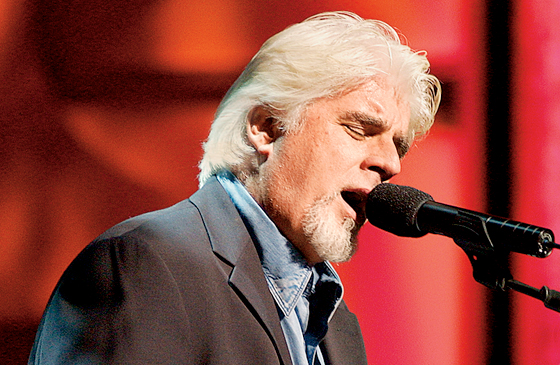
How Faith Helped Michael McDonald Let Go of the Past

I have this recurring dream. I’m driving a car on a racecourse with no one else around. There’s a turn up ahead. I try to steer, but I bang into a wall. Then another. Desperately, I try to get control. But it’s no use. No matter how hard I try, I keep careening off the walls, losing control.

It’s taken me a long time to understand that dream. But a young boy I met 25 years ago started me on the right track.

In 1980 things couldn’t have been better for my band, the Doobie Brothers. Our album Minute by Minute had sold three million copies and we’d won four Grammys for the song “What a Fool Believes.” I should have been on top of the world. Truth was, I’d never been so unhappy.

We’d just finished our annual benefit concert at the children’s hospital in Palo Alto, California, and had gone upstairs to visit a 14-year-old boy with cystic fibrosis who wasn’t expected to live much longer.

The moment we walked into the boy’s room, his face lit up. His parents stood near the window. The boy had to lie face down because that was the only position in which he could still breathe, but he never stopped smiling and joking as we signed autographs and played a couple of numbers.

How can he look so happy when he’s so sick? I thought. He’s so young.

Fourteen. That’s how old I was when I wrote my first song with my dad, called “My Heart Just Won’t Let You Go.” Dad drove streetcars and buses in St. Louis for a living, but his true love was singing.

Sometimes I’d ride with him on the morning local and listen to his Irish tenor soar above the sounds of the street. He and Mom were divorced. Mom worked long hours managing the local S&H Green Stamp store. So it was my grandmother who mainly raised me and my two sisters.

All of us sang. I played banjo and fiddled around on the piano some too. Grandma bought me my first guitar from Sears, Roebuck, and Co.—a Silvertone classic with an amp in the case.

Pretty soon I was in a band with some guys I knew. They were a little older than I was and had grown up singing gospel in church. I loved the passion in gospel songs. The music came from a place deep down.

I didn’t study music formally, but I still had my teachers: Ray Charles, Stevie Wonder, Marvin Gaye. I played their records over and over, learning every note, every inflection, every feeling by heart.

After that first song with my dad, I wrote more on my own, mostly ballads. Love songs came naturally to me—maybe because I was born just two days before Valentine’s Day. Who knows? Our band would land some little gig—a church dance maybe or a community center—and I’d be thrilled.

My voice was lower than Dad’s, a husky baritone instead of his lilting tenor. I learned pretty fast that trying to direct it got me nowhere. Every show I struggled to surrender to it and let it carry me.

I moved to Los Angeles when I was 18. I got a lot of backup work, but for years I wasn’t really getting anywhere. Then I got a break to play with Steely Dan. That led to joining the Doobies in 1975. The lead singer got sick and I stepped in.

I took Dad to my first concert. We pulled up to a stadium and walked in to see thousands of fans. Dad grinned. “This is all right, Son. I think you’re doing all right.”

It didn’t really hit me until the night we won all those Grammys. A driver had been sent for me. “Could you drive up Highway 1 for a while?” I asked him. I was too wired to go home. So much had happened so fast. I’d made it. A poor kid from St. Louis with a big voice and a lot of luck.

I knew my family was proud of me. But skimming through the darkness that night, the white crests of the waves in the distance, the crisp salty air blowing back my hair, I felt lost. Do I really deserve all this? I thought. I should be enjoying this. But why does it all feel so empty?

These thoughts still haunted me months later as I stood at the bedside of a boy who would never get the chance to go on a roadtrip with his pals, take his girlfriend to prom, start his own life. Yet he was making the most of this moment, taking life on life’s terms. He filled the room with love.

I was twice his age but between all the touring and interviews, I didn’t feel as if I had much of a life. And I’d picked up some bad habits from the rock ’n’ roll lifestyle, habits I couldn’t break. I didn’t know who I was anymore. What had happened to that boy from St. Louis?

I was certain—as sure as if I were the one who was dying—that I had to make some changes.

I was known for singing love songs. What about the love in my own life? I’d been kind of dating someone—Amy, a singer whose voice I loved—but I didn’t have much time for a personal life.

I started to make more time though. I’d leave the recording studio in Hollywood at 1:00 a.m., pick up Amy and hop onto Highway 5. We’d drive into Death Valley, make camp on the desert floor and talk for hours under the stars.

One night I was going on and on about my first solo record—how I wanted everything to be perfect. Amy reached out to touch my cheek. “Look up at the stars, Mike,” she said. “They’re perfect and they’re here right now. Don’t miss them.”

Amy was changing her lifestyle. I wanted to also. I’d had some close calls with drugs and alcohol. I didn’t want to end up a rock ’n’ roll cliché—dying on silk sheets in some hotel room. I didn’t want to lose Amy. But the harder I tried to break my addictions, the stronger they became.

I’d wake up from my dream. Sweating. Heart pounding. I’m not in control. I can’t do this alone. I need help. And so I began to ask for it. From family and friends. From counselors. From Amy. And from God.

Giving up drugs and alcohol meant making room for new things in my life. Amy and I tied the knot in a big church wedding in 1983. We settled in a house just around the corner from that church and had a son and daughter.

I’d listen for the church bells every day. They reminded me of the new path my life was on. I wanted to get back to the music of my roots and be closer to my extended family.

So in 1995 we went south—to Nashville. We bought a hundred-acre farm with cows and horses and pigs—Old McDonald’s Farm the kids called it. I worked on my solo career and Amy worked on the house.

And then life took a sharp turn. Amy was diagnosed with breast cancer. There was lymph node involvement. Her prognosis wasn’t good.

One afternoon during a chemo session, I sat holding Amy’s hand, hoping the side effects wouldn’t be too bad this time. Suddenly she turned to me. Our eyes met and she gave me this sad little smile, as if to say, “I’m sorry you have to go through this.” Me? I thought. Why is she worried about me?

Suddenly my thoughts flashed back to that young boy at the children’s hospital almost 20 years earlier. I’d written love songs all my life but only now was I beginning to truly understand love. I squeezed Amy’s hand.

Her long blond hair was gone, her green eyes dull above her sunken cheeks. But she had never looked more beautiful to me than at that moment. On the drive home, Amy stared out the window a long time. Finally she turned to me. “I don’t know what I’m facing here. I mean—”

“You’re not going anywhere,” I stopped her. “You’re going to be here a long time. Everything will be okay.” To stop believing that would be to give up hope.

Amy was exhausted but wouldn’t hear of missing our daughter’s Christmas pageant. Sitting in the auditorium with my arm around her, I could feel her shoulders trembling as we watched our daughter glide across the stage in her angel wings. I turned to my wife. Her eyes were wet with tears.

She’s wondering if she’ll be here next year, I realized. If our kids will have to grow up without their mother.

I thought of meeting Amy so many years earlier. Without her, I may never have found myself. I’d let go of my old life. Now I had to let go of the future too because I couldn’t control it.

God, you gave me my voice, brought me success, brought Amy into my life when I needed her most. Help her now. Allow us to stay together as a family.

Our daughter took a bow, her wings brushing the stage. Amy clapped with all her strength. In that moment I felt an incredible strength too, of hope and love and all the blessings we receive, deserved and undeserved.

Eight Christmases have come and gone since then. Eight New Year’s. And soon, eight birthdays (I’ll be 54 this year). And I’m thankful to say Amy is cancer-free. She’s working on a new album and our 22-year marriage is stronger than ever.

You know, I still have that old dream sometimes. It happens when I try too hard to shape the future instead of taking things one day at a time. We have to let go in life. Allow a Higher Power to take the wheel and trust we’ll be taken care of no matter what. That’s how I try to live, minute by minute.

Read more about Amy's struggle with cancer.

How Dr. Norman Vincent Peale Interprets the 12 Steps

Many years ago I met a remarkable man known to millions all over the world as Bill W. His full name was William Griffith Wilson, but most of the time he preferred not to use it because self-effacement was so important in the organization he and a friend known as Dr. Bob had founded: Alcoholics Anonymous.

Bill W. was a tall, courtly man. To look at him, back in the days when I knew him, you never would have thought that he had been a hopeless drunk. When I asked him once how the miracle of his recovery had happened, he gave me an answer so vivid and so simple that I never forgot it. “I had reached the end of the line,” he said. “I was powerless to save myself from an evil force that was stronger than I was. One night I went up on a windy hill and looked at the stars and cried out to God. I bagged Him to let the great healing wind of His Spirit blow through me and make me clean once more. And He heard my cry. I never touched alcohol again.”

Bill was an eloquent speaker. He was also a modest man. Once, I remember, we were talking about heaven. Doubtless remembering his dismal days as a drunk, Bill said that he probably would never get there. “Yes, you will,” I assured him, “because you have lifted more people out of hell than any person I know.”

I thought of Bill the other day when his gracious wife, Lois, died after long and faithful service in such groups as Al-Anon and Alateen. When I heard that Lois had left us to be with Bill, something impelled me to go to the bookcase and take down a volume containing the Twelve Steps that have given so many hopeless people victory over alcohol I reread them, sensing the the tremendous spiritual power that is packed into them, and I realized that for years I had been making a mistake that I’m sure is very common—the mistake of assuming that the steps are for alcoholics only.  Now quite suddenly I saw that the power contained in them could be tapped by anyone wrestling with a power stronger than self.

Alcoholism is a deadly evil, certainly. But what about the millions of people in bondage to some other form of compulsion? Gamblers who cannot stop gambling? Unfaithful marriage partners who can’t stop being unfaithful? People consumed by hatreds or grudges they can’t relinquish? Shoplifters or habitual thieves? Compulsive liars? Tax evaders? The list is almost endless.

But the wonderful truth is this: God becomes directly and actively concerted with us humans when we want Him enough. The Twelve Steps are a channel through which we can direct our appeal to the one Power that can lift the burden from us no matter what that burden is.

You will find the Twelve Steps here. Let’s glance at each of them and try to pinpoint some of the key words or key ideas that are just lying there, waiting to be picked up and used by any of us, alcoholics or not.

Take the very first phrase: We admitted we were powerless. Look at your own life carefully; what are you powerless over? As a young man I was powerless over a terrible inferiority complex that held me in its grip and made my life miserable. One day, in despair, I sat down on the steps of Gray Chapel at Ohio Wesleyan, told the Lord that I was helpless and asked Him to remove this burden… which in His great kindness He did. But it was the admission of helplessness that let the power come through.

Or take the second step: Came to believe that a Power greater than ourselves could restore us. The self-surrender is terribly difficult; it may take years. But once again, the important thing is to decide to do it. As the Chinese philosopher Lao Tzu wrote many centuries before Christ, “A journey of a thousand miles must begin with a single step.”

The fourth, fifth, sixth and seventh steps involve deep and honest self-examination, admission of wrongdoing, and willingness to have God remove our faults and character defects. That willingness is absolutely essential; there’s no use asking God to move some weakness from our lives when deep down we really don’t want the change to take place.

And the requirement to admit our faults to a third person (why not your minister?) is also of great importance. Once that is done, the guilty secret is out in the open where it can be dealt with, not locked in some dark area of your heart or mind. This is not easy; none of the Twelve Steps is easy. You just have to remember that you are climbing a ladder to a better life, a better self, a closer relationship to God—and that the rewards infinitely outweigh the difficulty or the pain.

Steps eight and nine involve making amends to persons you may have wronged or injured. Not just some of them. All of them. This too takes great courage and determination, but when it is done, invisible chains fall away. The universe is an ethical place of great balance and harmony. If you have wronged someone, that harmony in you is damaged; you are out of balance with the universe and the Creator of that universe. When these imbalances are removed, a great surge of joy and wellbeing will sweep through you.

The last three steps are really a reiteration of the first nine, with the added injunction to share what you have learned spiritually with others. I remember a good definition of a Christian that I heard or read somewhere: A Christian is a person whose life makes it easier for others to believe in God. I’m convinced that anyone who studies and masters and applies the Twelve Steps will become such a person, whether he or she is an alcoholic or not.

What the Twelve Steps do, really, is bring a person closer to God, and as I have said so often, when that happens, anything can happen. Sometimes you don’t even have to approach God in a reverent or positive way. I remember one rainy night in New York when I was working in my office at Marble Collegiate Church on Fifth Avenue and 29th Street. My secretary, Mary Creighton, tapped on my door and said that a man from Brooklyn wished to see me. “He seems to have some kind of problem,” Mary said.

The problem the man had was a drinking problem, and he wanted me to help him with it “I’ve tried all the others,” he said angrily. “All they give me is a lot of talk about God. I’m sick and tired of hearing about God. I want a human solution and I want you to give it to me!” I could tell from his breath and general demeanor that he had brought some of his problem with him. “How can I handle it?” he kept saying. “How can I handle it?”

“Friend,” I said, “I think you may have come to the wrong place. God is in charge here. All I do is try to put people into contact with Him.”

“You too!” he cried. ‘’You too! I told you, I’m sick of all this God stuff!” And he stormed out of the office, muttering under his breath, somewhat to the alarm of my gentle secretary.

But 20 minutes later Mary tapped on my door again. The man was back. He wanted to see me again. “He’s changed, Mary said. “He seems different, somehow.”

The man indeed was different. He had a stunned look on his face. “I think I’m going crazy,” he said. “I think I must be nuts!”

He told me that he had left the church and walked along 29th Street, ranting and crying out, “God! God! I’m sick of this God stuff!” He said that as he walked along, denouncing the very idea of God, suddenly an unearthly radiance lit up the dark street. Buildings glowed with it. The faces of passersby shone with it. Even the sidewalks seemed bathed in it, and he himself was full of light The experience left him stunned, overwhelmed.

“What happened to me?” he kept saying. “Am I going crazy? What happened to me?”

“My friend,” I said, “you’ve just had a religious experience. I might well call it a mystical experience. The God you have been denying reached out and touched you, and you should start thanking Him right now, because it wouldn’t surprise me if your drinking problem is solved and your drinking days are over.”

And this was indeed the case, because he kept in touch with me for a long time and told me that he never touched alcohol again.

So if you have a problem that you cannot master, be it alcohol or anything else, I heartily urge you to study the Twelve Steps. Apply them to your own difficulty, remembering that, in a very deep sense, each step is a prayer. Countless people have found that when they do this humbly and sincerely, miracles happen.

Such a miracle can happen to you.

This story first appeared in the April 1989 issue of Guideposts magazine.

How Divine Intervention Guided Her Out of Drug Addiction

There’s no way of justifying what I did that terrible evening in June 1982, but at the time I felt I had hit an all-time low. I had been rejected time after time. I had lost my job, then my townhouse. I had been forced to go on food stamps and to move in with my boyfriend to give my three children a roof over their heads. Then it got worse. My boyfriend was selling drugs, and I soon became addicted to cocaine. All of his money went for drugs; all I had for my family were food stamps.

When it happened, I was down to my last $10 food stamp, and I couldn’t get any more for two weeks. For several days I had been feeding the kids macaroni and cheese, but the meals were getting smaller and smaller. That night after dinner I hit bottom when my five-year-old daughter said, “Mommy, I’m hungry,” and I had nothing to feed her—nothing.

So I took that $10 food stamp, got into my car and, with tears rolling down my cheeks, drove to a nearby convenience store. I figured I’d at least buy my kids some cereal and bananas. But when I arrived in the parking lot, I couldn’t stop crying. That’s when it hit me: There was no way I could feed my kids for two more weeks on $10. I backed out of the lot and drove aimlessly while I tried to figure out what to do.

Aimless—that was the story of my life. Nobody cared about me, really. My mother had allowed my father to take me from her as an infant. Before I was a year old my father ended up in jail. I was pushed from one family member to another, and physically, verbally and sexually abused—until I ended up in an orphanage. Through it all I had held on to the dream that marriage was the answer. But far from being perfect, my marriage too had ended in abuse. Even now my boyfriend was abusing me.

Tears blurred my vision so that I could hardly see to drive. But then I noticed a service station. That’s when the thought hit me: There’s a gun under the front seat. I parked and put the gun in my purse. That gas station represented a chance to feed and clothe my children. Maybe it would also get me out of the abusive situation I was in. And I could get cocaine, the only thing that made me feel good anymore.

Just as I was getting out of the car, the most beautiful voice I had ever heard spoke my name: “Sandra. Take the bullets out of the gun.” No one was in sight, but maybe because the voice was so compelling, I obeyed. It’s a miracle I didn’t shoot myself as I tried to figure out how to unload the gun. Then I headed to the gas station. The attendant, a young man with red hair and a thick neck and body, was alone. I couldn’t bring myself to pull out the gun, so I said, “Sir, my car broke down back there. Do you have a phone I could use?”

“There’s one outside,” he said, pointing to a pay phone near the road. I pretended to make a quick call, then went back into the gas station, trying to bolster my confidence by telling myself I really wasn’t going to hurt anybody. The attendant was still standing behind the counter. I asked, “Do you mind if I wait here for my boyfriend?”

“Not at all.”

Every time I opened my mouth to tell the attendant this was a holdup, my courage failed me. I was about to leave when he reached under the counter and brought up three white bags full of money. He emptied them to count the day’s receipts. There it is, I told myself. That’s what I came for! I yanked the gun out of my purse.

“This is a holdup!” I shouted.

The man behind the counter gasped, “You’re kidding!”

I thought if I explained why I needed the money, he’d understand. After all, it wasn’t his money. He was just working for a corporation. But he didn’t understand; so I ordered him into the back room and told him to sit there. While I was getting the money, he yelled, “Hey, you. Come back here!”

He called me back twice more before it dawned on me: “You’re calling me back so you’ll be able to identify me to the police.” My mouth went dry with fear. I grabbed an electrical cord to try to tie him up. As I stood behind him, I thought, Maybe if I hit him real hard on the head, he’ll get amnesia like they do on television. Shuddering, I hit him with the gun butt. He fell to the floor, saying, “I can’t see! I can’t see!”

I ran to him saying, “I’m sorry! I’m sorry! I didn’t mean to hurt you!” He was faking. He jumped up, overpowered me and took the gun. He kicked and stomped on me, dragging me through the double glass doors at the front of the station. I kept screaming, “Stop, I didn’t hurt you! Please stop!”

During the struggle, the glass in one of the doors broke. Blood spurted from a deep gash in my left leg. When he got me outside, he put his foot on my neck, pointed the gun at my temple, and pulled the trigger. Nothing happened. Cursing, he screamed. “There are no bullets in this gun!”

“You tried to kill me!” I screamed back. “Why did you try to kill me?”

The attendant raised his hand as if to strike me with the pistol, but just then the lights of a police car hit us. It turned out an off-duty policeman had been driving by and had called in an alarm. I was arrested, taken to the hospital for stitches, then locked up in the county jail.

A friend I used to work with raised bail money. I got a job in a Kentucky Fried Chicken restaurant. But while awaiting trial, I fell back into the same old patterns. By August I was high on coke, had no money for food, and was trying to digest the information from my attorney that I would probably have to serve mandatory jail time for the gun charge.

You wouldn’t think a person in that situation would try to do the same thing again, but I did. I found a tear-gas gun that my boyfriend had and in broad daylight drove to the local meat market. There I walked around drinking a soda, trying to get up my courage. Finally I set the can down at the checkout counter, pulled the gun out and demanded all the money in the cash register.

That night about 2:00 A.M. the phone rang. When I picked it up, I heard a policeman say, “Come on out, Sandra. We’re waiting outside.” They had found my fingerprints on the soda can at the checkout counter. I was sentenced to five to ten years in prison; my children ended up in foster homes.

During the five months before my sentencing I was moved to five different jails. In each one the women kept inviting me to Bible studies, but I didn’t want to hear it. I had a real chip on my shoulder, and tried to avoid those women. After all, I didn’t figure that God cared a whole lot about me. But the women were persistent and when they told me I could get some extra time outside my cell by attending the Bible studies, I decided to go. It was better than being cooped up.

At one of the Bible studies, a guest speaker, Chris, was telling us about an automobile accident she had had. “Five minutes before the accident,” she said, “the Lord told me to fasten my seat belt. It saved my life.” I remembered the night I had tried to rob the gas station. What about the voice that had told me to take the bullets out of the gun?

“Chris,” I asked, “does God talk to people?”

“Yes, Sandra,” Chris said, “God talks to people.”

I told her about my experience, and she exclaimed, “Praise the Lord, Sandra! You’re alive today because of divine intervention!”

At first, I was angry. I went back to my cell, laid down the Bible they had given me, and looked up at the ceiling and said, “God, what do you want? Why did you spare me? All I’ve been doing is trying to kill myself.” Then I looked down at my open Bible, and my eyes fell on Ephesians 2:8: “… by grace are ye saved …” That day I gave myself to Christ, and my whole life changed.

I spent nearly five years in prison, but I studied God’s Word and witnessed to other inmates. I held Bible studies in my cell. And I decided that when I got out, I would start a ministry, which I would call Inside, Outside Prison Ministry. Since then God’s grace has prevailed, and doors began to open for me to develop my ministry. I am a member of the Pennsylvania Department of Corrections’ Incarcerated Women’s Advisory Committee, and I have developed a Bible study curriculum for inmates.

It’s been 12 years since God called me by name and told me to take the bullets out of the gun. Today I continue my ministry. All three of my children have accepted Christ. I can testify that far from being rejected, I’m living proof of God’s grace, which has been sufficient for me in every situation. And I believe it is sufficient for all who will trust him.

This story first appeared in the August 1995 issue of Guideposts magazine.

How Depression Brought Sheila Walsh Closer to God

Last week, best-selling author, singer and dynamite Bible teacher Sheila Walsh rocked the house at the Houston, Texas stop of the Women of Faith conference, Unwrap the Bible. Walsh taught from John 4:1-26, the story of Jesus and the Samaritan woman at the well, and her message to the 6,000 women in attendance was simple but so profound: “The Good News will never be good news until you know that God knows all of your bad news.”

Like the woman at the well—and every other person on earth—Walsh had some bad news. Twenty-three years ago, she left her job as the co-host of The 700 Club show on Christian Broadcasting Network and checked herself into the psychiatric ward of a hospital. That seemed like bad news because having clinical depression as a Christian, and particularly as a ministry leader, is misunderstood as a problem of faith by many in the religious community, instead of a serious medical issue with many medical solutions.

“If you have a brain tumor, you can show people an x-ray and they can see something physical and they’ll pray for you right away,” Walsh told Guideposts.org.

“But if you have a mental illness, where they cannot see the lack of particular serotonin or whatever you need in your brain to be able to function well, people often put that down to a lack of faith and say, ‘If you’re a believer, you can do all things through Christ that strengthens you.’ You wouldn’t say that to a child who fell off a swing and broke her leg. You wouldn’t say, ‘Get up and walk, because you can do all things through Christ.’”

For Walsh, checking herself into the hospital not only got her the help she needed, it helped her learn how unconditionally loved and accepted she is by her Creator.

On her first morning at the psychiatric ward, her psychiatrist asked her, “Who are you?” Walsh gave the psychiatrist her name. “No, I know your name,” he responded, “but who are you?” The co-host of the 700 club, she answered. “No, no, no. Not what you do. Who are you?”

“I actually don’t know,” she had to confess to him. “And that’s why you’re here,” the psychiatrist told her.

By the time she was ready to leave, her psychiatrist called out to her from his office window, “Sheila! Who are you?” She was finally able to answer: “I’m Shelia Walsh, daughter of the King of Kings.”

Walsh says that really understanding that truth about who we are is what transforms Christians into the kind of people who have a heart for God and for other people.

“It’s not enough to be a 3rd grade teacher or mother of four or somebody’s wife, because all of those things can be gone in a moment. What we need is to hold onto our eternal identity. And when we get that, then I think we are able to transform how we are with other people. But if you’ve never received grace yourself, it’s very hard to extend it to other people. So I think we need to talk less and listen more. We use the Word of God, which is supposed to be healing, we use it as a weapon against one another.”

That’s why Walsh used the woman at the well (an outcast who had been publicly shamed and cast aside by the community) in her Unwrap the Bible message, to help us see each other, ourselves and the struggles we’re dealing with—whether it be mental illness or even sin—through Christ’s eyes.

“I think one of the things we misunderstand about the heart of the Gospel [is that] we categorize sins,” she says. “We look at someone who is a prostitute or someone who has committed adultery and we label them a certain way. We don’t think that our gossip or our overeating or whatever it is is as great a sin. But the reality is, if it had only been one person on the planet and all we ever did was speak one little lie, Christ would still have had to die. Our sin weighs the same before God. And I think if we begin to understand that we’re not the Good News, Jesus is, then I think we’ll be able to open up our hearts.”

“Most of us haven’t been married 5 times [like the woman at the well] but what I saw in her was how Christ pursues us in the midst of our most hopeless moments and loves us back to life. And so that really began to resonate and I actually began to see myself in this woman. Our circumstances were different but our needs were exactly the same.”

Through her renewed relationship with Christ, Walsh was able to not only accept her diagnosis, but to thank God for it and allow her testimony to be a beacon of light for other people who may be struggling in the same way.

“There are other people like me. I’ll be on medication for the rest of my life because my brain simply does not produce enough serotonin for me to function as the woman God called me to be. But what I used to think of as shameful, I no longer do. I take that little pill every morning with a prayer of thanksgiving that God has given help to those of us who need it that way. I always mention it a little bit [when I teach], so that anyone who’s listening can know: You’re not alone.”

And that’s good news.

Sheila Walsh’s new book, Loved Back to Life, is available now..

How David Tyree’s Faith Helped Him Turn Away from Drugs and Alcohol

Super Bowl XLII. 1:15 left on the clock. Third and long. We were trailing the New England Patriots by four points.

The undefeated New England Patriots.

I played wide receiver and special teams for the New York Giants. Our quarterback Eli Manning took the snap and dropped back. I started running my route.

Then the Patriots defense swarmed Eli. He broke away and launched a desperation pass. All at once everything slowed. It was just me and the ball. It hung in the air for what seemed like ages, but I knew it was coming to me. I reached out.

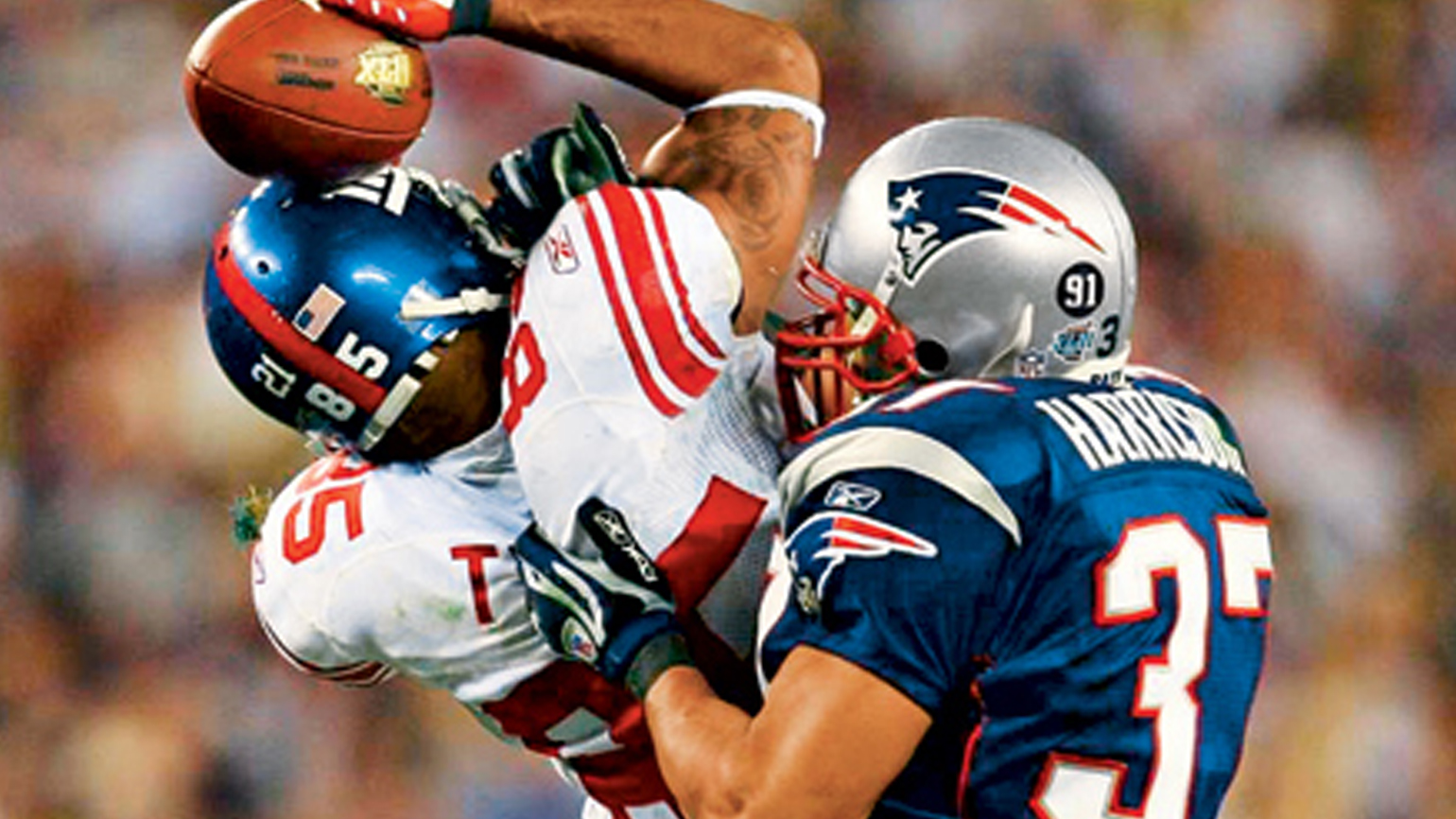
Even if you’re not a football fan, you might know what happened next because it made all the papers and TV shows. I leapt for the ball at the same time Patriots All-Pro safety Rodney Harrison did. I grabbed it. Rodney smashed into me. I felt myself falling. My left hand slipped off the ball. No! I pinned the ball to my helmet with my right hand and hauled the pass in just before I hit the turf.

Four plays later we scored what would be the game-winning touchdown. Giants 17, Patriots 14.

Reporters called it one of the biggest upsets and that ball-on-the-helmet catch one of the greatest plays in Super Bowl history. Suddenly, everyone knew my name. I was on talk shows, the cover of Sports Illustrated.

Everywhere I went people asked me to reenact “the catch.” It was pretty overwhelming for an under-the-radar player like me.

“That catch will change your life,” people said. But the truth is my life was changed long before that. And let me tell you, it—or rather, I—needed changing.

I started playing football in middle school. I started drinking not long after that. In high school my post-game ritual was getting loaded on malt liquor, whiskey and marijuana.

I don’t know how, but I kept my grades up enough to qualify for college scholarships. I got 45 offers, as a matter of fact. I still don’t believe it.

When I told my mom I’d decided on Syracuse, she smiled so big I almost couldn’t see the corners of her mouth. Mom was my first fan and she’d worked so hard to move my sisters and me from the inner city to the suburbs so we could have a better education. I wanted to make her proud.

Before long I was a team captain for the SU Orange. I was an all-star partier too. But somehow I found myself drawn to a girl on campus who shied away from that scene.

Leilah had the most adorable sleepy brown eyes. I talked her into giving me her number. We hit it off. Leilah was not only beautiful but smart too, a nursing major. She really had her act together.

From the outside it looked like I did too. I had a wonderful girl, a supportive family and, in 2003, I landed the job of my dreams. Pro football player with the New York Giants.

But if college was one big party to me, the NFL was a never-ending bender. Leilah begged me to get clean. She’d started reading the Bible, exploring her faith. But, me? I didn’t have time for that stuff. I was living in the fast lane.

Then at the end of my rookie year I got pulled over for speeding. My car reeked of marijuana.

“Do you have anything in here that I ought to know about?” the officer asked in a voice that said he knew I did. He searched the car and found a bag of pot under the seat. I was arrested.

You know that expression “rock bottom”? Well, I hit it. Literally. There I was, sitting in a holding cell, staring at the cement block walls. What had I been doing with my life? I needed to change. Was it too late to ask God for help?

I didn’t know where to start, so I looked up, clasped my hands like I’d seen people do, and said, “Lord, I need you right now. If you could spare my job, I’d really appreciate it.” I wanted a chance to make it up to Leilah and my family.

I was released the next day, and eventually the charges were dropped. God had heard me.

That weekend I drove up to see Leilah in Syracuse. I wanted to clear my head, tell her how sorry I was for being such a lousy boyfriend and that I wanted to change.

I walked into her room. That’s when I noticed it. A Bible lying in the middle of her perfectly made bed. I don’t know how to say this or if I expect anyone to believe it. There was something about that Bible. Something…physical. No joke—it looked like it was glowing.

I felt myself reach out for it, almost the way I would reach for a pass. In that way that time seems to slow down when you’re doing something incredible, I picked it up and turned to the first page. Genesis 1: “In the beginning God created heaven and earth.”.

I read more. “And God said, ‘Let there be light!’” It’s not like I’d never opened a Bible before, but for the first time the words on the page made sense. As if their meaning was brought to life. God was real. And he was in control. Not me. That was the answer.

Leilah and I had a long talk. “I feel like I can finally get my life together,” I said.

“David, are you really ready to make that commitment?” she asked.

I couldn’t blame her for doubting me. But less than a week later I completely lost my desire for drugs and alcohol. God was already working on me. I really wanted Leilah to know I was serious, so a few weeks later, I proposed. We were married in a small ceremony. My family was ecstatic, especially Mom. She was so proud to see her only son finally settle down.

The Giants let me keep my job. It took a while for Coach Tom Coughlin and the rest of the team to realize I’d changed. I let my actions speak for me.

I practiced harder, started playing better than ever, even led the team in prayer. By the time the 2007 season rolled around, Leilah and I had two sons and were expecting twin girls. My teammates looked to me as a responsible family man, a man of faith. That felt good.

I thought this would be a breakout season for me and the team. Then we lost our first two games and 21 guys landed on the injured reserve list. Morale was at an all-time low. Something had to be done. One day after practice I stuck a note in every player’s locker. “I believe God wants to do great things with this football team,” I’d written. “This is a wake-up call for us to come together. To trust God and put our gifts to the test. Let’s do it!”

I’m not sure if the note helped, but I can tell you that by December we were headed for the playoffs. I was gearing up for practice the Saturday before a big matchup against the Washington Redskins when Coach Coughlin pulled me aside. “Your wife needs to see you, David. It’s urgent.”

Were the babies coming early? As soon as I saw my wife’s face, I knew something was seriously wrong.

“Your mother had a heart attack, David,” Leilah said. “She’s…gone.”

Mom was just 59 years old. She wasn’t even sick. God, I don’t understand this, but you’ve been with me through my darkest days. I’m trusting you now.

It was hard to get back out on the field, but I knew it was what Mom would have wanted. For me to make her proud, even in heaven. We made it to the Super Bowl, up against the strongest team in the NFL—the New England Patriots. Game day was electric.

We played with everything we had, but it just wasn’t enough. We went into the fourth quarter behind by four points, and still hadn’t managed to score a single touchdown.

With 11 minutes left, I stood in the end zone. Eli hurled a pass. It came toward me like metal to a magnet. Bam! “Touchdown, David Tyree, number 85!” Our first touchdown of the game! A touchdown at the Super Bowl. It doesn’t get any better than that, right?

Well, as God proves time and again, just when you think things can’t get any better, they do. The next big play I made was “the catch.” A minute later we were the Super Bowl champs, the team everyone counted out in October.

I like to call that game the Supernatural Bowl because I’ve got to give credit where it’s due. Did “the catch” change my life? Not exactly. God did.

This story first appeared in the October 2008 issue of Guideposts magazine.

How Creative Expression Can Improve Your Loved One’s Well-Being

Ashlee Cordell is a Research Assistant and Project Coordinator with the Benjamin Rose Institute on Aging

Coming up with activities to keep your older loved one mentally and physically engaged can be a tall order, particularly during Covid-19 restrictions. Exploring the creative arts is one of the best ways to begin! Your loved one can enjoy creative expression either from the comfort of home or by venturing into the community. Older adults benefit in numerous ways—physically, mentally and socially—from participating in the arts.

As people get older, their body of knowledge and expertise continues to expand, and can become major building blocks of creative expression. Pandemic restrictions have caused social isolation and loneliness to rise, so creative expression is more important than ever, as it can help to alleviate these issues, as well as others.

Among the benefits of artistic expression are:

  • Better overall mood: Creative arts can reduce feelings of anxiety, depression and loneliness among older adults, and boost your loved one’s overall mood.
  • Mental stimulation: Creative arts spark connections in the brain that ultimately lead to sharper senses. A Mayo Clinic study has shown that participating in the arts may also lower the risk of dementia.
  • Improved mobility: Creative arts get the body moving in ways that can improve things like hand-eye coordination and overall blood flow.
  • Expanded social connections: Creative arts offer situations for meeting other people and building new relationships, two important factors to boosting mental health.
  • Non-verbal expression: Creative arts enable older adults to express themselves non-verbally. This alternative form of communication is a new way for your loved one to express his or her thoughts and emotions.

The result can be better overall health and well-being for your loved one. This is the case whether he or she takes part in arts programming that’s led by a professional or simply enjoys the creative arts as a hobby. Another plus is that your loved one can experience the physical, mental and social benefits of creative expression without having any art training or experience.

Either in the community or a long-term care environment, you and your loved one can participate in the creative arts in a number of ways, including:

  • Movies, plays and dance: It’s fun to watch movies and plays, and it can be even more fun to follow your inspiration and create your own. Dancing is also a great way to express yourself and to reap the additional benefits of exercise.
  • Music: The love of music is universal! Play your favorite recordings together, and if the spirit moves you, pick up an instrument or sing.
  • The written word: Poetry, fiction and non-fiction have the magical ability to take us away from reality for a bit and give us insight and comfort. Expressing yourself through writing can also lift you up and help you process feelings.
  • Making visual art: There’s a wide array of visual arts to explore, including ceramics, collaging, drawing, filmmaking, painting, photography, printmaking and sculpture. You can try your hand on your own, or join with others in groups or virtually via video chat.
  • Viewing visual art: There’s nothing like an art museum to inspire creativity. Many currently offer virtual tours, so put your feet up and take in artwork from anywhere in the world!

For more information on the social impact of art, visit the Arts + Social Impacts Explorer Tool on the Americans for the Arts website. The interactive tool includes downloadable fact sheets to make the great impact of the arts more visible to all. For additional behavioral health and social support services, use the Eldercare Locator to find what is available in your area.