

Embrace God's truth with our new book, The Lies that Bind

How One Volunteer and a Community Garden Changed Children’s Lives

Most of us take fresh vegetables for granted. I did. Whenever I wanted to, I’d drive to the grocery store and load my cart with broccoli, asparagus, zucchini and lettuce. For me, a vegetarian, that produce section was my favorite.

When I moved to Champaign, Illinois, to open a dress shop, I figured that’s how most everyone bought their groceries, even in the poorer parts of town. If someone had told me my neighborhood was a food desert, an area where fresh, healthy foods are not available, I would have thought they just needed directions to the supermarket.

My shop was downtown, on a footpath that ran between a middle school and my church. My focus was on improving my business, so I could donate more to my church’s ministries. I thought that was the best way for me to live out my faith.

BROWSE OUR BOOKS ON CHRISTIAN LIVING

I’d grown up in Chicago, raised by my parents to be self-sufficient. They had eight other kids and ran their own businesses from our home. Everyone pitched in. Mom taught me to sew. By the time I was nine, I was sewing Barbie clothes and selling them on the school playground.

In my thirties, I divorced, and returned with my daughter to the Chicago area. In my forties, I left a job in restaurant management and expanded my part-time home-based sewing business to full-time. Then I felt I was ready for a commercial space.

My sister in Champaign found the perfect spot. I opened my shop, Motherland Fashion Design, specializing in clothing made from African fabrics. It had a big display window. People took notice and it did well. I felt blessed.

One afternoon, a girl came into the shop and asked for a drink. She’d spied my water cooler through the window on her way home from the middle school. I was happy to oblige. The next day she stopped by again, with a friend.

Soon half a dozen kids were coming by nearly every day. I loved their energy, how curious they were about a loom I had, about sewing. I made space in the back of the shop so they could work on their homework. The girls asked if they could dress the mannequins in the display window. Why not? It wasn’t my favorite task.

I helped them with their schoolwork. I taught them how to warp the loom, using the math formulas they were learning in school. I told them stories about our African heritage. We even put on fashion shows. I called the group the Culture Club.

They needed more than water after school. I gave them healthy snacks. PB and J sandwiches, oranges and apples. One day I put out a bowl of fresh sugar snap peas.

READ MORE: HOW VOLUNTEERING ADDS LIFE TO YOUR YEARS

“What are those?” a girl asked. The kids stared at the bowl as if it was full of scorpions.

“Haven’t you ever eaten fresh peas before?” I said. I showed them how to open the shell. “Here, try them.”

The girl wrinkled her nose. “Peas come out of a can.”

“Okay,” I said. “But where do they come from before that?”

The kids exchanged glances. “The grocery store?”

I persuaded them to eat just one pea each. Seconds later, the bowl was empty.

I wanted the kids to know where vegetables really came from. Their parents let me take them to the grocery store. That’s when I discovered that some of them had never been there before. Their families didn’t own cars. Buses didn’t go there from our neighborhood. For groceries they walked to a gas-station convenience store. Slim pickings there.

I asked for the produce manager. “Can you show us where you make the peas?”

He looked puzzled. “Ma’am, we just sell them,” he said. “They’re grown on a farm, then another company packages them.”

The kids and I checked out the produce section. But I knew I couldn’t leave the lesson there. These kids needed to understand how fresh vegetables are grown. There was just one problem. I was city born and raised. Planting a garden? I didn’t know the first thing about it.

Still, I’d seen containers for growing sprouts. I bought some, along with packets of alfalfa, bean and radish seeds. We followed the instructions and in days we had our first harvest. We ate the sprouts atop toasted baguettes with garlic butter. The kids loved it.

“It’s like free food!” they exclaimed.

I bought more veggies for afterschool snacks. I drove families to the grocery store. When I was a child, anytime I complained about something unfair, my mother would say, “What are you doing?” It felt good, doing something to make a difference. Even something small.

In 2003, I learned that a graduate student at the University of Illinois was starting a community garden in my neighborhood as a research project—eight 16-foot-by-16-foot beds on Champaign Unit 4 School District property.

I still didn’t know anything about gardening. I wasn’t sure I wanted to give up much more of my sewing time. But I had to try for the kids. I called and got one of the garden beds. Then I went to garage sales and bought shovels, hoes and stakes. For the younger children I got beach buckets and toy shovels.

The garden was near my church, and my pastor agreed to let us store our tools there. At a pawnshop I found a golf bag with wheels, perfect for hauling our equipment.

That first year we grew 16 tomato and jalapeño-pepper plants from seed. When the grad student graduated, a master gardener became steward of the garden. She showed us how to plant, mulch, water and care for our bed. Daily, we trooped down to tend our garden. When green shoots emerged, we were thrilled. However, they didn’t look like the photos on the seed packets.

I found a book at the library called Edible Plants of the Midwest. That’s how we learned that the dandelion greens and lamb’s-quarters we’d thought were weeds were edible. We sautéed them in olive oil and garlic. Yum! The kids couldn’t wait for more “weeds” to grow.

One morning, from across the garden bed, I heard a scream: “It’s a pepper! We grew a real pepper!”

The kids and I formed a conga line and did a victory dance around the garden. With a tomato from the grocery (our plants hadn’t produced any yet), we made salsa. One bite and it was clear this was no ordinary pepper. There was something magical about eating food we’d grown ourselves. The taste. The sense of accomplishment. The sheer joy on the kids’ faces. This was a seed only God could have planted.

READ MORE: 5 CHEAP WAYS TO LEARN A NEW LANGUAGE

By summer’s end we had so many tomatoes we sold them to people in the neighborhood. I helped the kids create a business plan, figuring out what our expenses would be for the next year. The remaining profit they split.

The next year we plotted out every inch of our garden bed, adding mint, zucchini, cucumber, cilantro and collards. Parents asked how their kids could get involved. I loved seeing what the garden did for the children. And I enjoyed it as much as they did. But I couldn’t help but notice that several of the plots had been abandoned.

That winter I got a call from our master gardener. “We’re closing the garden,” she said. “There just isn’t enough interest.”

How was I going to tell the kids we were through? My mother’s words came back to me: What are you doing? I called my pastor. Could we grow vegetables on the church lawn? He was sympathetic, but no. There was only one other option. I dialed the number for the school district’s facility manager.

“What would have to happen for someone to take over the garden?” I asked him.

“There are expenses to cover,” he said, “but mainly someone needs to be in charge. A person I can yell at if anything goes wrong.”

In my mind the list of things that could go wrong seemed endless. “Lord, help me,” I said. “I’ll do it.”

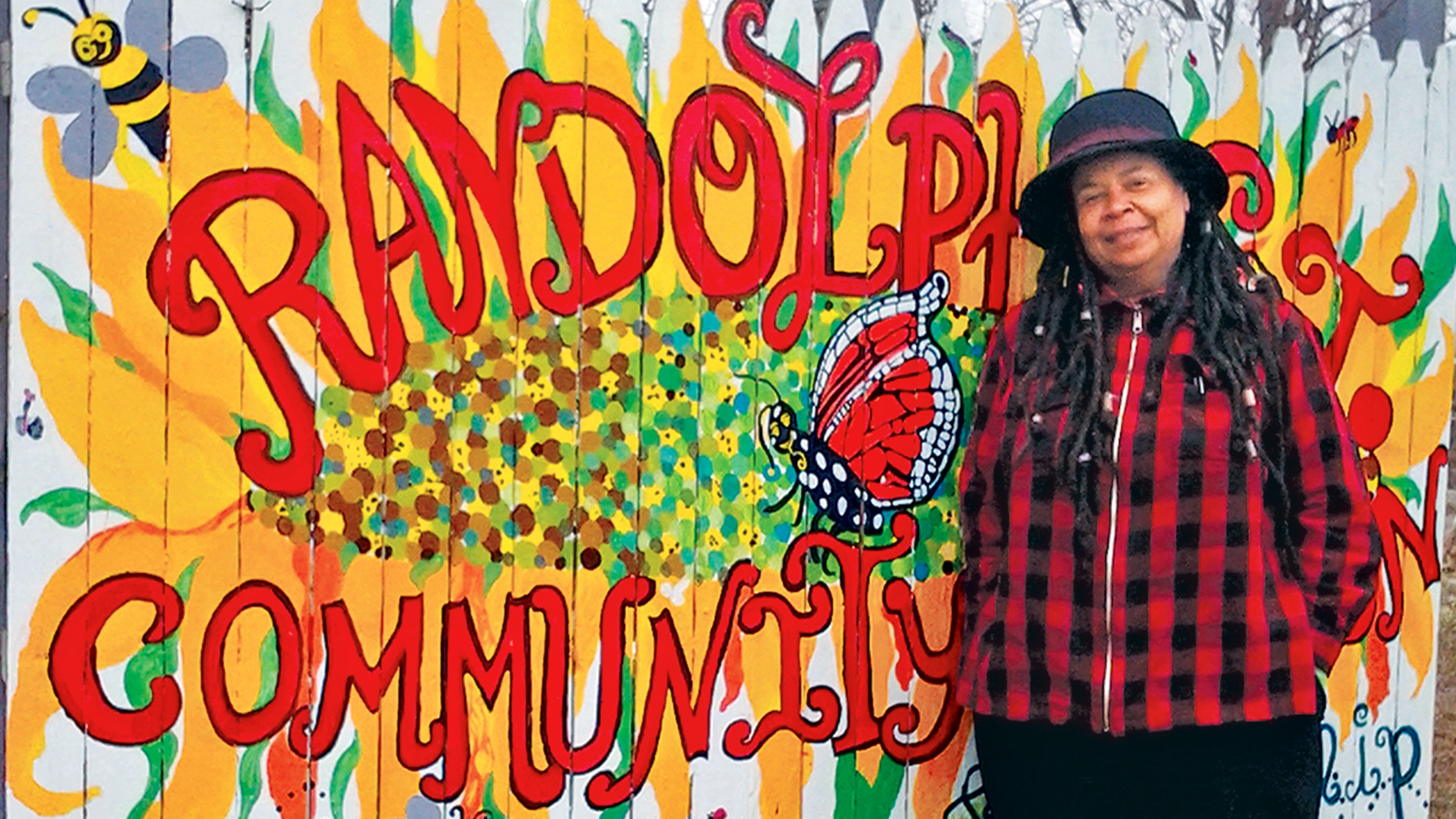
That summer of 2006, it was mostly the kids and me. We changed the name to the Randolph Street Community Garden. There weren’t a lot of rules. A few people from the neighborhood saw the garden growing and asked how they could get a plot. Under the old management, there was a firm deadline to sign up. Now anytime was gardening time.

READ MORE: FRIENDS START A NATIONWIDE MARCH TO BETTER HEALTH

I quickly exhausted my knowledge. That is when Charlie Doty, the liaison for the Washington Square Senior Citizen Building, rode into the garden on a power chair. He put me in touch with people in that building. One of them was a 93-year-old, Ms. Effie. Daily, she patiently taught me to garden. Word got around. At least half a dozen seniors wanted beds too!

By our second year, we had 60 garden beds. The number of children had more than tripled. I gave kids over 12 years old their own plot. But the expenses, for wood, mulch and tools, were more than Charlie and I could cover. I learned that some families were buying seeds and plants with their food-assistance cards and fasting one meal to do so. Community members stepped in with small donations.

I’d closed my shop, doing specialty sewing and alterations in the evenings from studio space. I took a job working nights for FedEx. The money I earned there became the budget for the garden. The Church of the Brethren’s garden ministry gave its support. Other faith organizations stepped up too.

One day I drove by on my way to an appointment. In the garden, vibrant green plants stretched across our three quarters of an acre. Food wasn’t all that was being grown. There was a buzz of activity, people tending plots, others lining up to buy fresh produce. A farm had sprung up in the middle of a food desert. Friendship was being grown too.

I was working a lot of hours. Yet I was never tired and I’d never felt more alive. I sprang out of bed in the morning, eager to take on the day. I wasn’t just the steward of the community garden. I grew a special “gleaners bed,” where people who needed food could come pick the vegetables. Every chance I got, I worked the rich earth myself. It was healing. Reviving. This was what it felt like to live out my faith.

Nine years later, the garden is a vital part of the community. Last year, we had more than 300 children and 150 adults gardening. More than 1,800 people bought or received fresh produce. People of many faiths and backgrounds (eight different languages) garden together.

When people come to the church food pantry, we give them shelf and freezer items and then take them to the garden for fresh produce. Their eyes light up when they see the tomatoes, collards and okra. They are excited to find they can also grow their own.

I’m 64 now, and while an on-the-job injury has helped me learn to delegate the heavy work, I’m not slowing down. In fact, the garden recently put up a GoFundMe page to raise money for an expansion. Growing vegetables keeps me young. But it’s helping others that feeds my soul.

Did you enjoy this story? Subscribe to Guideposts magazine.

For more inspiring stories, subscribe to our free Your Weekly Inspiration email newsletter!
How Norman Vincent Peale Inspired the New Book from Bobby Schuller

Bobby Schuller grew up in the shadow of positive thinking—literally!

His grandfather, Dr. Robert Schuller, was a pastor whose uplifting sermons landed in the same vein as his close friend Dr. Norman Vincent Peale. Dr. Peale even supported Dr. Schuller as he launched his Hour of Power television show.

“Doctor Peale was very, very geared towards encouraging people [and] being positive,” Schuller told Guideposts.org.

Schuller, who grew up attending his grandfather’s church and remember meeting Dr. Peale at a young age, now hosts the Hour of Power show.

It is Dr. Peale’s ideas that continue to influence Schuller’s ministry, including his recently released book Change Your Thoughts, Change Your World. The title is directly adapted from a famous Peale quote.

“I opened the book by talking about Norman Vincent Peale and the importance of positivity and the importance of your thinking,” Schuller said.

Dr. Peale was one of the first preachers who encouraged people to seriously examine their thoughts—an idea Schuller says is rooted in the Bible.

“Paul is really big on [being] Christian meaning being a disciple,” Schuller said. “Probably most famously when he said, ‘Be no longer conformed to the pattern of this world, but be transformed by the renewing of your mind.’”

Schuller believes “our thinking is perfectly designed to give us the results we’re getting” and that if people can change their thinking, they will change their results. His book, he said, is geared towards trying to give readers some new thoughts to improve their lives in practical ways.

Of course, Schuller believes positive thinking cannot cocoon someone from experiencing pain.

“All of us are going to go through suffering in life,” Schuller said. “But it is amazing how two people can have the exact same thing happen to them, but come out of the other end of that very differently.”

Schuller believes that by cultivating healthy thinking patterns during good times, people can prepare themselves to weather hard times faithfully. He says this process is helped in large part by learning to tune in to appreciate divine timing.

“For people that are struggling, for example, with anxiety and depression or addiction, one of the most haunting thoughts that people can have when they’re there is it will always be like this,” Schuller said. “But God is so patient with us. He’s with us even when we fall off the wagon and have another drink or whatever it is we’re struggling with. God will get us there in time.”

So how can someone begin to change their thought patterns? Schuller recommends starting each morning by jotting down your goals for the day.

“I think to most people that sounds exhausting,” he said. “But it [only] takes two minutes to do. And it actually makes you feel excited about your day because you sort of begin the day waking up for a reason.”

The important thing, Schuller notes, is to recognize that thinking does not change overnight. Like any other skill, it takes practice.

“In the same way that an athlete has to train their body for a competition that’s coming up, we first have to begin by practicing disciplines that change our thinking,” Schuller said. “That makes all the difference.”

How Music Soothes Those With Memory Loss

This article is based on information provided by Home Instead Senior Care.

An operatic aria or the solo of a pedal steel guitar in a country-western tune. An old standard, a folk song or a holiday carol. When you hear this music you may start tapping your fingers or humming along. Something mysterious takes over when we listen to music. It is a balm that touches our emotions and engages us physically. For a person with Alzheimer’s disease or another form of dementia, the therapeutic power of music can have particularly positive effects.

A study published in the Journal of Music Therapy1 demonstrated that playing familiar background music helped to increase positive social behaviors in people with Alzheimer’s and decrease negative behaviors related to agitation.

Music has also been proven to significantly reduce anxiety and depression in people with Alzheimer’s disease, according to a study published in the Journal of Dementia and Geriatric Cognitive Disorders 2. One family caregiver explained her experience with music saying that she would wake her husband up every morning to the Louis Armstrong song, “Wonderful World,” and “He always started the day in a great mood.”

People with Alzheimer’s or other dementias who are no longer able to communicate via the usual means continue to remember music and respond to it.

There are several ways to use the therapeutic benefits of music to boost the spirits of your family member with dementia, as well as to help trigger their memories.

A great method is to put together a “life soundtrack” that includes memorable songs from the person’s childhood, teenage, young adult and older years. Research the top hits from each decade of your loved one’s life, find out what songs were played at his or her wedding, and pick out some well-loved hymns or carols. If your family member with dementia used to play a musical instrument, include music featuring that instrument as well.

Try to get the person with dementia to participate in any music making, rather than to simply listen. According to Preserve Your Memory magazine3, singing daily has a positive effect on one’s mental state. Many senior centers and other community organizations provide opportunities to sing with a group, play an instrument (even if just a woodblock or tambourine), or simply clap along. And make sure you participate too. Sing along when you play the soundtrack you created. You may be surprised by how many lyrics your loved one still remembers by heart.

Sources:

1. Journal of Music Therapy, Winter 2007: “The Effect of Background Stimulative Music on Behavior in Alzheimer’s Patients”

2. Journal of Dementia and Geriatric Cognitive Disorders, July 2009: “Effect of Music Therapy on Anxiety and Depression in Patients with Alzheimer’s Type Dementia”

3. Preserve Your Memory, Winter 2011: “Celebrating Senior Sounds.”

How Michelle Williams’ Faith Helped Her Overcome Depression

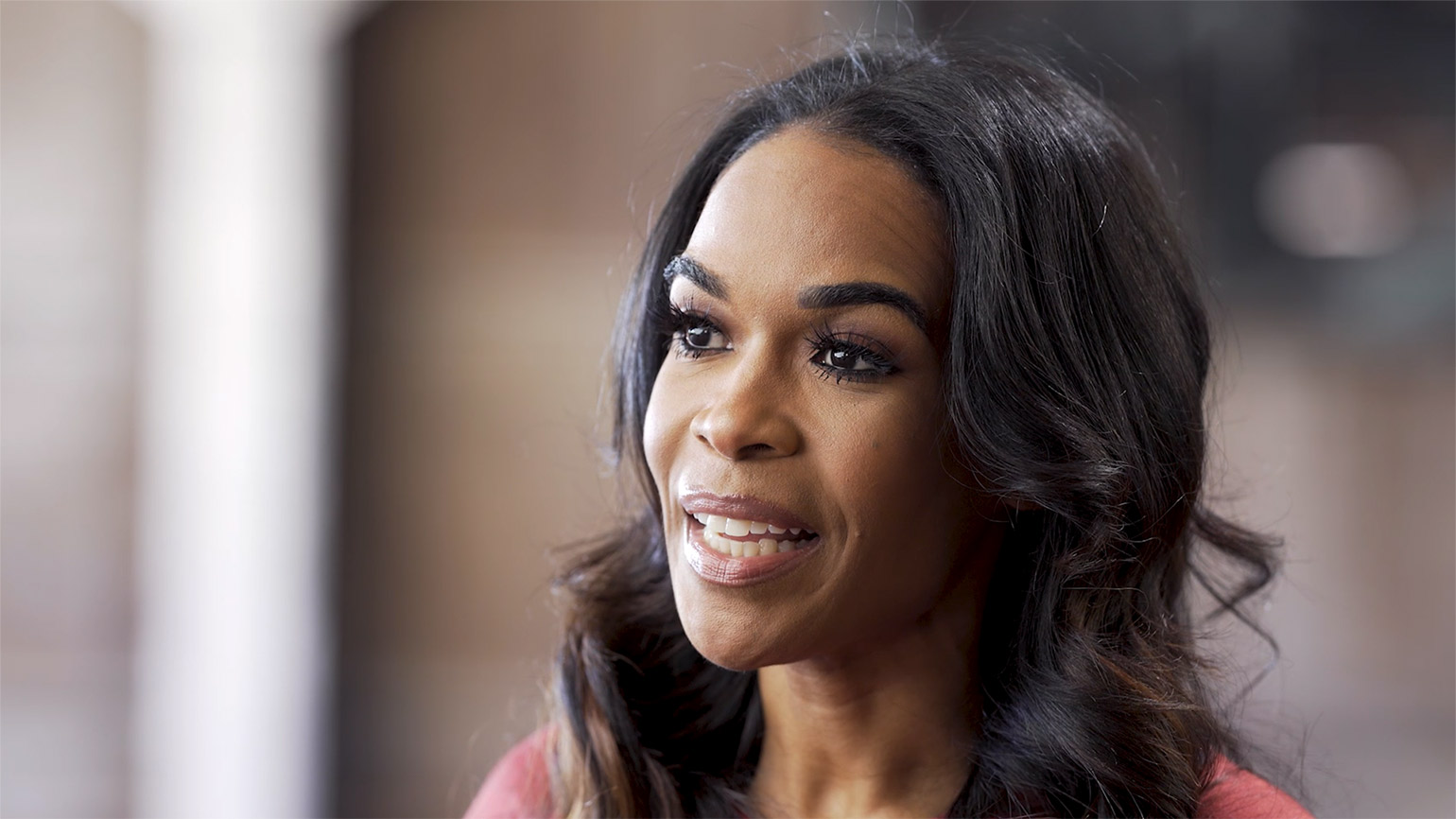
Hello, my name is Michelle Williams. The name of my book is Checking In: How Getting Real about Depression Saved my Life—and Can Save Yours.

I wrote this book based on my mental health journey. It’s a memoir, so you’re going to get some highs and lows, some funny momentsprobably too many funny moments. Scripture as well, because faith plays a big part in me overcoming depression. I want to walk with people on their journey and let people know that they are not alone and that depression, anxiety, or any other mental illness or whatever diagnosis you have, does not define you.

I titled it Checking In because there were three things that I needed to do. I needed to check in with God, I needed to check in with myself and I needed to check in with others. So if you have all that in balance, to me, that’s a good check-in. I also couple all of that with counseling/therapy weekly.

My favorite Bible verseall my life it’s been Proverbs 3:5 and 6, but for the past year or so, I’ll have to say it’s Philippians 4:8 because I think a part of changing your mind, renewing of your mind, has to do with what you think. So think on those things. Lovely, good, pure, good report, praise, think on those things.

I think my favorite uplifting song to sing is probably The Joy of the Lord by Twila Paris. It’s so sweet. It’s so simple. ♪ The joy of the Lord will be my strength ♪ ♪ I will not falter, ♪ ♪ I will not faint. ♪ I love that song.

I really hope that my readers take away from the book of strength and resilience. Bounce back, get back up, you know, if we have to take a break but don’t get out of the game. And that God is with you.

Thank you so much. I cannot do what I do without you. And to everyone at Guideposts, thank you so much for having me with you guys. And I just pray that this book impacts people, it inspires, and it changes lives. I know that that is my purpose: to inspire, impact and encourage. ♪ The joy of the Lord will be my strength ♪ ♪ I will not falter, ♪ ♪ I will not faint. ♪

How Love Endures After They’re Gone

It’s been a year—a year I could never have imagined happening, let alone getting through. A year since I lost the love of my life, the man I expected to be with forever, the man whose face I still long to see when I wake up in the morning. My husband, Rick, was the commander of the space shuttle Columbia.

On February 1, 2003, he was supposed to come home to our two children and me but instead went to his eternal home in heaven when the shuttle broke apart in midair over east Texas.

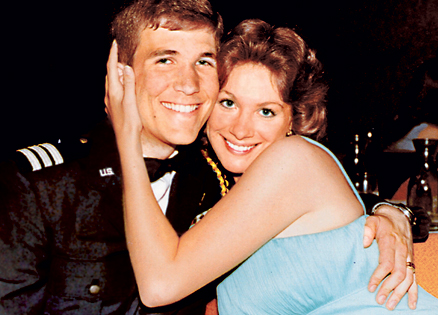
For some couples, it’s love at first sight. For Rick and me, it was love at first date. I had admired Rick from afar since high school in Amarillo, Texas. He was a year older, popular and good-looking. I’d see him singing in choir and starring in school plays, and I couldn’t take my eyes off him.

The funny thing is, when we met in college at Texas Tech, Rick was the one staring at me. I was walking to my seat at a basketball game my freshman year and noticed a cute guy with sky-blue eyes watching me. Of course I recognized him. I waved and said hi. Rick was so startled that he didn’t say a word…until the next day, when he called and asked me out. (He’d remembered my name and gotten my phone number from the Tech operator.)

Our first date was that Friday, January 28, 1977. Rick stood in my dorm lobby, so tall and handsome. He smiled and I knew it: This guy was special. The evening proved it. There was none of the usual first-date awkwardness—not even when he knocked over his water at dinner and I had to scoot out of the way to avoid getting soaked. We just burst out laughing. I don’t remember a thing about the movie we went to except for how right it felt to have his arm around me. Neither of us wanted the night to end. We parked by a lake and looked out at the big Texas sky and talked.

That’s when Rick told me about his dream: He wanted to be an astronaut. He’d written to NASA for a list of the requirements: a master’s degree in science, math, or Rick’s choice, engineering. A daunting number of hours as a fighter pilot—better yet, a test pilot—which was why he was going into the Air Force after graduation. Wow. I was beyond impressed. A man with this kind of passion and commitment was the one I wanted to spend the rest of my life with.

We dated all through college. I loved everything about Rick: his kindness and warmth, his intelligence and integrity and his closeness to his family. I even loved his quirks, like his offbeat sense of humor. His favorite movie was Young Frankenstein. The first time I saw it, I could say the lines right along with the actors because I’d heard Rick quote them to me so often. I admired his frugality—Rick would sew up the holes in his socks rather than buy new ones, keep cars until they fell apart (we still have the 1975 Camaro he drove on our first date) and fill up every square millimeter of a note card. I didn’t just love Rick, I totally idealized him.

We were married on February 27, 1982, at my church in Amarillo, the same church where my parents and maternal grandparents had their weddings.

I loved being married to Rick. That’s not to say we didn’t have our rough patches. Rick applied three times to NASA’s astronaut program and was rejected. He worked intensely toward his goal, putting in brutal hours in test pilot school at Edwards Air Force Base, then poring over engineering textbooks nights and weekends so he could earn his master’s. It meant that we had to spend a lot of time apart. But his dream was my dream, and our time apart ultimately strengthened us for challenges to come.

Right after Rick graduated from test pilot school, I miscarried. Six months later, I miscarried again. Each time Rick held me while I wept. “We can’t lose our hope, Evey,” he said. “God has a plan for us.” Our hopes turned into joy in October 1990, when our daughter, Laura, was born. Neither of us could get enough of our sweet girl. Of course, as most couples find, first-time parenthood is equal parts wonder and exhaustion. Often my only respite was reading my Bible while Laura napped. I’d come away energized by God’s Word.

I talked to Rick about my growing faith, but he didn’t seem to understand. One summer evening in 1991, I found out what was holding him back. Rick told me about some things he had kept bottled up inside for years—mistakes he’d made, doubts and struggles he’d never mentioned for fear of letting people down. We talked all night. Why hadn’t Rick shared all of himself with me until now, I wondered. For the first time, I realized he wasn’t the flawless being I’d built him up to be.

It was a spiritual wake-up call, as if God were saying: No one is perfect. Sometimes you will face pressures you can’t handle on your own. That’s why you need me.

Ever since we met, I’d put Rick on a pedestal, denied him his human imperfections—a burden he should never have had to bear. Lord, as much as I love Rick, now more than ever, I know you are the only one who can bear that kind of burden, I prayed. Help me learn to put you first in my life.

Rick was chosen for the U.S. Air Force/British Royal Air Force test pilot exchange program in 1992. That June we moved to the English countryside. Our time abroad gave us an opportunity to focus on building a stronger relationship with God and with each other. Rick searched his heart and discovered something unexpected. “Being an astronaut is not as important as I thought it was,” he said one day. “What means the most to me is to try and live my life the way God wants me to . . . to be a good husband and a good father.”

Faith transformed us as a couple. With God at the center of our lives, everything else fell into place. Our marriage grew to a whole deeper level now that no barriers, emotional or spiritual, stood between us. Rick applied a fourth time for the space program and got the call from NASA the same week I found out I was pregnant with our second child.

In Houston, no matter how worn out Rick was after a long day of NASA training, he was 100 percent focused on family at home. Laura would climb on his lap, and he’d read to her. He would pick Matthew up and zoom him through the house like an airplane. There was no sweeter music to me than the sound of our kids laughing with their father.

Maybe that’s why I was so anxious at Rick’s first shuttle mission, as pilot of the Discovery in 1999. The memory of the Challenger explosion was also in the back of my mind. I watched Discovery lift off from Kennedy Space Center in a plume of smoke and flame. The shuttle climbed in the blue Florida skies. Tears rolled down my cheeks—tears of pride and joy for Rick and our family, and of an overwhelming peace that could come only from God. Rick’s in your hands now, Lord, I prayed. You love him even more than I do.

The Discovery mission was a success, so I was much more at ease about Rick’s next trip, as commander of the shuttle Columbia, even though the launch date got pushed back several times to January 16, 2003. We took it in stride. Rick surprised me with a twentieth wedding anniversary trip to San Francisco. Rick and I stayed at an English country-style bed-and-breakfast and went for long walks in the hills. What a wonderful reminder of those years in England that had so deepened our commitment—to the Lord and to each other.

Just before he moved into crew quarters for pre-launch quarantine last January, Rick filmed video devotionals for Matthew and Laura. He wanted to surprise each of them with a message from Dad every day that he was in space. My message I discovered on my mirror, in Rick’s familiar handwriting with a bar of soap: “I love you, Evey!”

I watched the shuttle lift off last January 16, completely at peace thinking that in a little more than two weeks Rick would be pulling me into his arms and whispering those words in my ear. Then on February 1 as the Columbia entered the earth’s atmosphere it broke apart over Texas. It was like watching my whole life break into pieces and fall from the sky.

“Who’s going to help me with math?” Laura asked. “Who’s going to walk me down the aisle?” I held her close and cried. I couldn’t answer. I couldn’t think that far ahead, couldn’t imagine life without Rick.

Never before had I been so stunned and grief-stricken. Yet there was a voice deep inside me that assured me I would be okay, the same voice that had brought me comfort during the other tough times in my life. I knew I would have the strength to go on, and where that strength would come from. At the center of our marriage had been a love that superseded even our own. It was that love that would save me now.

February 27 would have been our twenty-second wedding anniversary. In a way, this last year has seemed as long as all the years of marriage that preceded it. Grief has that way of seeming to bring time to a halt. Yet love never stands still. Love is always in motion. I have drawn on an even greater love than that which I shared with my husband. The unconditional love that comes from God, who has been there in the times I have wept and yelled, as well as the times I have rested in him and thanked him for the years he gave me with Rick, the wonderful marriage we shared and the beautiful children who keep us connected still. That love is never-ending.

How Laura Story Found ‘Blessings’ in Caregiving

For singer Laura Story, life looks completely different now than she imagined it would on her wedding day fifteen years ago.

After marrying her high school sweetheart, Martin, the couple moved to Atlanta, where she worked as a worship minister at a church, while Martin attended graduate school. When he graduated, she assumed they would move back to South Carolina to be close to family and that one day she would be a stay-at-home mother.

Then, within the first two years of their marriage, a diagnosis changed everything. Doctors told Martin he had a brain tumor.

“That’s heavy news to hear any time in a marriage,” Story told Guideposts.org. “But, I think especially within those first couple years of marriage, it was very clear early on that the plans that we had, they just kind of went off the tracks.”

There were complications with the surgery to remove Martin’s tumor and he ended up staying in the hospital for three months. The surgeries left him with vision and memory deficits, disabilities that impacted every area of the couple’s life. Not only was Martin not able to complete his graduate program, but Story’s dream of being a stay-at-home mom was no longer an option.

Story was no longer just a newlywed. She was a caregiver, too. In her latest book, I Give Up: The Secret Joy of a Surrendered Life, she writes about this new experience.

“It definitely started our marriage off showing us that we’re really not in control of this,” Story said. “We did not have a choice. Like many caregivers, this is something that happened to us. This is something that God, in His wisdom and sovereignty, allowed in our lives.”

For the first few years after the surgery, keeping Martin alive was the only concern. It wasn’t until he stabilized five years later that Story began to struggle.

The long-term caregiving forced Story to reckon with her faith in a new way. She realized that the permanent nature of Martin’s disability, and the couple not having “an amazing ending,” didn’t align with the narrative she often heard about God’s intervention.

“We live with disability,” Story said. “We don’t have this nice, tidy bow on our story. How do I celebrate God in that?”

It was then she realized she had been looking to her husband and the dreams she had for her life to bring fulfillment.

“I would say for a long time, if I had Jesus plus healing for my husband, then I’ll have everything,” Story said. “But, the Bible teaches, if you have Jesus, you have everything.”

Instead of relying on a change in her caregiving situation to bring her joy, Story decided to look for joy and fulfillment in her current situation.

Story’s song “Blessings” was inspired by her faith journey. The chorus, “Cause what if Your blessings come through raindrops/What if Your healing comes through tears,” was a reminder to her that just because God hadn’t healed her husband, didn’t mean God hadn’t heard their prayers. The song won a Grammy and was certified gold by the Recording Industry Association of America (RIAA).

Coming to terms with the permanence of their situation also helped Story open up to a few close friends about her struggles, allowing her to ask for what she really needed.

“What we needed was not the meals or the rides at that point,” Story said, adding that for a while the couple was doing terrible spiritually.

The couple needed help finding people who could help Martin develop job skills. They needed to find people who were patient enough to have the same conversations many times, because of his memory deficit. The things, she added, that are harder to ask for help for and can be harder for long-term caregivers to know how to handle.

Most importantly, Story learned to embrace surrender. Becoming a caregiver was not Story’s choice, but her response to her situation is.

“[I] believe that we can have joy, and we can have peace, even in the midst of hard circumstances,” Story said, “because of the fact that those things are found in Jesus, not in our circumstances.”

How Keyon Dooling Finally Healed from Childhood Sexual Abuse

I was standing in the men’s room at an upscale Seattle, Washington, steakhouse. I’d spent the day hanging with my Boston Celtics teammate Avery Bradley, volunteering for one of his favorite local charities. We’d helped feed 500 families. Now we were unwinding with some of the other sponsors. NBA training camp was right around the corner. I’d just signed a $1.4 million contract. Life was good.

Just as I was finishing up, I felt something. A hand gripped my backside. Not in an accidental kind of way. What on earth? I zipped up my pants and whirled around. An older dude, stumbling drunk, a few feet away from me, smirking. I didn’t think. My fingers shot out, inches from his face. “I could kill you with my bare hands,” I said, but he just laughed. “What is it you see in me that you would do that?” I demanded, the thought escaping my lips almost before it registered in my mind.

He tried to make a joke. I shoved past him. “I’ve got to get some air,” I said when I got back to the table.

I went outside. There was the older dude, still grinning, still stumbling drunk. Before I knew what I was doing, my hands were around his throat. Squeezing hard. Then arms pulled me away. Avery and the guys we were eating with. “It’s okay. He’s not worth it. Let it go,” they said.

Back in my hotel room, the walls felt as if they were closing in on me. I was frightened, confused. I curled my six-foot-three frame into a ball and called my wife, Tosha.

“I don’t know what’s going on with me,” I said. “I’m just really messed up.”

“Let’s pray,” she said. “Heavenly Father, hold Keyon in your arms. Protect him. Comfort him.” I winced at those words. I’d never been sure that God really did protect me, not after what had happened to me when I was a kid. A secret I’d kept buried inside me for 25 years. I’d never talked about it with Tosha or anyone else.

I told Tosha not to worry, but after I hung up I couldn’t sleep. That awful summer day. It was all coming back. I was seven years old, walking with my best friend to the school basketball court where I grew up in Ft. Lauderdale, Florida.

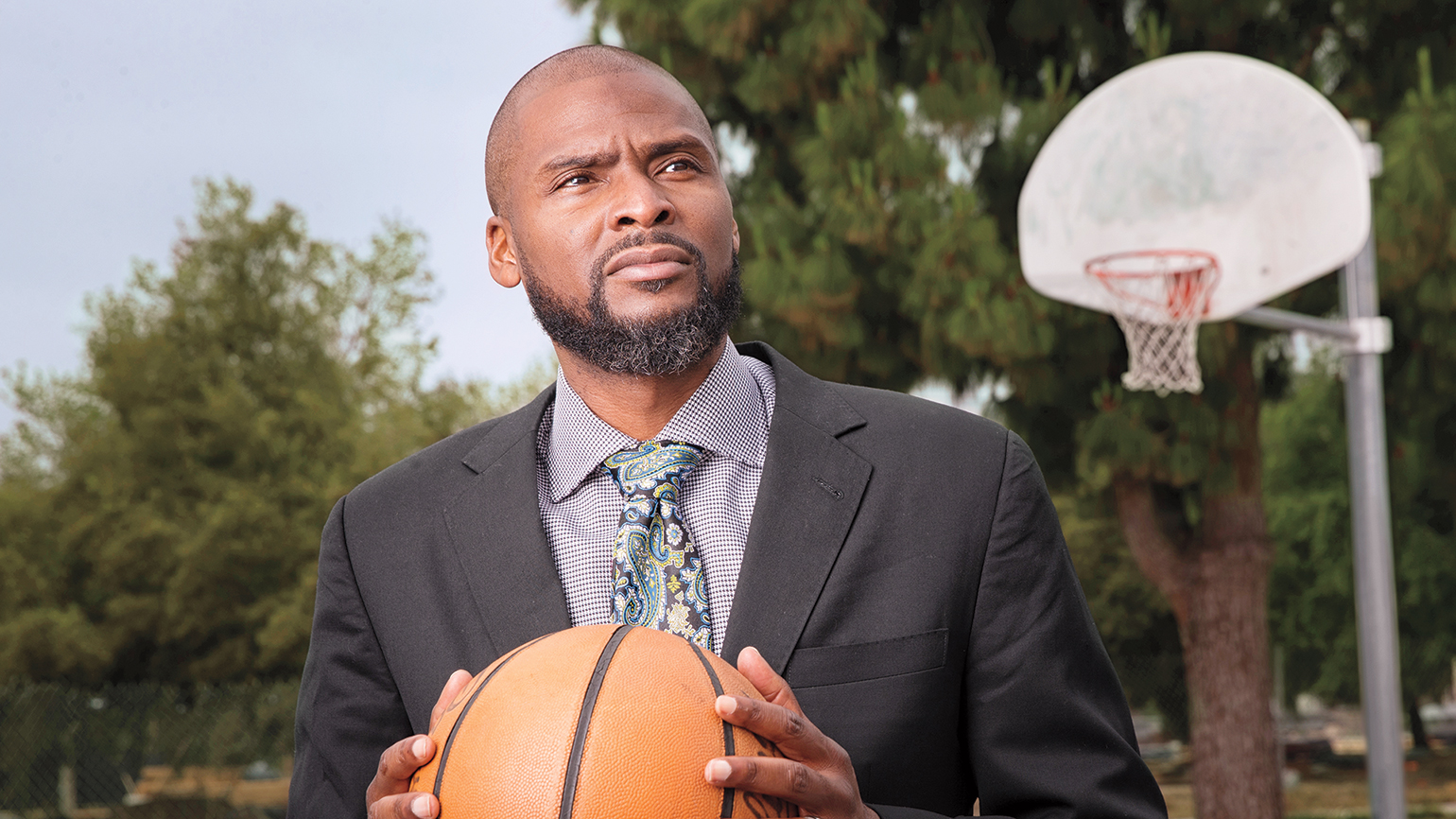
It seemed as if I’d always had a basketball in my hand. Still in grade school, I started playing against teenagers. Point guard, running the offense, the spark that makes everything happen. I loved the speed, the constant motion, how the other kids looked up to me.

But this day, it was raining hard. Just past an apartment building, an older teenager I knew shouted from a window, “Come hang here until the rain passes.”

All the adults were at work. We listened to hip-hop, rapping along. “Check this out,” the older boy said. He put on a video. Suddenly, onscreen, a man and woman were having sex. I knew it was wrong, but I couldn’t turn away. The older boy ordered my friend and me to touch his privates. Then more. I thought it would never end. When he finally released me, I ran, not even looking for my friend. At home, I got right in the shower, wanting somehow to wash away the shame, the guilt. I couldn’t stop crying. God, I knew, had seen everything. There was no hiding from him. I couldn’t imagine what he must think of me. Why hadn’t I fought back? Had I done something to make the boy think I was interested? I felt sick.

I didn’t dare tell anyone. I was afraid of what my parents and siblings would think of me. Afraid of what they might do to the older boy if I told them. The only way to get through it was to toughen up. Keep my mouth shut. Show the world I was no pushover.

My father was a florist. He kept tons of knives around the house to do his work. I found a thin one, pulled the rubber grip off my bike’s handlebar and slid it inside. If there was a next time, I’d be ready. I was a warrior. The face I wanted the world to see carried over to my game. On the court, I was a slashing, juking, ball-handling wizard. Playing point guard, I was in control—everything went through me. My brothers, my sister and my parents were my number-one supporters. “If you can see it, you can achieve it,” my father would tell me. “That’s the secret. You’ll be unstoppable.”

I liked the sound of that. Unstoppable. I tried never to think about that horrible day. I had to put all that behind me. Keep moving. The same way I got past opponents on the court. Yet anxiety and insecurity would bubble up out of nowhere.

After playing two years of college ball at the University of Missouri, I got picked in the first round of the 2000 NBA draft, the tenth player selected. Since then, I’d been in the league 12 years and my game was only getting better. The Celtics were one of the top teams in the league. The previous season, we’d taken Miami to the seventh game of the Eastern Conference finals. I’d just signed the biggest contract of my life. Coach Doc Rivers had singled me out as one of the team’s leaders. “Keyon gets it done,” he said.

I had a beautiful, devoted wife. Four kids. A perfect life. Why was I letting one encounter shake me up like this? I was sobbing. Like that day in the shower when I was seven. My mind felt like it was coming apart.

I tried another prayer, but the words wouldn’t come. I didn’t deserve God’s love. I could feel him staring down at me, judging me. The shame of that day. It had never left me. I’d felt it at times when I got down, discouraged. The feelings intense, a dark shadow I couldn’t control. It would come over me after a bad game. I’d kick myself for missed shots, errant passes, feeling as if I’d let my teammates down. I’d tried to hold it all together. But it wasn’t easy. Part of me was afraid to let anyone get too close, even Tosha. They’d learn the awful truth about me. Now, as if a dam had burst inside, I couldn’t hold it back.

Getting to the airport the next morning to go back to Boston was harrowing. Being home was no help. I didn’t want to tell Tosha about being molested. Didn’t want to look weak. But something had to give. I didn’t even know what I was saying.

“You’re talking crazy,” Tosha said. “What do you mean we need to repent? I’m worried about you, baby. We need to see someone.”

“No, I can’t,” I said. The thought of spilling my guts to a shrink scared me more than anything. Who knew where that would lead? I wasn’t sleeping. Tosha, our kids looked at me as if they were afraid of me. I couldn’t go on like this. I drove to the Garden, where the Celtics play, wandered onto the court and broke up an informal practice. “The end is near,” I heard myself say, thoughts, phrases ricocheting through my mind. I went to General Manager Danny Ainge’s office. “I’m done,” I said. “I can’t do this anymore.” He listened, then picked up the phone. A couple teammates appeared at the door. “These guys will drive you home,” the GM said. “Let us get you some help. You don’t seem like you’re in a good place.”

That’s for sure. A day later, I walked down the middle of a busy road, cars honking. Suddenly there were police all around. Tosha screaming.

Next thing I knew, I was in a small windowless room, the walls padded. No furniture except for a bed. I couldn’t understand what the doctors were asking me, and I didn’t trust them anyway. “I want out of here,” I demanded. They gave me meds that made me like a zombie. But slowly my mind began to clear.

That night in Seattle. How had I let a drunk man get to me like that? It was nothing. And yet it was as if, with that one grope, he’d opened some kind of portal inside me. That door I’d always kept closed was flung open. All those feelings of shame I’d kept bottled up. It was too much. It was a secret that nearly killed me.

Somehow I’d made it through all those years of repression. Not because of anything I’d done. Because of God. He’d been with me—even when I felt abandoned. He’d never left my side. It was I, in my shame, who had left him. Now for the first time I could actually feel him. An overpowering, physical presence. Holding me, comforting me. The shame, the fear I’d held inside of me, was gone.

The next day, Tosha came and climbed into bed beside me. “There’s something I need to tell you,” I said.

When I was done, Tosha held me tight. “I love you, baby,” she said. “And God loves you. He loves you even more because of what you’ve been through.”

A few days later, I moved to a better room—one with windows. Coach Rivers arrived. He’d flown from his summer house in Florida the moment he’d gotten word.

I told him everything. If Coach was shocked, he never showed it. “I’ve known so many men with a story like this,” he said. “It’s nothing to be ashamed about. I’m here for you. Whatever you need.”

True to his word, Coach got me out of the hospital and hooked me up with an amazing psychiatrist, Timothy Benson at Harvard Medical School. Through months of therapy, Dr. Benson helped me see how a repressed trauma can cause a severe mental breakdown years later, triggered by an event that brings it all back. “It’s called PTSD,” he told me. “It doesn’t affect only soldiers. Talking through what happened, understanding the emotions involved, being open with friends and family are all part of the healing.”

Dr. Benson was right. Talking about the childhood sexual abuse I experienced, the fear buried inside me, has helped me heal. That’s why I’m sharing my story here. If you are suffering as I did, talk to someone—a therapist, a doctor, a person you trust. And talk to God. He sees your soul’s pain and, as my wife put it, loves you even more because of what you’ve been through.

For more inspiring stories, subscribe to Guideposts magazine.

How ‘Just a Job’ Turned into a Career and a Relationship with God

Are you as excited about the newly reimagined Guideposts magazine as we are? Lately I’ve been talking to a few interested media outlets about our recommitment to the readers of our 76-year-old flagship publication. At a time when so many publishers are pulling back from print, our relaunch is newsworthy. Invariably I am asked how I came to Guideposts. It’s a story I love to tell.

At the time, my life was a shambles. I was desperately trying to stay sober after years of alcohol abuse. My sponsors in the 12-step program I attended informed me that I needed to do two things: Find God in my life and find a job. Both prospects were daunting. I had long since drifted from faith and my hands shook so bad, I could barely fill out a job application. But the latter suggestion seemed the most practical, especially since we weren’t talking about a career—just a job I could hang onto for a year while I tried to get my life in order. Any job.

One day I was half-heartedly scanning the want ads and half-heartedly praying for guidance when the phone rang. I wasn’t in the habit of answering the phone, on the assumption that it was usually bad news. Don’t ask me why but for some reason I picked up. On the other end was a woman from a job placement agency who was looking over my résumé and thought there might be an opening for me at a publishing company. Would I be interested in interviewing for an assistant editor position?

All I could think of was, how did she get my name and number? I’d never heard of this agency and was certain I’d never sent them my résumé. I wondered if it was a scam. She read off my address and said, “The offices are just across town from you. I’d be happy to set up an appointment.”

I’d also never heard of the company, Guideposts. What was that, some kind of travel magazine? The prospect of having a job that included travel was appealing and before I knew it, I had a job interview scheduled for the next day. I was only half-convinced I’d show up for it.

The rest you can probably guess. I met with then editor-in-chief Van Varner, who explained that Guideposts was not a travel publication but the country’s leading inspirational magazine featuring true personal stories of hope and inspiration, founded by Norman Vincent Peale. Not exactly my beat. Despair and isolation would be more like it. He handed me a few recent issues, suggested I go home and read them and if I were interested call him back, and we could have lunch. The prospect of a free lunch was a motivator.

I took the job, still thinking that it would only be for a year. That was in 1986, and I’m still here. I discovered a career after all and along the way, with the help of your stories, I found a relationship with God I longed for more than I knew. But I never did find out how that recruiter got a hold of my résumé.

Retelling this story, it got me thinking. How many of you have had that one mysterious moment that changed the course of your life? A second chance, perhaps, or a chance encounter. Maybe you’ll tell me about it here.

How Jewelry Maker Jill Donovan Turned a Hobby into a New Career

What would you attempt to do to find your life’s purpose?

It’s a question lawyer-turned jewelry maker Jill Donovan has been asking for most of her life. At nine years old, Donovan made a commitment to pursue a new hobby every year, and jewelry designing was the latest pastime on her list seven years ago. That hobby became her successful jewelry company Rustic Cuff, which she launched out of the tiny guest bedroom in her Oklahoma home back in 2011. Since then, Rustic Cuff has become something of a phenomenon.

Turn on the TV and you might see people like Gayle King sporting her cuffs on the morning news. Join a Facebook group of 44,000 members, all of whom share an obsession with Donovan’s designs and life philosophy, and you’ll begin to understand why her bangles have such a cult following. The chunky beads, leather prints, and embroidered inspirational quotes aren’t the only thing drawing fans to Donovan’s jewelry line, it’s her story, and the message of hope she inspires, that’s really catching on.

The mother of two never intended for her small hobby to become her life’s passion. In fact, she’d made the commitment to try a new hobby every year as a child because her gymnastics coach made it clear to her that she didn’t have an Olympic-level future in the sport like she’d dreamed.

“I listened [to my coach], and I said, ‘Well, if I can’t devote my life to gymnastics then I’m going to try a new hobby every year until I find my passion, my purpose,’” Donovan tells Guideposts.org.

At 10, she spent a year learning Russian. She spent another year playing the harmonica. Ice skating, painting lessons, and a variety of other hobbies soon followed.

At the same time, Donovan was pursuing her legal career. She thought defending the law might be her calling, but soon fell out of love with the courtroom. She tried teaching law at the University of Tulsa, but even that held little interest. She became a mom to daughters Ireland and August and though they kept her busy, Donovan still felt something might be missing from her life.

“I just kept thinking that there’s got to be something that I can go to bed on a Sunday night and wake up on a Monday morning and be excited about,” Donovan explains.

One year, Donovan, who watched Oprah Winfrey’s talk show religiously when it was on the air, made it her hobby to try and get to a taping of the show. After plenty of fruitless attempts to score tickets to the show, she saw a call-out for guests to volunteer for an “etiquette-themed” episode. The producers were looking for re-gifters, and Donovan thought she fit the bill.

“I had grown up with parents who were big-time re-gifters, meaning, instead of going to the store to buy a birthday gift for your friend, you’d go to your mom’s closet, to all the gifts she had received over the course or her life, and you would have to pick from that closet,” Donovan says.

Those experiences made for some funny stories – like the time she regifted a birthday present to her mother-in-law just one year after the mother-in-law had given the gift to her – that nabbed her a spot on the show. She thought it might be her big break, getting to meet Oprah and possibly try her hand at being on TV since broadcasting seemed to fit with her outgoing personality and love of talking to people.

Instead, Donovan was flown out to a taping in Chicago where she received some brutal criticism from the etiquette experts on the show. They called her regifting hobby “rude,” “tacky,” and suggested she donate her entire linen closet full of gifts to Goodwill.

“Your world just goes into slow motion when you’re being humiliated, and that is how it felt at that moment,” Donovan recalls. “I know relative to what other people are going through in life it was minimal, but at that moment in my life it felt like the lowest valley that I had been through.”

The episode aired three times that year to an audience of millions.

“Every time I’ve watched it, it was worse than what I had remembered,” Donovan says. “I remember going home and emptying my whole re-gifting closet and I said, ‘If this is what doing hobbies or pursuing my purpose, if this is where it got me then I don’t ever want to do another hobby again. And I would be okay never [finding] my purpose.’”

It took Donovan five years to make peace with the embarrassing ordeal.

“I was lying in bed and I just thought, ‘I’m going to let it go,’” she says. “And not only that but I’m going to start doing something again to awaken my soul.”

She had worked for American Airlines while putting herself through law school and had made a habit of buying cuffs in every country she visited as a memento of her travels. She thought crafting jewelry that she could gift to friends and family might be a fun way to tap back into her creative side. She taught herself to engrave quotes and names on the bracelets and over the course of a year, began restocking the shelves of her linen closet.

One day, she felt a calling to gift her creations to people she didn’t know.

“I didn’t really want to do that,” Donovan admits. “It’s okay to give them to friends and family but when you walk up to a stranger and just go, ‘Here, I’d like to give you a bracelet I made,’ that’s awkward.”

Still, she went into her closet, got a handful of cuffs, and decided to wear them in case she felt compelled to give one away. A crowded grocery store served as her first opportunity.

“I saw this girl, one of the cashiers, and that was the line I was supposed to be in,” Donovan recalls. “By the time I got to the front, I thought surely it will be an empty line. There were five people behind me and I thought, ‘Oh this is going to be painful, but I know I have to do it.’ I took off a bracelet and I said, ‘I know this is going to be awkward, but I just feel like I’m supposed to give this to you.’”

The cashier immediately started crying after receiving the bracelet. “Tears would not stop flowing and I said, ‘Are you okay?’ She said, ‘You’d have no way of knowing this, but yesterday I was diagnosed with breast cancer. When I was in the doctor’s office I asked God to give me a sign of hope that everything’s going to be okay.’ And I looked down and I had given her this pink one [the color of breast cancer awareness and support]. Which was bizarre because I had no idea. And she said, ‘Thank you for being that sign of hope.’”

The experience cemented Donovan’s decision to keep creating the cuffs.

Her company slowly grew to 160 employees over the next three years, with showrooms across the country and Donovan advertised her jewelry by writing to people she admired and gifting them a cuff with an inspirational message. She sent a bracelet to Gail King on a whim and a while later, saw her wearing the cuff on TV.

Not long after, Donovan got a letter in the mail. It was a copy of the March issue of O Magazine with a note from the creative director of the publication.

“It said, ‘Congratulations Jill. Rustic Cuff was chosen to be on the wrist of Oprah for her March issue,’” Donovan says. “It was the cuff that I had gifted to Gayle King that Oprah was now wearing. Whether or not Gayle re-gifted it to her, I don’t know exactly, but that was the cuff and that was the full circle moment for me.”

Now, Donovan’s Rustic Cuff has something called a regifting club.

“Every month, people get two cuffs with an inspirational quote on it like, ‘One day at a time,’ or ‘Dream big dreams,’” she says. “They keep one and then the other one I ask them to carry it around their purse for that month and when they find the right person, to re-gift it to that person.”

The practice inspired her new book, The Kindness Effect, where Donovan recounts her journey to starting over and finding her life’s passion and encourages others to do the same. It’s why she asked her Facebook followers the question: “What would you attempt to do if you knew you could not fail?”

It’s why she replied to the thousands of responses she got with encouraging words of wisdom, gifts of bracelets, and even ballroom dancing lessons for a little girl who dreamed of dancing competitively.

It’s all part of Donovan’s philosophy of reinvention. She still attempts a new hobby every year though she says she’s finally found her purpose and she hopes others might be encouraged to step out of their comfort zones after hearing her story.

“For me, none of it is wasted,” Donovan says of her life’s experiences. “All these tools have helped me finally get to this chapter, this chapter of purpose.”

How Jesus Culture’s Kim Walker Smith Found Her Purpose

Singer Kim Walker-Smith never dreamed she’d be a professional musician.

Though today she’s one of the worship leaders for the international ministry Jesus Culture– a music group that has sold one million albums worldwide since their debut in 2005–after college, Smith had begun a career in banking.

Try These Self-Help Books to Reach Your God-Given Purpose

During the day, she’d help people get loans, and in her free time, Smith became the events coordinator for the youth group at her local church. That’s when she learned that God might have a different vision for her life than the one she had imagined.

In 1999, the singer, along with worship pastor Chris Quilala and worship leader Melissa How, lead a summer youth conference that her church had dubbed Jesus Culture. Having seen the effect popular Christian music could have on the young people there, Smith and Quilala decided to record some covers of worship hits to send home with teens attending the conference.

“We wanted all of these young people that were coming and encountering God to have this thing to take home [so they could] keep encountering God,” Smith tells Guideposts.org. “We didn’t want them to go home and lose that momentum.”

That next summer, Smith saw the fruits of her team’s labor. The kids coming back seemed to have an even deeper relationship with God and were able to build more upon that strong foundation.

So Jesus Culture recorded another album. And another. They uploaded live worship videos to YouTube, they even started writing some original music to mix with their popular covers.

Still for Smith, who continued her work in banking, the idea that she should be leading others to Jesus through music didn’t start to sink in until a video of her singing suddenly went viral.

“Somebody put the ‘How He Loves’ video on YouTube and my little brother – probably 12 at the time –called me and was like ‘You’re on YouTube.’ And I said, ‘What’s YouTube?’”

Smith went on to do another conference and tour with Jesus Culture before she found herself at a crossroads. The band had gotten big, adding more members and amassing thousands of fans. With a schedule that had her on the road more and more, Smith had to choose: stick with the safe plan she had made for her life, or take a risk and see where God was leading her.

Sign up for Guideposts Free e-newsletters and Get Inspiration Delivered to Your Inbox

She chose Jesus Culture.

“It felt like I was making a decision to trust God completely with my life, my finances, my dreams, my successes, and my future,” Smith says.

Just eleven years later, Smith has seen that decision pay off with the band’s latest record Let It Echo – their 16th – debuting at No. 2 on Billboard’s Christian Albums chart. The 12-track project marks a departure for the group – instead of covers, they’re now singing only original material and doing it live in front of their home church in Sacramento, California.

It also features songs that show Smith and her bandmates at their most vulnerable. Just a year and a half ago, Quilala and his wife gave birth to a stillborn baby boy. Three weeks later, Smith gave birth to a son, her second with husband and fellow worship leader Skyler Smith. Five months after that, Smith suffered the loss of her father. It was a rough season for the band, one they channeled into their new music.

“It felt like God really taught me this past year, ‘You’re not alone in the fire. It’s hard, it’s tough but it’s not meant to destroy you and I’m not going to let it either,’” Smith says. “It’s meant to refine us and make us stronger and to come out of the other side with this renewed trust in the Lord.”

She hopes songs like “Alive In You” – which was written from that difficult time – will inspire others struggling with hardships. It’s opening lyrics “From beginning to the end/All my life is in Your hands/This whole world may hold me down/But it can never drown You out” speak to the power the singer has found in trusting God through good times and bad.

She’s also grateful that God moved her toward singing all those years ago, allowing her a platform that lets her connect with others wanting to strengthen their faith and live a more fulfilled life.

“Being a part of Jesus Culture has brought fulfillment to my life in many ways. The most important way is in knowing that I’m doing what God has called me to do in this time in my life. I feel the most fulfilled when I’m at the center of His will for my life.”

How Her Sobriety Changed the Family Christmas

When you’re a recovering alcoholic single mom with no job, no money, no house of your own and only partial custody of your kids, the beloved Christmas song has it all wrong. Christmas isn’t the most wonderful time of the year.

I was an active alcoholic for more than 15 years. I’d started drinking in high school. At first, alcohol transformed me from an average, overlooked youngest-of-five into someone daring, funny and popular. For about a decade I kept my drinking under control enough to graduate college, get married, have kids and make a living, but eventually the alcohol took over.

By the end I was drinking vodka around the clock. I had gotten two DUIs, detoxed in the hospital multiple times and burned through a marriage. I couldn’t even hold down a job. I did all of this as a mom to three wonderful kids. I was crippled by guilt. But ruled by my disease, I drank anyway. My shame was most painful at Christmas.

My ex-husband, Brian, had primary custody of the kids because of my drinking. Every other year I’d have them for Christmas Eve or morning, then Brian and I would make sure everyone made it to church and grandparents’ houses. I managed to mess up even this. I’d be late, forget stuff, pass out, try to hide what was glaringly obvious. Every year my vow to stay sober would crumble.

I’d compensate with gifts. I’d max out credit cards, cajole friends and relatives into “loaning” me money and buy the kids stuff they didn’t need. Some years I’d start stressing about the holidays in February. Everything would depend on that one moment, when the kids tore through the big pile of gifts. Their excitement would mean they loved me. That I was a good mom after all.

I thought all of that would change when I finally got sober five years ago. I expected sobriety to make all my Christmas problems vanish. But it was more complicated than that. The last Christmas before I got sober was the worst one of all. Two months before the holiday, I was in detox again. The facility told me a bed had become available at a well-respected local rehab program, which required a six-month commitment. It would mean missing the kids’ birthdays. And Christmas.

“Should I do it?” I asked everyone.

“If you don’t, you’ll be back in the hospital, in jail or dead,” my brother-in-law said. He was one of the few members of my family unafraid to tell me the truth.

Everyone else tiptoed around my drinking. “Try quitting on your own,” they said. “You need to be there for the kids.” Which was of course what I wanted to hear. I’d sober up—well, manage my drinking—through the holidays, then think about rehab. It was my year to host Christmas morning. How could I let the kids down?

Once again I maxed out credit cards and pestered everyone for money. I bought a tree for the apartment (mostly paid for by my parents) and piled up the presents. I was already drinking before Brian showed up with the kids on Christmas morning. Molly, the oldest, was 10. Nora was six. Emmet was three.

Nora and Emmet were too young to know about my disease. But Molly knew more than enough. She’d seen me passed out. Suffered through my chronic unreliability. I tried to pretend otherwise, but deep down I knew she was wounded every time I drank. Still, gifts were gifts. Molly joined her brother and sister tearing through presents. I was relieved to see Brian pull up outside to take us all to church and my parents’ house.

The rest of the day was a blur. By the time Brian took the kids home and I returned to the apartment I was somewhere between drunk and hungover.

I opened the door and stepped inside. Wrapping paper, ribbons and boxes were scattered around the living room. For a moment I thought someone had broken in. Then I remembered. The kids had opened presents that morning and we hadn’t cleaned up. Christmas morning with the kids had been my excuse to avoid rehab—and now I had only the vaguest memory of any of it. Two months later, I was in the rehab I’d rejected in the fall.

The following Christmas, I had 10 months of sobriety under my belt. I was determined to make up for every holiday I’d ruined. One problem: The holidays are a minefield for a recovering alcoholic.

“Be careful,” Alcoholics Anonymous veterans warned at meetings, telling stories of throwing away years of sobriety in a careless moment at a Christmas party.

I was a nervous wreck. Plus, I was still broke and I’d moved in with my parents after getting out of rehab. I’d decided I wouldn’t manipulate people into giving me money this time, so instead I opened a bunch of new credit card accounts and ran them up buying enough gifts to show the kids what a good mom I was now that I was sober.

They sort of liked the gifts. Molly spent Christmas Eve eyeing me warily. I could tell she was searching for signs that I was drinking. The holiday ended with me feeling deeply let down—and equally deep in debt.

“You can’t buy your kids’ trust,” my AA sponsor told me. “Give it time. If you stay sober, it will happen.”

I wanted to believe that. But it was hard to be patient in the day-to-day of parenting. Molly remained wary of me. Sometimes she’d bring up memories of the old days, and I’d have to fight the urge to argue, “I’m sober now! Please forget all that.” Ignoring my sponsor, I kept turning to money.

Kids upset? Spring for a trip to the trampoline park. Tired and stressed? “Let’s go out to dinner!” Christmas coming? Max out those credit cards again. Then it came time for me to work through AA’s ninth step: making amends. The hardest of all was Molly. How could I begin?

“Just be honest,” my sponsor said.

“I’m so sorry for everything I did,” I told Molly, echoing words my sponsor had suggested. “I’m trying my best to stay sober and be a good mom to you and Nora and Emmet. I want to earn your trust.”

A single conversation can’t repair years of damage. But after opening up to Molly, I noticed her opening up a little to me too. She got a good grade on a test and I was the first person she called. She’d still bring up incidents from when I was drinking, but she’d add, “I’m glad you don’t do that anymore, Mom.”

That Christmas I was less stressed because I was more confident in my sobriety. I still bought too many gifts. But it began to dawn on me that even more fun than the gifts was the time we spent together—cooking, decorating and baking cookies for Santa. Each year the holiday got a little better. Bit by bit the kids—and everyone else in my family—trusted me more. Brian and I settled into a good Christmas rhythm. The kids and I established our own traditions.

Last year I rented a house on my own with money saved from my job as an admissions office manager at a private school. The kids helped me move in on a hot August day. As Christmas approached, I got excited about celebrating in our new home.

Over the previous year, mindful of paying rent, I’d tried saying no more often—as in, not rushing out to buy whatever the kids had asked for because I was afraid they wouldn’t love me otherwise. The kids were actually happier. Somehow, more structure equaled less stress. I decided to try approaching Christmas the same way.

Instead of armloads of presents, I bought each kid one gift they really wanted plus a few fun things. I got a skateboard for Emmet, a little camera for Nora and a cell phone for Molly, who was now 15.

The kids and I bought a tree at a tree farm and put up ornaments. We decorated the house and hung stockings from the banister going upstairs from the living room. I took the kids to see Santa at the mall—they were kind of old for that, but they loved it anyway. We baked cookies on Christmas Eve.

There were noticeably fewer gifts under the tree. But the kids were so thrilled with their big gifts, they didn’t seem to notice. I, however, noticed everything. The crisp weather. The glow of lights from our tree. The quiet house when everyone had gone to bed. The excited chatter of opening gifts contrasted with the delicious laziness of staying in pajamas all morning long. I noticed it because I was sober. No crushing credit card bills loomed. No guilt shadowed my heart. It was a day of love and pure celebration.

This is why people like Christmas so much! I thought. It was a revelation. So do I agree with the Christmas song now? Sort of. Don’t get me wrong. I love the holidays. But I love the rest of the year too. My sobriety is a gift that renews itself one day at a time. My kids’ love and trust continues to grow. The God we celebrate at Christmas provides a life I could only dream about when I was drinking.

It’s all wonderful. At Christmas and always.

How Her Horse Helped Her Connect with God

Phil and David and I crept along the yard fence on our bellies and elbows, like soldiers on a battlefield. In the lead, my older brother, Phil, gave a hand signal for us to lay low while he proceeded.

Within minutes, David and I were scrambling up on the golden palomino mare as Phil untied her from the fence. Our older sister, Pat, came blasting out the screen door into the front yard.

“You little brats!” she screamed. “She’s my horse.”

“Just ’cause you’re the oldest doesn’t mean she’s yours,” Phil yelled as he jumped on Maybelle and kicked to get us going.

Maybelle trotted toward the back pasture of our farm with the three of us bouncing bareback and clinging to one another. Sis pursued us on foot. As we passed the barn, I turned and could barely see her, a speck near the creek. After a few minutes I heard the screen door slam. Phil pulled the mare to a walk, and we rode off toward the blackjack thicket that surrounded our Oklahoma farm.

“She’s a good old babysitter,” Phil said, patting the mare’s neck.

“I’m no baby,” David said, with a pout. “Don’t need no babysitter.”

“Phil just means that Maybelle is calm and can be trusted,” I said. “That’s what Dad says. He calls Maybelle a natural babysitter.”

“Mama will be comin’ back soon,” my younger brother proclaimed. My four-year-old brother had remained adamant that our mother would return to the farm.

Phil pulled on the reins, Maybelle stopped and all of us slid off into the knee-deep bluestem grass. He tied Maybelle to a low-lying limb, and the three of us walked through the weeds up over the pond dam. Grasshoppers jumped up around my bare legs. At the sound of our approach, a pair of wood ducks flew off the water and bullfrogs splashed into the muddy pond.

“Mama won’t be coming back to live with us,” Phil said. “She and Dad got a divorce. But we’ll see her sometimes.”

David stamped his foot, sending blackbirds flying from a cottonwood tree. “I’m mad at her.”

Embracing the truth that our mother was gone for good seemed too much to bear. “Well I’m mad at God,” I blurted.

Phil grinned at me. “That a girl, Sissy, go straight to the boss.”

It irritated me that he always remained so calm about the disruption that had rattled our world. I picked up a dirt clod and tossed it at him. “Know-it-all.”

He pulled fishing line and hooks from his shirt pocket. “Let’s catch some grasshoppers and fish.”

While the boys distracted themselves, I returned to Maybelle, untied her and crawled up onto her back. I held the reins loosely so she could graze. I leaned forward and let my arms dangle around her strong neck. I listened as she pulled the grass and munched, as she blew out her breath and switched her tail. I thought about the day Mama cried, told us goodbye and left the farm. Now Dad worked his railroad job, farmed and stayed in a bad mood.

“Got ya!” Sis screamed in triumph, grabbing the reins.

“Don’t take her, Sis. I like just sitting on Maybelle as she grazes.”

Sis motioned for me to scoot back. She grabbed a handful of long white mane and used her bare feet to climb the mare’s front leg, then slid in front of me.

“I like to sit on her too,” Sis admitted. “Makes me feel safe somehow.”

There was a long silence between us. At 13, my older sister had taken on the responsibilities of the house after Mama left. Together we’d burned cornbread and learned to fry chicken. We had stood in the kitchen of our small farmhouse, peeled potatoes, sliced peaches and made cobblers. Sis talked of school and boys, and I talked about my dog and the other farm animals, but during all that time, we’d never discussed Mama’s leaving.

“It’s hard to feel safe sometimes,” I said.

“Yeah. A friend of mine who lost her folks in a car accident says a person can talk to God and it helps.”

Talking to God interested me. “Do you ever do that?”

“Sometimes,” Sis allowed. “When I’m by myself on Maybelle.”

Phil and David came charging over the hill. “Let’s play chicken,” Phil yelled, grabbing Maybelle’s reins and leading her toward a ditch.

Phil squeezed up behind Sis, in front of me.

“Why do I always get stuck in the back?” David wanted to know.

“Because it’s the natural order of things, little brother,” Phil said. “It’s called seniority.”

Our game began as we thumped our bare feet against Maybelle’s sides until she took off in a fast trot, up over the first hill then down, red dirt flying into our faces. The object of the game was to be the last one remaining on Maybelle—which seldom happened, because when one of us started to slide off we clung to the one in front until the pair of us were goners.

As Maybelle scrambled up out of the second gully, David slid to one side and tried to use me to save himself. I clung to Phil in front of me, but David had managed to get me off balance and drag me over with him. We hit the ground with a thud. Phil and Sis lasted just one more gully, then the four of us lay strung out on the ground in giggling heaps as Maybelle calmly stopped and waited for us to remount.

After that conversation with Sis about talking to God, I began to ride Maybelle off alone any chance I got. I’d take her to the deep woods and sit in the shade with the summer sun blazing out across the farm and the locusts humming. I’d been to church only on a couple of occasions with my grandmother, who lived four hours away. The only prayer I’d ever said was the “Now I lay me down to sleep…” prayer, which Mama taught us and Dad seemed to have no time for.

Once, while in Sunday school at Grandma’s church, the teacher had insisted we all pray out loud. Around the circle she came, laying her hand on the shoulder of the one to pray next. I was scared and had no clue what to say. My face burned with embarrassment as the teacher waited behind me and I remained quiet. After an eternity she moved on around the circle and left me with my humiliation.

In spite of that early failure to connect to God, I became determined. Maybelle would help me! As I sat in silence on back of Maybelle and hugged her with my bare legs, I made a number of efforts that didn’t go far. But one day, I blurted out my feelings.

“I’m mad at you,” I said in a whisper. “How could you let our Mama leave?” The words loosened a damn of emotion, and as I continued, the tears rolled and with them came an immense relief. I had the clear feeling that someone was listening.

After that day, I held daily visits with God. I talked to him about my worries. That the four of us would somehow survive on the farm without Mama. That Mama would be okay. I’d talk aloud as Maybelle munched grass and grabbed overhead at the turning leaves. I talked as the crows called out from the pecan grove in the distance.

One day I was in the barn when Sis came in crying. I hid behind some bales of hay, watching as she slid up on our horse and the two of them trotted off toward the far pasture. I asked God to be with my sister and to wipe away her tears.

On a glorious autumn day, when the four of us were scheduled to meet Mama at the cattle guard that bordered the county road and get introduced to her new husband, Hank, it was David who suggested we ride Maybelle to the meeting place. “It seems safer,” my little brother said.

Dad wouldn’t allow Mama and her new husband on the farm, but had agreed we could meet them outside the property near the cattle guard. The four of us, spit shined and polished, mounted Maybelle that morning and started off. Halfway to our destination, Sis pulled Maybelle to a stop. In the distance we saw Mama’s station wagon driving slowly down the county road toward the cattle guard.

“I don’t wanna meet him,” David confessed.

“I’m not all that crazy about it myself,” Sis agreed.

We sat in silence for a moment. The wind made the colorful red, gold and brown leaves dance overhead. By then I’d gotten real comfortable with God. I swallowed hard, took a deep breath and squeezed my bare legs against Maybelle’s great belly for inspiration.

“God,” I said, “please be with us today and help us be kind to Hank.”

Phil shouted, “Amen.” He kicked Maybelle gently. “Let’s get this show on the road.”

That was the start of a long road for us kids, with high points and low points, growing up on the farm. I was a freshman in college before I really explored the memory of that day all of us rode on Maybelle’s back to do something we didn’t know if we were strong enough to do. The old farm had sold and Maybelle had passed. Sis was marrie and Phil was in the Air Force. David lived with Dad and his new wife in southern Oklahoma.

It was a picture in my college mythology book that got my attention, the picture of a grand horse with wings. Transfixed by Pegasus, I considered our Maybelle, who had been so much more than a babysitter. After all, it was while sitting barelegged on her broad back that I had entered into a relationship with God. The golden palomino with a white mane and tail had carried me through difficult days and onto the faithful road I continue to travel, safe in God’s care.

Did you enjoy this story? Subscribe to Angels on Earth magazine.