Embrace God's truth with our new book, The Lies that Bind

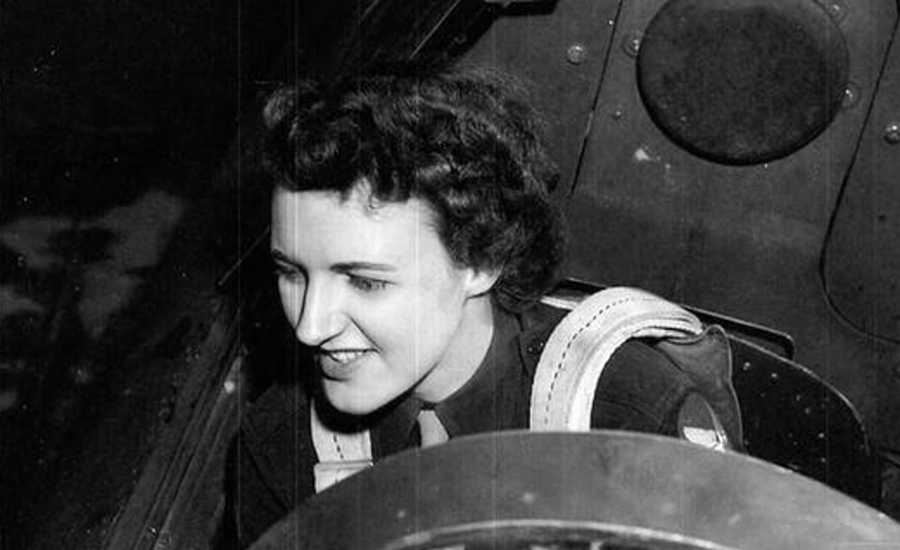
Honoring Lillian Yonally, WWII Pilot

In celebration of Women’s History Month, I’d like to introduce a woman who helped the U.S. Air Force answer the question “Should women be flying planes and bombers during WWII?”

Lillian Yonally inspires me with her strength, a strength that comes through in her bearing, her eye contact, her every word and gesture. She is a straight-talker who enjoys sharing tales of her experience as a WASP (Women Airforce Service Pilot) in World War II with the same objective determination that drove her to pursue that Air Force pilot duty back in the 1930s.

This is a woman who never gives up, and wants to encourage others to do the same.

Of the many stories she told me about her experiences, I was most struck by two: the fear she discounted as she decided to trust her plane to keep her safe, as live ammunition was fired at the targets she pulled a mere 30 feet behind her. I found myself wondering if I would have the guts to continue flying as shells exploded all around me! The other thing that amazed me was the fact that she and the other WASPs would deliver damaged/malfunctioning planes to their destinations after they were repaired with no subsequent testing.

Lillian married, raised a family, and served her country with dedication and purpose. And now she continues on, telling her story and firing others up. As she says, “Believe in yourself and in a higher power to look after you.” And, in her 10th decade, she continues to exemplify the purposeful life. What an inspiration!

Home Sweet Home

Everyone told me I was out of my mind. And maybe they were right. What 63-year-old woman from Iowa up and moves to New York?

My closest friends in Sioux City were shocked. “Shirley, people in New York aren’t like people in Iowa,” they told me. My 39-year-old son, Blyth, agreed with them. “Are you sure you’ve thought this through, Mom?” he said more than once. Everyone I knew tried to dissuade me. “Your life is here,” they said.

Frankly, I had no clue what I was doing. I was too old for a midlife crisis, I knew that. But I was sure God was calling me to New York, for whatever reason.

The idea had struck like a thunderbolt that summer when I was going over reading materials for a women’s church retreat. One of the books was a guide to aging that stressed sharing your life stories with family. That’s when it hit me—I didn’t have any family nearby to talk to about that sort of stuff.

READ MORE: MEET CUPID’S HELPERS, TRULY ANGELS ON EARTH

I was divorced, and both my parents had passed away a decade earlier. Blyth was really the only family I had, and he lived all the way out on Long Island in New York.

My future flashed before me. I pictured myself holed up in some nursing home in the middle of Iowa. No family, no visitors, no one to share my life with. Lonely.

A voice in my head said, You could move to New York….

I almost laughed out loud at the thought. Move to New York? I’d lived in the Midwest all my life. Not once had I dreamed of trading cornfields for skyscrapers. Maybe if I were 20 years younger.

And yet I couldn’t stop thinking about it. As if God had planted the idea in my brain. It nagged me throughout the retreat, in the quiet moments when I was supposed to be meditating.

Was moving to New York really so ridiculous? After all, Blyth was there. He loved his job as a performance-arts director for a university. And, well, as comfortable as I was in Sioux City, sometimes I did wonder. I had my job, my friends, my church. But life was routine, humdrum. Could there be something missing?

I returned home from the retreat and did a little homework. I was good at that—I’d worked as a secretary for many years before taking a part-time job at J.C. Penney.

I contacted a church in Long Island and asked about senior housing in the area. The answer wasn’t promising. If I wanted an apartment, I’d have to get in line. There was an eight-year waiting list.

Maybe I needed to broaden my search. In order for me to move, my new city had to be 1) close enough to Blyth, 2) near a J.C. Penney store, so I could transfer jobs and 3) not too far from a Congregational church.

One result caught my eye. A place called Poughkeepsie. Where in the world was that? I wasn’t even sure how to pronounce it and I was going to move there? At 63? I searched and found that it was located along the Hudson River 60 miles from New York City, two hours from Blyth.

That January, I reached out to the Congregational church in Poughkeepsie. “How might a nice senior find affordable housing in Poughkeepsie?” I asked.

The church secretary put me in touch with a Realtor, a member of the congregation, who got back to me with several housing options. I filled out three applications and prayed on it.

By March, though, I hadn’t heard back from anyone. I was flying out to visit Blyth at the end of the month—the perfect opportunity to make a stop in Poughkeepsie. Unless God didn’t want me to move. Maybe I’d misheard? Confused, I called my first choice of the apartments I’d applied to.

“This is kinda funny,” the property manager said. “Someone gave notice today. Can you move in on May first?”

Before I could give it a second thought, I heard myself say, “I’ll take it.”

I got off the phone and instantly entered panic mode. I wrote out a massive to-do list. May was only two months away! How could I say goodbye to my life in Iowa just like that? How could I find a job? And move all my stuff?

I tackled the first item on my list—finding a job. I contacted the manager of the J.C. Penney store in Poughkeepsie. We set up a meeting during the week I’d be in New York visiting Blyth.

I brought along my last performance review and hoped for the best. I worked in the men’s department at the J.C. Penney in Sioux City and I loved it. What if she stuck me in a department I hated, like children’s shoes or, worse, hosiery?

“Well, your review looks great,” the manager said. “I have an opening in the men’s department. What do you think?”

I didn’t need to think! Now came the hard part—figuring out how to get all my stuff to Poughkeepsie, 1,400 miles away, on a budget. I’d never driven more than four hours by myself. Would I need someone to accompany me?

But packing up boxes, I heard it again. That same calm, quiet voice that’d convinced me to move to New York in the first place. Do you really think I’d take you this far without a plan?

In late April, I loaded up my car and headed east with my trusty map. I made it to Poughkeepsie in three days. My new apartment was in walking distance of just about everything, even a park. A sense of peace came over me, as though I was finally home. Home in a place I’d never heard of just a few months before.

READ MORE: A SINGLE MOM’S SECOND CHANCE AT LOVE

Little by little, I settled in. When I wasn’t working part-time at the store, I explored New York State. I joined a book club, took daily walks and attended free film screenings at the library. Yet something was missing.

I was lonely. I longed for someone to share my new life with. So I landed on another totally crazy idea—to give online dating a shot. I created a profile on a dating site for seniors and, once again, prayed that I was hearing God right.

That July, just as my account was about to expire, I came across the profile of a man named Charlie. He was from a place called Saugerties, an hour from Poughkeepsie, and he attended church every week. How bad could he be?

I sent him a message. “How about we meet on Sunday?” he replied. I suggested drinks. Quick and painless, not like a disastrous three-hour dinner date I’d recently been on.

We met at T.G.I. Friday’s for peach lemonade. Charlie sat across the table from me. “I want to really see you,” he said.

Over the next five hours, we talked about our kids, our jobs and my recent move. He didn’t take his eyes off me, leaning in to catch my every word. I had an excuse prepared in case I wanted to leave early. But I never had to use it.

We both had the day off on Tuesday, so we agreed to meet again, this time to visit the Franklin Roosevelt library and the Vanderbilt mansion in Hyde Park.

“What are you doing on Friday?” Charlie asked at the end of the day.

“I’m going to New York City to meet Blyth,” I said. “I made plans to travel into the city with a friend, but she backed out.”

“What if I go with you instead?” Charlie said with a big smile.

It was a little soon for him to be meeting my son. But I hadn’t done anything by the book so far. We met Friday morning at the train station and spent the day in Manhattan, wandering around Times Square and holding hands like a young couple in love.

That night at dinner, Blyth and Charlie hit it off too. On Saturday I met Charlie’s family for his niece’s birthday.

Charlie wasn’t anything like the men I’d dated in Iowa. He was curious about every little thing, just like me. The kind of guy who loved a trip to the library, spent summers camping with his three sons and dressed up as Santa Claus every year at his church’s Christmas party.

On weekends, we took day trips and hikes, went to concerts and even a lighthouse festival. I could be myself with Charlie, could confess my neat-freak tendencies and past relationship mistakes. He brought out a more relaxed side of me.

For my birthday, he bought me a turquoise bike so we could explore some of his favorite trails. I stopped making so many lists, stopped making so many plans.

Charlie was the guy I’d always dreamed of falling in love with. I just never imagined that it’d happen in New York, of all places.

But God knew. A year later, we got married. We sang the song “Amazed” to each other at church, surrounded by our children and friends, and settled into Charlie’s house in Saugerties.

I couldn’t have planned it better if I’d tried.

Download your FREE ebook, Paths to Happiness: 7 Real Life Stories of Personal Growth, Self-Improvement and Positive Change.

Home Is Where Your Faith and Family Are

Ginny, my daughter, was beside me as I wove our van through a thick ribbon of traffic. We were having a girls’ day out at the mall in Richmond, Virginia—dress shopping for her senior prom.

“What are you thinking for colors, Gin?” I asked.

“Anything except for black or red,” she said. “I’ve already done that.”

I smiled, remembering all the dresses. All the dances. All the sweet, girl-growing-up milestones. But just as quickly, my smile faded. Even those sweet memories were pocked with a certain amount of guilt.

We had moved three times in four years for my husband Jeff’s job. Ginny and her two younger brothers, Johnny and Alex, had been shuttled across the country.

Three years earlier Jeff was offered a transfer to Arizona. That time we decided it was best for him to make the move without the kids and me. Though it was hard to be separated, we just couldn’t uproot them again.

Still, there was the guilt. Guilt that I had made them change their lives so many times and that our family wasn’t all living together under one roof. Was that what God really wanted for us? I wondered.

“I’ll treat for lunch today, okay?” Ginny said.

“Thanks, Ginny. Sounds great.” I glanced at my girl—those vivid green eyes, that bright smile. I could hardly believe she’d be graduating soon and going to college.

Jeff had put in for time off to come to Ginny’s graduation, but who knew if a last-minute job emergency would come up? Oh, how I longed for us all to be together again.

Jeff and I go way back. We met in kindergarten in our small Iowa town. Our childhoods were steady and solid, both families rooted in Midwest farming soil. When we married we bought a house a few hours from where we grew up.

Jeff got a job as an engineer at a local aluminum company. We started a family. First came Ginny. Then Johnny. Then Alex. We were so content in our little home with farm fields scalloping our yard.

I was thrilled the kids would grow up the way we had—rooted in the same Midwestern background.

Then, one day, when Ginny was about 12, Jeff came home from work with big news. “Sarah, the company offered me a promotion,” he said.

“Oh, honey! That’s great!” I said.

“Just one thing…”

“What’s that?” I asked.

“It’s…well, it’s in San Antonio.”

I had to have heard him wrong. “As in San Antonio, Texas?”

Jeff nodded. “I know we hadn’t planned on this,” he added. “But I think it could be good. For you, for me and for the kids too. It would expand their horizons.”

Jeff and I spent the next few weeks praying about the move. We talked it over forward and backward and prayed some more. The offer was good. In the end, the choice was clear. Lone Star state, here we come!

We packed the kids, dog and goldfish into our van and drove nearly 1,000 miles south to the new house. There, the brown boxes lining the walls made it seem like we were in a crazy cardboard maze.

The boys quickly disappeared, as if hiding from their new lives. Jeff and I went through the house looking for them.

“Try their bedroom closet,” said Ginny, her arms still wound tightly around our golden retriever.

That’s where we found them, talking about how they missed their grandparents and our old house back in Iowa. Jeff carried the boys out from the closet. Tears streaked their faces. It broke my heart.

Eventually, though, we all settled in. The boys made friends through basketball, football and baseball. Ginny played volleyball and filled our home with giggling girls.

Our neighbors were welcoming, most of them transplants to Texas too. Jeff and I found a great church. For two years life moved along with a steady, sweet patter.

Then the Texas plant closed. We moved again. Back to Iowa—but to a different town from the one we’d lived in before. Two years after that? Jeff was transferred to Virginia.

That was when I went from questioning God to getting good and mad. “This isn’t what I wanted, Lord,” I complained each night. “Moving the kids every time they get settled tears my soul. I want stability for them, remember? Roots.”

Thankfully, the kids fell into a new groove again, even if I didn’t. They made good grades and tons of new friends. That’s why, when Jeff was offered the job in Arizona, we decided it was best to let the kids be.

“I just can’t put you guys through that kind of change again. I’ll fly home as much as I can,” Jeff promised.

But our lives did change. When Johnny or Alex needed fatherly encouragement, sometimes I had to step into the role and imagine what Jeff would say. If all the kids needed to be at three places at once, I had to juggle the driving. I missed my husband and the kids missed their dad.

“Look at the positives,” I reminded them one evening as we huddled around Alex’s birthday cake. A work project had gone into overtime and Jeff hadn’t been able to make it home for Alex’s special day.

“We’re a family and we love one another. Love is like glue. It keeps us close even when we’re apart.” We sang “Happy Birthday,” but the absence of Jeff’s voice echoed loudest of all.

Now the guilt stabbed at me again as we inched toward the shopping mall. Lord, I prayed, I know I complain a lot. But that’s because I love my family so much. Help me believe that this was all your will and not my fault.

Just then Ginny turned in her seat to face me and took a deep breath. “Mom, you need to know something,” she said, “because Johnny and Alex and I realize how much it bugs you.”

“Know what, sweetheart?”

“You need to know that moving us kids was the best thing you’ve ever done.”

What?

“The best thing?” I asked.

“Remember that thing you said about love being like glue? You were right. The boys and I are tight,” she said. “We trust and depend on each other, and always will. And all of us have learned to make friends easily. Plus, we adapt really well to new situations.” She squeezed my arm. “And so do you.”

“But, Gin, I feel so badly for making you guys leave your friends and…”

She stopped me. “Mom, when I have my own kids, we’ll move. At least once.” Ginny paused. “Okay, just once.”

We both laughed. I squeezed the steering wheel, trying to blink the tears from my eyes. Where I had seen hurt and upheaval, my daughter had seen growth and goodness. Growth and goodness that could’ve come only from one divine and loving source.

I’d been so caught up in blaming myself that I could hardly feel God’s presence.

Yet, when a boy slid in next to Alex at the lunch table his first day at a new school, when a teacher encouraged Johnny or Ginny met a great pastor at youth group? Each time my children were comforted? It was God.

And the rest? Ginny’s upcoming graduation, our family having to live in separate states for another year, maybe more? Jeff getting another transfer? No matter where the future led, God would be with us, keeping us rooted in the deepest, richest, most nurturing soil of all—faith and the love of family.

“Let’s do lunch before we hit the shops,” said Ginny. “Where to?”

“Anywhere,” I said. “Anywhere at all.”

Download your FREE ebook, The Power of Hope: 7 Inspirational Stories of People Rediscovering Faith, Hope and Love

Home Instead Senior Care Celebrates 25th Anniversary with ‘Ready to Care’ Initiative

Since its founding 25 years ago, Home Instead Senior Care has had one mission: to improve the lives of aging adults and their loved ones.

It’s a simple, yet powerful approach created out of the personal caregiving experience of Paul and Lori Hogan, whose journey caring for Paul’s grandmother motivated them to work toward a future where all families could care for their loved ones at home.

The need for quality senior care has only increased in the years since Home Instead’s founding. According to Statista, by 2029 nearly 21 percent of the United States population will be older than 65. Home Instead estimates that approximately 25 million Americans over the age of 60 are facing economic instability. In 2019, as part of their mission to improve senior care, Home Instead is providing more than 80 million hours of care to seniors across the world.

To continue with their mission, and have others join them, Home Instead is commemorating their decades-long service by creating incentives for people to take small steps to bless seniors. These “Care Missions,” launched through their Ready to Care initiative, allows participants to sign up to receive weekly messages (which they can opt out of at any time) asking them to complete a “care mission.” These missions include anything from taking a walk with a senior to giving a senior a compliment. For every completed task, the foundation is donating $1 to GIVE65, a digital donation platform focused on raising money for senior-focused nonprofits.

Ready to Care is one of many ways the organization is providing care. The company also offers in-home care providers and provides a multitude of resources to combat caregiver stress. The Home Instead website describes the philosophy behind the initiative as “if everyone can do a little bit of care, we can care for everyone.”

The matching drive runs through July 31, 2019. Participants can join at any time and can complete older missions as well as those announced each week.

Holy Smoke! How One Woman Learned That to Quit Smoking Is a Blessing

Did you know that in the Bible, there are 139 references to the healing power of God’s love?

Indeed, when Jesus walked on earth, he brought a two-pronged message of good news. First, he preached the message of forgiveness, offering imperfect people reconciliation to God and the promise of eternal life.

Secondly, he healed people. Physically, emotionally, relationally and spiritually, Jesus healed people.

Forgiveness and healing: two sides of the same coin that, according to the Bible, pretty much sum up what God is all about. I discovered it in a surprising way.

I was 24 years old, driving north on Orlando’s South Orange Blossom Trail. Gripping the steering wheel of my lime green Mustang with one hand, with the other I raised the car’s cigarette lighter, glowing ruby-red, to the Winston clenched between my lips.

Okay, God, I inhaled the delicious nicotine-laced smoke. This is my last cigarette. I promise.

But before I could exhale, I knew it was a promise I would not keep.

I couldn’t understand why it was so hard for me to quit smoking. I mean, I really wanted to stop. I’d seen the photographs that compared a healthy pink non-smoker’s lungs to the blackened lungs of a smoker. I agreed that it was a dirty habit. I worried about my persistent cough and ticklish throat. But no matter how hard I tried to quit, I just wasn’t able to do it.

Turning right into my apartment complex as Todd Rundgren warbled “Hello It’s Me,” I took one last drag and parked.

“Hey, hoo-ney!” I did my best Ricky Ricardo impression to make Sandy laugh. “I’m hoo-me!”

My roommate Sandy and I worked in the advertising and public relations department at Tupperware. When Sandy joined the company, we hit it off immediately. Both of us loved the Beatles, had big feet (size 10), and—most importantly—we discovered that we shared a simple faith in a loving God.

There was only one major difference between us. Sandy did not smoke. And she did not approve of my smoking.

“It’s disgusting,” she said. “Plus, it’ll kill you.”

Since becoming a Christian in college, I had flitted from church to church, never staying anywhere long enough to call any one congregation “home.” I enjoyed visiting churches and liked the way each church had something unique and colorful to offer. At some point during the service of every church I visited, I closed my eyes and silently begged: Please God, help me quit smoking.

I was Protestant. Sandy was Roman Catholic, a regular churchgoer who frequently invited me to join her for Sunday mass. On a chilly February morning in 1977, I finally agreed.

Orlando’s St. John Vianney Catholic Church was a modest, cement block structure, just off the South Orange Blossom Trail. I’d never been inside a Catholic church before. The sermon, which the priest called a “homily,” was about Saint Blaise, a physician who lived in Armenia in the fourth century when Christians were being persecuted by the Romans.

Saint Blaise loved Jesus and was martyred for his faith. Because he once saved the life of a young boy who was choking on a fish bone, he became known in the early church as the patron saint for curing sicknesses of the throat.

“Today is February third,” said the priest, “the Feast Day for Saint Blaise. As many of you know, a special blessing of the throat is offered on this day. If any one of you would like to have your throat blessed, please come forward and I will pray for you.”

I glanced at Sandy.

She raised her eyebrows as if to ask, Well?

I took a deep breath and stepped forward.

What if the priest asks if I’m an official member of his church? I worried. What if he only blesses Catholics?

The priest looked at me with compassionate brown eyes. He asked no questions.

“In the name of Jesus,” he said, “on this Feast Day of Saint Blaise, I pray that you no longer suffer from any illness of the throat and that you be healed by God.” With his right thumb, he gently marked my forehead with the sign of the cross. “I bless you in the name of the Father, and the Son, and the Holy Spirit.”

That was it. No spiritual swooning. But I was impressed by the priest’s tenderness and generosity—especially to a visitor.

When I returned to the apartment, I reached into the bottom of my purse and pulled out a half-full pack of cigarettes.

Okay, God. I crumpled up the pack and tossed it into a white wicker wastebasket. And I never smoked again.

Now this is, admittedly, a dramatic example of a faith-based healing. Very often healing takes time—especially the healing of broken relationships. As with any prayer, sometimes God’s answer to a prayer for healing is “Yes.” But sometimes it is “Wait” or “Not now.” But no matter what God’s answer may be, the first step toward healing is to step out in faith, and with the unwavering trust of a child, ask.

Is there an area in your life—physical, emotional, relational, or spiritual—that cries out for healing? Talk to God, our great and loving physician, whose nature it is to heal and for whom, the Bible says, nothing is impossible.

Holy Habit: How to Stretch Your Soul

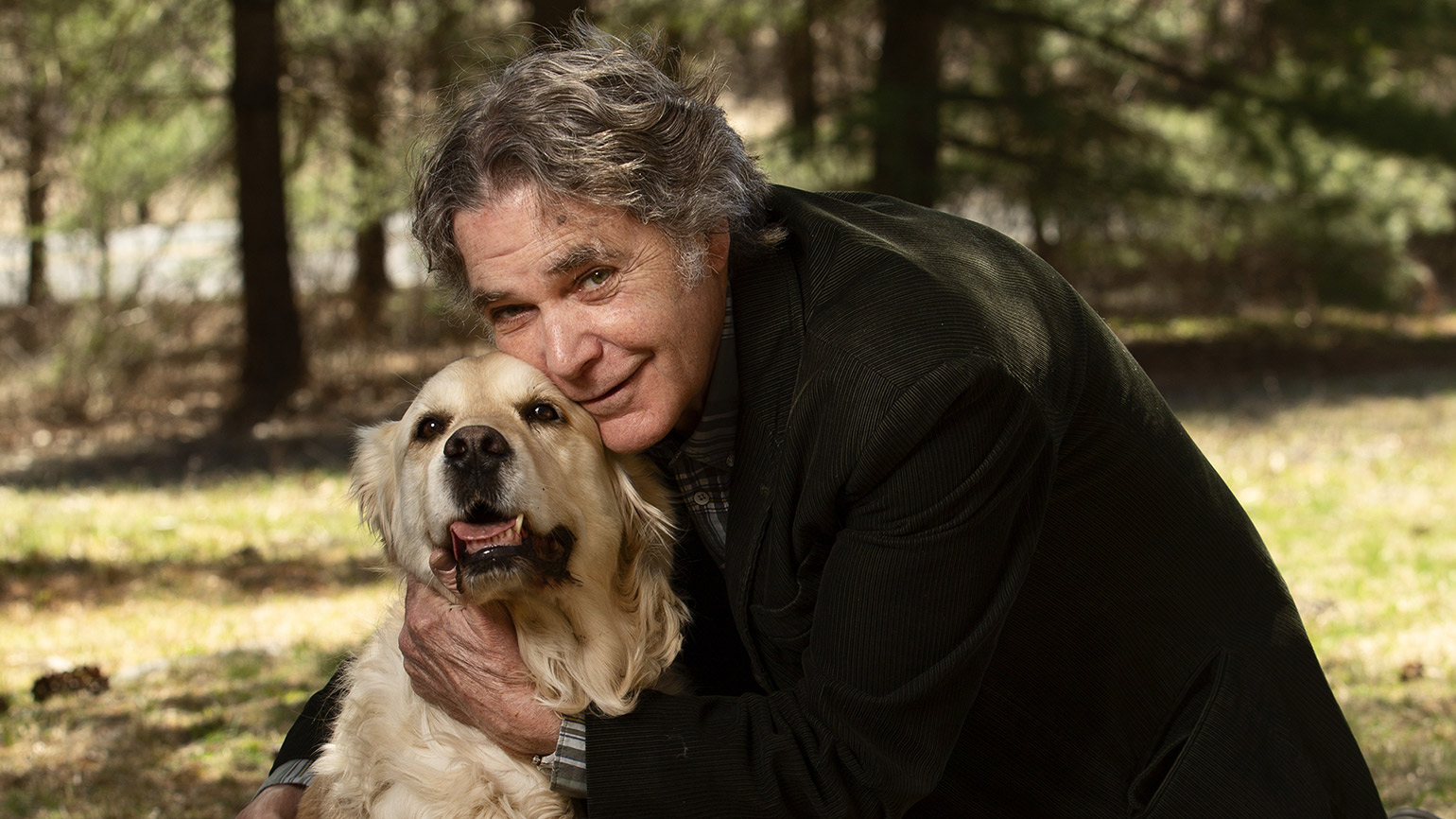
By now you know that I learn more from my golden retriever, Gracie, than she learns from me. Take the healthy habit of stretching, a good habit trainers and doctors have urged me to do to ward off stiffness. Do I listen to them? Not usually. I’m too impatient. I just want to get moving.

Except I’ve been watching Gracie lately. Every morning before our daily hike, Gracie does a graceful, luxurious stretch. She totally elongates herself, stretching her lower back first, then her hips, then her hind legs, lifting each in the air one at a time, spreading her toes wide. Then she does the real downward dog, opening up her chest and forelegs. She does a big yawn, stretching out those jaw muscles for better barking, perhaps. Then she rolls over and gives herself a little back rub, springs up, shakes off and she’s ready to rock’n’roll. Let’s go!

Why can’t I be as smart as my dog? So, I’ve taken up the healthy habit (finally) of stretching before exercise. Quads, hamstrings, hip, lower back, shoulders. I even waggle my jaw, though I haven’t started barking yet. I stretch along with Gracie. If anyone peeked in the window, they’d think Gracie was teaching me basic yoga.

You know what? Gracie is onto something. Not only do I feel more limber when I’m on the move, but I don’t get so stiff later in the day and the next morning. What Gracie does naturally—because God instilled her with the knowledge—I have finally learned.

What other ways can I stretch? Can I stretch my soul too? Here are a couple of soul stretches I’m trying out.

Stretch Your Soul with Bible Verses

Unlike some of my friends, I didn’t grow up memorizing the Bible. I memorized a lot of Latin as an altar boy (and even understood some of it) but not much scripture. So, I’ve taken to memorizing a bit of scripture every day, opening the Good Book at random and finding words that speak to me. Today it was Exodus 34:6. See? I made you look it up. It’s a good one.

Stretch Your Soul with Poems

I don’t read poetry as much as I used to, which is a shame, for a good poem is a bouquet for the soul. It can stretch the heart and imagination. We shouldn’t let ourselves live without poetry, so I memorize a short poem whenever I can. There are tons of sites where you can find short poetry. Or you can try committing a longer poem to memory one stanza at a time. Today, in Gracie’s honor, I memorized a lighthearted poem by Marilyn Singer called “April is A Dog’s Dream.” You’ll be surprised how quickly you can train yourself to memorize verse, and once you do, that poem becomes part of you. The practice is also good for keeping your memory sharp.

Stretch Your Soul with Love

This is a simple one. Tell someone every day that you love them. That may seem obvious, as if any idiot should know this, but no day is complete without that word slipping from your lips. Just saying it expands the heart. When I am alone all day writing whom do you think I say that lovely word to? That’s right. And I know she understands.

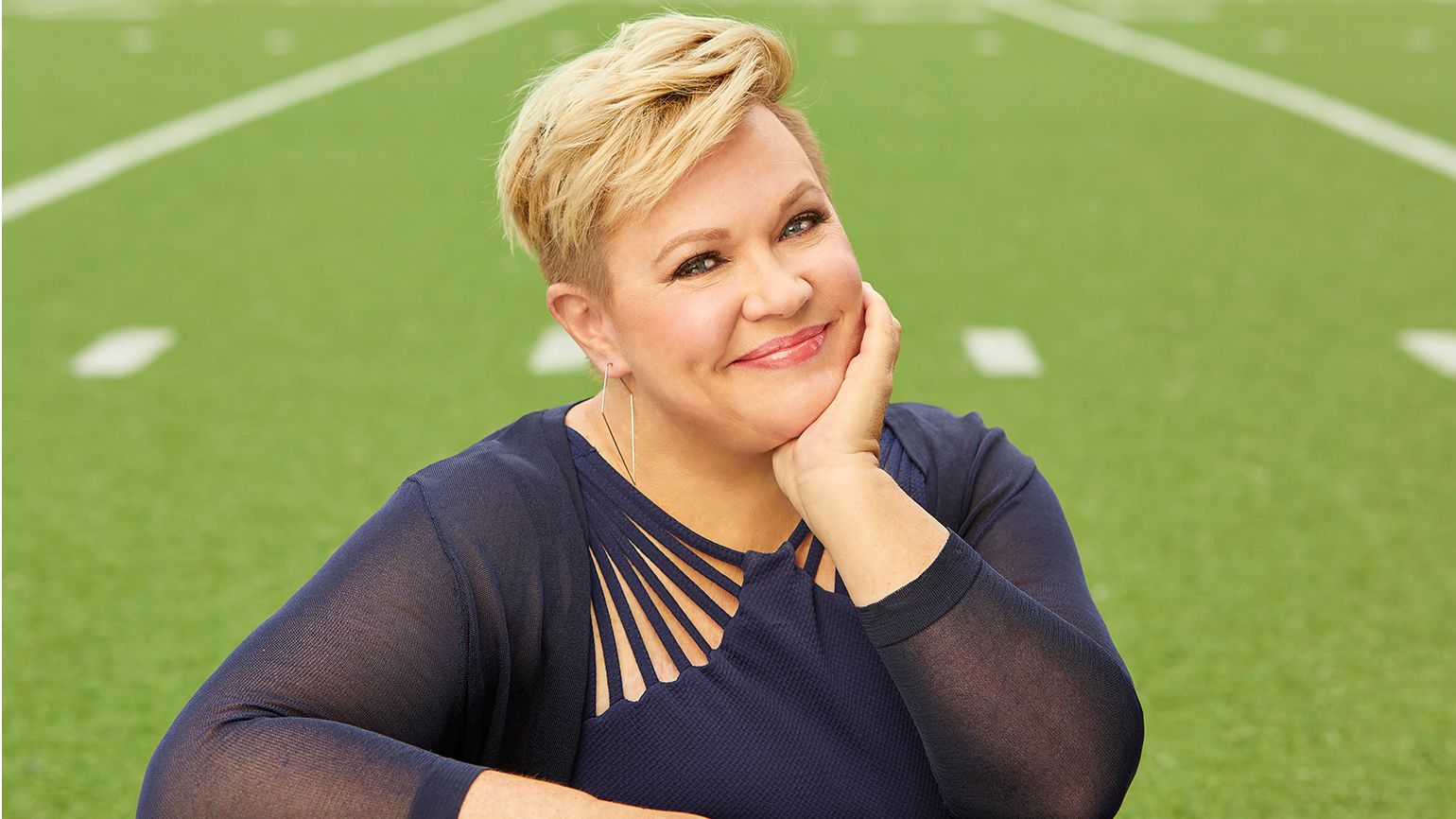
Holly Rowe: How Cancer Changed Her Life

For the last two years, I’ve had a constant companion, one that’s made me feel embarrassed and scared and vulnerable. Yet it’s also opened me up to people and experiences more wonderful than I could have ever imagined. Cancer. It’s more than a diagnosis, more than a disease. It’s a journey, one that some of you have been on too, though perhaps not as publicly.

Not that I set out to go public about desmoplastic melanoma, the rare and aggressive form of skin cancer I’ve been dealing with. I’d already had a tumor in my chest removed. Then my cancer recurred, and in February 2016, I was in the hospital for a second sur­gery, to remove a tumor under my arm. While I was waiting to go into the OR, I thought maybe I should let the PR per­son at ESPN know. For 20 years, I’ve been covering college sports from the sidelines, interviewing people, but I’d never been the subject of the story; it’s the athletes and coaches who are. They’re the stars.

Community Newsletter

Get More Inspiration Delivered to Your Inbox


I was sitting in bed, wearing one of those horrible hospital gowns, and all these different people came in, ask­ing me to sign forms, to be in a clini­cal trial, to donate my tumor so they could do research on it (as if I’d want it back). As one person was putting in an IV drip, someone else asked, “Are you Holly Rowe, the sports reporter at ESPN?” “Yes,” I said. “That’s me.” I texted our PR person: “Just in case anybody asks, I’m in the hospital….” (My bosses knew, of course.) Then I was wheeled off to surgery.

A couple of hours later, I was in the recovery room, groggy from anesthe­sia. My family was there: my mom, my sisters, my son. They had ESPN on. I glanced at the TV and saw something startling. “Did my name just scroll across the screen?” I asked.

My son couldn’t believe it either.

I sat up in bed. There was something about a football player and then: “Holly Rowe has successful surgery for can­cer….” Right there, on the bottom line.

“Oh, my God!” I said. It was both prayer and exclamation.

All along this cancer journey, I’ve been grateful to have my work to dis­tract me. I’m the biggest sports nerd. I even go to games on my day off. So it helped to have a goal of getting back to reporting after surgery, to have some­thing to look forward to that wasn’t an­other scan or test. But I didn’t advertise what was happening to my body. Now anybody watching ESPN would know.

Almost immediately, the prayers started coming, and they haven’t stopped. I had 244 text messages that one day alone.

Can I tell you about all the people who have sent me notes and cards? Not just players and coaches. Referees too. Col­lege football and basketball referees, WNBA referees. Complete strangers have said they’re thinking of me. The offensive line coach at Ole Miss, whom I didn’t know well at the time, walked over before one of their games and said, “Holly, I just want you to know my wife and I are praying for you.” Me, the girl who has always been nuts about sports.

I’m the second of four girls in my family. My dad had to wait a long time before he had a son: My little brother didn’t come along until I was 16. That wasn’t a problem for Dad. He grew up on a sheep farm in a tiny Utah town and played every sport. He was a jockey, he boxed, he wrestled, and (despite being only 5’3″) he also played basketball and football. He made sure his daughters loved sports too—watching as well as playing. Every Saturday, we’d go to the gym and play pickup basketball. Five on five. You had to win to stay on the court. Del Rowe and his four little girls would take on teams of grown men. To this day, I can call any of my sisters after a game on TV and say, “Did you see that big play in the second quarter?” and they’ll know exactly what I’m talking about.

Dad taught us that we could do any­thing. I think that’s why three out of the four of us sisters have gone into male-dominated professions. When I got my start in sports journalism, I couldn’t believe it when some of the an­nouncers wouldn’t accept stats if they came from women. They didn’t know who raised me.

I love what I do, traveling all over the country, going to game after game, talk­ing to the players and coaches. Cancer took me by surprise. The first time I got diagnosed, I was in New York City, heading to the Emmy Awards—I’d been nominated. I was standing on a street corner when my dermatologist called to tell me that the mole he’d taken off my chest was cancerous. I was shocked but not scared. A quick surgery and I’d be done with it, I figured. It ended up being a big surgery because there was a large tumor under the skin. Still, I didn’t real­ize how melanoma could spread.

The second diagnosis came nine months later. I’d found a lump under my arm and gone in for a biopsy. When the dermatologist called this time, I was in the car, driving. “I hate to tell you this,” he said, “but you’ve had a recurrence.” I pulled over and cried. I worked two or three college basketball games be­fore they could get me in for surgery. One was a big matchup—Oklahoma at L.S.U. It was a wild, crazy game, and I did this great interview with star guard Buddy Hield, who led Oklahoma to the win. He put his arm around me and I was thinking, Man, I’m going in for cancer surgery in two days, and here I am, just enjoying life. It was so surreal.

The third time I was diagnosed, I was at the hospital getting a routine scan. I was in the waiting room of the oncol­ogy ward. There’s this little screened-off area in the hallway where they take your weight, temperature and blood pressure before you go into the ex­amination room. A woman in her late sixties was sitting there, struggling with the blood pressure cuff. I went to help her, and she broke down crying in my arms. “It’s going to be okay—just stay strong,” I kept repeating. Then I walked into the exam room and the nurse practitioner told me, “You have a new tumor in your lung.”

Cancer creates its own curious bonds. At that moment, I was more up­set for the woman in the hallway than for myself.

I’ve found it’s the little things about cancer, the little indignities, that get to me. Like losing my hair. I loved my long blonde curls. First, I noticed more and more hair on the bathroom floor when I got ready in the morning. Then it would just come out in my hands when I was shampooing and rinsing my hair. I woke up one day, and it looked as if a puppy were sleeping on my pillow. All the hair on the back of my head had fallen out.

“Honey, this is so stressful for you—losing your hair in stages,” my mom said. “Let’s go get it all shaved off.” She and I went and had a fun day at the beauty salon.

I got some cute hats and a wig I named Wanda. But can I tell you how miserable it is to wear a wig, even one as nice as Wanda, when you’re running along the sideline at a football game in Texas and it’s 104 degrees and sweat is trickling down the back of your neck and face? So I decided to ditch Wanda and go with a short, spiky cut.

Then there’s the stuff people can’t see. That surgery to remove the tumor under my right arm—when my name scrolled across the bottom of the TV screen—also took out 29 lymph nodes, which left a huge scar, about 14 inches long. I had all these drains coming out of my body, plastic tubes that directed excess fluid into a pouch. Ten days af­ter the surgery, I had to fly to Los An­geles and do interviews for our softball feature. Twenty fabulous teams were taking part. There was no way I was going to miss that.

I wondered what they were going to say at airport security about this bag of liquids hanging around my neck. I did have a note from my doctor to explain it. The funny thing was, TSA didn’t say a word. Didn’t even ask what was un­der my shirt.

I’m doing something called immuno­therapy now. Doctors use medicines to stimulate your own immune system to attack the cancer cells. I’m on treat­ment number 13, and I go every 21 days to get an infusion. It’s really shrinking the big tumor. The last three scans haven’t shown the little tumors at all. I like to think they’re gone.

The doctors and nurses are great. So are all the prayers. I believe in the power of prayer. It’s the best therapy. And to have people ask for blessings for you—what a humbling feeling that is. Like getting a text from a star like Buddy Hield. “My mom and I are so upset,” he wrote. “We are praying for you.” That’s the most precious gift you can give someone: to pray for them. I’m not used to making myself this vulnerable, to step out for a moment from the sidelines and take center stage. But I’ve seen what comes of it, the help and the healing. Not just for myself but for others.

Not long ago, I was in Kansas cover­ing a basketball game and a 16-year-old came up to me with her parents. She has cancer. She’d been wearing a hat to school because she was embarrassed about her hair loss. Until the day I shaved my head and talked on air about going on TV without hair. That day she went to high school without her hat.

What a reminder that the Lord has his hand in everything, bringing people together so we can help each other. We sat on the side of the basketball court in Lawrence, Kansas, that 16-year-old and I, new friends, drawing strength from each other. It made me so grate­ful to be at work. To share my cancer journey. To make every day count.

For more inspiring stories, subscribe to Guideposts magazine.

Holistic Approaches to Beating Breast Cancer

The prevention and treatment of breast cancer is more than a medical matter. It involves the well-being of the body, mind and spirit, which is why a healthy spiritual life is as important as the self-exam every woman should do monthly. To support all aspects of breast cancer prevention and awareness, we’ve collected six resources for you.

1. Inspiring Messages
The American Cancer Society, which founded the National Breast Cancer Awareness Day in 1985, continues to provide comprehensive resources and medical information on this disease including a page of Words of Inspiration. Survivors, caregivers, researchers and doctors offer everything from practical advice about gathering support around you to positive faith affirmations.

2. Don’t Lose HOPE
Lori Hope (Yes, that really is her name!) reminds those with breast cancer about four often forgotten yet critical healing elements on her HOPE Cards: Humor, Options, Protection and Empathy (with those who say the wrong things). You can print out the HOPE Card and affix it to a mirror, post it on a bulletin board, or tape it to your fridge as a daily meditation and reminder.

3. Bald Is Beautiful
MGA Entertainment is now producing “True Hope” Bratz and Moxy Girlz bald dolls to comfort families that suffer from the alienation and stigma associated with cancer treatment. The dolls are both male and female and one dollar from each purchase is donated to City of Hope for cancer research. Read about the woman behind the Bald Is Beautiful movement, Jane Bingham.

4. Think Pink
Care for your spiritual self while tending to the needs of others by purchasing a pink Bible or devotional. A portion of the proceeds from each of these publications goes to breast cancer charity. Your options are many, including the New International Version Pink Bible the New King James Version Devotional Bible for Women: Pink Edition and the Pink Ribbon Bible. Also consider The Message//Remix: Solo, a daily devotional specifically aimed at bringing hope and encouragement to breast cancer patients and survivors.

5. Recovery Resources
Breast Cancer Partner, an organization for women who are finishing or have survived breast cancer treatment, provides information and resources for a recovery that involves “body, mind, emotions and spirit.” The group organizes weekly educational events around the country, hosts health and wellness retreats, and creates survivorship programs in the form of care plans to aid recovery. The website links to resources including practitioners—nutritionists, yoga instructors, homeopaths, acupuncturists, etc.—news and other online resources.

6. Focus on Awareness
A self-examination can help detect breast cancer early, which is why it’s an important monthly ritual for every woman. Self-exams need to be done standing, lying down and in the shower, which is why the Sydney Breast Cancer Foundation made this hanging shower-card. Print it, laminate it and hang it on your shower head to begin (or continue) your monthly self-exam routine.

Holiday Memories Bring Hope and Happiness

A shriek of frustration came from the dining room.

I poked my head in from the kitchen, where I was drying dishes. The table was cluttered with wrapping paper, boxes, ribbons, bows, scissors, felt, thread, buttons and a sewing machine. Half draped across the sewing machine was a red felt Christmas stocking. It looked like my wife, Kate, had just thrown the stocking.

“It’s ruined!” she cried.

“What?” I asked.

“That.” She jabbed a finger at the stocking. “There are moth holes in the back. How could I not have noticed? Now Frances won’t have a stocking!”

Kate had been working on it for weeks. “My brothers and sister and I all had handmade stockings,” she’d explained. “So I have to sew Frances a stocking.”

Frances was our one-year-old daughter, at that moment asleep in her crib. It didn’t matter that Christmas is one of the busiest seasons for Kate, a priest at an Episcopal church. It didn’t matter that she’d had to trek all over Manhattan to finally find a tiny fabric store in Chinatown with the kind of wool felt she needed. It especially didn’t matter that I’d pointed out Frances was too young to care about stockings, or that I’d pleaded for a peaceful, stress-free Christmas.

“You could try being more supportive,” she’d replied.

Now Christmas was just days away. Soon my mom, her friend and my brother would be arriving to stay with us. Kate had to write a sermon. Gifts were waiting to be wrapped. And there was the stocking. Kate picked it up and ran her finger over the holes.

“The felt must have been old,” she said. She’d already sewn ribbon across the top. Flower-shaped buttons and gold thread to write Frances’ name lay on the table. “I don’t know if I have time to start over.” She looked at me. “Frances needs a stocking!”

“Well,” I said, “I tried to tell you—”

Her face hardened. “Jim, I don’t need a Christmas lecture right now. If you’re not going to help, let me figure it out.”

She turned back to the stocking. I retreated to the kitchen.

The counter was cluttered there too. Kate was baking sugar cookies to give to her colleagues. One batch cooled on a rack. Powdered sugar spilled from a bowl. The oven timer ticked down. Gift bags of chocolate from parishioners lined up next to presents for Frances, some from people I didn’t even know. The timer beeped.

“Could you take those cookies out?” Kate called. I set down the dishtowel. I don’t even like sugar cookies, I thought.

This wasn’t the first time Kate and I had disagreed about Christmas. I remembered airily telling her roommate when we were dating how foolish I thought it was for couples to argue over such a thing. “What’s to argue about? It’s just a holiday.”
<

Well, the next year I did have a few objections. Why did Kate insist on getting a tree when we weren’t even going to be home? We were spending that Christmas with family on the West Coast.

Didn’t she know some of those ornaments she’d saved all those years were kind of tacky? I came home from work one day to hear Bing Crosby on the stereo. Bing Crosby’s not really my style. And this business of making cookies for everyone at church—what a hassle! Add to that hours of gift-wrapping and exhausting Christmas services. I felt like some sort of Christmas machine was taking over our lives.

Actually, there was more to it than that. I have a vexed relationship with Christmas. I’m not sure why. My own holiday memories are wonderful. I’d lie awake late into the night at my grandmother’s house, my brother in the next bed, both of us straining to hear the slightest rustle of Santa’s arrival.

We competed over who got to hang the final angel ornament on the Christmas tree advent calendar. We got to open one gift on Christmas Eve, a moment of exquisite, torturous deliberation. We ate roast beef and lots of pie.

Somehow, though, by the time I was grown up, I’d decided Christmas was one of my least favorite holidays. I love the church season of Advent. I love Christmas Eve services with all their candles and ancient carols. And I love especially the idea of setting time aside to remember that moment 2,000 years ago when everything changed.

I’m overcome staring at the slightly beat-up, out-of-scale crèche our church erects before the altar. I try to reconcile the enormity of the event with the tiny helplessness of the baby. Some vast mystery of God is expressed in that helplessness. What is it?

The rest of Christmas, though, I can do without. All the gift-giving feels like consumerism run amok. The cheer seems forced. People exhaust themselves lugging packages and fractious kids across the country. Where’s the God in that?

I took the cookies from the oven and set them on the cooling rack. Why did that stocking matter so much to Kate? Why, for that matter, were we arguing so much more this year? I’d made my peace with the Christmas ornaments. And I thought we’d solved the Bing Crosby problem—Kate played him when I wasn’t around.

Somehow, though, Frances’ arrival seemed to have ratcheted up the holiday tension. I dried the last of the dishes and decided to leave Kate alone. If she wanted to let the Christmas machine whip her into a frenzy, fine.

We got ready for bed, brushing our teeth in silence. I wandered into the living room and looked to where my old stocking—made by a friend of my parents’—and Kate’s hung, softly lit by Christmas tree lights.

Kate’s was pretty cute, I had to admit, with “Katie” sewn in felt letters and a little jingle bell on the toe. I tried to picture her all those years ago holding the stocking in her tiny hands. What would Frances look like holding hers?

We got into bed. Kate lay quietly, hands folded across her chest. I pretended to read. “I’m not going to make the stocking,” she said quietly. I put down my book. “I’d have to start from scratch and I don’t have time. I still have to write a sermon and wrap up those cookies.”

I was about to find a delicate way to say, “Told you so,” when I looked over and saw her tears. I took her hand. “Kate, what’s wrong?” She didn’t answer. “What’s wrong? Tell me.”

She was silent a while longer, then suddenly it all came out in a rush. “I’m a terrible mom and Frances is going to have the worst Christmas. I know you say she won’t know, but I’ll know. My mom always did so many great things for us at Christmas. She and Dad used to set up our little crèche, and late Christmas Eve night they’d put the baby Jesus in there and I always thought he appeared by magic. Now we’re so far away from them and you don’t even care about Christmas. How do I make all that happen for Frances by myself? If I was a better mom I could do it, but I can’t.”

She wiped her eyes. All my ranting about Christmas, my tsk-ing about to-do lists—it shriveled up. I reached over and put my arms around her. “Don’t say that,” I said. “You’re a great mom.” We lay like that a long time.

I thought about the messy dining room table, the sugar cookies, the gifts. And I thought about the stocking. How on earth could I ever have objected to giving Frances, no matter how old, a taste of beloved Christmas memories?

That wasn’t the Christmas machine. That was love, as clear an expression of God’s vast mystery as anyone could ask for. Besides, it mattered to Kate and Kate mattered to me. I held her tight. And I told her we were all—yes, all of us—going to have a wonderful Christmas.

His Wife Led Him Back to His First Love—Music

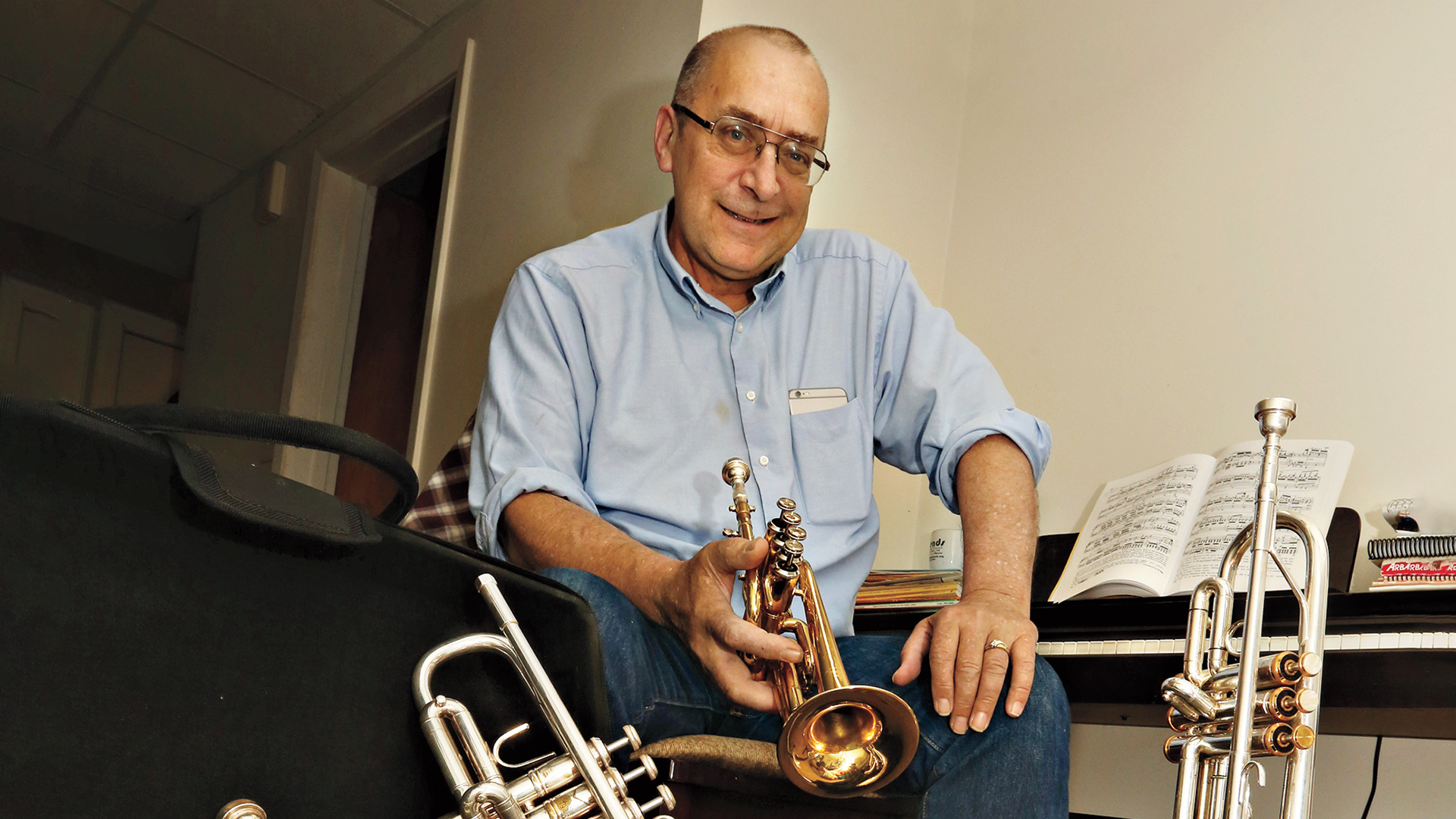
For more than 10 years, I kept a painful secret. I told no one—not even my wife, Ronda. The secret was my love of music. Not just listening. Playing. Making a living with my instrument. Closing my eyes and becoming one with a piece of music.

I’d done all of that once. After learning classical piano and trumpet as a child, I thought I’d found my calling, playing around the world in the U.S. Army Band.

It was a dream come true. Until I was abruptly discharged during the post–Cold War drawdown of forces. The loss of my job came right as my second marriage was falling apart.

I loved music and felt betrayed by all that happened. I’d grown up in a military family. What would I do now? Crushed, I vowed never to play again. I returned my Army-issued trumpet and began a financial planning career.

I didn’t even tell Ronda about my musical past when we met and married years later. I kept things vague: “I was in the Army nine years. Served in the first Iraq War. Honorable discharge from my last post in Fairbanks.”

A few years after marrying, Ronda and I were visiting my parents in Texas when my mom asked, “Play something for me, Brian.” She still had the piano I’d played as a kid.

The request threw me. Mom had never taken an interest in my music. She and Dad didn’t play and disliked classical and jazz. They certainly didn’t approve of music as a career. They were relieved when I’d put down the trumpet and found a “real” job. Mom hung on to the piano because she thought it made the house look respectable. I probably could have let her comment slide.

For some reason, I sat down at the keyboard. My fingers hovered over the keys, as if ready to play. A strange sensation came over me. I closed my eyes. Years of memory and longing gathered in my hands.

Why was this part of me so hard to forget? The family joked when I was growing up that my parents liked only two kinds of music: country and western. Nothing in my upbringing would have pointed toward a musical career. Piano lessons came from Mom’s notions of respectability.

I was transported the first time I heard a classical music record that had been given to my dad by a military friend. Dad didn’t want it, so I took it. Tchaikovsky’s Piano Concerto No. 1 was so romantic and dramatic. My joy was magnified when my teacher told me I could learn to play like that someday.

Our church denomination was conservative and frowned on instrumental music in worship. The more proficient I became playing Tchaikovsky, Rachmaninoff, Beethoven and Bach, the more I wondered if God approved.

My parents sure weren’t enthusiastic, especially after my dad, a career military officer, was transferred to Okinawa, Japan. Unable to take our piano, I focused on trumpet and joined my high school band.

We returned to the United States, and I graduated high school and enrolled at Abilene Christian University. Mom and Dad insisted I major in music teaching, not performance. With $18,000 in mounting student loans, I perked up when a friend mentioned I could find work playing trumpet in the military.

A recruiter told me that not only could I start playing straight out of basic training but the Army would pay off my student loans and I’d get to travel all over the world.

I left college without graduating and enlisted. It was just as the recruiter promised. I played for soldiers at bases, entertained officers at clubs and inspired crowds at ceremonial occasions.

My most solemn duty was playing taps at funerals. That’s a trumpeter’s job, and I never took it for granted.

The work truly was all over the world. My bandmates and I traveled constantly. I burned through two impulsive marriages and began to feel burned out myself as I neared a decade of service.

It was the relentless schedule, not the music, that ground me down. My job performance began to slip. I got a couple negative annual reviews.

Bad timing. In the mid-1990s, the military was drawing down. Guys with low job ratings were the first to go. Less than two years after arriving at an assignment in Fairbanks, I was discharged.

Suddenly jobless and alone on the frozen rim of the continent, I was shocked to discover that, in a way, my parents were right: There was little paid work for musicians in Fairbanks.

For a while, I drove a taxi and did odd jobs. Finally I admitted my musical dream was dead. Maybe God really hadn’t approved of the whole thing. It all felt so raw, so painful. I just wanted to forget. Never again would I let music break my heart.

By the time I started dating Ronda, it almost felt as if my life as a musician had never happened.

Which is why it made no sense that I responded to my mom’s casual request by sitting down at the piano.

The score above the keyboard was the second movement from Beethoven’s Sonata Pathétique. A beautiful piece of music, one I’d always loved. Could I play it now? Did I want to?

I lowered my fingers. The notes were clunky at first. I kept having to look at the score. Faster than I anticipated, the old feeling came back. My eyes closed. My fingers danced across the keys.

Lost in the music, I didn’t notice Ronda standing at the doorway. I looked up. She gave me what I call the dreaded spousal stare, then turned away, shaking her head.

Flustered, I kept playing.

Ronda didn’t mention it the rest of the trip, and I was too self-conscious to bring it up. Still, I kept catching her giving me “the stare.”

“Why do you keep looking at me like that?” I blurted one morning back home in Alaska.

“You play piano!” she exclaimed. “How come you never told me?”

I mumbled something back about my playing days being a long time ago.

“We don’t even have a piano in the house,” she interrupted. “That’s just not right!” Before I could reply, she got up and left the room. I sat there cupping my coffee, wondering whether she was mad.

Ronda said nothing more, though she continued to give me strange looks. They evolved from expressions of incomprehension to something closer to that of a parent keeping a secret before a birthday.

“I ordered a piano,” Ronda announced one day.

“You what?!” I sputtered.

“It’ll take a couple months to get here though,” she said. That was Ronda. Efficient, good-hearted and no-nonsense.

“Where’d you get the money?”

“Coin jar,” she said. For the past year, I’d noticed her wrapping coins from our large coin jar. She’d amassed $900.

The piano arrived just before Christmas. It was a Yamaha electric with weighted keys and settings for various keyboard instruments.

It was an unbelievably generous gift. It also scared the heck out of me. The piano at my parents’ house was far away. I’d played it, then left.

This piano was here in my house, challenging me. I couldn’t walk away. If I played, I had to live with the results. What if that burst of inspiration at my parents’ house had been a fluke? What if the old skill never came back?

I started tentatively at first, playing the keyboard a bit each day. I also told Ronda more about my musical past. What this instrument meant to me.

“I wish you’d told me earlier,” she said. “When they discharged you, it was military bureaucracy, not a judgment from God. There’s no reason you shouldn’t play as much as you want. Music is part of you.”

I worked up to practicing an hour a day. Unable to resist, I bought a cheap trumpet online and dug out my old scores and handbooks.

Within a couple months, I was playing trumpet and piano as if I’d never stopped. Ronda even unearthed a clarinet she’d played in high school, and we would play together. Our house filled with music.

An old Army buddy of mine, another trumpeter, called me up. “Heard you’re playing again. About time. Listen, how would you feel about filling in for me at a rehearsal tonight? It’s a community jazz orchestra. Big band stuff. You’ll love it.”

Before I could say yes or no, my buddy said, “Great. The rehearsal’s at seven. I’ll tell the guys to expect you.”

When I arrived at the rehearsal, I was handed the lead trumpet book. In a big band, the lead trumpeter sets the style. It’s a huge responsibility.

To my immense relief, every piece we played was one I knew from years ago. It all came back. I was asked to join the band at the end of the rehearsal.

It’s been more than a decade since I sat at my parents’ piano and stunned Ronda with the Beethoven sonata. I wonder sometimes what prompted my mom to ask me to play that day.

But maybe I know. A few years ago, I quit financial planning and earned a degree in music performance. I play in the Fairbanks Symphony Orchestra, the University of Alaska, Fairbanks Wind Symphony and at churches and other venues around town.

I like to think it was God saying, “Play something for me, Brian.” That day and every day.

I’m so glad I listened. I’m so glad I get to do what makes me me.

Read more: 6 Ways to Boost Your Well-Being

For more inspiring stories, subscribe to Guideposts magazine.

His Son’s Brave Battle to Recover from Polio Bolstered a Father’s Faith

Guideposts celebrates its seventy-fifth anniversary this year. We’ve been looking back at stories that mark important events during those years, moments when America came together.

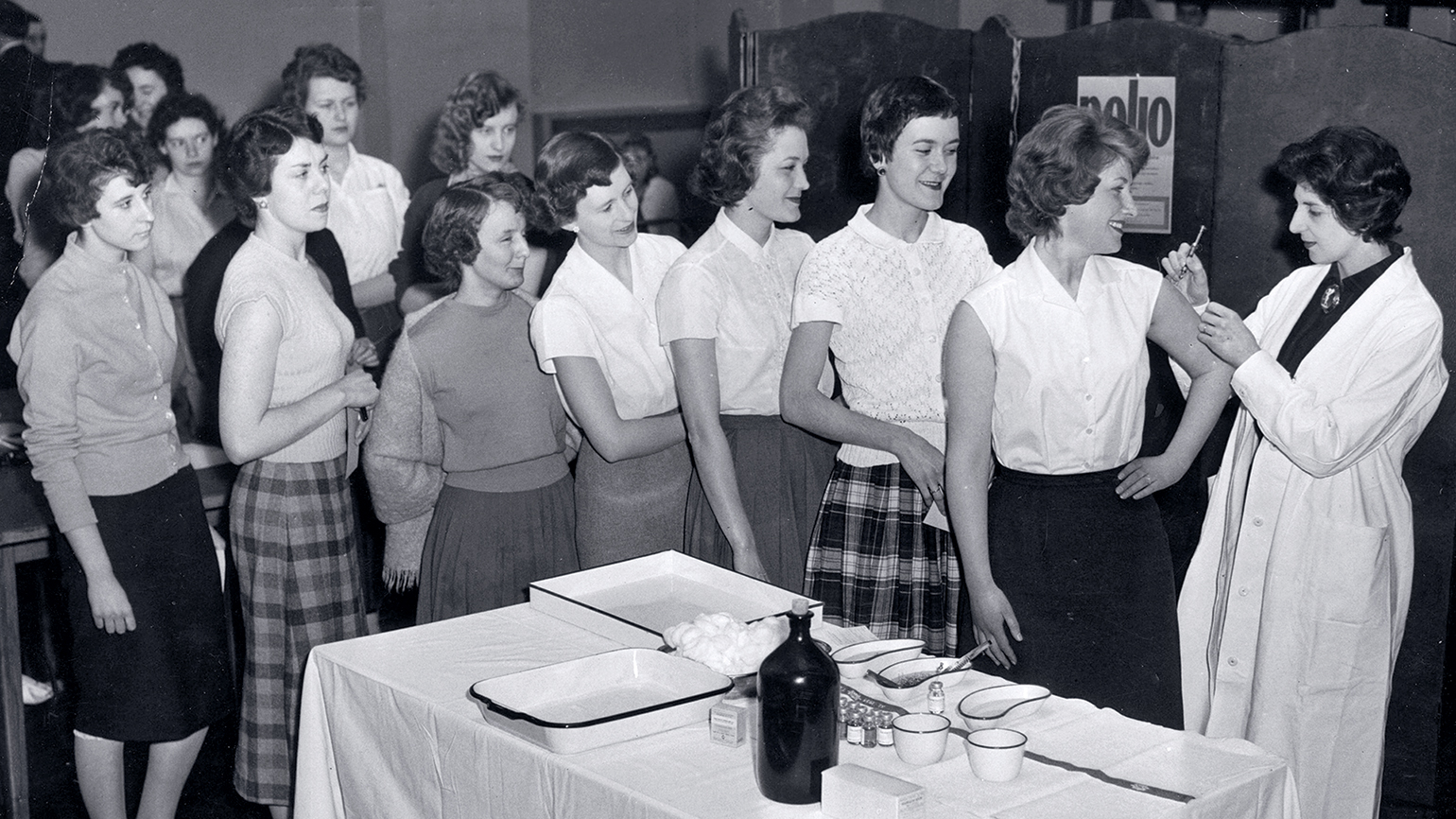
In the early fifties, polio was a national scourge. The epidemic peaked in 1952; there were nearly 58,000 cases, with more than 3,000 deaths and some 21,000 people left paralyzed, most of them children.

The next year, Jonas Salk announced his polio vaccine. The first volunteer to test it had been Bill Kirkpatrick, a teenage polio patient. (Someone who’d already contracted polio wouldn’t get the disease again if something went wrong.) In 1954, his father wrote an open letter to his son in gratitude for his role in creating the lifesaving vaccine.

Bill not only recovered from polio but thrived. He graduated from Franklin & Marshall College, went to seminary and became a minister in the Episcopal Church. He served in several dioceses, scaling back his work in the 1980s, when he developed post-polio syndrome. He died in 2003.

Here are his father’s poignant words, as published in the October 1954 issue of Guideposts.

Dear Son:
Every father has a special feeling about his son that’s hard to put into words. From the day you were born, back in 1935, and all during your next 19 years of achievement, I saw a little of myself in you—just as I did in Joe, your older brother, during his school days—my hopes, my dreams, my own ambitions unfulfilled.

I was proud of your boyish ability to cast for trout, your skill in other sports. I’ll not forget the football game at Shady Side when you, a 130-pound tackle, kept breaking through the opposing team’s line to down their 175-pound fullback. When you were rushed to the hospital that Labor Day weekend in 1951 and put on the critical list with polio, I couldn’t believe it. In the ambulance, I was too numb to say anything, while your mother kept whispering, “Keep your faith in God, Son; remember the Psalm: ‘The Lord is my Shepherd, I shall not want.…’”

As you fought for life, I tried to put the pieces of my own confused faith back together. How much faith did I have?

Once before I had seen it demonstrated—back in 1928, when your mother was seriously ill. The doctors had given her up. I prayed then that she might live, and my prayers were answered. Had I forgotten in so short a time?

Now, 23 years later, I had to admit to myself that in this crisis with polio, your mother’s prayers and faith were stronger than mine.

While the doctors were fighting for your life during the next weeks, you were more concerned about another polio-stricken boy in the same ward. Remember how he kept saying, “I wish I could die, I wish I could die.…”

The Reverend Mr. Penrose was the only person permitted to visit you while in isolation, and he told me how you repeated the Twenty-Third Psalm to this boy and prayed for him. Also how you led prayers with others who were suffering.

And I heard that the nurses looked forward to going into your ward. They knew that, regardless of your pain, they could always count on a smile lighting up your face and their day.

These reports made me feel more proud of you than any of your football or scholastic achievements.

Then a series of God’s miracles started to happen. Although the doctors thought you would die, you lived. They felt you would never walk again, but in three months you began to sit up with the aid of a steel back brace.

Remember your visit home that Christmas holiday? At midnight that New Year’s Eve, Mother and I held you upright while we all sang “Auld Lang Syne.” She believed that if you stood on your feet at the beginning of the year you would continue your progress.

Three months later, with some help, all 90 pounds of you stood on your feet. Dr. Jesse Wright was amazed but stated that you would probably always have to wear leg braces. “I’ll walk without braces,” you said. Within a year, you did.

Something happened to me during this period. Before you were stricken, I had always considered myself a good Christian, attending church, contributing money, serving on committees.

But I honestly wonder now how much I really believed. At home we were always too busy to have blessings at meals. When you were so helpless, I even questioned God’s existence.

Then you began to recover and credited it to faith and prayer. I felt ashamed.

It was in June 1952, while still badly paralyzed, that you and 40 other polio patients volunteered to help Dr. Jonas Salk in his experiments with a new and untried anti-polio vaccine. We had no idea, until told by reporters in the spring of 1953, that you were listed as the world’s Case History No. 1 to receive the vaccine.

When you persuaded us to sign the consent for the test, we hesitated at first because of the possible danger. Then you talked about your brother. “Joe has two young sons, my nephews,” you remarked. “I’ll do anything possible to help protect them and others from polio.” When you said that, I thought of Christ’s words “Greater love hath no man than this…” (John 15:13).

We don’t have all the results yet, Bill, but I feel sure Dr. Salk’s work may save thousands of lives. Today I can understand clearly how God works through people and how he can use a paralyzing illness such as yours for good.

I also learned about the concern and love of friends. During your illness, our telephone never seemed to stop ringing. Mattie [the Kirkpatricks’ maid] gathered together a group of people in her church and held prayer meetings for your recovery. And your mother never let our spirits lag. How I remember her in those dark days, by the piano, playing and singing her favorite Welsh hymn, “God That Madest Earth and Heaven.”

A father is fortunate when he can learn as much from his son as I have learned from you. You helped me see that the test of a Christian is how he meets difficulties, tragedies and sorrows. You also helped me see the message of triumph in Christ’s experience on the Cross.

Whether you become a doctor or a minister, I know your one concern will be to relieve suffering, to bring help and cheer to those in need.

Your mother and I are very proud of you.

Love, Dad

For more inspiring stories, subscribe to Guideposts magazine.

His Loving Voice to Guide Me

One of the most frightening signs that there was something seriously wrong with me were the voices I began hearing in 1974.

At first they were just stray, nagging worries that dogged me through the day, self-doubts that we all have from time to time. They seemed to rise up out of nowhere—vague thoughts with an accusing edge: You really don’t work very hard, do you? Or I’d be alone in my car and it was as if I overheard someone whisper, Everyone knows Lionel Aldridge doesn’t care about his job.

The fact was I worked hard and cared very much about my job. I was something of a fixture on the Milwaukee scene. After an all-pro career as a defensive end with coach Vince Lombardi’s two-time Super Bowl champion Green Bay Packers football team, I’d moved easily into the role of NFL commentator and local TV sports anchor. I had a successful, high-profile life.

That was before the voices.

The voices were very scary and confusing. I didn’t know what to do. I didn’t want anyone to find out the terrible things happening inside my head. As an athlete I’d been trained to be tough; it was not my nature to seek help. I wanted to be strong.

At first I tried to ignore them. I was just going through a bad period, I thought. But the voices grew more belittling and threatening, more real. I’d be standing in front of the mirror shaving when I’d hear from the next room, You don’t take very good care of your family. “That’s bull!” I’d shout. I’d search the house for my tormentor. “How’d he get in here?” I’d mutter, as my wife, Viki, shook her head in dismay. There never was any intruder.

If a co-worker at the station didn’t smile at me in the morning, a voice would hiss, See? He doesn’t think much of you either. He knows you don’t deserve your job. I became hard to get along with. I started talking back to the voices, bickering and pleading and cursing. I am a large and imposing man; it must have scared folks half out of their wits to see me shouting at people who weren’t there.

Rumors flew around town that I was on drugs. That was completely false, but I was in no shape to prove otherwise. I was getting worse. People wanted to help but they didn’t know how. “He’s under a lot of pressure,” I heard them say.

One night, attending a Bucks basketball game with a friend, I froze with terror as we moved in front of the crowd toward our courtside VIP seats.

“What’s wrong?” my friend asked.

“These people,” I stammered, “they…they know everything I’m thinking. They’re all watching me.”

I was dizzy with panic. I wanted to run.

“Take it easy,” my puzzled friend whispered, looking at me as if he suspected I was playing a gag on him. Then he saw the perspiration drenching my shirt collar. “Maybe you’re working too hard,” he muttered, putting an arm on my shoulder and easing me into my seat.

Soon that feeling of being watched wouldn’t let up, even on the air. Looking into the camera, I could barely hold my composure as I reported the nightly sports scores. The wide camera lens zooming in on me was a glistening, all-seeing eye that could plumb the farthest, most hidden reaches of my soul. Everyone who was watching on their TV sets, I was convinced, could see right inside my brain, where laid bare for all to look on in disgust were the grimmest secrets of my life.

I was sure there was a far-flung conspiracy to destroy me. I fought with total strangers on the street. I separated from Viki and our two daughters, and eventually divorced. I lost my job and my friends. There was nothing left but the voices shouting in my head, as real to me as an opposing 260-pound pulling guard on a goal line stand back in my playing days. My life spun out of control.

One night the voices commanded me to start driving. I didn’t want to leave Milwaukee. It had been my home for so many good years, and a part of me still understood that I needed a home now more than ever. But my state of extreme delusion robbed me of choice.

I hastily packed up the car with some old clothes and a few basics. Almost as an afterthought I threw in a Bible I’d owned since the Packers. I used to take it with me when I traveled with the team. Even now I’d read it to try and drown out the voices. What little relief I could get sometimes came from immersing myself in that old Bible.

I started to drive with no map or plan—I just filled up on gas and went. I tried to turn back; I couldn’t do it.

I crisscrossed the country in a wilderness of interstates. At first I slept in hotels, then motels, then flophouses. I went to Chicago, Kansas City, Dallas, Sacramento, Las Vegas. My funds evaporated and my credit cards were cancelled, so I started living in the car, occasionally washing dishes for food and gas. In Florida I ditched the car for a hundred dollars and hit the streets with just a battered satchel on my shoulder.

Occasionally I hung around a town for a while doing odd jobs, living on the streets and eating at soup kitchens. Quite naturally, people would stare at me, and that would only make my delusions of persecution worse. I never held a job for long. What could you do about a menial laborer who marched and sang for no reason and jabbered at people who were 2,000 miles away? Had I seen such a man on the street in Milwaukee only a few years before, I would have shaken my head sadly and crossed to the other side.

I’d become one of those lost, devastated souls. There were a lot of them out there with me, crippled by mental illness, but as I wandered the country I was only aware of my own haunted, unhappy world a million miles from the life I once had.

One night I slept in a field off an interstate near the Great Salt Lake. I didn’t notice when I woke up, but while I was sleeping my jewel-encrusted Super Bowl ring must have slipped off. Those rings are not easy to come by, and I’d hung on to mine as a kind of symbol of who I’d once been. No one ever questioned me about it. I guess they thought it was just some crazy piece of jewelry that a crazy man wore.

I didn’t think about the Packers much anymore, and when I discovered the ring missing, it was as if I’d been stripped of one final link with my past. I sat in the middle of a sidewalk and wept into my hands.

It wasn’t long afterward that I was gripped by a gruesome hallucination. I was hanging on a cross, like Jesus. Standing in a roadside ditch under a hot white cloudless Utah sky, legs together and arms outstretched, I vividly experienced my own crucifixion. It is hard to explain now, but in my tortured imagination I actually believed that I was living out the event. It seemed so absolutely real.

I remained that way for hours. People shouted from cars whizzing by on the desert highway. A few threw objects at me. But I was anchored to that spot, fully convinced that I could be seen hanging on a cross and no one cared.

“Help me!” I cried out, the sweat and tears streaking my dust-caked face. “Help! I’ll accept help from anyone.”

That night, exhausted and hungry, I huddled beside a bridge and read my battered Bible, the only thing left now from my old life. I still had moments when I could dimly perceive reality. A core part of me knew that I must get well. But that clarity was fleeting, and my madness always took me back in circles and filled me with hurt and fear.

I was reading Paul when I came across a passage that stopped me: “Earnestly seek the higher gifts.” I’d been taught that these gifts were spiritual, given by God to lift us up. Were they still there for me? I wondered what gift could be found in the demented chorus that chased me across the country. Those voices were so angry and critical.

Yet didn’t I know all along that there was one voice with me my whole life, a flowing, wordless voice that said, You are loved? It was the voice of God, a voice for all of us to hear in our own way. I’d never stopped believing in God, but His voice had been drowned out by my illness. When I stopped long enough to listen, I knew that with God I had hope, I had love. That was what Paul was talking about.

Eventually I wandered back to Milwaukee. The voices still besieged me. I lived on the streets. Being back brought me in contact with old friends. I was ashamed for them to see what I’d come to. I tried to hide. Yet for some reason I’d come back here. I knew that.

Finally, through the repeated intervention of people I’d known for a long time, I was committed to a hospital. I didn’t want to go in—I thought it was all part of the big conspiracy. Commitment is difficult legally, and I made it harder. Yet it marked the start of the road back.

I learned that I had paranoid schizophrenia, a physical disease that affects the mind. Hearing voices was one of the symptoms. Slowly the doctors hit upon some drugs that helped. Little by little my condition improved, the voices gradually subsided.

At first it was horrifying. It was an awful thing to face, like seeing a crazy man on the street and suddenly realizing that you are looking into a mirror. One day during therapy, I begged the doctor to show me one person who’d recovered from paranoid schizophrenia.

“Well, Lionel,” he replied, “statistically many people do recover partially, even fully.” He went to quote all the facts and figures.

“No,” I interrupted, “I want to actually meet someone who’s beat it.”

There was no one to show me. People who recover from mental illness rarely divulge that devastating stigma. It would have helped me to see someone who’d come back. “If I get out of here, Doc,” I promised him, “I’m going to make a point of talking about it.”

I did recover. Not without setbacks and relapses, not without moments when I thought I could never again face life, but I did get well with the help of friends, doctors who found the right medication to help me and the voice of a loving God.

I discovered new strategies to cope with the world. For a while, symptoms sometimes came back. Like one night after I got out of the hospital. I was walking up to a cafe near my apartment for dinner when suddenly I knew that every patron inside was saying terrible things about me. I stood at the door, terrified, my heart pounding. I was about to run home and lock myself in when I thought, No, you’ve got to do this. You’ve got to go inside and face these people.

Still I was convinced they were all talking about me. Well, I figured, maybe they’re saying good things like, “Hey, there’s Lionel Aldridge. He used to play for the Packers and then he got sick. Look how good he’s doing now.” If people really were saying bad things about me, I would have to forgive them. Forgiveness made what they said harmless; it didn’t matter whether it was real or imagined.

I went inside, sat down and ordered my dinner. The room was alive with chatter. I was almost too nervous to eat. Then slowly it dawned that these people were talking about everything in the world except me.

It worked. From then on when I thought strangers were talking about me, I always convinced myself that they were saying good things, or forgave them for the bad things I imagined them saying. And through the whole process I never stopped asking God’s help or listening for his voice.

In time the voices went away. I still see a doctor and take my medication, like anyone with a serious illness, but I am well again, well enough to keep a promise. Today I travel the country speaking to groups about mental illness and recovery. It’s vital for patients, families and even doctors to see someone who’s actually made it back.

In January 1985, the anniversary of the Packers’ first Super Bowl win 18 years before, I got a card in the mail from a bunch of my old teammates. They’d gotten together and commissioned an exact copy of the missing victory ring to give to me.

I knew that day that I had returned. Even when you think you’ve lost everything in your life, there is always hope of finding a way back, sometimes to an even better place.

I found my way, with the loving voice of God to guide me.