

Embrace God's truth with our new book, The Lies that Bind

Finding Hope in an Empty Nest

To our left, the Santa Lucia Mountains jutted into the cornflower blue western sky.

To our right, the Pinnacles Mountains rose likewise into the cloudless east.

And rushing alongside our tour bus windows in a blur of emerald, teal, mint and kelly green was the verdant flat patchwork quilt of California’s Salinas Valley.

The tour guide’s microphone crackled with upbeat commentary.

“Nestled between two mountain ranges, the Salinas Valley offers the perfect soil and climate for lettuce, asparagus, cabbage, tomatoes, carrots, kale, broccoli, and grapes,” he said. “We call it America’s salad bowl.”

Tourists on the bus chuckled.

Not me. I reached for a tissue to dab my eyes and blow my nose. Sitting next to me, my husband, Tom, rolled his eyes as if to say, “Here we go again.” In a gesture of understanding, he reached for my hand. But I pulled away, and glumly turned my face to the window.

I’d read about empty nest syndrome in magazines, listened to older friends talk about it, but never had experienced it first-hand. Until now.

Only two months earlier, Tom and I had said goodbye to our son and daughter as they went off to college. But it felt like two years had passed.

Although the hot California sun blazed in the autumn sky and the tour guide told us that it was a seasonable 82 degrees outside, a cold lonely wind swept through my heart.

It wasn’t that I had too much time on my hands. With two hefty tuitions to pay, I was working harder than ever. Instead of feeling down in the dumps, I should be grateful and happy for the opportunity to join Tom on his business trip to California.

After all, wasn’t this exactly the sort of grown-up vacation getaway we had dreamt of for so many years?

I pressed my forehead harder against the cold glass window, and vivid memories rushed through my mind, fast as the passing scenery…

Lullabies… bedtime prayers… birthday parties… Christmas mornings… hamsters… tricycles… training wheels… skinned knees… more hamsters!… lemonade stands… ballet recitals… piano lessons… science projects… slumber parties… first dates… driving lessons… high school proms… graduations…

Each tender memory was like a little death, each deserving its own time for grieving. But it was too much loss to process. Too much change, too fast!

I tried to comfort myself with the knowledge that Katy and Brinck were not only where they wanted to be, but where they should be.

This was a happy, exciting time in their young lives, a season of new discoveries, challenges and growth. Their new school communities provided safe places where they could try their wings and soar.

But I didn’t want to let go! I missed not being involved in the intimate day-to-day details of my children’s lives.

Now, it somehow didn’t feel right not knowing what they’d had for breakfast, if they were dressed warmly enough, what books they were reading, what friends they were with, what recent experience had caused them to think more deeply, or laugh, or—perish the thought—cry.

Let’s face it. I didn’t like the fact I no longer had control over these things. I tried to chase away anxious thoughts of the poor decisions and mistakes they might make—all part of being human and growing up—but painful nonetheless.

Please God, keep our children safe. Help their mistakes be learning experiences—the kind of lessons-learned that ultimately serve to strengthen and build character…

And who was this stranger sitting next to me? Without the daily details of our children’s lives to discuss, what exactly was our marriage supposed to be about? I think what scared me even more than life apart from our kids was the unknown prospect of our new empty-nest life together.

It’s as though our children are off dancing on the mountaintops, I thought. While Tom and I are left behind, stuck in the valley.

My thoughts were interrupted by the crackling microphone.

“Pretty as those mountaintops are, folks,” the tour guide said, “Remember this: It’s down in the valley where everything grows.”

Again, Tom reached for my hand.

Don’t worry, I heard God’s gentle whisper in my heart. I’ll watch over your children. The time has come for you and Tom to move on. I took my husband’s hand and gripped it tightly.

God had brought us safely this far. Surely, with his help, new discoveries, challenges and growth were waiting for us, too… just around the bend.

Thank you, Lord, for change! I accept your challenge to grow.

Download your FREE ebook, Rediscover the Power of Positive Thinking, with Norman Vincent Peale.
Finding Hope After Catastrophic Loss

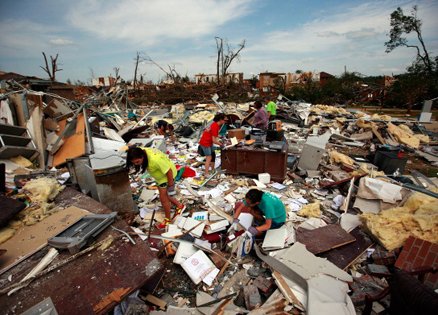
It’s impossible not to be touched in some way when catastrophes, natural or man-made, hit. Most of us absorb the horrors on TV or YouTube—towns crushed by the tsunami in Japan, oil gushing out of pipes a mile below the surface in the Gulf, a wide swatch of Tuscaloosa, Alabama reduced to rubble. Or, we read about people like Cynthia Wood surviving —along with seven kids and three dogs—a tornado that sliced through her home.

As the post-disaster weeks go by, re-building and recovery take center stage. Tents and trailers are set up, debris removed. But what of the survivors? How do they recover mentally and emotionally in the face of sudden devastation? How do you re-build a shaken faith?

Traumatic events affect us deeply—mind, body and soul. Intense, erratic emotions, thoughts and behaviors are common. Mental turmoil wears on the body, causing stress, headaches, nausea or heart strain. Such stress can in turn damage relationships. A survivor might withdraw, avoiding activity and people.

When Andi O’Conor, who was on vacation at the time, heard the news that her Colorado home had burned down she literally, physically started shaking.

“It was that weird body adrenaline thing,” she recalls. She then emailed friends asking them to spread the word. “That’s the real excruciating part, telling people,” she says. “Each time you tell someone it’s as if it just happened; they react like you did when you first found out and you’re plunged back into that energy of shock and dismay. Even after you’ve had a day or two to get used to it, telling people opens up that early wound all over again.”

For many, like Andi, what comes next is a “dark night of the soul.”

“This is when your faith is tested in epic ways. I was asking, What if everything I think is wrong, what if the universe isn’t a benevolent place? What if God is going to drop me on my butt after all these years? But I realized my faith hasn’t changed. When all’s well it’s easy to say, ‘Things happen for the best,’” but, she adds, when a catastrophe hits maintaining that faith is a true test.

Ultimately she discovered grace in the generosity of friends and strangers, and through helping others–her neighbors had also lost their homes. She also heard from people all over the globe who read her blog. Hearing that her essays on loss and healing have helped others “has been my real gift,” says Andi.

Most people use inherent coping skills such as relying on a social support network–like Andi did–reestablishing a daily routine, finding the information they need to carry on their lives.

When Amy Knowles, assistant professor at King College in Bristol, Tennessee began her research on survivors of the Hiroshima atomic bomb, she said her reaction was to pigeon-hole people into two categories: the folks who just “got by,” and those who went beyond that, who thrived.

“But,” she says, “I found that most people would weave back and forth. In the end, every single one of them exhibited at some point, the ability to overcome the world’s most terrible disasters. The biggest thing I took away was amazement at how God allows us to overcome adversity.”

Still, she acknowledges, that while survivors may be resilient, it’s common for memories of the traumatic event to return many years later. The Hiroshima survivors could vividly describe smells, sounds and sights from that day. Several admitted that, even 65 years later, certain sensory perceptions triggered acute memories.

Survivors of a catastrophe involving multiple losses: any combination of spouse, children, home, neighborhood will likely be in a daze, because there is no way to prepare psychologically for being blindsided with that much disaster. “It’s ‘bereavement overload,’” says Dr. Karla Vermeulen, deputy director of the Institute for Disaster Mental Health at State University of New York, New Paltz.

The best way to cope is to reach out to family, friends, clergy–people who know and support you, says Vermeulen. “It’s a process of adjustment, rather than recovery.” Recent research defies the old view that victims’ best step toward healing is immediately talking about their trauma. While some people may feel better sharing what they’ve endured, for others, discussing it too soon may evoke the ‘fight or flight’ response that emerged when the event took place.

Faith too can suffer in the midst of catastrophe. It’s often a long road before some survivors recognize God’s presence in their recovery. Particularly for people who believe even unconsciously, “If I pray,” or “If I go to church, no harm will come to me.” The pillar of their belief is upended.

“It becomes ‘Why me, why did this happen, what did I do wrong?’” says Alice Graham, executive director of the Mississippi Coast Interfaith Disaster Task Force, who coordinated pastoral counseling following Hurricane Katrina and the Gulf oil spill. “A disaster can become a crossroads, either to a fuller understanding of God, or when it goes negative, God becomes punitive and disconnected.”

The most important thing for caregivers is to simply let survivors talk. For as little or as long as they need. Graham re-assures people that they could express anything about their faith without risking indictment. She and her fellow counselors were there just to listen.

Eventually she gently asks, “How has God shown up in ways that surprised you?” Post-Katrina the answers were tales of generosity: people sharing their food, volunteers that drove in from other states, donations that piled up.

Graham also found surprising sources of survivor resilience. While leading post-Katrina therapy sessions for seniors (which she called Caring Conversations), she saw many African-Americans recalling their fortitude in the face of prejudice and segregation. “If I can survive Jim Crow I can survive this” was the attitude.

Another surprising source of resiliency? The Gulf Coast’s ability to celebrate the moment. Whether it’s the Saints winning the Super Bowl or the annual Mardi Gras party or a jazz band procession at a funeral, “It’s the strong community,” says Graham. “It says ‘God is still active and present in spite of what we have experienced.’”

Whether God’s presence is revealed in a parade, or a shared plate of food, or a newfound desire to repay generosity, the common denominator is human connection. In the face of pain, resilience is found in our relationships with family, friends and faith.

Here are 5 online resources that can help survivors of catastrophes:

APA’s Tips for Recovering from Disasters and Other Traumatic Events
The American Psychological Association offers ways to understand what are the normal responses to catastrophic events in order to help individuals cope with the psychological and emotional after-effects.

The National Child Traumatic Stress Network
The organization’s website has a wealth of information to help children, families and communities who have suffered traumatic events.

The U.S. Department of Veterans Affairs’ National Center for Post Traumatic Stress Disorder
This site has resources both for disaster first responders, and for victims.

A Toolkit for Disaster Planning
The best way to ensure your resilience after disaster? Be prepared. This website offers everything you need on hand in case of emergencies.

Ambiguous Loss
This is the website of Dr. Pauline Boss, author of Ambiguous Loss (Harvard University Press). The book and site define what it is (death without verification), a situation faced by many survivors of the tsunami and Katrina.

Download your FREE ebook, The Power of Hope: 7 Inspirational Stories of People Rediscovering Faith, Hope and Love

Finding Her Purpose

I stared blankly at the stacks of papers that filled my elderly neighbor’s living room that summer day. What had I gotten myself into?

“I need you to be my eyes,” Ruth said. “I’m looking for a notebook with a picture of this teapot.” She pointed at a cabinet filled with beautiful porcelain teapots. “It’s here somewhere.”

I smiled nervously. “Do you remember where you last saw it?”

“Goodness, no,” she said. “But you’ll know it when you see it.”

This was what my life had come to. Even an 89-year-old woman with bad vision could see I had nothing better to do than hunt for a dusty old notebook.

I’d moved back home when I was 28, feeling like a failure at work, at love, at everything. I was constantly tired and achy—depressed. Nothing interested me. I’d always enjoyed crafting, but now I never seemed to have the energy. I couldn’t remember the last time I’d felt God in my life. Mom kept at me to get involved, to help others. But what could I offer? Tips on how to be a loser?

So when Ruth Thornton called, asking if I could “pop over for a minute,” Mom had practically pushed me out the door. “It’ll do you good,” she said.

Now I searched through a sea of paperwork. Ruth had moved on to a different topic, how she’d gotten started collecting crosses.

My head was spinning.

“I don’t think I can find it,” I said after an hour.

“That’s all right. It’ll turn up,” she said. “They always do.”

Her optimism baffled me. Maybe upstairs? I thought. There, wedged in a corner of a spare bedroom, I found it.

“Wonderful,” Ruth exclaimed. “I’ll use that in the talk I’m giving next week.” I looked at her in astonishment. Almost 90 and her life was busier than mine.

I found myself visiting Ruth several times a week. At first, I’ll admit, it was just to keep Mom off my back. But there was always something that intrigued me, a book she suggested I borrow, a pretty pattern in a teacup, one of the crosses in her collection on the wall.

One day I arrived to find Ruth sitting in her living room squinting at a piece of stationery. “I need your eyes again,” she said. “Can you read this letter to me?”

“Sure,” I said. I moved a chair next to hers.

“Dear Ruth,” I began reading, “I was thinking about the dig we went on…”

I looked at her in surprise. “Were you an archaeologist?”

“No,” she said, smiling at the memory. “It was just a hobby. But we’ve stayed in touch.”

I finished reading the letter. Ruth said, “Thanks. Now I better write her back.”

I busied myself organizing some of her books, but I kept glancing at Ruth, carefully writing. She was amazing, a puzzle. How had this woman, living in a tiny Iowa town, managed to live such a full life? She just never seemed to stop. Surely the letter writer didn’t expect an immediate reply. But there was Ruth, hard at work.

Soon, I realized that Ruth wasn’t writing just an occasional letter. Nearly every day there was a note for me to read and a letter for her to write. She had collected friends like she had teapots, and had stories to go with each one, stories of travel and adventure, but also of raising her three children and selling clothes in her and her husband’s store in Storm Lake. She had lived a life I could only dream of living.

Summer faded into fall. More and more Ruth needed me to be her eyes and even her hands. I noticed that she was falling behind in her cleaning and offered to do her dishes. Ruth asked me to do more tidying up, more odd jobs. Finally she offered to hire me as a part-time housekeeper. I hesitated. A housekeeper? Then I thought, What else have I got going on?

“It’s a deal, Ruth,” I said.

That winter, Ruth fell and shattered her hip. A son called. Would I spend evenings with Ruth in a nursing home while she recovered? They’d be willing to pay. I thought of Ruth lying there alone. How could I refuse?

One cold winter night, when I was wondering for the millionth time where my life was going, I trudged down the hall to Ruth’s room. She seemed so small, so helpless in her bed. When she saw me, she managed a thin smile.

“I’ve been hoping you’d come,” she said. “A letter came today. Could you read it?”

I sat by her bed and quickly read the letter. “Anything else?” I asked.

She looked at me hesitantly. “Would you mind helping me write a letter back?” she said.

It was such a simple, obvious request, but for a moment it left me speechless. Ruth needed me. This woman, who had lived such a full, rich life, truly needed me. I had found my purpose. It had been in plain sight all along.

Connecting with others. That’s what kept Ruth going. And here she was, her body broken, still wanting to reach out. She needed me to help her touch her world. But more than that, I finally understood that there was something I needed from her.

“Who should we write?” I asked, collecting paper and pen. Her face lit up with excitement.

When we finished, I looked over at Ruth. There was color in her cheeks. I knew how she felt, like a new person.

Ruth left the nursing home, and my services were no longer needed. And yet I no longer thought of visiting Ruth as a job. Several times a week I found myself thinking of things I could do for her, baking some banana muffins or finding a poem I knew she would like, any excuse to drop by. But now Ruth was only a part of my life. I had started making crafts again, reconnecting with friends.

One day I found myself making Ruth a gift, stitching together a rainbow of yarns to create a large cross. With each stitch I felt my heartbeat quicken, my hand moving faster at a still familiar task. I couldn’t wait to show Ruth.

She held it up admiringly, her eyes twinkling. “Thank you,” she said. “It’s beautiful, absolutely beautiful. This will get a treasured spot in my collection.”

She paused, and then looked at me. “I so look forward to your visits,” she said. “You make me feel young again. You have so much energy and life. I wish I had your energy.”

I looked at her in surprise. Was there someone else in the room?

But as my eyes met hers I realized that Ruth saw someone I was only just now recognizing. My aches? They seemed to have vanished. My spirit? It felt lighter than it had in years. I had learned that every day is an opportunity to learn, to meet someone, to try something new. Frankly, I couldn’t wait to start the next lesson.

Finding Faith When She Needed It Most

“Faith Will See Us Through.” The words were engraved on a plaque on the wall of the hospital chemotherapy center where my husband, John, got his treatment. Good advice, but faith wasn’t always so easy to hold onto.

Shopping for last-minute Christmas gifts I felt my worries begin to take over. It was hard to watch my husband go through this. I stopped right there in the aisle of the gift store and looked down at my empty palm.

It was a little trick I’d devised for moments like these. When I felt overwhelmed I imagined the word faith written on my palm. But when I tried it today, the word seemed hazy and dim.

Disappointed, I went back to my shopping. I found a Victorian ornament for my mother-in-law and an angel for my friend Valerie. I headed to the register. There on the counter was a big bowl full of “spirit stones,” polished rocks with words like courage or gratitude engraved on the smooth surface.

I dug through the bowl. I knew the word I needed to find. “I guess you don’t have what I’m looking for,” I said to the clerk.

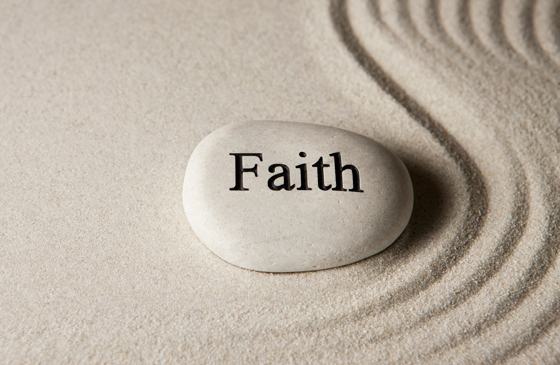
“Oh!” she said. “Here’s one more.” She reached around and picked up a stone that had fallen on the counter where I couldn’t see. She dropped it in the palm of my hand. It fit as if made just for me. The word engraved on it? Faith.

Download your FREE ebook, Angel Sightings: 7 Inspirational Stories About Heavenly Angels and Everyday Angels on Earth

Finding Faith in Iraq

I burrowed deeper into my sleeping bag. The concrete floor in the quarters I shared with three other Marine platoon commanders felt harder than usual.

The others had likely been up for hours, anxious to patrol the streets of Ramadi, Iraq, with their men. But I’d lain here until the last minute. I wished I’d never have to get out of bed.

This room was the one place where I didn’t have to face my men. Where I didn’t have to make decisions that could cost them their lives.

Again I relived the events of that day just over two weeks ago. That image of Lance Corporal Bolding on the ground, his legs blown from his body, played back.

A lieutenant nicknamed Ox blocks the way 10 feet from the scene. “You don’t want to see this,” he says, the words echoing in my mind. “You want to be able to lead your men with a clear head.” He’d meant well, but now it seemed like so much bravado. As if by looking away I could stop the pain.

Nothing was going to bring Bolding back. If only I could reverse my order for that day. That was the only way he’d still be alive.

Once, I’d found comfort in my faith. My men and I had prayed that morning, recited the 23rd Psalm, like we did each day.

I’d started the prayer as a pre-battle ritual three months before, when we’d first come to Iraq, hoping it would bring us together. We gathered in a hangar each morning, the men forming a semicircle, heads bowed. But God was AWOL when I needed him most.

Bolding had been our platoon mascot, the one we rallied behind. He had a smile so electric it could have powered a small town. His enthusiasm was a force to be reckoned with. He had seemed unstoppable, indestructible.

How could my men—how could I—go on without him? I worried about them. We were such an odd collection of guys.

I thought about Private First Class Gabriel Henderson, a 19-year-old who looked 15, skinny, usually wearing a goofy grin and streaks of dirt on his face. How had he ever become a Marine? Then again, the same could be asked of me.

As a junior at Princeton I’d gone to Officer Candidate School just to burnish my résumé, never dreaming I’d actually see combat.

But senior year, corporate job offers had seemed trivial next to the opportunity to make a real difference in the world. I wanted to feel responsible for something that mattered.

I remembered a sergeant screaming in my face, “Candidate, the currency we trade in is human lives. Do you think you can handle that responsibility?” I had thought I could. Now, too late, I knew otherwise.

I had failed my men. I was to blame for Bolding’s death. Over and over I reviewed my decisions that day. What could I have done differently?

We’d been ordered to guard a school while Ox inspected repairs inside. I had resisted the assignment. Outside the school, fronted by a canyon of housing complexes, I knew we’d be sitting ducks. But I’d been overruled.

I nervously paced the length of our five Humvees parked along a small street outside the school. My men knelt next to the vehicles, eyes trained on the apartment buildings opposite for any movement.

After what seemed like an eternity Ox emerged from the school, a crowd of 20 children trailing behind. Henderson and other Marines handed out soccer balls and other gifts we’d brought.

I gave the order to mount up and waited by my door. Behind me, next to our third vehicle, clamoring for more gifts, the kids stood in a knot. I smiled and felt myself relax. It was nice to be appreciated.

Boom! A rocket-propelled grenade streaked by a few feet over the top of my door. Then another explosion. The children disintegrated into flames and smoke. I heard Marines screaming for our two medics: “Doc up! Doc up!”

I jumped to the ground. Dead and wounded children lay on the sidewalk, blood everywhere. Marines ran helter-skelter, collecting the wounded, applying first aid where they could. The medics worked frantically.

One of my squad leaders, Corporal Chris Bowen, ran up to me. Should we stay or go? I knew there’d be another attack. But I disregarded the danger. We were Marines, and wounded children needed us.

“We’ve got to form a perimeter around these kids until an Iraqi medical team can get here,” I yelled over the melee.

Bowen nodded. “Yes, sir. We’ll make it happen.”

I remembered being amazed at how fluidly my men moved into position, like a championship football team running a two-minute offense. I walked around the perimeter on the eastern side of the school, my heart pounding. A call came in: Help on the way. Not much longer.

To the north, I heard a boom. Then another. The horrifying cries of “Doc up!” on my radio. I ran toward the explosions. My radio crackled again, the words stabbing me: “Bolding’s been hit, sir. His legs, they’re gone, sir. They’re gone, sir.”

I recalled returning to base, telling my men that Bolding wouldn’t want us to lose sight of our mission, seeing Henderson nodding, his face streaked with tears. I remembered my words catching in my throat, turning, walking to the bathroom and sinking to the floor.

But my mind had never left the scene at the school. Why hadn’t I ordered Ox to leave the school sooner? Maybe I should have put the safety of my men over the children? It had seemed like the right decision to stay. Now two weeks later I second-guessed everything.

If I didn’t get up soon someone would come looking for me. I forced myself out of my sleeping bag. I felt exhausted. Mentally. Physically. Spiritually. I was hungry, but didn’t feel like eating. Didn’t feel like doing anything.

After Bolding’s death, I’d stopped participating in the daily prayer. What was the point?

Slowly, I put on my fatigues, then my boots, Kevlar vest and helmet. My M-16 felt almost too heavy to lift. My men were waiting for me inside the hangar where we began our missions. I gave the order to head out, but avoided eye contact.

Our mission was to make our way on foot to a building we had secured to keep watch over one of the city’s main thoroughfares. On a good day it took about a half hour. When we encountered militants, which was often, it could take much longer.

I shuffled along toward the rear. It was early, but already it was sweltering, making even this short journey grueling. I wanted only to be back in my room. Please, don’t let anything happen today.

Yet again, I thought of Bolding. How nothing fazed him. How he never let anyone get down. If anyone could’ve helped my men through their loss, it was Bolding. It seemed so unfair. Why couldn’t it have been me in the line of fire?

My men moved methodically through the streets of Ramadi, alternating between ad­vancing and covering other members. There was a rhythm to their work, every soldier backed by another.

I noticed Bowen walking among the men, talking to them, patting Henderson on the shoulder, teaching as always.

I watched two lance corporals getting in each other’s business, trading insults, tension rising. Then one reached over and squeezed the other’s arm and offered him his last stick of gum, both of them laughing.

A private, the shortest man in the platoon, volunteered to carry the machine gun, adding 20 pounds to his already heavy load. We reached the lookout building without incident.

I found a spot where I thought no one would notice me and sat on the floor. The men took turns watching the streets below, weapons ready. The rest began building sandbag bunkers at the building’s entrances. Everyone was busy doing a job. Everybody but me.

I spent the afternoon watching my men go about their work. For the first time in two weeks I found myself thinking about something other than Bolding’s death. Once, my men looked to me for leadership. Now, I looked to them.

That evening, back at base, I was standing alone when Henderson came up to me. “Sir, you know none of the platoon blames you for what happened to Bolding. It’s okay, sir.”

I stared at the skinny private, not knowing what to say. “Bolding’s in heaven,” he continued. “I know he’s smiling down at us right now, just like he always smiled at us when he was here. He’s okay, sir. Don’t worry, sir.”

I had to turn away to keep from crying. I’d never forget Bolding, but for the first time since his death, God felt present again. I could see him at work healing and comforting my men, restoring our souls, sending Henderson to reach out to me. We were a platoon, in good times and bad. Nothing could take that away.

Tomorrow, when the men gathered to say the 23rd Psalm together, I’d be there with them.

Read more about Guideposts’ Military Outreach Program, providing comfort and resources for military families.

Fighting Opioid Addiction: A Nurse Shares Her Family’s Struggles

I was on duty in the ICU when the hospital nursing supervisor pulled me aside.

“There’s a Jon Dennis in the ER,” she said. “Isn’t that your son’s name?”

I’m an intensive care nurse at Jupiter Medical Center in northern Palm Beach County, Florida. For three years, my 27-year-old son, Jon, had battled addiction to pain pills. The supervisor knew about his struggle.

We raced to the ER. It was Jon. He was in a room by himself. One look and I knew what had happened. Overdose victims were all too common.

“Hi, Mom,” he said. His eyes and extremities were moving fitfully. Paramedics had brought him in after administering naloxone, a drug that reverses opioid overdoses.

“Oh, Jon,” I said. Then the nurse in me immediately asked for him to be hooked to a heart monitor, for an IV with fluids to be started and for blood work to be done. I wanted the top specialists in the hospital to see him. I could not bear to lose him.

Because I had already lost a son to opioids. In this same hospital. Six months earlier, Jon’s younger brother, David, had been admitted to the ER, to this same room.

David had taken opioids and drowned while spearfishing with Jon. He was put on a ventilator. A nephrologist ordered dialysis to flush the drugs from his system, but it was too late. My daughter, Jennifer, and I watched him take his last breath later that night in the ICU where I work.

Two sons. Two addicts. I’d dedicated my career to saving lives. But I couldn’t save my own children. What happened? What went wrong?

I’d wanted to be a nurse since college. I’d finished all my prerequisites for the nursing program when I fell in love and got married. I had a girl and two boys. I was happy being a wife and mother, but my marriage didn’t last.

Divorced, needing a job that could support the children and me, I went back to school and earned a nursing degree. David, my youngest, was 12 when I started working as a nurse. Juggling a demanding job and parenting was a challenge. But the kids weathered it. All three were A students in high school. Jennifer became a nurse. Jon worked in his dad’s plumbing business. David graduated with honors from Embry-Riddle Aeronautical University. He wanted to become a commercial pilot and supported himself crewing on yachts.

Nursing came naturally to me. I felt deep satisfaction every time I eased a patient’s suffering or helped doctors save a life. I was proud when I landed in the ICU at Jupiter Medical Center. Almost every day, I administered pain medication to my patients. Doctors prescribed opioids either by IV or pill, and it was assumed they were safe and non-addictive when used responsibly. I was happy to relieve my patients’ suffering by administering these meds, and the patients improved and felt better.

When he was 24, Jon hurt his knee riding a dirt bike and needed ACL surgery. The doctor prescribed an opioid medication. “I frequently give them to my patients,” I told Jon. “It’s going to make your recovery a lot easier.” I never imagined he would abuse them.

I said the same thing to David years later, after he hurt his back doing yard work and got a pain pill prescription. That spring, David was hired to help crew a yacht on a trip to Mexico. He assured me he’d be home in time for his college graduation ceremony.

He wasn’t.

Worried, I contacted the yacht captain. “I’m glad you called,” he said. “I don’t know where your son is. But he has a drug problem. You need to get him into treatment.”

My former husband and I booked the next flight to Mexico. We searched for three days before finding David in jail. He’d been mugged and drugged.

I was just grateful he was alive. We brought him home and took him to the hospital. “These pills, I’m addicted to them,” he said. “I want to get my life straightened out. Go to church and finish my flight certifications.”

“How did this happen?” I asked. I couldn’t understand it.

“I get pills from Jon,” he said. “He’s more addicted than I am.”

We were seeing more and more overdose patients coming into the hospital, but I’d had no idea my sons’ lives had spun out of control.

I tried to enroll David in a three-year treatment program, but the program rejected him. They didn’t think he’d be able to commit to the full length of it.

“Mom, don’t worry,” he said. “With God’s help, I’ll get through this.” He wanted to help Jon kick his addiction, but Jon pulled him more into his world. I was in a battle for my sons’ lives.

David said he was focused on his classes, but I noticed he was drowsy, not himself. He claimed he was exhausted from studying and working.

I begged him to get help. “People are coming into the hospital dead from these things. Please, David, do this for yourself, your family and me.”

David looked desperate. And worn out. “Okay, Mom, I’ll go for treatment,” he said. “And I’m going to try to get Jon to go with me.” That had been the reason David had gone fishing with Jon. To talk him into getting treatment. Hours later, David was dead.

His brother’s death spurred Jon to get treatment. Within days, he checked into a rehab facility for three weeks. But when he came home, he began using again.

“I’ve got it under control,” he assured me. “I can get straight on my own.”

By now I knew better. But what could I do? Jon was an adult. I couldn’t force him into treatment. I fasted and prayed night and day.

I was full of questions. Of all those patients I’d given pain medicine to, how many had become addicted? People from all walks of life were coming into the hospital addicted to opioids. Was there something wrong with the medicines themselves? Their availability? Or just the way they were used?

Then Jon overdosed. Even that experience didn’t convince him to take recovery seriously. Only after an 11-month stint in rehab three years later did he get clean. He’s been drug-free ever since.

For a long time, I was distraught over what happened to my sons. I grieved for them. Life wasn’t the same without David. Gradually, through prayer and my own research, I learned how to use my family’s experience to help patients.

Opioid pain medication, I discovered, is nearly identical chemically to heroin. Both drugs, at a high enough dose, produce a euphoric high and are extremely addictive, with severe withdrawal symptoms. Even when taken at the prescribed dose for a limited time, opioid pain medication can still be addictive. Patients can become physically dependent, beginning a cycle of higher and higher doses, increasing addiction.

There are other ways to manage pain. Opioid addiction is worse in America than anywhere else in the world. In Japan and Europe, opioid pain medicines are prescribed at vastly lower rates, generally only for people undergoing major surgery or at the end of life. Most other pain—bad backs, sprained ankles, pulled teeth—is treated with rest, physical therapy and over-the-counter painkillers. I’ve found that prayer, exercise, eating well and sometimes just relaxing with a cup of tea help me deal with the pains and stresses that life inevitably presents.

Tentatively at first, then with more confidence, when I sensed a patient was open to talking, I began sharing my thoughts about pain management with patients and families. Nurses don’t prescribe medicine or direct patient care. That’s the doctor’s job. But nurses do educate patients about how to use their medicines. And it is a nurse’s calling to ensure that patients are well cared for and safe. To do no harm.

I took a close look at the medicines I was administering to patients and sending home with them. Often I was shocked by how many painkillers they were taking. When it felt appropriate, I shared my own family’s story, cautioning patients about the addictive properties of opioids and offering other, non-addictive ways to manage pain. Sometimes I even talked to doctors and persuaded them to reduce the amount of pain medication prescribed.

“I lost one child and almost lost another,” I tell patients when I feel my story might help them make an educated decision about medication. I hold Jon and David close to my heart every time I have one of those conversations.

This year, after three years of study, I expect to become a licensed nurse practitioner, which will enable me to diagnose patients’ conditions and prescribe medication. My dream is to move to northern Michigan, where I was raised, and work in a small-town emergency room.

As a nurse practitioner, I’ll do all I can to help my patients. One thing I never plan to do is prescribe opioids. I prefer alternative methods for relief. If patients want pain medicine, they’ll need to visit other practitioners.

I’d rather not go there. Not after I watched David take his last breath. Not after seeing the glazed look in Jon’s eyes as he lay in the hospital, just pulled back from a fatal overdose. Not after I’ve learned that it isn’t always the user’s actions or character that causes addiction but the drug itself and its availability. That is the enemy we must defeat, with almighty God’s loving hand at the ready.

Editor’s Note: For more stories about addiction and recovery, check out our new series “Overcoming Addiction” in Guideposts magazine. The February issue featured the story of a West Virginia fire chief whose faith inspires her to never give up on her city’s addicted citizens.

For more inspiring stories, subscribe to Guideposts magazine.

Fighting Negative Self-Talk with Praise

“It happened again,” my son said. He came through the kitchen door and slumped on the corner chair, the household conversation place.

“Again?” I asked. I wiped my floury hands on a checked towel and pushed a pizza crust into the oven. “What did he say?”

My son relayed the conversation. I winced. Then my mama-defense kicked in. I tried to push it away while we talked.

My son had a friend who consistently spoke unkindly to him. Put-downs. Insults. Words and jokes that held sting. My normally confident boy was beginning to bruise.

“You can’t let this go on,” I said. “In a friendship, we sometimes have to speak truth in love. And the truth is, a friend shouldn’t speak to you like that.”

My son and I talked about non-combative ways to handle things. But while we were talking, an interesting truth moved through my mind.

Sometimes I allow the same type of negativity in my thought life. It’s not acceptable either. So why do I let negative self-talk score and slander my soul?

I’m not any good at this. I could never do that. I’d like to try, to go, to become, to be…but I’m not made for that. That kind of stuff is for people more gifted, qualified and more able.

Binding, condemning self-talk. It will batter my spirit if I let it. It’ll pull me down and tether me tight and hold me in choke-hold of doubt if I allow it.

But I don’t have to.

Because there’s hope.

You keep him in perfect peace whose mind is stayed on you, because he trusts in you. (Isaiah 26:3, ESV)

Perfect peace. That’s sweet water for a spirit-gone-dry with negative self-talk. And the key? Keeping the mind stayed on Him. Releasing the grip of self-focus. Pulling my thoughts away from my weaknesses, short-comings and not-enoughs and residing in the thought-place of His glory.

His strength.

His goodness.

His provision.

His love.

I shouldn’t succumb to the damage of unhealthy thinking any more than my son should accept consistent, discouraging words from a friend. Standing there, in the mess of a kitchen and in the depths of my son’s heart, I vow to do better.

My boy and I talk a bit more about how to work through this tough circumstance. At the end of it, he’s encouraged and so am I.

Perfect peace.

Now that’s something to think about…

Fighting Depression with Hope and Faith

I pulled the bedcovers over my head and closed my eyes tight, trying to shut out the world, the pain, everything.

It was Thursday afternoon, and my three youngest kids were home from school. At that moment all I wanted was to escape. I didn’t want to be the wife of Steven Curtis Chapman, Christian music superstar, didn’t want to be mother to our five children. I couldn’t handle it.

Everything was coming at me at once. The kids’ March basketball tournaments. Doctor’s appointments. Daughter Shaoey’s third-grade project due tomorrow. Then there was our son Caleb’s approaching wedding to think about and the high-school graduation of another son, Will Franklin. It was just too much for me in this state, this terribly familiar state. All I wanted was to be left alone with the sadness inside me, a sadness that seemed to go deeper than it ever had before.

Ten months had passed since Maria, our five-year-old, daughter, had died in a tragic accident at our home. I sobbed for weeks as if my heart had been ripped in two. I love all of my children, of course, but she had been the spark…I missed her endless questions. Her impish grin. I wanted so badly to see her running around the house wearing her fairy wings and Buzz Lightyear costume. Why? Why did she have to die? I’d cried out to God over and over, but it seemed as if he was someplace I couldn’t reach.

My first instinct had been to take care of my kids. I had leaped to action, found them counselors, talked to them about their feelings, how it was okay to feel sad, even angry. That’s my nature, to fix things. But it was overwhelming. How could I fix this? Slowly my grief had turned to anger, then to a hopelessness that refused to lift no matter how I struggled against it. I fought with all my strength, to no avail. I recognized it for what it was: depression, an illness I’d battled most of my life.

I’d been raised to believe that we make our own way in the world, that God helps those who help themselves. I needed everything to be perfect, needed to always be in control, to know what was coming next, so I could manage it. Yet nothing in my life had seemed to go according to my plan. In college I’d envisioned myself settling down with an accountant, someone like me who appreciated order. Instead I married a musician and artist.

My entire marriage, no matter how hard I tried, so little of what I did ever seemed good enough. To me, at least. The fatigue and despair overwhelmed me. Finally Steven talked me into getting help. Through medication and counseling I found a way out of the darkness. And that’s when I discovered God’s grace. I found that through prayer, intense and committed prayer, I could learn to let go—that God would be there to take my self-imposed burdens from me.

Now I burrowed down deeper under the covers, pulling the comforter tight around me. I was searching for that comfort I’d always been able to turn to before. But instead…I felt only isolation, as if I were deep in a dark forest. This wasn’t like the other times I’d been depressed. Maria was dead and my entire world seemed shattered. How was I supposed to pick up the pieces and go on? Would I ever feel anything like happiness again? Lord, where are you? I heard myself cry. Why have you left me?

“Mom! Maaahm!” It was Shaoey yelling from somewhere in the house. “I need you to help me.”

I took a deep breath, opened my eyes and exhaled slowly. I had promised her that I would work with her on her project. She needed me, just as Emily, Caleb, Will Franklin and Stevey Joy did. I couldn’t just stop being a mother. We were all hurting. I needed to make sure they were all right. It took a herculean effort to get out of bed. I stood, almost too debilitated to put one foot in front of the other.

Tomorrow was Pioneer Day at school. Shaoey had finished reading and writing a report on Little House in the Big Woods, the first of Laura Ingalls Wilder’s Little House books. Now she had to create a diorama of a scene from the book. She was always well organized. I hoped we could get it done quickly and I could burrow back under the covers.

I willed myself down the hall. “I’m coming, honey,” I shouted. There had been times before when hiding under the covers wasn’t enough. Steven would find me and hold me for hours while I cried, but there was nothing either one of us could do to make me feel better. He was hurting too.

When I reached the dining-room table I was surprised to see that Shaoey had started without me. She was ever-so-carefully cutting brown paper to wrap around a shoebox she had managed to find. I slipped into a chair next to her, not wanting to disturb her concentration. “So what are you doing?” I asked when she finished.

“I want to show Laura, the girl in the book, in her bed,” she said.

I breathed a small sigh of relief. That didn’t seem too difficult.

“I need to make Laura and her bed, with a rug under her bed. And she needs to be sleeping under a blanket. There’s a rocking chair. The window has a shutter that closes from the inside. And the walls need to look like a cabin.”

I nodded. “You’re sure that’s all?” I asked.

“Do you think we should do more?” she said. “That’s everything that was in the book.”

I could feel the anxiety building inside me. What she had planned was going to take hours. But that was only the beginning. Tomorrow at Pioneer Day the kids would learn to churn butter, wash clothes in a creek, run three-legged races. All the parents would be there. Then Shaoey had a basketball game in the evening. More games over the weekend if her team won. I wanted to be supportive and join in the fun. But I felt both numb and terrified—if that makes sense—as if I were sleepwalking through reality. If only there was some way to make it all stop. I just needed some time alone to get everything back under control, to stop this avalanche of hopelessness. To somehow get God to come to me.

Shaoey’s questioning face brought me back to the present. “What?” I said. “No, I think that’s definitely enough.” After a quick search, I found some Popsicle sticks and glue. “Why don’t you get started making the bed while I find some material for the rug and blanket?”

I went upstairs to a closet where I had saved odds and ends from art projects over the years in a box filled with bits of cloth, yarn, buttons, beads, pipe cleaners, feathers.… I scanned the surface, but nothing jumped out at me. I could spend half an hour searching and still not find anything useful. What then? I’d have to start all over again. It all seemed so meaningless and exhausting.

I wondered how long it would be before Shaoey even noticed that I was gone. If I lie down for just a few minutes. Maybe I would feel better then.

I hesitated. What good would it do? Even under the covers, stillness all around, God wasn’t there. I’d begged him to reveal himself, in even the smallest way, only to hear silence in return. It seemed nothing could help. Not even my appointment with the psychiatrist two days ago. “Isn’t there something else I can take?” I’d pleaded.

“This will help,” he said after he had prescribed an additional medication. “But you are not going to get over Maria’s death. It is always going to be part of your life. You will get through it, but that will take time.” How was that even possible? I wondered.

Slowly, I dug down through the assorted arts-and-crafts materials. Finally, in a corner of the box I spied some old handkerchiefs and a heavy piece of brown fabric that might do.

Steven was at the table. He and Shaoey had made a bed from Popsicle sticks and rolled-up paper.

“How about these?” I asked, handing my daughter what I’d found.

“Let’s see,” Shaoey said. She cut the cloth for the rug into an oval and laid it in the box, setting the bed, holding a clothespin Laura on top of it. Then she carefully covered her with a handkerchief, like a mother lovingly tucking in a child. She seemed older somehow, able to do so much on her own.

“It’s great, Mom!” Shaoey said. “Thanks.”

Suddenly I reached down and hugged her, hugged her tight and long, and in that moment something lifted. I felt God present with me and Shaoey and all the overwhelming things I had to do with her and the other kids. This was the “getting through” part that my therapist had talked about. It would come in small, hesitant steps taken one at a time: Pioneer Day, basketball games, a graduation and a wedding, the constant, natural ebb and flow of life. I’d get through it as I had weathered severe depression in the past. I would find God in the small moments when we are at our most human—imperfect, confused and longing for hope. That is where God would meet me, not cowering under the bedcovers.

Shaoey took a brown marker and sketched in a window and logs for the cabin walls. Then she and Steven rolled strips of paper tightly and attached them to pieces of a Popsicle stick to craft a rocker. Slowly the scene came together. She cut a piece of construction paper and glued it next to the window for a shutter. Then she was finished, too soon. “What do you think?” she asked.

“It’s beautiful,” I said. And it was a beautiful moment. I wasn’t all better. Not yet. Depression doesn’t work that way. It is a gradual clearing of the mind and heart. There would be difficult days to get through. And yet there was hope and the assurance that along the way God would meet me in the moment, moments of light.

Download your FREE ebook, True Inspirational Stories: 9 Real Life Stories of Hope and Faith

Fighting Cancer With Nutrition

The following information is provided for educational purposes by Cancer Treatment Centers of America and is not intended to be a substitute for professional medical or nutritional advice, diagnosis or treatment. Individuals should seek the advice of a qualified health professional with any questions they may have regarding a medical condition

Did you know that up to 80% of adults living with cancer are malnourished, and at diagnosis 1 in 2 cancer patients has some form of nutritional deficit? According to the National Cancer Institute (NCI), “Malnutrition is a common problem in cancer patients that has been recognized as an important component of adverse outcomes…”

As disheartening as those statistics are, it should give you hope and empowerment that your nutrition is something you are able to control. And that is, indeed, good news.

One important distinction I have learned in my more than 20 years serving at the bedside of cancer patients is that malnutrition is not always defined as we have thought in the past. A person can be overweight and malnourished, as the true definition is to be: poorly or improperly nourished.

As I have gleaned insights from healthcare experts who monitor cancer patients’ wellbeing, I’ve learned that it is possible to be overweight or obese and still not be getting the proper nutrients your body needs to continue its fight.

Get hope for Breast Cancer here

“A lot of our patients have protein-calorie malnutrition,” said Dr. Michael DelaTorre, Internist/Intake Physician at Cancer Treatment Centers of America ® at Midwestern Regional Medical Center in Zion, Ill. “A great majority of them do not have the ability to continue with treatments because they’re so weak. If their immune system is compromised, so is their ability to respond to their treatments.”

So, how do we ensure we are eating with proper nutrition in mind, exercising properly and maintaining a healthy weight?

How Do We Know What’s Best?

My friends, the prevailing thought of nutritional experts in their field is diet and exercise may potentially be the best ways to maintain a healthy weight. But what exactly does that look like?

The good news is that it isn’t as difficult as you may think. Of course there is a necessary change of mindset, but there are ways to make minor adjustments for a dramatic difference.

“There are general health guidelines such as avoiding tobacco, avoiding smoking, and exercising 30 minutes a day, five times a week–and that’s just moderate activity,” said Education Specialist Kendra Laufer of CTCA ®’s Southwestern Regional Medical Center in Tulsa, Okla. “That’s not going to the gym. That’s just staying busy for a minimum of 30 minutes a day and trying to increase fruits and vegetables. Simple things like that go a long way.”

You hear the words diet and exercise and you immediately think of hours devoted to the gym and giving up all the foods you love. While you will certainly have to make some sacrifices in order to take control of your health, small steps are important steps.

If you are looking for optimal nutrition, however, more and more studies continue to point to the benefits of a plant-based diet.

“A lot of the epidemiological and observational data we have shows that people who follow more of a plant-based diet, sometimes find it easier to maintain a healthier body weight,” said Carolyn Lammersfeld, Vice President of Integrative Medicine at Cancer Treatment Centers of America.

“There’s new literature coming out which shows that a plant-based diet may help maintain a healthy gut microbiome so that we have more healthy bacteria in our gut and less unhealthy bacteria, which may play a role in obesity. A plant-based diet is one way to maintain a healthy balance of good bacteria.”

Carolyn is a voice in nutrition and finds that potentially one of the greatest nutrition guides we have access to is the Bible.

Back to the Book

From a spiritual standpoint, we have early direction from God on what a healthy diet should look like directly from the Bible.

Lammersfeld states “Certainly, we could argue that the Bible is one of the first nutrition textbooks, or the Book of Leviticus. We’re trying to move to more of a whole-foods, natural, plant-based diet with patients as much as possible.”

The Book of Leviticus discusses dietary practices and eating habits. Though the New Testament states that we are free to eat as we choose, throughout the Bible it defines the benefits of vegetables and water to a strong body.

Some helpful tips on what to choose:

  • Oatmeal is a good source of fiber magnesium, phytochemicals and provides some protein while being low in fat and sugar
  • Raspberries contain ellagic acid, a compound that may help fight cancer
  • Pumpkin seeds provide protein, potassium, iron, magnesium, zinc and copper
  • Sweet potatoes provide high levels of beta carotene (vitamin A) and Vitamin C and are a good source of Vitamin B6 and potassium. Vitamin A is important for immune function and maintaining healthy cells
  • Whole wheat is a good source of fiber, which may help satisfy your appetite longer
  • Whole grains contain more health-promoting phytochemicals than refined grains
  • Chickpeas, or Garbanzo beans, are a good source of protein. A cup of chickpeas provides more than 70 percent of daily folate, which is important for cellular health.
  • Tofu is naturally cholesterol free and is a good source of protein and iron – making it a good alternative to meat
  • Salmon contains omega-3 fatty acids, vitamin D, and many B vitamins, including Vitamin B12. Vitamin B12, which is often a common deficiency in people over 50 years of age, keeps nerves and red blood cells healthy.
    • Omega-3s may help with weight and muscle loss in people with cancer

Find more helpful tips in our Cancer Fighting Recipes Cookbook

When You Just Don’t Feel Like It

For some, cancer treatments can be grueling. You feel nauseous and the furthest thing from your mind is eating. But the importance of keeping your body strong cannot be overstressed. Again, according to the NCI Report, “Good nutrition practices can help cancer patients maintain weight and the body’s nutrition stores, offering relief from nutrition impact symptoms and improving quality of life.”

The medical community tells you to eat better and exercise more. Making a complete change to the way you lead your life, however, can be a huge challenge. Mentally, it may be even more difficult than it is physically.

When going through cancer treatments, your entire life is altered and nothing feels comfortable. You want to do anything to feel contented, including ingesting unhealthy comfort foods.

And that is where the real challenge comes in. Not only do you have to block out your own voice, which tells you to do what makes you feel comfortable now, but you also have to block out well-intentioned friends and family who also might lead you down the incorrect path.

Find a loved one who will walk with you through this journey and keep you on this path to health.

Having control over a vital part of your cancer battle is empowering. Although a shift in mindset will be necessary, small changes can produce life-altering results and make you an active participant in your fight.

For more information, please read about AICR’s Foods that Fight Cancer™.

OTHER RESOURCES:

10 Recommendations for Cancer Prevention

Cancer Preventability estimates by diet, activities, and weight management

Feeling Lost and Alone?

The New Testament is full of scripture about the Shepherd and the sheep:

  • Then Jesus told them this parable: “Suppose one of you has a hundred sheep and loses one of them. Doesn’t he leave the ninety-nine in the open country and go after the lost sheep until he finds it? And when he finds it, he joyfully puts it on his shoulders and goes home. Then he calls his friends and neighbors together and says, ‘Rejoice with me; I have found my lost sheep.’” (Luke 15:3-6, NIV)
  • I am the good shepherd; I know My sheep and My sheep know Me. (John 10:14, NIV)
  • He tends His flock like a shepherd: He gathers the lambs in His arms and carries them close to His heart; He gently leads those that have young. (Isaiah 40:11, NIV)
  • “My sheep listen to My voice; I know them, and they follow Me.” (John 10:27, NIV)

Recently I came across this video. The expression on the sweet little lamb reminded me of the way I sometimes feel, especially in a time of need or crisis. Lost. Alone. In the dark. But, by the end of the video I was uplifted and reminded of the truth. Are you ready? (Grab your tissues!)​

Have you ever felt like the little lamb in the video? Lost and alone? That’s the time to look up and know that God is with you, directing your path. All you have to do is turn your eyes toward Him and feel his strong arms around you.

Most likely, our problems won’t magically go away, but we will be stronger and able to get through anything. We are never alone when we have a relationship with our Shepherd.

Feed the Positive Thinking Dog

Let me share a simple story. A man goes to the village wise woman about what’s troubling him. He says, “I feel like there are two dogs inside me. One dog is positive, loving, kind and enthusiastic. The other is this mean-spirited, jealous and negative dog. They fight all the time. I don’t know who is going to win.” The woman thinks for a moment and says, “I know who is going to win. The one you feed the most. So feed the positive dog.”

Each of us has a positive dog and a negative dog inside. The key is to feed the right dog, so it becomes bigger and stronger. That means each day we must make a conscious choice to feed ourselves with positive energy rather than negativity. The actions are simple. We just need to make them a habit. Here are some ways to feed your positive dog:

1. Smile.
It boosts your serotonin levels, making you feel happier.

2. Practice gratitude.
It’s impossible to be stressed and thankful at the same time.

3. Laugh and play.
It’s not just for kids.

4. Listen to your favorite music.

5. Think of your greatest moment.
Whenever you are feeling down or blue, remember a success you had in the past.

6. Start a journal.
Make note of your successes, big and small.

7. Choose your friends wisely.
Get together with positive people.

8. Call someone who has made a difference in your life.
And thank them. Gratitude can boost your spirits.

9. Engage in a random act of kindness.

10. Read uplifting books.

11. Go for a prayer or meditation walk each morning.
I do this and it feeds me spiritually all day long.

Pick one thing on this list and do it today. You’ll be amazed at how it helps you think and feel differently. Your positive dog is hungry for some nourishment. Go on, feed it!

Download your FREE positive thinking ebook!

February is Dedicated to Heart Health

Content provided by Philips Lifeline.

Every February is American Heart Month. With Valentine’s Day as its centerpiece, the month has long been associated with heart-friendliness. The American Heart Association (AHA) also dedicates each February to heart health, working to raise awareness of heart disease and ways to prevent it. The AHA’s effort is in collaboration with communities and organizations throughout the United States.

Healthcare professionals can play an important role in this effort by staying well-informed about coronary heart disease (CHD), imparting this information to their patients, and serving as models by demonstrating their own good heart health practices.

The Human Toll of Heart Disease
According to the U.S. Centers for Disease Control and Prevention (CDC), approximately 720,000 Americans experience a heart attack each year. Heart disease is the leading cause of death in both women and men; one in every four American deaths results from heart disease. CHD, the most common type, takes the lives of about 380,000 people each year and costs nearly $110 billion in medical expenses. Heart disease can also contribute to other potentially costly issues such as fall injuries and medication errors.

The human toll is readily apparent to the healthcare professionals who treat heart disease patients daily. Because these professionals routinely see the real people behind the statistics, they share a responsibility to educate both themselves and their patients on healthy behaviors that fight heart disease. This is key, as many cases of heart disease are preventable.

Understanding Heart Disease and Its Treatment
You don’t have to be a cardiology specialist to help your patients better understand heart disease and how it can be prevented. Whether during American Heart Month—or the remainder of the year—it’s important for all healthcare professionals to have a good grasp of the basic definitions and distinctions of heart disease.

According to the National Heart, Lung, and Blood Institute (NHLBI), the following are among the principal risk factors for heart disease:

  • Smoking
  • Family history of heart disease
  • Obesity
  • Poor diet
  • Diabetes
  • Sedentary lifestyle
  • High levels of cholesterol
  • High blood pressure
  • Advanced age

How is Heart Disease Defined?
Even though they are often used to mean the same thing, the terms “heart disease” and “cardiovascular disease” are actually different. Cardiovascular diseases involve the heart and/or blood vessels and can occur anywhere in the circulatory system. Coronary heart disease, also called coronary artery disease or just heart disease, is one type of cardiovascular disease. CHD occurs when plaque builds up in the coronary arteries, decreasing blood flow to the heart.

Likewise, heart attacks and cardiac arrest are not the same thing. Cardiac arrest means that the heart has stopped beating for any reason, and heart attacks typically do not result in cardiac arrest. When someone has a heart attack, a vessel is blocked from supplying blood to a specific area of the heart muscle. It occurs primarily because of plaque buildup, but it can also happen when a vessel spasms tightly enough to block blood flow. A blood clot that breaks off from another part of the body and lodges in the heart can also cause a heart attack.

A heart attack’s severity is determined by how much heart tissue has been destroyed due to a blockage. Inadequate blood oxygenation can also cause a type of heart attack called demand ischemia.

What Are the Symptoms of Heart Disease?
Because heart disease can be stealthy, once a person shows symptoms, there may already be extensive damage to the cardiovascular system. This is why preventive measures such as screenings and early lifestyle changes can make such a difference.

The signs and symptoms of heart disease vary according to the specific cause(s) and can be confused with illnesses that are not as serious. For instance, a fluttery feeling in the chest accompanied by lightheadedness and shortness of breath might indicate an arrhythmia or anxiety, and acid indigestion could be mistaken for a heart attack. So, it’s crucial to know which symptoms require urgent medical attention.

When a person has any of the following symptoms, immediate medical attention is warranted:

  • Chest pain (angina), especially if in the center or left side
  • Bluish to gray skin discoloration (cyanosis)
  • Swelling in the extremities
  • Pain, weak, or numb legs or arms
  • Rapid pulse
  • Shortness of breath and tiring easily
  • Dizziness

When symptoms of heart disease present along with a fever, dry cough, or rash, a heart infection may be the cause.

It can be difficult to spot the signs of an acute heart attack. They can range from breathtaking pain to mild or even no symptoms. Signs can be especially easy to miss in women, as their only immediate symptoms may be a vague pain or discomfort in the back. When someone complains of pain in the chest, particularly if it radiates to the arms, or if the person feels faint, nauseated, or out of breath, it’s important to immediately call emergency services.

How is Heart Disease Diagnosed?
Heart disease is diagnosed in a variety of ways, starting with establishing a patient’s medical history and then determining risk factors. When a doctor suspects heart disease, he or she may order laboratory diagnostics and refer the patient to a cardiologist. Among the available diagnostic tools for detecting CHD are:

  • Chest X-ray
  • Stress test
  • Electrocardiogram (EKG)
  • Echocardiography
  • Coronary angiography
  • Cardiac catheterization

How is Heart Disease Treated?
It’s important that any treatment for CHD include heart-healthy practices. General practitioners, as well as cardiology specialists, can assist patients by giving them information and referring them to dietitians, physical therapists, and other professionals.

NHLBI lists five objectives for treatment: to relieve symptoms, reduce risk factors, prevent complications, decrease the chance of developing blood clots, and clear or go around clogged arteries. Treatments can include:

  • Lifestyle changes, including improved diet and increased activity
  • Medications to relieve symptoms, thin blood, and reduce blood pressure
  • Procedures that clear vessels (angioplasty) or bypass them by grafting tissue
  • Replacement valve or heart transplant surgery
  • Cardiac rehabilitation, which involves counseling, exercise, education, and training

Teaching Prevention
Prevention is the central message of American Heart Month. It’s important at any stage of life, from the early to the senior adult years. Among the most effective ways to teach good heart health practices this month or any other time of year is by living them. When healthcare professionals follow positive lifestyle practices themselves, they can serve as good role models to their patients. At the same time, they can decrease their own health risks.

The Healthcare Professional as Model
A large segment of healthcare workers are overweight. According to a study published in the American Journal of Preventive Medicine, 5.7 million health and social assistant workers are obese. Compared with 20 other industries, healthcare ranked fifth in obesity rates. Specific healthcare workers in particular, including nursing assistants and home health aides, have higher rates of obesity. Studies have demonstrated that job stressors like long work weeks and difficult work environments significantly contribute to obesity among these workers.

One of the most effective ways to learn something is by teaching it, and modeling is an excellent tool to that end. Although diagnosis or conversations about treatment options should be limited to a patient’s doctors, all healthcare professionals can benefit themselves, as well as their patients, by taking the following steps to prevent heart disease.

Stop Smoking
Smoking can increase the risk of heart disease up to four times, according to the AHA. Smoking cessation is a major factor in preventing heart disease. It’s important for any healthcare professionals who are in a position to talk about heart health with their patients to be prepared with resources on quitting smoking when asked. For instance, smoking cessation material from the American Lung Association could be offered.

Eat Heart-Healthy Foods
Adopting a healthier diet can significantly decrease the risk of heart disease. A number of resources are available to teach people about the components of a healthy diet. Easily accessible tools include recipes and menu planners to help with gradual eating habit shifts.

Get More Exercise
The CDC recommends that adults participate in 2.5 hours of moderate and 1.25 hours of vigorous activity each week, in addition to muscle strengthening activities on two or more days. For older adults, the CDC recommends increasing that activity to five hours at a moderate level and 2.5 hours at a vigorous level. Taking a walk is a very effective exercise option.

Strive for Enough Sleep
Adults in any age group should try to get eight hours of restorative sleep on a nightly basis. This can be a challenge for many, including the one in five adults who experience sleep apnea, a repeated cessation of breathing throughout the sleep cycle. Those who have apnea are often unable to get restorative sleep. They can be at a higher risk of heart disease because they are often awakened while their organs are deprived of adequate oxygen.

Employ Positive Stress-Coping Mechanisms
Everyone has stress. It is normal. But there are ways of reacting to and dealing with stress that can be unhealthy. Problematic approaches include overeating, smoking, and consuming alcohol or drugs. Positive ways of coping include relaxation, creative activities, listening to music, and physical activity. A professional counselor may help when stress interferes with a person’s health or ability to work or maintain relationships.

Take Advantage of Healthcare Screenings
Many health fairs offer free or low-cost screening services. These can give people critical information on health conditions and allow healthcare professionals to use their skills as volunteers.

Other Ways to Participate
Healthcare professionals can get involved in American Heart Month in a variety of ways. The AHA suggests additional ideas to actively raise awareness about heart health and prevention. For example, healthcare professionals may want to:

  • Join an AHA walking club
  • Participate in physical programs, such as Hoops for Heart and Jump Rope for Heart
  • Become a You’re the Cure advocate
  • Provide information through the Get with the Guidelines program
  • Join any of the Go Red for Women activities
  • Other ways for healthcare professionals to participate include handing out pamphlets, donating money, or hanging posters in their communities.
  • It takes a combined effort to effectively prevent and fight heart disease. Whether they are modeling heart-healthy practices or volunteering their valuable services, healthcare workers can play a huge role in bringing across the important message of prevention this American Heart Month.

Just as educating seniors on preventing heart disease can help improve their quality of life, informing them about the potential benefits of medical alert devices can help seniors maintain their independence. Learn more about how to refer your senior patients for a medical alert system.