

Embrace God's truth with our new book, The Lies that Bind

Guided by Heaven’s Hand to Make a Difference

I published an article in Guideposts magazine a little over six years ago: Sarah’s Story, about a troubled eleventh grader in the English class I taught at a vocational high school in Duluth, Minnesota. Sarah was one of the angriest students I had ever taught. But I knew that her anger was simply a defense she’d built up against her deeper feelings of fear and hurt.

Sarah had grown up in an abusive home and had then lived on the streets before entering foster care. Even then she remained disruptive and confrontational—with her fellow students and especially with me, whom she saw as just another authority figure who couldn’t be trusted. She seemed to have no interest in her future.

I was at a loss. I was proud of my teaching, but I didn’t know if I’d ever be able to reach Sarah. Lord, I’d prayed, help me find the key to Sarah’s heart.

Then one day I stumbled onto something that I hoped would grab her attention, a Northern Minnesota writing contest. “You gonna learn me how to win that contest?” she asked me, curiosity instead of challenge in her green eyes for once. It was one of the few full sentences I had heard her speak, and perhaps the most civil.

With a lot of hard work and heartbreaking honesty, Sarah produced a story. Incredibly, it won third place. I was so proud of her that I wrote my own story about Sarah and sent it to Guideposts magazine.

They published my article. But I never dreamed that it would get such a huge response. One e-mail even came all the way from China! People shared their own difficulties, and their thankfulness for the reminder that God answers prayer and is with us even in the depths of our struggles.

But overwhelmingly, they all asked the same question: Whatever happened to Sarah? It was a question I often asked myself.

Sarah was beaming that day she accepted her prize and read her story at the awards luncheon. She looked like a new person: showered, dressed appropriately, polite and gracious as she basked in the spotlight.

But young people who have a history of pain and failure, abuse and neglect don’t simply get over it. The damage is just too severe. Sarah eventually dropped out of high school.

Last I heard, she had gone back to life on the streets. I couldn’t find her, and it broke my heart.

“I know that God is still looking out for her,” I wrote in response to all of the kind messages about Sarah. “He is there for us in our darkest hours. The one thing we all can do for her is pray.”

I believed the words I wrote because my own life was proof. My first marriage had ended in divorce, and I fully expected to be alone for the rest of my life, if that’s how it worked out. Instead, I met Ernie, a handsome construction supervisor helping to remodel a school where I was teaching.

Ernie and I had 12 happy years of marriage. I often used him as an example in class when discussing healthy relationships, including the classes Sarah attended. I had a whole section on how couples relate and communicate, and he was my model husband.

Then, on his seventy-first birthday, Ernie was diagnosed with stage 4 lung cancer. He wasn’t a smoker; he always exercised. We were devastated. “The disease is very advanced,” the doctor informed us. “We’ll begin chemotherapy right away, but it may be too late for it to do much good.”

I took off most of the second semester of school to stay by Ernie’s side. Several times a week, I drove him 45 minutes to the chemotherapy clinic in Duluth, for treatments that lasted eight to 10 hours. Ernie bore it all so stoically, so bravely, but he was losing the fight. I saw it in his face, increasingly pale and gaunt.

It seemed that he was hanging on only for my sake. He knew I wasn’t ready to let him go. Would I ever be?

Lord, I said over and over, what will I do without Ernie?

After seven months, Ernie finally broke down. “Oh, Lou, my dear Lou, I don’t want to leave you,” he said one morning, voice trembling. He sobbed in my arms. I held him tight. Where was God now? How could he ever expect me to get through this?

That day I sat in the waiting room of the clinic, trying to read the book I’d brought. Yet all I could think about was a future without Ernie.

My gaze drifted up from my book. A slim young woman, holding a beautiful little boy by the hand, stood in front of me, beaming.

“Mrs. Zywicki?” she asked.

“Yes?” I said, startled.

“I was in your English class,” the woman said. “I won the short story contest. It’s me, Sarah.”

The hair was longer and brushed out, her skin was clear, her clothes new and clean, but those striking green eyes were the same that had challenged me so often. I lept to my feet and threw my arms around her. “Of course! Sarah! What happened to you?” I asked.

“I had a hard time for a while, but I got my GED and went to college. I’m a med tech here in the lab and just came in to get my paycheck.”

Joy overwhelmed me. I grabbed Sarah’s hands and jumped up and down.

“And this is my little boy, Mrs. Z.”

Her boy smiled shyly as Sarah studied me. “Are you okay? Why are you here?” she asked.

“My husband has cancer,” I said. “It’s bad. I’m waiting for him.”

Sarah and I sat down. Now she put her arms around me. “Oh, Mrs. Z. I’m so sorry,” she said. “I’ve always been so grateful to you…and Mr. Z.”

Ernie and me? “I don’t understand,” I said. Sarah had never even met Ernie.

“I may not have looked like it, but I was hanging on every word you taught us about good relationships. When you told us about Mr. Z, I knew I wanted a relationship like that some day, and I knew if I wanted to find a good man I had to get myself together. You taught me that I deserved better from life than what I was getting.”

I thought about all those times in class, talking about my relationship with Ernie as an example of how to treat someone with love, kindness and respect. I had gotten through to Sarah more than I ever thought.

We sat for a while holding hands and talking. She told me about her work, her little boy and her husband. “He’s a good man, Mrs. Z.,” she said.

We were interrupted by a nurse touching my shoulder. “Mrs. Zywicki, the doctor would like to see you now.”

Sarah and I hugged once more. “I’m so glad I ran into you today,” she said.

“Me too,” I said.

“I just needed to say thanks. You made a difference.”

Ernie was waiting for me in the doctor’s office. His lab tests had come back, and they weren’t good. Heading home, he was in a lot of pain. I told him about running into Sarah. “I always wondered what happened to her,” he said. He smiled when I mentioned what Sarah had said.

Four days later, Ernie passed away. The grief was paralyzing—it felt like I was plummeting down a deep, dark hole, with no bottom in sight.

In my darkest hours, I thought back to that moment in the waiting room. Seeing Sarah, her little boy. Learning how her life had turned around. Because of you and Mr. Z, she told me.

Because of God, I thought. He’d shown me the way to reach a hopeless child, without a future.

Lord, I prayed, I trust you to help me go on, to find a future without Ernie.

God couldn’t remove this pain. But he had put Sarah there at that very moment for a reason. To comfort and reassure me.

Last year, I married again, to a wonderful man who had also lost his spouse to cancer. I know that moving on is what Ernie would have wanted for me. It’s what God wanted for me too. And in a sense, it was Sarah who led the way.

Download your FREE ebook, The Power of Hope: 7 Inspirational Stories of People Rediscovering Faith, Hope and Love

God Wants You to Be Happy

I met Dr. Peale late in his life and early in my tenure at Guideposts. He had traveled to the city from his idyllic farmhouse in Pawling, New York, to give a talk for the Dutch Treat Club, a conclave of prominent writers and thinkers to which he belonged and who met periodically at Sardi’s, a famous restaurant in the heart of the theater district. But first he stopped by the magazine’s offices to visit Van Varner, the editor-in-chief who had recently hired me. Van wanted to introduce Dr. Peale to his newest employee.

It was a brisk day with a bright winter’s sun streaming through the twenty-third floor offices. I was more curious than nervous to meet the great man, and I’d made certain to wear a respectable suit and tie. I also brought along my wife Julee’s copy of The Power of Positive Thinking and was going to ask him to sign it for her.

Community Newsletter

Get More Inspiration Delivered to Your Inbox


My first startled impression upon laying eyes on him was that he was awfully old, well into his eighties, and seemed older, moving slowly and appearing distracted and even a bit irritated at times. Van introduced me and he was gracious, his eyes lighting up a bit with surprise, and happy to sign the book for Julee. For some reason he handed the book back to Van. He asked me where I was from and when I said Michigan, he said we were practically neighbors. He was born and raised in Ohio.

Our time together was not done, however. Van asked me to join them at the luncheon. He said he wanted me to see Dr. Peale speak. I suspected, though, that someone of much greater stature within Guideposts had bailed out and I was being used to fill the table—luncheon fodder, if you will. Still, the first rule of the young and impoverished editor is never turn down a free meal.

We moved at a slug’s pace through the clog of crosstown traffic, Dr. Peale staring glumly out the window…Occasionally he muttered something to Van or one of the other men, and then checked his watch. I grew very uncomfortable.

Things did not improve at the luncheon, which was held in a private room on the second floor. Dr. Peale barely touched his food and said hardly anything, except to the many admirers who stopped by and to whom he was unfailingly warm, even the ones I didn’t think he actually recognized. Then he would sink back into what I took to be a kind of silent despair.

The moment I dreaded arrived as dessert and coffee were being served with much clatter and chatter. It was time for Dr. Peale to speak. He was introduced by the celebrated futurist and writer Isaac Asimov as among the most influential men of the century, one of the innovative and dynamic thinkers of our time. This cannot be happening to this poor soul, I thought, sinking down in my chair.

Dr. Peale rose with the applause and made his way to the podium, haltingly at first. But on that short journey of thirty feet or so, I saw something absolutely astonishing. As he neared the speaker’s platform, he appeared to undergo a physical transformation. He drew himself up and at once his whole being seemed imbued with a manifest enthusiasm, an energy that engulfed the room.

“How is everyone today?” he asked in a voice that boomed like a cannon shot. “Are you as glad to be alive as I am?”

Dr. Peale spoke for about twenty-five minutes. His mastery of his material and of the crowd was unmatched by anything I had ever seen in a speaker. He was funny—very funny—humble, comically self-effacing when he slipped up (which wasn’t always by accident, I suspected), a vivid storyteller, utterly confident and relaxed, totally on top of his game and on completely equal footing with his esteemed audience. Even the busboys stopped and listened. No one dared to tell them not to.

“People can change!” Dr. Peale boomed, clenching his fist as he said it. If they faced their difficulties with a reliance on God and a positive attitude, any problem could be overcome, any obstacle would fall before them. They could find joy and happiness if only they believed they could, and believed that was God’s desire for them.

It wasn’t exactly a speech; it certainly wasn’t a sermon—at least, not like any sermon I had heard. It was a call to personal action, a glorious exhortation, delivered with an utter certainty in the miraculous power of humans to change their lives, to grow and find the happiness and freedom to which they were divinely entitled. This was not fire and brimstone. It was bricks and mortar, steel and glass, sky and earth. It was inspiring and practical all at once. It said, If I can do it, you can do it too.

The crowd leaped to its feet when he was finished. Except for me. I was too flabbergasted to move. I just sat there knowing I had heard the greatest and most inspiring public speaker of the age…

God’s Grace and Mercy Follow Me

I stood on the patio and watched my son and his puppy play in the yard. As I witnessed the sweet display of love and devotion, I was moved to think of the presence of God in our daily lives. God’s grace and mercy follow us wherever we go.

Nine-year old Gabriel ran across the yard and grabbed the yellow rings that hang from our playset. He swung back and forth, and Rugby stretched out on the grass. Gabriel rushed to the trampoline and took a few jumps. Rugby rested underneath. Gabriel went to the yard swing that sits under the breadth of our sprawling maple. Rugby jumped up and curled beside Gabriel. Right on the cushion.

Rugby loves his family. I’ve heard it said that Labrador retrievers are velcro-dogs. They stick with their people. It’s dear that as we move around our home, Rugby is there, following along, making us smile with his devotion.

What a comforting truth, an overwhelming consideration, to know that the God’s grace and mercy follow us, too!

And grace and mercy shall follow me all the days of my life and I shall live in the house of the Lord forever. (Psalm 23:6)

Grace and mercy following me–this passage brings peace. Circumstances may be tough. Life situations may not be what we want. Some roads that stretch ahead are not what we would have chosen to travel. But the Lord is there bringing grace and mercy!

We don’t always know what that grace and mercy will look like, but we can trust that it will be sufficient. Sustaining. It will always be enough.

Claiming God’s ever-present grace and mercy can free me from worry. It can break bonds of fear.

Our 23-year old son, Logan, is preparing to move from our home again. He’ll study law at the University of Iowa. We’re packing boxes, loading his car. There’s a new place to live and a new course of study and a new life waiting for him. It’s easier to let our children grow and move on when we have the confidence that God’s grace and mercy will follow them. Wherever they go.

Gabriel and Rugby sat on the swing for a few minutes before young-male energy kicked in and they, together, bolted across the still-green late summer grass.

I had things to do, but I stood for just a moment longer.

God’s grace and mercy following His children.

I couldn’t imagine anything more peace-giving or precious.

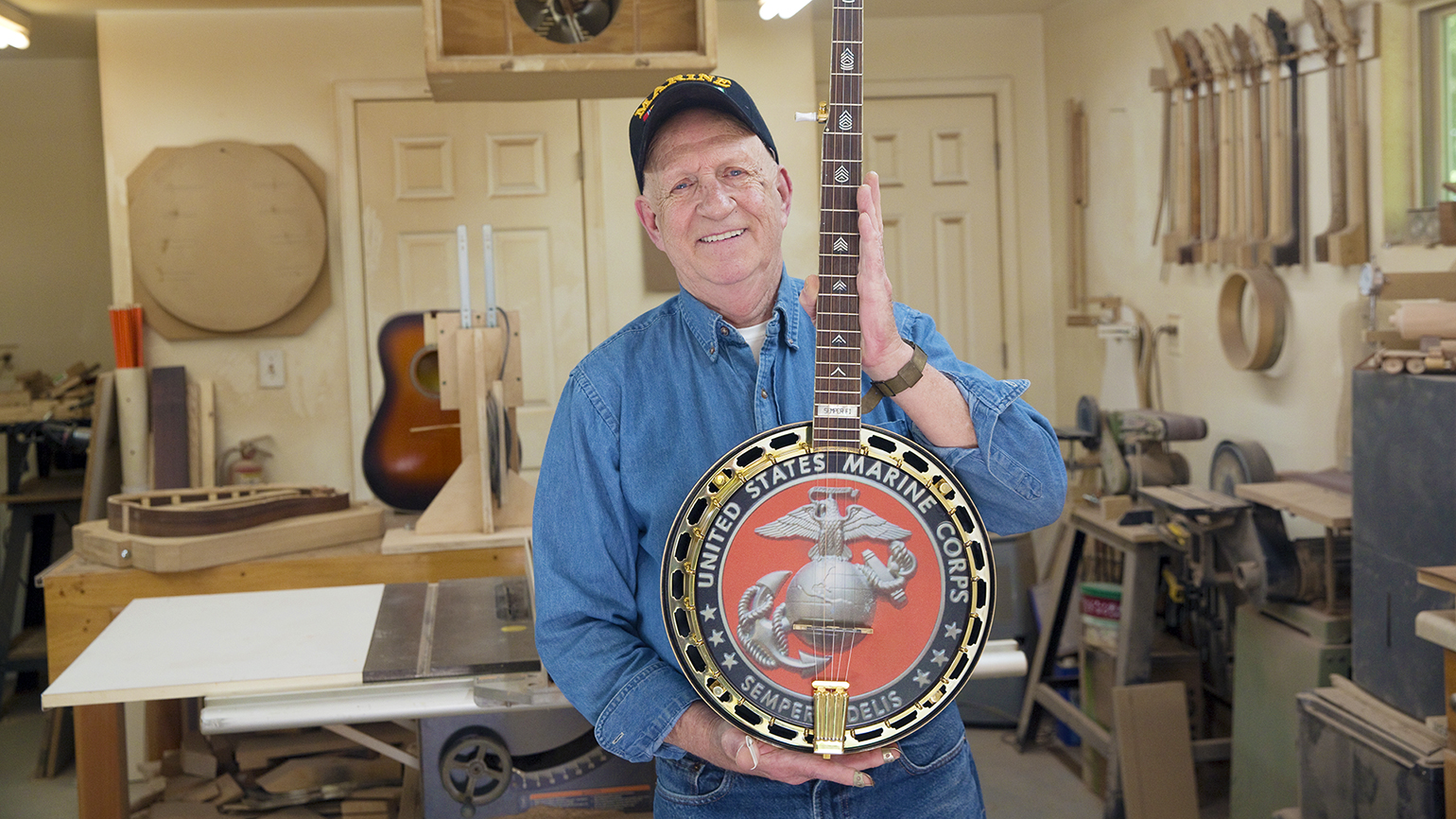
God’s Grace—and a Banjo—Made This Marine Veteran Whole Again

I pulled a piece of curly maple from a stack at the specialty wood shop. I checked its color, its grain, its sturdiness. This would be the neck of the banjo I was building. It needed to be exactly right. To feel right in my hands, right from the start.

I’d built dozens of banjos over the years, but this one was different. You could say my life’s story would be in this banjo. A lifetime of mistakes, self-destruction and redemption. I wanted this banjo to tell that story, to share my truth, every time it was played.

At last I found the perfect piece. I loaded it into my truck and headed for my workshop at home.

* * *

I grew up outside Washington, D.C., not far from where I now live in Virginia. It wasn’t a happy childhood. My dad was a quiet man, a hard worker. But when he drank, he became mean.

I was terrified of ending up like him. As soon as I was old enough, I joined the Marines. The Vietnam War was on, and I landed in the middle of it.

My tour lasted 13 months. I came home haunted by what I’d seen over there. Haunted too by a question: Why did I make it back when so many of my friends didn’t?

I hadn’t realized how strongly public opinion had turned against the war. The first time I went out wearing my uniform, I was taunted and spat on. In the eyes of some people, I was a monster, a killer.

I didn’t know what to think. I had served my country. But I’d also witnessed horrific suffering. Death and destruction. I put my Marine uniform away. I would try to forget all about Vietnam and just move on with my life.

* * *

I unloaded the piece of curly maple from my truck and took it to the workshop I’d built behind my house. I set it on a band saw and cut it into the right shape, inhaling the sweet scent of the wood. I sanded it smooth and added a tinted finish, bringing out the rippled pattern in the grain.

* * *

I worked odd jobs after the war—gas station attendant, electric company technician. I’d gotten married just before the war, and we had two daughters. I wanted a quiet, normal life.

Then my wife got in a car accident; the man I’d become after Vietnam was no good at caregiving. We eventually divorced. I left my family and barely stayed in touch with my daughters.

I found work as an auto mechanic in Annandale, Virginia. One day at lunch, the shop foreman pulled a fiddle from a case and another worker got out a guitar.

“Do you play anything?” the foreman asked me.

“No,” I said. I loved music but had never learned an instrument.

“We could use a banjo,” said the foreman.

The two of them struck up a tune, and something happened inside me. The anguish I’d carried from Vietnam eased. The music was like a salve. I watched and listened, hypnotized by their finger work. Everything went away except the music.

I bought a cheap banjo and taught myself to play. To my delight, music seemed to come naturally. Soon I was playing with the guys at the shop and any chance I got at home.

Our little group got some gigs at bars. We’d play, then stay to drink. Music and booze—what a combination! It blotted out my war memories and my guilt, how I’d treated my family, feelings that boiled right up when the music stopped.

I looked forward to those gigs. In between, I drank alone at home. I’d become just like my dad.

* * *

Once the neck of the banjo was complete, I ordered the metal parts from a supplier I trusted in Europe—the tone ring, tension hoop, brackets, tail pieces and tuners. I affixed them to an intact banjo head I’d found online. The only thing left to do was to put everything together, attaching the strings and adding decorative insignia to the head and neck.

* * *

For years, my life zigzagged between drunkenness and fitful attempts to start over. I drifted away from the auto shop and the band and stowed my banjo in a closet. I worked construction, remarried, bought some land in Maryland and built a house.

My second wife, Sandi, urged me to join the VFW. She thought talking with other veterans might help. I went to a couple meetings, but hearing other guys talk just brought up the painful memories I’d tried to bury. I came home wanting to get drunk.

Sandi was patient and loving, but she grew dismayed when I relapsed after a rehab program. We separated, and I cursed myself for having ruined another marriage.

I lost my job during the 2008 recession. I drank even more and developed liver disease.

“You have to stop drinking, Don,” my doctor said. “You have Stage III cirrhosis. You’re going to die.”

I drank anyway.

One day, I stumbled out of my stupor long enough to discover a notice of imminent foreclosure in the mail. I was practically broke and had stopped making house payments.

Desperate, I called my older daughter, Dawn. She was grown now, working in real estate. She wasn’t happy to hear from me—we barely talked. But she agreed to help me out of daughterly duty.

“We’ll sell your house before it forecloses and use the money to buy something smaller,” she said. I felt ashamed.

We went together to look at one of those smaller houses. Dawn walked inside, but I stopped on the porch.

“You go on in without me,” I said. “I need a minute.”

I was so sick, just getting out of the car had exhausted me. I stood there feeling utterly defeated. No money. Twice divorced. Estranged from my kids. About to lose the house I’d built myself. Dawn had been buying me food. Even now, all I could think about was my next drink.

There was only one word to describe me: failure.

“God,” I whispered, “please help me.”

Why did I say that? I wasn’t a praying man. Yet at that moment, those words felt like my only lifeline, a crease of light in a door that was about to close forever.

I can’t explain what happened next. It was like that moment when the guys played in the auto shop except on a whole different scale. All of the hatred and disgust I’d felt with myself just melted away. It was quite literally a physical sensation of release, a collapse of all my defenses. I felt vulnerable yet protected.

God didn’t excuse what I’d done. He let me know he loved me nonetheless, maybe even more for my brokenness, and forgave me. Unconditionally, so I could forgive myself. I had no choice but to accept that love, that grace. It filled up all the painful places I used to try to drown with alcohol. I felt staggered by a sense of relief. I wept.

“Dad?” Dawn said. “Are you okay? Do you need a drink?”

I was startled to hear myself say, “No.”

* * *

The banjo head arrived. I used my lathe to cut a wooden rim for it, then attached it to the neck. All that remained was the pearl inlay insignia. I’d sent a design to a man I knew in Kentucky. This design was special. It would set this banjo apart from every other one I’d made.

* * *

After that day on the porch, my life unfolded in what I can only describe as a series of miracles. No longer poisoned by alcohol, my liver healed. I bought a small house in Virginia and found work in construction. For the first time since Vietnam, I allowed myself to ask why I’d survived.

In other words, what should I do with this life God had given to me?

The answer came in the form of a memory. My old banjo. I found it in the closet. I tuned it but hesitated before picking and strumming. Would I remember? I tried a few chords. I could still play!

But where? Not bars. I needed a different kind of place.

Just a few days later, I was on the phone with a friend when he mentioned a church gospel group that needed a banjo player.

“Well, I’m a banjo player who’s been praying for a gospel group,” I said.

I started playing at the church every Sunday. Standing in front of that congregation, making beautiful music for God, I felt as if I’d come home.

It wasn’t long before I was making my own banjos. I wanted a life filled with music.

* * *

The pearl inlay design arrived. I pulled it out of the box.

The inlay consisted of four words, United States Marine Corps, alongside the eagle, globe and anchor of the Marine emblem, which I layered onto the head of the banjo, and a few smaller pieces representing Marine ranks that I used to decorate the neck. This banjo was a tribute to the Marines. A symbol of my intention to embrace my time in the service. I planned to play it at an upcoming Veterans Day: A Time for Gratitude picnic. I was pretty nervous about this particular debut.

I arrived at the picnic and made my way through a crowd of vets and their families to a stage where I would join a volunteer band. I knew what would happen next. People would want to see the banjo. They’d want to talk, to share their memories.

The banjo would make it impossible for me to duck out.

We played a set, and the audience applauded. Afterward people came up to get a closer look at the banjo.

“It’s beautiful,” said one of the folks standing near me. “Where’d you get it?”

“Made it myself.”

Soon I was surrounded. The banjo opened up conversations, honest talk about war. My conflicted feelings about Vietnam turned out to be not so uncommon. War leaves no one unscarred. We are broken by war but made whole by grace.

“Can I take a photo of your banjo?” a woman asked. “It’s for my husband. He’s a Marine in Afghanistan. It will make him so happy to see this.”

Him and me both.

After the picnic, I climbed into my truck and headed home. The banjo lay on the seat beside me. It was the truth teller I had hoped it would be. And at last, so was I.

For more inspiring stories, subscribe to Guideposts magazine.

God’s Comfort in the Midst of Despair

I pushed against the back door of our house again, hard. No luck. It wouldn’t budge. The humidity from the flood had swollen the wood. My husband, Vince, had gone in through the front. As I waited, I told myself, Maybe it won’t be that bad. It was half hope and half prayer. Something told me, though, it was going to be bad. Real bad.

Two days earlier, on August 28, we’d evacuated Schoharie, our village of 1,000 in central New York, fleeing Hurricane Irene, which had swept up the East Coast, transforming streams into raging rivers.

The village was like a war zone. Shops wrecked, houses crumpled, nearly every one owned by someone we knew. Lampposts uprooted. An oil tank lay on its side. Debris everywhere.

Still I hoped we’d been spared. We didn’t live in the flood plain. The Schoharie Creek, usually a gentle, flowing stream, runs three-quarters of a mile from us. The last flood, in ’96, left a foot of water in our basement. That we could deal with.

“Let me get that for you,” a voice said. My neighbor. He came up the steps, turned the knob and threw his weight into the door. It opened.

I stepped through the doorway and froze. This can’t be my kitchen! My eyes darted from the floor to the countertops. Everything covered with a rank brown ooze. My legs buckled. I grabbed for the door, steadied myself. Covering my mouth and nose, I walked inside. My sneakers slipped in the muck.

What happened to the fridge? I spotted it, leaning over, blocking the way into the dining room. Vince peeked over the top of it. He was ashen.

“We lost everything on the first floor,” he said. “The water must’ve been at least five feet deep here.” Vince pushed the refrigerator over with his foot. It landed with a thud.

“Everything?” I said. I stared blankly around the room in…what was it? Shock? Utter disbelief?

“There’s mud everywhere,” he said. “My organ’s ruined, all my sheet music, your sewing machines, the fabric, your quilting books…”

“But…” It just didn’t seem possible. This house had stood since the 1850s. We had bought it not long after we married and we built our lives here—raised our daughters, Jenny and Stephanie, filled the place with memories.

I felt sick. Vince is the organist at church, his reed organ in the living room a treasured antique. I loved listening to him play while I quilted. All the things I’d collected over the years—the handcrafted wooden baskets, the beautiful felt angels in the corner cabinet, my autographed children’s books from teaching first grade.

We’d never be able to replace them. We didn’t have flood insurance. We lived simply on our teachers’ pensions—Vince had taught elementary school band and choir—and Social Security.

“What are we going to do?” I asked.

“We’ll start over,” Vince said. I wondered if he believed it. Did I?

This wasn’t how I’d imagined our retirement, with next to nothing to call our own.

“You work on emptying the kitchen and I’ll start in the living room,” Vincesaid. “I don’t want you coming out here. It’s too dangerous.”

By late afternoon the back deck was piled with plates and glasses, crockery, my mixer and waffle iron (the wiring ruined by the water), baking tins, table and chairs, garbage bags stuffed with food from the fridge. It was nearly dark when we finished, right before the 8:00 P.M. public safety curfew.

It had taken hours just to scrape up the muck. We’d barely made a dent. Lord, I wondered, how can we ever start over? We’ve lost so much!

We were staying at Stephanie’s an hour away. Driving out of town I gazed into the darkness, not a light anywhere.

The next day we returned. At the threshold I willed myself inside. I stared at the living room walls, covered with black dots. Mold. It seemed to grow before my eyes. Vince just shook his head, his face cloaked in sadness.

I busied myself in the sewing room, carrying load after load of soggy fabric to the curb. I had just picked up an armful of sodden pattern books when a woman walked up. She lived in a neighboring town and I hadn’t seen her in years. “Sue, you were the first person I thought of,” she said. “Tell me what I can do.”

For a moment I was speechless. “Thank you,” I said. I gave her a careful hug. I didn’t want to transfer any gunk. “Everything has to go. We’re piling it outside.” Once we emptied the house, maybe I’d be able to make sense of it all. Things had to get better. Didn’t they?

We were carrying out one of my sewing machines when a man showed up I’d never seen before, followed by a young couple. How had they come upon us? About noon there was a knock on the door—two women, also strangers.

“We have sandwiches, and a case of water,” one said. “Also, I wanted to let you know they’re setting up a free café behind the DAR hall.” Their help was a godsend, but as the afternoon wore on it dawned on me: They wouldn’t be here if it wasn’t really bad. Would our town survive?

Day after day Vince and I worked on our house with help from friends and family. But each day our hopes dwindled more. The mold meant gutting the house, not work we could do ourselves. But hiring someone to rehab the house would cost upwards of one hundred thousand dollars. We’d lost all our equity. No way to take out a loan.

For lunch we went to the community café, the tables filled with a bounty of home-cooked meals and dishes donated from area restaurants and supermarkets. Everyone was in the same boat.

There were times Vince and I barely spoke on the hour-long drive to Stephanie’s. We were too exhausted and demoralized. Even going to church didn’t offer the comfort I’d always found there. The sanctuary had flooded, the wood flooring destroyed, mold spreading across the walls. The organ was damaged too, but Vince got it to play.

“God is at work even now,” our pastor assured the congregation. I wanted to believe that! But what exactly was God doing?

One night the whole family, Jenny and Stephanie, their husbands, A.J. and Aaron, gathered in Stephanie’s living room. Aaron spoke first: “I don’t see any option but to sell the house for what you can and get a new place.”

I couldn’t believe my ears. The house was the one thing we hadn’t lost! Where would we move? And what bank would give a mortgage to a retired couple on a fixed income with few assets?

Everyone nodded in agreement—except Vince. He looked stunned. For a moment the room was silent. “You’ve given us a lot to think about,” he said.

That night worry and doubt pervaded my dreams. I awoke, my hands clenching the covers. Dear God, please help me to let go, to trust in you. To believe in a future.

A few days later a former colleague of Vince’s came by the house. “I posted a note about what you’re going through on Facebook,” he said. “I’ve heard from so many former students. They wanted me to give you this donation.” Inside the envelope was a check for one thousand dollars. We soon received an additional four thousand dollars.

Then, two weeks after the flood more than 20 people from Jenny’s church two hours south of us arrived to help gut the house, pulling out everything except for the floor and the framing.

Vince and I spent the day cleaning out the garage and his workshop, glad to leave the work to people younger and stronger. Truthfully, I couldn’t bear the thought of seeing our home stripped to its bones.

Late that afternoon Jenny came out to the garage. “We’re done,” she said. “Take a look.” I followed her and Vince back inside, the moment I’d dreaded. I walked into the kitchen. The walls, the cabinets, the built-in shelves, my sewing room, were gone. Just a big, empty space. I could see clear to the front walls.

I felt more relief than sorrow. This house no longer felt like our home. It was time to let go. “What do you think?” Jenny asked.

I paused for a moment. I’d lost so much in the flood, but what mattered most—the love of my family, the support of friends old and new, the spirit of community—was stronger, more alive than ever. I felt a stirring in my heart, my sense of hope rekindled. That’s what I needed to hold on to.

In the distance I could hear the rumble of power tools. It sounded almost like a heartbeat, the village slowly, haltingly returning to life. “You—everyone—have been such a blessing,” I said. “I don’t know what’s next. But we’re going to be okay.”

In January we bought a house outside Schoharie, on higher ground. It’s smaller than our old place, perfect for a retired couple. The village remains a work in progress, a patchwork of houses for sale and people rehabbing their homes. It’s a slow, sometimes painful, process. But there’s a spirit that grows stronger.

For months the community café has served lunch daily, fueled by a supply of food that never dwindled, brought by people who felt called to help. Volunteers still come. Some weekends they’ve nearly doubled the population of Schoharie. God at work even in the midst of chaos and despair. Especially then. And thanks to that I know we’ll be okay.

Download your FREE ebook, The Power of Hope: 7 Inspirational Stories of People Rediscovering Faith, Hope and Love
God Led Her to a Career of Caring for Seniors

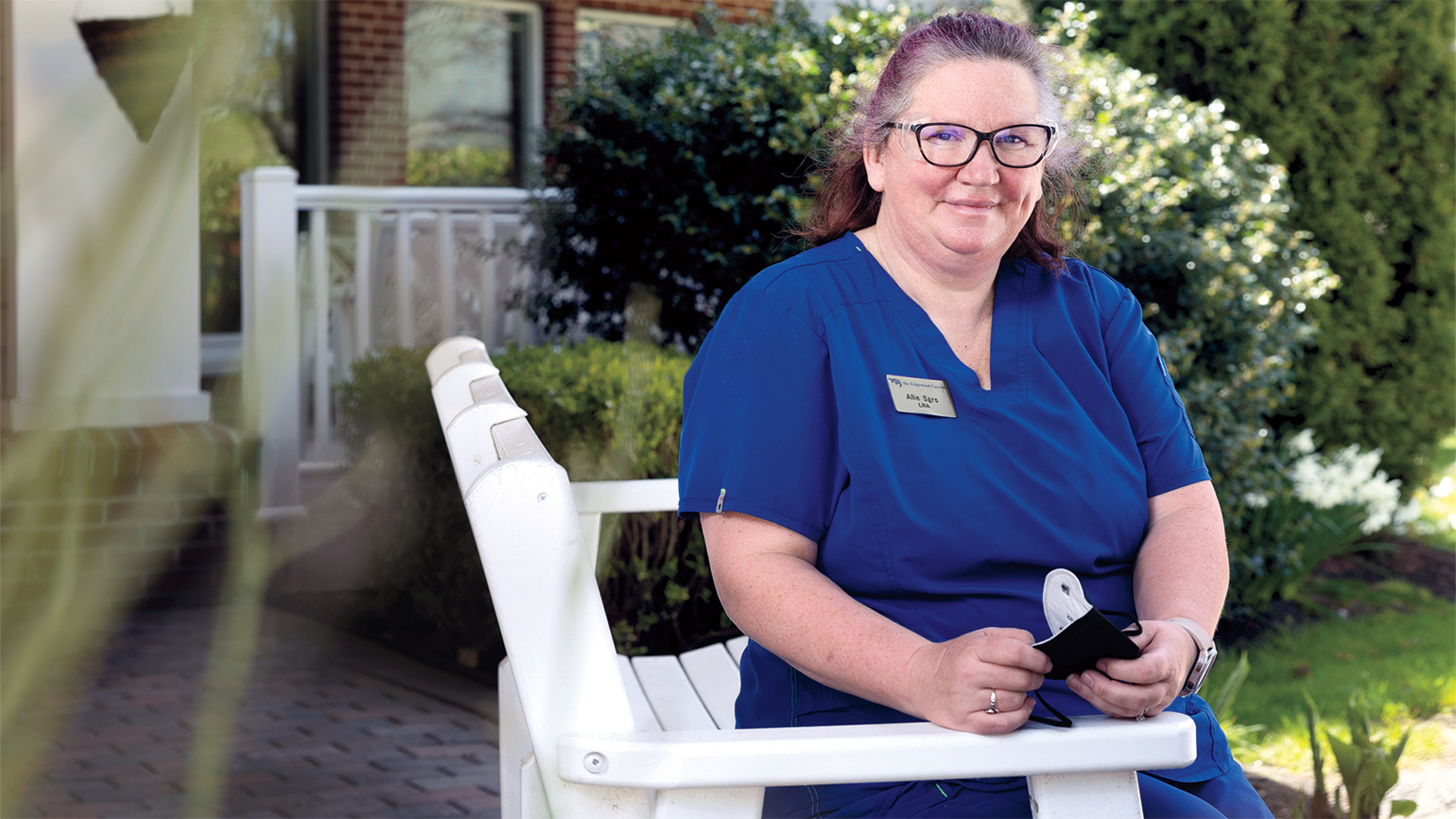
I arrived at the Edgewood Centre, just over the state line in New Hampshire, at 9 a.m. sharp. It was my first day at the senior care facility as a licensed nursing assistant (or LNA) trainee. I had no idea what to expect. “Good morning, Allie,” the human resources director said. “You’ll be reporting to the south wing.” I tried to act unfazed, but I think I gasped.

The south wing. That was the dementia ward.

I had seen the residents who had Alzheimer’s. Their vacant expressions. Their stiffness. I’d heard they could be unpredictable, aggressive—mean even. I didn’t think I could connect with any of them. And if I couldn’t connect with them, how could I take good care of them?

I forced a smile. “Great,” I said to the HR director.

But I was scared to death. As I walked down the hall to the south wing, all I could think was, I miss my old life.

For 30 years, I had been a child-care professional, and I loved it. Toddlers were my specialty. Their inquisitive nature, their cuddliness, the fact that they are learning something new all the time. The terrible twos? That didn’t scare me. I could get down to their level and deal with any tantrum. I’d never wanted to do anything else.

Then came Covid.

I had been working at the child-care center at Edgewood, where we watched the kids of the staff members. Though I had been there for only a couple of months, I felt right at home. I had just figured out how to rearrange the toddler room to run more smoothly—and then the whole country went into lockdown. Edgewood had to operate with fewer staff, which meant fewer kids for me to look after. By the end of April, the child-care center shut down.

I went on unemployment. I wasn’t sure what I was going to do.

Then one day in mid-May, I was tying up loose ends with Edgewood’s HR director. “You know, the state of New Hampshire has this new program,” she said. “They’ll help you get your LNA degree, and you can start working in our assisted living facility almost immediately.”

That got my interest. I’d brought the toddlers to visit with the residents, and both the kids and the seniors had enjoyed the interaction. I knew there weren’t going to be openings in child care anytime soon. I couldn’t afford not to work; I had a daughter in college and a stepson in high school. Besides, I’m not the type who can sit around at home. I need to be doing something. So I signed up for a free eight-hour class.

I learned about feeding long-term-care residents, bathing them, using bedpans, changing linens. I passed a test, and the HR director put me on the schedule for the following Monday. I’d be working as what New Hampshire called a temporary health partner, doing onsite training for my LNA certification, which the facility would pay for.

That first day, I was assigned to shadow Celia, an experienced LNA. She had to feed one of the residents breakfast. The woman stared stonily ahead and refused to open her mouth. Before I knew it, the mashed bananas were tossed around the room. Like with the toddlers. Mealtime had been a mess back then too, but it was a raucous, fun mess.

I didn’t have much experience with dementia. Both of my parents had died in their sixties of cancer. I’d helped out with my mother-in-law, who had COPD. Toward the end, she’d started to forget things, and it was heartbreaking.

The feeding took 30 minutes. As Celia and I were leaving her room, the resident spoke. “Thank you,” she said. “I love you.” A small success.

We moved on to other residents and other tasks. Celia showed me how to read their charts—which outlined their habits, their dietary needs, if they wore hearing aids or glasses, their bathing schedules—and how to operate portable oxygen tanks. I was impressed when Celia effortlessly raised a cantankerous heavyset man with the machine lift. “Don’t worry, you’ll get the hang of it,” Celia told me.

The final task of the day involved helping a woman get settled in her room. I got her a glass of water and found her eyeglasses. She called me a silly pet name. Then she giggled, which got me giggling too. This isn’t so bad, I thought.

Each day I learned a little more. Toward the end of the week, I started to do more on my own. My second time hooking up someone to the toilet lift, the strap fell off suddenly. The 200-pound woman lurched backward. I ran behind her and supported her under her arms. I couldn’t reach the call bell, so I yelled for help. People came running.

One of the techs said, “Maybe she shouldn’t be doing this by herself.” The nurse said, “No, Allie’s fine. It wasn’t her fault.” Hearing that boosted my confidence.

By Friday afternoon, I was bone-tired. Being an LNA was a physical job, and my body wasn’t used to it. Before I left, I walked down the hall, peeking into each room to wave goodbye to the residents. Some of them didn’t react. But others brightened a bit, even if they didn’t really recognize me. It struck me how lonely it must feel to be trapped in a mind that was failing.

That’s when I heard a voice inside me saying, “This is where you need to be. You can make a difference here.”

There was a lot I had to get used to. Like the studying. It had been almost 30 years since I had taken a class. Talk about intimidating! I sat at my kitchen table to watch the prerecorded lectures on my computer. I’d say to myself, Just do this for an hour.

It was a struggle. I learned to ignore everything else—my husband, the laundry, the TV. After an hour, I’d get up, stretch, snack. Then I’d tell myself, One more hour. One hour at a time, I got it done.

But when I took my LNA board exams, I didn’t pass the clinicals. I was devastated. My husband, Kevin, and my 17-year-old stepson had bought me new scrubs to celebrate. They gave them to me that night anyway.

When I took the test again and passed, my daughter was home from college and the three of them decorated the house. They put sticky notes in the stairwell saying things like “Great job” and “You’ll make the best LNA.”

Kevin has been so supportive of my new career, even though all the studying meant I couldn’t watch the Sunday NASCAR races with him. (Kevin and I are such huge NASCAR fans that we got married trackside at New Hampshire Motor Speedway.) The whole family is proud of me.

I have grown to love so many of the residents. I enjoy being creative, mostly in coming up with gentle ways to say, “No, you can’t do that.” Some workers get upset or frustrated and argue with the residents. I take everything in stride, the way I used to with the toddlers.

I had one gentleman in the common area who told his daughter over the phone, “I’ve been sitting here at the car dealership for three days, waiting for my car to be fixed!” She replied, frustrated, “No, Dad, your car is here at my house. You are at Edgewood.” Hearing that upset the man, so I went over. “Sorry about the wait,” I told him. “Your car is going to be done in 10 minutes.” He settled down, satisfied.

It’s a matter of putting yourself where the residents are and thinking what they’re thinking. Everyone just wants you to acknowledge what they’re saying, how they’re feeling.

With some residents, the connection goes deeper. There’s one gentleman from Boston. He’s a Navy veteran and my dad had been in the Navy, so we clicked. His short-term memory is gone; he can’t remember what I said a minute ago. But, boy, can he tell stories about his Navy adventures! And we’ve compared notes on places we like in Boston, including our favorite Chinese restaurant.

These south wing residents used to have full lives before dementia, and I love hearing about them. Unlike toddlers, who are constantly learning something new, people with dementia are constantly losing something—an ability, a word, a memory, a bit of themselves. I try to move past their symptoms and look for the person within—the Red Sox fan, the news junkie, the Navy man.

I think my personality is suited for this job. I’m easygoing, and I just roll with things. I laugh a lot. And I’ve learned a lot too. How to be more patient, more compassionate—after all, every one of us is on our own journey of aging. It can be a lonely journey without having someone familiar by your side. Most of the residents may not remember my name, but they know who I am. They know that I care about them.

That’s why I decided to work on Christmas Day, 2020. It was the first time I had ever missed Christmas morning with my family. But we were in the middle of the Covid pandemic, and the residents couldn’t have any visitors. I wanted them to see a familiar face. Nobody in my charge seemed to register that it was Christmas, but there was a good meal and I helped the residents open presents.

Later I walked down the hall, singing “Silent Night.”

Everyone was settled in their rooms. It was quiet.

Then, from one of the rooms, I heard a small voice joining in: “All is calm, all is bright.”

This was where I was meant to be. Gratitude swept over me, gratitude for my new, God-given calling. All was calm and bright, indeed.

Read 5 Ways to Approach Alzheimer’s Caregiving Compassionately

For more inspiring stories, subscribe to Guideposts magazine.

God Is Patient

Human beings can be very impatient. (You may have noticed this!) We want things right away. We believe our time is our own, and, when we have to wait we become frustrated. God, however, is patient. He knows all about our lives and what we need. The Bible assures us: “Your eyes saw my unformed body; all the days ordained for me were written in your book before one of them came to be” (Psalm 139:16).

God’s timetable is different from ours. Often we pray for solutions, for strength, for calm, for change —only to find our troubles persisting past what we thought was our breaking point. The temptation is great to conclude that God has forgotten me. Not true! God loves you and wants what is best for you. “I have loved you with an everlasting love; I have drawn you with unfailing kindness” (Jeremiah 31:3).

Rest assured that God is working mightily on your behalf. However, He is working toward the right solution, not necessarily the solution you want right now. This can be difficult to accept. But whenever you’re feeling discouraged, remind yourself of God’s great truth: Hard experiences will pass away. Not on our timetable. On God’s timetable—the best timetable.

God Is My Pathfinder

“How about we go to Arizona in September?” my husband, George, suggested. He didn’t have to ask twice. I already knew what the highlight of our vacation would be—the Grand Canyon. More specifically, a mule ride from the rim of the canyon all the way down to the bottom.

Just like on The Brady Bunch. I’d been a huge fan. My favorite episode was the one where the whole family rode mules down into the Grand Canyon and had a really groovy time. I decided I would do the same thing someday.

I loved the outdoors and all things Western. What could be cooler than seeing the Grand Canyon from the back of a mule?

“Someday” would finally come in September. I got on my laptop right away to plan our adventure. George wasn’t thrilled about the idea of riding a bony-backed mule for hours on a trail, but when I told him it was on my “bucket list,” he said to go ahead.

I found out that the mule trips fill up fast. Even though our vacation was months away, I put down a deposit and reserved two mules. It wasn’t until a few weeks before we left for Arizona that I looked into the mule rides in more detail. I came across a website with a checklist of qualifications for riders.

At least 4 feet 7 inches tall and weigh less than 200 pounds? Check.

Fluent in English? Check.

Good physical condition? Check.

Not pregnant? Check.

Not afraid of large animals? Double check. We own horses and ride often. But I’d never once been on the back of a mule…yet another reason I couldn’t wait for this trip.

Then the last requirement. Not afraid of heights?

Whoa. That reined me in short.

I’m not just afraid of heights. I’m petrified. Always have been. I was the kid who wouldn’t go down the tall slide on the playground. Who wouldn’t climb the ladder to the high dive, let alone jump off the board.

Even now, I say a quick prayer, then hold my breath when I’m traveling across a high bridge (and I close my eyes if I’m not driving).

But surely I wasn’t going to let this silly fear keep me from the dream I’d held on to for almost 40 years!

The more you know, the less you fear, right? I went to other websites and read more about the mule trip. I learned a lot, all of it comforting.

Mules are tougher and more sure-footed than horses and have an amazing instinct for self-preservation. Their eyes are positioned so they can see where they set all four feet. The mules at the Grand Canyon are dead broke, meaning they’re so calm, well-behaved and welltrained that anyone can ride them.

The best news: In the more than 100-year history of Grand Canyon mule rides, no tourist has ever died from falling.

That was all I needed to know—until the afternoon we arrived at the south rim of the canyon and I went to check out Bright Angel Trail, which we’d be taking with the mules the next morning. I tightened the laces of my hiking boots and stepped onto the trail. It was narrower than I’d expected.

Sticking close to the inside of the trail, as far from the edge as possible, I gingerly took a few steps. Then a few more. Don’t look down into that chasm, I told myself. Look out at the view.

It was beautiful. No, beyond beautiful. Magnificent. Awesome. Breathtaking. Literally. I was so terrified, so paralyzed with fear, I forgot to breathe.

I scuttled back to the park lodge. I wasn’t ready yet to give up my spot in the mule train. But I was going to ask some tough questions at orientation that evening.

I wandered into the gift shop. A book entitled Over the Edge: Death in Grand Canyon caught my eye. I flipped to the chapter on mule rides and began to read. Bright Angel Trail has 180 switchbacks. Hikers and mule riders share the trail. When they meet, mules take the outside lane.

Every time a mule comes to a switchback, it swings its body and faces outward with its front feet on the edge and its head hanging over the canyon floor thousands of feet below. My heart was racing again and all I was doing was standing in the gift shop reading. Uh-oh.

Things didn’t get any better at the orientation. After going over when and where to meet, what clothes to wear and gear to bring, the head wrangler asked if there were questions. I raised my hand and asked, “Is it true nobody ever died on a Grand Canyon mule ride?”

He shifted from one foot to the other. “No tourist has ever died from a fall on the mule ride. There have been fatalities. Heart attacks and such.”

“But no mule rider has ever fallen over the edge to his or her death?”

He looked even more uncomfortable. “More than fifty years ago, a hiker spooked a pack train. Two mules and one wrangler died,” he said. Then he gave me a confident smile and added, “But I assure you, driving in rush-hour traffic is far more hazardous to your health than this mule ride.”

You might guess that what happened next was I went back to our room, feeling reassured, and prayed for courage, that God gave it to me and the mule ride turned out to be everything I’d ever dreamed of.

But that’s not what happened. I didn’t feel reassured. I felt confused and conflicted. George could tell. “I know you’ve always wanted to do this,” he said. “But what’s the point if you spend the whole ride scared to death?”

I went back to our room and flopped onto the bed. I’d traveled a long way and spent a whole lot of money to realize a childhood dream. But the more I found out about the mule ride, the more scared I got.

My mule would certainly sense my fear. Would I be putting everyone else on the trail in danger if I went through with this?

Tears welled in my eyes. Searching for a tissue, I opened the nightstand drawer. No tissues. But there was a Gideon Bible. I turned to the book I’ve always found to be full of good advice—Proverbs. “Seek his will in all you do and he will show you which path to take.”

Hmm. Path is another word for trail. As in Bright Angel Trail. I closed my eyes, folded my hands and asked God a short, simple question. Should I go on this mule ride tomorrow?

The answer was even shorter and simpler. NO. So I called park headquarters and gave up our spots to someone on the waiting list.

A couple of days later, George and I drove to the north rim of the canyon. The first thing I saw in the lobby of the lodge there was a big sign that said, “Want to take a mule ride?”

I walked up to the welcome desk. “Do your mules make their way down a steep, narrow trail where one misstep could hurl a rider to her death?” I asked.

“We have a ride like that,” the woman at the desk replied, with a hint of a smile. “But we also have one that just winds through the woods. If you look real hard through the trees, you can see the canyon off in the distance.”

“I don’t suppose you have any openings for tomorrow?”

“As a matter of fact, we do,” she said. “This is such a tame ride there’s not a lot of demand for it.”

At sunrise the next morning, I put on my jeans, cowboy boots and hat. I scrambled onto the back of a speckled gray mule named Gunsmoke and rode for three glorious hours through the aspen forest that skirts the north rim of the Grand Canyon.

I had every bit as much fun as the Brady Bunch did. Maybe more. And my bucket list was one item shorter.

The woman at the welcome desk was right. I could see the canyon through the trees. It was magnificent. Awesome. Breathtaking. The way fulfilling a childhood dream should be, even if it’s on a different path than we’d imagined.

View photos of Jennie's Grand Canyon adventure!

Download your FREE ebook, Rediscover the Power of Positive Thinking, with Norman Vincent Peale

God Is My Co-Author

I read the e-mail again. It was an invitation to be part of a new devotional project, writing personal stories about faith. Well, I sure can’t do that, I thought. Not anymore.

Once, words had been my tools. For years I had written novels that pointed to God’s extraordinary grace. Then a bout with a viral infection left me with a disabling chronic illness.

I missed my old life: hiking, attending church, going on outings with friends. Most of all, I missed words. Cognitive difficulties made it hard to read, much less write. Even a simple conversation could exhaust me. Write devotionals? No, that was way too much.

I had prayed for healing. I’d even had some improvement. On good days, I could edit small projects for friends or answer an e-mail or two. But my homebound life hardly gave me any interesting material to craft into a devotional, even if I could summon all of the necessary focus.

I moved the mouse to “reply” and wrote that though I was grateful for the invitation, I couldn’t participate. Then just as I was about to send my response, a strong feeling came over me, almost as if my hand were being stopped by some unseen force. When I call you, I equip you, came a familiar whisper, a voice that had always been there to guide me.

Could I trust it even now?

I summoned all my faith, accepted the offer and hit “send.” At once I felt a rush of hope come over me.

Did words begin to pour from me at that very moment? No, and that is not the way God always works.

Writing continues to be a clumsy climb up a mountain…shackled with chains…in a blizzard.

Each morning Jesus meets me at my keyboard and is at my side along the journey. When I can’t find anything to write about, he kindles just the right memory. He brings me the right word when I can’t find it on my own. It might take me an entire morning to complete a single paragraph, but I am writing again.

And now I see why I was chosen for this devotional project. It is called, quite aptly, Mornings With Jesus.

Download your FREE ebook, Rediscover the Power of Positive Thinking, with Norman Vincent Peale.

God Is Always on Call

Michelle Cox reassures her young grandchildren that they can always call her, no matter what. And realizes that God is telling us the same thing.

I travel a good bit, and my grandchildren like for me to tell them about my trips before I leave. So last Sunday when we had lunch with five of our six grandbabies, I told them about my upcoming trip to Dallas as part of a press junket for the red carpet premiere of War Room.

I showed them the pictures of the historic hotel where I’d be staying and of the huge Majestic Theatre where the red carpet event would be held. Then I said, “Grandmama will be flying on an airplane.”

My four-year-old granddaughter, Ava, said, “I want to go with you!”

“I wish you could, baby, but Grandmama will be working until late at night. Maybe you can go with me on an airplane for another trip.”

Her little face turned serious as she looked at me. She said, “But I can call you if I want to.”

“Sweet girl, you can always call Grandmama. Anytime you want to call. Okay?”

And then it was as if God whispered, “Just like you can do to Me.”

I’m so grateful that no matter where we are and no matter what’s going on in our lives, we can always call on our Father with the full assurance that He’s waiting on our call—and His line is never busy.

He’s even given a 9-1-1 number for us to call in Psalm 91:1-2: He who dwells in the secret place of the Most High shall abide under the shadow of the Almighty. I will say of the Lord, “He is my refuge and my fortress; My God, in Him I will trust.”

Over this past year as I’ve read your comments on my posts, I’ve realized that many of you are going through tough circumstances with seemingly unfixable things happening in your lives. I’ve been through some of those times myself, and the one thing I can tell you is that God is faithful. So I thought today might be a good time to share some of those precious promises He’s given us about calling on Him.

Are you in trouble? As for me, I shall call upon God, And the LORD will save me. (Psalm 55:16)

Do you need an answer? “Call unto Me, and I will answer thee, and shew thee great and mighty things, which thou knowest not.” (Jeremiah 33:3)

Do you need salvation? And it shall come to pass, that whosoever will call on the name of the Lord shall be saved. (Acts 2:21)

Do you need reassurance? Because He has inclined His ear to me, Therefore I shall call upon Him as long as I Iive. (Psalm 116:2)

Sweet friends, whenever you need to make one of those spiritual 9-1-1 calls, rest in the assurance that God is always waiting, and He’ll be sufficient to answer whatever you’re calling Him about.

God Guided This Recovering Addict to Plant a Community Farm

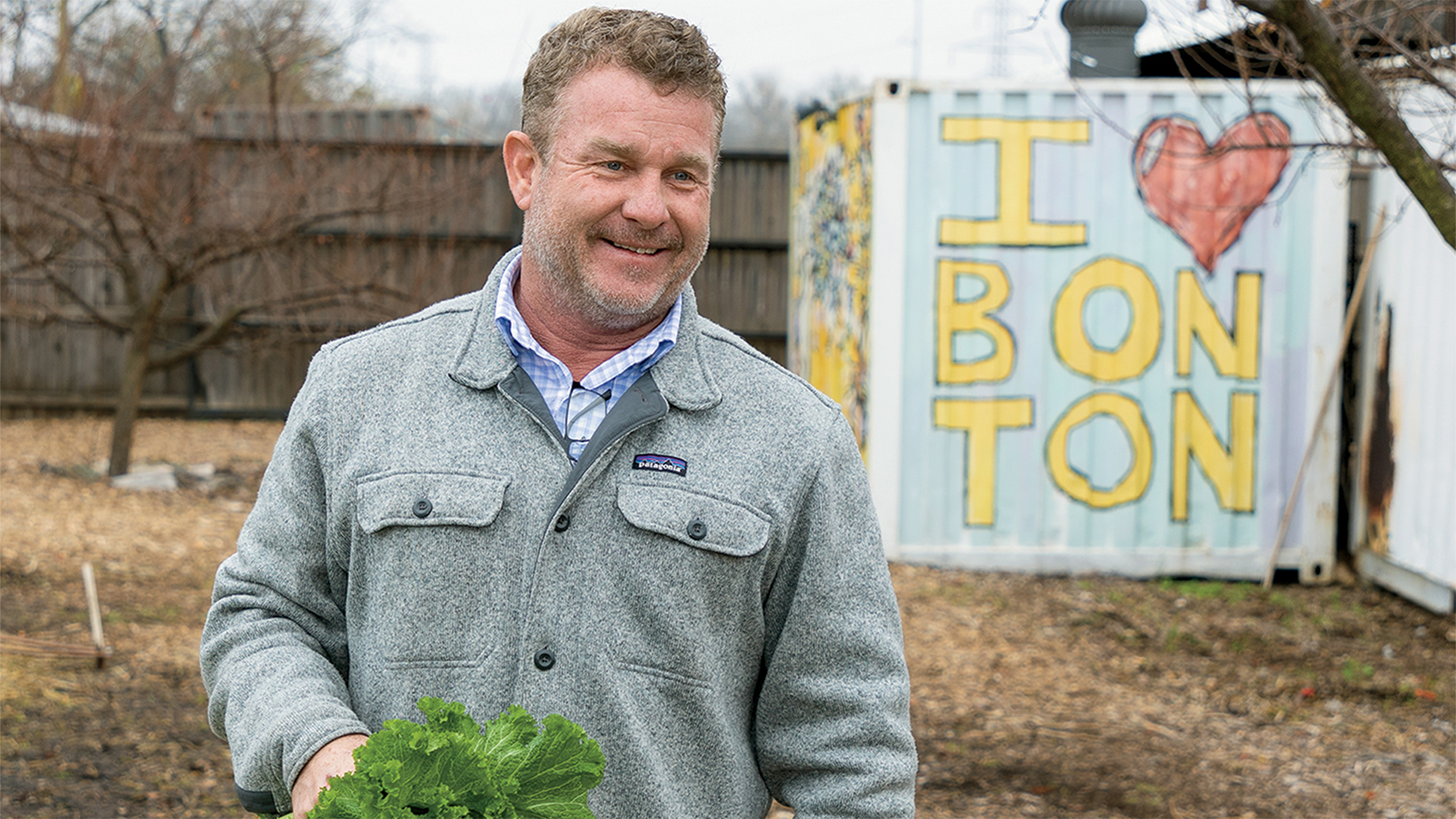
I live on a farm—a real farm—in the middle of one of America’s largest cities. You can see the skyscrapers of downtown Dallas from the fields near my house.

If that doesn’t surprise you, maybe this will: I knew nothing about farming when I moved to this neighborhood. I didn’t know much about life. I was a recovering cocaine addict who came close to destroying myself and my family and yet still struggled to contain a mighty ego.

Now I’m a farmer. I live in a house once owned by Habitat for Humanity and oversee Bonton Farms, a non-profit enterprise that grows organic produce, runs a market and a café and employs people from the neighborhood who are a lot like I used to be—looking for that connection to grace and love that will enable them to become all that God intended them to be.

Bonton is one of Dallas’ most challenged neighborhoods. The per capita income is $24,000. Almost a third of residents live below the poverty line. Many have been incarcerated. This is not a typical farm community.

Why would someone who knows nothing about farming start a farm in the middle of a big city a decade after entering recovery from substance abuse? Doesn’t that sound crazy?

How I got here is a God story, pure and simple. I simply can’t take credit for this oasis of fertile soil and spiritual renewal. The truth is more wonderful than that. I’m living proof that God can take the driest, deadest husk and transform it into a source of life and love that never stops giving.

Two decades ago, I was literally thousands of miles away from my current life. My wife, Marcy, and I lived in Portland, Oregon with our two elementary-school-aged boys, Beau and Cole. Marcy and I ran a chain of Schlotzsky’s Deli restaurants. We’d met in college and I was still head over heels in love with her.

Our stable family fell apart when Marcy was diagnosed with cancer. She died after two years of grueling treatment.

I had grown up going to church but I never took faith seriously. I was more interested in my own ambition. When Marcy died, I had nothing to fall back on spiritually. I had poured everything into my vision of a perfect family on the road to success. I depended on Marcy for my day-to-day emotional well-being. Her death left a hole I didn’t know how to fill.

I became profoundly depressed. I left our business unattended. I went through the motions with the boys but mostly I withdrew into myself and shut down.

One evening, some friends told me I needed to get out of the house. For some time, I turned down their requests but eventually I gave in. My friends took me out—to a strip club.

Going out and getting into fights became a regular source of release. I’d leave the kids with a sitter and carouse late into the night. I made up excuses about bruises.

One night, I wound up in a car driven by strangers. They took me to their apartment and offered me a line of cocaine. It was an even more intense adrenaline rush. Right there I knew I’d found my new best friend. I didn’t even have to hurt anyone to escape my depression.

Like all drug addictions, mine spiraled out of control. Much of that time is a blur. What I know is that, two years after Marcy died, I was alone in my house, my business and everything else around me was in ruins and my kids were living with my parents in Texas. I was in danger of losing the house because I hadn’t made a mortgage payment in seven months.

A large group of family and friends flew out from Texas and staged an intervention. They dragged me to a residential treatment program and promised to care for the boys while I worked on my addiction.

I was at the Hazelden program in Oregon for three months. I was full of rage and refused to eat, so they put me on suicide watch. I came out determined to stay sober, be a good father and walk a different path.

What happened? Part of the Hazelden program was seeing a spiritual counselor. My counselor didn’t push any particular faith but she did ask me what I believed and why. When I told her I didn’t believe much of anything, she asked what it would take for me to believe in God.

I couldn’t put that question out of my mind. I also couldn’t help noticing that other men in the treatment program, all from different backgrounds, seemed somehow more whole than I felt. What did they have that I didn’t? They had surrendered to a higher power and they were following the program while I held back. I was too consumed by shame, too convinced I was irretrievably broken to turn to God or stop using drugs.

One night, I couldn’t stand it anymore. I got down on my knees and cried out, “God, I don’t know if you’re real, but if you are, and you’ll have me, I’m yours. I quit!” I said in a loud voice. It was a semi-incoherent prayer. The moment I said it, an indescribable peace and joy came over me. Life and hope flooded into the hole of despair that had appeared after Marcy died. For the first time in two years, I felt like I had a reason to live.

Out of rehab, I sold off what remained of my business, sold the house in Oregon and took the boys to live closer to my family in Texas. Eventually, I found a job at a supply chain company and moved to a Dallas suburb. I worked, went to church, went to 12-step meetings and tried to figure out what to do with myself now that my life no longer revolved around cocaine.

I met a man named Johnson Ellis, who attended Prestonwood Baptist Church. Johnson was a longtime Christian who became a spiritual mentor. He told me about a community group and Bible study he worked with in the Bonton neighborhood near downtown Dallas.

“You should come,” he said. “You’d learn a lot, and you have a lot to offer.”

I didn’t know what I had to offer but I trusted Johnson. The Bible study was run by a Christian community service organization called Bridge Builders. About a half a dozen men from the neighborhood came to the meeting. Most of them had been incarcerated recently and, like me, they were trying to figure out what to do with their lives.

I had wondered what I, a white guy with a relatively new faith and a background in business, had to contribute to a Bible study in a predominantly Black neighborhood with few economic opportunities. Turned out, everyone in that room had a lot in common. We were at a crossroads in our lives. We had made a lot of mistakes. We were asking God which way to go.

I went to that Bridge Builders group every Saturday morning. It was the highlight of my week. I began to get an uncomfortable feeling every time I prayed. “If you like Bonton so much, why are you there only one day a week?” God seemed to ask.

God’s questions grew more insistent. “Shouldn’t you be sharing your life with that community? I could use someone like you to help create some opportunities. Do you want to work for a supply chain company for the rest of your life? Or do you want to join me in doing something new?”

For the first time in my life, the words in the Bible began to come to life. In the Gospel of Mark, Jesus says the greatest commandment is to love God with all your heart, soul, mind and strength, and to love your neighbor as yourself. The prophet Isaiah says that true fasting is not just abstaining from food but sharing with the hungry, welcoming the poor into your home and clothing those with nothing to wear. At the end of the Gospel of Matthew, Jesus gives his followers a great commission: to make disciples all over the world.

All of those passages challenged me to act on my faith, not just talk about it. At the same time, I remembered a passage in the prophet Jeremiah, in which God says, “For I know the plans I have for you, plans to prosper you and not to harm you.” What would happen if I quit my job, moved to Bonton and dedicated my life to ministry there? Would that prosper me? It felt more like harm!

I couldn’t shake the feeling that my future was in Bonton, not the surburbs. My boys were grown and out of the house by this point. I put my house up for sale figuring I’d have a while to sort things out while the house sat on the market. It sold in 60 days.

There were no houses for sale in Bonton. People don’t tend to house shop there. The median home value is two-thirds lower than the Dallas metro area average.

I was at City Hall asking whether there was even some vacant land I could buy when I ran into someone from Habitat for Humanity. He mentioned that they had a house in Bonton.

“It’s got some challenges. The previous owner defaulted and it’s been vacant for a while. Vandals stripped out the copper wires and pipe and people have been using it as a drug house. Want to be the caretaker while we restore it?”

I said yes.

I started hosting the Bridge Builders at my new house. Our first meeting, I met a guy named David Richie wearing an ankle monitor while he was on parole. He launched into a story about how the monitor made it impossible for him to get a job because the parole officer had to call the employer to verify the interview before giving permission to leave the neighborhood.

“What do you think an employer does when a parole officer calls and says the person they’re about to interview is a convicted felon with an ankle monitor?” Richie said.

Another guy told how he’d been excited to be asked back for a second interview at Pilgrim’s Pride. He spent most of his remaining money on a suit for the interview but when he arrived, the manager said, “Oh, we didn’t want to interview you, we just wanted to get a look at you because we thought you might be the guy who recently robbed the bakery. But you’re not him, so thanks for coming.”

I realized one thing this group needed was some resume-building opportunities to make it easier for folks to get a job. Together we formed a neighborhood cleanup organization and recruited other guys to go around cleaning streets and doing other projects.

I noticed a lot of the guys kept showing up to work sick. “Why’s everyone so tired all the time?” I asked.

“Bonton is a food desert,” was the reply. “No grocery stores here.”

“Not one?”

“Just the junk food the liquor stores carry.”

Here’s where God must have spoken right through me. “We should start a garden.”

I had not gardened one day in my life.

The guys and I planted a garden in front of my half-gutted house. People in the neighborhood who knew how to plant vegetables helped us. The garden grew and other people from the neighborhood began coming by to offer advice.

One guy who’d always seemed mean when I greeted him on the streets turned out to be a master gardener. He began working for us and pretty soon we had a big group of employees and volunteers and a bunch of acreage in vacant lots under cultivation.

We started selling produce at farmers markets then started our own market. A café followed. Now we are raising money to build some affordable housing plus a community bank and a health and wellness center.

I would love to say I had some master plan that shepherded Bonton Farms from its small start to what it is today, a non-profit with a $4 million budget, more than 60 employees, 10,000 annual volunteers and a mission to disrupt the systems of inequity that created this place and its many challenges. We do that by feeding bodies, minds and hearts, and by restoring lives through discipleship, in a neighborhood usually ignored and cast aside.

Like I said, it’s a God story. And the story is still being told. God is not done with me, or Bonton Farms. He is always transforming and renewing. Always bringing new life out of hard soil.

One soul, one neighborhood at a time.

For more inspiring stories, subscribe to Guideposts magazine.

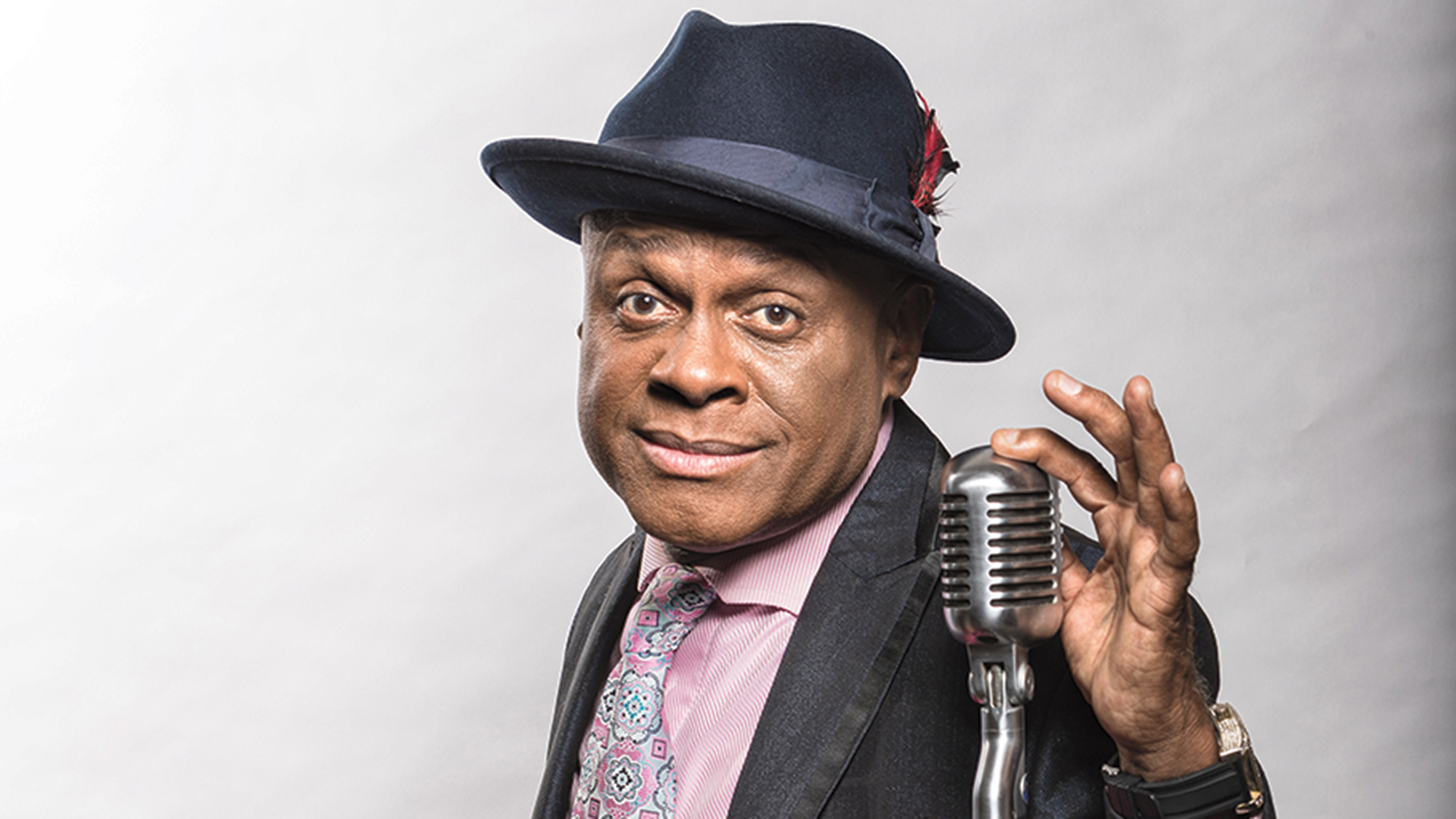
God and His Mother Inspired Michael Colyar to Get Sober

Every morning, i look in the mirror and I like the guy I see. My mother and God are the reasons for this.

Every day, I give thanks for being alive, for having two children I love, for having a woman I love, a job I love. When someone asks how I’m feeling, I usually say, “Supercalifragilisticexpialidocious.”

I’m a comedian, an actor and a motivational speaker. I’ve done street comedy, stand-up, television, movies. I’m supposed to say funny stuff.

Except now I mean it. That’s also because of Momma and God.

Seven years ago, I was a hard-core crack addict. I’d smoke rock all night, then come home at 3:30 a.m., feeling crazy and exhausted. My wife would be in the bedroom, having fallen asleep waiting up for me. I’d sit beside her feeling sick and guilty. Then I’d go into the bathroom and smoke another rock. That’s the life of a crackhead.

I used crack for 23 years. But I was a functional addict. I worked, made money. I was successful. Everybody thought I was hilarious. Inside, though, I was a mess.

How did I stop? They say addiction runs in families. My dad was an alcoholic. He drank a fifth of booze a day and died of a heart attack when he was 51.

Thanks be to God, recovery runs in families too. I never told my momma about my addiction, but she knew. Of course she knew. Momma always knows. More than anyone else, she inspired me. She loved me, prayed for me, never gave up on me. The rules she taught me growing up—love God, be kind, respect yourself and others—formed my foundation. I leaned on that foundation in recovery. Momma’s love came from God. At last that love reached me and helped me get clean.

Growing up, I never knew that my family and I were poor. When everyone around you is poor, you don’t know what you don’t have.

I was raised in the Robert Taylor Homes, a 16-story public housing project on the South Side of Chicago. When we moved there in 1962, most families saw the projects as an improvement on the falling-apart places they came from. That’s how it was for us. We were on an upward path.

We would have stayed on that path if my dad hadn’t drunk all the money he made. He was a tailor who could alter and press a suit to perfection. The minute he got paid, he took that money and bought a case full of booze. Whatever he didn’t drink, he sold on Sundays when liquor stores were closed.

Lucky for me and my four older brothers, Dad wasn’t an angry drunk. He just got funny and sentimental and then passed out. He was always the life of the party, the guy everybody wanted to be around.

He and Momma fought, but they agreed on how to raise kids. We had rules and were expected to follow them. Momma was a devout Catholic, and she prayed all the time.

I loved my dad, but I swore I’d never become a drunk like him. Though I always knew he loved us, I also felt the effects of his alcoholism every day. The instability. The fights with Momma. I wanted no part of that.

Still, I was a lot like him. I was always the funny guy, a storyteller like my dad. In high school drama class, I realized you could make a whole audience laugh, not just your friends.

A friend encouraged me to try comedy on the streets. I told him he was nuts—until I saw how much money he made doing a routine on State Street. I gave it a try. People gave me money! For telling jokes!

The first winter after I started doing street comedy, I noticed something. Snow and biting wind would keep my audience away. So I loaded up my stuff in my 1967 Buick LeSabre and headed out to Los Angeles, the show business capital, where it’s summer all year long.

I did comedy on the Venice Beach boardwalk. Right away I drew lots of tourists and locals. It was a diverse crowd, and my comedy tackled issues like racial prejudice. Word spread, and soon I was being dubbed the King of Venice Beach.

Movie stars came to see me. So did producers. I got invited to audition for TV and films. My career took off.

So did my party life. I’d never become like Dad. I could handle a drink. I knew how to have fun with drugs.

Then someone introduced me to cocaine. It was like electricity coursing through my body, giving me boundless energy and confidence. More of that, please!

“You like that stuff?” a friend of mine asked one day. “Then you’ll love this.” He handed me a glass pipe that had a small white rock inside it. I held a lighter under the pipe and inhaled.

Wham! A cocaine high like I’d never experienced. The high didn’t last long.

“Give me another,” I said.

And so it began. For a long time, I told myself I had everything under control. I only smoked rock at parties. I wasn’t like those crazy crackheads on the street.

In fact, I was an addict—just like Dad. I didn’t control crack. Crack controlled me. I found myself getting high in strange motel rooms with sketchy people just because they had rock. One time, I was in an alley buying drugs. I reached toward my pocket, and the dealer must have thought I had a gun. He pulled out a real gun and pointed it at me.

“Get out of this neighborhood,” he said. I did. Fast.

I told myself I wasn’t a real addict because I still had a house, my wife had spending money, and I kept landing roles. But after I started turning up high for auditions, the roles dwindled. My wife gave up trying to make me quit. Eventually our marriage ended.

Being an addict is exhausting. All you think about is getting high. Whenever I talked to Momma back in Chicago, I tried to make it sound like I had everything together. She knew otherwise. Mothers always know.

Then she got breast cancer. I wanted to be sober for her. I was tired of living the way I did. I tried to quit. I just couldn’t. The craving for that high was too intense.

Momma died before I got sober. I was devastated. All my life, she’d been my foundation. In her eyes, I saw myself as I really was.

At last I broke down and contacted a group called Cocaine Anonymous, a 12-step program that’s modeled after Alcoholics Anonymous. I got clean, had a serious relapse, then got clean again. I’ve been sober ever since—seven years. What a gift.

Many addicts don’t stick with recovery. The odds were against me. I work in an industry where alcohol and drug use are common. I’d been addicted a long time. And I am my father’s son.

I loved my dad. I don’t want to make him sound one-dimensional or blame him for my addiction. But it’s a fact that addiction runs in families. If I’d known that earlier—really known it, believed it, acted on it—maybe I would have been more careful. Maybe I would have pushed away that glass pipe when it was offered to me.

Like I said, recovery runs in families too. Even for those of us who have addiction in our genes, there is hope. The hope comes from God.

For me, that hope was delivered through my momma’s unwavering love. It was her love that raised me with a strong foundation. Her love in the prayers she prayed for me every day. Her love in the example she set and the inspiration she provided.

Today I’m traveling around the country doing a one-man play. It’s a show with a message. And that message is: Through determination and hard work, you can overcome whatever challenges you face—especially if you put God first. Right up there with your momma. (I think God will understand.)

The show is called Michael Colyar’s Momma. That was her message to me. Now I’m sharing it with the world.

For more inspiring stories, subscribe to Guideposts magazine.