Embrace God's truth with our new book, The Lies that Bind

Free from Guideposts: A Daily Devotions Booklet on Recovery

In Alcoholics Anonymous, the 12th step encourages us to “carry the message” to other suffering alcoholics, both for the benefit for our own sobriety (you must give it away to keep it) and to reach those who are still suffering from the disease of addiction.

The founders of AA, the granddaddy of 12-step programs, knew the power of personal connection and shared experience to transform hopelessness into hope, brokenness into healing. Bill Wilson was only sober a short time when he found himself in Akron, Ohio, on a business trip in 1935, fearing he’d pick up a drink in the hotel bar.

Daily Guideposts for RecoveryInstead, he picked up the phone and cold-called several local pastors until one connected him with Dr. Bob Smith, a congregant with a terrible, intractable drinking problem. A good man whose life was slipping away. Bill’s meeting with Dr. Bob, and Dr. Bob’s subsequent recovery, was the beginning of the 12-step recovery movement. One addict carrying the message to another. It started with those two men, by the grace of God.

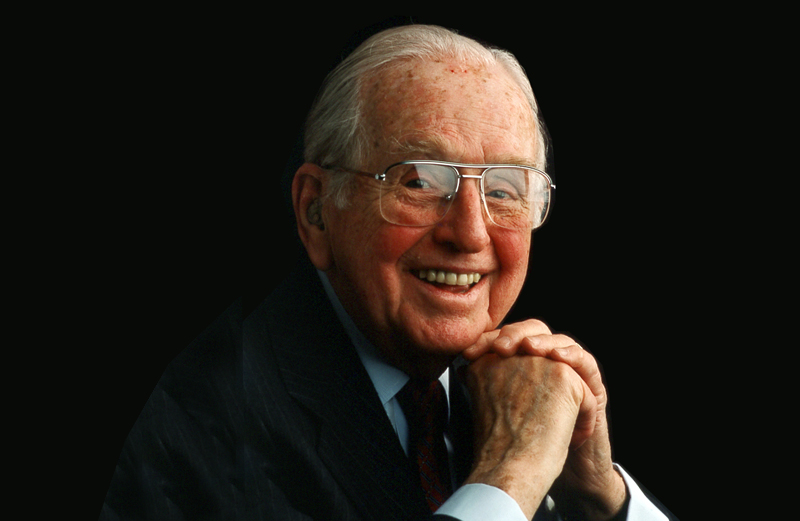
Our booklet of 60 devotionals for recovery, Daily Guideposts for Recovery, is how we help carry the message to you, whether you’re in recovery, struggling to recover or are a family member. Dr. Norman Vincent Peale, our founder, was a great friend and supporter of AA. He and Bill Wilson shared a spiritual affinity for connecting people with a message of hope and inspiration.

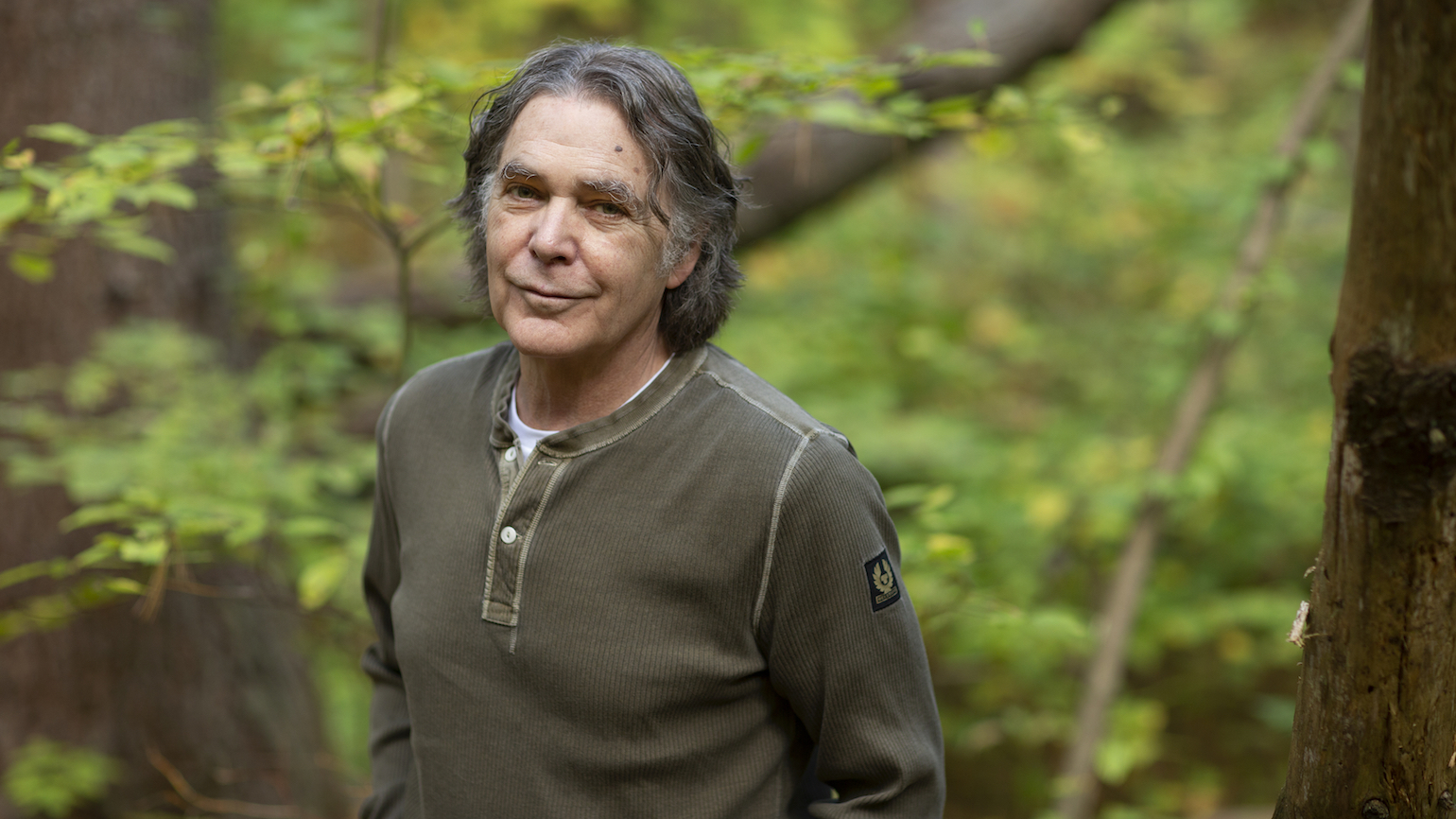
Some 40 years ago their combined influence reached a man in early recovery named Jim Nelson as he walked along the Mississippi River wrestling with the demons of addiction. He’d been “white-knuckling” his sobriety, unable to feel fully connected to his Higher Power, just hanging on day by day.

His discovery of Dr. Peale’s book, The Power of Positive Thinking, combined with his renewed determination to work the 12 steps, helped him turn the corner spiritually and catalyzed his recovery from alcohol addiction and his mission to reach others with a message of hope.

Our booklet could not have been possible without Jim Nelson who generously supported this work. This is Jim’s expression of gratitude for his own many years of sobriety, the privilege of carrying the message, and the call to help others who are struggling. And struggling people there are, millions of them. In this time of the pandemic another epidemic worsened—addiction. Hospitalizations and deaths have risen dramatically since COVID struck. It is the hidden tragedy of this plague.

Jim speaks of walking with his Labs in the foothills of the Big Horn Mountains near his home in Wyoming, feeling a peace no drink could ever give him. In the program we call that serenity. I know that feeling when I walk my own dog through the Berkshire Hills or even in Central Park on a flawless summer day. A peace I would never have known if I hadn’t found the gifts of sobriety through the grace of God and the experience, strength, hope and wisdom of those who carried the message to me, and to people like Jim Nelson.

Order your free copies of Daily Guideposts for Recovery today!

Four Steps to Banish Anxiety

Of all the thousands of letters I have received, the problem of worry is most frequently presented. The following verses helped many to gain victory over worries. Hence we can confidently say, The Lord is my helper; I will not be afraid; what can man do to me? (Hebrews 13:6).

Nobody can really hurt you. We do not stand alone in this world for we can turn to God and He will always help us. Fill your mind with thoughts of God; get in harmony with God’s will; eliminate from your mind all feelings contrary to love; practice simple trust. God then can help you.

Practice thinking less about your worries and more about God. Instead of thinking how difficult your problem is, think how great and powerful God is. This will change your psychology; but more than that it releases spiritual power into your mind. That will enable you to meet your situation intelligently and creatively.

Always repeat this text when you are afraid: “Have no anxiety about anything, but in everything by prayer and supplication with thanksgiving let your requests be made known to God” (Philippians 4:6).

The method outlined in this verse for casting out anxiety is fourfold: prayer, supplication, thanksgiving and just telling God what you want. When you are worried, stop thinking emotionally and talking in an anxious manner, and pray. Ask God to relieve you of your fears and show you how to handle the problem that causes the fear. Then, immediately upon asking Him, give thanks, thus expressing your belief that He is answering your prayer, for He is.

“If you sit down, you will not be afraid; when you lie down, your sleep will be sweet” (Proverbs 3:24). It is important when dealing with worry to go to sleep at night in the right manner. If you retire with a mind filled with fear thoughts you will have only superficial sleep, for beneath the surface, anxieties are disturbing you in the deep subconscious.

Therefore when you lie down to sleep, think of God as being with you and watching over you. Place the cares of the day in His hands. Every night say this verse to yourself before you go to sleep. Then, instead of fears in your subconscious, faith in God’s presence will develop a confident approach to your anxiety.

Four Little Girls Lost: Faith, Forgiveness and Healing

I sat nervously in the waiting room of a psychologist. My husband Jerome’s plea for me to see a doctor had finally sunk in, yet not even Jerome knew the depth of my misery, how the sadness never went away, no matter how I tried to numb it with alcohol.

These feelings had been a part of me since I was 14, throughout high school and college, going on 10 years now. I kept to myself. Rarely did I talk to other people. I was afraid something terrible would happen if I got too close to anyone, even Jerome, our daughters and other family members. I didn’t know where these feelings were coming from. That’s what made them so frightening.

I picked up a magazine and flipped through it. The pictures that stared back at me were white smiling faces. Their lives were nothing like mine. I had grown up in Birmingham, Alabama, during the height of the civil rights struggles. Our city had been nicknamed Bombingham, because of all the bombs that had destroyed black homes, churches and businesses.

BROWSE OUR SELECTION OF BOOKS ON CHRISTIAN LIVING

My parents had done their best to shelter my brothers, sister and me. They may have talked with their friends about segregation and racism, but not with us. Daddy told us places we weren’t to go, like across the railroad tracks, and insisted my brothers escort me everywhere. I questioned why there were so many rules. But I didn’t know to be afraid, not then.

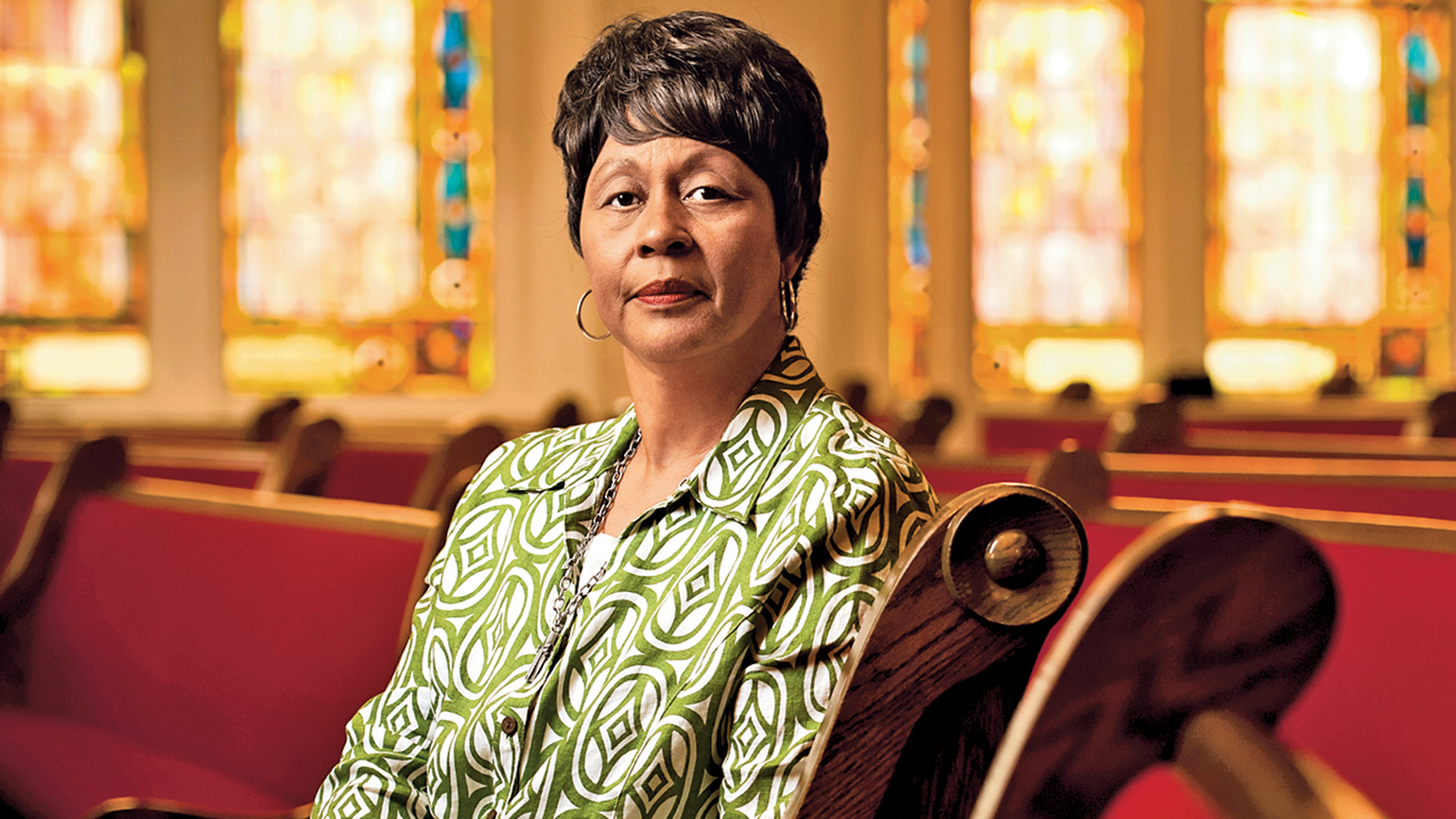
Church was the one place I was allowed to be on my own. We went to the Sixteenth Street Baptist Church downtown. I’d met Cynthia, my best friend, there.

I remember being baptized at 13. When the pastor lifted me from the water I blinked and looked up into Jesus’ tender face in the stained-glass window above the baptismal font. It seemed as if he were telling me, “I’m here, watching over you.”

Now I wondered if that was true. No matter how I prayed, God hadn’t eased my suffering. Lately I slept only a few hours at night. By morning I was exhausted. I picked at my food. I lost a lot of weight. My hands were always breaking out in rashes. How could I go on like this?

Jerome was constantly asking me, “What’s wrong?” But I couldn’t put the darkness inside of me into words. We’d been married six years now, with two beautiful girls. Why was my head filled with thoughts of death?

Jerome’s job had recently transferred us to Atlanta, Georgia. The only person I’d met was our next-door neighbor. I found myself drinking more and more.

A week earlier I’d mixed a mid-morning drink and sat down in front of the TV, just trying to get through another day. The girls were outside playing. A commercial came on: “Are you confused about life? Need someone to talk to?” It seemed to speak directly to me. “Call this number. Counselors are waiting to take your call.”

READ MORE: OSEOLA McCARTY’S LASTING LEGACY OF LOVE

I dialed the number. A woman answered. She was explaining the services they offered when Jerome came in. He’d forgotten some papers he needed for work. “Who are you talking to?” he asked. “It’s really early to be drinking.”

I told him I was talking with someone from a suicide hotline. “I just wanted someone to talk to,” I said. “I was lonely.”

“I think you need to see a doctor,” he said. I agreed.

My doctor referred me to a friend of his. I didn’t know initially that the friend was a psychologist. That’s how I ended up in a psychologist’s waiting room. A door opened next to me.

“Mrs. Mc­Kinstry,” the psychologist said. I wondered what he would ask me. Nobody I knew had ever been to a psychologist.

He led me back to a small office. He was a kindly older man. I told him I wasn’t sleeping, that nothing made me happy. He listened intently, nodding and taking notes. He asked what I did during the day and if I was drinking. Finally his eyes locked on mine.

“What you’re dealing with is called depression. It’s treatable, but you won’t survive if you keep on like this. You need to face your feelings.

“I can’t help but think there’s something, maybe in your past, you need to let go of,” he continued gently. “We need to figure out what’s bothering you.”

Driving home I heard his words repeat in my mind. What had happened to me? I remembered how happy and carefree I’d been as a child. Where had that girl gone?

Fact was, Daddy hadn’t been able to shield me from all of the violence that had happened in Birmingham when I was 14. Nearly every day I thought about my friends, the girls who’d been killed when our church was bombed. I tried not to dwell on the past, but it was always there.

I picked up my girls from the neighbor and got them settled playing in our yard. I went into the house, then to a closet where I had a box full of keepsakes.

There on the top was an old black Bible. My parents had given it to me the day I was baptized. I had always carried it to church. I had brought it with me that awful day, September 15, 1963…

It was Youth Sunday. I was laughing with Cynthia, Denise, Addie and Carole while they primped in front of the restroom mirror. I needed to leave. I was the Sunday School secretary. I had to get my attendance and offering report in by 10:30 A.M.

I ran up the stairs. The phone in the church office rang. I held the heavy black receiver up to my ear. A man’s voice said, “Three minutes,” then he hung up. What was that about?

I remembered I still needed to collect the report from the adult classes. I walked into the sanctuary, toward the stained-glass picture of Jesus.

Boom! The floor swayed. But the sound was muffled. Thunder? Glass fell at my feet. Someone shouted, “Hit the floor!” I dropped, flat on the ground. Silence. Then a stampede of feet. Police sirens.

I had to get outside. I looked up. There was a hole in the stained-glass window where Jesus’ face had been.

READ MORE: MISTY COPELAND—MADE TO DANCE

The streets were filled with people screaming and crying. Finally I saw Daddy behind a police barricade. We drove home in silence, too scared to say a word. How could anyone bomb a church? I only hoped no one had been hurt.

Late that afternoon our phone rang. Mom answered it. She was quiet and solemn as she listened to the caller. Then she hung up and turned toward us, her face filled with sorrow. “There were four girls in the restroom who never made it out,” she said.

My friends. It felt like my heart had stopped.

“It can’t be true,” I whispered.

Mom nodded. “I’m afraid it is,” she said. “They died.”

I remembered the strange phone call at the church. Had someone been trying to warn us? Or taunt us? Over the course of the evening—through friends and neighbors, the radio and the evening news—we pieced together what had happened.

But each bit of information only left me more stunned and frightened. There were people out there who wanted to kill us. They’d taken my friends from me. Bombed my church.

That night in bed I burrowed deep under the covers, but it was hours before I was able to sleep. It seemed there was no place safe anymore. An awful emptiness opened up inside of me.

The next morning Daddy made breakfast, like every morning. No one asked, “Carolyn, are you okay? Do you miss your friends? Do you want to talk about what happened?” Back then, there was no grief counseling. Loss was a part of life and you were supposed to stoically push through it.

I went to school on Monday and laid my head on my desk wishing I could block out the sadness, anger and confusion.

Now I knelt on the floor next to my closet. My body shook with emotions that had simmered inside of me for years. How could someone have bombed God’s house? Killed four innocent little girls? What kind of person was capable of such evil?

They had caused so many people so much pain. I’d never even gotten to say goodbye to my friends. My parents had asked if I wanted to go to the funeral. I said no, twice. I wanted to remember them as I had last seen them. But I did want the killers to hurt. I wanted them to feel the same pain that I felt inside.

God, I prayed, I am in so much pain. Please fix my body. Take away my cravings for alcohol. Please touch me with your healing so I can go forward.

I picked up my Bible, felt the weight of it in my hands. It fell open. There was an old church bulletin tucked inside. I looked at the date: September 15, 1963, the day of the bombing. I read through the hymn selections for that fateful morning, read the page numbers and spoke the names of the people who were to give the prayers.

Halfway down the page I saw the pastor’s sermon title: A Love That Forgives. There was a scripture reference, Luke 23:34. I flipped to the passage and slowly read the words: Father, forgive them, for they know not what they do.

Like this article? Sign up for “Your Weekly Inspiration”, a weekly newsletter of Inspirational stories of hope and faith – Click Here.

Tears streamed down my cheeks. I thought of that stained-glass window, of Jesus reaching out to me. All these years I’d carried this burden inside me, without ever once… Forgive me for not coming to you before now, for not trusting you.

I tried to see the bombers as God saw them. I wept, thinking of someone so fearful that killing seemed the only option. Forgive them as you have forgiven me. I could feel the hardness in my heart melting, anger and bitterness flowing out of me.

Then the tiniest sensation—one I barely recognized. I ran outside to my girls, held them tight. I wanted to remember what it was like to be young again, carefree, life full of possibility.

My depression didn’t lift overnight. I’d taken only the first step of a long journey. I still had a lot to learn about the healing power of forgiveness. I kept returning to God in prayer and met again with the psychologist.

From that point on I stayed as busy as possible. Every day the girls and I went bike riding. I bought cookbooks and taught myself to bake. We joined a church and I raised money for a new nursery.

Slowly I began to see the world with new eyes. I reached out to others, even strangers, listening to them. I’d believed we’re all God’s children, and it became real to me—how loving and warm people are, how much we have in common, how it’s mainly ignorance that separates us.

Later I enrolled in divinity school so I could bring God’s message of love, forgiveness and reconciliation to the hearts of all, allowing God to use me—my experiences and voice—to deliver his words.

We moved back to Birmingham in 1978 and again became members of the Sixteenth Street Baptist Church. Every day visitors come from around the world to remember and reflect on the pivotal moments that changed a nation.

They come to see the place, to physically touch it and spiritually connect with it. The church holds a special status in the history of the civil rights movement. It remains a symbol of faith and hope for all who enter its doors.

For me it will always be a reminder of God’s infinite grace and love for all his children, and how we are given that love in order to forgive what seems unforgivable and release our burdens to him.

For more inspiring stories, subscribe to Guideposts magazine.

Fortune for Good Health

Can you picture a Chinese fortune cookie that you’ve snapped it in half to get the message out?

That’s what many people’s approach to health looks like. Two separate pieces.

We go to church for spiritual inspiration…we go to the gym to work out.

Many of us read a daily devotional at home, or go to a small group Bible study to learn how we can be transformed by God.

To improve our physical health, we go on a diet, see a medical doctor…or watch The Biggest Loser to see what dramatic change is possible for our bodies.

Even people that have risen to the top of their profession often have a broken approach to health.

I can think of several well-known Christian pastors and authors who are very overweight. They seem to skip over the parts in the Bible about taking care of the physical body. I am not judging them, but I notice they do not take care of their health.

Then, there are those in the health community that have powerful bodies but do not share any spiritual wisdom. Take, for example, the celebrity trainers we see on television. They look great, but don’t give glory to God for their healthy, strong bodies.

The spiritual and the physical are two facets of us that fit together perfectly, just like the broken pieces of a fortune cookie. That’s the philosophy behind Shaped by Faith, my work in which I help people to use their faith to inspire fitness and their fitness to strengthen their faith.

Here are two easy ways to put your spiritual and your physical parts together.

1. When you are in church, breath deeply and evenly from your belly during the sermon and Scripture reading.
Oxygen will flood your bloodstream—giving you more energy, and you’ll exhale carbon dioxide—decreasing your fatigue and mental fog.

2. While you exercise, repeat a prayer or Scripture verse to yourself as you walk, cycle, or lift.
Your focus will broaden and God’s strength and power will support your physical exertion.

Back to that fortune cookie—here is God’s message for you, from 1 Timothy 4:8, “Workouts in the gymnasium are useful, but a disciplined life in God is far more so, making you fit both today and forever.” (The Message)

Blessings,
Theresa

—–

Get more advice from Theresa!

Find all you need to know on whole-person
wellness in
Shaped by Faith.

Theresa is a former model and nationally certified fitness professional who teaches people to use their faith to inspire fitness and their fitness to strengthen their faith. She is the author of Shaped by Faith: 10 Secrets to Strengthening your Body & Soul, and two exercise DVDS: Pilates for the Soul

She and her husband, Robin, have seven children and live in Calhoun, Kentucky.

You can email her with any questions or concerns.

Fortunate Fall

Summer ended this week and I was glad to see it go. Of course it’s not really over. Real autumn is weeks away and it’s still warm. But for the past few days the humidity departed and that’s what matters.

East coast humidity destroys all joy for me. I never knew it growing up in California. When Kate and I moved to New York four years ago in the middle of a sweltering, oppressive, leaden July, I mourned all summer long, wondering what on earth I had done moving to a place where the simple act of going outside feels like being encased in a greenhouse coffin.

Then came September and the first tantalizing crisp days. The sun brightened, as if stepping from behind a steamy window. The world looked as I remembered, clean, clear lines.

It’s that feeling of restoration I like best about fall. Here in the east I dread spring because it announces summer, that alien season taking from me the air and light I love, taking even my body, which endures the ensuing months in a permanent, hateful sweat.

Fall’s arrival plunges me into memory, down far enough to be home again. I’m talking about the body’s memory, the kind you experience when you smell cut grass and remember childhood baseball games, or you return to your old elementary school and the past momentarily overwhelms you.

I had that feeling the other morning coming out of the swimming pool. It was a little after seven, the sun just clearing the upper Manhattan skyline. The air, heavy and dead all summer long, smelled suddenly alive. The light was magnetic, isolating and enlarging everything it touched. Apartment windows across the Hudson gleamed like polished bronze.

It was California light and for a moment I was back there, time stopped. Or rather time was compressed, all times gathered in one time. I was in college, biking up the Berkeley hills watching fog creep across the San Francisco Bay. I was in high school driving bleary-eyed to rowing practice, sunlight just cresting the ridgeline of the San Gabriel Mountains. I was on the beach playing in sand, at the park in late afternoon, on the bluffs above tossing whitecaps, cresting a freeway interchange enclosed in the endless, silent, radiant grid of Los Angeles.

Do you have those moments of compressed time? Do seasons restore you, too? I take such moments as evidence for the essential mystery and unknowability of human life. There are depths within us we rarely access, riches we are content to ignore. And I think, if we don’t even know ourselves, how much less must we know the world around us.

Time, eternity, death, life. All words trying and failing to capture that mystery, to make sense of yearnings so powerful I think we ignore them because to admit them would invite paralysis. Regardless, the taste of fall leaves me wanting more. I get myself back and with it intimations of joys and realities larger than any self could imagine. Happy fall!

Jim Hinch is a senior editor at GUIDEPOSTS. Reach him at jhinch@guideposts.org.

Former NFL Star Ben Utecht on Dealing with Memory Loss

I should have known there was something wrong with me when I sustained my fourth concussion. It was the 2007 season, my fourth year in the NFL as a tight end for the Indianapolis Colts. We were the defending Super Bowl champs. In a game against the Denver Broncos, I was blocking for our running back. A Broncos defensive back leaped over me, trying to get to the ball carrier. His foot clipped the back of my helmet.

I only know what happened next because I watched it on film. I crumpled to the ground. Ten seconds later, I jumped up and sprinted to the sidelines, where I talked with my teammates and a doctor, who pulled me from the game. I had no memory of any of it.

I’d never experienced amnesia. Still, when I told my wife, Karyn, I didn’t make a big deal of it. I’d had concussions before. I’d always bounced back.

READ MORE: STRUCK FROM ABOVE

I needed to bounce back. My contract was up at the end of the season, and I wanted to sign a long-term deal. It would mean financial security for Karyn and me and the family we hoped to start.

My list of injuries went back to junior year of high school: broken pelvis, ankle and foot; fractured ribs and vertebrae; torn abs. To borrow an expression from Karyn’s sport—she was a captain of the women’s golf team at the University of Minnesota, where we met—getting banged up is par for the course in football.

Four weeks later, I passed the Colts’ post-concussion protocol and was cleared to play. During the off-season, I signed a three-year contract with the Cincinnati Bengals.

Leaving my friends in Indianapolis was hard. I also left my mentor in the career I dreamed of having after football: music. I’m a big guy—six foot six and 250 pounds—and I have a big voice. My dad is a Methodist minister. I sang in his church as a boy. In high school I was in more choirs than sports teams. In college I sang at churches with the Fellowship of Christian Athletes. I did the same in Indianapolis.

My rookie season I spoke at a youth event. A woman in a Colts jersey ran up afterward and asked for my autograph. She was none other than Sandi Patty, a huge Christian music star. I wanted her autograph.

Sandi took me under her wing. In December 2007 I joined her onstage at the Indianapolis Festival of Lights. Singing with a Christian music legend in front of more than 100,000 people while wearing my Super Bowl ring was a dream come true, something only God could have orchestrated.

READ MORE: BY FAITH ALONE

I should have known there was something wrong in spring 2008, when I had trouble learning the Bengals playbook. None of it stuck in my brain, which was weird, because I’d always had a phenomenal memory. I didn’t connect it to my concussions, though. Concussions weren’t in the news back then. Two sets of doctors—on the Colts and the Bengals—had cleared me to play.

The 2008 season wasn’t a good one. I broke my sternum and tore my plantar fascia. But I went into the 2009 training camp in the best shape of my life. I had extra motivation: Karyn and I had had our first child, our daughter Elleora.

I should have known there was something wrong when I was knocked out on August 5, 2009. It was the first week of training camp, a routine blocking drill. I was supposed to handle the outside linebacker. That’s all I remember. The rest I pieced together from my teammates and from film (HBO’s Hard Knocks covered our camp).

The linebacker’s helmet came up under my face mask and hit me on the chin. I was out cold. Coaches, trainers and camera crews ran over. I came to before the ambulance got there. Hard Knocks showed my teammates praying for me. Paramedics rushed me to the ER. Doctors cut off my uniform and pads. Little did I realize that I would never wear a uniform in competition again.

I went through a bunch of tests. I had practically every symptom of post-concussion syndrome. Headaches, dizziness, sleeplessness, night sweats, sensitivity to light, loss of balance, fatigue, nausea, forgetfulness, difficulty concentrating, irritability.

I should have known there was something wrong when those symptoms didn’t go away. When every doctor I saw—including a neurosurgeon and concussion expert, Dr. Robert Cantu— told me I should never play football again. The Bengals cut me in November.

READ MORE: NFL PLAYER’S BATTLE WITH CROHN’S

Still, I made one last attempt to resurrect my NFL career. In April 2010, I finally passed the return-to-play protocol and tried out for the New England Patriots. I killed the workout but the Patriots didn’t sign me. Too big a risk with my concussion history, they decided. The end had come for me as a football player.

The question was: Who was I now? I thought I’d find the answer in music. We moved to Nashville in May. A few months later we found out Karyn was pregnant with twins. I’d felt so unsettled about the future, yet here was God with a double blessing. A reminder of what my parents had always taught me—to trust my future, my family, everything, to the Lord.

The birth of our twins, Katriel and Amy Joan, confirmed that trust. So did meeting Jim Brickman, the great adult-contemporary musician. Jim hired me for his Christmas 2011 tour.

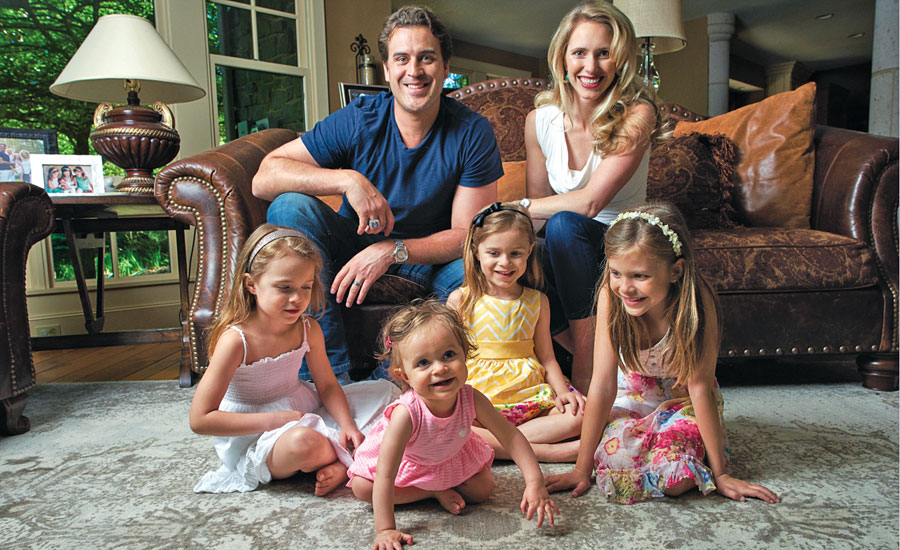
We moved home to Minnesota that summer. Karyn would have help with the girls while I was on tour, and the girls would be close to their grandparents.

One night we went to see our good friends Matt and Kim Anderle. Matt was my teammate in college. He mentioned something about their wedding some years back. Karyn wanted to hear more. So Matt and Kim started telling stories.

With each story, I got angrier, wondering why I hadn’t been asked to the wedding. My NFL schedule had been crazy, but I would’ve made time. “Why didn’t you invite me?” I demanded.

At first they all thought I was joking. Then Kim got out their wedding album. “You’re right there, Ben,” she said.

“You weren’t just a groomsman,” Matt said. “You sang for us. Don’t you remember?”

READ MORE: NFL STAR’S INSPIRING NEW GAME PLAN

The photos didn’t trigger the faintest recollection. I had absolutely no memory of their wedding. They all stared at me as if I was somehow fragile and broken.

That was the first time it hit Karyn and me that something was terribly wrong. I hadn’t really shared my memory problems with her. I didn’t want to burden her. Now it was clear I wasn’t just forgetful. Memories had been erased. My brain had changed.

On the Jim Brickman tour I couldn’t remember lyrics, not even to old Christmas songs. So I taped the words to the stage. Still, I loved being on tour. Concert night felt like game day. It gave me the same rush.

Maybe that’s why I sank into a depression when the tour ended. Karyn, the girls and I had settled into our dream home. I should have been happy.

Instead, most mornings I couldn’t get out of bed. I didn’t have a job to go to anymore. Not in football. Not in music. I’d been reading about the effects of concussions on former NFL players. Some were legends, others were journeymen. They all suffered alarming memory problems and behavior changes. Some died young and tragically, many by their own hand. Is that going to be me? I thought.

Karyn would ask quietly, “Are you going to come down? The girls want you.”

One day I forced myself downstairs. We were potty-training Elleora. Karyn asked me to take her to the bathroom. I put Elleora on the toilet and sat on the edge of the bathtub. “I’m done, Daddy,” she announced.

“Did you go potty?” I asked.

“I don’t need to.”

“You need to try,” I said.

She frowned. “I can’t.”

READ MORE: FAITH, LOVE AND MARRIAGE AFTER A BRAIN INJURY

I stood, looming over her. “You are going to sit there until you go.” My voice rose. “Do you understand me?!” Elleora burst into tears and I caught a glimpse of myself in the mirror. What have I become? Someone who scared his daughter. Someone who scared himself.

Karyn comforted Elleora. I went into my study, closed the door and fell to my knees. I’ve let this brain injury get the best of me, Lord. I surrender. I give it over to you. The best and the worst.

Something hit me at that moment. The Lord freed me from the anger and self-pity that were suffocating me. And he opened my eyes to the people, the blessings, around me. The world as it was in this moment.

After that, I got up early every day for time with God. One morning I was in my study when the door creaked open. “Daddy, can I come in?”

“Of course, Elleora.” She was still in her pajamas. I pulled her up onto my lap.

She snuggled close. “What are you doing?”

“Reading my Bible.”

“Will you read to me too?” “I sure will.” I wrapped my arms around Elleora and read.

“Can we do this again tomorrow, Daddy?”

It has become our morning ritual, one that anchors my day.

READ MORE: TONY DUNGY—WHEN MENTORS MOLD THE MAN

I poured my feelings—my love for my wife and daughters, my fear that I would not remember them one day—into a song I wrote and released in 2014. “You Will Always Be My Girls” has had more than 1.25 million views on YouTube. I think people respond to the truth in it.

The truth I should have known but tried to avoid for so long: Everything that I am, the person I’ve been, the man I hope to be, all comes down to my ability to remember. That is why I speak out about brain injury. Why I get up every morning determined to make the day count. Why I’ve been doing a new kind of training, for cognitive fitness.

Last summer I took part in a program that was as hard as any NFL training camp. At the start, I tested in the seventeenth and twelfth percentiles for recent and long-term memory. Very poor. I did 120 hours of work with a brain trainer. By the end, my scores jumped to the seventy-eighth and ninety-eighth percentiles. It was like moving from the bottom of the football depth chart all the way to the top.

Isn’t it awesome what the Lord can do when you let him make the best of you?

Did you enjoy this story? Subscribe to Guideposts magazine.

Sports and Brain Injuries

Recent news stories and a 2015 Hollywood film, Concussion, have brought to light the dangers of brain injuries in contact sports, especially football. In organized high school sports, football accounts for more than 60 percent of concussions. The NFL reported 271 concussions in 2015, and nearly 40 percent of retired NFL players have described symptoms of traumatic brain injury. After football, hockey has the highest concussion rate. College basketball has also seen steady increases in the injury.

Repeated concussions have been linked to memory loss, problems focusing, dementia, fatal blood clots and chronic traumatic encephalopathy, a degenerative brain disease. The American Academy of Neurology concluded in 2014 that wearing a helmet reduced the risk of traumatic brain injury by only 20 percent.

With milder concussions, symptoms like dizziness, blurred vision and headaches can last up to a week. With severe injuries, when consciousness is lost, recovery can require limiting activity for up to a year. The good news is that, as Ben Utecht describes, programs are being developed to treat brain injuries, and sports programs are addressing the issue.—Tyler Burdick, Editorial Intern


Former NBA All-Star Vin Baker’s Journey to Sobriety

What’s the best job I ever had? The answer might seem obvious. From 1993 to 2006, I was a professional basketball player, a four-time NBA All-Star. I went to the playoffs multiple times with the Seattle SuperSonics and the New York Knicks and won a gold medal representing the United States in the 2000 Olympics. I earned millions doing what I loved.

A no less worthy answer might be the jobs I held after my NBA career was behind me. For three years, I was a youth minister at Abyssinian Baptist Church in Harlem, one of New York City’s most vibrant places of worship. Two years ago, I joined the staff of the Milwaukee Bucks, the NBA team that had drafted me right out of college. I’m now an assistant coach.

Illustrious career, right?

Vin Baker as seen on the cover of the Jan 2019 issue of Guideposts
As seen on the cover of the January 2019
issue of Guideposts magazine

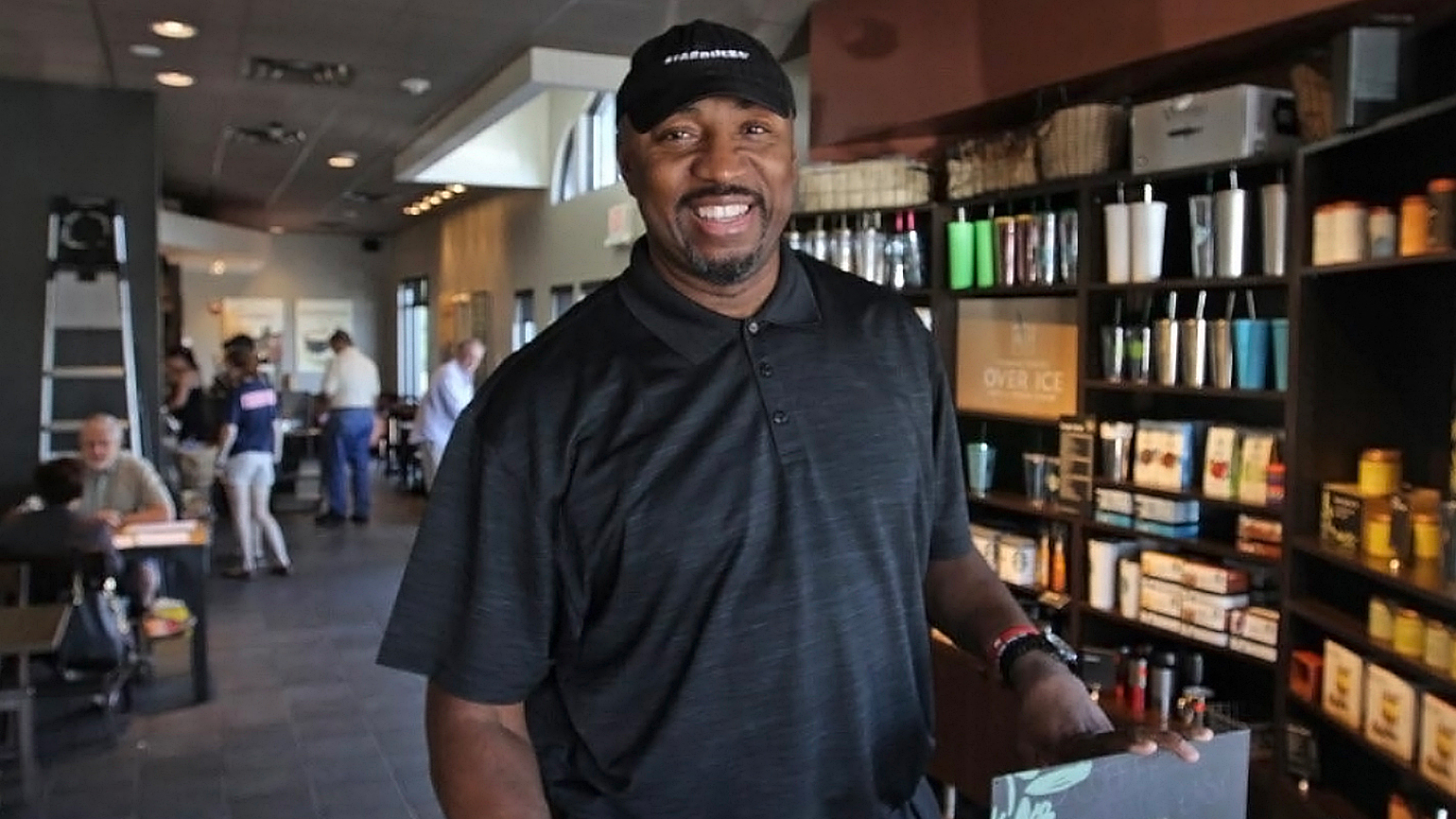
Well, maybe. But you could make a case that the best job I ever had wasn’t related to basketball at all. That was the year I spent as a barista making lattes and macchiatos at a Starbucks.

I held that job from 2015 to 2016. At the time, I was a recovering alcoholic looking for a new direction in life. That NBA career? I was cut from the last team I played for in 2006, after it became clear to coaches that I couldn’t get a handle on my drinking. My struggle with alcohol began during my earliest days as a pro player and lasted until I hit rock bottom in 2011. By that point, I was broke and living at my parents’ house in Old Saybrook, Connecticut, drinking a gallon of cognac a day and waiting for the alcohol to kill me. How did I sink so low? How did serving gourmet coffee help me climb back? The answer to those questions is a God story, pure and simple.

I have no excuses for the addiction that wrecked my basketball career. I had a happy childhood in a stable home. My father worked as a mechanic and as a Baptist minister. My mom worked for a cosmetics company. My loving, faithful, no-nonsense parents didn’t even push me into basketball.

I was a standout at a small college—the University of Hartford—and was the Bucks’ first-round draft pick in 1993. I was 22 years old. Six feet, 11 inches. A center and power forward.

I was also plagued by anxiety. I’d grown up straitlaced and attached to my parents. I often went home for the weekend in college. The swagger of some athletes didn’t come naturally to me, especially under the glare of the NBA spotlight.

It didn’t take me long to discover the cure for my on-court nerves and off-court shyness.

It probably will not surprise you to learn there is a widespread party culture in the NBA. Many players are young, insecure and thrust into a world of sudden wealth, fame and public scrutiny. They deal with the pressure by drinking, smoking marijuana and throwing around money at clubs.

I was a faithful, churchgoing Christian through college. Those habits began to break down as my basketball career took off. Soon I was joining other guys on the team for postgame all-nighters, drinking and smoking weed at clubs.

The first time I drank hard with the guys, I made a wonderful discovery. My anxiety disappeared! I became the life of the party. I came to the conclusion that alcohol and marijuana were perfectly acceptable ways for a pro athlete to relieve the stress of a high-pressure job.

The path of my addiction was all too predictable. I went from partying occasionally after games to drinking almost every night. Somewhere along the way, I discovered I actually played better while buzzed (or so I thought). So I drank before games. Soon I was drinking every day, just to stave off the agony of hangovers and withdrawal. I was a hard-core alcoholic.

I bounced from team to team. Gained weight and got sent to rehab. Was suspended, then reinstated. Developed a gambling habit. Became addicted to anxiety pills. One Xanax-fueled night in Las Vegas, I blew $100,000 at blackjack.

I had children but didn’t get married. At best, I was an absentee father. When I was let go from my last team—the Minnesota Timberwolves in 2006—I had little savings. A disastrous restaurant venture left me essentially broke. My house was repossessed. I moved back to my parents’ house and waited to die.

So where does Starbucks come in? I entered rehab for the fifth time in 2011. My father drove me. There was no reason for him to hope. Except this time I had begged God for help.

And God answered. I found a commitment to sobriety I’d never experienced before. I returned to my childhood church—my dad was still a pastor there—and threw myself into Bible studies and volunteer work.

There was just one problem. I needed income. And now that I was reaching out to my children and trying to repair the relationships I had destroyed, my financial obligations were growing.

Out of inspiration, I called Howard Schultz, the founder and CEO of Starbucks. Howard had owned the Seattle SuperSonics when I played for them. He was someone I admired who could give me advice about my future.

Howard gave me more than advice. First he set me up with Abyssinian Baptist Church in Harlem. He was friends with Dr. Calvin Butts, the pastor. I worked as a youth minister while attending Union Theological Seminary. I had thoughts of going into ministry, though I wasn’t sure.

After returning to Old Saybrook as a licensed minister and marrying the mother of my children, I once again needed income. And once again Howard Schultz came through. I was mystified by his offer: train to become a Starbucks manager. My previous attempt at business—the restaurant I opened—was a spectacular bust. I’d never worked behind a counter in my life. And I knew nothing about coffee. But I needed a job, so I said yes.

It was the best decision I ever made.

Here’s the thing about the NBA: It’s not real life. It’s hard work on the court. But it’s a collective fantasy. A place for fans, for entire cities, to project their aspirations. The wealth is mind-blowing. The schedule is grueling. Players travel all the time. It’s hotel rooms and luxury lockers and pulsing arenas and media glare. For young players, it’s easy to confuse the fantasy with reality.

Working retail? That’s reality. Especially when you work your way from barista through all the jobs you’ll eventually manage—if you make it.

I was given an easy shift at first—8:30 a.m. to 4:30 p.m., avoiding the morning and evening rush. Still, the work exhausted me. I had no idea there are so many variations on coffee. I had to learn them all. How to make them and customize them. How to work the register and keep the store supplied and clean.

Soon I was waking up earlier than I ever had in my life to open the store. Getting behind the drive-through microphone was like strapping in for a road race. Orders came fast. Every one was different.

I made a lot of mistakes. Once, an impossibly complex order came in. I was reduced to punching random buttons on the register and hoping for the best. When the customer drove up—it was my training supervisor!

“Gotcha!” she shouted. I was relieved to see her smiling. Because I had messed up that order, start to finish.

Working at Starbucks was the hardest job I ever did. I loved it. All I had to do was win the day.

I loved waking up early—and sober—and heading to work like everyone else in the world. I loved being part of a team that was working to serve other people.

“Look, I know I’m supposed to be your boss,” I told employees when I took on more management duties. “But I realize you know more about this place than I do. Let’s just help each other out and work together.”

Help each other out. Work together.

On my best days in the NBA, life felt like that. But I didn’t have many best days in the NBA. Mostly I was so lost in my own insecurity, so weighed down by vanity and ambition, I sought release in all the wrong places.

Howard Schultz is a wise man. Working at Starbucks showed me that a life of service—the life Jesus wants us to live—can happen anywhere. In the NBA, I’d been the fantasy Vin Baker, the basketball star pouring alcohol into an inner void. At Starbucks I was just Vin Baker. And I loved it. I needed it.

Eventually basketball came calling again, and John Horst and Mike Budenholzer, the general manager and head coach of the Milwaukee Bucks, gave me an opportunity to be on the staff of my first NBA team. It was a God-given chance to take what I had learned at Starbucks and in recovery and offer it to young players in desperate need of a veteran’s hard-won wisdom.

I’ve been sober for seven years now. I thank God for every sober day I live. I thank him for the many opportunities I’ve been given—especially the opportunity to live again after so much self-destruction. To live at last in the realness of God.

For more inspiring stories, subscribe to Guideposts magazine.

Forgiving the Sins of the Father

How did Mom ever put up with all of this? I won­dered, not for the first time since my husband, Mike, and I had moved in with my elderly father after my mother passed away.

The living room was a total mess. I stacked the condolence cards into a neat pile on the coffee table and swept a dying flower arrangement into the garbage pail. Then I stacked the now-empty boxes Mike and I had packed our things in to make the move to Dad’s.

Finally I picked up a laundry basket and gathered up the dirty socks Dad had dropped on the floor near the couch. I balanced the basket against my hip and headed down the hall. Cau­tiously, I approached the open doorway to my parents’ bedroom. Dad sat on the edge of the bed, fumbling with his gray-striped pajama top.

“Do you need any help?” I asked.

He didn’t look up. “They must be making these buttons smaller than they used to,” he grumbled.

I sighed. Mike and I had moved in with Dad both to ease our financial burden after our pizza restaurant went under and to help Dad adjust to life without his wife of 52 years. Mike went back to school to become a pharmacy technician and was in class much of the day.

I spent most of my time with Dad. I wasn’t sure how long I could keep this up. Being with him made me feel all knotted up inside.

To say Dad and I didn’t get along would have meant we had some kind of relationship. We didn’t. Not since I left home after high school. Picking out Mom’s casket was the first thing we had ever done together. I was the sec­ond of four girls and that was what he called me: “Number Two.” No name, just a digit.

He was harsh and judgmental with my sisters and me, and he had a temper. Once we were grown, none of us girls wanted anything to do with Dad. It was Mom we loved and stayed in touch with.

My younger sister and I were shocked at what we found when we visited Dad in the weeks after Mom’s funeral. Dad’s medications were scattered haphaz­ardly on the counter and he had no idea which was which. He frequently lost his footing on the uneven terrain of the acreage surrounding the house.

The landscaped flower beds and lawn he’d always showed off now looked more like a vacant lot, overgrown with weeds and strewn with broken gardening equip­ment. It was clear Mom had picked up the slack the past few years.

“He needs more help than we can give him,” my younger sister said. “He needs to be in a retirement home.”

I was inclined to agree, but mem­ories of Mom wouldn’t let me. She loved Dad—Lord only knew why—and she would not have wanted to see him forced out of his home. Along with our business, Mike and I lost our house and needed a place to live. So moving in with Dad seemed like a solution for all of us.

I’d thought it was God’s timing, but now I wondered, Lord, how can I take care of this man I don’t really care for? Teach me how to love the unloveable.

I looked at Dad, his pajama shirt all twisted. The few buttons he had managed to close didn’t match up right. It might have been comical, if it weren’t so sad. I was so used to dreading him that I was surprised to feel a twinge of sympathy. “You know, Dad, if you want, I can sew the buttons closed, then you could just slip the top over your head.”

Dad nodded. “That’s a good idea,” he said.­

A compliment? First one I could re­member. I put the laundry basket down and sat next to him on the bed. Slowly I rebuttoned his top.

It felt so strange! Growing up, I lived in constant fear of the man.

No matter how awful he’s been, he’s helpless now, I thought, fastening the last button. He needed someone. But, Lord, why me?

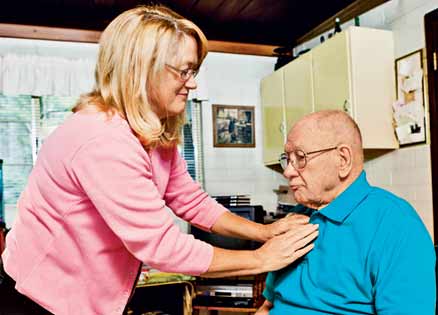
For the first few weeks, I clung to the hope that somehow I could teach Dad to live independently and that this living situation was only temporary. But soon it was obvious that he had age-related dementia.

He couldn’t learn how to wash his clothes or vacuum the floor. He couldn’t shop for food, much less make it himself. All the things Mom used to do for him. I drove him to doc­tors’ appointments and helped him go from using a walker to pushing himself in a wheelchair.

“Deep down, I know he appreciates you,” Mike told me.

“Does he?” I wondered.

One day, Mike went into town and I got to weeding the flower bed. Dad sat on the porch in his favorite wooden chair and watched two gray squirrels chasing each other around the big old oak trees that shaded the lawn.

“Well, Dad,” I said, standing and brushing the dirt from the knees of my blue jeans, “I should go in and see about putting something on for lunch.”

“Whatever you think is best, Babe,” Dad said, gazing out over the acreage.

I paused in mid-stride. Did he just call me “Babe”? It sounded a lot bet­ter than “Number Two.” I heated some soup and brought it out to him.

With a shaky hand, he slurped it up. “Thank you,” he said when he was done. Another first!

Lord, are you playing with me? I asked.

A friend volunteered to come over once a week to sit with Dad so that I could get out and run some errands. The first time, she visited with Dad on the front porch so that they could get to know one an­other. “How long have you lived here?” she asked him.

“Oh, I don’t know, maybe two or three years,” he said.

“No, Dad,” I said, “you’ve lived here for over ten years.”

A flummoxed look came across his face. He struggled for words. “That’s the tough thing about growing old,” he finally said. “Some days you can’t re­member where you were born, when you were born or even if you were born.”

He looked so beaten and vulnerable. I felt myself soften. “When I come back, why don’t we go for a ride on the quad,” I said. The four-wheel “Putt-Putt” was the only way Dad could make it to the furthest reaches of the property. “Wecan check out the pear trees at the edge of the field.”

Dad perked up. “Sounds good to me,” he said, mouth curled up into a smile.

That afternoon, I drove the quad up to the front porch. “Hop on,” I said.

Dad shook his head. “Let me drive,” he said. One of the few things he could still do.

I hesitated. Dad shook his head again, stubbornly. Oh, Lord, here we go. I hopped off. Dad grasped the handlebars and pulled himself onto the front seat. I climbed on in back of him. “Hold on tight,” he instructed.

We took off toward the end of the field. Leaning in against Dad, I felt the warmth of his body against mine. I couldn’t remember a time when we’d been that close.

“Look,” Dad said, pointing ahead. Two white-spotted deer were standing at the corner of the orchard. We stopped and watched in silence as they grazed. The peaceful silence of two people sa­voring a moment together.

Slowly we wove our way back to the house. Dad climbed off and I held out my arm to support him. “Hey, Dad,” I said, “I picked up those ice cream bars you like when I did the shopping. Do you want one?”

“My favorite,” he said. I helped him into his wheelchair and pushed him to the front porch. He looked up at me. “Margaret?”

My heart skipped a beat. I almost didn’t recognize my name coming from his lips. “Yes, Dad?”

“Thank you,” he said. “You take such good care of me.”

I felt the knot inside me come loose. This was the man I had once found im­possible to love. Dad and I had both been brought low by circumstances beyond our control, and in this new place, there wasn’t room for anger or resentment. There was peace, tender­ness, even love.

That was really why God had brought me here, I realized. Not out of despera­tion, but for a chance to settle the past and to finally have a relationship with my father.

“I’m here for you, Dad,” I said, rest­ing my hand on his shoulder, “as long as I need to be.”

Reduce the stress of caregiving and avoid burnout with these tips and resources.

Forgiving Her Alcoholic Father Helped Her Feel Whole

The phone rang in my of­fice. I was preparing for an evening talk at the university where I worked.

My heart sank when I heard the call­er’s voice. It was my father.

“Can I talk to you for a minute?” Dad asked.

“Sure, but I can’t talk long,” I said. This was my usual tactic with Dad: set a limit, keep it short.

“This won’t take long,” he said. “My therapist told me I should call each of my daughters and ask them a question. So I want to ask you.”

My heart sank even further. What could this be about? And why was he doing this to me right in the middle of my workday?

“Did you feel that I loved you as a child?” he said.

I was 34 years old, married and work­ing at the University of San Francisco while earning a doctorate in psycholo­gy. I had been an independent adult for nearly 16 years. I’d even lived abroad. My husband, Don, and I planned to have children soon.

Yet my father still had the power to stop me in my tracks.

My father was an alcoholic and had been since my childhood. Growing up with him had been a nightmare for my mother, my two older sisters and me. We lived in fear of his drunken rages. He berated and humiliated us, meting out harsh punishments seemingly at random. Even as an adult, I feared his abuse and suffered from the emotional scars he’d inflicted.

For years, I had lived in Santa Bar­bara, far away from my dad. But poor job opportunities and a broken rela­tionship convinced me to move back to the Bay Area, nearer to my father, where I eventually found a job, met my husband and started graduate school.

Meanwhile, my father had fallen apart. He and Mom divorced, and he lived by himself in a trailer park. Late­ly he had begun reaching out to me in ways that were, frankly, surprising. And unwanted.

I didn’t know how to answer his question. I knew what I wanted to say. But could I say it?

“No,” I said in a burst of honesty. “Maybe I knew it in an abstract way, but I didn’t feel it.”

Dad was silent. He seemed stunned. He ended up mumbling something about having to go, then hung up. I sat there afterward, shaking. But it was a relief to have finally spoken the truth.

I told Don about the call when I got home. My husband was the opposite of Dad. Upbeat, loving, stable, articulate about his feelings. He loved me and supported my work and my efforts to heal from the damage of my childhood.

“Do you think your dad will get back in touch?” Don said.

“I don’t know, and I don’t care,” I said. But in my heart, I knew those words weren’t entirely true. My feelings about Dad were more complicated than I let on.

Against all odds, he had started at­tending Alcoholics Anonymous and was making a sincere attempt to stop drinking. Although he expressed scorn for AA’s emphasis on surrender to a higher power, he did find the meetings helpful. Talking with other alcoholics showed him how damaging alcoholism was to relationships and made him feel less alone.

He was working AA’s 12 steps with the help of a therapist, and I was pretty sure that’s why he’d called with his question.

Everything I had learned as a psychologist told me I couldn’t bury problems and expect them just to disappear. But I also felt deeply wary of my father. Nor was I keen on unearthing decades of fear and resentment just to help him feel better.

How typical of Dad to barge into my workday with a bombshell question like that! Even in the midst of recovery, his focus remained firmly on himself. What did he expect, that I would for­get about the past and pretend that it didn’t matter?

There was so much to forgive—most important, how my father made me feel inferior and unlovable. In third grade, when I broke my arm while roller-skating, he yelled at me for crying and discouraged Mom from taking me to the hospital.

At school open houses, he dismissed teachers’ compliments by telling them I was lazy. He drank and embarrassed me in front of my friends, threatening me and calling me names. I never felt safe in his presence. I thought he hated me.

As a teenager, I bitterly resisted his efforts to restrict and control me. I fought back when he insulted me. I called him the Ogre and made fun of him with my friends. The day I moved out for college felt like the happiest day of my life.

For 15 years, I tried to put Dad and the trauma of my childhood behind me. Then Mom called me one day to say that Dad had filed for divorce and was moving out. I was surprised. I had always thought she would be the one to leave their marriage. But I was glad because now I could visit her without seeing him.

Dad also called to share the news. He read me a new copy of his will in which he’d added spiteful language about my mother. I seethed but said nothing.

About a year later, not long after Don and I had married, Dad called again. To my astonishment, he was crying. “I’m miserable, Jill,” he said. I could tell he’d been drinking. I wanted to hang up, but something in his voice kept me listening.

“I miss your mother,” he said. “Do you think she would take me back?”

I took a gamble. “No, Dad. You need help, not Mom,” I said. “You should see a therapist.”

I assumed he would dismiss the idea. But he surprised me. He found a thera­pist, who promptly told him he was an alcoholic and recommended he attend AA. Dad tried a meeting and found it uncomfortable. “The higher power talk is annoying,” he told me during one of his phone calls. “But the people there seem okay.”

For some months, I didn’t hear from him much. I was busy with my own life and not focused on him. It was around then that he called me with his bomb­shell question.

I wasn’t sure what would happen next. Soon after the call, I moved to a new job that was closer to where my father lived, and he started inviting me to lunch. I was nervous the first time we met. Would he drink? Insult me or embarrass me? But he was like a different person. Sober. Polite. Someone I could talk to.

I was glad to have a sober father in my life. But all it took was one flash of the old Dad to make me want to cut him off again. “Stop jack­ing me around,” he barked once after Don and I offered to help him with flooding in his mobile home. Our offense? Not return­ing one of his phone calls fast enough.

I knew that making amends was an essen­tial part of recovery, the ninth step. But Dad’s program didn’t seem to take into account how I might react. I felt guilty if I didn’t go along, but I was still angry at him and tense whenever we were together.

Partly to overcome this, and partly just to keep our lunches from falling into awkward silence, I began asking Dad about his past. He told me his parents had been harsh and unlov­ing. Though he had fought in World War II and returned home to earn a history degree at Stanford University, his mother tried to talk my mom out of marrying him when he proposed. She thought my mom could do better.

“I’ll never forget that,” Dad said.

He also told me stories that gave me insight into his character. As a senior in high school, he tried to prevent a fel­low student, a Japanese-American boy, from being sent away to an internment camp.

Later, working as a high school teacher in California’s Central Valley, he lost his job after teaching students about the history of racial discrimina­tion in their town. He ended up leaving education and working for an insur­ance company. Disappointment and boredom in that job contributed to his drinking.

Don and I had two children, and Dad was delighted to meet them, though I had to intervene a few times when his old disciplinarian ways resurfaced. Yet the more I learned about him, the more willing I was to allow him into my world. Dad had had a difficult life, but he was trying—albeit imperfectly—to be a better person. I could let go of my image of him as “all bad.” I even began to like him.

When my mom died, I did not expect my dad to comfort me. But he attended her memorial and even shed tears. After my sisters and I sorted through Mom’s things, he helped me take the items we didn’t keep to Goodwill.

“I don’t want to give away Mom’s piano, but I don’t have room for it,” I told Dad.

“I’ll store it,” he offered.

A few months later, still grieving for Mom, I broke down in tears during one of his visits. Dad took me in his arms and held me. It felt strange but good.

“Would you mind if I had someone else bury me after I’m gone?” he asked. “I would hate to have you cry over me like that.”

“No!” I said. “I’d need that time to say goodbye.”

That was when I realized that I cared about my dad more than I’d thought. Al­though he was frustratingly obtuse at times, he was trying to soothe my pain and make things easier for me. He could never make up for my lost childhood. But Dad was doing what he could do now—showing me love when I needed it.

I began to forgive him then. And not just for his sake. Forgiving him helped me open my heart and feel whole. For­giving wasn’teasy, and there were of­ten setbacks—but it was worth it.

My father died at age 85, long after we’d recon­ciled. When my sisters and I cleaned out his house, I found a note on the back of an envelope written in his nearly il­legible scrawl. It was a to-do list that he must have made a few days before he died. It included remind­ers to take his pills, call his doctor and undertake other mundane activities.

At the bottom of his list, Dad had written these words: Call Jill. Tell her not to worry.

Adapted from an April 8, 2019, story in Greater Good magazine, a publication of the Greater Good Science Center at the University of California, Berkeley.

Jill Suttie is a psychologist, musician and a staff writer and contributing editor for Greater Good Magazine at the University of California, Berkeley.

For more inspiring stories, subscribe to Guideposts magazine.

Forever Sisters

Another sleepless night. Tossing and turning with muscle spasms and body aches. My Lyme disease had flared up again. I’d been taking antibiotic cocktails twice a day for a year, but the disease had gone undiagnosed for too many years before that. I’d become a prisoner of my illness. I had to quit my job. I couldn’t get out much. My husband was more of a caretaker than a companion. None of our children lived near enough to visit very often. What was the purpose of my life anymore? I wondered. I couldn’t even get a decent night’s rest.

I got up and pulled on my robe. A computer waited in a small room down the hall. It took me into other worlds, to help block out the pain. I surfed the Internet and ended up in a chat room for women. But it was empty. Just like my life.

Tears slid down my cheeks as I stared at the blank screen. I typed a message. “I don’t know how to suffer with grace. I don’t want to live any longer. God, if you are everywhere you will see this.”

I buried my face in my hands. When I looked up I saw that the name Barbara was on the screen. “I’m not God, but I want to talk to you,” she wrote.

Barbara in Tennessee chatted with me in California for an hour. We wound up exchanging e-mail addresses. Finally I went back to bed and slept better than I had for a long while. I knew I’d found a friend.

Barbara was my first thought when I awoke the next morning. I turned on the computer and wrote to her. From then on it was California to Tennessee and back again every day.

“Today was tough,” Barbara wrote one evening. She worked in social services, just like me before I was sidelined with Lyme disease. She told me of a sad situation I’d seen many times on the job. That wasn’t all we had in common. Barbara and I discovered we’d both been born in Pennsylvania and had lived in many of the same places. She also had a grown child she didn’t see often enough. Barbara and I could talk to each other about anything.

“We’re like sisters who were separated at birth,” I told her more than once. We each had a telephone plan with a special 20-minute rate. We called once a month. One of us set a timer for 20 minutes, then the other would call back so we could talk for another 20 minutes. Before we hung up we always said, “I love you, Sis.”

Barbara and I often laughed about how strange it was for us to feel as close as we did considering we’d never met face-to-face. We talked about getting together after I was fully recovered. “Let’s move to a tropical island,” Barbara said. “Or go on a cruise!” Our big plans.

In 1998 a series of tornadoes tore through Barbara’s area of Tennessee. Telephones and electricity were out. Every time the phone rang I hoped to hear her voice. I constantly checked my e-mail. Hours became days. Without my newfound friend and sister I started to crawl back into that dark place inside myself. Keep her safe, Lord, I prayed. And keep me safe, too.

Then the phone call came: “Hi, it’s me,” she shouted.

“Thank God. I can’t imagine not having you in my life.”

“I’ll always be in your life,” Barbara said. “We are sisters forever.”

I saw Barbara through that disaster, and she saw me through the forest fires that threatened my area in 2001. My Lyme symptoms abated, and I felt better. We continued our daily e-mails and our monthly phone calls. We exchanged gifts. Nothing arrived for my birthday in 2003, but I knew Barbara was overworked that summer.

The day after my birthday she asked in her e-mail how I liked the gift she sent. I hadn’t gotten it. “I’ll put out a tracer at the post office tomorrow,” she said. “On my way to the doctor.”

She’d been having stomach problems. We both thought it was the stress from long hours on her job. But Barbara’s doctor admitted her to the hospital to run some tests. I awaited the diagnosis.

“The news isn’t good, Sis,” Barbara said when she called. “I have pancreatic cancer. The doctors don’t know how long I will last.”

I dropped to my knees. “Please don’t die,” I whispered.

“It’s okay. Remember, I’ll always be with you. I love you, Sis.”

Her words still hovered in the air when she hung up. Her daughter called that night. Barbara had told her all about me. Her mother had gone into a coma. Two days later Barbara died.

I didn’t think I had any tears left, but I cried nonstop. I would miss her so much. Her monthly phone calls, her daily e-mails, her constant friendship. And I never got the chance to see her or hug her. Now all our big plans to meet were nothing but a pipe dream.

On the day of Barbara’s funeral the doorbell rang. It was the mailman with her missing birthday gift, delivered first to a wrong address.

My hands shook as I opened the box. Inside was a heart-shaped pin of small rubies, with a note tucked underneath: “Bought this at a two-fer sale. One for me, one for my sister.” I would wear mine every day.

I called her daughter to tell her I had gotten this gift at last. She told me that Barbara made a special request to be buried wearing her own heart-shaped pin. “So my sister can find me in heaven,” she’d said. I have no doubt of that. God helped us find each other here on earth. He knew the perfect setting for our big plans to meet.

Download your free ebook, Angel Sightings: 7 Inspirational Stories About Heavenly Angels and Everyday Angels on Earth.

Five Ways to Think Like a Champion

I meet and learn from champions every day. Not just in locker rooms but in classrooms, hospitals, homeless shelters, homes and office buildings. I've learned that to be a champion you must think like a champion. Champions think differently than everyone else. They approach their life and work with a different mindset and belief system that separates them from the pack. Here are five championship attitudes:

1. Champions Expect to Win.
When they walk on the court, on the field, into a meeting or in a classroom they expect to win. In fact they are surprised when they don't win. They expect success and their positive beliefs often lead to positive actions and outcomes. They win in their mind first and then they win in the hearts and minds of their customers, students or fans.

2. Champions Celebrate the Small Wins
By celebrating the small wins, champions gain the confidence to go after the big wins. Big wins and big success happen through the accumulation of many small victories. This doesn't mean champions become complacent. Rather, with the right kind of celebration and reinforcement, champions work harder, practice more and believe they can do greater things.

3. Champions Don't Make Excuses When They Don't Win.
They don't focus on the faults of others. They focus on what they can do better. They see their mistakes and defeats as opportunities for growth. As a result they become stronger, wiser and better.

4. Champions Focus on What They Get To Do, Not What They Have To Do.
They see their life and work as a gift not an obligation. They know that if they want to achieve a certain outcome they must commit to and appreciate the process. They may not love every minute of their journey but their attitude and will helps them develop their skill.

5. Champions Believe They Will Experience More Wins in the Future.
Their faith is greater than their fear. Their positive energy is greater than the chorus of negativity. Their certainty is greater than all the doubt. Their passion and purpose are greater than their challenges. In spite of their situation champions believe their best days are ahead of them, not behind them.

If you don’t think you have what it takes to be a champion, think again. Champions aren’t born. They are shaped and molded. And as iron sharpens iron you can develop your mindset and the mindset of your team with the right thinking, beliefs and expectations that lead to powerful actions.

Download your FREE ebook, Rediscover the Power of Positive Thinking, with Norman Vincent Peale

First and Last: Edward Grinnan on Moving from Hopeless to Hopeful

FIRST
I’m Edward and I’m an alcoholic, and this is about my first drink.

So, I must have been about 13 and I was with a bunch of other young teens, out in an apple orchard. So we went out there one night with a bottle of Old Granddad that one of our members had smuggled from his father’s liquor cabinet, and we stood in a circle.

It was a perfect fall night; it was so crisp, it was like peanut brittle. You could almost break the air, and it was clear and the stars were everywhere. And when the bottle got to me, I lifted it high in the air. It went down like a demon, but it felt like the moon was coming was coming down with it, like light was filling me on the inside. And somehow it awakened something in me and I felt unbelievable, and I thought, I want to feel this way all the time. And for the next 25 years or so, that’s exactly what I tried to do.

LAST
So, my last drink: Here’s how it happened. By this time of my drinking, I’m in my early thirties, but I’m way ahead in other ways, and I had to wean myself off alcohol, off of a binge, very carefully, or I could go into convulsions or seizures or have hallucinations.

I was walking down Eighth Avenue and I was sipping a can of warm beer through a straw out of a paper bag, and when I finished, I fired it into a trash can and I said, “That’s it. That’s it, that’s the last one.”

I go up to my apartment and I opened the drawer of the side table, the night stand, and there looking back at me, as if it’d been waiting, was a 16-ounce can of Ballantine Ale. And I said, “Well, maybe God wants that to be the last.” But I looked at it again and I thought, no, this is my last chance. And I took it over to the sink in the kitchen and I poured it down the drain, which was a completely unnatural experience for me.

That night, those cans of beer, they were the last drinks of my life.

HOW IT IS NOW
How it is… It’s mind-boggling to me, really, to think back over those years of self-destruction, but I would say the two poles of my life are really hopelessness and hope. Because I have hope every day when I wake up now. I have hope if I don’t take a drink.

Now, it would be easy to look back across those decades to see myself, see my drinking, my drugging and all my other behavior as being a different life, but it’s not. It’s not; it’s part of my life. On this side of that divide is a different Edward, but still the same person—still the same alcoholic. I did not become an alcoholic; I’m still an alcoholic. I think, in many ways, like an alcoholic. I don’t think about drinking, but I think about…I use my character flaws—or, at least, I battle them, the same flaws that were there when I was an active alcoholic.

But I would say the two great differences between the way it was and the way it is now is the way it was was hopeless and the way it is now is hopeful. A day at a time.