

Embrace God's truth with our new book, The Lies that Bind

Delilah Has Love to Spare

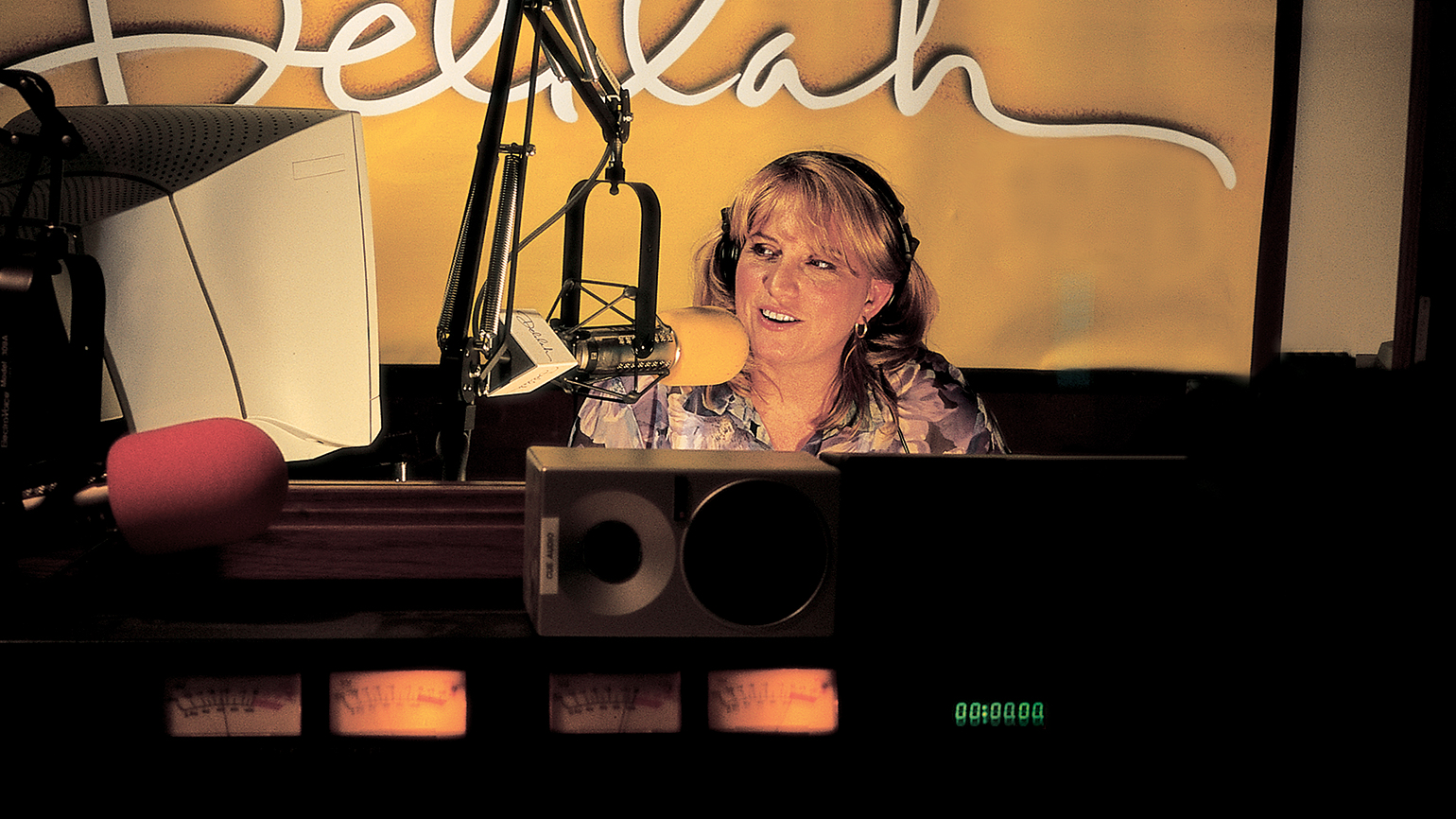
One of my favorite things about doing my radio show is hearing people’s stories. Every night, without fail, someone will call to wish a spouse happy birthday or congratulate a child who’s graduating. Then as their story unfolds, I realize that it was the whole reason God had me in the studio that night—to make that connection, to have that conversation, to share a prayer or piece of Scripture, to share a memory or song.

Years ago, when I was in my twenties, I went to a tiny church—there were maybe 50 or 60 members—where the minister, Pastor Mike McCorkle, preached a life-changing sermon. I asked him about it recently, and he doesn’t even remember what he said. I do. I’ll never forget.

He imagined that when he stands before the Lord, when he dies, he’s going to be asked two questions. The first is “What did you do with me?” Did you give God your best or just the scraps? Was faith just an afterthought? Did you put Jesus at the center of your being? And the second: “What did you do with the people I put in your path?” Every person you encounter, your family members, your teachers, your friends, your coworkers, even strangers, are put there for a reason. Did you honor them? Did you respect them? Did you take the time to get to know their story?

The conversations I have with my listeners are real. They know I’m going to be honest with them and they can be honest with me. Most of them know about the joys in my life and the deep sorrows I’ve had to face. None of which I could have gotten through without my faith.

I met a homeless woman on a blistering hot day in Philadelphia, and in my efforts to help her and people like her I started a charity called Point Hope (named for one of the coldest places on the planet: Point Hope, Alaska). A woman at a refugee camp in Ghana sent me an e-mail asking for help. I figured it was some sort of scam at first, but when I followed it up through friends at World Vision, I discovered she was indeed real. Since then, I’ve made dozens of trips to that refugee camp, adopted children from it and supplied it with fresh water, schools, medical stations and adult career and farming programs.

Someone was put in my path, and I felt compelled to respond.

I have 13 children—10 adopted, three biological. I’m heartbroken to say that two of them are already gone from this world. Sammy came from an orphanage in Ghana. We knew he had sickle cell anemia when he became part of our family, but he blossomed in our home. He loved to eat, to laugh, to tease, to draw, to paint, to dance. On the night the adoption was complete, he said to me, “Mama, I always thought I would die alone in the orphanage.”

As it was, he died in our arms at age 16 from complications of sickle cell. The doctors did all they could, but they couldn’t stop his heart from failing. Before he passed, Sammy pointed to me and my husband, Paul, and put his hands in the shape of a heart. Now when I am struggling and missing him, I whisper a prayer. Sometimes even within the hour, I’ll be led to something heart-shaped in nature, a seashell on the beach, a sandstone on the path. Signs from God that my son’s spirit lives on.

My world shattered a year ago, on October 2, 2017. That night, my beautiful son Zachariah Miguel Rene-Ortega, the last child I carried in my womb and gave birth to, chose to leave us. He was just 18 years old and had been battling depression. These have been the hardest months of my life and that of my family. I miss Zack every minute and hour of every day. Despite the heartache and grief, I praise God for the life I live. I know that God is looking after us, and that knowledge—along with the love and understanding of family, friends, and so many others—has kept me going.

One of my most endearing memories of my Zacky illustrates what his heart was truly like and truly capable of. When Zack was just 10 years old, a girlfriend from church let me know that the African Children’s Choir was going to perform at our church. I had been working in Ghana, West Africa, for five years and had adopted two young girls from there.

My girlfriend knew I’d love the music, and even though the choir children were from a different country, my adopted girls might like seeing other children from West Africa. We’d arrived home late the night before, after a long drive from snow-covered mountains, and woke up in time to get to the 10:30 a.m. service and the choir performance. The sink at home was full of breakfast dishes; the living room was a makeshift laundry center for ski gear. Snowboards and sleds leaned against the side of the porch.

After the service, I took my daughters to meet some of the young performers. The director of the choir, a middle-aged man from the Midwest, approached me with a broad grin, grabbed my hand and pumped my arm as he exclaimed, “Thank you! Thank you! We will be happy to come to the farm for lunch.” I tilted my head to one side and said, “Excuse me?”

“Your son, the little boy in the green shirt, just told me you have a huge farm with lots of goats and cows, and then he invited me to bring the choir to lunch. Normally the church sponsors a lunch for us at the cafeteria or a local restaurant, but your pastor is not here today,” he said. “I guess no one thought about how we would feed the children.”

The man’s enthusiastic smile was met with my bewildered expression, and just as I was about to explain that my house was filled with ski gear and my fridge was all but empty, Zack appeared at my side. He put his arms around me and said, “Mom, I told him what a good cook you are and how you feed all the orphans in Africa. Can they come home and have lunch with us?” His impish face was absolutely adorable, and his smile did to me what it always did: made me absolutely incapable of saying anything but yes….

Thirty children, eight adult chaperones, plus the director and his wife. That meant 40 guests along with my own household of 10…. My mind raced into action. I hurriedly called my husband, Paul, and asked for help. He had just dropped our teenage girls off at the farm. He agreed to rush back to the farm and start picking up skis and snowboards. I called two of my adult children, Tangi and Trey Jerome, to help as well.

When I got home, the skis, snowboards and damp gloves had all been snatched up and tossed in bins, the dirty dishes in the sink were shoved in the dishwasher and a huge pot of water was already on the stove and beginning to boil. Within a half hour, the bus arrived and 30 children between the ages of five and 18 started spilling out.

It was freezing outside, and I knew their bodies had not yet had time to acclimate to the cold, so the children were not the least bit interested in staying outside to look at our goats, horses or even the zebra. They all ran into the house trying to get warm, and although my house is a good size, together we filled up every room.

The food was ready soon, and we provided lunch. Once everyone had eaten their fill, the kids sang. Even more beautiful than the songs they’d sung at church.

After two hours of breaking bread and sharing stories and songs, the director said the choir had to leave; they had a long road trip ahead of them. The kids gave us hugs and prayed for us, then filed outside. As the bus rumbled up the long drive, light snow began to fall. I was ready to collapse into a heap when I heard Zack declare, “I hope it snows really hard and the bus gets stuck and they have to spend the night here with us!” That was one time I was so grateful that his prayers were not answered!

Zack was like me in many ways, one being that he had a big heart for others, especially those who were hurting or in need.

I won’t hold my last-born biological baby again until eternity. I won’t stroke his long, beautiful hair or feel his breath against my skin. I won’t hear his voice—except for the few recordings I have—until I see Jesus face-to-face. I hope the Lord won’t mind if I rush to hold both Zack and his older brother Sammy in my arms before getting the tour of paradise.

In the days and weeks after I lost my boys, I did not know if I had the heart to go on. When Zack took his own life, I had to step away from my radio program for three weeks before I could find the strength and courage to put my voice back on the air. The outpouring of love, support and prayer from my listeners—the hundreds of thousands of you who in that moment stopped in your path to consider where my heart was—restored me.

For more inspiring stories, subscribe to Guideposts magazine.

Decluttering Tips for Your Home

Adapted from: Make Room For What You Love. Copyright © 2016 by Melissa Michaels. Published by Harvest House Publishers, Eugene, Oregon. www.harvesthousepublishers.com. Used by Permission.

Retreating to your home should feel like a reward at the end of a long day. It’s a sacred space and clutter is an unwelcome housemate. Not only does clutter take up space in your home, it also weighs down your spirit. Start feeling lighter and more joyful by using these tips to keep your home organized and functional today.

1) Refine Your Closet Hanging Space

Take everything hanging in your closet out and lay it across the bed. Item by item, pick up from the bed what you would wear this week or in the next few weeks. Focus on items that fit well and are in good condition. If you have many similar pieces, get rid of the ones you can spare. Put your clothes back in your closet, from longest to shortest, category by category, left to right. If you have hanging accessories, such as belts, hang them on a belt hanger or looped through a regular hanger on the left side of the closet if there’s room. Set aside your scarves and other accessories to tackle in another project. Whatever is left can be donated!

2) Tidy Your Closet Shelves, Floor, and Shoe Area

Dust the shelves and vacuum or sweep the floors. Make the shelves functional (decide how many items you can stack without a hassle to get them out) and fold the items carefully so they look tidy. Group bags, shoes, sweaters, and T-shirts together. Shoes can be tucked into back-of-the-door or wall shoe pockets, an extra drawer, or an under-the-bed organizer for easy access if you don’t have room in your closet. Make a list of future organizers or supplies you need to make the most of the space you have.

3) Declutter Your Dressers

Empty your clothing and belongings from dresser drawers. Wipe out drawers and even add new drawer liners if you want to. Assign each drawer a purpose, with space for each category of belongings (such as socks, undies, slips, tights, pjs.). Now put back what you really use, what is in good condition, fits, and you actually like to wear. Match up socks. If you have lone socks, start a lonely sock basket, and if the mate turns up you’ll be able to return them to the dresser. If the drawers become too crowded, pare down or relocate items if you have another option. Donate or dispose of what’s left.

READ MORE: HOW TO DECLUTTER AND LET GO OF FAMILY TREASURES

4) Organize your living areas

Use lidded boxes and small trunks to store phone cords, notepads, and any other random things you need in your bedroom. Use storage boxes on your desk for your labeling machine, stapler, and hole punch; and another on a bookshelf near the dining room for extra drinking glasses. Give your family a small trunk to stash all those game controllers and cords so your TV area stays neat and tidy. Use larger, tall, open baskets to store extra throw blankets or even to toss in extra bedding or throw pillows when you are sitting or sleeping.

5) Clean up your kitchen

Don’t let your pantry look cluttered and feel disorganized. Small open baskets are perfect for grouping pantry items to give you a streamlined and clutter-free pantry or cabinet while making it easier to find what you want at a glance! I have a baking basket in my pantry. When the urge to bake strikes, I can easily grab it and find all the little baking items I need, such as baking powder, baking soda, vanilla, almond extract, salt, and measuring spoons. Utilize the vertical space under the sink by adding stackable drawers, shelf risers, or adjustable units specifically made to fit around sink pipes. Fill the drawers or shelves with cleaning supplies under the kitchen or laundry sink, and cosmetics and toiletries under the bathroom sink.

6) CELEBRATE!

Curl up with a good book and a cup of tea and delight in how wonderful it feels to have such a pretty and organized home. Sleep tight!

Death—the Bridge to Life

When we lose a loved one, there is a great empty place in our lives that seems impossible to fill. Yet we must go on.

The Gospel of John tells us that Jesus made a remarkable statement when he walked in the temple courts of Jerusalem during the Feast of the Dedication—what Jews today call Hannukah, the Festival of Lights. “I am the light of the world,” Jesus said (John 9:5). He continued, “My sheep hear my voice, and I know them, and they follow me; and I give unto them eternal life; and they shall never perish, neither shall any man pluck them out of my hand” (10:27-28).

The Light of the world drives away the darkness and sadness we associate with death. His light is life, eternal life, and no one within that radiance need fear anything. Dr. Norman Vincent Peale once said: “Darkness is powerless before the onslaught of light. And so it is with death. We have allowed ourselves to think of it as a dark door, when actually it is a rainbow bridge spanning the gulf between two worlds.”

Death is a fact of life. It is wise to accept it and plan for its consequences. The grief it causes is entirely natural. But remember: Death does not have the last word. The risen Son of God gets the final say, and he is all about light and life!

Download your FREE ebook, A Prayer for Every Need, by Dr. Norman Vincent Peale.

Dear Aging: Thank You

Sponsored content provided by Arnicare.

Aging brings certain things in life into perspectives, like the ability to move and take on the opportunities ahead. Guideposts.org teamed up with Arnicare for the “Dear Aging” contest to find out. Readers were asked to share their growing older stories, wisdom and experiences, from writing about how their bodies have changed to what they’re doing to stay healthy.

Community Newsletter

Get More Inspiration Delivered to Your Inbox


For Linda, growing older and wiser does come with some aches and pains, but also opportunities to love, learn and be more present and open to joy. She shares what it means to trust in the uncertainties that life brings by being grateful.

Dear Aging,

Are you my friend? Are you my foe? Some days you are both. Aging is not for the faint of heart, yet I’m so grateful to have the gift of life each day. Opportunities to live and love and continue to learn.

Aging, you have taught me much. I’m not as impulsive or explosive as I once was and I’d like to think I’m kinder; even to myself. My body hurts more often now and I often blame you, so in fairness, I must give you credit for all you’ve done to help me value my body. I respect what it needs now, I’m mindful of what I put into my body and exercise is no longer a chore. Aging, you have made me love to move just because I can!

Aging has made me realize how little I knew and how much more I know now. I don’t have all the answers but I trust God with the uncertainties. I’ve learned to be present and to grasp the lovely moments of joy that are gifted to me daily on this journey of life. And the seasons of sadness and grief can be teachers too. Without your tutelage, Aging, would I have ever realized that? I think not.

Lastly Aging, I’m learning you are more friend than enemy, because of you I can advise the “ youngers” to be in the moment and enjoy the journey, not just the destination. The only one that taught me that is you, dear Aging. For all that you are and will be to me, even though you confuse and frustrate me at times, just know I’m truly thankful for you.

Sincerely,

Linda

Dear Aging: How It Feels to Get Older

Sponsored content provided by Arnicare

What are some of the wisdom, changes and perks of getting older? Guideposts.org teamed up with Arnicare for the “Dear Aging Contest” to find out. Readers were asked to share their growing older stories, wisdom and experiences, from writing about how their bodies have changed to what they’re doing to stay healthy.

For contest winner Carolyn Bolz, the win comes full circle with Guideposts Magazine.

“Can you believe that when I was in high school, I was one of the winners in Guideposts Magazine’s Youth Writing Contest?” Bolz wrote in an email. “My story about how my sister Judy and I participated in a Christmas program for Deaf students was awarded a $500 college scholarship.” Bolz said both she and her sister are not Deaf, but know sign language and were asked to join the Deaf students in their program that year. Bolz wrote a poem on her changing body and the hopes she has for the future.

Dear Aging,

As I have gotten older,
I’ve learned to be strong
And not to worry
That things may go wrong.

My life has definitely
Changed for the best,
Although at times,
I have to stop and rest.

Of course, my hair
Has begun turning gray.
Plus, I notice wrinkles
Almost everyday.

I also need my glasses
To read the fine print
Or I can find myself
Having to squint.

Despite these troubles,
I feel just fine,
Even if my health
Isn’t perfect all the time.

I want to stay hopeful
As I start growing old.
I can’t wait to see
The next years unfold.

Yes, I have learned
Being joyful is the key
To aging gracefully!
(Don’t you agree?)

Your friend,
Carolyn

Deanna Favre Opens Up About Defeating Her Husband’s Addiction

That first week of October 2004 was tough, one of those weeks where right out of the blue your life will never be the same again.

My younger brother Casey had died in an ATV accident down at our home in Hattiesberg, Mississippi. The funeral was on Saturday. My family went through the motions in shock.

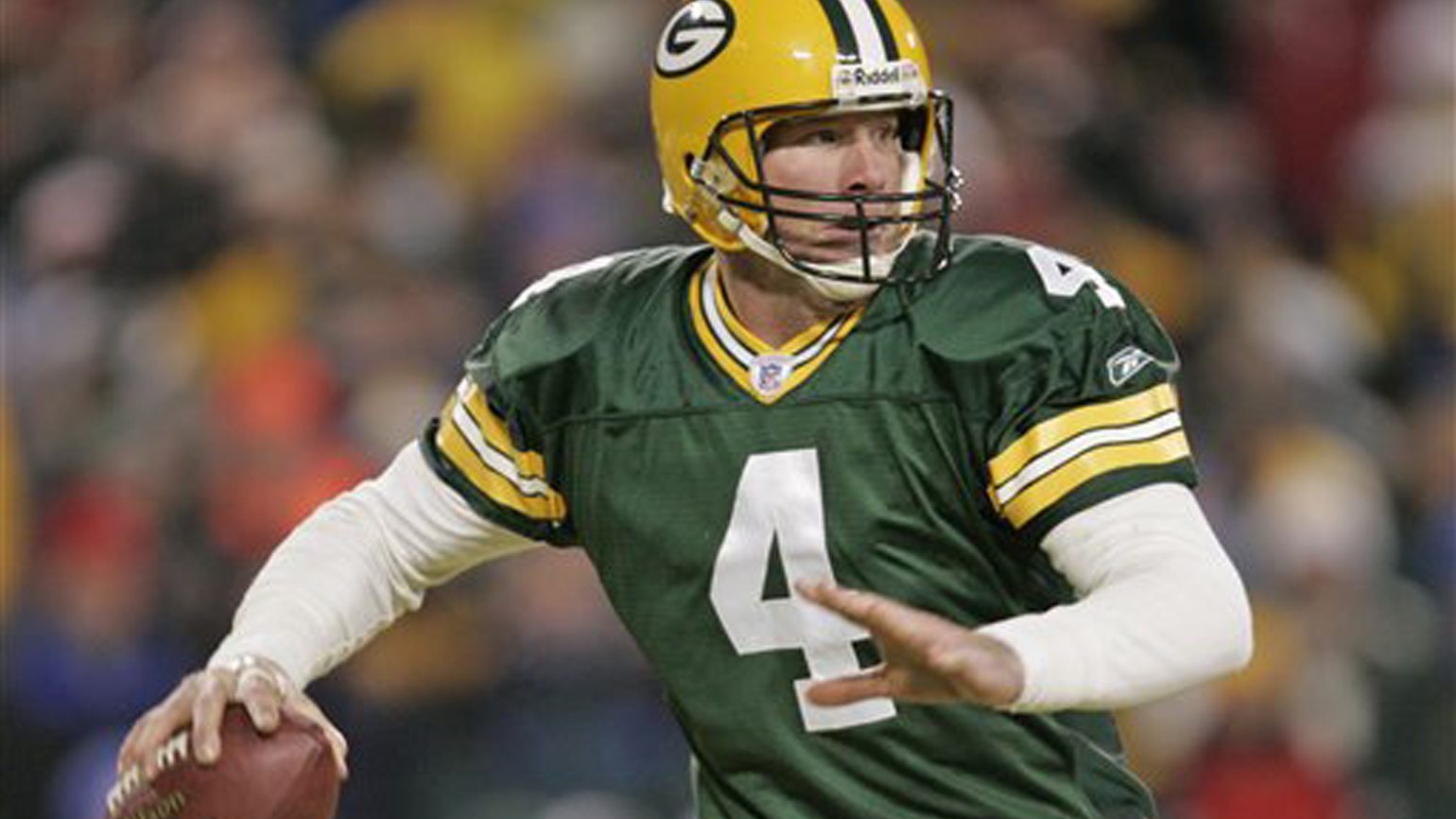
The next day we flew back to Green Bay where my husband, Brett, was quarterback for the Packers. The Packers lost their game on Monday night against the Tennessee Titans, 48 to 27.

On Wednesday I went in for my regular gynecological exam. I had my doctor check a lump I’d found during a self breast exam two months earlier. Immediately he sent me to the Van Dyke Haebler Center for women. I told myself not to worry. I had no family history of breast cancer. I was 35 and in excellent health.

Life was good and Brett and I counted our blessings. We’d had our ups and downs, but things were strong between us now and this didn’t seem like something to get too worked up about.

But I was still grieving my brother’s death. And this cancer scare just seemed like too much to take in. After a mammogram and ultrasound the radiologist said we needed to do a biopsy.

I felt my heart pound. “Will the biopsy tell us right away…if I have cancer?” I could barely say the word. “We’ll call you tomorrow,” he replied carefully.

Every time the phone rang the next day it was Brett calling from the Packers’ practice facility. No matter how many times I told him I’d let him know as soon as I heard, he kept calling. “Go run some laps,” I teased him. “Study your playbook, sign some autographs, throw a few footballs. Don’t call me again until after 12.”

The phone rang right after 12. Not Brett again, I thought. It was the doctor. “I’m sorry to tell you,” he said in measured tones, “but you have breast cancer.” A trembling rose from somewhere deep in my bones and a buzzing filled my ears. Cancer. Brett was on the phone in minutes. All he could say was, “Oh, God.”

It seemed like Brett and I had known each other forever, and we almost had. We grew up together in the small Mississippi town of Kiln. We went to the same school through 12th grade. I remembered his cute blond cowlick and the way he sat in the bleachers in high school with the laces of his high-top sneakers untied.

We got to know each other playing two-on-two basketball—I was just as much a jock as he was. One day he called me up and I could hear a lot of voices in the background saying, “Ask her, ask her.” Finally he drawled out, “Will you go with me?”

We were officially a couple, but most of what we did together was sports. We played catch on our dates and for a present he bought me a glove and a catcher’s mitt. When his dad saw Brett firing fastballs at me, he came running out of the house. “Boy,” he said, “you can’t throw that hard to a girl!” It didn’t stop Brett. Or me, for that matter.

I loved him, even if he wasn’t the most romantic guy. On the way to our senior prom he drove off with his wallet on the top of his car so he couldn’t even pay for our dinner. In college he courted me with a plastic red rose—following a spat when I wouldn’t speak to him for a month.

Then he gave me a second red rose the next date. The third one appeared in his car shortly thereafter. “I guess this is the last one,” I said, inspecting it. “Why do you say that?” he asked. “Because the tag on it says three for ninety-nine cents.”

Brett got drafted from the University of Southern Mississippi to Atlanta, then traded to Green Bay. After years of soul-searching I followed him up there, only to find out that the quiet, kind Brett I knew and loved had become a loud, rough party animal.

For the first time I saw a mean streak in him and I didn’t know where it had come from. He had mood swings that he’d never had before. He disappeared sometimes without even telling me where he was going.

One day I discovered a plastic bag filled with white pills. Painkillers. He was horribly addicted to painkillers, partly as a result of all the injuries he played with. We got through that. He went to The Menninger Clinic and got help. We went through counseling together and he was once again the best friend I’d ever had—and by now my husband. I prayed for him through countless games, praying he’d make it through without an injury.

There were wonderful thrilling trips to the Super Bowl and tragic bittersweet moments like the night he played against the Oakland Raiders right after his dad’s death, making the game a tribute to his father. That night he threw for a total of 399 yards and four touchdowns…with tears in his eyes.

All that confidence and strength evaporated when I got the cancer diagnosis. I’d never seen Brett so shaken up. He was pale and in shock. We hugged for a long time and then Brett studied the breast cancer material I’d been given as though it were a playbook. Which, in a way, it was.

I told our two daughters, Brittany, 15, and five-year-old Breleigh. “I’ll be okay,” I reassured them. My cancer was stage II, considered early, and the doctors felt they could treat it with a lumpectomy, not a mastectomy. I went to New York for surgery and Brett called constantly (it was mid-season). “Don’t worry about anything,” he said. “Just be strong and get through it.” “Pray for me,” I urged.

The surgical team was confident, but they insisted on four rounds of chemo and six weeks of radiation. How bad could that be? I wondered. The first round of chemo was right before Thanksgiving. I’d never felt so sick in my life. It was like the worst flu you can imagine. I’d promised to make cornbread dressing for the holiday dinner we’d have with friends. What usually took about 30 minutes took all day.

Losing my hair was painful too, more than I would have thought. In the morning my white cotton pillowcase looked like it had been transformed into black satin—covered in hair. I didn’t want to have patches of bald spots. I told my hairdresser to shave my head. I bought wigs and Packers knit caps to wear.

Once, Breleigh came into the bathroom after I had taken my shower. Her eyes locked on my bald head. Finally she said, “Mommy, your hair looks really pretty.”

“Thanks, sweetie,” I said, “but I know it doesn’t.” We both giggled.

Eventually both Brittany and Breleigh cut their hair off to show support. Brett got into the act too. The night he came home with his hair totally shaved, I was overcome.

Cancer can make you feel so alone. Love and support are the only antidotes. Brett used his experience getting off painkillers to share his strength with me. It wasn’t my strength or Brett’s. It was our strength.

Brett went public with my cancer. I started receiving hundreds of letters. The prayers gave me strength on days when all my energy was spent. Each woman in my Bible study picked a Bible verse to encourage me, and an artist arranged them around the verse from Philippians: “I can do all things through Christ who strengthens me.”

At night, when I was too weak to do anything, I sat on the chair with the ottoman in the living room—Brett’s chair, we call it—and answered all those letters. Encouraging others with cancer made me feel better.

In mid-May, when I had just a bit of hair on my head, I drove to a broadcast station to record what I thought was a radio spot for breast cancer awareness. “No, Deanna,” I was told. “It’s TV.” Not only that, they wanted to take a picture of me for a poster. Without a wig. No way. I felt so vulnerable. But I remembered all the people who’d written to me. Okay Lord. If this helps one person get through what I’ve been through, then sure. Help me through it.

In the spring I got a clean bill of health. Brett was ecstatic. So were the girls. But life will never be quite the same for all of us. Cancer changes you. It might sound trite, but Brett and I both have a renewed sense of how precious life is, how blessed we are. It’s as if even the everyday things are vivid.

No matter how often we speak to each other during the day, we always say “I love you.” We’ve both become big note writers and card senders, encouraging each other. Just the other day I discovered a letter Brett had hidden in my vanity drawer when he went off to training camp.

God has given us strength to do more than we ever thought possible and he’s knitted us into the partners he knew we could be. Not long ago we were at Disney World with a group from Breleigh’s cheer squad.

Suddenly I noticed Brett pulling a pink blossom from a flower bed, giving it to Breleigh. Then he said with a smile in front of the group, “Give this to your mother and tell her how much I love her.”

I thought of the boy with his three-for-ninety-nine-cents roses, and gave thanks for who we were now. Cancer and the trials we’ve faced could have driven us apart. By God’s grace we were driven toward each other—for support, for strength, for love.

This story first appeared in the October 2007 issue of Guideposts magazine.

Dave Coulier: His Sources of Inspiration

– Hi Guideposts, I’m Dave Coulier, here on the shores of where I grew up on Lake St. Clair here in Michigan.

Well, you might know me from Full House or Fuller House and I have to tell you about a new series that I’m doing called Live and Local and it’s going to be streaming on Pure Flix and it’s faith-based network and this show is a heck of a lot of fun and it’s a real departure for me. I get to play kind of a curmudgeony radio host on a small-market radio station that’s no. 1, but I am not going to change very much. I’m really excited about this show.

We all go through tough times and this past year has certainly been my time to go through those difficult moments in life. I lost my younger brother, Dan, who took his own life tragically and then I lost my father this same year and then I lost a brother, Bob Saget, who a lot of you know as Danny Tanner from “Full House.”

Going through those tough times really kind of held up a mirror to my own life and that’s when I found sobriety. I was actually very happy that it was so emotionally raw and if I hadn’t found my sobriety, I wouldn’t have been able to experience those moments on the same level that I did. I know that sounds strange, but I realized throughout my life that I was missing a lot of those moments and for the first time in my life that extreme pain was right here at the top, it wasn’t buried below several levels of alcohol abuse. And so for that, I am forever grateful.

You know I always heard through scriptures and Bible verses that there are angels on earth and in the heavens and I really think dogs are angels here on earth because they love you unconditionally. And that to me is pretty much a little miracle. A dog can reshape your whole day. You walk in that door and man, that dog’s tail is wagging and they just can’t wait to give you tons of love and give you a kiss. I know it’s a really simple thing, but I just love dogs.

We never know when we’re going to find inspiration or where we’re going to find it and if my story can inspire you to maybe make a change in your own life, even one person, then I feel really good about that. It’s never too late to make a change in your life. So good luck to you.

Cultivate Positivity in the Garden of Life

When the tomato plants need extra support as their heavy fruits tug at the stalk in late August, or when the peach tree bends low under its fruity weight, I think with pleasure of the words of Galatians 6:7: “A man reaps what he sows.”

Of course I would add a woman also reaps what she sows… But the idea in that verse fills me with an inspired sense of pride that I have managed to sow seeds and seedlings that have matured into something worth reaping—right onto my dinner plate, for the nourishment of myself and my family and friends.

As we look ahead to September and the official end of the peak growing season, I reflect on what else I have sown in my life, in my relationships, in my home and in my work. What did I plant that bloomed into emotional connection, love and fun? Were there seeds I neglected to plant? Some that, to reference another biblical image, did not fall on fertile soil?

Even some parts of my otherwise prolific garden did not give me much to reap. My yellow zucchini plants, after producing a steady stream of firm, shiny fruits early in the summer, fell victim to a borer or some other pest, and withered before my eyes.

In other words, sowing—even sowing with great care—isn’t enough to guarantee a harvest. Investments we make in friendships, work projects and self-improvements don’t always bear fruit either. And yet we continue to cultivate positivity, kindness, generosity and compassion—all the values we know make the world a better place when they do mature and come to fruition.

So whether your literal or proverbial harvest is rich and ripe, or sparser than you would prefer, don’t be afraid to gaze on the garden of your life and feel proud that you had the courage and foresight to sow hopefully and positively. Have faith that whether today or tomorrow, you will get the pleasure and privilege of reaping what you have sown.

Create a Peaceful Home Office

Ideally, our homes are a place of peace and solace—a respite from the sometimes rough world of work. However, this is 2020, and most of us are embracing the new normal, which often means working from home and juggling phone calls, Zoom meetings, and, for some, remote learners in the background (aka, the living room). While staying safe at home during this time is a blessing, it does present its own unique set of challenges while trying to stay focused and productive. Creating a peaceful home office can make you feel (relatively) sane and help you focus on both work and the rest of your life.

  1. Location, location, location. Find a space that is conducive to your work environment. For some people, this might mean working in a closed space, with a door, for daily Zoom calls; others find it easy to work in an open-air space like their living room. Consider moving your desk to an area that would be the best for your work/home situation.
  2. Declutter. Some of us are prone to having wayward papers and files that take over our desks. Clutter can be overwhelming, distracting, and just plain annoying. Go through everything on— and in—your desk and create piles for recycling and reorganizing. For the papers that you can’t throw out, file them away in a cabinet or draw for future use.
  3. Minimize. Now that you’ve decluttered, make sure to only keep a minimal number of objects on your desk, like your computer, phone or a notepad. You can also include a light or a small plant to bring life and color to your work area.
  4. Refresh with color. Color has the power to heal and inspire. Consider reviving the walls in your space with bright tones such as yellow, pink, orange, or lilac. There are also many vibrant wallpaper patterns that you can use to brighten and refresh your home office. You can also pray for inspiration to better connect with colors that are meaningful to you.
  5. Add some greenery. Nature has the power to revive and add warmth to your space. Consider getting low-maintenance plants, such as succulents, a Peace Lily, or ZZ Plants that will allow you to appreciate and soak in their beauty during busy moments.
  6. Add a board with to-do’s. Checking off a list of daily to-do’s is a great way to stay on top of all of your tasks. Hang a bulletin board or dry erase board near your desk—and refer to it multiple times each day.
  7. Inspire yourself. Make sure that your space reflects your personality. A powerful quote, a picture, a prayer, or piece of art is a great way to add some heart to your office and to put a smile on your face during a particularly hard day.
  8. Light it up. Lighting is an essential, although often overlooked, part of creating a serene space. In addition, ample lighting will help you avoid eye strain and headaches. With so much time being spent on your computer and video meetings, it’s important to find lighting solutions that minimize glare, as well as portray you in a good light to your co-workers. Try to include both overhead and task lighting.

We hope these tips will bring you peace and serenity, as well as inspire you to be productive in your new home office.

Craig Melvin: How His Father Was Changed by Sobriety

Hi Guideposts. Craig Melvin here, news anchor for the Today Show over on NBC. Also a husband, father of two and author of the book “Pops.”

My dad is Lawrence Melvin, and when I was younger, he was physically present but emotionally absent, because he suffered from quite the addiction—first to alcohol, then to gambling, then to both. And he got swept up in it because it’s a disease. It’s genetic. And he worked the third shift at the post office and he used it to cope. And what started as a hobby soon came to consume him.

I don’t think a lot of people realize that addiction is a family disease. We certainly didn’t realize it until I was much older, but you know, when Dad was in the throws of his alcohol addiction and his gambling addiction, it affected all of us, directly and indirectly. You know, with the gambling addiction, him squandering away much of his savings. With the alcohol addiction, that kept him from being emotionally present, physically present.

As a result, me and my brothers, we ended up having to lean on surrogate fathers and my mother as well, who for a long time played the role of Mom and Dad.

So my dad decided to finally get some help in 2018, after he’d gotten into a car accident and he was drunk at the time. That was the catalyst; that was the impetus that led to an old-fashioned intervention. We drove him to an inpatient facility in Statesboro, Georgia, where he got weeks of help and treatment, and he’s been clean ever since.

So when he got out of rehab, almost instantly he was a different person. This man who had become, for the most part, estranged from our family, all of a sudden had become re-engaged. And the dad that we did not have was quite the contrast. When you look at the grandfather he’s become to his six grandchildren, he’s a different person in the best possible way.

So my message for anyone who has a loved one who’s struggling with addiction who doesn’t want to get help yet is be patient. Don’t give up. My dad was in his late sixties when he decided to turn his life around and it’s remarkable on so many levels, but we had probably given up on him a few times and up until 2018, we wouldn’t have guessed that he’d be the guy that would encourage so many others to turn their life around.

But it’s also a story of resilience. I mean, you know, he climbed many a mountain and we didn’t know about a lot of them until I sat down to write the book. And it’s also a story of family and love and how true family sticks together through thick and thin.

Craig Melvin: His Father’s Sobriety Restored Their Relationship

My dad—Pops—was in al­cohol rehab. He’d been there for eight weeks, down in southern Geor­gia. I would be his first visitor, and I was nervous. I didn’t know what to expect, mainly because I could hardly remember ever seeing my dad sober.

Craig Melvin on the cover of the Oct-Nov 2021 Guideposts
As seen in the Oct-Nov 2021
issue of
Guideposts

On the flight down and then the drive from the airport, my anxiety only grew. I hadn’t spoken to him since he’d been admitted. No one had. I’d written him a couple letters, mostly keeping things light. Of course, Pops and I very rarely held conversations that were anything but surface. We didn’t talk much at all. What would I say to him now?

We’d done the intervention on a Sunday morning at my brother Ryan’s house in Columbia, South Carolina. It was Mom, Ryan, our cousin Kevin and the therapist we’d worked with. She had told Mom to have Pops’s bag all packed and ready to go. Ryan had offered some pretext on why my dad needed to come over—to help fix a door. Pops prided himself on being handy, even when he was loaded. Ryan went to pick him up.

Eleven o’clock in the morning, Pops was already drunk and disheveled. The minute he ambled in the door and saw us sitting there, an older white lady—the therapist—in our midst, he knew something was up. I could see it in his eyes. Pain, understanding, defi­ance, surrender. I couldn’t tell which. Maybe it was all of those things at once.

I’ve heard that every alcoholic comes to the point where they know the jig is up, whether they’re ready to admit it or not. After years of struggle, I’ve come to accept that alcoholism is a disease—more important, a family disease. Pops’s dad, a “wino” as Pops referred to him, lived in squalor to the end, drinking himself to death. Mom’s fa­ther was an abusive alcoholic.

Pops did a lot to make something of himself, serving in the Air Force, then working for the post office for 40 years, the graveyard shift and any other hours he could pick up. The man was a tireless worker, drunk or sober, and had only recently retired.

His most precious possession was a 1973 Pontiac LeMans. That car broke down so many times, I’d be drafted to help him, huddled under the hood, hold­ing a flashlight, handing him a socket wrench. All the while, Pops would barely say a word.

It was hard for my dad to con­nect with people. Maybe that’s why he gave himself the excuse of a six-pack. To lubricate a conversation. After work, he would spend hours at a place that Mom used to call the Cut. Not a club or a bar but some­one’s backyard—literally a cut be­hind a few houses.

He and his pals would hang out, drinking, smoking cigarettes, shooting craps and talk­ing. Maybe Pops was just all talked out by the time he made it home. He was definitely ready for bed.

My friends called him “the ghost” because he was never around. At 10 or 11 years old, playing second base in Little League, I summoned the cour­age one night to tell him that it would be nice if he could show up for a game. The next day, I came up to bat and gazed down the left-field line. There was Pops, watching me. Pleased as a boy is to see his dad in the stands, it also unsettled me. Did he really want to be there?

For the intervention, we’d written letters and read them aloud, telling stories like that, saying how much he mattered to us and what his alcohol­ism had stolen from us.

Kevin talked about his late mom, Dad’s beloved sister, and how disappointed she’d be to see her brother like this. I described how much my wife, Lindsay, and I wanted our kids to have a real grand­father, the kind that al­coholism had robbed me of. Mom’s letter was all about wanting her hus­band back. I heard her say heartbreaking things she’d never said before. Not in front of any of us.

Pops just sat there. And then he started crying.

There’s something unnerving for a son to see his father cry. This is true at any age, maybe a response to the taboo against men displaying emo­tion. The one time I’d seen Pops break down was at his mother’s funeral. She’d been hit hard with Alzheimer’s; the first time I noticed was at a Sun­day dinner when she tried to pry open the microwave with a butter knife.

Her decline and loss escalated his drink­ing. Like many men of his generation, Pops hid his feelings rather than re­veal them and appear weak. Watching him cry now, I understood that alco­hol was a way for him to wall off those emotions—fear, anger, hurt.

We finished reading our letters. The therapist gently told my dad that there was a place he could get help about two hours away and that Kevin was ready to drive him there. I fully expected Pops to say, “Hell, no. Screw this.” Or he’d make some vague prom­ise to change on his own. Instead, he got up, hugged us and then said, “Let’s go.” I was nonplussed.

Pops was 67 years old. This was the most coura­geous thing he’d ever done.

Decades before, in the 1990s, another addic­tion loomed: gambling. Video poker machines had popped up all over. On pay­day, Pops would cash his check, then drop by Tom’s Party Shop—the closest li­quor store—and squander every cent. That put a lot of pressure on Mom financial­ly. She was a schoolteacher. Together they’d saved enough to buy a house in a good neighborhood and eventually send me to college. Now the pressure was killing her.

Sometimes Ryan and I would join Mom in the car, and she’d drive over to Tom’s, where she’d try to stanch the flow. Once she sent me inside too. There was Pops, slouched in front of a slot machine, tapping the buttons with one hand, a cigarette in the other, a trusty Budweiser at his side.

I swore I’d never be like him. I searched everywhere for role mod­els. Other father figures. It never occurred to me back then that Pops had never had his own role model to look up to, a father who modeled good parental behavior. As I have since learned, alcoholism is a fam­ily disease. It afflicts everyone, even through the generations, derailing healthy family dynamics.

Video poker was finally banned in South Carolina in 2000. Pops was able to quit gambling cold turkey, giving us a glimmer of hope that the drinking might follow. Instead, it only got worse. Alcoholism is a pro­gressive disease.

I may have avoided becoming a drinker, but I couldn’t escape the feel­ings that Pop’s drinking created. The emotional wreckage, the anger and re­sentment that boiled up inside. It ate at me that he wasn’t around most of the time. Early in my journalistic career, I was supposed to do a live on-camera interview with Pops. He went AWOL. Didn’t show up. Didn’t even call.

That hurt so much. Why couldn’t he get the monkey off his back? Why couldn’t he do something? I found during my early twenties that I had trouble maintaining close relation­ships. Like many children of alcohol­ics, I feared intimacy and questioned my self-worth, as if Pops’ drinking had left a hole inside me.

Somehow Mom stuck with him. The first in her family to go to college, she also got a graduate degree. She was incredibly strong, her love stron­ger than Pops’ alcoholism. There were times she carried our family single-handedly. If I have achieved any degree of professional success, it’s thanks to my Lord and Savior and to Betty Jo Melvin. In that order.

What took me so long to grasp that alcoholism really is a disease? Not just a lack of willpower or self-discipline but a clinical illness.

The turnaround came through a colleague whose stepfather had lost his son to drugs. He’d started a non­profit helping people help their loved ones overcome addictions. I had lunch with him, and he connected me with another guy. That got the ball rolling.

The more I learned, the more I under­stood. Becoming a dad helped too. Like I said, I didn’t want my kids to know a grandfather who was always clutching a can of beer. We had to get Pops some help.

I’ve always believed in the power of prayer. I pray all the time—in the dressing room, in the car at night. I think that’s the relationship God wants us to have. This ability to hold a conversation with him, wherever you are. The intervention we did with Pops was one of the hardest things I’d ever done. Saying all of that raw stuff to his face. Now I was praying for Pops to re­cover.

“God, please, please hear that prayer,” I said over and over as I drove to my dad’s rehab.

Pops and I had agreed to meet in front of the main building. I stepped out of the car and walked over to him, and Pops gave me this huge, beautiful hug. We’d never really been big hug­gers before, but, man, there it was. I started to cry, and so did he. At that moment, I knew things were going to be different. Rehab was working. Prayer was working.

We went inside and had breakfast, and Pops introduced me to his new friends. He showed me his room. Then he gave me a letter. Sort of his origin story. How his mother—a saintly churchgoing grandmother to me— had given birth to him in a prison. She was serving time for bootlegging, the only way she could think of to make some money to compensate for her husband’s alcoholic incapacity. As I said, a family disease.

I keep that letter in my safe. It’s that valuable. The first letter that Pops had ever written to me in his life. All thanks to rehab.

When my dad got out, we forged a new relationship based on openness, honesty and affection. It isn’t always easy dealing with our emotions. We have long heart-to-heart conversa­tions. He’ll tell me I work too hard. “You don’t want to miss out on the kids’ soccer games,” he’ll say, and I laugh. This guy telling me not to work too hard? Yet it’s as if he’s sharing all the wisdom that got bottled during his drinking years.

One day, Pops mentioned some­thing about one of my broadcasts. “Wait. You watched that?” I asked him, surprised.

“Of course,” he said. “I watch all of your stuff.”

Yeah, sure, I thought. So I asked Mom, and she said it was true. Some days I’m on for four hours. Pops will hang in there for the whole thing.

I thought about that day in Little League when I was so surprised to see my dad in the stands and wondered if he really even wanted to be there. Now I knew. He did.

For more inspiring stories, subscribe to Guideposts magazine.

The cover of Craig Melvin's Pops: Learning to Be a Son and a Father

Craig Melvin is the author of Pops: Learning to be a Son and a Father available wherever books are sold.

Cracking James Hampton’s Code

It’s one of America’s most mysterious and fascinating works of folk art: The Throne of the Third Heaven of the Nations’ Millennium General Assembly, part of the permanent collection at the Smithsonian’s National Museum of American Art in Washington, D.C.

We told you all about James Hampton’s masterpiece in our story in Mysterious Ways; now you can help researchers uncover more of the story…

In addition to his 180+ piece installation, Hampton composed over 150 pages of undecipherable code entitled, The Book of the 7 Dispensations by St. James. He claimed the language was of divine origin.

Over the years, many scholars and art historians have attempted to unlock the meaning, but few have been successful. Some theorize that James’ writings derive from African religious practices, also referred to as visionary writing, or are a textual representation of speaking in tongues.

Dennis Stallings, an independent researcher of coded documents, has conducted a substantial investigation into Hampton’s secret writings. They are not indecipherable gibberish, he believes.

“Hampton writes what are obviously the same ‘words’ at corresponding spots in two different drawings of tablets of the Ten Commandments,” Stallings says. “This shows that it is very unlikely that his writings are the visual equivalent of speaking in tongues.”

That doesn’t mean deciphering “Hamptonese” is easy. First Stallings matched each symbol to an English letter in order to transcribe the pages into his computer. Then he ran the document through a statistical analysis program to look for patterns.

“E” is the most common letter in English, so if Hampton’s letters corresponded directly with English letters, you could find “E” by looking for the most common symbols. Stallings discovered, it wasn’t that simple.

Hampton’s letter forms could be variations of Adinkra symbolism, or his code could be derived from another language, such as Gullah, a Creole language spoken on the South Carolina coast, not far from Hampton’s hometown.

Can you help decode James Hampton’s mysterious manuscripts? Examine the pages below and post your translations (click on the images to see larger versions). We’d love to see what you come up with!

A sample of James Hampton's mysterious writings

Read Danielle's story about Hampton's life and work!