Embrace God's truth with our new book, The Lies that Bind

A Wife’s Wisdom Set Him Straight

My wife, Betty, had just come home, proud of her find at the local thrift shop. Six small glasses. “Six dollars for the whole set,” she said.

“Hmm,” I said. “We could use them for orange juice.” I picked up one. Nice design. Cut glass, solidly made. I liked the heft of it in my hand. I held it up to the light…and noticed something on the bottom. An inscription.

I turned the glass upside down. There etched in the glass was a crown and the British lion rampart encircled by the words: the Cunard Steamship Company, Limited. A Cunard glass! Immediately I put the glass down for fear I’d drop it. My first instinct was that we needed to lock up the set.

“Betty, these are Cunard glasses! They probably graced the table of some first-class dining room on a long-ago liner. They’re real collector’s items.” Betty knew of my fascination for old ocean liners, and Cunard was top of the line, famous for its transatlantic ships like the Lusitania and the Aquitania.

The first ocean voyage I took was on a Cunard ship, the Scythia II, and even though it was World War II and the liner had been converted into a troop carrier, it still showed evidence of its prewar style.

Why, these juice glasses could have been used on any number of historic ships. Betty put them in the sink. “Be careful with them,” I said. “I’m going to find out just how much they’re worth.”

I called an appraiser. “I’d say each glass is worth at least $50,” he said. “In a few years even more.”

“We can’t use these for breakfast,” I told Betty. I took them from the drying rack and put them on the top shelf of the sideboard. “They’re too valuable.”

“Nonsense,” she said, wiping her hands on her apron and following me. “I bought them to use and that’s what we’ll do.”

“Don’t you realize what we’ve got?” I raised my voice in anger.

“Six juice glasses,” she said, and in a moment we were having a full-blown argument, with Betty even quoting the line from scripture about not storing up things “where moth and rust corrupt.” I said she didn’t understand a thing about collecting and she said when you buy something you should use it.

Dinner that night was frosty. We didn’t want to say much and the glasses glared right back at us. Finally Betty broke the silence. “Remember your war bonnet?”

I flinched. I’d told the story to our boys many times. When I was 10 I’d won an Indian war bonnet in a contest. I was so in love with it that instead of wearing it, I hid it so my brother couldn’t find it.

In fact, I hid it so well that I forgot where it was. I never really enjoyed it because I was so afraid it might get dirty or someone else might bust it.

Maybe something even worse than moths or rust could corrupt a thing. I thought of another Bible verse: “He that is greedy of gain troubleth his own house.”

I looked up at the glasses. “We’ll use them at breakfast.” Betty smiled. I took her hand. After all these years it felt like I’d finally unearthed that old Indian war bonnet.

A Wake-Up Call from Grandma

I didn’t want to open my eyes that morning, let alone get out of bed. It wasn’t just the winter cold. It was… everything. My breast cancer had returned. My two twenty-something children had moved back home, and every day brought another argument over who was going to do what around the house.

Most of the time, the answer was me, and I just couldn’t do it all anymore. Even my job teaching ESL at an elementary school, normally a joy, was stressing me out, because I was prepping my students for high-stakes testing.

I had to get up and go to work. I opened my eyes a crack. My gaze fell on the basket across the bedroom, piled with my late grandmother’s embroidery. Grandma Sadie—now there was someone who could do it all.

She raised nine children on a farm during the Dust Bowl. She lost a leg in an accident in her forties, but didn’t let that stop her. She lived to 107, independently until she was 102. When a reporter asked her the secret to such a long, productive life, she replied, “Start each day with a happy heart.”

Oh, Grandma, I wish I could, I thought. She was so proud when I got into college that she took me shopping for things for my dorm room. I was touched because Grandma didn’t much like shopping; it went against her Depression-era frugality.

Everything she got me served a practical function, like a little alarm clock so I wouldn’t be late for class, a sturdy mug for my coffee if I needed to stay up writing a paper.

Above my desk, I’d hung a note Grandma had written me shortly before she died. It read, “I love you, dear girl” in her spidery handwriting. Inspiration to live up to her example.

Brrriiing! Brrriiing! My eyes flew open. I sat up. What was that sound?

A muffled ringing, like a bell, from somewhere across the room. Brrriiing!

I threw off the covers and got up to investigate. The ringing was coming from that basket of embroidery. I reached in and felt around. Aha!

I pulled out the Baby Ben windup alarm clock that Grandma Sadie had given me. I’d held onto it purely for sentimental reasons. I’d wound it too tightly in college and it hadn’t worked for more than 30 years.

Until now, when I’d never needed a wake-up call more. It was time to start my day…with a happy heart.

Download your FREE ebook, Mysterious Ways: 9 Inspiring Stories that Show Evidence of God’s Love and God’s Grace.

At-Risk Teens Grow Hope in Community Garden

In Martin County, Florida, two non-profit organizations have come together to plant seeds of hope through community gardening. Recently, the House of Hope charity for the homeless and people with addictions and other mental health issues partnered with Project L.I.F.T., an organization that helps at-risk teens, to grow community gardens in 4 small towns across the county.

The teens in Project L.I.F.T.’s program—many of them aged 14-19 who are also struggling with addictions, managing mental health or legal issues or have been victimized by crimes—visit the gardens every day after school where they grow seeds, maintain and water plants, set up irrigation, harvest the produce and learn to create their own meals. They take some of the produce home to their families but most is sent to House of Hope’s pantry for the homeless community.

“We saw a need for people that were hungry and homeless,” Laura Lyman, House of Hope’s agricultural coordinator tells Guideposts.org of their decision to partner with Project L.I.F.T’s community gardens initiative.

Beyond the need for food, Project L.I.F.T. envisioned the gardens would provide an educational opportunity to their teens.

“We’re trying to teach nutrition,” Bob Zaccheo, the executive director of Project L.I.F.T. tells Guideposts.org.

“We have a problem with diabetes and obesity in our community, like a lot of other communities,” Zaccheo says. “We want to start with education and nutrition, but when we get into the garden, now they’re doing hands on stuff that really connects.”

The gardens also offer the teens vocational skills that can help them find work later in their largely agrarian county. Beyond skills, this project has helped the teens find confidence and hope for their futures.

Alisia Kifer, director of the all-girls branch of Project L.I.F.T. called The Willow Project, can speak to that.

“Once you give them something to get their hands dirty in and they see the fruits of their labor quite literally, they become passionate about it,” Kifer says.

So far, the four gardens around Martin County have yielded 100 pounds of produce for the pantry and the community at large. It’s just a dent in the greater need – the area’s homeless population is high, especially in the off season when tourists return home and work is scarce – but the opportunity to teach kids the importance of giving back is just as valuable as the food they’re harvesting.

“You see a paradigm shift in the thinking of these kids,” Zaccheo says. “You see them giving. The kids are learning to give at a bigger level than they’ve ever been able to give at before.”

Lyman hopes the collaboration can foster seeds of togetherness in the community and bring sustainability, nutrition and hope to the area.

“The whole point is to get people aware and growing their own fruits and vegetables so they can take what they’ve learned and share it with their friends and families.”

At Peace in the Present

Mindfulness isn’t just for monks and mystics, though it has its roots in both Christian and Buddhist practices. Anyone can learn it. It’s about being in the moment rather than getting things done. In a mindful state, you simply notice what’s going on—your breathing, your body, your thoughts, your feelings, anything, really—without analyzing or judging or reacting to it.

Studies have shown that mindfulness significantly reduces stress, anxiety and depression, improves sleep and lowers blood pressure. As with most exercise, whether physical or spiritual, the benefits come from doing it regularly. Many people who practice mindfulness say it draws them closer to God.

The mindfulness training Robbie Pinter participated in at Vanderbilt University had three components that you can apply to your own life.

1. Use supportive phrases to keep things in perspective. For example, if you feel overwhelmed by stress, remind yourself, “This too shall pass.”

2. Accept events for what they are. Don’t agonize over what they might mean in the future. As Corrie ten Boom put it, “Worry does not empty tomorrow of its sorrow. It empties today of its strength.”

3. Meditate. Sit in a quiet, comfortable place. Focus on the natural rhythm of your breathing, each inhale and exhale, letting your body relax. It can help to silently repeat a word like peace or part of a prayer or verse as you inhale. If a thought drifts into your mind, let it go and return your focus to your breathing and your word or prayer.

Read Robbie's story!

Advice to My Younger Self

I was just 10 when I lost my left leg to Ewing’s sarcoma, a rare form of bone cancer. At first I was furious with God. How could you let this happen? I demanded. You know I love sports! How am I supposed to live with only one leg?

Then, when I was being fitted for my prosthesis, a medical student tried to take a pulse from it. I burst out laughing for maybe the first time since my diagnosis. Man, that felt good! From then on, my attitude changed.

Yeah, I’d lost my leg, yeah, it wasn’t easy, but God had given me the best tool for coping: a sense of humor. I’d dangle my prosthesis out of the trunk of my family’s car on road trips. Or sneak it under the covers of a friend’s bed to prank them. Humor never failed me…until three months ago.

My girlfriend, Ashley, and I were in church. Halfway through the service, I happened to glance down at the bulletin. My eyes zeroed in on the date: July 6, 2014. It was 20 years to the day since my leg had been amputated.

I was proud and grateful at how far I’d come, how full my life was. I’d competed in skiing at the 2006 Paralympic Games and I’d just made the U.S. National Amputee Soccer Team.

I was touring the country as a motivational speaker, talking to churches, schools and nonprofit groups about how they could find hope in whatever hardships they face. I’d written two books and even had my own YouTube channel where I posted funny (hopefully!) videos about my life.

I was brainstorming for one of my favorite projects: the amputation-inspired Halloween costumes I’d been making since 2010. That year I was a gingerbread man with one leg bitten off.

For the next one, Ashley had a brilliant idea: She helped me dress up as the famous leg lamp from the movie A Christmas Story, complete with blinking lights. Last year’s costume was the coolest yet: a flamingo! I did a handstand on my crutches; my foot formed the flamingo’s beak.

But the best thing in my life was dating Ashley. My dream girl. Who could ask for more than that?

That’s why I was shocked when I climbed into bed that night and suddenly burst into tears. I didn’t get just a little choked up. This was a deep, wrenching sorrow. Memories came rushing back—the cancer diagnosis, the chemo, the pain, how scared Mom and Dad were. How scared I was.

C’mon, Josh, I thought. Pull yourself together. The next day I was flying to College Station, Texas, to give a speech to a high school leadership group. How could I motivate anyone if I was a blubbering mess?

I picked up the phone and called Ashley, telling her about the anniversary of my leg amputation. “I’m feeling pretty whompy,” I admitted. Whompy was a made-up word we used when we were feeling down.

“Of course you are,” she said. “This is a big thing. Let it all out. I’m here to listen.”

She did. All night. I told Ashley how vulnerable I was feeling. How part of me felt guilty for being down on myself when I had so many blessings. I told her things I didn’t even talk to God about because I didn’t want to seem weak, or as if I didn’t appreciate all he’d given me.

The whompiness was still with me when I got to Texas. I sat there in the auditorium, waiting backstage before I went on. A text from Ashley lit up my phone: How you feelin’?

Still whompy. Not exactly motivational, I replied.

Must be hard to feel that way before going onstage.

It is, I wrote. Going on—Before I could type soon, she called.

“That’s it: I’m giving you a pep talk,” she said. “A little motivational speech before you give your motivational speech.”

I chuckled.

“Don’t fake it. Just be honest,” Ashley said. “Tell those kids everything you’ve told me. Whatever it is you’re feeling, put it out there. It’s okay not to be ‘on’ all the time.”

Did I mention that one big reason Ashley’s my dream girl is that she’s a lot smarter than I am?

We hung up. Normally I prayed and reflected on all the good things in my life before going onstage, but all I managed now was, God, help me to do my best out there, however you want me to do it.

I heard my introduction.

“You know, back when I was in high school, my friends and I played pranks on fast-food drive-through employees,” I started by saying.

I talked about how my buddies and I would mumble into the speakers when placing our orders, or one of us would pop out of the trunk when we pulled around to the window. The kids laughed.

I segued into how I used humor to deal with losing my leg, and to stay upbeat. Yet deep down, something gnawed at me. Tell them, Josh.

I kept going—telling the kids about all the Halloween costumes, asking for ideas for my next one. I even showed off some of the kicks, handstands and flips I can do on my crutches. Tell them the truth. I looked at my watch. Only 15 minutes left to talk.

“You know what, guys?” I said. “I have to be honest with you all. I’m in kind of a weird mood.”

Silence. Hundreds of eyes, all on me. There was no turning back now.

“Yesterday was sort of a strange anniversary for me; it was exactly twenty years since the day my leg was amputated. I’ve been thinking a lot about the little boy I was in that hospital room, before my operation, and I feel bad for him. So bad.

"Not just because he’s losing his leg and there’s a lot of pain ahead, and a lot of awkward stares. I feel bad because he doesn’t know how much good is ahead of him. He doesn’t realize that he’s going to survive the cancer. And he’s going to grow up and become everything he dreamed and more. I wish he could know that.”

The words kept coming, tumbling out, totally unbidden.

“If you’re dealing with some hard situation, I feel bad for you. But I wonder if a future version of yourself would wish you knew right now that things are going to get better. That you’re going to look back twenty years from now and you’re going to say, ‘That was really tough, but I’m okay now. I’m more than okay.’”

I walked off the stage to a standing ovation.

I couldn’t wait to tell Ashley. “That was one of the best speeches I’ve ever given,” I said. “I couldn’t have done it without your pep talk.”

“God gave you the gift of being funny,” she said. “But He’s with you always, no matter how you’re feeling.”

And suddenly, it hit me: I’m okay now. God loved me. All of me. My upbeat, prankster side. My darker, more introspective side. My caring, emotional side. My laughter, my tears, my frustrations, my joy. My strengths and my flaws.

If I could be myself with Ashley, and totally open up, because I knew she loved me no matter what, couldn’t I be myself with God, who loved me even more than humanly possible? And you know what? Totally opening up to God? That feels really good!

P.S. Stay tuned for my Halloween costume this year. It’s going to be my best one yet!

Download your FREE ebook, Rediscover the Power of Positive Thinking, with Norman Vincent Peale.

A Time to Grow

I was only in Washington, D.C., for the day. Yet I couldn’t leave without visiting the Vietnam Veterans Memorial. I had read and heard about it, but I’d never seen the wall myself. That it was the beginning of Lent made the visit more urgent, for isn’t Lent all about life and death, sacrifice and renewal?

A gray sky shed a coat of drizzle. I pulled my collar tight and descended a sloping sidewalk. There it was, the wailing wall of my generation.

As far as the eye could see, the black stone was carved with name after name of soldiers who had made the ultimate sacrifice. Behind each name was a bereaved widow, an anguished mother, a fatherless child.

At my feet lay a dozen roses, soggy and frosty from the weather. A girlfriend or wife had come to say, “I still remember.” A couple walked behind me. They were looking for a name and had a map. “Did you find it?” I heard the woman ask. “Every name has a reference number.”

True, I thought. Every name does have a number, and sooner or later every number is called.

For a moment I relaxed my focus and stared at the shiny stone. As I did, I saw myself, my own reflection, reminding me that I too have been dying as long as I have been living. I too will someday have my name carved on a stone.

Lent is that season when we stare directly at our own mortality. We make tiny sacrifices of our own to recall the incomparable sacrifice Christ made for us. It might all sound quite dreary, except on the other side of Lent is the enormous spiritual crescendo of Easter.

Jesus unmasked death and exposed it for what it really is–a 98-pound weakling dressed up in a Charles Atlas suit. I don’t doubt that at the end of that first Good Friday, the disciples thought, What a waste of a life. If they could only have seen what was coming. But to them the hour was too dark.

In my work as an author and pastor I remind people that God can use tough times to help us accomplish great things. I’ll be in my office listening to a woman whose husband just told her he wants a divorce. She takes a tissue from the box on my desk and sobs, asking questions I don’t have answers for.

What she needs more than anything is a word of hope. “God is at his best when our life is at its worst,” I tell her. We learn much more from our trials than from periods of happiness. “Get ready,” I say to her. “You may be in for a surprise.”

Do you need the same reminder? Stay close to God’s people when you’re in despair. God’s right there even if you can’t see him. That’s the message of Lent and the Resurrection.

Years ago, my wife, Denalyn, was fighting depression. Her life was loud and busy–three kids in elementary school and a husband who didn’t know how to get off the airplane and stay home. The days took their toll, each one grayer than the last.

Depression can buckle the knees of the best of us; it can be especially difficult for the wife of a pastor. Congregants expect her to radiate joy. They want her to be superhuman. But Denalyn, to her credit, has never been one to play games.

One Sunday when the depression was suffocating, when she could barely drag herself and the kids to church, she armed herself with honesty. If people ask me how I am doing, I’m going to tell them, she thought.

Friends, acquaintances, church members she hardly knew, came up to her and said, “Good to see you. How are you doing?”

She didn’t hedge. To every questioner she was candid. “Not well,” she said. “I’m depressed. Feeling completely overwhelmed. Will you pray for me?”

Obligatory chats became conversations. Brief hellos became heartfelt moments. By the time she left that day she had enlisted dozens of people to hold her up in prayer and to look out for her. She was not alone.

Denalyn traces the healing of her depression to that Sunday morning service. On her darkest day she found God’s presence among God’s people.

My father, a man of rock-solid faith, would have understood. No one had quite as much goodness as Dad. He worked as a mechanic in the oil fields of West Texas. Never finished high school, never went to college, but he learned the important skills in life.

He knew how to listen, how to love. His younger brother, my uncle Carl, was unable to hear or speak. Nearly all of his 60-plus years were spent in silence. Few people in the hearing world knew how to communicate with him in sign language.

Dad did. He took the trouble to master American Sign Language so he could communicate with his brother. Let Dad enter the room and Carl’s face would brighten. The two would find a corner and the hands would fly. Carl’s huge smile left no doubt that he was grateful.

Love is about listening and Dad listened to Carl.

Dad retired in his late sixties and he and Mom bought a travel trailer. Their plan was to see every national park in the country. As for me, I dreamed of doing mission work with Denalyn in Brazil.

I had finished college, gotten married, become a minister and served a church in Florida for two years. Finally we were ready.

Then my world darkened. Dad was diagnosed with ALS, or Lou Gehrig’s disease, a cruel and fatal neuromuscular condition. Within months he was unable to feed, dress or bathe himself. His world, as he knew it, was gone.

I wrote him a letter, saying that Denalyn and I had decided not to go to Brazil. We needed to take care of him and be with Mom. He wrote back, just two words that looked almost carved into the paper: “No! Go!” with big exclamation points. He had no fear of where he was going.

I prayed and prayed that God would heal him. I expected a miracle, demanded one. I remember driving out into the country near Mom and Dad’s, looking up to the huge Texas sky, pleading with God for healing. That’s what God did for those he loved, right?

We went to Brazil and I still struggled with my doubts. Dad was getting worse, just as the doctors had said. I was bewildered, angry, as hopeless as the disciples on that first Good Friday.

Dad kept trying to teach me. He wrote what would be his last letter to us before the disease took his handwriting away. Angled lines. Irregular letters and inconsistent spacing.

“Max, you and Denalyn always stick together, whatever happens…I hope to see you all again on earth–if not, I will in heaven. Lots of love, Dad.”

I flew back and sat by his bed. He slept for most of those last days, awakening only when my mother would bathe him or change his sheets. Next to him was a respirator–a metronome of mortality that pushed air into his lungs through a hole in his throat.

The bones in his hand protruded like spokes in an umbrella. All he could move was his head and his eyes.

I was watching a movie on TV while Dad dozed. “Max, your dad’s awake,” Mom said. Her words seemed to come from another world. I turned toward my father. His eyes called me over to his side. I sat on the edge of his bed and ran my hands over his barreled rib cage.

I put my hand on his forehead. It was hot and damp. I stroked his hair. “What is it, Dad?”

He wanted to say something. His eyes refused to release me. If I glanced away for a moment, they followed me and were still looking when I looked back. “What is it?” Suddenly I knew. I’d seen that expression before.

I was seven years old. Standing on the edge of a diving board for the first time, terrified I wouldn’t survive the plunge. The board dipped under my 70 pounds.

I looked behind me at the kids who were pestering me to hurry up and jump. I wondered what they would do if I asked them to move over so I could get down. Tar and feather me, I supposed.

Caught between ridicule and a jump into certain death, I stood there and shivered. Then I heard him: “It’s all right, son. Come on in.” I looked down. He had dived in. He was treading water, awaiting my jump.

I could see his tanned face, his bright eyes assuring and earnest. Had he not said a word they would have conveyed the message. But he did speak. “Jump. It’s all right.” So I jumped.

Twenty-three years later the tan was gone and the face was drawn. But the eyes were still bold and their message hadn’t changed. He knew I was afraid. He perceived I was shivering as I looked into the deep. And somehow, he, the dying, had the strength to comfort me, the living.

I placed my cheek in the hollow of his cheek. My tears dripped on his hot face. I said what he wanted to but couldn’t.

“It’s all right,” I whispered. “It’s going to be all right.” When I raised my head, his eyes were closed. I would never see them open again. He left me with a final look, one last statement of the eyes, one concluding assurance from a father to a son: “It’s all right.”

Staring at my reflection in the Vietnam Memorial wall I was suddenly aware of my own eyes staring back at me almost like my father’s eyes. We face our fears, we grow in our struggle, adversity deepens our faith.

There is always something wonderful and surprising around the corner on earth and beyond. That is the sacrificial truth of Lent, the music that builds to the miracle of the Resurrection.

Download your free eBook, Let These Bible Verses Help You: 12 Psalms and Bible Passages to Deepen Your Joy, Happiness, Hope and Faith.


A Time for Necessary Endings

Endings are necessary and crucial, but often difficult to accept. This is something I observed as we were helping Neredia, my mother-in-law, prepare to move from her apartment into a 55-and-older community. Although her new location is only five minutes from where she lives now and has many benefits including cheaper rent and activities, she is finding it hard to bring this chapter to a close. As we were packing boxes, I could sense her discomfort. I asked her what she was feeling, she responded, “I don’t want to move.”

In his book, Necessary Endings, author Dr. Henry Cloud wrote, “Endings are not only part of life; they are a requirement for living and thriving, professionally and personally. Being alive requires that we sometimes kill off things in which we were once invested, uproot what we previously nurtured, and tear down what we built for an earlier time.” He adds, “But without the ability to do endings well, we flounder, stay stuck, and fail to reach our goals and dreams.”

Why do we avoid endings? Dr. Henry Cloud provides a number of reasons, but I will name a few:

–We do not know if an ending is actually necessary or if it is fixable.

–We are afraid of the unknown.

–We are afraid of hurting someone.

–We are afraid of letting go and the sadness associated with an ending.

–We do not possess the skills to execute the ending.

–We have experienced many painful endings, so we avoid another one.

I admit that I have delayed closing chapters in my life due to a few of the reasons listed above. In life, we will face many endings–some we are in control of, others we are not. In the book of Ecclesiastes the author states, “There is a time for everything, and a season for every activity under heaven.” Endings are the closing of a season in our life. What has helped you with closing a chapter in your life? Please share with us.

Lord, give us wisdom and courage to make the necessary endings in our lives.

A Take-Charge Caregiver Learns the Value of Asking for Help

I’m a take-charge person. My motto has always been “If it’s to be, then it’s up to me.” But this phone call from my husband Michael’s 90-year-old grandmother blindsided me.

“Bob is nearing his 100-day skilled nursing limit,” Mam Ma said. “He’s still not able to care for himself. Can you find a place we can live near you? We have until January 25.”

I’d known Mam Ma’s 68-year-old son, Bob, had been having falling spells in October and gone to a nursing home for inpatient physical therapy. But I was clueless about Medicare and what it did and didn’t pay for. It had never occurred to me that he’d need someplace entirely new to live. Within six weeks, no less!

“I’ll see what I can find,” I said and hung up, feeling the weight of responsibility on my shoulders. There was no one else to help her. My husband’s mom, Mam Ma’s daughter, had died decades ago, and I was the only one in the family under 60 who didn’t work full-time. Part of me liked being the one everyone turned to. The one who got things done. But this would go beyond finding a home for Mam Ma, Bob and John, her older son, who’d lived with Mam Ma his entire life in Poteau, Oklahoma, three hours east of us.

The three of them moving to Oklahoma City would mean more calls needing help—and more responsibilities for me—for years to come. I didn’t want to be selfish, but I had our teenage daughter, Micah, to raise, plus my part-time job, Bible study leadership duties, volunteer commitments. All I could think about was how caregiving would take over my life. Just this move was going to consume the lion’s share of my time for months. Finding Mam Ma and her sons a suitable place to live. Getting their current homes emptied and sold. It was mid-December, my schedule jam-packed with holiday activities. Lord, I can’t do all this, I thought, though I wasn’t expecting much help. God was delegating this to me. After all, he’d created me to be a take-charge woman.

The thing was, Mam Ma and I had already gone through this exercise about a year ago. She’d come to Oklahoma City to look at some retirement communities with cottages. We’d visited a dozen facilities, but none seemed right. I loved Mam Ma as if she were my own grandmother. She was a spunky go-getter like me. I couldn’t imagine her being happy about leaving the town where she’d lived the past 70 years.

Then in October, Bob had moved in with Mam Ma because he kept falling. He’d lived alone for decades, despite his neuropathy. But now his condition was worsening. He couldn’t walk on his own, even with a walker. That’s why he’d gone into the nursing home for rehabilitation.

I’d watched three other grandmothers move into retirement centers. No matter how luxurious, how good the food, how close they were to family, each of them had regretted leaving their own homes. Mam Ma and John had lived in the same house for all 69 years of his life. The church they went to was three blocks up the street. Everything was familiar. Moving to the big city, not knowing a soul besides Michael, his brother and their dad’s families would be a huge adjustment. No, Mam Ma wasn’t ready. I definitely wasn’t ready. Maybe that’s why, even after this latest call, I dragged my feet. I figured Bob could continue to rehab at the Poteau nursing home. A few days before Christmas, I called Mam Ma on her cell phone. It went to voice mail, but she never called back. That evening I tried her landline.

“Someone stole my car from in front of the house,” she said. “My purse and phone were in it. I’d come from the nursing home and been so exhausted that I accidentally left the keys in the ignition. The police say they’re going to question the folks in the drug house across the street.”

Drug house? We’d visited Mam Ma enough to know her neighborhood had gone downhill, but I didn’t realize it was that bad. I took a deep breath. “I haven’t forgotten about finding you that new place,” I said. “Don’t worry. I’m on it.”

I hung up and typed assisted living centers near me into a search engine on my smartphone. I wanted a facility that had independent and assisted living in the same building, so Mam Ma and her sons could stay close to each other. I don’t know what I was expecting to find—after all, we’d toured everywhere last year.

Something popped up in the search results—a place I’d never seen before, with exactly the setup I wanted. I visited the next day. They had immediate openings for two apartments, both on the first floor. Bob could be in assisted living while John and Mam Ma could be in independent living, a gorgeous two-bedroom apartment. Her car and phone had been recovered, and I texted her photos. “It looks wonderful,” she said. For the life of me, I couldn’t imagine how we’d missed this place the previous year. Michael, Micah and I drove to Poteau for Christmas, our SUV stuffed with the dinner I’d prepared and flattened moving boxes. After we ate, we showed Mam Ma how to assemble the boxes and pull packing tape across the bottom. Mam Ma struggled with the tape. “Just use your energy for packing,” I said. “We’ll do the boxes.”

I devised a plan. Mam Ma would sort items—deciding what to donate, to sell and to take with her. We’d come back the following weekend to pack them in boxes. But the next weekend, a rare snowstorm hit. The roads were too bad to travel.

Now there were only three weekends left until January 25, and one of them was Micah’s soccer tournament. Mam Ma was going to have to get rid of three quarters of her things. There were two cars to sell. And I had to get both Mam Ma’s and Bob’s houses on the market. I can’t do all this!

I found a moving company, and a real estate agent met with Mam Ma. I contacted used car dealers and had Mam Ma call the utility companies. What was I forgetting?

The first Saturday in January, we got to Mam Ma’s to find her porch filled with sturdy boxes, already assembled. “A cafeteria worker at the middle school brings them when they’re emptied,” Mam Ma said. We went inside. Boxes sat sealed and stacked in every room.

“Some ladies from church came over and packed my curio and china cabinets,” Mam Ma said. “The woman I volunteer with at the clothing closet took the clothes I don’t wear, and a friend from music club helped me pack up the kitchen. Since I don’t plan on cooking anymore, it was easy.”

With her house nearly done, Mam Ma suggested we shift to Bob’s. I took the kitchen, Michael the living room, and Micah and Mam Ma sorted through clothes in his bedroom. After two hours, I had barely made a dent.

“I cleaned out the garage, attic and storage shed,” a voice said. I turned. It was Mam Ma’s yard guy. Unbeknownst to me, she’d recruited him to help. Suddenly my one room didn’t seem that difficult.

“By the way, the neighbors next door are interested in buying this house for their daughter,” he said.

The day before the move I drove to Mam Ma’s, expecting a full day of work. But there was hardly anything left to do. The daughter of a friend of hers had volunteered to hold a rummage sale for everything we weren’t moving. But their cars remained. I couldn’t leave them parked at her vacant house, and local dealers weren’t offering fair prices. “What about selling them on Facebook?” Mam Ma said.

That will never work, I thought. Mam Ma didn’t exactly have a huge social media following. She had a private page with 167 Facebook friends. But I took photos of the cars and posted them to her account, hoping it would take her mind off her house being emptied. I knew it couldn’t be easy for her.

Within minutes, people responded. Both cars had buyers before the movers were even finished. “Boy, word really travels fast on the internet,” Mam Ma said. “You know, I’m looking forward to making a new start. It’s kind of exciting.”

I stared at her. I’d always thought of Mam Ma as being like me. Strong-willed. Independent. And she was. Yet she gladly accepted help. She wasn’t afraid to ask for it either, from friends or from God. Even at 90, she was up for new challenges. I’d never heard her complain about being a caregiver for her sons. These past few months, she’d taught me a lot about faith, about trusting God—and the people he puts in our lives—when things seem overwhelming. If it’s to be, it isn’t all up to me. There was a lot I could learn from her still.

“Yes, it’s going to be awesome, Mam Ma,” I said. “I’m going to like having you a phone call away.”

Read more: 5 Tips for Long-Distance Caregiving

For more inspiring stories, subscribe to Guideposts magazine.

A Sweet Answer to Her Prayer

I was up to my elbows in cake batter when I heard a sharp rapping at the front door of the house. “Coming!” I shouted from the kitchen.

I hoped it was my fiancé, Melvin, with supplies for more cakes.

Not Melvin. A stranger, a woman with a rigid expression.

“Are you Ms. Angela Logan?” she asked.

“Yes.”

“I’m from the health department. You need to cease baking and selling cakes from your home. Immediately.”

“Stop making my cakes? There must be some mistake…”

“It’s a health-code violation. You cannot sell baked goods from your home. They must be made in a state-approved commercial kitchen.” She handed me a notice and left.

I shut the door and sank to the floor. “Lord, no!” I cried.

Those cakes were my last hope to save my house. If I sold a hundred apple cakes, that would give me enough to make the first of three payments to qualify for a mortgage-loan modification.

Melvin and my teenage sons, Marcus, William and Nick, had helped me spread the word. A reporter from the local paper had even interviewed me, though I had yet to see the story in print. I’d gotten quite a few orders already. How could I fulfill them if I couldn’t bake? And that payment was due in five days!

I buried my face in my apron. What was I thinking? I wasn’t a business owner. I wasn’t even a professional baker.

I was an actress. I’d dreamed of making it big in the movies. It never happened. I’d done commercials, one-woman shows, had bit parts on TV. I made enough to get by, but with three college-bound boys, I needed a regular paycheck.

So I enrolled in a nursing program at the community college and found side work as a hairstylist.

Then the storm hit. The recession of 2009, and an actual storm that left our roof, windows and top floor in shambles. I hired a contractor to fix the damage, but he took our money and ran. Not long after that, my talent agency went under and I didn’t get paid for acting jobs I’d already done.

I fell behind on mortgage payments. Foreclosure notices rolled in. A credit counselor worked with me to apply for the loan-modification program. The catch was, I had to make three trial payments to qualify. How in the world would I do that?

The idea came in a flash of inspiration: cake! What if I baked and sold cakes? Cake makes people happy. I learned that from my grandma Melissa.

The highlight of my childhood Sundays after church was going to Grandma’s and having home-baked treats, like her famous glazed lemon cake. While my brothers and sister devoured their pieces, I studied mine. Did she use real lemon juice? How did she get it to smell so yummy?

Grandma, seeing my interest, taught me her secrets, like using only the best and freshest ingredients.

I developed my own specialty raising my boys as a single mom. Apple cake–using the freshest Gala and Delicious apples, Saigon cinnamon, organic sugar, cream-cheese frosting. It was the boys’ favorite (they’d even hide pieces in their rooms!) and a big hit at school bake sales and church functions.

Then I reconnected with an old friend, Melvin George. We fell in love, and he fell in love with my apple cake too.

When I floated the idea of baking my way out of foreclosure, he was all for it.

“You bake and I’ll deliver,” he said. Normally the boys rolled their eyes at any idea of mine (teenagers!) but this time they were totally into it.

That’s how Mortgage Apple Cakes came to be, just 10 days before I had to make my first loan-modification payment. If I sold a hundred cakes at 40 dollars each, that would cover the payment and then some. But would people pay that much? And who would I ask?

“You’ve got to tell everyone you know that you’re in trouble and need their help,” Melvin said.

That was going to be hard. I was used to making it on my own. All these years as a struggling actress, the only one I’d ever asked for help was the Lord.

I swallowed my pride and wrote an e-mail. “Buy a Cake, Save a Home” was the subject line. I explained my situation and ended with, “Would you be willing to help me?” I sent it to everyone on my contacts list.

I even admitted my problem to my nursing-school classmates. I stood up in class one day and said, “I’m selling cakes to save my home. Would any of you like to buy one?” Hands shot up.

We got 42 orders in four days. I couldn’t believe it. Maybe I could pull this off after all! Even with only one mixer and four cake pans.

But now the health department had shut me down. How could I have been so foolish as to think cake could save my house? I dried my eyes on my apron and broke the news to Melvin and the boys. “It’s over,” I said. “There’s nothing else I can do.”

“There is one thing we can do,” Melvin reminded me gently. “We can pray.”

And we did. Lord, I know those apple cakes weren’t my last hope, I prayed. There’s always hope when I turn to you. I called the reporter who’d interviewed me and all but begged him to get the paper to print the story. “I’m running out of time,” I told him.

“Actually, your story will run tomorrow,” he said. “It’ll be in the obituaries section.”

I groaned. He might as well have told me the story was dead. Who would see it in the obits?

Turns out: just about everyone! The manager of a nearby Hilton hotel called and offered me the use of their kitchen. I was whisked away in a limo to appear on a national news program. Orders poured in from all over the country, so many we could hardly keep up.

The boys set up a website and Melvin helped with shipping. Those apple cakes saved our house after all.

Now, five years later, Mortgage Apple Cakes is a full-fledged business. I’m proud to say a portion of the profits goes to helping folks in financial trouble.

Oh, and remember how I dreamed about making it in the movies? Producers at the UP network heard my story and found it so inspiring, they made a movie out of it!

Download your FREE ebook, A Prayer for Every Need, by Dr. Norman Vincent Peale.

A Student of Hope

My BlackBerry buzzed on my desk and I gave it a quick glance. Very quick.

My BlackBerry buzzes all the time and I’ve gotten pretty good at sorting the important stuff (my husband’s updates from home about our two kids) from the headlines I’m bombarded with as a TV news correspondent. This headline, though, caught my attention: World’s Oldest Pupil Dies at Age 89.

“Oh, no!” I cried. Though the man referred to in the headline had lived thousands of miles away in Africa, and I’d only met him once in my life, I felt a profound sense of loss. Kimani Nganga Maruge was indeed the world’s oldest student, a Kikuyu tribesman from a Kenyan shantytown who, at age 84, decided to get the elementary school education he’d been denied as a child—so he could learn to read the one book he had yearned to understand all his life, the Bible.

I’d done a story on Kimani three years earlier. I’d never forgotten him. In all my years as a reporter, among all the world-changing events I’ve covered and the famous people I’ve interviewed, Kimani Maruge stood out. He was one of the most inspiring men I’ve ever met.

I was lucky to meet him at all. In 2006 a production crew and I traveled to Africa to film an in-depth segment about the Masai Mara, a massive game reserve on the Serengeti Plain in southern Kenya. Only because we were already in Africa on assignment were we able to detour to the Kenyan city of Eldoret, where Kimani lived. Though he was a fascinating subject who’d already attracted lots of international media coverage, network news budgets aren’t what they used to be and I probably couldn’t have justified flying all the way to Africa just to meet him.

When I say that Kimani lived in a shantytown, I mean it. His house was a small one-room mud hut with a door fashioned from wood boards. Inside was a bed, a stool doubling as a nightstand, some clothes and not much else. Kids ran laughing through streets of red dirt. Animals grazed in nearby fields.

Kimani was seated outside his door cooking a sweet potato in a battered tin pot over a pile of smoldering corn cobs. It was Sunday afternoon. One of Kimani’s children, a son named James, was reading to him from the Bible. Kimani smiled. His teeth were crooked, but his face, creased by wrinkles, was radiant. He projected a kind of impatient joy, the happiness of a determined, practical person who has, quite unexpectedly, stumbled upon something wonderful.

That something wonderful was a recently passed law granting all Kenyans free access to primary education. Previously, Kenyans had to pay fees to attend public school—unfortunately all too common in Africa. According to UNESCO, the United Nations education organization, fewer than half of primary-school-age children in many African nations attend class.

Access is even lower in rural areas and urban slums. Schools lack teachers, teachers are untrained and classrooms often do not have a single textbook. Families either can’t afford to send their kids to school or find it’s financially necessary to put the children to work.

That was what had happened to Kimani. He was the oldest of seven children, he told us, and he’d grown up helping his father in the fields so his younger siblings could attend school. He remained a farm laborer, leaving the fields only to join Kenya’s struggle for independence from British rule. He showed us his left foot, missing a toe. “I lost it in the war,” he said.

Throughout his hard life Kimani had remained a steadfast Christian. (More than half of all Kenyans are Christians, a legacy of British missionaries.) Still, he longed to know the Bible better. Because he couldn’t read, he had to rely on sermons and his children for knowledge of Scripture.

All of that changed in 2003, when Kenya abolished fees for primary school. Though schools remained underfunded, enrollment rates grew nearly 60 percent in following years. Kimani saw children, including three of his grandchildren, streaming to Kapkenduiywa Primary School in his shantytown. He saw them learning to read. He was in his eighties, but he thought, Why not me?

“All my life I have wanted to read the Bible,” he told us. Now was his chance.

One day he walked to Kapkenduiywa and asked to attend. Jane Obinchu, the headmistress, took one look at him and shooed him away. “We thought he was lost,” she said. “It was the last thing on our minds that he wanted to come to school.” Over the next few months Obinchu turned Kimani away four more times. He always came back.

Finally, in late 2004, Obinchu realized this elderly man was serious. He arrived at school wearing the proper uniform—shorts (which he’d made by cutting the legs off one of his few pairs of trousers), a collared shirt and a matching coat. He told Obinchu he was ready to learn. “All right,” she said. “You may come to school.”

Kapkenduiywa is a far cry from a well-appointed American school. The buildings are more like brick-walled shelters. Students play in a red-dirt courtyard. The school is overcrowded, like many in Kenya. Average class size is 100 students. Despite such challenges, Kimani thrived. The other students made fun of him at first, but he persevered and eventually was named head of his class. He passed exams in English, math, reading and Swahili.

Word got out and Kenyan journalists began writing stories. The British Broadcasting Corporation aired a profile of Kimani, and suddenly reporters from around the world descended on Eldoret.

By the time we met Kimani, he was in third grade, perhaps the most famous elementary school student in all of Africa. His English was by no means perfect, but he knew enough to tell us the basics about himself. What I remember most was his shining spirit. Here was a man who’d endured incredible hardship and yet the joy never left his face. He was thrilled to have something most Americans take for granted—a free education. He wasn’t reading the Bible cover to cover (he was only in third grade, after all), but he was full of thanks to be progressing toward his goal.

“There are those who don’t like to work,” he said. “But look at me! I do the hard work.”

Just two years after I met Kimani, rioting broke out in Kenya following a disputed election. Kimani’s shantytown was devastated and he was forced to relocate to a refugee camp. He stayed in school, walking with a cane two and a half miles each way to attend class. Only when he became ill with cancer the following year did he drop out. News reports of his death said that words from Scripture were among the last sounds Kimani heard.

I turned from my BlackBerry to my computer to blog about Kimani for ABC News. “Kimani Nganga Maruge was one of the most charming, most determined men I’ve ever met,” I wrote. That only began to capture his impact on me. Meeting Kimani changed my perspective on life.

These days, whenever I find myself complaining about the stresses of work or parenting, I think of Kimani and suddenly I feel tremendously grateful for what I have and pretty sheepish about my grousing. I think of him sitting in his hut, poring determinedly and delightedly over his Bible, always seeking to know more. He was the world’s oldest student. And one of my most inspiring teachers.

A Spiritual Habit to Enrich Your Daily Life

How can a new habit help you see your life through a spiritual lens? I can share a positive habit that increases the health of my soul.

Years ago, I was convinced to contribute devotions to Guideposts’ popular annual devotional book, Daily Guideposts (now called Walking in Grace). Fact was, I’d never written one. My editor said, “Just tell a little story, an observation from your daily life, which gave you a spiritual insight or just made you feel good or lifted you up when you felt down. Make a habit of it.”

Small, Inspiring Moments

So, I did and based my devotions of these little observations and stories. Something truly remarkable happened. I found myself not just finding these small, inspiring moments but increasingly I viewed the events of my daily life from an enriching spiritual perspective. God was in the details!

I’ve since written hundreds of devotions for Guideposts. Yet the real benefit has come from the habit of writing down one of these moments, these insights, every day. Most don’t turn into devotions but that doesn’t matter. It’s the habit of writing just a few lines about a special moment in my day that is the spiritual payoff. The effect is cumulative…no, magical. The more I record these moments the more of them I recognize as I go through life. They water the garden of the soul.

“Thanks for Saying Hello”

I set aside time near the end of my day to practice this. Only a few minutes and a couple of lines. The message is for me. Today, for instance, while I was walking Gracie on a busy Manhattan street, she suddenly tugged me over to a stoop where a woman sat forlornly looking like she hadn’t a friend in the world. I hadn’t even noticed this person amid the sidewalk throng, but Gracie had. She snuggled up to the woman, all 70 golden pounds of her, curling like a puppy, and the woman beamed. “Thanks for saying hello, baby.” I had seen an angel in action! And maybe next time it would be me who stops and says hello.

I promise you, if you develop this simple spiritual habit of writing down that one moment in your day when you saw God in the details you will feel enriched and that enrichment will only grow.

READ MORE ABOUT SPIRITUAL HABITS:

A Spiritual Approach to Making Exercise a Habit

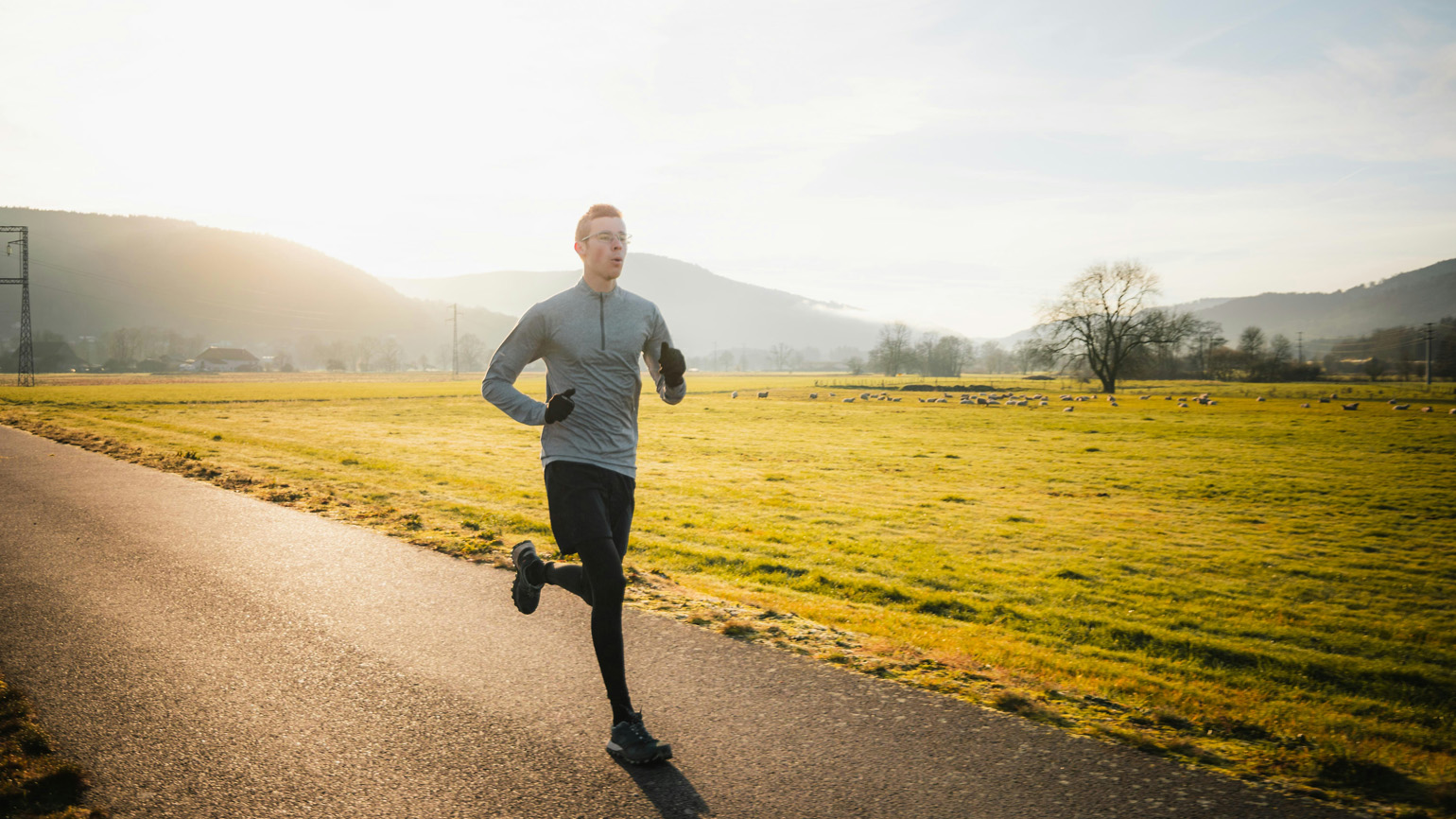
Five days a week I go out for a run. A short, slow run. It’s a habit with me. And the only way I can stick with it is to keep it a habit. To glorify God. In other words, it’s a spiritual approach to making exercise a habit.

The Apostle Paul observed, “Do you not know that your body is a temple of the Holy Spirit within you, which you have from God…?” (I Corinthians 6:19)

We’re meant to treat the body with respect, to do all we can within our power to keep it healthy and serviceable.

A Wild Heart History

As I’ve written before, I have a wild heart history. Have had heart surgery twice in my life, most recently over a year ago. After each “procedure” (that seems to be the word medical professionals use), I signed up for cardiac rehab.

In cardiac rehab, you work with a nurse, a physical therapist—with a cardiologist on hand if needed—and get exercise three days a week, building back your strength and more specifically, your confidence.

This last time around I figured, “Okay, I’m not going to go running anymore.” On the contrary, the nurse and therapist urged me on. Running is good for my body. And I daresay, for my soul.

Encouragement to Keep Going

Their encouragement was a reminder: keep it up, Rick. If you saw me, slowly jogging up and down hills, you’d know I’m not out to win any races. In fact, recently, as I came up that last hill running with a friend, a neighbor exclaimed, “You look like the very LAST two finishers of the marathon.”

Thanks a lot. I decided to take it as a compliment.

“You must really love to run,” people will say to me. Love is too strong a word. But I love to finish a run. That feels good.

The only way I can do it is to make it a habit. It’s inscribed in my head (and heart). Sometimes I do it first thing in the morning. As the weather gets cold, I prefer going later in the day, when I won’t freeze. I could do it in a gym, but I don’t really like jogging on a treadmill. I prefer the great outdoors. A chance to get closer to the Creator.

Learning While Running

Sometimes I listen to a Bible podcast. My favorite is called “The Bible for Normal People,” full of interesting guests and scholars. I can learn while I run. I can grow.

Good habits are, in turn, habit-forming. I find it easiest if I simply make it a rule. The Bible offers commandments for us to follow. And the more you follow them, the easier it is to observe them. They become habits. So try a spiritual approach to making exercise a habit.

Like that everyday jog.

Sometimes I imagine Jesus there, as I’m huffing and puffing up a hill. “Okay, Jesus, I’m doing this for You.” To love the Lord with all your heart, body, mind and soul. “I’ll keep doing this, Jesus, until you tell me to stop.” Or a doctor says as much.

I like walking, too. That’s awfully good for you. Maybe that’ll be next.