Embrace God's truth with our new book, The Lies that Bind

Celebrating Three Years of ‘A Positive Path’

The traditional third wedding anniversary gift is leather, meant to symbolize that by the time a couple has been married for three years, their relationship is both durable and flexible.

This week marks a third anniversary for a different sort of relationship—the one we’ve shared here at Guideposts since February 2017. Twice a week in this space, I’ve explored what it means to walk “A Positive Path.” I’ve written about approaching life with authentic positivity, especially searching for genuine optimism even in complex times.

I do consider my work to be a relationship, a writer’s attempt to meet you wherever you are and offer a bit of hope, inspiration and insight to help you make any amount of adjustment you feel you need in your life—or to give you some space to take a break from working so hard to be “better.”

“Durable” and “flexible,” the words used to describe the meaning behind the third anniversary gift, are also watchwords of “A Positive Path.” The power of authentic positivity to make a lasting, sustainable impact on our lives is borne out by both scientific research and lived experience we share here. Cultivating healthy habits is an investment in your positive future, and together we can discover what that looks like.

Flexible thinking and non-judgmental curiosity are crucial aspects of the process. The freedom we feel when we’re excited to learn, grow and experiment with wellness strategies that can serve our lives can’t be overstated.

So no cows will be harmed in the third anniversary gift I have for you. Instead, please accept a simple offering of my heartfelt thanks for reading, for commenting, and for carrying the possibility of “A Positive Path” with you as you walk through each of your days.

Here are some of my favorite posts from the past year, plus a walk down memory lane to the very first post in “A Positive Path”:

How to Set a Positive Weekly Schedule

Can Positive Thinking Help You Sleep Better?

3 Positive Aspects of Living Frugally

5 Easy Ways to Give Yourself a Fresh Start

Why Decluttering Now Will Help Your Family Later

February 2, 2017: Welcome to “A Positive Path”

Celebrating Small Victories

Life is about more than winning, but there are times when we must celebrate the small victories. A few days ago, my wife, Elba, overcame a fear of hers. When driving to the airport, she took the highway that she typically avoids at all costs. For most people this is not a big deal. However, for Elba it is. This took courage.

During the ride, I sat quietly in the passenger seat, encouraging her when needed. Though she was tense, she was focused and committed to the task at hand. Elba was determined to work through her fear so that she can pick up our son from the airport when I am out of town. After we returned home, she turned to me and said, “thank you for your support.” This was a win and she needed to pause and take it in.

There are things in life—some big, some small—that we struggle to do or overcome. Each of us has our own unique battles, fears and mountains to climb. And when we are able to work up the courage and strength needed to face these challenges, celebration is called for.

There is always something that we can celebrate and thank God for. For example, being able to take a few steps on our own after heart surgery or enjoying a quiet evening at home after a stressful day at work. And when we stop to recognize these daily wins and express our gratitude to God, we are encouraged to face tomorrow with hope. Pay attention to your small everyday victories, they are God’s way of bringing us joy and strength. What victory are you grateful for today? Please share with us.

Lord, every day I can celebrate the small and big wins in my life, thank You.

Carla Hall: Find Your Happy!

Find your happy,” Granny, my mama’s mother, always told me back when I was a tall, gawky kid, watching her make chicken pot pie at home in Lebanon, Tennessee. And that’s why I’d moved to Paris, France. But all I’d found was myself feeling forlorn and homesick.

Quitting my job and flying off to Europe seemed like a gutsy, glamorous move. I’d been in an accounting position for two years. One afternoon, I’d watched my boss carefully fold and refold a receipt while taking an inventory of steel beams.

Was that me in 20 years? Crunching numbers in some dark office, withering away–death by spreadsheet! My college friends had found their dream jobs. Why not me?

I prayed for direction. Then a friend called about a modeling gig in Paris. I took it as a sign. I was no fashionista, but I was tall and I’d done a little modeling in college. This was it! I’d discover my purpose along the moonlit Seine.

Mama thought I was foolish to give up a steady, well-paying job. But Granny had my back, as usual. “God has something big planned for you, baby,” she said. “Go find your happy!”

Now I’d been in Paris two months and I was miserable! I’d found no more fulfillment on the runways than in spreadsheets. I should’ve been sipping wine at charming bistros, falling in love at the Eiffel Tower.

Instead I shuffled from one fashion show to another, missing home like crazy. Especially Granny’s cooking. I had no interest in escargots or macaroons. All I really wanted was a big ol’ helping of Granny’s chicken pot pie and a slab of chocolate layer cake.

Her Sunday suppers were the center of my universe growing up. After church, my family would flock to her house for smothered pork chops, five-flavor pound cake and pan-fried cornbread.

I didn’t care much about what went on in the kitchen–I was more into the eating! But I loved watching Granny shape her cornbread patties, leaving fingerprints on each. Like she’d imprinted them with a little bit of her soul. “If you cook with love,” she’d say, “everything just tastes better!”

I could barely heat up soup, but I couldn’t stop thinking about pot pie. So I invited my American model friends over, promising real down-home cooking. I’d seen Granny make pot pie hundreds of times. How hard could it be?

I searched the Rue Cler market for ingredients, but couldn’t find celery. All I came up with that looked even vaguely similar was a bunch of pale green stalks with roots. Whatever they were, they’d have to do.

I poured my soul into that pot pie, humming happily over my tiny apartment stove. As I stirred, I tried to picture my love flowing from me into the food, soothing my guests, some of whom were as homesick as I was.

An hour later, though, when I took the pot pie out of the oven, the crust was breaking apart, the filling was leaking out…and those green stalks? Slimy and stringy. Find my happy? I couldn’t even get a simple recipe right!

Five hungry friends descended upon my apartment. I’d promised them comfort food. So I set the defective pot pie on my wobbly kitchen table and held my breath as the girls dug in.

“Mmm,” one said. “This is gooood!”

“It tastes like…like a hug!” said another, laughing.

I took a tentative bite. Not bad! My friends hadn’t noticed the pot pie’s mistakes, just the love I’d poured into it.

I kept experimenting, picking up new ingredients (those green stalks were actually leeks), collecting cookbooks. I’d get lost in a world of saffron, tarragon and cinnamon. Sometimes I even dared to put the cookbook away and cook with my senses, like Granny.

After two years, it was time to return to the States, even if all my soul-searching hadn’t turned up my dream job. At least I could show off my new skills in the kitchen.

One of the first things I did was cater my sister’s baby shower. The next day, I packed the leftovers in a picnic basket and carried them over to a friend’s office for lunch.

“This is Carla,” my friend announced. “She has a catering business.”

“What’s it called?” her boss asked.

Before I could protest that cooking was just a hobby, I heard a voice: Find your happy! There it was, so close I could taste it. “It’s called…the…” I stammered, staring at the basket in my hand, “the Lunch Basket.”

That was the humble start to my cooking career. I did open a catering company and eventually enrolled in culinary school. Then I landed on Bravo’s Top Chef, where I impressed the judges with one very special recipe. You guessed it–chicken pot pie!

Granny was right. When I found my happy, I discovered something bigger planned for me, a life more delicious than I could ever have imagined.

Try Carla’s recipe for the Tomato-Corn Chowder!

This story originally appeared in the August 2014 issue of Guideposts magazine.

Caring for Loved Ones with Dementia—When to Take the Keys Away

Again, let me thank you for so many responses to recent blogs. Thanks for all the tips on making lists—you folks sure are list makers, and you have brought me into the fold—and for sharing how you feel about a possible Alzheimer’s vaccine. Most said you would take it. I would too even if I were the very first subject in an experimental trial. Sign me up.

Maybe my eagerness stems from the fact that I couldn’t find the keys to the Jeep this morning to take Gracie for her hike. It’s not the first time in my life this has happened, of course, but these days any lapse can unnerve me. “Gracie, where did I put them?” I knew she knew. If only she could tell me!

At last, I found them in the place I should have looked first, adding to my frustration. But it jarred loose a very painful memory: having to take the car and car keys away from my mother as Alzheimer’s impaired her driving skills. And Mom was quite the motorist.

Mom didn’t learn to drive until her forties when Dad finally relented (Dad was old school on the matter of women driving and, besides, Philadelphia had trolley cars if you needed to get somewhere). He got her a used black-and-red Plymouth and the first time out solo after getting her license she rear-ended a cop.

We moved to Detroit where cars were imperative (trolleys and mass transit broadly were frowned upon by the automakers—not in their backyard!). Mom drove everywhere, especially after Dad died. She was always going somewhere, starting with church every morning.

The call came from my brother. “We’ve got to get the keys away from her.” In truth we’d already waited too long and to this day my brother and his wife, both civil litigators, can’t believe we delayed so long. But who wants to confront a parent on such a fundamental freedom?

There had been incidents, starting with not being able to find the car in the parking lot of T.J. Maxx and calling 911. There had been some thankfully minor fender benders and unexplained dents and scrapes. She drove through the back of the garage…twice (it was, she explained, the car’s fault). Finally, one morning she sideswiped a cop—yes, a cop again—kept driving on until the cop caught up with her, denied the incident happened, then blamed it all on him for being such a careless driver.

I flew to Detroit. Julee stayed in New York with the dogs. I think it would have broken her heart to have confronted Mom. My brother, Joe, his wife, Toni, and my sister, Mary Lou, all went to Mom’s for dinner. Sitting around the table afterwards, Joe broached the subject.

I think Mom was expecting it. She’d seen it happen to her two older sisters, especially Cass, who was the Welcome Wagon lady in Paoli, Pennsylvania, at the end of the Main Line and wanted to die rather than surrender her keys.

Mom jumped up from the table and retreated to a corner of the kitchen where she seemed so much like a frightened, cornered animal. We were her children, and we would not take her car, her freedom. We would not! Mary Lou explained that her license was already suspended due to the incident with the cop and the only way to get it back was to pass a new driving test at the DMV.

I saw the surge of hurt in Mom’s eyes, as if a part of her brain could still process how impossible the prospect of passing that test was. She saw the life she loved—always on the move—slipping away. I wondered if she was thinking about her sisters and their fate. And I prayed she wasn’t too afraid though I knew she was. Who wouldn’t be?

I stayed up late talking to her. She was too mad to say much, as mad as I’d ever seen her. She’d thought we were all together because I had come to visit, the returning youngest son. Instead, I’d come to betray her. Eventually I went up to bed but not before being sick. I prayed I’d never have a night as bad as this again.

It didn’t quite end there. Mom fell in with a couple of self-styled Gray Panthers she knew slightly from church. Had they known her better they would have seen her decline—that her counting of the offering basket after Mass, a task she’d done for years, had to be quietly recounted. That the books she shelved as the parish librarian usually had to be reshelved.

Nevertheless, these ladies convinced Mom she was the victim of a terrible injustice at the hands of her unfeeling children. They took her down to the DMV so she could reclaim her right to drive and sideswipe cops. Of course, poor Mom didn’t make it past the first few questions on the written test—this from a woman who skipped two grades and started college at 16. I’m all for advocating for seniors’ rights, but I am still mad at these two women. I hope that someday God removes my festering resentment (but not my car keys).

You have told me similar stories about what seems to be a watershed event in caring for our loved ones with dementia, that time when it is no longer safe for them to drive, and we must step in even if it means taking away some of their freedom. It’s a painful defining point in the course of this horrible disease. Some of you may be going through it now. Know that you are doing the right thing, and you are in my prayers. I would welcome your thoughts and experience on this subject.

Caring for B. Smith: Dan Gasby Speaks on Their Fight Against Alzheimer’s

B. Smith passed away, age 70, on February 22, 2020. We pray God’s comfort on her family, friends and fans and her husband, Dan Gasby.

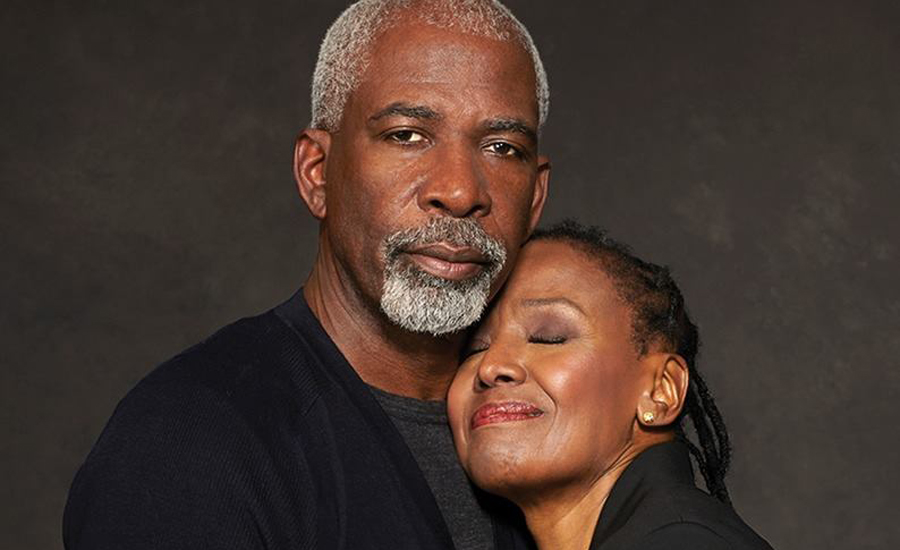
When B. Smith married her business partner Dan Gasby in 1992, the ground-breaking fashion model had built a lifestyle empire, with cookbooks, a home goods line, the B. Smith restaurant on New York City’s coveted Restaurant Row section of the Theater District and more.

Now, Gasby tells Guideposts.org, “She’s not allowed to cook by herself anymore. She’s not allowed to drive.”

In 2013, at the age of 64, Smith was diagnosed with early onset Alzheimer’s disease and Gasby has been her primary caregiver ever since.

READ MORE: 5 TIPS TO AVOID CAREGIVER BURNOUT

Gasby noticed a change in Smith about year prior to her diagnosis. For decades, they’d had an easy-going, fun marriage and partnership, but suddenly, things began to fizzle.

“She would get angry at me for no apparent reason, when before she was the kindest person I’d ever known. She would be late or not show up to appointments that she would’ve never missed, usually,” he says.

“Once, she put my wallet on the hood of her car and she drove off and the wallet fell off and we lost it, along with the U.S. Medal of Honor coin from a friend who’d been injured in combat in Afghanistan that I’d kept inside the wallet.”

The forgetfulness seemed like thoughtfulness to a frustrated Gasby, until one embarrassing incident on live television made it clear to Smith and Gasby that something really serious was wrong with her.

Smith had a guest spot sharing Labor Day recipes on the Today show with co-hosts Peter Alexander and Savannah Guthrie, something the lifestyle guru had done a thousand times before. But when one of the hosts asked her a question, Smith froze. “Ten seconds is an eternity on live television,” Gasby writes in their new book about their Alzheimer’s journey, Before I Forget. “B. stood there for longer than that.”

Though Alexander and Guthrie covered for Smith until the segment was over, Smith and Gasby’s new way of life was just beginning.

“I cry a lot,” Smith writes in Before I Forget. “I don’t know why; I guess sometimes I just feel sad. I feel like I’m misbehaving. I don’t want to do that. I want to be nice to my family, but sometimes I can’t be.”

When Smith gets upset with her husband, “You’re called everything but a child of God,” Gasby says. “It’s been gut-wrenching. But you have to divorce yourself from it.”

To do that seemingly impossible task, Gasby seeks help from others. “You need to go to therapy and reach out to people,” he tells caregivers. “Tell them you can’t do it alone.”

Gasby and Smith are also getting help from their incredible dogs, Bishop and Sansa. Both dogs sleep in their owners’ room at night, keeping Smith from sleepwalking or leaving the room while Gasby is asleep.

“If she gets up [at night] and gets ready to walk somewhere or goes past a certain point, they’ll start to rustle [and wake me up],” he says. “They’ll growl and they don’t normally growl, and she’ll snap out of it. Bishop will put his ears back like he knows he did something wrong, but he had to do it. Then he’ll wag his tail and it calms her down. These dogs have been nothing but a God-send.”

In this new stage of life, Gasby describes himself as “miserably happy.” Though he is angry and sad that the wife he married is never coming back, as Alzheimer’s is a progressive disease with no known cure, Gasby finds joy in knowing that his wife is still alive and that they are finding a new normal together.

They stick to a Mediterranean diet and get regular exercise to stay as healthy as they can, and she also takes medication.

Spiritually, Gasby has learned to do what therapists call “joining the journey,” for Alzheimer’s caregivers. For Gasby, that means living as much in the present as possible, since that is the most that Smith can do. “You don’t own tomorrow. You only own now. So live in the now,” he says. “Living in the now is the highest form of spiritual clarity one can have.”

In the present, however, is also the anger and sadness that caregivers can experience. Gasby says caregivers need to acknowledge and accept these emotions as valid. “Know that you’re going to get angry,” he advises. “Because you’re looking at the same person and the disease is so seductively insidious that you’ll have moments of clarity that will remind you of where you were [compared to now] and you’ll get upset and you have to forgive yourself for being upset.”

Gasby says anger can be a positive emotion. “Anger is a good thing when it’s directed at the right thing. I can’t get angry at her, but I can be angry at the situation and be sympathetic to others [going through the same thing]. It mobilizes you, it energizes you to try to do what’s better for others.”

He and Smith have been sharing their journey publicly to raise awareness for the lack of Alzheimer’s research funding. Noted Alzheimer’s researcher Dr. Rudolph E. Tanzi writes in the foreword to Before I Forget that Alzheimer’s researchers get less than $250 million, compared to the $6-12 billion the federal government spends on cancer, heart disease and AIDS.

READ MORE: ENCOURAGING BIBLE VERSES FOR CAREGIVERS

Gasby calls Alzheimer’s a “21st century civil rights issue,” saying that the cost of caregiving and health care for a loved one with the disease can bankrupt families. “This affects all of us,” Gasby says.

That’s why Smith and Gasby wrote their book and continue to share not just their struggles, but helpful tips for caregivers to the many Americans dealing with Alzheimer’s.

“Going through this is bigger than just her or me,” Gasby says. “It’s bigger than just being a caregiver. We’re here to tell the truth about all of it, not to hide it.”

Before I Forget: Love, Hope, Help, and Acceptance in Our Fight Against Alzheimer’s by B. Smith & Dan Gasby is available in stores now.

Caring for a Parent When Your Relationship Has Been Strained

Lauri Scharf, LSW, MSHS, is a Care Consultant & Master Trainer at Benjamin Rose Institute on Aging

It’s no secret that parent-child relationships can be fraught with tension, even after the child becomes an adult. Difficulties can often be attributed to any number of tough challenges on the part of the parent, from mental health and addiction issues to trying job situations and financial pressures. Emotional, psychological or physical abuse may have occurred during the child’s formative years.

Contrary to the ideal nurturing and supportive family scenario, some children grow up in environments that require them to shoulder adult responsibilities. For adults who feel they have undergone such a role reversal in childhood, separating from a parent who wasn’t there for them can come as a relief. Yet they may still feel a bond with the parent, due to feelings of loyalty, responsibility or even empathy.

How might caregiving for an aging parent play out when this is the underlying dynamic? If you have such a relationship with a parent, you may not be sure whether you want to assume the role of caregiver. If you do decide to do so, how do you navigate the potentially rocky landscape? Is it possible there may be hidden opportunities to work through feelings, or even to heal some feelings and forge a more positive future?

“How do I decide whether to be a caregiver for a parent who wasn’t there for me?”

Deciding whether to take on your parent’s care, even if he or she is in declining health and in need of support, requires serious consideration. If you have not had the chance to address your personal feelings, this may be the time to seek out therapy for the sake of your health. A therapist can offer guidance on how to channel your feelings and thoughts into a positive way of life for yourself. With that help, you may be able to determine how caregiving might play out for you. Taking on a caregiving role may also offer you the opportunity to reconcile with your parent. Resolving past issues is rarely a simple undertaking, but offering a supportive role can sometimes help you to start healing.

On the other hand, if your parent did not already respect your relationship, he or she may not be open to doing so at this point. The good news is that there are many ways to be an effective caregiver. You do not have to employ a hands-on approach. You can provide safety and care for your parent in a variety of other ways that do not require your physical proximity. You might choose to select another family member or trusted friend who is able and willing to take the lead. What matters is that good care and wise decision-making are being provided, not who is assuming the leading role.

Geriatric case managers or other qualified professionals are other helpful options. Geriatric case managers work to coordinate the services and care that can allow you and other family members to take a backseat in roles you may not be comfortable with. They can work with you to develop long-range plans, address immediate concerns, and guide difficult conversations that you or your parent may have been avoiding.

“What if my parent won’t allow me to assist?”

Your parent may have reasons for resisting help either from family members or formally hired professionals. It is important to honor their ability and right to make personal decisions, even if you do not agree with them, as maintaining independence and the ability to make personal decisions is very important at any age.

However, there may come a time that in the interest of their personal safety, additional measures need to be put into place. You may need to consult Adult Protective Services to provide a stricter appraisal of the situation. Their role, while founded in federal and state law, is to promote the safety and well-being of vulnerable adults. Their presence allows for a more direct intervention and connection to social services that may have been previously declined. The most restrictive option is having a legal guardian appointed.

“In what ways can I provide effective care for my parent?”

Keep in mind that your parent may have grown up in a similarly troubled environment and, thus, found it difficult to act as your protector and guide. Remember that a history of strained relationships does not warrant continuing the cycle. Although you don’t get a do-over, you do have the opportunity to create a new future for your relationship. As a caregiver for your parent, the most important thing is to act in his or her best interests. The following tips can help to empower you as the caregiver:

  • Get information on your parent’s diagnosis, symptoms and treatment options
  • Look into resources and community services that can support your parent and you as the caregiver
  • Bring healthcare professionals and other relevant individuals with expertise into the equation
  • Build a care team to support you and your parent in the caregiving journey
  • Think about how your parent might trigger you and how to navigate these triggers
  • Don’t be afraid to take a step back if necessary

WeCare…Because you Do, a program offered by Benjamin Rose Institute on Aging, can offer you trained Care Consultants who can walk with you on this journey. Through the mutually developed Action Plans, the needs of your parent as well as your needs as a caregiver are identified. The different options can help you be successful while meeting the needs of your parent.

Caring for a Difficult Parent

“Mom, please get in the car.”

She ignored me and wandered through her small vacation home—a mobile home, actually, by a lake outside town—in search of her favorite night cream.

“Mom, we have to get Dad to the hospital now.” I tried to steer her toward the front door. She shrugged me off. I fought the urge to yank her outside. I had learned it would just agitate her and slow things down.

Five years earlier, Dad had been diagnosed with pancreatic cancer and given six months to live. He’d beaten the odds so long, his oncologist called him Superman.

Now the odds were catching up with him. He needed lots of care.

Mom was making caring for him as hard as possible. She didn’t mean to. All my life she’d had a suspicious nature, been hesitant to trust people, plagued by unfounded doubts about Dad’s faithfulness. Recently, her suspicions had crossed over into full-blown paranoia. She believed people were stealing from her and hid everything she valued. All caregivers, including doctors, fell under her mistrustful gaze. It made helping Dad supremely challenging.

“I’m not leaving until I find my cream,” she said, setting her jaw in the way I knew too well. “I bet someone took it.”

I summoned all my willpower to keep from screaming. Dad was coughing up blood. While Mom wasn’t looking, I rummaged through her purse, where she often hid things and then forgot about them. Sure enough, I found the face cream tucked beneath a package of Hostess Twinkies.

Read More: Top 5 Questions Caregivers Ask About Alzheimer’s

“Found it!” I said, waving the jar in the air. I gently tugged her toward the car before she could cause any further delay. My husband, Don, started the engine, and we headed quickly to the ER.

It had been like this for months. Actually, it had been like this a lot longer than that. Mom was emotionally unstable from the time my two older sisters and I were kids, veering from intense affection to suspicious possession. I was too young then to wonder whether she suffered from mental illness. Only later did I learn about Dad’s often fruitless efforts to help her as well as his unwavering loyalty, even when she made life hard.

My response growing up was to push Mom away, which made her cling more. My sisters, Kathy and Karen, endured the same treatment, though somehow it felt as if I got the worst of it, maybe because I was the youngest and the only one at home after my sisters left for college and married.

I went to college, married, raised kids and did my best to avoid Mom. Which was hard because I lived in Oklahoma City, where we’d been raised and where Mom and Dad still lived. I loved my dad, and I wanted to spend as much time with him as possible, especially after he retired and got sick.

Dad was the opposite of Mom. My husband said Dad was a lot like me—informal, quick to laugh, with a love of travel. Dad’s idea of heaven was drinking his morning coffee on the deck of the lake house, watching the sun rise over the water. He was the steady presence in our family, my reassurance that all was well.

I’d always resented Mom for making it difficult to spend time with him. Now that he was dying, my resentment turned into something harder. In my worst moments, I wished Mom were the one who was sick, not Dad. How much longer did he have? How much of that time would I waste dealing with Mom’s craziness? What were we going to do with her after Dad died?

That hospital visit was the beginning of the end for Dad. The cancer, which had responded at first to radiation, came back aggressively, and Dad’s digestive system began to fail.

He was placed on hospice. My sisters and I were there most of the time, taking care of him.

Easier said than done.

Read More: Banner Alzheimer’s Institute Speeds Up the Search for a Cure

Every time I drove to my parents’ house, I prayed for patience and charity toward Mom. I would arrive to find her hovering over the hospice workers. She criticized any imperfection—shoes not lined up just right by the door, crumbs on the counter, the number of towels someone used—and I would notice things missing that she’d hidden.

I cherished every minute I had with Dad. Too often, instead of sitting and talking with him, I spent my visits managing Mom.

Despite all my prayers, I had to admit I wanted to put Mom somewhere safely out of the way so Karen, Kathy and I could care for Dad properly.

I knew God would be appalled by the idea. And I knew we couldn’t rely on Mom to care for Dad on her own. God’s answer to my prayers was always the same: Just be there. Not the answer I wanted.

My sisters and I took time off work to stay at the house. I run a collectibles store on eBay and my schedule is flexible, so I was there most often.

All of us watched Oklahoma Sooners football games with Mom and Dad. Put on DVDs of Dad’s favorite Johnny Carson episodes. I kept his mouth moist with a sponge and traded jokes with him—whenever I could snatch moments away from Mom’s needs.

At some point, juggling all of this, I realized that after a lifetime of doing everything I could to avoid Mom, I was figuring out how to work with her. Sometimes, as I had with her face cream, I found a way around her delusions. Sometimes I just ignored them and carried on with what I knew needed to be done.

And sometimes, when I had to, I worked up my courage and addressed her directly. To my surprise, she often did what I asked without complaint.

I told her to let the hospice workers do their jobs, and she did. I told her I couldn’t help her look for something she’d hidden, and she agreed to wait until I finished helping Dad. She even let Karen’s pastor meet with him.

Read More: Join Guideposts in the Fight Against Alzheimer’s

Dad had never been one for religion, but he and the pastor got along and became friends. Not long before he died, Dad chose to be baptized. Mom insisted on being baptized too. I suspected she couldn’t stand to be out of the limelight.

Dad died peacefully one afternoon. Mom had left the room. Maybe she somehow sensed what was about to happen. I told Dad it was okay to go, and soon his breathing stopped.

The minute Mom came back in the room, I began sobbing. I’d been holding back tears so Dad wouldn’t feel as if he had to hang on. Mom sat next to me and put her arms around me.

“It’s okay, Kristy,” she said. “Now that your father is gone, we’ll have even more time together.”

I knew she meant to comfort me, but that was the last thing I wanted to hear. Especially because I knew she was right. She had no friends, no other relatives to care for her. It was my sisters and me, and I lived closest. Without Dad, I would bear the full brunt of all her fears and needs.

For a while, it seemed as if Mom might do okay. She could still bathe, cook for herself and get around town. I would spend time with her several days a week. I helped her with bills and paperwork and tried to relieve her anxiety.

“I always feel better when you’re here,” she said to me one day. “I know I’m safe. You did such a good job with your father. You were always there for him.”

I wanted to believe she meant that. I didn’t dare ask her to elaborate, for fear she’d start talking about the neighbors stealing her stuff again.

Eventually I knew we had to put Mom in assisted care. The police called one night saying she was filing repeated complaints about the neighbors breaking in.

“You might want to think about another living arrangement for your mother,” the officer said.

Read More: Newscaster Richard Lui on Caregving from Afar

Would she agree? I summoned up my best combination of persuasion and insistence. I told her about other people we knew who were happy in assisted living. I dropped hints, knowing that if I told her it was a good idea she would dig in her heels.

“I saw an ad on TV for a lovely assisted living center,” Mom said one day.

“Want to visit?” I said.

She moved in a short time after. On the recommendation of my friend Robin Vaughn, I took Mom to see a gerontologist. After a long, patient, respectful visit, the doctor diagnosed her with Alzheimer’s.

“Paranoia is sometimes one of the first signs,” he said. “It can develop quite early in people who later progress to the full disease. Medication can help.”

The doctor prescribed two medications, one for the paranoia and one to slow the advance of Alzheimer’s. The effect was astonishing. Mom suddenly had a peace about her I’d never seen. Though her mind slipped away inexorably and she was later diagnosed with Parkinson’s disease, she seemed happier than at any other time in her life. Our relationship, always so complicated, became simple.

Whenever I visit, the staff coo and fawn over her. “Your mom must have been wonderful to grow up with,” an aide said to me recently.

I didn’t contradict her. Mom no longer knows who I am. But I know who she is. It’s been a long time since I wanted to avoid her or resented her needs. I understand now why she made life so difficult. I feel sad, not angry, about how hard it must have been for her to live with her constant, desperate fears.

Just be there, God told me. I spent time with my parents for my Dad’s sake. What I didn’t know—though God knew—was that I was doing it for Mom’s sake too.

And mine.

For more inspiring stories, subscribe to Guideposts magazine.

Caregiving Brought Her Closer to Her Grandfather

Hi Guideposts, I’m Mary Pembleton. In 2014, the year my second son was born, my grandfather needed a place to stay and somebody to care for him. So he moved in with myself and my husband and our two sons. And in the process, it gave me a really great opportunity to develop a close relationship with a man who I had feared when I was growing up.

The most surprising that I learned about my grandfather through our caregiving journey was that he had a really soft, beautiful, compassionate side to him. When I was a child, growing up, he was a very stern, very traditional, authoritarian man in my life and when he moved in with us and those roles were forced to shift, he really showed me, you know, this really beautiful vulnerability. It gave me a lot more room to develop a really strong relationship with him.

The best memory I have of my grandfather is when I was growing up, he would throw these really phenomenal parties at his house on the South Fork River in Belmont, North Carolina, and he would, he would captain his pontoon boat and take group after group out and I would just stay on the boat the whole time and just be at the front of the boat and feeling the wind in my face and the water splashing and it was a really wonderful way to spend my weekends growing up.

My grandfather prided himself on being a fancy dresser and his favorite outfit was, he had this really soft, beautiful, beige cashmere sweater by Chanel that he had purchased way back in the ’80s and when he was living with us, he insisted on wearing it almost every day.

Caregiving and Its Rollercoaster Ride of Emotions

Lisa S. Weitzman, LISW-S, is the WeCare Manager of Business Development at Benjamin Rose Institute on Aging

Whether you’re on the giving or the receiving end, the caregiving experience is a part of life. For each person, however, the path is unique and dependent on particular circumstances. You may choose to become a caregiver as part of a very natural progression when a beloved parent or partner needs you to step in and help. Or you may be called out of a sense of duty to a family member. Maybe you’ve become a caregiver because no one else can handle the needs of your loved one. You may have specific professional training that this person needs.

Community Newsletter

Get More Inspiration Delivered to Your Inbox


Although circumstances, expectations and responsibilities vary, we are each touched by caregiving at some point. Former First Lady Rosalynn Carter remarked, “There are four kinds of people: those who have been caregivers; those who are currently caregivers; those who will be caregivers; and those who will need caregivers.”

Unique as your caregiving journey may be, the following points likely ring true for you:

These emotions that accompany caregiving can range from ambivalence and resentment to anxiety, grief, loneliness, fear and even joy—often within the same day. You may be conditioned to believe, as one family caregiver expressed, that you “must always smile and never complain…It feels that if you complain, you’re inadequate or wanting to give up, which is never the case at all.” (Cori Carl, What do you wish other people understood about caregiving? The Caregiver Space, 10/8/2017) What’s important to know is that these feelings are normal and healthy, and they need to be identified, acknowledged and channeled. Let’s flesh out a few of them:

1. Ambivalence
Caring for your loved one can at times leave you with the sense that you’re blessed. This journey has given you a special opportunity to go through an intimate experience together and to spend more quality time with one another. It can feel like an honor. It can also feel at times like an overwhelming challenge. This sort of ambivalence is an indication that you recognize the reality of your situation and is your mind’s way of acknowledging all of the conflicting emotions you are trying to process.

2. Anger
It’s normal to also grapple with anger. This emotion can be frightening. Consider why that may be. A primary reason is that it can feel shameful. You tell yourself that you should have more self-control. Anger can also leave you feeling selfish. You think that your loved one’s needs, rather than your own, should always come first. Anger can also be frightening because it feels dangerous. You’re convinced that in order to be a good caregiver, you should always avoid conflict. It’s important not to let shoulds block you from acknowledging and processing emotions such as frustration, resentment, sadness and worry. For caregivers, these are all natural responses. As the philosopher David Whyte once wrote, “We’re angry because we love, because we’ve lost something precious…and we are left to pick up the pieces and rebuild.”

3. Guilt
Guilt is another common emotional byproduct of caregiving. It arises from the jury in your head that tells you that, regardless of how much you do, it will never be adequate. It accuses you of imagined or wholly unavoidable crimes of character. As a caregiver, you likely struggle to meet the expectations of your family, your culture, and your faith – and then serve as your own harshest critic. In truth, though, caregiving requires you to make difficult decisions on an on-going basis. Decisions such as these are easy to second-guess, leaving you with doubt, internal conflict and regret.

4. Grief and Loss
Grief is commonly associated with the loss of someone – so it can feel strange to mourn a person who is still alive. Yet, a loved one’s chronic illness does actually come with its share of loss. You may feel a loss of control over your own life. You may feel that the partner or parent you knew is gone. Perhaps you have lost your independence, or perhaps you grieve the loss of your plans for the future. While you haven’t physically lost your loved one, these feelings of loss are real. Mourning a person who is still alive can be even more painful in the sense that people around you may not recognize your grief. This can leave you feeling isolated, which then breeds anger, which leads to guilt, and the negative cycle perpetuates itself.

Challenging as these emotions may be, it can help to channel them in the following ways:

Learn to acknowledge and identify these emotions to create personal boundaries. Feelings such as these can motivate you to say “No,” even when you are conditioned to say “Yes.”

Use your feelings as a springboard to become a better advocate for your loved one when it comes to medical providers, social service agencies and policymakers.

Understand that these feelings may be warning signs that you are ignoring your own self-care.

There are other immediate steps you can take to better handle the emotional rollercoaster ride of caregiving:

Be realistic: Put your attention on what you CAN do.

Be practical: Make a list of small, achievable goals.

Create a care team and accept a hand: Explore community resources, friends, and family.

Trust your feelings: They are valid and serve as good signposts.

Forgive yourself: Remember that you’re human.

Don’t forget the importance of self-care.

Access programs like WeCare…Because You Do, which offer support and resources for family caregivers and their loved ones.

Caregivers: Guideposts Is Here for You

The third Friday in February (February 19 this year) is celebrated as National Caregivers Day in honor of all those workers on the front lines of caregiving. Indeed, these dedicated professionals, often overworked and underpaid, deserve our applause, especially in the year since the pandemic struck. Where would we have been without them? I remember during last spring’s lockdown how folks in New York and elsewhere would stand outside at 7 p.m. to cheer for them. So please send a kind word or prayer their way on this special occasion.

Yet who isn’t involved in some form of caregiving these days, whether it’s for a spouse, a parent, a child, a friend, a neighbor, even a pet? We devote our time, our efforts and our hearts to the health of those we love. We put our lives on hold to help someone live. We put the well-being of another ahead of our own. We sacrifice, and we do it willingly, lovingly. Yet with all the love we bring to our efforts, the stress can be overwhelming. Caregiver burnout is a real thing, and it can take a toll on our relationships, our work, our finances and our souls.

I’ve had my own caregiving challenges. My mother died of Alzheimer’s after a long, heartbreaking battle that both her older sisters and one of her three brothers also endured as did their father, my Pop-Pop. Our family was beset with caregiving duties and difficult decisions.

My sister and my brother and his wife took on the day-to-day duties for Mom. I lived in New York, some 600 miles from my family in Michigan. I got home as much as I could to spend time with Mom, to take her to lunch at her favorite restaurant and watch Detroit Tigers baseball on TV, even though she had trouble following the games. She hoarded her meals-on-wheels deliveries because “someone might need them more.”

When I got a call that they found her wandering through her neighborhood in the middle of the night telling the cops who found her that she was late for church, it tore me apart that I wasn’t there. I stopped praying that she would somehow be cured of Alzheimer’s and simply prayed for her to have peace and feel close to the Lord. I was blessed to be with her in the final week of her life. But to this day I feel guilt that I wasn’t there every week of her struggle.

Photo courtesy Edward GrinnanMore recently my wife, Julee, had spinal surgery which resulted in a serious post-operative infection that laid her up for some time and required daily IV infusions of antibiotics which I got pretty good at administering, if I do say so, along with the other caregiving she needed. I even wrote a book about caring for our beloved golden retriever, Millie, who succumbed to cancer far too young. We did everything we could for her before we did the kindest and most difficult thing of all.

I have mentioned that a form of dementia might run in my family. I feel a spark of panic every time I forget something these days, which seems to happen with more frequency…or at least I perceive it to be the case. A day rarely goes by that I don’t question my memory and brain health, as much as people tell me I’m being foolish. I keep the supplement business in business. You name it, I take it. And I worry a lot about the care I could someday require and whether I will be a burden and my suffering simply prolonged. I have a stubborn independent streak. I don’t like to feel dependent on others.

The specter of dementia concerns me so much that I am writing a book about it and the medical measures I’m investigating that could give me answers. The book will also address the challenges of caregivers and share some of my favorite and most inspiring Guideposts stories by caregivers—stories that have given me hope and reassurance that we never face our struggles alone, that the grace of a loving and protective God lights our way, a God that I am not ever independent from.

If you are a caregiver, Guideposts is here for you in your journey. We have created a devotional magazine called Strength and Grace that will lift your heart day after day. You can sign up for our free monthly newsletter Inspiration for Caregivers and go to the Caregiving section of our website for more stories and tips. Self-care is rule one of caregiving. The more support you have the better care you will give your loved one. Guideposts is here to support you. And we thank you for turning to us.

And once again don’t forget to say a prayer for our professional caregivers this Friday…and every day.

Can Hugs Make You Happier?

Could you use a hug? The question alone evokes the image of warmth, closeness and the kind of love and support that feels like it’s transmitted from one person to another by osmosis.

A group of researchers at Carnegie Mellon University has begun to explore the science behind why hugs can have such a calming, happiness-sparking effect. In research that was published in October, the authors found regular hugs to increase overall happiness, support resilience during challenging times and even improve overall health and social relationships.

Previous research had focused on the impact of hugging in romantic relationships, but this study represents an emerging field that is exploring the power of hugging in different social circles, like friends. Importantly, the hugs studied were all consensual.

“This research is in its early stages,” Michael Murray, a co-author of the study said in a statement. “However,” he continued, “our study suggests that consensual hugs might be useful for showing support to someone enduring relationship conflict.”

This means that after a tough day at work, following a tense conversation between friends or at a lonely moment, the gesture of a hug from someone who cares goes a long way. Study participants who had hard days and received hugs felt less negative emotion and more positive emotion than participants who did not receive hugs. The hugged participants even reported fewer bad moods the following day as well.

The study is not the final word on this topic—Murray said future research will delve more deeply into when, how and for whom hugs are most helpful. But in the meantime, if you’re the hugging type, you can smile at the thought that your embrace can so profoundly benefit the people in your life.

Cancer Survivor Seun Adebiyi Is “Living Breath to Breath”

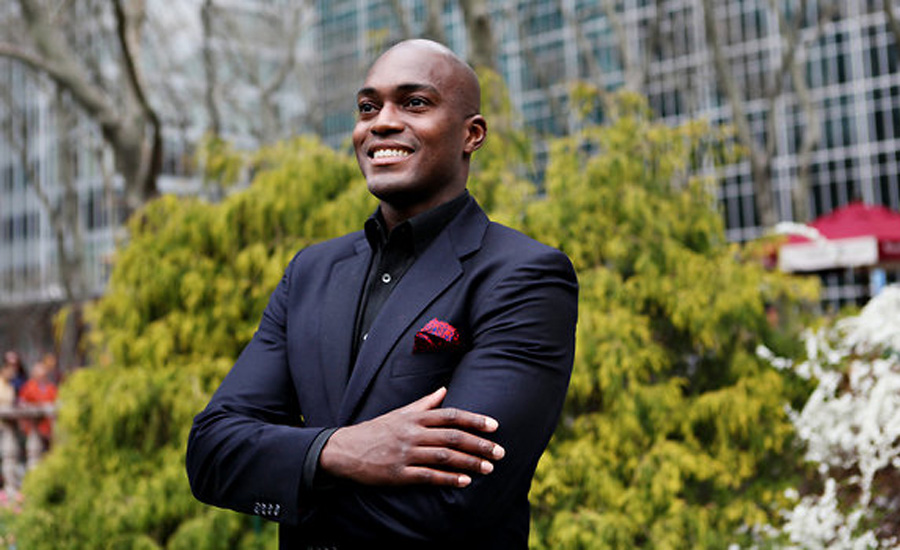
In 2009, Seun Adebiyi had it all. At 25 years old, he had just graduated from Yale Law School and had become the youngest in-house attorney at the Wall Street investment banking firm Goldman Sachs. One week after his birthday and graduation, as he was heading to Salt Lake City, Utah, to train to be the first winter Olympian from Nigeria, his life changed forever.

“I’d noticed some of my lymph nodes were swollen and I went into [Yale’s] student health,” Adebiyi tells Guideposts.org. “Otherwise I was healthy, I was exercising. But the lymph nodes kept getting bigger. They were the size of golf balls.”

Adebiyi was diagnosed with stem cell leukemia, a very aggressive, very rare form of cancer that turns lymph cells into lymphoma and stems cells into scar tissue. Chemotherapy and radiation wouldn’t be enough to save his life—he needed a stem cell transplant.

“Fewer than 17% of African American patients who need a donor are able to find one,” he says. “Some say it’s a little as 5%. And finding a perfect match is not a guarantee of a cure. That’s just the first step. I was shocked that my ethnicity was playing such a huge role in my cancer and whether I’d survive.”

Adebiyi became outraged by his shocking and helpless prognosis. Then he decided to take back some control.

“The silver lining of being given a terminal diagnosis—if you can say there is one—is finally, you’re free of all of these burdens. Up until that point, I’d been running this race against who I thought I should be. I grew up poor so, if I got so much money or published this many articles, or whatever metric I used, that was success. It was very externally focused. Suddenly, I was free. It was liberating! It was almost like waking up.”

Find out more about one of Guideposts.org’s sponsors: Cancer Treatment Centers of America

During this epiphany, Adebiyi realized that there were only two things he really wanted out of life, however long his would last, and that was, “to use my story to create awareness about the need for stem cell donors, and to live life to the fullest and have as must fun as possible.”

He found an interesting way to combine both of those goals: he would continue training for the skeleton—a Winter Olympics event where competitors race down ice, head first, on a thin sled—representing a country that doesn’t even have winter, while battling cancer and starting donor drives all over the country.

Adebiyi’s inspiring story spread nationwide, thanks to superstars like singer Rihanna and Grey’s Anatomy star Justin Chambers encouraging their fans to register as donors. Several people who went to his drives ended up being matches for other people. Sadly, Adebiyi still hadn’t found a match for himself. That’s when he decided to organize a donor drive in his native Nigeria.

With the help of two partners from Goldman Sachs who each contributed $20,000 of their own money, Adebiyi was able to fund a donor drive in Nigeria. Before he was scheduled to leave the United States to host the drive, he received some glorious news. A Nigerian woman living in the U.S. had given birth and donated her umbilical cord—a perfect match!

Adebiyi had a decision to make: go to Nigeria as planned or stay and get the potentially life-saving stem cell transplant. Remarkably, he chose to put off the transplant and go to Nigeria on schedule.

“God had a plan,” he says, referring to his privileged position to receive excellent health care, thanks to the benefits and support he received from Yale and Goldman Sachs. Many other Americans and certainly many Nigerians do not have access to that kind of health care. He decided to use his position to help others. The decision to delay his transplant, he says, was “a no-brainer.”

“I know for a fact if I had been diagnosed in Nigeria, I wouldn’t be here today because they don’t have near the facilities or treatments available as we have in America,” he says. “Eighty-90% of cancers present in very advanced stages. It’s a terrifying illness that’s seen as a death sentence that no one wants to talk about.” Adebiyi had to speak out.

“I thought, ‘even if I get the transplant,’” he says, “’there was no guarantee I’m going to live. But if I do this drive, there’s a chance it might turn into something permanent and this could save thousands of lives.’ This was an easy decision to make.”

With the support of his mother, who was right by his side, Adebiyi completed his drive in Nigeria, came back and successfully had his stem cell transplant. He’s been in remission for the past 5 years, but his fight is far from over.

Now, Adebiyi is dedicating his career to helping others survive cancer. He joined the American Cancer Society (ACS) on their palliative care team. Their goal was making morphine accessible to patients at teaching hospitals in Kenya, Ethiopia, Uganda, Nigeria, India and the Caribbean. The team was able to bring the cost of morphine distribution down by 85% by simply switching from importing morphine solution to importing morphine powder.

Today, he is the project manager for ACS’ new Global Scholars program which identifies and trains young leaders from developing countries to lead cancer control advocacy campaigns in their home countries. “We hosted our first class of global scholars at Harvard University and now they’re in the process of developing proposals for their advocacy campaigns,” says Adebiyi. The scholars will each receive grants of up to $10,000 and mentorship from ACS to implement their programs.

Adebiyi’s donor registry in Nigeria—the first accredited registry in the country—continues to save lives, with a German-Nigerian cancer patient being the most recent survivor story.

Yet even in remission, cancer has still marked Adebiyi forever. “I think cancer is as much draining psychologically and emotionally as it is physically,” he says of his decision to work with a team of psychiatrists, psychologists and therapists after his transplant. “Once you’ve had cancer, you’re never going to forget it. It’s taking a long time to get to the point where I can even think about life in more than just daily or weekly increments. It’s been reflected in my lifestyle. I basically just lived out of a suitcase for 4 years.”

Now he’s starting to put down roots, settling into his role at ACS and buying a house in Atlanta. But the lesson that cancer taught him about the impermanence of life sticks with him. During chemotherapy, he recalls being in constant agony and the only thing that got him through was the saying, “This too shall pass.”

“I kept repeating it, ‘this too shall pass,’ until it became a mantra, just living breath to breath. That’s what taught me the difference between pain and suffering. There was nothing I could do about the pain, but if I learned to accept the pain as my experience for that impermanent moment, then I wouldn’t suffer. I could accept that the pain would eventually go away or resolve itself, either with my death or some other way. When you can accept that your experience is just for the moment, then I think anything becomes bearable.”

Though Adebiyi still struggles with anxiety and depression on a regular basis as a result of the trauma of cancer, there are many things that still bring him joy.

“A lot of people who signed up for the drive turned out to be a match and they send me emails saying, ‘Thank you so much for sharing your story. I matched this patient and I donated and now they’re fine.’ Those moments make me really happy…that, and watching SpongeBob [Squarepants],” he laughs.

He also finds joy in training for the Olympics. He still hopes to compete in the Summer 2016 and Winter 2018 Games, but achieving these dreams would just be “icing on the cake,” he says.

“If I make it to the Olympics, great. If I don’t, it doesn’t mean I’m any less of a person,” he says of his efforts to unconditionally love and accept himself and his new life after cancer.

“I’ve been given this incredible second chance. No amount of money could’ve bought this second chance. It was given to me for free. What am I going to do with it? If I can find acceptance and inner peace, if I can be of service to others and have an impact on the world, I think that will be a successful life. Everything else is a bonus.”

Find out more about one of Guideposts.org’s sponsors: Cancer Treatment Centers of America