Embrace God's truth with our new book, The Lies that Bind

Don’t Miss Out on the Blessing

Are you missing out on a blessing because God’s called you to do something, and you’re hesitant to do it? Are fear or circumstances holding you back?

Why is it that when God asks us to do something for Him that we always start our part of the conversation with the reasons why we can’t do those things?

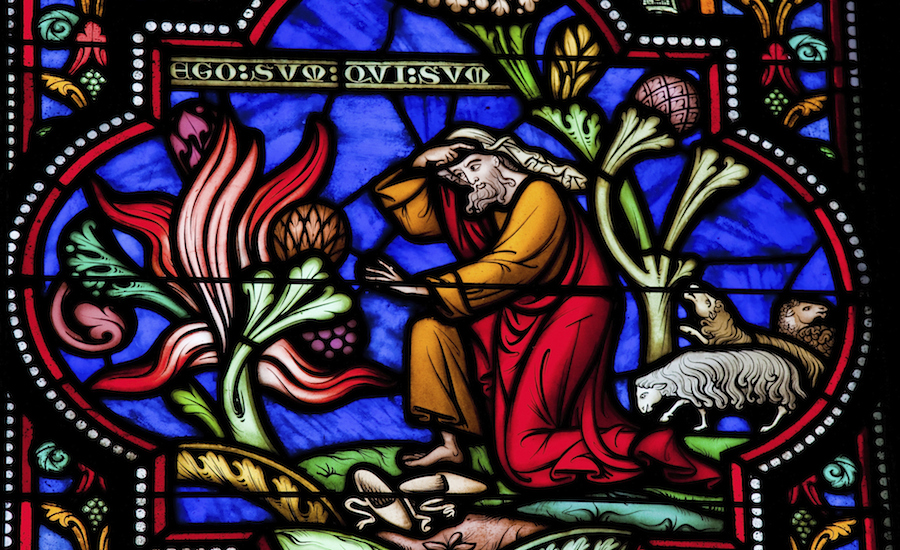
I was thinking about that this morning during my devotions as I read in Exodus (chapters 3 and 4) about Moses. Let me set the stage for the story…

Moses had just stood on holy ground, listening to God speak from the midst of the burning bush. (I mean, not exactly your ordinary situation.) He heard God tell how He’d seen the distress and oppression of His people, and He’d come to rescue them from the Egyptians.

All was well–and then came the kicker when God told Moses “I’m sending you to Pharaoh. You must lead the people of Israel out of Egypt.”

Yep, Moses–still talking to God in the midst of the burning bush–starts spouting off all the reasons why he couldn’t do that. Even though God promised to be with him. Even though God told him exactly what to say.    

I have to give props to ole Moses. He was good at the excuses, and threw out numerous “what if” scenarios. God gave him answers for all of them and even provided him with some nifty things to do if Pharaoh scoffed at him–like throwing his staff down on the ground and having it become a snake.

Even after all of that, Moses kept on with the reasons why he couldn’t do what God wanted him to do. “I’m not eloquent. I get tongue-tied.”

And then Moses said words to the effect of, “Send somebody else.” And that’s what happened. God turned the task of speaking over to Aaron, the brother of Moses. 

I can’t help but wonder what blessing Moses missed by not doing it himself. Whew, that’s something for all of us to think about.    

When God nudged my heart to write for Him, one of my first comments was, “God, I’m not one of those perfect people. I don’t have it all together. I come from a messed-up background. Wouldn’t one of those people who do have it all together be a better choice than me?”

And God answered, “It’s because of your flaws that I can use you. The things I’ve brought you through are what will give hope to others, because many of them are in similar circumstances.”

I remember taking a field trip to the bookstore at the beginning of my writing journey. As I looked through the books that day, I glanced at the author photo on the back of a book, comparing my oh-not-so-beautiful-self to the elegant woman in the picture.

I muttered to God that He could have made me beautiful like that. And He replied, “I didn’t make you beautiful because it would have gone to your head. I want your life, your writing and your speaking to be about Me–not about you.

As I looked at another book that day, I was awed by the illustrations that the author included in the book. I can’t draw a straight line–or even a good crooked one. Yeah, more muttering to God that He could have given me artistic talent like that.

Somehow I imagine God was shaking His head at that point as He said, “I didn’t give you the ability to draw because other people can do that for you. But you can write about your life experiences and share with other hurting folks about what I’ve done for you.”

To my comment I made to Him that day that I wasn’t smart enough, that I didn’t have a degree in journalism or know anything about the publishing industry, God replied, “That’s awesome. Now you’ll have to lean on Me.”

Has this been an easy journey for me? No! There have been many days of frustration, long periods of waiting and times when I’ve wished I’d chosen an easier career like chainsaw juggling. 

READ MORE: THAT FIRST STEP OF FAITH

But oh my, what a blessing I would have missed if I hadn’t surrendered to write and speak for Him!   

Sweet friends, I don’t know what God is asking you to do–but I can tell you this–if you don’t do it, you will miss out on the blessing that He had in store for you.

I can tell you from experience that if God calls you to do something, He will equip you with everything that you need for that journey. He will be with you every step of the way. And you will be blown away by the doors He will open, the things He will teach you, and the times you’ll feel His presence in a special way.

So here’s your challenge today: Are you going to move out in faith and trust Him to supply all that you’ll need–or are you going to miss the blessing that He has in store for you?

And my God shall supply all your need according to His riches in glory by Christ Jesus. (Philippians 4:19)

Don’t Lose Your Identity in Caregiving

My friend’s wife has gone through a rough couple of years with cancer, and my friend has been her sole caregiver. When I ran into him one day and I asked him, “How are you doing?”

He quickly replied, “Well, we’re doing okay.  She just got home from the hospital, and seems to be having some better days.  We have a long way to go, but our situation is better than it was.” He then shared test results that his wife had, and gave a comprehensive update on her condition.

New Every Morning Journal In Article Ad A

After he paused for a moment, I pointedly said to him, “I asked how you are doing.”

The ease of speech used to relay his wife’s circumstances instantly vanished, and I saw the tears well in his eyes.  Stammering, he managed to get out, “Peter, I’m scared and worn out.”

Both responses my friend gave me reflect the condition of virtually every caregiver I know—including myself. We tend to lose our identity in the story of someone else. When a caregiver answers direct questions in third person singular (he, she, etc.) or first person plural (we, our, us), it’s a good indicator that the caregiver’s identity is overshadowed by the loved one.  When asked about our own hearts, however, we find ourselves caught off guard, and we usually struggle to share our feelings.

It’s simply too easy to become lost as the person pushing the wheelchair, the one standing in the hospital room corner, the one doing laundry or meals, etc. How can we talk about our own broken hearts or weariness when our loved ones have such drastic illnesses or challenges? 

Too many caregivers feel guilty if they say anything construed as complaining or wanting a break—after all, the suffering loved one doesn’t get a break from pain/disease/disability.  But our injuries and wounds, whether physical or emotional, require attention—regardless of how they compare to others. 

If we don’t start paying attention to and taking care of ourselves, a strong resentment can quickly take hold. In a relatively short time, we can find ourselves tied in all kinds of emotional knots of guilt, and other negative feelings. 

We fight back against that dark road of resentment by reclaiming our identity. It’s starts with acknowledging your feelings out loud: “I’m tired,” “I’m lonely,” “I’m scared,” “I’m angry,” or “I’m weary,” and seeking the help you need. 

Caregivers should also regularly visit support groups—particularly, one related to the trauma/disease of the loved one. While support groups  cannot match up exactly to every specific case, it provides an opportunity for attendees to share from their own heart, their own experiences, and their own struggles. Another way caregivers can reclaim a healthy identity is to cultivate trusted and appropriate relationships where the caregiver is safe to regularly express feelings and challenges with someone who understands the need for the caregiver to share in such a manner. The Bible also tells us that there is  “…wisdom in a multitude of counselors,” and a caregiver can be well served with a trained mental health counselor who can help sort through the issues and even connect the caregiver to various respite and other type community services.  All of these are important steps in reclaiming an identity, but they all start with a simple phrase each caregiver must utter for themselves: “I need help.”

As caregivers, the next time a trusted friend asks, “How are you?” it may feel strange at first, but answer in first person singular. Appropriately sharing your own heartache and feelings is not self-centered; it is healthy—and healthy caregivers make the best caregivers.   

Don’t Let Your Problems Get You Down

No amount of planning, or even praying, can keep things running perfectly in your life. How can you deal with those inevitable problems? Take the advice found in this simple acrostic:

Positive attitudes are basic in solving any problem.
Nix the negative thoughts; visualize a solution to your troubles. Make it happen!

Light for Life NASB Study Bible in Article

Release the power within you.
Refuse to let your problems confuse or depress you. Remember that God is all-powerful and that you are his child. Repeat his promise: “My grace is sufficient for you, for my strength is made perfect in weakness” (2 Corinthians 12:9).

Open your mind to opportunity.
Often a problem contains the seeds of growth, of a great leap forward. Look for the “up side” of adversity.

Believe.
Repeat to yourself (and trust!) these great promises of the Bible:
“As I was with Moses, so I will be with you. I will not leave you nor forsake you. Be strong and of good courage…” (Joshua 1:5-6).
“When you pass through the waters, I will be with you; and when you pass through the rivers, they will not sweep over you” (Isaiah 43:2).
“The LORD is a refuge for the oppressed, a stronghold in times of trouble” (Psalm 9:9).
“The fear of the LORD leads to life, and he who has it will abide in satisfaction” (Proverbs 19:23).

Let go and let God work.
When we learn to release our problems into the hands of God, he brings about surprising solutions. He promises: “Call to me and I will answer you and tell you great and unsearchable things you do not know” (Jeremiah 33:3).

Expect great things.
When we trust God completely, our faith becomes an open channel for his power. Pray with the clear expectation that God will provide the best possible solution to your problem.

Make the most of your situation.
Analyze your difficulty as unemotionally as possible and look for the best way to handle it. Then move ahead. Sometimes you must step forward in faith before the solution to your problem arrives.

Summon the strength to succeed.
Success is primarily a spiritual process, the process of developing a mature personality through which you can accomplish your highest objective with the help of God.

Don’t Give Up on God

I rode home from Memphis a few weeks ago with my friend, Lori Brown. We had an awesome time talking and laughing on the 10-hour drive, catching up on family news, talking about God and the dreams on our hearts of things we’d like to do for Him.

And then as we zoomed down I-40, we noticed that traffic was slowing . . . and then it came to a complete stop. Just for the record, sitting in a parking lot on the interstate is not my idea of a fun thing. And then when Lori checked her GPS, it said that the wait would be one hour and 29 minutes. Oh my. The trip was already long enough. That certainly wasn’t the news that we wanted.

GP In Article Desktop

But then when she checked it again about 10 minutes later, the wait had been shortened to about 30 minutes. A third check showed an even shorter wait time.

That’s when we noticed cars start to pull across the wide grassy median. Car after car of people who were tired of waiting, heading in the opposite direction to find another route.

About a minute after they left our lane, traffic started moving again, I told Lori, “Wow, if they’d waited just another minute they would have been moving again.

And that’s when God whispered to me, “That’s exactly what happens when folks get tired of waiting for Me. They strike out on their own—but if they’d just waited a little bit more, I was ready to move and I had something so much better for them.”

Are you waiting on an answer to something you’ve prayed about? Does it seem like it’s taking forever for God to answer? I understand. In conjunction with my Just 18 Summers project, I’ve had a big dream on my heart to make a documentary and a movie that I know will make a difference in the lives of many families. The screenplay is written. The teams of filmmakers are on board for both projects. All we need is the funding. The waiting has been hard these past few years.

I’m by nature a take-charge kind of gal, and there have been so many times when I’ve been tempted to “help” God move things forward. But He keeps saying, “Wait on Me.”

So now my prayer is, “God, don’t let me move ahead of You. Give me patience to wait until You’re ready.” You see, with the beauty of hindsight, I’ve come to realize that all those times when it’s looked like God was doing nothing, He was busily at work behind the scenes. I’ve realized that if things had happened on my timetable, pieces that needed to be in place wouldn’t have happened.

Has my funding arrived yet? No. But I know that the God who put the dream on my heart will be faithful to provide everything I need to accomplish the task.

If you’re waiting on an answer from Him, don’t give up right before He moves. You’ll never regret waiting on Him . . . but you just might regret moving before He’s ready.

I remain confident of this, I will see the goodness of the LORD in the land of the living. (Psalm 27:13)

Dolly Parton’s Dreams

Y’all might not know this about me, but I read everything I can get my hands on. Self-help books, novels, biographies, religion, best sellers, anything that helps me see what makes people tick. When a friend says, “You gotta read this, Dolly, it’s a great book,” I do. You never know how it might inspire you.

That’s what happened back when I was on Porter Wagoner’s show. One of the musicians, Buck Trent, gave me this book as a birthday present by a preacher I’d never heard of. He had a long name and preached at a big church in New York City. But he knew how to talk to a country girl like me, used to Scripture on Sundays.

Light for Life NASB Study Bible in Article

“Dream big, think big, pray big,” this preacher said. Lord, I thought, that’s just what I want to spend my life doing!

My earliest dreams were born in the foothills of the Great Smoky Mountains, just like I was. My mother was a big dreamer. She dreamed about having a houseful of kids, and talk about dreams come true, she had 12 of ’em!

Some of us might have seemed like nightmares at times, but she was great about not trying to mold us or shape us to be like anybody else. Mama wanted each of us to be who God made us. And boy, did he make me a dreamer!

I’d put a tin can on a stick for a microphone, jab one end into a crack in the porch of our cabin and sing a song that I’d made up.

All at once those weren’t our chickens listening to me out there in the yard. They were an audience full of people clapping and cheering. And that wasn’t a hand-me-down shift I was wearing; it was a silk dress aglitter with rhinestones.

Mama’s people were all musical. “Sing one of your songs,” she’d say, and I’d sing. My uncle Louis saw how serious I was about music, so he gave me a guitar, a baby Martin. Oh, I loved that guitar! I played it all the time.

I prayed my dreams. Lived and breathed ’em too. Maybe that’s why it never occurred to me they might not come true. The night I graduated from Sevier County High School, all the seniors got up and said what they wanted to do: go to college, get married, take a job in Knoxville (the closest city).

I sat there in the fancy pink dress my aunt Estelle had bought for me and waited my turn. Then I stood up and announced, “I’m gonna move to Nashville and be a big star.”

Everybody laughed. I was so embarrassed. I couldn’t understand why they laughed. Years later I realized it was because they were embarrassed. They’d never known anybody who had the gall to dream that big and declare it out loud.

Dreams are never gonna come true if you don’t put wings on ’em. Not only wings–they need feet, hands, a brain. You’ve got to work really hard to make a dream come true.

That’s the difference between a wish and a dream. You can sit around and wish for good things to happen to you, but a dream is something you have to pursue, something you make happen.

Like all country kids I knew which bugs I could play with and which ones would sting. We’d put a string on June bugs and fly them like kites or put lightning bugs in a jar for a homemade flashlight (we released them later). But butterflies were the ones I loved most.

As a little bitty child, I’d get lost chasing them into the woods. Everybody hollered at me, but I didn’t care. I’m going to be like a butterfly, I decided. Spread my wings and fly.

You’ve got to be responsible for your dreams. You’ve got to take care of them the way you take care of your children, protect them, say no to people who want to remake them their own way.

I wake up early in the morning to do my dreaming–at four o’clock, ’cause I’m not a big sleeper. I think of God as a farmer throwing out nuggets of wisdom and inspiration first thing. I get out there and pick ’em up before everyone else. In the wee hours, the world is quiet and I can really listen to God.

Because, most of all, you have to trust him with your dreams. Maybe he’s got something planned that’s even better than you expect. I thank God for all the blessings he’s given me. I ask him to take the wrong things out of my life and bring in the right things.

If my prayers are slow to be answered, I think, Well, that’s part of this prayer. God’s trying to make me work on something. If he gave us everything we wanted right when we wanted it, we’d already be in heaven and I wouldn’t be here talking to you.

You might think with all I’ve accomplished in my life–going to Nashville and becoming a big star beyond even my wildest dreams–I would rest easy. No, ma’am. As long as I can, I’m gonna keep going–writing songs, making music, going on tour, building parks, being creative.

If I can’t get up and walk, they’re gonna have to put wheels on my rocking chair so I can still rock and roll. I keep thinking big, dreaming big and praying big. Believe me, you never get too old to dream.

For instance, at Dollywood we’re building a resort where families can slow down, kick back and just enjoy being together.

It’s got a real down-home feel, with rocking chairs and straightback chairs on big white porches, where you can take in the quiet and talk to God in the morning, or gather with your loved ones and swap stories all night long. Dollywood’s DreamMore Resort, we call it.

Back to books. My love of reading is another thing I got from my mama. We didn’t have television in our cabin in the Smokies, and our radio was used only to listen to the Grand Ole Opry and the news. So Mama would sing to us and read to us from the Bible.

The stories from the Old Testament made me want to know more–and read more.

So many of my people when I was growing up didn’t get a chance at education, like my daddy, who never learned to read or write, though he was very smart. That’s why one of my dreams has been to give free books to children who need them. I created a program called Imagination Library to do just that.

It started in my hometown (Daddy was so proud that kids called me the Book Lady, even prouder than he was when I became a member of the Grand Ole Opry) and has spread all over the country. So far we’ve given out 50 million books, and we’re still going strong.

Now, about that book that inspired me all those years ago. The one by the preacher who said think big, pray big and dream big. He’s also the man who started this magazine you’re reading–Norman Vincent Peale, author of The Power of Positive Thinking.

Who would’ve guessed that a little girl who sang to the chickens in her yard and got lost in the woods chasing butterflies would one day appear on the cover of a national magazine? Why, that’s more than even I could dream up!

Watch as Dolly offers advice on pursuing your own dreams!

Download your FREE ebook, Rediscover the Power of Positive Thinking, with Norman Vincent Peale.

Do It Now (Not Later)

I handed in this article a day late. I wish I were kidding. For a few weeks I sat on the assignment, going through all the justifications that procrastinators like me keep handy: “I don’t have enough information to get started,” “I work better under pressure,” “What can I really get done in a half hour, anyway?” “I’m too tired to be productive.”

Because I hadn’t started writing when I should have, I wasn’t prepared when real obligations came up. Our dog got sick. I had to stay late at the office a couple nights. One weekend there was a homecoming party for my brother-in-law. I fell further and further behind on my article.

extraordinary women of the bible

For a writer to tackle a story on procrastination is a cruel twist of fate. Writers are notorious procrastinators, having built careers around the adrenaline rush of deadline. But that doesn’t mean we feel better than you do about putting things off. No matter your profession, procrastination eats away at how you feel about yourself.

I sat down at my computer after I’d already missed my deadline, feeling terrible. I’ve failed yet again! I could have prevented this mad dash to the finish; why didn’t I? Then I caught myself. I needed to give myself a pep talk, not a browbeating. I decided that, having botched yet another deadline, I was officially an expert on the topic of procrastination. I put a few of the tips in this article to good use and got cracking.

Nearly everyone procrastinates, even people who seem to have their lives completely in order. We’ve all got too much to do, so some things end up sitting on our to-do lists without ever getting done. Delaying certain tasks—like taking down the holiday decorations, vacuuming the car, replacing the light bulb in the closet—is fairly harmless. Putting off others—like paying bills, finishing projects at work, going to the doctor—can have serious consequences. Procrastination at its most extreme has cost people their jobs, their savings, their health, and certainly their peace of mind.

There’s hope, though. Procrastination isn’t a deep-seated character defect. It’s a bad habit. As with smoking, overeating, biting your nails, or chronically running late, you get caught in a vicious cycle, making it harder to break free. Your inner voice says, “That’s just how I deal with stress.” But procrastination, like any bad habit, can be overcome. Especially if you don’t expect 100 percent success on the first try and are willing to stick with it.

One way to beat the procrastination bug is to take a step back from your emotions about something you haven’t finished and look at the situation calmly and thoughtfully—as if you were giving advice to a friend. Neil Fiore, Ph.D., bestselling author of The Now Habit and the new book Awaken Your Strongest Self: Break Free of Stress, Inner Conflict, and Self Sabotage says observing yourself objectively and not letting your first reaction to a looming task be your last can help you overcome the mental obstacles of procrastination.

{C}

There are many different types of procrastinators, and there are at least as many different ways of breaking the habit, depending on your type. Some of us having a tough time getting started; others have trouble finishing. Thinking positive when procrastination strikes (or even before!) is the key to beating it.

Here are 17 techniques for getting things done when you need to:

1. Use positive self talk.
Feelings of guilt and failure make it even tougher to make progress. Try something affirmative: “I have done much harder things than this. This is well within my abilities. I will get started this morning and see how far I get.” You might want to say a prayer first.

2. Choose a new reaction.
If your first reaction is, “I can’t do it,” Fiore advises saying, “Yes, that’s one thought,” then using the word “and” as a bridge to a more productive reaction: “…and I am an organized person. I will sit down now and focus on the task.”

3. Break it down into smaller tasks and prioritize.
The tried and true to-do list! Writing down each step gives you a clear picture of what lies ahead. Prioritizing helps you make a manageable plan and prepare your brain for that crucial first step.

4. Work when you’re most motivated.
Don’t even try balancing your checkbook at night if you know you can’t keep your eyes open past 9 pm. You’ll get the most done working at the time of day when you feel your best and most alert.

5. Make a schedule, then show up and see what happens.
“You don’t have to wait to feel confident and all-knowing,” says Fiore. Set a time and place with yourself, show up, and see what transpires. This can work for any number of tasks, from completing a huge spreadsheet to writing thank-you notes. Don’t give up if you get off schedule. Just get yourself back on track.

6. Give yourself specific directions.
Fiore says long-term goals can be dangerous for procrastinating types because they leave the mind hanging in the future without instructions on how to reach that point. He suggests giving your brain and body simple instructions. Try “On Saturday morning, I will get in the car at 10 am and go to the gym for the 10:30 aerobics class” as opposed to “This winter I will get back in shape.”

7. Remove distractions.
What do you do every time you should be doing something else? Get rid of it. This might mean taking your laptop to a coffee shop, hiring a sitter so you can hole up in your office, or turning off the television you keep on for background noise. If the internet is a distraction while you’re on the computer, don’t even go online.

{C}

8. Make a nice place to work.
A cup of tea, some fresh air through a cracked window or a soothing classical music CD can work wonders on your mood and your work-space. Proper lighting, comfy clothes, or a scented candle can help, too. Why should your work feel like drudgery.

9. Set a timer.
If you work for a predetermined stretch of time, you’ll often find you can (and want to) go even longer once you’re on a roll. Start with short bursts of time and work up to longer periods to prevent losing steam.

10. Have someone hold you to your commitment.
If you tell a friend or family member you’re going to paint the bedroom this weekend, you’re more likely to follow through. Ask the person to check in with you and provide positive reinforcement that you can do it.

11. Ask for help.
Turn to your support network. Even if they can’t write that presentation for you, maybe they can run an errand or pick up the kids after school while you’re in work mode.

12. Think progress, not perfection.
A good job is good enough. If you haven’t cleaned out the garage because you can’t afford the shelves you want, start with donating the old sports equipment and garden tools. When you get the shelves later, everything will be ready to go on them.

13. Reward yourself.
Balance work and relaxation. If your Saturday is going to be filled with errands in the morning and a few hours at the office in the afternoon, schedule lunch with a friend in between or get tickets for a movie that night.

14. Be thankful for consructive procrastination.
A friend of mine says that her college dorm room was never cleaner than when she had a paper due. At least she did something productive, even if it wasn’t what she set out to accomplish.

15. Give yourself room to goof off.
It’s tough to sit down at the computer and immediately get to work. Build in a 15-minute buffer to catch up on email or scan the news headlines or sports scores before you get down to business.

16. Be realistic.
Be honest with yourself about how long tasks take. If you get started early, you’ll have some leeway when life’s little emergencies pop up.

17. Practice, practice!
Once you find techniques that lift you out of your let-it-slide slump, keep using them. Soon you’ll build a new get-it-done habit!

Dogs on a Plane!

Some people can’t wait to retire. Some people can’t stand it.

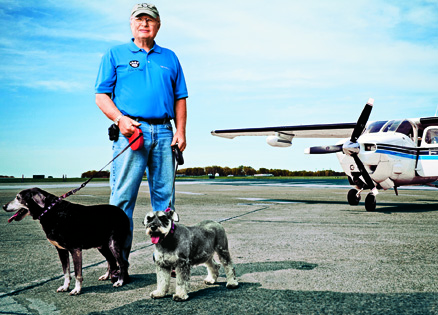
That was me. Even though it had been 10 years since I’d sold my metal fabrication business in New York and moved down to Knoxville, Tennessee, with my wife, Diane, I still refused to call myself retired. That sounded so final. I was just 64, plenty of miles left in me. Surely God had something more in mind for me.

Mys of Blackberry Valley In Article Ad

The problem was, I couldn’t figure out what it was. I could spend only so many hours puttering around my garden or tinkering in my garage. All the energy I used to pour into running my business had to go somewhere. For a while, flying was my outlet. There was nothing like jumping in my plane and taking off into the wild blue yonder. I loved my Cessna P-210. I’d flown that baby for 25 years, most of the time for work and these past several years strictly for fun.

But lately even flying wasn’t much fun. I was tired of $100 hamburgers. That’s pilot slang for making a short hop to a town nearby, grabbing a burger at the airport coffee shop and flying home. A hundred dollars was roughly what it cost to fly a small plane for a two-hour round-trip. Or used to cost before aviation fuel prices shot way up. “Maybe it’s time to sell the plane,” I said to Diane one night.

Diane knew I’d been at loose ends, but still she was surprised. “You love flying,” she said. “Are you sure you’re ready to give it up?” Well, no, I wasn’t 100 percent sure. So I prayed, Lord, help me find something worthwhile to do with my plane. With myself, really.

Not long after, I got a call from Debi Boies, a friend in Landrum, South Carolina. “Hey, Jon, I’ve got a strange favor to ask,” she said. “I remember you saying that pilots jump at any excuse to fly.”

I chuckled. “That we do. What’s up?”

“Bob and I heard about a badly abused dog in Florida who needs a home,” she said. “He’s a good-sized Doberman, and neither of our cars would give him enough room. Would you be willing to meet Bob in Tallahassee and fly him and the dog back here to Landrum?”

I knew Debi and Bob were active with an animal rescue group, but I didn’t know much about the work they did. I loved dogs, though—Diane and I had adopted two strays ourselves—and I told my friend I was glad to help. So far my passengers had been the two-legged kind. What would flying a dog be like?

That weekend I found out. At the Tallahassee airport, Bob lifted the dog into the backseat of my Cessna. “Jon, this is Brock,” Bob said.

I turned in my seat to get a good look at my passenger. The Doberman pinschers I’d seen before were magnificent, muscular animals. The dog fidgeting and whining in the back was scrawny, his ribs showing. His face and neck were splotched with scars. Bob told me he’d been rescued from owners who were into dog fighting. They’d used poor Brock as bait to train other dogs to fight and kill. They filed his teeth down so he couldn’t defend himself, slapped a crude tattoo on his belly. I couldn’t see that from the cockpit. What I saw were the most soulful brown eyes gazing back at me. “How could anyone treat an animal so badly?” I exclaimed. “It’s obvious he’s smart and sensitive. Just look at those eyes.”

“You got me,” Bob said. He got into the seat beside me. “But it happens more than you’d think. That’s what keeps us doing dog rescue.”

I cranked up the engine, hoping the noise wouldn’t startle the skittish Doberman. The opposite happened. He stopped whining and settled down. “Attaboy, Brock,” I said. “Nothing to be scared of. We’re taking you to a place where no one will hurt you again.” I taxied down the runway and took off. Ninety minutes later we landed at the Landrum airport. Brock had spent the whole flight lying quietly, better behaved than some human passengers. Bob got him out of the plane and led him into the terminal, where Debi was waiting.

As soon as I finished filing paperwork for our flight, I joined them. Debi was stroking Brock’s back and he was leaning into her hand, as if he knew she’d give him the loving home he deserved.

“Jon, thank you for flying our boy here,” she said. “Do you know how lucky he is?” I looked at her quizzically.

“Millions of animals are euthanized each year because shelters don’t have the space or money to keep them until homes can be found for them,” she said. “Even when people want to adopt them, they’re often hundreds—sometimes thousands—of miles away.

“Transporting them is a challenge,” she continued. “There’s a loose network of volunteers, but it usually takes several cars and drivers to relay these pets to their new homes. You can imagine how stressed out they get, being transferred from one car to another. It’s hard on the drivers too.” Debi sighed. “I wish there were a better solution.”

The whole flight back to Knoxville I kept thinking about what Debi had said. Back home, I kissed Diane hello and headed straight for my computer. I searched the internet for stories on transporting rescued animals. “Listen to this,” I said to Diane. “A New Hampshire family offered to adopt an abandoned dog in Alabama. It took 16 volunteer drivers to get him to their house.”

But like Debi had pointed out, that dog was one of the lucky ones. In many cases, there was no way to get homeless animals to people in another part of the country who wanted to adopt them.

Wait a minute…hadn’t I been praying for something worthwhile to do with my plane? There must be hundreds of pilots like me around the country itching for a good reason to fly, I thought.

I picked up the telephone. “Hey, Debi, it’s Jon,” I said. “You know animal rescue. I know aviation. There’s got to be a way we can tackle this problem together.”

We dreamed up Pilots N Paws, a website that’s an online meeting place for animal rescuers around the country and pilots willing to volunteer their time and planes. People post pet transport requests on a message board. If pilots can help, they get in touch with the rescuer directly.

Sometimes in business, you have a good idea but it just doesn’t take off (no pilot pun intended). This was different. This was about saving the lives of innocent animals. The site was up and running in March 2008, and soon dozens of recreational pilots had signed up.

We’re almost 2,000 pilots strong now. We’ve transported thousands of adoptable animals—dogs, cats, rabbits, birds, even reptiles—to their forever homes. I’ve rescued more than 500 animals myself, including one memorable mission last September. Sixty-eight volunteer pilots helped fly 171 dogs out of New Orleans, so hard hit by Hurricane Katrina and then the disastrous BP oil spill, to new homes as far away as Iowa and New Jersey.

That was my last trip as an animal rescue pilot. It’s time for me to sell my plane and give up flying. I do it happily, knowing I’m leaving Pilots N Paws in wonderful hands. But don’t call me retired just yet. I’m ready for whatever God has planned for me next.   

Take a peek at our slideshow depicting the canine rescue efforts of Pilots N Paws.


Download your FREE ebook, True Inspirational Stories: 9 Real Life Stories of Hope & Faith

Divine Intervention on a Grand Scale

I pushed aside the mountain of medical bills, lab results and insurance forms, clearing a space on the kitchen table. Our family vacation to the Grand Canyon was in three days.

Before we left, I needed to take care of something. Something I’d been putting off for the past month—the annual Turnbull family Christmas card.

GP In Article Desktop

Every fall, I would put together the Christmas card of all Christmas cards. Not just an update on how the year had been for my husband, Gordon, and me, and our young daughters, Sydney and MacKenzie.

There was a catchy theme, my trademark wit and a fantastic photo. No cheesy holiday sweaters for us. Our card was the highlight of many a holiday mantel and I always looked forward to writing it. But I didn’t have much to smile about this year.

I sighed, staring at the blank card in front of me. How could I possibly sum up the past year? “Carolyn Diagnosed with Stage 3 Breast Cancer. Family’s Hopes Crumbling Faster Than a Stale Christmas Cookie.”

Not exactly a holiday headline. There just weren’t many cheery words to describe the turmoil we’d been through. I was diagnosed in April. I’d been careful about getting regular mammograms even though I was only 45. I didn’t want to take any chances.

My latest screening was clean. Still, when I noticed an abnormality on my right breast, I made my doctor run further tests. Something was off. I just had this feeling. A biopsy confirmed it—a malignant tumor.

A week later I underwent a radical mastectomy. My surgeon was hopeful the cancer was contained, but the pathology report revealed it had spread to four of my lymph nodes.

“I’m sorry to have to tell you this,” the surgeon said at my post-op appointment, cutting to the point as directly as she’d made the incisions on my chest, “but the average survival time for this type of cancer is three years after diagnosis.”

I squeezed Gordon’s hand. I couldn’t cry, couldn’t scream. I was numb, as if I was watching my life fall to pieces. All at once gloomy images flooded my mind. Gordon picking out a dress for me to wear at my funeral. The girls getting ready for prom without me. My garden withering. My loafers.

I needed a new pair, but why bother buying them? I’d be gone all too soon. Besides, according to my treatment plan—as aggressive as the cancer, my oncologist told me—I wouldn’t have much time to worry about fashion trends.

I thought being a local television producer had made me tough as nails, used to going nonstop, powering through problems. But chemo knocked me flat. My hair and eyebrows fell out. My nails turned black. I refused to miss work, but most days I really could’ve used a 10-hour nap. Every little step took effort.

Even worse was the spiritual malaise. I tried to stay positive, especially in front of Sydney and MacKenzie, but it felt as if all hope had drained out of me along with my energy.

One day four months into chemo, Gordon sat down beside me on the couch and waved an ivory invitation with silk ribbons. My cousin Amanda was getting married in Flagstaff, Arizona, in October.

“We could make a trip out of it,” he said. “Maybe go to the Grand Canyon?”

I’d wanted to see the Grand Canyon ever since I was a little girl, dreaming of the Wild West from my bedroom in snowy rural Maryland. My chemo was almost done, but I still had a month of radiation ahead.

How would I travel feeling like a zombie? Would I have to wear that itchy wig to the wedding? Did my family really want to take in the sights with a lethargic bald woman in tow?

Gordon said he’d checked with my oncologist. She was okay with delaying radiation if I was up for the eight-day trip. “We need this,” he said. “The kids can make up the time at school, but…”

He didn’t have to finish the sentence. This wasn’t just any vacation. It could be our last vacation together. We were a family living on borrowed time.

How do you put all that in a holiday card? I wondered, thinking of our carefree Christmas card from the year before. The four of us laughing hysterically, making goofy faces for the camera. We weren’t the same happy family anymore.

I put the blank cards away.

Three days later, we flew to Arizona. When we landed in Phoenix, Gordon surprised us by renting a flashy green convertible. “If we’re going to drive around out west, we might as well do it in style,” he said. The girls whooped. Even I got into the spirit. We danced at my cousin’s wedding, me in my wig and all. We saw the Hoover Dam, stopped at the Venetian hotel in Vegas for a gondola ride.

But nothing compared to the Grand Canyon. We arrived early and made it to the canyon rim just in time to witness spectacular sherbet colors wash across the morning sky. Like a majestic painting come to life.

“Excuse me,” I said to a nearby guide. “Can you take a photo of us?”

I couldn’t miss this moment. I didn’t care how bald and sickly I looked.

“Try not to get the glare on my head,” I joked. The girls giggled beside me. Good. I wanted them to have a happy memory to think back on. Especially after I was gone.

It was a dream trip. But reality was waiting when we got home. There was a fresh stack of bills. A big red circle on the calendar marking my first radiation appointment. A blinking message light on the answering machine that could only be from my oncologist.

I wasn’t ready to face cancer again. Not yet. I wanted to enjoy my escape a little longer. I plopped down at the kitchen table and flipped through the vacation photos I’d had developed.

When I got to the one of the four of us at the canyon rim, I caught my breath. Those mammoth rocks looked like they’d been carved by a master sculptor. God was there in all his glory—his presence was impossible to miss in the masterpiece before me. There was nothing in the world greater. Nothing.

An idea came to me. I pulled out the box of Christmas cards. I taped the photo to one and wrote a headline: “No Grander Canyon.”

Then I started on the message: “The hand that created this geological miracle works a miracle in my life every day, showing me there is nothing so grand that God can’t intervene. Not even cancer.”

How right that Christmas message turned out to be. By the following year, I was in remission. Today, 11 years later, I’m healthy, strong and cancer-free. Something I make sure to celebrate in our annual family Christmas card.

Download your FREE ebook, True Inspirational Stories: 9 Real Life Stories of Hope & Faith.

Discover the Healing Power of the 23rd Psalm

One of the best-loved chapters in the Bible is Psalm 23. Here David, a former shepherd himself, compares us humans to sheep lovingly cared for by The Good Shepherd. “The Lord is my shepherd, I lack nothing. He makes me lie down in green pastures, he leads me beside quiet waters, he refreshes my soul” (verses 1-3).

The human mind, like the human body, needs refreshment and encouragement. And like the human body, a mind can be wounded. Sorrow is a wound. It cuts deeply, but sorrow is a clean wound, and will heal, unless something gets into the wound—such as bitterness, self-pity or resentment.

Community Newsletter

Get More Inspiration Delivered to Your Inbox


Wrong is also a wound.  When I deliberately do something I know is wrong, I wound my mind, and it is an unclean wound. Time will not heal that wound. Gradually, a sense of guilt will develop, and that can destroy a life. There is only one Physician who can heal this wound.

“He refreshes my soul” can have another meaning. Moffatt translates it to read, “He revives life in me.” Like a watch, the human spirit can just run down. We lose our drive and push. We become less willing to attempt the difficult. Like squeezing the juice from an orange and leaving just the pulp, life has a way of squeezing the spirit out of a person. The dawn of a new day leaves us cold and hopeless.

The Bible tells us that God made the first human being, “and breathed into his nostrils the breath of life; and man became a living soul” (Genesis 2:7). And God has the power and the willingness to breathe a new breath of life into anyone who has lost his own energy and enthusiasm.

Just as a shepherd makes sure his sheep are content and well-cared for, so God wants to restore joy and gladness to your life, to heal the wounds that wear you down.

Take time today to read Psalm 23…and be refreshed by its good news!

Did This Police Officer Have a New Calling?

One of my officers tapped me on the arm right after I got off the radio telling the precinct that we’d made a bust. “Sarge,” he said, nodding toward the squad car. “The girl says she knows you.” Yeah, I wanted to say. Right.

I’m in charge of the St. Petersburg, Florida, vice squad, and we’d just busted a drug deal in an alley off Fourth Street, a notorious neighborhood. I was focused on the dealer, not the prostitute we’d caught him selling a rock of crack cocaine to.

Community Newsletter

Get More Inspiration Delivered to Your Inbox


I glanced at her, huddled in the backseat of a squad car. Typical crack addict: pale and thin to the point of emaciation, with short, dirty hair. How did she know me? Had I arrested her before? The officer handed me her driver’s license. The young woman in the picture looked so different—long hair and big brown eyes—I checked the name. Melissa Collora. Age 21. I almost dropped the license. I did know her. When I was a kid, the Colloras lived right next door. This was the little girl I used to babysit.

I went over to the squad car. “Melissa? What are you doing?”

Her sunken brown eyes were glazed but unmistakable. “What do you think?” she said, then looked away.

“Is there anything I can do to help you?”

“If you can’t get me a rock, just leave me alone,” she snarled.

I didn’t ask the question I really wanted to ask. What happened, Melissa, to the girl I used to know?

I’m a man of faith. I try to see the best in people, as I know God does. That’s not easy with a job like mine. I’m a 15-year police veteran. The past seven years I’ve run the vice squad. I see the worst that people do to one another—and to themselves—and I deal with some truly hopeless cases. Cases so terrible and heartbreaking I can’t afford to let myself get emotionally involved. I couldn’t imagine that Melissa Collora was one of them.

I remembered being at the Colloras’ house on steamy summer days when I was 15 or so. Melissa would have been about three. Her brothers and I played football in the yard. Melissa would sit on the swing-set clutching her teddy bear, watching us with those big brown eyes. So sweet. So innocent.

I remembered her father too. All the boys on our block loved Mr. Collora, a big guy with a great sense of humor. He owned a gas station and an auto lot, and he’d let us kids play around in his jalopies. Then about the time Melissa was eight, Mr. Collora died. I went into the Army shortly after that. I hadn’t seen Melissa or her brothers in the 13 years since.

I called my mother as soon as I got home that night. “Guess who I arrested today,” I told her. “Melissa Collora.”

“That’s terrible, Tim,” she said. “I’d heard she was in trouble.”

Mom filled me in. Mrs. Collora remarried. Melissa’s step-father abused her. In 1993 her mother committed suicide. Melissa went to live with relatives outside New York City. That’s where she discovered crack and life on the street.

I hung up the phone, depressed. Not because it wasn’t a familiar story. It was. This time, though, I had actually known the girl before her life went wrong. That’s what really hurt.

The next time Melissa and I crossed paths, she was getting arrested on yet another prostitution charge. “You see her a lot?” I asked the arresting officer.

“Melissa? She practically owns the corner of Forty-eighth and Fourth. Even wrote her name in the cement to keep the other girls away.”

She had a black eye and bruises all over her arms. “Melissa, what can I do?” I asked, though hard experience told me not much. I was a vice cop, not some bleeding-heart social worker.

“I told you before,” she snapped. “Just leave me alone.”

Since age 18 Melissa was booked more than a dozen times for drug possession and prostitution. Sooner or later she’d rack up enough convictions to send her to state prison for a very long time.

I’d see her every week, either at the station house or walking the streets. She wouldn’t look me in the eye. Sometimes I ignored her. My cop instincts said she was never going to change. That’s what the streets do to you. I’d seen it a thousand times. The damage starts young. By the time they start taking drugs and selling their bodies, it’s too late. But then I’d think, How can I turn my back on this kid? Invariably, though, Melissa would tell me to get lost.

“That girl’s a lost cause,” the guys on the squad said. “Why do you keep trying?” But no matter how many times I told myself it was pointless, I kept picturing that wide-eyed little girl in her swing, who’d had her whole life ahead of her.

One day I gave a presentation about prostitution to a St. Petersburg civic group. One of the slides I used was a booking shot of Melissa. A woman in the audience asked who she was, and I told Melissa’s story.

The woman came up to me afterward along with a friend. “I’m Linda Cheney, from Praise Cathedral,” she said. “This is Tracy. We’re looking for a woman to sponsor for the Walter Hoving Home in New York, a recovery program for prostitutes. How about Melissa?”

“I don’t think she’s your girl,” I said. “Melissa, she doesn’t want to recover.”

Linda slipped me her card. “Call me if anything changes.”

“All right,” I said. “But I doubt it will.”

There I was again, the hard-nosed cop.

I stuck Linda’s card in my desk drawer. I probably would have forgotten about it, except for a few days later. My team cornered a prostitute and her client in a rubble-strewn lot off Forty-eighth Avenue. It was Melissa. I turned and walked away. I had a sick feeling in my stomach. Melissa was looking at hard time now. At least 10 years. She was barely in her 20s.

“She wants to talk to you,” one of my officers said.

I walked over slowly and leaned into the window of the squad car. Melissa was hunched over in the backseat, her hands cuffed behind her. I didn’t say anything. Just stood. What was there left to say?

She stared at her feet. “I think … ,” she began. She lifted her head. Those big brown eyes looked straight into mine. “I think I need help.”

My instincts said, don’t trust her. Crackheads use anybody and anything to get what they want. She was in deep and she knew it. She’d say anything. Drugs strip you of your soul. I thought about the first time we’d busted her. She told my guys she knew me. Why? She didn’t have to. Had that been a cry for help? That one part of her the streets hadn’t claimed? Was it enough? “I’ll see what I can do.”

Back at the precinct, I fished Linda Cheney’s card out of my desk and called her. “I think I found one for you,” I said. “I’ll take it from here,” she replied.

She called back the next day. “The Hoving Home will take her,” she said. “My church will cover the plane tickets and fees. All we need now is the judge’s approval.”

“I’ll talk to the prosecutor, but don’t get your hopes up,” I warned her. “You’ll have to convince the judge that Melissa wants to turn over a new leaf.”

“Tracy or I will testify,” Linda said. “We met with Melissa in jail this morning. She told us she’s accepted Jesus. She wants to start a new life. That’s why she asked you for help.”

Don’t kid yourself, lady, I wanted to say. But I kept my mouth shut. I would have to testify at Melissa’s trial. You don’t lie on the stand. I wasn’t going to say anything I didn’t believe, no matter what Melissa claimed. What if she was sincere, though? Linda and Tracy believed her, but they were church ladies. Turned out the prosecutor was on board. What about me? What did I believe? I wasn’t sure.

The judge was a real hardliner. He scowled at Melissa as the bailiff led her into the courtroom. He was ready to send her away right then.

“Your Honor,” the prosecutor began, “the state recommends that Melissa Collora’s sentence be commuted to treatment at the Walter Hoving Home in New York. A church group is willing to sponsor the treatment.”

The judge looked incredulous. Tracy took the stand. She spoke of Melissa’s faith conversion and said she believed it was sincere. “Who are we to know what is truly in a person’s heart?” she asked.

The judge looked at her. “If I had a nickel for everybody who comes into my court and says they’ve changed their lives, I’d be a rich man.”

I was next. The judge fixed me with his sharp eyes. “Your Honor,” I said, “if I had a nickel for everyone who tells me that they’ve changed their lives, I’d be a rich man too.”

“So what makes this young woman different?” he countered.

“It’s my understanding,” I continued, “that Melissa Collora has had a transformation. I believe faith can change lives. I believe it can change Melissa’s.”

There was dead silence in the courtroom. Finally the judge spoke.

“I’ve never seen anything like this,” he said. “A veteran police supervisor testifying on behalf of a prostitute?” He turned to Melissa. “Young lady, I was going to sentence you to ten years. I commute your sentence to treatment at the Walter Hoving Home. A lot of people are sticking their necks out for you—me included. Do not violate this trust. Don’t blow this chance. It’s your last one.”

He banged his gavel and Melissa was led away.

Melissa called me from Linda’s cell phone on the way to the Hoving Home. “Tim, I just want to thank you … ,” she started to say. Then the signal faded. I didn’t need to hear anymore. What I did for her wasn’t much, but I think it was the best thing I could have done. Even a vice cop can’t go through life letting it harden him. Maybe that’s where I’d changed. I believed in her.

It’s up to Melissa now. And to the One who made sure our paths kept intersecting until we both saw what he did—a young woman with a whole new life ahead of her, a life in him.

This story first appeared in the July 2004 issue of Guideposts magazine.

DeVon Franklin on Greenlighting Faith

I work in Hollywood. maybe you’ve seen some of the films I’ve worked on—The Pursuit of Happyness, The Karate Kid, Hancock, Jumping the Broom and Heaven Is for Real, to name a few. But you might not recognize me. That’s because I’m not an actor. I’m the guy behind the scenes.

As a former senior vice president of production for Columbia Pictures and the current president and CEO of the newly formed Franklin Entertainment, my job is to get films made. I’ve shepherded productions from beginning to end.

Pray a Day Vol 2 In Article Ad

I’m proud to help produce family-oriented, uplifting and inspirational films. It’s what I’ve dreamed of doing since I was a kid. Life is good, and I feel very blessed. But I didn’t always feel that way. My journey was complicated and sometimes painful.

It goes back to my dad, Donald Ray Franklin I. He was handsome, outgoing, charming—the center of attention at social gatherings, the kind of man people gravitated toward. He had ambition and the intelligence to match it. He was working his way up the corporate ladder at UPS. Fast.

That meant going on a lot of after-work outings, where drinking was a way for an up-and-coming young executive to fit in with the old guard, the established successes. He should have known he couldn’t handle it, with his family history. His father and two of his brothers were alcoholics.

But that’s the way it always happens. No one wants to be an alcoholic. Dad thought he had it under control, I guess.

He didn’t. He stayed out later and later and would come home too drunk to make it to work in the morning. Finally he was fired from UPS. My mom, Paulette, had to fill the gaps.

Somehow she managed to raise me and my brothers—Donald Ray II and David Brandon—and hold down a receptionist job, all while trying to deal with Dad and his addiction. M y early childhood memories were disjointed and hazy, scattered snapshots of family dysfunction.

I remember Dad staggering through the front door one night, reeking of booze. Mom hid the car keys because she didn’t want him to head back out for another round. He flew into a rage. He pinned her down on their bed.

“Give me those keys!” he bellowed. Mom resisted. Dad yelled louder. I stood frozen in the corner, helpless, petrified.

Mom would beg God to take away Dad’s desire to drink, ask him to heal our family, but things only got worse. Dad’s drunken rages were frequent. He would steal Mom’s hard-earned money—money that was supposed to keep food on our table and a roof over our heads—for his binges.

He didn’t seem to care about us anymore, or care about anything but getting drunk.

Then one day, Dad left. I was too young to understand it fully, but I knew that something big had happened. Days, weeks, months went by—and still no sign of him. But Mom never gave up on him. She’d always pray for him. I never heard her say one negative thing about him.

I was nine years old when all of a sudden Dad started coming around again, like an answer to Mom’s prayers. That’s why she never said anything nasty about him. She knew he would come back.

And he was different. He was sober. He found a job and a place to stay. He even began going to church. It was really great for a while, until he had a massive heart attack.

Years before, doctors had said he needed a heart transplant. But he had ignored their advice, and the years of alcohol and nicotine abuse damaged his heart even further.

My mother brought my brothers and me to see Dad in the hospital the next day after school. We spent the afternoon together. Before we left, he had us all huddle close to him so he could hug us.

“As soon as I get out of here we’re going to go to church together,” he said. “We’re going to be a family again.” I hugged him with all my strength, wanting desperately to believe that, needing to believe it.

The next day, just as we were walking out the door for another visit with Dad, the phone rang. Mom answered. “No!” she screamed. “Please, no!” She hung up, sobbing. Dad had suffered another heart attack. He was dead, at only 36.

Mom took us to the hospital to see him one last time. We walked through the double doors of the gray, sterile morgue. There he was, my father, lying on a metal slab, his eyes closed. I might have thought he was sleeping if it hadn’t been for the eerie stillness of his body.

“Kiss your dad goodbye,” Mom said softly. I watched as Donald Ray kissed him, and then it was my turn. When I stepped forward I tried not to hesitate. I leaned in and kissed my father on his forehead. He was cold as ice.

I stepped back, feeling a chill inside, as if something deep within me had died with him.

How could God let this happen? Why did he answer Mom’s prayers only to take Dad anyway? Mom always told us that God had a plan for everyone, but allowing a man’s life to end just when he was putting it back together? That made no sense at all.

Mom ushered us out. I took one last look back at my father, lying on that cold slab, a tableau of lost promise. As the morgue door swung shut, sealing the distance between us, I vowed, That is not going to happen to me. I will make something of myself.

I buried my anger, hurt and confusion inside, and threw myself into academics and activities. As a teenager, I had something planned every waking moment. I helped out at the church led by my uncle, Dr. D. J. Williams, my grandmother’s brother-in-law, and preached my first sermon at 15.

I developed an interest in theater and got involved in the program at school. I didn’t just watch movies and television shows, I studied them, wanting to figure out how stories and scenes were put together, wanting to know how to move and inspire people through entertainment, the way The Cosby Show and The Color Purple inspired me.

By the time I entered college, at the University of Southern California, my ambition was at full throttle. I became a business-administration major with a cinema-television minor, a hybrid education to complement my Hollywood aspirations.

Instead of going home for breaks and holidays, I stayed in Los Angeles and worked, some summers holding three jobs just to make ends meet. I was that driven.

During my years at USC, I was an intern for Will Smith’s management and production company. When I graduated, I became his producing partner’s assistant.

I showed such potential, he entrusted me with responsibilities typically given to executives. I read scripts and attended development meetings and after-work events, where connections were made.

My life was not so different from my dad’s early in his corporate career. It wasn’t lost on me that I’d inherited his ambition and his head for business. But that meant I might have inherited his weaknesses too, so I did everything I could to make sure I didn’t go down the road he did.

One night I stayed late at work and mapped out a long-term plan for myself, each rung up the ladder clearly marked with age and title. No chance I’d lose my way. I would be a junior executive by the time I turned 25. I would become vice president of a film company at 30.

I had everything set to happen before I hit the age of 36. With my drive and work ethic, what could go wrong?

But 18 months later, I was still an assistant. I was working harder than ever but I wasn’t going anywhere. I was stuck. Frustrated. Miserable. Angry.

Was this God’s plan for me? Wasn’t my dedication to him and to my career enough to show I was different from my dad? I was going to church, praying regularly, preaching whenever my uncle called on me.

Every task I put my hand to, I accomplished as close to perfection as I could. Why wasn’t I getting ahead? Was there something about me that wasn’t good enough?

One morning when I got to the office, I felt frustration and depression overwhelming me. I escaped to a quiet bathroom and locked myself in a stall. Call it my emergency prayer closet, but that’s where I had it out with God. “You said I can come boldly before you. Well, here I am.…”

I let everything out, my fears and my desires, my hurt and my confusion.

I’d been racing to beat the clock, determined to get to the top of the ladder before the age of 36.

Thirty-six. When everything ended so tragically for my dad.

Was fear driving me instead of faith? Because I was scared my time would be cut short before I fulfilled my potential? I’d thought I was doing what God wanted, but my perspective was off-kilter. My ambition needed to be rooted in faith, not fear.

I took a deep breath. “God, I need you to move today,” I said. “I can’t keep living like this.”

That evening, my boss called me into his office to tell me it was time for me to move on. I was shocked, but I realized God had heard my prayer and had answered. After a series of unproductive interviews I decided it was time to quit and just step out in faith.

Less than a week later, I was working as a junior executive at a prolific production company, Edmonds Entertainment. I’ve always made sure to set aside time to be in God’s presence, reading the Bible daily and honoring the Sabbath, even if it meant missing an evening shoot.

The more I’ve surrendered to God, the more he’s moved on my behalf. Six months after my thirtieth birthday, I landed the vice-president position I’d aimed for. That six-month delay was like a little reminder from God: My time, son, not yours.

Now, at 36, I’ve just been given the opportunity to run my own production company. I’m achieving my dreams, going on faith, not fear, which is what God wanted me to understand all along.

I always wonder what it would be like if my dad were still around to experience all of this with me. I hope that he’d be proud of me and my brothers. Yet I’m thankful for my Heavenly Father. I know that first and foremost, I am his son, and I will go anywhere he leads.

Did you enjoy this story? Subscribe to Guideposts magazine.

Desperate to Help Her Addicted Daughter, a Mother in Denial Turned to God

Mrs. Naman, we need you to come to the high school—immediately.”

The phone call was from the secretary at my 15-year-old daughter Natalie’s school.

Witnessing Heaven In Article Ad 827x123

I have three children, one older than Natalie, one younger. I had never been summoned to a school office before. And certainly not for anything like this. It just wasn’t possible!

I called my husband, Peter, a surgeon at the hospital in our Pittsburgh suburb. “Meet me at Natalie’s school,” I said. “They said she was caught with substances. What does that mean?”

“Not good,” said Peter. “I’ll be there.”

Natalie was in the principal’s office, surrounded by school officials and three police officers.

I couldn’t process everything they were saying. “Possession…heroin…backpack…zero tolerance…suspension…charges.”

On the principal’s desk were small packets of white powder, a spoon and syringes.

This couldn’t be happening. There had to have been some mistake. We were a loving, happy family from a nice neighborhood. Peter was a respected doctor. I had dreamed of becoming a mom my whole life, and I had worked hard at it. Natalie was a wonderful child. Bright. Creative. Game for anything. Practically perfect.

“Are you sure?” I asked the circle of stern faces. “Natalie is a good girl. I never saw any sign of this.”

“Parents often don’t,” one of the police officers said matter-of-factly.

On the way home, Natalie insisted it was all a mistake. “It wasn’t mine, Mom,” she said. “Someone asked me to hold it for them. I don’t have a drug problem. You’ve got to believe me!”

“If she’s injecting heroin, that’s serious,” Peter said later that night. We’d stayed up talking to Natalie; now it was just the two of us. “Heroin affects the brain in unique ways. It is very addictive, especially for adolescents.”

“She told us it wasn’t even hers,” I said. “Shouldn’t we give her the benefit of the doubt?”

I remembered occasionally finding little packets in Natalie’s room like the ones I’d seen on the principal’s desk. I’d had no idea what they were and left them alone. I suppose I hadn’t wanted to know. I’d put them out of my mind.“

Natalie needs to go into treatment immediately,” Peter said.

“She’s not some junkie,” I said. “What will her friends think? Everyone will know! She’ll be an outcast.”

Peter shook his head. “We need to intervene as soon as possible,” he said.

Reluctantly, I agreed to enroll Natalie in an outpatient treatment program, the least disruptive option. I certainly wasn’t going to send her away to some facility. There would be so many questions.

And I insisted that Peter and I tell only our parents, no one else in our extended family or circle of friends. Other families at school would find out through the rumor mill, but there was no need to tarnish Natalie’s reputation.

I went to bed shaken but determined to turn this situation around. I also felt something I hadn’t experienced before. Anger toward God.

“How could you let this happen?” I demanded. “I did everything right.”

I had worked so hard to be a perfect mom. I’d been a teacher before the kids were born, but I’d quit to raise them. My dream was the kind of family you see in Hallmark movies. I’d planned so carefully, so perfectly. This couldn’t be happening. Not to us.

October? Time to pick pumpkins and decorate Halloween cookies as a family. Christmas Eve? Arrive at church early to get front-row seats. I made meat loaf from scratch, baked, always brought treats for school parties. I covered all the bases. Heroin wasn’t part of the plan.

What I couldn’t accept was how all of those positive experiences had led Natalie to…drugs.

“It’s my fault,” Peter said. “I should have been home more.” His hospital schedule was demanding.

“I was the one who was home with her,” I said. “Which is worse?”

For a while, it seemed as if my instinct to keep things quiet and give Natalie a chance to do better was working. The school wanted to turn her suspension into an expulsion, but we convinced the administration to allow Natalie to become a full-time online student.

She was charged with drug possession, convicted and sentenced to probation with treatment, which she was already doing.

Natalie seemed relieved to be out from under the social pressure of in-person school. A boy asked her to a dance. We let her go and even invited other families to gather at our house before chaperoning the kids. Some of the moms seemed standoffish or awkward, but others were nice. How many people knew about Natalie? Inside I cringed. Shouldn’t this be a private matter?

I tried not to notice at first that Natalie’s grades were slipping. (She was just struggling with remote learning, I told myself.) Or that she was staying up later and leaving the house with people I didn’t know.

Then I found a syringe in Natalie’s room. I confronted her, and she insisted she had no idea how it got there. I wanted so badly to believe her, but Peter warned me that things were getting worse.

Soon the signs were unmistakable, even to me. Natalie began nodding off during meals. Disappearing for an entire day or night. She began to look haggard.

I worked harder and harder. We took her to psychiatrists and counselors. I relented and agreed to send to her to an inpatient treatment program. I was desperate, desperate to turn all this around, to get back to the way I thought things were.

I tried to reason Natalie out of using. Begged. Cried. Issued ultimatums. I scoured her room for drug paraphernalia. Stayed up all night waiting for her to come home.

By this point, I’d given up on God. One Sunday, our priest said in a sermon that sometimes God comes alongside us in suffering but doesn’t immediately solve the problem.

Well, he should, I thought bitterly.

I felt as if we were in this alone. “Where do you even get drugs?” I asked Natalie one day as we drove to the store. I couldn’t imagine drugs being sold in a town like ours.

“You mean walking distance or driving distance?” Natalie responded. I looked at her in shock.

“It’s everywhere, Mom. So many kids my age take drugs. Families here have tons of money, and parents have no idea what’s going on.” We passed a house, and her face darkened.

“What?” I asked.

“The guy in that house will sell you any drug you want,” she said. “See why it’s so hard to quit?”

After yet another relapse, Natalie began telling me, “I just want to close my eyes and never wake up.”

One Saturday morning, I peeked into her room and saw her motionless on her bed. Her skin was purple.

“Peter!” I shrieked. Natalie had overdosed. Peter rushed in with a container of Narcan, and Natalie revived. I staggered out of my daughter’s room and collapsed in the hallway.

I began to cry. I couldn’t stop. I lay on the floor unable to move. Just like Natalie, I wanted to close my eyes and never wake up.

That thought frightened me. I sat up. “I have to go out,” I told Peter. Natalie was stable and under his observation. I drove straight to our church. The sanctuary was open but unlit. I walked to a pew and got on my knees.

A sensation of utter weakness and imperfection engulfed me. I was broken. Natalie was broken. Our family was broken, and I couldn’t fix or even hide the problem.

“I can’t do this on my own,” I said to God. “Please give me your strength and wisdom.”

I didn’t hear an answer. But on the drive back home, I began to feel more clearheaded. I had been trying to do the impossible: fix someone else’s addiction. I had gone against everything the professionals told us. I’d downplayed the severity of the problem. Denied, denied, denied. Kept things quiet. Tried to force Natalie to get better.

I had turned away from the one thing I needed most: trust.

I had not trusted God—my biggest denial of all. I had not trusted our friends or extended family enough to be honest with them or ask for help.

And I hadn’t trusted Natalie. She was an adolescent and needed guidance and love. But if she was going to get better, the change would have to start with her. I couldn’t will her into recovery. I wasn’t in control.

I wish I could say I returned from the church transformed into exactly the mom Natalie needed me to be. That’s not how it works. I’d simply taken the first step on a long journey. That meant trusting my daughter to God.

It took another overdose and more than a year of relapses before Natalie finally decided, on her own, that she’d had enough and wanted to get better.

Along the way, I gradually figured out how to help her. I attended support groups and talked to a therapist. I worked on setting aside my drive for perfection that made it so hard for me to let Natalie make her own decisions. I stopped denying that we weren’t the perfect family.

How long had I burdened Natalie with my outsize expectations? Probably her whole life.

“I can’t fix this for you,” I told her. “But I love you, and I’ll be at your side when you’re ready to try.”

By the grace of God, Natalie is two and a half years clean now. She decided to enter a treatment program, and she is determined to remain sober. This year, she started taking community college classes.

Our family remains a work in progress, but I have hope. Why? Maybe it’s moments like a recent afternoon when Natalie and I were on our way home from running errands.

“One more stop,” I announced as I pulled into the church parking lot. We had parked in this exact spot at church many times over the years of my daughter’s addiction. I had always invited Natalie to come inside. Mostly she stayed in the car and played on her cell phone. I knew better than to ask this time. “Just going inside to pray for a few minutes,” I said. “I’ll be right back.”

“Wait,” Natalie said. “I’ll come.”

I did my best to hide my elation.

The sanctuary was open but unlit, just as it had been on that day she’d overdosed. We knelt side by side. I wondered what she prayed for, but I didn’t ask.

Together we lit two candles near the entrance and watched their soft glow.

“I prayed for you,” Natalie said as we headed back outside. She reached out to take my hand.

“Me too,” I said, giving her hand a squeeze.

We approached the car.

He hears us,” Natalie said.

“He does,” I said.

For more inspiring stories, subscribe to Guideposts magazine.