

Embrace God's truth with our new book, The Lies that Bind

A Single Seahorse Changed this Diver’s Life

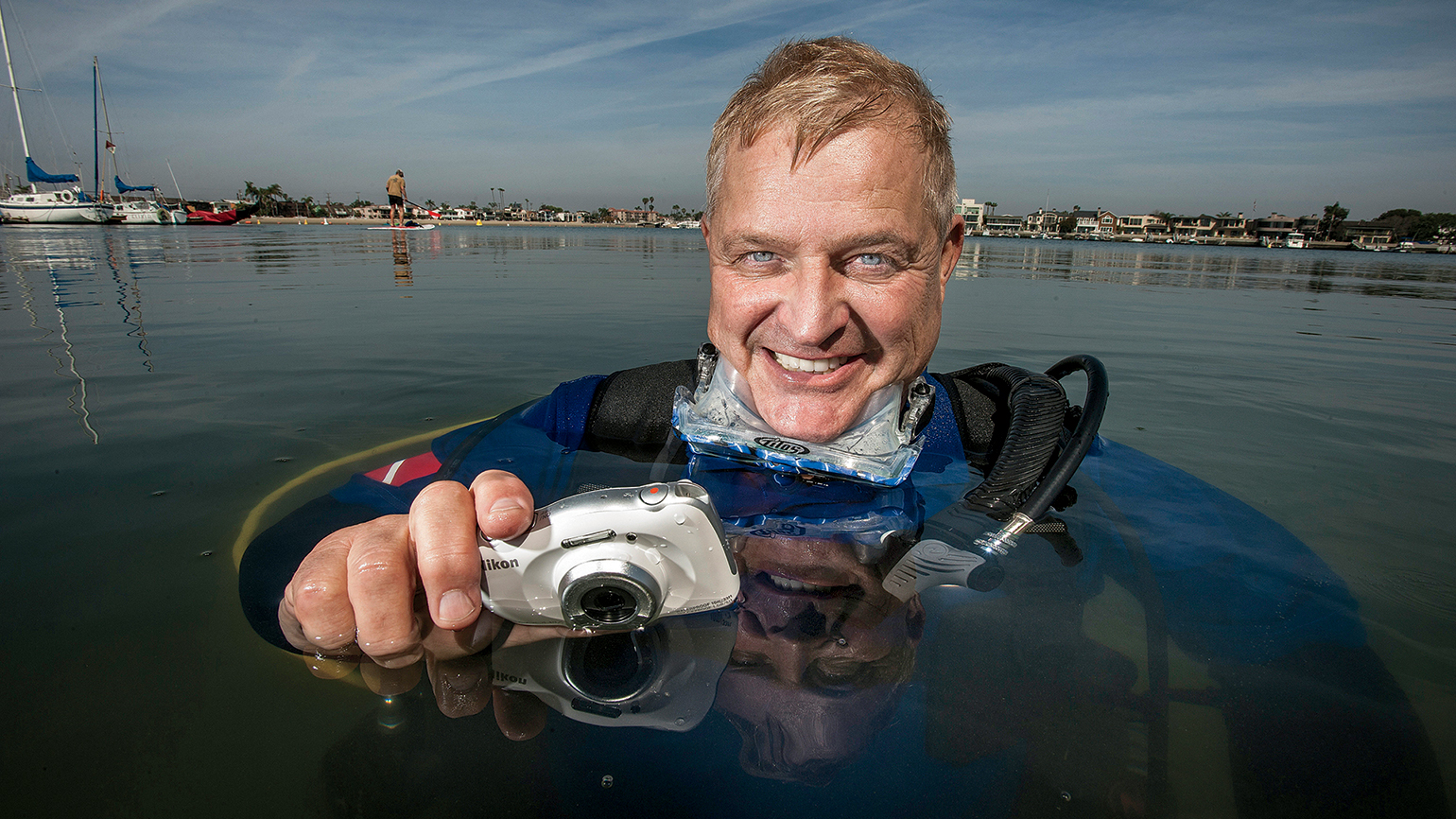
Dive a few feet underwater and you’re in another world. It’s quiet down there. You can hear yourself think. If you’re me, you stop thinking so much. You slow down. Look around. See the world maybe a little more the way God intended. I’m a restless guy. Married four times. Moved all over the country. Grew up on a farm and later worked as a teacher and coached football, wrestling and track.

Scuba diving is what I keep coming back to. I learned to dive 30 years ago. I’ve been a diver almost half my life. No matter where I live, I find water and dive. I’ve chainsawed holes in the Wisconsin ice and plunged in.

I always say I’m a C-minus on land but a Mensa genius underwater. I don’t mean I get smarter; I mean I become a better person down there. I’m kinder. More patient. More tolerant and observant. My rough edges smooth out, and I become the calm, generous guy I try—and mostly fail—to be on land.

I never knew why that was until a few years ago. That’s when I made a tiny discovery during one of my routine dives. I was in shallow water off Long Beach, an industrial port city south of Los Angeles. I looked down and saw a bright orange seahorse, 4½ inches long, hovering near the ocean floor.

An orange seahorse
        Credit: Carolyn Cole/Los Angeles Times
via Getty Images

That seahorse didn’t belong there. The waters near Long Beach are too busy and too cold. Seahorses are shy and prefer warmer water. San Diego marks the northern limit of Pacific seahorse habitat, some 110 miles away.

I swam closer, fascinated and enchanted by what I was watching. I didn’t know it then, but that little seahorse had just changed my life. Wind the clock back to 1950, when I was born in Oelwein, Iowa. A town about as far from the ocean as you can get. Still, my sister and I grew up surrounded by nature and the cycle of life. We played in cornfields, watched calves being born and learned gardening from Mom.

Dad loved farming, but he couldn’t make the financial part work. We ended up moving to Council Bluffs, where Dad drove a truck and I attended high school. I knew my way around a farm but struggled in school. Kids made fun of me, and I burned to make something of myself.

I squeaked through college, but I had no idea what to do after graduating. I wound up teaching. I enjoyed the work and the students. And the job was portable. I’ve taught school in Wisconsin, Florida and California.

For years, I found it hard to settle down. I was always chasing that elusive something that would make me feel good about myself. I moved around. Cycled through relationships. Tried out different roles at school: teaching, coaching.

Just before I turned 40, I took a vacation to Mexico. I was at one of those beach resorts where you dive with tropical fish. On a whim, I put on a wet suit and regulator and slipped into the water.

My world transformed. For the first time in my life, the restless engine churning inside me slowed down. The water was quiet. Colorful fish darted around like jewels. The sound of my breathing and the swish of fins were all I heard. It was like a place apart. I didn’t want to leave.

My top priority when I returned home to Wisconsin was getting back in. I learned to scuba dive and went diving every chance I got. Eventually I moved to California to be closer to the ocean.

I began to notice how different I felt and acted underwater. I’d pretty much stopped going to church, but I sensed something holy down there. Or someone. In that presence I was able to relax, look around, not take everything so personally.

Back on land, I was just as ornery and impatient as ever. I didn’t like it but didn’t seem able to change it.

One day, 11 years after I learned to dive, I was off the coast of Laguna Beach in Southern California. It’s rocky there, and I was watching fish dart in and out of crevices. Suddenly I noticed a huge shape looming beside me.

It was a gray whale, about 40 feet long, just a few feet away. I should have been terrified. That whale could have killed me with a flick of its tail.

Instead, I looked in the whale’s eye. The whale seemed to stare back at me and into my soul. There was no condemnation in that gaze. The whale moved on, and I swam in a daze toward the surface.

After that, I began diving every day. I even lived by the beach in my white minivan for a while. I was working at a school in Long Beach, so I mostly dived there. It’s not a beautiful spot, but I didn’t care. I just wanted to be underwater.

To help some octopi I found living in the bay, I created a small habitat out of discarded toys lying on the ocean floor. I called the habitat Littleville. Maybe I wished I lived in Littleville.

One day, checking on Littleville, I noticed something small and orange hovering in the sea grass a few hundred feet away. A seahorse.

I knew that seahorses didn’t belong there. I also knew an unusual pulse of warm water had traveled north to California that summer. Maybe the seahorse had drifted on the current and was trying to eke out a living in Long Beach.

I hovered, not wanting to scare the seahorse away but desperate for a closer look. It was so small. So helpless. The water wasn’t very deep. Beachgoers could paddle out here and churn everything up.

Finally I had to surface. I returned the next day and almost every day thereafter to check on the seahorse. A few months later, it was joined by a companion! Seahorses often form close attachments to one another.

Winter was approaching, and I feared the sea grass wouldn’t give the seahorses enough protection. I gathered sticks, pine branches and other bits of plant life on land and used them to build a sheltered area for the seahorses on the bay floor. They moved right in.

Soon I discovered more seahorses in the area and built habitats for them too. I gave the seahorses names like Deep Blue, Daphne and Bathsheba. I visited them every day. Something about them drew me.

I kept detailed notes about the seahorses and water conditions in my dive log. I got so excited, I shared the observations with marine biologists in the area. Normally they wouldn’t listen to some random diver. But the presence of this particular species—the Pacific seahorse—so far north caught their attention. They came to see for themselves, and before I knew it I was appearing on local TV news.

The attention went to my head. At last, the respect I had been craving! I took tons of pictures, posted online, hammed it up for the cameras. One day I dove down to visit my seahorses and…they weren’t there! I searched everywhere. At last I saw them deep in the recesses of their habitat. It was obvious they were hiding. My attention had become too intrusive. I had scared them away.

From that day, I backed off and let the seahorses call the shots. I stopped taking pictures and posting online and, instead, just hovered nearby, observing. Slowly I came to know each seahorse’s daily rhythms and personality.

The more I watched, the more I realized those seahorses were the exact opposite of me. They were quiet. Calm. Patient. Most of all, they were content. They didn’t rove around, seeking the next best place or food source. They moved into the bay, found mates and settled down. They faithfully played their role in God’s ocean drama.

What was my role? For so many years, I had devoted every spare minute to being underwater. Why? What did I find down here?

The answer was obvious. What I found underwater was God. It was God who spoke to me in the silence I heard in the ocean. God who gazed at me in the eye of the gray whale.

And now God was showing me yet another side of himself in the lives of these fragile but faithful seahorses.

I struggled on land because I found it hard to admit that I wasn’t so different from the seahorses after all. I too was loved by God because God made me and redeemed me. If I truly accepted that, I could stop my lifelong search for validation. God’s love was enough for the seahorses. Maybe it could be enough for me.

For almost five years, I have shepherded the seahorses. I observe, take detailed notes and help scientists understand this fragile species.

I keep the exact location of their habitat secret. Once, I even had to move parts of it after a bunch of high school football players got dangerously close, blowing off steam at the beach.

Maybe one day the seahorses will leave. I’m okay with that. For me, the seahorses have already done their work. In their quiet, unassuming way, they took hold of my life and turned it in the right direction. I’ll keep diving, and I’m sure God will give me another job.

I still work on my manners above water. But the restlessness? The insecurity? Gone.

The ocean knows the real me. God knows. He loves me because he made me, and he shows me where to go. I’ll follow him anywhere. I strap on my tanks, start my regulator and plunge in.

For more inspiring stories, subscribe to Guideposts magazine.
A Single Mom’s Second Chance at Love

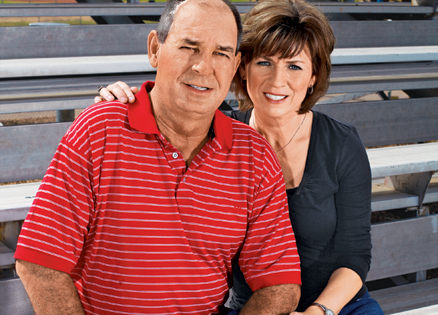
Late again! The booster club meeting for my son’s high school football team was almost over. I slid into a seat at the back of the crowded room, hoping no one would notice. Working full time as a single mother made it tough to get to my kids’ school activities on time. Life was easier to navigate with a partner, but when I started dating after my divorce, each date was worse than the last. The womanizer, the guy who was financially irresponsible, the controlling one, the immature one… It took a while but I finally got the message: I’d be single forever.

At least the kids and I are a happy family, I thought as the booster meeting wrapped up around me. I knew it should be enough, and most of the time it was. But sometimes in the back of my mind I caught myself wishing for a companion. Someone to talk to at night after the kids went to bed. Someone to hold hands with at the football games. Someone to love and someone to love me. But it seemed like all those bad dates had proved that God had closed that door for good.

“One last item,” the man running the meeting announced. “Don’t miss the game on Friday! See you all there.”

I gathered my things. On my way out I bumped into my friend Darryl, who was talking to someone I didn’t know.

“Hey, Darryl,” the guy said. “Aren’t you going to introduce me to your friend?”

“I’m surprised you two haven’t met. Kenny, this is Charlotte,” Darryl said. “Kenny’s son will play on the team this year.”

“Nice to meet you, Charlotte. I’ll probably see you at the next game,” Kenny said.

As I drove home, I remembered everything I’d already heard about Kenny through Mack, another mutual friend. Kenny was a widower who had lovingly cared for his wife during her long illness.

Next time I saw Darryl he asked if I would work the cash box at the tailgate fund-raiser before the game. The money went toward college scholarships for the players. “Sure,” I said. “Happy to.”

I drove straight there after work on Friday. It had been a long week, but I was excited to mix with the other parents before the game. There was always a crowd of them. But when I arrived in the stadium parking lot, I couldn’t believe what I saw. I was the only woman in sight! Only me and a bunch of men to work the team fundraiser. Darryl waved to me from behind the grill with his tongs. “Hey, Charlotte!” he called. Kenny stood next to him.

Then it hit me. Darryl had set me up! He knew exactly what he was doing when he asked for my help!

I exchanged cold but polite hellos on the way to the cash box. If Darryl thought he was going to play matchmaker he would be disappointed. Dating and I were through.

As the fans passed by paying for their burgers, Kenny offered me a soda. “So what position does your son play?” he asked.

“Safety,” I replied.

“You really get close to these kids as a single parent, don’t you think? My son is my best friend,” Kenny said, smiling. He had a nice smile. Not that I entertained for a moment that he might be a “match” for me.

“Hey, Kenny! Charlotte!” someone called across the parking lot. It was Mack. “I heard you two finally met,” he said. It looked like Darryl wasn’t the only one playing matchmaker. Was the whole town in on this?

“How about I save you two some seats while you finish cleaning up here?” Mack offered. “I’m heading into the stadium now.”

When the tailgate party ended and I counted the last dollar, I rushed into the stadium, not wanting to miss the kickoff. I climbed the bleacher steps and scanned the crowd for Mack. As I settled into my seat, Kenny took the one next to me. Exactly, I figured, what Mack had planned. Lord, help me.Those two just don’t give up.

Kenny and I talked so much I have to say I hardly remember a moment of the game! Two days later he called and asked me out. I said yes before I even had time to remember my reason for saying no. We went to all the games together and spent the football season falling in love.

By the first game the following season, Kenny and I were married. His son and my son and daughter became a happy family. I’m glad Darryl and Mack didn’t pay attention to me when I felt so sure I was destined to be alone. You see, God hadn’t closed the door on love for me. I had. Thankfully, caring friends knew that if I opened that door one more time, I was bound to find an angel.

Download your free ebook, Angel Sightings: 7 Inspirational Stories About Heavenly Angels and Everyday Angels on Earth.

A Sidelined Surgeon Finds New Purpose as a Swimming Coach

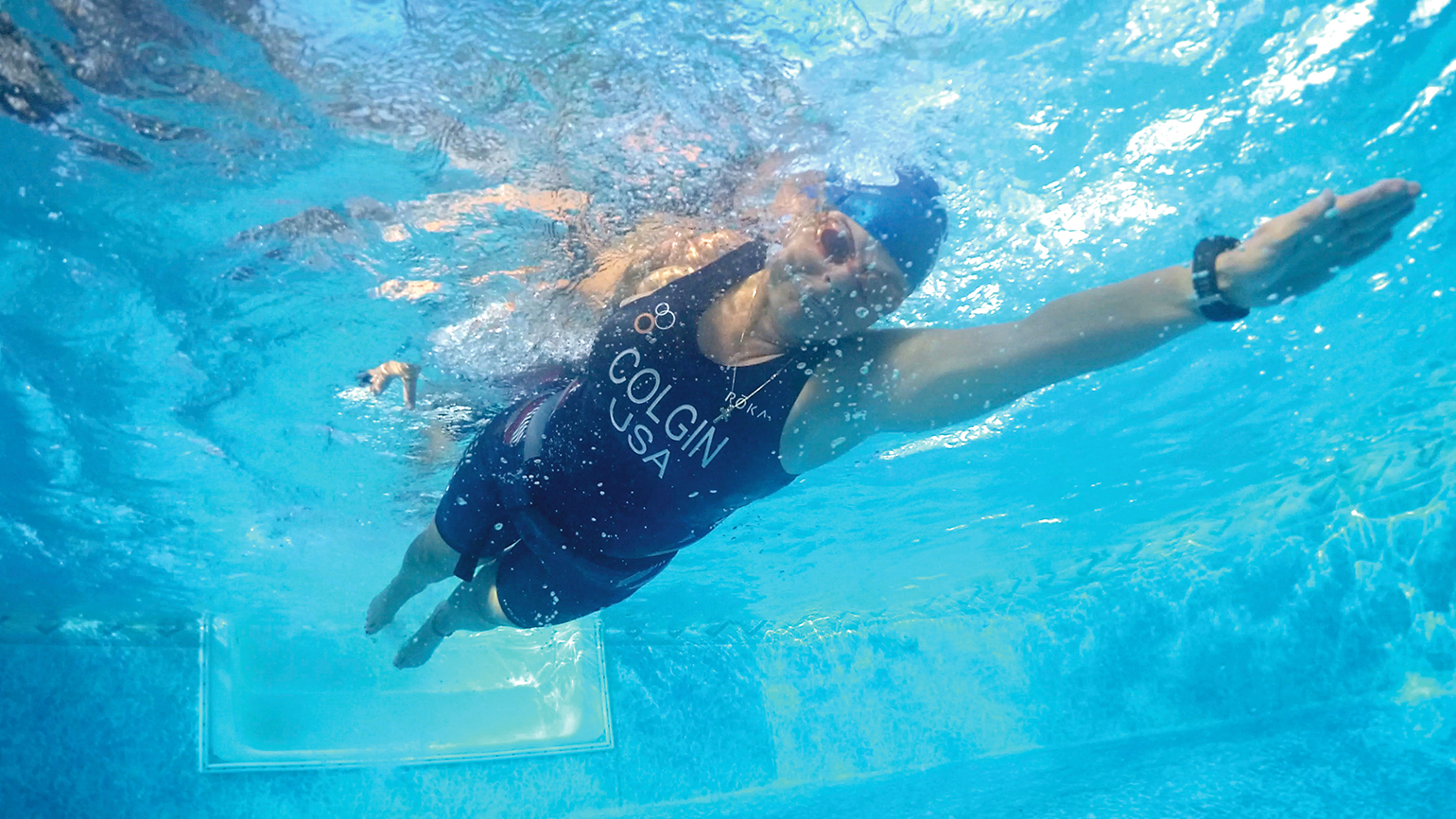
Hi Guideposts; I’m Sherry Colgin. I’m a retired hand surgeon from Birmingham, Alabama.

I retired at a very young age; I was 51 at the time. I’ve trained in plastics, reconstructive hand and microsurgery; it took me nine years of training. I was born and raised in Alabama; I’ve enjoyed living here. I was forced to retire in 2006, at the age of 51, as I mentioned, from cardiac disease. I had my first heart attack at 47, my first bypass at 49 and my second bypass at 51.

I was devastated when I was told I needed to retire because this is all I knew. I was a triathlete and had been fairly competitive but I couldn’t do that either. So I sat around wondering what I was going to do with the rest of my life and a friend of mine called me from a place called Lakeshore Foundation; it’s located in Birmingham, Alabama. It’s an Olympic and Paralympic training site and what she needed was a swimming coach.

I told her, I said, “Jill, I’m not a swim coach; I can teach how to swim across a lake, but not in a pool.” She said, “I’m in a bind and you don’t have anything to do and you can learn.” So she had me take four Paralympic athletes, who had just returned from competing in the Athens Games, and she wanted me to take them to Minneapolis, Minnesota, for a swim meet in December.

And when I walked into that natatorium, I couldn’t believe it. I saw disabilities I never dreamed could swim: quadraplegics swimming, amputees swimming, kids that were blind swimming. It was an amazing experience for me.

We worked very hard and I had one of my swimmers qualify to go to the Beijing Paralympic Games, and I actually picked up a cyclist—we took her as well. Probably one of the best things I’ve had happen in my life is when I saw both of them having a medal placed around their necks. It was quite amazing.

I again had a little bit of down period because I didn’t know what I was going to do, until I was contacted by the Navy Wounded Warrior program. They asked me to be their swim coach for two years, and it was an amazing ride. I met young people who had just come back from war, who were injured in unspeakable manners—people who’d lost legs, people who’d lost multiple limbs, head injuries, blind.

So we worked very hard—some of them we had to teach to swim from scratch—and then we would take them to the Warrior Games to compete against their brothers in arms: the Army, the Marines, the Air Force and Special Ops. They would do great, and I learned so much from them. They lifted me more than anything that had ever happened, other than the trip to Beijing. I really learned a lot from my athletes about how to get over tremendous adversity and horrible injuries.

I’ve not been involved in coaching as intimately as in the past. I coach a little bit now; I work with athletes and non-athletes, disabilitied and abilitied, but my love is to work with people who don’t know how to swim and I’m continuing to do that and it’s very rewarding.

I now have to overcome my disabilities and learn how to compete on my own. So it’s been an amazing ride to learn from my athletes how to overcome adversity, how to use what you have and don’t have and be successful. My athletes, I think of them all the time and how I can overcome what I’ve been given, my path, and it has been an amazing ride and I wouldn’t change it. It’s changed me.

So when I retired and thought I had nothing left to do, I realized that after I was involved with my athletes at Paralympics and Lakeshore and then my involvement with the Navy that God put me exactly where I needed to be, that I was in the career that I was really destined to belong in, and I’ve been more happy than I could ever imagine. God has moved in incredible ways in my life, directing me where I needed to go. I now have my new career. I thought I’d lost the love of my life, my surgical career—and I had, and I’d lost an identity—but what I found was a much more important identity and that was coaching and helping others, but learning from them. It was an incredible experience, and I hope I can keep at it.

A Schoolboy’s Prayer

The rubber band around the envelope was desiccated; the inscription on the tired yellow paper was in Mom’s clear, steady hand: “Letters of Importance from Joe W. Varner.” Joe was my father. Along with everything else in this safe-deposit box, the envelope came to me when my mother died in 1957, yet in the last half century I had never opened it. I assumed that the letters concerned official matters relating to my parents’ divorce, something to which even now at the age of 81, I am not entirely reconciled. All these years later, the pain feels fresh every time I think about it.

I was five at the time. We lived in Louisville, Kentucky. I cried and cried when I was told that Dad would no longer be living with us. We were a family: Mom and Dad, my two brothers and I—Ham the oldest, JoJo the youngest and me in the middle. To my way of thinking, the family was indivisible. Everything I was taught in Sunday school reinforced that conviction. And I refused to believe that Mom and Dad were not a loving pair. Hadn’t God brought them together? Didn’t that mean their love was perfect? It must!

Even today, on a wall in my apartment, I keep a photograph of their wedding. What a splendid affair it was. The wedding party is dining, coiffed and dressed in 1919 fashion, and the huge round table, strewn with flowers, glows with lighted candles. Guests converge on the newly married couple: “Aunt” Lucy and Granduncle Ferd and “Aunt” Lillian. Mom responds to one group laughingly as Dad banters with another. All are rejoicing, for smiles abound and congratulatory hands are raised. Even Mom’s little white dog, Fluff, joins in the chorus.

The wedding was held on the cusp of the twenties, a decade of buoyant living, of drinking, of loosening morals and marital bonds. Dad was nothing if not carefree. “Your father has always been a boy,” Mom said once. “He has never grown up.”

That was true. He was a jokester, ever ready to go to a ball game or to set forth with his beloved shooting irons in search of quail. He was youthfully slender all his life (when he died at the age of 53, his suits, without any alteration, fit me, age 26) and both men and women loved him, especially the women. Women were the cause of the trouble, I later surmised, and alcoholism. The divorce hit Dad so hard that he never took another drink. Women were another matter.

Life after the divorce wasn’t as bad as I had dreaded. Dad came out to the house every day at four-thirty. My pal, John Sherrill, recalls how Dad tickled him when he accompanied me home from play. He endured the tickling because of the Snickers bars that Dad brought us. On Sundays, after church, Dad joined us for a chicken dinner (and possibly quail), and later he would drop Ham and me off at the Uptown for movies. (JoJo was too young then to tag along.) I figured it was only a matter of time until Dad and Mom would get together again, permanently. But I took no chances; I prayed to God every night before bed that it would be so. Did I say pray? Beg would be more like it.

And Mom, what about her? She was fun and alive to the changes that women were waking to, yet rigid when it came to matters such as manners—or sex. I was aware that she had suitors, but she had a life of her own, apart from children, ex-husband, friends. She wrote stories and reviewed books for the local paper until she happened onto a new medium: radio. Mom’s pleasing personality and sparkling voice—I can hear it clearly at this very minute—helped her develop a number of programs for herself. “Patience Morgan, Advice for the Lovelorn” was one that I recall. And her little “Kate in Toyland” was an instant hit. So much so that Macy’s called from New York and asked her to come up and talk with them.

Around that time—I was nine—Mom took me downtown with her to Stewart’s department store. “Good morning, Mrs. Varner” or “Hello, Mrs. Varner” was the way Mom was greeted. Louisville was that kind of town then, small enough for most people to know each other. While Mom was poking around in a drawer filled with blouses, a young woman came in—I can picture her to this day, blonde and attractive. Then I noticed two saleswomen tittering in a corner and looking at Mom. Suddenly Mom turned around and was face to face with the woman. They talked. I couldn’t hear what they said, but from a distance I could tell that Mom was more upset than I had ever known her to be. She whisked me out without telling me who the woman was. Today, I think I know.

Everything changed. That summer we kids were taken to Camp Chimney Rock in North Carolina, and Mom went to New York to talk with Macy’s. Dad wrote us each a postcard every day, but no word arrived from Mom until just before camp ended. Only later did we find out that Mom had been in a hospital with a deadly streptococcal infection—there was no miraculous penicillin then—and had nearly lost her life.

“Your mother is here,” said my counselor. Mad with excitement I burst into the waiting area, and there Mom was—on crutches. I was momentarily taken aback, but we were soon all over one another with long-awaited hugs.

“I’ve been very sick,” she told the three of us, “but I’m getting well now.” After a while she said, “I have to thank a most wonderful man who came down to New York from Albany and saved my life.” On cue, a man, whom I recognized from his trips to see Mom in Louisville, came in. “This,” she said in a way that I took to be imploring us to like him, “this is my husband.”

Things changed, did I say? Just completely, that’s all. Soon we were in a new home in a new city with a man who was not our father but who made the effort to be fatherly. He never succeeded, nor did the marriage, but that is the story of the rest of Mom’s tormented life. And what happened to my dream of Mom and Dad reunited? Shattered. And what happened to my belief in what God could do? Confusion. Disappointment. Sadness. Such sadness. Love wasn’t perfect after all.

Dad died in 1949 and Mom in 1957. So long ago. Yet in some ways it was as if no time had passed, that my feelings had been left in some kind of emotional abeyance. They welled up in me again as I looked at the envelope in the safe-deposit box I inherited from Mom. I had seen it before dozens of times but, somehow, I hadn’t wanted to open it. You figure that by the time you reach my point in life things are what they are. “Letters of Importance from Joe W. Varner.” The question tugged at me—What could it contain of any importance so long after so many lives had been marred? Why risk being hurt all over again? Yet even with these doubts, I slipped the rubber band off the frail envelope.

A Western Union telegram fell out. It was addressed to “MRS MARY MILAM VARNER” and dated “1933 AUG 23 PM 12 14.” I was strangely optimistic. She had not yet remarried. “IF NOT YET TOO LATE FOR YOU TO RECONSIDER. . . . “

But it was too late.

The letters that followed astonished me. Dad had written about shipping our dog Cricket to Albany or how he had subscribed to a baseball magazine for “Hamie,” but what took my breath away was that they always began “Dearest Mary Milam.” There was more than one apology throughout—”You have been hurt”—and repeatedly a protestation—”You have and do come first always in my heart.” The letters I held in my hands were, beyond the bounds of all decorum, love letters. And Mom had kept them.

Why hadn’t she ever told me about how Dad felt? Why hadn’t Dad? No mistake, my father had come through. Boyish he might have been, but he was manly in his devotion. Did she decide to marry again because she was still hurting over that woman at Stewart’s, her prim Victorian side exposed? Was it a tragic case of failure of communications, Western Union when the telephone failed? Or was it that, worn out by her illness, with responsibility for three sons and under the stress of pitching her radio program, Mom had simply seized a lifeline in the shape of the man who was at her side and ready to help? She never said.

I remember I was in graduate school, in Berkeley, when I got a telegram. I immediately telephoned Mom. “Dad had a heart attack,” I said. “He’s dead.”

There was no reaction, and I wondered for a moment if we had been disconnected. Finally, a different voice than the sparkling one I knew cried out, “Oh, the poor thing!” and then there was silence at the other end until I heard the faint sound of suppressed weeping. I quietly replaced the receiver on its hook. Mom had shown her deepest feelings. They were the same as Dad’s.

I sat in the stuffy cubicle of the bank for a long time—elated by my discoveries, yes, yet disturbed too, because my parents’ love seemed unfulfilled. Dad never married again, and Mom was trapped in a doomed marriage. I thought back to the things I’ve written about here: the happy times when Dad would come out to the house, Mom and Dad’s wedding and the photograph I treasured. I imagined the scene that lay behind that picture, and I heard the familiar words of the marriage ceremony with its rigorous conditions. Did the young couple live up to them? No. But one injunction they most certainly upheld: They loved each other, supremely. That day they were united by God. Mom and Dad are together now, forever. Their love was not perfect, as I had so fervently believed when I was a boy. No, not ever that. But oh, how human, and in its own imperfect human way, how lasting!

I put the letters back, thinking of another kind of love available to us all. Imagine it, after almost 76 years, God has answered a schoolboy’s prayers.

A Sanctuary of Healing, Born of Tragedy

Sunday morning, two days after the shooting, two days that felt like two eternities, I sat with my husband, Matt, on our living room couch in Newtown, Connecticut, staring at the blank document on my laptop, wondering where to start, how to start. How to find the words to write my little girl’s obituary.

Family and friends milled about. A coffee cake sat on the kitchen counter untouched, as if the thought of eating in the face of such tragedy was a kind of sacrilege.

It felt as if we were caught in a bank of fog trying to find our way to some sort of comprehension of what had happened in our peaceful New England village 75 miles north of New York City.

People need to know how much love went out of this world when she died, I finally thought. Just tell them. I willed my fingers to type.

“Catherine Violet Hubbard, age 6, born June 8, 2006, passed away Friday, December 14, 2012, during the tragedy at Sandy Hook Elementary School. She is survived by her older brother, Frederick….”

So unnatural for a parent to be writing about the loss of her child. It should be the other way around, shouldn’t it? Catherine should have been a mom herself telling the world what a good mom and grandma I had been, that I had lived long and well and died peacefully after a happy life.

And yet our sweet, loving, beautiful daughter was gone. What more was there to say? Her life was over almost before it had begun, but the void she left felt unfillable.

She could be shy around adults, like lots of little girls. With animals or other kids it was another story, especially with animals. She came alive with love, our own miniature flame-haired Dr. Doolittle. It was as if she couldn’t contain her need to care about every living thing.

How many hours did Catherine spend in the backyard with her friends patiently training our old yellow Lab mix to jump over a stick? Hugging her. Picking her up, though she weighed twice as much Catherine. She had a thing for critters—her pet bunny, her fish, the crickets in our yard on lazy summer nights, even the worms.

Butterflies were a big deal. She’d gasp with delight when one landed on her hand, which they always seemed to do. Maybe it was because she’d whisper to them, “Tell all your friends I’m kind.” Yes, kind. Catherine knew what she was and how precious kindness is in this world.

Not long ago she made her own business cards with Catherine’s Animal Shelter across the top. Care Taker, she wrote under her name. She handed them out to friends and to her first grade teacher at Sandy Hook. Matt and I smiled at her sense of purpose.

She was never without some kind of animal, usually one of her unbelievably huge collection of stuffed toys. She piled them around her on the bed at night. In the morning she always picked one to put in her backpack for school. As if she had to have something with her to care for, even a stuffed animal.

First grade, going to class all day, had been an adjustment. For her and for me. More me, probably. When she was in preschool and kindergarten I cherished having our afternoons together.

I rushed to get my chores and errands done so when she got home I could give her all my attention, make time for art projects, baking cookies and reading with her. Those hours were precious to me, and so much more precious now that God had called her home.

I didn’t know why Catherine died. The greatest comfort—the only comfort—was knowing she was in the safest place of all, in heaven, with no hate and no bullets, only love and life eternal.

I reread what I had written so far. How could all the beautiful things our daughter was even be expressed in words? I typed: “Her family prays that she, all the students of Sandy Hook Elementary, and all those affected by this brutal event find peace in their hearts.”

Peace, a word I had chanted silently to myself since Friday morning.

Matt looked over my shoulder at what I’d written. “Looks good,” he said.

“We need some kind of memorial,” I said. “People are going to want to send donations.”

Matt thought for a moment. “What about the animal shelter?” he said. What was it called? A friend did a quick search on her phone. “It’s called the Animal Center,” she said. “Here’s the address.”

I typed it into the form. “In lieu of flowers…” It wasn’t much, but for now it was all my heart could manage.

I e-mailed the obituary to the funeral home. We’d spent that Saturday meeting with our priest and the funeral director, planning the wake for Wednesday, the mass for Thursday morning. So many decisions. It was impossible to believe that it could all be actually happening.

I felt both raw and numb, like someone walking barefoot across burning-hot coals and not quite feeling the pain. Not yet, at least.

The casket. The cemetery plot. The music. The question of whether to open the mass and the wake to the public. We’d said yes. Scheduling a time for the services. Our church alone, St. Rose, was holding eight funerals. One choice was easy: we’d decided to bury Catherine with her stuffed animals. All of them.

That was the one thing I knew for certain she would have wanted. So you’ll have something to care for in heaven, my love.

Now with the arrangements done the hours were agonizing. Empty. Our house felt like a prison cell. We couldn’t leave without being escorted by a state trooper. One was assigned to every family.

We’d been told the village was swarming with media, that there were dozens of reporters camped out behind police barricades at the end of our block. I understood that the country and the world mourned with us, but still…

I reran the events of that terrible morning over and over in my mind, how I’d walked her and Frederick to the bus stop, as I always did. The bus coming. Catherine kissing my hand, as she always did, holding it tight against her heart. “Push it in all the way to my toes,” she said.

I’d walked back home and poured a cup of coffee. I hadn’t taken a shower. Matt was in Switzerland on business. I was looking forward to an easy morning. Then the phone rang. A friend whose daughter was in the same class as Catherine. “Come to the school,” she said. “There’s been a shooting.”

I grabbed my purse and dashed to the car. The school was five minutes away. I called my sister Ann and my parents in Pennsylvania. “We’re praying for you,” they said.

The road to Sandy Hook Elementary was blocked by dozens of police cars, fire trucks and ambulances. I parked and raced to the firehouse, maybe 100 yards from the school, past cops and emergency workers who looked dazed and in shock.

Parents, hundreds of people, were coming from all directions. Everyone was asking the same question: “Did you find your kids?”

I ran into the firehouse. I saw Frederick with his third-grade class and his teacher. Thank God… Then he yelled to me, “I can’t find Catherine!” I went to him and held him tightly against me. “Don’t worry,” I said. “She’s okay.” But even as I said the words I could feel my chest tighten.

I searched everywhere for her, in the firehouse bays, outside, everywhere I could go. But not inside the school. It was sealed off and there was no sign of Catherine. Or her teacher. Her class. Other parents were collecting their children and leaving.

A woman gathered Frederick and the other kids that remained and led them behind a partition where there was a TV and snacks.

Someone ushered me to a conference room crowded with parents whose children were also unaccounted for. Matt called from Switzerland. He’d seen the news on his phone. He knew more than I did. I told him I didn’t know where Catherine was, that maybe she was still inside the school.

“I’m coming home,” he said. He was crying. “I’ll be there as soon as I can.”

Soon was a relative term because time seemed frozen inside that room. I waited for the inevitable, only dimly aware of the muffled cries, husbands and wives holding each other, people pacing all around. At some point a priest sat beside me and took my hand. “She’s gone,” was all I could say.

No one had to tell me. I felt a strange sense of peace. My daughter was safe with God. I clung to that one solitary thought like a lifeline. My mind, my whole being was in shock.

Finally we were officially told what I’d known for hours. I went to find Frederick. “Catherine’s in heaven,” I told him. “I know,” he said. I knelt and wrapped my arms around him, my heart pounding. I didn’t want to ever let him go. My family had arrived by then and we left to go home.

When we opened the doors to the firehouse we were facing a sea of television cameras and lights, reporters yelling out at me. I couldn’t hear what they were saying, couldn’t process the words.

A psychologist came by that night to counsel us, to talk with Frederick particularly. “How do we do things as a family again?” I asked. “Even just a meal?”

“At first all you can do is pretend,” she said. “Pretend as if you can go on without her. It won’t be easy. You must give yourself time.”

I thought of the saying “Act as if you have faith and faith will be given to you.” I had faith. But I didn’t have Catherine. How could I act as if I did?

Matt got home at 2:00 A.M. on Saturday morning, escorted from the airport by state troopers. We held each other for what seemed like forever. “I’m so sorry,” he said over and over.

More than 400 people came for Catherine’s wake. They stood in line for hours. The air was thick with grieving. With pity. With unchecked emotion. I’d never seen so many people so sad. I’d written a few thoughts I wanted to share at her funeral. This time I didn’t have to think about it. The words came easily.

“I know that God has a specific purpose for us,” I said. “And while I may not understand how I will muster the strength to fulfill his purpose, he will provide what I need to move forward.”

We attended two more funerals and four wakes. Then Matt’s and my families left. “You need time alone,” my sister said, “to start healing.” She was right, of course. But starting was hard. What to say? How to act? How to resist just falling to pieces?

“We’re going to get through this,” we told each other. I believed that with all my heart. The task seemed overwhelming, though, the healing so impossible. How do you survive a child’s death? I spent hours talking to God. Lord, I know Catherine is with you, but I need to feel her with me too. Please.

One afternoon Matt said, “I’m going to drive out to that animal shelter. We should tell them about Catherine’s memorial.” He took Frederick. I’d just sat down on the couch with a magazine when the phone rang. It was Matt.

“I’m here at the address we put in Catherine’s obituary. But it’s not the shelter. It’s just somebody’s house.”

“Oh no!” I said. What had we done? I got online, found the phone number for the Animal Center and called them. A woman answered. She sounded kind.

“We’re animal rescue volunteers,” she explained. “We don’t have a building or anything like that. We’ve been wanting to call you, but felt we should, you know, wait a bit. I think it would be best if we met in person.”

A few days later two pleasant, unassuming women came to the house. Their expressions puzzled me. They looked almost embarrassed.

“Can I ask how much in donations you’ve received?” I said.

“It’s about $175,000,” one of the women said. “The donations are coming from all over the country. All over the world, actually. And they keep coming.”

I looked at Matt. I couldn’t believe what I was hearing! “That’s a lot of money,” I said. “What are your plans?”

“Well,” the woman said, “we’ve always dreamed of starting a wildlife sanctuary. A place where both animals and people could find healing. It would be calm and serene. Peaceful. There would be walking paths and places to sit. And there would be opportunities for people to work with the animals.”

Care taker. Catherine’s business card burst into my mind. It was almost as if she were there with us again, a butterfly resting on the back of her hand as she held it aloft: Tell all your friends I’m kind.

“Catherine will love that,” I said, and hugged them both.

Today, six months after the brutal murder of 26 children and staff at Sandy Hook Elementary, the Catherine Violet Hubbard Animal Sanctuary is becoming a reality.

We want it to be a place of peace, peace born of terrible, incomprehensible violence. Peace, like the peace of Christ, that is the only answer to evil. Because no amount of hate, no gun or bullets, can kill love. Especially the love of a child like our daughter, Catherine Hubbard.

Watch a video about the Catherine Violet Hubbard Animal Sanctuary.

Download your FREE ebook, A Prayer for Every Need, by Dr. Norman Vincent Peale.

A Riddle for You… It’s All About Passion

A riddle for you: What has the aroma of an expensive perfume, the beauty of a flower, the properties of a medicine, a mouth-watering taste, and is fun to use in decorating?

Give up? OK. Here’s a hint. It’s an herb. But which one?

Recently, I was chatting with Joyce (Kilborn) Laitinen, president of the Willamette Valley Herb Society, and editor of their chock-full-of-tips newsletter Willamette Herb. We were at a gathering of schoolmates who had attended Silverton Union High School in Oregon’s scenic and fertile Willamette Valley. What I love about reunions is “re-meeting” old friends and learning about their passions. Herbs are Joyce’s passion.

I asked Joyce what her favorite herb was. Her answer was quick and decisive. “Lavender. Every part is useful. It’s aromatic, decorative, beautiful, medicinal, and delicious…as in lavender ice cream, cookies, tea, and even…lavender chicken!”

Lavender chicken? That was a stretch for me, but I admit her list was making me hungry. “Do you chop your herbs…or slice them…squeeze or squish them…or what?” I asked.

“I have a coffee grinder I use only for spices,” she said to my surprise. But then, I think, Why not? When I was 10, I ground up my mother’s roses in her meat grinder, hoping I could make rose perfume…only to discover the juice I got from the mangled petals smelled like ground hamburger!

Joyce explained how her passion came to her. “When I was a child, my grandmother had a huge cottage garden with herbs and flowers. When I was ill, she dosed me with herbs.”

Joyce caused me to ask myself: What herbs are in my life? I admit to having a Brown Thumb. But years ago, I stuck a sprig of peppermint in some dirt by the driveway and since then, I’ve been pinching leaves for my tea. On my deck, I have lemony thyme and basil still in their plastic pots, and I enjoy zipping out and grabbing a few leaves to toss in whatever I am preparing salads, soups, or meats. So, why not try lavender?

Herbs aren’t Joyce’s only passion. She baked 300 pies for the booth her church, Camby United Methodist, hosted at the Oregon State Fair this year.

My passion? Eating pies…that’s a worthy passion! Hmmm. How about a lavender pie?

—Carol

Feel free to email me your environmental tips and questions!

Members of Willamette Herb Society receive the newsletter, Willamette Herb, featuring Joyce’s “Herb of the Month” and seasonal tips. They also get to hear speakers and attend outings—dues are only $15. You can learn more from Mina.Oregon@yahoo.com.

Are You Treating Your Time Like It’s Sacred?

Have you ever thought about the value of your time?

Somehow—and I’m not sure how it happened—the years zoomed by, and I went straight from being a young bride to becoming a grandmother. It felt like those pages on the calendar whipped by like an expert shuffling a deck of cards at warp speed.

That’s led me to realize something important: Time is one of our most precious commodities.

It’s like each of us has a bank account of days, hours, minutes and seconds to spend instead of dollars and coins. On the day we were born, God deposited the moments of our lives into that account—and we get to choose how we spend them.

Those moments can’t be replaced. They can’t be done over. And there’s no guarantee about how many days and hours were deposited into our time accounts.

Each moment is a precious gift from God. And that’s the question for us: Are we spending those priceless days and hours wisely? The letters of “TIME” provide a great reminder of ways that we can use that gift to accomplish God’s plan for us:

T = Talents
Are we using the talents He gave us or are they going to waste? I love what Erma Bombeck said, “When I stand before God at the end of my life, I would hope that I would not have a single bit of talent left and could say, ‘I used everything You gave me.’” Like Erma, I want to use the time God gave me to accomplish the tasks He has for me to do.

I = Impact
Are we using God’s gift of time to impact the lives of others? All of us can volunteer at church or our child’s school, do yard work for an elderly neighbor, encourage a single parent or help a disadvantaged child learn to read. And if we don’t do it, who will?

M = My Loved Ones
Are we spending all of our time at work or other pursuits, or are we investing our lives and love into our family and friends? Those are irreplaceable moments. I’ve heard of many deathbed situations where people wish they’d spent more time with their families, but I’ve never heard of anyone wishing they’d taken more time at work. Do our loved ones know how much we value them? Sometimes “love” truly is spelled t-i-m-e.

E = Eternity
Are we using our time for what will matter for eternity? Many folks spend their lives accumulating “things,” but we can’t take them with us when heaven beckons. Those things that we do for God–sharing our faith, teaching our children about Him, being extensions of God’s hands to others through kindness and love–that’s what will live on in others.

So teach us to number our days, that we may apply our hearts unto wisdom. (Psalm 90:12)

Manage your time better with the 2016 Daily Guideposts Planner! Buy one here.

Are You Too Hard on Yourself as a Caregiver?

It isn’t easy to be an imperfect perfectionist. Despite your best-laid plans, dust can collect, dinner can come from a frozen box and your to-do list can lie woefully in wait. And despite all that you do juuuuust right, one of the people you love most in the world may have Alzheimer’s disease or another chronic condition that you just can’t make… go away.

By its very nature, perfectionism is a set-up for failure, and among caregivers, it’s an all-too-common mindset.

“I’ve had quite a few clients over the years who are caregivers and who I work with on a lot of caregiver burnout,” said Janice D. MacKenzie, a licensed independent clinical social worker for Catholic Charities New Hampshire’s Mental Health Counseling Services. “We talk a lot about what are the roots of their caregiving stress. So often, they’ll say things like, ‘I feel like I just have to do more, and from what I’m doing, I’m not seeing the positive outcomes with my loved ones. I must not be doing enough.’ They find themselves striving to do things perfectly.”

If only I could do enough, if only I could do things perfectly. If this sounds anything like your inner dialogue, you may be living under this form of self-sabotage. But there are ways to move through it. MacKenzie shared the following tips to help release you from the yoke of caregiver perfectionism:

1. Get to the bottom of it. “Self-education and awareness are number 1,” MacKenzie said. “It’s helpful to know why I am like this. Why am I so hard on myself, why do I always feel like I never do enough? Why can’t I just tell myself I’ve done my best and that’s good enough?” Perfectionism can be rooted in a number of factors—having a type A personality; competing in an area like sports; culture; birth order; or serious psychological stress that drives a need to feel in control. A caregiver may already have the perfectionism trait, but the demands of the job can also bring it about. Consider what may be behind your need to be perfect as a caregiver and try to develop an awareness of the pitfalls. “This mindset creates barriers for a healthier lifestyle,” MacKenzie said. “It just adds more anxiety and burdens to caregivers when they’re already very anxious and very burdened in everything that they have to do.”

2. Live in the moment. “For caregivers, oftentimes their mind is either in the future or in the past. They’re thinking about, ‘Oh my goodness, what am I going to do next, how do I take care of this problem? I’ve got to do this, I’ve got to do that. I can’t ask somebody to help me because they don’t know how to do it,’” MacKenzie said. “Or they’re worrying about the things that happened yesterday.” MacKenzie teaches her clients “grounding skills” as a way to move their minds out of the past and future and into the here and now. You don’t necessarily need counseling to do this, she said. Simply go online and search for mindfulness practices. “It helps to see and accept things as they are, to say, ‘Okay, I may not be able to control my thoughts or control what’s happening right now, but I can control how I react to it,’” she said. (Remember that there’s no shame in asking for help. Friends and family may be more than willing to pitch in on caregiving, or you may consider hiring an in-home care aide or healthcare worker who is trained to handle exactly the sorts of caregiving tasks you’ve been going alone.)

3. Take a nonjudgmental stance. “Perfectionists are hypercritical of themselves,” MacKenzie said. Stop chronically judging yourself. “You can put the facts on the table and say, ‘The situation is what it is. I may not like it, but I’m going to accept it because I’m doing the best that I can do.’” Replace your shoulds with coulds. “If you say, ‘I should be more productive today, I should have done this and that,’ you’re constantly telling yourself you’re not good enough.” Coulds allow you to take a non-judgmental stance. “You’re saying, ‘You know what? I made the choice that I made in the moment for this reason. I’m human.’”

4. Learn anxiety management skills. These fall into two categories: self-soothing skills and distraction skills. To self-soothe, draw on one or more of your five senses to help calm yourself. “Listen to music, take a hot bubble bath, use aromatherapy oils,” MacKenzie said.” It’s engaging your senses, helping your neurological system to actually relax.” To distract yourself, focus on a good book or film, take a walk, cook if you enjoy it—anything that helps take your mind off the situation that feels out of control.

5. Address harmful self-sabotaging thoughts. “This is a biggie that I help folks with—harmful self-sabotaging thoughts that actually feed a perfectionistic mindset,” she said. “Common ones might be, ‘I’m not doing enough’ or, ‘What I’m doing as a caregiver doesn’t matter. I’m doing everything I can and my mom is getting worse. Challenge these thoughts. Say, ‘You know what? I love this person. I’m doing everything that I can, but the fact is that they have a debilitating medical condition— something that’s out of my control.’”

6. Be realistic. Set healthy, realistic expectations for yourself and for others. “Are you asking for help as needed? Are you accepting that you’re human? You have an incredible sense of freedom when you allow yourself to be imperfect and to be human,” MacKenzie said. “That can be really powerful.”

7. Practice your spirituality. “Being too hard on yourself can be like a ball and chain,” she said. “Sit down and say, ‘God, I give this to you. Take this from me. I’m doing the best I can do.’ It helps to let go of the need to control.” Say the serenity prayer.

8. Find your power. “People with a perfectionistic mindset experience significant feelings of powerlessness—especially caregivers,” MacKenzie said. Things aren’t working as planned, you’re underappreciated, you’re ineffective. But striving to be perfect can actually make you feel more out of control, and lead to what she calls a spiral of powerlessness. After accepting that you’ve done all you can to the best of your ability, shift your focus to what you can change and master. One of MacKenzie’s caregiver clients, for example, turns to her two favorite activities when this happens. “When she starts to feel like, oh, this situation is so hard, she says, ‘Okay, I’ve got to find my power here. I’m going to call the doctor’s office, I’m going to get some more help …’ And then she goes into another room and plays video games for a while because it’s just fun, or she sits down and knits. She’s knitting a blanket for her daughter. It shifts her over and gets her mind out of that place. She’s at least able to accept and let it go and focus on something that she can control.”

Are You Helping or Enabling Addiction? How to Tell the Difference

Family members and friends of people with a substance use disorder want one thing above all: They want recovery for their loved one.

Unfortunately, their efforts to achieve that goal often can be counterproductive. Some addiction and recovery professionals use the term “enabling” to describe such well-intentioned but ineffective efforts.

Enabling means helping people with addiction do things they could do, and would be better off doing, for themselves. It also means shielding them from the natural consequences of their addiction.

Enabling can take many forms: Covering up for inappropriate behavior or missed commitments. Lying about people’s addiction. Giving them money. Bailing them out of jail or giving them a place to live unconditionally. Getting them a job. Managing their schedule or their contact with friends to keep them away from situations that might tempt them to use alcohol or other drugs. Setting boundaries you don’t enforce or vowing consequences you don’t follow through on.

In the case of people like Erin Leonhardt, it might seem heartless to separate from one’s spouse and refuse to bail him or her out of jail. In fact, that can be an act of love. Sometimes, by allowing our loved ones to experience the full consequences of their substance use, we actually help them find the motivation to begin, or reignite, the process of change and recovery.

The problem with enabling is that it can keep people stuck in a state where change is scarier than continuing to use. It also robs people of the dignity of making their own choices, living their own life and taking responsibility for their actions. Only the person with addiction can make the daily choices involved with living in recovery.

The greatest help friends and family members of people with addiction can provide is taking care of themselves–self-care. The goal for loved ones is to detach from the addiction while still loving the person who is sick.

Recognize that you didn’t cause the addiction, you can’t control it and you can’t cure it. Take care of yourself and set healthy boundaries while letting go of the process and the outcomes. That’s the loving response and a path toward healing. .

For more inspiring stories, subscribe to Guideposts magazine.
Are You a Hypervigilant Caregiver?

It’s easy to see how the demands of caregiving can lead to a state known as hypervigilance. Merriam-Webster defines it as “extreme or excessive vigilance: the state of being highly or abnormally alert to potential danger or threat.” Simply put, all that you do to keep your loved one as physically and mentally healthy as possible requires your attention—and a great deal of it. That balance can get out of whack and you can neglect yourself.

“Hypervigilance is really a sense of always being on—not feeling that you have the opportunity to seek any respite, that you can’t turn off, you can’t turn inward, because your directional focus is continually outward,” said Erin C. Phipps, LCSW, owner of House of Joy in Denver. “So, I might say, ‘What do you do for yourself—what do you do for rest or what do you like to do?’ If as a caregiver, that’s very difficult to answer, it may be that you are in a pattern of hypervigilance due to the requirements of the individual that you care for.”

There’s no equation that causes a hypervigilant state, but various factors can contribute, including: how long you’ve been a caregiver, trauma, the particular challenges of a loved one’s chronic condition, difficult healthcare systems to navigate, your lifelong familial role and how naturally resilient you may or may not be. If you are in a hypervigilant state, what matters is finding your way back to yourself as you care for your loved one.

“The opposite of hypervigilance may be presence or calmness, awareness—all of these things that sort of open your scope a little bit so that your vigilance isn’t continually directed outward,” Phipps said. “You can have a more reciprocal exchange for your own needs, as well as those of the individual that you care for. Seeking opportunities to take care of yourself is very important.”

Phipps offered the following suggestions to help you strike a counterbalance if you feel that you’re a hypervigilant caregiver:

  • Seek respite “Are there opportunities for someone from an agency or a support system to come in and give you an opportunity to get some rest, get some relief, take a trip, take a night or an afternoon or whatever you have the opportunity for? Can you take some scheduled, planned time where you know that you are going to be able to get some reprieve from this outwardly directed energy and be able to do things to take care of yourself as an individual? That’s a big deal. You might not be able to do that frequently, but seek opportunities to do that.”
  • Create personal rituals “The most accessible and, I think, important coping strategy for anyone who is responsible for caring for another person is what I refer to as personal ritual. These aren’t things that we should be doing when we have time, when we think about it, when we’re already exhausted, when we’re already past the point of well-being and we’re already in a state of hypervigilance. Personal rituals are these things we do that we enjoy—little sensory experiences. A bath, your favorite tea, some really nice essential oil, a smell that you really like, a bedtime routine that you feel brings you peace, a wakeup routine that you feel brings you peace. These are rituals we can do throughout our day, every day for the most part, that we can build into our routine. They become these little opportunities that allow us to go inward every day.”
  • Consider therapy if you feel you need it “If therapy works for you, if it’s one of your things that you like, that is a space for you to heal in the way that you need to. You might consider therapy to be one of your person rituals because it’s generally on a schedule, on the same day every week. But therapy’s not the thing for everybody. Therapy can help with a range of things, but it depends on the person.”
  • Explore resources “As a caregiver, the systems that you’re up against are pretty taxing. Learning advocacy skills and knowing the rights of the individual that you caretake for helps you to feel empowered rather than always feeling like you’re behind the eight ball and it’s just you against the world. Becoming familiar, for instance, with whatever the local office of civil rights is in the area the person lives in is going to at least give you a sense of the reality that somebody has your back in this. There are also patient advocates in the various mental health and healthcare systems. Do a very quick Google search of whatever the diagnosis you’re working with is and ‘advocacy organization’ to see what’s available in your general area. The National Alliance on Mental Illness (NAMI) is another really, really great resource. There are resources out there, there are people who care, there are people who can help you advocate and there are other people who are going through what you are going through. You’re not alone.”

Are Visions of Heaven Just Malarkey?

“I did not die, I did not go to heaven.” With those words, teenager Alex Malarkey upended the religious publishing world –and threw a healthy heap of skepticism on the genre of near-death-experience literature.

His bestselling book, The Boy Who Came Back From Heaven, “co-authored” with his father after he was paralyzed in an accident at the age of six, was untrue.

“I said I went to heaven because I thought it would get me attention,” Alex admitted, in an open letter sent to Christian bookstores. (According to Alex’s mother, he didn’t write any of the book, which, since he was six at the time, should be obvious.)

Sun in the sky. Photo by Ig0rZh, Thinkstock.But how do you check a story like Evangelina Garza’s or Dennis Hale’s? We can speak to those who know them, speak to their doctors, check the details that surround their time “away from this Earth”–but when it comes to checking their vision, we only have their word.

After reading so many of these stories, however, I’m inclined to believe. Not just because some people have returned with knowledge of things in this world they could not have known, like discussions family members had outside the hospital room or events that occurred while they were unconscious.

But because of the transformation these survivors have undergone in life following their recovery–as Dr. Alexander put it, “My older son, Eben IV… saw me two days out of the hospital. He said there was like a light shining in me; I was much more present than ever before.”

I don’t necessarily believe that these people have been to heaven in a physical way, or even seen its true nature–even the authors we’ve featured aren’t 100% sure of that–but I do believe that they’ve each been given an extraordinarily comforting, life-changing experience while on the edge of death.

Considering that’s the moment when the brain is in its most distressed, damaged, incapacitated state, the fact that something beautiful and faith-affirming could emerge from the nothingness is a miracle.

We can never truly know what lies beyond–the Bible itself is maddeningly vague on the subject. But the sum of these brushes with the afterlife tells us that what’s next for our bodies and souls will not be nothingness.

Alex Malarkey didn’t see heaven, but he did survive a terrifying accident, and continues to survive every day with a crippling injury that hasn’t robbed him of hope or a positive outlook on life. The license plate on his family’s custom van reads, “Wil Walk.”

He didn’t see heaven, but he still believes in it.

We should all have such faith.

A Recovering Alcoholic Feared Her Daughter Might Repeat Her Mistakes

The knot in my stomach grew tighter. I was dropping off my teenage daughter, Maggie, at her friend’s house. She was staying over with some high school classmates, kids in her drama club, girls and boys. I was worried, maybe more than I needed to be.

I trusted my daughter. I hoped she had learned from my own history. Still, as she turned and waved, I couldn’t stop myself from saying, “Remember, honey, no drinking.”

“How many times do I have to tell you, Mom?” she said, annoyed. “My friends and I don’t do that!”

I wanted to believe her. Maggie was 16, the same age I was when I had my first real drink. Both my parents drank every single day, enough to cause trouble in their marriage and constant fear in our family. Alcoholic parents usually produce two types of children: abstainers or problem drinkers. I was the latter. I worried Maggie could be too.

I became a serious partier in college, going to keg parties and drinking way too much. Then I drove home drunk; there was no such thing as a designated driver back then. Besides, I thought I drove better when I was drinking. I thought I did everything better. Alcohol gave me the confidence I wished I actually had. It banished the fear, at least temporarily.

My twenties were even worse. I added drugs to my repertoire. I increasingly worried about what I was doing to myself. Yet I didn’t want to stop.

During those wild years, I met my daughter’s dad, who drank as much as I did. The first time he came to visit me in Philadelphia, where I was working as a cook, I told him I thought I had a drinking problem. “Trust me,” he said. “I know what alcoholics look like, and you’re not one of them.” His parents were heavy drinkers too.

But instead of listening to my own inner voice, I moved to Massachusetts to live with him, and when I was 35, we married. By then, I was drinking every day. I started making promises to myself that I found harder and harder to keep. Things like not drinking on Tuesdays or Thursdays and no drinking before 5 P.M. I was trying to negotiate with my alcoholism.

Then I got pregnant. I was sure I could make it through all nine months without alcohol. I was wrong.

I kept at it through Maggie’s early childhood. One night when I was home alone with Maggie, who was then five, I drank so much wine that I threw up on the floor next to my bed and passed out. I woke up with a voice of shame in my head that not even a drink could silence.

Two months later, at age 42, I finally surrendered. I went to AA and got into therapy. A day at a time, I didn’t drink. My husband, who was still drinking, left four months after I quit. Suddenly I was raising a daughter alone and navigating early sobriety. At times it seemed more than I could handle. It was the support I got at AA meetings that kept me going.

Sometimes during school vacations or when I couldn’t find a sitter, I had to take Maggie to meetings with me. I packed her crayons, coloring books and snacks. My home group met in a big church hall with a stage. Maggie would climb up on the stage, roll out her little sleeping bag and tuck herself in.

Having her there helped center me. Still, I sometimes worried about her spending time in that environment. I prayed to my higher power that it was the right choice.

Like any alcoholic parent in recovery, I worried about the damage I might have done to my child with my drinking.

Once, when Maggie was 10, I rented a cabin on Cape Cod for a few days, just for the two of us. I bought a bag of groceries, which included a bottle that looked like wine but wasn’t. Maggie freaked out when she saw it. Crying, she ran out of the house and hid behind a tree in the backyard until I poured the bottle down the drain and reassured her it wasn’t alcohol.

Suddenly I realized that’s what I had wanted to do with my parents’ bottles when I was Maggie’s age. Just to make them stop. I swept my daughter into my arms and held her close for a long time.

When Maggie reached high school, the age I was when I started drinking, I began to worry almost obsessively. Worrying that the cycle would continue, worrying about peer pressure and her wanting to be accepted, like any teenager.

By the time I picked up Maggie from her friend’s house the day after the party, I was in a state. What if she’d been drinking? Would she tell me the truth if I asked?

On the way home, we stopped at a McDonald’s. We sat down in one of the booths.

“Mom, there’s something bothering me,” she said, “and you’re probably not going to like it.”

She told me there had been drinking at the party and that some of her friends were even trying drugs.

Here it comes, I thought. I could barely breathe.

Maggie looked down. “Last night, I tried something that had alcohol in it,” she said. “But when I realized what it was, I threw it away.”

I let out my breath and said a prayer of profound thanks. “Thank you for telling me,” I said.

“After I took that first sip, I thought about all the meetings you took me to, how I grew up watching you and others get sober. About what you had to go through. That helped me realize what I want and don’t want in my life.” She reached across the table for my hand. “Thank you for that, Mom.”

There are many miracles in sobriety. Some have happened to me. But none have been as meaningful as this, to hear that what I had done out of necessity, even desperation, has helped my daughter make choices that could save her own life.

For more inspiring stories, subscribe to Guideposts magazine.