Embrace God's truth with our new book, The Lies that Bind

Craig Melvin: His Father’s Sobriety Restored Their Relationship

My dad—Pops—was in al­cohol rehab. He’d been there for eight weeks, down in southern Geor­gia. I would be his first visitor, and I was nervous. I didn’t know what to expect, mainly because I could hardly remember ever seeing my dad sober.

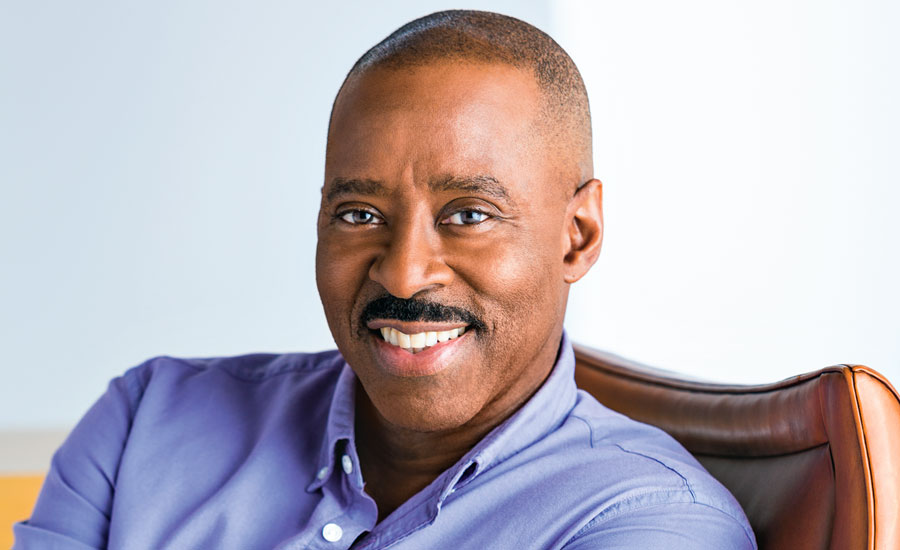
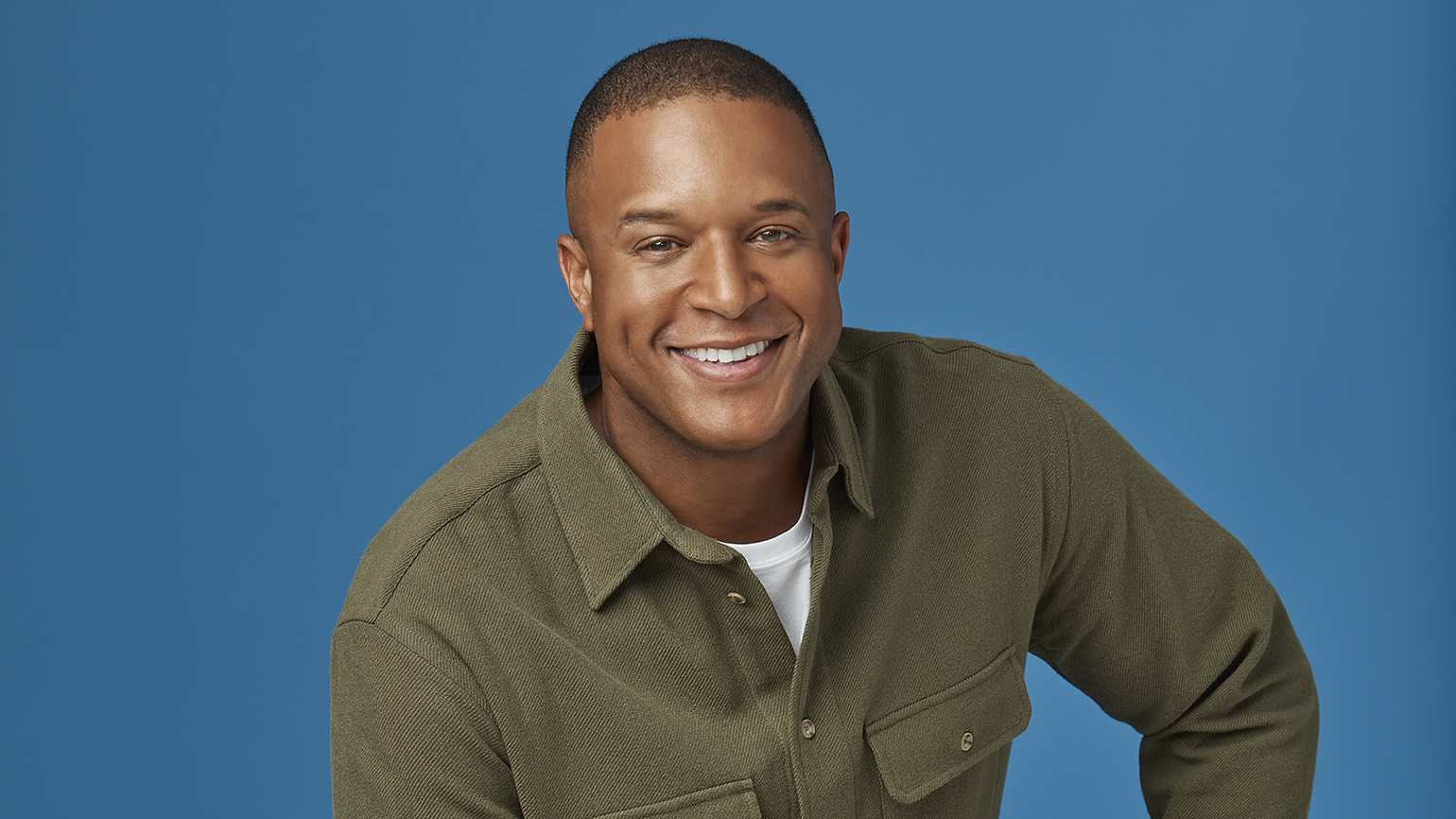
Craig Melvin on the cover of the Oct-Nov 2021 Guideposts
       As seen in the Oct-Nov 2021
       issue of
Guideposts

On the flight down and then the drive from the airport, my anxiety only grew. I hadn’t spoken to him since he’d been admitted. No one had. I’d written him a couple letters, mostly keeping things light. Of course, Pops and I very rarely held conversations that were anything but surface. We didn’t talk much at all. What would I say to him now?

New Every Morning Journal In Article Ad A

We’d done the intervention on a Sunday morning at my brother Ryan’s house in Columbia, South Carolina. It was Mom, Ryan, our cousin Kevin and the therapist we’d worked with. She had told Mom to have Pops’s bag all packed and ready to go. Ryan had offered some pretext on why my dad needed to come over—to help fix a door. Pops prided himself on being handy, even when he was loaded. Ryan went to pick him up.

Eleven o’clock in the morning, Pops was already drunk and disheveled. The minute he ambled in the door and saw us sitting there, an older white lady—the therapist—in our midst, he knew something was up. I could see it in his eyes. Pain, understanding, defi­ance, surrender. I couldn’t tell which. Maybe it was all of those things at once.

I’ve heard that every alcoholic comes to the point where they know the jig is up, whether they’re ready to admit it or not. After years of struggle, I’ve come to accept that alcoholism is a disease—more important, a family disease. Pops’s dad, a “wino” as Pops referred to him, lived in squalor to the end, drinking himself to death. Mom’s fa­ther was an abusive alcoholic.

Pops did a lot to make something of himself, serving in the Air Force, then working for the post office for 40 years, the graveyard shift and any other hours he could pick up. The man was a tireless worker, drunk or sober, and had only recently retired.

His most precious possession was a 1973 Pontiac LeMans. That car broke down so many times, I’d be drafted to help him, huddled under the hood, hold­ing a flashlight, handing him a socket wrench. All the while, Pops would barely say a word.

It was hard for my dad to con­nect with people. Maybe that’s why he gave himself the excuse of a six-pack. To lubricate a conversation. After work, he would spend hours at a place that Mom used to call the Cut. Not a club or a bar but some­one’s backyard—literally a cut be­hind a few houses.

He and his pals would hang out, drinking, smoking cigarettes, shooting craps and talk­ing. Maybe Pops was just all talked out by the time he made it home. He was definitely ready for bed.

My friends called him “the ghost” because he was never around. At 10 or 11 years old, playing second base in Little League, I summoned the cour­age one night to tell him that it would be nice if he could show up for a game. The next day, I came up to bat and gazed down the left-field line. There was Pops, watching me. Pleased as a boy is to see his dad in the stands, it also unsettled me. Did he really want to be there?

For the intervention, we’d written letters and read them aloud, telling stories like that, saying how much he mattered to us and what his alcohol­ism had stolen from us.

Kevin talked about his late mom, Dad’s beloved sister, and how disappointed she’d be to see her brother like this. I described how much my wife, Lindsay, and I wanted our kids to have a real grand­father, the kind that al­coholism had robbed me of. Mom’s letter was all about wanting her hus­band back. I heard her say heartbreaking things she’d never said before. Not in front of any of us.

Pops just sat there. And then he started crying.

There’s something unnerving for a son to see his father cry. This is true at any age, maybe a response to the taboo against men displaying emo­tion. The one time I’d seen Pops break down was at his mother’s funeral. She’d been hit hard with Alzheimer’s; the first time I noticed was at a Sun­day dinner when she tried to pry open the microwave with a butter knife.

Her decline and loss escalated his drink­ing. Like many men of his generation, Pops hid his feelings rather than re­veal them and appear weak. Watching him cry now, I understood that alco­hol was a way for him to wall off those emotions—fear, anger, hurt.  

We finished reading our letters. The therapist gently told my dad that there was a place he could get help about two hours away and that Kevin was ready to drive him there. I fully expected Pops to say, “Hell, no. Screw this.” Or he’d make some vague prom­ise to change on his own. Instead, he got up, hugged us and then said, “Let’s go.” I was nonplussed.

Pops was 67 years old. This was the most coura­geous thing he’d ever done.

Decades before, in the 1990s, another addic­tion loomed: gambling. Video poker machines had popped up all over. On pay­day, Pops would cash his check, then drop by Tom’s Party Shop—the closest li­quor store—and squander every cent. That put a lot of pressure on Mom financial­ly. She was a schoolteacher. Together they’d saved enough to buy a house in a good neighborhood and eventually send me to college. Now the pressure was killing her.

Sometimes Ryan and I would join Mom in the car, and she’d drive over to Tom’s, where she’d try to stanch the flow. Once she sent me inside too. There was Pops, slouched in front of a slot machine, tapping the buttons with one hand, a cigarette in the other, a trusty Budweiser at his side.

I swore I’d never be like him. I searched everywhere for role mod­els. Other father figures. It never occurred to me back then that Pops had never had his own role model to look up to, a father who modeled good parental behavior. As I have since learned, alcoholism is a fam­ily disease. It afflicts everyone, even through the generations, derailing healthy family dynamics.

Video poker was finally banned in South Carolina in 2000. Pops was able to quit gambling cold turkey, giving us a glimmer of hope that the drinking might follow. Instead, it only got worse. Alcoholism is a pro­gressive disease.

I may have avoided becoming a drinker, but I couldn’t escape the feel­ings that Pop’s drinking created. The emotional wreckage, the anger and re­sentment that boiled up inside. It ate at me that he wasn’t around most of the time. Early in my journalistic career, I was supposed to do a live on-camera interview with Pops. He went AWOL. Didn’t show up. Didn’t even call.

That hurt so much. Why couldn’t he get the monkey off his back? Why couldn’t he do something? I found during my early twenties that I had trouble maintaining close relation­ships. Like many children of alcohol­ics, I feared intimacy and questioned my self-worth, as if Pops’ drinking had left a hole inside me.

Somehow Mom stuck with him. The first in her family to go to college, she also got a graduate degree. She was incredibly strong, her love stron­ger than Pops’ alcoholism. There were times she carried our family single-handedly. If I have achieved any degree of professional success, it’s thanks to my Lord and Savior and to Betty Jo Melvin. In that order.

What took me so long to grasp that alcoholism really is a disease? Not just a lack of willpower or self-discipline but a clinical illness.

The turnaround came through a colleague whose stepfather had lost his son to drugs. He’d started a non­profit helping people help their loved ones overcome addictions. I had lunch with him, and he connected me with another guy. That got the ball rolling.

The more I learned, the more I under­stood. Becoming a dad helped too. Like I said, I didn’t want my kids to know a grandfather who was always clutching a can of beer. We had to get Pops some help.

I’ve always believed in the power of prayer. I pray all the time—in the dressing room, in the car at night. I think that’s the relationship God wants us to have. This ability to hold a conversation with him, wherever you are. The intervention we did with Pops was one of the hardest things I’d ever done. Saying all of that raw stuff to his face. Now I was praying for Pops to re­cover.

“God, please, please hear that prayer,” I said over and over as I drove to my dad’s rehab.

Pops and I had agreed to meet in front of the main building. I stepped out of the car and walked over to him, and Pops gave me this huge, beautiful hug. We’d never really been big hug­gers before, but, man, there it was. I started to cry, and so did he. At that moment, I knew things were going to be different. Rehab was working. Prayer was working.

We went inside and had breakfast, and Pops introduced me to his new friends. He showed me his room. Then he gave me a letter. Sort of his origin story. How his mother—a saintly churchgoing grandmother to me— had given birth to him in a prison. She was serving time for bootlegging, the only way she could think of to make some money to compensate for her husband’s alcoholic incapacity. As I said, a family disease.

I keep that letter in my safe. It’s that valuable. The first letter that Pops had ever written to me in his life. All thanks to rehab.

When my dad got out, we forged a new relationship based on openness, honesty and affection. It isn’t always easy dealing with our emotions. We have long heart-to-heart conversa­tions. He’ll tell me I work too hard. “You don’t want to miss out on the kids’ soccer games,” he’ll say, and I laugh. This guy telling me not to work too hard? Yet it’s as if he’s sharing all the wisdom that got bottled during his drinking years.

One day, Pops mentioned some­thing about one of my broadcasts. “Wait. You watched that?” I asked him, surprised.

“Of course,” he said. “I watch all of your stuff.”

Yeah, sure, I thought. So I asked Mom, and she said it was true. Some days I’m on for four hours. Pops will hang in there for the whole thing.

I thought about that day in Little League when I was so surprised to see my dad in the stands and wondered if he really even wanted to be there. Now I knew. He did.

For more inspiring stories, subscribe to Guideposts magazine.

The cover of Craig Melvin's Pops: Learning to Be a Son and a Father


Craig Melvin is the author of Pops: Learning to be a Son and a Father available wherever books are sold.


Cracking James Hampton’s Code

It’s one of America’s most mysterious and fascinating works of folk art: The Throne of the Third Heaven of the Nations’ Millennium General Assembly, part of the permanent collection at the Smithsonian’s National Museum of American Art in Washington, D.C.

We told you all about James Hampton’s masterpiece in our story in Mysterious Ways; now you can help researchers uncover more of the story…

The Daily Bible Large Print relaunch with digital free gift in article ad

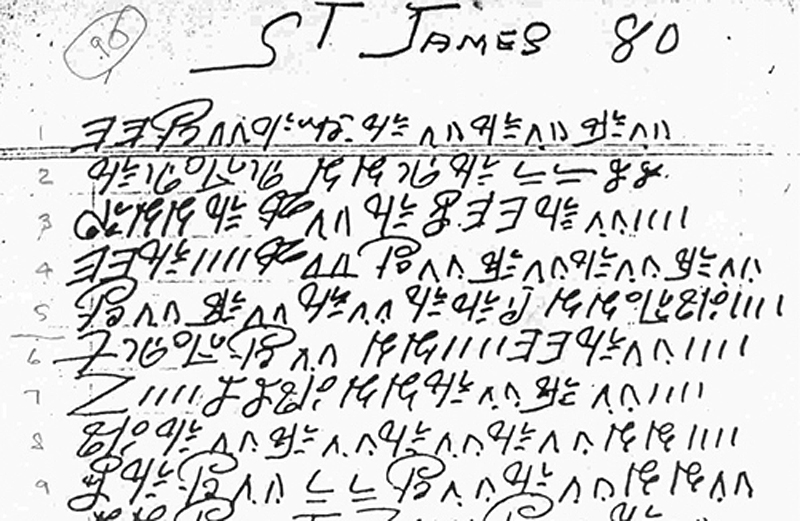
In addition to his 180+ piece installation, Hampton composed over 150 pages of undecipherable code entitled, The Book of the 7 Dispensations by St. James. He claimed the language was of divine origin.

Over the years, many scholars and art historians have attempted to unlock the meaning, but few have been successful. Some theorize that James’ writings derive from African religious practices, also referred to as visionary writing, or are a textual representation of speaking in tongues.

Dennis Stallings, an independent researcher of coded documents, has conducted a substantial investigation into Hampton’s secret writings. They are not indecipherable gibberish, he believes.

“Hampton writes what are obviously the same ‘words’ at corresponding spots in two different drawings of tablets of the Ten Commandments,” Stallings says. “This shows that it is very unlikely that his writings are the visual equivalent of speaking in tongues.”

That doesn’t mean deciphering “Hamptonese” is easy. First Stallings matched each symbol to an English letter in order to transcribe the pages into his computer. Then he ran the document through a statistical analysis program to look for patterns.

“E” is the most common letter in English, so if Hampton’s letters corresponded directly with English letters, you could find “E” by looking for the most common symbols. Stallings discovered, it wasn’t that simple.

Hampton’s letter forms could be variations of Adinkra symbolism, or his code could be derived from another language, such as Gullah, a Creole language spoken on the South Carolina coast, not far from Hampton’s hometown.

Can you help decode James Hampton’s mysterious manuscripts? Examine the pages below and post your translations (click on the images to see larger versions). We’d love to see what you come up with!


A sample of James Hampton's mysterious writings


Read Danielle's story about Hampton's life and work!

Courtney B. Vance on the Role of Faith and Family in Caregiving

This article originally appeared in the August 2016 issue of Guideposts. Courtney  B. Vance’s mother passed away in 2017.

“Do you need anything, Mom?” I asked. My mother lay in the hospital bed we’d set up when she moved into our guest house in Los Angeles three years before. She was motionless except for her eyes. She blinked to tell me no. Blinking her eyes and wiggling her foot to hit a bell have been her ways of communicating since she lost the ability to speak.

A Journey of Faith In Article Ad - Avail Now

“Try to get some rest,” I said. I kissed her forehead and she blinked back at me, our code for “Good night.” I left her with her nurse and went to our house, only steps away.

My wife was in bed already, quiet but not yet asleep. The world knows her as Angela Bassett, movie star. To me, she is simply my beautiful wife.

Angela lost her own mother just two years ago. That made my mother’s deterioration even harder for her to bear. We knew the end was inevitable. Mom has ALS, and that’s not a disease you recover from.

It was heartbreaking for my mother to end up so helpless when she’d always been a helper. She was a librarian, involved in groups all over Detroit, our hometown—literacy programs, homeless shelters, Habitat for Humanity, book clubs, a recycling center, and more.

She was determined to pass that giving spirit on to my older sister, Cecilie, and me. Dad worked his way up at Chrysler from foreman to benefits administrator. He and Mom instilled their work ethic in us too.

We were a lower-middle- class family. From an early age, Cecilie and I helped out—doing chores, taking care of our dogs. My parents sacrificed to send me to Detroit Country Day School. My scholarship didn’t cover everything. I needed a job every summer to contribute.

I loved Country Day. I worked hard academically. I played football and basketball and ran track and was All State for all three. I was so grateful to have been given the opportunity to attend the school that I did everything you could volunteer for—homeroom announcements, student council, choir. I wanted to succeed so I could help my parents the way they helped me.

READ MORE: LESLEY STAHL ON THE BLESSINGS OF GRANDCHILDREN

My goal was to go to Harvard. And I did. Sophomore year I got bitten by the acting bug and by junior year, I was a member of the Boston Shakespeare Company. I’d get up at 5:00 a.m. for my work-study job delivering newspapers in Harvard Yard. I’d go to classes, ride my bike into Boston for rehearsals, do shows at night and crash at my aunt’s house.

Then I’d get up at 5:00 a.m. again and ride back to Cambridge to pick up my papers. Growing up, I had always tried to hide my emotions and put on a good face. Through acting, all of that changed. I learned to channel my emotions into a character, a scene. It was so freeing. I’d discovered my gift.

I didn’t realize it then—I was just taking my first tentative steps toward faith, drawn to church though I didn’t quite understand why—but through acting, God would bring me an even greater gift.

A year after I graduated from Harvard, I was accepted into the master of fine arts program at the Yale School of Drama. In the spring of 1983, I went to visit the Yale campus, and there she was, Angela Evelyn Bassett.

She was graduating that May. I wouldn’t start school until fall. I had a meeting with a financial-aid officer, and then Angela and a couple of other students took me around.

She and I met again when we were touring in August Wilson’s Century Cycle plays together. She was in Joe Turner’s Come and Gone and I was in Fences. We were both in serious relationships, and dating didn’t even enter our minds. We became fast friends.

Years later, when neither of us was seeing anyone, we went on a first date. It was a quiet disaster. Angela is shy, I’m shy, and now that we weren’t just hanging out as friends, we didn’t know what to say to each other. It was a relief when the evening ended.

I didn’t run into her again until more than a year later. By then, I’d given my life to the Lord. I’d gotten baptized at a historic Harlem church that I’d been going to whenever work brought me to New York. I didn’t know the Bible then, or have any spiritual tools. Yet there I was being rinsed clean, given a fresh start. Amazing!

I went to a play with a buddy. Angela was there with the mother of a mutual friend. We all chatted afterward. Our friend’s mom needed her dog walked early the next morning. I volunteered to drop by first thing and take care of the dog. That really got Angela’s attention.

READ MORE: GARY SINISE ON GIVING BACK TO VETERANS

The helping spirit that Mom and Dad had instilled in me Angela called a servant spirit (her great-grandfather was a preacher and her mother raised her and her sister to love God). She’d admired that spirit in her sister’s husband, but she’d never found it with anyone herself. She wasn’t used to someone doing for her the things that came naturally to me.

This time around, Angela and I connected. We talked so long on our dates that we closed restaurants down. The more time we spent together, the more it struck her that I was always asking, “What can I do? How can I help?”

When she got a cold, I went straight to her house with my bag of health food. I took over her kitchen, grated some ginger, boiled it down, added honey and lemon, then served the elixir to her.

Sometimes we would just look at each other in awe and say, “I’ve been looking for the love of my life all this time and I can’t believe it’s you!”

We were married in 1997, on a beautiful October day. The ring I slipped on Angela’s finger has ABVGODCBV engraved on the inside—to symbolize that the two of us will keep God at the center of our marriage.

That commitment helped us work through the rough patches we had early on. When my career suddenly slowed down, for instance. There were months I wasn’t working. I felt very insecure, as an actor and a man. Angela was strong for me then, just like I learned to be strong for her in her low moments.

READ MORE: MISTY COPELAND WAS MADE TO DANCE

My career picked up again. I became a series regular on Law & Order: Criminal Intent, and appeared in films and plays. Angela landed good movie and TV roles. In 2006, we became the parents of twins, a boy, Slater, and a girl, Bronwyn. A year later, our joint memoir, Friends: A Love Story, was published.

Mom came to visit often. She, Angela and I had fun competing over who could help more. “Let me do the dishes, Court.” “I’ve got it, Mom.” “You’re our guest, Mama Leslie!”—that’s what Angela calls my mother—“Relax, already!” Everything was going well.

Then Mom was diagnosed with ALS. At first her symptoms seemed manageable. Still, Angela was on her, saying, “You need to come live with us, Mama Leslie. The kids want to be with their nana.” Mom, of course, refused, not wanting to be a burden.

I was in denial. This couldn’t be happening. My dad had died 20 years earlier, yet Mom had forged on. She was so full of life, even busier in retirement, helping others, than she’d been in her working days.

We went to visit her in Detroit. Mom had started slurring her words. Angela and I didn’t want to embarrass her by mentioning it. Our six-year-old son was the one who spoke up—“Nana, why are you talking funny?” he asked—and thank God he did.

Mom moved in with us not long after that. Just in time. Soon she started to lose the ability to speak and move.

Even with around-the-clock nursing care, I needed time to help my mother, to do for her what she’d always done for me. Angela gave me that time, so the rhythm of our family wasn’t disrupted.

In fact, the kids, who are 10 years old now, are learning what it means to be a helper, just like their nana. They go sit with her, talk to her, make her laugh. She can still laugh. We try to find the joy in life so we don’t focus so much on the losses.

Still, it’s hard. It’s been three years since she stopped being able to speak, and I’ve forgotten the sound of my mother’s voice. There’s not much more that can be done for her except manage her pain.

I understood why Angela has had such difficulty witnessing my mom’s illness. Seeing her this helpless has made me fall to my knees and cry out to God. And that’s what I told Angela that night in our bedroom. I sat next to her and took her hand.

“I know it hurts because Mom’s not her old self. Spend time with her while you can. You’ll want to be able to say you saw her through to the end.”

Angela nodded. “God won’t forsake us,” she whispered, a tear winding down her cheek. I moved closer and kissed it away. The salt lingered on my tongue, reminding me that pain is part of life. The days that are rough, that I struggle, that’s when I’ve learned not to question God but to lean harder on his unchanging hand, his ever-present help.

Did you enjoy this story? Subscribe to Guideposts magazine.

Could Walking Help Her Cope with Grief?

I’m going to walk a thousand miles by the end of the year,” I announced to my mom as I poured myself a glass of water. I had just come back from my Friday-morning hike, all sweaty and hot. Mom was watching my younger sons, Caleb and Cooper. She usually watched the boys on Fridays.

“Really? How many miles have you gone so far?” she asked, eyebrows raised. She sounded a bit dubious. I couldn’t blame her. I checked the hiking app on my phone. It was mid-May, and I had been walking regularly since the beginning of the year.

The Lies That Bind In Article Ad

“Three hundred fifteen,” I said, trying to keep my voice confident. “Only another 685 miles to go!”

Frankly, the fact that I’d gotten this far was a miracle. I was 44 years old and totally out of shape. I hadn’t exercised in years. But walking was something I knew I had to do. If for no other reason, I had to do it for my baby brother, Wayne.

Wayne had been killed in a car accident the previous September. He was only 37. We’d been very close. His death had plunged me into a deep depression. I didn’t eat right. Slept poorly. Barely made it outside most days. My husband, Billy, was patient and supportive, but eventually I accepted that I had to do something to help myself. But what? What could I do?

In January, Billy and I had driven to a state park to celebrate our twenty-third wedding anniversary. I had suggested we hike up a small mountain to mark the occasion. I couldn’t even tell how that thought got in my head. Yet it seemed right. Billy agreed. We walked together in silence. I thought about how much Wayne would have loved being on the trail with us. He and I had been raised camping, hunting and fishing. Being close to nature made me feel close to him, even if I was huffing and puffing with each step.

By the time Billy and I reached the top, my legs were burning and my feet ached. I was drenched in sweat. And yet I felt a sense of exhilaration I hadn’t felt in a long time—as if I had accomplished something. Like Wayne had been right there with me. I had to keep at it.

I began with two-mile walks around the neighborhood. Each step was a struggle. Not just physically but emotionally too. I was missing my brother. When I felt the weight of grief, I gave it to God. Lord, show me what steps to take to mend my broken heart. There’s a famous saying that goes, “The journey of a thousand miles begins with a single step.” Every step felt like a way to comfort and healing. I’d go out four or five times a week and push myself, keeping track of every mile on my app. Could I possibly make it to a whole thousand?

Texas weather is unpredictable, especially in the spring. It can be 85 degrees one day, 45 degrees the next. One week, it rained continuously for six days straight. I didn’t want to break my routine, but I didn’t want to go out in the rain either.

On the seventh day, I woke up at my usual walking time—5:30 a.m.—and peeked outside. Dry at last! I was so excited to walk, I didn’t check the forecast. I ventured three miles from home, trying to make up for lost time. Clouds rolled in, the sky opened up and a torrent of rain fell. I was drenched!

I had my cell phone with me, but I didn’t dare take it out to call Billy to come pick me up. The phone would be ruined. So I trudged on through the streets, soaked to the skin, my hair matted down. All at once, I stopped in the middle of the road. The rain felt good—as if God was cleansing me. I thought of Wayne. I looked up to the sky, the water running down my face. He would want me to go on. Nothing was going to stop me. Not even the grief of losing my brother.

I arrived home, looking like a drowned rat.

“Are you nuts?” Billy said, handing me a towel. “It’s pouring.”

“I’m never going to get anywhere if I wait for good weather.” By mid-May, I was ready to tell everybody about my goal. Even my mother. “A thousand miles?” she said that morning in the kitchen. “You can do it!”

I ventured beyond the neighborhood to local hiking trails, gradually increasing my mileage. I hiked some of Wayne’s favorite wooded areas, near where he’d lived.

The months rolled by—my walks became longer, the hills steeper. I felt better, body and soul. By mid-July, I was up to 585 miles on the app and could hike 8 to 10 miles at a time. The journey of a thousand miles was just a matter of adding up lots of steps.

Then, five miles into an eight-mile hike, I sprained my ankle. The pain was immediate. My ankle throbbed. I sat in the dry grass and weighed my options. Limited cell service, not a soul in sight. I entertained the idea of a dramatic rescue by park rangers and dismissed it immediately. Too embarrassing.

Finally, I struggled to my feet and hobbled pathetically down the hill to my car. The pain was excruciating. My ankle had swollen to the size of a grapefruit. I was thirsty, out of water. My face and arms were sunburned. The drive home was agonizing. A thousand miles? Not this day.

I limped around the house for a week, praying for the pain to subside. I sat in the recliner, Billy bringing me bags of frozen peas to put on my ankle.

“You sure you don’t want to postpone this quest?” Billy asked. “What’s so special about doing it by the end of the year?”

“Don’t you think it would be all right if you walked 750 miles—or maybe 800?” Mom said. “What’s so special about a thousand?” She gave me a little pat on the hand. “You know, I miss your brother too. Every day.”

I don’t think Billy and Mom meant to discourage me. They were just worried about my ankle. To be honest, I was too. I forced myself to remember that day I’d been caught in the downpour. How I’d pushed through despite the storm. How I’d asked God to guide me, step by step.

I dropped by a sports store and got fitted for a pair of high-top hiking boots, for improved support, wrapped my ankle and got back out on the trails. My ankle throbbed by the time I finished each hike, but it was nothing a bag of peas couldn’t help. If I could walk, I could finish.

As I closed in on one thousand miles, my confidence grew. I had lost 25 pounds, and my legs were stronger than ever. If Caleb and Cooper came with me, they could barely keep up. I was so energized, I got new gear: a specialized hydration backpack, a hat and wool hiking socks. Evenings were spent researching new trails and equipment.

The last week of December, I was just a few miles short of my goal. I wanted to spend those last miles with the same person I’d started with: Billy. We were coming round to our twenty-fourth anniversary. He had stood by me through all of it—not to mention bringing me all those frozen bags of peas.

We started out early at our favorite park, the same one where I’d sprained my ankle.

“How many miles do you need to go?” he asked.

“Seven.”

For good measure, we hiked 14.4 miles that morning. We headed back to the car. As tired as I was, I felt strong, healthy, healed. I’d kept my commitment to myself and the memory of Wayne. I’d felt his presence with me every one of those miles.

A journey begins with a single step. That’s true. Yet sometimes each step is a journey toward healing—and a loving God who awaits us at the end of all of our journeys.

For more inspiring stories, subscribe to Guideposts magazine.

Could He Have a More Adventurous Life?

Three hundred pairs of eyes watched me expectantly. I stood in the sanctuary next to the piano, trying not to hyperventilate. I was about to lead the congregation in singing a Psalm.

No one was forcing me to do this. And was it really such a big deal, singing in front of people I’d gone to church with for years?

A Journey of Faith In Article Ad - Avail Now

For me it was. I’d been terrified of singing in public for as long as I could remember. I was fine mumbling hymns in the anonymity of the pews or hiding in the adult choir. But singing solo in front of a large group seemed like asking for humiliation.

So why had I volunteered to lead the Psalm this Sunday morning? Why had I spent months working with a voice coach to prepare for just this moment?

Well, I’d done a lot of things recently that once intimidated me. Like learning to swim when I was 58 and completing multiple triathlons. I was also writing my first book.

There was a reason I kept facing this fear. His name was Jack. As I stood before the congregation, he was at home with his mom and dad. He was almost two years old. My grandson. And he’d inspired a big change in my life.

I was not raised to be a risk-taker. I grew up in a traditional family. Church every Sunday. Best behavior at the dinner table. Don’t step out of line. Don’t be different.

That was my dad’s approach to life. He was just six years old when his own father died. The loss deprived him of the confidence a father can help instill in his children. After high school, he attended seminary for several years. Then he got a job selling appliances on commission at a Sears store. He kept that job for 22 years.

He raised his kids to be just as cautious. I was afraid of deep water ever since almost drowning as a kid. So was Dad—he wouldn’t even wade in the shallow part of a lake. He never made me take swimming lessons. When I had to swim two lengths of a pool to pass P.E. in high school, I somehow managed to finish and practically threw up. I didn’t swim very much after that.

I was drafted in 1970, in the middle of my second year of law school, during the Vietnam War. At first I broached the idea of filing for conscientious objector status. I couldn’t square killing people with everything I’d read in the Gospels.

Mom and Dad were aghast. They argued with me. Realizing that someone else might be drafted in my place if I stayed out of the war, I agreed to enlist. I ended up becoming a military policeman, stationed at two nuclear missile bases near home. When I got out of the Army, I went back to finish law school and met a woman named Karin. We’d been set up by a friend—I didn’t do a lot of dating. Karin and I married, and I passed the bar. Before I knew it, I had a job with a small law firm.

In some ways, my life was just as conventional as my dad’s. I stuck with the same profession, even though my field of law sometimes felt like a grind. I never did learn how to swim, despite hours spent rooting for my children’s swim teams. I rarely got in the water myself. No risk-taker, me.

And yet there was another side to my personality, one I didn’t recognize at first. I certainly didn’t marry a conventional wife. Karin was a social worker. Before we got married, she’d lived on a kibbutz in Israel, even though she’s Catholic like me. She wanted to learn about other social systems. She and I vowed to raise our kids to ask questions and explore new things.

Not a risk-taker? I take that back. There was the time, early in my law career, when my boss, a tax attorney, asked me to fudge some numbers on a form to save one of his clients money. I refused and was fired. Karin was pregnant with our third child. I could have fudged the numbers and saved my job. But I didn’t. Instead I started my own law practice in 1978, where I still work today.

So I did take risks, at least when it mattered. But why? It took me until my mid-fifties to understand. That’s when one day, out of the blue, our younger daughter, Meghan, turned to me in a bookstore and said, “Hey, Dad, we should do a triathlon together.”

What?

We were in Portland, Oregon, where Meghan was spending a post-college year volunteering with a Jesuit social service organization (something I would have shied away from after college). She’d happened to pick up a book about triathlons. My children had always been athletic, and we loved hanging out together. Maybe that’s why she suggested it.

To my own astonishment, I heard myself say, “Sure.”

But I couldn’t swim! And yet, for some reason, the idea appealed to me. Some part of me suddenly wanted to push against that lifelong fear of water, maybe because I didn’t want to let my children down, and that mattered. I wanted to show them that they should identify their fears and challenge them.

I forced myself into a pool to practice. By the day of the race, I was still a terrible swimmer.

The 500-yard swim was in a deep harbor with high waves. My wife was there. Bridget, our older daughter, and her husband, Tim, were also competing with me. At the signal to start, I plunged into the cold water. It wasn’t pretty, but I made it. After that, the bike and the run were hard but at least not life-threatening. When I crossed the finish line, with my family hugging me and telling me how proud they were, pure joy surged through me.

What else could I do that I’d been putting off for years? I’d always wanted to write a book, about a guy I’d met in the Army, who became a close friend of our family even though he suffered mental illness after being discharged and spent time living on the streets. I was intimidated at first; it was a form of writing I had never done before. But I finished, and the book, a faith-based memoir entitled God Called Collect from Cleveland, will be published this year.

And then Jack was born. He was Bridget’s boy, our first grandchild. I thought he was perfect.

But Jack struggled for life when he was just one year old. Doctors said a virus had destroyed his liver. He needed a transplant. Bridget and Tim couldn’t find a donor. Tim offered to donate part of his own liver—a risky surgery for both him and Jack.

I spent a lot of time praying for Jack. One afternoon, as I was holding him, staring into his tiny face and imagining the desperate struggle for survival going on inside him, it hit me why it was so important for me to try new things and push my limits. It wasn’t for fitness or accomplishment or even to distinguish myself from my father.

It was because time was precious. For Jack, each precarious second was obviously precious. I wasn’t threatened by a mortal illness, but my life was no less finite than his. Just as for any of God’s children, my time on earth was limited. I wanted to make the most of the time I had left.

“I’m going to sing for you, Jack,” I suddenly said to him one day. “But that’s nothing compared to what you’re facing. If you can be brave, so can I.”

Before I could talk myself out of it, I volunteered to be a cantor at our church—the layperson who leads the congregation in singing. I signed up with a voice coach, and I learned how to read music.

And now here I was, in front of the congregation. Jack couldn’t be there. He wasn’t in any shape to make the drive to church. But I imagined him in the pews, smiling his can-do smile.

The music started. I opened my mouth to sing and…I didn’t recognize the music! It wasn’t the Psalm I’d been practicing so diligently.

“Um,” I stammered. “Please excuse me. We’re having technical difficulties.”

I leaned over to the piano player. “What tune are you playing? That’s not the one I memorized.”

We compared notes. I’d gotten the Psalm number mixed up with the page number in the music book! I’d memorized the wrong Psalm.

“I don’t know the words to this one,” I whispered.

“Well, it’s the one in the hymn manual,” said the pianist. “We have to play it. Can you wing it?”

Before I could object, the pianist resumed. I had no choice but to make up the words. I cobbled together what I remembered from other Psalms. No one seemed to care. They sang along as if they hadn’t even noticed. Karin, of course, noticed. But it made her smile.

When I finished, all I felt at first was relief. But then came that surge of joy I’d experienced the day of the first triathlon.

A few months after I sang in church, Jack and Tim underwent a successful liver transplant. Today Jack is a growing, healthy eight-year-old boy.

I don’t set as many challenges for myself as I used to. Life itself is challenging enough. Last year, when one of my younger brothers died, I found myself thinking a lot about the words in Paul’s Second Letter to Timothy: “I have fought the good fight. I have run the race. I have kept the faith.”

Though I still do triathlons, my most important race as a 70-year-old these days is staying healthy for my family, my friends and my clients. Karin and I spend a lot of time babysitting our five grandchildren, including Jack. I want to be there for others as long as I can.

The playwright George Bernard Shaw once said, “I want to be thoroughly used up when I die.”

God gave me this life. I intend to use it to the fullest.

For more inspiring stories, subscribe to Guideposts magazine.

Supernatural Self-Control

“Honey, I’m home,” Joey, my husband, called from the front door. I left the pot of spaghetti bubbling on the stove and went to greet him. First thing he did was reach out his arms to give me a hug. But instead of hugging back, I pulled away self-consciously.

How could I explain to him how embarrassed I was that his arms could barely get around my body? A look of hurt came across his face. I turned and ran back into the kitchen to finish making dinner. How can he possibly love me when I look like this? I thought.

Community Newsletter

Get More Inspiration Delivered to Your Inbox


We ate dinner in silence in front of the TV. After a plate of spaghetti, I still felt empty. I went back for seconds and added two pieces of bread slathered with butter and wolfed it down. I was full, but the strange thing was I didn’t feel satisfied. I needed something sweet.

I went back into the kitchen and ate a doughnut, then another, and another, until I felt as if I’d burst. Finally, I could stop eating. Now came the guilt. Why was I doing this to myself? Quickly I washed the dishes, cleaned the kitchen and got ready for bed.

That’s when the emptiness hit me. Not so much physical but spiritual, a hollow ache deep inside that nothing seemed to fill. I sank down on the edge of the bed and stared at my reflection in the dresser mirror. The mattress sagged under my weight.

I looked blown up like a balloon. Where had I disappeared to behind all that fat? “I hate you,” I whispered to my reflection.

I hadn’t always been heavy. But when I was 13, my parents’ bickering was pushing them closer toward divorce. There was always a lot of strife around the dinner table, and I’d eat until my stomach ached to try and drown it out.

In high school, I kept my weight down by exercising and dancing. I loved to dance. In fact, it was one night while on the dance floor at a local club that I met a nice guy with deep brown eyes and a friendly smile—Joey.

We were married exactly a year later and before long I gave birth to our son, Joshua.

Joshua was a joy, but after the pregnancy, I fell ill with an infection and couldn’t get any exercise. Joey had to work double shifts and came home late at night. All day I found myself alone in a tiny duplex with a baby to care for.

The only pleasure I had was the nearby bakery and their cheap powdered doughnuts and cinnamon twirls. I’d plop down on the couch and snack in front of the TV until Joey got back from work.

When I couldn’t fit into any of my old clothes, I went out and bought some big stretchy cotton pants and blouses that reached way down over my hips. Eventually, I was wearing a size 28. I was too big and tired to even get down on the floor and play with Joshua anymore.

Believe me, I knew it was a problem. I tried every diet out there. I lost 40 pounds on a strict regimen, counting and weighing everything I ate. Soon as I went off it, I gained everything back.

The bathroom scale was my guilty conscience. I read articles and books, but nothing worked. I tried fad diets, like eating nothing but awful cabbage soup. That one lasted a week. Eventually, I just gave up. It was no use. I never went near a scale again.

Now I was sitting on the edge of my bed staring into the mirror at a woman I barely recognized. Tears rolled down my face. Desperately—but not for the first time—I cried out to God, “Please help me lose weight.” But how was God suddenly going to make me stop eating myself to death?

I felt powerless over my eating patterns, my food binges. Why would God help me if I couldn’t help myself?

A few days later, I saw a notice in the church bulletin about a class called “Put the Past Behind You.” I thought about how my parents’ divorce had helped set off my bad eating habits. I felt so desperate I was ready to try anything. “I want to go,” I told Joey. “I’ll go with you,” he said.

In that first session, the class leader talked about prayer. “You can fill your life with prayer instead of regrets,” he said. He was right. I held on to my regrets and resentments, reliving my parents’ divorce. And just as I did then, I ate to fight those feelings.

It was like I was stuck at that dinner table when I was 13, stuffing down my feelings with food. Now I closed my eyes. I prayed to put the pain behind me. When I opened my eyes again, I felt better. “Maybe I’ll come back,” I told Joey when the class was over.

We went every week for nine months. A lot of times I felt like I’d made a real breakthrough and came home feeling relieved of my regrets. But other times I dragged myself home feeling sadder than ever.

One night, I walked straight into the kitchen, tore open a package of cinnamon twirls and poured a large glass of milk. It was hopeless. I was never going to change. Not even God can help me, I thought. But as I bit into the second cinnamon twirl, a question suddenly popped into my head.

Am I really hungry? Or am I eating because I feel empty inside and frustrated? Then, suddenly, I threw the half-eaten cinnamon twirl into the trash and poured the rest of the milk back into the carton. Even as I did it I felt strange, as if it wasn’t really me pouring the milk.

Later that week at church, a woman asked if I wanted to be on the prayer team for a women’s weekend retreat. I hesitated. They really want someone like me? I wondered. I said yes. I don’t know why. I just did.

But then I found out we’d be sleeping in bunk beds. “I’ll just die if they put me in the top bunk,” I said to Joey.

“Don’t worry, Katrina,” Joey said. “Something made you say yes. Now, you just have to trust that feeling. That’s what our class is all about: trust.”

The group leader asked us each to write a letter to God telling what we’d like to see him do for us on the retreat. I turned to the Bible looking for some inspiration. That’s when I came to the passage in Galatians about the fruits of the spirit. Love, joy, faithfulness…and self-control.

Yes, I thought. There’s what I really need. Not just a little self-control, but a lot of it. In big, clear, bold letters I wrote on my paper, “I need supernatural self-control.”

Something happened at that retreat camp. I didn’t go for a second helping at dinner. Late at night, the time when I usually would have a “snack,” I didn’t feel any cravings. I didn’t stay up thinking about food. I just drifted off to sleep (on a lower bunk, thankfully).

I felt an extraordinary peace that I hadn’t felt in ages, maybe ever. But it wouldn’t last, I figured. Not when I got back to my routine.

My first night home, I fixed up a nice fried chicken dinner with mashed potatoes and gravy for myself, Joey and Joshua. After a few bites, I heard a voice in my head, absolutely clear and direct, That’s enough. Put it away. Now.

The thought startled me. I stood, picked up my plate and started walking back toward the kitchen. “Forget something?” Joey asked. “No,” I said with a shrug. “I’m just…not that hungry.” I took out some plastic wrap, covered the plate and put it into the refrigerator. I’ll just have it later tonight.

Then I went back into the living room. It wasn’t until the next morning when I saw the untouched plate of fried chicken that I realized I hadn’t gone back and finished it. I couldn’t explain it.

One rainy afternoon I went to the cupboard to get some potato chips. Are you hungry or are you eating because you feel lonely and bored? the voice demanded. I closed the cupboard door and instead bowed my head in prayer, asking for strength. It worked. I skipped the chips.

At dinner, I was halfway through my usual hefty helping of macaroni and cheese when the voice said, That’s enough. Every time my self-control was about to give way, I heard a voice. Was it some inner urging I never knew I had or something more?

All I knew was that my eating habits were changing. Dramatically. More amazing, though, were my feelings. When I stopped stuffing them they made their way to the surface and I was able to face them without fear, without hurt, and finally let them go.

My clothes got looser. I explained over and over again to people that I wasn’t exactly on a diet; I was eating all the foods I normally ate and liked. But instead of drowning myself in food, I was listening to what God was directing me to do about my eating decisions.

Energy returned too. Why not start dancing again? So I danced in my living room for about 10 to 20 minutes a few times a week. Do more. I bought a 30-minute aerobic workout tape. People actually complimented my looks.

Soon, I felt confident enough to jog around the neighborhood. My friend told me about a 10K road race she was running. Did I want to try it? Try it. I had to walk for some of it, but I finished.

The one thing left to face was that dreaded scale. It took me quite a bit of courage to get on it. I closed my eyes. Finally, I looked down. The needle stayed right below 160! I gaped at the number. I had lost nearly 150 pounds!

No wonder I felt so light. No wonder I ran into Joey’s arms at night. But the weight I lost was not simply physical. It was the weight of the past, of unresolved regrets that only a higher power can relieve us of, a God whose arms are big enough to wrap around anyone.

Connected with Family

In my tight-knit Greek-American family we did everything together. I mean, everything. Played basketball, watched wrestling and Boston Bruins hockey on TV, ate meals together, went to church and the grocery store and stuck so close that I knew I was loved by my parents more than anything else.

If anything ever went wrong, I would be okay because they looked out for me and I looked out for them. And you know what? It’s still the same.

Pause & Pray In Article Ad

I might be a 29-year-old journalist working crazy hours in the studio and on the red carpet—and lately on the campaign trail—but I’m never more than a cell phone call away from Mom and Dad. I have a sixth sense about them and if they’re in any kind of trouble, I can feel it. I just know.

I grew up in Medford, Massachusetts, and although there was just my brother and me and our parents, most of our relatives lived one town over in Somerville.

Every holiday was spent with aunts, uncles and many cousins. We rotated from house to house—Christmas at Aunt Anna’s, Easter at Aunt Lorraine’s, New Year’s at our place—and everybody brought food. There were Greek delicacies like Mom’s pastitsio and good ol’ American food like my cousin Mary’s blueberry cheesecake.

What I really remember about those family gatherings, though, was how we all were loosening our belts or unbuttoning the tops of our skirts. Everybody indulged.

Everybody but my dad. He had to be really careful because of his diabetes. My mom planned our meals around what he could have. She found the Greek specialties that were good for him, like her lima bean casserole or her special lentil soup.

Most important, she started us all off with a healthy breakfast—juice, cereal, unbuttered toast and eggs. I never knew people had donuts for breakfast or bagels and cream cheese until I went off to college. (All that newly discovered food in the school cafeteria was so tempting I promptly gained a good deal more than the standard “freshman 15″—40 pounds, to be exact.)

We were always watching out for Dad. If I saw him gazing off into the distance with a blank expression or if his hands started to curl up I knew he was going into diabetic shock. First I’d rush to get him a glass of orange juice or give him some sugar and jelly, then call 911.

Sometimes it seemed that the EMTs were at our house every other week. One harrowing time Dad actually slipped into a diabetic coma. I stood over his hospital bed, sobbing and praying. “Dad, please come back, please. I love you. Please be okay,” I begged.

Eventually he came out of it and was okay. It was only later he told me how he remembered being on the threshold of heaven and looking down on me crying over him. “I was ready to die and stay there,” he said, “but God told me I still had a lot more work to do.”

Work was a big part of my heritage. Mom and Dad were both born in Greece—she was from Kalamata and he was from Akovos. They came to the U.S., got married and once we came along, they were determined to do all they could for us.

Dad took on a slew of different jobs. For a while he was a carpet installer and he was a janitor at a night club—we all were. Mom worked at a school cafeteria when I got older, but on weekends we helped Dad as the clean-up crew at the night club. Five o’clock in the morning my brother and I waded ankle-deep through old cups and garbage, collecting all the bottles and cans, while Mom and Dad cleaned and scrubbed.

After years of saving, we banked almost $10,000 from returning those bottles and cans: enough to pay for a trip back to Greece to visit the relatives.

I was proud of being Greek—at least most of the time. We went to the Greek Orthodox Church in Somerville where I sang in the choir, went to Sunday school, studied Greek. I even became president of the youth organization.

But in our own town, in Medford, there was only one other Greek kid in my school. Kids teased us on the playground. Mom would say, “They’re just jealous, Maria,” but it hurt to feel like an outsider.

Maybe that’s why I studied broadcast journalism in college. I could see myself talking to people, getting their stories and really making a difference.

In the meantime I worked nights at Dunkin’ Donuts to help support myself while I was in school. After graduation I made the decision to move thousands of miles from home and pursue an amazing opportunity with Channel One News. Eventually more great opportunities followed with Entertainment Tonight and then NBC.

Of course, I was always on the phone to my parents, letting them know that I was okay and how much I missed them. But still I worried. Were they okay? How was Dad? Where was Mom if anything happened to him? We were just too close not to always be in each others’ thoughts.

Then one day when I was on assignment in New York City, sitting in the back of a car, I had this feeling in the pit of my stomach that something wasn’t right. I mean, really not right. I called Mom immediately. “I know,” she said in a worried voice. “I have that same feeling. I think something’s wrong. I can’t get ahold of your father.” She was at work, at her school cafeteria job.

“Go home right away,” I told her. “I’ll stay on the phone.” Frightened and helpless, I listened as she walked through the house, calling for Dad. Finally she found him upstairs, lying on the bed, “Oh, my God!” she cried. “I think we lost him,” and she hung up.

I started praying and my driver joined in, praying with me. Then I thought of my friend who lives down the street from my parents. She wasn’t around, but she was able to get in touch with her mom and aunt, who is a nurse. The two of them rushed down to my parents’ house.

For a long time I sat there, tears rolling down my cheeks, waiting to find out if things were okay. Finally Mom called. It took about 30 minutes to revive him, but thankfully my prayers were answered.

Today Dad has a pump, thanks to his great doctor Anne Peters. It’s made a huge difference, giving him a lot of freedom and freeing Mom and me from a lot of worry.

I’ve also become an ambassador for the Entertainment Industry Foundation’s Diabetes Aware program. I feel like I’m doing something to fight a disease my family has struggled with. There’s so much a diabetic can do these days to live a normal life. I’ll go anywhere to spread the message—I’ve even gone to Capitol Hill.

These days Mom and Dad have both retired and are bicoastal. We talk every day when we’re not together. They’re doing really great. (They even went to the Super Bowl with me, and meet stars all the time.) But I know if anything goes wrong, I’ll sense it. I always do. And I know that help is never far.

Conditions and Illnesses That Can Lead to Falls

This article is based on information provided by Philips Lifeline.

For older adults, falling is an all-too-common issue with potentially severe consequences, including head injuries and broken bones. Every year, one- third of people over age 65 suffer from falls. According to the National Institute on Aging, fall chances increase along with the number of risk factors someone has. Such factors include several chronic and acute illnesses and conditions, from dementia and cardiovascular diseases to high blood pressure and visual impairments.

Journey With Jesus in article ad

When you understand how these factors can contribute to falls, you can help your loved one to avoid getting injured in a tumble. Following are some illnesses and conditions that can increase fall risks:

Vision Problems
Vision impairments associated with aging can lead to falls. Studies indicate that individuals with visual deficits are 2.5 times more likely to fall. Cataracts, glaucoma, and anisometropia are among the conditions that can affect depth perception, peripheral vision, and visual acuity. New eyeglasses, particularly those with multi-focal lenses, can also alter depth perception. So it’s crucial for older adults to have regular eye exams and to keep prescriptions for glasses current. Clear vision is important to getting around without having an accident.

Neuropathy
Some medical conditions can lead to sensory problems like tingling, numbness, weakness, or burning pain in legs and feet. This is referred to as peripheral neuropathy. It can be caused by diabetes, kidney failure, and shingles, among other conditions. Neuropathy can lead to falls because it makes it difficult to know where you’re walking. Having shoes with proper stability, grip, and balance can help to avoid falls.

Cardiovascular Disease
Underlying cardiovascular disorders can also increase fall risks among older adults. Those who have had walking and balance disorders can be unsteady on their feet. A sudden loss of consciousness can also lead to falls. Among the cardiovascular issues that can contribute to falls are:

  • Cardiac arrhythmia

Cardiac arrhythmia is a disorder of the heart rate rhythm. As a result, the heart may beat irregularly, too fast (tachycardia), or too slow (bradycardia).

  • Orthostatic hypotension

Orthostatic hypotension (also called postural hypotension) is a form of low blood pressure. It can lead to dizziness or light-headedness upon standing up from a lying-down or seated position.

  • Structural heart disease

Structural heart disease, also known as congenital heart disease, is a deficiency of the heart muscle or heart valves. It causes unusual blood flow through the heart, which can lead to generalized weakness or loss of consciousness. It’s important to get regular cardiovascular screenings. Catching cardiovascular issues early helps to ensure proper treatment, which can, in turn, minimize fall risks.

Alzheimer’s Disease and Other Forms of Dementia
Cognitive impairment from forms of dementia including Alzheimer’s disease can cause falls because of confusion. Researchers from the Rand found that people with cognitive impairment had a 1.8 times higher risk of falls. This condition can also cause physical deconditioning, gait changes, poor balance, memory impairment, poor judgment, and visual misperception. All these issues increase fall risk. As with cardiovascular disease, it’s important to recognize the signs of cognitive impairment early on. The effects of dementia can be lessened when your loved one has clear communication with caregivers and stays mentally stimulated. This can help boost physical well-being and overall quality of life, as well.

Chronic Illness
Certain chronic illnesses can also increase fall risks. Among them are:

  • Parkinson’s Disease

Parkinson’s disease is a neurodegenerative disease. It causes a progressive deterioration of muscle function due to decreased dopamine in the brain. According to the Parkinson’s Disease Foundation, motor symptoms include stiffness, tremor, postural changes, slowness, impaired balance, and shuffling gait.  It can also cause changes in the center of gravity. All of these symptoms can increase fall risk.

  • Arthritis

Arthritis causes painful stiffness and inflammation in the joints. The most common form of arthritis is osteoarthritis, in which the protective cartilage at the end of bones wears down, causing impaired movement and pain. This typically occurs around the knees, hips, spine, and hands. Research indicates that arthritis can increase the risk of falling by 2.4 times. Remaining active and getting massages can be helpful arthritis remedies.

  • High Blood Pressure

Hypertension (high blood pressure) can also contribute to falls. Studies have shown that as many as 20% of all falls were associated with hypertension. According to the Centers for Disease Control (CDC), almost half of all adults in the U.S. have hypertension, so it doesn’t just affect older people. Making improvements to lifestyle, diet and fitness, taking certain medications and wearing compression stockings, can all help to alleviate high blood pressure.

Acute Illness
Acute illnesses could account for up to 20% of falls, according to studies. An acute illness, like an ear or chest infection, can bring about fatigue, dizziness, and weakness. Each of these factors can lead to falls. On the flip side, an unexpected fall may be an indication of an acute illness. Older adults should alert caregivers, if possible, when they’re feeling ill.

Even though acute infections can be identified as a result of early symptoms, certain illnesses like asymptomatic bacteriuria can be more difficult to spot. This is caused by bacterial colonization in the urinary tract but doesn’t include symptoms of a urinary tract infection. Asymptomatic bacteriuria is common in older adults. If you’re concerned that this may have caused a fall, make sure to see a physician and provide a urine sample for diagnosis.

Sarcopenia
Older adults are more likely to experience sarcopenia, and it’s a major contributing factor to falls for them. This syndrome causes the general loss of strength and skeletal muscle mass. The good news is that resistance exercises can alleviate and possibly even reverse this syndrome. So it’s another reason for older adults to get regular exercise. All of these medical conditions can affect the risk of falling. If your loved one has experienced any of these issues, make sure to discuss them with a healthcare professional. A medical alert system can also ensure that if your loved one does fall, help is on the way, day or night. All it takes is the simple click of a button.

Disclaimer: Don’t disregard professional medical advice, or delay seeking it, because of what you read here. This information is not intended as a substitute for professional consultation, diagnosis or treatment; it is provided “as is” without any representations or warranties, express or implied. Always consult a healthcare provider if you have specific questions about any medical matter and seek professional attention immediately if you think you or someone in your care may be experiencing a medical condition or healthcare emergency.
 

Comforting Scripture for Times of Loss

He is despised and rejected of men; a man of sorrows, and acquainted with grief: and we hid as it were our faces from him; he was despised, and we esteemed him not. Isaiah 53:3

I was recently struck by Isaiah 53:3, which talks about Jesus being “acquainted with grief” because our family has recently faced the death of a loved one. I’ve also been dealing with the process of getting a little older, and the loss of activities I used to enjoy due to physical limitations. As I pondered the meaning of Jesus being “acquainted with grief”, I suddenly felt great comfort in the awareness that He understands.

NIVFLB Inarticle ad

I think, too often, we can overemphasize Jesus’ focus on our happiness or life satisfaction. We pray for help with our debt, a way out of a precarious personal situation or a superficial need. But there is something deeply reassuring about the knowledge that Jesus is “acquainted with grief.” It takes Him out of the realm of “problem-solver” and into the realm of a heavenly father. He knows pain—our pain. He is with us, always.

In recent years, I’ve been particularly aware of Christ’s tenderness toward us—that He knows us fully and loves us completely. Digging in to scriptural examples of Jesus’ words and actions deepens my understanding of those and other aspects of His nature.

Comforted by the Words of a Departed Daughter

I received the last text message from my daughter, Caitlin, on April 15, 2007. Caitlin was a sophomore in college and we always stayed in touch.

I remember being both thrilled and a little heartsick that August day two and a half years before, when my husband, Chris, and I drove her down from upstate New York for freshman orientation at Virginia Tech in Blacksburg, Virginia. I’d never left my baby—my only child—behind before.

Community Newsletter

Get More Inspiration Delivered to Your Inbox


But Caitlin knew how to make me feel better. We weren’t 10 minutes north of Blacksburg on Highway 81 before I got a text message: “I LOVE my room, Mom. And I know I’m going to love it here. Don’t worry. XXC.”

Caity and I had been texting ever since. Or at least whenever we could. Caity’s days were wall-to-wall—pre-law classes, church activities, her job as a Resident Advisor, her sorority. She didn’t always have time to check in.

“If you’re too busy to call,” I told her, “just text me an ‘OK.’ If you’re too busy for that, just type an ‘O.’”

That made her laugh.

On the night of April 15 I texted Caity at nine to tell her that the nor’easter that had been blowing all day in New York showed no signs of letting up. “The radio’s predicting floods,” I wrote. “Can you BELIEVE it?”

Our house was built on the side of a hill, in an area that was never supposed to flood. I was in bed reading when Chris stuck his head in.

“The whole driveway is underwater!” he said. I threw my jeans on and grabbed a flashlight.

Two hours later, with a trench dug and the waters flowing clear of the house, we slogged back in, dried off and I checked my cell phone. Caity had left a message for me. “Let me know how it turns out! XOC.”

“All’s well!” I typed back to her. “Dad has it under control.” I signed off the way I always did: “Love, hugs and kisses. Talk to you tomorrow.”

Chris and I were up at seven. Still raining. I checked my cell. Nothing from Caitlin. No big deal, though. I knew I’d hear from her before the morning was up. I’m glad she’s not worried about us.

At eight I decided I might as well head in to work. I’m an occupational therapist and even with the bad weather I knew I’d have a few calls and e-mails to field.

I’d just walked into my office when Chris called from home. “Turn on your computer. There’s a problem at Virginia Tech.” My computer was still powering up when my cell went off again. Caitlin?

It was a classmate of hers. Had I heard from her?

“No,” I said. “What’s going on?”

“I don’t know,” Caitlin’s friend said. “But it’s something really serious. Police are everywhere.”

My computer came on and I clicked to the news. Shock tingled through my body at the lead headline: “Two dead at Virginia Tech. Gunman still on loose.” Two people out of a campus of thousands. What are the odds that one of them is Caitlin?

But another part of me rejected that logic. Who would have ever dreamed that our home would flood? Yet it did. Odds don’t matter when something’s wrong. And deep inside I knew something was wrong. I knew it as surely as I knew that the inbox on my cell phone still read “empty.”

I reached to shut off my computer. The headline had changed. The number of dead had now climbed into the twenties. I shut the computer off and raced for my car, calling Chris again. “Get ready to leave,” I said. “We’re going down to Virginia.”

“I’ve already packed the car,” Chris said.

We were on the road by 11, heading for the Pocono Mountains on Interstate 84. I sat in the passenger seat, clutching my cell.

If we’d been teleported down to Blacksburg, that wouldn’t have been fast enough. As it was, we were facing an eight-hour drive—if we were lucky.

We weren’t. The minute we hit the mountains the rain turned to snow. Traffic slowed, then came to a halt.

What do you talk about when the only thing you want to talk about is too horrible to mention? While Chris gripped the wheel, I called every hospital and police station within a hundred miles of Virginia Tech. No one could tell me anything about Caitlin.

On the radio the news grew grimmer by the minute. The death toll rose. The names of the first two victims—Emily Hilscher and Ryan Clark—were released. At least 30 more names would follow. As we inched our way toward Blacksburg, the one message that I wanted—that I prayed—would come in, didn’t.

No “OK.” No “O.” Nothing. Yet still I clutched the phone in my hand.

We finally pulled up at Virginia Tech past dark. Police ushered us through the crowds to a room at the rear of the inn, where a bunch of other families were gathered. They’re like us, I thought. They haven’t heard from their kids. They’re guessing the worst, but they don’t know for sure.

There were two of them—a police officer and a minister. They walked up to us slowly. Part of me wanted to run, to run so fast I could get back to yesterday when the only worry I had was a flooded house. Instead, I stood stock-still, bracing for the shock, a shock I knew would change everything, change me forever.

“Mr. and Mrs. Hammaren?” the officer asked. I nodded. “I’m sorry,” he continued. “Your daughter was pronounced dead at five minutes after ten this morning.”

For the last 19 years, everything Chris and I did had been built around Caitlin. She was our world. Strange, but I felt my grip loosen from around the cell phone. No, there would be no more messages from my daughter. Caitlin was gone.

Her sorority sisters took over. They helped Chris and me negotiate our way through that first week. In a haze, forcing ourselves to put one foot in front of another, Chris and I spoke to police, cleaned out Caitlin’s room and attended a service for my daughter with over 600 people attending.

I was numbed by the stark finality of it all. It was impossible to accept all at once, impossible to understand I would never hear from her again.

Just before we headed back to New York, the authorities returned Caitlin’s laptop to me. I stared at it for a long time. No more of her funny e-mails or pictures with her sorority sisters. Without thinking I opened it. Why, I’m not sure. Until I saw it—a small strip of paper taped just above the screen.

“God,” it said, “I know that today nothing can happen that you and I can’t handle together.”

I knew—in the way that mothers know things about their daughters—that Caitlin had taped those words in there because she totally believed them. But I couldn’t. Not in this terrible new world that Chris and I suddenly found ourselves living in.

When my grandparents had died a few years before, I’d grieved deeply. But I’d also known that each of them had lived a long and complete life. I was able to handle their passing. God—a God I’d believed in all my life, in an easy, casual way—had taken them to be with him. It hurt, but it was acceptable.

Caitlin’s death wasn’t. Every time I picked up my cell phone I expected to hear her voice. I couldn’t go into her bedroom—could barely go upstairs at all. I could talk to Chris about how I felt, but he was suffering like I was. I needed to talk to someone else. Who?

The only person I really wanted to talk to was Caitlin.

So, with nowhere left to turn, I started talking to God. Out of desperation.

Well, not exactly talk. I yelled. I screamed. Why? I asked again and again. How could something like this be? Why did you let my daughter get taken away from me? But God was as silent as Caitlin.

In my frustration—my rage—I found myself picking up books on spirituality at the bookstore. I bought them, took them home and burned through them. I even read the Bible—something I hadn’t done since Sunday school.

I was looking for something, looking with a vengeance. A response. An answer. An answer from someone, or something, that would make up for the fact that I would never get the one message I desired—that I would never again hear from the one person I truly needed to hear from.

Sometimes something little would happen. In the middle of a book, those earnest words taped to the inside of Caitlin’s computer would pop into my head: Nothing can happen that you and I can’t handle together. What did those words mean to her? What did they mean to me?

One August day about four months after Caitlin’s death, I was sitting in the backyard of our house, reading as usual.

It was a gorgeous morning, with the sun pouring down and a gentle breeze shifting the branches of the trees around me, a morning not too different from the one two years before when Chris and I had loaded up the car and driven our daughter down to college, down to Blacksburg.

Out of the blue, those words of Caitlin’s sounded in my head. Nothing can happen that you and I can’t handle together. But this time they were being said to me.

And all at once, as deeply as the sun’s warmth penetrated the earth, those words penetrated me. Deep in my bones I believed them now too. I knew with utter conviction that I would see my daughter again. Her smile. Her voice. The smell of her hair.

Lord, I prayed, I don’t understand Caitlin’s death. I’m pretty sure I never will. But I do know that you’re here with me. I know you now. I had to get to you before I got to Caitlin. And because I do know you—because you’re present in my life—I know that Caitlin is here with me too.

Caitlin’s passing had brought me out of my old world and into a new one. A world where things can go wrong—more wrong than I’d ever imagined they could. But with the Lord’s help, there was nothing—absolutely nothing—that could happen to me that I couldn’t get through.

How do I know? Caitlin told me. She’d left me a message after all.

Comfort Comes on the Wings of a Butterfly

I sat on my patio, hung my head and cried. “God, please let me know that Charlie is with you.”

My husband passed away a few days earlier. We’d been married for 47 years. Without him I felt lost. I was thankful to have my three kids at home to help make arrangements, but I longed for comfort from God himself.

Rejoice in All Things in article ad

Just then, a bright yellow butterfly appeared, fluttering its wings across the patio table. I called my sons in the front yard. But it was too late. My butterfly was gone.

“Mom!” my son Glen called to me a few minutes later. “I saw your butterfly…it circled the house three times!” Could it be?

My daughter came outside and joined me on the patio. I’d hardly finished telling her about my prayer and the butterfly when it flew up and hovered in front of her nose! “This must be your butterfly,” she laughed. It was! The butterfly brought us all a little peace that day.

When we chose Charlie’s plot, my sister spotted a yellow butterfly flying past. And then a friend surprised me with a beautiful butterfly necklace. But it didn’t stop there. The following week I opened a grief catalog from Charlie’s hospice center.

Right there on the page was a T-shirt emblazoned with their symbol of hope: a bright yellow-flecked butterfly. “What the caterpillar calls the end of life, the Master calls the butterfly,” it read.

My eyes welled. I bought the T-shirt, and I’ve been into butterflies ever since: necklaces, a purse, even a shower curtain. They’re my symbol of hope too. And an answer to my prayer.
 

Download your FREE ebook, Messages from the Hereafter: 5 Inspiring Stories Offering Proof of the Afterlife

Cold Turkey on Thanksgiving

Charita Braker and I met at church choir practice 15 years ago. She has brightened my life ever since. She may have even saved it.

It happened one Thanksgiving, a rough time for me because that was when my mom died. Charita invited me to her house. We had a good time cooking together. But my thoughts kept going back to how badly I missed Mom.

Sugarcreek Amish Mysteries In-Article Ad 2023

Soon I was craving what I reached for when I got emotional—a cigarette. I slipped out the door and lit up. I’d taken a few drags when Charita came outside.

“Would you do something for me?” she asked.

“Of course,” I said. “You name it.”

“Would you stop?” she said, staring at my cigarette.

“Why? What’s the big deal?” I asked.

Charita took my hand. “Because, Miriam, I love you. And I don’t want to lose you. So, will you quit? Please?”

Her words shook me. I knew the heartache of losing a loved one, and I didn’t want to put anyone through that. I stubbed out my cigarette, walked inside and threw out my pack. Then I wrapped my arms around Charita.

That was 11 years ago. I haven’t smoked since. I’ll always miss Mom, but Thanksgiving is no longer a sad time. Now I think of it as a celebration of love and gratitude, particularly for Charita and the new beginning she gave me.

The Great Smokeout is held every year on the third Thursday in November.  For some help in quitting, check out our tips on how to stop smoking.

Download your FREE ebook, The Power of Hope: 7 Inspirational Stories of People Rediscovering Faith, Hope and Love.