


Embrace God's truth with our new book, The Lies that Bind

This Alzheimer’s Memory Cafe Is Giving Caregivers a Break

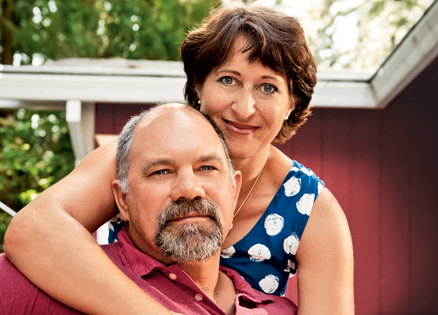
Pam Van Ahn and her sister Jean spent four years providing respite care to family caregivers who couldn’t afford a break. But Van Ahn wanted to do more to help full-time caregivers manage the stress of looking after a loved one.

She founded Amy’s Place, a memory care café where family caregivers of loved ones with dementia, Alzheimer’s and other cognitive illnesses can socialize and find support. Though memory care cafés are popular in Europe and Australia, they’re less known in the States, and Amy’s Place is the first free-standing café in the country. Van Ahn discovered the useful community building idea online.

“Really, [the memory care café idea] just came up in a search,” Van Ahn tells Guideposts.org. “You could even download a toolkit on how to create one.”

The concept was first created by a Dutch psychiatrist, Dr. Bere Miesen, who noticed dementia was a taboo topic, even amongst family members. In 1977, he introduced the first memory care café in the Netherlands to make a safe space for caregivers to support one another.

That seed, planted over 40 years ago, traveled decades, and thousands of miles to reach Van Ahn during a crucial time in her own life. A Registered Nurse for 15 years, Van Ahn moved down south when her mother, with whom she was never particularly close, became ill. Van Ahn became her live-in caregiver and felt the effects of the job first-hand.

“It was scary,” Van Ahn says. “My mom was mean. She was mean to us her whole life but there are lots of those kinds of stories out there. We have to be very, very careful in the fingers that we’re pointing at people who are caregivers when you hear these comments like, ‘Gosh. She’s so mean to him,’ or, ‘She won’t even visit him,’ or whatever. There’s a reason for the behavior for people with Alzheimer’s and there is a reason for a caregiver’s behavior too.”

Her mom passed a year later, and Van Ahn was left in the middle of a life crisis. She had moved her entire life to a different state and didn’t have a full-time job anymore. More than anything, after experiencing what it took to be a caregiver to someone with dementia, she wanted to help others weather that particular storm. She found Dr. Miesen’s idea interesting because it fulfilled a need she had been wanting to address for some time.

“We’ve done a really good job of bringing this thing called Alzheimer’s disease out of the closet and trying to reduce the stigma,” Van Ahn says. “But where we are failing miserably is helping these caregiving families remain socially engaged.”

For a caregiver, social outings are greatly limited when providing round-the-clock care to a loved one.

“There are trips to the doctor’s office,” Van Ahn says. “If you’re lucky, maybe you get to go to Kroger or Publix. That’s an outing to get groceries. They’re just not involved, socially, anymore. Many of these families can’t afford to be. You must pick and choose. Church? You can’t even go to church anymore because the person with the disease is suddenly scared in the church that you’ve gone to for 30 or 40 years.”

When she was caring for her mother, Van Ahn would regularly attend support group meetings for caregivers, but she said even those felt lacking in ways. As educational and beneficial as they were, she didn’t want the precious time she had to herself to morph into more time on the clock.

“Ninety percent of everything that we do at this place called Amy’s Place is social,” Van Ahn says. Her non-profit Caring Together in Hope, and Amy’s Place, the Memory Care Café, put on over 100 free events per year geared towards caregivers and their families, things like pizza parties, spa days, painting classes, along with more essential needs, like haircuts, free dental exams, eye exams, and hearing tests. They rely on donations and the help of local business to sponsor these events, to help provide transportation when necessary, and they usually take place at the café, a beautiful two-story home in historic downtown Roswell, just 20 minutes outside of Atlanta.

After researching Memory Care Cafes and reaching out to experts like Dr. Jytte Lokvig, an Alzheimer’s specialist who set up the first “pop-up” Memory Care Café in Santa Fe, New Mexico, Van Ahn knew she wanted to set up shop in a place that felt like home, one where caregivers and their loved ones could feel at ease. She applied for a 501c3, wrote grant proposals for endowments from local foundations, and met with the mayor of Roswell to ensure her nonprofit could be housed in the city.

“We didn’t want it near a strip mall or anything medical, we wanted it in a neighborhood,” Van Ahn explains. She hopes the location alone can foster friendships and a feeling of community, which is the café’s biggest goal.

“When they’re here, they’re not talking about Alzheimer’s or caregiving; these people are talking about their children, their grandchildren, the weather, stuff that you and I would talk about if we went out for lunch,” Van Ahn says.

And while the Café does offer educational resources and some financial aid, after surveying its members, Van Ahn found people visiting didn’t want more classes on how to be a good caregiver, they just wanted a change of scenery and some social interaction.

“There’s a lot of great classes out there about how to be a good caregiver,” Van Ahn says. “That really is important to me, but it’s less important to me than it was even five years ago. When we started this we thought, ‘This would be great for caregivers to come to,’ and the ultimate compliment, the most wonderful thing that happens here, is when these caregivers create new friendships that they made here. That’s when you know that you have done something right.”
Alzheimer’s Disease: Comedy Improv Is a Surprising Resource

Grace, my teenage daughter, sat on our couch with my 87-year-old mom, goofing around on her phone. “You need to do homework,” I reminded her.

Something stirred inside Mom. “Don’t you tell her what to do,” she said.

“That’s my job,” I said lightly. “I’m her mommy.”

She stared at me. “You’re not her mommy.”

Grace’s eyes widened. “Well then, who is she?” Grace asked.

Mom struggled to come up with an answer, but I was ready. “She is my daughter,” I insisted. “And I am your daughter.”

​“You. Are. Not. My. Daughter,” Mom said, her face pinched.

That stung. Not her daughter? I was the youngest of her six kids, and we’d always been close. Couldn’t she see the love I had for her? Intellectually, I knew this was a symptom of her dementia, but tell that to my heart.

Enter my husband, Mondy. “Virginia,” he said to my mom, with theatrical flair. “I’m organizing a heist tonight. I need you to drive the getaway car.” Instantly the tension was swept away. Mom sat up, smiling, saying, “I’m calling the police on you.” She knew he was joking and enjoyed foiling the scheme.

Why couldn’t I be more like Mondy? He didn’t contradict Mom. Instead he played off her—the more madcap, the better. It was like watching two wacky improv comedians. I knew what he was doing. How he did it, even. I was the one who’d told him the ways improvisation and dementia care were similar. Yet there I was again, like the straight man in a comedy sketch who was never in on the fun.

That was how I’d met Mondy in 1990, doing improv comedy. I was living in Milwaukee, Wisconsin, doing administrative work for an improv group, when a friend invited me to join a troupe doing a Monty Python revue. Mondy was part of the troupe. No one could make me laugh the way he did. We started performing together. His razor-sharp intellect, my physical humor—we were a great team. It seemed natural that we’d make a life together.

But with the laughter came sadness. My parents were living in Illinois, enjoying retirement, when Dad started showing signs of dementia. Mom threw herself into caring for him. She’d always been happiest when she was busy. She’d thrived on running our household, raising the six of us, making sure we had a strong spiritual foundation.

In the end, the strain of caring for Dad was too much. My parents moved to St. Louis, Missouri. Mom moved in with one of my sisters, and Dad entered a long-term care facility.

I wanted to understand this disease that steals more than memories—it threatens who we are. One night I typed into Google “What are the rules for caring for someone with Alzheimer’s?

Reading through the results, I came across this line: “Step into their world.” A basic tenet of improvisational theater. Don’t argue the premise. Build on it. Don’t say no. Say “Yes, and…” It felt like a message meant just for me. Caregiving for a loved one with Alzheimer’s takes a toll on even the strongest among us. This was a way I could make a difference, teaching people how to defuse conflicts using the principles of improv.

I came up with a presentation and asked caregiver support groups if I could speak to them. When Mondy didn’t have an acting gig, he’d join me and we’d do our two-person show. “This is just what I’ve been looking for,” family caregivers would tell me. Word spread. I retooled the material for corporate team-building workshops too. Soon I was getting paid to share my advice.

Dad died in 2000, when Grace was two. Mom was 75 and spent summers with us. She doted on Grace. But several years later, it was clear she was having trouble. One day, my sister called from St. Louis. “Mom got lost driving home from the grocery,” she said. A six-block drive. My sister worked full-time. Mondy’s and my schedules were more flexible. We decided Mom would move in with us. But we couldn’t do that in Milwaukee. Our families were too far apart.

“What about Asheville, North Carolina?” Mondy suggested. “You’d have two sisters close by.”

Asheville’s thriving arts scene would be perfect for Mondy’s acting and commercial voiceover work. Surely I’d be able to find speaking engagements. We took a leap of faith and made the move in 2006. What we didn’t foresee was the recession. Mondy couldn’t find work. I struggled to get bookings as well.

With both of us caring for Mom full-time, Mondy and I took on different roles. I managed Mom’s meds, helped her get showered and dressed, made sure she ate a healthy diet. I wasn’t looking to turn our interactions into a comedy sketch. I just wanted to get to the next thing on my to-do list. Seeing to Grace. Chores. Making new contacts for speaking engagements. My workshops were our main source of income.

Mondy? He was Mr. Fun. All the improv techniques I’d been teaching were second nature to him. He liked performing. Without regular acting gigs, he turned his creative energies toward Mom.

Seeing a squirrel out the window, leaping from branch to branch, she mistook it for a monkey. Mondy would go with it. He’d say, “Yes, and it seems a bit early for monkey season.” Mom would giggle and say something even sillier. “Yes, and…” Mondy would reply. Round and round they’d go. When Mom said she used to roller-skate down our street as a girl, Mondy said, “Yes, I can see you zipping by.” It didn’t matter that Mom had grown up in West Virginia, not North Carolina. Mondy was all about affirming. Getting her talking. Mom thrived on the attention.

It was so obvious. But too often I couldn’t do it. I found myself correcting Mom, trying to get her to be who she was. She gravitated to Mondy. He could do no wrong. Me? By trying to get her to be the mom I knew, I made her feel as if she were wrong. “Why are you so mean?” she’d ask.

Things got worse after Mom was diagnosed with diabetes. I had to be even more careful about her diet. Mom didn’t understand why she couldn’t have a second bowl of ice cream. Sometimes she’d lash out and curse at me. My mom, who was so sweet she considered shoot a swear word.

I was frustrated. “What am I missing?” I asked Mondy.

“You know what it is. She’s your mom,” he said. If it were my mom, I would be in your shoes.”

I knew he was right. I wanted to be able to have a real conversation with Mom, to talk about my daughter and hear my mom’s perspective. To be as connected to her as I’d felt growing up. Grace had been writing down the family stories Mom often repeated. One day we’d treasure them. Right now, though, what I wanted most from Mom was something she couldn’t give me.

Maybe that’s why it hurt so much that night to hear her say, “You. Are. Not. My. Daughter.” I needed to prepare for a presentation, but long after Mom had gone to bed, I sat at my desk, her words echoing in my mind. I had no clever comeback, no way to handle this. Yes, and? No, I just couldn’t go there.

We’d been living in North Carolina, living with Alzheimer’s, for nine years by then. In some ways, our lives were more stable. Mondy had purchased a local beeswax candle-making company. He’d moved the works to a barn on our property, enabling him to work from home. Grace had grown into a mature and responsible teenager. We were active in theater in town. Acting was less a source of income and more a welcome release. My sisters subbed for us, allowing us to take a weekend away as a family from time to time. Dementia may have overtaken her mind, but physically

Mom was strong. I was convinced that the stimulation she got from us, Mondy especially, was part of the reason. Mom might have been healthy, but the disease was progressing. She was less verbal, more resistant. Everything was a battle. She didn’t want to get dressed. Didn’t want to go to bed. Didn’t like the meals I made.

I got up from my desk and walked to Mom’s room. I stood in the doorway for a while, watching her sleep. She’d been the first to laugh at my jokes. She’d bandaged my knees when I fell, taught me God was there when I was afraid. That woman was still there, but her memories weren’t. And I wasn’t that little girl anymore. We’d both changed, but I was the only one clinging to the past.

In improv, there’s no clinging to a particular role. In seconds, you can go from being a waitress to an astronaut. It’s about accepting whatever comes. The way my mother had said God accepts us. With all our flaws and weaknesses yet loving us anyway. The pain I felt wasn’t just that I was losing my mom. I felt I was losing part of myself. I had to let go of it all. Maybe in Mom’s eyes, I was no longer her daughter. That didn’t make me love her any less. I could still be a part of her world, if I was willing to join her there.

A few days later, I took a call for a booking on the porch, where I could talk without Mom joining in. When the call ended and I went back into the kitchen, there was Mom devouring Moose Tracks ice cream right from the quart. Her blood sugar was already high from getting into Grace’s Easter candy that morning. This was dangerous. I wanted to yell, “You can’t have ice cream! You have diabetes!” But I caught myself. “It’s such a hot day,” I said. “I’m glad you found the ice cream.”

Mom looked down at the carton. “Let me get you some,” she said. She set the ice cream on the counter and opened the cabinet to get a bowl. I grabbed the Moose Tracks and stuck it back in the freezer. When Mom turned, I said, “Thanks for the bowl. Could you fill it with water? I’d like to put it on the porch for the dogs.” Mom smiled, happy to help.

People with Alzheimer’s are told what they can’t do, what’s not true, what not to say, at every turn. Of course, they shut down. Who wouldn’t? From then on, I acted more like Mondy and made “Yes, and…” my go-to response. My relationship with Mom eased, even as the challenges of caring for her grew.

Last year, we moved Mom to a memory care facility. We visit her almost daily. At 92, she’s still physically fit but she doesn’t always know who we are. That’s okay. I’m glad to step into her world and love her right where she’s at.

Read more: 7 Keys to Caring for a Loved One with Dementia

For more inspiring stories, subscribe to Guideposts magazine.

Alzheimer’s and the Powerful World of Memory

I found myself thinking about Buddy today. Because of a new book I’m just starting work on.

Gracie and I met Buddy early last spring walking the Housatonic Flats, an easy loop trail that runs along the Housatonic River here in western Massachusetts. The bigger Berkshire mountain trails were still mainly impassable this early in the season. Gracie could handle them, but I’d be slip sliding away.

We ran into Buddy and his owner, both older gents, at the trailhead. Buddy was a straw-colored golden retriever mix with a white mask of age, a classic sugar face. His owner matched him with a thatch of snowy hair. There is nothing more dear on a dog than that sugar face. Nothing sweeter than an old dog.

Gracie was doing zoomies around Buddy, showing off as usual. Still zooming at five years old. Goldens never really grow up, the Peter Pans of the dog world. Buddy sat patiently, mouth agape, tongue drooping out, staring straight ahead. Bemused but a bit vacant.

“Buddy’s got a little doggie dementia, age-related,” his owner offered.

Gracie came to a stop beside him and sat, as if she understood. “He forgets stuff and gets a little confused. I found him crying the other night because he couldn’t find his way upstairs. I keep all the lights on now.”

I gave Buddy a scratch on the neck. He leaned into me appreciatively. What’s the prognosis for canine dementia? I wondered. As if he knew what I was thinking, Buddy’s owner said, “I just want him to be happy as long as possible. He’s doing okay.” Buddy looked up at his owner then rose and started slowly back toward the parking area.

“I guess he’s had enough.”

I waved goodbye and followed Gracie down the trail towards the river. We do our best thinking out in the woods, Gracie and me. Thanks to Buddy, that day I couldn’t help but think about Alzheimer’s and all of the families who suffer from this terrible disease, a thief that steals your mind one memory at a time.

My family is one. I’ve written about my mother’s battle with Alzheimer’s. Watching the disease take its infernal course was like watching my mom slowly disappear before my eyes, as she forgot everything and everyone, even herself. The question that haunts me now is, will I too disappear? Alzheimer’s afflicted not only my mother but both her sisters and one of her three brothers (the other two didn’t live long enough to show symptoms). It started with her father, my grandfather, and there is talk it goes further back. Some of my older cousins are reportedly showing signs.

The book I am writing is a sharing of my family’s experience caregiving for my mother, both the joys and the sorrows, the humor and the heartbreak, that so many of you have known, as well as my own medical exploration of my susceptibility to this disease. What can doctors tell me? Do I really want to know what might lie ahead? How will my faith play a role? My sobriety? I already detect chinks in my memory. Are they symptoms or just the expected vagaries of aging? Did we miss the early warning signs in my mother or just deny them?

As the book progresses, I will be sharing more with you about the journey, and I would love to hear about your own experiences that I may include in the story.

That day last spring I caught up to Gracie at the riverbank. She was staring out at the gray still water of the Housatonic, a few stray chunks of ice bobbing on the surface. I wondered what she was thinking or if she was just absorbing the moment, the seconds as they passed, as dogs do. Our memories are a nearly infinite constellation of moments that store up over a lifetime, a way to remember who we are…and whose we are. Wherever this journey takes me, I know I will not be alone.

Read more about Alzheimer’s and caregiving here.

Allowing Faith to Ease Their Fears

I parked in the driveway of our lodge-style home nestled among towering cedars and flowering dogwoods. Even returning from an everyday errand, bringing my youngest kids home from school, I couldn’t help but admire the view and feel blessed.

John and I had milled each log ourselves, back when our family business doing custom milling was just getting started. I dreamed of growing old here, our six children getting married in the backyard. Emma’s November wedding was only eight months away.

Strange, I thought. There was a white piece of paper taped to the front door. “Look,” I said, “maybe someone’s invited us to a party.”

Ten-year-old Jack, my youngest, grabbed the note off the door and handed it to me. “What is it, Mommy?”

My eyes fixed on one word: FORECLOSURE. I stared at it in disbelief. John had been trying to refinance. There has to be some mistake.

“Mom, are you okay?” Amy, my 12-year-old, asked.

I forced a smile. Stay calm. Don’t scare the kids. “It’s nothing,” I told them, shoving the notice into my pocket. “Go get a snack. I’ll come inside after I call Dad.”

I punched speed-dial 1 on my cell. “John, I just came home to a foreclosure notice on the door.”

“What?!” he said. “I thought they’d give us more time. But please don’t worry, honey. I won’t let it get to auction.”

Don’t worry? “John,” I said, fighting to keep my voice down, “I knew we were behind, but you didn’t tell me we’d missed another house payment.”

Silence. “I’m sorry,” he finally said. “I’ve been praying a big job would come in. Something. I didn’t want to upset you for no reason.”

No reason? A stew of emotions boiled up inside me. Anger, fear, sadness—I pushed it all back down, like trying to shove a beach ball under the water. Blowing up at John wouldn’t help. I knew how our business was struggling. No one was building or remodeling.

Even worse, we’d bankrolled everything with a home-equity loan. We could lose everything.

No! I couldn’t let myself think like that. We’d been through tough times before. God had always come through for us. I had to stay positive—for John and the kids. That’s what they needed most from me. Not panic.

“I’m coming home,” John said. “I want to talk with everyone. Then I’m going to make some calls and get to the bottom of this. I’ll work it out.”

We gathered in the living room: Jack and Amy, Scott, 14, Mark, who was taking a semester off from college to save money, and Nathan, recently back home after five years in the Marines. Only Emma was on her own.

“We got some bad news today,” John said. “We’re behind on our house payments and now the bank wants the money or they say that they will sell the house.”

“But where would we live?” Amy cried.

“It’s not going to get to that,” John said. “I’m trying to get a new loan from the bank and I’ve got some big milling jobs I hope will come through. I know this is upsetting, but we have to trust that God is in control.”

The kids looked at one another, the younger ones’ eyes panicky. As much as it worried me to think of losing our home, I hated even more seeing everyone so scared. I had to say something to make things better.

“No matter what happens we have each other,” I said. “That’s what counts.” The kids stared at me like I was speaking a foreign language.

With each passing day it grew clearer that there was nothing more John could do. Calls to prospective customers went unreturned. He applied for loan modification programs only to be rejected or be told we’d owe even more than we did.

We discovered our loan had been sold to a different lender, but they were no more willing to work with us.

“All they said is that the auction is scheduled for May,” John said. “And with penalties and fees, what we owe is nearly double. It’s like they don’t even care.” He slammed the phone into the charger.

I told myself it was just a house, just pieces of timber fitted together. We’d find a new place to live, start over. After all, that’s what we’d done when we moved here 10 years ago from Minnesota.

But then I went to kiss Amy goodnight and found her crying in her room. “I don’t want to leave,” she said. “All of my friends are here. It won’t be the same somewhere else.”

It broke my heart. I wanted to tell her I was afraid too. But she was hurting enough so I tried to reassure her, “You’ll make new friends. You’ll see, honey, everything is going to work out.”

I thought Jack was holding up better, until Scott asked if he could sleep in the living room. “Jack wakes me up every night,” he said. “I think he’s having nightmares.”

What could I do? I was afraid—no, ashamed—to tell people we were losing our house. Then in early May the auction notice was printed in the newspaper. No way to avoid it now. It was official, scheduled for the same day as Scott’s eighth-grade graduation.

I was glad for an excuse not to go to the courthouse. “They really need volunteers to help set up for graduation,” I told John. “Both of us don’t need to be at the auction.”

Inside the school gym I set up chairs. The other volunteers talked about summer vacation plans. All I could think about were the strangers bidding on our house, like vultures feasting on our misfortune. Dear God, I prayed, if there’s any chance for a miracle…

Late that afternoon John came by the school. He looked drained, exhausted. There had been no last-minute reprieve. “I’m so sorry,” he said. “I hope I live long enough to make this up to you.”

“We’ll get through it,” I choked out. I wished I could believe it.

The next morning we started packing. We didn’t know when the final eviction notice would arrive, but there was no point in delaying the inevitable. I pulled out boxes and old newspapers and wrapped my great-grandmother’s dishes.

John and the kids helped, but it felt like we were in separate worlds, grim-faced, barely speaking to each other. Around me were memories of happier times, only now it seemed as if they were all being packed away too.

We filled the boxes I had on hand. John took the kids to get more. I watched the car go down the driveway. Just an errand, but it felt like more than that, the distance between us more than I could possibly bridge.

I needed to know how to help them. Maybe if I got some advice, or could call someone. I thought of Linda, an old friend from high school. She’d gotten her master’s in psychology.

I told her everything. “It’s all I can do to keep from crying,” I said. “But I don’t want to scare the kids even more…”

“How could you not cry?” she said. “Losing your home is like a death in the family. You need to let yourself grieve. And share your sadness with your children and John. They need to know it’s okay to feel sad. Grief is a journey that leads to healing and stronger faith. But you have to go through it and not pretend it isn’t happening and your feelings aren’t real.”

I was sobbing before she even finished, tears of anger and loss, fear and regret flooding down my cheeks.

John and I had been trying so hard to protect each other, to protect the kids. But that meant each of us ended up suffering alone, hiding from the truth, when what we needed was to allow ourselves to hurt and heal together.

I thanked Linda and hung up. I sank to my knees, my whole body shaking. Hadn’t John and I always taught the kids to trust God in all things, that his hands were big enough to hold our greatest fears?

Yet the truth of the matter was, even though I’d pleaded for him to save us from foreclosure, I hadn’t trusted him with my real problem—the roiling feelings that went with losing our home and wondering what the future held.

God, I’m so mixed up, I can’t even feel you with me right now, I prayed. But I know you are bigger than my anger and sorrow and fear. I’m putting it all in your hands. All of it. And trusting you.

When John and the kids got home they could see that I’d been crying. “There’s something I need to tell you,” I said. I hesitated, the words still not coming easily. “But I don’t know quite how to say it.”

“Just tell us, Mom,” Amy said. “We can handle it.”

“I love this house,” I said. “I’m sad that we have to leave. And I’m scared too. I wonder where we’ll live and what will happen to our family. How we’ll get by. I just don’t know and I think that’s what scares me the most.”

John wrapped his arms around me and the kids gathered round. No one said everything was going to be okay. It was enough just to be together and grieve and face our challenges as a family.

It’s been more than two years now since we lost our home. We live in a smaller rental house in town. I won’t try to sugarcoat it. It hasn’t been easy. But we’ve talked more, and sharing our worries and fears has made our family closer and stronger.

We have been blessed in other ways. Emma’s wedding was held in a nearby seaside town where she’d graduated from college, and it was lovely. Our business is picking up along with the economy and we’re feeling good again. Together we’re making new memories.

Maybe best of all is knowing that it’s okay to grieve, that trusting God with our pain and sorrow gives him room to help us find the healing that only he can bring and to lead us to a future that is abundant with blessings.

Download your FREE ebook, True Inspirational Stories: 9 Real Life Stories of Hope & Faith

A Life-Changing Love

As I approached my fourth year of being a widow, my son Jon said to me one day, “Mom, you should attend singles meetings. Go somewhere. How will you ever meet anyone?”

I sat at the old oak kitchen table with Jon as he devoured a sandwich. “I can’t, Jon. I just can’t take a casserole and go to a singles meeting. I didn’t like boy/girl parties when I was thirteen. I still don’t like them. God’s going to have to send someone to me.”

“That’s crazy, Mom. Do you really think you can just sit here day after day and someone will knock on your door and say, ‘Hello. I’m your Christian husband-to-be, sent by God.’”

I brightened. Sounded good to me. “Yes, Jon! That’s exactly what I’ll do.”

“Aw, Mom, be reasonable. You have to date.”

I’d dated some. I didn’t even like the word for someone my age who’d been married for 25 years. Jon left for work and I sat alone, thinking. “Lord,” I said, “I do not want to date. I just want to be a wife again. And I don’t want to get married simply for companionship. I want a real romance. You select him. You know me better than I know myself.” About the middle of last March I added a list of some qualifications for the husband I wanted:

1. God must be first in his life. I want to be second.
2. He’s well-read and loves books.
3. Further along than I am spiritually.
4. I’d like to be a minister’s wife, but I’ll leave that up to You.
5. He has a deep sense of humor so that we can laugh a lot.
6. He’s able to communicate and have long conversations.
7. Cares about people, especially people who are hurting.
8. He will allow me to write and speak as long as You want me to.
9. He needs me.
10. There must be romance. Sparks!

In the weeks that followed, thoughts that I believed were from God eased into my mind. I’m going to answer your prayer for a husband. The answer will come very quickly—so fast it will scare you if you don’t trust Me completely. The answer will come through a phone call from a Guideposts reader in response to an article.

“When will I know for certain, Lord?” I asked.

By your birthday.

So by July 8 I should know something.

In April Guideposts published my article on depression. That article evoked responses from quite a few men going through the pain of losing their wives. Phone calls and letters became fairly common—from the Atlanta, Georgia, area, as well as other states.

On April 8 I received a telephone call from a professor of sociology at Oklahoma State University in Stillwater. He lived on a small farm with some cattle, a grown son and a red dog. He was also a minister. Our conversations quickly became a regular thing, three or four times a week. I was corresponding with several other men too as a result of the article and had gone out with several from the Atlanta area. But pretty soon the professor/minister/farmer and I were writing almost every day. Our letters weren’t love letters exactly, but there always seemed to be something between the lines, and I easily understood the unwritten messages.

Sometimes Gene Acuff enclosed a blank sheet of paper without explanation. “What’s the blank paper?” I finally wrote.

His answer was immediate: “Things I want to say to you that you aren’t yet ready to hear.”

Gene planned to come to Atlanta to see me. He says that I invited him, but I didn’t. “What do you want to see?” I asked. “Where do you want to go?”

“I just want to see you. No parties, no big plans. I want to walk with you, talk and laugh. I want to sit in a porch swing with you and I’d like to go somewhere under a tin roof and listen to the rain with you.” I was smiling as I held the phone. I smiled a lot when we talked. We were talking six to eight hours weekly. My mother said I had a certain light back in my eyes again.

Of course, I carefully told myself this wasn’t serious. We didn’t really know each other. We’d just get acquainted, have some good conversation and good food, and relate our experiences of grief and loss. Gene’s wife of 25 years had died in February 1987 of an 11-day brain-related illness. His loss was much too recent for us to be serious. I had no way of knowing then that when Gene read my article on depression in the April Guideposts, God spoke to him: Check your wife’s Bible. If she has the same Scriptures underlined that Marion used in the article, phone her right away. She did and he did. Although neither of us understands it or can explain it, he says God told him then, She will be your new wife.

On my 51st birthday I went to get the mail as soon as I saw the mailman put it in the box. I knew a letter from Gene would arrive. He’d already sent me a dozen red roses. There had been some mention of photographs. So far, all I had was a very small family portrait taken several years ago. I wanted some new pictures but wouldn’t ask for them.

There were two letters, one so thick I knew it was the promised pictures. I was late for an appointment and it was terribly hot, so I sat in my car with the air conditioning going full blast and read the letters. Just as I opened the pictures, God seemed to say, Put the tape lying on the seat in the tape deck. I glanced on the seat. Yes, there lay a tape. Several days earlier all my Christian tapes had been stolen. The police returned them a few days later and by mistake included a country-and-western tape, which I’d meant to give back. I’m definitely not a country-and-western music fan. But I knew Gene was, and I had this funny feeling that something big was about to happen. Playing this tape seemed absolutely crazy, but this whole adventure with Gene Acuff was crazy, so I put the tape in.

Jim Reeves began to sing incredibly sweet songs about love, including an old favorite I hadn’t even thought about since I was 16: “Evening shadows make me blue, when each weary day is through…how I long to be with you…my happiness.”

Tears blurred my vision, and I whispered aloud over my pounding heart, “God, you can’t possibly be speaking to me through a stolen country-and-western tape!” I had the photographs in my hand. I looked intently at Gene’s smiling face and then at his dog. The dog was smiling too! His expression clearly said, He’s pretty wonderful. Gene wrote, “If I could take you out on your birthday, I’d pick you up in my old ’41 Chevy, and we’d go to a 1950s movie and eat popcorn and drink Cokes from the little bottles, and of course we’d eat Milk Duds at the movies.”

“Milk Duds,” I screamed over the music, my heart melting like hot butter. No one knew of my passion for Milk Duds. How could Gene Acuff know? Jim Reeves was singing “Have I Told You Lately That I Love You?” I was humming along and trying not to cry on the photograph—as I drove to my appointment an hour late.

That night Gene phoned, and as we were about to hang up he said for the first time, “I love you, Marion.”

“Thank you, ‘bye,” I answered curtly and hung up. He said the same thing two nights later and I said the same thing. Only this time I hid under my pillow after hanging up and said, “Oh, God, I don’t know how to handle this.”

The third time he told me he loved me, there was a long silence. Then Gene asked, “Are you going to say what I want you to say?” I took a deep breath. I knew I loved him. It was as though I were a child about to jump off a high dive that I’d tried to jump from many times during the summer. “I love you, Professor Acuff. I really do love you.” I had often wondered what his response would be if I ever said those words. His response wasn’t to me at all: “Thank You, Lord. Oh, thank You. Praise You, Lord Jesus.”

July 27, the date of Gene’s planned arrival, finally came. The waiting had been almost unbearable. I had lost 12 pounds and was hardly sleeping. The phone rang at noon, right on schedule, and a voice I knew so well said, “Hello.”

“Where are you?” I asked.

“Stone Mountain Inn.”

“I’ll be there in ten minutes.” Driving to the inn, I could hardly believe it was finally happening. We were actually going to meet. Stone Mountain Inn is a resort just 10 minutes from my house. I pulled in the driveway. Someone honked at me. Looking in the rearview mirror, I recognized Gene. I thought about sitting in the car and letting him come over. But just like in the movies, we moved very fast toward each other. I left my car running in the middle of a driveway, the door open. My sunglasses dropped on the pavement. Just as we embraced, I remembered some strict advice I’d given my girls when they were growing up: “No public display of affection, ever.” But right then in the middle of the parking lot in broad daylight with people all around us, we kissed. I lost count of the times.

I had planned a picnic for just the two of us the next day at my cousin’s 150-year-old renovated farmhouse located on 600 acres in northeast Georgia. It is sort of a getaway for them and furnished in antiques. I thought Gene would feel at home there. There were even cattle and three swings and a tin roof. Sitting on a quaint loveseat in front of a stone fireplace, Gene started to ask if I would marry him in December.

I suddenly experienced a full-fledged ulcer attack. The stress had been unbearable. We were deeply in love and knew God had brought us together. But he had to return to Oklahoma to teach, and I didn’t see how I could just pull up stakes and go with him. My two boys, almost 20, lived with me. I was paranoid about leaving them alone for even a night, certain they would break some of my rules. Also, my two married daughters and two granddaughters lived nearby. Jennifer, the younger daughter, was expecting her first child. My widowed mother lived less than an hour and a half away. All my dearest friends, my world, was in Georgia. I’d always lived there. And I was booked to speak for the next six months.

Gene had to move to the far end of the loveseat. Every time he came close my stomach pains intensified. He held onto my foot and asked me to marry him. I found I could tolerate foot-holding pretty well. I said yes. We talked about maintaining two separate residences and commuting often. Two days later, in exactly two minutes, we selected an engagement ring.

Then it was Sunday. Our week was over. Gene left crying, and I went to my room, crying, and fell across my bed begging God to “do something.” He somehow knocked me out. Totally. Meanwhile Gene, en route back to Oklahoma, phoned, but my boys couldn’t wake me up. When I did wake up four hours later and they told me he’d called, I somehow knew I must clear my calendar. I started phoning people, asking to be relieved of speaking engagements. In 11 years of speaking, I’d never done such a thing, except when my husband, Jerry, had brain surgery.

Later Gene called again from Tennessee and asked, “Could you marry me Wednesday?” I checked my calendar and said yes and wrote “Marry Gene” on August 12.

As it turned out, the date was moved to August 14 at seven in the evening. A small ceremony was planned. Gene never asked me to leave my boys. He was content to have a marriage in which we commuted for a while. But God told me clearly, Quit hovering over your boys. You are trying to be their god. Let Me be God to them.

Gene and I honeymooned at my cousin’s old restored farmhouse. We sort of identified with it. The farmhouse never expected to be whole and alive again with meaning and purpose. Gene and I understood something about restoration. We thought the farmhouse might like us too. Together we were almost 107 years old. The night before we left the farm, God sent the rain we’d so often talked about on the phone and written about. It was our first time to see rain together. As we listened to it on the tin roof, Gene said quietly, “Your formula works, Marion.”

“What formula?”

“The restoration formula from your book, The Nevertheless Principle.”

Oh, yes! Yes, it did work. I could remember the formula almost word for word. When I was slowly watching my husband die from a brain tumor, I carefully examined my restoration formula: “No matter what is taken away from you, if you keep your eyes on Jesus and praise Him, He will restore it to you. You will be joyful to the exact same degree you have hurt. What you have lost will be replaced…joy for mourning…beauty for ashes….God I don’t see how it could possibly work now. I don’t see how You will ever come to me again in any shape or form. But I won’t limit You, so I’m going to remember this moment for the rest of my life. And if and when You restore the years that the locusts have eaten, I will tell people about it and write about it. I am committing to You to remember this agony, and if You can come up with some kind of joy to the equivalent that I hurt, You are truly a God of miracles.

On August 22, 1987, Gene and I headed for the Atlanta airport and a new life together. I’d often said after Jerry was gone that if God ever asked me to simply walk out on everything, I would. But I had assumed that it would be for missions—Africa, not Stillwater, Oklahoma! But God had recently given me an old familiar Scripture with a marvelous life-changing message: “The Lord is my shepherd; I shall not want….He leadeth me beside the Stillwaters. He restoreth my soul….”

A Lesson Learned: We Are Never Alone

I was 26 years old when I got sick. It started with a series of high fevers, some as high as 107 degrees. Then came the exhaustion. I experienced dizzy spells and nausea on a daily basis. The symptoms lasted for months, then years.

I was starting a career in the entertainment business, working at Disney, but I grew too sick to work. Friends, not knowing what was wrong with me, dropped away. I moved out of my apartment and back into the bedroom I grew up in at my parents’ house in Los Angeles.

Most days I could barely get out of bed. I saw doctor after doctor. I prayed. No one could figure out what was wrong. I couldn’t believe what was happening to me. Slowly but surely I was being cut off from everything I’d built my identity on, everything that meant life to me.

I tried to believe what my mom told me—that despite how things looked, God was at work in my life—but the more my illness isolated me, the harder it was to hold on to.

One February day two years into my ordeal, I had a conversation with God. More of a one-sided confrontation, really.

“You didn’t promise me that bad things wouldn’t happen. You didn’t promise that friends would still be there, or that I would get the answers I was after, but you know what you did promise?” I’d studied the Bible, read Psalm 23 closely. I knew I had a case. “Green pastures. Still waters and green pastures. Where are my green pastures?”

A week later I woke up early one morning and realized I couldn’t stand another day trapped in my bed. Not when everyone else my age was moving on with life. I made an impulsive decision. I always felt best in the morning, so I packed my car and told my mom, “I’m going to drive to Menlo Park today.”

During college I’d spent several months in the Silicon Valley town of Menlo Park, near Stanford University, helping my dad set up a branch of the medical company he runs. I’d attended Menlo Park Presbyterian, a big, active church with a thriving youth program. I loved that church and I loved that time in my life.

I could tell Mom was worried. She’d been taking care of me every step of the way, and she knew me better than anyone. “There’s a big storm coming,” she said. “The roads will be a mess. Are you sure you want to go now?”

I nodded. Even though I was in no shape to drive 400 miles north in the rain, I just had to do something.

“Really, Mom, will this storm be any worse than the one we’ve been going through?” I said, cracking a smile. “If I don’t go now, I might never get on with my life.”

Mom looked at me. “I understand why you need to go,” she said. “But I don’t think you’re stuck. We don’t know God’s plan here. He knows your heart and you just have to trust him.”

It poured the whole drive up. And it was still pouring when I arrived in Menlo Park. I made my way to the church. A pastor remembered me and signed me up to work with the youth program, where I could use my entertainment background to write dramas.

Then I ran into an old friend and she told me about a family who put up church volunteers. I could stay with them temporarily.

She gave me directions, and I set out for their house. It was dark and raining harder than ever. Normally I went to bed in the late afternoon. I hadn’t been up and active this long in months. I tried to ignore the exhaustion creeping up on me.

Soon I left the brightly lit streets of Menlo Park and began winding on dark, lonely country roads. The rain blurred my windshield. I turned the wipers on high and peered out. Where was God? Why had I thought he wanted me to do this?

Even if I found the stamina to work with kids at Menlo Park Pres, how would that help my illness? Every doctor I’d seen had agreed on one thing: I needed rest to fight whatever was attacking my body. I’d just driven 400 miles away from my place of rest.

Trees flashed past my window. I glanced at the directions. They didn’t say a thing about the road winding down into some sort of valley. Even with my high beams on, I could hardly see a thing. It felt like my life, descending further into confusion and darkness with each new turn. What was I doing wrong?

The words from Psalm 23 that I’d asked God about a week earlier were so clear about his promise to those who follow him. Yet I was still waiting for those green pastures.

An intersection. I slowed down. Here was the street. I turned and drove along another road. Finally the address in the directions. I parked. I grabbed my bag and made my way through the rain to the front door. I met the family and was shown to my room.

It was simply furnished with a double bed and a desk. The blinds were closed on a large window above the bed. I sank onto the bed. Cliff, what are you doing here? I asked myself. I crawled under the covers.

Rain lashed the windowpane. I was warm and dry, but I had never felt more alone. I prayed one last desperate prayer for peace before I fell asleep.

The next thing I knew light bathed my face. Groggily I opened my eyes. It was morning. The rain had stopped. Rays of sun slanted through the blinds above the bed. I reached for the cord. The blind inched up.

For a moment all I could do was stare out the window. Rolling hills, stretching as far as I could see. Last night I’d thought the road was descending, but it was actually rising. The house wasn’t in a valley. It was perched atop a hill, overlooking a majestic landscape. The grass, still wet with last night’s rain, glimmered, a brilliant vivid green.

Green pastures. Here, in the darkest valley of my life, God was present, as he had been from the moment I’d gotten sick. At every turn he’d met me—with his presence, with my parents’ support, with my mom’s loving care and unwavering faith. Who do you trust? a voice seemed to say. Who is your God?

I knew my answer. You are. You are the One I trust.

As it turned out I had to keep trusting for a long time. I was in Menlo Park only a few months before my illness forced me to return to my doctors in Los Angeles and to my parents’ house. It was another five years before a specialist at a research hospital in Los Angeles finally figured out what was wrong with me.

My system was infected with a rare drug-resistant bacteria. The high fevers and exhaustion were the effects of my body’s attempt to fight off the bacteria. The specialist had me try a 10-day, water-only fast to starve it out of my system. It worked. I regained a measure of health, but it took several more years to regain my strength.

I’m finally healthy now and am enjoying a successful career as an author. Some days I let my mind go back to my long ordeal. I wouldn’t want to go through it all again, but I wouldn’t change the work God has done in me.

I can still see those green pastures stretching to the horizon, pastures so green and beautiful that I could not fail to see the purpose of my being brought there. For seven years I was sick, but not for one moment was I alone.

Three Tips for Dealing with Chronic Illness

1. Pray and praise.

Prayer is the one resource everyone has when everything else seems gone. Pray in whatever way works for you, with words or silently. And praise. It is the quickest way out of the valley.

2. Don’t blame yourself.

People with chronic illness often feel their condition is their fault. It’s not. Focus your energy on healing, not on laying blame.

3. Trust God’s promises.Nowhere in scripture does God promise a life free of suffering. But the Bible is full of God’s promises to love us and be present when we hurt. Some of my favorites are Psalm 23:2, 1 Peter 5:10 and Psalm 91:11. And Psalm 103. I turned to that scripture so often that it’s the only page that has fallen out of my Bible.

For more inspiring stories, subscribe to Guideposts magazine.

A Leap of Faith

Today’s guest blogger is Laura Epps.

Out of the blue, in January, my sweet friend Adriana called and invited me to the upcoming Colors of His Love Christian Women’s Conference (founded by La-Tan Murphy) in Raleigh, NC.

To seal the deal, she even volunteered to pay my conference fees. I knew that God wanted me to go, but I didn’t know why. I was so excited because I’d convinced myself that I was going to receive my commission.

Adriana and I stayed an extra night beyond the conference to ensure a safer drive home in the daytime. At dinner that evening, I simply asked, “How’s business?” Adriana had her own business in Charlotte, NC.

“Actually, business is great. I’ve got a position that you’d be perfect for.” This simple conversation led to her offering me a job with her company, and I adore her. “Move to Charlotte,” she urged. I didn’t quite know what to say, and I was taken aback by the magnitude of her offer.

I had a week to make up my mind, but I’ve never made such a decision by myself before. I’d been somebody’s wife for close to 20 years, and I’m new to this whole single mom thing.

I decided then and there, the most important person I could ask was God. I circled it in prayer. I wrote it in my prayer journal. I prayed about it every morning and every night. What would God have me do? Where would God use my talents?

On a Friday afternoon, I went to run an errand at the local office store after I picked up my youngest from school. There I met a stranger named Phil. We started chatting, and I briefly told him about my big decision.

Phil twisted the end of his curled-up moustache and said, “Move to Charlotte. You’ll think I’m crazy, but I’m going to tell you anyway. Move to Charlotte, and you’ll meet your true husband.”

I must have looked at him in disbelief because he added, “Sometimes… you just have to take a leap of faith.”

On Saturday, I got a call from my friend Glenn, and he asked me about the conference. I told him about the job opportunity in Charlotte. To which, Glenn responded, “I’m going to miss you and all, but move to Charlotte. You’re educated; you’ll die in this little town. Go to Charlotte, and please still talk to me after you meet your new husband and get married.”

I guess I hesitated before responding, and he added “Sometimes… you just have to take a leap of faith.”

The next day, my youngest and I went to church. I was standing on the steps of the church when the youth ministries lady approached, and I told her about the big decision.

Again, I was greeted with the same advice I’d heard before. “There’s nothing in this town in the way of work much. Go to Charlotte. I know it’s scary, but sometimes…. you just have to take a leap of faith.”

Early in the week, I decided I’d call my dad and ask for his input. I’ve learned through the years, that my dad is a smart cookie.

Dad surprised me. His response: “How old are you now? 47? I moved to California and took all of you with me at 50, and it was the best thing I’ve ever done. It might be good for you and the girls too. You and the girls need a fresh start.”

We got to talking again about the Christian Women’s Conference where this all transpired. To which dad replied in his Southern drawl, “well sugar, sometimes…. you just have to take a leap of faith.”

There may be some of you out there wondering, “where’s God in all of this?” Often, God works through people to send us an answer, but it doesn’t replace your digging into the Word and finding those answers for yourself.

If I still had any doubt, that night in my devotional, I came across Hebrews 11:8-9:

By faith Abraham obeyed when he was called to go out to the place which he would receive as an inheritance. And he went out, not knowing where he was going. By faith he dwelt in the land of promise as in a foreign country, dwelling in tents with Isaac and Jacob, the heirs with him of the same promise.

In this devotional, it was as if God wrote this passage as a love letter to me. Sometimes… you just have to take a leap of faith.

I believe that God honors that first step of ultimate trust in Him. I don’t know where you’re coming from in life, but sometimes, you just have to be obedient to the limited knowledge you do have. As for me, my daughters and I move to Charlotte on June 15.

Laurie Epps is a freelance writer, essayist and poet. You can find her work in many independent publications, on and off the web, including Random Thoughts on Being Human. Until June, Laurie calls the upstate of South Carolina home with two of her daughters.

A Job Loss Helped Her Find a New Purpose

On a beautiful June day seven years ago, I lost my job. It wasn’t unexpected. The website where I’d worked for 10 years had been sold to a publisher in another state, and my colleagues and I were waiting for the axe to fall. Most of us were laid off that day. When it was my turn, the HR manager and I cried a little together. She understood that my situation was different. I was 63 years old while most of the other staffers were in their 20s and 30s, their careers still ahead of them. Was mine over? Who would hire me? How would I earn a living? And who would I be without a job? For 40 years much of my identity had been wrapped up in my work.

This was in the midst of the economic recession. For the next two years, I job-hunted (no luck), did freelance writing, and volunteered once a week as an after-school tutor. The frantic pace of my life subsided. After many years of commuting, rushing between home and job, between raising kids and pushing ahead professionally, there was quiet. In those silent spaces, I had time to ask myself what I really cared about.

Intuitively I came to an answer. I cared about young people and was concerned about their future. But that was a pretty broad-brush outline. How could I fill in the details? What contribution could I make to creating a better future for the next generation?

At that point, my husband shared an idea he was mulling. Ken had retired from a varied career in social work, government, real estate, and life and career coaching. We had often discussed that, as bad as the economy was for my job prospects, the effects of the recession were even worse for young people just starting out. Burdened by huge education debt, unable to find even an entry-level job, many were feeling hopeless and stuck. They were in danger of becoming a lost generation. Ken’s brainstorm was to start a free program in which coaches and mentors would volunteer to help unemployed and underemployed young people launch their careers. “Let’s do this together!” he urged.

It felt right. I’d enjoyed mentoring younger people at work, and this fit with my desire to assist the next generation. We started in a small way–putting up a flyer at the local YMCA to find recent college grads who wanted coaching. Through my husband’s coaching contacts, 25 wonderful life and career coaches signed up to volunteer. Grad Life Choices was born!

Five years later, we have 85 certified professional coaches all over the country (including Alaska) whom we match with college grads in their 20s. The young people find us on the internet and through word of mouth. Coaching is done by phone or Skype, so location doesn’t matter.

So far more than 220 grads have received coaching, and 55% have found career-track jobs within a few months of finishing the program. Ninety percent have rated the coaching positively and say they are closer to their goals.

Over the course of 12 one-hour sessions, the coaches help them figure out what work aligns with their values, skills and passions, and then assist them in making a plan to more forward–including helping them with résumés, networking, interviewing, and job search strategies.

One of our hopes was to level the playing field for economically deprived young people without contacts or support to access good jobs. So we were surprised and happy when it turned out that many of those reaching out to us were first-generation college grads, some even the first in their family to graduate from high school.

In exchange for the free coaching, we ask all the young participants to “pay it forward” to someone who needs their help. We explain that we won’t know whether they do or not, but the potential is there to create a ripple effect of kindness spreading outward in unforeseen ways. In fact, a number have offered to mentor other grads in the program.

Wendy Schuman is a former editor of Beliefnet.com and Parents Magazine. She is co-founder of Grad Life Choices (www.gradlifechoices.com) and co-author of the forthcoming book, “Millennials in Wonderland.”

A Hunger of the Soul

Let me tell you about an African woman named Leonida Wanyama. For Christmas dinner her family had boiled bananas. That’s all there was. In the hills of western Kenya, Christmas comes during the dry season when fall harvests are often already depleted.

Farm families live on tiny portions of corn, tea, bananas, sweet potatoes, beans and a few vegetables. Babies cry with hunger. Children’s eyes dull with exhaustion. It happens every year. Here, as in so many parts of Africa, farmers, the women and men who grow the food, go hungry.

Except that this year Leonida Wanyama vowed that things would be different. A neighboring farmer had told her that an American organization called One Acre Fund was looking for farmers willing to try something new.

If the farmers agreed, One Acre Fund would supply them with hardy seeds, a bit of fertilizer, credit to pay for it and classes teaching modern farming methods. “They promise you will grow more than you have ever grown,” the farmer told Leonida.

Leonida is a woman of faith. She leads the choir at her village church. She prayed about the farmer’s offer Feeding Africa and studied her Bible. She came to this passage in Exodus: “I have promised to bring you up out of your misery in Egypt into a land flowing with milk and honey.”

Was this offer from One Acre Fund God’s deliverance from a lifetime of hunger? Leonida didn’t know. She decided to trust anyway.

I met Leonida for a very simple reason. My life, too, was changed by a verse from Scripture. Though in my case the verse was from Matthew: “For I was hungry and you gave me food.” Those words gripped me the moment I read them. I’m not sure why.

I grew up in a place vastly different from Lutacho, Kenya. I was raised in Crystal Lake, Illinois, outside Chicago—the heartland, where modern farming methods have produced harvests that are the envy of the world.

Teachers at my Lutheran grade school made us memorize Bible verses. That verse from Matthew planted itself in my heart like a seed.

For a long time the seed lay dormant. I became a journalist, traveling the world covering stories. In 2003 I landed in Ethiopia to report on a famine for The Wall Street Journal. I walked into an emergency medical tent filled with severely malnourished children. A farmer was there with his five-year-old son.

Just one year earlier the farmer had carried surplus sacks of grain to sell at market. Now he carried his starving son to this feeding tent. His son weighed 27 pounds. I stared into the boy’s eyes. Emptiness stared back at me. For I was hungry….

I left that tent struggling to understand how such misery could exist in the twenty-first century, in a world bursting with food. How could a farmer, a person who brought food out of the ground…be hungry?

I tried to answer these questions by writing newspapers stories and a book about hunger. Poor African farmers, I learned, struggle to grow enough because they don’t have access to the high-quality seeds and fertilizers that have revolutionized farming in developed countries.

Global agribusinesses considered them too poor, too remote, too insignificant. Their own governments and international development agencies similarly neglected them.

Things never change because when harvests are bad aid agencies rush to ship food from America and Europe instead of helping Africans raise their own crops.

Right now almost one billion people around the world are chronically hungry. Unless global agricultural production nearly doubles by 2050 to meet the demands of an increasing population, there will be shortages and rising prices and perhaps even riots and wars over food.

The simple reality that people are not getting enough food could destabilize the entire world.

I learned a lot. But the deeper I dug, the more dissatisfied I grew. Global food problems can seem overwhelming. Yet Jesus’ words are so simple: For I was hungry and you gave me food. Where was God in this problem? I wondered. Where was the solution?

One day, in the middle of a Chicago snowstorm, I sat down for tea with a young man named Andrew Youn. Andrew was the founder of a tiny nonprofit organization called One Acre Fund. I was curious about his work; he wanted to learn more about a book I’d written on global food problems.

Andrew told me about a searing experience he’d had while in business school. He was in Africa doing research. He met a struggling Kenyan farming family enduring the hunger season. He watched a teenage girl stretch a bowl of thin corn porridge into a day’s worth of meals for her entire family.

It was an image, he told me, that lodged in his mind. Right away I knew that I had found a kindred soul.

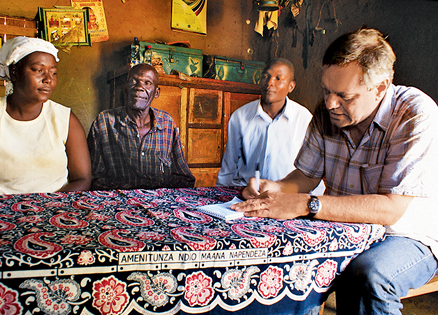
Andrew invited me to go to Kenya to learn more about One Acre Fund’s work. Soon I met Leonida Wanyama and other small farmers bravely risking their livelihoods on One Acre Fund’s promise to help them grow more food.

I had met countless African farmers while reporting stories. Something about this trip was different. Maybe it was because one of my first stops was not at a farm but at Leonida’s church in Lutacho.

It was there that a One Acre Fund teacher—himself a farmer—was showing a sanctuary full of farmers how to plant seeds in rows and space the seeds out by measuring with knots tied on a string. Traditional African farmers scatter their seeds and tend them haphazardly.

The class felt like a church service. The farmers sang, prayed, clapped and shouted hosannas.

For the first time since I’d started writing about hunger, I felt a stirring of hope, a deep pulse of optimism, as if God was showing me answers to all of my troubling questions.

I decided to chronicle a year in the life of these farmers in Lutacho and the nearby village of Kabuchai, writing about their yearning to change their lives. The farmers had far to go.

Leonida was 43 years old. Hardly had a year gone by without her enduring Wanjala, what Kenyans call the hunger season when food runs out. She and her husband, Peter, lived on about two acres, and grew corn, a Kenyan staple, on half an acre.

They had seven children. Anything extra they earned went to school fees.

Another farmer I met, Zipporah Biketi, lived in a hut in Kabuchai with a thatched roof that leaked into the bedroom. Her two youngest children were given middle names for the season in which they were born, Wanjala. Literally their names meant Hunger.

And yet these farmers were faithful. When Francis Wanjala Mamati, a 53-year-old farmer also from Kabuchai, waited for his year’s distribution of One Acre Fund seeds, he bowed his head and prayed silently. The entire gathering of farmers prayed, too, for rain and a plentiful harvest.

“Amen,” Francis whispered when the prayer concluded. “Amen.”

The year did not begin well. The farmers got their seeds and fertilizer on time—enough fertilizer for one thimble-sized dab with each seed. But then the rains, which signal the start of the planting season, did not come. Each day dawned bright and hot. Sunset glowed fiery orange on the nearby Lugulu Hills.

The ground was parched and dry, too hard for the farmers’ simple hand tools. Planting on small African farms is backbreaking work, done by bending over and chipping at the soil with a short tool called a jembe. Precious reserves of food are exchanged to hire a team of oxen. No one uses a tractor.

Timing is everything . Plant too early and seeds will die from lack of water. Plant too late and the soil will be mud. The farmers prayed for guidance. One couple I met, Rasoa Wasike and her husband, Cyrus, wrote prayers on the walls of their house.

Walking into their hut I was greeted by these words in chalk: “With God Everything Is Possible.” That year Rasoa and Cyrus bought a cow in hopes that, as One Acre Fund members they’d be able to feed the cow alongside their family.

The cow would produce milk for extra income. The income would help pay school fees.

At last, in the third week of March, the rains fell. Zipporah Biketi and her husband, Sanet, awoke before dawn, gripped their jembes and began to plant. “Almighty Father,” Sanet prayed, raising his hands toward the glowing eastern horizon, “take control of the planting. Thy will be done.”

Everywhere in Lutacho and Kabuchai, One Acre Fund farmers measured rows with knotted strings, dug holes, carefully added dabs of fertilizer and planted seeds. Then came months of weeding and tending.

It was the wet season, which meant malaria. Leonida, her husband and children were stricken. They scrounged money to pay for medication.

Shoots of corn appeared in fields. The shoots grew, rising higher than the farmers had ever seen. In August I joined Zipporah and Sanet as they awoke early to harvest. “There is no other like God,” sang Zipporah as she and Sanet strode through corn stalks with a machete.

Hack, hack, thump, thump. Ripe ears of corn fell to the ground. The corn was gathered; the husking commenced. I spent days sitting in huts shelling the corn by hand and preparing it to dry.

One morning I sat in Rasoa and Cyrus’s tiny living room. The radio played gospel music. Cyrus sat beneath the chalk words “I love my God.” Together we shelled piles of corncobs. We talked about school, about farming, about prayer.

I looked around. I was in a humble mud-walled hut surrounded by mounds of corn kernels. I had never been happier at work. I had never felt closer to God’s heart for the poor.

I remembered that verse from Matthew: For I was hungry…. At that moment the answer to all my questions about hunger seemed blindingly obvious. God feeds us, I understood, when we help feed each other, when we make sure others have enough.

World food policies must change, yes. But our hearts must change too. We have to recognize that the hungry are among us even if they live far away. God expects us to give our time, our resources and our love until everyone has enough.

That year Rasoa and Cyrus, Zipporah and Sanet, Francis and Mary, and Leonida and Peter grew bumper harvests of corn. They had enough to pay back One Acre Fund for their seeds and fertilizer. Enough to pay for school tuition for their children. Enough to eat through the coming Wanjala.

For Christmas that year Leonida’s family went to church then came home and ate a feast of beans, tomatoes, chicken, beef, bread—and bananas for dessert. “The land of milk and honey,” Peter sighed contentedly.

One Acre Fund now works with 130,000 African farmers, who together produce enough food to feed five times as many people. It’s a drop in the ocean of Africa’s food need. But it’s the beginning of a lasting solution.

For I was hungry and you gave me food. That’s a promise. And a calling.

Download your FREE ebook, A Prayer for Every Need, by Dr. Norman Vincent Peale

A Hospice Nurse Finds Glimpses of Heaven in Caregiving

Lenora was dying. She was 54 and had inoperable cancer. She lay in bed on pillows surrounded by fragrant flowers. The two of us were alone in her room. Lenora’s family was gathered at her house. Suddenly she addressed me sternly. “Ms. Nurse,” she said, pointing to a corner of the room, “this big angel comes and stands by my bed. Right there. He’s always smiling at me.” She fixed me with a look. “Ms. Nurse, when I see that angel, do you really think I see that angel?”

Something in Lenora’s tone told me she’d already tried convincing her family about this angel. Years before, when I first started working as a hospice nurse, I might have hesitated answering her question. I knew all too well the effects of medication and exhaustion on a dying brain. That day, though, I knew exactly what to say. I knew, because years of working with people at the end of their lives had taught me a new, more hopeful and, I believe, more truthful understanding of death. I knew Lenora was seeing more, not less, than the rest of us. “Yes, you do see that angel, Lenora. He’s right here in the room with you.”

I never planned to become a hospice nurse. In fact, when I entered nursing school in the 1950s, there was no such thing as hospice, the formal program of care for terminally ill people. As a nurse I wanted to comfort people and save lives, not be there when they ended. If you’d asked me then, I’d probably have said what countless people have said to me over the years: “How depressing to deal with death every day!”

But it isn’t depressing. On the contrary, I mark the day I started work with hospice more than 20 years after I graduated nursing school as the beginning of my real education, an education in hope and joy. I’ve learned that death is not to be feared. In God’s loving hands it’s the door to peace and everlasting life.

My calling came about almost by accident. I worked for a while for a surgeon until I got married and had kids. I took a break from my career. Then my beloved father-in-law—we called him Grandfather—called one day with the news that he had pancreatic cancer. He didn’t have long to live. He and his wife, worried about coping on their own, asked if they could stay with us. Of course.

Soon after Grandfather and Grandmother arrived, I was running errands when I saw a sign for the local hospice organization, started by a minister and a nurse named Paul Brenner and Dottie Dorion. I went in. “I don’t know exactly what you do here, but I think I need you,” I said to Dottie. Soon, Dottie was helping care for Grandfather, ensuring he was comfortable and spiritually and emotionally prepared for what was happening to him. After he died, Dottie took me aside. “You’re a born hospice nurse,” she said. “I watched you caring for your father-in-law. You don’t seem to have that fear of death some people have. We’d love to have you as a volunteer.”

I wasn’t sure what to say. True, I was comfortable caring for people at the end of their lives. I’d done it for my dad and for a neighbor named Mary Anne. But they were people I knew. Dottie was telling me I had a gift. Finally I agreed to volunteer. I had the time now that the oldest of my sons was at college and my husband was traveling less for work.

At once I knew I’d found my calling. Not just because it felt good working again. Not even because I took to helping people in their last days. I knew hospice was my calling because almost from the day I started, I met people who showed me just how thoroughly I had misunderstood death. I came to understand the joy God has prepared for his children.

Consider one of my patients, Frank, a 68-year-old father dying of lung disease. One day Frank said to me matter-of-factly, “John is here with me now. Can you see him? He’s by the chair.” He meant his son, John, who’d been killed years before in Vietnam.

Startled, I said I couldn’t see John. “What does he look like?” I asked.

“He looks wonderful in his uniform,” he said. “He says it’s time for me to go.” A few nights later Frank died in his sleep.

Then there was Hank who, the day before he died, told me he’d just had a visit from his son Shawn. Shawn was in prison and couldn’t have visited Hank in body. But Hank was adamant. “I needed to tell him I forgave him and loved him,” Hank said with perfect lucidity.

I began to see a pattern in my work. The closer my patients came to dying, the more their eyes and spirits seemed to open to a reality I only glimpsed dimly. One after another, patients recounted not just visits from absent loved ones but an extraordinary awareness of God’s presence. Sins they’d agonized over for years suddenly felt forgiven. Grievances they’d spent a lifetime nurturing vanished in a rush of reconciliation. Even unbelievers unaccountably yearned for God, questioning or arguing with me about my faith, until all at once they began praying. Slowly it dawned on me that death is an ending only for those of us still wrapped up in the story of our own earthly lives.

From the perspective of the dying, death is a strange and wonderful beginning, a threshold to some new and more beautiful world. “Love must be like this, and it must be good,” a patient named Robin once told me. Robin was only 34. As death drew near, he focused ever more on his family gathered around him. He realized their love was a reflection of an even greater love awaiting him. The approach of death opened his eyes.

It has opened my eyes too. I remember when Grandfather was dying. One day we were sitting looking out the window. He turned to me and asked, “Who is that man standing there by the lake?”

“It’s the weeping willow tree,” I said.

“I see the tree,” he said with a smile. “I mean the man standing underneath. Who is he?” I saw no one and in those early days I had no idea what Grandfather might be referring to. That evening, though, I told my youngest son what Grandfather had said. “Do you think he saw Jesus?” my son, who was 10, asked.

I put the same question to Grandfather at bedtime. “Yes, dear, why?” he replied. He died a few hours later.

I believe all who die yearning for God see a wondrous presence as Grandfather did, someone who welcomes them from this life into the next. Thanks to my patients, I’ve been able to catch glimpses of that man under the willow tree, glimpses of heaven while I’m here on earth. There can be no greater hope than that.

This story first appeared in the April 2010 issue of Guideposts magazine.

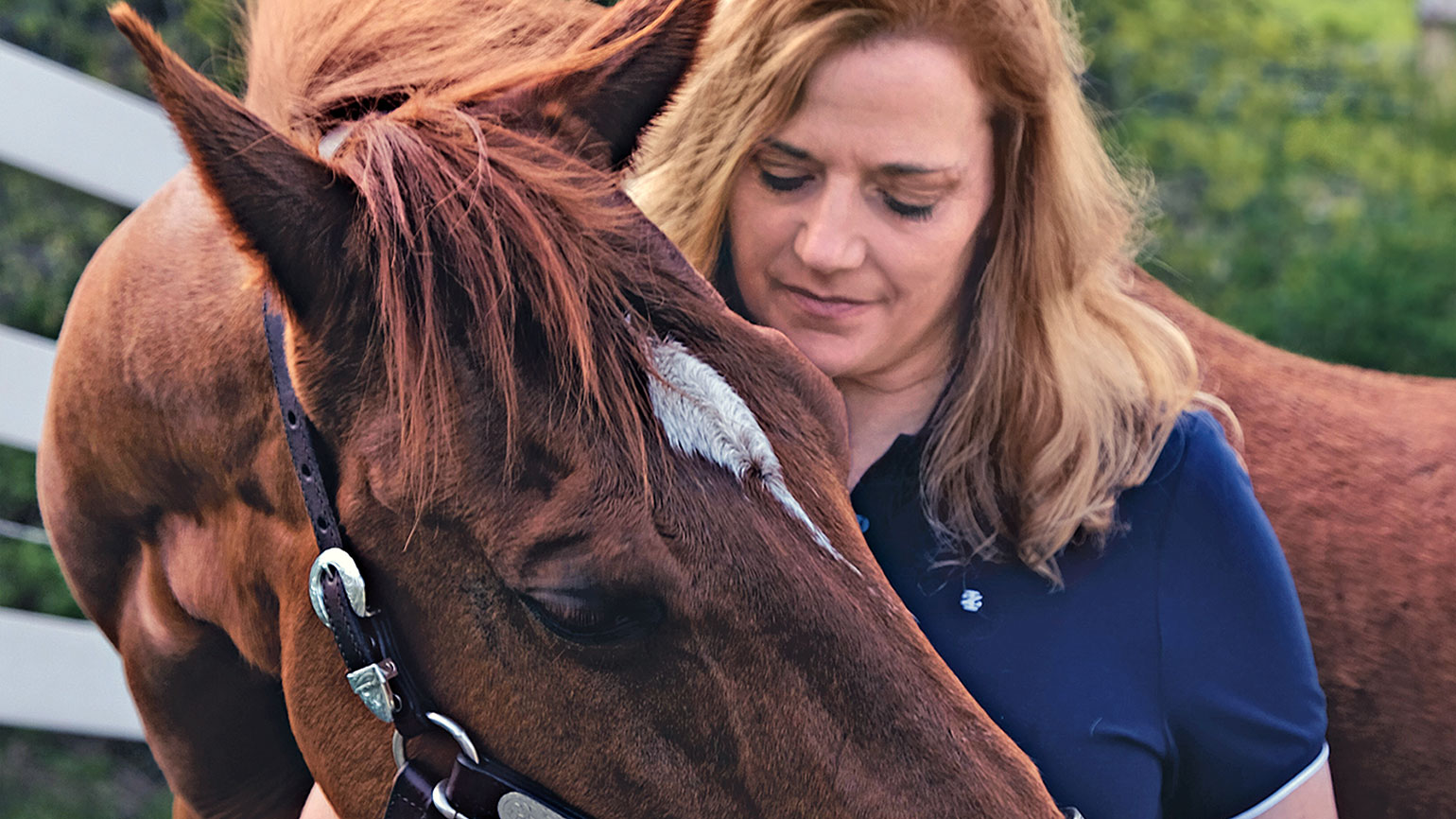
A Horse Named Pistol Helped Her Heal

Pistol waits for me by the gate outside her stable. What took you so long? I can almost hear her thinking. It’s one of those mornings when the pain in my back, legs and arms makes me not want to even move. She nudges at my front pocket, at the peppermint puffs I’ve brought, her favorite treat. Practically my whole life, I’ve lived to be riding a horse. After the accident, the thought of never again knowing that feeling, that oneness, nearly killed me. I had lost so much: my job, my marriage. I had no idea then that it would be a horse who’d save me.

It started with such a small thing. In March 2003, getting out of my car on my way to work as an administrative assistant for the New York State Police, I’d slipped on ice, fracturing my left elbow. I had surgery and went on short-term disability for eight weeks while trying to care for three kids—ages 10, 8 and 7—as a single mom with one good arm. But what was the hardest was not being able to ride. I still owned the horse I’d bought when I was 12 years old, Reba. Ashlynne, my youngest, was learning to ride him with confidence. I loved sharing that bond. My cast came off and I went riding that very afternoon. I thought my troubles were over.

Two years later, I was driving and rested my left arm against the door. My hand went numb. I shook it to get the feeling back. Nothing. A week went by with no improvement. I went to a neurologist.

“Has this arm ever had some kind of trauma?” he asked. It took me a second to even remember the fall. “You’ve had nerve damage,” the doctor said. “Surgery should correct it. You won’t even miss a beat.”

Perfect, I thought. But the night after the operation, I woke, my arm throbbing. I took ibuprofen and spent the rest of the night tossing and turning. By the next morning, my fingers were swollen and turning blue.

Panicked, I called the surgical clinic. “Be patient,” the nurse said. “It shouldn’t last more than a couple days.” Within a week, my arm felt as if it were on fire. Finally, I told the guy I was dating, Scott. He said, “You should see another doctor.” He took me to a surgeon at one of the country’s top orthopedic hospitals.

“Will I need to have another surgery?” I asked.

“That wouldn’t help,” the surgeon said. “You have a condition called reflex sympathetic dystrophy, or RSD. Your nervous system is malfunctioning, which triggers pain signals and creates inflammation. The condition likely started with your original injury and then was aggravated by your surgery. There’s no cure. The most important thing is to stay active. If you don’t, your limbs can atrophy and require amputation.”

I tried to make sense of what the surgeon was saying. The thought I latched onto was: What about riding? I needed to have full use of my arms and legs, to be on my horse, not be distracted by pain.

Within days, the pain spread throughout my body. Even the slightest touch—from clothing or bedding—made me want to scream. I couldn’t shower. The force of the water was like a million pins stabbing me. Pinching my skin hard, digging my nails into my legs actually gave me a kind of relief, refocusing my mind from one kind of pain to another.

“Don’t, Mommy!” my kids would yell whenever they saw me doing it. It was horrible. I couldn’t hug the kids or do much to care for them. I felt worthless. They pitched in where they could. Ashlynne took over grooming Reba and her horse, Snoopy. Sometimes, I went with her. But one look at Reba’s big dark eyes, and the sadness would well up inside me. I’d always held fast to my faith. Was this pain my reward? God, how could you do this to me?

I went to a pain specialist. He prescribed opioid narcotics. They barely put a dent in the pain. But at least I could sleep. I didn’t take them until the kids got off to school, then spent the day in bed in a stupor. I quit my job and went on disability.

Through it all, Scott was there for me. “We’ll get through this,” he’d say. In 2007, when he asked me to marry him, I was so grateful that I’d never be alone. At our wedding, I managed to ride Reba, 28 years old at that point, sitting sidesaddle in my white dress, to where Scott and the minister waited.

Once we were married, Scott was different. He grew more demanding, less supportive. I felt trapped. In my house. In my body. In my marriage, which ultimately failed. I was 39. For three long years, I’d tried everything: Pilates, massage, acupuncture, yoga, physical therapy. Nothing helped. Nothing. Finally in the spring of 2008, I underwent an experimental surgery to implant devices along my spinal cord to modulate nerve impulses and lessen the severity of the pain. The implants didn’t eliminate the pain, but they made it more manageable.

Six weeks into my recovery, I saw a notice in an RSD magazine about a 5K charity walk in New York City, a few hundred miles from where I live upstate. The farthest I’d walked in months was the 50 yards from our house to the barn. I showed Ashlynne. “Mom, this looks great!” she said. As much as the walking, I was looking forward to meeting other people with RSD. People who understood what I was going through.

Ashlynne and my older son, Tyler, went with me. I was shocked by what I saw. People in wheelchairs. Others using walkers. Is this my future? I wondered. I made it the entire distance of the walk in Central Park, wearing a leg brace and leaning on my kids. I could barely take another step. Every cell in my body ached. Yet there was also joy I hadn’t known in years. I remembered what the doctor had said about my limbs: Use them or lose them. It was true about my faith too: Use it or lose it. Only God could love me through this pain. Not a man. Not even a horse. Besides, Reba’s riding days were behind him.

Lord, if I could just get off the meds, I prayed. I wanted my life back. I demanded my life back. In July, I made a roaring fire and tossed my pill bottles into the flames. By morning, I was in agony. I spent hours in the fetal position, willing my limbs to move. That became my morning routine, literally embracing the hurt, praying, meditating.

I heard about an autumn charity trail ride a local stable was putting on. Did I dare? Did I? The pace would be slow, but still…if I fell, especially with my recent operation, it would be a disaster. I remembered the vow I’d made in Central Park. A choice between faith and fear. I could do this!

Ashlynne and I went together. The horse I borrowed wanted nothing to do with me, and the feeling was mutual. Ahead of me, I saw a quarter horse, as shiny as a new copper penny, a young girl atop her. This horse was so gentle, her every step sure-footed, almost gliding. When the horse in front of her started acting out and kicking every horse around, the quarter horse calmly separated from the others, keeping the girl safe. I couldn’t take my eyes off that horse. I began to relax. Before I knew it, the ride was over.

I hobbled over to a cowboy, one of the trail ride organizers, as he helped the girl dismount. “That’s a beautiful horse,” I said.

“Her name’s Pistol,” he said. “We were training her for rodeo work, but then she injured her shoulder. She’s for sale if you’re interested.”

Injured? I stared into her big dark eyes. I’d already spent so much money on my surgery, but my family and I lived simply and the car was paid off. “I’d like to take her for a ride,” I said. A few quick circles around the stable and I was convinced. “I’ll take her.”

A few days later, she was in the stall next to Snoopy, my daughter’s horse. That morning, I’d spent curled up in agony. But I couldn’t wait to ride Pistol. Ashlynne helped me lift the saddle and cinch it. I put on the bridle, sliding the bit into Pistol’s mouth, as natural as could be. Already my legs, my arms burned. I slid my boot into the stirrup and winced. I swung my braced leg over her with a gasp of pain.

I steadied myself, the reins loose in my hand, then gently clicked my heels against her side. Pistol moved forward, slowly at first, then gaining speed, almost at a trot. I squeezed my legs tighter against her, bracing myself for the spasm of…

No pain. There was no pain! Not in my shoulders. Not in my arms. Nothing. All I felt was joy. And freedom. Freedom from pain. Freedom from fear. A freedom I’d longed for. On my own I couldn’t get there. But Pistol knew the way. As if she were guided. RSD would no longer control me.

It’s been 10 years now since Pistol came into my life and a lot has happened. My kids are grown, and Reba passed on. Nowadays it’s mostly Pistol and me. I work with her every day. The time we spend together never fails to comfort me, even when I’m not feeling up to riding her. Most likely, I will live with pain for the rest of my life. God didn’t give me pain. He didn’t take my pain away. Yet God is with me in the pain. He knew a gentle steed named Pistol would carry me out of despair.

For more inspiring stories, subscribe to Guideposts magazine.

A Horse for a Prince

Sunday evening at Church on the Rock in Oklahoma City. Soft music filled the sanctuary. I stood near the altar, my attention fixed on the two women facing me, their heads bowed in prayer. They were prophetic ministers, there for our Apostolic and Prophetic Conference. For those who were open to it, the women would relay words from the Holy Spirit, words they hoped would have an impact on our lives.

I wasn’t sure what to expect. A few years earlier, a different set of women at the conference had told me they saw me in business. “Use your gifts in the marketplace,” they urged. At the time, I’d been a busy stay-at-home mom while my husband, Randy, worked as a geophysicist.

Community Newsletter

Get More Inspiration Delivered to Your Inbox


I spent my rare free time carving wooden rocking horses—a skill that came easily to me. One that people said was my gift. But I hadn’t had much luck selling them (most went to friends or relatives) and rarely made them anymore. Starting a business just didn’t make sense.

I leaned in closer. What would be said this time? Finally, one of the women lifted her head. “Jackie,” she said, “You have a gift that you’re not using.”

“I’m getting that feeling too,” the other woman said. “A talent that you’re meant to share with people. In the business world.”

Not again! I thought. This business thing? I loved handcrafting the old-fashioned horses, but if I had to practically give them away, why would I open a store? Especially at my age? I was almost 60. I’d dreamed of spending more time with Randy once he retired.

Clearly these women were off their rockers!

I ducked into a pew and prayed. Lord, I know you gave me a talent for making these horses, but people just aren’t buying them. What do you want me to do? I’m so confused.

About the only thing I was sure of was that God outdid himself when he created horses. They’d entranced me since I was 12 years old, growing up in Roselle, Illinois. That’s when Dad came home with Chiquita, a stunning pinto horse, for my older sister and me. I was in heaven! I’d blow through my homework and even things I liked doing (like tinkering with wood projects in Dad’s workshop in the basement) just so I could have more time with her.

My love of horses had only grown stronger by the time I married Randy. We moved to Oklahoma and I became pregnant with our daughter. One afternoon I thumbed through an issue of Early American Life magazine. An article practically galloped right off the page: “How to Make a Wooden Rocking Horse,” with step-by-step instructions.

Horses and woodworking? Perfect! I thought.

“I’ve got to make this for the baby!” I told Randy.

“If anyone can do it, you can, Jackie,” he said. “And I bet yours would be even nicer than that one.”

I got to work. I bought some wood: pine for the horse’s body and red oak for the legs and rocker. I thought I could do better than the magazine’s pattern, so I tweaked it a bit.

I hand-cut and shaped the pieces with the band saw in our garage, using the skills I’d taught myself in Dad’s workshop. I glued the horse together, then meticulously chiseled and sanded the head and body. Finally, I painted its coat a dappled gray and added a small saddle. All in all it took about a month of working on it for several hours a day.

“Wow! That is something else, Jackie!” Randy marveled. “You should really think about making these and selling them.”

“You’re crazy!” I told him. “I don’t know the first thing about any of that.”

“I’m serious,” he said. “Not every child can have a real horse like you did, but you could create almost the next best thing—something that can be passed down through generations.”

Building a horse for my own child was one thing. Building them for sale was another. They were labor intensive and never meant to be mass-produced. But when I began to consider making another horse, this one for our son, Justin, who arrived two years later, I asked myself, Can I really do this for other children? Or is it a hopeless dream?

I made six new horses, taking about a month to do each one. They turned out better than I’d dreamed! I even used real horsehair for their manes and tails. I priced them at $600 apiece (a fair price, I thought, considering the hours and hours of labor that went into them) and set up a booth at an art fair.

I sold one horse.

For less than half price.

The kids grew up, yet I couldn’t stop making rocking horses. It was like a compulsion. I tried selling them at different craft shows but hardly anyone bought them. It was no use! I finally put my tools away.

Now, as I left our church’s conference, the words from the prophetic ministers kept playing over and over in my mind.

Had God given me this insatiable urge to make rocking horses because I was meant to open a store? Would they sell better once they were all set up in a shop, on display for everyone to see?

I raised the idea of a store with Randy. “I’m all for it,” he said. “People need to see these horses, Jackie.”

In 2011, I found an affordable lease in a building right on Main Street in the heart of downtown Edmond. I put my best horses in the big picture window and hung a sign out front: Wilson Rocking Horses. I had a website set up too, so folks could order from home.

At first, there was excitement over the new shop. Families bustled in, kids hopping up on some of the horses to play. But the economy was in bad shape. Most parents were struggling to get through Christmas and birthdays. People couldn’t afford a handcrafted rocking horse. And not one order came through the website.

“What should I do?” I asked Randy when the time came to renew my lease.

“I’m so sorry, Jackie,” he said. “I know you’ve poured your heart and soul into the shop…but it’s just not making a profit.”

It broke my heart to hear those words, but deep down, I knew he was right. I had to shut down the business.

The day I cleaned out the shop, I think I cried the whole time. I ran a soft cloth over my worktable, watching wood shavings fall to the floor. I thought about saving them, the way I’d saved the locks of my children’s first haircuts.

How had this happened? I had heard those prophetic words—not once, but twice. I had prayed for God’s guidance and I thought I knew what he wanted from me. Lord, am I a failure at being your servant? On top of being a business flop?

Still, soon enough, i found myself back out in the workshop behind our house, designing a new horse. Who cared if I could sell them? I loved making them. One afternoon, I had just stepped inside to grab a soda from the fridge when the phone rang.

“I’m from the State Department,” a woman said, introducing herself. “Do you have time for a few questions?”

I swallowed the cold fizz and coughed. “What?”

“I was on your website and I’d like to talk to you about your rocking horses,” she continued.

The website. I’d forgotten about it. I’d meant to shut it down.

“Sure,” I said. “How can I help you?”

“My job is to purchase gifts for dignitaries and I’d like you to make a horse for us. It will be a gift.”

“Who is it for?” I asked.

“I can’t say,” she said. “It’s classified.”

I jumped at the chance, no charge. This would be fun. A secret rocking horse! We talked about the design. The specifications were elaborate. It was by far the most intricate horse I’d ever attempted. I made the horse and shipped it off.

About a year later I was out in my workshop using the band saw, making yet another rocking horse, when a text popped up from Justin. Mom, answer ur phone! it read. I called him back right away.

“Turn on Good Morning America!” he said. “I think they’re showing one of your horses.”

“That can’t be,” I said, running into the living room to fetch the remote. But as soon as I clicked on the channel, my mouth dropped.

They were showing off a rocking horse that the President of the United States had sent to Prince George! So that was the big secret! My horse had gone to an heir to the English throne!

Randy was so proud that last summer he flew us all over to London to see the horse in person in a display at Buckingham Palace. There, among other extravagant gifts, was the rocking horse I had made. My business’s name was engraved on a bronze plaque as the creator, along with the President and First Lady’s as the donors.

Several orders came in through the website after that, then slowly trickled off. That’s okay, though. I’m still making my rocking horses, finding joy in simply exercising the gift God gave me.

Horses, real and wooden, are Godgiven. Yep. He really outdid himself on that one.

Download your FREE ebook, Rediscover the Power of Positive Thinking, with Norman Vincent Peale.