Embrace God's truth with our new book, The Lies that Bind

By Faith Alone

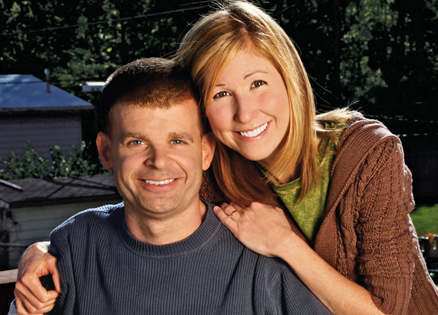
“Okay. I’ll go.” My husband, Allen, looked up at me from his wheelchair, his voice resigned, almost a sigh.

I stood by the dresser unfolding a pair of his pajamas. We were in the middle of our bedtime routine. Once I’d gotten Allen into his pj’s I’d hoist him into bed with a special lift anchored to the ceiling. Then I’d get myself ready, take a bath, brush my teeth.

Mys of Blackberry Valley In Article Ad

If he was still awake when I got into bed we’d say some prayers together.

Or not, considering the odd request that I had just made. Allen was a quadriplegic, paralyzed from the torso down as the result of a motorcycle accident. I had asked him to go see a faith healer with me, someone I had read good things about online.

Our own church is pretty traditional, so I probably sounded desperate. Or maybe to Allen it sounded like I was getting fed up with taking care of him. I opened my mouth to tell him that wasn’t true, but he spoke first.

“I can tell it means a lot to you,” he said. “Who knows? Maybe something will happen.” The kindness in his expression made me so sad I hurriedly got him dressed and into bed.

In the bathroom I stared at myself in the mirror. It had been a year since the accident. Allen, the doctors said, was done healing. He’d gone back to work part-time as a college campus minister. He was coping well–better than I was, in fact.

Before the accident, Allen had taken care of everything–the house, our finances. I looked after Lily, our four-year-old. I wasn’t ready to make all the big decisions.

Allen’s care exhausted me. I prayed and prayed for him to be healed, to walk again, but nothing happened. It seemed like God just wasn’t hearing me anymore. I found myself wondering, what if someone else prayed for us, someone with a gift for healing? Was it too much to expect a miracle?

Allen wasn’t the sort of person who expected miracles. His faith was quiet and steady, like he was. That was part of the reason I thought he might respond to Lawrence and Liz Banda, the couple whose healing ministry I’d read about online.

Lawrence and Liz were from Africa. A few years earlier they had felt called by God to move to Kansas City. They held special services at a small hotel conference room, and anyone who needing healing was welcome.

Lawrence preached from Scripture then led a prayer session. He and Liz accepted no money. They were sincere and down-to-earth, like Allen. “I think they’re for real,” I told him. “I think God can use them to help us.”

It was no mean feat getting our little family of three to Kansas City. But thankfully Lily was a good traveler and was used to all of the extra steps in our routine. We packed everything we needed–wheelchair, medical supplies, luggage–into our van and hit the road.

I prayed as hard as I could on the four-hour drive, but my mind kept wandering, flashing back to that terrible accident.

It was two days after our thirteenth wedding anniversary. A warm August morning. Lily had just started preschool. We took the motorcycle out for a ride. Allen was a good, safe driver and we stayed on slow country roads.

I loved our lazy rides through the countryside. I’d wrap my arms around Allen, rest my body against his and mentally recite Scriptures and hum while we rode. So relaxing.

But that August morning barely five minutes into our ride, for no apparent reason, I’d felt a prickle of fear. So I’d prayed, God, I know it doesn’t please you when I live fearfully. Help me to trust you. I leaned into that trust the way I leaned into Allen on the bike.

Then we hit a patch of gravel–must have been left over from some construction, but there were no signs and Allen didn’t see it till too late. The bike skidded out from under us and we went flying. I wound up with a concussion. Allen broke his neck.

Did I trust God now? I wanted to. But why did I feel so nervous? I glanced at Allen. He was looking out the van window. What was he thinking? Was he nervous too? Was he mad at me for dragging him along?

All these months of recovery and rehab and uncertainty, he’d never been overwhelmed. Impatient sometimes, grumpy sometimes. But never angry or depressed. Maybe he was just resigned, like when I had first brought up this whole crazy idea.

Well, I thought, Jesus tells us to pray and expect an answer. God would come through for us. He just had to.

We got to the hotel in Kansas City and carted our things to our room. The service was the following morning. I barely slept. First thing, I got up and busied myself getting Allen and Lily ready.

We made our way downstairs. Allen rolled into the conference room ahead of me. Lawrence and Liz motioned for us to join a group of about two dozen others. I noticed no one else was in a wheelchair. Was Allen the only one needing healing?

The worship leader struck up some music and we sang praise songs. Then Lawrence got out his Bible and preached from Isaiah. “The salvation offered by Jesus is offered to all people,” he told us. “And Jesus came not just to save our souls. He healed the body too. He came so that we might have full, abundant life.”

I drank those words in. I felt myself full of anticipation.

“Let us pray,” said Lawrence. “Allen, may we put you in this chair?” He pointed to an armchair. Allen nodded uncertainly. With the help of many hands, he was transferred from his wheelchair to the armchair.

He looked apprehensive. Lawrence and Liz laid their hands on him. “Reach out your hands to Allen and his family,” Lawrence instructed everyone. I felt hands on my shoulders.

Lawrence began to pray and his prayer lasted a long time, at least 15 minutes. I kept opening my eyes, looking at Allen, watching for some sign that he had been healed. I saw Lily with her eyes squeezed shut, her lips moving.

“In Jesus’ name, amen,” Lawrence concluded. The room went quiet. Everyone waited. I stared at Allen.

Please, God.

Allen stared back. He didn’t move.

One last song, then the service was over. “Thank you for coming,” said Lawrence and Liz. “God be with you.”

We got Allen back into his wheelchair and the room slowly emptied. I had to force myself to take Lily’s hand and go back to our room to pack. Allen and I said nothing. I loaded the van and we headed for the freeway.

I couldn’t cry, I told myself. I had to be in charge. Oh, how I hated being in charge! Especially now that I’d dragged us halfway across the state, gotten our hopes up…all for nothing. Would Allen ever forgive me?

We got home. The bedtime routine once again. By the time Lily and Allen were tucked in I was exhausted. I ran hot water for a bubble bath and fixed myself some cucumber salad. I sat in the bath eating salad, feeling numb.

Help me to trust you, I’d prayed that morning on the motorcycle. God was supposedly my Lord and my Protector and yet he’d let this accident happen, this totally random, preventable accident.

Then we’d gone all the way to Kansas City to this healing service. I’d prayed harder than I’d ever prayed–even Lily prayed! And Allen was still lying in the bedroom unable to move his legs and his lower arms. What was there to trust?

I shook my head. I couldn’t keep thinking like this! It was wrong. It hurt. I cast about for something else.

I thought of a friend we’d had over a few days ago. She was going through a rough time, and I’d been struck with how stable our family was by comparison, how well-grounded in our routines. Every night we read aloud to each other, ending with a passage of Scripture and prayers. It was my favorite time of day.

It reminded me of when I was a child, my parents reading Scripture to me before bedtime. Sometimes I’d hear them praying together before they went to bed themselves–often praying for me. How safe and protected and cared for I’d felt!

Allen and I did our best to give Lily the same sense of God’s presence in our home. Obviously she was picking something up. She’d prayed hard in Kansas City.

I looked up from my salad. Something was different. I hadn’t seen or heard anything. And yet something in the room–or maybe in me–felt different.

Lily praying, Allen and me praying, my parents praying, this long chain of prayers stretching back through the years–what was that if not a powerful sign of God’s constant loving presence in my life?

Of course he hadn’t turned away. I had. I’d demanded a very specific outcome then pushed God aside when he didn’t follow instructions. What did I want more? An outcome? Or God himself? I wanted God.

And he was here. In this room, in our house, in our strong, faithful family.

I felt almost giddy climbing out of the tub. Lawrence and Liz had laid hands on Allen in prayer. But maybe Allen wasn’t the one who needed healing. Maybe it was I who had been healed that day, granted the miracle of acceptance.

I dried off, brushed my teeth and put on my nightgown. I walked back into the bedroom. Allen was asleep, his face peaceful, like it so often was. I loved him so much.

I knew the coming years would not be easy and there would be times when we both wished Allen could get up and walk like before the accident. But I could accept that. I knew there was something greater than my definition of healing. There was the Healer himself.


Download your FREE ebook, A Prayer for Every Need, by Dr. Norman Vincent Peale
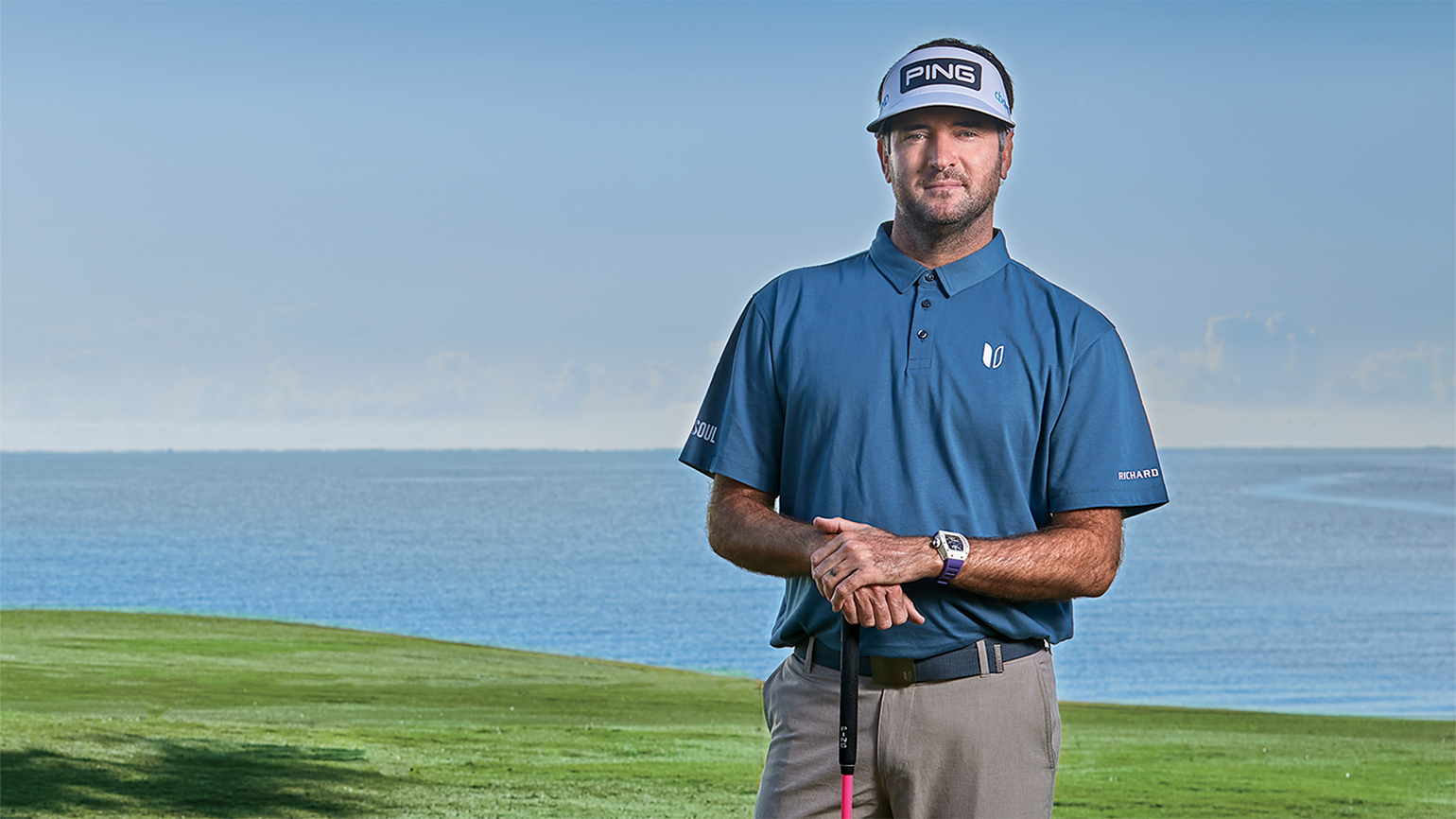
Bubba Watson: How Faith Helped Him Conquer His Anxiety

I still have the Titleist Balata ball, sitting in a glass case on a shelf in my house. It’s not from the Masters or The Travelers Championship or any other professional golf tournament I’ve won. No, it’s from a win back when I was 13 years old, at the 1992 Divot Derby, the biggest junior golf tournament in the Pensacola area, where I grew up.

That win sparked my determination to become a pro golfer, to become, as my dad said, a leader, not a follower. It also sparked something else—a sense of…I didn’t know what. A foreboding that things might not ever get any better than my last win, that I’d never really be good enough. It was a feeling that would, as the years passed and my career flourished, consume my life.

Journey With Jesus in article ad
Bubba Watson on the cover of the Feb-Mar 2022 Guideposts
         As seen in the February-March
         2022 issue of
Guideposts

My first love was baseball. My dad thought I was destined to pitch for the New York Yankees. Then, when I was six, lightning struck: I got a left-handed nine-iron golf club, cut down to my size. I became obsessed with golf, spending countless hours hitting plastic balls around—and over—our house.

Our family didn’t have much money. My dad was a construction engineer at a chemical plant. But Mom and Dad could see my talent, and, at age eight, for Christmas, I got a brand-new PING junior set from them.

Winning my age division at the Divot Derby became standard fare. But that day, when I was 13, playing with that Titleist ball, I finished at 10-under par 62. In case you’re not a golf fan, 10-under is great at any level of the game, let alone a junior championship. Maybe I could live up to my dad’s expectations…and mine.

My world shrank to the size of that Titleist. My father came to all my tournaments, leaning against a tree, puffing on a cigarette, sipping beer out of a Styrofoam cup, seemingly judging my every shot. He rarely mixed with the other parents, who were generally more upscale than we were.

My dad was a good man—a good husband and a good father to my sister and me. He was as tough on himself as he was on us. A Vietnam veteran, he had been wounded in combat and entitled to be awarded a Purple Heart, but he refused to accept it because he saw his wounds as a sort of failure, as if he didn’t do his job. I knew that deep down he was proud of me, and loved me, and that he supported my dreams of going pro.

I enrolled at the University of Georgia. That’s where I met my wife, Angie—the best thing that ever happened to me on or off a golf course. Till then I’d never really been in love with anything other than a golf club. Angie taught me what it was like to love another human being with all your heart. She also taught me what it meant to love the Lord.

We were not a big churchgoing family back in Pensacola. Faith was the shining center of Angie’s life. How could I love Angie fully if I didn’t share her love of God and his commandments? She and I dedicated ourselves to a Christ-centered relationship.

Only a loving God could have taken my head out of golf and led me to such a kind, generous woman with a vibrant faith that filled her spirit—and mine. At our wedding, I was so overcome with emotion, tears rolling down my cheeks, I could barely say, “I do.” (I admit it, I’m a crier.)

Not that my golf took a back seat. Having helped the Georgia Bulldogs win the SEC championship in 2000, I turned pro in 2001, not long after meeting Angie. I pushed myself relentlessly to get my PGA tour card so I could qualify for the big-money tournaments.

Professional golf was a level of competition I could not have imagined even in college. It was a struggle to make cuts and play in the final rounds. But I moved up the ranks, always striving to be at the top of the game, always feeling as if my father were leaning against a tree, judging my shots.

I got a reputation—deservedly—for being overly aggressive and cocky. Looking back, I realize that my behavior was meant to cover up my fear of losing, of never being better than the last win. Back then, it seemed like what I had to do to survive on the tour. Never show weakness.

Then came a devastating call from my father when I was out on the road.

“I have throat cancer,” he said in his typically blunt way.

“How bad is it?” I said.

“Bad.” The doctors gave my dad months to live. I just couldn’t accept that. My longtime caddy, Teddy, whose faith is as deep as Angie’s, urged me to send him a letter. A letter? Dad and I had never had any of those serious father-son talks, let alone letters. “I’ll write everything down,” Teddy said. “Just tell me what you want to say.”

Everything came out. How much I loved him, how I wanted so bad to make him proud, to feel good about my success, how I wanted him to be happy when he went to the Lord, how it was never too late to give yourself to God.

He never made any reference to that letter—except once. We were on the phone, and he declared that when he got to heaven, he was going to become a great golfer so he could beat me.

I laughed and told him, “Heaven ain’t that good a place!” My dad, always the competitor. Cancer was one thing he couldn’t beat.

One of the last conversations we had was after I’d just gotten my first big win on the tour, the 2010 Travelers Championship. Dad called. “What are you doing?” he asked.

“Just sitting here,” I said. “Soaking it in, at least trying to.”

“Why aren’t you out practicing?” he asked. “Everybody else is. They’re trying to beat you now.” Why wasn’t I practicing? Why wasn’t I worrying about the next cut I had to make?

You don’t keep those feelings inside. You overcompensate for your lack of confidence. As I said, I could be aggressive, even mean-spirited, despite my profession of Christianity. A jerk. Not long before winning that first tournament, Teddy called me on it. “You know,” Teddy said, quoting as he could straight from the Bible, “it’s our job to ‘encourage one another and build each other up.’” My caddy was calling me out?

“You’re not being who you should want to be,” he said. “You’re not even trying. You’re hiding.”

All my life, I’d been running away from this worry that I wasn’t good enough, and I’d sometimes taken it out on other people. Hadn’t I pledged to live a Christ-centric life when I met Angie? That meant on the golf course too. Teddy was right. Maybe because golf came into my life first, before I met Jesus, I’d never quite figured that out. After I met Angie, nothing in my life could come before God. My life was on one path, not two, even if I still needed to be reminded from time to time.

I won my first major, the Masters in 2012—finishing with a minus 10, by the way—and I still couldn’t relax. I thought of all the great names in our sport who’d won that event, and I didn’t see where I fit in. Maybe I was just an impostor, a flash in the pan. I ended up taking the storied green jacket awarded in Augusta, Georgia, and shoving it in the back of my closet. I could see the concern in Angie’s eyes as she watched.

My nerves were shot. I couldn’t get on an airplane without taking a pill. One night, I felt this suffocating weight on my chest.

“Angie, I think I’m having a heart attack.”

The hospital admitted me and did all sorts of tests. “There’s nothing wrong with you,” the doctors said. “You’re in great shape.” I won a second Masters. I moved up the ladder, my winnings putting me close to the top. Is this as good as it’s going to get?

I had another one of those “heart attacks” and rushed off to the ER. Someone said something about it being a panic attack, but I wasn’t listening. By 2017, I was losing weight. Losing the muscle mass I needed to hit winning shots.

One morning, I got on our bathroom scale. It said 162. I’m six foot three, bigger even than my dad. I’d never been so thin in my life, almost 30 pounds below my normal weight. In the mirror, I looked emaciated. What was happening to me?

I felt panicky, as if having another “heart attack.” I collapsed to my knees. “God, I’m so lost! Something is wrong with me, and I don’t know what it is. Help me, please help me.”

I was losing. But not on the golf course, nowhere but inside my head. I’d lost the battle of denial. In the depths of my suffering, when I cried out to the Lord, I also began to feel a release, as if at last I’d truly handed my burden of self-doubt and worry to God, a burden I’d always thought was mine alone to bear.

Anxiety had come to rule my life, not a loving God; the insidious anxiety that went all the way back to that tournament I won at 13 and the winning ball I still had. I thought about that ball, sitting in its case on my shelf, and instead of the foreboding that had crept over me the day I shot 62 with it, what I felt now was something completely different. I felt so blessed.

I thought back to my parents. Their quiet affection for each other, the way they’d never leave the house or return without a kiss. Were they perfect? Of course not. Neither was I. But that underlying love was there, the way it was in my own marriage and life with Angie and our kids. And without a doubt, I knew God loved me—love that could be equaled by no other force in the universe.

If only I could let that all-encompassing love banish my fears, my lifelong battle with anxiety.

One of the last times I’d seen my dad, I’d flown back to Florida. He and I sat on the porch and had a friendly enough chat, talking about golf mostly. I got in the car to drive to the airport but stopped.

I parked the car and walked back up to the porch. I said what I had never said out loud to him. “I love you.” Tears flooded my eyes. (Remember, I’m a crier.) Amazingly, tears came to his eyes as well. “I love you too,” he said.

That was the legacy I needed to hold on to. Not one of continual self-criticism, of constant dread of missing the mark. “Love your neighbor as yourself,” Jesus said. It was that last part that was missing in me. I needed to start giving myself a break. I was so worried about what others believed about me that I wasn’t acting like the person I wanted to be.

Angie, Teddy and the people who really knew me all believed in me, not just as a golfer but as a person. I just had to figure out how to be my true self. I am not completely free of anxiety. But turning to God, turning to others, making sure that golf ball is not my whole life, is where I started. I surrendered to the fact that I had a problem, an anxiety disorder, and took my first crucial step toward finding help and getting better.

Believe it or not, I’ve even taken up fishing. Something I used to think was boring. Doesn’t matter if I catch anything. It’s an escape from the tour and the things that can trigger anxiety. I recharge my batteries, as they say, especially my spiritual batteries. I relax. And I thank the Lord for the blessings I’m learning to embrace.

*   *   *

Bubba Watson’s Tips for Battling Worry and Anxiety

Have someone to talk to. Anxiety can be a tiger, but talking can shrink it to a pussycat. Angie, Teddy, my Bible study group, my pastor—all have helped me deal with worries and see problems as manageable.

Rest. Resting doesn’t necessarily mean lying around the house. Go for a walk, head to the beach or a museum, catch a movie. Get together with your friends and family. Nothing eases my stress more than being around the people I love, especially our two kids.

Have a hobby. Golf isn’t a hobby for me. It’s my profession. That’s all the more reason I look for and need other things to do. So do you.

Pray and meditate. Many athletes visualize success. They imagine the putt going into the hole, the football sailing through the goalposts, the baseball nipping the corner of the plate. I meditate on the mental image of a loving God holding me in his arms. I visualize myself giving all worries and fears to him. Then sometimes I catch a fish.

Cover for Bubba Watson's Up and Down: Victories and Struggles in the Course of Life

Bubba Watson is the author of Up & Down: Victories and Struggles in the Course of Life.


For more inspiring stories, subscribe to Guideposts magazine.

Breathing Prayer: Devotions for Anxiety

Can we talk anxiety? You know what I mean: that roiling inner whirlwind, the blinding, gut-wrenching, confusion-making state of being that takes over our hearts and minds from time to time.

When anxiety’s got you in its grip, it’s hard to avoid worrying about tomorrow. It’s difficult to adopt a Jeremiah 29:11 attitude. Sometimes it seems all we can do is shove our fears heavenward and hope God takes them away. I think there’s a better way.

Light for Life NASB Study Bible in Article

Anxiety works on a very primitive level. It has a physical component which we can counteract by applying a physical remedy. Several years ago I learned that there’s actually a right way to breathe to reduce anxiety and stress. The Harvard Health Blog calls it breath control. The technique has certain similarities with prayerful meditation, and since it’s completely compatible with faith, I personally call it “breathing prayer.”

Try this: Close your eyes and inhale slowly, imagining pulling the Spirit in so fully that it fills every pore of your body. Make sure your stomach expands; you want to be pregnant with peace. Exhale slowly through your nose.

You can pray while you do this (though if you’re anxious when you start, you probably won’t think of it until after a few breaths, when your head starts to clear). Simple prayers work best:

While inhaling

While exhaling

Come Holy Spirit…

fill my heart

Lord Jesus…    

grant me your peace

Lord Jesus…         

I love you

If you practice when you’re not in the throes of wild anxiety, it will be easier to pray this way when you are. But “breathing prayer” is a good addition to any regular prayer time. Anything that clears the head and calms the body frees us up to hear God better. And that’s what prayer is all about.

Breast Cancer: A Spiritual Journey

The crisp, clean scent was intoxicating. Like a cool breeze wafting in off the ocean… but where did it come from? I was alone in a stuffy eighth-floor law office late on a summer evening, finishing up my work as a document specialist. Occasionally one of the attorneys would also be working late, but not tonight. I was sitting at my computer, getting ready to log off and head home. Suddenly I froze. Raised my head. Sniffed the air. That scent…

Wait! This was something familiar, a smell I knew. In my mind’s eye, I saw him so clearly. Thirty-five years hadn’t dulled his features in my memory. Those blue eyes, that smile, and the golden-blonde hair that cascaded past his shoulders.

Rejoice in All Things in article ad

Kenny. My high school boyfriend back in the 1970s. We had attended different high schools but met when we were 15 years old, playing in a county concert band. At the first rehearsal, I looked up from my place in the woodwind section with the other flautists and saw him behind the bass drum in the percussion section. We started talking at the break, and I never wanted to stop. Over the next few months, we saw each other whenever we could convince our parents to drive us. I had never felt so comfortable with anyone before… or since. I was 51 now, and no one had ever captured my heart like Kenny.

I’d been counting the days until Kenny’s sixteenth birthday—just 16 days before mine—when he would get his driver’s license. He had his own car, and we had a big date planned. Finally, no more chaperones! I couldn’t wait. But the day before, Kenny called to cancel.

“I feel like we’re getting too serious too fast,” he told me. “We’re young and I don’t think we should, you know, get tied down. I just don’t think we should see each other anymore.”

I spent that day—and most of my own birthday, two weeks later—in tears. As I got older and wiser, I told myself our relationship probably wouldn’t have worked out anyway. I wanted to see the world; Kenny was content staying in Delaware. I moved on. I went to college, then made a life in the entertainment industry and lived in Philadelphia, then New York and Los Angeles. I eventually returned to Delaware to help care for my aging parents. I pushed thoughts of Kenny to the back of my mind.

Until now. That wonderful scent, out of nowhere.

There were so many things I had loved about Kenny. All these years later, the smell of his long, lustrous hair was a clear memory. I don’t know where it came from—his shampoo? Herbal Essences was popular back then. Whatever it was, it was a scent I associated with joy and excitement. With love.

Call Kenny. The thought just popped into my head. Then I laughed. Call the high school boyfriend I hadn’t seen in 35 years and say… what exactly? “Hi, this is Robin. The high school girlfriend you dumped. Does your hair still smell great?” How ridiculous!

But the scent stayed on in my mind. Even after I drove home that night. Even days later. That smell had evoked memories, and now the thought of Kenny was a constant drumbeat. Then an old friend from my hometown called me up. He was putting together a concert in Rehoboth Beach.

“It’s a reunion concert,” he said. “For all of us who used to play in bands back when we were in school.”

“I wouldn’t miss it,” I told him. The second I hung up, I wondered, Is Kenny going to be there?

I opened my calendar to write down the date. My heart skipped a beat. It was his birthday, I suddenly realized.

Maybe I really was intoxicated by that scent. On impulse, I searched the White Pages. Kenny’s parents were still listed at their old number. I found a listing for Kenny in a nearby town. This is crazy, I told myself.

I took a deep breath and dialed. “Hi, this is Kenny.” His voice after all these years jolted me, and I felt like I was a teenager again. Even if it was just a recording. “Leave a message after the beep.”

I hung up. What message could I leave? He’d think I was crazy for sure. Some kind of stalker. If the timing wasn’t good for us back then, what were the chances it would be good for us now? Still, it would be great to see him after all these years. I dropped the phone number into my bag and decided to go to the concert on Saturday. If Kenny wasn’t there, it just wasn’t meant to be.

The following night, I drove home from work and slowed to a stop at a traffic light.

CALL KENNY—NOW.

It seemed as if a voice had called out to me. The thought was as clear as that scent in my office. Was I losing my mind? It’s been 35 years! I pulled off into a parking lot and rummaged through my bag. I pulled out the number and my cell phone. My heart beat faster with every ring. I almost prayed I’d get the answering machine again.

“Hello?” Kenny’s voice, live this time.

I took a deep breath and tried to keep my voice steady. “Hi. Kenny? This is Robin Hill. I don’t know if you remember…”

“Robin!” Kenny said. “It’s great to hear from you!” Did he mean it? Well, at least he remembered me.

“I was just calling to ask if you were going to play in that reunion concert at the beach on Saturday,” I said, trying hard to sound calm and cool.

“I heard about it, but I’m not going,” he said. “Why don’t we have lunch? I’d love to see you. Is next Friday okay?”

The following week, I was sitting in a cozy café with Kenny. It felt like a dream. His hair was short now, but he was still the same sweet person. I felt just as comfortable talking to him as I had been back at that first county band practice. We’d both experienced struggles in love and in life. I’d survived breast cancer; he’d survived two heart attacks. My parents had passed away, and his parents were in poor health. He had worked at the same job for 33 years, and I had hopped from one city to another, from job to job. Our lives had taken different paths, but we’d been led back together. We weren’t too young anymore.

Kenny walked me to the parking lot after lunch. I held his hand. It seemed natural. We got to my car, and he leaned in to kiss me. He held me tight and I breathed in deep. His hair still smelled the same—that wonderful, intoxicating scent.

“Do you think you’ll ever grow your hair long again?” I asked.

Kenny did grow his hair out again. Long—past his shoulders. And our relationship grew as well. We were married a year to the day of our reunion and the day before my birthday. Thirty-six years after our teenage breakup, I was married to the love of my life!

Breaking Through

It hit me as suddenly as the flu. My husband, Will, and I were flying back to Albuquerque after a visit with friends and family in New York. I had felt a little blue and listless as we packed, and I hadn’t been able to shake the feeling on the long flight home. But when we walked off the plane and into the bright Albuquerque airport, a crushing despair engulfed me, a feeling so overwhelming that it took a conscious effort to continue to put one foot in front of the other.

“Anything wrong, honey?” Will asked in the car. I shook my head. I didn’t know how to explain what was happening. Despite the rugged, russet New Mexico landscape sweeping by, the world seemed inexplicably bleak, as if I had stepped into an abyss.

The Lies That Bind In Article Ad

It’s probably jet lag, I told myself that night as, utterly exhausted, I fell into bed. But in the morning it took all my strength just to get up. I felt as if I’d been put on a planet where gravity had been doubled. Dear God, why do I feel like this?

I was depressed. Like everyone, I’d had down periods in my life—but nothing like this. For the next few months, all I wanted to do was sleep. I wandered the house in a nightgown and robe, not seeing any reason to get dressed. I cooked and cleaned in a zombie state. Still, everything seemed dingy.

“Rose,” my husband pleaded, “you’ve got to see a doctor.” But I didn’t even have enough interest in my own well-being to summon the energy to make an appointment.

My will to live began to slip away. A few years back, a bleeding ulcer had put me in the hospital, close to death. Now I thought about not eating and letting the stomach acid do its final work. I considered asking my doctor for sleeping pills, but that would mean going in for an exam and I didn’t want to answer a lot of questions.

Then one cool morning I climbed into our Jeep Wagoneer, filled the gas tank and drove toward the mountains. It was as if the Jeep had a mind of its own. After an hour or so, I pulled over and got out. I was at an elevation of about 8,000 feet, the city spread below me in the distance. I felt so isolated, almost as if I were the only person on earth—an eerie yet oddly comforting feeling.

Ahead I saw a meadow and a herd of deer grazing on whatever frozen grasses they could coax out of the hard ground among the ponderosa pine. I crept close. Just then a doe and her fawn left the group and hesitantly started toward me. I stood stock-still, hoping not to scare them off. They stopped no less than 10 feet away from me, the doe’s black nose twitching at my scent. The leggy fawn peeked from behind her mom’s rump. Their eyes were so big and trusting. Suddenly I felt peace flow through me.

As I stood transfixed, the majesty of my surroundings began to crack the shell of my despair: the jagged peaks dressed in fresh snow; the stillness and quiet of the woods; the pure, thin autumn air flaring my nostrils with the scent of pine; the vast abundant miracle of God’s world.

I stood for a long time and watched the baby, hungry for life, take her mother’s milk while the doe stared at me. Inexplicably, she trusted me. The peace I found within myself felt cleansing, like a release of pain. I cried softly—good, thick, purifying tears. And for the first time in months, I too felt a hunger for life.

“Thank you, God,” I whispered.

I had been brought here to find the courage and trust to go on. Somehow in the simple beauty of a mother giving life to her offspring, I saw that God too sustains us. Depression, the black shadow on my soul, began to recede as God’s love broke through the darkness.

I drove home with a lighter heart. Later, I made an appointment with my doctor for a complete examination.

Today, though I still sometimes struggle, my depression has lifted. Depression affects the body, mind and spirit. But only God can heal the spirit, as he healed mine. I pray that all who suffer from this terrible and baffling illness will find that healing.

Boston Marathon Bombing Survivor on the Story behind ‘Stronger’

Just four years ago, two men detonated homemade explosives near a packed finish line at the annual Boston Marathon. Three people were killed, hundreds were injured, and 16 victims lost limbs because of the attack. Jeff Bauman was one of those 16.

Bauman worked at the deli counter of a local Costco before the tragedy. He went to the marathon to cheer on his then-girlfriend, Erin Hurley, who was running the race with some friends. When the bombs went off, Bauman was close to the blast and ended up losing both of his legs above the knees. Thankfully, Hurley was unharmed. A photo of him being pushed in a wheelchair by paramedics and fellow survivors immediately after the blast quickly went viral. His body was covered in soot, and he was missing one leg with the other stripped to the bone. Bauman soon became the symbolic face of the Boston Marathon Bombing, an example of all those whose lives were forever altered that day.

NIVFLB Inarticle ad

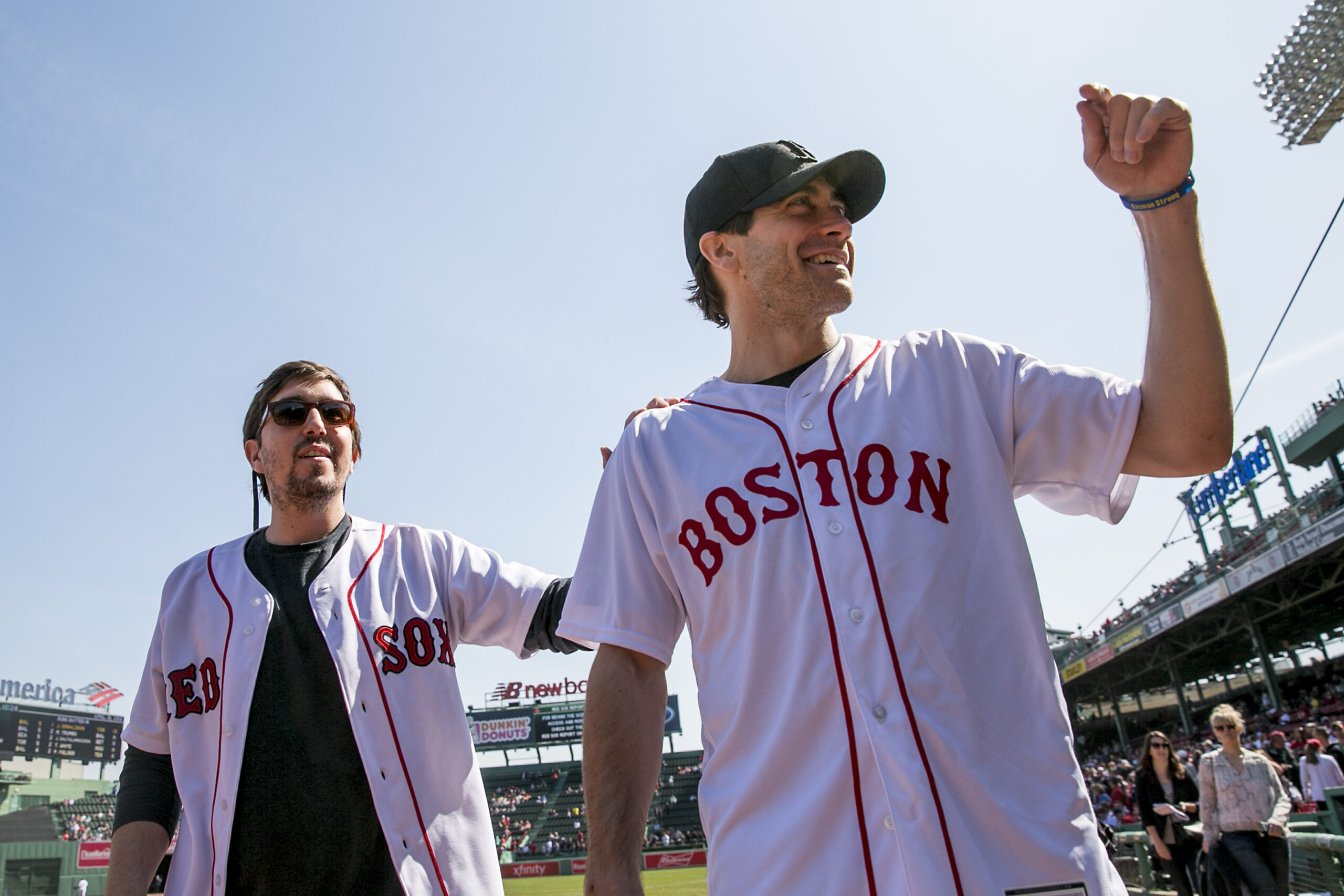
A few years later, he now has two prosthetic legs, a newborn daughter, and a best-selling memoir. Bauman’s story is now the subject of a film starring Jake Gyllenhaal. Stronger, which hit theaters September 22nd, chronicles Bauman’s journey from the time of the attack through his recovery, highlighting his struggle to heal from a horrifying injury and to help others do the same.

Guideposts spoke with Bauman about the new movie, his path to sobriety, and how he’s using the tragedy to help others.

GUIDEPOSTS: The million dollar question: What’s it like having Jake Gyllenhaal play you on screen?

JEFF BAUMAN: Jake did an incredible job. He was invested since day one and took the time to really get to know me —my personality, my accent (which I would say is approved by Boston audiences,  and that’s half the battle), how I move, what hurts … he asked questions no one else really did. I can’t believe how much he nailed it.

Off screen Jake and I have become close friends. I just feel so lucky to know him and I know this relationship will last long past the movie.

GUIDEPOSTS: In your book, you’re very honest about the struggles you went through, the struggles your family went through following the bombing, and the strain in your relationship with Erin. You two announced earlier this year you were getting a divorce. Was it important to you that the film not gloss over those aspects of your recovery?

JB: There is so much going on in the world today with terrorism, violence, and acts of nature. I think it is important for people to see what happens behind the headlines when all of the cameras are gone. It’s not always pretty, but I hope seeing my struggles will help others.

GUIDEPOSTS: What can you remember about the day of the bombing and waking up in the hospital after your surgery?

JB: I remember everything — the moments leading up to and immediately after. I saw the bomber and just remember thinking how out of place he seemed — everyone was cheering and having fun and he was so serious. I didn’t have any time to think; once I noticed him it was too late. In the ambulance I remember telling the medics that I knew who did it but they thought I was just in shock. When I woke up the first thing I did was ask if Erin was ok. When [my family] was telling me about my injuries I could see the pain in their faces and cracked a joke. I just wanted to make them feel better. Then I told them I knew who did it and everything after that just happened so fast.

GUIDEPOSTS: Your sense of humor really comes across in the film. Has that helped you in the recovery process?

JB: Humor is what got me through all of this. You have to be able to laugh, even in the toughest of times.

GUIDEPOSTS: You’ve been open about your struggles with alcohol after all of this happened. Is there a moment that stands out to you when you realized you were using alcohol as a bit of a crutch?

JB: It took me a while. After Nora [my daughter] was born I realized that while being hung-over and trying to function on prosthetics is hard, trying to chase after a two year old is pretty much impossible. I felt and looked terrible. I had to make a change for myself and for my family. I’m 15 months sober and can never imagine going back to that life.

GUIDEPOSTS: You lost both legs above the knee. What was the rehabilitation process like for you?

JB: It is so much harder. Prosthetics have come a long way and the technology is incredible but it is still pretty tough to completely replicate the knee joint and all that it does. Stairs, driving, and just balancing, everything is a huge challenge but eventually you find your groove.

Physical therapy has always been hard. In the early days I thought I could just do it myself and would blow off appointments but eventually I came around. My PT Michelle Kerr is amazing and also plays herself in the movie. I was not easy to deal with back then and I’m glad she didn’t give up on me. Now I visit my team in Florida a few times a year for a refresher and that keeps me going.

GUIDEPOSTS: You’re going back to school for mechanical engineering. Do you hope to be able to create new prosthetics and help people heal from injuries the way you did?

JB: Yes, I hope to get a job at Ottobock, the company that makes my legs and perfect the fit of sockets on prosthetics. I still struggle with that and just want to pay it forward.

GUIDEPOSTS: How do you think this experience has changed you and your outlook on life?

JB: I obviously wish this never happened, but I’m trying to make the most of it every day. Without the support and new relationships I’ve made since the bombings I don’t think I would have ever gone back to school. I have a beautiful daughter and so much to be grateful for. Despite all that has happened I’m still a very lucky guy.

Boost Your Positive Thinking with ‘Thought Chains’

Positive thinking is a broad and deep well of strategies, practices and habits. Even the most dedicated optimists can struggle at times, especially when small annoyances couple with bigger obstacles to challenge our inner peace.

Diana Cole, who writes about optimism for CEO World magazine, suggests “positive thought chains” as a way to build and sustain consistent positivity throughout your day.

“To keep feeling better in life, we need to have an internal commitment to choosing better thoughts,” Cole writes. “One positive idea leads to positive inner dialogue, which ultimately leads to feeling good.”

She suggests starting with an idea, a positive thought you can honestly identify and focus on. This could have to do with yourself as a friend, worker, parent, crafter, gardener, cook or haver-of-a-sense-of-humor. What do you love about yourself, your life, your home or your family? Name that thought and repeat it to yourself a few times.

If you can do this in a quiet place or at a consistent time each day, that helps amplify the impact of your positive thinking, according to Cole.

Next, it’s time to build the next link in your positive thought chain. Cole recommends looking around the space where you are and noticing—out loud if possible, though jotted down in a journal or even whispered to yourself are also good options—positive things about your surroundings.

These could be very sensory, like, “The cushion I’m sitting on is soft,” or more emotional, like, “I feel loved.” Anything you notice about your space, or the people in it, can attach to your initial thought and compound the positivity of your original idea. 

You can make your positive thought chain as long as you’d like. You can even reinforce your positive thinking by repeating the full chain from the beginning, like, “I am a good cook… I love the sound of my purring cat… The light through that window is lovely… I am proud I drank enough water today…” and so on. 

Repeating this exercise daily or even more frequently will cue your mind to make connections among multiple positive ideas. Over time, this habit will become more automatic, a home base of optimism that will help you through each day—even tough days—with more ease and inner peace.

What would be the first link in your “positive thought chain” today?

Body & Soul Fitness: Connects Faith and Exercise

Sponsored content provided by Body & Soul® Fitness.

The alarm goes off and you hit the snooze button. You would really prefer to sleep in, after all, it’s just a morning fitness class and you don’t know anyone.

Walking with Jesus L&E evergreen_in article ad

But what if that wasn’t true? Imagine a fitness class that offers more; one where prayers are shared, triumphs are celebrated, tears are cried, problems are tackled, biblical advice is given, and love is shared between friends.

Back up to the alarm going off. That was me. I had been taking a nationally known fitness class for about two years. I knew faces well enough to say hello and ask how they were, but it seemed the rush to get the day started overtook the opportunities for friendships in people’s lives.

As a young mom with two small children, I knew I needed time for me. That’s why I took classes. “When momma ain’t happy, ain’t nobody happy.” I knew the benefits of exercise—the stress relief, the increased endorphins that boosted my mood, the increased strength to my immune system (who doesn’t need that when dealing with little germ incubators known as toddlers)—and let’s face it, it helped keep me in shape.

A friend invited me to a fitness class she was taking and told me I’d love it. She said this program connected faith and fitness. I was intrigued but skeptical. I didn’t know what to expect when I walked in. I was introduced to the instructor who welcomed me, and soon found myself in the midst of a circle of women who were sharing prayer requests with one another. Then the instructor prayed for those requests. Okay, this was different, and we hadn’t even started exercising yet.

The workout was great! Body & Soul® Fitness requires all instructors to be nationally certified and receive extensive training each year. The instructor offered modifications and encouraged us throughout the class by drawing our attention to the lyrics in the music. Even the choreography seemed to tie movements to the music. Once the workout ended, the instructor offered a quick devotional and prayer.

The songs we exercised to encouraged me and I would catch myself singing the songs throughout the day. I found myself praying for the ladies in class that had become friends – my new community. I found myself thinking about God a little more throughout the day and I’d linger a little longer in His Word. My faith was growing as a result of a fitness class…and I now I was jumping out of bed for the next class not wanting to hit the snooze button any longer.

One day the instructor asked if anyone would be interested in becoming an instructor. It didn’t take long to feel the nudging from the Lord to say yes. It’s been more than 20 years now, and I still feel privileged to be leading these classes. I’ve grown so much in my knowledge of fitness through the incredible training I receive. AND, more importantly, I’ve grown in my love and knowledge of Jesus.

Body & Soul® Fitness offers a fitness experience that involves more than just your body. Your soul matters too. We are more than simply a fitness organization. We are intentional about our faith, living life well, and being our best in whatever role(s) we find ourselves in life. We aim to honor God with everything we are.

We have classes all over the United States, as well as internationally. We have programs for every BODY at any fitness level. We offer in-person and live virtual classes, as well as Body & Soul® FitTV™ on demand for those who need a bit more flexibility in their workout schedule.

Body & Soul® Fitness is where faith and fitness meet. If you would like more information on how to join a class, or if you are interested in learning how to become an instructor, visit our website at www.bodyandsoul.org. We’d love to meet you and help get you started.

Body & Soul® Fitness is a non-profit 501(c)3 organization and is an accredited member of ECFA.

Mary Ward is the Vice President of Body & Soul® Fitness and also serves as the Board Chair of First Place for Health. She is the author of “My Place for Fitness”. Her philosophy is “Don’t think about what you can’t do, focus on what you can do. Fitness should be about finding something you enjoying doing, so you’ll enjoy doing it.” She is certified by the American Council on Exercise (ACE) in Group Fitness, and approved to teach all programs in Body & Soul®. She lives in Chantilly, VA, loves Jesus, her family, traveling, and Body & Soul®!

Body and Soul: Integrating Tai Chi with Faith

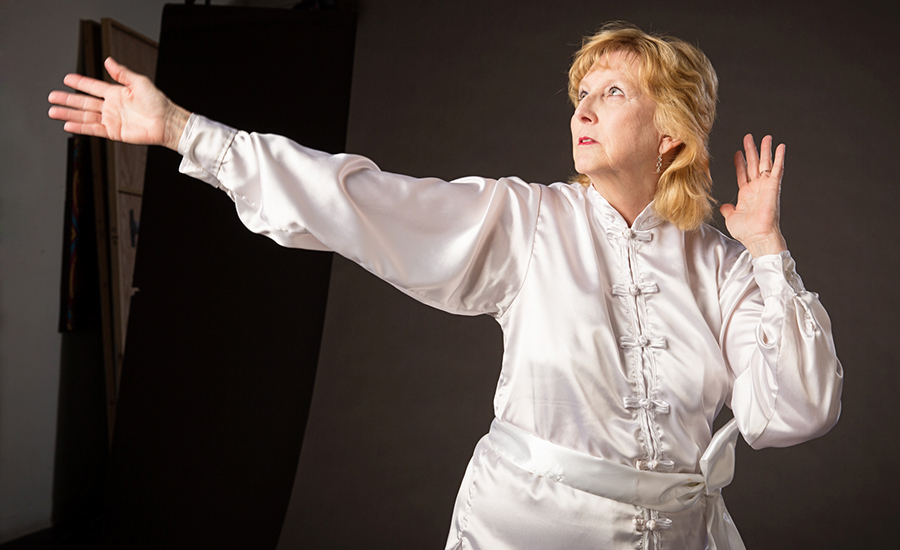
[MUSIC PLAYING] Hi, I’m Nikki Davis. I’m a Tai chi instructor at First Baptist Church of Moore in Oklahoma. I was introduced to Tai chi– well, I’ve heard about it off and on throughout my life and were, kind of, seeing people in the park in China doing it. But I didn’t really know what it was until I met my late husband. And he was in– into Tai chi, and had been practicing it for several years. And when he introduced me to it, I was kind of like, OK, what’s this? I went with him to my first Tai chi class. I was really nervous and intimidated about it. Got exposed to it and started asking questions, I learned that Tai chi is more for physical fitness. 

Coming from an Eastern philosophy, people have often asked me, how do you incorporate that into your faith? I think it begins in your heart. It begins with your belief in Jesus Christ. It’s that intimate, personal relationship I have with Jesus that gives me his spirit within me to guide and direct me. Through Tai chi, I not only can help myself physically; I can also worship and praise my Savior and Lord. And Tai chi has breathing in it– when God breathed into man the breath of life, in the Chinese Bible the phrase, “breath of life” is chi. So it’s God breathed into man the chi. So chi, for me, is God’s breath. Breathe in God’s love, joy, peace. Breathe out your cares, worries, stress. Breathe in, fill yourself with God’s grace. Exhale and breathe out God’s praise. 

Daily Strength for Women in Article ad

[MUSIC PLAYING]

Bob Harper’s Passion

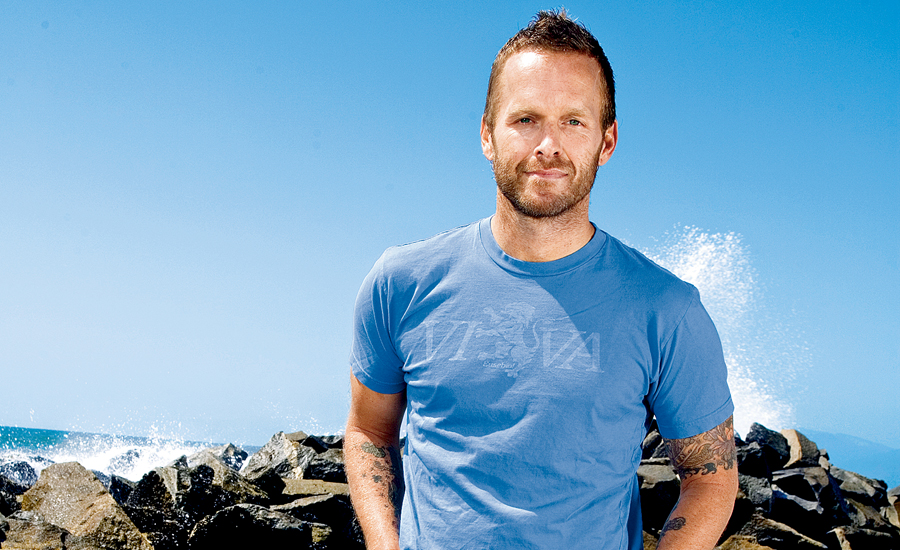
Are you ready? It’s a question I ask anyone I’m training, whether it’s a private client or a contestant on The Biggest Loser. Are you ready to work out? Ready to make a huge difference to your health and well-being? Ready to become the person you were meant to be?

“Sure” comes the usual answer. But as we go through our exercises—push-ups, lunges, the treadmill—I look for that inner readiness that says they want to change their lives forever. Because the first time I went to a gym, that’s what happened to me.

Light for Life NASB Study Bible in Article

I was in my early 20s. I’d grown up on a farm in Tennessee. The only real workouts I ever had were baling hay or mucking out stalls. Not that I planned on doing that for long. I had big dreams for myself, hopes that I could make a difference in the world. I wasn’t sure what it would be, but I somehow knew that I wasn’t meant to stay on the farm.

I couldn’t afford college so I moved to the nearest city—Nashville—to get a job. I started working for a bank because I thought that would be safe and dependable. They put me in the credit department. All day I sat at a computer filling out mortgage forms for “verifications of deposits.” It was as monotonous as any of my old farm chores. And I was stuck inside all day.

I lived in a little apartment adjacent to a strip mall. There was a restaurant, a shoe store and a small gym. At night I stared out the window at the sign on the gym that read, “Exercise Plus,” and wondered what people did inside. They rushed from their cars with bags slung over their shoulders. They came out looking sweaty and flushed, but with a spring in their step.

It seemed odd to me that they were energized after working out. I always equated exercise with getting tired. But these people signed up for classes at all hours—before work, lunch time, evenings. And they left with a smile.

I decided to check the place out. The energy of the gym was palpable. I could hear the disco beat of an aerobics class and the teacher calling out steps over the music, “One, two, three, four.” Instantly, I liked the whole vibe. “Do you have a class I could take?” I asked the woman at the front desk.

“Sure,” she said, handing me a list of a half-dozen aerobics classes—this was the ’80s, after all. Then she looked down at my dark slacks and wingtips. “You’ll need something better on your feet,” she said, as though I might not have thought of that. “Something that will be good for moving.”

I stopped at the shoe store and bought a pair of Reeboks and some shorts. The shoes seemed bulky, like something an astronaut might wear, but they were what everybody else had. I walked right out of the store and straight into the gym, signed up for my first class and went into the studio, my Reeboks squeaking on the polished wood floor.

People huddled around the walls, some standing on one leg like pelicans, pulling up on their opposite foot. Others stretched to their toes or did breathing exercises. Finally, the teacher came in, decked out in a leotard and tights. I was awestruck. She looked like Jamie Lee Curtis in Perfect. “Are you ready?” she asked. “Let’s begin.”

It was a high-impact aerobics class, way beyond anything I was ready for. I barely kept up, watching the teacher and trying to follow everybody else in class. Kicking, jumping, lunging and squatting—I was always three steps behind everybody and half out of breath. I made it to the end and left sweaty and exhausted, but with a smile on my face. Where had I seen that before?

I was still on a high the next day despite the fact that I could scarcely move. My calves were killing me. I had to clutch the banister to pull myself up the stairs at work and I inched backward toward my desk because it hurt too much to walk forward. And yet, as I followed the blue cursor on those tedious mortgage forms on my computer screen, I thought, Can’t wait for my next class. Can’t wait to get back to the gym.

I got so good they asked me to teach.

Me? Was I ready? I wasn’t sure. It had all happened so fast, so unexpectedly. Yet isn’t that often how we decide to change our lives? Was this the place God meant me to be, doing what I was meant to do?

I felt it deep down inside, the way I felt it was meant for me to leave the farm. I set myself goals—to learn new exercises, to understand how the body worked and how one workout might be right for one person but not for another. I got in better shape than I’d ever even imagined I could be. Who would have guessed that a strip mall with a little place called Exercise Plus would change my life? Then again, who’s to say how  and when a miracle might happen?

A couple months later the bank had to make cutbacks. I lost my job. In despair I told the owner of the gym, and she hired me full-time. Soon I was helping her manage the place and teaching a full class schedule. I read everything I could about fitness, took seminars, went to conventions. I couldn’t get enough. I became totally dedicated. In fact, I was astonished at how committed to fitness I was. I never knew that something could stir such deep passion in me.

After a year I threw everything I owned in a little Toyota Corolla and drove across the country to California, where there were some of the best teachers and finest gyms. All of a sudden I found myself teaching classes and giving personal training sessions for the biggest names in Hollywood.

I’m enough of a Tennessee farm boy to keep grounded. I’d be in a session with some A-list celeb and get a little tongue-tied, then I’d pray and remember God put me where I was for a reason. How can I be helpful? I’d think. How can I show what I love? There were always ways in which I was needed. Exercises and routines that would help a person reach a goal.

“Don’t think of this workout as something you need to do until you lose a few pounds,” I told clients. “This is something that you’ll want to do the rest of your life.” Exercise was about becoming all you could be. More than anything, it was about change, and change is a miracle.

That’s what excited me when I heard about The Biggest Loser reality TV show. That’s why I auditioned so enthusiastically (and said some serious prayers) to become the trainer on it. For years I’d been working with people who might want to go from a size six to a size two or wanted their six-pack abs turned into an eight pack.

At The Biggest Loser I found myself working with people who needed to lose 60, 75, even 100 pounds not just for vanity’s sake but to be healthy enough to see their children grow up and to raise grandchildren. In many cases people’s lives depended on getting into shape.

I’ve been on the show for 10 seasons now—we’re starting our 11th—and I can’t tell you how deeply inspiring the contestants are. Sometimes I have to put them through incredibly rigorous workouts.

If you’ve seen us on TV, you know how grueling it can be. But it’s not athletic ability that really counts. It’s that inner quality of persistence and belief that makes the difference, that totally awesome commitment to change. Change—real change in our lives—can only come from total dedication and a belief that a power greater than ourselves is there to help us.

“Are you ready?” I ask at a workout. I pray for that person to find the answer inside them that says, “I’m ready to become all I can be. I’m ready to change.” That’s the greatest miracle of all.

Blessings Beyond Measure

When looking back on my mission trips to places where people have very little, I am reminded that here at home we enjoy resources such as clean water, public education, Social Security, Medicare and Medicaid, and freedom of religion that many people around the world don’t have.

Yes, we face personal hardships, and our country has many issues we need to address. However, if we pause and open our eyes, physical and spiritual, we will see God’s blessings beyond measure.

Sweet Carolina Mysteries In Article Ad

Read More: OurPrayer–Praying for Millions All Over the World

When I was a young pastor working in Boston on the community’s social issues, a lawyer said to me, “Perception is reality.” It was the first time I had heard these words, and I quickly learned their meaning.

For so many, perception becomes reality when, despite the good things around them, they believe otherwise. If truth be told, in good times and bad, God’s blessings are present and real. In the first stanza of the hymn, “Count Your Blessings,” the author Johnson Oatman Jr. encourages us to name our blessings:

When upon life’s billows you are tempest tossed,
When you are discouraged, thinking all is lost,
Count your many blessings, name them one by one,
And it will surprise you what the Lord hath done.

Whether in prayer, on your tablet or notebook, list your blessings one by one. List as many as you can, and you will discover their lifetime impact. Include the blessings from your country, family, friends, work, community, church, experiences and so on.

Once complete, review the list daily or weekly to keep the right perspective about your life. When we make our list, it helps us to spread the blessings to others, especially those in need. Name one blessing below, share it with us!

Lord, thank you for all of your blessings; help me to name and remember them in good and bad times.

Blessed with a Gift for Hospitality

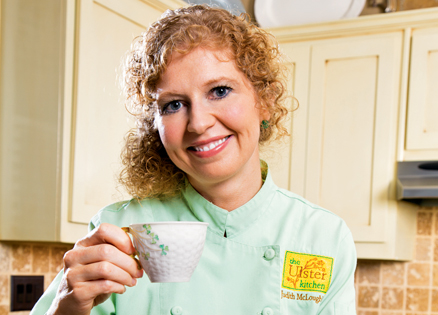
I approached the pharmacy checkout, clutching a bottle of moisturizing shampoo perfect for my curly blonde Irish locks. Compared to what was available at the chemist’s in my village in Northern Ireland, the selection of shampoos and just about everything else was amazing here in the States.

A woman stood at the counter, browsing the candy bins. “Excuse me,” I said, “but are you in the queue?”

The Daily Bible Large Print relaunch with digital free gift in article ad

The woman looked at me bewildered. “Am I in the what?”

“The queue,” I said, suddenly conscious of my thick Irish brogue. My face flushed. What’s the word they use in America?

“Um…the…the line,” I finally stammered.

I could not get out of the pharmacy fast enough. I fastened my son into his car seat and managed to hold back my tears until I climbed behind the wheel. It had been a tiny embarrassment. Just a moment of culture clash. But those moments had piled up since I left County Armagh.

When my husband, Gary, took a job as a carpet designer in Atlanta, Georgia, I thought we would have a grand adventure. Instead, the past two years had been an emotional roller coaster.

One second, I was amazed by a new experience—the taste of a fresh-picked Georgia peach, watching an Atlanta Braves baseball game on the telly—but then I’d bungle a simple interaction in a checkout line. Back home, everyone knew either me or my family. Here, I was an outsider.

How I longed for the old country… The narrow country lane with the centuries-old rock wall covered in ivy that led to my family’s whitewashed stone farmhouse. The abandoned seventeenth-century castle nearby where, in my girlhood days, I pretended to be an Irish princess. The Sunday dinners in my family’s kitchen, always cozy and warm due to the massive coalburning Aga stove. 

I missed Mother’s huge pot of stout soup, her succulent roast lamb, mint sauce and roasted potatoes, her voice declaring, “There’s always room for one more at the table,” inviting neighbors or farm laborers to join us.

And Grandmother, elegantly dressed in her favorite colors, green and lilac, wearing a cameo brooch, sipping tea out of her good china. Even Dad’s well-worn jokes during dessert: “Did you hear about the cabbage that died? There was a big turnip at the funeral!”

I pulled into our driveway in the Atlanta suburbs. We lived at the end of a quiet cul-de-sac, in a large white two-story house with an inviting front porch. It was a nice house, but only that, a house—family and friends are what make a home, like the one I had always known.

My family was so far away, I hadn’t even been able to make it back for Grandmother’s funeral. And though we’d met most of our neighbors, there was no one I could call a friend. It felt like I hardly knew anyone.

How could I make friends?

I went inside with my son and set my bags down on the kitchen table. That’s when my eye was drawn to the china cabinet.

The last time I’d been back to Ireland, Mother had led me into her spare bedroom. “There’s something I need to show you,” she said. She handed me a teacup and saucer, fine white china trimmed with gold, decorated with medallions of cobalt blue and sweet bouquets of dainty yellow and red roses.

“Grandmother’s china!” I said.

“She used these back when she and your grandfather ran a bed-and-breakfast on the edge of the Irish Sea,” Mother said. “The gift of hospitality runs deep in our family. Now I’m passing it to you.”

I turned the saucer over to read the name of the pattern. My heart skipped a beat.

Atlanta.

The china had been crafted in Salisbury, England, more than a half-century ago. Yet the name Atlanta felt like it was a message intended just for me, a reminder that I was exactly where God wanted me to be.

Now I opened the china cabinet and carefully removed one of the teacups. I could hear Mother’s voice: “The gift of hospitality runs deep.” That’s why she’d hosted those crowded Sunday dinners. An Irish tradition. What if I did something similar and invited my neighbors over for lunch and tea?

Will they accept? Will they even understand my accent? I said a prayer: Lord, give me the courage to open my house…my heart…to new friends.

I put my son in his stroller and set out. It felt strange to ring my neighbor’s doorbell. I almost turned around, but then she opened the door. “I’d like to invite you over for lunch Friday,” I blurted out. “Are you available to come?”

“That’s so sweet!” she said, smiling. “I’d love to!”

The next house was easier. And the next one after that. In all, I found six women who could come. For lunch I prepared coronation chicken salad, an old family favorite made with mayonnaise and a touch of pureed apricots, originally served in 1953 when Queen Elizabeth was crowned.

“This is delicious!” one neighbor said. “You have to give me the recipe,” said another. After lunch, we had Irish tea, served in my grandmother’s good china. Warm memories of those family dinners came back—but I wasn’t sad. Instead, it felt as if my two worlds were finally coming together.

After that, I often filled my dining room with neighbors and new friends. I took Irish recipes and gave them a Southern twist—adding pecans, peaches, barbeque sauce, cola or grits. Everybody loved my cooking. People hired me to cater events. I even published a cookbook, The Shamrock and Peach.

Recently, I found a box on the front porch. Inside was a rotund blue-and-white teapot with a creamer and sugar bowl. And a note, explaining that the teapot was a replica of one created for John Wesley.

It ended with a table prayer: “May the sugar represent the sweetness of your hospitality, the milk jug your pure heart. And may the pouring of the tea be a joy as you continue to serve others around your table.”

There was no signature. I had no clue who left it. These days, though, it could have been anyone.

Try Judith's recipe for a traditional Irish treat, Sweet and Salty Caramel Squares.

Download your FREE ebook, Paths to Happiness: 7 Real Life Stories of Personal Growth, Self-Improvement and Positive Change