Embrace God's truth with our new book, The Lies that Bind

Black History Month: 16 Inspiring Black Americans


All month long, Guideposts.org recognized the courageous, inventive and revolutionary African Americans who changed the course of history and made a lasting contribution to the world. Many of them became famous for being the first in their field, for fighting for their rights, standing up against injustice or for their talent and achievements in the arts. Here are some American figures we should be celebrating all year long.

READ MORE: Black History Month: 10 Inspiring Quotes

Sugarcreek Amish Mysteries In-Article Ad 2023

Black History Month: 25 Inspiring Quotes

Black History Month starts on February 1. Celebrate the invaluable contributions of Black Americans in a wide range of fields of endeavor—including science, literature, social work, politics and sports—by reading inspirational Black History Month quotes.

History of Black History Month

Black History Month began in 1926 when historian Carter G. Woodson and the Association for the Study of Negro Life and History proclaimed the second week of February to be a time when the history of American Black people would be taught in public schools. These dates were chosen because abolitionist Frederick Douglass and President Abraham Lincoln, both central figures in the emancipation of enslaved people, had birthdays in the second week of February.

The movement to recognize and celebrate the role African Americans have played in U.S. history gained momentum, and by 1976, the annual event became Black History Month. Then-President Gerald Ford proclaimed the country should “seize the opportunity to honor the too-often neglected accomplishments of Black Americans in every area of endeavor throughout our history.”

Here are 25 inspiring Black History Month quotes to inspire you in February and beyond:

Motivational Black History Month Quotes

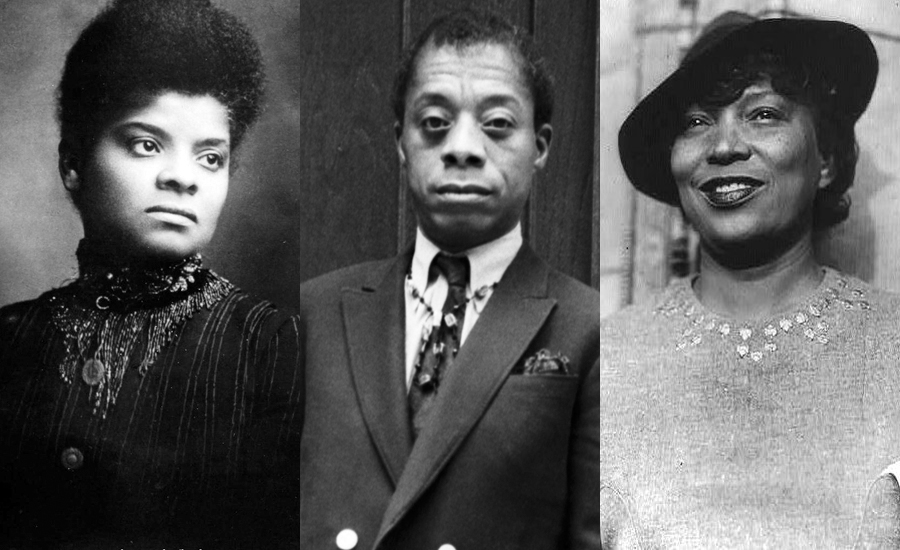
1. Not everything that is faced can be changed, but nothing can be changed until it is faced. —James Baldwin, author

James Baldwin standing next to a door saying Black History Month quotes

2. Believe in life! Always human beings will live and progress to greater, broader, and fuller life. —W.E.B. Du Bois, historian, activist, author and editor

3. Make a difference about something other than yourselves. —Toni Morrison, Pulitzer and Nobel Prize-winning author

4. The way to right wrongs is to turn the light of truth upon them. —Ida B. Wells, journalist, suffragist, and civil rights activist

Ida B. Wells portrait saying Black History Month quotes
Ida B. Wells

5. I call something a miracle when an ordinary person achieves something extraordinary. We all have the potential to create miraculous changes. —Tina Turner, singer and actress

Black History Month Leadership Quotes

6. When you do the common things in life in an uncommon way, you will command the attention of the world. —George Washington Carver, botanist and inventor

George Washington Carver portrait saying Black History Month quotes
George Washington Carver

7. If they don’t give you a seat at the table, bring a folding chair. — Shirley Chisholm, first African American woman in Congress

8. Every time you state what you want or believe, you’re the first to hear it. It’s a message to both you and others about what you think is possible. Don’t put a ceiling on yourself. —Oprah Winfrey, talk show host, producer, actress, author, and philanthropist

9. True heroism is remarkably sober, very undramatic. It is not the urge to surpass all others at whatever cost, but the urge to serve others at whatever cost. —Arthur Ashe, champion tennis player and activist

Arthur Ashe portrait saying Black History Month quotes
Arthur Ashe

10. A life is not important except in the impact it has on other lives. —Jackie Robinson, first African American to play in Major League Baseball

Black History Month Quotes for Strength

11. Always remember, you have within you the strength, the patience, and the passion to reach for the stars to change the world. Harriet Tubman, abolitionist, humanitarian, and Union spy

Harriet Tubman sitting down saying Black History Month quotes
Harriet Tubman

12. No matter how often you fall from grace, what matters most is how many times you get up. Taraji P. Henson, actress

13. Sometimes, I feel discriminated against, but it does not make me angry. It merely astonishes me. How can any deny themselves the pleasure of my company? It’s beyond me. —Zora Neale Hurston, author

Zora Neale Hurston smiling and saying Black History Month quotes
Zora Neale Hurston

14. I feel safe in the midst of my enemies, for the truth is all powerful and will prevail. —Sojourner Truth, abolitionist and women’s rights activist

15. That’s part of your life lesson to be afraid. The bigger question is how you deal with being afraid. Do you have to summon courage or something else to live with that fear without letting it take you over? —Gladys Knight, singer, songwriter, actress and businesswoman

Short Black History Month Quotes

16. I will what I want. Misty Copeland, first African-American principal ballerina in American Ballet Theatre

Guideposts: Misty Copeland, principal dancer for the American Ballet Theatre
Misty Copeland

17. Character is power. —Booker T. Washington, author, educator, and adviser to U.S. Presidents

18. Never be limited by other people’s limited imaginations. —Dr. Mae Jemison, engineer, physician, and NASA astronaut

Dr. Mae Jemison and her suit technician Sharon McDougle with inspirational quotes from NASA Astronauts
Dr. Mae Jemison

19. The soul that is within me no man can degrade. —Frederick Douglass, abolitionist, writer, and statesman

20. Kindness eases change. Love quiets fear. ―Octavia E. Butler, science fiction author

Black History Month Quotes About Faith and Hope

21. We have one life; it soon will be past; what we do for God is all that will last. —Muhammad Ali, champion boxer

Muhammad Ali saying Black History Month quotes

22. Faith is taking the first step even when you don’t see the whole staircase. Dr. Martin Luther King, Jr., minister and activist

23. I’ve grown most not from victories, but setbacks. If winning is God’s reward, then losing is how he teaches us. Serena Williams, professional tennis player

Serena Williams at the US Open
Serena Williams

24. Storms of all kinds rage through our lives, and sometimes they can take everything from us. But if you have faith, your own worst moment can become your best. George Foreman, former professional boxer, entrepreneur, minister and author

25. Love recognizes no barriers. It jumps hurdles, leaps fences, penetrates walls to arrive at its destination full of hope. —Maya Angelou, memoirist, poet and civil rights activist

READ MORE ABOUT BLACK HISTORY MONTH:

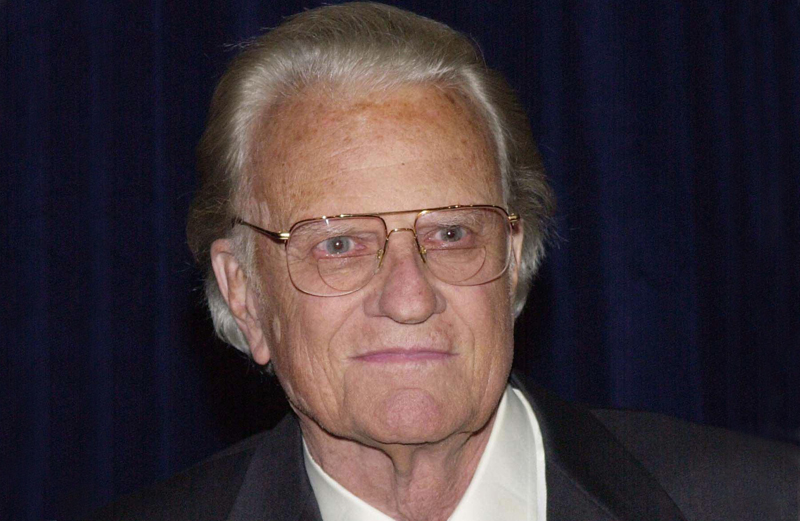
Billy Graham: On Faith and Faithfulness

The following interview with the Reverend Billy Graham first appeared in the November 1977 issue of Guideposts.

When plans were being made here at Guideposts to offer Billy Graham’s new best-seller How to Be Born Again as a book selection to our subscribers, one of our editors said pensively, “All across America, many people will respond to the message in this book. But some will not. I wonder what Billy Graham would say about the mental roadblocks or emotional barriers that hold such people back?”

Pause & Pray In Article Ad

“Why don’t we go and ask him?” another editor suggested. And so not long after that we sat on the terrace of the Grahams’ North Carolina home. 

Guideposts: Dr. Graham, in your new book you outline certain steps that must be taken if a person wishes to be “born again.” Do you think there are some mental attitudes or other conditions that make it difficult or even impossible for a person to take those steps?

Billy Graham: Yes, I’m sure there are.

Guideposts: Could you tell us about some of the major ones, please?

Billy Graham: Well, one of the first that comes to mind might be called intellectualism, the tendency to approach Christianity only from the rational point of view. I think there are sincere people who have intellectual problems with the whole idea of a God-man who lived two thousand years ago, died at the age of thirty-three, rose from the dead, and is our only way to salvation.

To the purely rational mind the whole thing is–well, it’s much like what St. Paul wrote to the church at Corinth–it all seems like foolishness. Paul even used a word which is the one we derive our modern word ‘moron’ from. He said that Christianity can seem moronic to some people, because when man sinned against God in the beginning, man’s intellect was affected. A veil is drawn over the eyes of people who refuse to “become as little children,” and only the Holy Spirit can lift it. That’s where the work of the Holy Spirit in salvation comes in.

Guideposts: Can you give us an illustration of how this block can be lifted?

Billy Graham: Yes, of course. I remember the case of a man named Fred Smith, one of the greatest biochemists in the world. He was an Englishman who was brought over to this country by the University of Minnesota to do cancer research. Fred Smith was an avowed agnostic. He couldn’t accept Christianity intellectually or any other way.

Now, Fred Smith had an American neighbor who was a devout Christian. They met each other, liked each other, became good friends. One day an evangelistic crusade came to the big stadium in Minneapolis, and the neighbor asked Smith if he’d like to go. At first he refused. “I was reared in the Church of England,” he said, “and I’ve studied Christianity. I’ve rejected it, and I don’t even want to think about it.”

But the neighbor was rather persistent, and finally Smith agreed to go with him just once. So they went, and Smith was very impatient and scornful. On the way home, he said he didn’t like the music; it was corny. He said that he didn’t like the preaching; it wasn’t logical. “The whole evening was a waste of time,” he said. “I didn’t get a thing out of it.”

But that night for some strange reason, before he went to bed, Fred Smith remembered a verse of Scripture that had been quoted: “If thou shalt confess with thy mouth the Lord Jesus Christ and believe in thy heart that God raised Him from the dead, thou shalt be saved.” (Romans 10:9) That’s a rather long Scripture to remember, but he remembered it word for word.

All that night and all the next day in his classes that passage kept echoing through his mind. He came home and thought about it that night. He talked to his wife about it. On the third night, without ever going back to the crusade, he got down on his knees and said, “God, I know there must be a Supreme Being. If this is Your way of salvation, I accept it. I accept Jesus Christ.”

Fred Smith began to study the Bible as if it were a text book. He grew in spiritual stature very rapidly. He and his wife became tremendous Christians. What I’m showing you is that God can take a passage of Scripture and reach the intellectual mind.  The Holy Spirit lifted the veil from Fred Smith’s mind. The preaching at the crusade that night didn’t have to be clever, or argumentative, or even logical. Something was supernaturally done by the Spirit of God on the mind and in the heart of Doctor Fred Smith.

Guideposts: There are certainly many such success stories. But what do we say to men and women to whom these revelations don’t occur?

Billy Graham: Well, I think that we witness to them, but we have to realize that the true communicator of the Gospel is the Holy Spirit. When I stand before a group of people, a small group in a classroom or thousands in a big stadium, I have a terrible feeling of helplessness. I know that I don’t have the ability to really to win those people to Christ. But I also know that I’ve got another standing beside me who will do the winning if I’m faithful in my witness.

When the Gospel is presented, some people will respond and some won’t. It seems at times that you could almost have identical twins standing side by side, one accepting and one rejecting. It’s like the sun that melts the butter and hardens the clay. This is a mystery that I don’t understand; it’s part of the sovereignty of God. But I do know that when we faithfully proclaim the Gospel, his word will not return void. It accomplishes what God wants it to.

Guideposts: The seed is sown, and some falls on fertile ground.

Billy Graham: That’s right. Our job is to faithfully proclaim, to pray, to sow the seed, and that seed may germinate in many ways. I remember the Surgeon General of Portugal telling me how one day he looked down and noticed a piece of paper stuck to his shoe. When he pulled it off, he saw it was part of a Gospel tract. Well, through that fragment of paper he accepted Christ and became a real evangelical leader in Portugal.

Now, somebody had printed that tract, somebody had handed it out, never dreaming that it would win the Surgeon General of Portugal to Christ. And so we never know, when the Word is spread, what it’s going to accomplish.

Guideposts: Are there certain blocks in people’s lives or actions that must be removed before such events can transpire?

Billy Graham: Well, there’s a block that I see in people all the time that is far greater than the intellectual block. It’s the unwillingness of people to commit themselves to the high moral demands of Christ. This is the most common block of all people, who just cannot say to Christ, “You will be Lord of all in my life, and I will stop doing anything that I know You would not want me to do.”

Guideposts: Do you meet such people often?

Billy Graham: Yes, all the time. Just the other day a well-known person came to me deeply troubled, ready to accept Christ, but unwilling to give up the woman he was living with who was not his wife. He was a married man. He said to me, “I have tried. I have prayed. I have wept. But I just can’t let her go.”

I said to him, “Well, this is your great test. You have to be willing to repent of that sin. And repentance means ‘turning away from.’ In a very small way, I can understand the struggle you’re going through, because when I first came to Christ I was going with a girl who was not a Christian, and she was unwilling to become one. I was very much in love with her, or so I thought, but the Lord seemed to be telling me that this was my big test–was I willing to give the girl up, or was I not?

I remember the night I went over and told her that we had to stop seeing each other. We’d been going together for three years, and I’m sure we both had intended to be married. And I remember that when I drove home that night, about ten miles, I wept all the way. But I was doing it for Christ. Of course, I didn’t realize then that the Lord had somebody else in mind who would turn out to be the ideal wife for me.

Guideposts: Is the problem of sexual immorality very prevalent, then?

Billy Graham: I’d say that is the one that comes to my attention the most often as a force holding people back in their spiritual lives. They’re not willing to surrender that area to Christ, especially in our promiscuous society where sex is exploited everywhere, on television, on newsstands. If I were eighteen or twenty again, I’m sure that without God’s direct intervention I would not be able to resist, because temptations are flung out in front of young people today in a way we didn’t know in my generation.

Guideposts: You’re really saying that people flinch from making a total commitment, is that right?

Billy Graham: Yes, that’s right. Someone has said that this is the age of uncommitment. There seems to be no great challenge in this country today. People are just apathetic, interested in their own pleasures, not committed to any cause. And the cause I’m talking about is Jesus Christ. Some people are not willing to say, “I’ll burn all my bridges behind me and surrender totally–my will, my mind, my heart, my family, my business or whatever–all my goals to Jesus Christ.

And that is what Christ asks of us: to burn our bridges behind us and say, “Christ, You and You alone are the One I’m going to depend on for my eternal salvation and for my daily personal relationships. You come before everything, and I don’t do anything without asking Your guidance and help.”

Guideposts: Perhaps one reason that some people don’t do this is because they don’t feel the need for such a commitment. They say, “I try to be a caring, compassionate person. I try to aid my community and pull my weight in society. I’m not unhappy the way I am and I don’t feel any tremendous vacuum, so why should I make this revolutionary leap, this total commitment?” What is your answer to such people?

Billy Graham: In my experience, people who talk like that are usually middle-aged. Young people aren’t so complacent; they have too many hang-ups to be smug about themselves. But complacency is indeed a block with older people, and a difficult one to overcome. Sometimes these people go to church and live fairly respectable lives and are quite pleased with themselves. What is lacking, very often, is a consciousness or conviction of sinfulness.

If my own salvation depended even five per cent on Billy Graham, I would have serious doubts as to my salvation, because I know I am a sinner. I know there are sins of omission in my life every day. There are sins of commission. God demands perfection of us. He said, “Be ye holy, as I am holy.” But I can’t be holy. Not compared to God’s holiness. Oh, perhaps I can be holy in contrast to some of my fellow men. But not in comparison with God.

It’s like a housewife who washes her clothes and hangs them up in the yard to dry. And then a snowfall comes, and when it does the whitest sheet she has on her line looks gray and dingy in comparison to the snow.  That’s the way these complacent people really are in comparison to the holiness of God, which is absolute purity. I’ve had many people in this category finally accept Christ, but many more in this category reject Him.

Guideposts: What can be done to shake the smugness out of such people?

Billy Graham: Sometimes it takes a tragedy or a near tragedy in their lives to wake them up. A serious illness, perhaps, or a narrow escape, or the death of a loved one. Sometimes it’s an awareness of the approach of the end of their own lives.

Just the other day a lawyer, a Christian herself, asked if she could bring her eighty-five-year-old father to see me. Now, he was in the exact category we’re talking about–had been all his life. I said to him, “Mr. So-and-so, do you really know Jesus Christ as your savior? Are you certain that if you died right now you’d go to Heaven?”

He said that just the week before, watching me on television, he had made a decision and had come forward in his heart. “Well,” I said, “that’s fine. But are you willing to bow your head right now, and pray, and make it definite?” He did, and the tears rolled down his cheeks. Why? Because he knew that he was getting near the end of the road and that time was running short.

Guideposts: What are some of the other external factors that hold people back?

Billy Graham: I’d say that another very common block is plain, everyday procrastination. People put off making decisions. Accepting Christ is the biggest decision of all, but they put that off, too. They say to themselves, “Well, I’ve got plenty of time. I’ll think about it next month or next year. There’s no hurry.” But often there is a hurry. Life is a fragile thing. None of us know when it may end for us.

My son-in-law was telling me just the other day about a couple he knew very well. The wife was a Christian; the husband was not. Oh, he showed signs of wanting to be, but he just kept putting it off.

One night the wife awoke out of a sound sleep with the conviction that she ought to talk to her husband about this hesitancy of his. She woke him up and talked to him so lovingly and earnestly that finally they prayed together and he did indeed accept the Lord. Then he went back to sleep–and he never woke up.

He just died in his sleep. It was as close as that.  A matter of hours, or maybe minutes. I could tell you many such stories of people who hesitated until it was too late and others who made their decision literally in the nick of time.

So you see, there are all sorts of roadblocks: intellectualism, immorality, unwillingness to make a commitment, complacency, procrastination … those are the ones I’ve mentioned and there are probably others. If we had all the answers, everybody would be saved, but they’re not saved.

Still, I know that when I’ve done the best I can and move on, the Holy Spirit stays behind, and I know He will carry on after I’ve left. That’s what we have to put our trust in where salvation is concerned: the work of the Holy Spirit.

That’s what it all comes down to in the end.

For more inspiring stories, subscribe to Guideposts magazine.

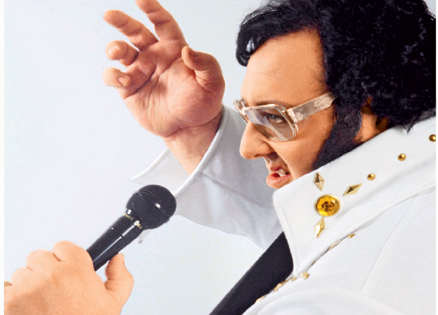
Big Elvis

Parade floats filled my TV screen.

“There you are!” said my manager, Lucille, who was watching with me. The float I’d ridden earlier in the day at Las Vegas’ Centennial Helldorado Parade slid into view.

The Daily Bible Large Print relaunch with digital free gift in article ad

There I was, dressed in full Elvis regalia, belting out “Teddy Bear.” But instead of feeling proud of the career I’d built as Big Elvis, I couldn’t believe what I was seeing. Is that me? I thought. Is that what I look like?

At 40, I’d been putting on weight for years. As a kid coming home to an empty house while my mom was out working two jobs, I always found my dinner in the fridge with a note. Mom couldn’t be there, but I took comfort in the food she’d left.

I was still eating to soothe myself. But now, moving from the bedroom to the kitchen left me out of breath. I used an oxygen tank in my dressing room between shows.

My weight problem was out of control. I knew it, and yet the sight of myself was a complete shock. My voice was strong, but I looked pale, weak and bloated. Like my body wouldn’t last much longer.

“Elvis died at forty-two,” I said to Lucille. “I won’t make it that far.”

You might think Elvis impersonator was no job for a 940-plus pound man. What could I have in common with Elvis? A lot. We were both born into poverty and attended the Assembly of God Church, where we sang in youth gospel choirs.

At 14 I sang “Jailhouse Rock” at the school talent show and the crowd went crazy. Elvis was my role model back then. I’d tried to keep his memory alive through my singing ever since.

That night of the parade, I thought about how blessed I was. I had loving friends, enough money to support myself and my kids. Best of all, I got to sing Elvis’s music 15 shows a week on the Las Vegas strip. I had so much to be grateful for.

I was sure that was the way Elvis looked at his life. Any Elvis fan knows there’s a lot more to the man than his music. I grew up hearing of his kindness, how he gave things away, like cars, jewelry, money and such.

Once he read about a lady who needed a wheelchair and sent one right over. He flew across the country to visit a sick girl who wanted to meet him. Elvis gave to hundreds of charities regularly and anonymously.

I tried to emulate Elvis on stage and off. I did charity performances and helped out people in need, when I could. The preacher back home taught me to follow Jesus’ example by caring for others. For me following the Lord’s example and Elvis’s were close to the same thing, because Elvis gave from his heart.

My stomach rumbled. Elvis loved food, like fried peanut butter and banana sandwiches and greasy burgers. But he could never understand how I’d gotten to this point. I prayed for sleep to come and take the image of me on that float out of my mind.

Lucille came over the next day looking more serious than I’d ever seen her. “I’ve been thinking about what you said about dying,” she said. “I’m ready to fight for you if you’ll let me. You can get healthy again.”

“I’m scared,” I said. “I don’t know how to change.” 

“A little at a time,” she said. “God will help you.”

It seemed impossible. But then, hadn’t God performed the impossible in my life already? “I’ll try,” I said.

Lucille, who’s an excellent cook, moved into my house. She presented me with a bowl of chicken vegetable “stoup”—a cross between stew and soup—on diet day one. Instead of a crash diet, she put together healthy meals, and scheduled friends to come in shifts to make sure I didn’t stray off course.

I wish I could say I was as strict about the plan as she was. Once she caught me in bed with a pizza. “I had the guy deliver it through the window,” I admitted.

She replaced it with cottage cheese and pineapple chunks. “You’ve got to give it all you’ve got,” she said. “I can’t do this for you.”

But what did I have? Without food  and the feeling my hero understood me I felt empty and depressed. And the scale wasn’t helping. “It’s hopeless,” I said after one week. “How can I believe anything is happening when I can’t see it?”

“That’s why they call it faith,” Lucille answered.

I’d had faith in the Lord my whole life. Why should this be different? With new trust in him, I bought a backyard pool. I wasn’t swimming laps, but any exercise was good.

Lord, I’m relying on you to see me through, I thought as I kicked my legs in the water. You and Elvis. The king always helped those who needed it. Next time I weighed in I’d lost 15 pounds!

I quickly learned my best exercise was my shows. That’s the first place I noticed a difference in my stamina. Instead of sitting after half a verse of “Can’t Help Falling in Love,” I made it through the whole verse.

There was nothing like the enthusiasm of Elvis fans to cheer me on. Some fans had been coming to my shows for years, and they weren’t shy about expressing concern for my health. Their caring inspired me.

Unfortunately, not everyone understood Elvis. One night I came home angry. So angry I was tempted to order a pizza! But I settled for sugar-free Jell-O. “What’s the matter?” Lucille asked.

“Just some guy I overheard as we were leaving the casino,” I said. “You know the type. Thinks the only thing to know about Elvis is that he was unhealthy and he died.”

“Not even worth listening to.”

“It makes me angry people don’t understand. Elvis was overworked. He wasn’t eating right. He’d been prescribed multiple medications. He wanted to get off that roller coaster, but it was out of control.”

I trailed off, struck by what I’d said. I thought Elvis couldn’t understand. This was something else we shared. Elvis had lost his battle, but with God’s help—and Elvis for inspiration—I vowed I would not lose mine.

Today I’m 44 years old. Two years older than Elvis when he died. I’m still Big Elvis at 400 pounds, but that’s over 500 pounds less than I once was. I feel closer than ever to the king, but it’s not because of the numbers on my scale.

I might sing like Elvis and aspire to be a good man like Elvis, but I’m never more like him than when I’m struggling my hardest and looking to the one real King we all have in common.

Bible Study Fellowship: The Cure for Her Addiction

Tuesday morning, nine o’clock. I sat in my old jalopy in the parking lot of the First Presbyterian Church, nervously smoking a cigarette and watching a parade of well-dressed women disappear behind the doors, going to a Bible fellowship class I’d told my sister, Donna, I’d take. Their makeup, their hair, their skirts and heels, everything about them seemed perfect. I looked at myself in the rearview mirror. No makeup. Messy ponytail. I’d worn my everyday clothes, jeans and a T-shirt.

I wanted to start the car and go right back home. Not just because I looked so different from them. It was more because if those women knew the way that I had once lived my life—knew who I really was—they would most likely bar the door.

Daily Strength for Women in Article ad

Joining a Bible study wasn’t something that I had given much thought to before. That was my daddy’s department. He taught Bible history, and the Bible was his textbook. We went to church as a family but didn’t really talk about God otherwise. To me, the Bible was just another book. And I wasn’t much of a reader, or a student. Not since the eighth grade, anyway.

That year I was friends with a group of girls who seemed nice at first. Then one day at lunch one girl asked me to dump her tray. “Take mine too,” another said. “And mine,” said another. Next thing I knew, I was staggering to the trash can, trying not to drop the half dozen trays piled high in my arms.

I dumped the trash and turned back to our table. The girls were gone. They had totally ditched me! I felt like such a reject.

A terrible emptiness opened up inside of me, a sense of utter desolation, like I was all alone in the world.

I’d always felt different from the other girls, and their rejection confirmed it. I started hanging out with a new crowd who accepted me for who I was.

“Here, try this,” one of them said, passing me a joint. I smoked it so that I would feel even more connected to them, to feel like I belonged. Pretty soon I was getting stoned or drunk (or both) every day with my new friends. Booze, weed, then in high school, crack and smack. My parents didn’t know what to do.

I stopped caring about anything except getting high, and escaping the sense of abandonment that encased me.

I managed to graduate high school, but after that I became lost in a downward spiral of addiction. At one point, I got clean and sober for a few years. I was diagnosed with depression and put on medication. About two weeks after I started taking it, someone smoked a joint in front of me. “Can I have a hit?” I asked. And just like that, I relapsed.

I’d beg God for help and get clean for a couple of days only to be tempted into using again. The cycle went on for years. Sober. Relapse. Sober. Relapse.

I shudder to think what might have happened to me if I hadn’t gotten high and wrecked my car one day in 2003. Thank goodness I didn’t hit anyone. Somehow I wasn’t hurt, but I was put in jail for a couple of weeks.

One night, sitting in that cold, lonely cell I sensed rather than heard something tell me, I’m here. Or was it someone? Was God trying to get my attention? Lord, help me out of this, I prayed. Help me stay clean for good. I knew if I went to rehab when I got released it would help my chances of staying out of prison…and, maybe, just maybe it would work.

So that’s where I went—a six-month treatment center. It was there that an anger at God flared in me. I couldn’t count how many times I’d asked for his help getting clean. Why had he let me suffer with this disease and remain a miserable failure all these years? Why had he let me down?

“Fine, have it your way!” I shouted one day. “I’m yours. All yours. Do what you want with me.”

Little did I understand it then, but that was the first time I really turned my life over to God’s care. And in that moment of surrender, the seed of my sobriety was planted.

I left rehab committed to my recovery like I had never been before. I found a 12-step meeting and kept going back day after day, month after month. I drew closer to my mom and my sister (I was so grateful that my addiction hadn’t destroyed our relationship). I just wished that my daddy had lived to see me like this.

It was partly in his memory that I started going to church. I even picked up the Bible. But I couldn’t get a handle on Scripture and didn’t make much headway.

All in all, though, my life was pretty much on track after three years of sobriety. So why did depression still haunt me? It wasn’t the utter desolation I had felt in eighth grade, rejected by my so-called friends. The antidepressant meds were helping. But some days I felt so tired and hollow, it took everything I had to get out of bed and drag myself to my 12-step meeting.

I didn’t want to unload my problems on my sister—she had enough going on raising two little kids on her own after her divorce. But lately I’d noticed that she seemed less stressed. Happier. Hopeful. One day when we were talking on the phone I opened up. “It’s like I’m in a deep dark hole and I can’t climb out,” I said.

“When I feel overwhelmed, I recite Bible verses,” Donna said. “They remind me of God’s promises to us.”

So that’s what’s helping her, I thought. I’d never gotten very far with my Bible reading, certainly not enough to know verses by heart. “You mean you memorize verses and repeat them?” I asked, wanting to know more.

“That’s right,” she said. “I just signed up for this weekly program that sounds really great: BSF, Bible Study Fellowship. They study the Bible line by line.”

Donna lived an hour away, but BSF was held at a lot of locations, so she said that we could attend in different places, then talk about the week’s lesson over the phone.

“Okay, I’ll give it a try,” I said.

Now here I was, sitting in my car outside First Presbyterian Church, paralyzed by anxiety. What if I didn’t belong here? I wasn’t much of a reader. . .what if it just didn’t click for me even going line by line? What if these Bible study ladies turned on me like those mean girls from the cafeteria back in eighth grade? I stubbed out my cigarette and closed my eyes, trying to block out those awful memories.

At that moment, a 12-step saying popped into my head: Do the next right thing. Okay, I could handle that. I got out of the car. Walked up to the church. Opened the heavy wooden doors and stepped into the sanctuary. Women were in the pews and the aisle, talking and laughing. One of them caught my eye.

I cringed, thinking, I probably have “loser” written all over me.

But she said hello and gave a friendly nod. So I nodded back.

Do the next right thing.

I took a seat in a pew. After a few minutes we left the sanctuary and gathered in a classroom. “Welcome to BSF,” the woman at the front announced. “I’m Paula.” She broke us up into small groups where we introduced ourselves.

Here we go, I thought. No turning back now. “My name is Denise and I’m looking forward to learning more about God’s word.”

Paula explained how the class worked: We’d open by singing a few hymns. Then we’d break into our small groups to discuss a specific passage. To close, she’d give a short lecture along with notes. This year’s study was about Moses. We would start with Exodus and go through Deuteronomy. I listened carefully and took a lot of notes but didn’t say much.

The next morning, depression lay on me like a thick, heavy blanket. I didn’t want to get up, but it was as if God knew how much I needed to study his word and got me up. I grabbed my notes and Bible. I meant to turn to Exodus but opened to Joshua 1. Verse nine practically leapt off the page: “Be strong and courageous; do not be frightened and do not be dismayed, for the Lord your God is with you wherever you go.”

A shiver ran down my spine. God had been with me when the girls from the cafeteria dissed me? When I crashed my car? When people wrote me off as a hopeless addict? I may have been a pathetic reject in everyone’s eyes, even my own. But never in God’s. That was what he’d been trying to tell me that night in jail: I’m here with you. Always.

I found a pretty green journal in my nightstand and copied down the verse. I carried the journal with me wherever I went. When I felt like getting high or hiding from the world, I used my verse as a shield, whispering the words until I’d fended off those destructive thoughts. Talking to Donna about the class helped too.

At BSF the following Tuesday, I silently recited the verseDon’t be afraid to be yourself. God is with you, I told myself. Still, it took a month of listening to the other women in our small group share about their lives before I finally opened up. “I had a serious drug problem,” I said. “I’m blessed to be alive and sitting here with you all.”

The group fell silent. Oh, no, did I over-share?

A classmate spoke up. “Thanks for saying that, Denise. It’s good to know we can talk about anything.” At the end of class, several women confided in me about their loved ones struggling with addiction.

Another time, after a lecture, I told Paula, “I’m so grateful for this class. I write some of the verses in my journal and recite them when I’m feeling down or depressed.”

“I’ve been depressed too,” she said. “You don’t have to believe the bad things you feel. Call me anytime.”

Little by little my depression lifted. It wasn’t just the verses, it was those “perfect” women that I turned out to have plenty in common with. They’re more than Tuesday-morning classmates, they’re full-time friends. They even picked me (yes, me!) to encourage others to join our group by telling them my story.

Now I’m eight years clean and sober. Like everyone, I have down days, only they don’t keep me down for long, thanks to a little green journal filled with God’s promises and a Bible study filled with good friends.

This story first appeared in the February 2013 issue of Guideposts magazine.

Beware of Pretty Weeds

One afternoon my then 6-year-old daughter, Abby, was playing outside with her younger sister while I vacuumed our SUV. Just as I was sucking up the last of the petrified French fries that were wedged under the backseat, Abby called for me.

“Mommy! Mommy! Mommy!” she said in her most excited voice. “I have a surprise for you!”

Inspiration from the Garden in article ad

I played along, trying to peek behind her back where “my surprise” was awaiting me.

“Here, Mommy,” she said, smiling from ear to ear. “I picked you a flower!”

I smiled and graciously accepted it, though upon further inspection, I realized it wasn’t a flower at all. Abby had given me a very pretty purple weed. As I looked at the weed more closely, I thought, This weed really is lovely. It could fool almost anybody into thinking it’s a flower.



Later that evening, I received a telephone call from a friend at church. She began sharing some very damaging information about a person in our congregation.

Even though it felt wrong to listen, I hung on every juicy detail because my friend kept interjecting, “I’m just telling you all of this so that you’ll know how to pray about it.”

“Of course,” I affirmed.

“Ok, I’ve got to go but if I hear anything else, I’ll be sure and call you back,” she said. “See you at Bible study.”

As I hung up the receiver, I felt just awful.  

“Man, I wish I hadn’t been a part of that,” I mumbled under my breath.

As conviction covered me, I went into my bedroom and hit my knees.

I prayed, “God, I’m sorry I was a part of that. I should have identified that information as gossip.”

I stayed on my knees in silence, feeling really badly about that evening’s conversation and replaying it over and over in my mind. Just then, God brought to my remembrance the pretty purple weed Abby had given me hours before.

That pretty, purple weed that fooled Abby fooled you too, God spoke into my spirit. Not in an audible voice but deep down inside.

I knew it was God, and I knew what He meant.

That gossip was packaged nicely with, “I’m just sharing this information with you so you’ll know how to pray about it.” It was a pretty, purple weed. But weeds are weeds and gossip is gossip.

Both choke off life.

That little weed that looked so innocent and pretty among my begonias would have eventually choked the life right out of them if Abby hadn’t removed it from my flowerbed that afternoon.

And, if we continue to let little weeds like gossip grow in our lives, they’ll soon overtake us too. That’s how Satan tries to fool believers.

Don’t be fooled by his tricks. When the Holy Spirit prompts you to do some “weed eating” in your life, pray about it, and ask for divine wisdom and discernment.

The big, ugly weeds are easy to identify. It’s the attractive ones we have to worry about. Let God be the ultimate gardener in your life. As you live close to Him, you’ll become more skilled at identifying the weeds in your life–even the pretty ones.

Pray this with me:

Father, help me to identify the weeds in my life so that together we can rid my life of them so that I can continue growing in You. Put a watch over my mouth, Lord, so that I won’t gossip, and give me the discipline to walk away from ‘gossipy’ conversations. I love you, God. In the Mighty Name of Your Son, Jesus, Amen.

Be Still: Feel the Peace of Jesus

How do you begin your day? With a cup of coffee and a quick bagel? What about the evening? Is it all rushing to help with homework or finish chores? Are the hours in between jam-packed with activities and commitments that keep you hustling? It may surprise you to know that God has other plans for you. “Be still, and know that I am God,” the Psalmist insists (Psalm 46:10). And note that being still isn’t an option, but a prerequisite.

Scripture tells us that our beauty before God “should be that of your inner self, the unfading beauty of a gentle and quiet spirit” (1 Peter 3:4). Yet few of us, if pressed, can honestly say that what we see when we look into our hearts is a consistently smooth and serene scene.

Inspiration from the Garden in article ad

We see ripples and waves, surprising currents and sometimes even riptides! And though Jesus is capable of calming the sea-surge in our hearts by saying, “Quiet! Be still!” (Mark 4:39), all too often we’re not as obedient as the waves. Instead of hearing his voice, we hear the noise of our worries, our fears and our desires. These things plug up our ears, and in our search for comfort we focus on what we have to say, instead of on what Jesus does.

If you find yourself struggling with life, remember, “The LORD will fight for you; you need only to be still” (Exodus 14:14). But how do we train ourselves to be still? How do we “Let the peace of Christ rule in your hearts” (Colossians 3:15) when we are so preoccupied that our hearts are never silent?

In pre-GPS days, often the only what to get to where you were going was to ask directions. In the spiritual life we can avoid driving in circles by asking the Holy Spirit to show us how to “be still before the LORD and wait patiently for him” (Psalm 37:7). And we can use Scripture to map out the route to peace.

Before we begin to plead with God to help us with our problems, we can pray with the Psalmist, “For God alone, O my soul, wait in silence, for my hope is from him” (Psalm 62:5). We can breathe deeply, inhaling the Spirit that gives us life. I sometimes take belly-expanding breaths to the rhythm of, “Come Holy Spirit…bring me peace.” It helps.

Once our souls are calmer, we can’t just turn to our laundry list of things we want. To pray is to focus our hearts on God, not on our desires. Listening — really listening — is what Scripture tells us to do after we allow God to open our hearts: “The gatekeeper opens the gate for him, and the sheep listen to his voice” (John 10:3). This is “a time to be silent”; we must listen first, before we arrive at the “time to speak” (Ecclesiastes 3:7).

There are many ways we can open ourselves up to that peace throughout the day. Sometimes, like Mary of Bethany, we need to open our Bibles and sit “at the Lord’s feet listening” (Luke 10:39). Other times we need to have what I like to call a “Deuteronomy day” where in the midst of our hectic schedules we take time to recall how God has acted in and through our lives. This helps us “Remember how the LORD your God led you all the way” (Deuteronomy 8:2) — which helps us look for him in the present moment. Like Jesus’ mother, who “treasured up all these things and pondered them in her heart” (Luke 2:19), we need to hold close to the things God has revealed to us. This process of silencing our hearts, then listening, then pondering what we’ve learned slowly leads to absorbing God’s will fully, fully enough that whatever we do is a natural out-flowing of our knowledge of him.

What’s on your agenda for today? Perhaps you need to add one more thing: “Be still, and know that God is God.”


‘Be Still and Know I Am God’

“Be still, and know that I am God.” (Psalm 46:10)

It was late, and the storm raged on.

Sugarcreek Amish Mysteries In-Article Ad 2023

Where was she?

Abby, my then nine-year-old, had gone to a theme park with her best friend. I had felt okay about letting her go—but that was before the tornado warnings. Now, I just wanted her home—crouched in the hall closet with the rest of us. I wanted to know she was safe. I wanted to hug her. I wanted to protect her.

My husband, Jeff, and I prayed that God would watch over her. Still, worry filled my heart. I needed to know she was all right.

Why didn’t they call?

Just then, the front door opened.

Abby was home.

In those prior moments of worry, I had heard that still small voice deep inside me saying, “Be still and know that I am God.” But, I couldn’t be still. My mind was filled with scary scenarios and doubts. I wanted to trust God, but this was my baby!

Well, I’m having those same feelings of anxiety as Abby turns 23 tomorrow. After all, this is a very big year for my first-born baby. Abby will finish her final year at Indiana University in May, and she will marry the love of her life, Micah, in June. Don’t get me wrong; we love her fiancé. He is a godly young man. In fact, he is a praise and worship minister! And, I’m thrilled that Abby is graduating with a degree in early childhood education and will soon be impacting those bright young minds. But, as her mama, I worry that I’ve run out of time.

It just hit me: she will soon be leaving the nest—for good!

I wonder if I’ve imparted enough “motherly wisdom?” I wonder if I’ve let her know how amazing we think she is and how thankful we are that God allowed us to be her parents? I wonder if her Dad ever taught her how to change a tire? I wonder if I’ve shared all of the things I wish I’d known before I said “I do” 24 years ago? And, I wonder if we will we be as close as we are now once she moves out and begins a new life?

As my mind races, I hear that same still, small voice whisper, “Be still and know that I am God.”

So, I take a deep breath.

As parents, we’re sometimes afraid to trust God with our children. But, what we fail to realize is that He loves them even more than we do. We can trust Him with our kids—even our grown ones.

So, as I treasure these final six months of having Abby at home, I am going to keep reminding myself of that truth. Today, I choose to stop worrying and start looking forward to the many celebrations that Abby’s 23rd year will bring.

I hope that no matter what you’re facing today, you’ll do the same: Breathe; stop worrying; trust God; and look forward with excitement.

And remember when your mind starts racing, be still and know that He is God.

Be Prepared for Life’s Storms

The storms of life will come. It’s one of the promises Jesus made to His followers: “In this world, you will have trouble”. It’s a fact we can’t escape. But for a long time, I tried to ignore this part of life. I took life as it came, with little preparation or planning for the inevitable, and that philosophy brought me close to being shipwrecked on several occasions. 

Some of the biggest storms hit when our son was serving in the military–I was ill-prepared for the stress, anxiety and worry that can come with a deployment. I learned the hard way the importance of preparing for the storms. Without these tips, I don’t know if I would’ve made it through in one piece. Here are 5 ways to preapre for the storms of life:

You Got This In Article Ad

1. Develop a daily habit of prayer and Bible reading.

Just like the foundation for a house is built first, I’ve found that I first need a foundation of faith and truth to weather the storms life can bring. That foundation is sound when you build a strong relationship with God. He is there when we call, but it’s easier to sense His presence when we already know Him well.

2. Build a support system of close friends.

I’ve found that doing life alone is almost impossible. We all need people to support us when things get tough. And we have an inner need to help others. By investing in relationships now, we are equipped to face the things that lie ahead. These close friends will pray for you and those you care about, bringing comfort and peace that can only come through companionship. Be a friend to the people around you and find joy in those friendships. They’ll likely be there for you when you’re going through too.

DONATE TO GUIDEPOSTS’ MILITARY OUTREACH PROGRAM AND HELP US PROVIDE PEACE AND COMFORT TO OUR TROOPS!

3. Find a community of faith.

Beyond close friends, we also need a larger community. This could be a local church, small group, or Bible study. But these folks will also play a part in helping you make it through the storms without ending up on the rocks.

4. Create a place of peace and solitude.

Where do you run to when you need to get away? I have several places I turn when I need to be alone and find perspective. My back porch is the first place I turn. It’s screened from floor to ceiling, and our wooded lot makes it a perfect sanctuary. When I can travel further afield, I head to the mountains. Somehow driving through their majestic peaks gives me the peace and perspective I need in difficult times. Whether you’re designating a corner in your home or venturing out into the wilderness, find a space of peace and stillness to call your own.

READ MORE: 5 WAYS TO HEAL IN GUANACASTE, COSTA RICA.

5. Write in and re-read your journals.

One thing I’ve done well is to record the happenings of my life on paper. When things get tough, I can go back and see how God has been faithful in times past. And, just by writing out my struggles, I can see the things happening now with more clarity.

How do you prepare for life’s storms?

Being Still

He says, Be still and know that I am God. (Psalm 46:10 NIV)

Stacked-up stress. It’s what I feel today. I pull my keys from the cluttered kitchen counter and wonder, for the millionth time, why I thought an eight o’clock-Monday-morning piano lesson was a good idea.

Walking with Jesus L&E evergreen_in article ad

Gabriel, my musician of the morning, is late. I sit in the van, letting it warm, tapping on the horn, waiting for my small, blond boy to emerge from the porch. Eventually he does, hair wet from the shower, music books tucked under his arms. His shoes are untied, and I grimace as his laces drag through an inch of messy, gray January slush.

It’s how I feel today.

A still Mississippi River. Photo by Shawnelle Eliasen.Messy-gray. Without a sliver of blue sky slipping through.
It’s just how life is, sometimes, I decide a few minutes later when we’re sitting in the piano teacher’s studio. Usually listening to Gabe’s musical progress brings me joy–the primary plink-plink-plink breaking from a beginner cocoon to something beautiful, developed, and artfully formed. But today it isn’t enough.

I have worries. Concerns. Genuine, gut-level, woes of the soul.

Gabriel finishes his lesson, receives his assignment for the next week, and he and I return to the van. We drive through the murky morning. I notice the lack of color. I feel the weight of the clouds. We drive down the hill and turn onto the road we live on.

And it’s then that I notice the Mississippi.

It’s glassy. Still. Mirror-surface smooth.

Oh, Lord, it’s how I long for my soul to be.

I move along, aware that my fingers curl hard around the wheel, and I know, suddenly, that I need to detour. I need to abandon the wild rush of the morning, the stack-up of tasks, for just a few minutes. Something better is calling. It’s like a magnet. I have to obey.

“Gabriel, I’d like to sit by the river. For just a sec. Want to come with? Or should I drop you by home?”

“I’d like to go,” he says from the back seat.

I turn toward the river and a moment later I pull against the curb. Gabriel and I leave the van and walk, crunching our way over ice-encrusted snow. There’s a bench, by the river bank, and we take our seat.

Gabriel is quiet. Something in his spirit knows I need this time. He sits and looks over the water. I watch the river, too, entranced by its moods.

Sometimes the river is rough. Agitated. Like ruffled feathers or the hackles of a dog.

But today it’s wide-open peaceful. It offers a perfect, unmarred reflection of whatever rests along the banks.

Oh, Lord, I want to be like this.

It occurs to me, sitting here, that this is what the Lord wants for me, too. He longs for me to be still. Secure in His presence. Peaceful and calm and free.

So I sit. And I pray. And as I do, I release my worries–one by one–to the care of the Lord.

My fists uncurl.

I breathe easy.

I let go.

I come free.

Gabriel and I sit for a few minutes. There’s a chill to the air, and my sweet, small son moves close. He takes my open hand, turns it over, and places his own hand on my palm.

Then his warm little fingers wrap around mine.

Soon we’ll head home. Toward our day. Together.

But I’m different now.

Peace is flowing. Gentle and smooth.

I’m like the water appears to be.

I am, for now, still.

Becoming a Beautiful Pearl Through Pain and Perseverance

According to the running total of calories burned which I keep, I should have lost three more pounds over the past two weeks. Unfortunately, the scales don’t say the same. Once again it appears that I am at a standstill at 193 pounds.

I find it ironic that the last time I was at a plateau was right after school let out for the summer. I was quite frustrated about not losing any weight as my workout time was increased threefold. Yet for five weeks I lost no weight even though the calorie count said otherwise. 

Community Newsletter

Get More Inspiration Delivered to Your Inbox


Now that school is back in session I am at a plateau once again it seems. I’m still exercising at least an hour every day and eating healthy. On top of that I am on my feet all day long teaching and walking around the classroom. So what gives? Why do I keep hitting these plateaus?

Could it be that our bodies need time to adjust to major changes in our lifestyles? Or is it something else altogether? Mrs. Betty, a lady at our church, has recently lost 50 pounds herself. She has been such an inspiration to me as she has trouble exercising due to nerve damage in her feet. Yet she perseveres and exercises while lying in her bed or sitting in a chair. 

Unfortunately, she has also hit a plateau. Even though she is quite frustrated, like me, she is not giving up. In fact, she told me she was leaving after church to go to a town about an hour and a half away to purchase an exercise bike, as they did not have one in stock here locally and she didn’t want to have to wait for one to come in. Now that is determination!

When times are difficult the easiest thing we can do is quit. When we hit these plateaus we could think, Well that’s it. I guess I’m through losing so I’ll just quit. Keep in mind that we are not a failure until we quit. If we continue to persevere we will be blessed and be successful in the end.

Even if I have finished losing all the weight that my body will allow me to lose I am so encouraged by how much better I feel physically that it reminds me that I don’t want to ever go back to how unhealthy I was before.

To have the energy and all over stronger physique that I now have keeps me focused on remaining healthy. And if I happen to lose a little more weight along the way then I will certainly count it all joy.

Pearls are formed when a grain of sand has irritated the muscle. Therefore, it is through great pain that a beautiful pearl is created. Dear one, even though this weight-loss process may be painful and frustrating at times, please keep in mind that the joy, strength, and better health on the other side will be so beautiful. Continue to pray and visualize yourself in becoming the beautiful healthy person, or pearl, that God created you to be.

Read more of Tammie’s blogs!

Watch New Healthy You videos.

Battling Depression by Helping Others

I was at the end of my rope. My twin boys were in their “terrible twos” and I simply couldn’t control them. Just trying to keep them still was a struggle. I never knew where they’d go next. The living room was a minefield of toys. The carpet wore the scars of countless spills. The morning alarm was a call to battle, and by each evening I knew I’d lost again.

It had been much easier with my girls, who were eight and 10. They were so quiet and well-behaved I’d been able to get plenty of time for myself—reading, doing volunteer work, even taking art lessons.

God's Constant Presence In Article Ad

“It’s so convenient for you,” I griped to my husband, Jerry. “You can go to work and get away. But I have to deal with this mess day in and day out.” Jerry tried to assure me that the house didn’t have to look perfect. Well, there was no chance of that, what with the unwashed dishes and laundry piling up day by day. Some days I didn’t even get out of my bathrobe. What was the point?

I felt like a failure. It seemed like nothing could make me feel hopeful again. I was so far gone even prayer brought me little comfort.

My friends urged me to seek help. I finally became so sick and tired of feeling sick and tired that I gave in. The counselor I went to see had four children just like I did, only hers were all grown. Obviously she had managed to raise them just fine. She had so much energy and enthusiasm that it wore me out just to look at her.

When I finished spilling out my problems, the counselor asked, “Mrs. West, have you ever heard of Dr. Karl Menninger? He always said there was one surefire way for people who were depressed to feel better. They should find someone who needs help and help them. Will you try it?”

I shook my head vaguely. I could barely drag myself out of bed in the morning. How could I possibly help anyone else?

“You mentioned you used to do hospital volunteer work, Mrs. West. Why don’t you find a day-care center to put your boys in a couple half-days a week and go back to volunteering?”

I was way too weary to argue with her so I agreed to try it. As it turned out Jerry and the girls thought it was a good idea too and the twins were only too thrilled to have an exciting new place to go twice a week.

The following week I went to Athens General Hospital and joined six other new volunteers in watching a demonstration on how to make a bed properly. I didn’t leave a house of unmade beds to make up hospital beds, I thought. Besides, right now I feel better suited to lying in one than making up one. So I went to the office of the hospital’s new recreational therapist and volunteered for her program instead.

“Okay, I’ll give you a list of patients,” she said. “Just take these paints and brushes, knock on their doors and ask them if they want to paint. Remember to smile big and act positive!”

I hoped those art lessons I’d taken would come in handy. I took the list and the painting supplies and rode the elevator up to the hospital’s second floor. I stopped into the ladies’ room and stood before a full-length mirror. I looked so serious I scared myself. Mustering up a pale imitation of a smile, I turned and headed for the first patient’s room.

“Hi, I’m Marion,” I said. “Would you like to paint?”

“No,” came the answer. “And please make sure you close the door when you leave.” It happened again and again. No one wanted to paint and I felt stupid asking. But I kept at it, mainly so I could say that I’d given it my best shot. I finally came to the last person on my list. While I knocked on that door, I glanced at the patient’s information: NAME: Coy Pritchett. AGE: Twenty. CONDITION: Kidney complications/quadriplegic/depression.

I froze for a moment. This man was totally paralyzed. What could I do for him? I cautiously opened the door and stepped inside. I was staring at the heels of a patient on a Stryker frame, a huge wheel-like contraption that keeps a patient immobile while turning him to prevent pressure sores. At the moment Coy was face down. “Hi, I’m Marion. Would you like to paint a picture?” I asked automatically, before realizing how absurd that must sound to someone who couldn’t move his arms.

“Shoot, yeah,” he answered. Yes? For a moment I wanted to run from the room, turn in my name tag and flee back to my wreck of a house. But Coy was waiting on me, so I went over to him. Putting down the painting supplies, I got down on my hands and knees and looked up into his face. He had a dark crew cut and a smile a mile wide. “Hi, Marion,” he said. “I think I’d like to paint a rabbit—like the ones I was always seeing in the woods before I got like this. Do you think maybe you could put the brush in my mouth?”

Would it work? I broke a long-handled brush in two. “Here, I’ll wrap some tape around it so it’s smooth,” I said. Carefully I eased the brush into Coy’s mouth. I mixed up some colors, and held up a canvas under his face. He began to paint. I kept the board as still as I could, though my back and arms ached from the awkward position. After a few minutes the rabbit began to take shape. Not bad, I thought. We took a break and I held up a cup of water for him to drink through a straw.

“Tell me about yourself, Marion. I don’t get many visitors besides my folks,” he said. “You got a family?”

I nodded.

“You must be a great mom,” he said. “You’re so patient.” If he only knew. “I got me a son too,” he continued. “His mama left with him when I got in the diving accident a year ago. I don’t blame her though.” I looked at Coy carefully. I sensed it wasn’t so much the prospect of painting that made him welcome me as a need for personal contact. God, I thought, I know I might not have much to give right now, but please help me be a comfort to this young man.

The next time I came to the hospital I went straight to Coy’s room. We painted and when we needed a rest we talked. I got permission to visit just him during each of my four-hour sessions. Coy was hungry for any story of life outside the hospital’s walls. We talked a lot about our families. Coy’s parents lived nearby and often came to see him. He always painted animals or plants he’d seen in the woods near his house. Once I smuggled a baby blue jay into the hospital as a treat for him. I set it on his chest and he imitated its call. Other times he whistled or sang country songs during our breaks.

I began looking forward to my visits with Coy, checking on his progress, helping him express himself through painting. I found myself more patient with the twins too, knowing I’d get a break from them every few days. Painting with Coy in his hospital room, I felt like we were off in another world. I was so focused on him I didn’t have time to think about my own problems. And when I was with him, I found I didn’t feel so tired anymore.

“So what stunt did the boys pull this time?” he asked one day when I was fretting over the twins.

“Jeremy actually tried to climb up inside the chimney yesterday! He said he wanted to see how Santa Claus did it.”

Coy’s laughter rang off the room’s walls. “Your kids are something else!” he said. Incredibly I started laughing too, for the first time in months. No doubt about it, my kids did keep things interesting. “Yes, but what else?” I asked and doubled over laughing again.

I started getting up earlier, even on days I wasn’t visiting Coy. I’d clean up the kitchen before the twins woke up. Sometimes I’d even walk the girls out to the bus stop. The piles of grimy dishes and dirty clothes still looked daunting—but not unmanageable.

One day I walked into Coy’s room to find him lying in bed with a sheet pulled over him. A nurse quickly explained, “Coy’s having a bad day and doesn’t want to be bothered.” After she left I pulled the sheet off Coy’s face.

“Coy, it’s Marion. Come on, let’s paint.”

He wouldn’t open his eyes.

“Coy, don’t you want to finish that flower you were working on?”

Still no response. Finally I took some water and flicked it at him. A smile played around the corners of his mouth and he opened one eye, then the other. “Okay, okay, you win,” he said with a laugh. “Let’s paint.”

He finished the flower picture that day. I took it and seven other paintings Coy had done to a frame shop and laid them out for the owner. Among them was an owl, a squirrel, an old oak tree. “He paints with his teeth,” I said. “I can only afford to have one framed. Which one do you like the best?”

The owner studied the paintings for a moment, then said, “No charge. I want them all done right. They deserve it.”

They were finished a couple of weeks later. At my next session with Coy I placed the eight beautifully framed pictures under his face.

“Man, oh man,” he breathed. “These are really incredible. Thank that man for me, Marion.”

A few days later, I headed back from the bus stop after seeing the girls off and picked up the newspaper on my way inside. I sat down at the kitchen table and glanced out the window at some robins chittering in the trees. Wouldn’t Coy just love to paint you little darlings! I thought.

I turned to look at the paper and gasped. There on the front page was a picture of a smiling Coy and his framed paintings. Apparently, they were going to be hung in the hospital’s lobby! I was so excited I decided I would wake the boys, so I could read the article aloud to them.

As I got up, I caught sight of the quote below Coy’s picture. “Life sure is sweet,” he said. Yes, it is, I thought. Certainly not perfect or easy but definitely sweet, especially when there are people like Coy to remind you of the joy in the world.

Nowadays there are more ways than ever to treat depression. For me, what it took to start feeling better was to reach out to someone who needed me. But not more than I needed him.

Did you enjoy this story? Subscribe to Guideposts magazine.