


Embrace God's truth with our new book, The Lies that Bind

Big Elvis

Parade floats filled my TV screen.

“There you are!” said my manager, Lucille, who was watching with me. The float I’d ridden earlier in the day at Las Vegas’ Centennial Helldorado Parade slid into view.

There I was, dressed in full Elvis regalia, belting out “Teddy Bear.” But instead of feeling proud of the career I’d built as Big Elvis, I couldn’t believe what I was seeing. Is that me? I thought. Is that what I look like?

At 40, I’d been putting on weight for years. As a kid coming home to an empty house while my mom was out working two jobs, I always found my dinner in the fridge with a note. Mom couldn’t be there, but I took comfort in the food she’d left.

I was still eating to soothe myself. But now, moving from the bedroom to the kitchen left me out of breath. I used an oxygen tank in my dressing room between shows.

My weight problem was out of control. I knew it, and yet the sight of myself was a complete shock. My voice was strong, but I looked pale, weak and bloated. Like my body wouldn’t last much longer.

“Elvis died at forty-two,” I said to Lucille. “I won’t make it that far.”

You might think Elvis impersonator was no job for a 940-plus pound man. What could I have in common with Elvis? A lot. We were both born into poverty and attended the Assembly of God Church, where we sang in youth gospel choirs.

At 14 I sang “Jailhouse Rock” at the school talent show and the crowd went crazy. Elvis was my role model back then. I’d tried to keep his memory alive through my singing ever since.

That night of the parade, I thought about how blessed I was. I had loving friends, enough money to support myself and my kids. Best of all, I got to sing Elvis’s music 15 shows a week on the Las Vegas strip. I had so much to be grateful for.

I was sure that was the way Elvis looked at his life. Any Elvis fan knows there’s a lot more to the man than his music. I grew up hearing of his kindness, how he gave things away, like cars, jewelry, money and such.

Once he read about a lady who needed a wheelchair and sent one right over. He flew across the country to visit a sick girl who wanted to meet him. Elvis gave to hundreds of charities regularly and anonymously.

I tried to emulate Elvis on stage and off. I did charity performances and helped out people in need, when I could. The preacher back home taught me to follow Jesus’ example by caring for others. For me following the Lord’s example and Elvis’s were close to the same thing, because Elvis gave from his heart.

My stomach rumbled. Elvis loved food, like fried peanut butter and banana sandwiches and greasy burgers. But he could never understand how I’d gotten to this point. I prayed for sleep to come and take the image of me on that float out of my mind.

Lucille came over the next day looking more serious than I’d ever seen her. “I’ve been thinking about what you said about dying,” she said. “I’m ready to fight for you if you’ll let me. You can get healthy again.”

“I’m scared,” I said. “I don’t know how to change.”

“A little at a time,” she said. “God will help you.”

It seemed impossible. But then, hadn’t God performed the impossible in my life already? “I’ll try,” I said.

Lucille, who’s an excellent cook, moved into my house. She presented me with a bowl of chicken vegetable “stoup”—a cross between stew and soup—on diet day one. Instead of a crash diet, she put together healthy meals, and scheduled friends to come in shifts to make sure I didn’t stray off course.

I wish I could say I was as strict about the plan as she was. Once she caught me in bed with a pizza. “I had the guy deliver it through the window,” I admitted.

She replaced it with cottage cheese and pineapple chunks. “You’ve got to give it all you’ve got,” she said. “I can’t do this for you.”

But what did I have? Without food and the feeling my hero understood me I felt empty and depressed. And the scale wasn’t helping. “It’s hopeless,” I said after one week. “How can I believe anything is happening when I can’t see it?”

“That’s why they call it faith,” Lucille answered.

I’d had faith in the Lord my whole life. Why should this be different? With new trust in him, I bought a backyard pool. I wasn’t swimming laps, but any exercise was good.

Lord, I’m relying on you to see me through, I thought as I kicked my legs in the water. You and Elvis. The king always helped those who needed it. Next time I weighed in I’d lost 15 pounds!

I quickly learned my best exercise was my shows. That’s the first place I noticed a difference in my stamina. Instead of sitting after half a verse of “Can’t Help Falling in Love,” I made it through the whole verse.

There was nothing like the enthusiasm of Elvis fans to cheer me on. Some fans had been coming to my shows for years, and they weren’t shy about expressing concern for my health. Their caring inspired me.

Unfortunately, not everyone understood Elvis. One night I came home angry. So angry I was tempted to order a pizza! But I settled for sugar-free Jell-O. “What’s the matter?” Lucille asked.

“Just some guy I overheard as we were leaving the casino,” I said. “You know the type. Thinks the only thing to know about Elvis is that he was unhealthy and he died.”

“Not even worth listening to.”

“It makes me angry people don’t understand. Elvis was overworked. He wasn’t eating right. He’d been prescribed multiple medications. He wanted to get off that roller coaster, but it was out of control.”

I trailed off, struck by what I’d said. I thought Elvis couldn’t understand. This was something else we shared. Elvis had lost his battle, but with God’s help—and Elvis for inspiration—I vowed I would not lose mine.

Today I’m 44 years old. Two years older than Elvis when he died. I’m still Big Elvis at 400 pounds, but that’s over 500 pounds less than I once was. I feel closer than ever to the king, but it’s not because of the numbers on my scale.

I might sing like Elvis and aspire to be a good man like Elvis, but I’m never more like him than when I’m struggling my hardest and looking to the one real King we all have in common.
Bible Study Fellowship: The Cure for Her Addiction

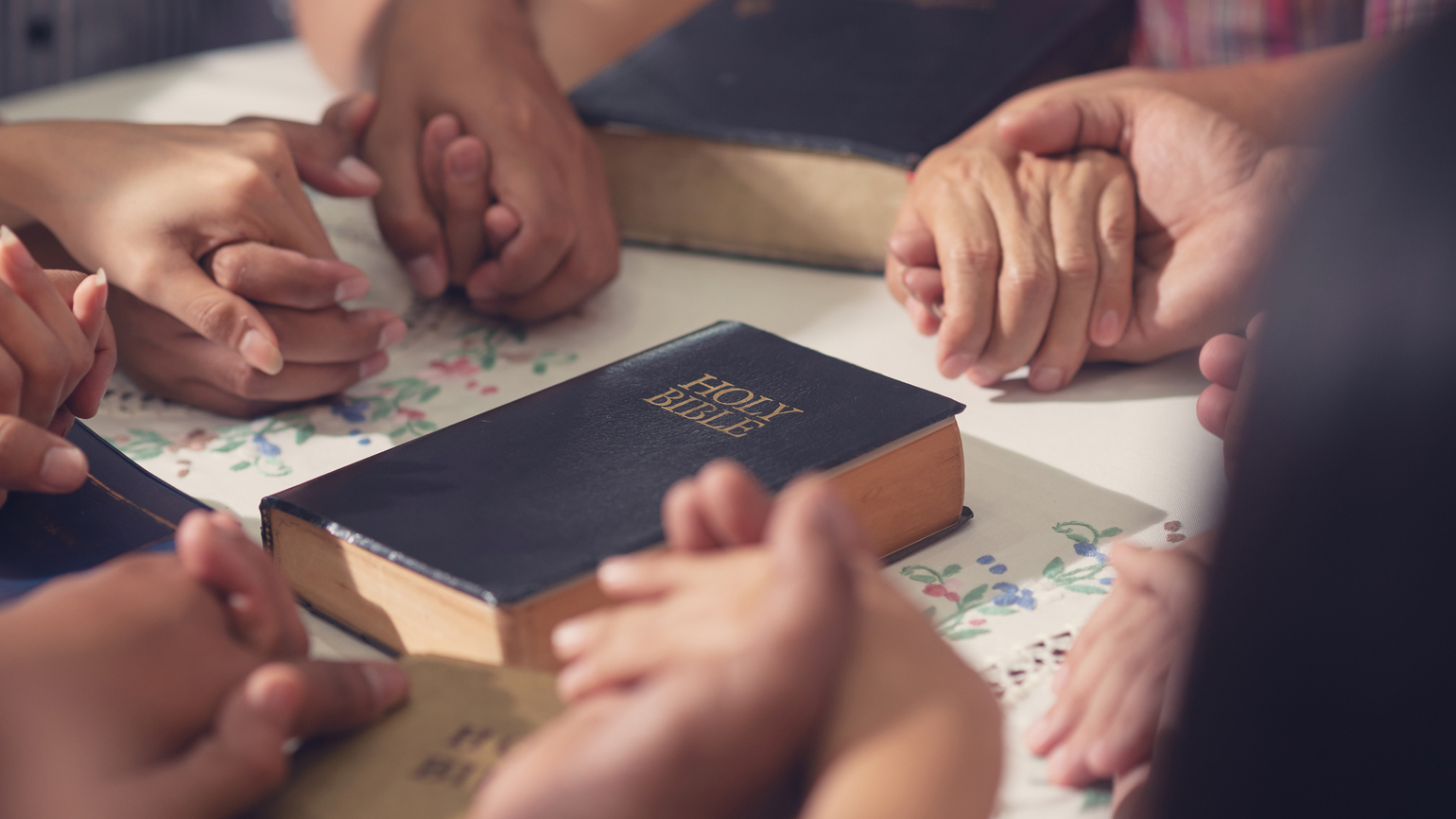
Tuesday morning, nine o’clock. I sat in my old jalopy in the parking lot of the First Presbyterian Church, nervously smoking a cigarette and watching a parade of well-dressed women disappear behind the doors, going to a Bible fellowship class I’d told my sister, Donna, I’d take. Their makeup, their hair, their skirts and heels, everything about them seemed perfect. I looked at myself in the rearview mirror. No makeup. Messy ponytail. I’d worn my everyday clothes, jeans and a T-shirt.

I wanted to start the car and go right back home. Not just because I looked so different from them. It was more because if those women knew the way that I had once lived my life—knew who I really was—they would most likely bar the door.

Joining a Bible study wasn’t something that I had given much thought to before. That was my daddy’s department. He taught Bible history, and the Bible was his textbook. We went to church as a family but didn’t really talk about God otherwise. To me, the Bible was just another book. And I wasn’t much of a reader, or a student. Not since the eighth grade, anyway.

That year I was friends with a group of girls who seemed nice at first. Then one day at lunch one girl asked me to dump her tray. “Take mine too,” another said. “And mine,” said another. Next thing I knew, I was staggering to the trash can, trying not to drop the half dozen trays piled high in my arms.

I dumped the trash and turned back to our table. The girls were gone. They had totally ditched me! I felt like such a reject.

A terrible emptiness opened up inside of me, a sense of utter desolation, like I was all alone in the world.

I’d always felt different from the other girls, and their rejection confirmed it. I started hanging out with a new crowd who accepted me for who I was.

“Here, try this,” one of them said, passing me a joint. I smoked it so that I would feel even more connected to them, to feel like I belonged. Pretty soon I was getting stoned or drunk (or both) every day with my new friends. Booze, weed, then in high school, crack and smack. My parents didn’t know what to do.

I stopped caring about anything except getting high, and escaping the sense of abandonment that encased me.

I managed to graduate high school, but after that I became lost in a downward spiral of addiction. At one point, I got clean and sober for a few years. I was diagnosed with depression and put on medication. About two weeks after I started taking it, someone smoked a joint in front of me. “Can I have a hit?” I asked. And just like that, I relapsed.

I’d beg God for help and get clean for a couple of days only to be tempted into using again. The cycle went on for years. Sober. Relapse. Sober. Relapse.

I shudder to think what might have happened to me if I hadn’t gotten high and wrecked my car one day in 2003. Thank goodness I didn’t hit anyone. Somehow I wasn’t hurt, but I was put in jail for a couple of weeks.

One night, sitting in that cold, lonely cell I sensed rather than heard something tell me, I’m here. Or was it someone? Was God trying to get my attention? Lord, help me out of this, I prayed. Help me stay clean for good. I knew if I went to rehab when I got released it would help my chances of staying out of prison…and, maybe, just maybe it would work.

So that’s where I went—a six-month treatment center. It was there that an anger at God flared in me. I couldn’t count how many times I’d asked for his help getting clean. Why had he let me suffer with this disease and remain a miserable failure all these years? Why had he let me down?

“Fine, have it your way!” I shouted one day. “I’m yours. All yours. Do what you want with me.”

Little did I understand it then, but that was the first time I really turned my life over to God’s care. And in that moment of surrender, the seed of my sobriety was planted.

I left rehab committed to my recovery like I had never been before. I found a 12-step meeting and kept going back day after day, month after month. I drew closer to my mom and my sister (I was so grateful that my addiction hadn’t destroyed our relationship). I just wished that my daddy had lived to see me like this.

It was partly in his memory that I started going to church. I even picked up the Bible. But I couldn’t get a handle on Scripture and didn’t make much headway.

All in all, though, my life was pretty much on track after three years of sobriety. So why did depression still haunt me? It wasn’t the utter desolation I had felt in eighth grade, rejected by my so-called friends. The antidepressant meds were helping. But some days I felt so tired and hollow, it took everything I had to get out of bed and drag myself to my 12-step meeting.

I didn’t want to unload my problems on my sister—she had enough going on raising two little kids on her own after her divorce. But lately I’d noticed that she seemed less stressed. Happier. Hopeful. One day when we were talking on the phone I opened up. “It’s like I’m in a deep dark hole and I can’t climb out,” I said.

“When I feel overwhelmed, I recite Bible verses,” Donna said. “They remind me of God’s promises to us.”

So that’s what’s helping her, I thought. I’d never gotten very far with my Bible reading, certainly not enough to know verses by heart. “You mean you memorize verses and repeat them?” I asked, wanting to know more.

“That’s right,” she said. “I just signed up for this weekly program that sounds really great: BSF, Bible Study Fellowship. They study the Bible line by line.”

Donna lived an hour away, but BSF was held at a lot of locations, so she said that we could attend in different places, then talk about the week’s lesson over the phone.

“Okay, I’ll give it a try,” I said.

Now here I was, sitting in my car outside First Presbyterian Church, paralyzed by anxiety. What if I didn’t belong here? I wasn’t much of a reader. . .what if it just didn’t click for me even going line by line? What if these Bible study ladies turned on me like those mean girls from the cafeteria back in eighth grade? I stubbed out my cigarette and closed my eyes, trying to block out those awful memories.

At that moment, a 12-step saying popped into my head: Do the next right thing. Okay, I could handle that. I got out of the car. Walked up to the church. Opened the heavy wooden doors and stepped into the sanctuary. Women were in the pews and the aisle, talking and laughing. One of them caught my eye.

I cringed, thinking, I probably have “loser” written all over me.

But she said hello and gave a friendly nod. So I nodded back.

Do the next right thing.

I took a seat in a pew. After a few minutes we left the sanctuary and gathered in a classroom. “Welcome to BSF,” the woman at the front announced. “I’m Paula.” She broke us up into small groups where we introduced ourselves.

Here we go, I thought. No turning back now. “My name is Denise and I’m looking forward to learning more about God’s word.”

Paula explained how the class worked: We’d open by singing a few hymns. Then we’d break into our small groups to discuss a specific passage. To close, she’d give a short lecture along with notes. This year’s study was about Moses. We would start with Exodus and go through Deuteronomy. I listened carefully and took a lot of notes but didn’t say much.

The next morning, depression lay on me like a thick, heavy blanket. I didn’t want to get up, but it was as if God knew how much I needed to study his word and got me up. I grabbed my notes and Bible. I meant to turn to Exodus but opened to Joshua 1. Verse nine practically leapt off the page: “Be strong and courageous; do not be frightened and do not be dismayed, for the Lord your God is with you wherever you go.”

A shiver ran down my spine. God had been with me when the girls from the cafeteria dissed me? When I crashed my car? When people wrote me off as a hopeless addict? I may have been a pathetic reject in everyone’s eyes, even my own. But never in God’s. That was what he’d been trying to tell me that night in jail: I’m here with you. Always.

I found a pretty green journal in my nightstand and copied down the verse. I carried the journal with me wherever I went. When I felt like getting high or hiding from the world, I used my verse as a shield, whispering the words until I’d fended off those destructive thoughts. Talking to Donna about the class helped too.

At BSF the following Tuesday, I silently recited the verse. Don’t be afraid to be yourself. God is with you, I told myself. Still, it took a month of listening to the other women in our small group share about their lives before I finally opened up. “I had a serious drug problem,” I said. “I’m blessed to be alive and sitting here with you all.”

The group fell silent. Oh, no, did I over-share?

A classmate spoke up. “Thanks for saying that, Denise. It’s good to know we can talk about anything.” At the end of class, several women confided in me about their loved ones struggling with addiction.

Another time, after a lecture, I told Paula, “I’m so grateful for this class. I write some of the verses in my journal and recite them when I’m feeling down or depressed.”

“I’ve been depressed too,” she said. “You don’t have to believe the bad things you feel. Call me anytime.”

Little by little my depression lifted. It wasn’t just the verses, it was those “perfect” women that I turned out to have plenty in common with. They’re more than Tuesday-morning classmates, they’re full-time friends. They even picked me (yes, me!) to encourage others to join our group by telling them my story.

Now I’m eight years clean and sober. Like everyone, I have down days, only they don’t keep me down for long, thanks to a little green journal filled with God’s promises and a Bible study filled with good friends.

This story first appeared in the February 2013 issue of Guideposts magazine.

Beware of Pretty Weeds

One afternoon my then 6-year-old daughter, Abby, was playing outside with her younger sister while I vacuumed our SUV. Just as I was sucking up the last of the petrified French fries that were wedged under the backseat, Abby called for me.

“Mommy! Mommy! Mommy!” she said in her most excited voice. “I have a surprise for you!”

I played along, trying to peek behind her back where “my surprise” was awaiting me.

“Here, Mommy,” she said, smiling from ear to ear. “I picked you a flower!”

I smiled and graciously accepted it, though upon further inspection, I realized it wasn’t a flower at all. Abby had given me a very pretty purple weed. As I looked at the weed more closely, I thought, This weed really is lovely. It could fool almost anybody into thinking it’s a flower.



Later that evening, I received a telephone call from a friend at church. She began sharing some very damaging information about a person in our congregation.

Even though it felt wrong to listen, I hung on every juicy detail because my friend kept interjecting, “I’m just telling you all of this so that you’ll know how to pray about it.”

“Of course,” I affirmed.

“Ok, I’ve got to go but if I hear anything else, I’ll be sure and call you back,” she said. “See you at Bible study.”

As I hung up the receiver, I felt just awful.

“Man, I wish I hadn’t been a part of that,” I mumbled under my breath.

As conviction covered me, I went into my bedroom and hit my knees.

I prayed, “God, I’m sorry I was a part of that. I should have identified that information as gossip.”

I stayed on my knees in silence, feeling really badly about that evening’s conversation and replaying it over and over in my mind. Just then, God brought to my remembrance the pretty purple weed Abby had given me hours before.

That pretty, purple weed that fooled Abby fooled you too, God spoke into my spirit. Not in an audible voice but deep down inside.

I knew it was God, and I knew what He meant.

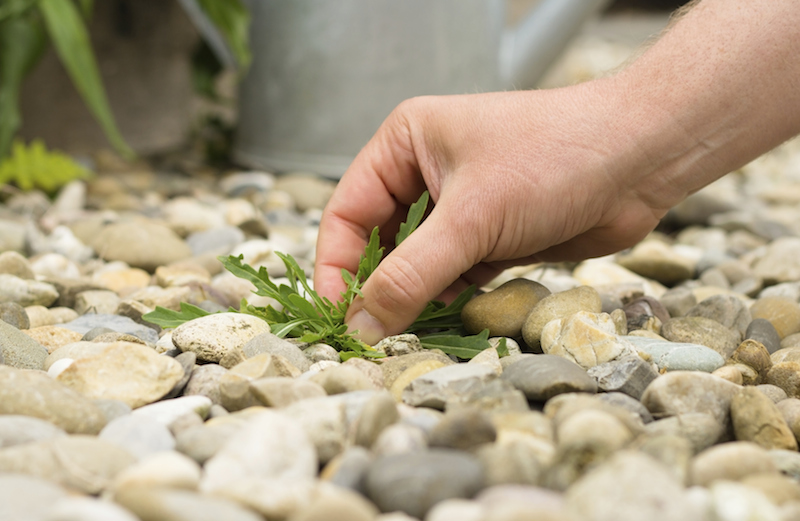
That gossip was packaged nicely with, “I’m just sharing this information with you so you’ll know how to pray about it.” It was a pretty, purple weed. But weeds are weeds and gossip is gossip.

Both choke off life.

That little weed that looked so innocent and pretty among my begonias would have eventually choked the life right out of them if Abby hadn’t removed it from my flowerbed that afternoon.

And, if we continue to let little weeds like gossip grow in our lives, they’ll soon overtake us too. That’s how Satan tries to fool believers.

Don’t be fooled by his tricks. When the Holy Spirit prompts you to do some “weed eating” in your life, pray about it, and ask for divine wisdom and discernment.

The big, ugly weeds are easy to identify. It’s the attractive ones we have to worry about. Let God be the ultimate gardener in your life. As you live close to Him, you’ll become more skilled at identifying the weeds in your life–even the pretty ones.

Pray this with me:

Father, help me to identify the weeds in my life so that together we can rid my life of them so that I can continue growing in You. Put a watch over my mouth, Lord, so that I won’t gossip, and give me the discipline to walk away from ‘gossipy’ conversations. I love you, God. In the Mighty Name of Your Son, Jesus, Amen.

Be Still: Feel the Peace of Jesus

How do you begin your day? With a cup of coffee and a quick bagel? What about the evening? Is it all rushing to help with homework or finish chores? Are the hours in between jam-packed with activities and commitments that keep you hustling? It may surprise you to know that God has other plans for you. “Be still, and know that I am God,” the Psalmist insists (Psalm 46:10). And note that being still isn’t an option, but a prerequisite.

Scripture tells us that our beauty before God “should be that of your inner self, the unfading beauty of a gentle and quiet spirit” (1 Peter 3:4). Yet few of us, if pressed, can honestly say that what we see when we look into our hearts is a consistently smooth and serene scene.

We see ripples and waves, surprising currents and sometimes even riptides! And though Jesus is capable of calming the sea-surge in our hearts by saying, “Quiet! Be still!” (Mark 4:39), all too often we’re not as obedient as the waves. Instead of hearing his voice, we hear the noise of our worries, our fears and our desires. These things plug up our ears, and in our search for comfort we focus on what we have to say, instead of on what Jesus does.

If you find yourself struggling with life, remember, “The LORD will fight for you; you need only to be still” (Exodus 14:14). But how do we train ourselves to be still? How do we “Let the peace of Christ rule in your hearts” (Colossians 3:15) when we are so preoccupied that our hearts are never silent?

In pre-GPS days, often the only what to get to where you were going was to ask directions. In the spiritual life we can avoid driving in circles by asking the Holy Spirit to show us how to “be still before the LORD and wait patiently for him” (Psalm 37:7). And we can use Scripture to map out the route to peace.

Before we begin to plead with God to help us with our problems, we can pray with the Psalmist, “For God alone, O my soul, wait in silence, for my hope is from him” (Psalm 62:5). We can breathe deeply, inhaling the Spirit that gives us life. I sometimes take belly-expanding breaths to the rhythm of, “Come Holy Spirit…bring me peace.” It helps.

Once our souls are calmer, we can’t just turn to our laundry list of things we want. To pray is to focus our hearts on God, not on our desires. Listening — really listening — is what Scripture tells us to do after we allow God to open our hearts: “The gatekeeper opens the gate for him, and the sheep listen to his voice” (John 10:3). This is “a time to be silent”; we must listen first, before we arrive at the “time to speak” (Ecclesiastes 3:7).

There are many ways we can open ourselves up to that peace throughout the day. Sometimes, like Mary of Bethany, we need to open our Bibles and sit “at the Lord’s feet listening” (Luke 10:39). Other times we need to have what I like to call a “Deuteronomy day” where in the midst of our hectic schedules we take time to recall how God has acted in and through our lives. This helps us “Remember how the LORD your God led you all the way” (Deuteronomy 8:2) — which helps us look for him in the present moment. Like Jesus’ mother, who “treasured up all these things and pondered them in her heart” (Luke 2:19), we need to hold close to the things God has revealed to us. This process of silencing our hearts, then listening, then pondering what we’ve learned slowly leads to absorbing God’s will fully, fully enough that whatever we do is a natural out-flowing of our knowledge of him.

What’s on your agenda for today? Perhaps you need to add one more thing: “Be still, and know that God is God.”

‘Be Still and Know I Am God’

“Be still, and know that I am God.” (Psalm 46:10)

It was late, and the storm raged on.

Where was she?

Abby, my then nine-year-old, had gone to a theme park with her best friend. I had felt okay about letting her go—but that was before the tornado warnings. Now, I just wanted her home—crouched in the hall closet with the rest of us. I wanted to know she was safe. I wanted to hug her. I wanted to protect her.

My husband, Jeff, and I prayed that God would watch over her. Still, worry filled my heart. I needed to know she was all right.

Why didn’t they call?

Just then, the front door opened.

Abby was home.

In those prior moments of worry, I had heard that still small voice deep inside me saying, “Be still and know that I am God.” But, I couldn’t be still. My mind was filled with scary scenarios and doubts. I wanted to trust God, but this was my baby!

Well, I’m having those same feelings of anxiety as Abby turns 23 tomorrow. After all, this is a very big year for my first-born baby. Abby will finish her final year at Indiana University in May, and she will marry the love of her life, Micah, in June. Don’t get me wrong; we love her fiancé. He is a godly young man. In fact, he is a praise and worship minister! And, I’m thrilled that Abby is graduating with a degree in early childhood education and will soon be impacting those bright young minds. But, as her mama, I worry that I’ve run out of time.

It just hit me: she will soon be leaving the nest—for good!

I wonder if I’ve imparted enough “motherly wisdom?” I wonder if I’ve let her know how amazing we think she is and how thankful we are that God allowed us to be her parents? I wonder if her Dad ever taught her how to change a tire? I wonder if I’ve shared all of the things I wish I’d known before I said “I do” 24 years ago? And, I wonder if we will we be as close as we are now once she moves out and begins a new life?

As my mind races, I hear that same still, small voice whisper, “Be still and know that I am God.”

So, I take a deep breath.

As parents, we’re sometimes afraid to trust God with our children. But, what we fail to realize is that He loves them even more than we do. We can trust Him with our kids—even our grown ones.

So, as I treasure these final six months of having Abby at home, I am going to keep reminding myself of that truth. Today, I choose to stop worrying and start looking forward to the many celebrations that Abby’s 23rd year will bring.

I hope that no matter what you’re facing today, you’ll do the same: Breathe; stop worrying; trust God; and look forward with excitement.

And remember when your mind starts racing, be still and know that He is God.

Be Prepared for Life’s Storms

The storms of life will come. It’s one of the promises Jesus made to His followers: “In this world, you will have trouble”. It’s a fact we can’t escape. But for a long time, I tried to ignore this part of life. I took life as it came, with little preparation or planning for the inevitable, and that philosophy brought me close to being shipwrecked on several occasions.

Some of the biggest storms hit when our son was serving in the military–I was ill-prepared for the stress, anxiety and worry that can come with a deployment. I learned the hard way the importance of preparing for the storms. Without these tips, I don’t know if I would’ve made it through in one piece. Here are 5 ways to preapre for the storms of life:

1. Develop a daily habit of prayer and Bible reading.

Just like the foundation for a house is built first, I’ve found that I first need a foundation of faith and truth to weather the storms life can bring. That foundation is sound when you build a strong relationship with God. He is there when we call, but it’s easier to sense His presence when we already know Him well.

2. Build a support system of close friends.

I’ve found that doing life alone is almost impossible. We all need people to support us when things get tough. And we have an inner need to help others. By investing in relationships now, we are equipped to face the things that lie ahead. These close friends will pray for you and those you care about, bringing comfort and peace that can only come through companionship. Be a friend to the people around you and find joy in those friendships. They’ll likely be there for you when you’re going through too.

DONATE TO GUIDEPOSTS’ MILITARY OUTREACH PROGRAM AND HELP US PROVIDE PEACE AND COMFORT TO OUR TROOPS!

3. Find a community of faith.

Beyond close friends, we also need a larger community. This could be a local church, small group, or Bible study. But these folks will also play a part in helping you make it through the storms without ending up on the rocks.

4. Create a place of peace and solitude.

Where do you run to when you need to get away? I have several places I turn when I need to be alone and find perspective. My back porch is the first place I turn. It’s screened from floor to ceiling, and our wooded lot makes it a perfect sanctuary. When I can travel further afield, I head to the mountains. Somehow driving through their majestic peaks gives me the peace and perspective I need in difficult times. Whether you’re designating a corner in your home or venturing out into the wilderness, find a space of peace and stillness to call your own.

READ MORE: 5 WAYS TO HEAL IN GUANACASTE, COSTA RICA.

5. Write in and re-read your journals.

One thing I’ve done well is to record the happenings of my life on paper. When things get tough, I can go back and see how God has been faithful in times past. And, just by writing out my struggles, I can see the things happening now with more clarity.

How do you prepare for life’s storms?

Being Still

He says, Be still and know that I am God. (Psalm 46:10 NIV)

Stacked-up stress. It’s what I feel today. I pull my keys from the cluttered kitchen counter and wonder, for the millionth time, why I thought an eight o’clock-Monday-morning piano lesson was a good idea.

Gabriel, my musician of the morning, is late. I sit in the van, letting it warm, tapping on the horn, waiting for my small, blond boy to emerge from the porch. Eventually he does, hair wet from the shower, music books tucked under his arms. His shoes are untied, and I grimace as his laces drag through an inch of messy, gray January slush.

It’s how I feel today.

A still Mississippi River. Photo by Shawnelle Eliasen.Messy-gray. Without a sliver of blue sky slipping through.

It’s just how life is, sometimes, I decide a few minutes later when we’re sitting in the piano teacher’s studio. Usually listening to Gabe’s musical progress brings me joy–the primary plink-plink-plink breaking from a beginner cocoon to something beautiful, developed, and artfully formed. But today it isn’t enough.

I have worries. Concerns. Genuine, gut-level, woes of the soul.

Gabriel finishes his lesson, receives his assignment for the next week, and he and I return to the van. We drive through the murky morning. I notice the lack of color. I feel the weight of the clouds. We drive down the hill and turn onto the road we live on.

And it’s then that I notice the Mississippi.

It’s glassy. Still. Mirror-surface smooth.

Oh, Lord, it’s how I long for my soul to be.

I move along, aware that my fingers curl hard around the wheel, and I know, suddenly, that I need to detour. I need to abandon the wild rush of the morning, the stack-up of tasks, for just a few minutes. Something better is calling. It’s like a magnet. I have to obey.

“Gabriel, I’d like to sit by the river. For just a sec. Want to come with? Or should I drop you by home?”

“I’d like to go,” he says from the back seat.

I turn toward the river and a moment later I pull against the curb. Gabriel and I leave the van and walk, crunching our way over ice-encrusted snow. There’s a bench, by the river bank, and we take our seat.

Gabriel is quiet. Something in his spirit knows I need this time. He sits and looks over the water. I watch the river, too, entranced by its moods.

Sometimes the river is rough. Agitated. Like ruffled feathers or the hackles of a dog.

But today it’s wide-open peaceful. It offers a perfect, unmarred reflection of whatever rests along the banks.

Oh, Lord, I want to be like this.

It occurs to me, sitting here, that this is what the Lord wants for me, too. He longs for me to be still. Secure in His presence. Peaceful and calm and free.

So I sit. And I pray. And as I do, I release my worries–one by one–to the care of the Lord.

My fists uncurl.

I breathe easy.

I let go.

I come free.

Gabriel and I sit for a few minutes. There’s a chill to the air, and my sweet, small son moves close. He takes my open hand, turns it over, and places his own hand on my palm.

Then his warm little fingers wrap around mine.

Soon we’ll head home. Toward our day. Together.

But I’m different now.

Peace is flowing. Gentle and smooth.

I’m like the water appears to be.

I am, for now, still.

Becoming a Beautiful Pearl Through Pain and Perseverance

According to the running total of calories burned which I keep, I should have lost three more pounds over the past two weeks. Unfortunately, the scales don’t say the same. Once again it appears that I am at a standstill at 193 pounds.

I find it ironic that the last time I was at a plateau was right after school let out for the summer. I was quite frustrated about not losing any weight as my workout time was increased threefold. Yet for five weeks I lost no weight even though the calorie count said otherwise.

Community Newsletter

Get More Inspiration Delivered to Your Inbox


Now that school is back in session I am at a plateau once again it seems. I’m still exercising at least an hour every day and eating healthy. On top of that I am on my feet all day long teaching and walking around the classroom. So what gives? Why do I keep hitting these plateaus?

Could it be that our bodies need time to adjust to major changes in our lifestyles? Or is it something else altogether? Mrs. Betty, a lady at our church, has recently lost 50 pounds herself. She has been such an inspiration to me as she has trouble exercising due to nerve damage in her feet. Yet she perseveres and exercises while lying in her bed or sitting in a chair.

Unfortunately, she has also hit a plateau. Even though she is quite frustrated, like me, she is not giving up. In fact, she told me she was leaving after church to go to a town about an hour and a half away to purchase an exercise bike, as they did not have one in stock here locally and she didn’t want to have to wait for one to come in. Now that is determination!

When times are difficult the easiest thing we can do is quit. When we hit these plateaus we could think, Well that’s it. I guess I’m through losing so I’ll just quit. Keep in mind that we are not a failure until we quit. If we continue to persevere we will be blessed and be successful in the end.

Even if I have finished losing all the weight that my body will allow me to lose I am so encouraged by how much better I feel physically that it reminds me that I don’t want to ever go back to how unhealthy I was before.

To have the energy and all over stronger physique that I now have keeps me focused on remaining healthy. And if I happen to lose a little more weight along the way then I will certainly count it all joy.

Pearls are formed when a grain of sand has irritated the muscle. Therefore, it is through great pain that a beautiful pearl is created. Dear one, even though this weight-loss process may be painful and frustrating at times, please keep in mind that the joy, strength, and better health on the other side will be so beautiful. Continue to pray and visualize yourself in becoming the beautiful healthy person, or pearl, that God created you to be.

Read more of Tammie’s blogs!

Watch New Healthy You videos.

Battling Depression by Helping Others

I was at the end of my rope. My twin boys were in their “terrible twos” and I simply couldn’t control them. Just trying to keep them still was a struggle. I never knew where they’d go next. The living room was a minefield of toys. The carpet wore the scars of countless spills. The morning alarm was a call to battle, and by each evening I knew I’d lost again.

It had been much easier with my girls, who were eight and 10. They were so quiet and well-behaved I’d been able to get plenty of time for myself—reading, doing volunteer work, even taking art lessons.

“It’s so convenient for you,” I griped to my husband, Jerry. “You can go to work and get away. But I have to deal with this mess day in and day out.” Jerry tried to assure me that the house didn’t have to look perfect. Well, there was no chance of that, what with the unwashed dishes and laundry piling up day by day. Some days I didn’t even get out of my bathrobe. What was the point?

I felt like a failure. It seemed like nothing could make me feel hopeful again. I was so far gone even prayer brought me little comfort.

My friends urged me to seek help. I finally became so sick and tired of feeling sick and tired that I gave in. The counselor I went to see had four children just like I did, only hers were all grown. Obviously she had managed to raise them just fine. She had so much energy and enthusiasm that it wore me out just to look at her.

When I finished spilling out my problems, the counselor asked, “Mrs. West, have you ever heard of Dr. Karl Menninger? He always said there was one surefire way for people who were depressed to feel better. They should find someone who needs help and help them. Will you try it?”

I shook my head vaguely. I could barely drag myself out of bed in the morning. How could I possibly help anyone else?

“You mentioned you used to do hospital volunteer work, Mrs. West. Why don’t you find a day-care center to put your boys in a couple half-days a week and go back to volunteering?”

I was way too weary to argue with her so I agreed to try it. As it turned out Jerry and the girls thought it was a good idea too and the twins were only too thrilled to have an exciting new place to go twice a week.

The following week I went to Athens General Hospital and joined six other new volunteers in watching a demonstration on how to make a bed properly. I didn’t leave a house of unmade beds to make up hospital beds, I thought. Besides, right now I feel better suited to lying in one than making up one. So I went to the office of the hospital’s new recreational therapist and volunteered for her program instead.

“Okay, I’ll give you a list of patients,” she said. “Just take these paints and brushes, knock on their doors and ask them if they want to paint. Remember to smile big and act positive!”

I hoped those art lessons I’d taken would come in handy. I took the list and the painting supplies and rode the elevator up to the hospital’s second floor. I stopped into the ladies’ room and stood before a full-length mirror. I looked so serious I scared myself. Mustering up a pale imitation of a smile, I turned and headed for the first patient’s room.

“Hi, I’m Marion,” I said. “Would you like to paint?”

“No,” came the answer. “And please make sure you close the door when you leave.” It happened again and again. No one wanted to paint and I felt stupid asking. But I kept at it, mainly so I could say that I’d given it my best shot. I finally came to the last person on my list. While I knocked on that door, I glanced at the patient’s information: NAME: Coy Pritchett. AGE: Twenty. CONDITION: Kidney complications/quadriplegic/depression.

I froze for a moment. This man was totally paralyzed. What could I do for him? I cautiously opened the door and stepped inside. I was staring at the heels of a patient on a Stryker frame, a huge wheel-like contraption that keeps a patient immobile while turning him to prevent pressure sores. At the moment Coy was face down. “Hi, I’m Marion. Would you like to paint a picture?” I asked automatically, before realizing how absurd that must sound to someone who couldn’t move his arms.

“Shoot, yeah,” he answered. Yes? For a moment I wanted to run from the room, turn in my name tag and flee back to my wreck of a house. But Coy was waiting on me, so I went over to him. Putting down the painting supplies, I got down on my hands and knees and looked up into his face. He had a dark crew cut and a smile a mile wide. “Hi, Marion,” he said. “I think I’d like to paint a rabbit—like the ones I was always seeing in the woods before I got like this. Do you think maybe you could put the brush in my mouth?”

Would it work? I broke a long-handled brush in two. “Here, I’ll wrap some tape around it so it’s smooth,” I said. Carefully I eased the brush into Coy’s mouth. I mixed up some colors, and held up a canvas under his face. He began to paint. I kept the board as still as I could, though my back and arms ached from the awkward position. After a few minutes the rabbit began to take shape. Not bad, I thought. We took a break and I held up a cup of water for him to drink through a straw.

“Tell me about yourself, Marion. I don’t get many visitors besides my folks,” he said. “You got a family?”

I nodded.

“You must be a great mom,” he said. “You’re so patient.” If he only knew. “I got me a son too,” he continued. “His mama left with him when I got in the diving accident a year ago. I don’t blame her though.” I looked at Coy carefully. I sensed it wasn’t so much the prospect of painting that made him welcome me as a need for personal contact. God, I thought, I know I might not have much to give right now, but please help me be a comfort to this young man.

The next time I came to the hospital I went straight to Coy’s room. We painted and when we needed a rest we talked. I got permission to visit just him during each of my four-hour sessions. Coy was hungry for any story of life outside the hospital’s walls. We talked a lot about our families. Coy’s parents lived nearby and often came to see him. He always painted animals or plants he’d seen in the woods near his house. Once I smuggled a baby blue jay into the hospital as a treat for him. I set it on his chest and he imitated its call. Other times he whistled or sang country songs during our breaks.

I began looking forward to my visits with Coy, checking on his progress, helping him express himself through painting. I found myself more patient with the twins too, knowing I’d get a break from them every few days. Painting with Coy in his hospital room, I felt like we were off in another world. I was so focused on him I didn’t have time to think about my own problems. And when I was with him, I found I didn’t feel so tired anymore.

“So what stunt did the boys pull this time?” he asked one day when I was fretting over the twins.

“Jeremy actually tried to climb up inside the chimney yesterday! He said he wanted to see how Santa Claus did it.”

Coy’s laughter rang off the room’s walls. “Your kids are something else!” he said. Incredibly I started laughing too, for the first time in months. No doubt about it, my kids did keep things interesting. “Yes, but what else?” I asked and doubled over laughing again.

I started getting up earlier, even on days I wasn’t visiting Coy. I’d clean up the kitchen before the twins woke up. Sometimes I’d even walk the girls out to the bus stop. The piles of grimy dishes and dirty clothes still looked daunting—but not unmanageable.

One day I walked into Coy’s room to find him lying in bed with a sheet pulled over him. A nurse quickly explained, “Coy’s having a bad day and doesn’t want to be bothered.” After she left I pulled the sheet off Coy’s face.

“Coy, it’s Marion. Come on, let’s paint.”

He wouldn’t open his eyes.

“Coy, don’t you want to finish that flower you were working on?”

Still no response. Finally I took some water and flicked it at him. A smile played around the corners of his mouth and he opened one eye, then the other. “Okay, okay, you win,” he said with a laugh. “Let’s paint.”

He finished the flower picture that day. I took it and seven other paintings Coy had done to a frame shop and laid them out for the owner. Among them was an owl, a squirrel, an old oak tree. “He paints with his teeth,” I said. “I can only afford to have one framed. Which one do you like the best?”

The owner studied the paintings for a moment, then said, “No charge. I want them all done right. They deserve it.”

They were finished a couple of weeks later. At my next session with Coy I placed the eight beautifully framed pictures under his face.

“Man, oh man,” he breathed. “These are really incredible. Thank that man for me, Marion.”

A few days later, I headed back from the bus stop after seeing the girls off and picked up the newspaper on my way inside. I sat down at the kitchen table and glanced out the window at some robins chittering in the trees. Wouldn’t Coy just love to paint you little darlings! I thought.

I turned to look at the paper and gasped. There on the front page was a picture of a smiling Coy and his framed paintings. Apparently, they were going to be hung in the hospital’s lobby! I was so excited I decided I would wake the boys, so I could read the article aloud to them.

As I got up, I caught sight of the quote below Coy’s picture. “Life sure is sweet,” he said. Yes, it is, I thought. Certainly not perfect or easy but definitely sweet, especially when there are people like Coy to remind you of the joy in the world.

Nowadays there are more ways than ever to treat depression. For me, what it took to start feeling better was to reach out to someone who needed me. But not more than I needed him.

Did you enjoy this story? Subscribe to Guideposts magazine.

Bald, Beautiful and Blessed

Belle, my nine-year-old daughter, snuggled against me in my bed, where I lay exhausted from chemotherapy. Her eyes skipped up to my bald head.

“I miss brushing your hair, Mommy,” she said.

“It will grow back,” I said, my voice barely above a whisper. “I’m still your mommy. That hasn’t changed. I still love you, hair or no hair.”

“Can you play with me?” she said.

“Honey, I’m just too tired. You need to let Mommy rest.” She nodded and slipped out of the room.

I’d always been proud of my long hair. So had Belle. It broke both our hearts when it started to come out. But it wasn’t really about the hair. It was her fear of losing me. How could I make her understand that, no matter what, God would care for her? Lord, help her understand, I’d begged these last six months.

When I was first diagnosed, five years earlier, my husband and I had told our three older boys about my non-Hodgkin’s lymphoma, but Belle was too young. I’d tried immunotherapy, which has fewer side effects than chemo. It hadn’t worked.

Now there was no avoiding the fact that I was sick. I’d had to quit working as a portrait photographer. I couldn’t go with Belle on school trips. It was all I could do to walk her to the bus in the mornings.

I thought back to that day in June, waking up to find huge clumps of hair on my pillow. I’d started to cry and couldn’t stop. We would have to tell Belle now. I called my sister-in-law. “It’s happening,” I said. “Can you shave my head?”

My sons Christopher, 18, and Seth, 16, and Belle gathered later in the kitchen, Belle biting her lip bravely.

I felt the electric razor’s tingle on my scalp, my hair falling to the floor.

Christopher and Seth had their hair cut into Mohawks. “Mohawks for Mom,” Seth said. We took pictures of the three of us. Belle watched it all, pensively. The next day at breakfast she stared at me. “I wish you still had your hair.”

Now, here in my bed, I heard Belle playing with her Barbies. “Let’s go shopping,” one said. “Then later, we’ll go to lunch!” I couldn’t help but smile.

I opened my laptop and signed on to Facebook. I’d started a support group for women with cancer. Amazingly, one of them had just sent me a link to a news article. Mattel had made a one-of-a-kind bald Barbie for a girl going through chemo.

That’d be perfect for Belle, I thought. It would make it all seem less frightening. What if they made a special Barbie and sold it in stores? I went to the Barbie website, found the link to customer service and sent off my idea.

I posted what I’d done on my Facebook wall. “You should make a bald Barbie Facebook page,” someone suggested. I figured it couldn’t hurt.

Beckie, a friend in California, whose daughter had cancer, helped me launch the page. “Beautiful and Bald Barbie! Let’s See If We Can Get It Made,” we called it.

The next day there were 100 “likes.” In a week, 2,000. From all around the world. People posted stories and photos. “My daughter lost her hair after chemo,” a mother wrote, “and I don’t know how to comfort her.”

Belle and I read the postings together. The idea of a bald Barbie seemed to take on a life of its own. “I never knew there were so many girls without hair,” Belle said one evening. “I wish there was something we could do for them.”

“Me too,” I said, hugging her. So many people. Not just with cancer, but thousands of others dealing with hair loss. All of them looking for comfort. Including my Belle. Help her understand, Lord, I prayed again.

By early January the page had mushroomed to 30,000 fans! Then one day I got an e-mail from Mattel: “Thank you for your interest in Barbie. Unfortunately we don’t accept design ideas from the public.”

I stared in disbelief. I’d let myself get caught up in all the excitement. I felt angry and hurt. And yet I couldn’t help but feel somehow responsible, as if I’d let everyone down. Soon others began posting that they had received the form letter too. The tone of the page quickly turned sour.

“Should I take down the page?” I asked Belle.

Her eyes were glued to the face of a bald girl on the computer screen. “No, Mommy,” she said. “You can’t give up. It won’t happen if you quit.”

She wasn’t just talking about my fight against cancer. She was talking about all the other girls like herself. I could barely hold back my tears; I was bursting with love and pride.

Days later the Facebook page was buzzing with talk that MGA Entertainment, the maker of Bratz and Moxie Girlz dolls, might be coming out with bald dolls, both boy and girl models. Soon after, my phone rang. “Hello, Mrs. Bingham,” the voice on the other end said. “This is the general manager for the Barbie product line.”

I was still pinching myself as I took my seat inside a huge conference room at Mattel headquarters in California. It was early February and at Mattel’s invitation I’d flown out so that Beckie and I could meet with the GM and the director of philanthropy. They got right to the point.

“I’m afraid we’re still not ready to make a bald Barbie,” the GM said. “We think it might be too disturbing to our consumers, and that would defeat the purpose.”

My mind raced. “What about a friend for Barbie?” I asked.

The GM glanced at her colleague. “We could do that,” she said.

I left with a promise that Mattel would make 10,000 bald friends for Barbie and give them to children with cancer in hospitals throughout the United States and Canada. They wouldn’t be sold in stores.

Not yet, at least. With the Lord, anything is possible.

That afternoon I sat in the airport, thinking. About losing my hair. The boys and their Mohawks. The many women and children I’d connected with. I’d prayed for my little girl to understand that God was in charge, not the cancer. I’d asked him to show her she was not alone.

And he had answered my prayer—thousands of times over.

And then guess what? Remember MGA Entertainment? This past summer MGA introduced its line of bald dolls—six all together, sold in stores nationwide. It even sent me 100 dolls to give to some of the families whose stories have touched me most. The dolls are called True Hope. I couldn’t have put it better.

See country singer Kellie Pickler shave her head in solidarity with her best friend, who is fighting breast cancer.

Download your FREE ebook, The Power of Hope: 7 Inspirational Stories of People Rediscovering Faith, Hope and Love

Baking Her Way Back to Life

Mmmthe rich chocolate chips melted in my mouth. I savored the grainy texture of the sugar on my tongue. I was like a kid when it came to cookie dough and I still had plenty left to bake with. Too much, in fact.

It was true that I’d put on some weight since my husband died—comfort food, always sweets, often cookies. Only I’d comforted myself a bit too much. This will be my last taste, I promised myself. I’d agreed to bake for the church get-together at the beach that night—a singles group that met every Friday. Being near the beach was one of the advantages of living in California.

Paul had loved to socialize, but since he died I’d been hiding out at home. My sister had scolded me over the phone just that morning. “You’re becoming a recluse, Rita,” she said.

READ MORE: HER HEALING IN HAITI

I wasn’t looking forward to this gathering, however. In fact I’d nearly decided to cancel. Then I saw how much cookie dough I’d made. If I didn’t take my cookies to the beach I would be in danger of eating every last one myself. That couldn’t happen.

I hurried next door to borrow extra baking sheets from my neighbor. “I have more dough than I banked on!” I told her.

“Come in for a few minutes,” she said. “Let’s catch up.”

We chatted for a while before she sent me off with six pans. I hadn’t realized until now how much I missed being in the company of others.

I grabbed a stick of butter from the fridge and greased all the pans—my neighbor’s six and my two. Dollops of dough in neat rows filled all eight pans, a dozen cookies per pan. I stopped to do the math—96 cookies in all!

Baking them was done in shifts. I bent down to watch through the oven window as the first batch bubbled and rose. Then I glanced at the clock—just enough time to finish and clean up before the event.

READ MORE: COMFORTED BY A TINY SIX-LEGGED ANGEL

When the last batch came out of the oven I set the pans aside to cool and tore off my apron. I laughed when I caught sight of myself in the bathroom mirror—covered head to toe in flour and sticky dough. But I got ready in record time, grabbed a beach chair and my tub of cookies, and loaded my car.

When I showed up at the event everyone came over to hug me or shake my hand. “Welcome back,” they said. “We’ve missed you.” And I’d missed them. Why hadn’t I opened myself to the comfort of this group sooner? We settled around the fire pit, munching on hot dogs. Hickory-tinged smoke from the fire curled in the breeze, as ocean waves heaved in and out.

“Paul would have enjoyed this,” I said, and my friends heartily agreed. It seemed a good time to pass around my cookies. “I can’t imagine why I made so many,” I told everyone. No one seemed to mind.

The cool night air was filled with laughter and chatter, much of it coming from me. We made bets on what time the sun would set and all clapped when it did. As I went back to my car after all the good-byes—without one leftover cookie—it occurred to me that I enjoyed socializing just as much as Paul.

How do you like that, honey? I thought to myself. No wonder I’d wound up with way too much cookie dough. Angels must have tripled the sugary recipe so I would have to come here and share and discover the healthy sweetness of fellowship.

Did you enjoy this story? Subscribe to Angels on Earth magazine.

A World War II Hero in the Family

The stories of countless heroes in war go untold. Until recently, Angela Davis of Huntington Beach, California, believed that her uncle was one of these lost figures, a hero unheralded by history.

Morris Seronick was 20 years old the morning of October 25, 1944. He was a seaman first class on the U.S.S. Hoel, anchored in the Leyte Gulf in the Philippines. A day earlier, the famed Fleet Admiral William “Bull” Halsey, Jr.’s battle group had engaged the main Japanese fleet, leaving the Imperial Navy in disarray.

Halsey and the bulk of his ships steamed northward to chase what he believed was the biggest remaining Japanese naval threat, leaving behind only the Hoel, two other destroyers and a small, lightly armed flotilla to protect the gulf and the soldiers on the island of Leyte, a major base of operations for the Allies’ Pacific campaign.

At 6:50 A.M., a U.S. patrol pilot radioed a warning. An armada of heavily armed ships—four supersized battleships, seven heavy cruisers and nine destroyers—was speeding at 30 knots toward the San Bernardino Straits, a critical passageway to the Philippines.

The Japanese had tricked Halsey—the ships to the north were a decoy! With no help coming, the Hoel, the U.S.S. Johnston, and half a dozen smaller ships raced to intercept the enemy fleet. The Americans were outgunned, little more than tin cans bobbing in the waves. But they fought gallantly.

Using smoke screens and loosing a barrage of 10 torpedoes, the Hoel held off the enemy for two hours, despite losing both engines, all but two guns and taking more than 40 direct hits. Three enemy ships were destroyed, and another crippled; eventually the Japanese were forced to change course.

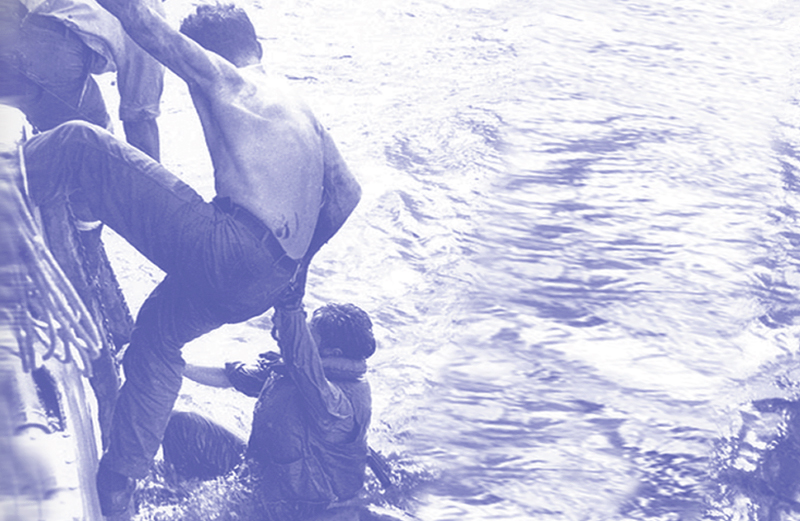
At the end of the battle, however, both the Hoel and the Johnston were sunk. Of the 340 men aboard the Hoel, only 88 were pulled from the shark-infested waters alive. Morris Seronick was not among them.

History recorded that the fight helped the Allies win the Battle of Leyte Gulf, the largest naval engagement of World War II. But Angela’s mother, only 11 years old at the time, was haunted by the loss of her big brother. There was no record of when or how he had died.

In her dreams, she imagined he had washed up on a Pacific island with no memory, living out his days sipping coconut milk on the beach. But that was a fantasy. Angela’s mother died without knowing her brother’s fate. That lack of closure had always saddened her.

Angela knew almost nothing about the U.S.S. Hoel. Her husband, Jeff, was the history buff, not her. She had more urgent things on her mind. Jeff, himself a 20-year Navy veteran, had been laid off as an engineer for the Union Pacific railroad.

For months, he sat around the house, sinking into depression. That concerned Angela more than the loss of a paycheck. God, she finally begged, find him something to do. Anything.

Their daughter Mariah worked at the Huntington Beach library. “Dad, at least read a book,” she urged. Jeff’s love of history attracted him to stories about America’s greatest leaders. And his spirit lifted as he retold some of those stories to Angela.

The biography of William Halsey, Jr., mentioned a battle in the Philippines. Jeff dug deeper. He found an obscure book called The Last Stand of the Tin Can Sailors. He was riveted.

One night, Angela was sitting with her laptop when Jeff came racing into the room, waving a copy of the book. “I have something to show you,” he said.

He flipped to a page near the end, a list of the 252 men who had perished in battle on a ship called the U.S.S. Hoel. Jeff pointed near the top of the page.

“Uncle Morris!” Angela cried.

The book mentioned an association for the Hoel survivors. A man named Warren Stirling was listed as treasurer. Jeff and Angela immediately looked him up online. There was one match, an amazing match. He was in Huntington Beach. Only a few blocks away.

Angela called Stirling. He didn’t know Uncle Morris, but he told her that the surviving crew members held an annual reunion. “You should come,” he urged. “There aren’t many of the crew left.”

Seven Hoel survivors and many family members attended the event in San Diego a few months later—along with Angela and Jeff. “Did any of you know Morris Seronick?” they asked. One grizzled man spoke up. “I knew Morrie, as we called him. I was on his detail,” the old shipmate said.

His stories about Morris were as riveting as Jeff’s book had been. During the battle they were with a gun crew near the stern. The veteran’s eyes welled with tears at the memory. “A shell hit us. Your uncle died at his post, doing his duty, brave to the end.”

It seemed impossible that after so many years, there was still someone alive who was there with Morris that day, there with him when he died. Someone whose hand Angela could shake and who she could thank for helping her close a chapter of her family’s story.

Jeff found a good job—as an aircraft mechanic. But in the interim, he’d been given an important job to do. Unknowingly, he’d helped his wife uncover the fate of her mother’s beloved brother. The hero she had never met but now knew.

Download your FREE ebook, Mysterious Ways: 9 Inspiring Stories that Show Evidence of God’s Love and God’s Grace