Embrace God's truth with our new book, The Lies that Bind

Are You Too Hard on Yourself as a Caregiver?

It isn’t easy to be an imperfect perfectionist. Despite your best-laid plans, dust can collect, dinner can come from a frozen box and your to-do list can lie woefully in wait. And despite all that you do juuuuust right, one of the people you love most in the world may have Alzheimer’s disease or another chronic condition that you just can’t make… go away.

By its very nature, perfectionism is a set-up for failure, and among caregivers, it’s an all-too-common mindset.

Sweet Carolina Mysteries In Article Ad

“I’ve had quite a few clients over the years who are caregivers and who I work with on a lot of caregiver burnout,” said Janice D. MacKenzie, a licensed independent clinical social worker for Catholic Charities New Hampshire’s Mental Health Counseling Services. “We talk a lot about what are the roots of their caregiving stress. So often, they’ll say things like, ‘I feel like I just have to do more, and from what I’m doing, I’m not seeing the positive outcomes with my loved ones. I must not be doing enough.’ They find themselves striving to do things perfectly.”

If only I could do enough, if only I could do things perfectly. If this sounds anything like your inner dialogue, you may be living under this form of self-sabotage. But there are ways to move through it. MacKenzie shared the following tips to help release you from the yoke of caregiver perfectionism:

1. Get to the bottom of it. “Self-education and awareness are number 1,” MacKenzie said. “It’s helpful to know why I am like this. Why am I so hard on myself, why do I always feel like I never do enough? Why can’t I just tell myself I’ve done my best and that’s good enough?” Perfectionism can be rooted in a number of factors—having a type A personality; competing in an area like sports; culture; birth order; or serious psychological stress that drives a need to feel in control. A caregiver may already have the perfectionism trait, but the demands of the job can also bring it about. Consider what may be behind your need to be perfect as a caregiver and try to develop an awareness of the pitfalls. “This mindset creates barriers for a healthier lifestyle,” MacKenzie said. “It just adds more anxiety and burdens to caregivers when they’re already very anxious and very burdened in everything that they have to do.”

2. Live in the moment. “For caregivers, oftentimes their mind is either in the future or in the past. They’re thinking about, ‘Oh my goodness, what am I going to do next, how do I take care of this problem? I’ve got to do this, I’ve got to do that. I can’t ask somebody to help me because they don’t know how to do it,’” MacKenzie said. “Or they’re worrying about the things that happened yesterday.” MacKenzie teaches her clients “grounding skills” as a way to move their minds out of the past and future and into the here and now. You don’t necessarily need counseling to do this, she said. Simply go online and search for mindfulness practices. “It helps to see and accept things as they are, to say, ‘Okay, I may not be able to control my thoughts or control what’s happening right now, but I can control how I react to it,’” she said. (Remember that there’s no shame in asking for help. Friends and family may be more than willing to pitch in on caregiving, or you may consider hiring an in-home care aide or healthcare worker who is trained to handle exactly the sorts of caregiving tasks you’ve been going alone.)

3. Take a nonjudgmental stance. “Perfectionists are hypercritical of themselves,” MacKenzie said. Stop chronically judging yourself. “You can put the facts on the table and say, ‘The situation is what it is. I may not like it, but I’m going to accept it because I’m doing the best that I can do.’” Replace your shoulds with coulds. “If you say, ‘I should be more productive today, I should have done this and that,’ you’re constantly telling yourself you’re not good enough.” Coulds allow you to take a non-judgmental stance. “You’re saying, ‘You know what? I made the choice that I made in the moment for this reason. I’m human.’”

4. Learn anxiety management skills. These fall into two categories: self-soothing skills and distraction skills. To self-soothe, draw on one or more of your five senses to help calm yourself. “Listen to music, take a hot bubble bath, use aromatherapy oils,” MacKenzie said.” It’s engaging your senses, helping your neurological system to actually relax.” To distract yourself, focus on a good book or film, take a walk, cook if you enjoy it—anything that helps take your mind off the situation that feels out of control.

5. Address harmful self-sabotaging thoughts. “This is a biggie that I help folks with—harmful self-sabotaging thoughts that actually feed a perfectionistic mindset,” she said. “Common ones might be, ‘I’m not doing enough’ or, ‘What I’m doing as a caregiver doesn’t matter. I’m doing everything I can and my mom is getting worse. Challenge these thoughts. Say, ‘You know what? I love this person. I’m doing everything that I can, but the fact is that they have a debilitating medical condition— something that’s out of my control.’”

6. Be realistic. Set healthy, realistic expectations for yourself and for others. “Are you asking for help as needed? Are you accepting that you’re human? You have an incredible sense of freedom when you allow yourself to be imperfect and to be human,” MacKenzie said. “That can be really powerful.”

7. Practice your spirituality. “Being too hard on yourself can be like a ball and chain,” she said. “Sit down and say, ‘God, I give this to you. Take this from me. I’m doing the best I can do.’ It helps to let go of the need to control.” Say the serenity prayer.

8. Find your power. “People with a perfectionistic mindset experience significant feelings of powerlessness—especially caregivers,” MacKenzie said. Things aren’t working as planned, you’re underappreciated, you’re ineffective. But striving to be perfect can actually make you feel more out of control, and lead to what she calls a spiral of powerlessness. After accepting that you’ve done all you can to the best of your ability, shift your focus to what you can change and master. One of MacKenzie’s caregiver clients, for example, turns to her two favorite activities when this happens. “When she starts to feel like, oh, this situation is so hard, she says, ‘Okay, I’ve got to find my power here. I’m going to call the doctor’s office, I’m going to get some more help …’ And then she goes into another room and plays video games for a while because it’s just fun, or she sits down and knits. She’s knitting a blanket for her daughter. It shifts her over and gets her mind out of that place. She’s at least able to accept and let it go and focus on something that she can control.”

Are You Helping or Enabling Addiction? How to Tell the Difference

Family members and friends of people with a substance use disorder want one thing above all: They want recovery for their loved one.

Unfortunately, their efforts to achieve that goal often can be counterproductive. Some addiction and recovery professionals use the term “enabling” to describe such well-intentioned but ineffective efforts.

Walking with Jesus L&E evergreen_in article ad

Enabling means helping people with addiction do things they could do, and would be better off doing, for themselves. It also means shielding them from the natural consequences of their addiction.

Enabling can take many forms: Covering up for inappropriate behavior or missed commitments. Lying about people’s addiction. Giving them money. Bailing them out of jail or giving them a place to live unconditionally. Getting them a job. Managing their schedule or their contact with friends to keep them away from situations that might tempt them to use alcohol or other drugs. Setting boundaries you don’t enforce or vowing consequences you don’t follow through on.

In the case of people like Erin Leonhardt, it might seem heartless to separate from one’s spouse and refuse to bail him or her out of jail. In fact, that can be an act of love. Sometimes, by allowing our loved ones to experience the full consequences of their substance use, we actually help them find the motivation to begin, or reignite, the process of change and recovery.

The problem with enabling is that it can keep people stuck in a state where change is scarier than continuing to use. It also robs people of the dignity of making their own choices, living their own life and taking responsibility for their actions. Only the person with addiction can make the daily choices involved with living in recovery.

The greatest help friends and family members of people with addiction can provide is taking care of themselves–self-care. The goal for loved ones is to detach from the addiction while still loving the person who is sick.

Recognize that you didn’t cause the addiction, you can’t control it and you can’t cure it. Take care of yourself and set healthy boundaries while letting go of the process and the outcomes. That’s the loving response and a path toward healing. .

For more inspiring stories, subscribe to Guideposts magazine.

Are You a Hypervigilant Caregiver?

It’s easy to see how the demands of caregiving can lead to a state known as hypervigilance. Merriam-Webster defines it as “extreme or excessive vigilance: the state of being highly or abnormally alert to potential danger or threat.” Simply put, all that you do to keep your loved one as physically and mentally healthy as possible requires your attention—and a great deal of it. That balance can get out of whack and you can neglect yourself.

“Hypervigilance is really a sense of always being on—not feeling that you have the opportunity to seek any respite, that you can’t turn off, you can’t turn inward, because your directional focus is continually outward,” said Erin C. Phipps, LCSW, owner of House of Joy in Denver. “So, I might say, ‘What do you do for yourself—what do you do for rest or what do you like to do?’ If as a caregiver, that’s very difficult to answer, it may be that you are in a pattern of hypervigilance due to the requirements of the individual that you care for.”

The Daily Bible Large Print relaunch with digital free gift in article ad

There’s no equation that causes a hypervigilant state, but various factors can contribute, including: how long you’ve been a caregiver, trauma, the particular challenges of a loved one’s chronic condition, difficult healthcare systems to navigate, your lifelong familial role and how naturally resilient you may or may not be. If you are in a hypervigilant state, what matters is finding your way back to yourself as you care for your loved one.

“The opposite of hypervigilance may be presence or calmness, awareness—all of these things that sort of open your scope a little bit so that your vigilance isn’t continually directed outward,” Phipps said. “You can have a more reciprocal exchange for your own needs, as well as those of the individual that you care for. Seeking opportunities to take care of yourself is very important.”

Phipps offered the following suggestions to help you strike a counterbalance if you feel that you’re a hypervigilant caregiver:

  • Seek respite “Are there opportunities for someone from an agency or a support system to come in and give you an opportunity to get some rest, get some relief, take a trip, take a night or an afternoon or whatever you have the opportunity for? Can you take some scheduled, planned time where you know that you are going to be able to get some reprieve from this outwardly directed energy and be able to do things to take care of yourself as an individual? That’s a big deal. You might not be able to do that frequently, but seek opportunities to do that.”
  • Create personal rituals “The most accessible and, I think, important coping strategy for anyone who is responsible for caring for another person is what I refer to as personal ritual. These aren’t things that we should be doing when we have time, when we think about it, when we’re already exhausted, when we’re already past the point of well-being and we’re already in a state of hypervigilance. Personal rituals are these things we do that we enjoy—little sensory experiences. A bath, your favorite tea, some really nice essential oil, a smell that you really like, a bedtime routine that you feel brings you peace, a wakeup routine that you feel brings you peace. These are rituals we can do throughout our day, every day for the most part, that we can build into our routine. They become these little opportunities that allow us to go inward every day.”
  • Consider therapy if you feel you need it “If therapy works for you, if it’s one of your things that you like, that is a space for you to heal in the way that you need to. You might consider therapy to be one of your person rituals because it’s generally on a schedule, on the same day every week. But therapy’s not the thing for everybody. Therapy can help with a range of things, but it depends on the person.”
  • Explore resources “As a caregiver, the systems that you’re up against are pretty taxing. Learning advocacy skills and knowing the rights of the individual that you caretake for helps you to feel empowered rather than always feeling like you’re behind the eight ball and it’s just you against the world. Becoming familiar, for instance, with whatever the local office of civil rights is in the area the person lives in is going to at least give you a sense of the reality that somebody has your back in this. There are also patient advocates in the various mental health and healthcare systems. Do a very quick Google search of whatever the diagnosis you’re working with is and ‘advocacy organization’ to see what’s available in your general area. The National Alliance on Mental Illness (NAMI) is another really, really great resource. There are resources out there, there are people who care, there are people who can help you advocate and there are other people who are going through what you are going through. You’re not alone.”

Are Visions of Heaven Just Malarkey?

“I did not die, I did not go to heaven.” With those words, teenager Alex Malarkey upended the religious publishing world –and threw a healthy heap of skepticism on the genre of near-death-experience literature.

His bestselling book, The Boy Who Came Back From Heaven, “co-authored” with his father after he was paralyzed in an accident at the age of six, was untrue.

Pause & Pray In Article Ad

“I said I went to heaven because I thought it would get me attention,” Alex admitted, in an open letter sent to Christian bookstores. (According to Alex’s mother, he didn’t write any of the book, which, since he was six at the time, should be obvious.)

Sun in the sky. Photo by Ig0rZh, Thinkstock.But how do you check a story like Evangelina Garza’s or Dennis Hale’s? We can speak to those who know them, speak to their doctors, check the details that surround their time “away from this Earth”–but when it comes to checking their vision, we only have their word.
After reading so many of these stories, however, I’m inclined to believe. Not just because some people have returned with knowledge of things in this world they could not have known, like discussions family members had outside the hospital room or events that occurred while they were unconscious.

But because of the transformation these survivors have undergone in life following their recovery–as Dr. Alexander put it, “My older son, Eben IV… saw me two days out of the hospital. He said there was like a light shining in me; I was much more present than ever before.”

I don’t necessarily believe that these people have been to heaven in a physical way, or even seen its true nature–even the authors we’ve featured aren’t 100% sure of that–but I do believe that they’ve each been given an extraordinarily comforting, life-changing experience while on the edge of death.

Considering that’s the moment when the brain is in its most distressed, damaged, incapacitated state, the fact that something beautiful and faith-affirming could emerge from the nothingness is a miracle.

We can never truly know what lies beyond–the Bible itself is maddeningly vague on the subject. But the sum of these brushes with the afterlife tells us that what’s next for our bodies and souls will not be nothingness.

Alex Malarkey didn’t see heaven, but he did survive a terrifying accident, and continues to survive every day with a crippling injury that hasn’t robbed him of hope or a positive outlook on life. The license plate on his family’s custom van reads, “Wil Walk.”

He didn’t see heaven, but he still believes in it.

We should all have such faith.

A Recovering Alcoholic Feared Her Daughter Might Repeat Her Mistakes

The knot in my stomach grew tighter. I was dropping off my teenage daughter, Maggie, at her friend’s house. She was staying over with some high school classmates, kids in her drama club, girls and boys. I was worried, maybe more than I needed to be.

I trusted my daughter. I hoped she had learned from my own history. Still, as she turned and waved, I couldn’t stop myself from saying, “Remember, honey, no drinking.”

A Journey of Faith In Article Ad - Avail Now

“How many times do I have to tell you, Mom?” she said, annoyed. “My friends and I don’t do that!”

I wanted to believe her. Maggie was 16, the same age I was when I had my first real drink. Both my parents drank every single day, enough to cause trouble in their marriage and constant fear in our family. Alcoholic parents usually produce two types of children: abstainers or problem drinkers. I was the latter. I worried Maggie could be too.

I became a serious partier in college, going to keg parties and drinking way too much. Then I drove home drunk; there was no such thing as a designated driver back then. Besides, I thought I drove better when I was drinking. I thought I did everything better. Alcohol gave me the confidence I wished I actually had. It banished the fear, at least temporarily.

My twenties were even worse. I added drugs to my repertoire. I increasingly worried about what I was doing to myself. Yet I didn’t want to stop.

During those wild years, I met my daughter’s dad, who drank as much as I did. The first time he came to visit me in Philadelphia, where I was working as a cook, I told him I thought I had a drinking problem. “Trust me,” he said. “I know what alcoholics look like, and you’re not one of them.” His parents were heavy drinkers too.

But instead of listening to my own inner voice, I moved to Massachusetts to live with him, and when I was 35, we married. By then, I was drinking every day. I started making promises to myself that I found harder and harder to keep. Things like not drinking on Tuesdays or Thursdays and no drinking before 5 P.M. I was trying to negotiate with my alcoholism.

Then I got pregnant. I was sure I could make it through all nine months without alcohol. I was wrong.

I kept at it through Maggie’s early childhood. One night when I was home alone with Maggie, who was then five, I drank so much wine that I threw up on the floor next to my bed and passed out. I woke up with a voice of shame in my head that not even a drink could silence.

Two months later, at age 42, I finally surrendered. I went to AA and got into therapy. A day at a time, I didn’t drink. My husband, who was still drinking, left four months after I quit. Suddenly I was raising a daughter alone and navigating early sobriety. At times it seemed more than I could handle. It was the support I got at AA meetings that kept me going.

Sometimes during school vacations or when I couldn’t find a sitter, I had to take Maggie to meetings with me. I packed her crayons, coloring books and snacks. My home group met in a big church hall with a stage. Maggie would climb up on the stage, roll out her little sleeping bag and tuck herself in.

Having her there helped center me. Still, I sometimes worried about her spending time in that environment. I prayed to my higher power that it was the right choice.

Like any alcoholic parent in recovery, I worried about the damage I might have done to my child with my drinking.

Once, when Maggie was 10, I rented a cabin on Cape Cod for a few days, just for the two of us. I bought a bag of groceries, which included a bottle that looked like wine but wasn’t. Maggie freaked out when she saw it. Crying, she ran out of the house and hid behind a tree in the backyard until I poured the bottle down the drain and reassured her it wasn’t alcohol.

Suddenly I realized that’s what I had wanted to do with my parents’ bottles when I was Maggie’s age. Just to make them stop. I swept my daughter into my arms and held her close for a long time.

When Maggie reached high school, the age I was when I started drinking, I began to worry almost obsessively. Worrying that the cycle would continue, worrying about peer pressure and her wanting to be accepted, like any teenager.

By the time I picked up Maggie from her friend’s house the day after the party, I was in a state. What if she’d been drinking? Would she tell me the truth if I asked?

On the way home, we stopped at a McDonald’s. We sat down in one of the booths.

“Mom, there’s something bothering me,” she said, “and you’re probably not going to like it.”

She told me there had been drinking at the party and that some of her friends were even trying drugs.

Here it comes, I thought. I could barely breathe.

Maggie looked down. “Last night, I tried something that had alcohol in it,” she said. “But when I realized what it was, I threw it away.”

I let out my breath and said a prayer of profound thanks. “Thank you for telling me,” I said.

“After I took that first sip, I thought about all the meetings you took me to, how I grew up watching you and others get sober. About what you had to go through. That helped me realize what I want and don’t want in my life.” She reached across the table for my hand. “Thank you for that, Mom.”

There are many miracles in sobriety. Some have happened to me. But none have been as meaningful as this, to hear that what I had done out of necessity, even desperation, has helped my daughter make choices that could save her own life.

For more inspiring stories, subscribe to Guideposts magazine.

A Reason for Hope: Stories of Recovery

April 1, 1978. The desert sun blazed through the living-room windows of my parents’ house in Rancho Mirage, California. We sat in a circle—me, my three brothers and several medical professionals. My dad had his arm around Mom on the couch. She was still in her robe and looked tiny amid the sofa cushions, fragile almost. The doctors called what we were about to do an intervention. To me it was a chance—maybe our last chance—to help Mom, Betty Ford, be herself again.

One by one, my father and brothers gave my mom specific examples of how her pill-taking and drinking had affected our family. Mom said nothing, only cried in Dad’s arms. Then it was my turn. I’d rehearsed this so many times, but listening to my mom’s sobs, I broke down too. I brushed away my tears and turned to her. I couldn’t lose my resolve now.

Whistle Stop Cafe In Article Ad May 2023

“You’re falling down all the time, Mom,” I said. “Remember that night you cracked your ribs and chipped a tooth? I’m so worried you’ll hurt yourself again.” I told her how it hurt my feelings when she forgot our plans or stuff I told her about my life. I told her how much I loved her. “I just want you to get better,” I said. What I didn’t realize then is that Mom wasn’t the only one who needed to go into recovery. Addiction is a family disease. And it can affect any family, even a First Family. Even my family.

Mom took a lot of pills when we lived in the White House. She had had more than her share of health problems. She was diagnosed with breast cancer six weeks after my dad assumed the presidency. Now cancer-free, she still struggled with arthritis and a pinched nerve in her neck. Doctors had been prescribing her muscle relaxants and painkillers for years.

But ever since I’d left college the year before and gotten a condo near my parents in southern California, I’d been worried. Mom was late and forgetful. She slept all the time and even when she was up, she moved as if in a fog. I started accompanying my dad to social lunches and dinners in her place. Maybe she just needs more rest, I told myself. Then one day I noticed a bruise on Mom’s knee. And then another on her arm. Before my mom met my dad and became First Lady Betty Ford, she’d been a dancer. Clumsy was the last word you’d think of to describe her. How could she have been so out of it?

I knew Mom drank. So did Dad and all their friends for that matter. A cocktail before dinner, some wine with. No one paid much attention back then to the warnings on prescription bottles about mixing the pills with alcohol. Still, I’d always thought an alcoholic was someone who lived on the street and drank whiskey out of a paper bag. Not someone like my mom. I only knew that lately I didn’t want to be around her. Sometimes I looked at her when she had that faraway expression and inside I screamed, Where are you? I missed my involved, energetic mom—and I wanted her back. At night, I turned my questions to God. How do I make her well again? Show me what to do!

It was my OB-GYN—Dr. Joe Cruse—who suggested an intervention. He was Mom’s doctor too and a recovering alcoholic himself. I told my dad and brothers we had to try it. Dad cut short a business trip. My brothers flew in. I was more than ready to get things out into the open. But I wasn’t prepared for the hurt, almost pleading look in Mom’s eyes after I finished speaking that April afternoon. Dad held her close and said, “We all want you to get better. Will you go into treatment?”

Mom gazed around at all of us, then nodded mutely. I sagged with relief. Dr. Cruse and I went through the house and put every pill bottle we could find into a cardboard box. A few days later, Mom entered a six-week rehab program at Long Beach Naval Hospital. I couldn’t wait for her to be cured, to be her old self again.

But like many diseases, addiction can be controlled only, not cured. In the seventies, many people thought addiction was a lack of character or morals or a mental illness. Some people still do. But addiction is a chronic disease. The brain chemistry of an alcoholic or drug addict makes it nearly impossible to stop without help. Dr. Cruse explained this to me. So did the interventionist. And I accepted it. What I found much harder to accept was that, in a way, I was afflicted too. We all were.

Two weeks after Mom went to Long Beach, I went out there to support her and encourage her along. One of the clinicians told a group of us who had family members in treatment, “You all are here because it’s not just your loved ones who have a problem. So do you.”

My defenses went up instantly. Wasn’t I the one who had pushed to get Mom help? How could I have done that if I had a problem too?

“Many of you may have been accomplices in your loved ones’ addictions, whether you realize it or not. It’s called enabling. That is the nature of the disease. All of you have gone through denial. Fear. Anger. Resentment. It’s time to start dealing with that.”

It was strongly suggested that I attend an Al-Anon meeting. I went reluctantly and slouched into a seat in the back. People began to share their stories. I found myself leaning forward. A woman who looked slightly older than me said, “Some nights I lie awake wondering if my mom is drinking. I start thinking about all these horrible things that could be happening to her.” I’ve done that too.

I kept going to meetings. And I started thinking about my relationship with my mom. She’d gotten cancer my senior year of high school. I’d been torn between wanting to assert my independence and wanting to take care of her. Her illness had made national headlines then; this time her pain was private. But I guess my need to protect her had never really gone away.

That came into sharper focus when Mom returned home from treatment. She was like a rosebud coming into bloom. Healthy and vibrant. But I didn’t trust her. No, I didn’t trust the disease. I still lay awake nights. After all, she’d covered up her addictions before. Was it only a matter of time before it all came crashing down? At least when she was drinking I knew.

Accept that you are powerless. That’s what AA had taught Mom—to turn over her sobriety to a loving God. Now Al-Anon was telling me to do the same thing. I didn’t have control over Mom’s alcoholism any more than she did. I had to allow her to take responsibility for herself. And trust God to watch out for her. Help her to stay healthy, I prayed. Help me to accept my powerlessness and trust you, Lord.

Two years later, Mom was still healthy —but restless. She started talking about opening a rehab clinic with her friend, Leonard Firestone, also in recovery. One afternoon Mom and I were having tea together in the same room where my family had confronted her. “Susan, I have to ask you something,” she said. “There’s been some talk about naming the center after me. I want you to tell me honestly, would that embarrass you? Or the children you’ll have someday? Do you think it would bother them to have their grandmother’s name on a clinic for addicts?”

I reached out to squeeze her hand. “I know they’ll be proud, Mom, just like I am. You’re going to change so many lives.”

Neither of us could have imagined how many. Since the Betty Ford Center opened its doors on October 3, 1982, more than 65,000 people from all walks of life (the vast majority are not celebrities) have participated in one or more of its programs. Last year Mom stepped down as chairman and entrusted the job to me.

There are four residence halls on campus—two for females and two for males. Women and men tend to have quite different issues in recovery. And yet the key issues are the same. The realization of powerlessness. The knowledge that you’ve gotten yourself into a mess that only God can get you out of. That’s where our eight spiritual care counselors come in, and our serenity room, a circular space surrounded by windows where our patients can meditate or simply sort out their feelings.

We have a family program for relatives and friends. And a children’s program, where seven to 12-year-olds learn that their parents’ problems aren’t their fault and how to keep from becoming addicts themselves one day.

Yes, addiction has a big genetic component—one reason I started educating my two daughters about it very early.

Mom and Dad still live in the desert, right near the Center. I live in New Mexico now, but come out to the Center for one week each month. My favorite day is Sunday—visiting day. Patients and their families roam about our campus together. Mallards skim the surface of the lake. Bunnies nibble on the brilliant desert flowers that are always in bloom. If you look up, you see palm trees and snowcapped mountains, and the sun beaming down. And if you look around at the faces, you see hope. Hope that there is a way out of the cycle of denial. Hope that relationships will be more open and loving than before. Hope that it really is possible to be happy again, not as your “old self” but as a new person in recovery.

That healing is a gift, a blessing, a miracle, not just for the addict, but for the whole family.

This story first appeared in the January 2006 issue of Guideposts magazine.

Archangel Raphael: Patron of Travelers and Healing

Did you know that the longest speech ever recorded by an angel is Chapter Twelve in the Book of Tobit? It was from the great Archangel Raphael whose name means “Medicine of God” in Hebrew. He is one of the seven Archangels that stand before the throne of God chanting hymns of unending praise. (Three of those Archangels are named in the Catholic bible, two in the Protestant bible.) 

The Book of Tobit is not included in the Protestant (King James) bible so many Christians never get the chance to read about the wonderful relationship that developed between the archangel Raphael and a young man sent to carry out an assignment. 

Rejoice in All Things in article ad

Tobiah, the young man, was sent by his father, Tobit, to reclaim some money that he was owed. Tobit couldn’t go because he had become blind. Tobiah was willing to make the journey, but was concerned about going alone. A man of unknown identity, Archangel Raphael, volunteered to escort Tobiah on the journey.

As many of us experience on an uncertain journey, the young man had doubts and fears along the way, but this beautiful being protected and encouraged him, and all was well in the end. It’s no surprise that Raphael became the patron of travelers.

Raphael is also the patron of healing. Recently, a priest-friend of mine, Father Joseph Whalen, jumped on the technological bandwagon (at age 86) and created a beautiful website devoted to Archangel Raphael. Thanks to a special devotion to Raphael, each year he and his friends make holy oil out of rose petals, and distribute it as a blessing to those who are ill. In the many years Father Whalen has been doing this, many sick people have attributed their healing to his blessing. 

I’ll tell you more about St. Raphael next time, but for now, please visit these related sites:
 
This video offers an overview of the Biblical account of Raphael with beautiful background music.

Father Joseph Whalen’s ministry is outlined here.

A Quiet Kind of Positivity

I was just reminded that I have 16 vacation days to use up before the end of the year. Eep! How did that happen?! Well, blowing out my knee meant I didn’t go away at all this summer, usually my prime time for excursions.

No rolling vacation days into next year. It’s use ’em or lose ’em, baby, so I’m using them—one of them, anyway—to take a long weekend. My plans? Not much. I had knee surgery last month (ACL reconstruction) and am still not up to my usual hyperkinetic level of activity. That’s OK, though. I’m happy to just relax and recharge.

Community Newsletter

Get More Inspiration Delivered to Your Inbox


I guess you could say I’m looking for a quiet kind of positivity, like I get from one of my new favorite blogs, Elephantine, by the multitalented Rachel Ball of Seattle. There’s a sense of stillness and wonder to her photos (that’s one of her gorgeous shots to the right) that always leaves me feeling peaceful yet inspired. A great feeling, don’t you think?

Here’s to a weekend of quiet, peaceful positivity…

A Quest for Excellence

This past month I had the opportunity to speak to the University of Texas football team and The Atlanta Falcons. In my talks I shared that the best of the best make their life and work a quest for excellence and that there is a difference between success and excellence.

Success is often measured by comparison to others. Excellence, on the other hand, is all about being the best we can be and maximizing our gifts, talents and abilities to perform at our highest potential.

Daily Strength for Women in Article ad

We live in a world that loves to focus on success and loves to compare. We are all guilty of doing this. However, I believe that to be our best we must focus more on excellence and less on success. We must focus on being the best we can be and realize that our greatest competition is not someone else but ourselves.

For example, coaching legend John Wooden often wouldn’t tell his players who they were playing each game. He felt that knowing the competition was irrelevant. He believed that if his team played to the best of their ability they would be happy with the outcome. In fact, John Wooden never focused on winning. He had his team focus on teamwork, mastering the fundamentals, daily improvement and the process that excellence requires. As a result he and his teams won a lot.

A focus on excellence was also the key for golfing legend Jack Nicklaus. His secret was to play the course not the competition. He simply focused on playing the best he could play against the course he was playing. While others were competing against Jack, he was competing against the course and himself.

The same can be said for Apple’s approach with the iPod, iPhone and iPad. When they created these products they didn’t focus on the competition. Instead they focused on creating the best product they could create. As a result, rather than measuring themselves against others they have become the measuring stick.

We have a choice as individuals, organizations and teams. We can focus on success and spend our life looking around to see how our competition is doing, or we can look straight ahead towards the vision of greatness we have for ourselves and our teams. We can look at competition as the standard or as an indicator of our progress towards our own standards. We can chase success or we can embark on a quest for excellence and focus 100% of our energy to become our best…and let success find us.

Ironically, when our goal is excellence the outcome and byproduct is often success.

A Prison Warden’s Victory Over PTSD

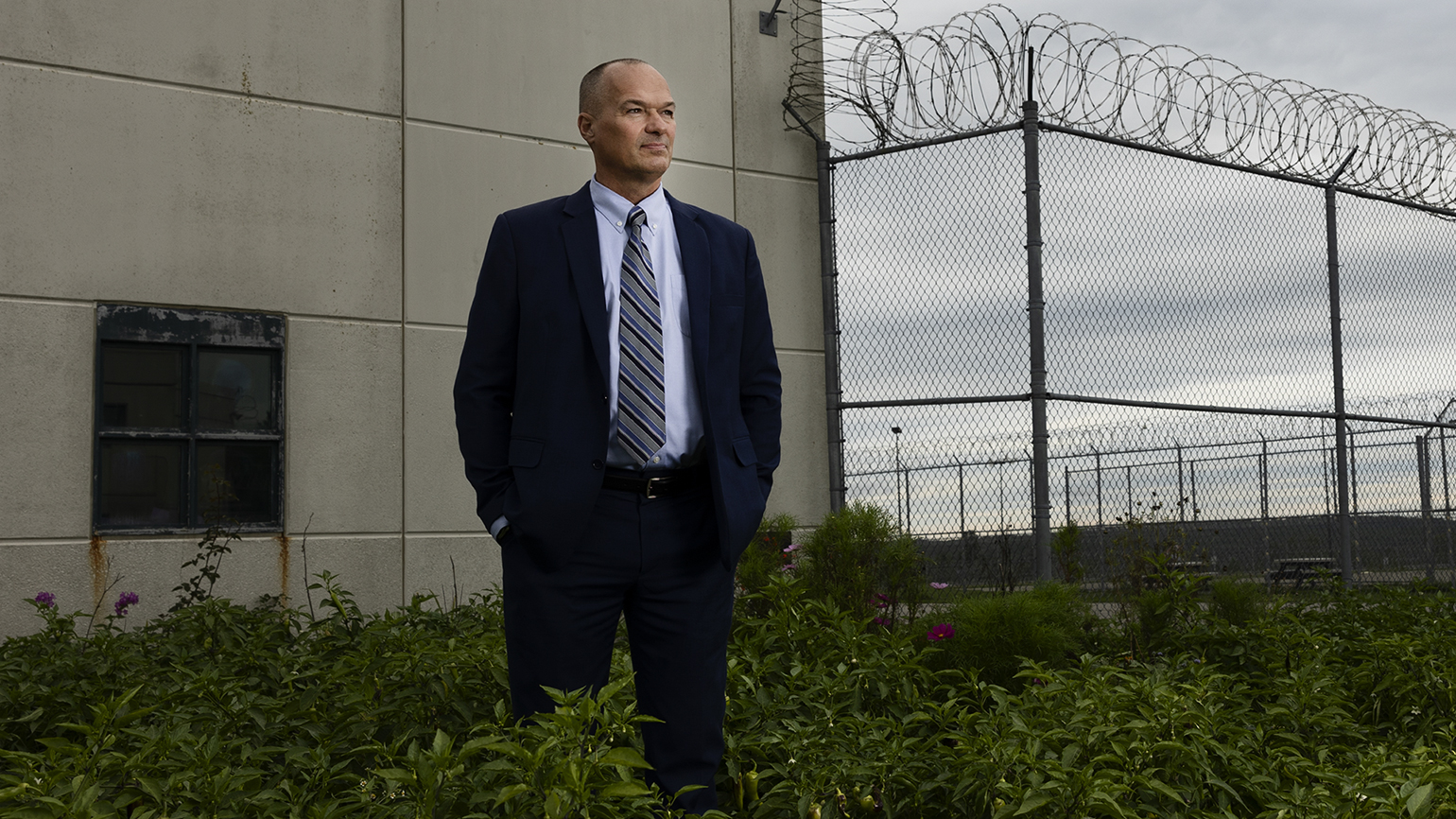
The heavy steel doors clanged shut behind me. In front of me were row upon row of cells holding the most hard­ened criminals in the state. I felt them staring at me, sizing me up. What they didn’t know was that I’d been here before.

The first time I’d set foot in Maine State Prison, I was seven years old, visiting my father, who was serv­ing time for burglary. For many years, I’d told myself I was different from him, from the 900 men imprisoned here. But now, walking in on my first day as warden, I knew there was a lot we had in common.

Light for Life NASB Study Bible in Article

I too had grown up desperately poor. Plastic had covered the broken windows of our trailer, useless against the bitter Maine cold. One winter, due to frozen pipes, we went without wa­ter. A $200-a-month welfare payment had to cover all our expenses, includ­ing feeding four boys. I was the second oldest.

Dad never swore at us kids or hit us. But he was more interested in drinking and carousing than holding down a job. If there wasn’t money for something, he’d steal it. He was in and out of jail.

He had epic fights with Mom. She held the family together. When Dad was in prison, we piled into the car and made the hour-and-a-half drive every week to visit him. He hugged us and told us he loved us, but there was no fatherly advice, no admonitions not to follow in his footsteps.

The Christmas I was seven, an inmate dressed up as Santa, and my older brother, Ron, and I sat on his lap. A photographer took our picture, and I held on to it.

I loved my parents. But there was no point in crying to them about how hard life was. I just had to suck it up. Not even God wanted to hear how I felt.

I’d been taught that my Heav­enly Father loved me, but I saw that he helped those who helped them­selves. People like Ron, who left home in ninth grade. He joined the Army, the military police. He visited me my se­nior year of high school, pulling up in a new Ford EXP sports car. What a way to escape a life of poverty! I enlisted at 18 and, like Ron, became an MP.


I served as a military policeman at a U.S. Army prison in Kansas. I didn’t look down on the prisoners. They’d made bad choices; this was the conse­quence. In the early 1980s, contribut­ing factors like mental illness, addic­tion and PTSD weren’t talked about.

After three years, I transitioned to the Reserves and came home to Maine. I got hired as a corrections of­ficer in Somerset County, where I’d grown up. Once I even guarded my dad. He badgered me for favors, like hot water for his coffee.

“I can’t do that,” I told him. “It’s your fault you’re in here, not mine.”

“C’mon,” he said. “I’m your dad.”

I didn’t bend. I couldn’t make excep­tions for prisoners. Besides, incarcera­tion was meant to be a punishment.

Over the next 20 years, I rose through the ranks, working as a rescue diver, K-9 handler, drug investigator. I loved the adrena­line rush of law enforcement. Busting down doors. Searching for drowning victims—including 19 I recovered too late to save.

That threw me. But I couldn’t dwell on it. I’d been pro­moted to chief deputy of Kennebec County. There was no place for feel­ings. If you showed any sign of pain or weakness, you put lives at risk, includ­ing your own.

That was a message I drilled into the men under my command in the Army Reserves. In 2004, my unit deployed to Iraq. I took a leave from my job, said goodbye to my family. “I’ll be back before you know it,” I said. Silently I prayed to come back in one piece.

I was a sergeant major, leading a 10-man team embedded with nearly 800 Iraqis in Fallujah. We patrolled con­stantly. Twice I hit roadside bombs. I was in firefights and saw civilians die, caught in the crossfire. The worst was losing 30 men in a helicopter crash.

I found comfort in my faith, but still, the grief was crushing. I used my one 15-minute weekly call home to reach Ron. Despite his being a veteran, there was a disconnect. The war was too re­moved from his everyday life. I gave up. As I’d learned long ago, there was no point in sharing my feelings.

I came home in 2005. I was in one piece, but something was off. My heart raced when I walked down Main Street or got stuck in traffic. Im­ages from the war haunted me. Other memories. The drowning victims I’d been unable to save. I told my wife, Jodi, I didn’t want to talk about Iraq and was glad when she didn’t press me. If I pushed everything down and did my job, I’d get past it.

By 2007, I was sheriff of Kenne­bec County. One day I was in my un­marked Chevy Silverado, Jodi beside me, driving our son, Caleb, home from camp. A driver swerved in front of us, then gave me the finger. Something snapped inside me. I flashed my lights and pulled him over. Stormed up to his car wearing shorts and a T-shirt.

I flung open the car door. Grabbed the driver by the shirt to yank him out. But his seat belt caught. His face was panicked. What am I doing? Neither one of us said a word. My grip loos­ened. I walked back to my truck. That was stupid.

Jodi and Caleb looked stunned. “Don’t you think you were a little hard on that guy?” Caleb said. I shrugged. I wasn’t in the mood for a debriefing. I pushed what happened out of my mind and drove home.

A couple days later, I was in my of­fice when Ron came in. “How are you doing?” he asked.

I broke down sobbing, shocking myself. “I don’t know what’s wrong with me.”

“Jodi asked me to come talk to you,” Ron said. “You should see someone at the VA.”

The VA assigned me to Dr. David Meyer. I’d never been to therapy. I settled into the chair across from him and made small talk, trying to steer the conversation away from myself.

“I’m glad you’re here,” he said. “In our sessions, I’m going to ask you to relive the trauma you’ve experienced. It won’t be easy, but you’ll gain more understanding over the emotions you’re feeling. Otherwise, it’s like a pressure cooker with no release valve.”

Dr. Meyer explained more about post-traumatic stress disorder, how it manifests as a variety of involuntary mental and emotional symptoms. I’d heard the term, of course. But I never imagined it applied to me.

Dr. Meyer dimmed the lights. “Tell me about one particular day in Iraq,” he said. His questions were probing.

I was back in Fallujah. The sound of gunfire. The sand in my teeth. Chaos. People dying around me. I couldn’t go more than 30 seconds without breaking down. But I kept at it, week after week.

It was like cleaning a garage stuffed to the rafters with experiences and emotions I’d never processed.

Dr. Meyer pushed me to unpack even more. “Your PTSD isn’t just from Iraq,” he said. “The poverty you ex­perienced as a child, the instability of your parents’ marriage, dealing with violence and death as a sheriff’s deputy. You’ve faced a lifetime of trauma.”

All the stuff I’d tried to escape…was a part of me. Dr. Meyer showed me ways to open up, to understand how one experience affects another. There was no judgment about being scared, angry, sad. I learned that feeling your feelings is healing, that emotion is the difference between merely surviving and truly living.

I shared more with Jodi. And with God. I poured out my soul to him. I’d thought God wanted me to be strong, to fend for myself. What I discov­ered was that he saw all of me—my strength, my work ethic, my problem-solving but also my pain, my vulner­ability—and loved the whole person.

Why else would he have a laid out a life of meaning for me, each experi­ence connecting to the next, like bricks in a carefully constructed pathway? The chaos of my childhood drawing me to the structure of the military yet also equipping me to handle the un­predictability of war and law enforce­ment. I asked God to guide me to what he wanted me to do next.

It wasn’t just my own life that I saw differently. I gained a new perspective on the men and women I worked with. As well as the people we arrested. Each of us was affected by trauma in our own way.

I brought in experts to educate my deputies about PTSD. We shared openly with each other. Several dep­uties began counseling.

I started a treatment program for inmates with substance abuse issues. And I created a separate pod in the county jail for veterans, focused on their particular circumstances. When we realized the sound of cells locking automatically sounded like machine guns firing, we began manually locking up.

With the leadership of Justice Nancy Mills, a county superior court judge, we started a veterans court, allowing veterans to avoid prison time if they participated in an intensive therapeu­tic program, including mental health and drug and alcohol treatment. Giv­ing out diplomas to the program’s first graduates was one of the most gratify­ing days of my life.

I earned a master’s degree in lead­ership management from Liberty Uni­versity, allowing me to more closely connect my faith and my work.

That day in 2015, when I walked into the Maine State Prison as warden, I brought with me a vision of prisons as doing more than simply warehousing inmates. We started referring to the men entrust­ed to us as residents. I talked to many who had a childhood like mine, which reinforced how blessed I was that God had a plan for that little boy who sat on the lap of an inmate Santa Claus one Christmas.

I kept a framed copy of that photo in my office to remind me how all my experiences had prepared me for this work and given me real empathy for each man now under my care. I want­ed to see the whole person, not just the bad things he’d done. What if we addressed the issues that had led him to get in trouble with the law? Doesn’t everyone deserve a chance to do bet­ter? Isn’t Jesus’ message one of atone­ment and redemption?

In addition to investing in mental health and substance abuse programs, we started vegetable gardens, with 3,000 pepper plants and 4,000 to­mato plants that first year. More than 60 residents became certified master gardeners. Our composting program saved more than $100,000 in trash disposal. Another 60 residents got certified as beekeepers, building their own hives in the prison woodshop.

And as I did at the county jail, I cre­ated a separate pod for veterans. They trained puppies to become service dogs for other vets through America’s VetDogs and for adults and children with disabilities through Little Angels Service Dogs.

We gave these men not only a sense of purpose in prison but also job skills they have used to build new lives for themselves on the outside.

Today I’m commissioner of the Maine department of corrections. It’s a humbling position for a boy who grew up visiting his father in the state prison. I still pray to God for guidance. For forgiveness. A chance to redeem myself when I fall short. It’s what we all deserve.

For more inspiring stories, subscribe to Guideposts magazine.

A Powerful Tool for Finding Meaning in Your Life

“Everything happens for a reason” tops my list of toxically positive statements, utterances that insist on positivity at all costs. Some things don’t happen for any reason, I always long to retort anytime a well-meaning person has offered the statement to me at a tough time in my life.

But there’s a little more to it than that. 

Sweet Carolina Mysteries In Article Ad

Some things may happen for no reason—at least no reason we human beings can comprehend or accept. But each of us can still find meaning in what happens in our lives.

“Making” meaning sometimes asks us to confront painful realities, and it certainly asks us to acknowledge the full range of our emotional lives—a key aspect of living with authentic positivity. Sometimes, meaning is found by articulating those things we most value, but recognizing that in order to live the lives we want, we must carry our challenges along with our strengths.

I was struck by an exercise therapist John J. Donahue shared in a recent article about Acceptance and Commitment Therapy (ACT). To help his patients understand the relationship between painful life experiences and what he calls “valued living,” or meaning-making, he hands them an index card.

On one side of the card, he asks them to write down some of the challenges, stressors, emotions or memories they are working through. He asks them to look at the card and share how they feel. Usually the response is something like, “Awful. This is really hard to see.” What would they like to do with the card? A typical answer is, “tear it up and throw it away!”

Then he has them turn the card over and write on it some life goals, some things that are important and meaningful in their lives. As they contemplate the positive, meaning-infused side of the card, he asks them where the pain has gone.

“It’s still there, on the other side of the card.”

What would happen if you threw the card away or tore it up? he asks next. His patients quickly realize what he’s getting at: they would have to throw away the positive along with the painful. They ultimately realize, he says, “If I’m going to do the things that are important to me, be the person that I want to be, I also have to make room for the painful stuff.”

Next time you are feeling stuck or frustrated or discouraged, why not try this exercise? It might just remind you to focus not on why your life is unfolding as it is, but on what it all means.

A Powerful and Positive Insight from a Campfire

I love a campfire, and not just because I love s’mores (though I certainly do). The effort it takes to start a fire at a campsite or in a fire pit, the careful building required, the patience needed to let the fire ignite and brighten…and then the multi-sensory experience of feeling its warmth, hearing its crackles and seeing its sparkles—all of those things just fill me with joy.

Recently, sitting quietly around a fire pit with my family, I experienced another powerful, positive message we can glean from an outdoor fire

Journey With Jesus in article ad

We had hefted a large log onto the hot center of the fire and marveled at how the tall flames licked upward as it caught and started to burn. Soon enough, the consumptive process of the fire began. The log began to appear more narrow, as flames picked and teased away its once-pulpy heft. Ridges appeared along its length and across its circumference, deepening and crackling as the fire continued to consume it.

I felt a reflective mood bubble up. I suddenly felt sad for the log, like I was watching a fast-motion version of the inevitable loss of substance that happens to all living things. I thought about recent losses in my life, including the death of my father 10 months ago. And the radical changes in routine and comfort level that have come with the coronavirus pandemic. Watching the log shrink and crackle, I felt drained. Used up.

But then, almost in response to these thoughts, the log softly and suddenly popped apart, its ridges deepening so much that its charred surface broke into individual cubes. At the base of the fire pit, the log almost sighed as it opened into a new shape and form. I drew in a sharp breath as I noticed that in cracking open in this way, the log had revealed a glowing, almost molten core. It was a glorious sight—powerfully hot, stunningly bright. 

I realized that the fire had a profound and beautiful message for me in that moment. That one single log encapsulated the essence of authentic positivity—the recognition and acceptance of what is lost in life, but also the ability and insight to revel in the profound beauty of what is revealed when we crack open. 

I went to sleep that night still feeling the glow of the campfire, refreshed by the image of sighing into a new form, becoming something that invites us to gather together and bask in our own warmth.