


Embrace God's truth with our new book, The Lies that Bind

An Addict Embraces God’s Forgiveness

Every time I looked at the purplish snowcapped mountains or heard the rush of the waterfall near my home in Seward, Alaska, I felt a deep sense of gratitude. It had taken many years and many moves—clear across the country from where I’d started out in upstate New York—but I’d finally made something of my life. I had a nice place to call home, a fulfilling career and the respect of my boss and buddies. Then one day in 1991 I got a phone call that all too painfully brought back the past I had tried so hard to forget.

“Hi, Dad. It’s Lorie. Your daughter. Surprised?”

I hardly recognized her voice, and I barely remembered what it felt like to be called “Dad.”

I sat in shocked silence as Lorie went on pleasantly, almost giddily, as if the 16 years of silence between us had been only 16 days. “I’m getting married, Dad. In January.”

“Oh, that’s … wonderful,” I managed to say.

“I was hoping you could get some time off to come to the wedding. I’d like you to give me away. Please?”

“I don’t know,” I answered. “Can I call you in a couple of days?”

“Sure, Dad,” she said, using that strange word again.

After I got her phone number, I hung up, dazed. How different she sounds! The affection in her voice stunned me. What could she be thinking? She had every right to hate me. Even for the first few years of her life, when I was still married to her mother, I hadn’t been much of a father. How could she want me to give her away? I paced around the house, my insides churning. Finally, I collapsed onto a big chair in my bedroom, closed my eyes and let my mind wander back…

I was on leave from the Marines in 1964 when I met a beautiful woman named Louise. By August the next year we were married. I finished my tour of duty in December 1965. Louise and I settled in upstate New York, and had three kids—Steven, Jim and Lorie—in four years.

Life after the Marines was harder than I’d imagined. I jumped from job to job. Either they didn’t pay enough to support a family, or they just didn’t suit me. I’d never particularly enjoyed my time in the service, but now I missed the structure. Louise started working part-time as a telephone operator, which got us through the ever-longer gaps in my employment. She can cope, I thought. How come I can’t? I knew she was trying to help, but it only made me feel more inadequate.

I had gone straight from my parents’ house to the service to a marriage and family. I deserve something just for me, I decided. About five years into our marriage I met another woman. One day I just up and left town with her. A few weeks later I slunk home with my tail between my legs, begging Louise to take me back. I swore it would never happen again. “If you really want to change, Cliff,” she said, “I believe you can do it.”

But no matter how much I told myself things would be different, they stayed the same, except worse. I kept running off and coming back. By 1975 Louise had had enough. “We can’t go on like this, Cliff,” she said. “I love you, but it’s too hard on me. And the children. This time I want you to leave for good.”

“If that’s how you want it, fine!” I shouted. We agreed to a divorce. Once I walked out the door, I never looked back. Now I could live the way I wanted. Finally I’m free.

I drifted from town to town and woman to woman, drinking, and smoking lots of pot. By the time I landed in Alturas, Calif., I couldn’t hold down even a menial job. I started selling drugs, just enough so I could afford to maintain my habits. I was living in oblivion and squalor.

Then one day I sat on the edge of a lake a few miles outside town, watching a woman I knew in a rowboat with her two children. She drained half a bottle of wine, and for no reason started berating one of her kids. That’s not like her, I thought. She’s a good person. It’s the booze making her act like that.

All of a sudden I saw through the haze of the past 10 years. Is that how I look to other people? I was just as badly off as that woman. I’d thought I would be free, but instead I had become crippled by drinking and drugging, a slave to my own demons. I couldn’t remember the last time I’d talked to God. Something made me do it now. Don’t you see what’s happening? I demanded. Why don’t you help?

I didn’t think he’d listen to a screwup like me. But he must have, because an answer came: Why don’t you?

Me? What could I do? It was too late to change, wasn’t it? Maybe, though, I could help other people before they ended up in the same sorry state.

About a week later, still filled with the determination from that day at the lake, I walked into the Modoc County Sheriff’s Department and talked to Sergeant Mike Crutcher. I told him my story, and said I wanted to help. It turned out there was something I could do: work undercover to break up drug rings in the area.

Switching sides in the drug war was not easy, but I knew it was what I had to do. It was my one chance to redeem my life. I owed it to society, and to God, who had challenged me to help. Plus, I discovered I had a knack for the job. I worked all over the West Coast, eventually winding up in Alaska.

Best of all, I was finally able to get off drugs myself. It was the hardest thing I ever did, but whenever I felt like going back to my old ways of coping, something would happen to let me know I was headed in the right direction.

Such as the time I ran into a woman I’d helped put in jail. She was just being released as I walked into the sheriff’s offices. I braced myself for a slap in the face or a flurry of obscenities—the usual type of greeting you’d get from a criminal you’d gotten locked up. Instead, she smiled and kissed my cheek. “You changed my life,” she said, tears rolling down her face. “I’m clean now. I still have a husband and children to go home to. Thanks to you, I’m getting a second chance.”

Second chance, I thought, sitting in my house in Seward. Now—even though I’d walked out on my family, on my life—my daughter wanted to give me a second chance, one I didn’t deserve. I decided I’d do whatever it took to be there for Lorie’s wedding. I didn’t want to let her down again.

The day my plane landed at the airport in Syracuse, N.Y., I was a nervous wreck. Seeing my kids grown, I felt as if I were meeting complete strangers. Until I saw Louise. She hasn’t changed a bit, I marveled.

We had talked on the phone before I’d left Alaska. She had a spare bedroom in her trailer, and said I could sleep there. I’d agreed, even though I was uncomfortable with the prospect. It’s just for a couple of nights, I told myself.

The following days were a blur of last-minute preparations. Still, I managed to arrange time alone with my children. “I’m not going to give you any excuses,” I told each one. “And I’m not expecting you to let me just walk back into your life. But I would like to be here for you, now.” I asked them to forgive me, and all three did. Their warmth and acceptance astonished me. Before I got a chance to talk to Louise, though, it was Lorie’s wedding day.

I was so proud walking her down the aisle. At the reception I felt myself easily slipping into my role as Father of the Bride. While posing for pictures, without thinking, I wrapped my arm around Louise’s shoulder. She glanced at me and smiled. And then it hit me: This was the life I left behind. A family, acceptance, love. I could have had all this, but I threw it away. I felt like a rat, and it stirred up that old familiar urge to run. Do I even deserve to be here?

When we got back to Louise’s trailer, she sat in the living room and said, “We need to talk.”

I knew she was right, but I couldn’t deal with any more. “I just want to go to bed,” I answered curtly.

I woke 11 hours later. When I walked into the living room I found Louise waiting for me. “We really need to talk, Cliff,” she said. “Sit down.”

I sat. “I’m sorry,” I started off. As with the children, I didn’t make any excuses. I accepted responsibility for my actions. “I know I hurt you.”

“If you only knew how much,” Louise said.

“I don’t blame you if you can’t forgive me,” I said, staring at the floor. “I’m not sure I can forgive myself.”

Our conversation was long and intense. We covered the last 16 years, the anger, pain, guilt and loneliness. And somehow, by the time we were through, Louise was able to forgive me. It felt like the greatest gift I’d ever received.

But I was ready to leave. I don’t fit here. I have my own life now.

Soon after I got back to Alaska, Louise called. We began speaking regularly, and I looked forward to our calls. In the spring she came to visit me during her vacation. By the time she left, something incredible had happened: I had fallen in love with her all over again.

One night I walked down the driveway, listening to the crickets. The setting sun washed everything with an orange-pink glow. The mountains stood in the distance. I was surrounded by all the things that usually inspired and comforted me. But something was missing. Overwhelmed, I fell to my knees. I’ve asked everyone to forgive me, I prayed. Everyone but you. You’ve given me so much already. Please, give me one thing more.

Despite the chill in the air, a tender warmth came over me. I felt blanketed in love, assurance and an abiding peace. God had forgiven me —long before I’d even asked. He got me off drugs, found me a good job, helped me face my past. By accepting his forgiveness I was finally free to forgive myself. Now I knew exactly what it was I had to do. “It’s time,” I said to the crickets and the mountains. “I’m going home.”

I returned to New York, where I found steady work as a private investigator. Slowly I rebuilt my relationship with my family, and in April of 1993, Louise and I remarried. It took many years and many moves for me to end up almost right back where I’d started. But this time there is a difference: I am finally living the life God meant for me to live.

This story first appeared in the March 1999 issue of Guideposts magazine.
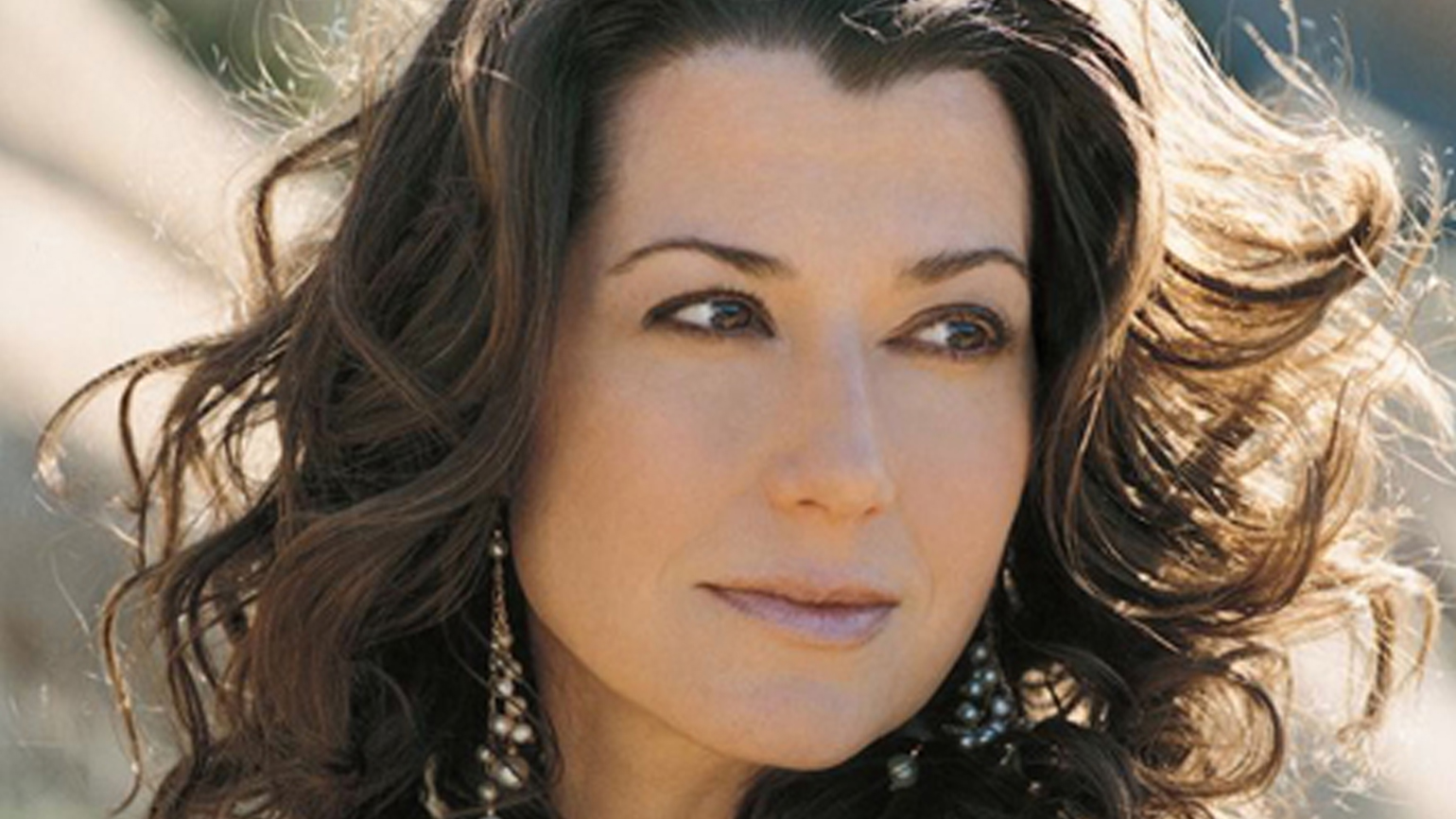
Amy Grant: Faith in a Time of Loneliness

Whenever I finish a concert, a lot of you teenagers come up to see me. Sometimes you want an autograph but more often you want to talk. Maybe because I’m not so far from my teenage years myself you feel you can tell me about your deepest feelings. And what do you talk about? The places you’re hurting. You’re not popular, or you’re not getting along with your parents, or you just feel different.

Although the causes are varied, I think many of you are struggling with the same thing: loneliness.

I’ve heard it said that the teens are the loneliest time of life. Doesn’t that seem odd? It’s a time when you’re surrounded by people and plenty of things to do both in school and out. But loneliness—that awful feeling of being cut off, isolated—hits us all at one time or another, and often because we feel we’re different from other people.

When I was in junior high, the “in” thing for girls was long, straight hair parted down the middle. All my friends had the “look.” But I didn’t, I felt left out, alone. My hair was long all right, but it sure wasn’t straight. Just like my dad’s, it had a curly mind of its own. I couldn’t part it down the middle because I was born with two cowlicks in the front of my forehead forming a widow’s peak.

One day I got up early, came downstairs and set up the ironing board. First I put my head down, stretched out my hair as far as I could and ironed out all the curls. Then I got a razor and shaved off the front of my hairline so I wouldn’t have to struggle with those cowlicks anymore. Finally I would look like everybody else. Wrong! You can imagine the mess I had made. From a distance I looked fine, but up close the razor had left its mark. I had a half-inch strip of sandpaper for a hairline. And I had to go to school that way!

As I look back on this escapade it sure seems like a silly thing to have done, but I thought that lonely, empty feeling would disappear if I could just look and feel like my buddies. What I hadn’t figured out yet was that God made each of us to be unique. At the beginning of time He planned that each of us should be as different as the patterns of a snowflake.

It wasn’t just my cowlick that was different, it was me. My own lack of self-esteem made me think my differentness was bad, and that caused my loneliness.

Talk about self-esteem and loneliness. A few years ago Renee Capps was a teenager living in Auburn, Washington, and she was miserable. She was the middle child in a family of five children. Her brothers and sisters were all remarkable. One was a football star, one was a basketball champion, another got perfect grades, and one had a great personality and loads of friends. Compared to her brother and sisters, Renee felt she wasn’t popular or talented at all. It bothered Renee, but it didn’t begin to really hurt until one day her father said to her, “You know, Renee, the other four are going to make it, but I’m concerned about you.”

Her parents had no idea of the feelings of inferiority she was suffering already. Believe it or not, her father thought his words would help motivate her. But now she felt completely cut off from the love and acceptance of her family. She’d sit in her room alone. She didn’t bother to compete at all. The only thing that seemed to dull the pain of her unworthiness was eating. Not just a cookie here and a slice of pizza there—but obsessive eating. It wasn’t unusual for her to finish a bag of Oreos, a quart of vanilla ice cream, six maple bars and four cinnamon crullers.

Yet she was also obsessive about controlling her weight. She fell into a pattern of forcing herself to eat as much food as she could, then sneaking into the bathroom to throw up. It was all very secretive. There is a medical name for this; it’s called bulimia.

This unbreakable cycle made Renee feel even more trapped in her own failure. Worse, she felt absolutely alone, with no one to go to. At this point, she knew her only hope was God, and she cried out to Him for help. When no help had arrived by the next day, or even the next week, Renee felt as though even God had abandoned her. And that’s the loneliest feeling there is.

A couple of weeks later Renee heard that a woman in her church had once had the same problem with food that she did. It took a lot of courage, but Renee went to talk to this woman, to ask for help. The woman quickly sized up the situation.

“You’ve got to break through this,” she said to Renee. “Find a way to make your parents understand your feelings.”

And break through Renee did. Dramatically. She took a tape recorder to her bedroom and sat down on the bed. She didn’t know what she was going to say but turned it on anyway. When she started talking, everything came pouring out—how inferior to her brothers and sisters she felt, how she was afraid her parents would only love her if she was a success. Tears started running down her cheeks when she told how words and actions had hurt her, how lonely she was and how she felt trapped by bulimia. When she was done, she wrote “To my family” on the tape, and she walked out and handed it to her brother.

Her family listened to it that night. It came as a shock to them. From that day on, they began to draw Renee into the family circle. Gradually, she triumphed over bulimia—and loneliness.

You see, I firmly believe what Renee found out: There isn’t a problem that God can’t see you through. No matter what it is that makes you feel cut off and lonely, if you’ll lay your burden down at Jesus’ feet, He’ll send the help you need to carry it, or to get rid of it altogether.

From what you tell me, one thing hasn’t changed much since I was in high school—the need to be part of the “in” crowd. Let me tell you about Kelly. She was especially envious of her lab partner, B.J., who always looked great; her clothes were always exactly right; she was slim as a reed, and her hair never wilted on humid days. Kelly didn’t date much, but B.J. was going with one of the handsomest guys in the school, and he drove her home every day in his sports car. They went to all the good parties. At lunchtime in the cafeteria, Kelly would watch B.J. eating with her friends, flicking her thick hair over her shoulders and laughing the hardest.

Kelly felt she would never be “in” like B.J., and aching with loneliness, she started spending most of her time watching TV or wandering through the park by herself. She didn’t even go to the parties she was invited to because all of her friends seemed like such nerds compared to B.J.’s crowd.

Then came the shocker. B.J., the princess of the “in” crowd, went home one afternoon and tried to kill herself.

Kelly couldn’t believe it. After a few days, when B.J. did not come back to school, Kelly went over to her house. B.J. looked awful. She took one look at Kelly and started to cry. “You’re the first person to come see me,” B.J. said. “Nobody has even called.”

The two girls talked—and the real story came out. All of B.J.’s running around, all the laughter, was just a show. B.J.’s “in” friends didn’t accept her for who she was but only if she played by the crowd’s slick rules. Actually, she hated the parties—and especially her boyfriend’s insistence that she drink and stay out late. To stay popular she had to do what her “friends” did and laugh at jokes they thought were funny. It got harder every day to keep up the facade. She felt emptier and emptier and more and more trapped. If she alienated her “in crowd” friends, she’d have no one. Desperately lonely, she tried to kill herself.

Here were two girls, each wanting to be something she was not.

What is the answer to this? Risk reaching out to somebody else—even the unlikeliest kid in the class. And most important, be yourself.

Do you get the idea that only girls are lonely? Well, that’s far from so. I know of one fellow named Gary Chapman who spent some pretty lonely years pursuing his dream. From the time he was a young boy Gary loved music. As a child, listening to Chet Atkins records at half speed, he’d taught himself to play the guitar. His friends and family could see that God had given him quite a gift for songwriting. Gary worked hard at his craft, and when he turned 17 and had finished with school, he moved to Nashville, a capital of the music industry.

There, away from the support of those who believed in him, Gary experienced an unexpected loneliness. Not because nobody was like him—but because everybody was! Everybody had the same dream and no one had time for one more struggling musician.

Still, he’d planned this for so long that he wasn’t just going to give up. He went to church, made some close friends and started writing the best songs he could write.

After a couple of years of living on peanut butter and crackers, he got his big chance—the chance to play his songs for a big record producer. The men in suits listened carefully to his songs. And then the producer came over and said, “Son, you might have some talent. And you might write a good song someday. But right now I see absolutely no prospect for you.”

Gary picked up his guitar and left. He walked to a park and he sat alone on a park bench. And just when he might have reached the most forlorn moment in his life, something strange began to happen. He felt surrounded by God’s love. And right there on that bench he knew he didn’t have to wait until people understood him to quit being lonely. And he wasn’t a failure because some big guy said he had “no prospects.” He had a God who loved him. He picked up his guitar and started to write:

When the weight of all my dreams
is resting heavy on my head
And the thoughtful words of help
and hope
have all been nicely said
But I’m still hurting, wondering if
I’ll ever be
the one I think I am
Then You gently re-remind me
All I ever have to be
Is what You’ve made me.

Gary made a demo tape of that song. I heard the song and recorded it. We were good friends then, and today that once lonely fellow, Gary Chapman, is my husband. Gary and I both know that loneliness comes in many forms. It can take a lot of fight to get out of it. But let me repeat what I know is true: There’s no problem that God can’t solve. And no matter how alone you feel, God loves you—really loves you for who you are. And with Him, you’ll never be lonely.

Did you enjoy this story? Subscribe to Guideposts magazine.

A Mother’s Answered Prayer for Her Son’s Recovery

Two guys walked up to us in the strip mall parking lot just as my husband and I were about to get in our car. They were carrying a cooler. Something about them gave me a strange vibe, so I opened the passenger door and climbed in.

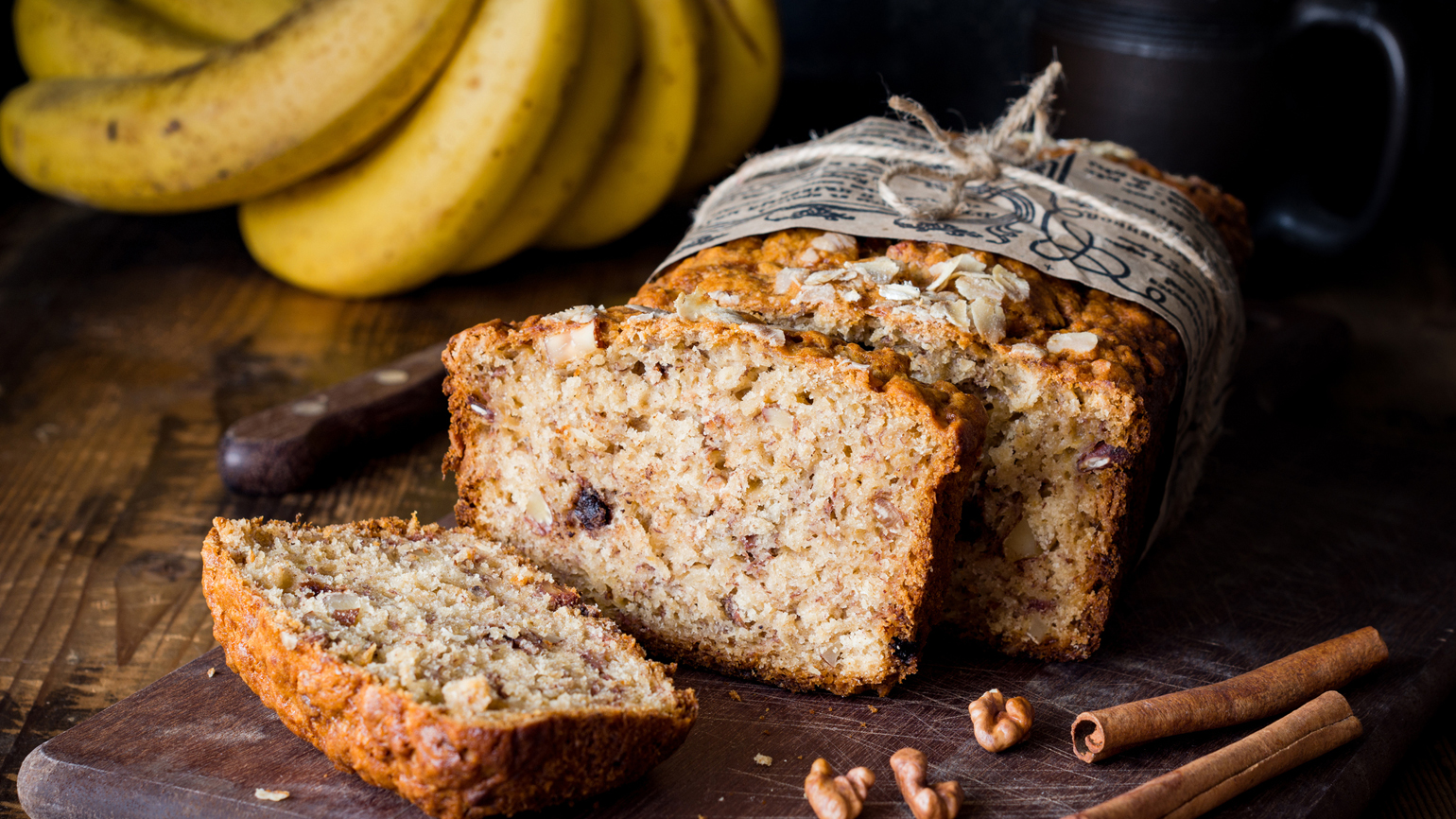
“Would you like to buy some banana bread?” I heard one of the men ask David.

What do they really want? I wondered.

“No, thanks,” David said. “My wife makes the best banana bread.”

“I understand,” the man said. “Please take this, though.” He handed David some sort of paper.

“Sure,” David said casually, no tension in his voice as he opened the driver’s side door. He’s a retired Houston cop, and if alarm bells weren’t ringing for him, I figured there was nothing to worry about.

Besides, it wasn’t as if I didn’t have enough on my mind. The oldest of my three kids, my son Wesley, had been addicted to drugs since his early teens. But I’d never seen him as hopeless as he was now, at 20. Lately every time my phone rang, I expected it to be the morgue asking me to come identify his body.

Really, I’d worried a lot about Wes right from the start. Changes that other toddlers got used to with just a little fussing totally threw him. Everyday things like wearing long sleeves, taking time-outs and putting on sunscreen triggered huge tantrums that took him forever to come down from. It tore at my heart to see the frustration and misery in his big blue eyes. Even worse, sometimes there was nothing I could do to ease his pain. It was as if he didn’t want me to help him.

The only place I could turn was my faith. Every night when I tucked Wes into bed, I would lay one hand on him and ask God aloud to protect him, our family and anyone we knew who was having a tough time. Then I’d say a silent prayer, not wanting to put pressure on my little boy, who already struggled with so much. God, please make life easier for Wesley, I prayed. Bring him peace.

I hoped he’d grow out of his oversensitivity once he was in school, but if anything, his moods grew more extreme. At one point, I tried making all his food from scratch, hoping that if I eliminated additives and preservatives it might help him. We took him to a chiropractor, an acupuncturist, a psychologist and a psychiatrist, who diagnosed Wes with ADHD and put him on medication. Thank you, Lord, I thought. This is what I’ve been praying for. The meds didn’t bring him much relief, though.

When Wes was a teenager, I took a job as a flight attendant, which had me away from home only on weekends so it wouldn’t disrupt the kids’ routines. Still, he had frightening outbursts—he’d bang his head against the wall, beat things with his fists. I worried about his younger sister and brother too. They weren’t getting as much attention from me and Wes’s behavior had to be traumatizing for them.

Wes’s dad and I had our own issues—dealing with a troubled child puts a tremendous strain on a marriage and ours wasn’t the strongest—but we did everything we could for Wes. We gave him love. We gave him rules. He broke them all.

Wes was over at a friend’s one day when I called to check in. He sounded off, his words slurred. “You okay, Wes?” I asked.

“Yeah, Mom…” he mumbled. “I’m…fine.”

He’s lying, I thought. The minute Wes got home, I confronted him. He admitted to smoking pot. “But I don’t have a problem,” he said. I dropped to my knees and sobbed. I knew life was a constant struggle for Wes, but drugs at 14? “Why couldn’t I have seen this coming and stopped it?” I cried out to God. “Why didn’t you? You say in your Word that you love Wes and me, so why are you allowing this to happen?”

Wes was right. He didn’t have a problem. He had a full-blown addiction. He was caught at school hiding a joint. I found more pot and a pipe in the attic above his room. From there it was tranquilizers, narcotic painkillers, hallucinogens. When Wes was 16, his dad and I divorced and Wes went to live with him. Even though we weren’t in the same house, his addiction consumed me.

I managed to keep things together at home, barely, and take care of my other two kids. On the road, though, I’d lock myself into my hotel room and scream, not caring who heard me. I was that desperate to release my own pain. God, why haven’t you brought my son the peace I asked for? Can’t you see he’s suffering? Don’t you care?

If it hadn’t been for another flight attendant I met at work, a wonderful man named David, my spirit would have been completely broken. David was kind, supportive and strong. His background as a narcotics officer gave him insight and understanding about my son’s struggles. And mine. “We’re going to get through this. So will Wes,” he told me. “We’ve got God on our side.” Having David in my life made me want to believe that again, hope again.

David and I got married when Wes was 17. As much joy as our marriage brought me, it was tempered by the heartache of watching my son plummet further and further into the hell of addiction. I can’t remember how many times I confronted him, pleaded with him to get clean. Or how many times he landed in hospitals or rehab, only to start using again as soon as he got out.

Now Wes was 20 and I felt like I was in mourning, with the terrible grief of a mother who knows her child is lost to her, beyond prayer, beyond hope. I wanted to rest my head against the dash and cry. Instead I put on my seat belt and watched the two guys walk away with their cooler. And their banana bread. What was that all about, anyway?

David got in the driver’s seat. “I think you need to see this,” he said, handing me the paper he’d been given.

It was a flyer. “Victory Family Center: The Road to Recovery Starts Here” the front proclaimed. A shiver ran down my spine.

David had started to drive away. “Wait!” I said. “Turn around.”

Back in the parking lot we spoke to one of the men with the banana bread. “Victory Family Center has a six-month live-in recovery program,” he told us. “Residents participate in daily chapel services, group sessions, Bible studies and various work activities designed to motivate and build character. All our services are free.” To help support the center, residents sold banana bread, which also gave them an opportunity to tell others about the ways God had worked in their lives.

I felt that shiver again, and I knew he had to be at work right here and right now. I called Wes on my cell phone. “There’s this place I think you should check out,” I said. “It’s a rehab center that really focuses on God. Please just see how it is. Not for me. For yourself.”

Silence. Was he going to hang up or tell me to stay out of his life? I braced myself.

“Yeah, okay,” Wes said. “I’ll go, I guess.”

David was the one who took Wes to Victory Family Center that very night. I couldn’t bring myself to go. If he refused to check himself in, I wouldn’t be able to take it. As soon as David got home, I ran to him. “Please tell me he stayed,” I said. “Please tell me something good.”

“The first thing the counselors did was open their arms and hug Wes,” he said. “They told him they loved him and were there for him no matter what.”

On my first visit to the Victory Family campus, I saw that love in action. The place was very structured—no TVs, no couches to lounge on. Every resident was given a job, something to take responsibility for. “I love it here,” Wes told me. “I feel like I have a purpose.”

Still, after he finished up the six months, he relapsed. But now I understood that relapse was part of the disease. He got clean again and recommitted to Victory Family for a two-year program. He traveled all over the Houston area with a cooler full of banana bread, helping addicts get on the road to recovery. Helping others get straight helped him stay straight. David and I talked to him all the time, and we visited regularly with his sister and brother too.

One afternoon David and I took Wes out for lunch. “Mom, if I hadn’t gone through everything that I did,” Wes said, “I never would have changed or given my life to Christ.” His big blue eyes were filled with light, with life—and something else I couldn’t quite put my finger on.

“I’m so proud of you, Wes,” I said to him. “I…”

Before I could finish, he spoke again.

“And, Mom, when I wake up in the morning I am at peace. And when I go to bed at night, I have peace.”

My deepest prayer for my son was answered, a miracle as sweet as banana bread.

This story first appeared in the March 2013 issue of Guideposts magazine.
A Mother Learns to Turn Her Son’s Addiction Over to God

Nighttime phone calls are never good news when you’re the mother of a drug addict. My phone rang at 10 o’clock on a frigid Friday evening in January.

“Mom, it’s Ben.” My 27-year-old son’s voice had the forced it’s-not-as-bad-as-it-sounds tone he used whenever his addiction took another disastrous turn.

“What’s going on?” I asked, trying to control my own voice. After nearly a decade of doing everything I could to help my son overcome his pain-pill addiction, I’d started going to Al-Anon meetings. I was learning—slowly—how powerless I was to solve Ben’s problems. I’d probably made things worse, enabled him, by rescuing him so many times over the years.

“I got kicked out of the sober-living house,” Ben said. “It wasn’t my fault! They found the anxiety medication I was taking—remember, you refilled the prescription for me? I didn’t realize I wasn’t allowed to have it.”

I slumped into a chair. “Where are you?” I asked. “At Orlando’s church.” Orlando was Ben’s probation officer. “He called the sober-living house and they agreed to take me back next week so long as all of the medication is out of my system.”

“That sounds positive,” I said.

Ben paused before saying, “There’s just one thing. I need you to come to Colorado to stay with me in a motel until the house takes me back. I’m broke, I don’t have anywhere else to go and I don’t trust myself alone.”

I stared out the kitchen window into the darkness, wishing—as I’d wished every single minute of the past 10 years—that my husband, Rick, was there with me. Rick died of cancer when Ben was 17. Ben’s older brother, Danny, had already left for college. Ben was devoted to his dad and incredibly close to his brother. Rick had been a National Park Service ranger and we’d moved around a lot when the boys were young, before settling down in Estes Park, a small Colorado mountain town, where Ben still lived. We were a close-knit family. Rick’s death shattered all of us.

Ben—intuitive, creative, sensitive—suffered most of all. He numbed the pain with alcohol, then pills. He was 25 when he broke into a pharmacy, stole bagfuls of pills, then stared straight into the security camera—a last-ditch plea for help. When the image was published in the local paper, everyone knew exactly who it was, just as Ben had hoped they would.

Over the years, even after moving from Estes Park to teach elementary school in Taos, New Mexico, I’d covered up for Ben, rationalized, helped him to find jobs, paid his rent, loaned him money—basically everything you’re not supposed to do for an addict. I loved Ben. I leaned on the boys after Rick died. I wasn’t thinking clearly.

Well, now I was thinking clearly. Everything inside me shouted, Let him clean up his own mess!

What I said, though, was, “Let me talk to Orlando.”

Orlando corroborated Ben’s story, with an additional frightening detail: Ben had so much medication in his system that a detox center refused to take him because they feared he would go into seizures.

“We’re in danger of losing him,” Orlando said. “I think you should come.”

“Okay,” I said with a sigh.

I left a message with the principal at my school—we’d just returned from Christmas break; it was a terrible time for me to leave—and got on the road before sunrise.

Driving along the snowy highway, I repeated the Al-Anon prayer a friend from the group had prayed with me when I called to tell her what I was doing: God, I offer myself to you. May I always do your will.

My mind groped for happy memories. I remembered the boys skiing off our roof after a massive snowfall in Sequoia National Park. Endless football games in the yard no matter where we lived. We were huge Denver Broncos fans—Rick and I met in high school in Colorado and some of our first dates were at Mile High Stadium (Rick’s family had season tickets). We took the boys to games starting when they were toddlers. After Rick died, we kept going. The sight of those blue-and-orange uniforms made us feel closer to Rick.

I kept praying the Al-Anon prayer. But I still had no idea what to do when I pulled up at Orlando’s church in downtown Fort Collins, the town where the sober-living house was. Ben was in the sanctuary, sitting by a set of drums on the stage. He looked tired and pale but not as bad as I’d feared. I hugged him for a long time, reluctant to let him go.

“I like it here,” Ben said. “I spent the whole night listening to music and reading the Bible.” He showed me a well-thumbed Bible he’d picked up somewhere. I tried not to ask too many questions. I was afraid of the answers.

I checked us into a motel and we got some breakfast at a diner.

“The sober-living house gave me a list of businesses that employ recovering addicts,” Ben said, pulling out a sheet of paper. “Can we see if any are hiring?”

My eyebrows rose, but I couldn’t say no to that. We drove around town and Ben filled out applications.

The next morning, Sunday, Ben said he wanted to go to Orlando’s church. My eyebrows rose again. I couldn’t remember the last time Ben went to a church service.

I was even more surprised when he got up to help collect the offering. He was already volunteering? The pastor, it turned out, had played football in college. Ben listened intently to the sermon.

“Whatever challenges you’re facing,” the pastor said, “whenever you feel most alone—that’s when God is closest. He will never turn his back on you. He will never give up on you.”

Ben lingered after the service, then asked if I could give rides to some guys he knew from the sober-living house.

Finally it was just Ben and me in the car. I felt conflicted. I wanted to be encouraged by his behavior. I wanted to keep him going in this new direction. But doing something he should be able to do for himself—that went against everything I’d been learning in Al-Anon. Plus, addicts are experts at making you think they’re turning a corner. I’d been fooled before. Many times.

“Mom,” he said quietly. “There’s something I haven’t told you.”

Here it comes, I thought.

“Those anxiety pills I had at the sober-living house—they kicked me out because I took all of them. Mom, I tried to kill myself.”

“Oh, Ben,” I said.

“But I heard something during the sermon this morning,” he continued. “The pastor said God never gives up on people like me. That sounds like Dad. He never gave up either. Dad would have wanted me to live. And I think God does too. I feel like I’m ready to take this whole recovery thing seriously now.”

I hardly knew what to say. I told Ben I hoped he meant it because I wanted him to live too.

Suddenly he grinned. “Hey, I know the perfect way to celebrate. Let’s go watch the Broncos’ playoff game!”

It was a huge relief to sit down at a restaurant and let our beloved Broncos distract me from my overflowing emotions. Ben and I cheered and pumped our fists every time the Broncos moved the chains. The game was tied at the end of the fourth quarter.

A commercial came on. “Time to go to church,” Ben said. “The evening service starts in fifteen minutes.”

“What?” I exclaimed. “The game is about to go into overtime. We can’t miss that! Besides, we’ve already been to church once today.”

Ben stood up. “Mom, we’ve got to go.”

I hate to admit it, but I was seriously irked. Walking to the car, Ben said he’d noticed that Demaryius Thomas, the Broncos’ wide receiver, had been in single coverage the entire game. If the quarterback, Tim Tebow, could get a pass to Thomas over the middle, Ben said, Thomas could easily elude his defender and score.

“We won’t know if he does, since we have to go to church,” I said testily.

Ben relented. “Let’s just see what’s happening,” he said, poking his head into another restaurant that had the game on. I followed him. Right at that moment, Tim Tebow threw an arcing pass to Thomas, who danced around his defender and ran 80 yards for a touchdown. Ben and I stared at each other in elated astonishment.

“Okay,” said Ben, “let’s go to church.”

There was no sermon at the evening service. Members of the congregation got up to talk about how God was at work in their lives. I was startled when Ben suddenly brushed by me and walked up the aisle.

He stood at the microphone, glancing nervously at the crowd. Then he told how he’d been struggling to find his way out of addiction for a long time.

He held up the Bible I’d seen him reading the day before. “My probation officer recently gave me this,” he said. “I’ve been thinking about a verse I found, John 3:19: ‘The light has come into the world, and men loved darkness rather than light because their deeds were evil.’”

He paused and I could tell he was summoning his resolve. “I am tired of walking in darkness,” he said. “I am ready to step into the light. I am a Christian.”

The congregation burst into applause, and the sound buoyed me up like no Broncos playoff win ever had. I felt my own darkness lift. For the first time I saw clearly that God wanted me, too, to take Ben’s recovery seriously. In a way I’d also been an addict—addicted to enabling his addiction. But my job was simply to love my son. And to give him wholeheartedly to the One who loves perfectly and who never gives up on us.

Ben returned to his seat beside me and I hugged him for a long time. Then I let him go.

Today, Ben is married and works full-time as a mentor and cook at a residential addiction-recovery center in Taos. He’s finishing college and he plans to spend his life helping addicts do what he did—step out of the darkness and into the light.

I’m confident he’ll do an excellent job. I was his first success story.

A Money Lesson: Spending and Self-Esteem

I recently found a financial advice column by Suze Orman, “What Money Has Taught Me About Personal Power” that I cut out of O Magazine back in 2009.

What caught my eye was all the underlining I had done under the heading, Self-worth builds net worth. Here’s one nugget that particularly resonated with me: “…we spend more than when we feel less than.”

How true! It reminded me of my recent struggle to resist a Macy’s special on a skin care line. Buy two items, get a cosmetic bag filled with free samples. These are so tempting! I have half a dozen of these bags in my bathroom cupboard.

At first I resisted and tossed the flyer away. But when I started feeling stressed out and beleaguered, I found myself rationalizing why I should head out to Macy’s for those products: My facial cleanser is almost gone (even though I have two more tubes in a drawer). I just ran out of the body lotion. (But wait! I already have an extra that I bought in the last promotion.)

Even though I knew I didn’t really need these things, I could feel an almost physical, and definitely emotional, pull to buy something, something to give me that uptick in adrenalin that comes from a successful shopping expedition.

Suze goes on to say that when she watched how she used money, she discovered that she was trying to keep up with her wealthy friends, spending money she didn’t have. She didn’t feel “good enough,” so she spent to “prove” her worth.

Skin care products aren’t going to relieve the source of my stress or help me deal with it. Shopping can be a diversion—like food. And just like over-indulging in food, over-spending results in a sense of shame and panic—knowing I’ll have to face the credit card statement in the not-too-distant future.

So like Suze, I’m watching my reactions to not spending and not buying. So far it’s been quite an education.

A Mom Navigates Change with Positivity

“Closing Time,” a popular song from the late 1990s, ends with the lyric, “Every new beginning comes from some other beginning’s end.” That line has been on my mind this week, as my son approached his last day of kindergarten. The last day of the first year. The end of one beginning. The launch of something new.

“Life is one big transition,” said Baseball Hall of Fame member Willie Stargell. Change is complicated, though, precisely because of the idea noted in the song lyric—when something new is beginning, that means something else has ended. Navigating times of transition with positivity asks us to hold multiple—even opposing—feelings at the same time, and to find peace and pleasure in life’s next steps.

This ability to experience two emotions simultaneously is often cited by psychologists as a sign of maturity. Jeff Larsen, a social psychology professor at the University of Tennessee, has done research on people’s emotional reactions to films. He found that 44 percent of people leaving the film “Life Is Beautiful,” which features a father and son bonding and even finding joy in a Nazi concentration camp, reported feeling “both happy and sad” after the screening. After watching the Disney film “The Little Mermaid,” which ends with the heroine marrying her true love but having to leave her father, most 11-year-old girls reported mixed emotions. Six-year-olds like my son, however, only could identify a single emotion.

So on the last day of school, my bigger, taller, stronger, funnier, more confident, soon-to-be-first-grader will not be an expert in emotional ambivalence. But I will be reveling in mine. I miss my little guy at the same time that I am proud of how much he is growing and learning. I am nervous about adjusting to new routines, but excited for the friends and teachers who will walk into the future with us. I will shed a tear for the end of one chapter, but fix my eyes on the beginning of the next. The possibilities are literally endless.

A Miraculous Release from Alcohol Addiction

“There are only two ways to live,” Albert Einstein said. “One is as though nothing is a miracle. The other is as if everything is.”

I know the truth of Einstein’s words; I have lived both ways. Growing up in Indiana in the 1940s I saw the world with wonder, in the frost on windowpanes, in the winter constellations, in the flowers called four-o’clocks that opened around that hour on summer afternoons. Attending Baptist Bible school, I watched in awe as a young preacher and his wife made miracles come to life, using a brown paper bag over a drinking fountain to reenact Moses’ drawing water from a rock.

As a young writer living in New York City’s Greenwich Village in the 1950s, numbing myself with bourbon and Freud (the former a daily habit and the latter a six-year five-times-a-week psychoanalysis), I saw the world through a darker lens. With sincere, if self-conscious, cynicism, I adopted an Ernest Hemingway character’s prayer of nothingness: Our nada who art in nada. My newfound view of Bible stories was expressed by a pseudo-jaded friend, who had gone to a more enlightened sort of Sunday school, where she was taught scientific explanations of the miracles in the Bible. Just how had Moses led the Israelites across the Red Sea? She explained while exhaling two tusks of cigarette smoke: “Low tide.”

Clearly, I was at low tide myself by 1980. Several years earlier I had left my home in Boston and the woman I had hoped to spend the rest of my life with. I had moved to Hollywood to write an NBC series called “James at 15”. Before that, I had worked as a journalist and author for publications such as The Atlantic Monthly, Esquire, Harper’s Magazine and The Nation. I had had four novels published, and one of them, Starting Over, was made into a movie starring Candice Bergen and Burt Reynolds.

But in southern California, surrounded by palm trees and people whose satisfaction in life was dependent on Nielsen ratings and box office revenues, I felt things falling apart. When “James at 15” was canceled I stayed on in California to struggle at the entertainment business, constantly drinking to soothe the stress.

That created even greater stress and a resting pulse of 120, a condition called tachycardia. I tried to write, but it became impossible. My attention span was getting shorter and my money was getting lower. My life consisted of the nothingness Hemingway’s fictional character discovered. Yet mine was real.

I was a few dreary weeks away from my forty-eighth birthday when I woke up screaming one morning. It was more than a nightmare. Wide awake I got out of bed and screamed some more. In misery and despair I groped among a pile of old books and pulled out a Bible I hadn’t opened since high school, except for research. I turned to the Psalms, that source of comfort and sustenance to people for more than 2000 years, and read aloud the Twenty-third Psalm.

Throughout the weeks ahead I repeated that Psalm again and again. He leadeth me beside the still waters… In the spring of 1980 I got on a plane and returned to Boston, where I went like a homing pigeon to sit on a bench beside the still waters of the pond in the Public Garden.

A new journey for me had begun. I joined a church called King’s Chapel and began attending an adult Bible study. I started a steady program of exercise and a healthy diet. By 1984 I was able to give up the constant drinking that had been my addiction—indeed my very identity. But even more amazing, I became free of the desire to drink. The need that had once consumed me was gone, lifted. One of the definitions of the word miracle is an extraordinary event “considered as a work of God,” and that’s how I felt—and still do—about my release from alcohol. There was no doubt: I had experienced a miracle.

Step by step I continued on my way. My minister, the Reverend Carl Scovel, pointed out that the translation of conversion in both Hebrew and Greek is “turning.” When you turn even slightly you are going a different way, and the farther you go the more distant your old way becomes. Instead of a driven, frantic existence, I was gradually changing my perspective, looking inward and focusing on a healthier and more spiritual way.

At the King’s Chapel parish house I sat with nine others around a table as Carl Scovel led us in a class about writing a spiritual autobiography. Difficult as it was in the beginning, I slowly began to share my most intimate fears and struggles—and learned that others too had gone through a dark night of the soul.

Eventually I started leading workshops myself. I now saw that a spiritual path really is a path, a genuine ongoing journey, and not just a metaphor. My new path was taking me to churches and adult-education centers around the country to guide others in writing their own spiritual autobiographies. I helped people of all ages and backgrounds as they poured out their deepest feelings on paper.

My personal satisfaction was enormous. But by 1993 I was running out of writing ideas—and cash. All spring I had worked on a novel, and when people I trusted told me it wasn’t good, I threw it away. “I’m in trouble,” I said to a friend. “I need a miracle.”

One day not long after, my phone rang. It was a call from an editor in San Francisco. “We’ve got a great book idea and we want you to write it,” he said. What was the subject? Miracles.

“I’ve got a head start on this one,” I told the editor excitedly. I contacted the people I knew from my workshops and asked them to send me stories of what they considered miracles in their own lives.

Next I set out to interview on my own. A woman in Atlanta told me her daughter had suffered a traumatic brain injury when hit by a car and was given little hope for recovery. Yet with prayer from family and friends and Bible study groups around the city, the girl came out of her coma and returned to school and a full life.

A friend in Los Angeles who had suffered third-degree burns and was scheduled for skin-graft operations met with psychologists and medical assistants who were experimenting with alternative healing. The morning after the group had moved their hands above her body in “energy techniques” the burns were gone. (The surgeon who was to do the skin grafts insisted there was no way such a healing could have happened. It happened.)

Rabbi Nancy Flam, one of the founders of the Jewish Healing Center in San Francisco, believes that healing can occur through “the ministry of presence,” by clearing one’s mind to be fully present to another human being. When we give others our full and loving attention, we become “a conduit for Divinity to express itself.” Or, as Thérèse of Lisieux put it in the nineteenth century, “Whose hands are God’s hands but our hands?”

In Athlone, Ireland, I met a glowing, rosy-cheeked woman named Marion Carroll. Others attested to the fact that she had suffered from multiple sclerosis, was blind in one eye, had lost control of her bodily functions, and had been paralyzed in her legs for three years. In 1989 she was taken on a stretcher to a shrine in Ireland. She heard a whispery voice tell her to get up, and when she did, “My legs weren’t even stiff!” She hasn’t needed a wheelchair or catheter since. “My healin’ does not belong to me,” she reported. “It’s a special gift to people … to let them know … God’s work is happenin’ now—like when he walked among us.”

But what about people who are not cured? I discovered an even deeper kind of miracle in their stories. Lloyd Kantor, a Vietnam vet who lost both arms and legs and one eye in the war, married and went to Paris on his honeymoon, then took a trip to Tahiti. He and his wife, Loretta, returned to Mount Vernon, N.Y., to do volunteer work, arranging to have ramps put in the city hall and an elevator in the town library, and to have a memorial erected bearing the names of local men who died in Vietnam. “All in all, things have worked out well,” Lloyd told me in a firm, strong voice. “I have to believe it has to do with God.”

I discovered that many artists consider their creativity miraculous. While on a visit to Germany, writer Marcie Hershman was dramatically struck by “a silence full of voices still calling out” that reminded her of relatives who had died in the Holocaust, and it led her to write two searing novels about that time, Tales of the Master Race and Safe in America. “In the Bible, miracles aren’t confined just to blessings of joy,” Marcie told me. “Some are about evil and how to confront it rather than turn away.” Marcie’s ability to deal with such a challenge was, to her, a miracle.

Other artists described to me the state of grace they felt on occasions when they transmitted something higher—or what William Blake described as the feeling that his poems were dictated by the angels. At the same time, we are surrounded by miracles every day. “We see people looking for weeping statues,” Frankie Murray, a curate in County Longford, Ireland, pointed out to me. “They miss the every morning miracles—like the sunrise and friendship.”

Or the frost on the windowpane in my long-ago Hoosier boyhood. In a sense my path has taken me fullcircle, back to the simple wonderment at God’s mighty hand in the winter constellations. As Willa Cather has written, “Miracles … rest not so much upon faces or voices or healing power coming suddenly near to us from afar off, but upon our perceptions being made finer, so that for a moment our eyes can see and our ears can hear what is there about us always.”

As for me, I proceed day by day on my journey as a writer and teacher. There is no doubt that miracles abound. The path my own life has taken is proof.

This story first appeared in the March 1996 issue of Guideposts magazine.

A Miracle Healed Roberta Messner of Pain and Addiction

I sat beside my mother’s hospital bed. She lay dying of cancer.

I didn’t know whether she could hear me, but I spoke anyway. “Mother, whatever hard words I said to you in the past, I want you to know I didn’t mean them. I have been so blessed to be loved by you, and I will be okay if you go home to Jesus.”

Mother’s eyes opened, and she reached out and squeezed my hand. With great effort, she said, “When I get to heaven, Roberta, I’m going to have me a little talk with God about your pain.”

She looked directly at me. “Believe, Honey. In his perfect time, it will all go away.” Her eyes closed, and moments later Mother slipped into a coma. She never woke.

Oh, how I wished I could believe her last words! She had said similar things so many times before.

I had been in continuous pain since childhood, and no prayer of Mother’s had ever seemed to make a difference. Besides, how could I believe that message coming from her when she was the cause of my pain and disfigurement?

For more than four decades, I had suffered from neurofibromatosis, once called Elephant Man’s disease. The condition caused unstoppable tumors to grow all over my body, particularly inside my head and around my face.

It’s a genetic disease; carriers of the gene don’t always show significant symptoms. Mother carried that gene and passed it on to me. Somewhere deep down in my soul, I had never forgiven her for that.

The day she and I learned of her cursed genetic trait still felt like yesterday. It was the Friday before Mother’s Day. I was 13 years old. We were in a doctor’s office, following up after the first of what would turn out to be a lifetime of surgeries to remove tumors from my body.

The disease often lies mostly dormant until adolescent hormones send the tumors into overdrive. In a few short years, I’d become a horror to myself, taunted by schoolmates and stared at even by adults.

The doctor came into the exam room and turned to Mother. “Almeda, we tested that growth on your scalp to see whether there’s a link to Roberta’s condition. The growth tested positive for neurofibromatosis.”

Mother never cried—she was a stoic mountain mama—but this time I saw a single tear run down her face and onto the collar of her Peter Pan blouse. “Are you saying I gave this illness to Roberta?” she said. The doctor nodded and put a sympathetic hand on her arm.

In the ladies’ room with Mother after the appointment, I remembered the seizure I’d had not long before at a school dance, which had been caused by tumors pressing against my brain. I’d come to on the floor, surrounded by jeering, pointing kids.

“Look at me!” I snarled at her reflection in the bathroom mirror. “Look at what you caused!”

Mother stared back at me, horrified.

“I hate you!” I screamed.

The instant those words left my mouth, I wanted to take them back. My mother was the toughest, smartest, most nurturing and faith-filled mother you could imagine. She loved me fiercely and showed it every day in ways large and small.

I loved her too. Just a few days before that doctor’s appointment, I’d finished sewing a Mother’s Day dress made of robin’s-egg blue linen embroidered with yellow daisies. I’d saved my babysitting money to buy the materials. I couldn’t wait to watch Mother open the gift.

But that outburst in the ladies’ room showed the darker feelings lurking in our relationship. Even before finding out about our genetic link, I often took out my emotional distress on her.

Sometimes I lashed out when she tried to comfort me. Other times I resented her unflagging hope and her insistence that I learn to live an independent life.

“You don’t understand how I feel!” I’d say accusingly. “You’re heartless!”

Mother never took my hurtful words personally—or at least she never let on that she did. She was overjoyed by that blue linen dress and took to calling it her sacred threads.

Mostly we got along, especially as I grew up and, with her determined encouragement, graduated from college and embarked on a long and fulfilling career as a hospital nurse.

Still, whenever the challenge of pain, disfigurement and repeated surgeries became unbearable, that shadow side of me would reemerge and I’d lash out at Mother again.

“Everything okay?” she asked one day when I took an especially long time getting dressed—I’d been struggling to pull on a pair of designer jeans.

“Well, I don’t exactly have designer genes,” I sneered. The color drained from her face.

Our church growing up was very strict. The God preached from that pulpit was a stern, all-knowing Father who brooked no dissent. It never occurred to me to take out my anger on God. That would be sinful!

Instead, I focused my blame on Mother. I blamed her for my pain. For the fact that, because of my many surgeries, I couldn’t have children of my own, even though having a family had been one of my most cherished childhood dreams.

It got to the point that, even when I had positive news to share about my condition, Mother preferred to avoid the topic altogether.

Once, I was invited to speak at a neurofibromatosis conference. I came home brimming with information about the genetic origin of the disease. I was eager to share what I’d learned with Mother, but she abruptly changed the subject the minute I started talking.

Another time, out of nowhere, she suddenly said to me, “I’m the reason you suffer.”

I tried to reassure her. “I admit I’m angry, Mother, but not at you. You didn’t do anything wrong.” She nodded, but I knew she still felt guilty. And despite my words, I did harbor a lot of bottled-up anger. The breach between us never quite closed.

After Mother died, I had no doubt she would have that frank talk with God about my pain. I had no confidence, however, that God would do anything about it. He’d had plenty of time already.

As I anticipated, my pain continued. My doctors had put me on an opioid pain reliever, which I ended up taking for more than two decades. The drug dulled my pain. It also made me physically dependent and submerged me in a state of low-grade depression.

One morning, almost 20 years after Mother died, I awoke to a startling vision. Right before me, as if physically present, I saw her sitting in a wooden porch swing in front of an old farmhouse in the West Virginia hills. She wore that blue linen dress I’d sewn all those years ago. Hands resting on her worn Bible, she looked young and carefree, as if she’d never grown old, never struggled.

“My dear Roberta,” she said, looking directly at me. “Read Joel 2:25. And believe!” She smiled at me radiantly and then was gone.

Coming fully awake, I fumbled for my Bible on the bedside table. Finding the Book of Joel, I turned to chapter two, verse 25: “And I will restore to you the years that the locusts have eaten.”

What exactly did that mean?

I found out a few weeks later. My primary care doctor told me that a change in my insurance meant I had to stop taking the opioid pain reliever. I was referred to a pain management specialist, who told me I should never have been on that medication for so long. “There are newer, more effective treatments for your condition,” he said.

I was prescribed a drug targeted for nerve pain, but before I could take it I had to withdraw from the opioid. The withdrawal was a nightmare. When I emerged from the agony, I was stunned to discover that the pain I had wrestled with for almost my entire life was suddenly and miraculously gone. I was free.

My pain management doctor explained that my miracle had a scientific basis. Neural pathways exert a powerful influence over how pain is perceived. For much of my life, I had been told my condition was unavoidably painful—my brain would predict pain, and so I was acutely sensitive to it. The opioid, it turned out, had only amplified that effect.

Somehow the shock of withdrawal had forced my brain to reassess its interpretation of pain. Free of the opioid, given a shot of hope by the pain management specialist’s confidence that I didn’t need the medication, my perceptions changed and I was able to refocus my thoughts away from a constant worry about pain.

It has been two years since that miraculous healing. Since then I have not taken so much as a Tylenol.

My healing, though, runs deeper than that. Mother gave me powerful prophetic words when she appeared at my bedside. She also made sure I saw her wearing that blue linen dress. Her sacred threads.

The message was unmistakable. Mother took that dress with her when she went to be with God. She loved me that much. In the light of that love, I went back over everything I once found so hard to bear—Mother’s relentless encouragement, her attempts to comfort me, her awkwardness when I tried to apologize.

All of it showed how deeply she cared about me. Loved me. How hard my condition was for her. I’m sure she punished herself for the genetic link more than I ever could, even as a misguided teen.

God has healed my pain. He has healed my heart too, in the deepest way imaginable.

For more inspiring stories, subscribe to Guideposts magazine.

A Million Thanks to Dolly Parton

I want to say a personal thanks to one of Guideposts’ greatest friends and supporters, the one and only Dolly Parton. Aside from the fact that she is a great American and a national treasure, Dolly donated a million of her own dollars to the development of the Moderna Covid-19 vaccine, which I just got my second shot of. In fact, I got it a few days before Dolly got her first shot, which doesn’t seem fair. She’s older than me, right? Check out Dolly’s celebratory video here. It’s a hoot.

A lot of people are getting vaccinated and there is a chance, a prayer, that we might actually get summer back this year as the vaccine supply increases. Wouldn’t that be something to celebrate? I am back in New York for the week, almost one year to the day when I fled the city thinking it would only be for a week or so and never this.

Better writers than I have tried to capture the ensuing horror of those dark early pandemic days here. And it just kept getting worse, with bodies being stacked in refrigerated trucks because the morgues were overflowing, and morticians couldn’t work any faster. The thought that more than a half million Americans would die over the next 12 months would have been more than most of us could bear. It still is. Yet what a blessing it is to see life returning to the streets, the hustle and the bustle, people resuming to their daily routines.

This pandemic brought death and misery, and it’s not over. Yet the end is getting closer thanks to a lot of brilliant science and, for my money, a lot of prayer, including a few of my own. I feel these vaccines are the answer to our prayers. Getting vaccinated does more than just protect you and by extension others. It does more than just make it possible to hug your grandchildren again or go to a ballgame. Getting the vaccine is a profound act of gratitude to God for delivering us from this disease. To refuse it is to refuse God. In my opinion, at least.

Don’t just take it from me. Take it from Dolly: “Don’t be a chicken squat!”

In all seriousness, please get your vaccine if you can or if you are still thinking about it. Of course, no one has to get the shot. But I don’t want to hear about any more of you getting sick or worse. And let’s all get together this summer.

Ambiguous Loss: Grieving a Loved One Who Is Physically Present but Mentally or Emotionally Impaired

Lauri Scharf, LSW, MSHS, is a Care Consultant & Master Trainer at Benjamin Rose Institute on Aging

The feelings that come with loss take various forms. Traditional grief follows the death of a loved one. It is the process of dealing with emotions that accompany permanent and meaningful loss. It is a familiar and difficult experience. By grieving, we may allow ourselves to move through the loss and come to terms with it.

We can also experience loss in relationships, as people move in and out of our lives, or as relationships themselves undergo shifts. When a close relationship is changed by a health issue that significantly alters a person’s mental or emotional condition, the feelings of loss that result for the caregiver can be particularly confusing and challenging to process. It is almost “a loss that isn’t” when your loved one is physically present but mentally or emotionally impaired, and it can leave you wondering who you are now.

You may have gradually experienced such a shift in your identity from loving spouse, companion or friend to full-time caregiver, sole decision-maker and lone partner due to your loved one’s cognitive decline or another condition. This can happen with dementia, Parkinson’s disease, traumatic brain injury or addiction. Whatever the cause, you may feel isolated and as if the clock has stopped ticking, for you alone. As a result, you may be grappling with the loss of dreams the two of you had for the future, or the loss of sharing equally in a mutual relationship. You may feel as if you have no one to rely on but yourself. But know that support is available and that there are helpful ways to process your emotions.

Although your new normal may now feel one-sided, it is important to allow your emotions and practice self-kindness. Acceptance is a gradual process. Your thoughts may turn to wanting change. If only I could go back to how it was five years, or even two years ago, you may think. By slowly accepting that this is not going to happen, your thinking may turn instead to, “Let my loved one have peace.” You may feel guilty for not being able to adapt to your new role, or question whether you are up to being the caregiver your loved one needs. All these thoughts and feelings are a normal and healthy part of the process.

‘Ambiguous grief’ or ‘ambiguous loss,’ a term coined by researcher Dr. Pauline Boss, is the name given to these thoughts and emotions. There is no closure to the situation or even an apparent understanding of why it has happened. It looks and feels different from traditional grief in that you have not experienced the physical loss of your loved one, yet the sense of loss is real. Well-meaning family and friends may not be able to recognize your grief, and thus don’t understand how to interact with you. On the other hand, others may try to relate to you and share their grief experience in losing a loved one to death. It may feel difficult to hear, but recognize they are only trying to help.

Remember that there is no one right way to maneuver through this experience. The following steps, however, may serve as a guide to help you process your emotions and move forward:

· Let yourself view this as a loss with no true resolution. Even though you may not be able to change the situation, you can begin the grieving process as you adjust to your new role.

· Think about your strengths as a caregiver. Consider which tasks you’re able to handle and which you could use back-up for. Then reach out for support from family, friends and community resources. Don’t be embarrassed if you need to ask for help. Care coaching programs like BRI Care Consultation™ can guide you through this new normal and help provide you with resources and steps to live a healthy life.

· Understand that your loved one is not the diagnosis or the disease. You could not control the circumstances that led to the disease, and you may not have control over how it progresses. Be kind to yourself.

· Form a care team. Put together the resources and care you need. These can include a support group to meet others who are undergoing similar challenges, or professional help from a therapist, clergy person or other expert who can help you recognize and cope with your feelings.

· Look for ways to reminisce on the wonderful times you had with your loved one. Instead of focusing on loss, it can make you feel better to put your attention on good memories.

· Prioritize regular respite, not only to give yourself a break, but also as a way to celebrate all that you do as a caregiver and to allow for some self-love.

Although the caregiving journey can involve painful feelings of loss, it can also be filled with joys, great and small. Let yourself embrace the gifts of laughter and love along the way and try to focus on the great times the two of you have shared.

A Man of Faith’s Last Great Lesson

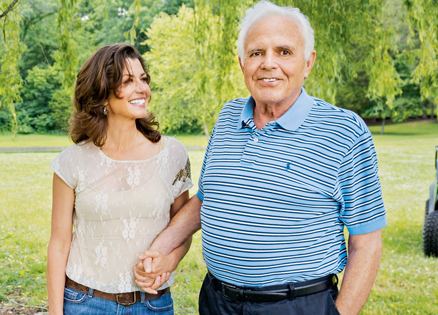
My dad loved to sing and loved any meal that brought our family together. He loved boats and the beach and being outdoors. He loved God, and his prayers were filled with gratitude.

He taught me how to spell my name in Morse code, to play pool and ping-pong, to bait a fish hook, but the important things he taught me were by his example. He was compassionate, caring and respectful. I never heard him say a negative word about another person. What a lesson that was.

Dad is 81 now. His once-brilliant mind has been ravaged by dementia. He doesn’t know my name. He rarely says two sentences in a row that make any sense.

And yet without words he is still teaching me one of the most important lessons of all: how to trust God in the smallest moments, how to see that God is still present and working through all of us, even now, even on those days when I don’t understand a thing my father is saying except the word “beautiful.”

Dad was a respected radiation oncologist. He trained and taught at MD Anderson in Houston, Texas, and has spent most of his life in Nashville practicing at Vanderbilt, Nashville Memorial and St. Thomas hospitals.

His main work was at Park View/Centennial, which opened the Sarah Cannon Cancer Center, named for one of his patients.

When I first started my singing career, people recognized my name because of his accomplishments.

They would come up to me and say, “Your father is such a wonderful doctor. He treated my mother a couple of years ago and it made such a difference. He has a wonderful bedside manner. It gave us so much confidence and hope. We’ll never forget him.”

Today he doesn’t remember what happened an hour ago, let alone five minutes ago. He’ll launch into a nonsensical conversation with disjointed phrases and I’ll hold his hand, listening. He had a beautiful voice—still has—but he’s lost all the words to the hymns he taught me, the ones we sang together.

Sometimes I’ll sing one to him and he’ll pick up the tune, but if I stop, he’s lost again, as if the notes just fall off the page.

“Why?” I’ve asked time and again, along with my three sisters. Why did this happen to this vibrant, intelligent, faith-filled man? Why did something like this happen to our mother too? There was no history of dementia in our family. Our grandparents didn’t suffer from it. We had no roadmap.

Mom and Dad were both in their seventies when the first telltale signs appeared—a little forgetfulness, a little repetition. But wasn’t that normal with age? I forget things all the time. It can be a nagging fear if you don’t wrestle it to the ground.

With Dad the confusion grew worse, then the erosion of cognition. I was visiting my parents late one evening on a break during a concert tour. My mom was wrapped up in a robe, a blanket around her feet. There was sweetness in our time together.

I stood up. “Mom, I’ve got to go and get on the bus. They’re waiting for me.”

“Are you going somewhere?” she asked.

“Yes, I have a concert in Detroit tomorrow night. A reunion tour with my old friend Michael W. Smith.” “Oh, you sing?” she said with a curious smile. “What kind of songs?” I swallowed the lump in my throat, overcome by the memories of all the songs I had played just for her.

“Would you sing something for me now?” she asked wistfully.

I started in on “Revive Us Again,” one of her favorite hymns. Halfway through I stopped, asking if she remembered it.

“No,” she said, “but I love it. Keep going.” I did until it was time to get on the bus. “Can I go on the bus with you? Can I come too?” she asked.

“Not this time, Mom, but I’ll be back.” I kissed her good-bye and held it together until she was out of my sight.

Mom had a type of dementia known as Lewy Body, which involved confusion and altered realities. The good news was that it was not a constant condition, which allowed us to connect with her on good days.

But Dad’s dementia became completely debilitating. His vocabulary disappeared. Even familiar objects he couldn’t name—a telephone, a seat belt, a fork.

My sisters, Kathy, Mimi, Carol, and I have become a team, meeting with doctors and hiring caregivers (thank you, Dad, for all of your careful financial planning). Communication has been vital. My advice to every family going through this is to talk honestly with each other.

The first elephant in the room was quietly retiring my dad’s medical license and then not letting him drive. My sister Mimi and her husband, Jerry, moved in with Mom and Dad for a year, but they both work full-time so we still needed caregivers. We also had to explain things to Dad.

The time came when we knew it was in our parents’ best interest for them to sign papers giving us power of attorney and control of their affairs. On a day when they were having lunch with Walt, their trusted minister, my sisters and I joined them at the end of the meal with the necessary papers.

My father turned to Walt. “Is this the right thing?” he asked, holding the pen. My mother, sitting beside him with her papers asked, “Am I doing the right thing?”

Walt’s got a voice so comforting it’s like thick caramel. “Can you see this loving family around you?” he said. “Can you see how they care? You poured love and respect into your daughters for a moment like this. You can trust them.”

This reversal of roles, caring for the ones who had been so capable, is not easy. We would adjust to one change, one new wrinkle in this long downward slide, and then there’d be something new, one more loss of function, and we’d regroup.

All my life I’ve asked God to lead me to where he needed me. Again and again he’s answered that prayer. But this time there were no easy answers.

One night I opened up to a trusted friend, telling her of my frustrations, my confusion, my guilt, my sense of loss, my anger. She listened patiently, offering suggestions, lessons she had learned in the process of losing her own parents.

“Amy, this is going to be the greatest walk of faith you’ve ever had. You can’t see the whole picture now, but each day you’re going to have to trust God more than you ever have before.

“Day by day you will find the inspiration you need and you’ll see how God is present in each moment. Give yourself the freedom to laugh and cry.”

And then came the words that changed everything: “I know this is hard, but this will be the last great lesson you’ll learn from your parents.”

Mom’s health was clearly fading. Out of the blue came the idea to bring her to our house to live with us. Mom moved into my daughter Millie’s room for the last three weeks of her life.

I don’t think we locked our front door that whole time. People kept coming and going, nurses, hospice workers, my sisters, their husbands, the grandchildren, friends. Anytime day or night, we could go sit with her, sing songs to her, hold her hand.

A few days before she died, another inspiration hit me. We should have a girls’ night in, I thought. Now. I called my sisters and said, “Come over tonight. Bring ten phrases with you, things that will trigger a memory. Don’t write down the whole story. The phrase should be enough to remind you of it.”

Even though I’m the youngest, I can be bossy!

For three and half hours we sat around Mom’s bed and told stories. She never opened her eyes, but her breathing slowed as if she was hearing every word.

“Mom, this is how we remember you,” we said. “This is how you showed us your love. These are the stories we tell each other and we’ll tell the grandkids and great-grandkids. This was the difference you made in our life.” Kathy, Mimi, Carol and I had that precious time with Mom and with each other.

The next morning when the hospice nurse stopped by to check on Mom, she said, “Your mom is in transition.” In less than 24 hours she was gone.

Recently I found an old video I had taken of Mom and Dad. I asked my mother three things she loved about Dad. She said, “His smile, his laugh, his voice.”

When I asked my dad what three things he loved about Mom, he broke down and said, “I never want to live one day without her.” It’s been 18 months since Mom passed away.

These days my father lives in a one-bedroom apartment with round-the-clock care. It’s working and we’re very grateful to the people who are helping us, but I have to remind myself, it’s only for now. Each day brings new challenges, each day is different.

Not long ago I took Dad for a walk on the farm. We’ve got an old log cabin in the back and I took him inside, made a fire and we sat there like two kids on a campout.

“Beautiful,” he said, one of his few words these days, at least one of the few I can understand. I guess if you are going to hang on to a short list of words, beautiful is a good one.

When we were through, we went outside, stood there, arm in arm, totally present, letting a warm late winter sun bathe us. “Beautiful,” my father said. I couldn’t agree more.

This story appeared in the February 2013 issue of Guideposts.

Watch as Amy Grant shares three caregiving tips.

Download your FREE ebook, Rediscover the Power of Positive Thinking, with Norman Vincent Peale