

Embrace God's truth with our new book, The Lies that Bind

Absence, Prayer Make Their Hearts Grow Fonder

ANGIE: “Goodnight,” I said to my new husband, Don. But there was no goodnight kiss. I could hardly remember when our last kiss had been. “Love you…oh, and tell Mom I said hi,” I added before we hung up.

I plugged my phone into the charger on my nightstand and lay down. But it was no use. Sleep wouldn’t come. Just worry and loneliness.

The catfish processing plant where Don had been a manager here in Alabama had sold and the only companies hiring in his field were in the Dallas, Texas, area. I had a full-time job and we have five kids between us, four in college. There was no way we could all uproot from Tuscaloosa.

Besides, my youngest was only 12—I couldn’t move him out of state, away from his dad, my ex-husband. Fortunately, my mom lived in Denton, Texas, and offered to let Don move in with her while he was job hunting. A good solution to a bad problem.

Yet with each passing day the distance between us felt greater. And it wasn’t just the miles. Don and I had been high school sweethearts. We’d reconnected five years ago after we’d both gone through devastating divorces.

We felt so blessed to have a second chance at love. It felt like a gift from God. But now I wondered, Lord, why did you bring us together again only to keep us apart?

DON: I knew losing my job wasn’t my fault. The economy was in bad shape and the plant I worked for just couldn’t make it. Still, I felt like a failure. I’d always prided myself on being a hard worker, a good provider for my family.

Now I’d let them down. Especially Angie. I was so thankful God brought her back into my life. I’d wanted to take care of her completely, make it so she never had to worry again, yet all I’d done was bring more stress into her life.

She was supporting our family—that was supposed to be my role.

Angie’s mom was very generous. “Don’t worry about staying here,” she said. “I’m glad to help.” But I felt like a burden using her utilities and groceries.

I found a church I liked but what I really needed to find was work. Fast. Problem was, every interview I went on, there were scores of guys just like me: middleaged men with business backgrounds and proven track records. Hundreds of us vying for the same few positions.

It was discouraging. Demoralizing. But I couldn’t tell Angie. No way. I couldn’t drag her down like that. So every night when we talked on the phone, I put on a good front. “How’d it go today?” she’d ask.

“I think the interview went well.”

“That’s great! When will you know if you got the job?”

“I’m not sure. But don’t worry. If this doesn’t work out, another will.” Maybe if I kept saying it, I’d believe it too.

ANGIE: Weeks passed, then months. Nothing opened up for Don. The worst part was, I felt like I was carrying the burden of all our worries. When Don and I talked, he sounded so upbeat, as if he didn’t have a care in the world.

It wasn’t just that we weren’t living in the same house—sometimes it seemed like we weren’t in the same marriage.

“Got a little glitch, Ang,” Don told me one night. “Your mom’s neighborhood covenant won’t allow her to have company much longer. She can’t have overnight guests for more than thirteen weeks, and we’re running out of time. Don’t worry, though, I’m sure something will work out by then.”

“Okay, hon,” I said, trying not to sound anxious. Deep down, though, I was terrified. Why would everything suddenly work out? It hadn’t so far. How could Don seem relaxed at a time like this? We hung up the phone.

With each call that followed, I pressed Don for answers and he grew tired of my questioning. We were short with each other. For the first time, tension mounted between us.

DON: I was pretty shaken up. We’d never really argued before. I didn’t blame Angie for being upset. She was the one working every day, paying the bills and taking care of our family. She had a lot on her. Too much.

I just wanted to take her in my arms and hold her tight. If only she weren’t 600 miles away!

One night I hit my knees. “God,” I prayed, “I’ve always been a can-do guy, but I can’t do this alone. Please, help me. Show me how to provide for my family and be the husband Angie needs.”

ANGIE: One afternoon my mom called me at work. “Angie,” she said, “I don’t want to interfere in your marriage, but Don’s pretty depressed about not finding a job. He seems real worried. Why don’t you talk to him about it?”

“What?” I asked, surprised. “He doesn’t sound worried at all when I talk to him.” But maybe Mom was right. I knew Don was doing the best he could. Things were probably taking more of a toll on him than he was letting on. I called him as soon as I got home.

“Hi, honey,” I said. “Mom told me that you’re real stressed about finding work…but whenever I talk to you, you seem so optimistic. What’s going on?”

“Oh, Ang,” Don said, “I just didn’t want to bother you with my worries. I know you have a lot on your plate too. Maybe we need to be more honest with each other.”

“What do you mean?”

I heard Don take a deep breath. “All this time I’ve been trying to hide how scared I am,” he said.

“Now I get it,” I said. “I thought you just weren’t worried and I couldn’t understand why. I thought I had to do all of the worrying for both of us!”

DON: The strongest urge came over me. “Would you do something for me?” I asked Angie.

“Anything,” she said.

“Would you get down on your knees and pray with me right now?”

“Absolutely.”

We’d prayed together before meals and at church, that sort of thing. We’d never prayed together on our knees— let alone over the phone!

At first, I felt so strange, so vulnerable, putting my fears out there, saying everything out loud. But with each prayer I spoke, I felt a weight lift from me.

ANGIE: To hear Don, my Superman, pour out his heart to God and ask for help made me see him in a different light. Here was a man strong enough to admit his fears, his helplessness. My respect for him deepened.

Especially when Don added one last prayer: “Lord, help me to rely not on myself, but on you. Take this experience and use it for your glory and for our good.”

“Amen,” we said.

I slept soundly for the first night in a long time.

DON: I’d been going to the Singing Oaks Church of Christ since I’d moved to Texas, only now I noticed a section in the bulletin about praying for other members’ needs. People going through tough times were listed with their specific requests so that the congregation could lift them up in prayer.

One woman, a retired schoolteacher, had moved to Texas to be near her children. Then the stock market tanked and she was afraid of losing what she’d put away for her retirement. Now, she had to move back to Maryland, where her teaching certificate was valid, and return to work.

My heart ached for her. I prayed for her and everyone else on that list.

I still pounded the pavement every day. But in between, I helped people from our prayer list with their résumés and connected them with the business contacts I’d made over the years. They did the same for me. It made me feel useful again, took the focus off my problems.

All the while, I kept praying every night with Angie on the phone. Having the woman I love go before God with me was an intimacy I’d never experienced before. I’d never bared my soul like that, trusted so completely.

ANGIE: “You’re not going to believe this,” Don said one night.

“You got a job?” I asked.

“Not yet. But I’ve got a place to live.”

“Don, we just can’t afford an apartment right now.”

“We don’t have to,” he said.

The woman from his church had been offered a teaching position in Maryland, but she didn’t plan on selling her house since she wanted to return to be with her family in a few years. So she’d asked Don to housesit.

It was a beautiful five-bedroom home, and she invited Don to live there rent-free to keep up the yard and the housekeeping. She told Don he’d be doing her a big favor!

I broke down and sobbed at her kindness. And at God’s goodness. Only he could have used the miles between us to deepen our love, and our trust in our marriage and in him.

DON: A few months later, I landed a good job with a solid company.

Two years have passed. I’m still in Texas and Angie’s in Alabama. We’re so grateful to have the support of friends and family. My coworkers call me “The Virtual Dad” because the kids and I video chat, e-mail and text so much.

Angie and I watch our spending and see each other only every few weeks but we talk every night and we are joined heart and soul. That’s what praying together has done for us, drawing us closer than ever to God and to each other. And with his providence, we see the future brightening before us.

Download your FREE ebook, True Inspirational Stories: 9 Real Life Stories of Hope & Faith
A Broken Oven, No Electricity and a Spiritual ‘Aha!’ Moment

I’m calling this past holiday season The Revolt of the Machines. At least as far as my holiday went.

The uprising began on the evening of December 23. Our oven failed. We were having a guest for Christmas Eve and Christmas Day, and this would not do. We’d planned several meals involving the oven. Good luck finding someone to repair or replace it on Christmas Eve. (It would take several weeks as a matter of fact.)

We managed it all with a toaster oven, the microwave and the stove (three of the burners still worked). But we had to shrink the menu.

A few days after Christmas my vehicle revolted. Well, sort of. It displayed a message stating that I was about to exceed the allotted yearly miles as per my lease agreement. I was unaware of this stipulation. I thought I signed up for a certain number of miles spanning the life of the lease and not parceled out yearly. At the time, Gracie and I were parked by a trailhead where we were about to embark on a hike. Would my vehicle simply refuse to operate, stranding us out here in the frozen wilderness? A call to my dealership allayed my fears but there would be additional fees of course.

While we were hiking, I got a call from Julee. The power had failed at the house. Gracie and I rushed home to find a lineman high on a pole working on a transformer. There was a flash and a boom. He tried again. Same thing. I wished he’d stop before all the wiring in our house was fried.

We have an emergency generator that I had never used. I tried to remember how to start it. Nothing I did worked. I called Stephen, our electrician, who came right out. He couldn’t start it either. “The battery is dead,” he said.

“I’ve never used it. How can the battery be dead?”

“Because you never used it. You should start it occasionally. I’ll go look for a new battery, but I have no idea where to find one like this on such short notice.”

Meanwhile the sun and the temperature were sinking. I ran down the driveway and called up to the lineman. “They’re bringing out a new transformer. I hope it gets here today,” he said, glancing at his watch.

“You want to come inside and get warm?”

He gave me a smile. Right, I had no heat. Or running water.

“I’ll wait in my truck, thanks.”

“You better bring up some firewood,” Julee called from the house. “I’m packing a bag in case we have to find a hotel.”

Lord, I cried out silently, why does everything go wrong all at once?

Due to all the activity, Gracie was doing zoomies all over the yard. So exciting! So much fun!

I went over and sat dejectedly on the woodpile. At least the woodstove would work. Or would it? Would it be another machine in revolt? Albeit a primitive one.

Gracie came over panting and lay at my feet. She liked bringing up wood to the house, carrying the lighter pieces in her mouth.

Really this wasn’t such a disaster. We had candles and the woodstove, and we could go out to eat, which would be a change of pace. We could all sleep together on blankets in front of the woodstove. So why such a feeling of desperation?

Control. I felt completely out of control. And the more we rely on machines and technologies the more control we give up. We can fall victim to the vagaries of our machines at any time, no matter how reliable they generally are.

Control. Wasn’t my faith supposed to be the answer to loss of control? In truth, I control vanishingly little about the world and thinking that I do leads to desperation and angst. The only truly reliable force in my life is God and the faith I have in Him. Everything else is, as they say, a crapshoot.

I’m not big on New Year’s resolutions—unlike Gracie—but now seemed to be as good a time as any to have one, especially in a world full of uncertainty. In fact, there is a prayer I love that says it best:

God, grant me the serenity to accept the things I cannot change, courage to change the things I can, and wisdom to know the difference.

That last part is where I need to do the work this year. To let go and let God when the situation calls for it. My spiritual well-being depends on it.

A new transformer arrived, and the lineman had it working in no time. Stephen showed up the next day with the battery the generator needed, and we got it going. “Just don’t let it sit idle for so long,” he reminded me again.

That goes for a lot of things.

Abraham Lincoln: A Courage Born of Depression

It was my grandfather who gave me a lifelong love of Abraham Lincoln, one that was to help me in a way he could never have imagined. As a boy of seven, Grandfather had seen the funeral train carrying Lincoln’s body home to Springfield, Illinois. From that moment, sobbing by the tracks, he’d taken Lincoln as the model for his own life of battling injustice.

I was seven when Grandfather gave me my first book about Lincoln. In Abraham Lincoln, the Backwoods Boy, I read about the son of a near-illiterate farmer, walking miles through the snow to borrow a book. Straining his eyes to read by firelight because he had to work in the fields in the daytime. Starting to write and getting whipped when his father caught him “scribbling” instead of feeding the pigs. Lincoln went right on writing. This determined boy became my model too. I started writing, and when I had to stop to set the dinner table I was sure Lincoln would have understood my feelings.

At eight, I went to a new school. I remember going for the first time to its library, much bigger than the one in my old school, with quiet signs on the tables and portraits on the walls. Over the librarian’s desk was a color photograph of the president, Franklin Roosevelt, seated at his desk. On the right wall was a painting of George Washington standing by a cannon; on the left was one of Thomas Jefferson, holding the Declaration of Independence.

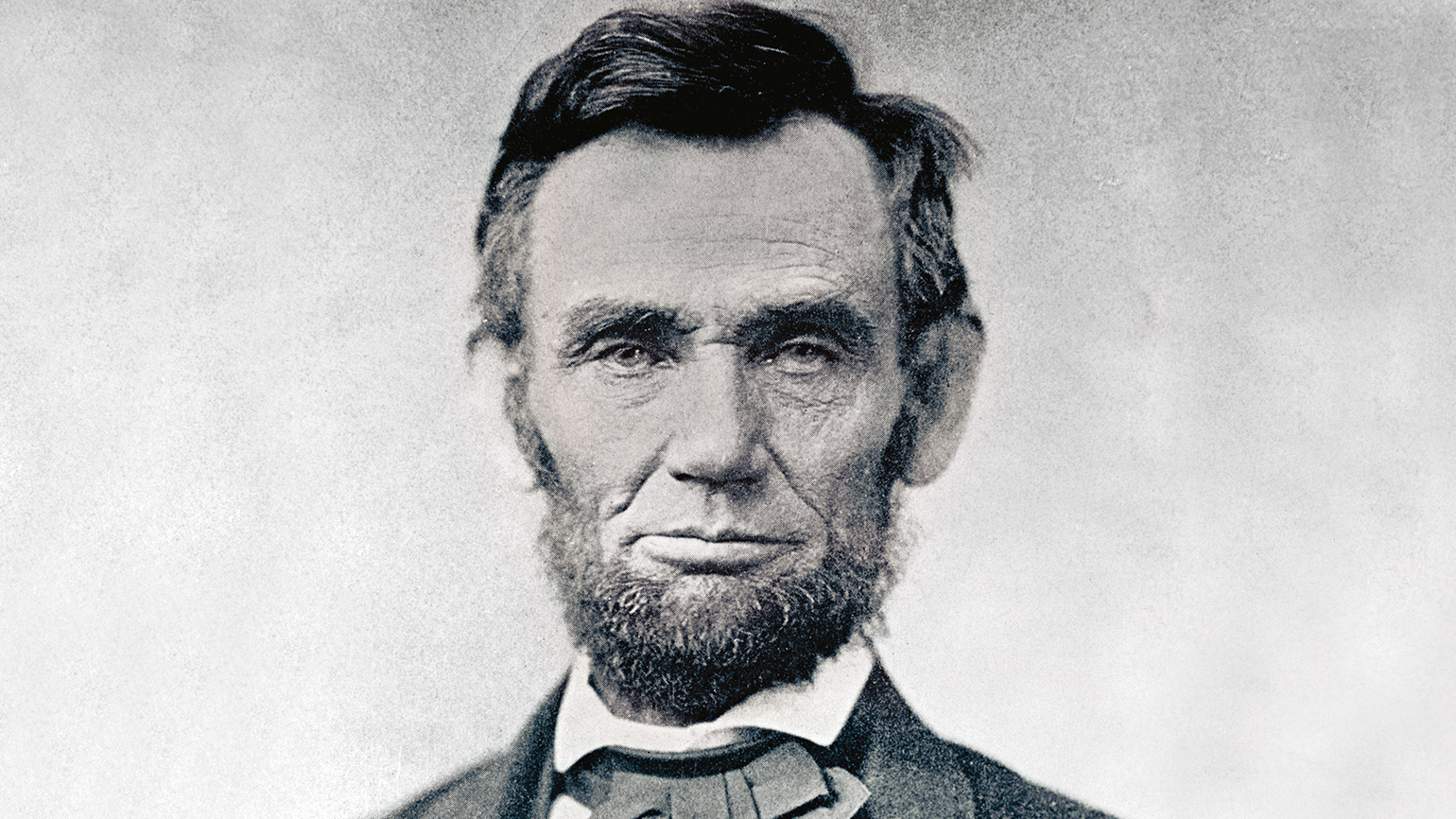
But it was the picture over the door, when I turned to leave with my new library card, that stopped me. It was a photograph, this one black-and-white: a tall, thin man with his hand on a table and with the saddest, most pain-filled face I’d ever seen.

The gold letters on the frame said Abraham Lincoln. It couldn’t be! Lincoln, my brave hero, who won every wrestling match? The ragged boy who told such funny stories that crowds would gather to listen? They’d put the wrong name on the photograph.

But of course it was Lincoln, and over time that portrait made him more important to me than ever. Already I was experiencing the bouts of depression that, three years later, would lead my parents to the then-rare step of taking me to a psychiatrist. Despite her help, I continued to have (and still do) occasional descents into those bottomless depths. And at these times, my model continued to be Abraham Lincoln.

My depression had no discernible cause. His had many. The death of an infant brother was not unusual for those times. But his mother’s death was as traumatic an experience as any nine-year-old could have. In the family’s one-room cabin, there was no escaping her agonies from milk sickness, a disease then ravaging their Indiana frontier community. People who ingested milk or meat from cows that had fed on the white snakeroot plant suffered uncontrollable shaking, hideous stomach pains, continuous retching. For a week, Lincoln’s mother tossed in torture on her bed, her tongue turned black, unable even to speak words of farewell.

Abraham had one surviving sibling, a brilliant sister named Sarah, who was two years older and his closest companion. Abe was 18 when Sarah gave birth to a stillborn child and died.

At 22 and, in his own words, “friendless, uneducated and penniless,” Lincoln left the family farm to strike out on his own in Illinois. That this disadvantaged young man was able to carve out a career for himself as a lawyer seems marvel enough. The fact that he did it while carrying the burden of depression was what astonished me. “Lincoln was a sad, gloomy man, a man of sorrow,” his long-time friend and law partner said, noting once that “his melancholy dripped from him as he walked.”

Even after his successful run for a seat in the Illinois state legislature, his sense of dejection did not lift. When a bill he’d worked for was defeated, he wrote to a friend, “I am finished forever.” How familiar I was with this I’ve-failed-and-now-it’s-hopeless feeling! And yet…as despairing as he felt, Lincoln somehow managed to succeed in every way that mattered.

It wasn’t that his depression went away. An artist working at the White House in the final year of Lincoln’s life remembered that “Mr. Lincoln had the saddest face I ever attempted to paint.”

By my own late twenties, when my depression became incapacitating, reading about Lincoln’s life was a pathway back to the functioning world. Sometimes all I could do was stare at a photograph of his downcast face. Yet in the strange psychology of depression, this cheered me. If Lincoln could accomplish so much while feeling so bad, surely I could get up and do a little.

It was not until many years later that I began to see something even more life-giving in Lincoln’s story. Many times in accounts of his life, I’d noticed references to his melancholia. Now I came upon the definition of that word as used in the 19th century: fear and sadness without apparent cause.

Without cause? But Lincoln had so many reasons to be depressed! They’d only multiplied throughout his life, culminating in the death of his two little sons and the terrible slaughter of the Civil War. But his melancholia suggested something more, something closer to the medical condition recognized today as clinical, or persistent, irrational depression.

It’s only in the last few years that researchers have delved into this aspect of Lincoln’s life. A family history of depression, “the Lincoln horrors.” Lincoln’s own conviction that he was constitutionally subject to melancholy, which he dubbed “my peculiar misfortune.” His frequent talk of suicide—there was a period when he didn’t dare carry a pocketknife for fear of using it to kill himself. Two major breakdowns, the first in his mid-twenties (the typical onset age for unipolar depression in men), the second in his early thirties.

“I am now the most miserable man living,” he wrote at age 32. “If what I feel were equally distributed to the whole human family, there would be not one happy face upon the earth.” Concerned friends removed razors from his room, mounted a suicide watch and feared for his sanity.

In an effort to escape his misery, Lincoln underwent the standard medical treatment of the times—a weeklong torment that would have included starving, bleeding, dunking in icy water, purging with black pepper drinks, swallowing mercury, applying mustard rubs that burned the skin raw. He emerged emaciated, exhausted and, unsurprisingly, feeling worse than ever.

Today’s medicine offers effective drugs and skilled counseling. If these methods had been available then, Lincoln might have been a less sad and tormented person.

But would he have been as great?

Here is the life-giving new insight Lincoln is bringing me. Many researchers today, looking afresh at Lincoln’s melancholia, are grateful that he was not “cured.” From his chronic depression may have come the coping skills, the realism, the wisdom that steered the nation through its greatest crisis. What strengths may depression have bestowed on our greatest president?

Humor. Jokes and storytelling were Lincoln’s lifelong refuge from despair. As the casualty figures in the war mounted, grief threatened to overwhelm him. Far from a sign of callousness, his humor helped him bear the horrors he felt so deeply. “I laugh,” Lincoln told a disapproving member of his cabinet, “because I must not weep.”

Humility. He had the modesty of a man continually aware of his own defects. In an age of swaggerers, this highest official in the land called himself “a man without a name.” Knowing his own failings, he could forgive those of others. As Northern leaders called for continual retribution from the defeated South, Lincoln appealed for “malice toward none.”

Dedication to a great cause. It was the issue of slavery that pulled Lincoln back from the brink of suicide. Despairing of himself, he determined instead to devote his life to others.

Dependence on God. “I am driven to my knees,” he said, “by the conviction that I have nowhere else to go.” He saw himself not as captain of the ship but as the humble helmsman, striving to steer as the true Captain directed.

Humor, humility, service to others, faith—these are qualities, I think, that all of us aim at. That it was not despite his depression, but in part because of it, that Lincoln’s character developed as it did—this is the wondrous promise he holds out to people like me. His arena was a national one, mine one of family and neighbors. But the fact that God can use the negatives of our lives, even the blackness of depression, to shape us to his purposes—this is good news indeed!

For more inspiring stories, subscribe to Guideposts magazine.

A Bowl of Borscht

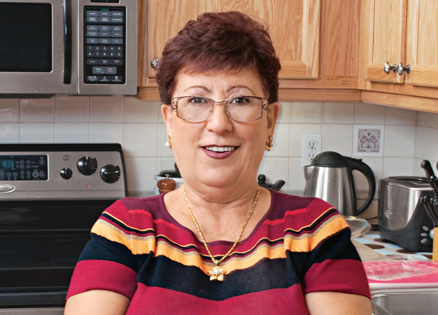
I nudged my husband, Vladimir.

“There she is,” I whispered.

We were walking down the hallway of our apartment complex. The she in question—a neighbor—was heading straight toward us. I shot her a smile. But just before our paths crossed, she abruptly turned around and hurried out of sight.

Ever since this woman and her husband had moved in the year before, I’d tried to get to know her. But I’d yet to even learn her name. Each time I saw her, she’d scurry off before I could even say hello.

The man who’d lived in their apartment before had been so friendly. We invited him to barbecues, and we helped one another with errands. He became a good friend. When he moved, I assumed we’d grow just as close to our new neighbors. Our large retirement community is a friendly place. There are a lot of nods and smiles. Sometimes the gentlemen even tip their hats. For some reason she wanted no part of it.

“Is it us?” I asked Vladimir. “Have you seen her talking to any of the other neighbors?”

“Sonia, what do you care? Why do you need her to say hello?” he said.

He was right, I couldn’t expect to get to know everyone. Still, it bothered me. I’ve always been outgoing. I would feel terrible if she thought I’d slighted or offended her. We’re neighbors after all.

A few days later I was strolling through our clubhouse. I turned a corner, when suddenly she and I were face-to-face. “Hello” hardly escaped my lips before she bolted.

Why can’t I get through to her? I wondered later that night. I pulled ingredients from the fridge for dinner. Borscht, that’s what I’d make. It always made me feel better. I grated the beets, added a dash of sugar and lemon and let the mixture simmer on the stove.

My thoughts drifted back to my childhood in Russia. I could still smell Mother’s borscht, the heady aroma of garlic and beets wafting through the house, the four of us kids clamoring for a bowl. It was perfection: rich in color, served cold with a dollop of sour cream—a spoonful was all it took to make life’s worries disappear.

Living under the Communist regime, we didn’t have much, but Mother believed in sharing our blessings—especially the delicious food she cooked—with family, friends…and neighbors too. “Sonia,” she’d say, “always be willing to share your last bite.”

That’s what I needed to do! I poured a generous helping of borscht into one of my prettiest bowls, walked over to our neighbors’ apartment and rang the bell. The door opened a crack.

“What is it?” It was the first time I’d heard her voice.

“Hi, I’m Sonia. My husband, Vladimir, and I live right there,” I said, pointing to our apartment. The door opened a little wider. “I brought you some of my homemade borscht.”

She looked at me like I was from another planet. “I don’t want to take your food,” she said.

“You’re not taking my food from me. I’m sharing my food with you,” I said, holding out the bowl. “I don’t mean to intrude; I just wanted to introduce myself.”

She still looked puzzled, but she took the bowl. “Thank you,” she said, then quickly shut the door.

Vladimir was eager to know what happened with our reclusive neighbor. “So, did she like the borscht? Did she finally say hello? Let me guess…she didn’t let you in, did she?”

“Well, she took the borscht. Now whatever will be, will be,” I told him.

A couple of days passed and we didn’t see her, or her husband. Maybe I should’ve minded my own business, I thought. I’m such a but-in-ski!

Then, on the third day, Vladimir and I came back from a walk to find my bowl outside our door, along with a beautiful bouquet of fresh flowers. There was a note too: “Thank you for the delicious borscht. Berta and Sam.”

Berta and Sam are strangers no more. Today, we wave when we see each other and we make small talk at the community pool. I’ve even noticed Berta and Sam striking up conversations with other folks.

We may not be best friends, but that’s okay—just being friendly feels pretty great. Mother was right. It makes a difference when you share your blessings, even something as simple as a smile, or a bowl of borscht.

Try Sonia’s Old World Borscht!

A Bitter Person or a Better Person?

At times, we may be unhappy with how our life plays out and feel as if we have no control, but what we never lose control of is how we respond.

A young World War II solider woke up in the battlefield hospital; his first thought was that he had had a terrible nightmare. Convinced he was not been injured, he moved his fingers on his right hand. He then felt an itch between those fingers and reached out to scratch it, but his fingers were no longer there. He was overwhelmed and devastated; he mourned the loss of his arm and the life he had dreamed of before the war.

A few days later, a fellow solider looked him in the eye and said, “Frank, this experience will make you a bitter person or a better person. The choice is completely up to you.” Frank pondered those words and thought about his choices: Would he become bitter or better? Angry or peaceful? Positive or pessimistic?

Become an OurPrayer Volunteer and Change the World One Prayer at a Time

The soldier knew he needed to turn to God for counsel and direction. He prayed daily for courage to become a better person. Eventually his perspective changed as did his outlook for the future. Many of his buddies remained trapped in bitterness. But not Frank. He became a counselor so that he could help others overcome their life challenges.

God can help us turn our challenges into opportunities and change our perspective as well. We can let go of anger and resentment and accept that our response can make us bitter or better.

God, give us the courage to become a better person in spite of the many circumstances we may face.

A Behind-the-Scenes Look at How a Kayak Is Made

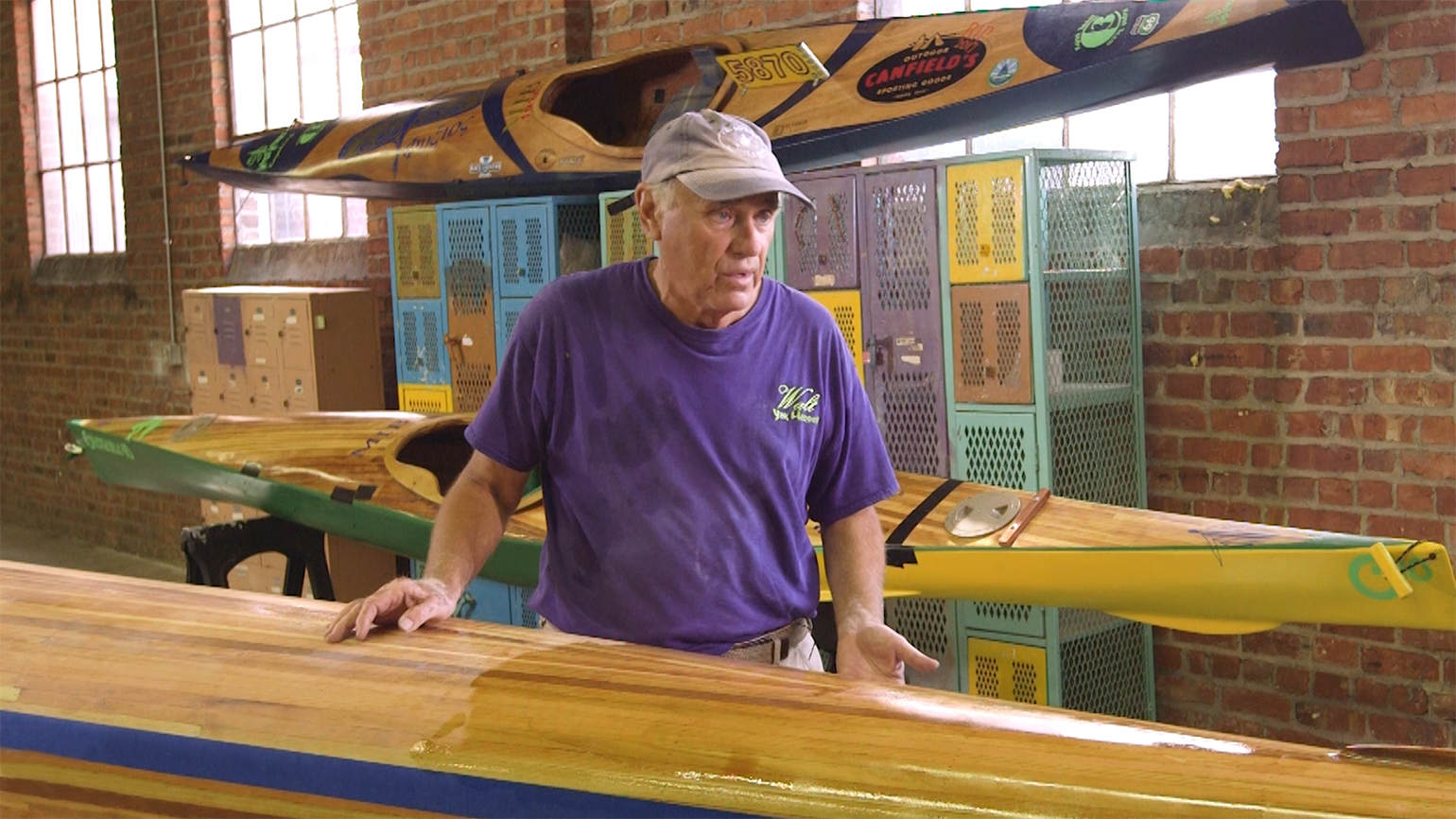
Hi, Guideposts! I’m Walt Vosicka. Good to have you with us today. We’re at Makerspace in Omaha, Nebraska.

Today we’re going to be working on a kayak that I designed and built. I’ve had it on the water once already, but it needs to be cleaned up. We’re going to be varnishing the bottom of this boat.

Community Newsletter

Get More Inspiration Delivered to Your Inbox


Resistance is the biggest issue when a boat goes through the water. Water is an interesting combination that God has put together. It’s both forgiving and unforgiving. As we go through the water, it is unforgiving. But also, it is forgiving because it holds the boat up.

So as we continue on, just kind of moving down the boat a little bit with some varnish. Kind of interesting, because as I build these strip boats, I find out that they’re not as perfect as I’d like them to be. And that would be just slick and smooth. They have little divots, little hiccups.

The boat is a combination of wood strips that are hooked together with glue. You can use all kinds of wood. If you take a look at the strips on this boat, each individual strip is important. And as they hook together, each strip together becomes stronger and stronger.

We shape it, we bend it around over a form, and also, we start to sand it and shape it. I use a plane, I use a rasp to get the shape, then I come back and sand and sand and sand. From this to that. Flimsy sticks coming together and becoming a boat is pretty amazing. It isn’t perfect, but it works. And it may at times, if we’re not careful, it can leak.

But yet, on the other hand, the plan is to go fast, to finish a race, to have enjoyment in God’s creation. We don’t get there very fast, maybe 2 or 3 miles an hour at the very most, but we get there and have fun, enjoy the trip, and continue on. And we all get more healthy at the same time.

A Bakery Built on Hard Work and Faith

Can you imagine being fired from your own company, the business that you built from scratch and poured your heart and soul into for 20 years? That’s what happened to me.

I got my start when I was 11, selling my chocolate chip cookies at my parents’ roadside farm stand. I was running my own bakery in Southampton, Long Island, at 21. By the time I was 40, business had grown so much I was putting in 16-hour days.

I didn’t want to get burned out, so I brought in two partners to help with the workload. We each had an equal share of the company, and they teamed up against me.

First they wanted to substitute less expensive ingredients, like swapping out the all-natural butter for margarine in my signature recipe. I refused. They overruled me. From there things went downhill fast.

One day I showed up at the bakeshop and found my partners blocking the door. Then I was summarily dismissed. From the business that had my name—Kathleen’s—on the sign out front!

I had to stand up for what was mine. The case went to court. To me it was cut-and-dried: Yes, I’d made a naïve business decision, but clearly Kathleen’s should belong to me. Nevertheless the wheels in the legal system turn slowly, and the case dragged on.

My anger and frustration deepened. I didn’t know what to do with myself, not having a business to run, or even a job to go to. My parents saw my spirits sinking and tried to lift me up. “Sometimes it’s not about the work but about our faith that God will lead us to a better place,” my father told me one day.

I took a deep breath. Maybe it was time to let my faith guide me. My parents ran our family’s dairy, vegetable and poultry farm on Long Island and they taught us kids the value of hard work. At North Sea Farm, the day you learn to walk is the day you learn to work.

My brothers, sister and I pitched in with chores after school. I collected eggs from the chicken coop. Sometimes I’d help Dad harvest corn, trailing behind him with a burlap sack for him to fill with fresh corn. The work was fun. At the end of the day it felt good knowing I’d accomplished something.

Early one Saturday morning the summer I was 11, I was helping my father stock our roadside stand with vegetables.

“You are old enough to buy your own school clothes,” he said. “Why don’t you bake cookies and sell them here at the stand?”

I ran to the kitchen, got out Mom’s big ceramic bowl and wooden spoon and went to work. The recipe on the back of the chocolate chip bag called for eggs. I’d use the eggs from our farm.

Maybe I didn’t follow the recipe to a tee. Did a little more brown sugar get tossed in? Or was it a dash more vanilla? What happened in that mixing bowl turned out to be a sort of miracle, the start of my own secret recipe.

I carried a tray of cookies straight from the oven to the stand. “Those smell wonderful. How much?” a lady asked. “Six for fifty-nine cents,” I said. I put them in a bag and gave them to her.

“I can’t wait till I get home. I have to have one now,” she said. She pulled out a cookie and took a bite. “This is the best chocolate chip cookie I’ve ever had!” I was more excited to hear that than I was to get paid.

Soon I had regular customers. I perfected my recipe—a thin, crunchy chocolate chip cookie that melts in your mouth, with a smooth, buttery flavor and a tinge of caramel. I made a lot of cookies—enough to put myself through college, where I studied restaurant management.

My mother saw a storefront for rent in the village of Southampton and encouraged me to go for it. Not long after I graduated, I opened Kathleen’s Bake Shop.

I’d put everything I had into my business. And now I wasn’t even part of it anymore.

“Hang in there,” my parents told me. They were the most positive people I knew, and their faith was a big part of it. It was good to be reminded that I could persevere because I shared their faith.

Thank you, God, for all you’ve given me, I prayed one night. For my family, especially, and for the success I’ve had. I don’t know where to go from here, but I know you’ll guide me. The next morning I felt lighter. I kept praying like that, and my frustration and anger faded.

Finally, after six months, the case was settled. I lost the business and the rights to the name Kathleen’s Bake Shop. But I still had my signature recipe. And the judge awarded me the Southampton store. Why shouldn’t I start over? I thought. And make it even better?

That’s exactly what I did. I developed a full line of cookies and other baked goods, tweaking every recipe till I got it just right.

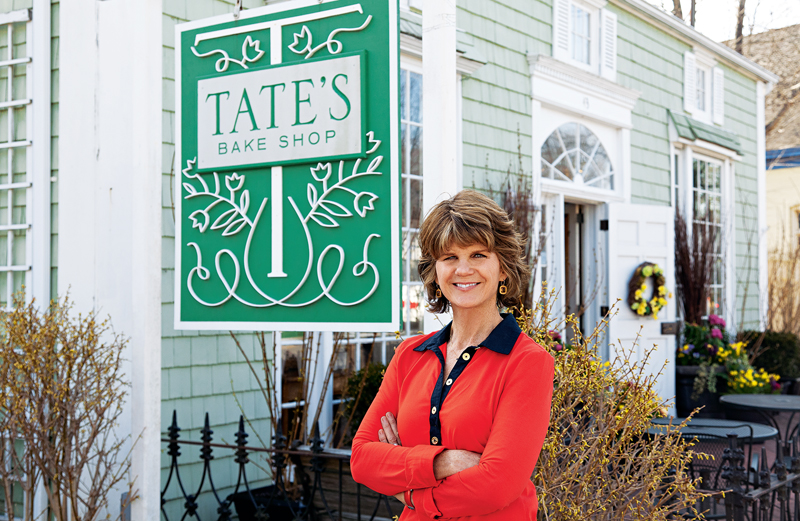
Today my company, Tate’s Bake Shop, makes 50 million chocolate chip cookies a year. Still from scratch. Still from my signature recipe. (They’ve even been named number one by Consumer Reports and won me a SOFI award, one of the highest honors in the baking industry.)

I still work hard running my business, but it doesn’t run me anymore. I’m smarter and stronger and in a better place, in every sense.

Oh, and the name? Dad picked potatoes when he was a kid and got the nickname Little Tater. Also known as Tate, for short.

Try Kathleen’s recipe for Star-Shaped Blueberry Shortcakes!

Download your FREE ebook, Rediscover the Power of Positive Thinking, with Norman Vincent Peale

9 Ways to Support Your Community During Tough Times

The coronavirus pandemic: it has impacted each and every one of us in ways that we could have never imagined or anticipated. Heading into the fall, the great shock of 2020 continues to bring many challenges, including uncertainty in our schools and our jobs. We’ve all been called to harness our inner strength to deal with the instability as we adjust to the new normal.

Many of our communities have been severely impacted, with many service industries, gyms, stores, and restaurants fighting to survive; sadly, some have been forced to close their doors forever. And while this loss is hard to process, there is still so much goodness all around us, and we can all do our part to help those in need and spread positivity.

Here are nine ways you can support and connect with your community:

Shop locally. With so many small businesses suffering, you can lend your support by enjoying take out once a week at your favorite restaurant or visiting a beloved local boutique, toy store, or bookstore instead of shopping at a big box store. Many stores also offer curbside pick-up, which can be a safe way to support and shop!

Buy gift cards. If you aren’t comfortable with visiting businesses in person, you can also support them by buying gift cards for a future purchase or as a gift. This is a great way to support a gym, local salon, restaurant, and a spa, among others.

Spread the word. Another way to support without visiting a business in person is to show some love by sharing, posting, or re-sharing their messaging on social media. Online mentions and re-shares can reach your immediate community (and beyond) and help extend their engagement and reach.

Create a virtual group. Online communities are an especially fun way to connect with people in your community who have shared interest. Create a Zoom book club, virtual gardening group, or even a Facebook page about your neighborhood, highlighting local businesses and happenings.

Volunteer locally. Albert Einstein said: “Only a life lived for others is worth living.” You can give back to your community by helping out at a local garden, food bank or church, or by participating in a diaper drive or other event.

Donate. If you are able, a monetary donation can go a long way to your local community organization or non-profit. The money could also provide support to employees or be used for other internal needs.

Be consistent in your communication. While you may be socially distanced from those in your community, you can still check in by sending notes to let people know that you are thinking of them, organizing Zoom calls, or calling them to ask how they are doing. A friendly check-in goes a long way, especially for those who are alone or don’t have any family nearby.

Be a kindness leader. Kindness is free and something we can all share with others. You can check in on elderly members of your community by visiting them (if you feel safe), offer to go grocery shopping for them, help with small tasks, or simply ask people how they are coping through these tough times.

Reach out for help. Sometimes you are the one who needs support. You can reach out to your local church or community organization for advice or support or if you simply need someone to talk to. One thing that Covid-19 has taught us is that we are all in this together.

Connecting with your community—in both big and small ways— is vital in uplifting ourselves and others during these turbulent times.

9 Practical Tips to Make Your Weight Loss Resolution Last

Get organized. Be more patient. Lose weight. If you’re like most Americans, your New Year’s Resolutions List for 2019 reads something like this. Perhaps most of all, you want to get into shape and shed those holiday pounds. But did you also know that you have an 80% chance of failure?

That’s right: A whopping 80%. Most people fail to adhere to their weight reduction plans by the time Cupid’s love notes are in their mailbox and a box of chocolates is sitting open on their kitchen counter. That’s because, experts say, typical dietary and exercise goals are way too lofty. Far better to take things more slowly and make them a way of life.

When I lost nearly 100 pounds almost a decade ago, I rarely saw the numbers on my doctor’s scales move more than one pound per week. I’ll admit, it was hard getting used to the slow progress. I wanted people to notice what was happening, and with those pitiful pounds, no one said a word.

But because some of the meds I was on kept me from losing faster, I had to accept my meager weight loss. Now I’m so glad I did because I’ve been able to keep that weight off. Let me show you some of the strategies that have worked for me after the holidays each year.

Find an accountability partner. My sister Reb fills that role for me. If I’m not being totally honest about things, she lets me know. And because we’re in this healthy living thing together, the relationship isn’t threatening.

Use a two-pronged approach. Both dietary changes and exercise are needed for best results. Find a way to move your body that fits your lifestyle to be most successful.

Rid the house of leftover holiday foods. If cakes and candies aren’t around, the chances that you’ll consume them go way down. Make it difficult…very difficult to make bad choices.

Don’t put yourself down. This only serves to add to your stress, which doesn’t help any situation. Instead, set only two or three healthy eating habits for the New Year. And don’t restrict entire food groups either. Remember, you can have just about any food in moderation, just not everything at once. We’re talking about a lifetime change, not a momentary shift in eating patterns.

Besides, overly restrictive diets lower one’s resistance to infections, and flu season peaks right after the holidays, in January and February. When I was losing, I only changed one dietary habit at a time. When I stopped losing with that one change, I then made another adjustment.

Make changes for yourself, not someone else. You are the most important person on this plan. This is not the time to try to be a people pleaser.

Drink more water. Most of us are chronically dehydrated, which makes one feel sluggish. Stay hydrated to improve overall health. Avoid fruit juices, too. They may seem healthy but many contain a lot of sugar and hidden calories.

Get enough sleep. Most people have disruptive sleep during the holidays. To repair and recharge your body (and live longer!), you require at least seven hours per night.

Keep a food diary. If you write it down, your eating is more mindful and you’re paying attention to your actual appetite. You may not think three M&Ms makes a difference, but calories do add up.

Spend more time with those you love. An important part of any plan in any year!

9 Healthy Habits You Can Actually Stick With

Do you know what’s better than a New Year’s resolution? A new habit. Resolutions are well-intentioned goals that usually don’t last long-term. Habits are routines we train ourselves to follow, a way to ensure long-term success. Most importantly, healthy habits are ones we can keep throughout our life, letting us age better, live longer, and enjoy the time we’ve earned.

These are nine easy-to-do habits that will improve your life in the new year. Which one are you going to try?

8 Ways for Caregivers to Take Care of Themselves

My husband, Lee, and I were sitting in the doctor’s office, waiting to hear the results of a stress test. The cardiologist looked grave. “Lee,” he said, “you could drop dead at any moment. Your heart is operating at only twenty-five percent.” Twenty-five percent? Lee had always been so healthy!

Lee’s face turned pale. He seemed a million miles away. “You’ll need bypass surgery,” the doctor went on. “And after that, there’ll be a lot of rehab.” It could go on for weeks, months. Lee wouldn’t be able to lift anything or have energy to do much.

Neither of us was young—I was 75 and Lee was 81—but that had never stopped us from doing the things we loved. Writing and singing folk songs, seeing our friends at the Blackbird (our favorite coffeehouse), going to church, working in the garden at our farm. I’d worked for years as a child therapist, and Lee had only just retired from the public TV station in town, where he’d been a top-notch fund-raiser.

I tried to stay focused on the doctor, but what scared me most was becoming Lee’s caregiver. How would I do it? I dreaded the loss of freedom. And I had very little patience for all the things caregivers were supposed to handle: bedpans, wheelchairs, medications, getting up in the middle of the night, all the constant reassurance and support. It made me feel small just to admit it to myself.

For the next few days, we waited for the surgery to be scheduled and tried not to let our worries run wild. In preparation, we bought two deluxe recliners, comfy enough for Lee to sleep in and for me to be next to him, along with a device to help him stand. That meant I wouldn’t have to lift him. We listened to music and talked. I worked on a 1,500-piece jigsaw puzzle.

One day, I wandered outside to take photos of the wildflowers, the birds, the setting sun, the wild turkeys, seeking comfort in God’s creation. Normally I’d post my favorite images on Facebook with some sort of uplifting comment. But I wasn’t feeling so upbeat right now. What could I say? I didn’t want to bum people out.

I announced the upcoming surgery. My fingers hovered over the keyboard. “My friends say, ‘Live in the moment,’” I typed. “Lee and I try, but sometimes we can’t find the off switch to our worries.” I frowned at the words. Should I delete them? I thought of what I’d learned in my years as a therapist. Honesty was everything. Even painful honesty. So I posted the comment.

Later that day, I logged on and was amazed by the number of comments, more than I’d ever gotten before. There were lots of prayers and some lighthearted comments (“Lee is in for a good chance to catch up on videos and reading”), but it was especially helpful to hear people mirroring my feelings. “It’s okay to feel scared,” one friend said. “Or even inadequate.”

In early October, Lee underwent double bypass surgery. He seemed to bounce back. The doctors said his heart was strong. He was in good shape otherwise. I didn’t hesitate to post pictures this time, of Lee smiling ear to ear. And pictures of his nurses and doctors. And the friends who came to visit. Each night I slept next to him at the hospital.

We were back at our farm in a week. I let everyone know on Facebook. The next morning, Lee stirred early. “Can you put on my compression socks?” he asked.

“Of course,” I said. I tugged and pulled but could barely get the socks up past his ankles. The nurse at the hospital had made it look so easy. I stood and yanked hard, worried that maybe I was hurting Lee. Finally, done.

“Can you help me to the bathroom?”

“Sure,” I said. I nearly collapsed under his weight, but we made it there. And back again. Then he wanted a blanket. A glass of water. Soon it was time for his medication.

“Anything else?” I couldn’t stop myself from snapping. “I can only do one thing at a time.”

“I’m sorry,” he said. That only made me feel worse. All my fears about being a lousy caregiver to the man I loved seemed fulfilled. Would every day be like this? If only I could get outside, take a picture, gaze at the wildflowers.

But there seemed no end of things to do. That day or the next or the next. I loved to cook, but in all our 38 years of marriage I’d never had to do breakfast, lunch and dinner for both of us before. Day after day. One morning, I got up before dawn just to get outside. But before I could even get my shoes on, Lee was up. “Can you help me with my socks?” he asked. “I have to get up to go to the bathroom.”

Alice and her husband, Lee, enjoy an evening
walk together.

I nearly came apart. After that, we made a deal. I needed time on my own to recharge. “Lee,” I told him, “unless it’s an emergency, you’re on your own until 7:30 a.m.” I’d set out a tray next to him with everything he’d need in the morning: pills, half of a banana, some nuts, ginger ale. He understood.

I was able to go outside and connect with nature before I launched into my caregiving role. One night, Lee had a panic attack. And another one. “I drag myself out of bed hoping for a spectacular sunrise,” I wrote on Facebook, “after a night when Lee’s emotions exploded with a panic attack, our second in our up-and-down path after major surgery. All I can do is caress his head, sing soothing songs, pray to God and hope that eventually both of us can calm down and sleep.”

Again the comments came: “Panic attacks are NO fun. I used to have them in the dead of night. Hoping and praying that ALL anxiety passes soon and you both can relax a little.” “Hang in there. It will get better.” “I know this is scary and hard.” It was scary and hard. I didn’t have time to call friends, go out for lunch, go to the Blackbird or even church. Facebook was my refuge, my support system.

In mid-November, Lee had to go back to the hospital. He kept having falls, and the doctors were trying to figure out why. They put in a pacemaker and a defibrillator. I posted photos whenever anything positive happened. Pictures of Lee in physical therapy. Pictures of a high school classmate who visited us one day. “Here, Alice,” she said to me. “I’ve done a painting for you.”

She’d copied a photo I’d done of our garden house, the sun shining through the windows. The painting was magnificent. “Your posts have made such a difference to me,” she said. “Every day they give me a lift.” All this while I’d been worried about sounding self-absorbed or complaining or saying too much or doing too little. But the photos and the posts communicated more than I could have ever imagined.

Lee is home now. He’s going to cardiac rehab, and I’m not a full-time caregiver anymore. I’ve had time to do the things I love—being outside, taking pictures. When we were in the hospital, a friend from church made a delicious apple pie for us, and I’d been waiting to return her plate until I had something to put on it. That moment finally arrived. A big slice of the pineapple upside-down cake that had just come out of my oven. I dropped it off at her house and took a picture.

You can probably guess what I posted on Facebook, the smiling face of a friend who prayed for us—and baked for us—and followed us as Lee and I were going through a hard time. I’d written about our experiences in more detail than I ever intended. That turned out to be a good thing. The best thing, in fact.

Did you enjoy this story? Subscribe to Guideposts magazine.

8 Tips for Bringing Food to a Loved One with Cancer

Following the shock and overwhelm of a cancer diagnosis, well-wishers want to know what they can do to help. Providing food to the patient and her family is perhaps the top request. But there are some tricks of the trade to ensure food delivery is well organized, in line with dietary restrictions the patient has been given, and most of all, comforting and appealing to a loved one who craves nourishment and support.

Get hope for Breast Cancer here

1) Ask Before You Cook

Don’t be shy about asking specific questions about what types of foods are helpful to bring. Food tastes different to people undergoing chemotherapy, which can be a scary and frustrating experience for them. “Just the act of asking and validating that the patient has this new situation is so appreciated,” says Stacy Kennedy, senior clinical nutritionist at Dana-Farber Cancer Institute/Brigham & Women’s Hospital in Boston. Ask if there are any foods or ingredients that the patient’s doctor or dietician has told them to avoid, like grapefruit, which is not safe to eat when taking the breast cancer medication tamoxifen. Plan to check in regularly with these questions, because preferences often change on a daily basis during treatment.

2) Food Safety First

No one wants to make a cancer patient sicker, so make food safety a priority. Colleen Doyle, director of nutrition and physical activity at the American Cancer Society in Atlanta, lists some best practices for keeping food contamination-free: wash your hands thoroughly before preparing food, use separate cutting boards for meats and vegetables, cook fish, poultry, meat, and eggs thoroughly, wash fruits and vegetables before cutting or peeling, and check expiration dates on all packaged foods. She suggests gently reminding the patient’s family to refrigerate leftovers within two hours, and to discard uneaten food within three days. The old maxim, “If in doubt, throw it out!” are helpful words to live by.

3) Think Drinks

Preparing batches of smoothies or infused waters can help with two issues many cancer patients struggle with, says Kennedy. First, despite the patient’s need for hydration, “water can taste terrible, like metal.” Secondly, the textures of even favorite foods can be unappealing. “Sometimes drinking your nutrition feels more comforting than eating it,” she says. Bring fresh ingredients like mint, melon, cucumber, or lemon to add to a pitcher of water. Or make smoothies, which can be portioned into mason jars and frozen (leave about an inch of space in the jar to avoid cracking). There are virtually limitless smoothie recipes, including those made with yogurt or non-dairy milks, fruits, vegetables, and grains.

4) Have Sense with Smells

During chemotherapy, patients can be very sensitive to smells, and they can be turned off of eating by the presence of strong or unpleasant aromas. Doyle recommends preparing foods that can be served cool or at room temperature to lessen their aromas, or even placing a slow cooker on a porch or back patio to avoid permeating the house with smells. Be sure to check in with your loved one about their preference, though–some patients might find their senses of taste and smell diminished by treatment, so strong flavors and scents might actually be appealing.

5) Make Every Bite Count

“People going through chemotherapy tend to feel full sooner; even seeing a normal-sized plate of food is a turn-off,” says Kennedy. She suggests thinking of foods that you would serve at a cocktail party—bite-sized items like lettuce cups, sliced wraps, or crostini that can be filled or topped with nutrient-dense foods like avocado, winter squash, pesto, or dried fruits. These foods contain potassium, magnesium, and other nutrients that tend to become depleted during treatment.

6) Be a Team Player

It takes a village to support someone through cancer, so assembling a team of helpers is a great way to share the workload, avoid overlapping on tasks, and make sure the whole family is supported, including the spouse and children of the patient. Setting up an email thread, social media group, or online platform like Meal Train will keep communication going without requiring organizational energy from the patient or her family. Kennedy has developed a free app for Dana-Farber called Ask the Nutritionist: Recipes for Fighting Cancer, where the patient can select recipes that sound tasty and meet dietary requirements like high-protein, lactose-free, or high-fiber. One click shares the recipes with support team members, who can then download shopping lists and head for the store when it’s their turn to cook. The app is available for both iPhone and Android devices.

7) Pack It Up Right
Package your food so it’s easy to serve, portion, and clean up. Kennedy says many patients undergoing chemotherapy are hyper-sensitive to metallic tastes, so avoid aluminum trays and foil whenever possible, choosing glass, ceramic, BPA-free plastic, silicone, or cardboard containers instead. Including some plastic silverware is also a good idea. Doyle recommends packing up individual portions, especially if you are bringing enough food to freeze extra servings. Attach clear re-heating instructions to each dish to make serving easier. And set up an easy system for retrieving any non-disposable serving dishes, such as having the family leave them in a bag on the porch for you to pick up.

8) Deliver the Goods

How you deliver food can be nearly as important as what you bring. Find out what time of day the patient prefers the food to arrive. Also check in to see whether the person wants to combine a visit with the delivery, or simply wishes you to drop off the food and go. Some people set up a cooler on the back porch so support team members can safely leave cold or warm foods for the family to bring in at their convenience. Others crave companionship, even if that means simply sitting together for a while. “Cancer and cancer treatment can be very isolating,” says Kennedy, “so company and social connection might be exactly what they need.”

Holly Lebowitz Rossi is a freelance writer based in Arlington, Massachusetts