Embrace God's truth with our new book, The Lies that Bind

A Positive Life Lesson from Mister Rogers

“You’re special just the way you are.”

“There’s no one in the world who’s exactly like you.”

Sugarcreek Amish Mysteries In-Article Ad 2023

“Let’s make the most of this beautiful day.”

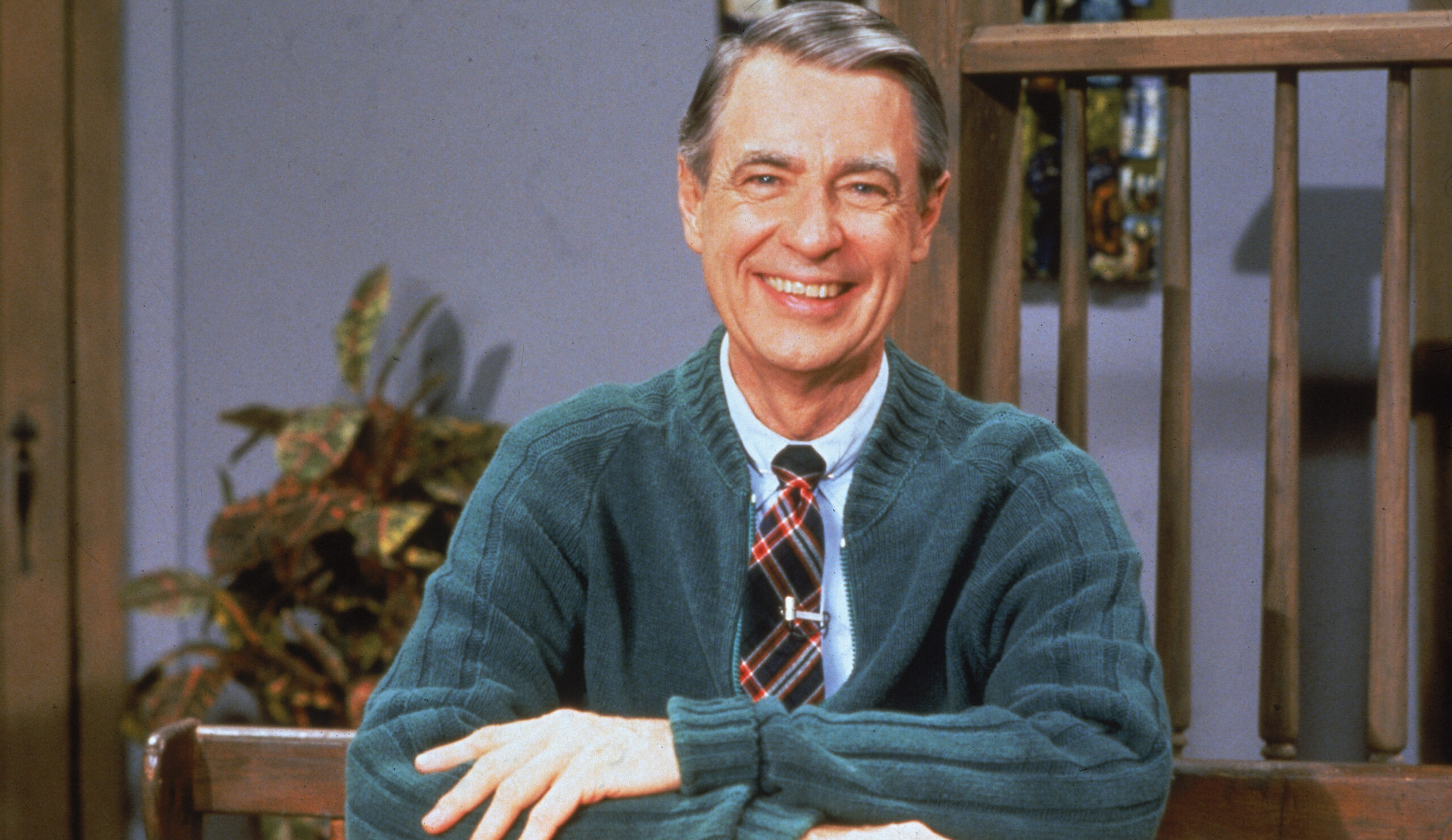
These phrases from the wonderful Fred “Mister” Rogers, whose life is celebrated in a new film starring Tom Hanks, are as iconic as the red sweater Rogers donned on his PBS television show. Mister Rogers is remembered for his insatiable devotion to the values of kindness, friendship and emotional literacy, and he is universally viewed as a positive role model.

But Rogers’ most lasting gift—even and maybe especially to the adults who, like me, grew up watching his wonderful world of make-believe—is the way he taught, again and again, that all feelings are real, important and valid. He embodied the idea of authentic positivity, which teaches that only when we embrace the full range of our emotions, including the so-called “negative” feelings of anger, sadness, loneliness and fear, can we learn to walk through life with a genuinely positive outlook.

“The host considered all feelings natural — including the dark ones — and believed they don’t need fixing,” the philosophy professor Mariana Alessandri recently wrote in The New York Times. Rogers lived by the adage, “what is mentionable is manageable,” and again and again he modeled ways to acknowledge difficult feelings like frustration and sadness—and handle those feelings in healthy ways, like playing music, running fast to release energy and asking questions to face fear with facts

Mister Rogers’ Neighborhood was purportedly a show for children,” Alessandri wrote. “But I think Rogers also meant it for adults. We’d be better off if we’d stop negating children’s dark emotions with stifling commands like ‘Don’t cry,’ ‘Calm down,’ ‘Be quiet.’” 

I’d add that we should stop negating our own “dark” feelings, instead giving ourselves permission to see—and like—ourselves, just the way we are.

A Place of Hope

The letter came in a stack of mail. There was a photo included, a picture of a teenage girl with sparkling eyes, shiny hair and a confident smile. I didn’t recognize her. Probably someone who wanted advice on how to get into modeling or television. She was certainly beautiful enough to be a model.

Then I saw the name at the end of the letter: Jessica. And I knew immediately who she was.

Witnessing Heaven In Article Ad 827x123

“We met at St. Jude five years ago,” she wrote.

Not that I could have ever forgotten that wonderful place that had made such a difference to both of us.

Actress Marlo Thomas was the one who first got me involved. She asked if I would come to a fund-raiser in Los Angeles for St. Jude Children’s Research Hospital.

“Sure,” I said. I’d heard about St. Jude and the good work the doctors and nurses and the rest of the staff there did for children with catastrophic diseases, and I was glad to help in my own small way.

I’d heard the story behind the hospital too, how when Marlo’s father, actor Danny Thomas, was struggling to make it in the entertainment business he promised God that if success ever came his way he’d do something for the weakest of the weak, the poorest of the poor, children with diseases that seemed impossible to cure.

Like Marlo, I’d grown up Catholic and I understood why St. Jude’s name was invoked. My mother made sure faith in God was a part of our lives, and we kids were taught to remember St. Jude in our prayers at those times when there didn’t seem to be any hope, because he was the patron saint of lost causes.

Success came for Danny Thomas—Make Room for Daddy was one of the most popular TV shows of the fifties. He never forgot his promise, and started the Memphis-based hospital that has become a center for pediatric research and care, treating children regardless of whether their families can afford it. A place of hope.

The L.A. fund-raiser was a big success. That was that, I thought. But Marlo had another request—one that sounded a lot more daunting. “Come to the hospital and meet the kids,” she said. “You’ll love them and they’ll love you.”

“I don’t know,” I said hesitantly. I knew fashion, beauty, fitness and music, not medicine. Not what these desperately ill children needed. What could I really do for them?

Marlo must have heard the doubt in my voice because she said, “There’s a lot you can do to help the kids. You’ll see. Talking to them, just being with them, makes a big difference.”

Just being with them. Those words clicked with me. I remembered just being with someone who was very sick, whose illness shook my world—my mom, when she had breast cancer.

My parents were very traditional and my mom was the glue in the family, the one who took care of all of us and kept everything together. I was born in Cuba. When I was three our family moved to Spain. Like most women in Spain back then, Mom didn’t work outside the home.

My little sister and I were so blessed to have her close at hand, playing with us, reading to us, teaching us how to cook Cuban comfort food like picadillo (still one of my favorites). Now I realize my parents were struggling financially, but I remember it as a happy time. We did a lot with very little. We were always out and about, exploring Madrid, having picnics, walking around the beautiful squares, or plazas, that the city is known for.

When I was eight we moved to New Jersey. All at once I was the new kid, the odd one out. There were some Latino kids in school but they couldn’t understand my Castilian Spanish accent. They made fun of me for having a lisp when really I was pronouncing z’s, like in the word zapatos (shoes), with a Castilian “th” sound. I quickly toned down my accent to fit in.

And I learned English. I picked it up fast watching I Love Lucy. (I can still do a pretty good imitation of Desi Arnaz declaring, “Lucy, I’m home!”) One spring day I even discovered my name meant something in English. I was walking home from school and a friend pointed to a white and yellow flower. “Look at that pretty daisy,” she said.

“What did you call it?” I asked.

“Daisy, like your name,” she said.

I raced home and said, “Mami, you never told me I was named for a flower!” She had no idea. In Spanish, Daisy is a girl’s name, not a flower.

When it came to rules and discipline, my dad was very old world, very strict. Date in high school? Not us Fuentes girls. No way. I couldn’t get my dad to let me go to the movies with a boy even if my sister came along as a chaperone. My dad’s philosophy was, if a boy really liked me, he could come over and sit on our front steps and talk to me. And believe me, if the poor kid overstayed his welcome, Dad would march out and say, “Good night, son.” Time to go!

I was 19, living at home, doing some modeling and just starting to get into TV work when Mom had a routine checkup and told me she’d found a lump in her breast. “The doctor doesn’t think it’s anything serious,” she said.

Breast cancer wasn’t talked about so openly back then, but I knew enough to be concerned, especially since she was only 39.

“Mami, you need to go to a specialist so we can know for sure,” I said.

“I was thinking the very same thing,” she said.

She went to a specialist and got a biopsy. I was home when the doctor called with the results. Mom hung up and told me, “It’s cancer.”

 I’d never seen my mother, who handled everything that came our family’s way so capably, look so scared and helpless. “You’ll be okay,” I said, even though I wasn’t at all sure.

We told Dad when he got home from work. He tried to be strong but he couldn’t hide the fact that he was terribly frightened.
Mom put on a brave front. “The doctor said we caught it really early. All I’ll need is a lumpectomy and some radiation treatments.”

What do you do when the ground beneath you is shaken? How do you find your footing again? That year I learned. I was an adult, starting my career, but one of life’s most important lessons still came from my parents. We met our fear with faith in God and in each other. We got through the crisis by praying and sticking together.

Mom’s radiation treatments were at a hospital in New York, so we made each trip into the city a family outing. We’d go to lunch, do a little window shopping, take a walk in Central Park, like we used to in the plazas of Madrid.

The treatments took a lot out of her. “Rest, Mami, rest,” my sister and I told her. “We’ll do the chores.” She wouldn’t let us take over the cooking, but we did all of the cleaning—dusting, mopping, vacuuming, laundry. Those little things were a way to give each other hope, to remind our mother that we were all in this together.

The treatments worked. Mom’s cancer went into remission and didn’t recur. Even though the crisis passed, I still remembered how important it was to just be with my mom when she was sick. I couldn’t make her well, I couldn’t take her fear away, but I could sit with her in the radiology waiting room. I didn’t even have to say anything. It was enough for her to know she wasn’t alone.

Just being with someone who was sick. Wasn’t that what Marlo Thomas was asking me to do? My hesitancy faded. “Of course,” I told Marlo. “I’ll come to St. Jude.”

 Marlo was right. I loved being with the kids. We talked and played games, drew pictures and read stories. Sometimes it was hard to hold on to hope, especially when I found out how serious their diseases were. There was one girl, a nine-year-old with acute lymphoblastic leukemia, her hair all gone from chemotherapy, but she didn’t let any of that get in the way of her bubbly personality. She took my hand and introduced me to her stuffed animals and told me about all of her friends. She giggled a lot and I found myself laughing too. That was Jessica.

I hugged her goodbye knowing that I might never see her again, the odds seemed so stacked against her. But then those are exactly the sort of odds the people at St. Jude aren’t afraid to take on. Kids get not only the best medical treatment available, they also get a good dose of courage and hope and friendship and laughter. Lost causes? Not at St. Jude. And I am grateful to be a part of what they do.

Now I looked at the picture Jessica sent me. She was glowing with health, her outward appearance reflecting the radiant inner spirit I’d seen when I met her five years earlier. “I will never forget your visit,” Jessica wrote.

Neither will I.

Download your FREE ebook, The Power of Hope: 7 Inspirational Stories of People Rediscovering Faith, Hope and Love

A Pastor’s Wife on Loving Her Husband Through His Recovery

My name is Deborah Beddoe, and my husband Dave and I have been married for 27 years. And 15 of those years, he struggled with a prescription drug addiction. I struggled —not with addiction, but with trust and fear during that time.

Loving someone and living with someone in recovery seems risky. But the truth is that there is risk in every relationship, no matter what relationship it is, no matter whether it is your child, whether it’s a friend, there’s a risk that you’re going to be hurt. And it’s a chance that we take with every human connection.

Inspiration from the Garden in article ad

So the secret is, if there is a secret to loving someone through the process of recovery, it’s trust in God, it’s acknowledging our own fears, and it’s realizing that it isn’t just that there’s a risk in loving them. Once you acknowledge that, it makes loving someone in recovery seem less risky.

I think we have to be patient with ourselves and be compassionate with ourselves. Our tendency has been to put blame on where we’ve thought, for so many years, our stress was coming from. This other person’s behavior was stressing us out and making us fearful, but recognizing that we don’t have to put that blame on them again—and, if we’re struggling and find ourselves stressed and blaming and fearful and all those things, the insecurities, the tensions, coming back, it’s okay to reach out for help.
If you don’t find it in your church community, if you don’t find it in friends—I had to go to a therapist, you know, even as a pastor’s wife, I went for a couple of years to work through some of those things that were buried, really, for years under the crisis of my husband’s addiction.

I would say that facing my fears and naming them, made a big difference in my life. A friend of mine gave me a book on the Ignation Spiritual Exercises, and it was very much like the 12 steps that I had already been through.

In this process of doing the spiritual exercises, there are questions at the very beginning about fear. And for this exercise, the authors of this particular book wanted me to go back all the way into my childhood and just start listing the fears and move forward. Just write down everything I’d ever been afraid of, and just keep on going through. Fears from, you know, my kids getting in a car accident, to fear of getting cancer, or fear of this.

And I realized, after I had written all of those things down, not one of those things had to do with my husband, and his addiction or relapse. And what it showed me was, I had a lot of fear, completely apart from Dave and his recovery. I was relieved that it wasn’t about Dave, that there wasn’t something that I was having this intuition or something that something was wrong. It was definitely that there was something inside me, and something that—just this fear that I was trying to control my external world.

I think acknowledging that I don’t have the power to control not just my husband, but my own life, but that I can trust God with that, with my family, with the future. It brings a lot of peace.

A Pastor’s Tips for Dealing with Stress


Hello, Guideposts. I’m Doug Gamble, and I’m a pastor here in Raleigh, North Carolina. 

[MUSIC PLAYING] 

Walking with Jesus L&E evergreen_in article ad

On December 31, 2007, I had a heart attack. Some of the tips that doctors and the literature gave me on managing stress, the first one, which was a real eureka for me, was that I was causing a lot of my own stress. I thought it was coming from somewhere else. But when I realized, wow, I’m actually causing stress by making poor decisions, by not knowing how to handle choices forced upon me, because I don’t have a strategy for how to deal with the chaos of the kind of career I’m in, I realized I could learn it. And so I spent a year actually relearning how to deal with the stress I can’t avoid and to handle it much better right on the front end. 

And I discovered that making better choices quick and early, having prethought strategies, allow when stressful things come into my life, I can roll with life, anticipating the stress that’s coming, without getting stressed out. Four things that I learned to help me deal with stress are self-regulating. I didn’t know how to do that before, but now I actually pay attention. There’s stress in my life, but I actually can control it. And so by being attention to it, I regulate it. 

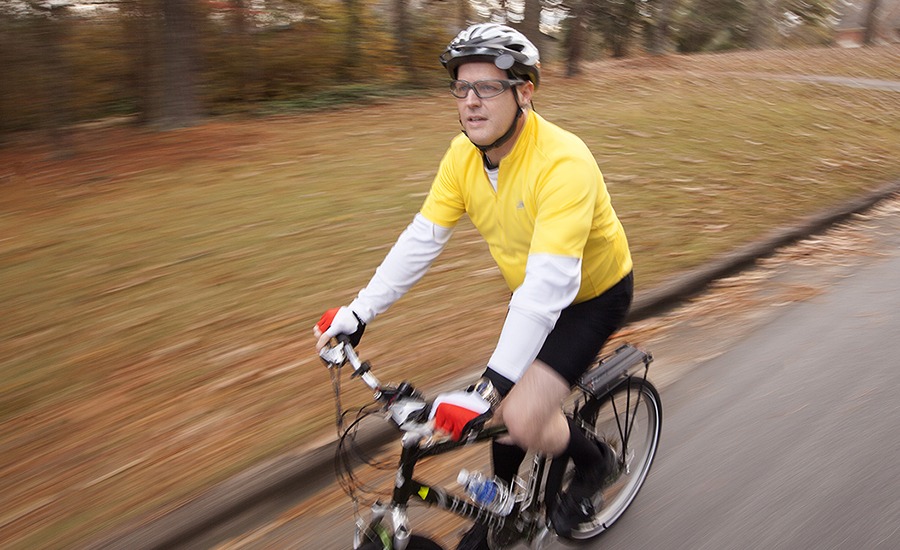
A couple of things I did out of a physical nature was I rediscovered exercise that I really enjoy. I don’t do the gym, but I love the bike. And we have great trails. And so I do bicycling now in a real passionate way. And then I’ve really always loved yard work and never gave myself permission for that either. So I have a passion in the yard, which is very good for my exercise and my mind. 

And then the final thing was something I can do anytime, and that is to enjoy music. I had sort of set music aside after a full life of it up until I was out of college, and now I include music throughout the day. It’s something I can do in the midst of a stressful situation to calm things down. 

And so those four things have really been things that have just become habits now. And they help me to manage the stress that is unavoidable and to avoid the stress I don’t need. 

[MUSIC PLAYING]

A Nursing Student’s Faith Is Tested

There it was, big and red, at the top of my quiz: F.

I’ve never failed anything before, I thought as I got my things together for nursing school. My first three semesters I’d gotten good grades. But now, in my last semester, I was doubting myself. The day before I’d gagged when I emptied a bedpan. How would I perform under pressure if I made mistakes like that in school?

God's Constant Presence In Article Ad

I tucked the quiz in my bag and went out to my car. “God,” I said as I started it up, “I thought you wanted me to be a nurse. Now I just don’t know.” Maybe I should drop out before I do real damage.

Traffic slowed to a crawl. A man lay in the road, a few feet from his overturned motorcycle. No one stopped to help. They probably didn’t know how. But I did.

I pulled off the road and rushed to his side. His vital signs were strong, but he was bleeding from a deep skull laceration. I pulled compresses and alcohol wipes from my pockets. “A good nurse keeps her pockets stuffed with things she might need in a crisis,” my teacher had said.

“Did you get his vitals?” someone asked. A uniformed paramedic was at my side. I updated him on the man’s condition. More paramedics arrived. I forgot my worries and thought only about the patient. Once he was stabilized and in the gurney, the first paramedic turned to me. “Are you a doctor or a nurse?”

“I’ll be a nurse soon,” I said proudly. No doubt about it.

Download your FREE ebook, A Prayer for Every Need

Anticipating Alzheimer’s Care Needs

Like Alzheimer’s disease itself, the caregiving needs of someone living with Alzheimer’s progress over time. The more that caregivers anticipate disease-related changes and learn about caregiving options and resources, the better prepared they’ll be to ensure their loved one remains safe while getting necessary care.

“It’s important for caregivers to think about care as a continuum,” says Monica Moreno, senior director of care and support for the Alzheimer’s Association. “The average life expectancy following an Alzheimer’s diagnosis is four to eight years, but some individuals can live with the disease for up to 20 years. So it’s important for caregivers to reassess care decisions and options regularly.”

Whistle Stop Cafe In Article Ad May 2023

Alzheimer’s typically progresses slowly in three stages: mild (early stage), moderate (middle stage) and severe (late stage). Because Alz-heimer’s affects people in different ways, people experience symptoms—or go through the stages—differently.

In early-stage Alzheimer’s, most people are able to function on their own and may live independently. The person may still drive and participate in favorite activities. However, they may need medication reminders or help remembering appointments.

Middle-stage Alzheimer’s, usually the longest stage, can last for many years. Individuals often still participate in conversations, activities and their daily care, such as bathing. They’ll need more support over time.

In late-stage Alzheimer’s, people experience major declines in their ability to respond to their environment or carry on a conversation. They become dependent on others for care.

An important step in assessing and anticipating care options is determining the person’s current care needs. Whenever possible, especially during the early stage of the disease, involve the person with the disease in current and future care decisions.

Important questions to ask yourself as you evaluate care needs include:

Safety: Is the person living with dementia safe? What type of supervision is necessary?

Health: Does the health of the person with dementia require specialized care? Help with medications?

Care: Does the person need help toileting or dressing? Can you physically manage the care needed?

Social engagement: Is the person engaged in meaningful daytime activities? Would spending time with others with dementia be beneficial?

To learn more about Alzheimer’s and to find resources, visit the Alzheimer’s Association website at alz.org or call its 24/7 helpline at 800-272-3900.

For more inspiring stories, subscribe to Guideposts magazine.

An Open Window for the Soul After Death

The other evening I watched a Johnson & Johnson commercial celebrating nurses and all they do for their patients. The nurse introduced herself as a hospice nurse and was seated on the side of the bed with her patient, Berta Olsen.

Berta had told her of a tradition in Denmark that reminded people to leave a window open in the room of a dying person so that the soul could move on after death. The nurse replied, “Not tonight Berta, not tonight,” letting the patient know it was not yet her time to die. The piece was very, very accurate and so reminiscent of the many times I sat just like that with a patient close to death.

New Every Morning Journal In Article Ad A

Many years ago I sat on the floor next to my father-in-law’s chair as he was dying and I had a similar experience. It was before hospice work had become part of my life and I had not yet experienced all the wonderful things God allows you to see and understand as he draws one of his children home.

My father-in-law’s breathing was slowing down, his color changing, and he was becoming very peaceful. Suddenly but very gently, I clearly saw something white move away from his body and glide out of the window in front of him. I remember saying, “You have his spirit now, Lord, please let his body shut down.” I had no idea why I said it except that what I had seen was real.

Years later, while I was actively caring for dying patients, a friend told me of a similar experience she’d had. She was sitting with her husband as he took his last breath when suddenly the window in the hospital room blew open with no wind or breeze in sight. My friend was startled because it was midsummer and a very quiet evening. The nurse in attendance smiled and simply said to my friend, “His spirit has just left his body; he is free now and at peace.”

The comfort of her words never left my friend. Theirs had been a great love story, and she repeated the story many times over the years. That part of us, the soul or spirit that belongs to God alone, lives forever with him. She knew he was safe now and would be waiting for her.

An Olympian’s Battle with Diabetes

The snowy trail beneath my skis was stunning.

An undulating, 20-kilometer course through the Swedish countryside–meadows, valleys and forests. The kind of trail you’d love to ski for fun.

Pray a Day Vol 2 In Article Ad

But that March day in 2002, a leisurely trek was the last thing on my mind. I’m an Olympic cross-country skier, and I was racing for all I was worth.

For most of the last century, Europeans have dominated international cross-country skiing. Americans have been Johnny-come-latelies. My goal, my dream, was to change that. I’d been blessed with the gift of a skier’s body and I wanted to make the most of it.

I was in good position, running about sixteenth. I crested a hill, ready to make my charge toward the leaders. Suddenly I felt woozy. My legs went weak. No, not now!

I tried to shift into overdrive, summon that extra burst of energy elite athletes draw on. But I couldn’t, not this time. I’m bonking. Bonking means you’ve hit a wall.

It happens when you’ve used up all the blood sugar stored in your body. You get lightheaded and start to sweat, till you’re so sapped you can barely move. Every racer has to deal with it. That’s why, every 10 kilometers or so, aides stand at the side of the trail waiting to hand you an energy drink.

I needed those drinks more than anybody. I was the only racer with diabetes, and that made me more prone to bonking. I headed toward the edge of the trail, where my doctor stood, holding a sugary drink. I reached for it as I skied past–and dropped it. No! I watched the drink dissolve into the snow.

Ahead of me was another steep climb. Halfway up I began to wobble. Skiers passed me left and right. I have to get a drink.

Desperate, nearly delirious, I made for the first person I saw holding a cup. A Russian coach. “Give me that!” I shouted, reaching for the energy drink.

The coach jerked it away. “That’s for my athlete,” he said.

I snatched the drink. “I need it more than he does,” I said apologetically, and gulped it down. By the time I returned to the trail, I’d fallen to about fiftieth. So much for a top-three finish.

That night, I lay in bed and wondered, Was my career over? Almost before it had a chance to begin?

My mind drifted back to August 2000, at the U.S. Ski Team’s Park City, Utah, training center. The coach called me over as I was about to head for my morning workout. “You have to go for a blood test,” he said.

“Why?” I asked. I felt fine, better than fine. World-class skiers are some of the most finely tuned athletes.

“Everyone has to,” he said. “No way around it, Kris.”

I sauntered over to the medical center, where the team doctor filled a few test tubes with my blood. No big deal. I went back to training and forgot about it. A couple days later the coach told me the doctor called.

“She said there was an irregularity in your blood work and they need to do a follow-up. She wants you to see an endocrinologist tomorrow in Salt Lake City. It’s probably nothing.”

Two hours to drive there and back, another hour for the appointment. That was three hours of training time down the drain. Man, I was steamed. I walked into the endocrinologist’s office, thinking, What a waste of time.

The doctor pricked the tip of my middle finger with a glucose monitor. He glanced at the reading. “Yep,” he said, “you’ve got type 1 diabetes.” The doctor might as well have stabbed me in the heart. I asked the only question that mattered: “Will I still be able to ski?”

“Not at the level you’re aspiring to,” he said. “No diabetic has succeeded at the Olympics in an endurance sport.” The doctor kept talking, but my brain shut off. Winning an Olympic medal for my country… I’ve dreamed of that all my life. No disease can take that way.

I drove back to Park City in shock. “How did it go?” the coach asked. I mumbled something and hustled past him.

Why was this happening to me? There was no history of diabetes in my family. The doctor said even though my pancreas was still producing some insulin, I was sick. It was hard to believe. I felt fine.

I headed to the track for my afternoon workout, but kept apart from my teammates. I didn’t want them to see me cry.

My first instinct was to fight. I know my body better than any doctor. I started reading about diabetes. What I learned was this: If ever there was a time when a person could manage his diabetes, it was now.

Fast-acting insulin had just come on the market. Glucose monitors were far more high tech. There were major advances in exercise and diet science.

I scoured the internet for an endurance athlete with diabetes, someone I could look to for inspiration.

Olympic swimmer Gary Hall, Jr., who won the gold in the 50-meter freestyle in both the 2000 and 2004 Games, has diabetes. But swimming 50 meters takes about 20 seconds–hardly an endurance event.

I decided right then: I’m going to be the first diabetic to succeed at the highest level in an endurance event.

But then my pancreas shut down completely. I was put on insulin and began injecting my abdomen up to 12 times a day to control my glucose levels. The ski team coach said he couldn’t help me, given my condition.

I searched for a new coach and a new doctor, people willing to help me find the best way to compete, who could help me achieve my dream of being an Olympic athlete.

Learning to balance blood sugar with insulin is difficult for anyone, but for me it was even more of a challenge because of the massive demands I placed on my body.

I tumbled into depression. Here I was, 20 years old, with a body that was no longer fully functional. I was still training and my national ranking remained high, but the added mental and physical stress of diabetes exhausted me.

I went to a diabetes support group looking for help. All I found was a lot of people offering sympathy. I didn’t need sympathy. I needed answers, on how to eat, how to train for maximum performance.

Frustration was eating me up. One day a coach tried to give me pointers on racing techniques. I blew up at him. Even as I yelled at him, I thought, What am I doing? He’s only trying to help.

Then came that devastating fiftieth place finish in Sweden. And the dawning of my worst fear: that I’d never be an Olympic champion.

I knew I couldn’t go on like this. I’m not one of those athletes who resort to prayer, but one night as I lay in bed I begged for guidance. I awoke the next morning with a new resolve. Diabetes is not going to stop me.

I’d been given not just the gift of a skier’s body but also the heart and soul of a champion. Everything I needed for my dream.

I went to see a psychologist. He seemed to get me, who I was and who I wanted to be. After one of our sessions, I put on my skis and hit the trail, not so much to train, but to think about things.

The woods were silent and beautiful. Gliding through them put me at peace. I thought about what the psychologist had told me: Don’t give in to negativity. Trust in yourself, and your gifts, and you’ll find a way.

I started working with a new doctor. Together, through a lot of trial and error, we found a regimen that was effective for me. He fitted me with an insulin pump that attaches to my triceps or lower back with a special adhesive that can withstand the sweat of competition.

We devised a high-calorie, low-carbohydrate training diet of fruits, vegetables and lean protein. And I found a new coach, one who believed in me and helped me become the best I can be.

On January 22, 2014, I was nominated by the U.S. Ski and Snowboard Association to participate in the Sochi Games; it will be my fourth time to compete in the Winter Olympics. They say that cross-country skiers reach their peak around age 30. I'm 33. I can’t tell you how or why, but I can feel it–this could be my time.

More stories from Winter Olympians!

Download your FREE ebook, Rediscover the Power of Positive Thinking, with Norman Vincent Peale


An Olympian, a Young Writer and the Power of Positive Thinking

The summer Olympics are here, and I'm so excited. Say what you want about the Games becoming too commercialized, but I will always have a soft spot for the Olympics because I trace my genesis as a sports fan back to the Miracle on Ice.

It didn’t matter that I didn’t know a thing about hockey or that I was watching on my parents’ old black-and-white TV with the fuzzy picture, I got so caught up in the action that I cheered loudly for the plucky American team, my heart hammering as they took the lead with 10 minutes left, then I jumped up and down and screamed for joy when they held on to win.

The Lies That Bind In Article Ad

Very similar to my reaction watching the dramatic finish of the men’s 4 x 100-meter freestyle relay at the Beijing Olympics four years ago, when Jason Lezak, swimming the anchor leg for the U.S., chased down the French swimmer in the final 15 meters to win the gold. Awesome athletic feats, interesting people and inspiring stories… that combo never gets old for me.

Which is why I was so excited to read Karen Crouse’s recent piece in The New York Times about her connection with an Olympic swimmer. And I’m even more thrilled because the pivotal moment in the story was all about the power of positive thinking (though my honeymooning colleague Adam Hunter might argue that it shows how God moves in Mysterious Ways).

Crouse is now a sportswriter for the Times, but back in 1976 she was an eighth-grader in Northern California with a passion for swimming and a project to do for English class: make a magazine. Crouse decided her magazine would be all about swimming. She called it Splash, and the big story would be a Q&A with a swimmer.

Not just any swimmer, but Stanford student Mike Bruner, the star of her swimming club team and one of the best swimmers in the world. Crouse worked up her nerve to ask their coach, Bill Rose, if Bruner could give her a few minutes. Rose told Bruner to stay after practice for an interview but didn’t mention with whom. The swimmer might have been surprised and a little disappointed it wasn’t for Sports Illustrated but he never let on and answered all of Crouse’s questions.

Crouse got an A and made two extra copies of Splash (painstakingly handwritten) for Bruner and their coach. Her dad was taking her to the Olympic swimming trials and she’d give them their copies there. But Bruner was not having a good meet. By the time Crouse arrived, he’d missed making the team in two of his individual events, though he’d qualified for a relay. She dropped the magazine off with their coach right before the preliminaries for the 200 butterfly, Bruner’s best event. Coach Rose looked at the Q&A and said, “Mike needs to read this right now!”

He found Bruner under the stands wallowing in self-pity and negativity. The coach made him read his interview aloud. In particular his answer to a question about the mental aspect of racing: “I’d say that swimming is at least 90 percent mental. You can work harder than anyone but lose a race because you don’t have a positive attitude. The swimmer with the best attitude is the one that will win the race.”

It was just the pep talk Bruner needed. He swam his fastest time ever in the prelims and later won the finals and made the Olympic team in his best event. Afterward, he told reporters that Crouse and her interview had restored his positive attitude and put him back in the winning frame of mind. At the Olympics he won gold medals in the 200 butterfly and the 800 freestyle relay.

As for Crouse, she could hardly believe something she’d written had such an impact. It set her on her life’s path: “I remember turning to my father on the pool deck and saying, ‘This is what I want to do when I grow up. I want to write about people and positively affect their lives.’”

See what I mean? Awesome athletic feats, interesting people, inspiring stories and, OK, Adam, a touch of Mysterious Ways… you can’t beat that combo!

An Irish Blessing

Saint Patrick’s Day had been my mother’s favorite holiday. It meant more than parades and parties; it was a celebration of her heritage. Like any Irish mother, she was fiercely proud of her roots. She kept a neat home, a beautiful garden, and took care of the birds in her yard. Her death a year earlier, though not unexpected, had left me grief-stricken, and I dreaded my first March 17 without her.

One day in early February I was in a lawyer’s office, where my sister, Maureen, and I were finalizing my mother’s estate. I barely heard what the lawyer was saying, though. My thoughts were on Mother. I missed her so. The sound of papers rustling jolted me. “I just have to make some copies,” the lawyer told us. “Then we’re done here.”

Sugarcreek Amish Mysteries In-Article Ad 2023

After he left I turned to Maureen. “I can’t believe it’s been a year,” I said. Maureen was quiet. I quickly added, “But knowing her, she’s probably flitting around up in heaven, cleaning, working in the garden, looking after the birds.” Maureen grasped my hand. The lawyer came back. Maureen and I signed the final papers, hugged and said goodbye. “Try to have a good Saint Paddy’s, Kathy,” Maureen said. “She probably misses us too, but you know she’s with God.”

Yes, I thought on the way home, Mother’s at peace with the Lord. If only I could feel at peace. I picked up the mail and pulled up the driveway. On top of the pile of envelopes was one addressed to me, from the Carmelite Friars. I opened it up and saw it was a Saint Patrick’s Day card. In February? I wondered. That’s a little early.

I stared at the card before completely taking in the scene. A tall tree and flowers along a road, a wooden fence, a tiny cottage with birds on the window boxes. And as I read the words of the old Irish blessing, I could almost see Mother in that cottage, and hear her speak the words to me: “May the sun shine warm upon your face, the rains fall soft upon your fields and, until we meet again, may God hold you in the palm of his hand.”

An Iraq War Veteran Finds Inspiration

I’ve loved music all my life. In fact, music saved my life. When I got back from Vietnam in the mid-1960s, I was stunned and directionless. For four years I’d run clandestine combat missions into North Vietnam. I’d seen unforgettable things, endured unforgettable pain. Then I came home to protests and people cursing our soldiers. I became angry, a drinker, stumbling from job to job.

There was only one constant—music. As a kid in Grand Rapids, Minnesota, I had picked up guitar early, then played in a high school rock band. My dad even helped cart our gear around. In Vietnam I yearned for a guitar—any guitar, no matter how cheap—to strum on worn-out evenings and sing songs with my buddies. The music would have made such a difference, given us such an island of peace. As it was, I didn’t find that island until I got home. Even in the depths of my alcoholism, I reconnected with my guitar and played it in southside Chicago blues joints. The gigs gave me something to look forward to—and a community of other musicians, guys who knew how music plumbs the bottom of your soul. I shudder to think where I’d be if I hadn’t come home to that.

Walking with Jesus L&E evergreen_in article ad

Eventually I married and straightened myself out, quit drinking and landed a job with my dad’s long-haul trucking company in northern Minnesota. I jammed with local bands on weekends and saved money until, in 1990, I had enough to make music my life. I opened a window-front store in Grand Rapids, and later moved it to a small town called Fergus Falls, population 13,471. I sold guitars, mandolins, banjos, ukuleles, pianos, trumpets, violins, flutes and anything else you could squeeze a note out of. I didn’t get rich, but I did get to see the expression on kids’ faces when they took their first strum on a guitar and realized they could make a carved piece of wood produce beautiful, healing sound.

That sound, in fact, was on my mind a few years ago when my stepson, Marte, who was serving with the National Guard in Iraq, sent an e-mail to me, mentioning that he wanted to learn a new skill with all the downtime he had.

I looked around my shop and spied a shapely acoustic guitar hanging on the wall —a perfect gift for Marte, whose birthday was coming up. My wife, Barb, and I packed the guitar in a box, surrounded it with Styrofoam peanuts and addressed it to Marte in Baghdad. The Post Office made us repack it—the box was too big—but the guitar arrived unscathed. And, on his birthday, Marte called, unable to contain his excitement. “It’s beautiful!” he exclaimed. “I can’t wait to learn to play.”

And just like that, vivid memories of Vietnam, memories I’d buried, came back. I remembered my longing for a simple guitar, the long days in the jungle when a few notes of music would’ve meant so much to my buddies and me. It all became real again, how hard life can be in a war zone.

A couple of days later I got an e-mail from a friend of Marte’s. “That guitar you sent Marte is amazing,” he wrote. “Any chance I could buy one myself? Music would really help to ease the stress around here.” He included a credit card number.

Definitely! I thought, and ordered an instrument exactly like Marte’s, packed it (the right-sized box this time) and shipped it off.

A few weeks went by and an e-mail showed up in my inbox. “Dear Mr. Baker,” Marte’s friend wrote, “I can’t thank you enough for the guitar. You wouldn’t believe what a hit it is—mine and Marte’s. Guys are all over us for a chance to play, and the music is making everyone so happy. The only downside is that everyone wants one now, and of course most soldiers can’t afford one. It’s very frustrating.”

I read, staring at my computer screen. Frustrated didn’t begin to describe my feelings. Those soldiers should have music. They need music. Why doesn’t anybody do something about this?

Just then my friend Don poked his head through the door. “What’s up, buddy?” he said. Don is the sales rep for the local radio station. Sometimes he comes in to talk business. Most days he drops by to sip a soda and chat.

“Listen to this e-mail,” I said, reading it aloud. “I don’t know what to do.”

Don looked around my store, an expression of disbelief on his face. “Don’t know what to do? Steve, you own a music store. Let’s raise money and send those boys some instruments. I bet the local VFW Post would do a dinner for us.” I looked at him, then at my rows of instruments. All that music sitting there, waiting to be played. And all those soldiers, far away, waiting to play it.

“Don, I’ve never raised a cent in my life,” I said. “How do you even do that?”

Well, Don knew what to do. As he promised, the local VFW Post offered to host a meatball dinner for us. We raised nine hundred dollars and I even persuaded a guitar-company sales rep I knew to give me a discount. Soon, Barb and I were boxing up 15 guitars addressed to Baghdad. I had goose bumps driving them to the post office.

That was about two years ago. Since then we have shipped more than 550 instruments to Iraq—everything from your basic guitar to bagpipe chanters, Native American flutes and a 1956 military band trumpet that was donated by a woman who told me that her dad would have wanted his favorite instrument to go to a soldier.

Word about us spread on the internet, and e-mails from soldiers poured in. Barb recently quit her part-time job to pack boxes in the back room of Fergus Music.

We’re not making any money. In fact, we can barely keep up with costs—the postage kills us. But then we receive an e-mail like this one from a soldier stationed in Baghdad: “Dear Steve and Barb, thank you so much for the new guitar. It couldn’t have come at a better time. I was so down, I was just walking around in a daze, thinking about home, and then somebody told me that I had a big package. That box saved the day for me. I don’t know how to thank you.” Thank me? E-mails like this do more than thank me. Each one is like a letter from my long-ago self—a closing of old wounds and a renewal of the promise that has sustained me for all these years. The promise that, no matter where you are in life, even in a war zone, a carved piece of wood can produce beautiful, healing sound.

For more inspiring stories, subscribe to Guideposts magazine.
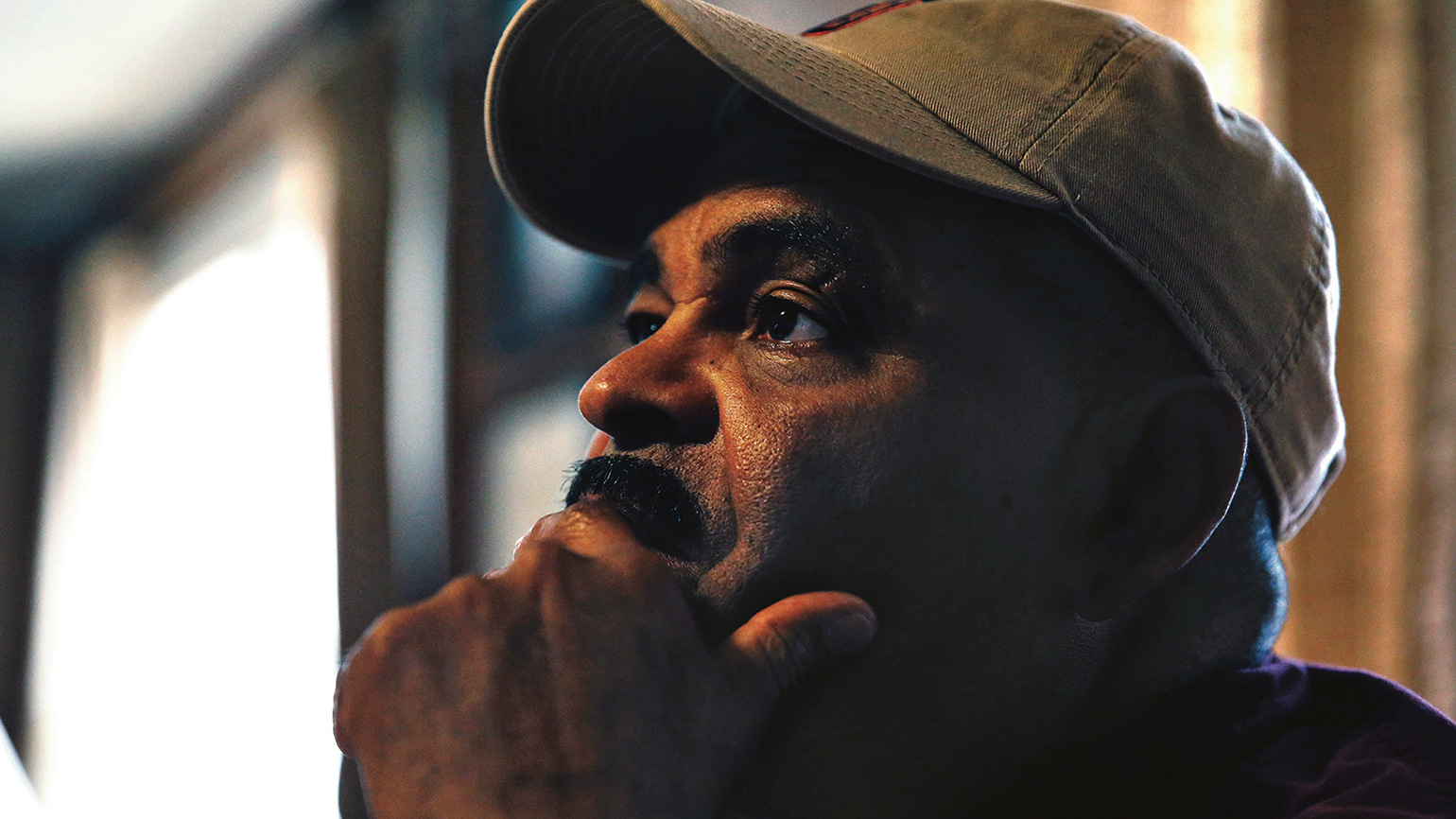
An Iraq Veteran Comes to Terms with Moral Injury

I sensed the gazes of the three other guys, all fellow veterans, on me. But I couldn’t look them in the eye. I stared down at the pages in my hands.

The four of us sat across from each other. This was our third week in group therapy at a military residential treatment program in San Diego, California—one of the first of its kind—with the hope of finding relief from the torment, the guilt that had been consuming us.

Inspiration from the Garden in article ad

Moral injury—that’s what the shrinks here called it. Living with the knowledge that you’ve done something awful, a violation, if not of the law, then of your own code of conduct. All I knew was that I had nowhere else to turn. Even God, it seemed, was through with me. I couldn’t blame him.

BROWSE OUR SELECTION OF BOOKS ABOUT PRAYER

I’d spent a week laboring over this assignment, to write about the very thing I’d tried for years to forget. “Don’t hold back,” the therapist had said. “Tell us everything.”

I took a deep breath. “It was just another bloody day in Mosul….”

I never expected to end up in Iraq. I’d grown up on a farm in Crescent, Oklahoma. My father died when I was seven, leaving my mother with eight kids to raise. “God will provide,” she said. “Everything happens for a reason.”

How could she be sure? “Marshall,” she’d say, “you’re always going to be short on faith. You’re not Jesus.”

Right out of high school, in 1976, I enlisted in the Air Force. The only way to escape a life of poverty, I thought. I got assigned a desk job and served eight years. Out of the military, I struggled. So I joined the Army. Studying to be a licensed practical nurse, they told me, would mean a big increase in pay.

I didn’t know a thing about being a nurse, but I could use the pay. By the time I graduated nursing school in 1995, I knew what my mother had meant about things happening for a reason. I’d found my purpose. The feeling I got caring for patients was like nothing I’d ever known. Making my rounds, I talked to God, telling him what I was doing, praying for each patient. Not everyone got better. I wept anytime a patient died. But I understood. Only God knew when it was someone’s time to go. I didn’t struggle with that concept.

I was stationed at Tripler Army Medical Center in Honolulu. I worked in surgery and cardiology. I didn’t get to see my family in Oklahoma much. Mostly I stayed in touch through letters and pictures, and I was especially fond of one niece.

By 2005, I was the noncommissioned officer in charge of the Acute Care Clinic nursing staff. The wars in Iraq and Afghanistan were under way. Doctors and nurses were being sent over. I was anxious to do my part. In the spring of 2006, I got the call.

That’s how I ended up at a combat hospital in Mosul, Iraq. The fight to wrest control of the city away from Al Qaeda forces was at full throttle. I was the NCO in charge of the ICU. In theory, my job was to direct the nursing staff and manage supplies. In reality, all any of us did was treat a never-ending flood of casualties.

It felt hopeless. Human beings being put through agony. Twelve months into a 15-month deployment, I’d seen more blood than I had in 11 years of nursing stateside. “Why am I here?” I’d yell at God. “Why can’t you make this better?”

In the group therapy room, I hesitated, still not daring to look at the other guys. No one said a word.

“Just after midnight on August 12, 2007, we heard a bomb go off,” I read. My chest tightened at the memory.

Trucks pulled up, loaded with casualties—Iraqi civilians, badly burned, blood everywhere. Some already dead. We had only 10 beds. There were at least three times that many casualties. It was on me to decide who would be treated. I triaged, pointing to the people I thought we’d have the best chance of saving. The rest we’d try to get to, but I knew there would be little hope of that happening.

We tended to the most urgent cases. Nearly an hour passed before I saw her. A tiny Iraqi girl lying on a blanket in the hallway. She couldn’t have been more than six years old. Burned, covered in blood. She was dying, and I could do nothing. She let out deep moans. Even in agony, she had a sweetness to her face that reminded me of my niece back in Crescent. Still, I wanted to cover my ears from the terrible moans.

I have to ease her suffering, I told myself. This girl’s really hurting. I got a syringe filled with morphine, several doses. I set up an IV and pressed dose after dose into it, enough to…

I stared down at the words I had written. The memory that had haunted me every day since, for more than six years. “She smiled at me,” I said. “I smiled back and told her it was gonna be okay. Then she took her last breath and was gone.”

I killed that little girl.

I took her broken body to the morgue. Then I went to my office and sobbed. I tried to tell myself I’d done the right thing, but I was besieged with doubt. This innocent child who should have never been in the midst of a war zone… I’d stolen her last moments. As if I were God. Yes, there was absolutely nothing we could have done to save her. She was suffering horribly. I knew what I was doing with that syringe loaded with morphine. But wasn’t “do no harm” the first principle of medicine? Wasn’t my purpose to heal?

Three months later, I was home in Hawaii. I struggled to get back to my old routine. But my work no longer had the same meaning. As much as I had hated life in Iraq, I missed the intensity. The full-on adrenaline rush, like an addiction. Overhearing people complain about life’s meaningless inconveniences set me off. I was angry all the time. I felt so alone.

One night, in my sleep, I saw her. The girl. Her face looking up at me, just before she died. I woke screaming.

Night after night, the girl haunted my dreams, until I was afraid to go to sleep. There was no one I could talk to. Others hadn’t been there. They wouldn’t understand.

I started drinking to get to sleep. To ease this agony of the conscience. At work I was able to function. Barely.

I knew I couldn’t go on like this. I went to a shrink. She prescribed some meds. We talked. I opened up to her. For the first time in months, I was able to sleep. A year later, I was transferred to Alaska. The nightmares returned. I couldn’t find a therapist I could trust. I dreaded having to tell my story all over again. Maybe this was God’s way of punishing me. Maybe I deserved to feel this way.

I thought about killing myself. I had put the little Iraqi girl out of her fatal misery. Why not put myself out of mine? Finally I went to another therapist, my fifth in five years.

“I’m done talking,” I told the shrink.

“I understand,” she said. “I’ve read your files. There’s a ten-week residential program in San Diego. You should consider it.”

That’s how I’d ended up here in therapy with three other vets. There were eight of us in the program overall. For the first two weeks, I’d met daily with a therapist, talking through the responsibility I felt for that Iraqi girl’s death, the idea that one experience didn’t define my entire life, breaking down what had happened, reminding myself that I’d had the best of intentions.

It was my therapist who explained about moral injury, a relatively new concept in the mental health field. There was debate over whether it should be a formal diagnosis. But for me, just knowing there was a name for my suffering, an explanation, gave me hope.

I’d gotten to know the other guys, gone for long walks with them. Spent time in prayer—for the first time in years. And now this, telling my story, the assignment I’d dreaded.

I looked down again at what I’d written. “God, forgive me,” I said.

Silence. I chanced a glance at the guys. Their heads were bowed, their gazes trained on the floor. Then one of them, an Army staff sergeant who’d been too traumatized to come to the aid of a fellow soldier under fire, jumped to his feet and extended his hand. “You didn’t do anything wrong, Marshall,” he said. “You did your best.”

A simple handshake from someone who knew how I felt. It was as if God was taking my hand, telling me it was okay to be angry, to feel hurt, to be short on faith. To be human. Telling me that he forgave me.

The other vets read their stories—all the tales harrowing. Hearing those voices, full of the same pain as mine, made me finally understand I was not alone.

We were given one last assignment. To write a letter of apology to the family of the person we felt we’d wronged. I had no way of actually contacting the girl’s family. Still I wrote, “I want you to know your daughter has been in my heart each day since that night.”

Four months after I finished the program, I was honorably discharged from the Army. I could have retired to Hawaii. Instead I moved to Crescent, back to my family farm. A place where I could continue my recovery. I work the land, keeping up a conversation with God as I go. And I’ve gone back to nursing at a home for the elderly. The other vets from therapy and I stay in touch, online and in our hearts. We remember that healing comes from leaning on each other and that none of us is alone.

Moral Injury: 6 Questions Answered

For more inspiring stories, subscribe to Guideposts magazine.