Embrace God's truth with our new book, The Lies that Bind

An Inspiring Recipe for Success

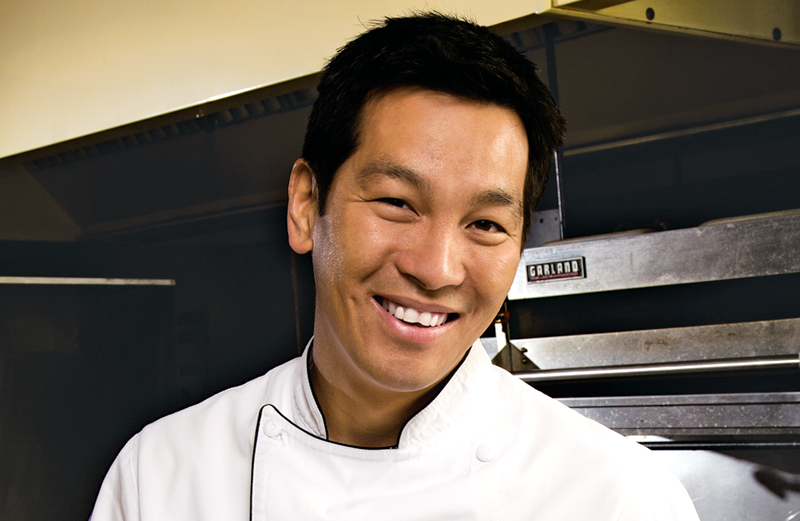
Ten long years. That’s how long I’d worked to get to this point. Ten years since my wife, Kelli, had enrolled me in a cooking class for my twenty-third birthday. I couldn’t believe I was here, standing backstage after winning the championship cook-off on the popular Food Network program Chopped.

I could hear the judges saying goodbye to the chef I’d beaten—Yoanne Magris, a lovely woman and superb chef who owned a little French restaurant in New York City.

extraordinary women of the bible

Hearing her gracious exit, though, troubled me. What would happen to her now that she had been denied the $10,000 grand prize I was about to be awarded?

My whole life, it seemed, I’d been searching for something. I flunked out of college because I couldn’t find a subject that interested me. For a while, I worked for my dad in his window-fabricating business, making windows and screens, but I knew I was just marking time.

This isn’t how I want to spend my life, I thought.

The one thing I liked to do was fool around in the kitchen. It began when I was a kid in Hawaii, cooking with my mother. I was more like her tasting chef. She’d offer me a heaping spoonful of her signature bread pudding as I sat, watching her work. “What do you think?” she’d ask.

“It’s great,” I’d say. “How do you do it?” “Cooking is about sharing,” she said, serving me another delicious spoonful. “That’s the secret.”

The secret to what? I wondered. I tried to answer that question all my growing-up years and always fell short. Still, I searched for the answer.

After Kelli and I got married we made dinner together nearly every night. Kelli would say, “I thought we could have spaghetti tonight,” and I’d take over the stove and toy with the sauce, adding spices till I came up with a unique flavor.

Or she’d bring home a fillet of ahi tuna, and I’d slice it three ways and prepare each piece differently.

What a blast!

Then, as a birthday surprise, Kelli enrolled me in that cooking class.

The first day, I learned how to make hollandaise sauce for eggs Benedict. I came home ecstatic.

“This is it! This is what I want to do with my life!” I told Kelli.

I enrolled at the Culinary Institute of America, in Hyde Park, New York.

There’s nothing like cooking and talking food all day with others who share your passion.

Then I landed an externship at the world-famous Greenbrier resort, in White Sulphur Springs, West Virginia. I was on my way. But something kept nagging at me. More questions. Why am I doing this? Who am I really serving?

That’s what led me to accept the head chef’s position at Camp-of-the-Woods, a Christian conference center and resort in central New York State. Maybe I would find some answers there. At that point I still didn’t know what it was that God had in store for me.

One night after work, I was relaxing with Kelli, watching a cooking show called Chopped. Contestants are given a basket full of an odd assortment of ingredients and challenged to make a gourmet dish out of them in just 20 minutes. I always loved to tell Kelli what I would make.

“You should try to get on this show,” Kelli said.

I did it as a lark—and yet I made it all the way through, and now here I was about to go in front of the cameras and accept the grand prize.

And once again those questions nagged at me.

My winning dish was honey cough-drop ice cream (made from a basket containing duck eggs, russet potatoes, farmer’s cheese and honey- herb cough drops), along with a chocolate gnocchi frito. Amazing, right?

Yoanne was my opponent. Everyone knew her story. Her grandmother, who had raised her since childhood, was desperately ill, in France. Yoanne wanted to win the money so she could go visit her grandmother and comfort her before she died.

At one point, during a break, Yoanne and I got into a deep conversation—about life, about the cooking industry, about our faith.

“My grandmother means so much to me,” she said wistfully. “I can’t tell you how much I love her.” Our talk stayed with me throughout the competition.

I heard the host, Ted Allen, calling me out for the grand prize. Kelli and I really needed that money. We had bills to pay.

Then I heard another voice whisper, It’s all about sharing.

I went out onstage and Ted handed me the check.

“What are you going to do with all that, Lance?” he asked.

I smiled. “Could you bring Yoanne back out here?” I asked.

I shared, enough so Yoanne could at last spend time with her grandmother in France and say goodbye.

I’ve moved on from Camp-of-the-Woods. I now teach cooking at Flint Hills Technical College in east-central Kansas. Teaching is a form of gratitude for all I’ve learned in my life. It is the ultimate sharing.

And one thing I learned was this: Honey cough-drop ice cream is one of the best dishes I’ve ever made.

Try Lance’s Bread Pudding recipe at home!

Download your FREE ebook, Creativity and Personal Growth: 7 Inspiring Stories On How Crafts Can Change Your Life

An Incarcerated Man’s Answered Prayer to End His Drug Addiction

“Enjoy your week alone, convict.”

Those were the last words I heard before the prison guard slammed shut the steel door. My new cell was a 10 by 10 room with concrete walls. All I would see for the next seven days. Just me, a thin mattress on the floor and a book. But I didn’t let the guard see how I felt about it. I wasn’t going to show any weakness. That could get a guy killed in a place like this.

Sugarcreek Amish Mysteries In-Article Ad 2023

What had I done? Several counts of dealing and cooking methamphetamines had earned me a jail sentence of about 175 years. I would never get out of the Oklahoma Lexington Correctional Center. With no hope and nothing else to do, I dealt and took even more drugs in prison—that’s how I ended up in solitary. Bad drug deal on the yard.

But what did it matter? My life had ended five years ago when I got locked up. Not that I fit into regular society anyway. If anybody saw me coming down the street—beard down to my belly, hair down my back, fire in my eye—they’d say: There’s a guy who’s going to hell. And they’d be right.

I sat on the mattress, my back up against the wall, and picked up the book. A Bible. Of course. Don’t know what they think this book has to do with me, I thought. The Bible was for upstanding people on the outside. People like the man my family thought I’d become when I won a math achievement contest at 13. Not the junkie convict I was now. I tossed the Bible into the corner.

As the hours and the days dragged by, that little red book looked more interesting. I lost track of how long I’d been in the hole when I started reading. I flipped to the stories about Jesus. The prison ministers talked about him all the time. How great he was, how loving. Jesus wouldn’t know what to do with me, that was for sure! Nothing much to love about a guy like me. Jesus was for good people. People who didn’t have to be forgiven for much more than their little white lies. But then…what was this? Jesus said, “I was in prison and you visited me…Truly I tell you, just as you did it to one of the least of these who are members of my family, you did it to me.” I read the passage again, making sure I got it right. Jesus related to prisoners? I read more of the Bible, about how Jesus encouraged all the outcasts to follow him. He had died for their sins, and he forgave them. My sins too? I wondered. Jesus wasn’t just for good people?

The page before me blurred. If the other prisoners saw the tears in my eyes I’d be in trouble. You don’t show weakness and survive in prison. “Jesus?” I whispered. “Would you really help me? Take away my desire for drugs. Let me be a better man.”

I fell asleep with the Bible open in front of me and read it as soon as I woke up. I read until the day the guard opened the thick steel door. Daylight poured into the dim cell and stung my eyes. “Back to the yard, convict.”

Back to the yard, I thought. Back to reality. Had I really prayed in there? Had I really asked God for help? A moment of weakness, I thought as the guard locked me back up in my usual cell. I can’t let that happen again.

Right away I scored some drugs to block out my memory of my time in solitary. Getting high had always been my answer. Not this time. Oh, I did the drugs all right that night, but I didn’t get high. “Must be something wrong with the drugs,” I said, staring up at the ceiling.

But a few days later when I tried again, I couldn’t get high. Where was the rush? I remembered my crazy prayer in solitary: Take away my desire for drugs. I’d want them again soon enough. For now, without the obsession dogging me, I paid more attention to those hospital chaplains. When the education coordinator, Donna, called me down to her office, I went.

“I think it’s time you enrolled in college,” she said.

“College?” I laughed. “Guys like me don’t go to college. Who needs a better-educated inmate?”

She closed the folder and looked me right in the eye. “None of us knows what the future holds. It’s one thing to serve time, another to waste it.”

I guessed she had a point. If nothing else, a college course might be a distraction—like that Bible in solitary.

I passed the entrance exam and a week later showed up in the classroom trailer. There were about a dozen prisoners who’d signed up, all clean-cut looking guys who wanted to start over in life when they got released. What are you doing here? their eyes seemed to ask me. Which is what I was asking myself. Why was I wasting my time learning about computer technology? Because I’d had another moment of weakness and let myself hope things could be different for me?

I stuck with my classes. I’d always been good with computers and I enjoyed it. In two years I’d earned my associate’s degree. “You should be proud,” Donna said when I went to see her.

“I am,” I said. “I almost forgot what it felt like.”

Upon completing a degree, a prisoner automatically comes up for a parole hearing. Mine was held just a few days later. “Jeff Brown,” the committee chairman said, “in seven years of incarceration you haven’t shown you have anything to offer society. Frankly, you could get ten degrees and still have nothing to offer. Parole denied.”

I faced the committee squarely, not showing any weakness. But as I shuffled back to my cell, Jesus’ story came back to me. He gave hope to people who had none. But wasn’t I beyond all hope? Did I expect God himself to get me out of prison? Have one of his angels unlock the cell door?

A couple days later Donna called me to her office again. “The governor is going to release five hundred inmates,” she said. “The only people eligible are nonviolent offenders who have upgraded their education in prison.”

“Like me earning my degree?”

“It’s all done,” Donna said. “Jeff, you’re a free man.”

I went back to my cell in a daze. Me? Free? I don’t think it’s the governor who’s in charge here. There was a higher power at work. I knew I’d struggle to stay drug free. But now I was determined. God had released me from my hopelessness. From the prison I’d locked myself in for too long. He’d answered the prayer I’d made, and even the prayer I didn’t dare make. He was just waiting for me to be brave enough to ask for his help. Just waiting for me to have a moment of weakness to show me the meaning of strength.

This story first appeared in the January 2008 issue of Angels on Earth magazine.

An Image to Help You Let Go of Toxic Thoughts

A number of years ago, I was struggling with toxic thoughts—my own, and those of others. I lamented to a trusted friend that I was taking this negativity too deeply into my mind and—in the form of a chronically achy lower back—body.

She offered a simple metaphor that has stayed with me in the years since. Imagine yourself to be a screen door, she said. Toxic thoughts might be blowing and swirling in the wind, but they pass through you, effortlessly flowing out into the ether without getting stuck. 

What I love most about this image is how simple it is, and how little it actually asks of me. I don’t have to actively repel the negative words, thoughts, news or actions I might encounter in the course of my day. I merely have to stay present to the breezes that blow around me, allowing them to pass through on their way out into the world.

I adjust the image sometimes, to suit situations that I’m facing.

If I feel like my own thought patterns are skewing negative, or if I am feeling stuck on a decision, a quandary or an emotion, I might imagine the passing wind catching hold of the stress and anxiety that’s weighing me down, carrying it off as it moves through me. 

If I am in a tense situation with another person, I might visualize their negativity as a hot wind that is uncomfortable for a moment, but fleeting as it blows by. I can breathe in crisp, clear air in its wake.

The temperate weather of early summer is the perfect time for this screen door image. The more regularly you do the visualization, the more readily it will pop into your mind as you move through your day.

The novelist Anne Bronte paints a beautiful picture of the kind of air I envision when I invoke my breezy screen door: “A light wind swept over the corn,” she writes, “and all nature laughed in the sunshine.”

Angels Among Us

Anyone listening to the radio around Christmastime 1993 would have heard me singing about angels. As part of the group Alabama, I was proud of our hit “Angels Among Us.”

I got hundreds of letters about that song over the years, and I cherished every one. From time to time, I sit at my desk, surrounded by records framed on the walls, and read them.

NIVFLB Inarticle ad

“This song is a blessing,” one woman wrote. “I truly believe there are angels among us!” I believed it too. In fact, if it wasn’t for one of those angels on earth, I would have had a very different life.

Back home in rural Alabama, none of the kids I knew finished high school. When you were struggling to make ends meet day to day it was hard to imagine your life being anything else.

My junior high teachers said a degree would help me get a good job, but my daddy needed my help on the farm now. I dropped out of school.

A year later I returned—but not as a student. After a day working in the fields, I put in a couple hours doing janitorial work. If any of the teachers or staff thought it was odd, they didn’t say so. Except Mrs. Ellis.

Reading over my letter, I remembered the day the principal confronted me while I was sweeping up. I caught sight of her bright red hair as she marched over to me. “Owen,” she said in her scratchy voice. Why would a straight-A student drop out before high school?”

All my good reasons for dropping out disappeared at the sight of Mrs. Ellis. “I don’t know,” I mumbled.

“As an educator, wasted potential offends my sensibilities,” she said. “It’s about time you went back.”

And juggle farm work with my studies? Besides, I’d been away for over a year. I could never catch up!

“I’ll have your transcript tomorrow,” she said. “Take it to Fort Payne High School and get enrolled.”

I leaned back in my desk chair and looked around. Gold and platinum records lined the walls. It made me think of a different office—the principal’s at Fort Payne High. I stood in front of his desk watching him go over my transcript, a college degree framed on the wall behind him.

“Look, son, however well you think you did in junior high,” he said, eyeing my farm clothes with suspicion, “you’re too far behind to catch up now. Go back to the fields.”

I thanked him for his time and went to my janitor’s job. I tried, I thought as I washed the floor. School just wasn’t meant for guys like me.

“Owen!” Mrs. Ellis came marching down the hall. “You’re supposed to be in high school.”

When I told her what the principal said her face got as red as her hair. “Follow me!”

A minute later I was in yet another principal’s office, Mrs. Ellis’s, only this time I wasn’t the one getting yelled at. Mrs. Ellis was willing to fight for me in a way no other teacher had. “You want that transcript sent registered mail, you’ll have it!” she said, slamming down the phone.

The principal had to let me into the high school, but he didn’t like it. “If I see you in my office even once,” he told me when I showed up for my first day, “it will be your last day at Fort Payne High.”

As I opened another letter, I hummed “Angels Among Us” to myself. “I believe there are angels among us…to show us how to live…to guide us with a light of love.”

Mrs. Ellis had surely done that for me. Even after I got to high school I relied on her to get me through. Like the day in math class when my teacher caught me chewing gum.

“Mr. Owen,” he said. “You will expectorate your gum. And from now on, you will sit in the front row.”

The class snickered as I made my way to the blackboard. I wanted to run right back to the field. I was big. I was strong. I belonged there. No matter how much I loved to learn, I didn’t belong in school!

As I spit out my gum in the wastebasket a hundred smart remarks ran through my head. I could lay this guy out with one punch, I thought. Sure, I’d get expelled, but who would care? Not my math teacher. Not these other kids. Not the principal—

Mrs. Ellis would care, I thought. Mrs. Ellis believed in me. Quietly, I took my seat in the front row.

I faced an even bigger challenge in my next class. When I got there, the class bully was dangling a smaller boy out the second story window. “Pull him back in,” I ordered.

The other kids got quiet. “Who are you?” the bully sneered.

A fight would get me kicked out of school. I knew Mrs. Ellis was counting on me to graduate. But I also knew Mrs. Ellis didn’t give in to bullies. I’d seen that the day she told off the high school principal.

This kid dangling out the window needed someone to stand up for him the way Mrs. Ellis had stood up for me. Lord, please don’t make me have to fight him.

“Who am I?” I said. “I’m the guy who’s going to kick your tail if you don’t pull him back inside.”

Maybe I’d managed to channel some of Mrs. Ellis’s authority. Maybe my guardian angel stepped in to back me up. Whatever the reason, the bully gave in without a fight. He pulled the smaller boy back through the window just in time for the teacher to arrive. I took my seat.

Maybe I can make it through high school, I thought for the first time. Maybe I do have potential.

From that day on, I started thinking about the future. I imagined what I’d like to do with my life, what I could do with it if I worked hard enough. Oh, it wouldn’t be easy. There would always be things standing in my way.

But there would also be people like Mrs. Ellis, good people who cared and were willing to fight to give me a fair chance. I loved studying in school—maybe I could go to college. I loved to sing—maybe I could do it on stage.

Suddenly I had a whole life ahead of me I hadn’t known was there. Not until Mrs. Ellis showed me how to fight for it.

I never dreamed I would one day be sitting at my own desk, surrounded by gold and platinum records—and my own college diploma hanging on the wall. I’ve tried to use my success to help others reach their potential.

It’s what Mrs. Ellis would do. She’s still showing me how to live, and guiding me with the light of love, a real angel among us.

Download your FREE ebook, Inspirational Quotes About Life, Love, Faith and Hope

An Expert Tells Us How to Beat the Post-Holiday Blues During a Pandemic

The holidays are often thought of as the “most wonderful time of the year” but that’s not always true for those suffering from feelings of depression, loneliness, and anxiety. In fact, the phenomena known as the “post-holiday blues” might be more keenly felt this year, thanks to a global pandemic disrupting our beloved traditions and well-made plans.

The sense of loss we’ve all felt because of Covid-19 has, according to Dr. Bethany Teachman, a professor and the director of clinical training in the department of psychology at the University of Virginia, left us more than a bit drained.

“People are heading into these holidays very depleted,” she tells Guideposts.org. “Far too many people have lost loved ones or jobs, or are experiencing serious economic stress, so there is considerable grief for millions of people this season. Even for those who have been more fortunate during this time, it has been an extended period of stress and uncertainty, and we are often not together with our families and loved ones, so we are tired, strained and things don’t feel quite right.”

To lessen those feelings and still enjoy this time of year, it’s important to focus on the things we can control. That’s why Guideposts.org chatted with Dr. Teachman to identify seven things you can do to beat the “post-holiday blues” and meet the new year with a more positive outlook.

1. Set Realistic Expectations

One reason we frequently experience “holiday blues” is that we often place unrealistic expectations on the holidays, Dr. Teachman tells Guideposts.org.

“It is presented in the media and Hallmark cards as this magical perfect time, but that places a lot of pressure on people to try to create that experience,” she said. “In reality, families don’t always communicate perfectly, people are under financial and a million other kinds of stress, especially right now, and those challenges don’t simply disappear because it is the holidays.”

Instead of over-romanticizing this season—something that’s especially easy to do in the middle of a pandemic—she suggests focusing on one or two things you absolutely enjoy about the holidays and dedicating your energy to that.

“We’ll likely enjoy the holidays more if we have realistic expectations – for many, this means an expectation that some parts will feel relaxing and fun, and other parts will be exhausting and frustrating, just as occurs in our regular lives,’ Dr. Teachman explains. “I often think about trying to increase the proportion of the day that is spent feeling positive and productive, rather than thinking I can make a whole day feel great.”

2. Check In With Yourself

One of the most important things you can do if post-holiday blues are hitting hard is to evaluate your feelings. This means sitting with yourself and taking stock of the emotions that might be influencing your life. If they’ve been around for longer than just a few days, there might be a bigger issue that needs facing.

“Anyone can feel sadness or despair during the holidays, and research shows it is a difficult time for many people,” Dr. Teachman says. “For it to be clinical depression, a person would have to feel sad or irritable most of the day nearly every day for at least two weeks. Whether it is technically a depression or not, sustained experiences of sadness and lack of pleasure in activities you used to enjoy are a signal that you want to make some changes and possibly get help.”

3. Find New Ways To Connect

Because of the pandemic, many of us won’t be physically gathering for the holidays this year. That’s a tough pill to swallow, and it can have an effect on our mental health. Dr. Teachman recommends finding new ways to connect with others, and with yourself, this holiday season.

“It is always important to care for our mental health, just as we care for our physical health,” she explains. “This means finding a good balance of activities that allow us to relax, do pleasurable things, be productive and meet (some of) our goals, and keep our body well-fed, rested, and active. It also means seeking social support in safe, physically distant ways. We are social beings and it is important that we do not add to the feelings of isolation at this time.”

This might mean virtual gatherings – think opening mailed presents on Zoom with your loved ones – or more outdoor activities, like sitting around a camp fire with those in your approved bubble, will be part of the memories you make this year, and that’s okay. Allow yourself to feel sad, lonely, and disappointed in these temporary circumstances, and then face the holidays with hope and a renewed sense of gratitude.

“Those feelings should not be ignored – they are important signals about our needs,” Dr. Teachman allows. “We need to be physically distant, not socially distant. Whether it be through virtual zoom or phone calls with family, or going for a masked, distant walk outside with a friend, it is essential that we stay connected.”

4. Focus On The Small Moments

This year might be especially hard for those who have lost someone, whether to COVID-19 or other causes. It might be equally difficult for people with relatives who are sick or currently infected. These feelings of fear, anxiety, and grief demand to be felt, so don’t try to immediately snuff them out. Instead, Dr. Teachman advises that you focus on small moments of happiness and the things you can control when it comes to celebrating the holidays this year.

“One of the big challenges of this time is to make space so that grief and gratitude and generosity and (occasional moments of) joy can all coexist,” she says. “For those who are actively grieving right now, these holidays will not feel the same as they usually do and that’s okay. It is not reasonable to expect to feel the way we usually do when grappling with heart-breaking losses. Instead, think about how to make some moments better – what can you do to make the next couple hours a little easier? For me, working to build memories with others makes a big difference, so cuddle up with the people in your household, make a nice meal together, and remember that it won’t always feel this hard.”

5. Avoid Enablers

Whether you’re one of the millions struggling with addiction issues, or whether the current pandemic and the added stress of the holidays has tested your sobriety, Dr. Teachman says the best thing to do if you find yourself turning to drugs or alcohol more to get through this time of year is to clear your life of those temptations.

“I encourage people to draw on their available resources, whether that be attending a virtual AA meeting or reaching out to people who are supporting them or checking in with your therapist, and take intentional steps to reduce opportunities to use,” she says. “If you need to reduce your drinking or abstain, don’t have the alcohol in your home. If there’s a particular friend you often get high with, don’t invite them over. Try to actively reduce the times you’ll need to fight those temptations so that resisting (inevitable) urges and cravings will be easier to do.”

6. Practice Gratitude

It might seem like an odd exercise – to practice gratitude during a year when so much has been lost, but Dr. Teachman says it can also give us a healthier perspective and a more hopeful outlook. Yes, these times are difficult, but finding things to be thankful for in spite of that helps us meet the more challenging aspects of this season with renewed optimism.

“We need to both recognize and honor what has been lost as well as appreciate and cherish what we have,” she explains. “I have been making a point of writing extra thank you emails or cards and encouraging my children to do the same. More generally, taking a moment to reflect on what we have, and more importantly, the connections we have with the people in our lives, is important to our health. This can also help us think proactively about how we can help others who are going through a difficult time right now. Notably, when we reach out and help others, not only do they benefit but it also helps our own mental health.”

7. Seek Help

There’s absolutely no shame in seeking help if feelings of anxiety and depression are overwhelming you during the holidays and after they’re gone. In fact, it’s vital that you’re in touch with those feelings so that you can monitor them and notice if they begin to affect your day-to-day life.

“We encourage people to consider whether the sadness, anxiety, anger, etc. are pervasive (so they are affecting you in lots of situations, not only when you read the news, for example), whether they are persistent (so it’s not just a bad day, but the distress is intense and lasting for weeks), and whether they are impairing (so the emotional difficulties are making it hard for you to function and meet your goals – e.g., missing work, finding it hard to engage with your children, just wanting to curl up in bed for extended periods),” Dr. Teachman explains.

If any of these apply, it might be time to reach out. There are plenty of resources available that Dr. Teachman recommends including the telehealth therapist programs on ABCT.org and ADAA.org, the COVID Coach app designed to support your mental health during the pandemic, and the National Suicide Prevention Lifeline. Dr. Teachman’s own lab at the University of Virginia also offers free online interventions through a program called MindTrails. Whichever resource you choose, just remember, you’re not alone.

An Excerpt from Vin Baker’s ‘God and Starbucks’

I can see it on their faces sometimes. They walk into the store, heavy lidded, distracted by thoughts of the upcoming workday, looking for nothing more than a jolt of caffeine to shake off the morning cobwebs. They peck away at their smartphones or fumble with their wallets, oblivious to their surroundings, until suddenly, there they are, at the front of the line, looking up—way up—at the world’s tallest barista.

Some feign cool indifference, but most can’t help themselves. I grew up in Connecticut, played college ball at the University of Hartford, and spent part of my career—a rather notorious part—with the Boston Celtics. So here, at a Starbucks in North Kingstown, Rhode Island, there’s no place to hide. First of all, I don’t look like an ordinary guy. I’m a giant in the back there. I mean that literally—I’m six foot eleven, 275 pounds. You see me frothing up your cappuccino, and at the very least you can’t help but wonder, What’s going on here? He must be . . . somebody. Others know exactly who I am: a guy who made, and lost, more than $100 million in his NBA career, a career wrecked by alcoholism and depression and spectacularly bad business decisions. These are the people who stare hard, then suddenly avert their eyes, the sadness nevertheless evident on their faces.

Inspiration from the Garden in article ad

I know what they’re thinking: How the hell does a four-time NBA all-star, and an Olympian, end up shouting “Tall decaf cappuccino!” from behind the counter at Starbucks? Given half the chance, I’ll disarm the customer with a smile and a few friendly words. I don’t want anyone to feel uncomfortable when they walk into our store, and I sure don’t want anyone’s pity. Trust me when I say this: I’ve been through worse. Much, much worse. There’s no shame in work. The indignity comes from not working, from losing your way through ego and weakness and addiction, and finding yourself tumbling into a bottomless pit of despair and helplessness.

Want to know what that looks like? Okay, here it is.

I was a first-round NBA draft pick (the eighth choice overall in 1993) smoking weed every day to alleviate my anxiety, until repeated trips to the emergency room, with my heart racing uncontrollably, prompted me to find another way to self-medicate.

I was an NBA all-star, drinking after games, and then before games, and eventually at all points in between—draining anywhere between a pint and a fifth of liquor a day—using alcohol to end my career and nearly my life. Make no mistake, that’s what alcoholism is: slow and deliberate suicide.

I was a man running from responsibility, fathering five children with two different women, and selfishly bouncing back and forth between families and relationships, because money gave me leeway and freedom that others were not afforded. Money, after all, is like a “get out of jail free” card—until it’s gone, and with it the patience and tolerance of those you’ve hurt, and the enabling of those who never really cared about you in the first place.

I was a former millionaire driving my mother’s Mercedes (the one I bought her with my rookie contract) to a pawnshop, with four old tires stuffed into the backseat and trunk. I sold the tires for eighty bucks, bought a few bottles of liquor, and drank myself into oblivion, until all the pain was gone— the ache in my lower back that signaled a failing liver, and the ceaseless cloud of loneliness that hung over every day.

That’s how bad it got for me.

By comparison, working at Starbucks is a walk in the park.

I’m not bitter. I’ve been sober for six years now, and in that time, with spirituality as the foundation, I’ve rebuilt my life one brick at a time. I married a longtime girlfriend, and together we are raising our four beautiful children. I am a licensed minister and assistant pastor at the same church in Old Saybrook, Connecticut, where my father is the head pastor, and where, as a boy, I knew nothing but peace. I’ll probably never be a millionaire again, but that’s fine. Life is good and full of possibilities.

That’s the point I’d like to get across: that life is worth living, no matter how bad it might get at times. Obstacles can be overcome, demons can be conquered. I’ve been speaking to youth groups both in and out of church, and I’ve done some work with the NBA, helping provide a cautionary tale to young athletes who likely aren’t even remotely prepared for the ways in which their lives will change when staggering wealth is heaped on them. This book is part of my mission. Maybe, by telling my story, I can provide inspiration and hope to those who are facing all manner of hardships, and who are trying to figure out how to pick themselves up and start over again.

As I tell the parishioners at my church: God doesn’t measure how far you’ve fallen, but he will be there when you’re ready to rise.

Read Vin’s inspiring story from the January 20190 issue of Guideposts!

From God and Starbucks: An NBA Superstar’s Journey Through Addiction and Recovery. Copyright © 2018 by Vin Baker. Reprinted with permission by Amistad, a division of HarperCollinsPublishers.

Discipline of Thought

We demolish arguments and every pretension that sets itself up against the knowledge of God, and we take captive every thought to make it obedient to Christ. (2 Corinthians 10:5, NIV)

I step on the scale with bare feet and squeeze my eyes shut. This is my new morning ritual–stepping from the shower to the scale.

NIVFLB Inarticle ad

I’ve become a master of balance on this square device, so before I open my eyes, I slide one foot over where the digital numbers will calculate. I like to reveal the numbers slowly. It seems less jarring if I present them in an easy, gentle way.

Make your thoughts obedient to God. Photo Zoonar/N.Sorokin, Thinkstock.I open one eye and do the foot move, until the numbers are there solid and clear. Time to shed a few items. I unclasp my locket and pull my earrings free. But the numbers stay the same.

Losing extra pounds is a tough thing. I know that it will take weeks and weeks to remove what settled on my body in December. An extra handful of Chex mix here. A double dip of Peppermint Oreo there (Grant works at an ice cream shop).

A plateful or two of appetizers at a party. Gingerbread cookies. Fudge. Before I knew it, a little indulgence and a few nibbles became a habit. And now the hard role of reversal is mine.

As I begin to press through this issue of zipping my jeans without waging war, it comes to heart that this physical thing is like what happens in my thought life in regard to sin.

If I become careless with my thinking, not-good things can move right in. Maybe it’s just a smidgen of anger. Or a single strand of negative thought.

Maybe I’m coveting or am critical or am holding some other thought that isn’t pleasing to the Lord. It could even be a small, sharp fragment of doubt or fear. 

Whatever the issue, the seeds can start small, but if I’m not careful, they sprout and grow, and soon the battle for my mind is a not-so-small deal.

It’s so much easier to wrangle these thoughts when they’re young and take them captive to obey Christ! It’s so much easier to protect my heart if I can reject these thoughts in the beginning, before they take root in my life.

I step off the scale and think about how to shimmy a run into the busy schedule of my day. I wish I’d been more disciplined over the past few weeks. But this experience holds value–especially when applied to my mind and my heart. And as I prepare to begin the day, I lift an earnest prayer:

Lord, help me to guard my thought life in this new year. Help me to be a careful thinker and to release any thought-indulgences, early on, that are not pleasing to you. Amen.

A New Road, A Second Chance at Life

Content provided by Good Samaritan Society.

In the video above, George Rosch talks about his new life’s purpose. 

GP In Article Desktop

George Rosch lay sprawled on the ground for a few seconds before trying to move. Moments before, he’d been on the top of a semi tanker, trying to release expanding pressure from the oil within. But he was too late. The oil blew, and it knocked George off the top of his rig, shattering his world.

“I was a truck driver, I drove truck for 30 years. I’m proud of the fact that I had over a million miles accident free.” But his fall from the top of the tanker ended that spotless driving career and landed him in a wheelchair. 

The Road Back

The road back hasn’t been an easy one. George spent a week in the hospital while doctors stabilized him and assessed the damage to his brain, neck, spine and back. After two surgeries to fuse vertebrae in his neck and disks in his spine to relieve nerve pain, George had to completely retrain his 64-year-old brain and body to be self-sufficient.

Over the course of the year after his accident, however, he grew anxious and insecure. His speech began to slur, and he became increasingly forgetful. Surgery — one of many — helped balance George’s emotional ups and downs but left him unable to walk. His brain couldn’t tell his legs what to do.

“I can relate to what others
are going through and
understand their pains and
struggles,” says George Rosch.
“In the end, I just want to inspire
people and lift their spirits up.”

Besides not being able to walk, George also has vision problems. “I have a vision issue — I can’t track. I have balance problems, so I can’t walk. Short-term memory loss, too. Let’s see, I had bad headaches, pain, I still experience numbness in my legs,” George says. 

A Second Chance

George gained a new appreciation for life during his stint at a post-acute rehabilitation center. Not only did he get his strength back, but he also was given the encouragement he needed from his caregivers. 

“That’s what helped me to deal with the emotional part, and to find the acceptance I needed to move on with my life,” he says. “I found purpose in my life.” It took three months for George to sharpen up his memory, regain strength and learn to manuever his wheelchair. 

A New Life

George is now a greeter in a nursing home in New Hope, Minnesota. Because of his experience, he can relate to people who walk in the door. Some people need a little guidance and inspiration to lift their spirits up. 

“Being here, I found my purpose in life.” – George Rosch, on volunteering

Carol Hamilton is one of those people. A broken foot caused her to cross paths with George. A warm conversation with George made her feel right at home in her new surroundings. 

“You get to visit with him during meal times or if you see him in the hall, you just say, ‘Hi George, how are you doing today?’” Carol says, as she and George share a laugh. George says his purpose in life now is to help others — to help them see they will get better and to believe in themselves. 

“I’m so excited about my life here,” George says. “It just means the world to me, and this is my life. I look forward to getting up in the morning and coming to work. This is my job now.”

An Easter Sunday Miracle

You guys know why you’re here, right?” I strode across the wood floor and spread my arms. The kids in the room stood with their backs hunched, eyes downcast to avoid looking at the wall lined with mirrors. I could see their anxiety.

It reminded me of how I’d felt as a little girl on Good Friday. I’d loved going to church. Except for Good Friday. The pre-Easter service filled me with dread. The sanctuary was dark, the cross in the center covered with a shroud. There was no singing or communal Eucharist. Everyone was solemn and silent.

Kind of like the kids in front of me at the dance studio. Lord, help me show them the truth about who they are. I asked. Like you helped me with Chris.

Anne with her son, Chris
    Ann with her son, Chris

Chris was my 18-year-old son. “He’s going to be a basketball player!” a friend exclaimed the first time she saw him as a toddler. Other friends told me that his long fingers meant he was destined to be a pianist or a swimmer. Sweet compliments. But inside I knew. Something wasn’t right.

I’d known about Marfan syndrome, a rare genetic disorder that affects the body’s connective tissue, for years. As a little girl, I’d had an unusual celebrity crush…on Abraham Lincoln. I’d read that experts believed he may have suffered from Marfan, which would explain his gangly body.

At the time, there was no genetic test to confirm whether Chris had the disorder. Doctors gave me conflicting opinions. All any of us could do was wait for symptoms to manifest. And manifest they did. Chris’s eyesight was poor. His spine began to curve. By the time he was six, it was official. Chris had Marfan syndrome.

The trajectory of my life changed with his diagnosis. Before having Chris, I’d been an award-winning dancer, singer and actress. I’d made my Broadway debut in Cabaret at age 19, and the legendary choreographer Bob Fosse soon became my mentor. I went on to star in shows like A Chorus Line, Chicago and Sweet Charity and in movies such as Annie and All That Jazz. But when I got pregnant, I was ready to retire. My husband and I were then living in Florida, and I was running the Broadway Theater Project, a performance program for high school students.

Marfan changed everything. I needed to go back to work to provide for Chris’s care; the situation became even more urgent after his father and I divorced. Only one place had the best performance opportunities and medical care in the world. I moved back to New York City with Chris. He had one procedure after another. Physical therapy. Heart monitoring. Scoliosis required rods to be put in his back. Four operations on his right leg. Three eye surgeries. More back surgeries. Surgery to replace part of his aorta, the large artery that carries blood away from the heart.

Medically, our move to New York made sense. Spiritually I struggled. I missed our Florida church community. Marfan magnified the normal anxieties of motherhood until they threatened to overwhelm me. Chris looked different from other kids. Would he be able to make friends? Would he find a place where he belonged?

I wanted Chris to have a haven to turn to when life got tough, and for me that haven had always been my faith and the church. I wanted him to feel the somber dread of Good Friday and experience the joy of Easter Sunday, when the shroud was lifted and the sanctuary covered in flowers. I remembered exclaiming to my mother when I was little, “How did they do this? It was so sad on Friday. And now it is wonderful!” I’d thought it was a miracle.

Now I needed another miracle—for myself and for my son. If we were really going to make New York home, we needed to find a spiritual community.

I enrolled Chris in Sunday school at the Church of Heavenly Rest, on Manhattan’s Upper East Side. The first time I walked up to the church to drop him off, I felt that Good Friday dread welling up inside. What if someone made fun of Chris? What if the teacher didn’t reach out to him?

The moment I walked through the imposing wooden doors, I was greeted by a woman. “I’m Pippa!” she said brightly. “And who is this little guy?”

He clung to me. “This is Chris,” I said.

Pippa walked us to Chris’s class and introduced me to his teacher. “He’s in good hands,” she assured me.

I had my doubts. Chris stood out. He was taller than the other kids and looked older. Would they accept him? Would the priests know how to interact with someone so different? Chris seemed to like school, but I still worried.

On Palm Sunday, my nerves were at an all-time high. The church was celebrating by giving each parishioner a palm and having us march in a parade around the block.

“Can I walk with the other kids?” Chris asked. I nodded, trying not to let my worry show. What if they ignored him? Or, worse, mocked him?

I took a palm from the priest and stepped onto the sidewalk. The sidewalk was crowded. I clutched the palm in my hands and stood on tiptoe, keeping an eye on Chris. He was ahead of me with a few other kids.

The procession was led by a man holding a banner. Behind him, choir members in long red and white robes rang bells as they walked. The younger children had maracas and shook them as they ran down the sidewalk. All I could think about was Chris. I craned my head to get a glimpse of him. Was he okay? What if he was looking for me?

He was talking with some of the kids. At one point, the teacher leaned down to say something and Chris laughed.

“He fits right in,” Pippa said.

I held the palm to my heart and watched as my son exchanged smiles with his new friends. He had found a place where he belonged. In fact, we both had. My Easter miracle had arrived a week early.

During Chris’s teenage years, when the differences in his appearance became starker, our church friends made sure there was a place for him. He took confirmation classes with his friends and was confirmed at age 14. He played Lazarus in the church play. He carefully set bananas at each plate when the church served meals for the less fortunate. He was never the odd man out.

Walking down the street, I’d sometimes hear people whisper, “What is wrong with that kid?” At church, no one whispered or stared. Chris was accepted—and loved—just as God made him.

Our church community’s embrace of Chris’s differences inspired me to celebrate beauty and uniqueness wherever I found it. That’s how I’d ended up in that room full of frightened teenagers—at a national conference of The Marfan Foundation.

Those teens were there because I had choreographed a dance specifically for them. My background as a dancer helped me see the beauty of elongated figures. Part of a choreographer’s job is creating the right dance for the dancer’s body. I’d trained for this special assignment my whole life! I choreographed a dance that would highlight the long-stemmed and lithe bodies of Marfan kids.

“You know why you’re here?” I asked. “You’re here to celebrate the beauty and grace of your bodies. You’re here because you’re unique and beautiful. If you were a Giacometti or Modigliani, you’d be worth millions of dollars!”

No one moved.

“Can anybody here make their knees go flat on the ground?” I asked. “It’s a lovely move. Chris, can you show them?”

Chris smiled and dropped to the floor. He lay down with his knees together and his lower legs straight out to each side in an L shape. Because Marfan had given him flexible joints, his knees stayed flat against the floor.

“Can anybody else do that?” I asked. A couple kids nodded. “Wonderful! Let’s get to work.”

I spent a week working with the kids, watching them dance and laugh and become close friends. On our final day together, we filmed the dance for a documentary being made about Marfan syndrome.

Choreographing that dance was like Easter Sunday all over again. I found beauty and joy in the disorder that had once filled me with anxiety and dread. Dance is all about taking what you have and making it work. That’s what life is all about too. My son, and my faith, remind me of that day after day.

For more inspiring stories, subscribe to Guideposts magazine.

Andrew Zimmern: The Road to Recovery

I sat down on the bed next to Jimmy, this small room at the veterans residential care facility the only thing between him and the streets of New York City. His demeanor was guarded. He smiled, but his eyes were tired.

I knew he thought there was no way I could understand what he was going through, but when I looked at him I saw myself—like I was looking in a mirror.

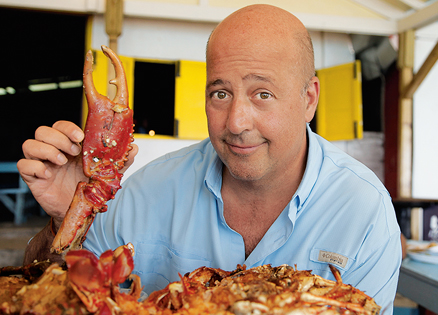
I get asked to speak to a lot of different groups, one of the best parts of my job hosting a show on the Travel Channel, Bizarre Foods with Andrew Zimmern. I take viewers to the far corners of the globe and introduce them to other cultures by exploring the foods they eat—at times, pretty strange stuff.

If there’s one thing I’ve learned after a lifetime of dining on delicacies like blood pudding, sea squirts and camel kidneys, even folks who wouldn’t come within 100 yards of a Cambodian tarantula want to hear what it’s like to chomp on one!

That, ostensibly, was why I was here. I was speaking at a fund-raising gala for Services for the Underserved. SUS helps people with developmental disabilities, HIV/AIDS , the mentally ill and homeless veterans.

It’s an organization devoted to supplying housing and supportive services to all of the underserved communities of NYC. I’d come into town on the early side so I could tour their residential facilities for veterans.

I’d met Jimmy in the common room. We struck up a conversation and I asked if I could see where he lived.

“I’ve made a mess of my life,” he said. He told me how for years he’d struggled with physical and emotional problems, lost his marriage and his business. “I had nothing to live for. It just seemed so hopeless before I got help here at SUS.”

“I’ve been there,” I said, my voice just a whisper. “And not that long ago.”

I thought back to that day in New York City, early January of 1992. I’d checked into a cheap hotel with a case of vodka in large plastic bottles. “I had a plan. I was going to drink myself to death,” I said. Jimmy looked at me, his eyes wide.

I was 30. Everyone, my friends, my business partners, my family, had wisely turned their backs on me. My once-promising career as a chef and restaurateur was trashed. I’d spent most of the previous year squatting in an abandoned building, living with other drunks and junkies.

I didn’t believe in anything or anyone, including myself, and least of all in a Higher Power. The only thing I had faith in was the bottle.

I’d dreamed of being in the food business from the moment my globetrotting parents introduced me to the foods of the world during childhood trips to Europe and Asia.

I worked my way up the food chain, beginning with summer jobs in high school, then on to unpaid apprenticeships in restaurants in Italy and France, then to restaurants back home as a cook, then sous chef, executive chef and finally to a partnership in a foodservices development company and consulting group.

I’d worked in some of the best kitchens in the world, with some of the best chefs in the business.

Outside the kitchen my life was spiraling downward. I told myself I was in control, that I wasn’t really addicted at all. I used heroin to come down from coke, alcohol to moderate the pills. I had it all figured out.

But after a decade of this, my friends, people with successful careers and families, no longer wanted to go out when I called. No longer let me crash on their couches. No longer took my calls. More and more the people I hung out with were other drunks and addicts.

Jimmy nodded. “Yeah,” he said softly. “At first you don’t care. You just want to get high. But then…then it’s too late.” He stood up and walked to a dresser, framed pictures of a smiling family atop it. He pointed to a photo of a handsome young boy.

“My son,” he said. “He’s a great kid. I didn’t see him for years until I got the new start here.” He looked back at me and wiped a hand across his eyes.

“I know how you feel, Jimmy.” He sat back down and I continued my story.

I was walking a tightrope. I got kicked out of my apartment, then another one. One morning a restaurant owner I was consulting with found me passed out on the floor of his establishment.

“This isn’t working,” my partners finally told me. “We’re through, Andrew.” I was screwing up my own life but they weren’t about to let me screw up theirs.

That night I went to a dive bar, drank myself senseless, then followed a group of drunks back to the building they were squatting in, in lower Manhattan. I stayed there for almost a year, watching all hope drain out of my life. I was a loser. I couldn’t take it any more.

That’s when I went to the flophouse. I lay in bed and guzzled vodka till I passed out, woke up and started again. Days went by. I was down to my last bottles of booze. I couldn’t understand it. I had nothing to live for. Why was I still alive?

Then one morning my eyes slowly, groggily opened. There was the bed. And the floor littered with empty bottles. But…everything was different. I couldn’t explain it, but it was as if someone turned a light on. Was it hope? Was it real?

The Ace bandage of anxiety and misery I wore around my chest wasn’t there. The ache to make the day go away wasn’t there. The fear just wasn’t there, for the first time in 15 years.

I grabbed the phone and called the only person I could think of who might listen to me, a publisher who’d been my best friend for 20 years.

“I need help,” I pleaded. “Please. Please come get me.”

“Don’t go anywhere,” he said. “I’ll be there in half an hour.”

I had escaped that hotel with my life, but I was still an addict. By the time I got to my friend’s house I was already backpedaling, scheming, telling him I didn’t need anything more than a loan. I could fix my problems.

The next morning, not five minutes after he left for work, I broke into his liquor cabinet. This time I would stay in control.

Each day for three days he asked me what I was going to do. He asked me to meet with another friend who’d been sober for a year or two. I agreed to meet her at a restaurant for coffee. When I got to the restaurant the back room was packed—filled with people I’d thought had long since forgotten me.

“We’re taking you to the airport,” one friend said. “You’ve been admitted to a Hazelden treatment center in Minnesota. They’ll be able to give you the help you need.”

Jimmy slapped his hand on the bed. “You had an intervention,” he said. “Me too, once. But it didn’t take.”

Mine either, at least at first. I went willingly to the airport because I had nowhere else to go, but after several days in treatment I was a mess.

All I kept hearing about was a spiritual solution to my human problem, a new way of living that would put my life on a different footing, if only I could find a way to turn my life over to a power greater than myself. Seriously? I was supposed to believe there was someone out there looking out for me?

C’mon. If there was an almighty anything in charge, he was doing a pretty lousy job. So day after day I filled the pages of my workbook where I was supposed to write my feelings with one word: HOPELESS .

One day my counselor came into my room. “I know you don’t believe in anything, let alone a God who is personal to you, Andrew. I get that. But you better find something you can believe in or we’re just wasting each other’s time here.” Then he turned and left.

Were they going to kick me out? I was in Minnesota in the middle of winter! I didn’t have any place to go. Suddenly, I was overwhelmed with a terrifying sense of desperation, of utter separation from the world, of complete isolation.

Once again the rules had been laid out. Find a Higher Power, and you will get well. And once again I knew that the solution to the problem would elude me.

I walked outside and stared up at a tree near the building, its skeletal branches stretching toward the sky. “If you’re out there, you’re going to have to show me something,” I said, looking up, begging. “I need to know I can really do this. That you’ll be there for me. You have to show me something, anything.”

I was from New York. I needed something real, like a burning bush.

But all I heard was the freezing wind whistling through the branches.

I went inside. It was dinnertime. I sat down next to a guy I recognized from the in-house meetings. I didn’t know him well. He nodded. “How’s it going?” he said. More like a grunt really. I doubted if he cared.

“I don’t know,” I said. “This stuff just doesn’t make sense to me. I mean, I can’t believe…”

“Look,” he interrupted, somewhat rudely, I thought. “Recovery is like a recipe. There’s the twelve steps, there’s God and there’s you. Put them together and maybe you can stay sober.”

I explained I didn’t know how to find God, and he told me about the promises of the 12 Steps. That by following Good Orderly Direction and the wisdom of the sober community I would come to believe. I didn’t need to believe at that moment, I just needed to believe in a future where I would.

I didn’t know if I should feel insulted or enlightened. There was a recipe. I could understand that. A phrase I’d heard over and over, “Keep it simple,” finally made sense. Read the instructions and follow the recipe. Stop fighting it. It all came together in an instant.

“No, Jimmy,” I said. “I didn’t get a burning bush. I got a grumpy dude who finally got through to me by saying the thing I needed most at the exact moment I needed to hear it. It saved my life.”

I put my arm around Jimmy. His eyes turned to the pictures of his family. “They haven’t forgotten you,” I said. “They’re just waiting. Don’t give up. It gets better. Way better. Even if you can’t imagine how.”

We walked back to the common room together. “Thanks,” he said. “I’m grateful that you came by. I was a soldier once. I’m not going to give up.”

I don’t know what happened to Jimmy. I haven’t seen him since, though I pray often for him. I am grateful every time I can share my story with another addict or alcoholic.

I am grateful to have my life back and for the friends and family who never gave up on me, for a God who was there when I was ready to find him. I am grateful for so much, that every day, one day at a time, is Thanksgiving.

Andie MacDowell on Small-Town Roots

The first thing I thought when I read the script for the Hallmark Channel series Debbie Macomber’s Cedar Cove was, I know this place.

I was being offered the lead role, the part of Judge Olivia Lockhart, and there was a lot about her that resonated with me: her strength, her desire to do the right thing, her compassion, her dedication to her job.

Sweet Carolina Mysteries In Article Ad

But more than all that, I knew the small town she lived in. And I know, deep in my heart and soul, the wonders and blessings of such places. If you grew up in a small town, like I did, you might travel far away, even move to a big city for work, like I did, but you’re never really far from your roots.

My hometown of Gaffney, in upcountry South Carolina, with its blossoming peach trees and Southern drawls, is thousands of miles from the mist-shrouded coast of the Pacific Northwest, where the fictional Cedar Cove sits, but they have that same small-town spirit.

Take a walk down Main Street and you’ll find a diner with good down-home cooking and a waitress who knows what you’re having without even asking, a barbershop where every play in the Friday night football game is dissected and debated, a town square with a bronze statue of a local hero.

What I learned in Gaffney is that people always make time for each other. You don’t just wave and walk on by. You stop and chat…and chat…and chat some more.

If someone gets sick, neighbors rally round them. If a historic oak tree, rumored to have been there since before the Revolutionary War, is threatened by highway development, everybody signs petitions and writes letters to the town paper until that road gets rerouted.

In a small town everyone knows you. Folks in Gaffney would stop me on the street. “Rosie, how are you?” “Rosie, tell me about your mother,” “Rosie, are you and your sisters going up to Asheville again for the summer?” they would say, calling me by my given name (I was christened Rosalie Anderson MacDowell).

There were times, especially when I was a teenager, that I wondered why everyone had to know each other’s business. Now I’m so grateful for small-town friendliness. I’d go so far as to say it’s lifesaving.

Isolation is one of the great sorrows of our modern world and loneliness is the cause of more suffering than anyone knows. Slowing down (better yet, sitting down for a spell) and sharing your news, good or bad, definitely keeps you connected.

It’s important for us, as spiritual beings, to feel as if we belong somewhere, that we’re part of a community, where we care for each other and stand up for each other.

And where we celebrate together too. In Gaffney we had Easter egg hunts in the park. Veteran’s Appreciation Day. On the Fourth of July kids decorated their bikes with red, white and blue streamers and rode in the town parade.

We had hayrides come autumn, and at Christmas everyone had a role in the pageant (there were lots of little angels with paper wings and tinfoil halos).

Then again, every Sunday felt like a holiday, a special time set off from the rest of the week. Mom played the organ at church, and I loved being there with her before the congregation arrived, listening to her practice. Those were some of the sweetest moments of my childhood.

She died when I was 23, but I can still hear the hymns she played, the music echoing off the church walls. Songs like “In the Garden,” “For the Beauty of the Earth” and “O For a Closer Walk With God,” that will stay in my heart forever.

After church, my grandmother—we called her Mimi—would have the whole extended family over for Sunday dinner (she was a wonderful cook).

Summer days seemed to go on forever, in the best possible way. My sisters and I played kick the can until it got dark, when we would catch lightning bugs. We picked the plums off the plum tree so Mom could make jam.

When we went to stay at Mimi’s summerhouse in the mountains of Asheville, North Carolina, we swam in a freshwater pool across the road, where the water was so cold we screamed when we jumped in, but then could never be coaxed out.

Mimi put our towels on the boxwood hedge as a sign that it was time to come inside.

We put on plays in the garage that we wrote ourselves and we went around the neighborhood selling tickets for a penny apiece.

We hardly wore shoes all summer except to go to church or the library. I’d wander barefoot down the wide sidewalks, into neighbors’ backyards and their houses if I needed a glass of water or sweet tea. 

I can’t think of anyone who ever locked their doors, and when I read the script for Cedar Cove I had to laugh at the moment when Olivia teases the newcomer in town, a newspaper editor, for locking his car.

Are there still places where people trust each other enough to leave their doors open? Are there still small towns where neighbors drop by just to share their homemade peach cobbler? By my thirties I had pretty much decided places like that belonged to a bygone era.

I’d moved from the South to make my career in the entertainment business. In New York and Los Angeles life was hurried and harried. People came and went, work their top priority.

My career was important to me (and still is) but I felt like something was missing, something centering. What did I want for my children? What could I give them?

A small town.

I found one in Montana, a speck of a place in a valley surrounded by snow-covered mountains. I kept the family tradition of making Sundays a special time to come together, slow down and focus on our spiritual lives.

We’d drive into Missoula for church, and then have breakfast at Paul’s Pancake Parlor. At Christmas it was just like back home in Gaffney, houses decorated with lights, kids meeting up on the hill with their sleds.

There’s a little church down a long dirt road that’s only open for the holidays and everyone in the community would pitch in with the Christmas service. My kids sang and I read the Christmas story from Scripture.

Then I found another place like that, right where I had come from.

Well, Asheville isn’t exactly a small town, but many of the blessings I remembered from my childhood still remain. The library, the wide sidewalks, running into people who wanted to stop and chat…and chat…and chat some more.

I had to slow way down. “Rosie, did you hear what happened to…?” Here I was Rosie again.

My kids were the ones decorating their bikes for the Fourth of July parade, hanging out at church with the youth group and taking part in the annual donkey walk on Palm Sunday down to the monument in the park.

And we’d go to those quirky celebrations that are such a part of life in the South, like the White Squirrel Festival in Brevard and Coon Dog Days in Saluda. It’s no wonder the seagull-calling contest in Cedar Cove felt so real to me.

Not everything’s the same in Asheville. The rambling house where Mimi summered is now a bed-and-breakfast and the freshwater pool where my sisters and I swam is long gone, but I can look up at the windows of the room where Mimi slept and remember saying prayers with her every night.

We knelt by her bed, closed our eyes and listened as she prayed for Mom, Dad, our pets, the weather and always for us, knowing that we were blessed by her as much as we were blessed by God.

Of course, you can pray anywhere. But in small towns you always know someone else is praying for you. Someone who stops to ask, “How are you?” and stays to listen to your answer. Someone who knows when you need some of her homemade peach cobbler.

People really feel a sense of belonging and they look out for each other. That’s the biggest blessing of a small town—the people.


Download your FREE ebook, A Prayer for Every Need, by Dr. Norman Vincent Peale

An Artist Inspired to Look Ever Upward

What does an angel look like?

I was asking myself this question not long ago at an exhibit on turn-of-the-last-century painter Henry Ossawa Tanner at the Pennsylvania Academy of the Fine Arts (the stunning retrospective moves to Cincinnati Art Museum in May and the Museum of Fine Arts, Houston in October).

Witnessing Heaven In Article Ad 827x123

Tanner has always been a favorite of mine ever since I saw his painting of “The Annunciation.” There the angel Gabriel is simply a shaft of light, almost like something from Star Wars. It trembles before a realistically youthful Mary in the corner of a Galilean house, the bedclothes crumpled at her feet.

No pretty cherub with wings and a lily, this electric bolt gets an immediate response. You can see it in Mary’s expression, a combination of terror and awe. Why would God send his angel to her? Why was she of all women chosen?

It’s as though this brilliant messenger has just told her “Fear not,” and the message is slowly dawning on her.

Evidently Tanner used his own wife as a model for Mary, and here you get a glimpse of his own poignant story. She was white. He was black, his father a bishop in the AME church. His mother was a former slave who escaped through the Underground Railroad.

Born in Pittsburgh in 1859, Tanner spent the bulk of his career in France. He exhibited year after year at the Paris salon where he won prizes and international fame. Americans collected him and promoted his work.

But in that era he never would have prospered if he had stayed in his homeland. As he once observed, if he were walking in an American city with his blond-haired son, he’d be mistaken for the boy’s servant.

At first when he arrived in Paris in 1891, he did some black genre paintings, but most of his work is drawn from the Bible. That was a good professional choice. Biblical scenes were popular at the time, as the curator of the exhibit, Anna Marley, told me.

But there was nothing cynical about his approach. Tanner is that rare modern artist, both religious and spiritual, a mystic and realist.

Take his picture of Jesus appearing to Nicodemus on a Judean rooftop in the middle of the night. In an early sketch he drew a halo above Jesus’s head, but in the finished version, he shows the transforming power of Jesus with golden light illuminating his face and chest.

In the painting that first won Tanner fame, “The Resurrection of Lazarus,” he made sure that Jesus appears as a man who felt his followers’ pain. After all, this comes on the heels of that shortest-verse-of-the-Bible moment when “Jesus wept.”

Like his father the bishop and scholar, Tanner revisited Biblical passages to mine them for their meaning. One scene he painted again and again was Mary and Joseph’s flight into Egypt, the two escaping in blue-lit shadows through rough terrain.

Was this a reference to his own flight from his native country? Perhaps.

He painted Daniel in the lions den twice, a meditation on imprisonment and slavery. After all, Tanner was born before the Emancipation Proclamation and lived through the sorrow of the Jim Crow laws.

And yet there is always hope in a Tanner picture. One of my favorites, the last painting he ever did, in 1936, is “The Return from the Crucifixion.”

Mary and the disciple John’s face are shrouded in sorrow and misery, but the sky behind them is dazzling with purple, blue and gold. It is as though Tanner is saying, “Look up. The story isn’t finished yet. Something glorious is still ahead. Just wait. It’s going to happen soon.”

Tanner made many trips to the Holy Land to give verisimilitude to his work. He did countless sketches of clothes, buildings, landscapes, but the world his work inhabits is one of a mystical space beyond time and place.

When he painted Jesus walking on the water of Galilee, the water shimmers brighter than the heavens. If the disciples would only look to it they would see the beauty of the world rather than their fears.

When he painted the shepherds in their fields watching their flocks by night, he did it from the sky. He takes a viewpoint among the angels, looking through their diaphanous wings.

What does an angel look like? I found the most satisfying answer to that question in Tanner’s painting of the three Marys on Easter morning.

The wall of the city of Jerusalem is just barely visible in the background and the light of dawn is just appearing. The women are shocked and amazed. The heavy stone at the tomb has been rolled away, the body is no longer there. What has happened?

The angel says to them, “Fear not, for I know that ye seek Jesus which is crucified. He is not here for he is risen.” According to the Bible, this angel had a countenance “like lightning and his raiment white as snow.”

But Tanner doesn’t show the angel. What you know about him is the wonder and joy in the women’s faces, the radiant light illuminating their clothes and hands.

How do you see an angel? You see him in those whose lives have been changed forever when they met him and heard him say “Fear not.”

Tanner suffered through an era of terrible prejudice and bigotry. In one devastating example he told of being kicked off an American streetcar in a raging snowstorm because he and his mother were black. But he did not remain bitter.

What he finally had to communicate was the good news. Fear not. Look to the sky. There is hope. Easter has come.

Download your FREE ebook, True Inspirational Stories: 9 Real Life Stories of Hope & Faith