Embrace God's truth with our new book, The Lies that Bind

A Heavenly Retirement Send-off

It was never going to happen. Not even my family was planning to make a big deal about my retirement from the Army. After all, I was a humble chaplain, not a five-star general. No one would be unveiling a statue in my honor. The president wouldn’t be calling.

Still, I’d served my country for 36 years, on active duty and in the reserves. In Vietnam and Oman. I’d graduated from West Point, the class of ’64. My service seemed worthy of some kind of recognition. I didn’t want to just slip away unnoticed.

I had this crazy idea, a kind of Walter Mitty fantasy, the most perfect send-off I could imagine. I wanted a parade.

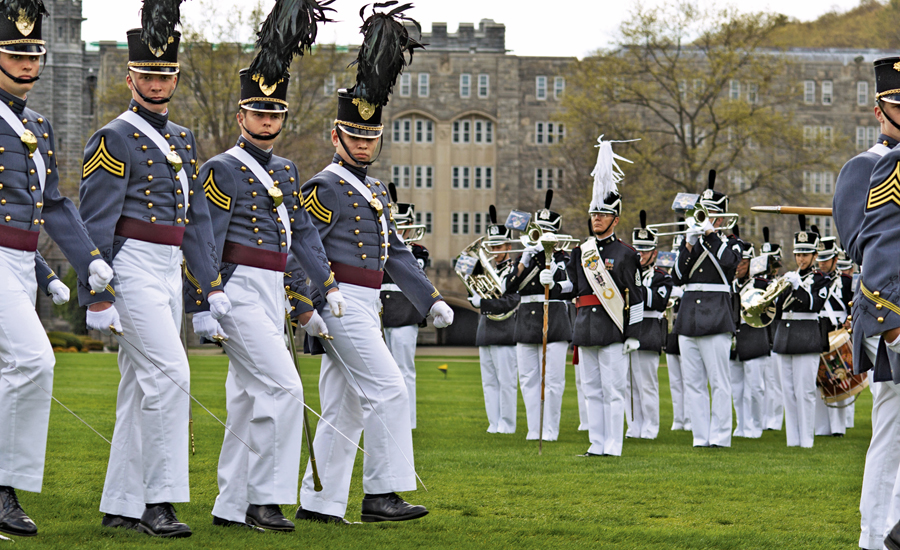
Not just any parade. I could picture it: Me, Chaplain Colonel Arthur Mack, in my shining moment, standing tall in my dress uniform at West Point, shoes spit-shined, looking over a vast green field while cadets marched past, each company snapping off a salute, a band playing the Army song.

I know. Dream on. The thing was, I’d had this idea way back when I was a plebe, marching across the Plain, our parade field, surrounded by the beauty of the Hudson Valley. We marched at least three times a week, drilling until we could step off perfectly in sync.

It was serious business, even more a part of our training than marksmanship and close-quarters combat. It was about discipline and precision. Each company was graded on its performance.

Of course, it was partly pageantry too. At West Point, parades were part of special occasions, the ultimate sign of respect. We marched in President Kennedy’s inaugural parade, and for General Douglas MacArthur’s farewell address.

There were less historic occasions as well, such as when staff or faculty retired. That’s where I got the idea. One sweltering May afternoon standing at attention on the Plain, I couldn’t help but think how wonderful it would be if someday the cadets would march just for me.

That would be the all-time best way to retire. I smiled at the thought. I was 22. I couldn’t really imagine being old enough to retire.

I graduated and went on to Ranger school. In 1966, I was sent to Vietnam. My heavy-artillery regiment was stationed in a village outside Saigon. I came home a different person. I’d seen the effects of war.

I loved the Army, but I wanted to find a different way to serve, a way of connecting more deeply with other soldiers. I prayed about it and talked to my minister about becoming a chaplain. “I’ll recommend you for ordination,” he said.

Now I could look back and see the path that God had set out for me, every assignment—from Fort Monroe, Virginia, to Fort Richardson, Alaska—leading me to this point in my life, pastoring a small Episcopal church near Buffalo, New York, full-time, and ministering at a Reserve hospital in Niagara Falls when my unit had drill weekends.

The camaraderie of a military unit, the opportunity to be a comforting presence for so many wonderful young men and women, to be part of something greater than myself…I was going to miss all that. At least with a parade I could go out with a bang.

But as my retirement date, October 1996, drew near, I had to face the facts. I was nobody. The idea of a parade just for me was ridiculous.

Then I saw a notice for a chaplain-training conference at Fort Dix, New Jersey. It was in September, weeks before my time was up. I could stop by West Point on the way back to Buffalo.

I might be able to watch the cadets practice marching. I could stand in the shadows and pretend they were marching for me. When I left for Fort Dix, I packed my dress uniform, just in case.

By the last day of the conference, all I could think about was going to the academy. I got my hair cut and shined my shoes until I could see my reflection in them. I was excited, but I felt a little silly. It wasn’t like anyone was expecting me.

I got to West Point about noon. At the Office of Graduates I asked if there were any parades scheduled. “Yes, sir, there’s one at sixteen hundred.”

I had lunch at the officers’ club, then strolled over to the chaplain’s office and chatted for a while. I spent the rest of the afternoon walking the grounds. By 4:00 p.m. the long-awaited time had arrived.

I stood at the bleachers. The Plain was empty. I waited for 15 minutes. Finally I saw a few cadets clustering around a microphone. I walked over. When they saw me in my uniform, my silver eagles shining in the sun, they stood at attention and gave me a sharp salute. I returned their salute.

I told them I was a sentimental old grad who would be retiring soon. “I just came to see the parade,” I said.

“Sir, there is no parade today,” one cadet said. “There will be one next week when General Vessey receives the Thayer Award.” I tried to hide my disappointment at the news, but it felt as if my whole body were wilting.

“We are having a practice to prepare for the visit and we need someone to fill in for the reviewing officer,” she added. “Sir, would you be willing to do that?”

Inwardly ecstatic, I calmly asked, “What exactly would I do?”

“Stand on this spot and when it’s time I’ll signal you to give the command ‘Pass in review.’ The cadets will pass in front of you and salute.”

I strode to my spot. One after another the companies of cadets marched onto the field. In my strongest command voice I gave the order, “Pass in review.” In perfect formation the cadets marched in front of me and saluted, the band booming in the background.

I doubt any five-star general could have felt more excited and honored than I did at that moment. It was the retirement parade I’d always dreamed of, but never imagined possible. I lifted my eyes to the sky. Thank you, Lord, for looking out for your servants, even this not-so-humble one.

The cadets pivoted and marched off the field, a long gray line I would always be a part of.

Download your FREE ebook, True Inspirational Stories: 9 Real Life Stories of Hope & Faith.

A Healing Practice: This Calming Technique Helps Manage Chronic Pain

If you suffer from chronic pain—particularly chronic back pain—you are far from alone. Since 2010, chronic pain has been considered to be a health condition in and of itself—and an estimated 100 million American adults experience chronic pain each year.

There are myriad approaches to coping with and reducing chronic pain. Among non-medical interventions, calming, mindful practices are supported by research, such as one study that showed an immediate benefit to those who practiced a “body scan” technique. The study reported reduced pain levels and distraction caused by pain after the practice.

A body scan is a mental exercise in which you move your attention over your entire body and notice sensations without trying to change or “fix” them. This is an easy technique that you can practice anywhere, without any special equipment, apps, or even a quiet space (though guided meditations and quiet, peaceful surroundings can certainly help you relax).

At first, a body scan might seem counterintuitive as a way to manage chronic pain—if you are focusing your attention on parts of your body that are in pain, won’t that exacerbate the feeling? Psychologists and other researchers suggest the opposite; building awareness of specific sensations in your body, even if they are uncomfortable, will help you keep your pain in perspective and, over time, learn to manage it.

A body scan is easy to do:

  • Find any comfortable position—lying down, sitting, or standing comfortably all work.
  • Take a few deep breaths, bringing your attention away from eternal stimulation and into your inner world.
  • Choose whether to start at the top of your head or the bottom of your feet. Direct your attention to either place in your body.
  • Notice any sensations in your body as you mentally scan yourself either from top down or bottom up. These can include temperature, muscle tension, achiness, alignment, or simply the feeling of one part of your body connecting with the adjacent parts.
  • When you encounter an uncomfortable place in your body, breathe deeply and focus on that area. Be curious—what happens when you calmly breathe into the tight spot?
  • Continue until you either reach the top of your head—mentally releasing any tension you feel upward—or the soles of your feet—grounding yourself in the earth.
  • Take a couple of final deep breaths before moving on with your day.

Have you tried a body scan? Has it helped you relax or cope with chronic pain?

A Guardian Angel Named Floyd Henry

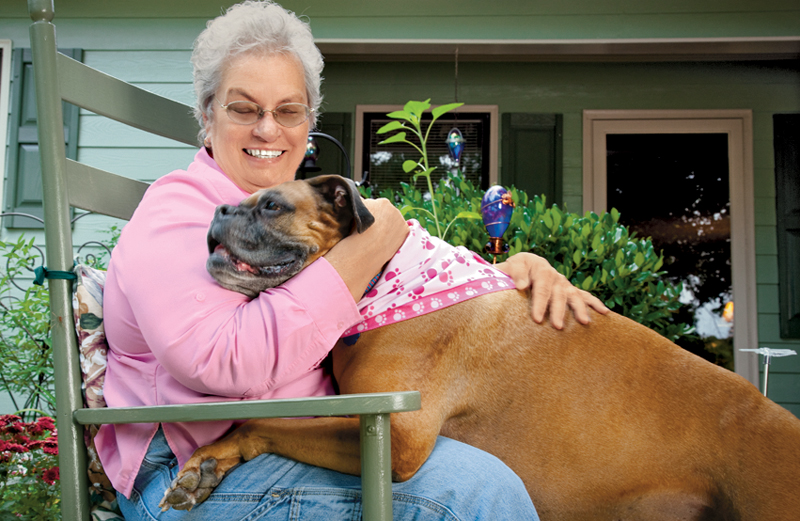
Dogs have always held a special place in my heart. Where others might just see an animal, I see a part of my family. So when my boxer, Floyd Henry, came up to me one evening while I was sitting on the sofa, I put down my novel and leaned in to give him a hug.

“Come here, boy,” I said, holding out my arms. He put his paws up on the sofa cushion and settled into my embrace. But then he reared his big square head.

“What is it?” I asked. “What’s got you startled?”

Floyd Henry regarded me with a questioning expression. This is odd. Floyd Henry had never given me such a concerned look before. Not in all of the five years we’d been together. He sniffed at my nose and mouth. Then he snapped his teeth in my face.

“Hey!” I yelled. I couldn’t believe what had just happened. Floyd Henry was in no way, shape or form aggressive. And we didn’t ever play rough.

I took his head in my hands, gently, but firmly. “No!” I said. “We don’t do that.”

Floyd Henry didn’t back down. Again, he snapped at my face. “Bad boy!” I said harshly, although it pained me to do it. I never had occasion to speak to him that way.

I pushed his paws back down onto the carpet. “Go lay down,” I told him.

Floyd Henry trotted off. I picked up my book and settled back into the sofa. But I couldn’t relax. There had to be a logical explanation for Floyd Henry’s behavior. Was he trying to grab food I dropped on myself at dinner? Was he scared of something? My loving companion wasn’t making sense.

In a way, the very beginning of our relationship didn’t make any sense, either. I hadn’t been looking for a dog when I bought Floyd Henry. I noticed an ad in the classified section of the newspaper: “Boxer for sale.” I flipped the page and sipped my coffee. I certainly didn’t need another dog.

Since retiring from teaching I’d been fostering boxer dogs in my home. Many came to me with physical limitations and emotional scars. I was determined to help them overcome their problems.

When I was a teacher, I taught all of my students that they were special and had a reason to be on this earth. I believed the same for my dogs.

One of my charges laid his chin on my knee as I browsed the rest of the classifieds that day. My mind kept going back to that tiny ad. I turned back. Boxer for sale.

Find out more about one of Guideposts.org’s sponsors, Cancer Treatment Centers of America

With so many dogs already counting on me, why was I even giving the advertisement a second thought?

Curiosity welled up inside me. I wanted to know this dog’s story. Why was he being sold? Where would he go? I gave in and made the phone call. A man answered, and we arranged to meet later that day.

I heard barking as soon as I stepped out of my car onto the property. The storm door opened and a puppy ran out, his tail wagging. The man of the house shook my hand.

“My daughter brought the puppy home,” he explained. “But then she went off to college. My wife and I were looking forward to traveling now that we have an empty nest, and we just can’t keep him.”

Looks like I’m getting another dog after all. For whatever reason, God had put us together. We loved each other—so why was he snapping at me? I watched Floyd Henry settle onto his bed for a nap. I tried to put the incident out of my mind.

But Floyd Henry’s odd behavior continued. He furiously sniffed at my breath and snorted loudly whenever I leaned in close to him.

Four days after he initially snapped at my face, I leaned in for another hug. He swung his head sharply and bumped my right breast with his nose. Hard.

“Ouch!” The pain was so intense I had to take a breath to get my bearings. Why was my breast so tender? That day I scheduled a mammogram.

“Ms. Witcher,” the surgical oncologist said after examining the results, “there’s a mass in your right breast. We can give you a breath test to learn more.” All I had to do was puff air into a small cylindrical tube. The organic compounds in my breath were then tested in a lab. I had stage three breast cancer.

The reality of my situation slowly began to sink in. I had to start treatment right away. Thank goodness for that mammogram!

Then I remembered why I got it: Floyd Henry had been trying to alert me to the danger he’d smelled on my breath. He had even tried to show me exactly where the tumor was when he bumped me.

After my first treatment, Floyd Henry greeted me at the door. Like usual, he snorted and huffed at my face. But this time I thanked him. “You’re a good boy, Floyd Henry. A good boy, and an angel.”

One year of chemotherapy and radiation shrunk the tumor so that my surgeon could remove it. Throughout treatment, Floyd Henry was at my side. I’ve now been cancer-free for more than three years. My tumor was detected in time for treatment— thanks to the newspaper ad I couldn’t ignore.

We’re all put on this earth for a reason. Floyd Henry was put here to save my life.

Download your FREE ebook, A Prayer for Every Need, by Dr. Norman Vincent Peale

A Grieving Widow Receives a Sign of Hope

I walked up and down the aisles of the bicycle shop, fighting back tears. Michael is supposed to be here with me, I thought.

Two months before, my husband, Michael, died in a car accident. I tried desperately to keep a brave face for our two young boys but his death left a gaping hole in our hearts. Especially today. Michael had promised to buy our youngest a new bicycle for his eighth birthday. Now, here I was, doing it alone.

It was just another reminder of all the other things I’d experience by myself now. Birthdays, holidays, even our 18th wedding anniversary, just three weeks away. How would I get through that day without Michael?

Suddenly, a cherry-red bike caught my eye. It was perfect for my son. On my way to the register I spied another red bike—an adult one. My bicycle was unreliable for keeping up with two active boys, so I treated myself.

“Don’t forget to buy chains and locks,” the salesman said.The bicycle I’d picked for my son came with a matching set, but I looked all around the store and couldn’t find a set for mine. Lord, Michael was so good at this stuff. Help me, I prayed.

Just then, on the bottom shelf, I spied a red padlock and chain. A perfect match.

The day of our wedding anniversary I’d never felt more alone. I could’ve stayed in bed all day. But Michael wouldn’t have wanted that. “Kids, let’s go for a bike ride!” I grabbed our three bicycles from the garage, along with my lock and a pen to jot down the combination: 38, 18, 38.

Those numbers! I’d never need to write them down. Michael and I would’ve both been 38 years old on our 18th anniversary. A reminder I wasn’t so alone after all.

A Grieving Mother Finds Peace

I turned the flash drive in my hands, my fingers running over its smooth case. It didn’t seem right that the last months of my son’s life were contained in this tiny bit of plastic and metal and computer circuitry. It felt flimsy, inconsequential, the complete opposite of my Joseph, a natural leader with a big presence—strong, solid, comforting.

Losing him left a void in my life so painful I couldn’t see how anything could ever fill it. I’d lost a part of myself forever. My husband, Carey, had re­turned to work, and our two younger children had gone back to college. I couldn’t seem to get back to my normal routine. I went to church, but I couldn’t sing in the choir or play my flute in the orchestra without breaking down. I turned away from friends. Some days I didn’t even leave the house, as if being alone with my grief was the only way to hold on to my son.

Joseph was a sergeant in the Army’s 411th Military Police Company, stationed in Baghdad. The last time he called from Iraq, I asked if there was anything special he wanted when he came home on leave. “A big steak,” he’d said. “And I want to see the Gamecocks.” He was a huge University of South Carolina football fan. Carey and I bought tickets to a game. I could hardly contain myself. At night I would gaze at the sky and imagine that Joseph saw the same bright moon thousands of miles away in Baghdad. It made me feel closer to him. Soon, Lord, I’d think, soon he’ll be with me again, and we’ll look at the moon together.

That was before the call, the call every soldier’s mother dreads. One late September day, just a few short weeks before he was due home, Joseph was felled by an insurgent sniper. He died in surgery. He was only 25.

I should have been laughing with him as he hugged me so hard he lifted me off my feet, leaning into him as he yelled himself hoarse cheering for his beloved Gamecocks. Instead, I wept, sorting through the boxes the Army delivered. The men in his unit had packed up his belongings and returned them to me.

Here I was, months after the funeral, rummaging through Joseph’s things again, as if touching what he had touched could somehow bring him back to me. There were the laces from his boots, the desert dust still on them. The T-shirts that carried a hint of his scent. His Game Boy. The phone card he used to call home. The letters he’d saved—letters I’d sent in my care packages, every one sealed with a prayer for his safe return. Now the only prayer I could manage was for God to bring me out of this terrible, endless grief.

Joseph was my oldest, the only child from my first marriage. For a while, it was just the two of us. We were a tight team. Even after I married again and he had a stepfather and a younger brother and sister he loved, Joseph and I had a special bond. He was a big, strong kid. Loved to laugh and make everyone else laugh with him. He had a musical side and took up the cello. That pleased me to no end. I couldn’t wait for the day he joined me in our church orchestra. Only that day never came because Joseph discovered baseball. He put away his cello, and sports, not music, became his thing. In high school, he was the captain of the football and basketball teams. I was proud of him but a little concerned too, wishing he’d devote that same energy to his studies.

He graduated and, for a couple years, bounced around from job to job. Nothing seemed to be the right fit. My worries grew, and so did my prayers. Lord, I asked, let Joseph find his true purpose in life. Guide him.

Even so, I was upset—shocked—when he announced that he’d enlisted in the South Carolina National Guard. I begged him to reconsider. “Please, Joseph…you could get hurt.”

He was resolute. “Mom, this is what I really want to do,” he said.

Joseph thrived in the National Guard. He served with a military police unit and after a year, joined the Army. He did stints in South Korea and Iraq. First Tikrit, then Baghdad, where he was asked to help train Iraqi policemen. He loved his work. I could tell from the excitement and wonder in his voice when he told me about it that he had found what he was meant to do. He called in the afternoons, around three o’clock my time. The caller ID would come up Caller Unknown, but I knew it was him.

“Mom, you should see what I’m seeing,” he said. “The people here are really inspiring. I wish you could meet them.”

He promised to do the next best thing: Take pictures, tons of them. “I’ll put ’em all on a flash drive,” Joseph said. “We’ll have a big slideshow when I come home and I can tell you everything.”

That flash drive had been among the things the Army returned to me. For weeks I’d been staring at it, picking it up and putting it down again. At first I couldn’t bear the thought of looking at all of Joseph’s photos from Baghdad. What would be the point, if he wasn’t there to tell me the stories behind the pictures?

But with each day that passed, I felt like I was losing more of him, as if that connection between us was weakening, fading bit by bit like his scent from his old T-shirts.

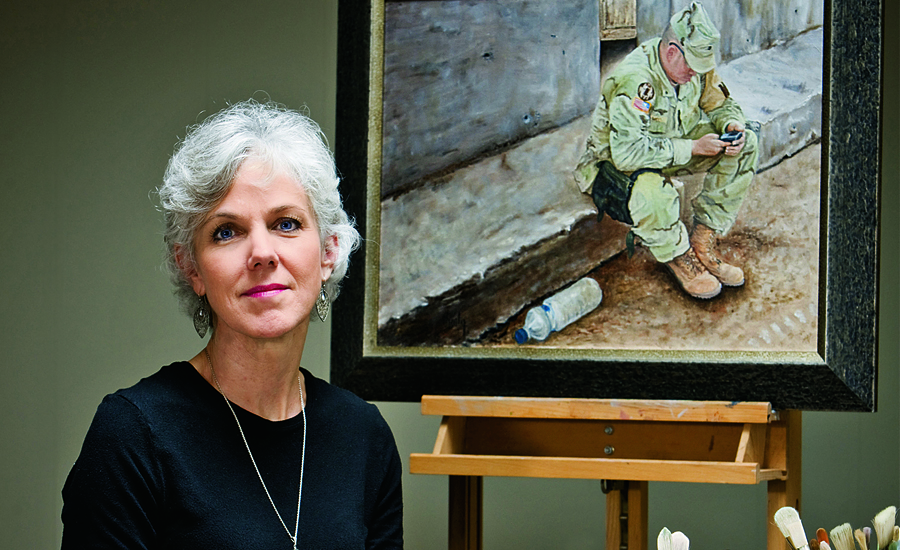
I looked at the flash drive now, so light in my hands despite the weight of what it might hold. Maybe it was time. I walked over to the dining table and stuck the drive into the port on my laptop. Joseph had saved hundreds of picture files on it. I clicked on one, my fingers trembling. The screen filled with an image of two soldiers standing guard at night. Click. A street in Baghdad, a mosque in the background. Click. An Iraqi policeman Joseph was training, his face lined, his bearing proud. Click. A bustling marketplace. Click. A G.I. sitting on a curb, calling home on his cell phone. Click. My son, hanging out in the barracks with the other guys in his unit.

Day after day, I went back to my laptop, going through the photos, one by one. Why did you save these pictures, Joseph? What did you want to tell me? The images haunted me. In a way, they became more real to me than my usual world of choir and orchestra rehearsals, lunches with friends. One picture in particular struck me. The two soldiers standing watch at night. They were in silhouette, a helicopter hovering, a full moon shining in the background.

Joseph Shealy in uniform The image was beautifully composed, and I wondered where Joseph had gotten his artistic talent. I was creative, but musically, not visually.

One day my friend Christy called. “Why don’t you come over for coffee this afternoon?” she said. I hesitated. “You need to get out, Suzy,” she insisted.

Carey had been telling me the same thing. I knew they were right. “Okay.”

It was nice to see Christy. She’d put new pictures on her walls since the last time I’d been over. Lovely paintings of flowers. Bright, sunny, vibrant. I leaned close to see the name of the artist. It was Christy. “I didn’t know you could paint!” I said.

Christy laughed. “I didn’t know either, but I started taking this class and I really got into it,” she said. “When I paint, every care I have seems to melt away.” She grabbed my hand. “Come with me next time?”

I’m not sure why, but I did. The feel of the brush in my hand, the smell of the oil paints, the richness of the pigments…something in me eased and calmed as I put those colors on the canvas and filled the expanse of white with meaning. From the canvas through the brush up through my hand and to my heart, I felt a connection. To what, I wasn’t sure.

Once I did a few practice canvases and had the basics down, the instructor asked me to choose a subject for my first original piece. “What do you want to paint?”

That night, after the dinner dishes were done, I set up my easel in the kitchen and took out my paints. I thought I’d paint something bright, like Christy’s flowers. Maybe the bowl of fruit on the counter. I closed my eyes and was startled by another image: Two soldiers silhouetted in the moonlight, a helicopter in the tawny sky behind them.

I went to my laptop and printed out the photo. Then I clipped it to my easel, dipped my brush in the paint and started in. When I got to the moon, I paused, remembering those nights I used to gaze at the sky and think of Joseph seeing the same moon far away in Iraq. I still felt the ache of loss, but there was a peace too, a peace that I knew could only come from God, a God who was taking me by the hand and leading me through my grief. I touched my brush to the canvas again, filling in the last piece of the painting with soft strokes.

I set down the brush and sat back. My eyes went from the painting to the photo my son saved. Joseph was with me. We were looking at the moon together.

Now I have an art studio behind our house. I paint almost every day, the images on Joseph’s flash drive my inspiration. I will never know the stories behind all those pictures, but when I work on a painting I see the world my son saw, and I feel close to him again, in a way only God could have helped me find.

A Gratitude Journal Improved Her Outlook on Life

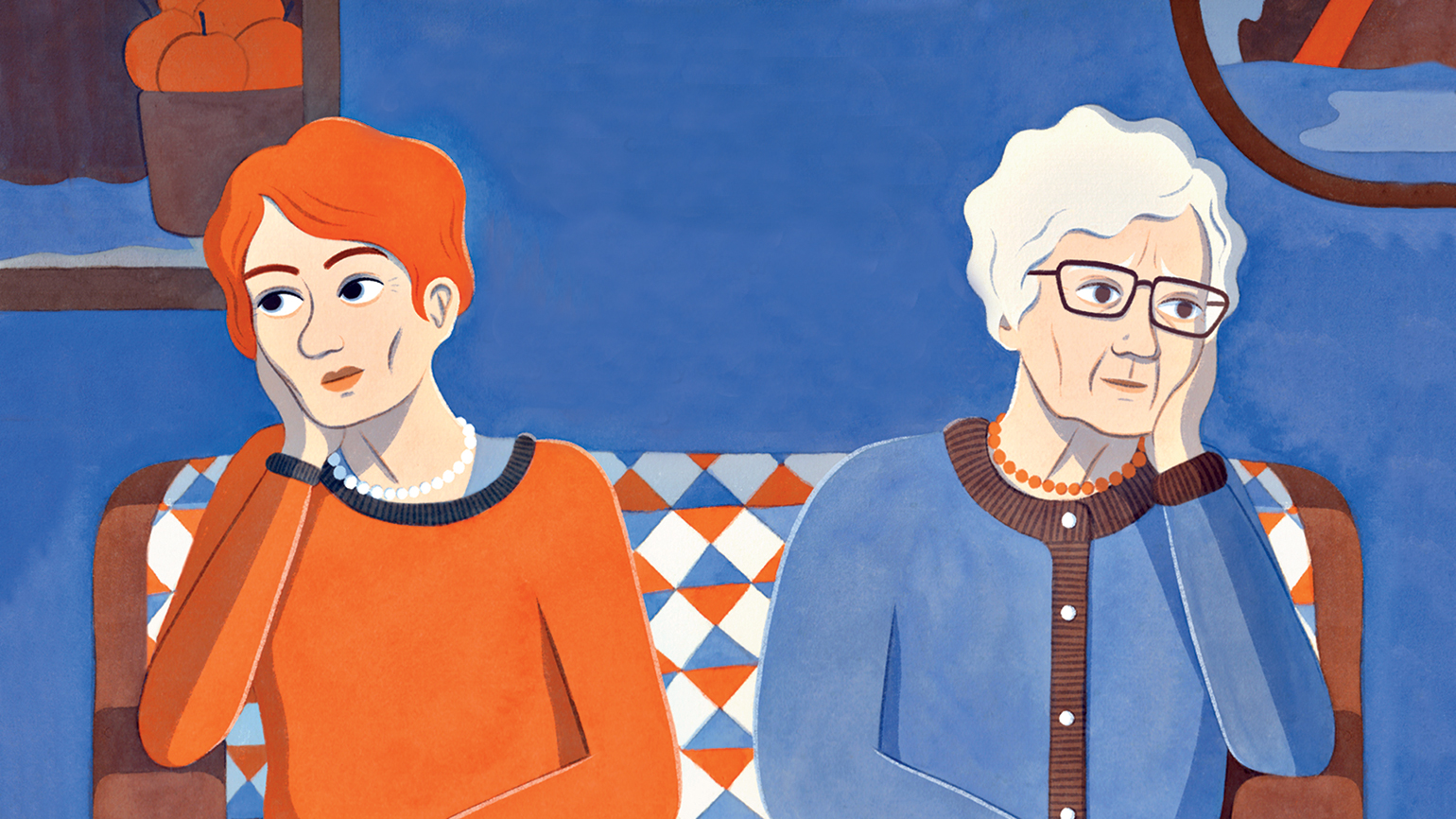
In early 2014, when she was 86, Mom relocated from the mountains of northern California to the prairie of rural Illinois to live closer to us. My husband, Kevin, and I found a lovely apartment for her in an assisted living facility. I was happy to help take care of my mother. Until she arrived. The day after Mom moved into her apartment, she called me to complain about the food at the facility.

“That broccoli at lunch was overcooked. And the pizza crust was like rubber. I couldn’t even eat it.”

“Can you talk to the management?” I said. But I already knew the answer, more or less.

“No, their weekly council meetings, when residents can give their suggestions, are too early in the morning. Besides, I don’t want to complain.”

“Mom, you’re complaining to me. Wouldn’t it make more sense to tell someone who might be able to fix the problem?”

“I’m not complaining to you. Just sharing how I feel.”

We hung up. I closed my eyes and massaged my temples. This was only her second day here. She’ll adjust, I told myself. But week after week, Mom found more to gripe about. I tried empathy: “I’m sorry, Mom. That must feel so frustrating.” Still, she continued to vent.

Kevin and I took Mom to a nice restaurant for Mother’s Day. On the way back to her place, I asked Mom if she enjoyed the meal. I should have known better. “It was fine, I guess. But they had the air conditioner turned up too high—I about froze.”

“Why didn’t you say something, Mom? We would’ve asked them to turn it down.”

“I don’t want people to think I’m a complainer.” I shook my head and glanced at Kevin.

When we got home, Kevin said, “I’m sorry. I know it’s hard to listen to your mom whine day after day.”

Not just hard. Discouraging. Depressing. “I don’t know why it upsets me so much. I grew up hearing Mom grumble.” Actually, a lot of my family members seemed to look on the dark side of life. Good thing I hadn’t inherited this tendency. I might speak up if the waitstaff in restaurants weren’t attentive or if people didn’t have good manners, but nothing like Mom.

At a monthly prayer meeting with my friends Beth and Dee, I spent 20 minutes sharing how Mom’s attitude irritated me. I asked for prayer that Mom would adjust to her new life, so I didn’t have to hear her complain all the time. Beth said, “Why do you think your mom’s gripes annoy you?”

“Because she seems ungrateful. After everything Kevin and I do for her, all we hear is what she doesn’t like.” As the words spilled from my lips, an uneasy feeling settled in the pit of my stomach.

The minute I arrived home, I found Kevin. I didn’t even take off my coat but stood in the doorway of his den. “Do you think I complain a lot, babe?”

Kev hesitated a few seconds before saying, “No, of course not.” But he stared out the window while he spoke. I realized that the family trait of whining had taken root in me. Kevin had never mentioned it. But it wasn’t like him to shine a light on my faults.

I decided to keep a better watch on my tongue. Things went fine for a few weeks. I rejoiced in my growth. But every time the phone rang and Mom’s voice was on the other end, the muscles in my neck and shoulders would tense. I felt a wall of defensiveness spring up. As if Mom were personally attacking me for the cold weather, her neighbors’ standoffishness, the fact that people at church didn’t speak loud enough for her to hear.

After each conversation, I’d stomp into Kev’s den. “How can Mom focus on the one or two things she doesn’t like about every situation? And why am I the only one she feels free to unload on?” The more I bit my tongue in Mom’s presence, the louder my complaining to Kevin grew. The same old complaints.

One night, I prayed, “You have to help me, Lord. My best efforts aren’t working.” It hurt my pride to admit I’d developed the same habit of whining that annoyed me so much in Mom, but I couldn’t deny it any longer. I felt powerless to change by myself.

A few days later, I received a package from my friend Torry. A bright orange journal with one word embossed in gold on its cover: Blessings.

On the first page, Torry had written, “Jeanette, I use a journal like this every day to write things I’m thankful for.”

The next morning, I snuggled into the love seat with our calico cat curled on my lap. I opened the journal and wrote the date, then three things I was grateful for. Number one, friends who encourage me. Two, my caring husband. And three, God’s provision. Contentment filled my heart. Maybe this was it. Not just the missing piece to help me overcome the whining but a joyous replacement. Gratitude.

Over the next few months, as I continued to list blessings each day, I noticed little things I’d been oblivious to. How the wind made the leaves dance. How the grin of a baby peeking out of a stroller lifted my heart.

Looking for things to thank God for led to a deeper shift in me. Life didn’t suddenly become trouble-free. But a new spiritual awareness of the blessings around me made me see how present God was in my life, handing out gift after gift. Including Mom, complaints and all. I couldn’t change her; I could only love her.

At a recent prayer meeting, my friend Dee noted how much my attitude toward Mom had improved.

“When you mention her, you don’t have that edge to your voice anymore,” she said.

Sometimes I still catch myself griping about hard circumstances and difficult people. This venture is not one of those new-attitude-by-Monday projects, but I’m not complaining. I’m grateful for the journey.

For more inspiring stories, subscribe to Guideposts magazine.

Agoraphobia: A Dark Fear Comes to Light

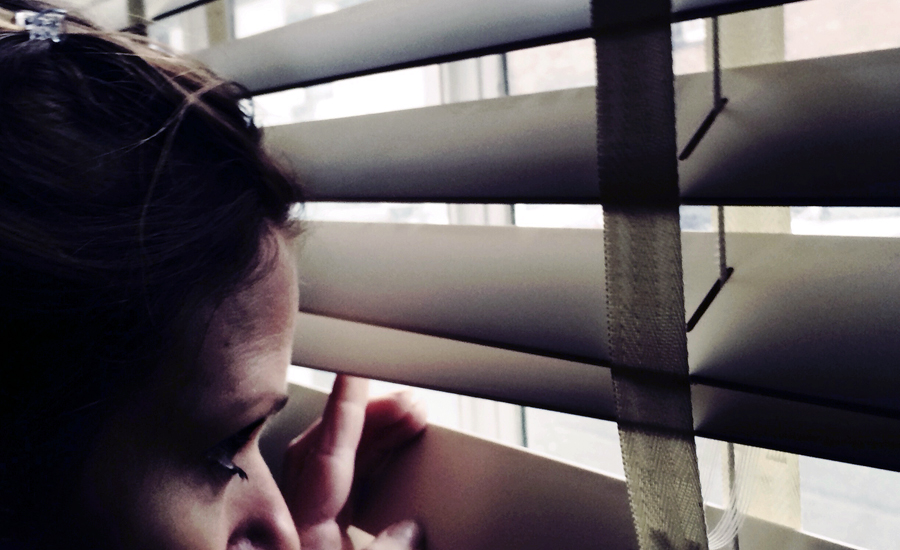
Even as I worked, I could feel it moving in, circling more tightly around me, focused and unswerving, like a wild animal sure of its prey.

Cold sweat began to moisten my forehead. In slow motion, my hands went on with the business of unpacking the boxes piled in the room. Keep working as if nothing is happening, I told myself. Maybe it will go away.

Earlier that October morning in 1980, in the thin light of dawn, my son Bryan and I had moved from the house we’d rented into this apartment. Then he had left for high school. I was alone now, trying to organize the cartons and furniture.

With numb fingers I shoved and tugged at a heavy box of appliances. The panic, the fear of losing control of my fear, circled closer. My heart drummed. I began to pant and tremble. An unpleasant floating sensation rippled through me.

Walking with care, as if on a cliff’s edge, I made my way to the front room and leaned against a window frame. Only a half-block away I could see the house we’d had to move from because it was to be torn down.

If I could just go back there and sit on my old porch, just for a few minutes, I know I’d calm down, feel safe again.

But suppose you get out on the street and start screaming hysterically?

Right now, my throat dry, I was trying to swallow the urge to do exactly that.

What if the neighbors hear you?

Upstairs I could hear the bustle of normal everyday family activity—a vacuum cleaner prowling, the squeals of small children playing games.

They’ll think you’re a mental case.

But I’m not, I’m not!

I knew what the name for my trouble was: agoraphobia, a chronic state of fear. But who out there had ever heard of agoraphobia? That was one of the problems. People didn’t know that other people suffer from it. And doctors hadn’t found a standard form of treatment.

Push, pull, push, pull. I wanted to run, but fear weighted my feet. The conflict tore at me. It seemed I had two brains: a weak one, well-intentioned, fighting for sanity and self-control; a stronger one, hell-bent on destruction, inviting stress and negative thoughts.

My whole being felt like a battleground. At any minute I might be blown apart.

Ever so carefully, I began to creep toward the bedroom. The room tilted. With the last of my physical strength I made it to the bed and, exhausted, I slept.

When I awoke, a few hours later, the immobilizing panic was gone. But it had been replaced by tension. I turned onto my back and began counting out the breathing pattern that Dr. Leaman, a psychotherapist I’d consulted briefly, had taught me. Inhale one-two-three, hold one-two-three, exhale one-two-three.

If only I had the money to go back to Dr. Leaman. The four sessions I’d had with him had helped me, but I simply could not afford to go on seeing him.

I thought back to what Dr. Leaman had told me about agoraphobia. “The dictionary calls it ‘fear of open spaces,’” he said. “But agoraphobia is much more than that. It starts with anxiety—the kind anybody can feel about something like missing a train, going to the dentist, job pressure, an argument, an unfamiliar situation.

When stress builds up, certain people—especially tense people who tend to be perfectionists—may experience sudden panic. The symptoms make them feel as if they’re going crazy. They begin to be afraid of panicking—losing control—and embarrassing themselves in public.

So they gradually stop going places where they expect to feel anxious. They don’t know that agoraphobia is primarily a conditioned body response—a behavior disorder that can be unlearned—not a mental illness.”

Dr. Leaman was just beginning to help me unravel my snarl of fears and taboos and develop relaxation techniques when the visits became too much of a financial burden for me to carry. Now I was trying to cope with my problem alone again, and losing the battle.

Our moving had triggered another attack of anxiety. I glanced nervously at my watch. Soon Bryan would be home, and I didn’t want him to find me cringing in the bedroom with nothing accomplished.

My whole timetable was rigidly aligned with my son’s schedule. I felt terror when he left for school, safe again at supper; terror if he went out at night with friends, safe at bedtime because he was home; then I’d lie awake, brooding about the agony that would begin again in the morning.

Bryan had to accompany me anywhere I went (never beyond the limits of our town). I didn’t dare visit relatives in nearby communities for fear of losing control, of panicking and maybe passing out. The same fear made me dread going to stores, seeing friends.

Even mailing a letter at the corner box was an ordeal. Anything that represented a potential delay in getting back to the sanctuary of home—lines at checkout counters, traffic jams—had to be avoided. A job was out of the question.

I got up wearily and went back to the unpacking chore, still thinking about what a burden I’d become to my children. I’d been divorced in 1969 and the agoraphobia syndrome had begun in 1972.

Increasingly, over the years, my older child, Brenda, and Bryan had accommodated their outgoing lives to my ingoing one. Recently, Brenda had had to choose between going away to college and staying home with me. Though she’d gone off to school, I knew she felt guilty.

That left Bryan alone to cope with a nearly housebound mother. I dragged a heavy chair into a corner. Just like Bryan has to drag you around, my mind nagged.

That night, over supper, I asked my son the ritual question, hating myself. “Staying home tonight?”

Eyes on his plate, he shook his head. “Nope, Cary asked me over to do homework and listen to his new records.”

We both knew why Cary—or any of Bryan’s other friends—was never invited to our house. I was too afraid of having a panic attack.

When Bryan got home I was in bed, but still awake. I listened to the welcome sounds of his presence—the refrigerator door opening and closing, water running—and to the unwelcome, whining voice in my mind: Soon he’ll be leaving home to find his way in the world like any young man. What will you do then?

I did not dare let myself weep aloud. If I gave in, I might go crazy. Instead I sat up on the edge of my bed, hugged myself and rocked back and forth as tears trickled slowly down my cheeks.

Then, for the first time since my teen years—when I’d become convinced that God didn’t love me—I found myself talking to Him instead of myself. I didn’t say His Name, and the words were an ultimatum, bitter and angry. Either let me get well, or let me die and have peace.

During the next weeks, Bryan and I finished unpacking and getting the apartment in order. The nights he went out, I tried to keep my mind occupied by crocheting. And often, when anxiety began to build up, I “prayed” my ultimatum. Heal me or take my life.

One day in early November an article appeared in our local paper, The Record Herald, about agoraphobia research at the Pittsburgh Institute. Phobics were interviewed, but most didn’t want their identities revealed.

Small wonder. Who wanted to risk being ridiculed—or having your family feel ashamed of you?

But at the same time, I felt a desperate urge to speak out. Agoraphobia was an affliction, not a crime. Impulsively, I took out a box of stationery and began to write a letter to the editor.

I admitted to being agoraphobic, encouraged him to publish similar articles, thanked him for the space, and signed my name.

Then, for two days, the envelope lay on my desk. I was having second thoughts. I could well understand why the interview subjects had chosen to remain anonymous.

The third morning, after Bryan had left for school, I sat down at my desk and picked up the letter. I wanted so much to mail it! Still holding the envelope, I let my head sink forward onto my folded arms.

The mailbox was only a few steps away from the house … I drew a shaky breath as my skin began to prickle.

In the far corners of myself I felt a stirring. Was it starting up again … the panic?

God.

The name exploded from my lips like a cork under pressure. And then the words poured out. “God, I’m so alone unless You’re there to help me. I need You to be in control of my life because I can’t be. and I can’t go on tormenting myself and my family this way.

"I’ve been talking to myself for all these years and it hasn’t done any good. From now on I’m talking to You … You’re in charge of everything. The fear, the panic, the whole mess that I can’t handle …”

Minutes ticked by. Almost before I knew what I was doing, I went out and mailed the letter.

Within two days it was published. That same evening, my phone rang. The caller said her name was Linda. She had read my letter and located my name in the phone book. “I’m agoraphobic, too,” she told me. Then, hesitantly, “Do you think we could help each other?”

Oh, God, thank You, thank You.

Linda and I decided to try to find out if there were others nearby like us. I called the Record Herald correspondent and asked if I could write another letter including my phone number.

After checking with her editor, she told me, “Yes, you can write another letter, but we’d like to do a story on you instead. How about it?”

Panic? Oh, yes! But I agreed to the interview. Then I wavered as the time for it drew close. Was it the right thing to do? I prayed again, asking God for just one more phone call so I would know if it was His will.

One hour after that special prayer, I received a second call—from Frieda. Then, as if God were giving me an extra measure of reassurance, I had a third caller—Judi—the same evening!

When the reporter came, she was compassionate and the interview went well. My third caller, Judi, had agreed to allow her name and number to be given in the story, and this took a lot of pressure off me. And calls did begin to come in steadily.

Whoever telephoned Judi got a follow-up call from me and vice versa. How we buzzed the telephone wires those first few weeks! And how I prayed!

I met Barb on the phone too. She, Judi and I took the initiative in meeting at Judi’s home to get acquainted in person and decide what we wanted to do.

On the evening of December 1, 1980, two months after my terrifying move, five strangers came together, frightened but excited. The success of that meeting led Barb to search out a room we could use to meet in on a regular basis. She found one at the Evangelical Lutheran Church in Waynesboro.

About 10 of us gathered at the church one cold night, while our families waited in their cars outside. Every one of us wanted to run away the minute we pulled into that parking lot, but every one of our little group managed to sit still in a strange room for 90 minutes.

That night, the Friends of Phobics was formed, and I supplied our motto: As God Ordained, Reach All People, Help Other Beings In Conflict.

Afterward, my son drove me home and I was so “up” that it scared me. I had forgotten how to feel good about anything! I prayed again, telling God that He was in control of whatever was to be, and again placed my life in His hands.

And He did work, drawing our group of new friends close, into a family. I was sure of His blessing because in time more contacts came about; when a need or question arose, it was somehow answered by a magazine or newspaper article or a personal experience shared by one of our members.

Information flowed in, public interest took hold, and we had several guest speakers from the psychiatric field—including Dr. Leaman—at little or no cost.

As a result of our meetings, we learned to trust each other, to express our feelings, cry together and laugh at ourselves. Yes, we can actually laugh! It’s fantastic.

Naturally the group hasn’t “cured” us. But we no longer feel helpless, or that we are fighting this hideous fear alone, trapped in our own private hells. We are armed with knowledge and the security of a support system.

How wonderful it is to pick up the phone and call a sympathetic fellow sufferer when we feel distress or want to share a triumph. (Who else could understand so well the victory of a successful shopping trip in a previously feared store, or a walk downtown alone?)

Our membership has grown to 75 people. Some of us have appeared on local TV, and affiliated groups have been formed in nearby Hagerstown, Maryland, and Chambersburg. Pennsylvania.

As for me, my eyes are not glued to the clock anymore, timing Bryan’s arrivals and departures. I am not glued to a chair for evening after evening of anxiety and crocheting.

I have learned to drive alone. walk short distances alone, go into large stores (very quickly), and even spend nights alone occasionally. Medication—a mild antidepressant and muscle relaxant—is helping me, too.

I still have panic attacks now and then, but by talking to God I’ve learned to let Him help me handle them. I feel reborn, spiritually and psychologically.

I thank God for so many things, but most of all I thank Him for helping me walk to the corner mailbox.

Or did He carry me?

Download your FREE ebook, A Prayer for Every Need, by Dr. Norman Vincent Peale.

A Good Friday Plea

Have you ever made a special request to God on Good Friday, one of the holiest days of the year?

That’s exactly what Pamela Anderson did, back when she was just 9 years old in Lancaster, Texas. Lonely on Good Friday, she prayed for a miracle.

Here’s her story…

I plopped down on the porch on Good Friday morning and cried my eyes out. I was 9 years old, a preacher’s daughter and the youngest of four kids. Daddy was away in Buffalo, New York. He’d gotten stranded there because of a blizzard. Meanwhile, Mom was in the hospital.

She’d just undergone surgery to remove three tumors in her right breast. The doctors didn’t yet know if the tumors were malignant, but one word dominated my thoughts–cancer. I just wanted Mom to come home so bad. Even with all my family around, I never felt so alone.

I squeezed my hands together and prayed with all my heart, just like Mom had taught me. She’d told me all about miracles, and I’d heard about them at church every Sunday. If ever I needed one, it was now. “Please, Lord, please send my mom home for Easter.”

Something kinda funny happened after that. I stopped crying. I felt oddly at peace. Mom was going to walk through our front door on Easter Sunday–I just knew it!

I ran into the house to tell my grandparents, who were watching us while my parents were away. “Mom’s coming home on Easter,” I said. “God told me!”

“God definitely heard your prayer, sweetheart,” Granddad said. “But your mom isn’t ready to come home just yet. She’s still recovering.”

That weekend, I couldn’t help but feel blue. Maybe I had heard God wrong? Maybe my miracle wasn’t coming?

On Sunday morning, we were about to leave for church when a big yellow taxi cab pulled up to the front of the house. A woman holding a flowered overnight bag got out.

“Happy Easter, everyone,” Mom said, smiling weakly. She’d been released early with a clean bill of health–she was cancer free!

Many years have gone by since then and Mom has passed away. But every Easter I think about that Good Friday prayer. How God heard my lonely cry and sent my mother back home to me.

A Gold Medal Performance

Content provided by Good Samaritan Society.

Sharon Owen woke up dreaming she had been in a war. In a sense, she had been. After contracting pneumonia and spending a month in a coma, she could no longer walk, talk, sit up or even swallow. “I was fighting for my life,” she says.

I chose to say ‘I can.’”Sharon Owen, Good Samaritan Society – Bonell Community resident

Unable to move, Sharon had to decide if she was going to live her life in the care of someone else, or work to regain her health. “A lot of people just don’t try,” she says. “They say, ‘I can’t.’ I chose to say, ‘I can.’”

Finding Help

When she arrived at Good Samaritan Society – Bonell Community in Greeley, Colorado, as an assisted living resident, Sharon had started to walk again but needed a cane. Wellness director Matt Biedron and his employees immediately started her in exercise classes that were part of the location’s wellness program. The focus was on getting her to walk with more confidence. Before long, Sharon’s cane was gone.

“People around here were very encouraging to her,”
Matt says of Sharon. “They noticed her progress and
were able to help push her along.”

“Soon after that I got her into my higher level fitness class,” Matt says, “so that she could build her strength and her confidence and her coordination.”

Sharon just kept going. From balance classes to chair exercises, and even Crazy 8 – a fast-paced circuit with eight stations – she’s working out nearly every day.

The wellness classes have helped her regain her strength so quickly that just a few months after arriving at the center, Sharon has moved from assisted living to a senior apartment. She also volunteers on campus.

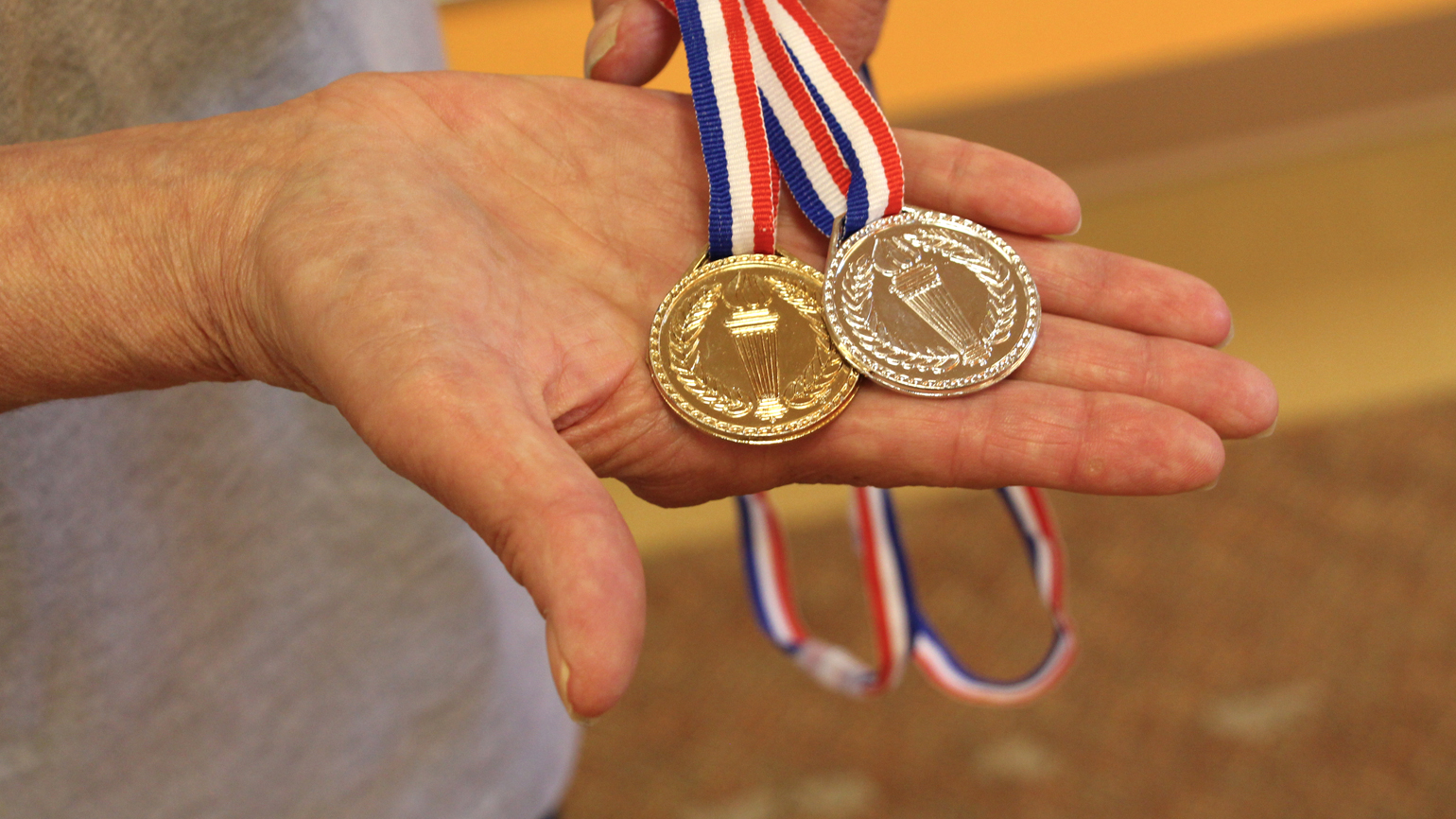
Not only is Sharon participating in Senior Olympics contests on campus, but she’s winning medals. Her specialties are pushups and ball tosses. “I’m not very good at golf,” she says with a laugh.

Attitude is Everything

Sharon credits Matt and the staff at Bonell Community for her rapid success. “Matt is a great teacher,” Sharon says. “Patient. (He) makes it fun. Makes coming to class great.”

Matt says Sharon’s attitude has a lot to do with her success.

“She’s done everything I’ve asked her to do. It’s her effort that has made the big difference here.”

He says others can look at Sharon and see how rehabilitation can transform the body.

“She encourages and motivates folks on this campus,” Matt says. “She just wanted to have a chance, and I think you let others see that and it helps them persevere and go, ‘Why not me?’”

A Glowing Reunion

Sit together. Every time that I prayed about what to do at the Christmas Eve candlelight service at my church, I got the same answer from God. Reach out to Nina. Make amends. Sit together.

I glanced at my phone. I imagined myself texting my ex-husband’s new wife. My heart thumped hard in my chest. I couldn’t text her. Not yet. But if not now, when?

It was Christmas Eve, and in a matter of hours I’d have to walk into the church sanctuary. Nina would be there, like it or not. Bryan would be there, along with our teenage boys, Nick and Tyler.

Last year’s service still burned in my memory. I’d taken a seat in the front, waiting for the rest of my family to arrive. The sanctuary gleamed with fir wreaths and silver tinsel. The lights dimmed. The parishioners stood up, candles in hand, and swayed back and forth to the opening notes of “Silent Night.”

The door in the back creaked open. I swiveled around in the pew. Nick and Tyler filed in, their father trailing close behind—along with Nina. They slipped into an empty pew in the back row, not even looking in my direction. I watched them take off their coats, light their candles.

The four of them look like a complete family, I thought. But what about me? Where do I belong?

I couldn’t let that happen again. Not this year. I didn’t want bitter feelings to destroy my Christmas, or anyone else’s. I had spent the whole day getting ready—I wanted to look pretty tonight. Happy and confident. My favorite black dress was laid out on the bed. Matching high heels.

The diamond-pendant necklace that I wore for special occasions, like an amulet. Please, Lord, let this candlelight service be different. Please give me the gift of acceptance.

I picked up my phone and clicked on Nina’s number. “Hi, Nina,” I typed. I didn’t know what to say next. I hit the backspace button, deleting what I’d written. The pain of the past few years flashed through my mind.

Getting through the divorce. Forcing myself to go to work as a first-grade teacher each day. Nick and Tyler going to live with their father down the street. Then Bryan’s marriage to Nina, who also worked as a first-grade teacher in our small town. It was all so humiliating.

Facebook didn’t help. One night after I’d finished grading my students’ worksheets, I logged in to check up on my boys. Big mistake. All I could look at were photos of them with their father and Nina. Out at restaurants. Barbecuing in the backyard. At the park, or their football games.

I used to be in those pictures, I thought.

One day I got a text from Tyler. “Mom, I want Nina to stand up with me, you and Dad at Senior Night. I just wanted to let you know.” Senior Night was a celebration for athletes at the high school.

What would it look like for all three of us to parade across the field? Nina and I are both teachers—everyone would know our drama. And they would all see how disposable I was.

“Can you please reconsider?” I’d texted back. “I don’t think that’s a good idea.”

Tyler didn’t reply for hours. I checked my phone over and over. Finally, he messaged back. “Nina is family. End of discussion.”

Tyler’s words cut me deeply. For days after, I barely ate or slept. I dragged myself to class. Senior Night finally came. I couldn’t even feel proud. I was a shell. Lord, I can’t keep living with all this turmoil in my heart, I prayed. Please help me!

I linked my arm through Tyler’s as we walked across the football field. On his other side, he linked arms with Bryan, who linked arms with Nina. I kept my smile pasted on. Do this for your son, I told myself. Be mature.

Afterward, I gave him a big hug. And then, without thinking, I hugged Nina and Bryan good-bye. For a brief moment, the tension lifted. What relief!

“I’m sorry I didn’t want you to come,” I whispered to Nina. “I’m glad you did.”

“Thank you,” she said. She seemed to mean it. Maybe things really could be different. Maybe in time for this year’s Christmas Eve service.

All summer and fall, I read my Bible, searching for peace. Every night, I prayed about what I should do. I got my answer all right. It scared me. Sit together.

Together? Like a family? No way! Our little hug at Senior Night was one thing, but Christmas Eve was something else. I remembered all the Christmases I’d spent with the boys, baking cookies, putting ornaments on the tree. Together. Like a family.

Now, holding my phone, I remembered what Tyler had said. Nina is family.

Maybe not the family I was used to, not the family I’d imagined when I first started raising my boys, not the family I’d prayed for when I got married. But she was important to Bryan, and my boys loved her too.

My sons had already accepted her—now it was my turn. I picked up my phone and typed a new message.

“Let’s make a unified front tonight at church,” I wrote. “Let’s sit together.” My finger lingered over the send button. I paused several long minutes….then pressed down. Am I going to regret this? I wondered. But there was no way to take it back.

A moment later, my phone buzzed. Nina. “OK!” she’d written.

That night, I sat in the front pew, my hair done up, my black dress freshly ironed. I fiddled nervously with my pendant and glanced around the sanctuary, tinsel and poinsettias f lanking the altar.

Familiar faces greeted me. Parents from school. People I’d known all my life. But no sign of Brian, Nina and the boys. I couldn’t stop myself from thinking about last year, how devastated I’d felt. Was that going to happen again?

Behind the pulpit, the pastor signaled for us to stand for the first hymn. I could hardly move. I shouldn’t have texted, I thought. Nothing’s ever going to change.

Just then, the door at the back of the sanctuary creaked open. I turned and saw Nina ushering Bryan, Nick and Tyler inside. I waved. At first, she didn’t see me. Then our eyes met. She smiled.

Nina led everyone down toward my pew. Bryan looked confused at first, but after a moment his expression softened. He smiled too. Nick and Tyler waved as they took their seat at the end of the pew—right in my row.

While the minister spoke, I clasped my hands. God, fill me with your peace. Touch Nina, Nick and Tyler with your love. Bless the father of my children too. Please, Lord, heal this whole family!

With each request, my body relaxed. My hands loosened. My heartbeat slowed. One by one, we lit the small white candles we held, and with each one I felt bitterness and anger leave me.

The sanctuary glowed. We sang the final notes of “Silent Night.” We moved closer. It was Christmas Eve, when all are family.

Download your FREE ebook, The Power of Hope: 7 Inspirational Stories of People Rediscovering Faith, Hope and Love.

A Gambling Addict’s Path to Redemption

This is what the end stage of a gambling addiction looks like.

I was alone in a tiny apart­ment in a suburb of St. Louis, Missouri. On TV, the football team I had bet on was about to lose. Not even the point spread was going to save me. That bet was the last of my money. I was broke.

The apartment was bare except for a couch, a bed, the TV and a bookshelf with some books about gambling and a black leather Bible I’d never opened. I’d sold or pawned everything else.

The air reeked of cigarettes. I was 29 years old. I’d been gambling since high school. Believe it or not, I worked at a casino, dealing poker.

I’d been through countless rehabs. Declared bankruptcy. Alienated fam­ily and friends. Even put my dog in the pound once so I could go to an out-of-state casino. (I ran out of gas on that trip, bounced a check to fill the tank, then borrowed money to get the dog out of the pound.)

I had nothing. I felt like nothing.

I went into the bedroom and sat on the bed. A believing person would pray at a time like this, but I had not prayed for nearly two decades. Not since my dad had died of a heart attack when I was 12 years old. I’d thought of myself as a good kid up till then. I even went to church, though mostly for the youth group. I blamed God for Dad’s death and turned my back on religion.

Now all I wanted was to close my eyes and never wake up. I thought about taking all the pills in the apart­ment. Crashing my car into a wall at high speed.

“God, if you’re real, show me a fu­ture I can hope for,” I said to the ceil­ing. I did not expect an answer.

Dad had served in the Air Force dur­ing the Vietnam War. Like a lot of vets, he never talked about that experience and had difficulty showing emotion.

Work kept him away from home a lot. On weekends, he’d disappear for hours into the basement, the man cave where he worked on projects.

When I was 12, Dad decided to run for local government. All of a sudden, he was home every day. My brother and sister and I helped with his campaign, go­ing door to door and putting up signs around town.

It was more time than I’d ever spent with Dad, and I loved it. I even wrote him a letter telling him how much I loved him and how proud of him I was. When he read that letter, a look came over his face I’d never seen be­fore. He gave me a big hug. What an amazing feeling!

One morning a few weeks later, I woke up late for school. I raced out of my room. The house was full of rela­tives. Everyone looked devastated.

“We lost your dad last night,” Mom said in a broken voice.

There had been a big rainstorm, and Dad had been in the basement trying to stop some flooding. He’d had a heart attack and died. He was a smoker but otherwise in good health. Now he was gone.

Kids are literal-minded. The night before, I had asked God to give me a day off school because I was late with a big homework assignment. Was this God’s terrifying way of answering my prayer? Of punishing me for being selfish? How could I believe in a God like that or ever trust him?

Mom did her best, but she strug­gled. I felt lost. Mom gave me Dad’s watch, the contents of his wallet and a black leather-bound Bible.

“This Bible was your father’s,” she said. “He got it when he was stationed at a base overseas. It meant a lot to him. He’d want you to have it.

My dad read the Bible? Neither of my parents went to church. I’d started going only because my grandmother took me. Maybe faith was like a lot of things in Dad’s life—private.

I didn’t care. I’d already made up my mind about God. I stuck the Bible in my room and forgot about it.

Mom remarried when I was in high school and moved to a new town. I stayed behind to finish school under the care of my brother, who was nine years older.

My brother and his friends liked playing online poker. They invited me to join. The games were just for fun, low stakes.

Not for me. I was hooked after the very first game. Win or lose, I had to keep playing.

Card sharks on TV make poker look like a glamorous game of skill. Really, it’s like other forms of gambling. Even the best players lose big sometimes, and a lot depends on blind luck.

I got sucked in by the card shark part. After a couple wins, I saw myself striking it rich and impressing every­one with my cool.

Addicts love shortcuts. The world felt unpredictable and scary after Dad died. Playing poker simplified every­thing and gave me a false sense of fo­cus. Staring at a hand of cards, I felt calm and in control. I was one big win away from solving all my problems.

I never got that big win, even after landing a job at a casino. The gambling industry makes money by taking ad­vantage of willing fools like me.

By the time I was 22, I had burned through $100,000, much of it bor­rowed. I declared bankruptcy and started a cycle: Gamble, lose every­thing, own up to it, go to rehab, re­lapse, repeat.

I never quit my casino job. Why would I? The pay was great, and I could plow every paycheck back into poker or sports betting.

My brother gave up on me. My mom despaired. My life became a nonstop scramble to borrow money from someone to pay back someone else who’d lent me money for rent so I could avoid getting evicted. I lied. Manipulated. Schemed. Lied some more.

Finally the whole thing came crash­ing down, and I was sitting there in my apartment bedroom, broke, filled with self-loathing, wondering wheth­er I should kill myself.

I spoke my hopeless prayer to the ceiling and hung my head. Which was it going to be? Pills? Or a car crash?

“The kingdom of heaven is upon you,” said a voice.

I looked around. Who said that? The voice spoke again. I realized it was coming from inside me.

I jumped up. Was I going insane? I ran into the living room. At once my eyes were drawn to the bookshelf. Lying next to the books about gam­bling was that black leather Bible.

My father’s Bible. I had hung onto it all these years but had no idea why. It’s not as if I ever read it. Yet I couldn’t bring myself to get rid of it. It just kind of stuck to me.

I grabbed the Bible, sat down and opened it. The pages parted at the be­ginning of the Gospel of Matthew. I noticed writing in the margins. Dad’s handwriting. Cross-references. Un­derlined passages. I flipped around. Notes were everywhere.

Dad really had used this Bible. Had faith been more important to him than he’d let on? Trust this book, the notes seemed to be telling me.

I read through the confusing gene­alogy at the beginning of Matthew, followed by the account of Jesus’ birth and his baptism in the River Jordan.

Then I came to the first words Je­sus speaks at the start of his ministry: “Repent, for the kingdom of heaven is upon you.”

I froze. Those were the words I had just heard.

I raced through the Gospel of Mat­thew, slowing down only for the ago­nizing scene of the Crucifixion and the joy of the Resurrection. A warm feeling spread through my body, like a wave. I knew without a doubt that God was real and present in the words of this book I was holding.

I got down on my knees. “Please for­give me, Jesus,” I said. “Save me. I give my whole self to you.”

It’s a cliché to say a weight lifts when you pray, but that’s exactly what hap­pened. The despair, helplessness and shame that had been crushing me for 17 years vanished. I felt an unfamiliar feeling: hope.

A gambling addiction that has tak­en such deep root in a person’s life doesn’t vanish overnight. It was six months before I placed my last bet. Another two months before I quit my casino job.

Right before I left that job, I heard from God again. Very distinctly I heard him tell me that he wanted me to stop working at the casino to do something else—start an online ministry that helps people share their own stories of redemption.

That’s what I did. I could write a whole separate story of how God helped me do that. Togeth­er with a friend from the church I’d begun attending, I launched Testimo­ny House, which continues to this day.

When I told my casino coworkers that I had been saved and was plan­ning to give up gambling, start a min­istry, get married and have kids, they all laughed.

“John, you’re a broke loser and a de­generate gambler,” they said. “You’ll never change. No woman would ever marry you.”

Three weeks later, while working on my ministry, I met Megan through a friend at church. She and I married the following year, and today we have four children.

I still have Dad’s Bible, and I look in it whenever I need to feel close to him. I don’t know why Dad didn’t share his faith with me when he was alive, but that’s okay. I give thanks for that Bible, which waited patiently on my bookshelf until God knew I was ready to read it. When my very life de­pended on it.

For more inspiring stories, subscribe to Guideposts magazine.

After Retirement, Variety Keeps Life Interesting

Content provided by Good Samaritan Society.

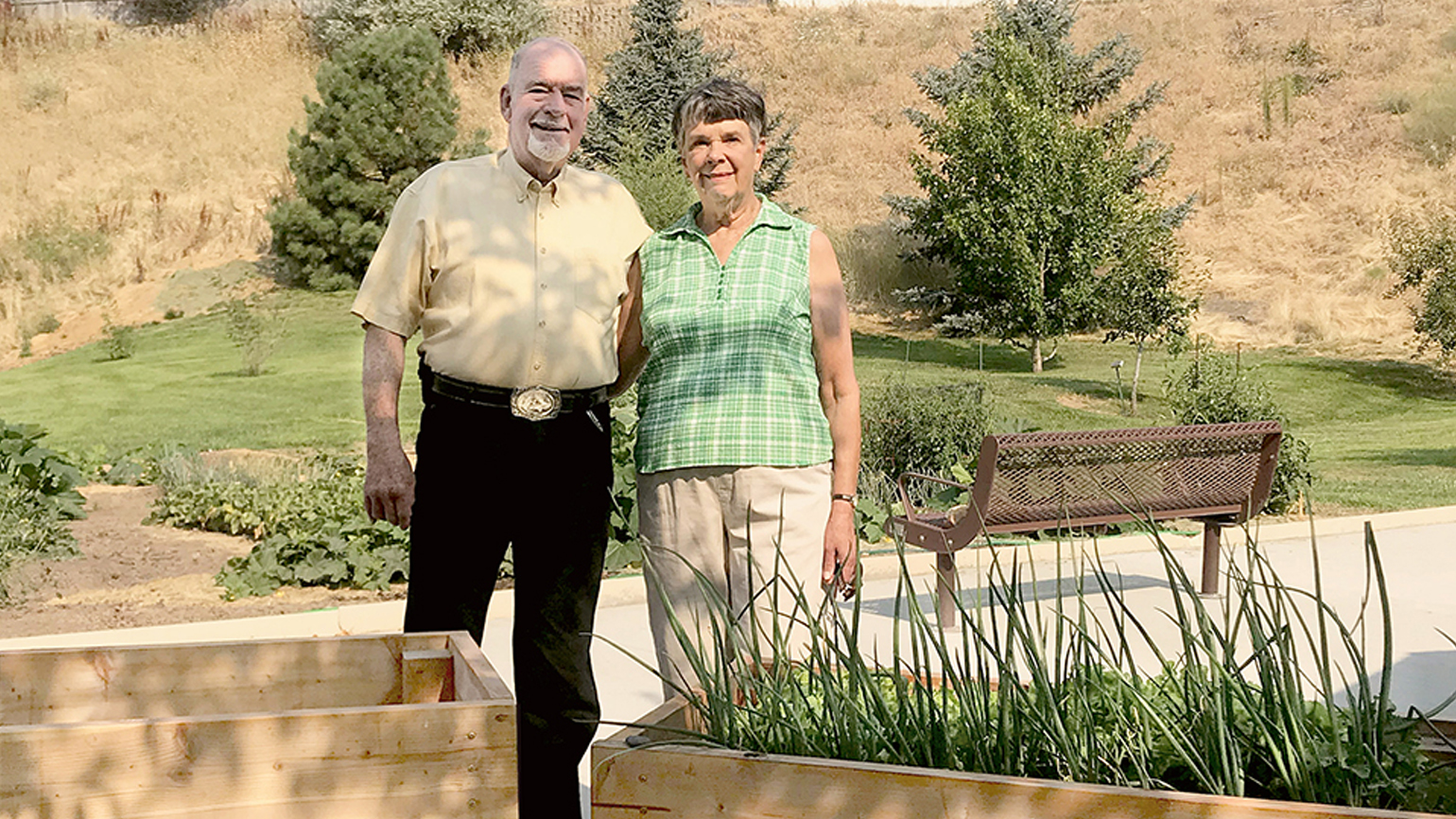
For Tom Anderson and his wife, Claire, retirement means staying active and involved.

Moving out of their home in the mountains of Idaho hasn’t stopped them from continuing to enjoy activities like camping and gardening. They often take their grandchildren camping in their RV or spend time fishing and playing in the water with their pontoon.

Tom, age 80, likes deer hunting and woodworking. He has made planter boxes (pictured at left) for their Good Samaritan Society retirement community. They volunteer together for Habitat for Humanity, and Claire volunteers at the library.

Each year, the Andersons plant the 12-by-16-foot garden outside their twin home. Neighbors in the apartments across the street benefit from the produce.

The Andersons continue to travel in their retirement. Tom says one of the advantages of a retirement community is being able to lock up and leave for vacation without worrying about anything happening while they’re gone.

And they like the flexibility of being able to go places whenever they decide to.

“It’s the ability to not have to do something at a certain time,” says Tom. “We can travel when we want.”

Tom served in the Navy for 20 years. He then taught algebra for 15 years before running a remodeling company with Claire for 10 years.

In addition to different volunteer projects, he also enjoys being involved in politics.

Tom and Claire make it a point to stay active in community events. Two colleges are close by, allowing them to attend football games, concerts and other events.

In this phase of life, the Andersons appreciate the simple pleasures: family, friends, volunteering, community events and the outdoors.