Someday he would hit bottom, come to himself, and come back home. Dad, he would say, “I’m sorry.” And before he could say another word, I’d go to him, throw my arms around him and say, “David, I forgive you. Welcome back!” Then I would kill the fatted calf and the celebration would begin.
I must have replayed that scene scores of times through the agonizing years of David’s drug addiction in the 1970s, and it never failed to give me hope. But it didn’t happen quite that way.

Two weeks before his high school graduation David announced, “I’m dropping out of school and moving back to Oklahoma.” Since his junior-high years my wife, Sally, and I had known he was drinking and using drugs. We had gone to counselor after counselor, but nothing seemed to help. We had endured the pain of watching him play varsity basketbal l while high. We had lived through the long nights when he stayed out all night only to return drunk or stoned. I had stood in our carport doorway raging, “David, why are you doing this to us? Why are you doing this to yourself?” And I had seen him cling to the side of his orange Dodge van to keep from falling, unable even to comprehend my questions. I don’t know how many times I had to take him inside and put him to bed, where he would sleep all day and all night, and sometimes all the next day. Still, his announcement shocked us.
Sally and I went to our counselor. “You have no choice but to let him go,” he said.
And so, like the father in the parable of the prodigal son, I let him go. In the years that followed, I tried to live out the role of the loving father. Sally and I never let ourselves be embarrassed that our son was a drug user. We did our best to let him know that even though we didn’t approve of what he was doing, we accepted him. Although David often lied to us even when the truth would have been to his advantage, we kept communication open.
He left in May, returning to Oklahoma City, where we had formerly lived and where he could be with his drug buddies. Sally and I agreed we would not intervene until he asked for help. From time to time he phoned, and when he did, our hopes shot up. But all he ever called for was to ask for money, and we always said no. We told him he needed to get a job and support himself.
He found work all right, but went through one job after another. He sold his van and spent the money. Unable to pay rent, David broke into our former home, which we were still trying to sell, and lived there with no furniture, no water, no electricity. To buy drugs, he sold his blood. Several times he passed out from hunger. Like the prodigal, our son was living with the swine.
Finally in November David called and said, “I’m sick. Can you come get me?” I dropped my work, and Sally and I flew to Oklahoma City. The scene of what was about to happen had never been more vivid. “Dad, I’ve been wrong,” my son would say. “Will you forgive me?” The day we’d been waiting for had finally arrived!
The David we found was an emaciated shadow of the son we had known, weak from giving too much blood, and starving. That first day he ate five meals. But it didn’t take long for us to realize that however desperate David may have been, he wasn’t sorry, and the day wasn’t going to end the way we’d expected.
Disappointed yet hopeful, we took David to Idaho and sobered him up enough for him to finish high school. We were making progress. Next David returned to Oklahoma to attend a Christian college. Though drugs had often kept him from playing his best, he was still a strong-enough basketball player to win a full athletic scholarship. More progress. Back in Oklahoma, though, David fell in with his old buddies again and lost his scholarship because of drug use.
Through these years, Sally and I often became discouraged. Where did we go wrong? The question was never far from our minds. David had grown up in the same loving home as his older brother and sister, who were outstanding students at a Christian college. Why had he chosen an opposite path? We had raised him in a church where he was surrounded by people who cared for him. Why did he prefer his drug buddies? We had always made time for family—skiing in Colorado, bowling, driving the four-wheel drive up the mountainside just for fun. Sally and I had gone to every one of David’s basketball games, no matter how far away, no matter how bad the weather. What had we done to cause David to choose this lifestyle rather than the one we had tried to teach him? When our first two children were giving us so much joy, why did David have to bring us so much pain? It was when these questions refused to go away that the picture of the prodigal son’s return would keep me going. Yes, I kept telling myself, he will come home.
Where did we go wrong? The question was never far from our minds.
David moved on to Kansas City, where he lived with our daughter and her husband. We kept communicating, but David’s actions gave us little basis for hope. One day Sally and I were talking in our big country kitchen—I sitting at the table, Sally working at the counter. We had not been discussing David, but suddenly I was struck by such a forceful thought that it was as though a third person had walked into the room and joined the conversation: You need to go to David and ask his forgiveness because you have resentment against him. For a moment I was speechless. I had always pictured him coming to me, humbling himself, asking my forgiveness.
I told Sally. She was surprised, but she agreed, “Yes, that’s something you need to do.”
No, I thought, this can’t be right. I’d seldom lost my temper with David. And though I had carried some anger around inside me, I thought I had let go of it. I thought it was all in the past. “Am I really angry and resentful?” I asked.
“Yes,” Sally said. “You have been for a long time.”
It took a while for the thought to sink in. “Maybe I could call or write,” I said.
But again it was as if a third person said, No, that’s not right. It has to be in person. I’ll provide the time.
A few months later we were visiting our daughter’s family and David in Kansas City. Feeling the time was right, I asked David if we could go upstairs to his tiny bedroom to talk. David sat on the bed, the only place to sit, and I stood. “David,” I said, “the Lord has shown me that I need to ask for your forgiveness because of my bitterness and resentment about all the problems we’ve had.” Then I waited.
“Well,” he finally said, “it was partly my fault.” That’s all he said. But I understood what he was really saying; he understood, and the Lord understood.
He stood up and we hugged each other. “David,” I said, “we’re going to put the past behind us.”
As we walked out of the room David said, “I feel better.” So did I.
A few weeks later David called and told Sally, “I just thought you might like to know that I accepted Jesus into my life last night.”
He said he’d been watching television with a girl he had been dating, a friend from college. “I told her, ‘You know, I really need to make some changes in my life.’ Then she asked, ‘When are you going to?’ When I said I didn’t know, she said, ‘Why don’t we pray together right now?’ I said okay and we prayed, and I asked God to forgive me and come into my life. It’s still hard to believe it happened.”
After that night David never used drugs again. He came back to Idaho, and about a year later he married a fine Christian woman. Today he participates enthusiastically in his church, holds a highly responsible job as dispatcher for a major trucking company, and is a wonderful father to his three children.
David’s story didn’t follow my script. He never asked my forgiveness in so many words, and there never was a fatted calf. But more important, I had to depart from the role I had imagined for myself. Had I merely stood at the door, waiting for David to come to me and say, “Dad, I’m sorry,” I might still be waiting. But because God sent me to ask David’s forgiveness, our son has come home.
This story first appeared in the July 1991 issue of Guideposts magazine.







 teach at the elementary school I’d attended as a kid. David would find a good job too. Then we’d start a family.



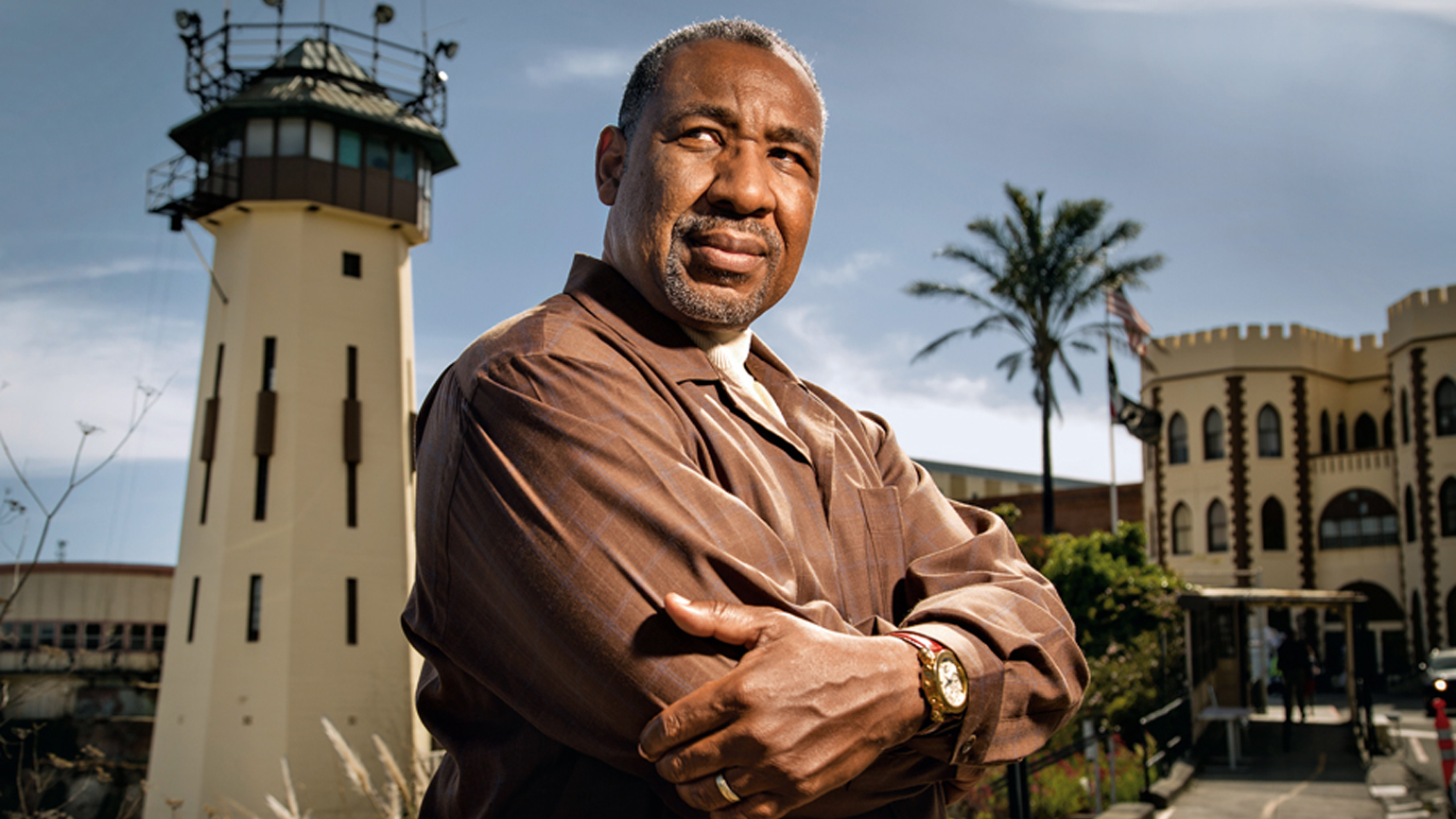

 Earl Smith is the author of Death Row Chaplain: Unbelievable True Stories from America’s Most Notorious Prison, published by Howard Books (May 19, 2015).