Embrace God's truth with our new book, The Lies that Bind

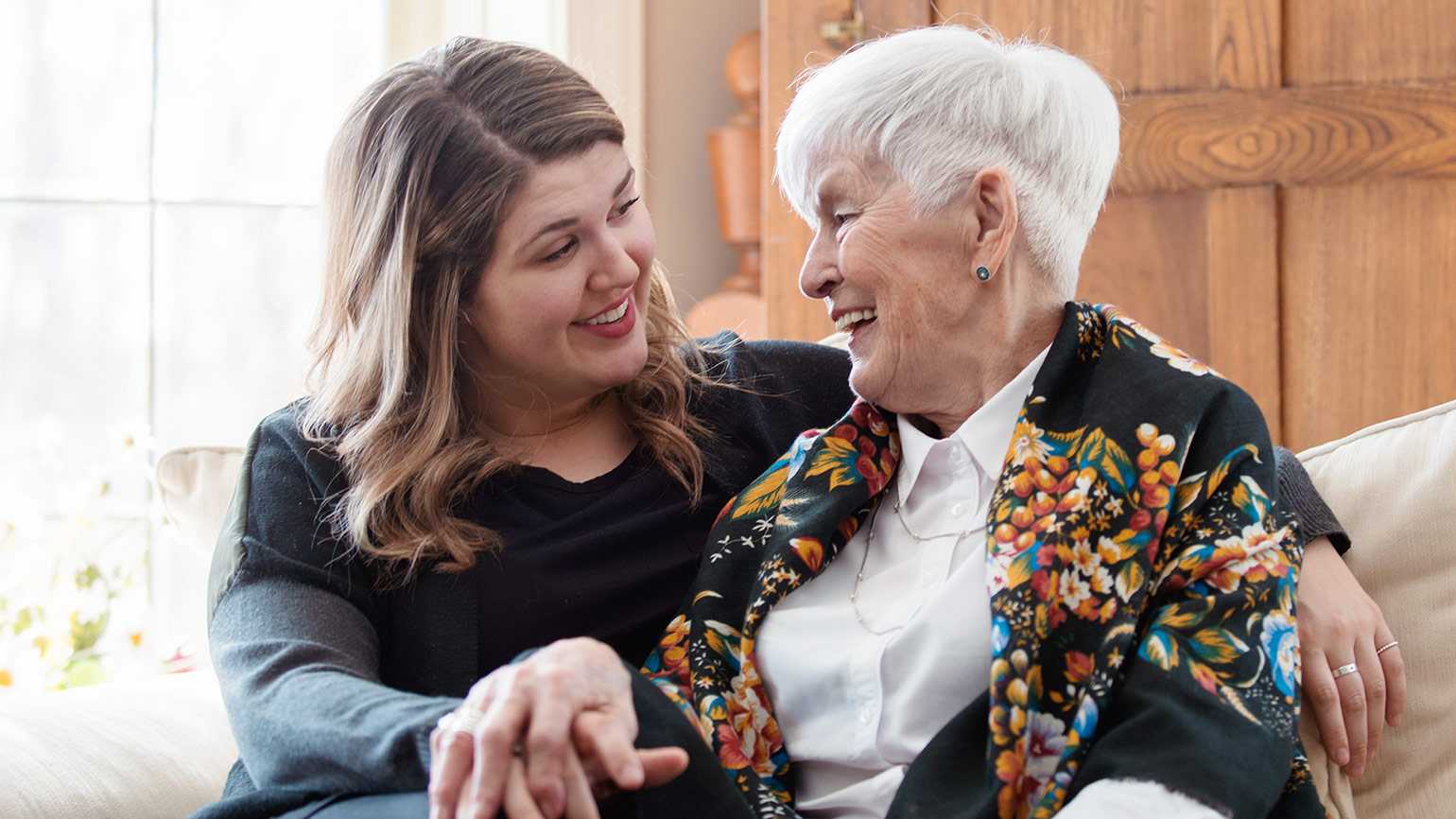
5 Ways Senior Citizens Bless Us

My phone rang recently. “This is Bill Fletcher. I was just calling to check on Paul.” Bill is a precious friend from our church, and we receive calls from him on a regular basis.

He’s in his 80s and the sweetness of Jesus shines through him as he prays for and encourages so many of us. His footsteps have gotten slower over the years, he can’t physically do as much as before, but, oh my, he’s such a blessing to us.

Pray A Word a Day - 2023 In article

That started me thinking about how blessed we have been through the years by our senior citizen friends:

1)  They teach and mentor us.
They share old recipes and cooking tips. They impart lessons learned about faith and life and family—sometimes so we won’t have to experience the pitfalls that they encountered.

Get Your Free Guide to Understanding Medicare

2)  They share their stories.
About 15 years ago, our family adopted a precious elderly couple that we met at Cracker Barrel while on vacation at Hilton Head Island. Every year after that when we were on vacation there, we enjoyed meals together and visits in their home.

Their stories were fascinating as he shared about his years working on the Manhattan Project and as she talked about their travels and experiences. They enriched our lives.

3)  They share their love.
I’ll never forget the first gift we received after learning that Paul and I would become parents. One of the sweet older couples at our church stopped by our house that next week with a package that contained a lovely shawl blanket and a pair of soft green booties.

What made it even more precious is that I knew that things were tight for them money-wise, and their gift had been a sacrifice. That moment happened 39 years ago, but I’ve never forgotten the love that was wrapped in that present for our baby boy.

4)  They share their faith.
There are few gifts more special than sitting and talking with someone who has spent a lifetime walking with God. Stories of God’s faithfulness during hard times, His goodness on so many occasions, lessons learned through difficult times and treasures mined from God’s Word are priceless.

Read More: Faith to Endure Life’s Storms

5)  They share their prayer time.
It’s an amazing blessing to have someone who will take time to pray for you. Years with God pay off in a close and loving relationship, an intimacy as they talk with Him.

Has your live been blessed by a senior citizen? Today would be a good time to say thank you and to tell them what they mean to you.

5 Ways Anger Can Be Good For You

Many of us are taught that anger is an emotion best kept inside. Anger is negative and dangerous, we are told. Be kind. Practice forgiveness. But anger has purpose and value, and when it’s processed and expressed in a healthy way, it can actually improve several areas of your life.

Read on for five ways what psychologists call “constructive anger” can be considered one of your most important tools for strong emotional health.

Pause & Pray In Article Ad

Understanding “Constructive Anger”
Before you can put “constructive anger” to work in your life, you need to understand how it differs from its toxic cousin, “destructive anger.” Destructive anger is aggressive, impulsive, and explosive, often marked by shouting, verbal and physical abuse, or self-destructive acts.

READ MORE: 6 WAYS TO DEAL WITH ANGER

Constructive anger is none of those things; it is solution-oriented, proportionate to the perceived wrong, and marked by self-examination, curiosity, and respect for yourself and others.

“Constructive anger is anger that heals,” says Lisa Najavits, a Boston-based psychology professor and author of the trauma and substance abuse treatment manual Seeking Safety, in which she coined the term “constructive anger.” This healthy type of anger, she says, “is a source of important learning that leads to growth.”

Anger Can Motivate Us to Break Bad Habits
“Anger can be a very motivating force for bringing about positive change,” says Janet Pfeiffer, an anger management coach and the author of The Secret Side of Anger. If you have a bad habit, from mindless eating to too much time on Facebook, it can take getting angry at the habit’s negative effects on your life to inspire you to do something about it.

Pfeiffer, who is a survivor of bulimia, says she used the emotional energy anger brought her to replace her bad habits with healthy ones. “I directed my anger at the bulimia,” she says, “and with great determination, freed myself from what was holding me back from fully embracing life.”

Anger Can Strengthen Your Career
Whether you are observing unfair practices by your company, feel unvalued by colleagues, or are tired of a coworker swiping your snacks, anger often shows up at work. If possible, advises Pfeiffer, address concerns directly with the colleague you’re struggling with, unless involving HR is in your best interest.

To have a productive conversation, particularly with a superior, be honest with yourself about whether hurt, frustration, or anxiety is a bigger culprit than anger in the situation. “Address the underlying cause of the anger rather than the anger itself,” says Pfeiffer.

Is it truly a workplace issue, or does the situation make you angry because it reminds you of something from your past? Once you identify the reason for your anger, if it’s work-related, you can discuss it calmly, which increases your chances of being heard and respected at work.

Anger Can Change the World
Seeing a homeless person struggling on the street, witnessing prejudice or injustice, or simply scanning ever-worsening news headlines provokes many emotions, including anger. Channeling those feelings into concrete, constructive action is a long-held principle among those who advocate for social change.

“When I am angry, I can pray well and preach well,” said Martin Luther King, Jr. When you put your anger to work for a cause you believe in, you’ll feel energized and inspired, and you just might make the world a better place.

Anger Can Improve Relationships
In love and friendship, anger is inevitable, and how you confront it can have lasting consequences. Consider anger an “alert,” says Pfeiffer. Screaming, blaming, or acting out physically can destroy your relationship, but expressing anger constructively can save it.

Imagine an emergency room doctor, she says. “If the EMTs bring somebody in on a stretcher, the doctors don’t get emotionally wrapped up.” They stay calm, rational, and focused—and so should you when working through a relationship challenge. Give yourself time to calm down, set goals, and approach your partner with respect, as neutral a tone of voice as possible, and an open desire to move forward together.

Anger Can Foster Healing
Anger is a natural part of healing from traumatic life events. Najavits says, “You may feel angry at people who hurt you, at the world, at God, at yourself, at life, at family, at strangers.” Acknowledging and exploring that anger constructively, with the guidance of a trained professional, is crucial to the recovery process.

“In recovery,” says Najavits, “the goal is to use your anger as a way to learn about yourself and grow. The task is to face your anger without letting it destroy you or others.”

To those who worry their anger is too strong to contain or channel in a healthy direction, she reassures: “It is never too late, no matter how long you’ve had a problem with anger. Mainly, it requires really listening to others’ feedback about your anger, ‘owning’ your feelings rather than acting them out, expressing anger in healthy ways, and learning to tolerate the painful feelings behind the anger.”

Read Guideposts 0n Your Phone, Tablet or Computer!

5 Warning Signs of Suicide

As a mental health clinician, I have been blessed to provide counseling and support services for those suffering from anxiety, depression, bipolar disorder, and schizophrenia. Although the nature of what I treat may vary, many of my clients often present with the same symptom: hopelessness. 

Hopelessness is a cloud of despair consistently hovering over a person’s life that feels inescapable and can cause someone to consider suicide as the only way out. Suicide is never the answer and there are many ways that mental health clinicians can help sufferers to feel better.  But while someone is feeling hopeless, a better future can be impossible to imagine. A client once told me that “trying to simply tell me how to get out of this darkness is like trying to explain color to a person suffering from blindness; it just doesn’t make sense to me.” 

The Lies That Bind In Article Ad

Saying things like “it’s going to get better,” or “cheer up,” therefore, might not only be ineffective but actually harmful to your loved ones while they are in this state of hopelessness. Instead, the best way to be in a position to help is to educate yourself on symptoms of depression and hopelessness.

Suicide is never anyone’s fault and most completed suicide attempts offer very little advanced notice. Still, here are 5 warning signs of suicide to look for in loved ones if you are concerned they may have thoughts of self-harm:

1.       Has your loved one shown signs of depression? This may present as loss of appetite, loss of energy, poor concentration, recurrent thoughts of death, and also changes in sleep patterns.

2.       Has your loved one shown a sudden disinterest in activities?

3.       Has your loved one expressed feeling as though they have no way out? You might find your loved one is not open to discussing alternative options for their worries.

4.       Has your loved one shown a change in his/her personality? This could resemble someone who is very moody one moment and then very happy the next. They could also begin engaging in reckless behavior suddenly.

5.       Has your loved one shown signs of excessive guilt or shame? They may play an event over and over again in their mind, but blame themselves more each time.

After educating yourself, get connected with a professional counselor and most of all stay connected with your loved ones. Make an effort to either see them or speak with them daily and let them know how much they are loved. Continuously let them know that you are there to listen and help them however they need. If you feel immediate action needs to take place, please call the Suicide Prevention Lifeline at 1-800-273-TALK (8255).

5 Tips to Stay Motivated During a Lengthy Job Search

A job search is a swirl of resume preparation, networking, research, and interviews. But when it stretches from weeks to months, it can be hard to stay fresh, sharp, and motivated. “Looking for a job is hard,” says Karen Burns, author of The Amazing Adventures of Working Girl: Real-Life Career Advice You Can Actually Use. “The longer it takes, the harder it feels.”

It’s normal to have periods of discouragement during your search. Read on for five strategies to bolster yourself as you search for your dream job.

Walking with Jesus L&E evergreen_in article ad

1. Be Your Own Project Manager
Paul Bernard, a New York City-based career coach and recruiter, has his clients treat a job search like the professional project it is. Picture it as a three-legged stool—the first leg is the overall strategy, the second are the “marketing materials” like your resume and cover letter, and the third leg is how you distribute your most precious resource, your time.

One way to reenergize a long job search, he says, is to revisit one of the legs, recasting your strategy or reexamining your networking calendar. “You have to design it,” he says, “Where do I want to be, and what do I want to do?”

2. Write a Mission Statement
Jocelyn, a mother in her 40s, is a philanthropy professional who has been looking for work for several months. She created a personal mission statement that has given her job search focus and inspiration. Using prompts from several career strategy books, she developed a statement that articulates her life’s next steps, including how her work can balance meaningfully with the other parts of her life.

The process left her with a clear, concise elevator pitch, not to mention confidence in the direction she’s taking her search. “I was feeling the need to reorient,” she says. “My personal statement is helping me stay true to what I want.”

3. Ditch the Guilt
Toxic self-talk is the stuff of discouragement and depression, says Melissa Maher, a San Francisco-based life and mindfulness coach. Feeling guilty for having lost a job, saying no to a sub-par offer, or taking an afternoon off is classic negative thinking. “We think we need self-critical self-talk, we use it thinking it’s going to motivate us,” she says.

READ MORE: 5 TIPS FOR STAYING POSTIVE WHILE SEEKING A JOB

Instead, she advises policing your internal monologue. “Focus on what’s going well, not just what’s not happening yet,” she says. Setting realistic expectations will put things in perspective. Consider this math: Bernard says it takes between 75 and 90 face-to-face conversations to get six to eight interviews– that includes everyone from colleagues you meet at a networking event to the Human Resources representative who welcomes you to an interview. Two of those six to eight interviews will become job offers. “Every ‘no’ should be a message that I’m one step closer to a ‘yes,’” he says.

4. Practice Gratitude
Gratitude is a muscle that gets stronger with regular use. Keeping yours in shape is good for your career as well as your soul. “Make a gratitude list with three things on it every day,” says Maher. “That puts the mind into a more spacious, possibility-oriented mindset.”

READ MORE: FINDING A JOB AFTER FIFTY

Jocelyn has found this practice beneficial, not only in boosting her confidence in interviews, but also in appreciating the pleasures that come with her in-between time. “It’s helped me define an appreciation of the small gifts of the day,” she says, “I try to enjoy the little things, because I know that later, I’ll be busy again.”

5. Take a Step Back
If your job search is too intense for too long, your physical and emotional health both might start to suffer. Watch for signs like upset stomachs, headaches, anxiety, or low energy, and take them as signals to step back and take care of yourself. “Self care doesn’t mean you’re slacking off,” says Burns. “It’s a way to bring your best self to achieving your goal.”

Maher advises making a “joy list” of things—small or large—that bring pleasure into your day. On any given day, at least one item from the joy list, like a walk with a friend, an extra few minutes of sleep, or a leisurely bubble bath, should show up on your “to do” list, right next to “follow up on interview” and “review resume.”

5 Tips to Prevent Loneliness and Find Community as You Age

Hope Irvin Marston and Jerry Borland found the best way to overcome their loneliness after losing a spouse was to reach out to others. Judy Ryan, Ph.D., former president and CEO of the Good Samaritan Society, would applaud that. Her 46 years in healthcare administration and 15 years of retirement have shown her that relationships are the key to active aging and preventing loneliness in your senior years. Her advice:

Make a plan for your retirement. Consider all aspects of your wellbeing: physical, mental, emotional, financial and spiritual. Dr. Ryan recommends the book Always We Begin Again, by John McQuiston II, a modern rendition of the Rule of Saint Benedict. It inspired her to live a balanced life incorporating work, study, community and prayer. Her simple take on the Rule: “Be still. Be well. Do good work. Keep in touch.”

NIVFLB Inarticle ad

Find a spiritual focus. “Be still” refers to Psalm 46:10 (“Be still, and know that I am God”). “If you don’t have a sense of the divine—of something greater than you—it’s difficult to make sense of the changes in life as you age,” Dr. Ryan says. “I try to be awe-filled, grateful, joyful and faithful.”

Develop a daily pattern for balanced living. “Be well” for Dr. Ryan means not only following a healthy diet and exercising regularly but also continuing to learn and to grow in her faith. She has a daily practice of meditation and journaling, using the book A Guide to Prayer for All Who Walk With God, by Rueben P. Job, Norman Shawchuck and John S. Mogabgab.

Stay engaged with what you care about. That’s where “Do good work” comes in. Dr. Ryan remains an advocate for senior care through partnering with rural communities—something she was passionate about during her long career. She lives in a Good Samaritan Society senior community in Sioux Falls, South Dakota, and has seen other residents pursue their own interests. Different folks run the community’s chair volleyball program, library and art room. One man wanted to do something to recognize the strength of the people of the Northern Plains, so he asked residents to share their stories and then put them together in a book.

Take charge of your relationships. “Keep in touch” with your family, friends and former colleagues. “Don’t wait for someone else to alleviate your loneliness,” Dr. Ryan says. “Reach out. Get involved.”

Visit good-sam.com/guideposts to hear more from Dr. Judy Ryan about living an active, balanced senior lifestyle.

Read More: Two Eighy-Somethings Find Love Late in Life

For more inspiring stories, subscribe to Guideposts magazine.

5 Tips to Get Spiritually & Physically Fit

Kristen Feola is a personal trainer, a speaker and author of The Ultimate Daniel Fast and Spiritually Strong. Guideposts.org caught up with Feola to find out her top 5 tips for getting spiritually and physically fit.

1. Read the Bible Every Day.
In Spiritually Strong, Feola includes her 6-week Bible study program to help readers get spiritually disciplined. “My goal is to help people establish those disciplines in a very simple way,” she tells Guideposts.org. “Six weeks is not an intimidating amount of time but it still establishes that pattern of reading the Bible every day. Make it a priority.”

2.  Get moving.
This is key to getting into physical shape, Feola says. “If you’re starting from nothing, just try to walk 2-3 times a week for 30 minutes. Ease into it so you can gain confidence and  get that sense of victory on the short term so you can reach a long-term goal.”

3. Drink water.
Everyone’s got an opinion on how much water you need to drink but Feola says to just jump in drinking it.”People are walking around dehydrated and that’s a huge source of problems. However much you’re drinking now, increase that by 1 glass. How much you should drink varies depending on your weight and height, but start off just drinking more water than you did yesterday.”

4. Eat lots of fruits and vegetables.
We’re often encouraged to eat fruits and vegetables in order to lose weight, but Feola’s got an interesting take on this: “Try a new vegetable or new fruit. Get out of the box.”

5. Remember who you are.
This step is one of the most important. Feola says, “In order to be prepared for everything God has for you to do, you need to be spiritually fit and physically fit. I never want the Lord to call me to do something but I can’t physically handle it because I haven’t been taking care of myself. I want every believer to be in a place that there wouldn’t be any hindrances to what God has called you to do. Everybody doesn’t have to be a body builder, but take care of the temple that God dwells in.”

“A lot of times as Christians we have guilt and shame when we don’t take care of ourselves. You don’t have to feel guilty about what you’ve done in the past. Just get into the joy and satisfaction in obedience to God. If you just do what God says, you will have joy. God wants us to live an abundant life.”

5 Tips to Get Back on Track After Falling Off the Weight-Loss Wagon

Since making my New Year’s Resolution to get to a healthy weight this year, I’ve had a relatively easy time of it. For months, I was focused, on target, and lost weight each and every week. 

Until the first week in August, that is. Since then between cravings, work deadlines, travel and tempting summer treats, I fell off my self-designed program, got back on, fell off again—and finally got back on track.

Community Newsletter

Get More Inspiration Delivered to Your Inbox


Here are some tips, advice, strategies and stories I found that helped me get re-focused and re-inspired. 

1. Get back on the scale.
First step: Fess up to what damage you may have done then simply start all over again. In the weight-loss game, you’ve got to be honest with yourself about what you weigh, what you’re eating, and how much and if you’re exercising. The scale is the place to start.

2. Keep track of what you eat.
A food journal is an essential weight-loss tool. It’s one of the keys to the Weight Watchers system but you can find free online food journals like the one at myfooddiary.com or sparkpeople.com. By journaling, you stay aware of everything that goes into your mouth and are better equipped to make wise food decisions. 

3. Aim for progress not perfection. 
This is an article written for men, but we women can certainly make use of its very valuable advice. I love its premise: Falling off your diet is the best way to stay on it. I can’t count the times in the past when I imposed tight restrictions on my food intake and lost weight only to indulge away my resolve. To avoid that scenario, the article suggests the following:

• Plan to cheat (in moderation, of course).
• Don’t rely on snacks.
• Don’t have tempting foods lying around. Make sure you have to go out and buy your tempting snacks—very sound and valuable advice.  

4. See an occasional slip-up as a part of the process.
It’s not so much that we fall off the wagon, what really matters  is how we deal with the slip-ups when they happen. The most effective way is, just like the song says: “Pick yourself up, dust yourself off and start all over again.” Simple but wise advice. If you want academic research to back up that philosophy read about the abstinence-violation effect which is basically black-and-white thinking: Because I fell off the wagon, I can’t lose weight. The corollary is: I fell off the wagon, therefore, I might as well binge. The takeaway from this article in a nutshell is: Always remember, you have a choice, you are not powerless. And if you feel powerless, then call upon a power greater than yours for help: prayer.

5. Visualize positive outcomes.
If you’ve been avoiding exercise—whether it’s gardening, walking, doing yoga, swimming, whatever—remember how good you felt afterwards: refreshed, back in touch with your body, energized. When I’m exercising regularly, I hold myself differently. I stand taller and feel better. Remembering that feeling helped me get back to the health club.

When I find myself over-indulging in food and my stomach starts to pooch, I remember how good it felt to slip into jeans I hadn’t been able to wear in years! I specifically make myself remember the compliments I’ve gotten about my weight loss. And I remember how good I felt not being literally weight-ed down. 

Focusing on the positive, actually conjuring up a felt-sense of energy and positivity, helped me get back on track. It can help you too!

5 Tips to Ensure a Healthy and Stress-Free Holiday Season

The holidays are a time full of family, friends, celebrations and delicious food. Unfortunately, the most wonderful time of the year can also lead to stress and unhealthy habits that make experiencing the joy of the holiday season difficult.

One survey found that 62 percent of participants experienced elevated stress during the holiday season. Some common causes of stress noted on the survey were busy schedules, money and physical health.

GP In Article Desktop

You’re not alone if you’re feeling stressed this holiday season, but that doesn’t mean you can’t take steps to have a happier, healthier holiday. Here are a few practical ways to do just that:

1. Take time for yourself

Parties, gift buying and family visits should be fun-filled, but cramming too many activities into an already busy schedule can lead to exhaustion and crankiness—the opposite of how it should feel to spend time with loved ones.

Get ahead of your stress by scheduling alone time each day. Even if it’s just waking up fifteen minutes early to drink a cup of morning coffee in silence, making time for a few minutes of solitude will leave you feeling recharged, rested and ready for your holiday activities.

2. Move your body

A study from the American Psychological Association found that people spend more time engaged in sedentary activities during the holidays—sometimes watching TV or eating to cope with the holiday stress. This is actually counterproductive since it’s well known that

exercise is one of the best ways to relieve anxiety. Even just thirty minutes of movement can trigger your brain to release feel-good hormones. Plus, movement can be an opportunity to bring family and friends together. Try going for a walk after a holiday meal or playing a family game of football.

3. Prioritize

It’s easy to get overwhelmed with parties, family gatherings and gift exchanges. Sometimes, all of the festivities can seem like a chore instead of an opportunity to spend time with those who mean the most to us.

Prioritize the activities that are important to you. It’s okay not to make it to every white elephant party or skip the annual Christmas play. Choose the holiday traditions that mean the most to you and commit to enjoying them fully, rather than spreading yourself thin and missing out on the magic of the holiday season.

4. Plan ahead

Make a list of gifts you need to purchase. Purchase ingredients for holiday meals and cook ahead of time when possible. If you’re committed to eating a particular diet, this can also apply to attending holiday parties. Think about what you will eat and how much. If you start preparing for the holidays early, you’ll be able to navigate stressful situations with ease.

5. Savor the moment

The most important thing you can do to enjoy a healthy holidays is to enjoy the blessings in your life. Stress robs us of gratitude and presents us from being present. Take a minute to breathe, notice holiday decor and smells and send a prayer of thanks for the people and blessings in your life.

5 Tips to Create a Personalized Memorial Service

Content provided by Home Instead Senior Care.

Conversations about end-of-life planning can be uncomfortable and overwhelming. A lot of people have an irrational fear that if they talk about death it’s more likely to happen.

You Got This In Article Ad

As a result, apprehension may exist when it comes to approaching the topic. But the earlier you can start these conversations, the better, as the anxiety and stress that come when the end of life is imminent may make it far more difficult for seniors and their families to plan accordingly.

A good way to start the conversation is by expressing preferences for the type of funeral services that would best reflect a life. Ask senior loved ones their wishes, or tell your own adult children what you want.

Adding personal touches does not make the service any less respectful, but it gives people a sense of belonging and inclusiveness. As more people look to create memorial services that fit their specific desires, we are definitely seeing a rise in non-traditional funerals and more people wanting their memorial to celebrate their life rather than just focus on mourning.

From Dignity Memorial’s Imagine Book, here are five things to consider when planning a personalized memorial:

1. Music

To set the stage for a truly distinctive event, start by selecting the music. Ask your loved one what kind of music they really love. Would they prefer live or recorded music at their funeral, or a combination of the two? Do they prefer jazz or classical? Remember to ask them their favorite song and whether they would like to have it played during the service.

2. Formal or Casual Themes

Discuss with your loved one what kind of atmosphere they want to create for their service. Do they want people to mix and mingle graveside sharing stories of your loved one’s life? Or would they prefer something more traditional, such as a formal service in a house of worship? 

3. Flowers

Nearly every flower has a special meaning. Red roses symbolize love, gardenias joy, and jasmine grace. The right flowers can capture a person’s style and personality, and really set the tone for the whole service. They also show that extra thought and care were given in reverence to the deceased’s memory.

4. Mementos

Does your senior loved one have a collection they’d like to share or a fitting forget-me-not? A memento is a little something for guests to take home with them to remember the person they lost. This could be something as simple as a best-loved recipe or more elaborate like custom CDs with the person’s favorite music.

5. Capturing their Story

What is your loved one passionate about? If they’re a gardener, perhaps plan to hold an outdoor service and hand out custom seed packets to guests. Or if they loved a sports car more than anything, plan to have the ceremony outside where it can be part of the remembrance.

An effort to make a loved one’s funeral ceremony unique and personal is a respectful and loving way to both celebrate who they were as an individual and to mourn their loss.

For more information, visit www.ComposeYourLifeSong.com in the U.S. (www.ComposeYourLifeSong.ca in Canada).

5 Tips to Adjust Your Expectations as a Caregiver

Branka Primetica, MSW, is the BRI Care Consultation™ Program Manager at Benjamin Rose Institute on Aging

The demands of caregiving are ever evolving. Yet one thing remains the same: On any given day, much is required of you as a caregiver. It is no easy feat to handle the needs of your loved one, as well as those of other family members, while also juggling work, household chores or other responsibilities. Chances are you often feel overwhelmed. Despite this, do you tell yourself that you have to do it all? Do you burden yourself with unrealistic expectations? Do you feel pressured to meet what you believe to be the expectations of friends, family members or people you don’t even know? If so, you can begin to ease up on yourself by accepting the situation and adjusting your expectations by adopting a more realistic view toward your caregiving role.

extraordinary women of the bible

Caregiving tasks and pressures can exact quite a toll. In fact, according to an AARP report, caregivers spend an average of 24.4 hours per week caring for family and friends. Furthermore, almost 1 in 4 caregivers spend over 41 hours per week providing care (Pinquart, M. & Sorensen, S. (2003) Differences between caregivers and non-caregivers in psychological health and physical health: A meta-analysis. Psychology and Aging, 18(2), 250-267). As a result, caregivers experience higher levels of stress compared to those individuals who do not provide care. About 16 percent of caregivers are emotionally strained while 26 percent state that taking care of their loved ones is emotionally challenging. They often feel frustrated, exhausted and guilty. Does this hit home with you? If so, you can begin now to adjust your expectations and accept a more realistic version of yourself as a caregiver.

Where should you begin to balance your own and others’ expectations? The following tips can help you to meet your responsibilities in a more realistic way:

  • Make a list of all the caregiving tasks you handle. Then draw up a list of all your other responsibilities. While you do this, think about each of the tasks and other responsibilities, and consider the importance of every one. Can you strike a balance between caring for your loved one’s needs and your own? Are there too many expectations? Decide what is acceptable on each list and what needs to change. Remember that, like anything in life, caregiving evolves over time, and adjustments need to be made on an on-going basis.

  • Try not to let yourself get overwhelmed to the degree that you or your loved one are neglecting the relationship you have, whether you’re family members or friends. Don’t put your relationship with your loved one on the backburner. Make a decision to prioritize your relationship, regardless of how your caregiving role evolves. By reminiscing about the past, it can allow you to emphasize new memories and gain acceptance with greater ease and comfort. This can help you to focus on joyous moments, whether they’re brief or longer lasting.  

  • Refuse to let other family and friends take advantage of your time and create unrealistic expectations. Don’t look at it as a direct “no.” Instead, you are telling them, “I need to also take care of myself to continue helping others. Let’s put our heads together and come up with others we can bring into the picture, whether they’re family members, friends, or professionals.” By freeing up some time, you can begin to de-stress.
  • Consider the level of commitment required for any tasks you may be engaging in before you take them on. Are they doable? Are they too challenging? Time-consuming? You may realize that some aspects of caregiving are much easier than others. If something seems too stressful, think about who or what could help. Maybe you could enlist support from other family members or friends. Is there a service provider who could assist somehow? Posing questions and creating a network of support can help balance your expectations with your needs. As you ease these pressures on yourself, you will begin to prioritize tasks and manage time more efficiently.

  • Keep in mind that you’re doing the best you can. It’s natural to feel sometimes that you’ve let yourself or your loved one down. This is why it’s important to adjust your expectations. This is not a race. You do not need to prove that you’re a superhero. You are a caring and empathetic person. You work hard to make your loved one feel safe, happy and loved. You are doing all you can. Accept yourself, your circumstances and your reality. Reach out to trusted friends and professional resources that will help you cope, take care of yourself and get you through the challenging times with an appreciation for all the rewarding moments. Pat yourself on the back for what you’ve done, what you are doing and what you will continue to do. Even if your loved may not be able to clearly express it, you are very loved and appreciated.

There are professional resources that can help answer questions about caregiving and provide you with education and support. To explore the coaching services offered at Benjamin Rose Institute on Aging, visit WeCare… Because You Do. In addition, the Family Caregiver Alliance provides caregiver information and support, services and advocacy.
 

5 Tips for the Best Summer Naps

I love everything about Spain: the food, people, history and the gorgeous landscapes. But I’m completely captivated by the daily siesta.

Surely, life would be so much better if the U.S. followed the lead of many Mediterranean countries and shut down for an hour or so in the early afternoon, so everyone could rest. Alas, that is not likely to happen, but you can still savor a summer nap on your own time. 

extraordinary women of the bible

Numerous studies tout the many benefits of even a mere 15-20 minute nap, including improving memory, mood, productivity and cognitive functioning. A 2015 study at the Universite Paris Descartes-Sorbonne found that napping can even boost immune function.  

The longer days, frequent vacations and heat-induced lethargy, make summer the prime napping season.

So whether you want to curl up in the air conditioning, swing in a hammock, or let the lapping ocean waves lull you to sleep, here is how to make the most of your summertime snooze. 

1. Plan for post-lunch

Between 2 to 3 p.m. tends to be the sweet spot for napping, according to the Mayo Clinic.  Not only can you beat the worst heat of the day, but an hour or two after lunch, your blood sugar and energy starts to dip. This time also works with your body’s circadian rhythms: nap too late and you may interrupt your nighttime sleep pattern; do it earlier and your body may not be ready for more sleep.

2. Keep it “short and sweet”

James B. Maas, Ph.D, the co-author of The Art of Napping, coined the now-popular term “power nap.” He says that a nap of 20-30 minutes is ideal. It takes 90 minutes to complete a sleep cycle and a 60-minute nap might interrupt deep sleep, causing grogginess and inertia after you wake up. 

3. Ignore the naysayers

Some people associate napping with laziness or a lack of ambition; others believe napping is only for children. Tell them that Thomas Edison, Winston Churchill and Eleanor Roosevelt are just a few famous high-achievers who napped. Case closed. 

4. Be sun safe

If you do want to nap at the beach, make sure you apply adequate amounts of sunscreen before dozing. According to the CDC, the sun’s ultraviolet rays can damage your skin in as little as 10-15 minutes.  A hat with a brim and sunglasses will also protect your scalp and eyes.

5. Perk yourself up post-nap

According to the National Sleep Foundation, taking a quick walk and snacking on some protein or fruit are ideal ways to get yourself going again after your snooze.     

5 Tips for Navigating Mother’s Day When You’re Caring for Your Mom

A picture-perfect Mother’s Day is an ever-elusive prospect, given the age-old question: “What is perfection?”

When you’re both caregiver to an older mother and mother to your own kids, it can be especially tough to find the time and emotional wherewithal to carve out a celebration for the annals. If you throw a job into the mix, your challenges may feel insurmountable.

God's Constant Presence In Article Ad

The key is to find your own particular sweet spot, even if it means honoring yourself and your mother separately or marking the holiday on a different date entirely, said Liz O’Donnell, founder of Working Daughter, a community for women balancing eldercare, career, kids and life.

“My term is always ‘sufficiently celebratory,’” O’Donnell told Guideposts.org. “I think as we all get older, what we tend to crave the most is time and connection, not killing ourselves to find the perfect gift but finding a way to be with another human being and connect with them.”

O’Donnell was a busy marketing executive raising two children when she became a caregiver; shortly after both her parents were diagnosed with terminal illnesses on the same day in 2014. She shared the following tips to help working mothers—who care for their own mothers—successfully navigate this holiday.

Realize that you’re grieving. “I think the two biggest challenges are time and grief,” O’Donnell said. “Time, I think, is pretty obvious. You’re working, you have children, you have potentially your own interests, and self-care. And then you have older parents and it’s incredibly difficult to fit all that in.”

O’Donnell said grief happens well before somebody passes away. “As our parents age, even as we age, as things change, we’re constantly grieving what was, whether we realize it or not. Grief might be a heavy word but we’re grieving the loss of the way things used to be. Because things are changing, the holidays aren’t the same.”

One way to deal with grief is to stay the heck off social media, O’Donnell said. “The thing about it is that we’re all putting our best moments forward,” she said.

“You’re struggling during a holiday moment and other people are posting ‘the flowers my husband gave me,’ and your husband didn’t give you flowers, or ‘the beautiful brunch with my mother’ and maybe there were only two minutes of that brunch that were actually pleasant. It’s unnecessary and it’s not healthy.”

Manage your expectations. Society leads us to believe there are people out there who are having these picture-perfect days, and yet real life never seems to measure up, so there’s some stress in that gap. Set expectations for yourself. 

If that day on the calendar isn’t a day that makes sense to have a get-together or some fun event, Mother’s Day doesn’t have to be on Mother’s Day, O’Donnell said. “If life circumstances are particularly challenging this May, pick a day in June when whatever crisis or challenge you’re facing has subsided a bit.”

When bringing everyone together, think about what are the needs of the group. If you have young kids, it could be as simple as packing activities for them so you can sit and enjoy a cup of tea or a brunch with your mother.

From the older parent’s perspective, consider the environment, if they get disoriented or are hard of hearing, or have incontinence issues. Think about how you are setting up each group—the children, the adult child and the mother—for success and what’s the common ground; that’s probably where your sweet spot is for celebrating, according to O’Donnell.  

Determine your values around the holiday. O’Donnell suggests that you think about what about “Mother’s Day” as a holiday is important to you. “For me, when my kids were young and I was working, I just never felt like I had enough time with them, so I wanted Mother’s Day to be about me,” she said. “I wanted it to be a day where I was pampered a little bit by my family, and I could be with my children and relax.”

O’Donnell said that as her kids got older and became less hands-on, however, all she really wanted was to spend time with her mother and mother-in-law. “I wanted to make the day about them and I didn’t really care if they did anything for me,” she added.

“I think every one of us, as we go through life, are going to have different needs around the holiday,” O’Donnell said. “It’s okay to set your own goals and expectations. You don’t need to feel bad about that.”

Outsource impersonal tasks. There’s that bit of eldercare that’s quite intimate and personal, or that the care recipient may not want outsourced to other people. “Think about what are the tasks that you can outsource? Those tend to be chores, meals, yardwork, those sorts of impersonal tasks that we all have to do every day,” O’Donnell said. 

“Outsource them or ask for help to do my grocery shopping or pitch in for some housecleaning, so that I can be attentive to my adult parent and maybe I can also get a breather.”

Don’t isolate. Because caregiving can be so isolating, there are sensitive topics you may not be comfortable talking to other people about, O’Donnell said. 

“We talk freely in the Working Daughter Facebook group about everything from, ‘Does anybody know the best walker?’ to ‘Somebody tell me something funny today.’ Caregivers really need support,” she said. “Here’s a place, 24 hours a day, where you have 6,000 people who get what you’re going through and the group is very supportive of each other. It’s kind of a beautiful place.”

Working Daughter also offers gift ideas for older parents, including those specifically for Mother’s Day.